



Next-day appointments
Call or book today and we'll do our best to get a pro to you tomorrow.
Chimney service
The short answer
If someone has already been at it with a tube of roofing tar, the repair now costs more.
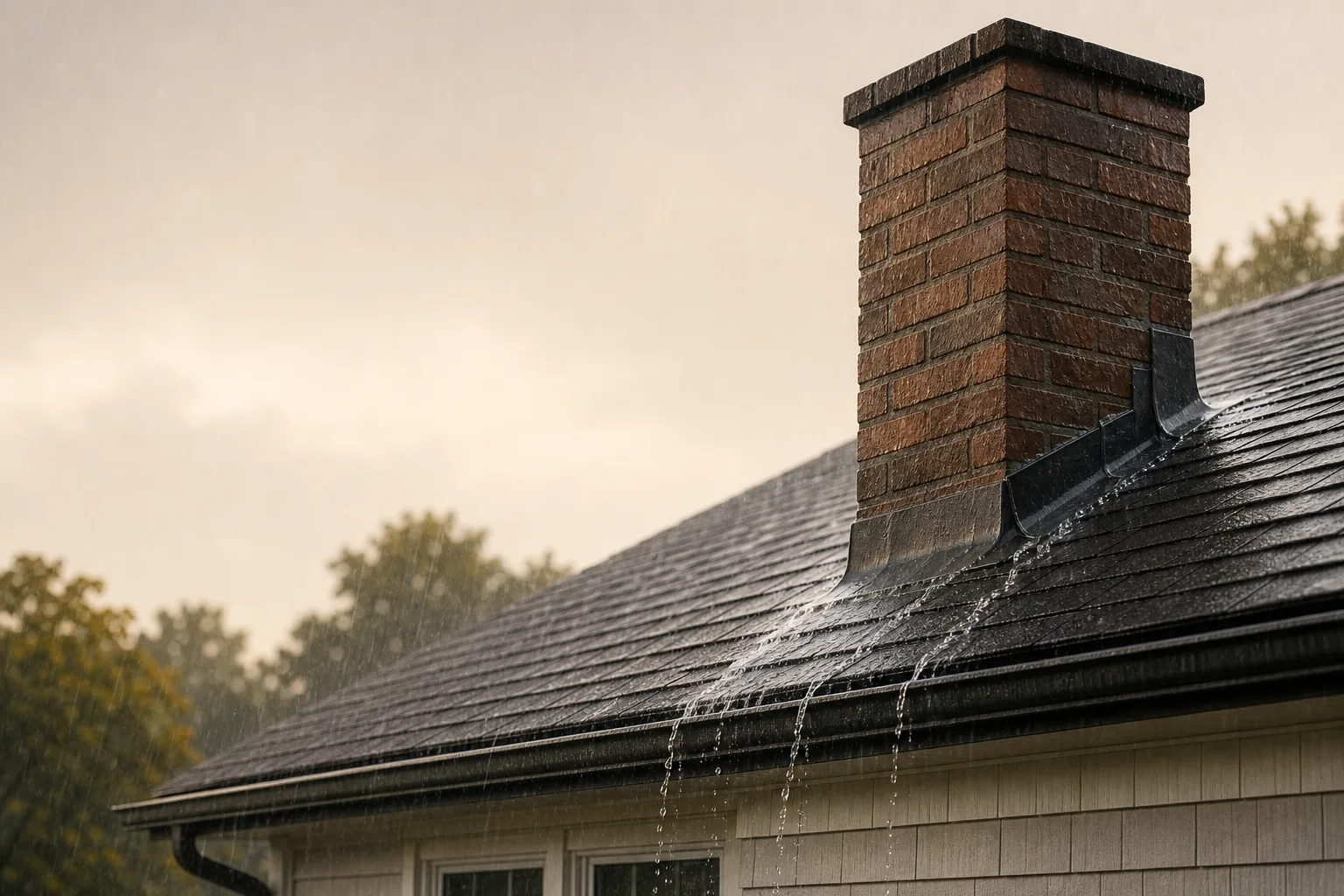
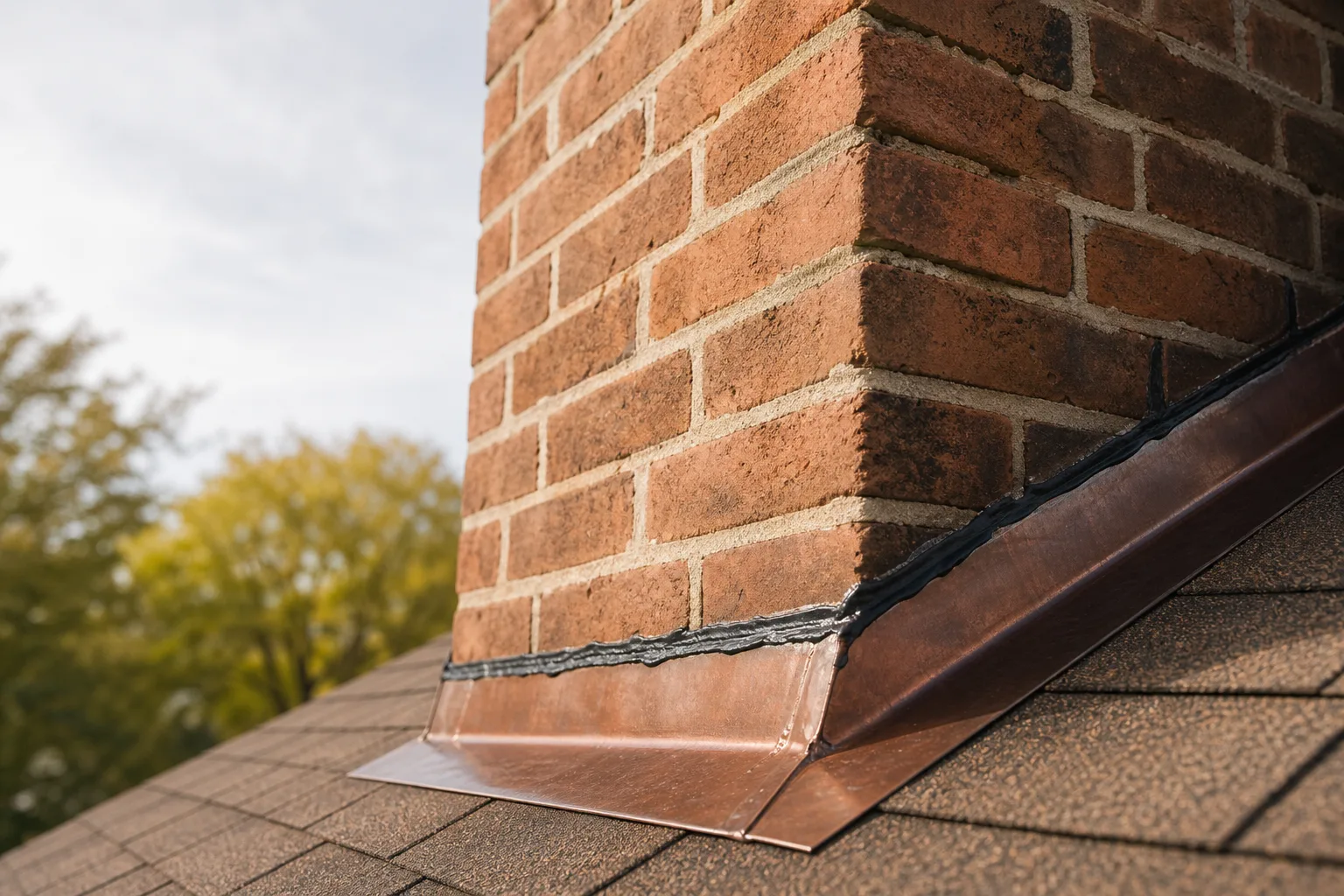
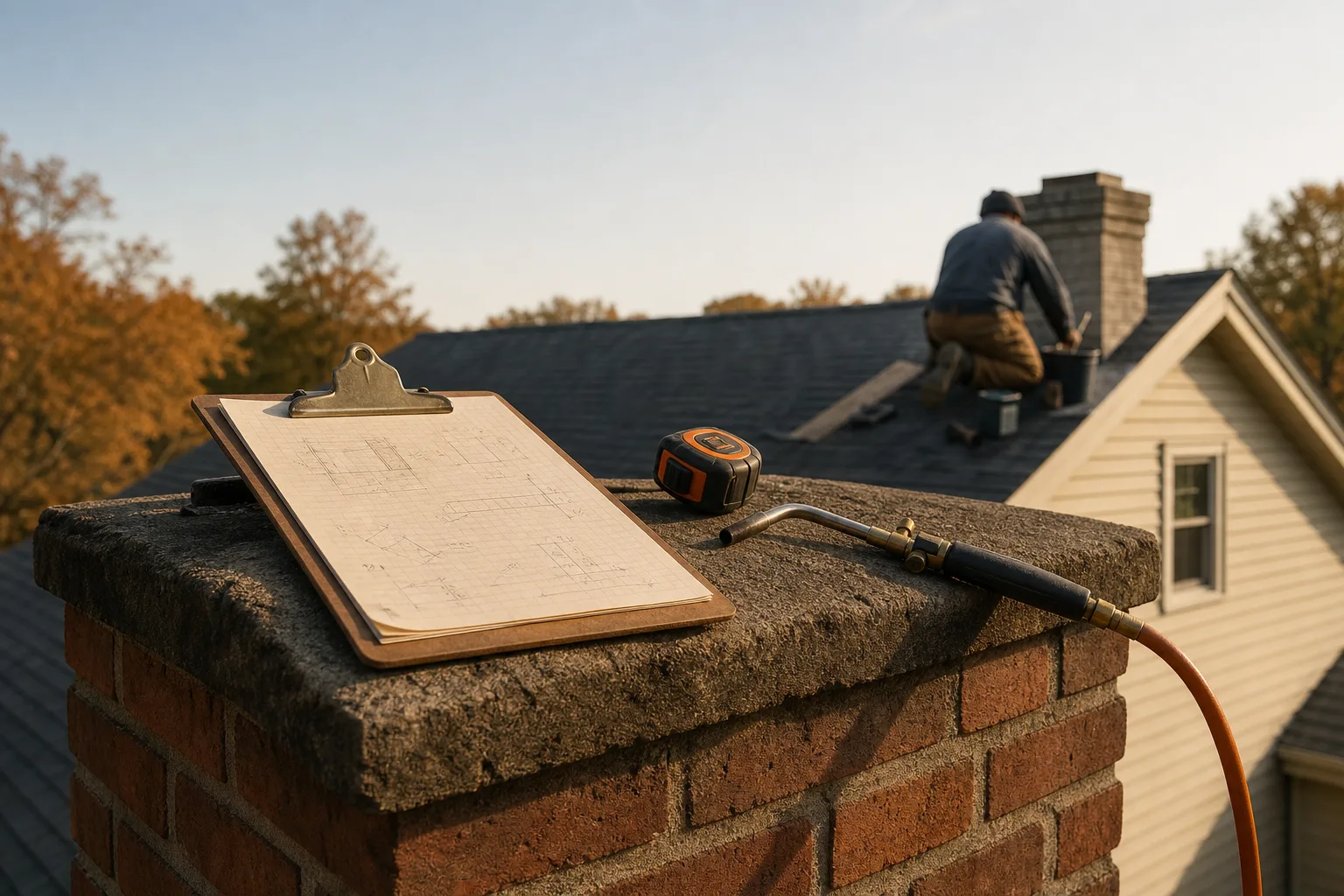
Flashing is two pieces of metal doing one job. Step flashing lies under the shingles and turns up against the brick; counter-flashing is cut into a mortar joint and folds down over it, so water running down the brick is thrown out onto the roof rather than behind the metal. Both have to be right. Chimney flashing repair means restoring that two-part detail — not smearing sealant across the joint, which is what tar does and why tarred flashing leaks again within two or three seasons.
Where the roof meets the brick
Two pieces of metal doing one job: step flashing under the shingles, counter-flashing cut into the mortar above it. Both have to be right.
Fall Special
Call or book today and we'll do our best to get a pro to you tomorrow.
Anything that needs attention is shown to you and explained in plain words.
If something needs fixing, you get the price in writing first. Saying no costs nothing.
Do you have this problem?
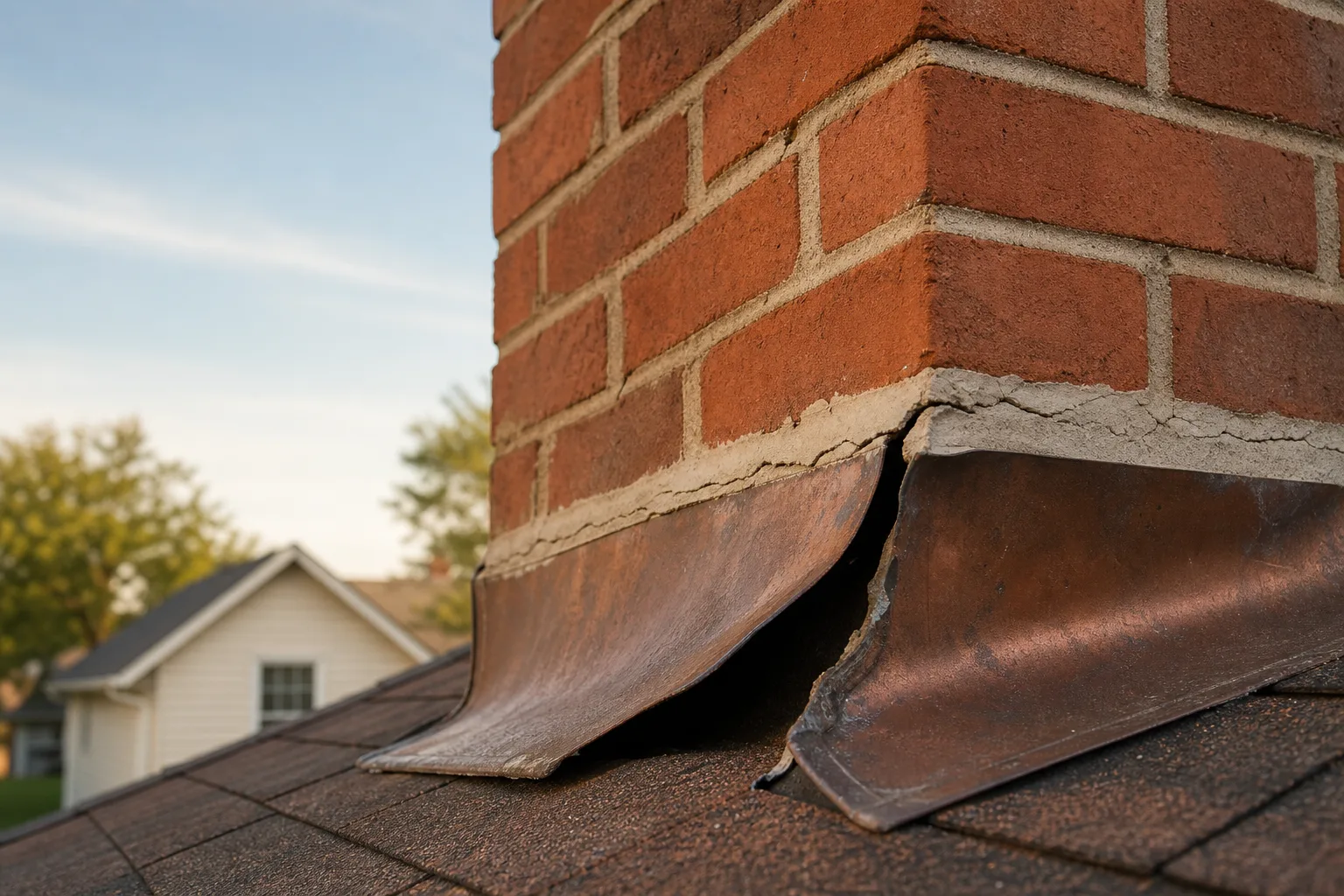
The counter-flashing has pulled out of its mortar joint, or the sealant bead behind it has failed. You can usually see daylight or slide a card into the gap.
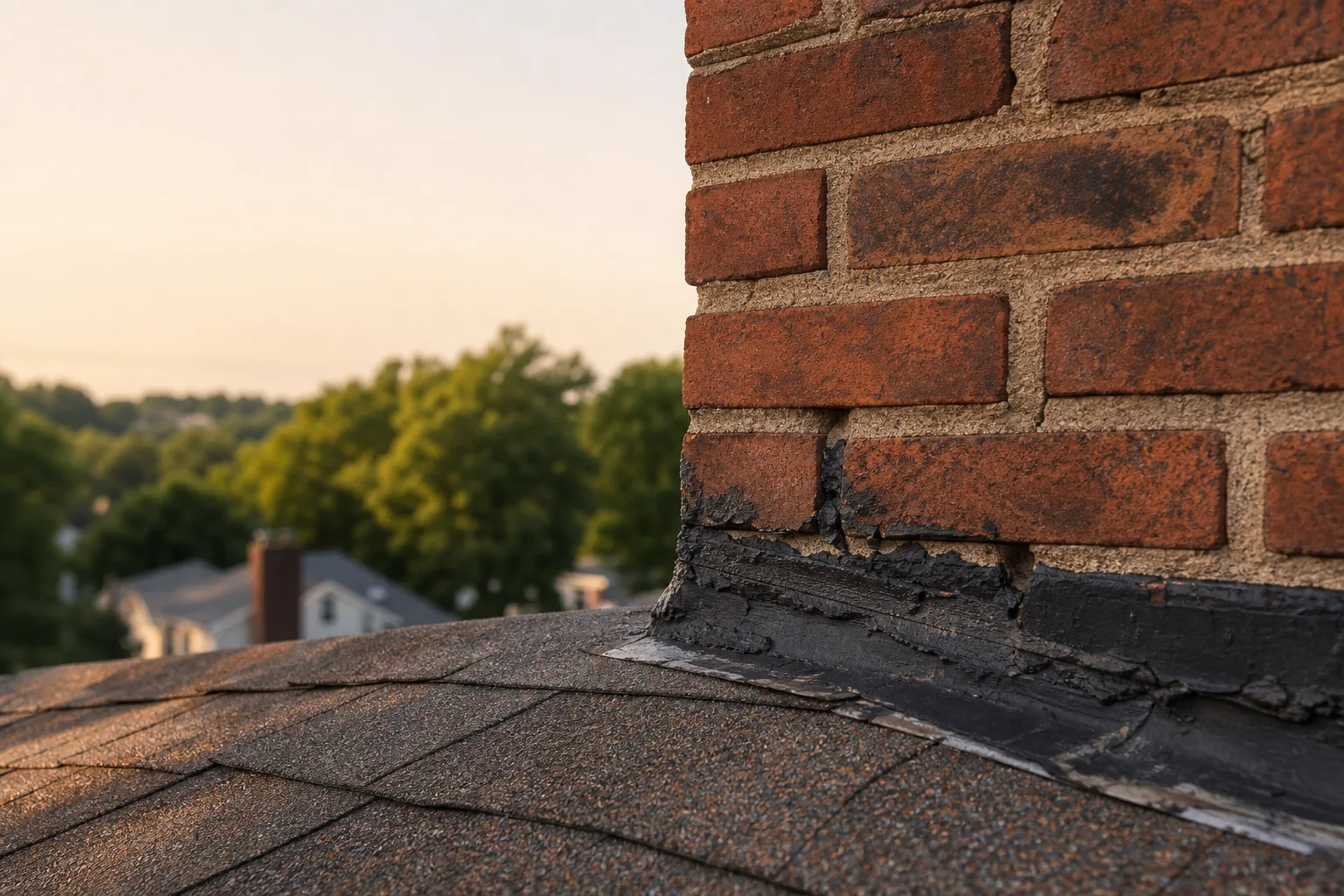
Someone's earlier repair. Tar shrinks and cracks as it ages, and it has to be cut and scraped off before anything proper can be done, which is why it makes the eventual job more expensive.
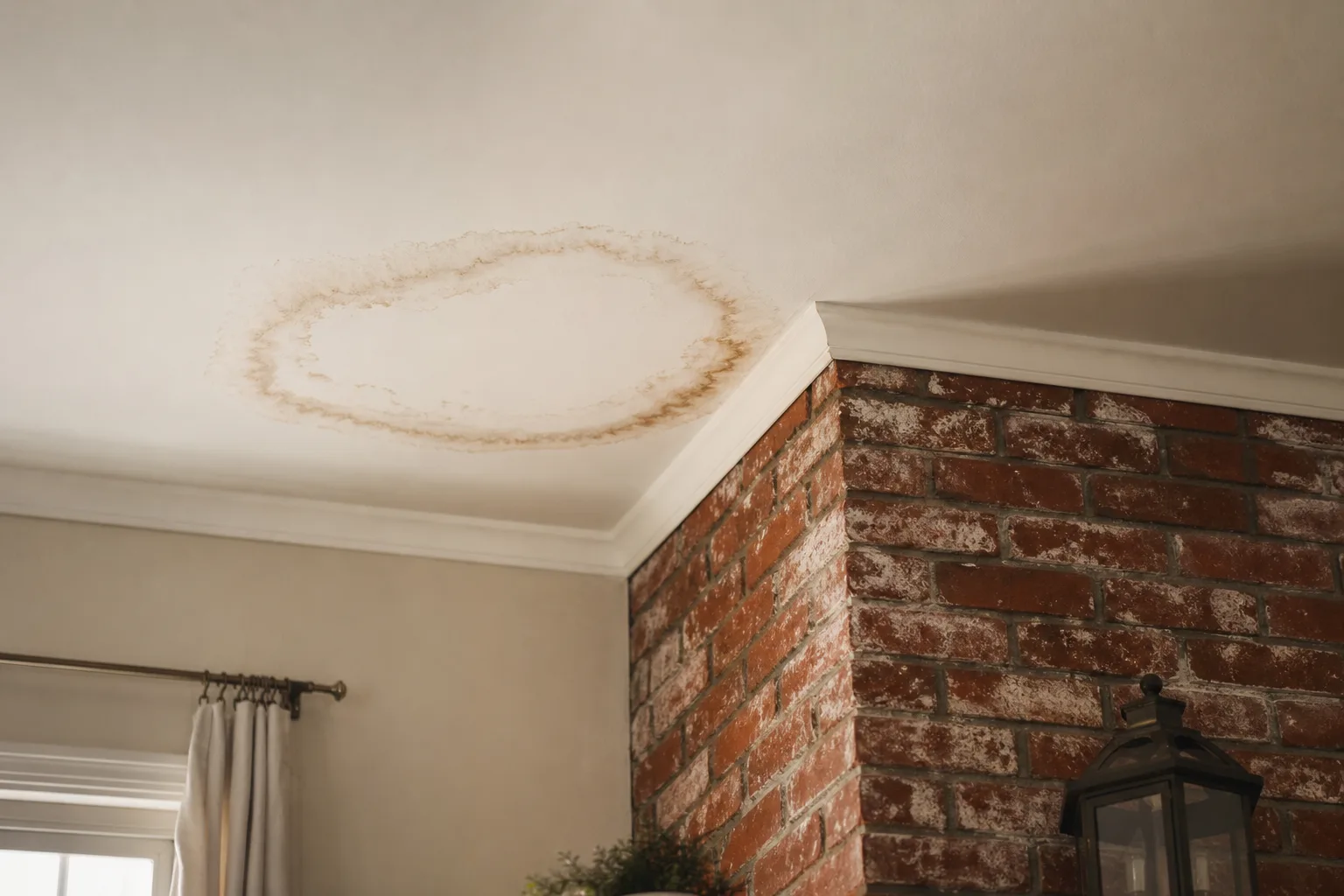
Flashing is the first suspect for any chimney leak, because it is the most common entry point on any chimney. It is also the cheapest of the five to rule out.
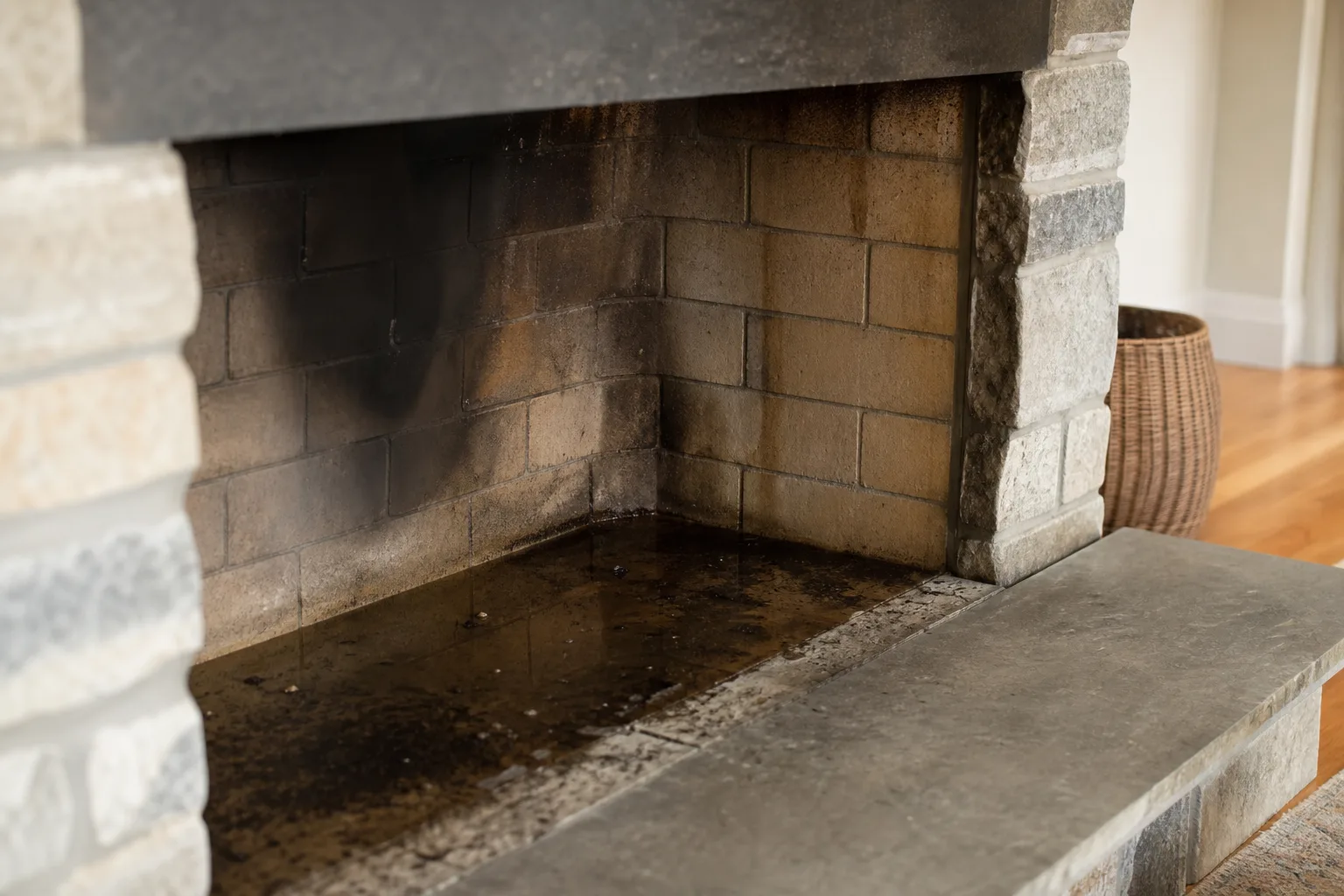
Failed flashing often sheds vertical rain fine and lets water past when it is being pushed sideways. That is why the leak seems to come and go with the weather.
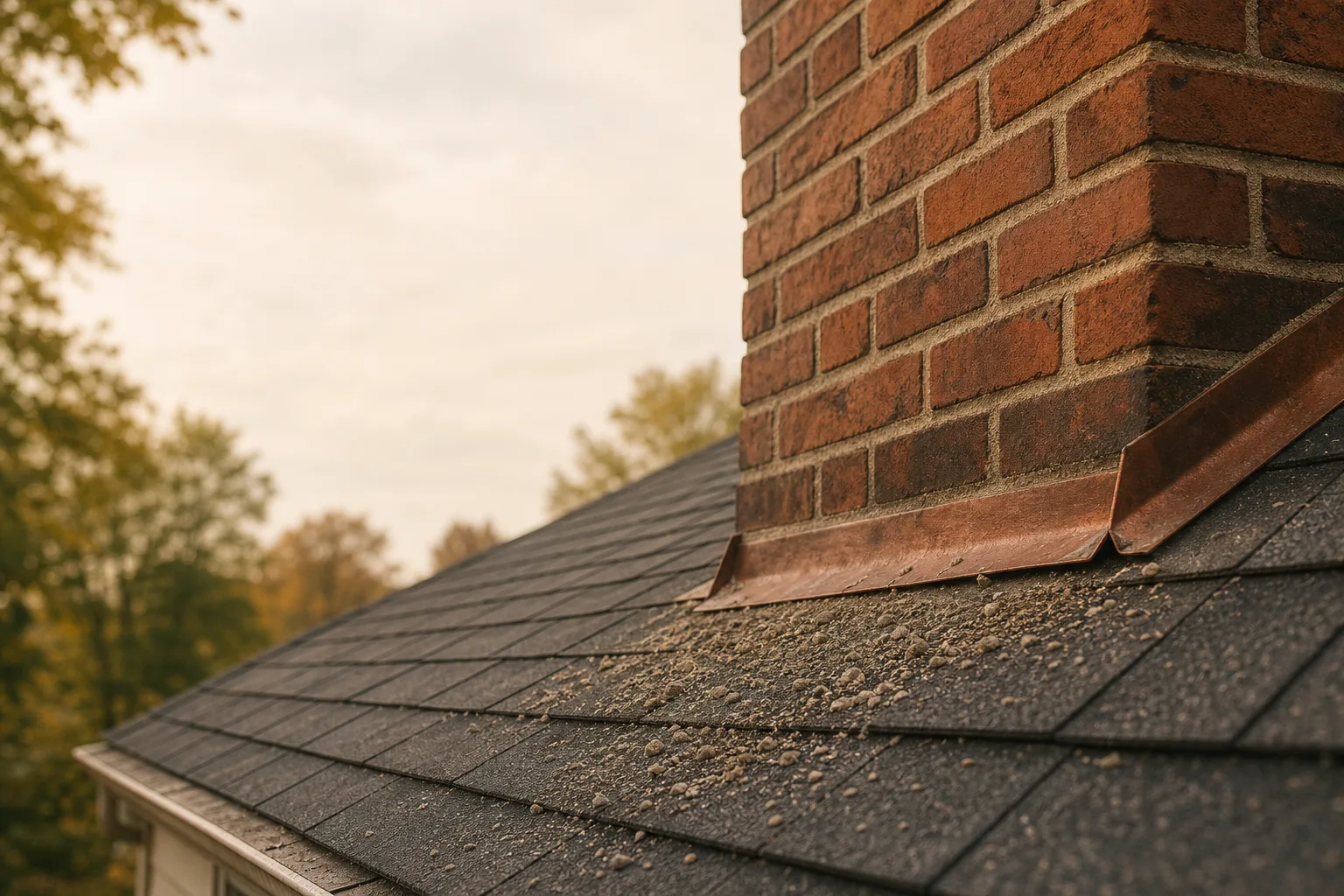
Water running where it should not have been eventually rots the deck under the shingles. Once that has started, the flashing repair includes roof work.
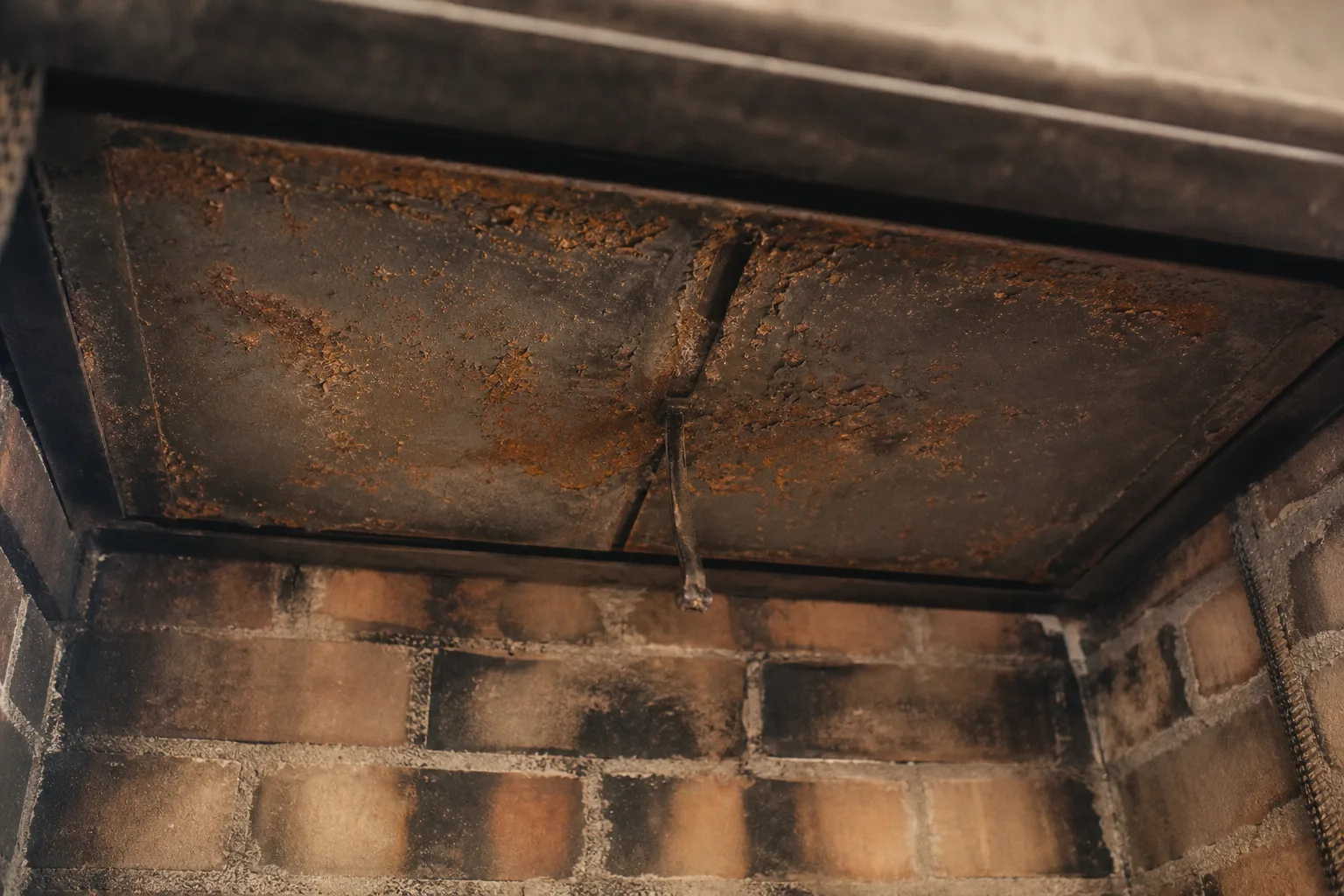
Water entering at the flashing can run down inside the structure and reach the firebox. Rust in a capped chimney with a sound crown points here.
How we work
The same four steps every time, whatever the repair turns out to be.
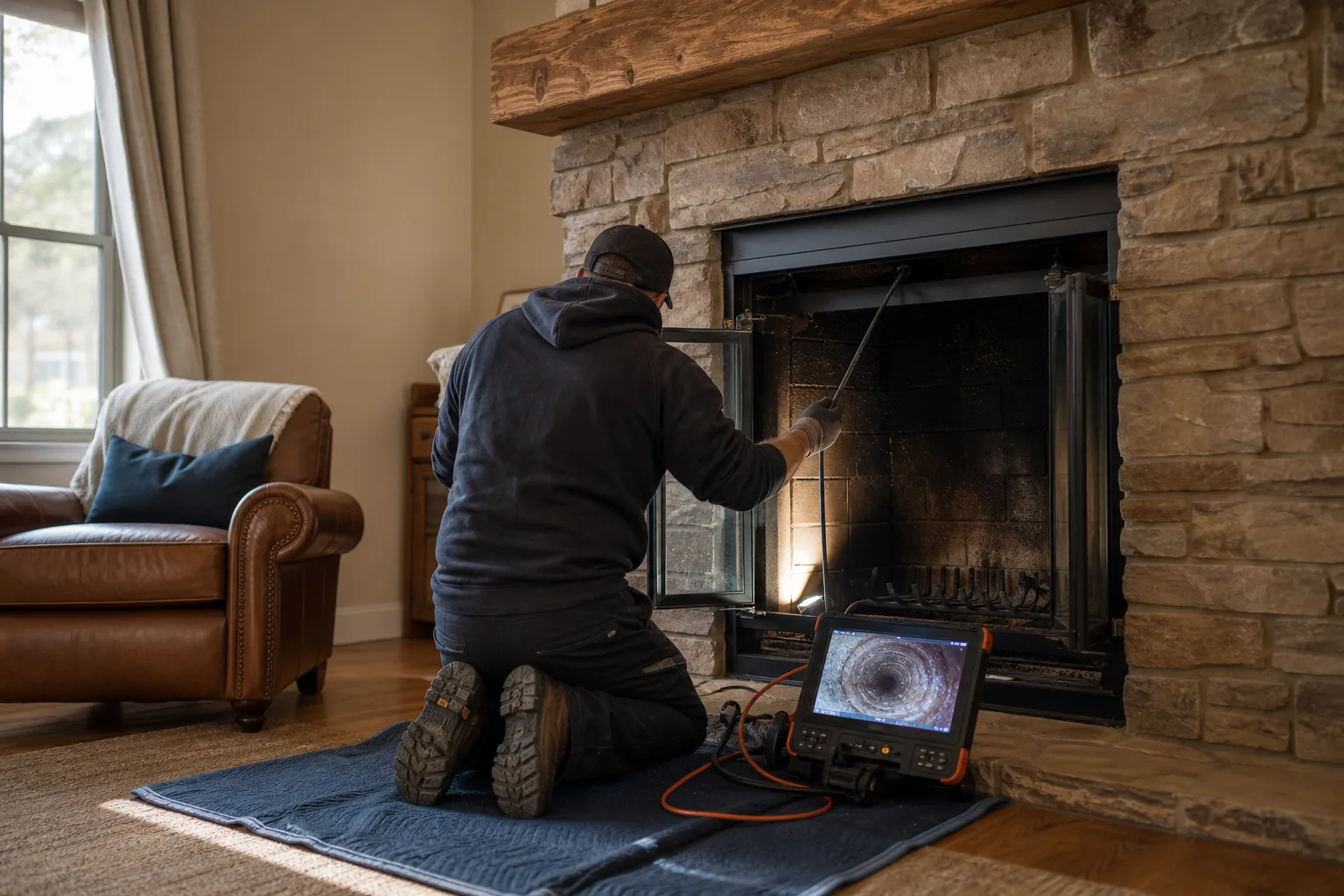
A look at the crown, cap, flashing and exterior masonry, then the flue, damper and firebox — with a camera where the job calls for a level 2 scan. Whatever needs work gets shown to you, not just described.
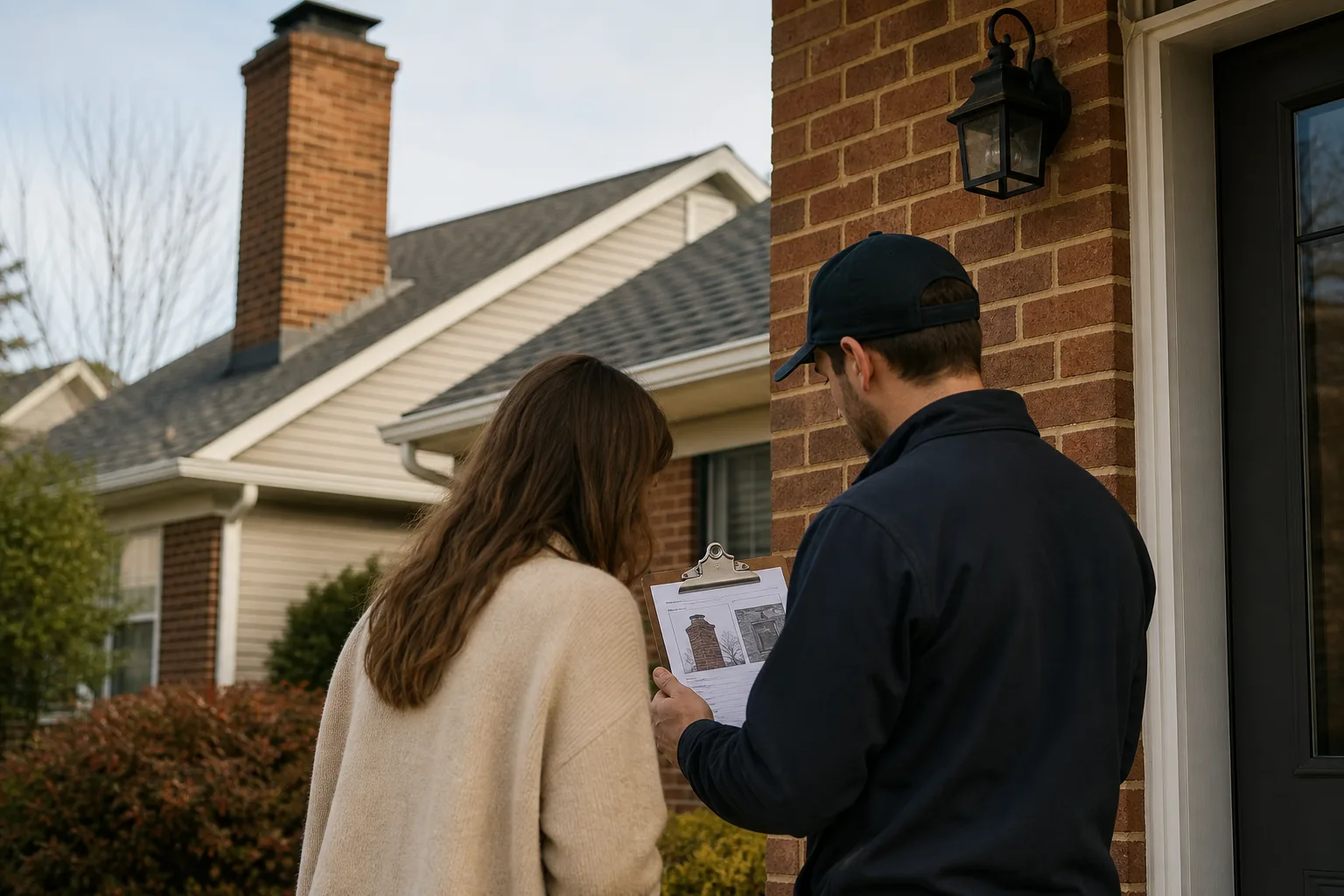
Scope, price and what is not included, in writing. Nothing starts until you approve it, and an emergency is not a reason to skip this step.
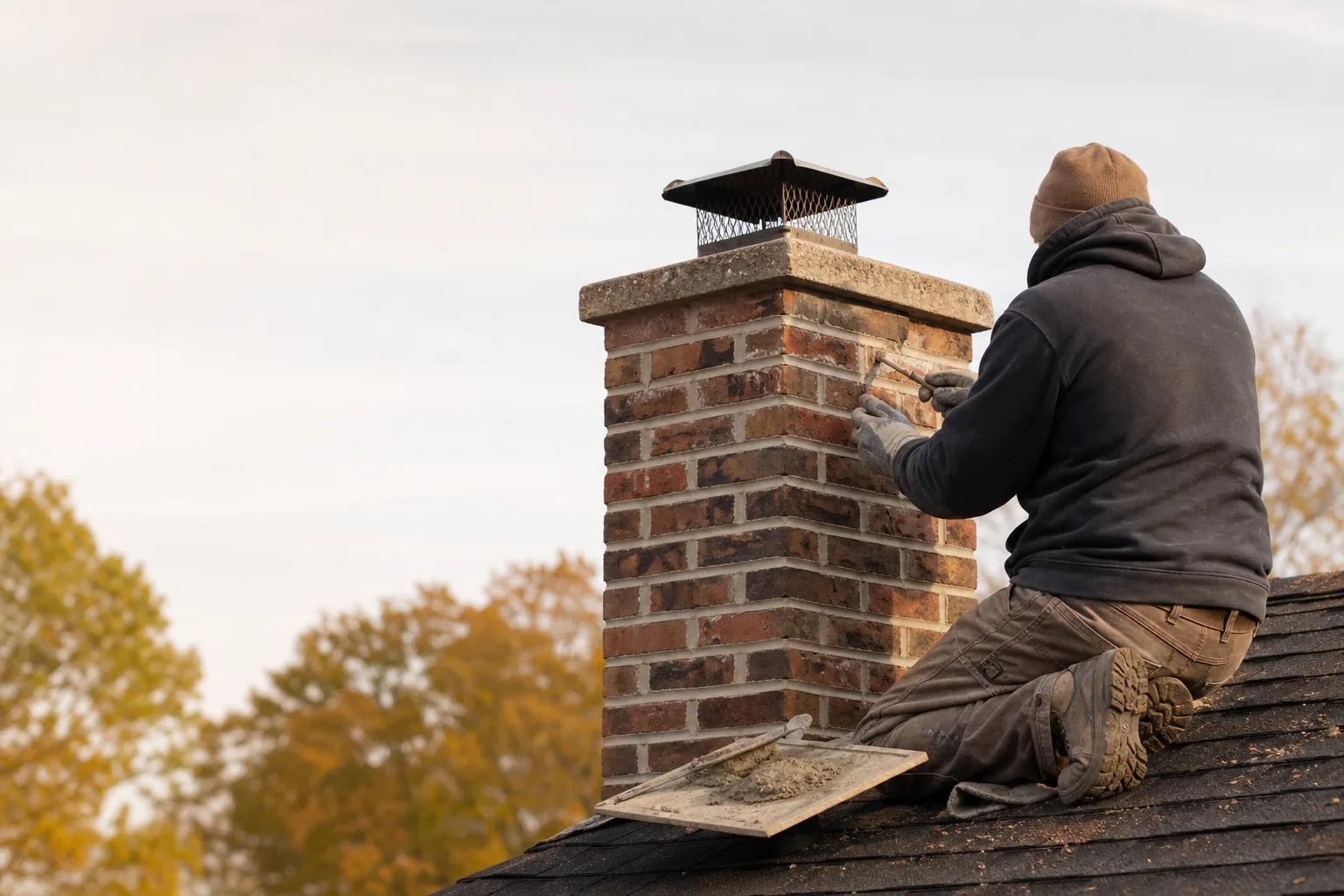
Matched materials and the manufacturer's spec, not whatever is on the van. Drop cloths down, and the room left as it was found.
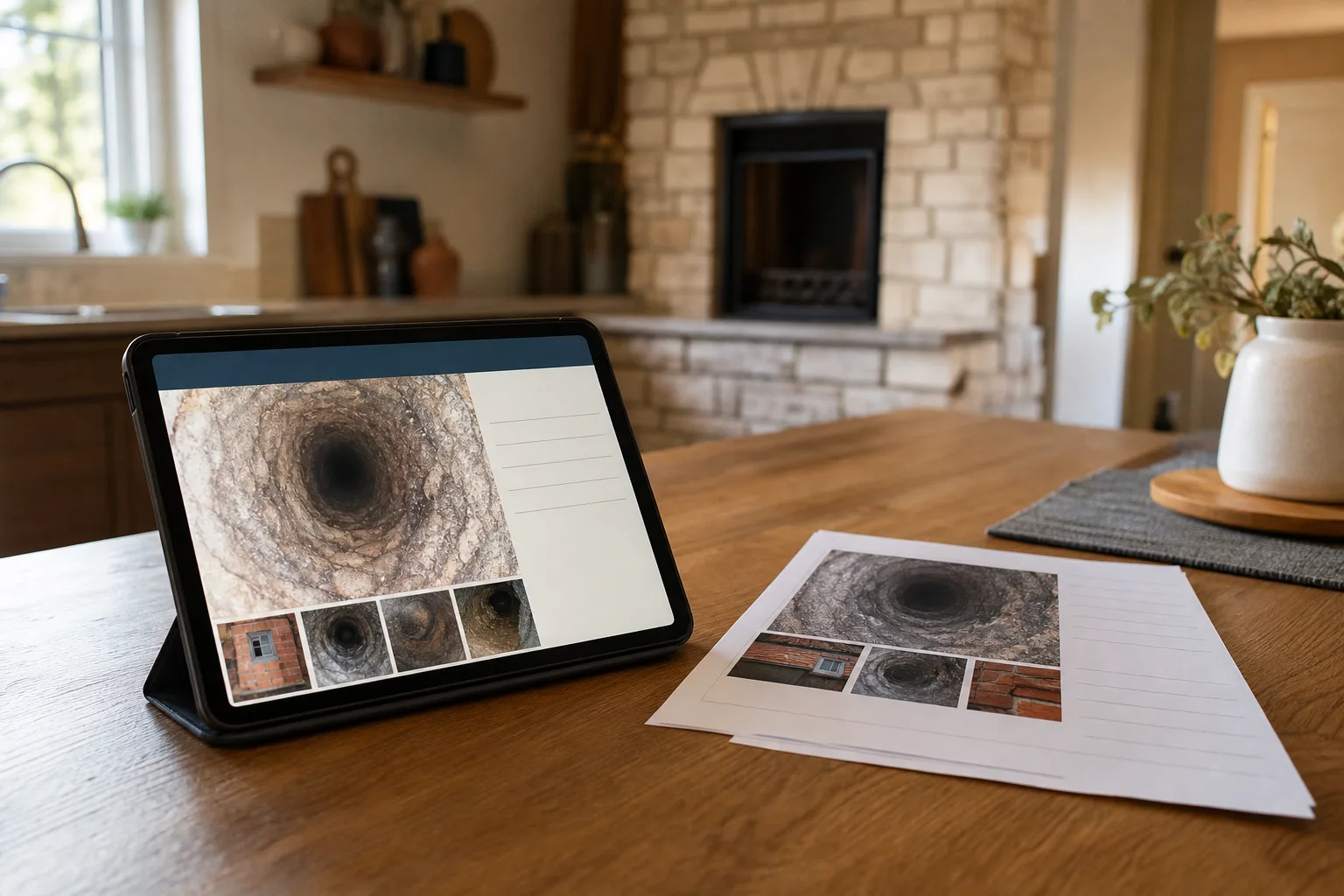
A second scan after the work, and written findings you can keep, hand to an inspector, or send to an insurer.
What it covers
Not every job on this list is equally urgent, so they are ordered that way. A cracked liner stops you using the fireplace tonight; waterproofing can wait for a dry week.
The job — most urgent first
What it involves
On site
A small peaked structure on the upslope side that splits water around the chimney. Code calls for one on wide chimneys, and their absence is why the back of a wide stack leaks repeatedly.
On site: 1–2 days
New step flashing woven into the shingle courses and new counter-flashing cut into a fresh reglet in the mortar joint. The proper repair, and the only one with a real lifespan.
On site: About a day
Cutting off old roofing cement to find out what is actually under it. Usually flashing that could have been reused before the tar went on and cannot now.
On site: About a day
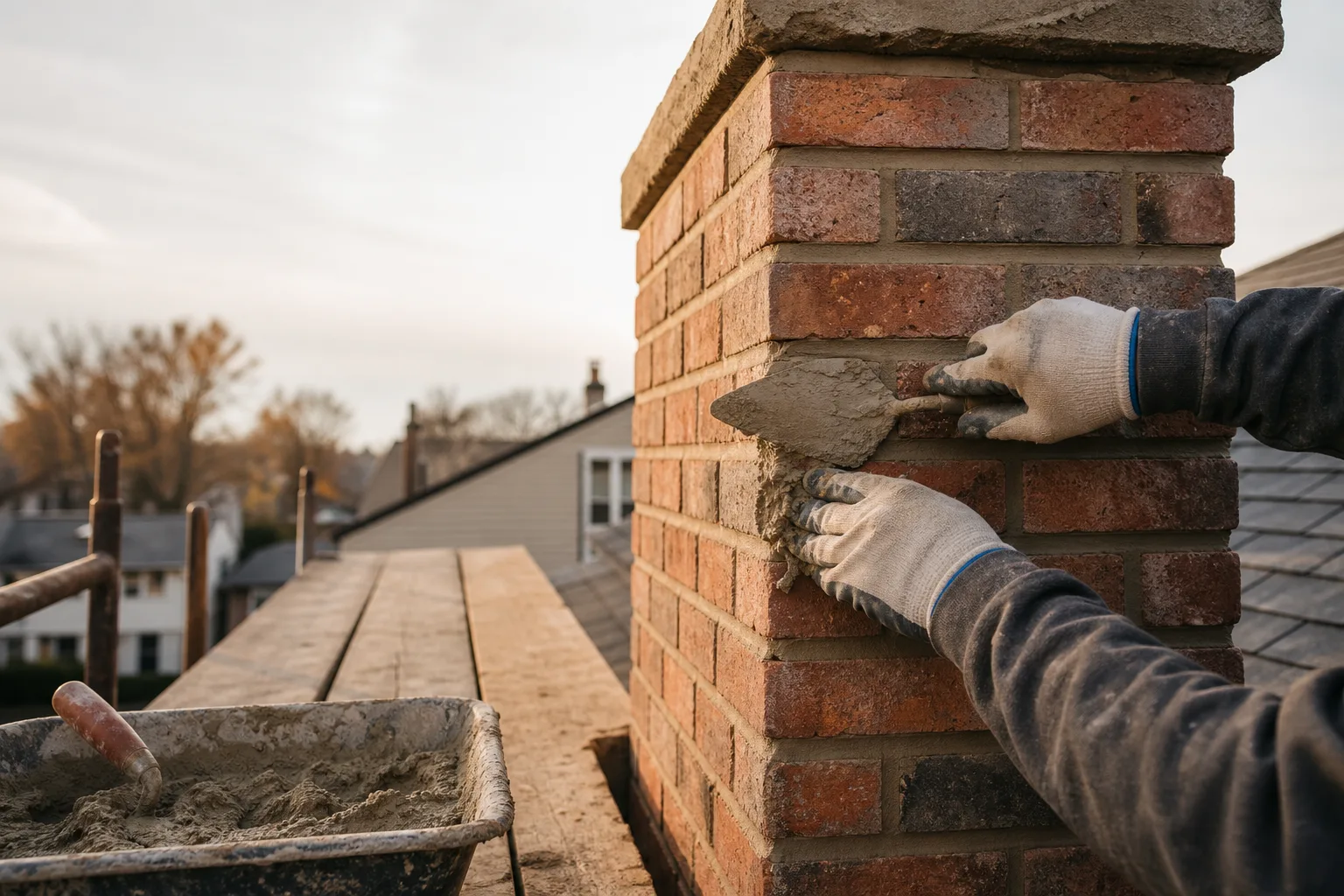
Where the metal is sound but has worked loose: the joint is raked out, the flashing reset and repointed, and sealed with a polyurethane made for masonry rather than a general sealant.
On site: Half a day
Flashing gets replaced when the roof does, not reused. A new roof around old flashing is the most predictable future leak on a house, and the cheapest moment to avoid it.
On site: Half a day
Times are for the work itself, not for scheduling. Masonry needs roughly 40°F to cure properly, which is what limits this work in a northern winter rather than whether a crew is free.
What drives the price
Resetting and resealing sound counter-flashing is a half-day job at the low end of chimney work. Full replacement of step and counter-flashing is about a day. What raises it beyond that is cutting off old tar, damaged decking, or a cricket that should have been there from the start. It is still one of the cheapest ways to stop a chimney leak.
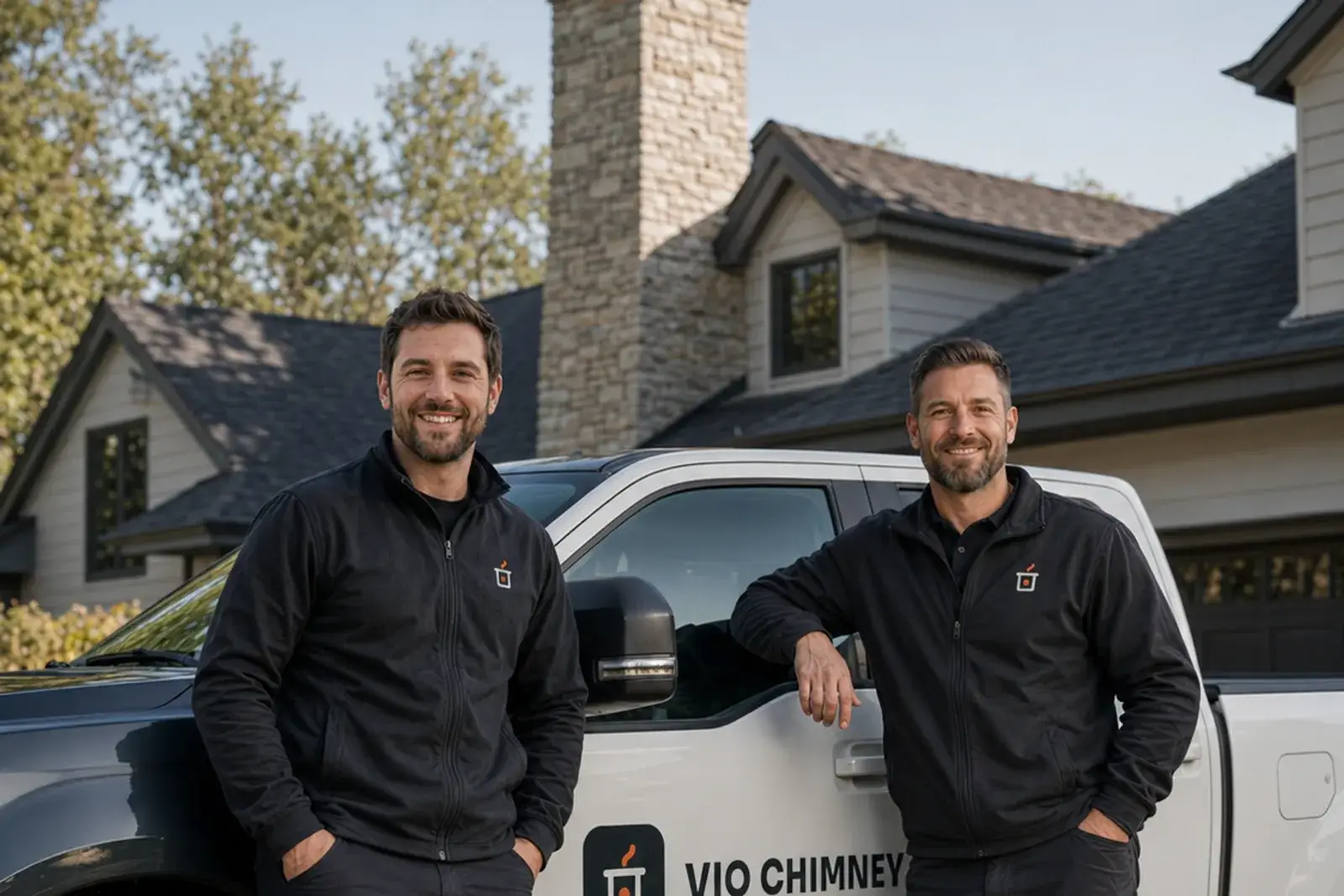
Founded by Ryan Carter in 2019. Every page you read here is reviewed by Ethan Miller, our chimney specialist. A written estimate before any work, and the findings in writing whether or not anything needs doing.
More about who we are →
The VIO Standard
Good to know