



Chimney problem

Can I get carbon monoxide from a fireplace?

Carbon monoxide from a fireplace has no smell, no colour and no taste. The only reliable warning is an alarm, and the only reliable prevention is a clear flue.

5.0/5
8 verified reviews
Ethan MillerEthan Miller · Chimney specialist, VIO CHIMNEYLast reviewed July 20264 min read
Stop using it

Do not light another fire until this has been looked at.

The short answer

Carbon monoxide from a fireplace has no smell. If the alarm has sounded, leave first and read this afterwards.

Any fuel-burning appliance produces carbon monoxide when combustion is incomplete, and a fireplace vents that away up the flue. Carbon monoxide from a fireplace becomes a problem when the flue cannot do its job — a blockage, a cracked liner letting gases into the structure, a closed or partly seized damper, or a house so airtight the fire cannot draw against an extractor fan. Gas appliances are the quieter risk, because a wood fire that is not venting fills the room with visible smoke and a gas one gives you nothing to see at all.

The only warning you get

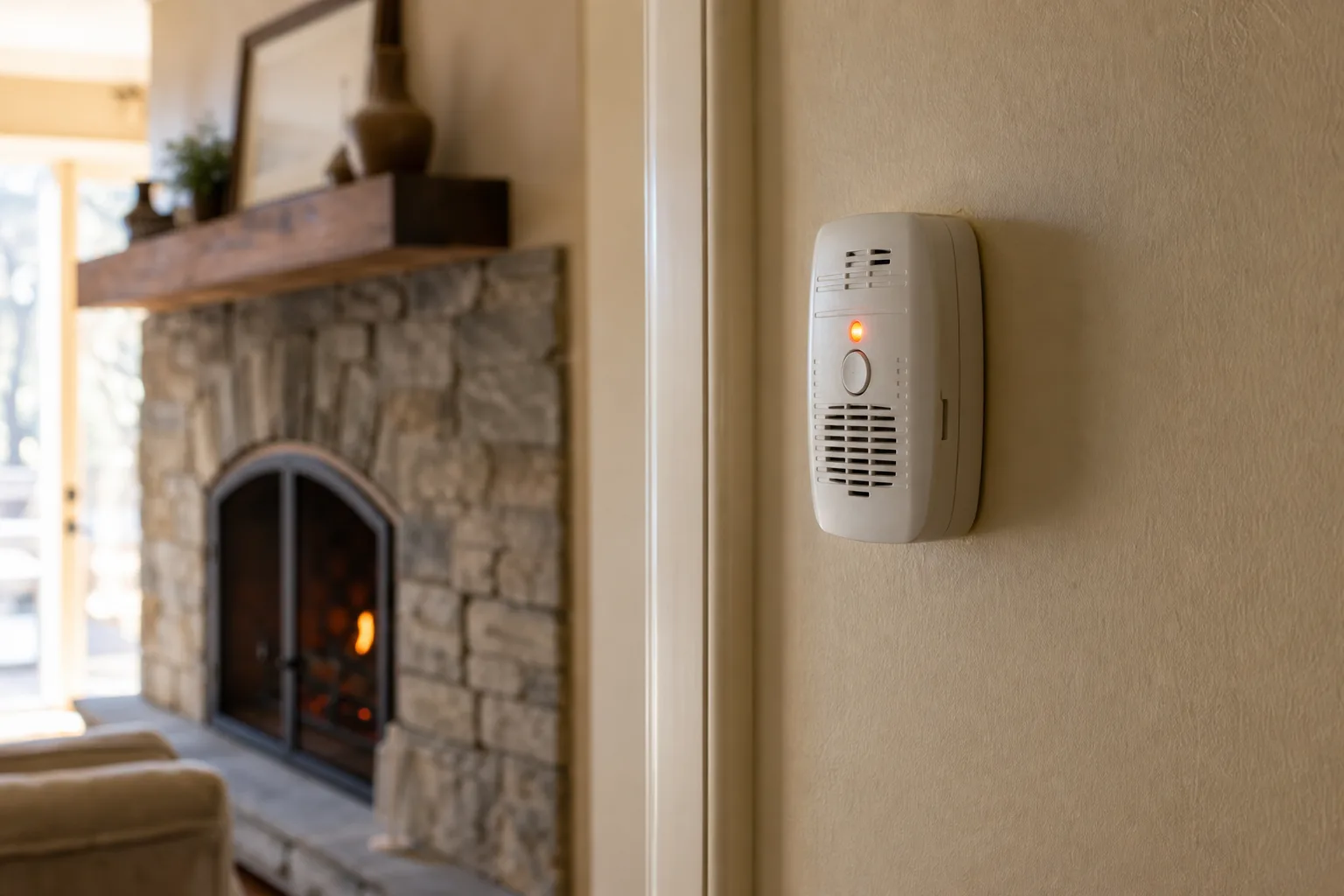
An alarm, or nothing

Carbon monoxide detector alarming on a hallway wall with a fireplace blurred behind

No smell, no colour, no taste. A detector on every floor is not a precaution, it is the entire early-warning system.

Before we get there

What to do right now

None of this fixes it. All of it stops the problem getting more expensive between now and the visit.

  1. If your alarm is sounding: get everyone outside into fresh air, then call 911 or the fire service. Do not go back in to open windows first.

  2. If anyone has a headache, nausea, dizziness or confusion that improves outdoors, treat it as carbon monoxide and get medical help.

  3. Turn the appliance off at the gas valve or let the fire go out. Do not relight it.

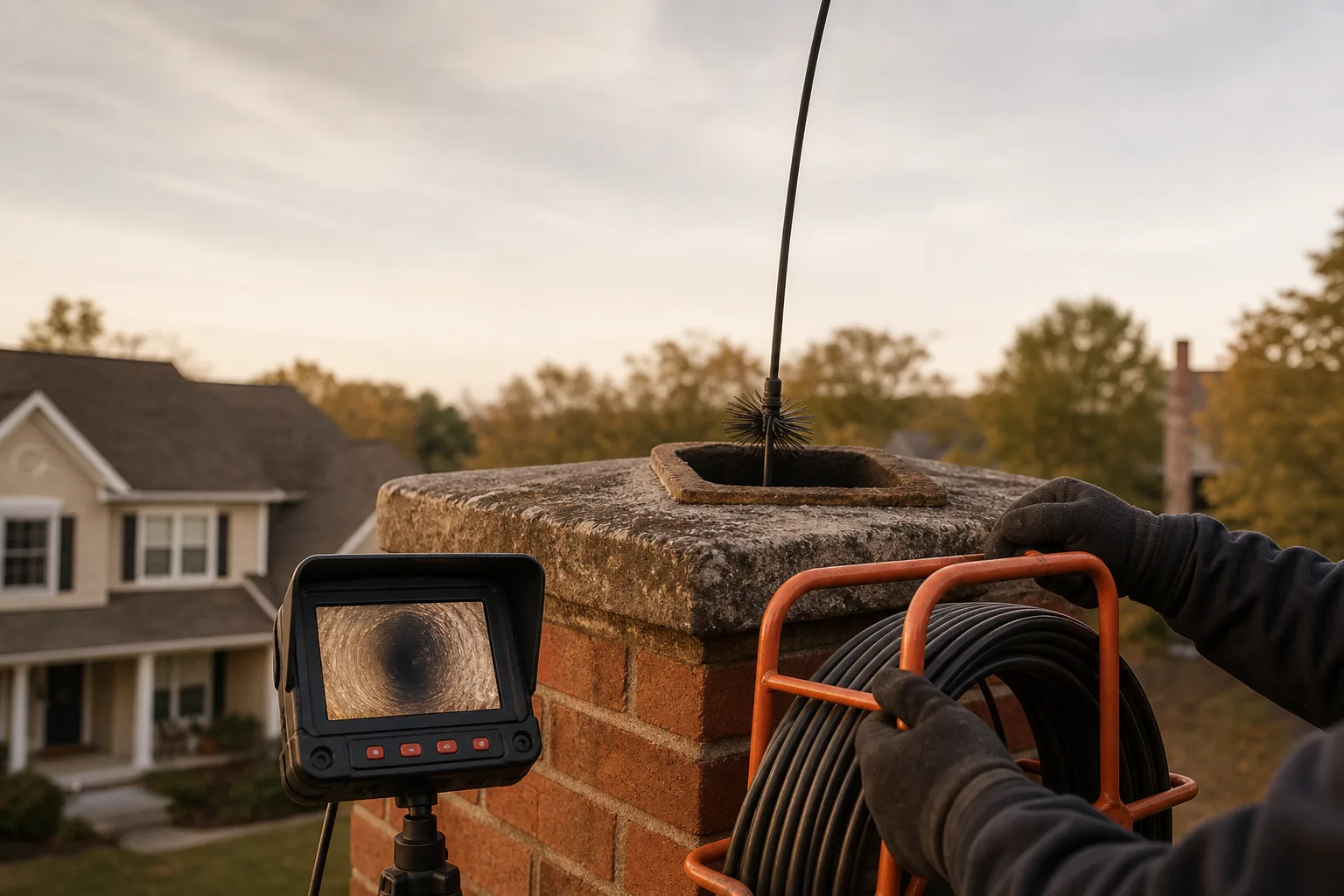
  4. Do not use the fireplace again until a flue scan has been done, whatever the alarm does afterwards.

  5. Check that you have a working detector on every floor and outside every sleeping area. Test them; they expire after seven to ten years.

Work out which is yours

What causes carbon monoxide from a fireplace

Ordered by how often it turns out to be the answer, so you can stop reading once you recognise yours.
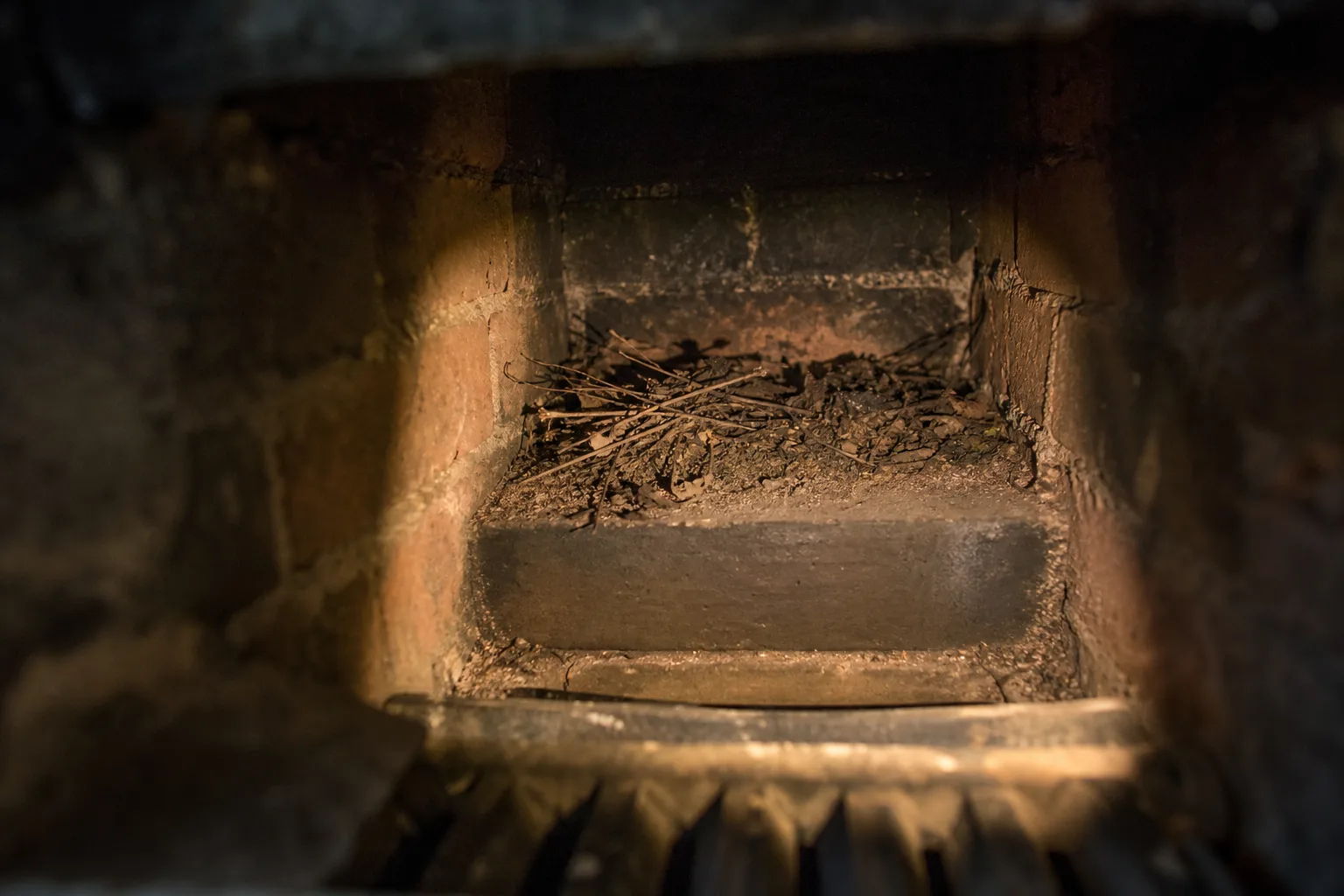
Twigs and nesting material piled on a chimney smoke shelf under torchlight
Most common

A blocked flue

A nest, debris or heavy creosote narrowing the passage. Gases that cannot leave come back into the room, and on a gas appliance there is nothing visible to tell you.
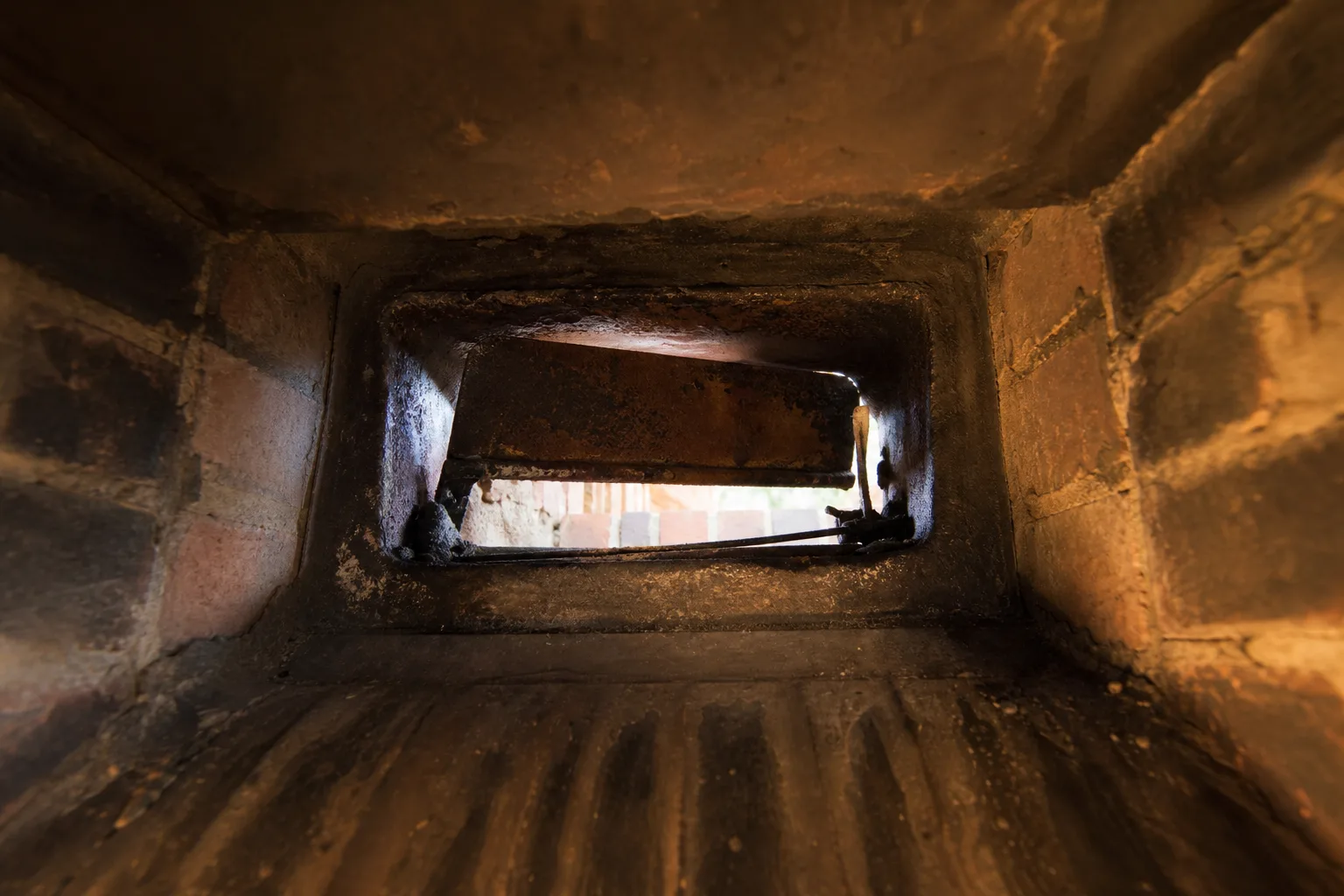
Rusted throat damper plate seized part-open, seen by torchlight from the firebox
Most common

A closed or seized damper

The simplest and most common version: a fire lit with the damper shut. On a rusted damper that will not open fully, the same thing happens quietly every time.
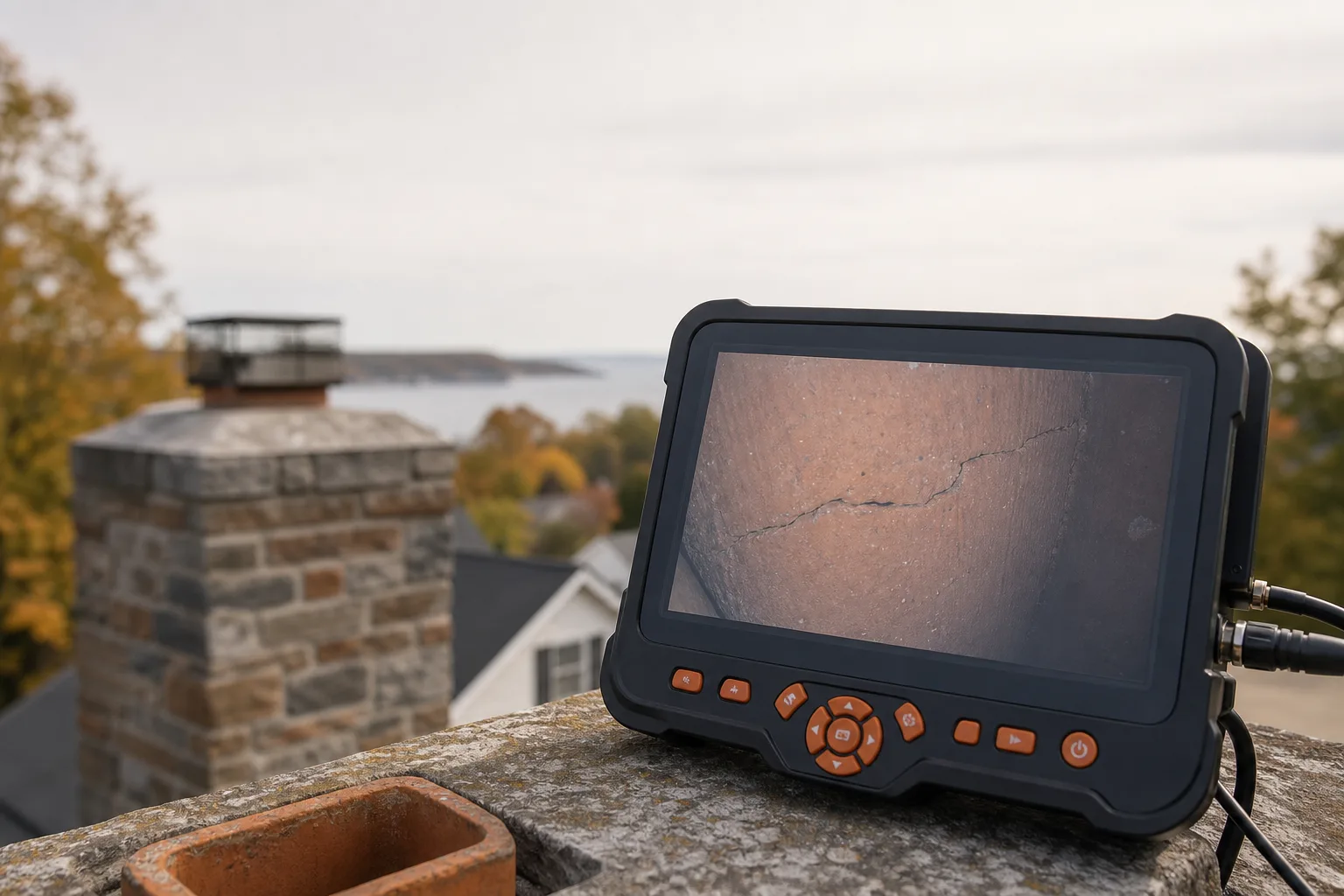
Inspection camera monitor showing a crack running across a clay flue tile inside a chimney
Common

A cracked liner venting into the structure

The liner is what keeps combustion gases inside the flue. A breach lets them into the framing and from there into rooms nowhere near the fireplace.
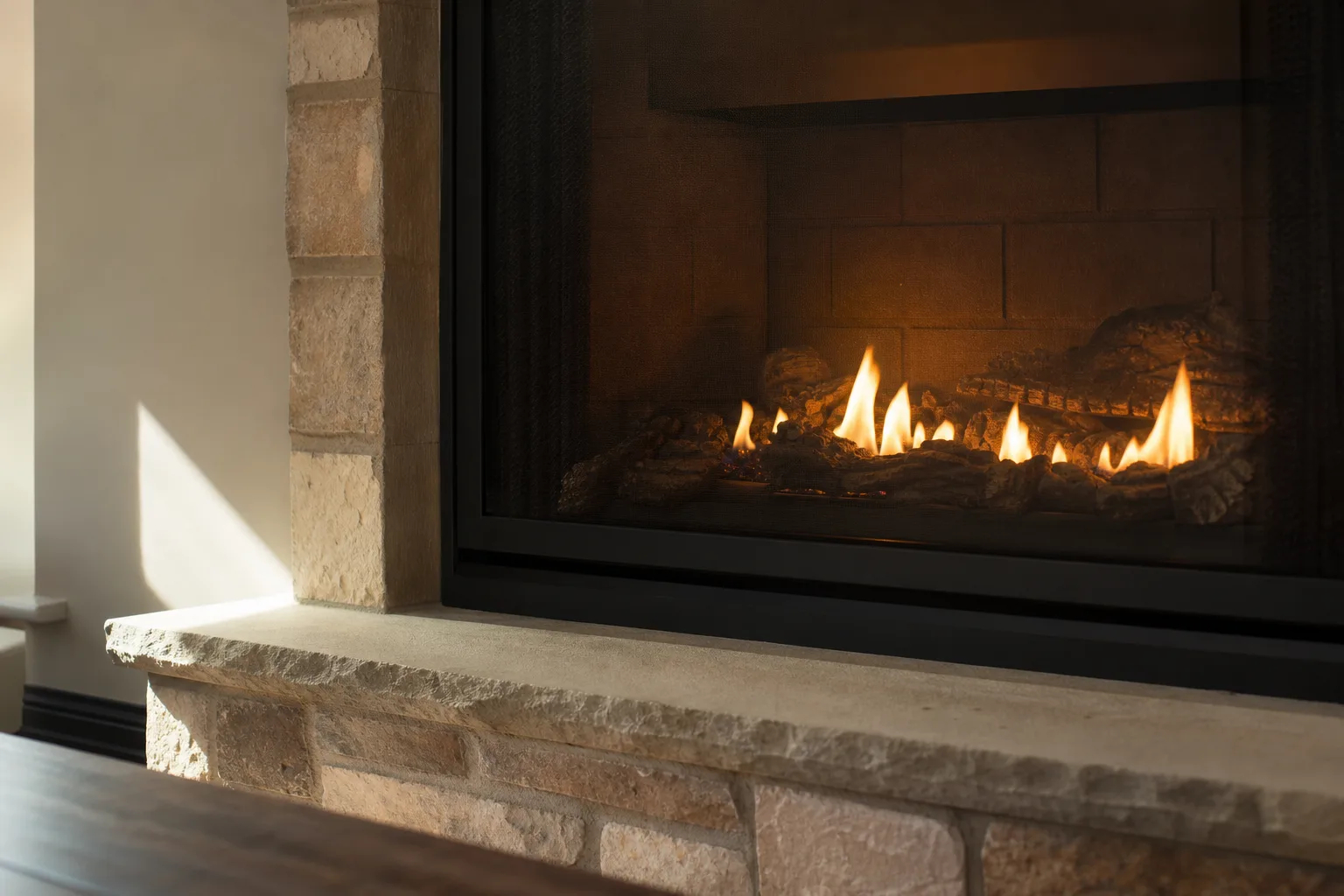
Close-up of lazy yellow gas fireplace flames behind glass instead of blue
Common

Incomplete combustion on a gas appliance

Lazy yellow flames instead of blue, and soot on the glass. That is the reaction that produces carbon monoxide, and it is the only visible sign a gas fireplace gives.
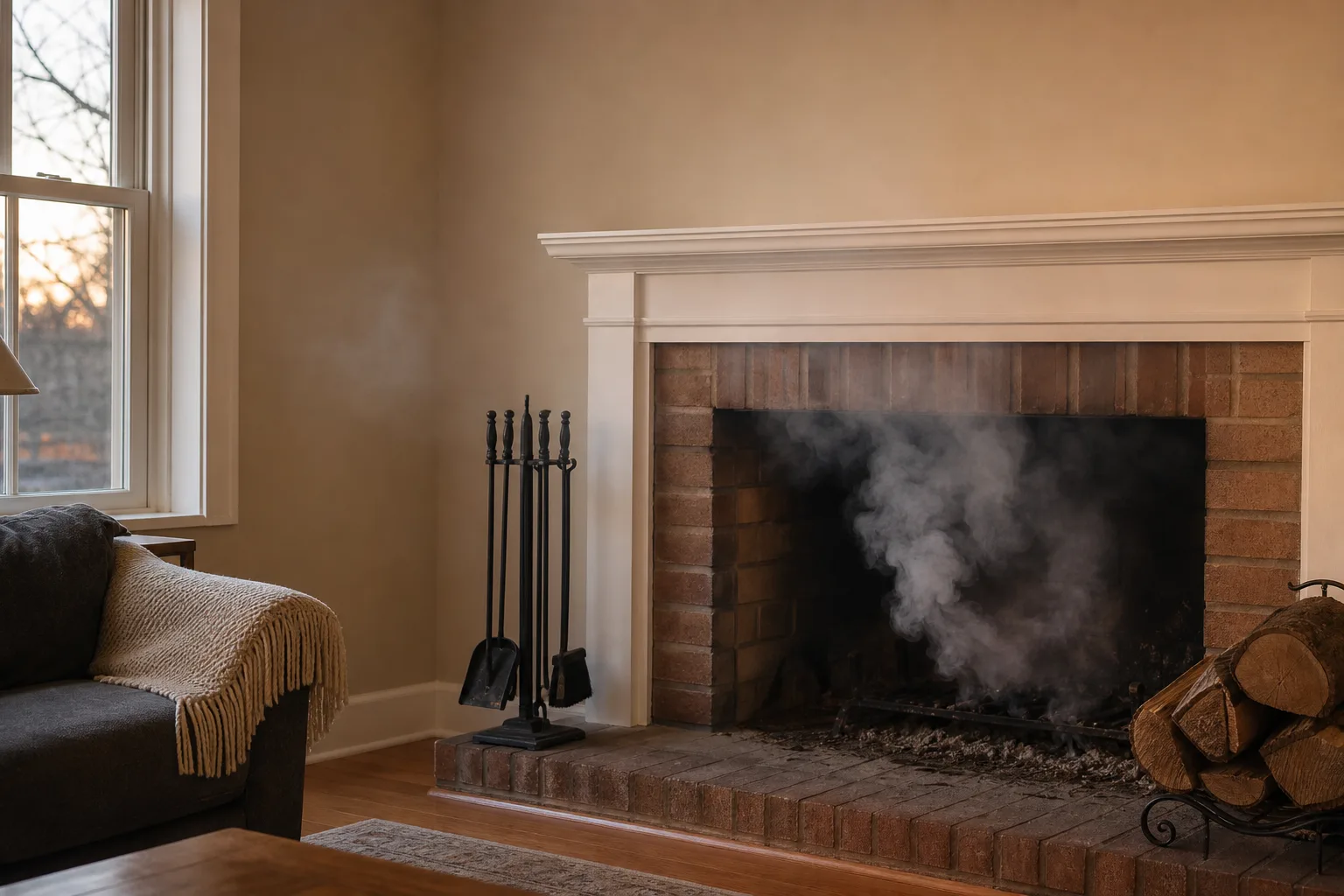
Smoke rolling out of a fireplace opening into a living room at dusk
Less common

The house cannot supply enough air

A tight modern house with an extractor fan or a dryer running can pull harder than the flue. The fire then draws backwards, down the chimney, into the room.

Five minutes, no ladder

Checks you can make yourself

  • Do symptoms improve when you leave the house?

    The most reliable indicator there is. Headache, nausea and confusion that clear outdoors point at carbon monoxide.

  • Is there soot on the glass of a gas fireplace?

    Incomplete combustion. That is the same reaction that produces carbon monoxide. Stop using it.

  • Are the flames yellow and lazy rather than blue?

    The same fault, seen earlier. Gas burning correctly burns blue.

  • Does smoke enter the room after the flue has warmed?

    The flue is not clearing. Whatever is stopping the smoke is stopping the carbon monoxide too.

  • Is there a detector on every floor, and has it been tested?

    If not, that is the first thing to fix regardless of what the fireplace is doing.

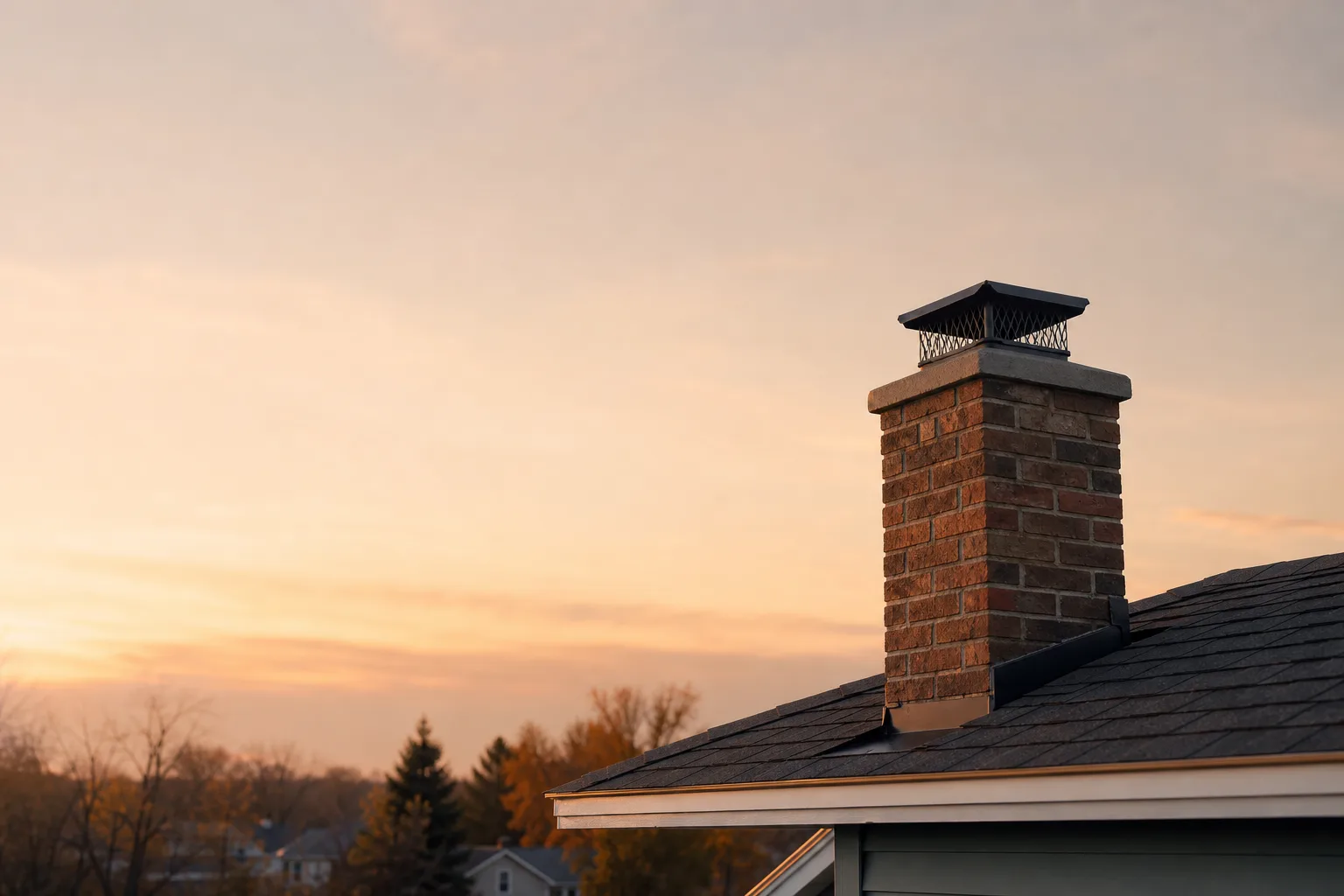
Capped brick chimney silhouetted against a soft dusk sky above a tidy residential rooftop

The VIO Standard

  • A written estimate first
  • License and insurance checked
  • Nothing starts without your OK

Common questions

Can a wood fireplace produce carbon monoxide?

Yes. Any fuel burning in air produces some carbon monoxide, and a working flue carries it outside. The difference with wood is that a flue which is not venting fills the room with visible smoke first, so you get a warning. That warning is the reason wood fires cause fewer poisonings than gas appliances do, and it is not a reason to skip the detector — a slow leak through a cracked liner into an upstairs room comes with no smoke at all.

What are the symptoms of carbon monoxide poisoning?

Headache, dizziness, nausea, shortness of breath, confusion and unusual tiredness. They are easy to mistake for flu, which is exactly what makes it dangerous. The pattern that distinguishes them is that they improve when you leave the house and return when you go back in, and that more than one person or a pet is affected at once. If that pattern fits, get outside and get medical advice rather than waiting to be sure.

Where should carbon monoxide detectors go?

On every floor and outside every sleeping area, at minimum. Carbon monoxide mixes with air rather than rising or sinking, so height is less critical than coverage — but keep them out of the immediate blast of the fireplace and away from bathrooms and kitchens where humidity and cooking cause false alarms. Test them monthly and replace the unit at seven to ten years; the sensor expires whether or not the battery does.

My alarm went off once and stopped. Should I still worry?

Yes. An alarm that sounds and then clears means the level dropped below the trigger, not that nothing happened — a window opened, the fire went out, the wind changed. The condition that caused it is still there. Do not use the fireplace again until the flue has been scanned, and do not assume a single alarm was a fault. Detectors fail silent far more often than they fail loud.

Is a gas fireplace more dangerous than a wood one?

Quieter, which in practice means more dangerous. A wood fire that is not venting tells you immediately with smoke you can see and smell. A gas appliance running slightly rich produces carbon monoxide for weeks with no change except, eventually, a film on the glass. That asymmetry is the whole argument for the annual gas service, and it is the visit people skip because nothing appears to be wrong.

you don't have to know what's wrong.

Do not light another fire until this has been looked at. Describe what you are seeing and a local pro works out the rest. You get the price in writing before anyone starts, and you can say no.

Ethan Miller and Ryan Carter of VIO CHIMNEY beside a branded service truck
Who we are

The people behind every visit

Founded by Ryan Carter in 2019. Every page you read here is reviewed by Ethan Miller, our chimney specialist. A written estimate before any work, and the findings in writing whether or not anything needs doing.

More about who we are →
(513) 655-6702Get my estimate