



On this pageBy how you use your fireplace6 sections+5
Quick answer
Industry guidance (NFPA 211) calls for an inspection at least once a year, with cleaning whenever creosote buildup warrants it — commonly around 1/8 inch of accumulation. How fast you get there depends on how much and what you burn.
Ask three sweeps how often to clean a chimney and you'll get the same answer: it depends on what's actually coating the flue, not on the calendar. NFPA 211 — the national standard for chimneys, fireplaces, vents, and solid fuel-burning appliances — calls for an inspection at least once a year, with cleaning, repair, or relining performed whenever the inspection finds deposits, damage, or a blockage. Most sweeps pull the trigger on a cleaning once creosote reaches roughly 1/8 inch, about the thickness of a dime, anywhere in the flue.
By how you use your fireplace
| Usage pattern | Typical interval |
|---|---|
| Occasional fires — a dozen or so fires a season | Inspect yearly · clean as found |
| Regular winter use — several fires a week, Nov–Mar | Clean roughly every season |
| Primary heat source — wood stove or insert running daily | Clean 1–2× per season |
| Gas fireplace — no creosote, but venting still fails | Inspect yearly |
Treat those as starting points, not rules. A rough field benchmark for wood burners is one sweep per cord of wood burned, so a household that goes through three cords heating with an insert may need a mid-winter cleaning in January on top of the fall service. A weekend cabin that sees ten fires a year can often go two or three seasons between sweeps, but it still needs the annual inspection, because animals, storm damage, and spalling brick don't care how many fires you lit.
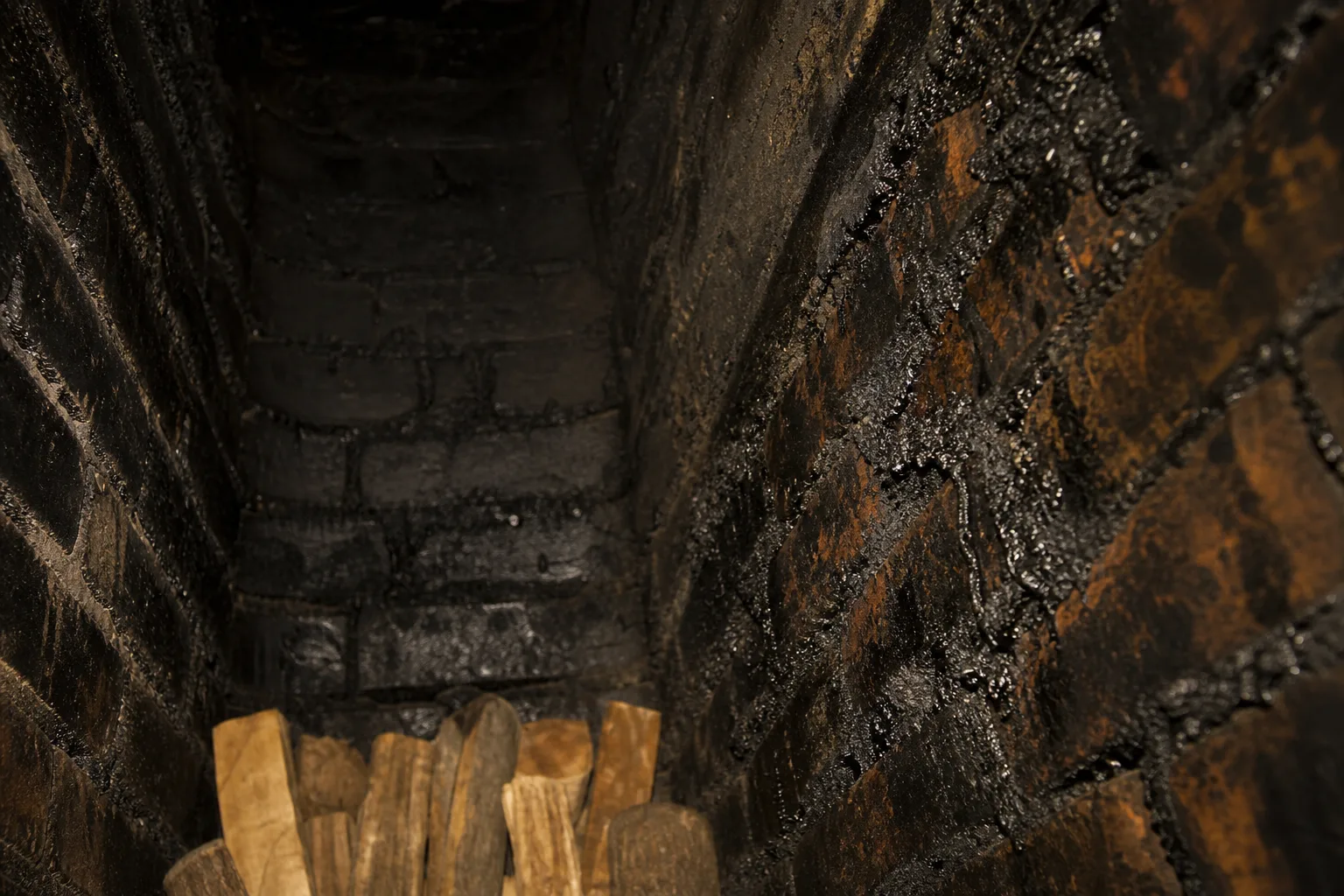
What speeds up creosote buildup
- Unseasoned (wet) wood: moisture cools the flue and condenses creosote fast — the single biggest factor.
- Slow, smoldering burns: closed-damper overnight burns produce far more residue than hot, active fires.
- Oversized flue or exterior chimney: cooler flue walls condense more creosote per fire.
- Softwoods and treated wood: pine burns dirty; treated or painted wood should never be burned at all.
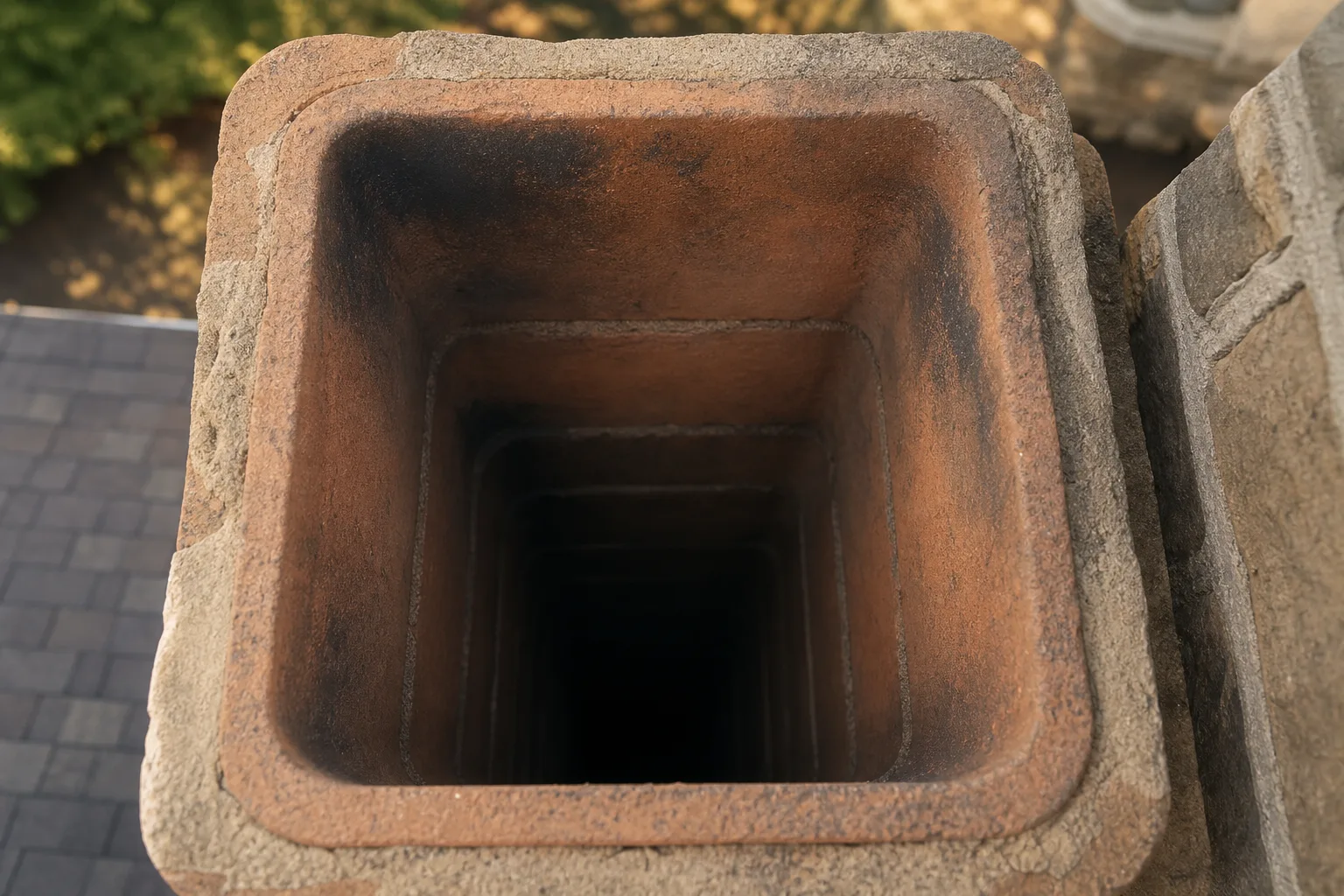
Creosote shows up in three forms, and the form matters as much as the thickness. Stage 1 is a light, sooty dust that brushes off easily. Stage 2 is a crunchy, flaky tar that takes rotary tools to remove. Stage 3 is a hard glaze — shiny and black, like poured tar — that usually requires chemical treatment plus mechanical removal, and it burns hot enough to crack clay tile liners. Burning wood at 20 percent moisture or less (check it with an inexpensive moisture meter on a freshly split face) is the cheapest way to stay in Stage 1.
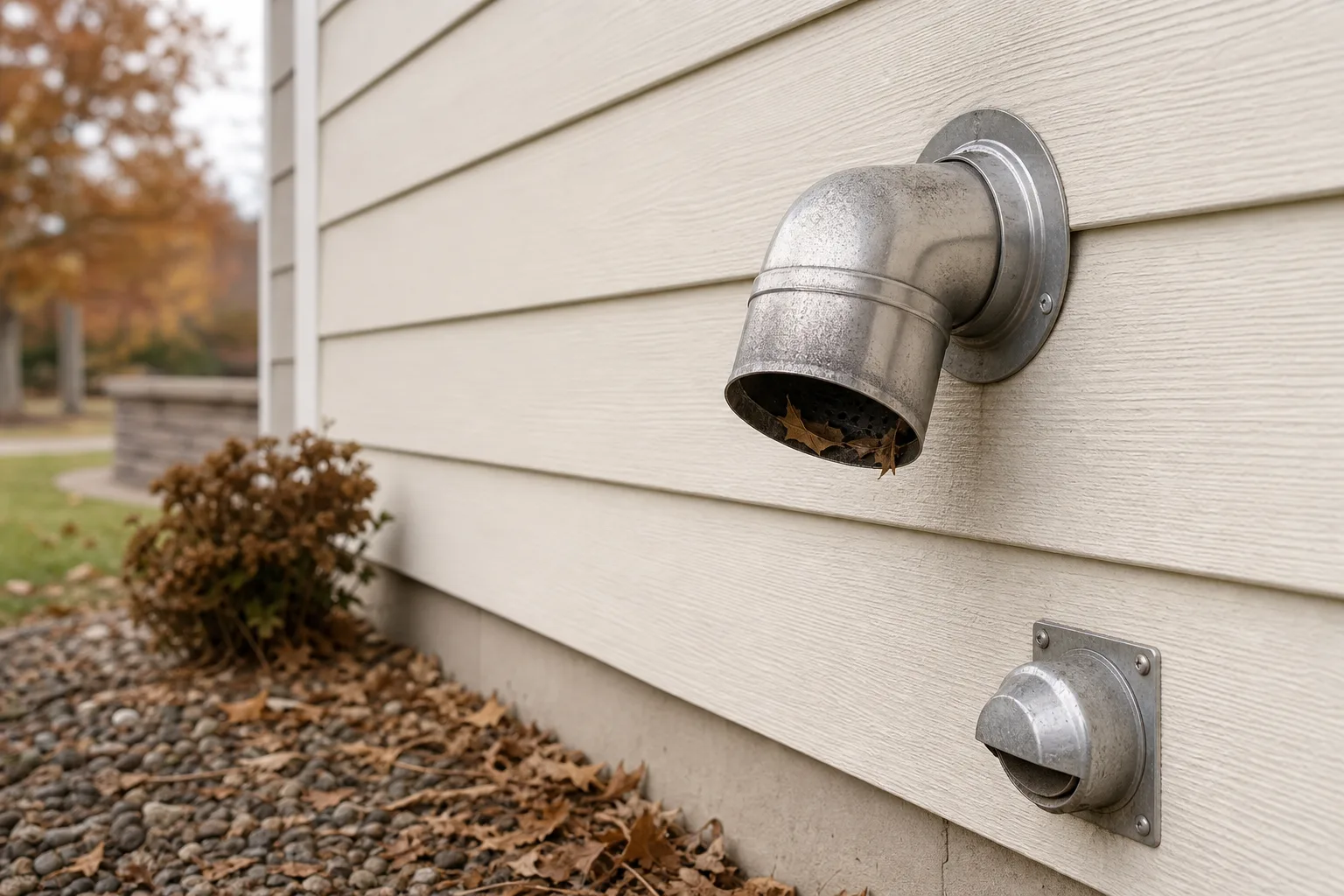
How often to clean a chimney with gas, pellet, or oil appliances
Wood isn't the only fuel that fouls a vent. Gas fireplaces make no creosote, but they produce acidic condensate that eats mortar and corrodes metal liners, and their flues are magnets for bird nests and leaf debris — inspect annually and clean as needed. Pellet stoves need the vent and the appliance's heat exchanger cleaned about every ton of pellets, or at minimum once a season, because fly ash packs into elbows and chokes the draft. Oil-fired appliances venting into a masonry chimney deposit a fine, acidic soot that should be brushed out yearly, ideally at the same visit as the furnace tune-up.
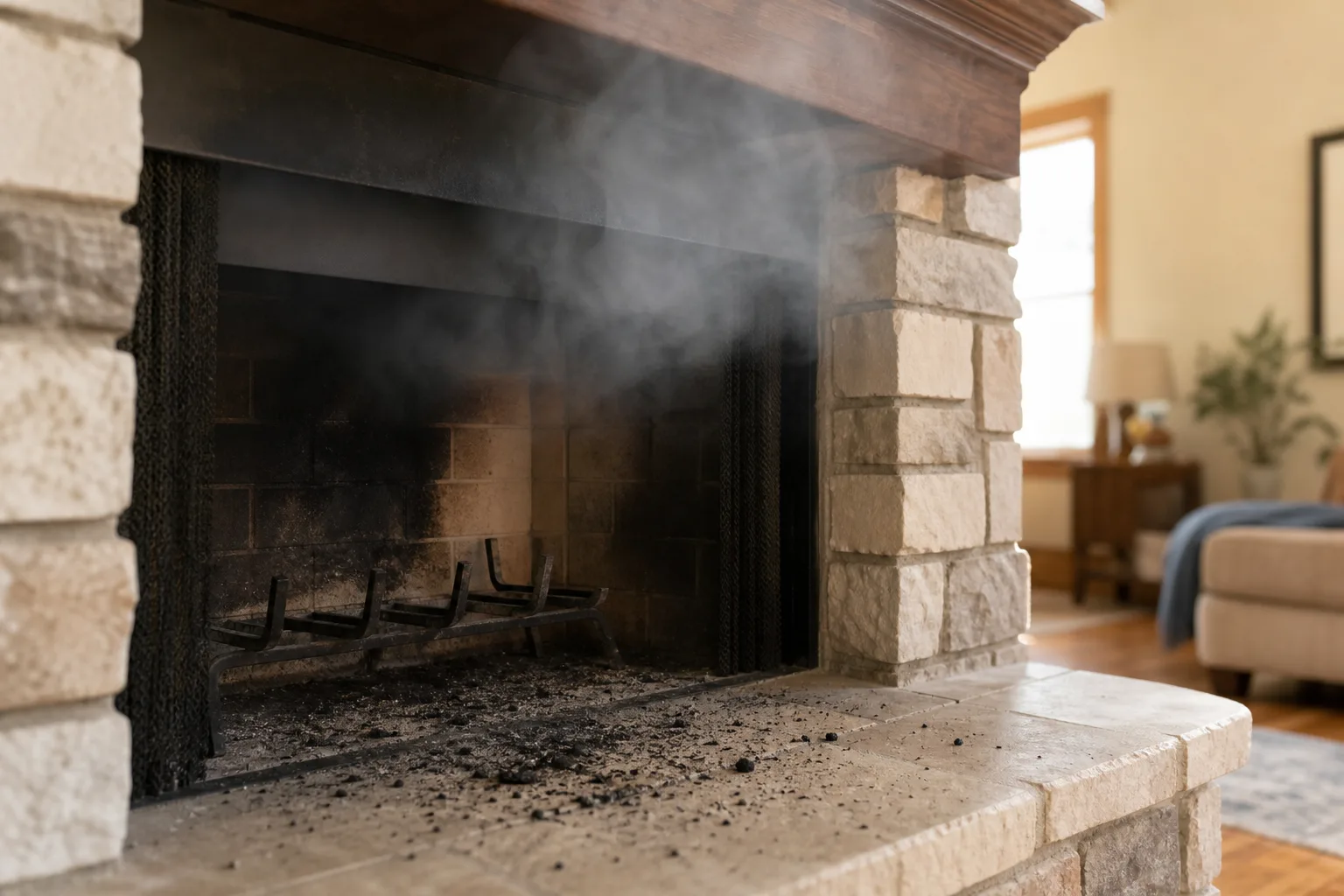
Signs you're already overdue
- Smoke rolls back into the room when you open the damper or start a fire
- A sharp, tarry campfire smell in the room on humid summer days
- Black flakes or gritty debris on the damper, smoke shelf, or hearth
- Fires that are hard to start and never seem to draft well
- Any past chimney fire, even a small one — that requires an inspection before the next fire
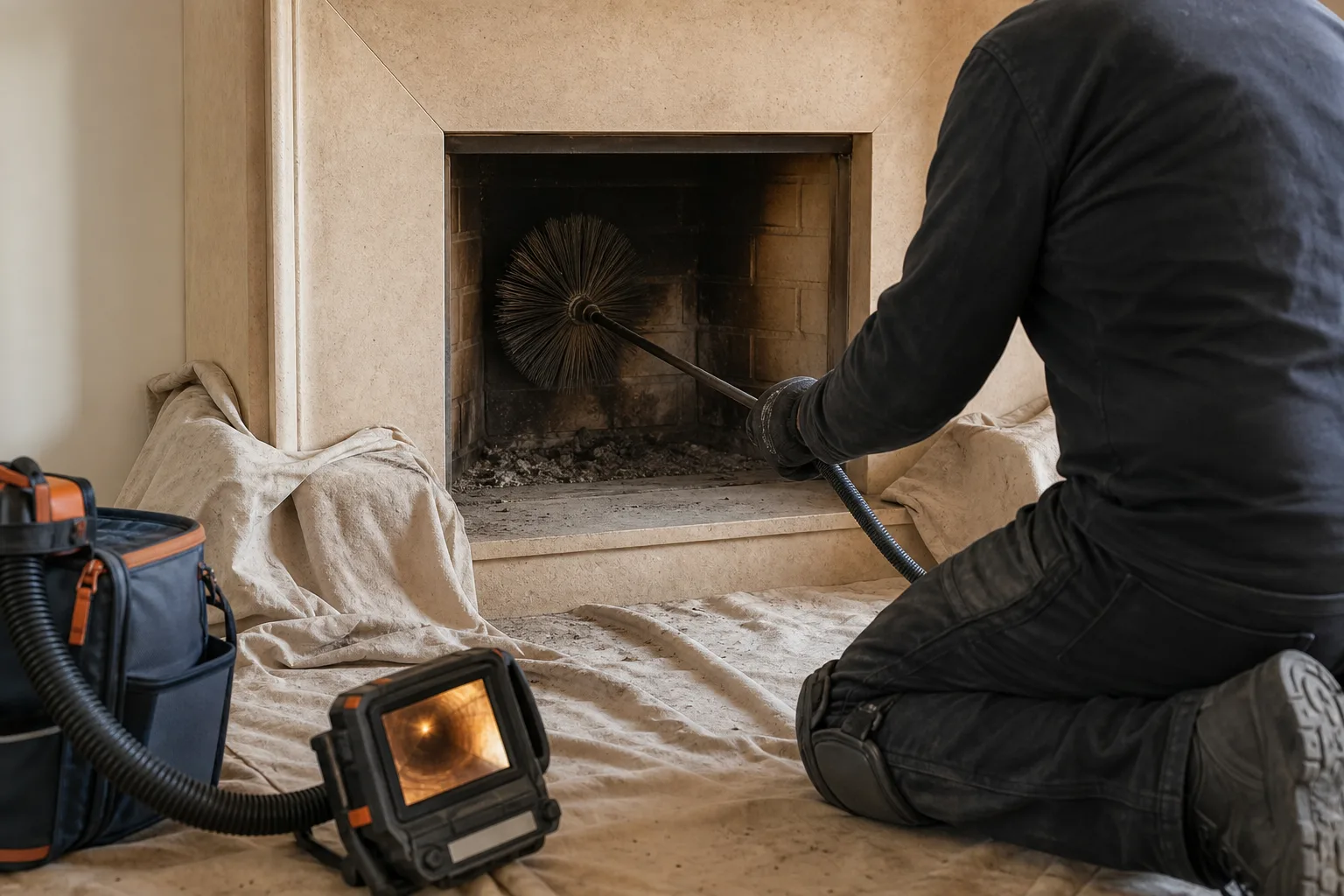
What a sweep and inspection include
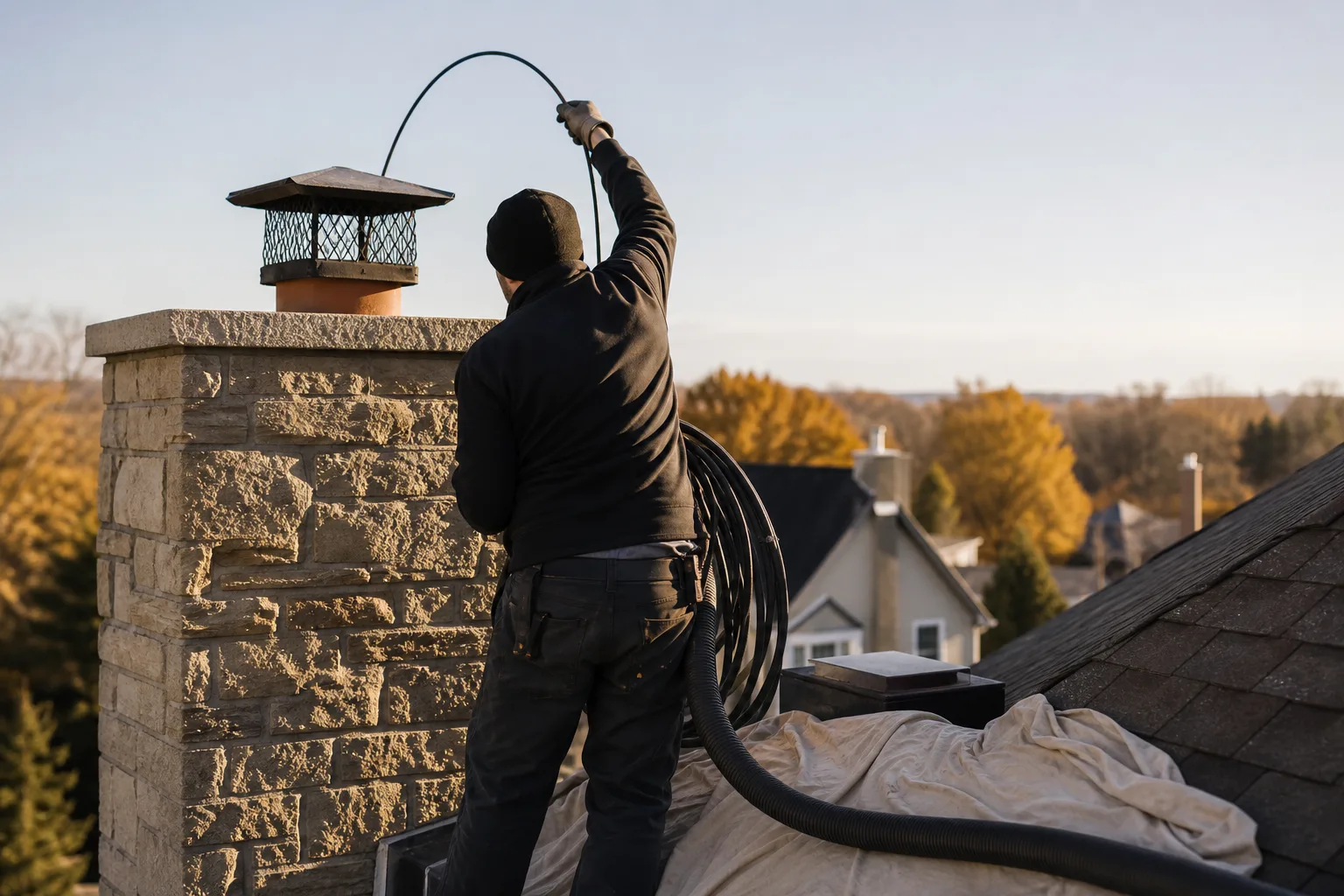
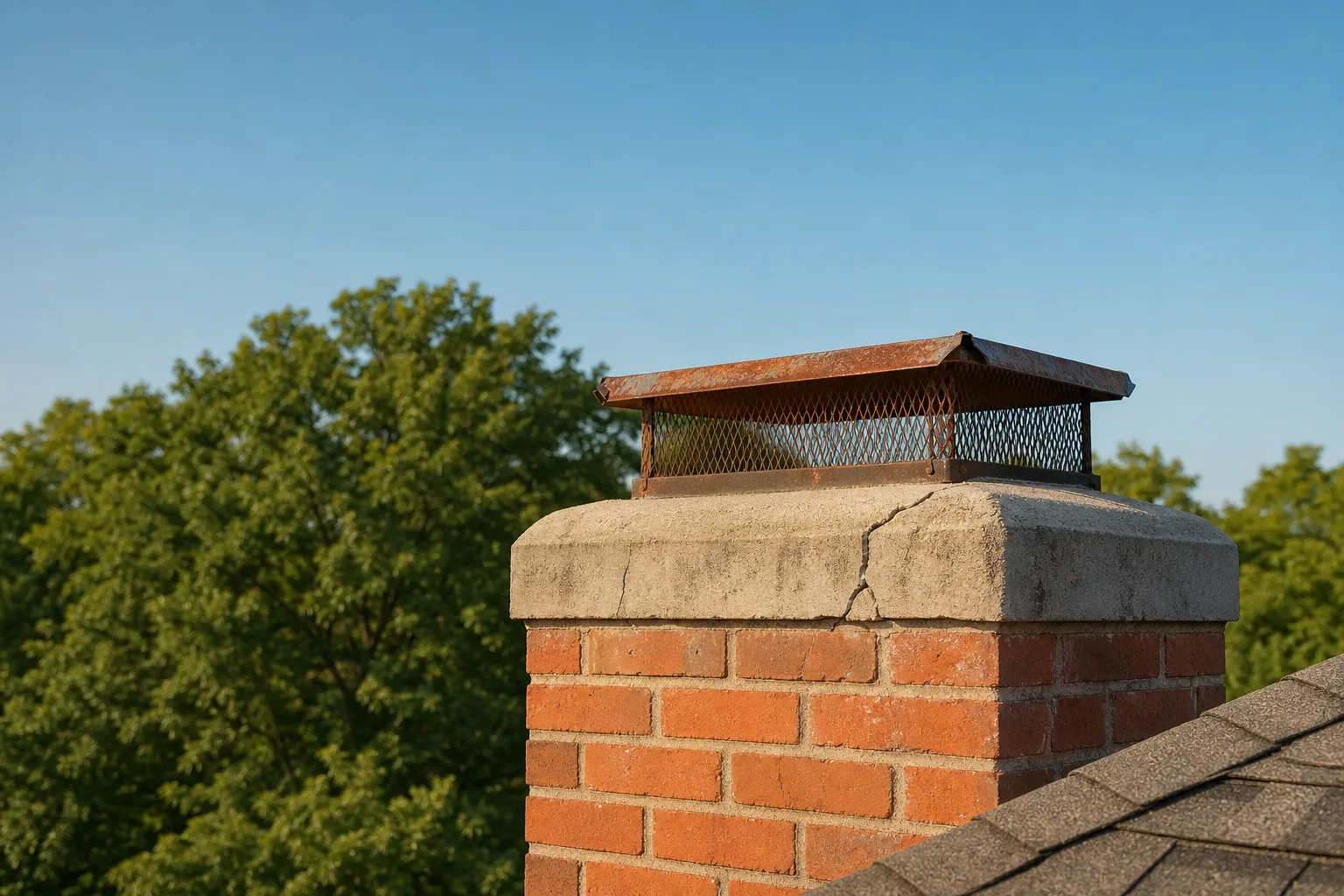
A standard visit runs 45 to 90 minutes. We lay drop cloths, seal the opening, and run a HEPA-filtered vacuum the whole time so soot stays in the equipment instead of your living room. Rotary brushes or poly whips scour the flue from the top down or bottom up, and we clean the smoke chamber, smoke shelf, and firebox. Then comes the NFPA Level 1 inspection: cap, crown, chase cover, flashing, liner condition, damper operation, and clearances to combustibles, usually with a camera scan of the flue. A Level 2 video inspection is the deeper version, and it's what's required after a chimney fire, after an earthquake or lightning strike, and at the sale of a home.
When to book
Schedule in spring or late summer. Sweeps are booked solid from October through December, and a small repair found in June — a cracked crown, a rusted cap — can be fixed before it takes on a winter of freeze-thaw cycles. If you heat with wood daily, put a mid-season check on the calendar too; deciding how often to clean a chimney by feel usually means finding out the hard way.
Symptom checker
What is your chimney doing?
Tap the closest match for an honest first answer.