



Next-day appointments
Call or book today and we'll do our best to get a pro to you tomorrow.
Chimney service
The short answer
If your clothes need two cycles, the dryer is not failing. The duct is blocked.
Lint escapes the trap on every load and settles along the duct behind the machine. As the passage narrows, hot wet air cannot leave, so the dryer runs longer and hotter to do the same work. That is the part you notice. The part you do not is that lint is tinder, sitting in the hottest airway in the house. Dryer vent cleaning clears the full run from the machine to the outside hood, which is why it fixes the drying time and the risk in the same visit.
The hood outside your wall
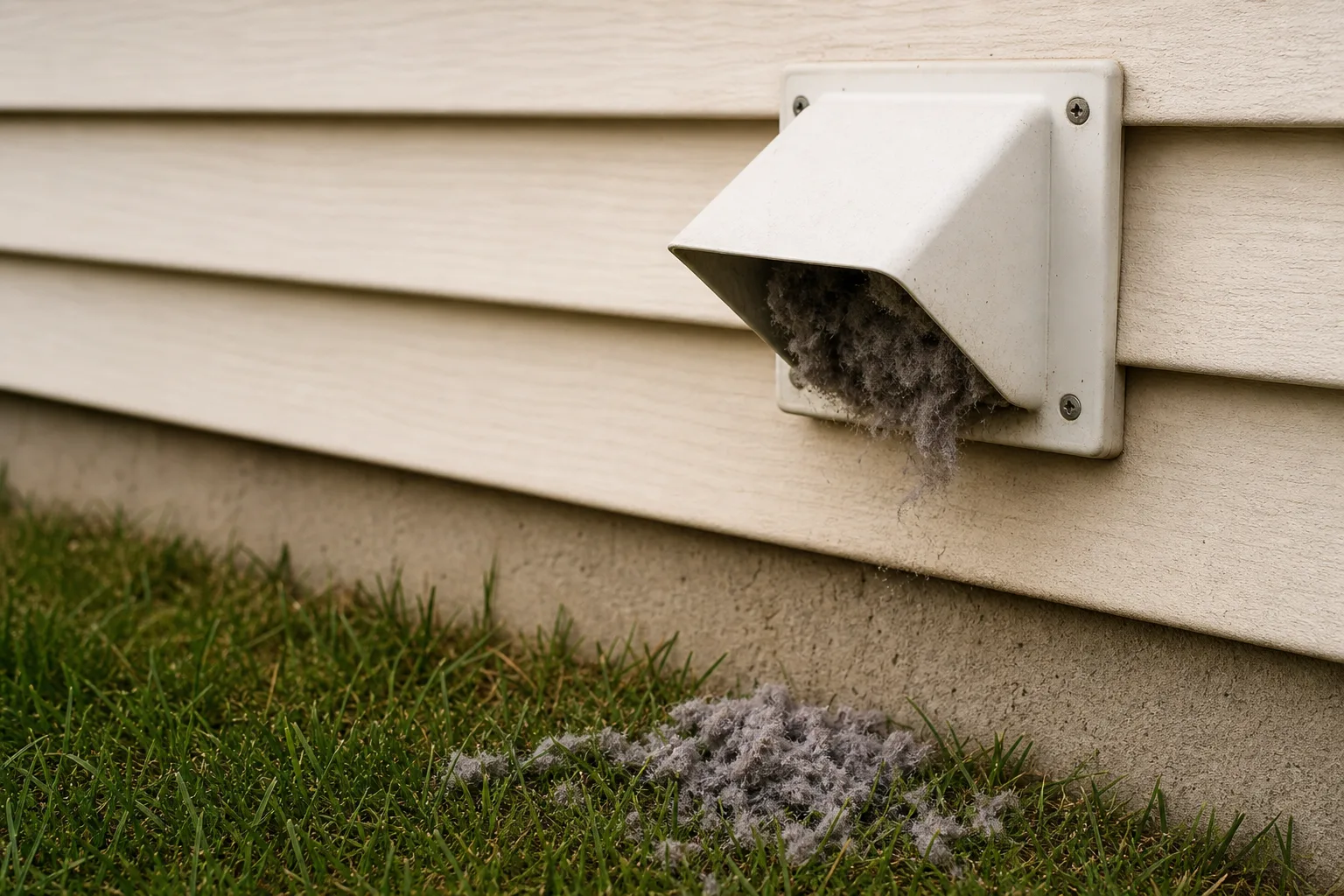
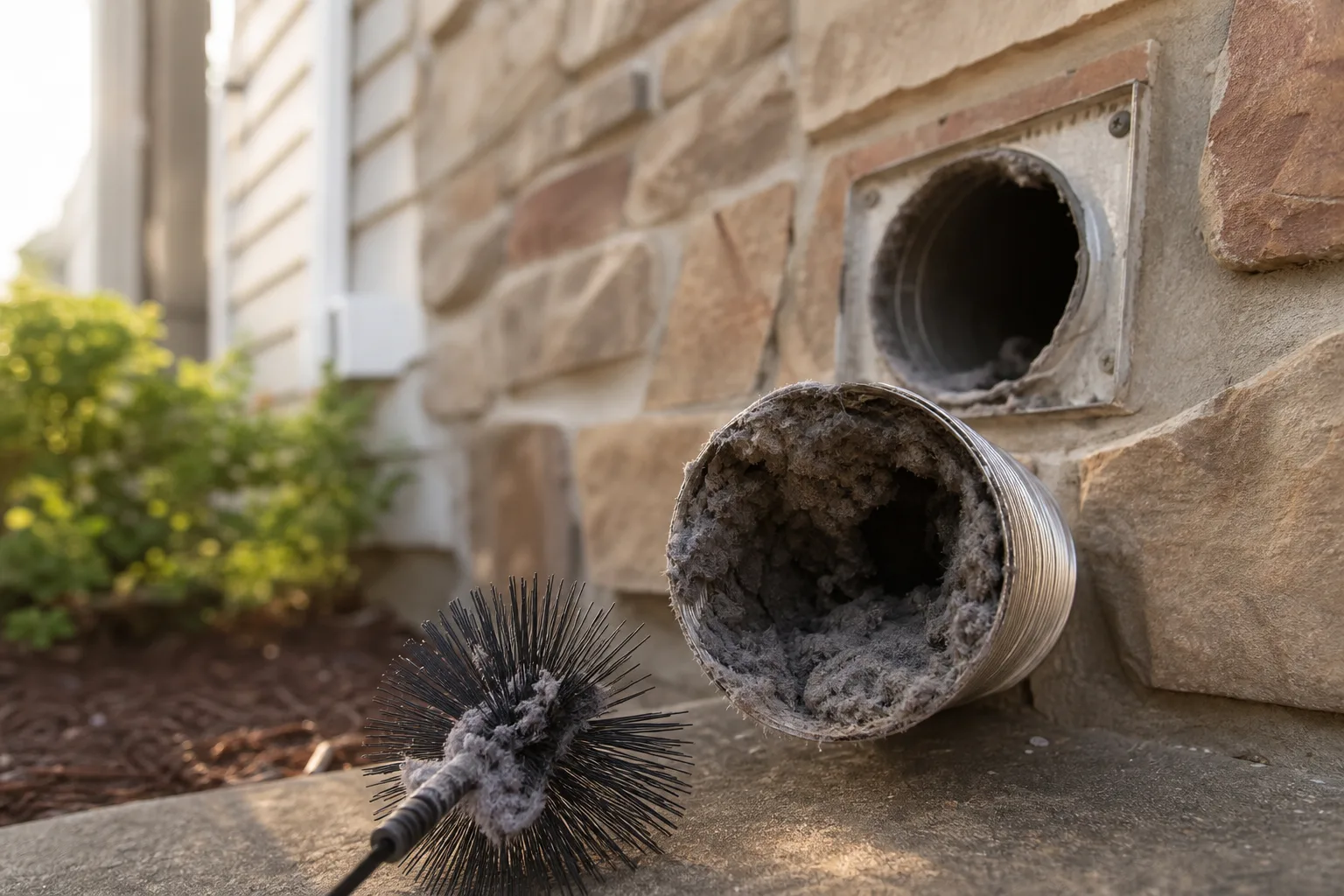
Fluff caught on the flap is the duct shedding what it can no longer carry. Whatever is outside, there is far more of it still inside.
Fall Special
Call or book today and we'll do our best to get a pro to you tomorrow.
Anything that needs attention is shown to you and explained in plain words.
If something needs fixing, you get the price in writing first. Saying no costs nothing.
Do you have this problem?
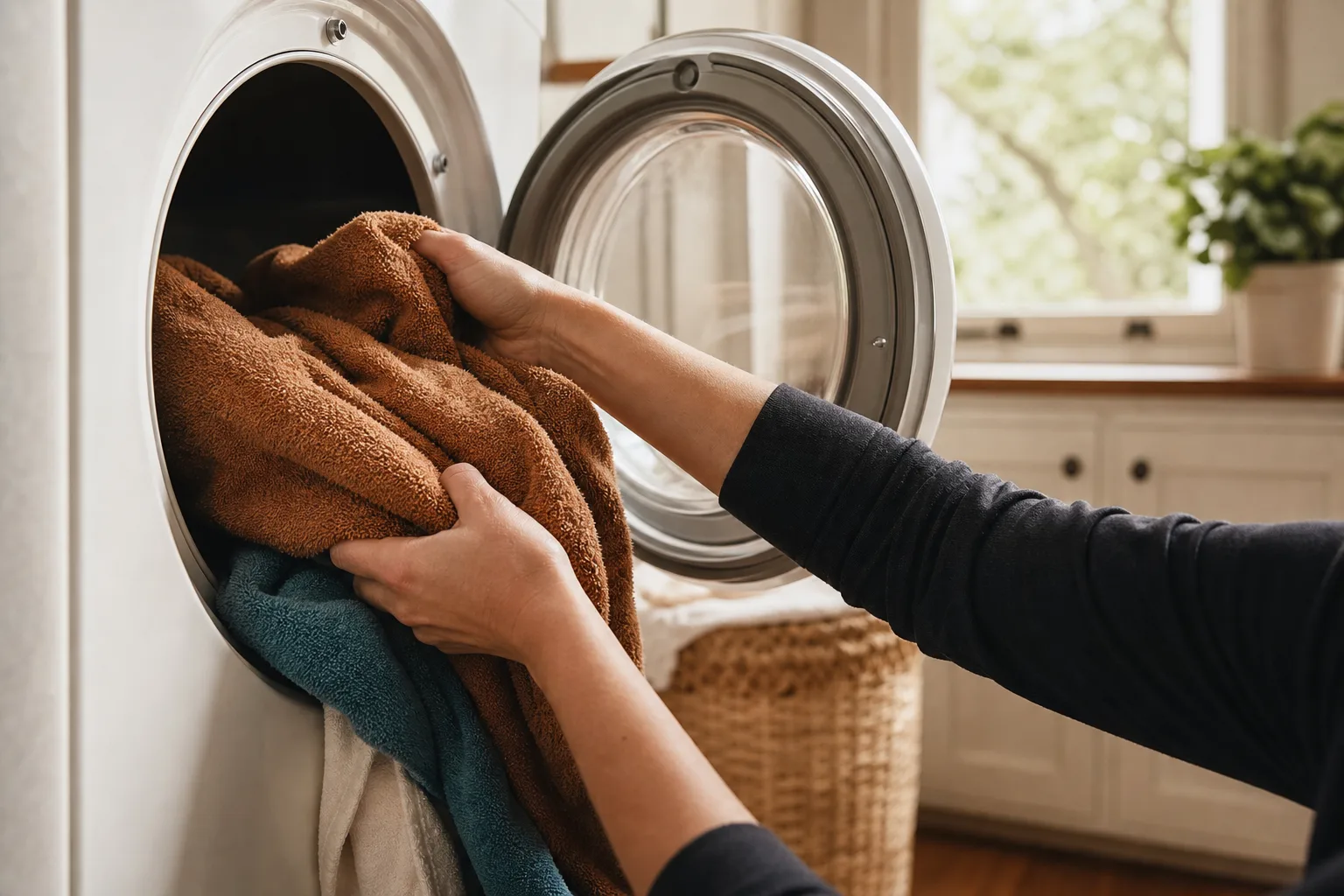
The single most common reason anyone books this. Towels and jeans need a second run, and it happened gradually enough that nobody noticed when it started.
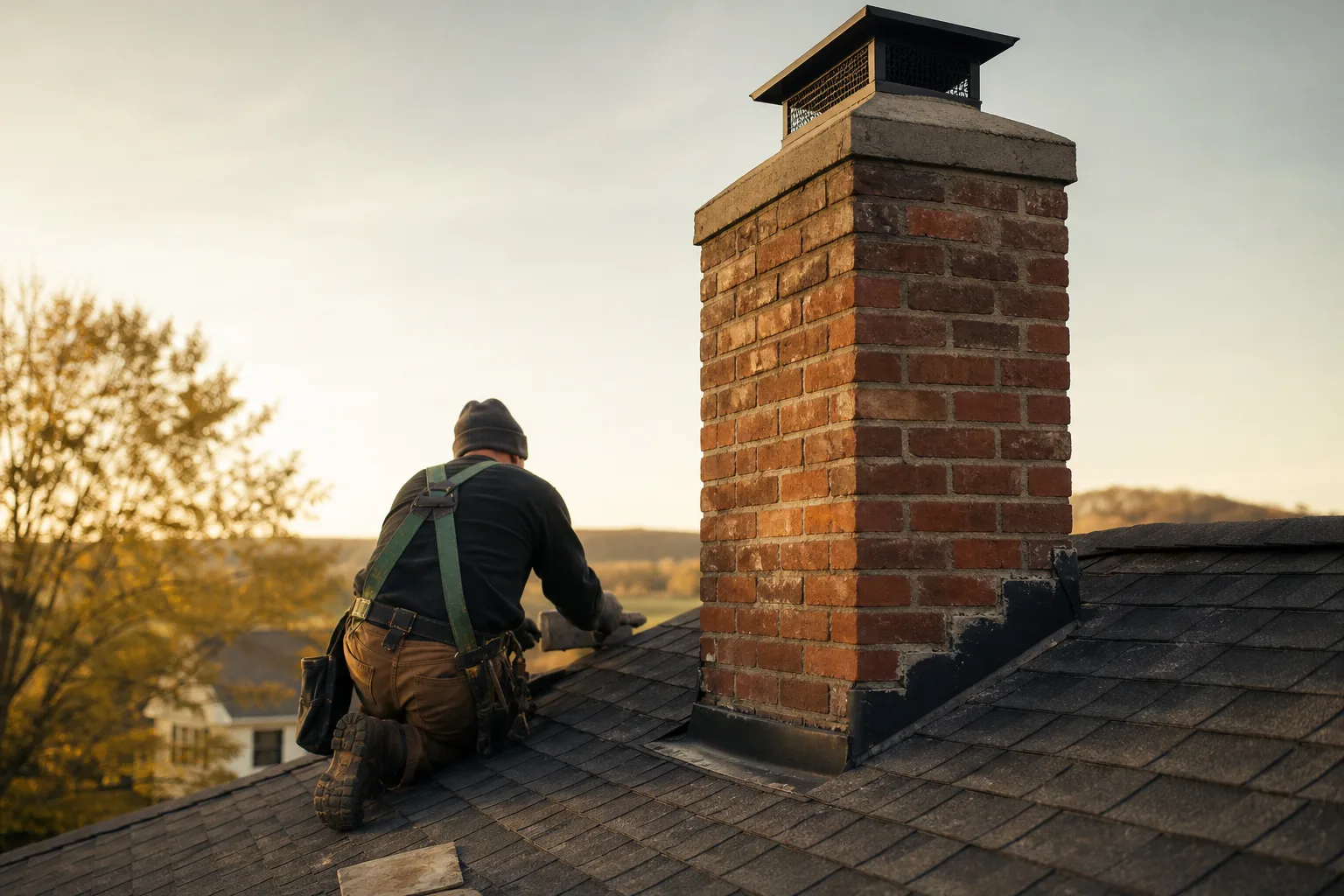
Air that cannot get outside ends up in the room. If the door has to stay open while the dryer runs, the duct is not moving what it should.
Fluff caught on the flap or in the grass below it means the duct is shedding what it can no longer carry. Whatever is outside, there is far more still inside.
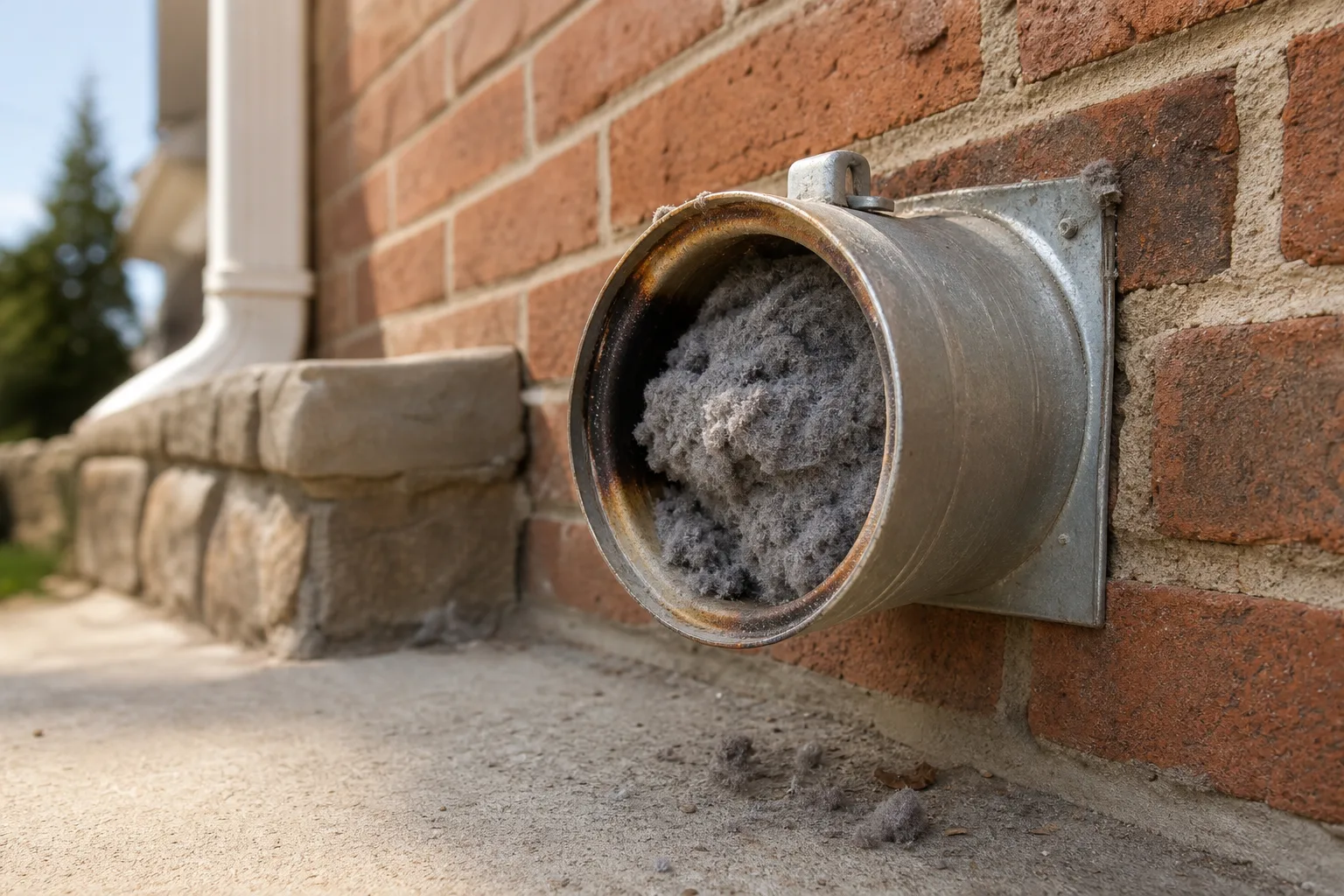
Lint heating against a duct wall. Stop using the dryer and get it looked at rather than finishing the load.
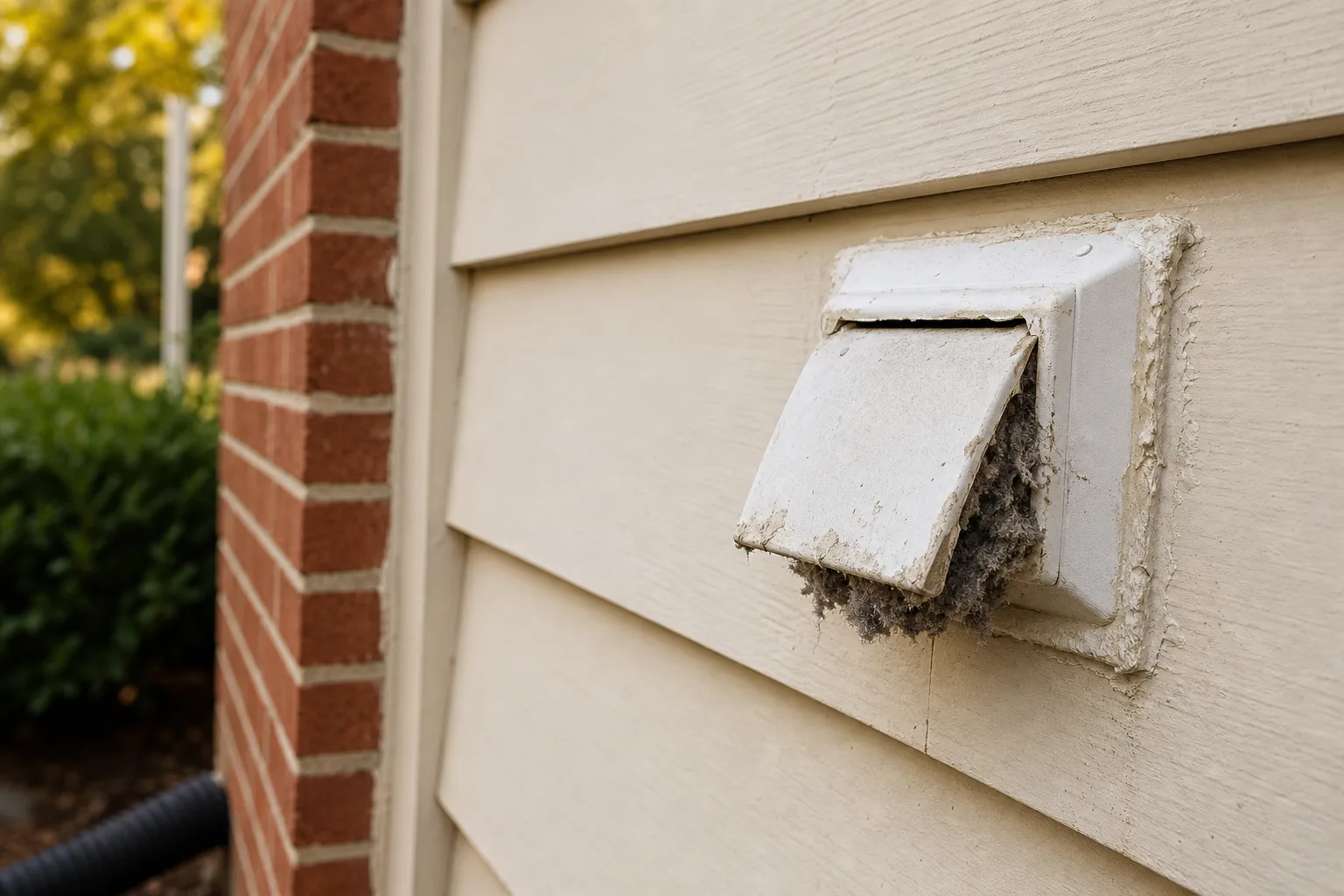
Go outside mid-cycle. The flap should be blown open by the airflow. If it sits shut or barely moves, almost nothing is getting through.
A dryer that cannot exhaust runs its heater far longer than designed. That shortens the life of the appliance well before it becomes a fire risk.
How we work
The same four steps every time, whatever the repair turns out to be.
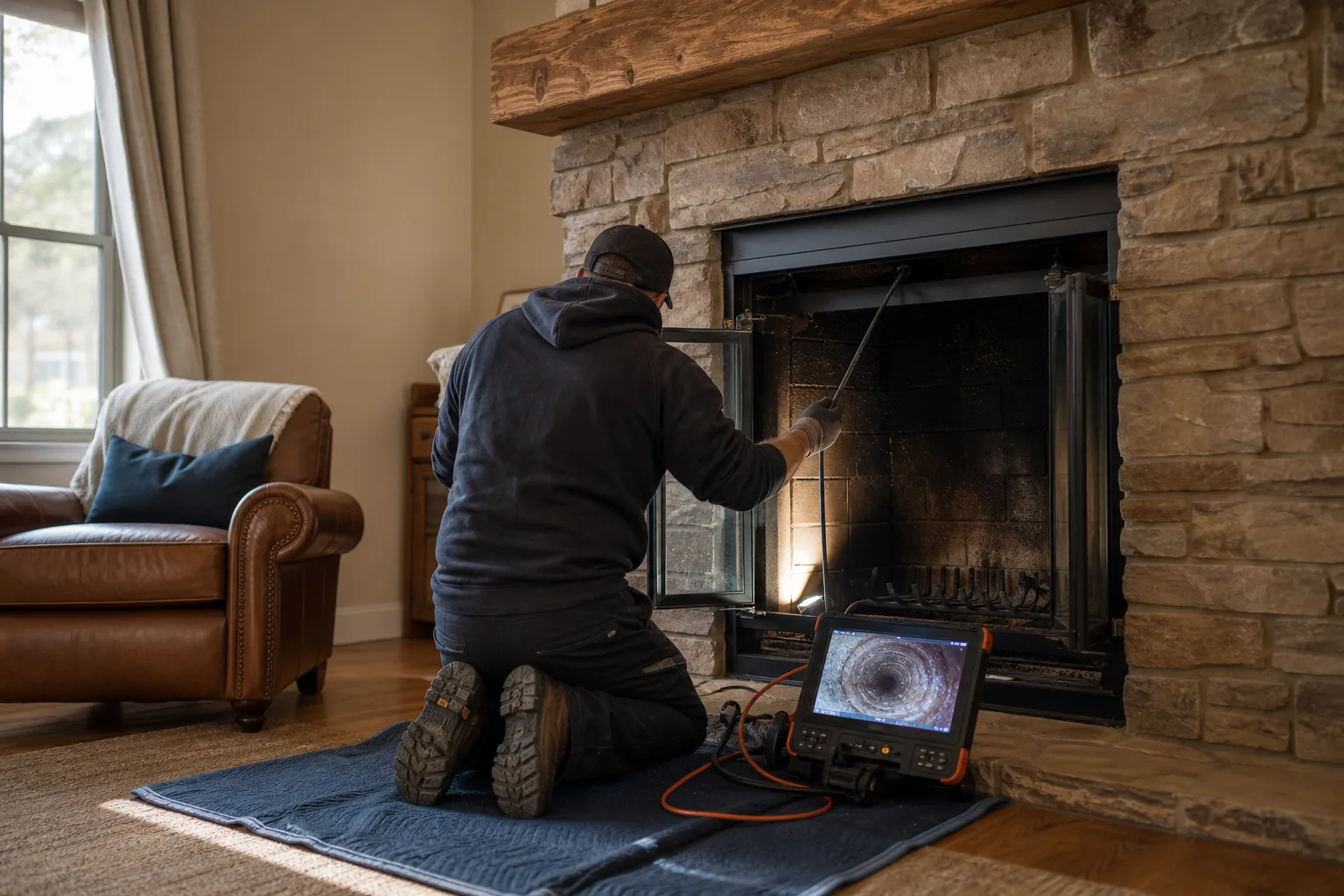
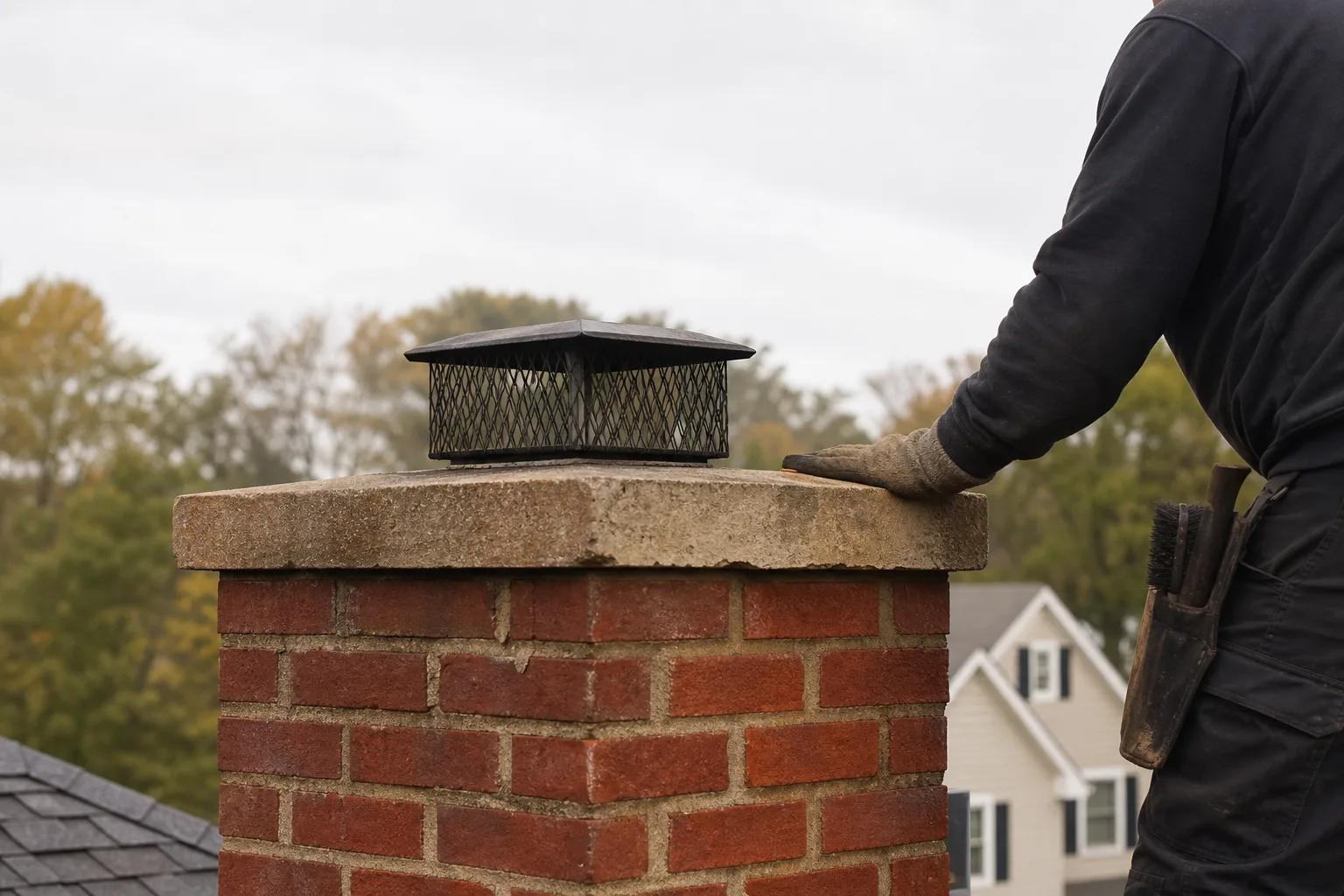
A look at the crown, cap, flashing and exterior masonry, then the flue, damper and firebox — with a camera where the job calls for a level 2 scan. Whatever needs work gets shown to you, not just described.
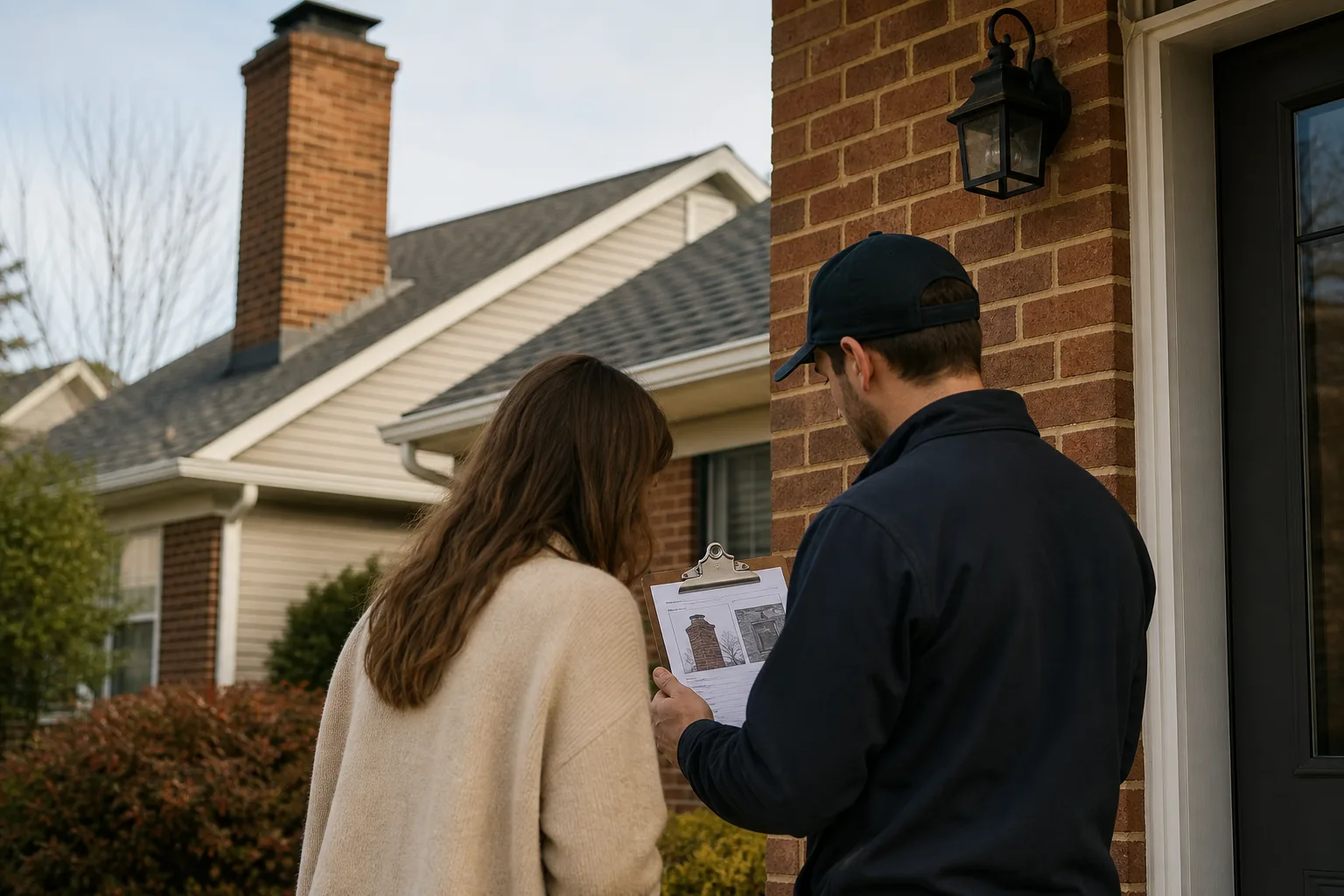
Scope, price and what is not included, in writing. Nothing starts until you approve it, and an emergency is not a reason to skip this step.
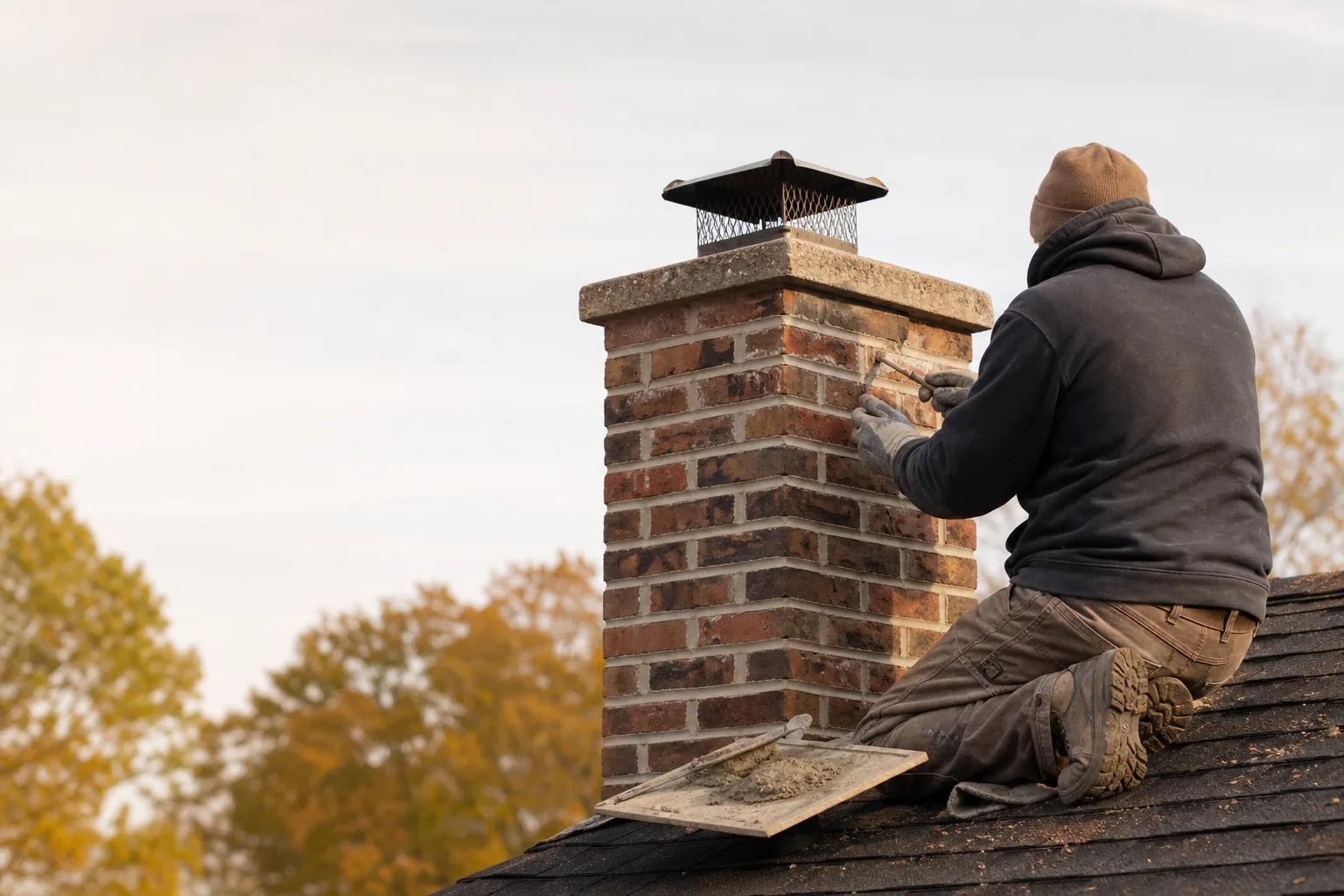
Matched materials and the manufacturer's spec, not whatever is on the van. Drop cloths down, and the room left as it was found.

A second scan after the work, and written findings you can keep, hand to an inspector, or send to an insurer.
What it covers
Not every job on this list is equally urgent, so they are ordered that way. A cracked liner stops you using the fireplace tonight; waterproofing can wait for a dry week.
The job — most urgent first
What it involves
On site
Rotary brush on a flexible rod through the whole run, with a vacuum at the open end. Cleaning only the first arm's length behind the dryer moves the blockage rather than removing it.
On site: About an hour
Foil concertina hose kinked behind the machine, or a run crushed flat where it passes a joist. Rigid metal duct replaces it, because the ribbed flexible kind catches lint by design.
On site: Half a day
A vent hood with a broken flap is an inviting nest site. The nest comes out and a proper louvred or damper hood goes on, or it happens again next spring.
On site: About an hour
A hood whose flap has seized, or the fine mesh screen type, which clogs solid within a season. Lint needs a clear opening, not a filter.
On site: About an hour
Ducts that run a long way, or turn several times to reach an outside wall, block far faster. Sometimes the fix is a shorter path rather than cleaning the same bad one every year.
On site: Half a day
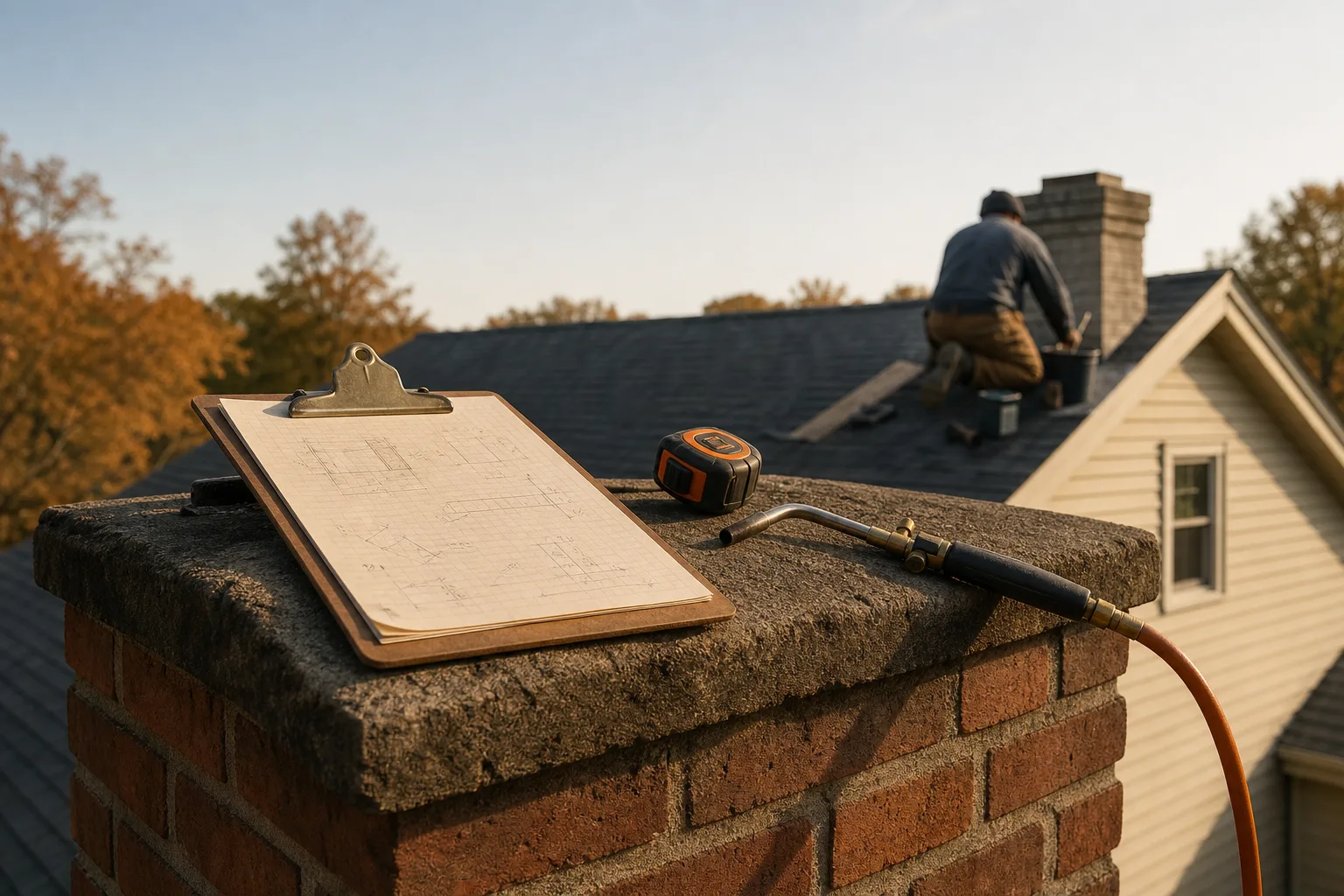
Times are for the work itself, not for scheduling. Masonry needs roughly 40°F to cure properly, which is what limits this work in a northern winter rather than whether a crew is free.
What drives the price
A straightforward clean on an accessible ground-floor run is one of the cheapest jobs we do. Long runs, roof outlets and duct replacement cost more because they take longer and need materials. Anyone quoting per foot before seeing the run is guessing at the part that matters.
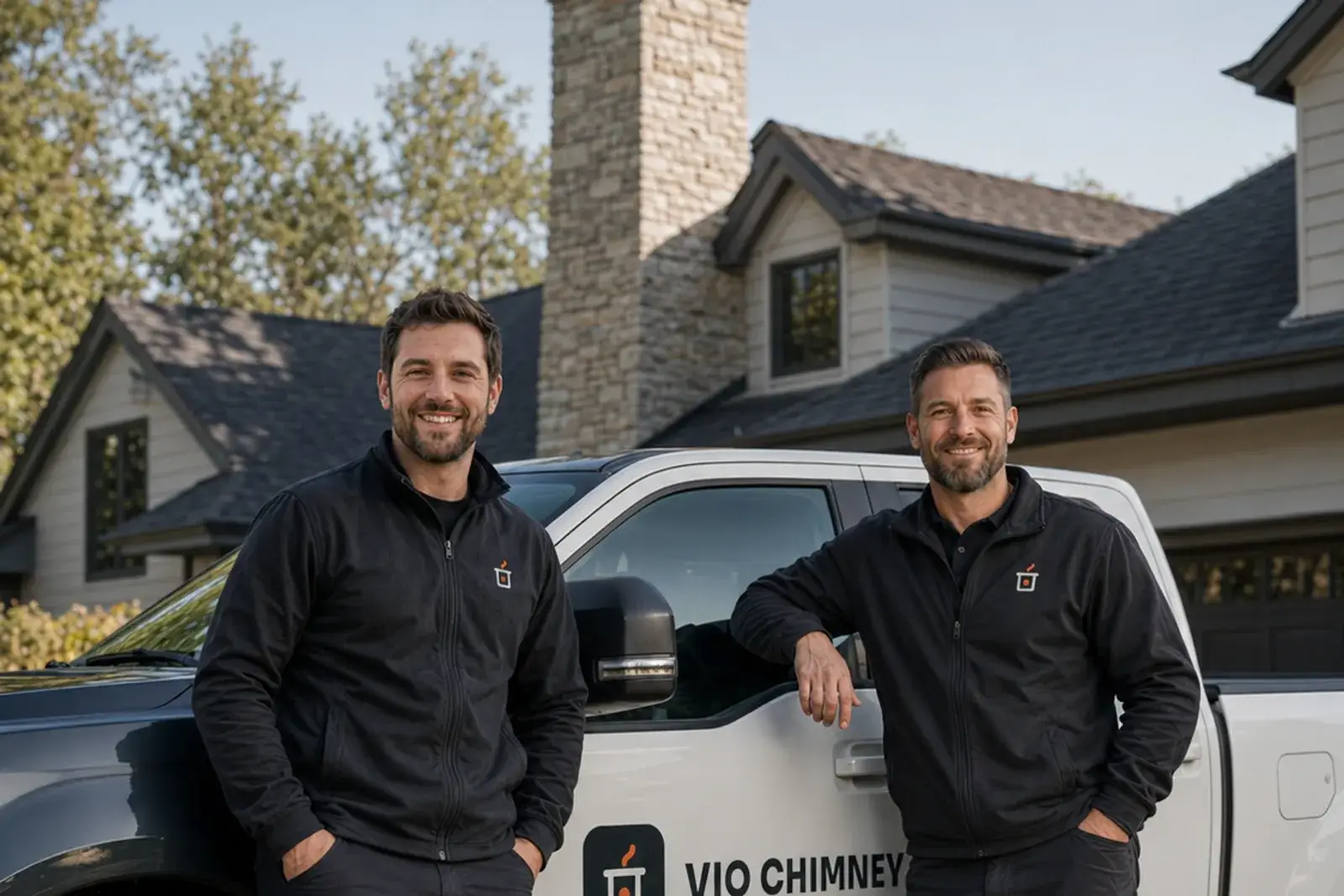
Founded by Ryan Carter in 2019. Every page you read here is reviewed by Ethan Miller, our chimney specialist. A written estimate before any work, and the findings in writing whether or not anything needs doing.
More about who we are →
The VIO Standard
Good to know