



Next-day appointments
Call or book today and we'll do our best to get a pro to you tomorrow.
Chimney service
The short answer
Almost every chimney repair starts cheap and gets expensive by being left.
The work itself comes down to four jobs: sealing where water gets in, rebuilding masonry that freeze-thaw has broken up, replacing a cracked crown or a missing cap, and relining a damaged flue. Which one you need is not something you can tell from the ground. The damage that drives the cost sits inside the flue, so the honest answer always starts with a camera.
What is actually up there
Most of what fails is above the roofline or inside the flue, which is why a repair quote given from the ground is a guess.
Fall Special
Call or book today and we'll do our best to get a pro to you tomorrow.
Anything that needs attention is shown to you and explained in plain words.
If something needs fixing, you get the price in writing first. Saying no costs nothing.
Do you have this problem?
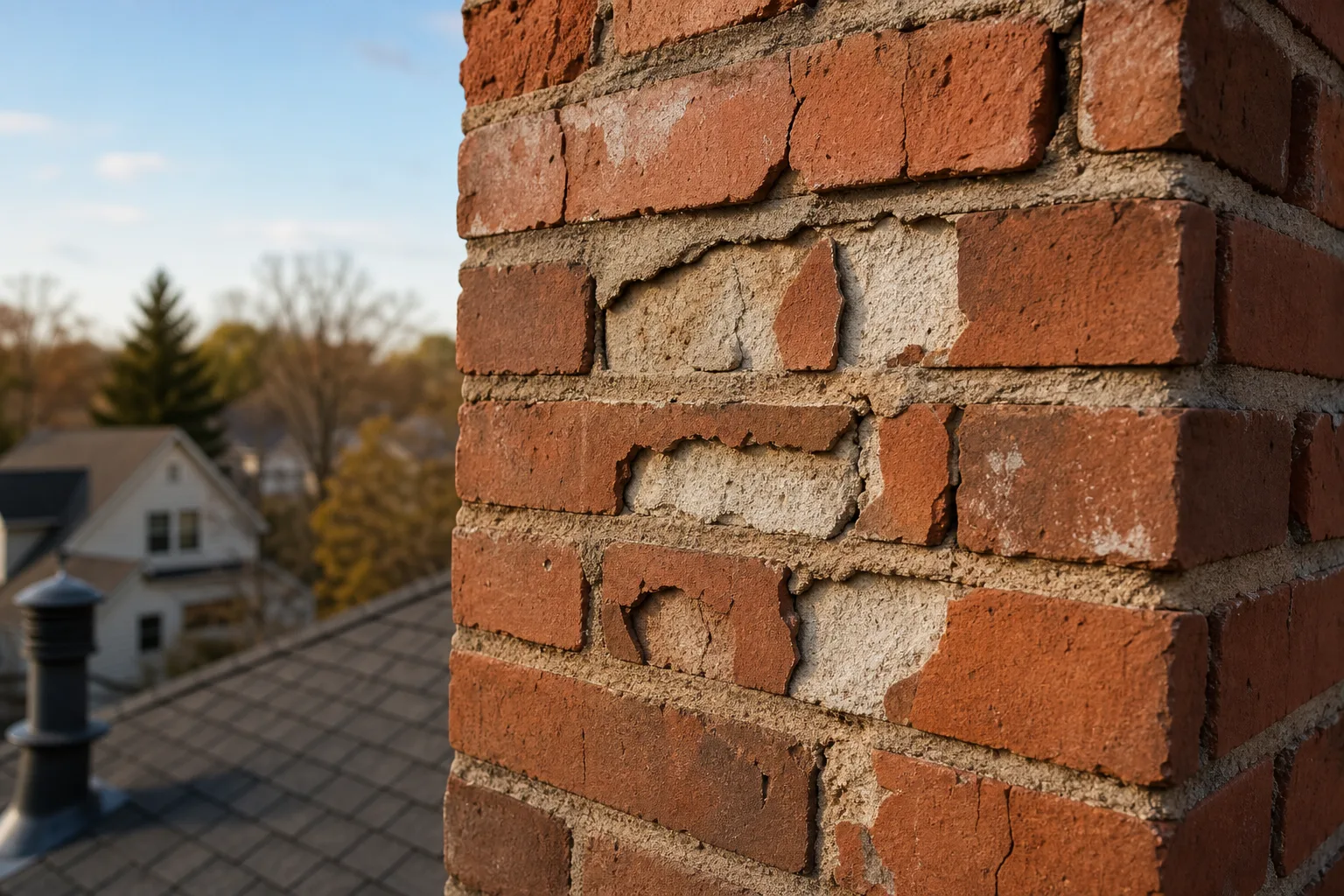
Spalling means water got into the brick and froze. The face flakes away, the brick underneath is soft, and the wall loses strength course by course. It does not stop on its own.
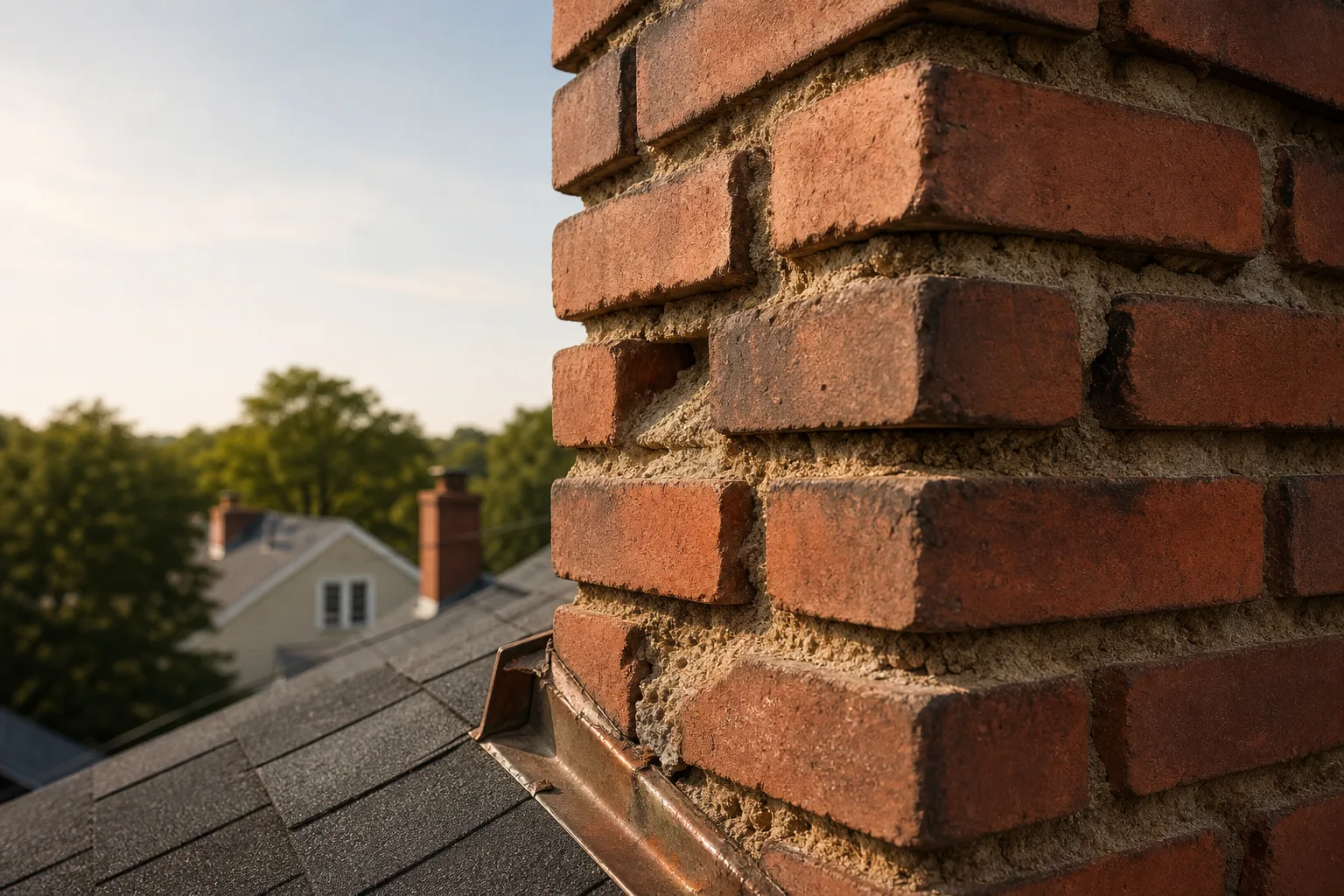
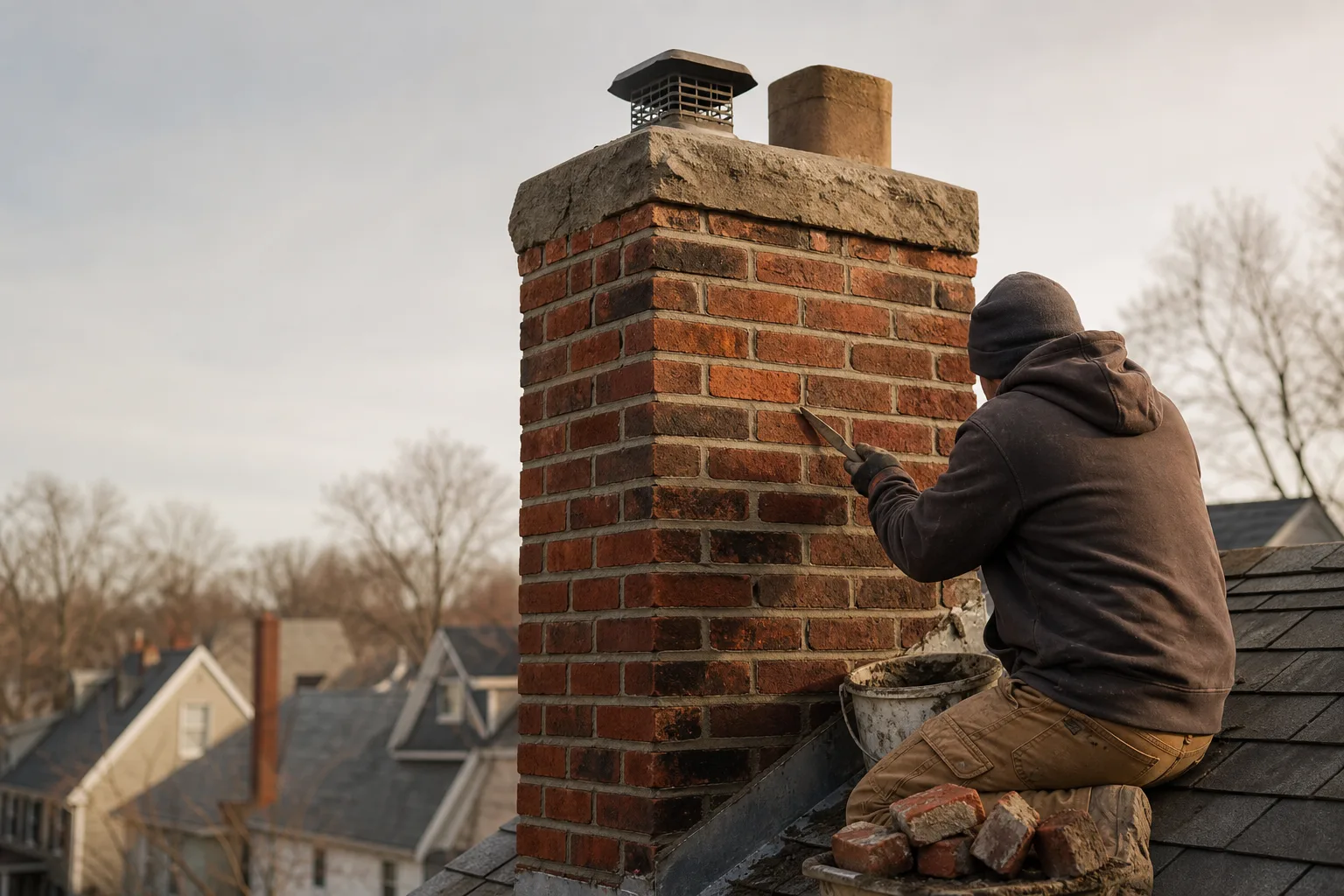
Joints that crumble under light pressure are no longer holding the stack together. Repointed early this is a day of work; left alone it becomes a rebuild.
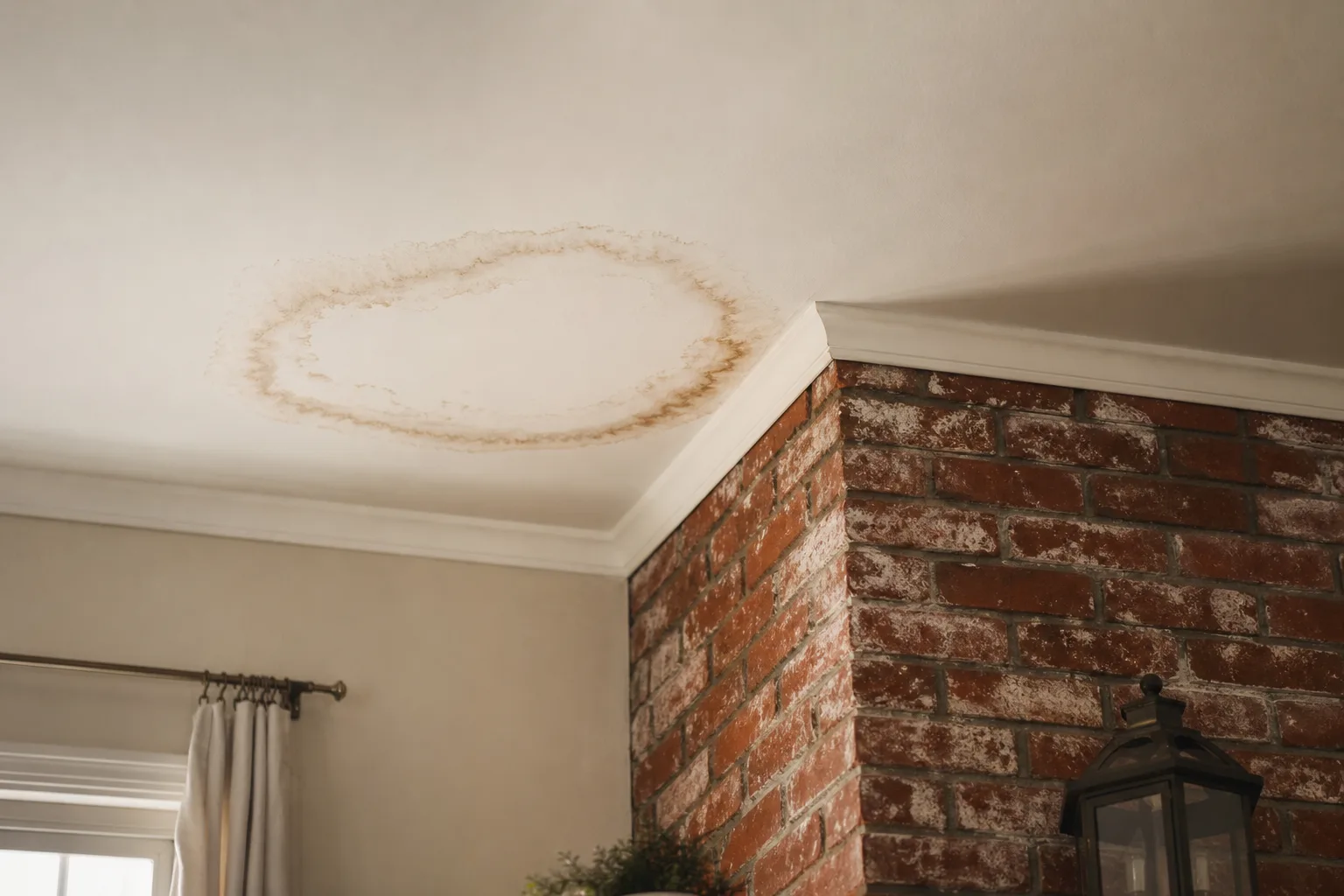
Water is getting in above and travelling down. The stain is almost never under the actual leak, which is why guessing at the fix wastes money.
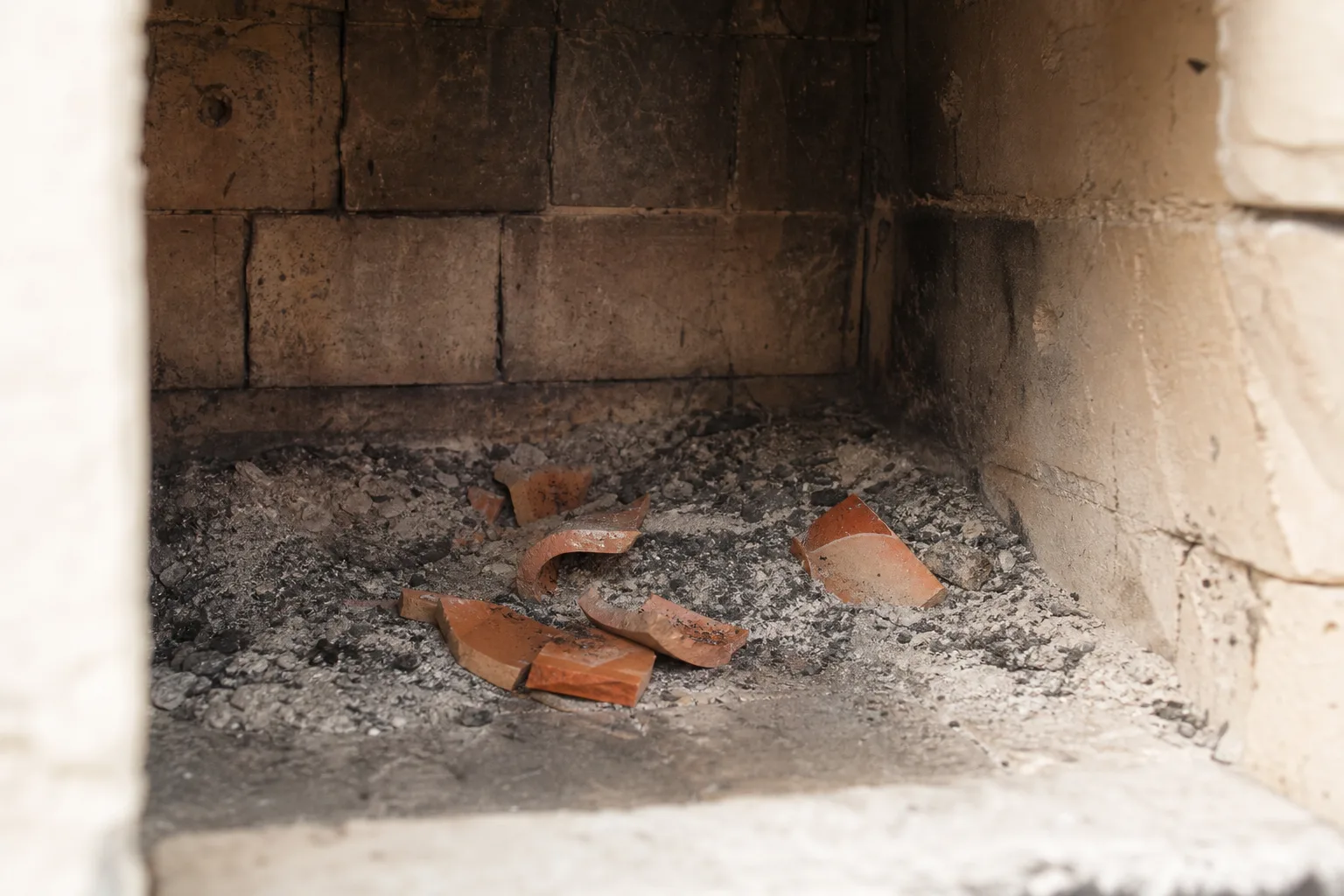
Pieces of clay in the hearth mean the flue liner is breaking up. A cracked liner lets heat and combustion gases reach the framing. Stop using the fireplace until it is fixed.
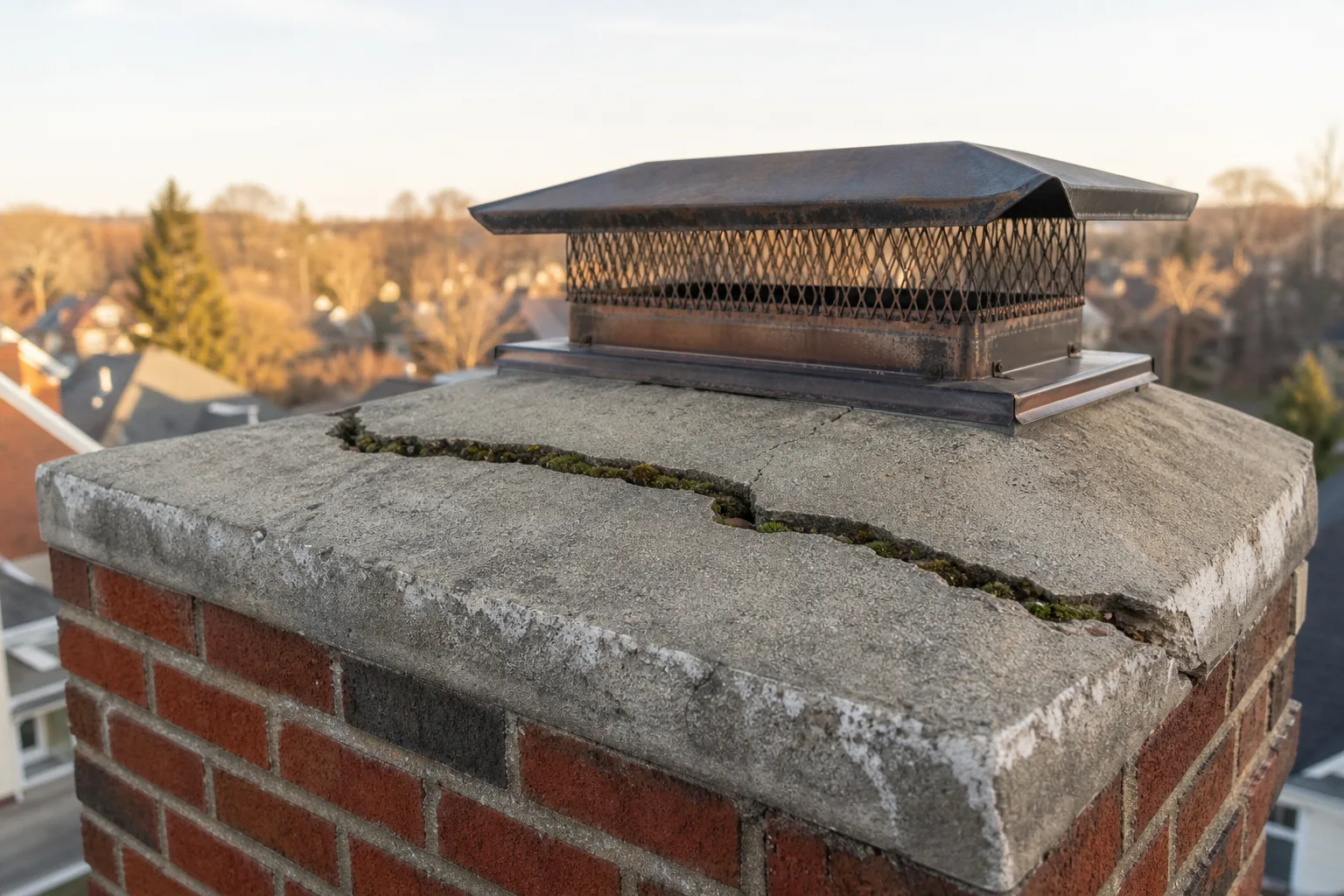
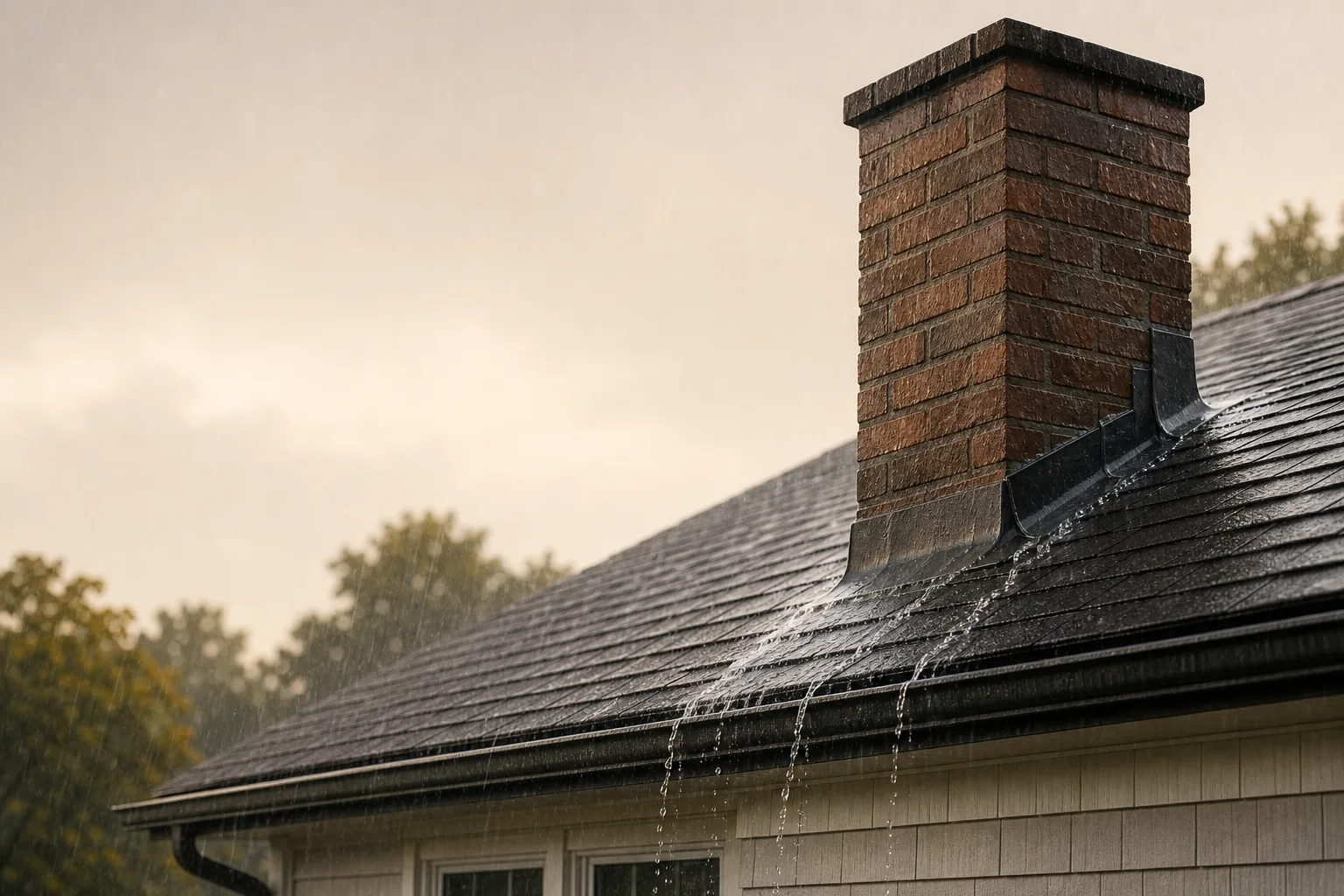
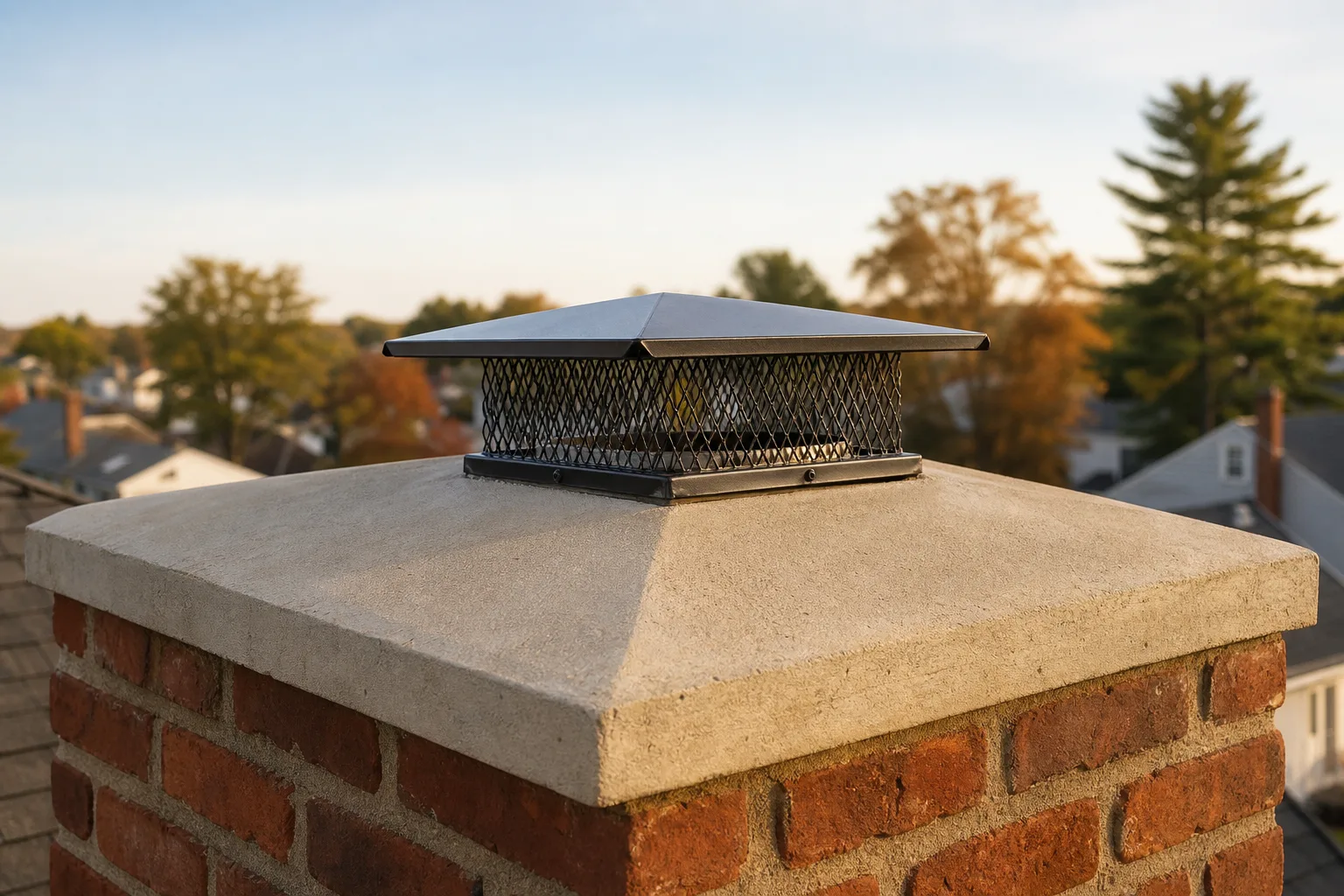
The crown is the concrete slab that sheds water off the top. Once it cracks, every rainfall runs straight into the masonry below it.
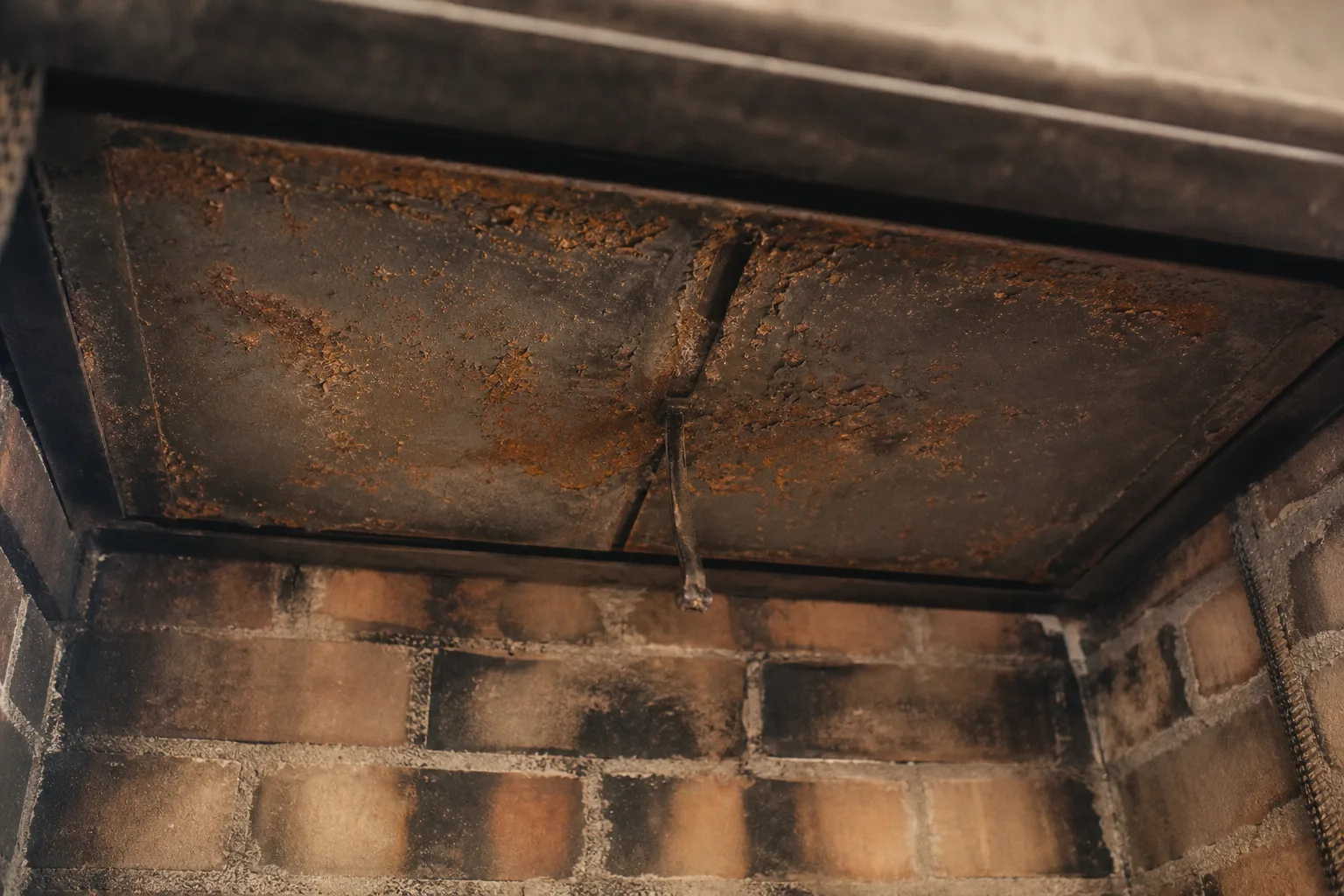
Rust means sustained moisture where there should be none. The leak is upstream and has been running for a while.
How we work
The same four steps every time, whatever the repair turns out to be.
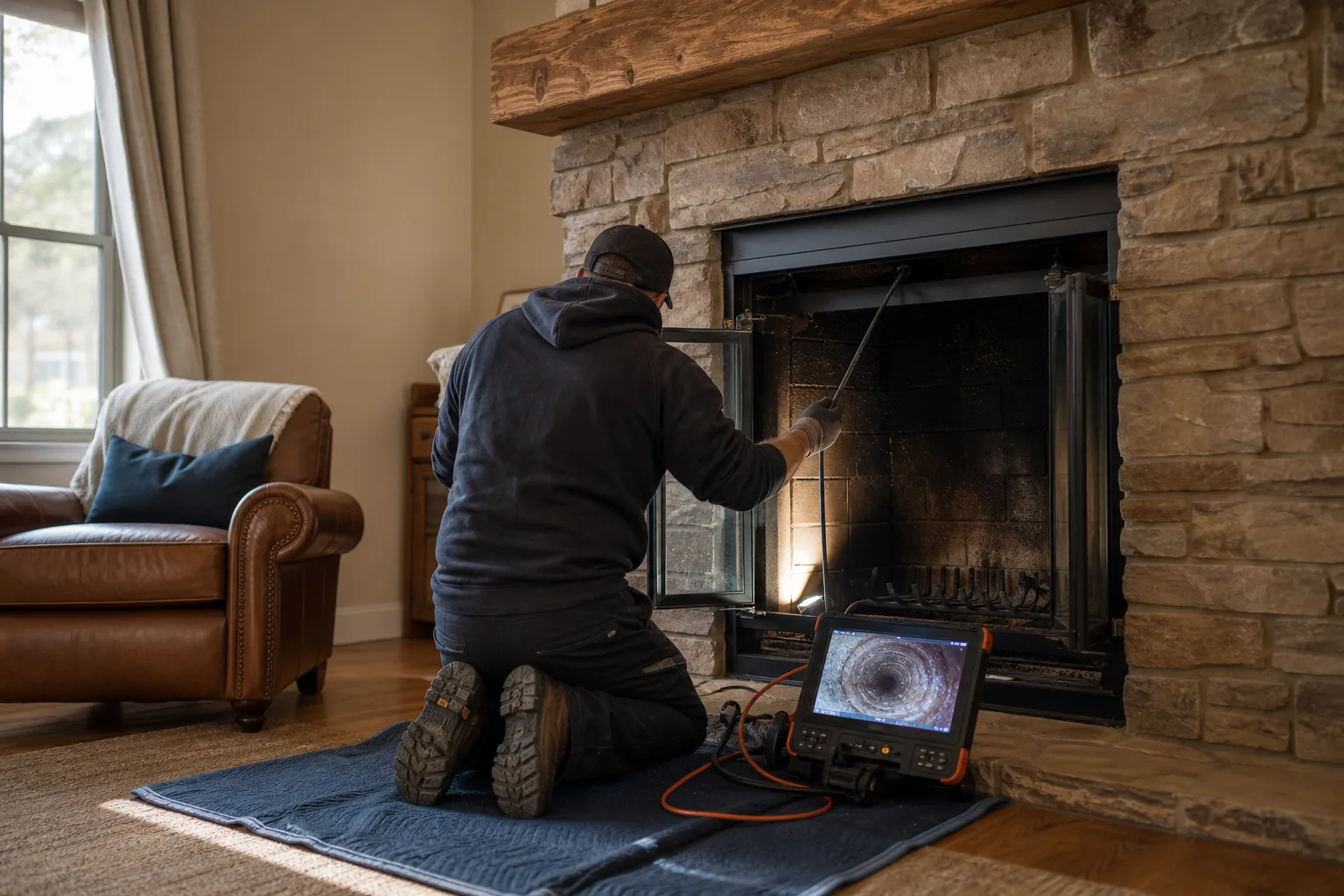
A look at the crown, cap, flashing and exterior masonry, then the flue, damper and firebox — with a camera where the job calls for a level 2 scan. Whatever needs work gets shown to you, not just described.
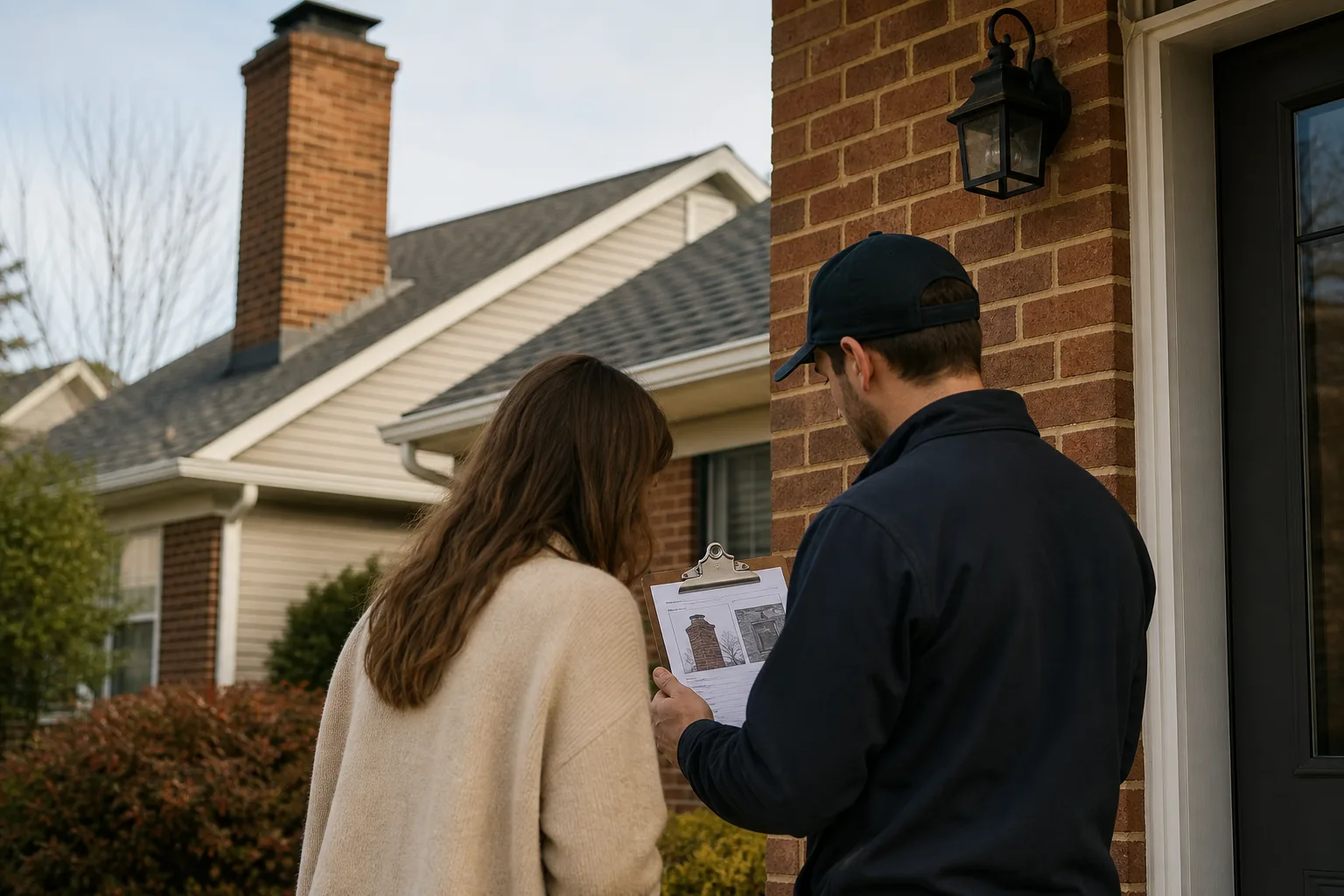
Scope, price and what is not included, in writing. Nothing starts until you approve it, and an emergency is not a reason to skip this step.
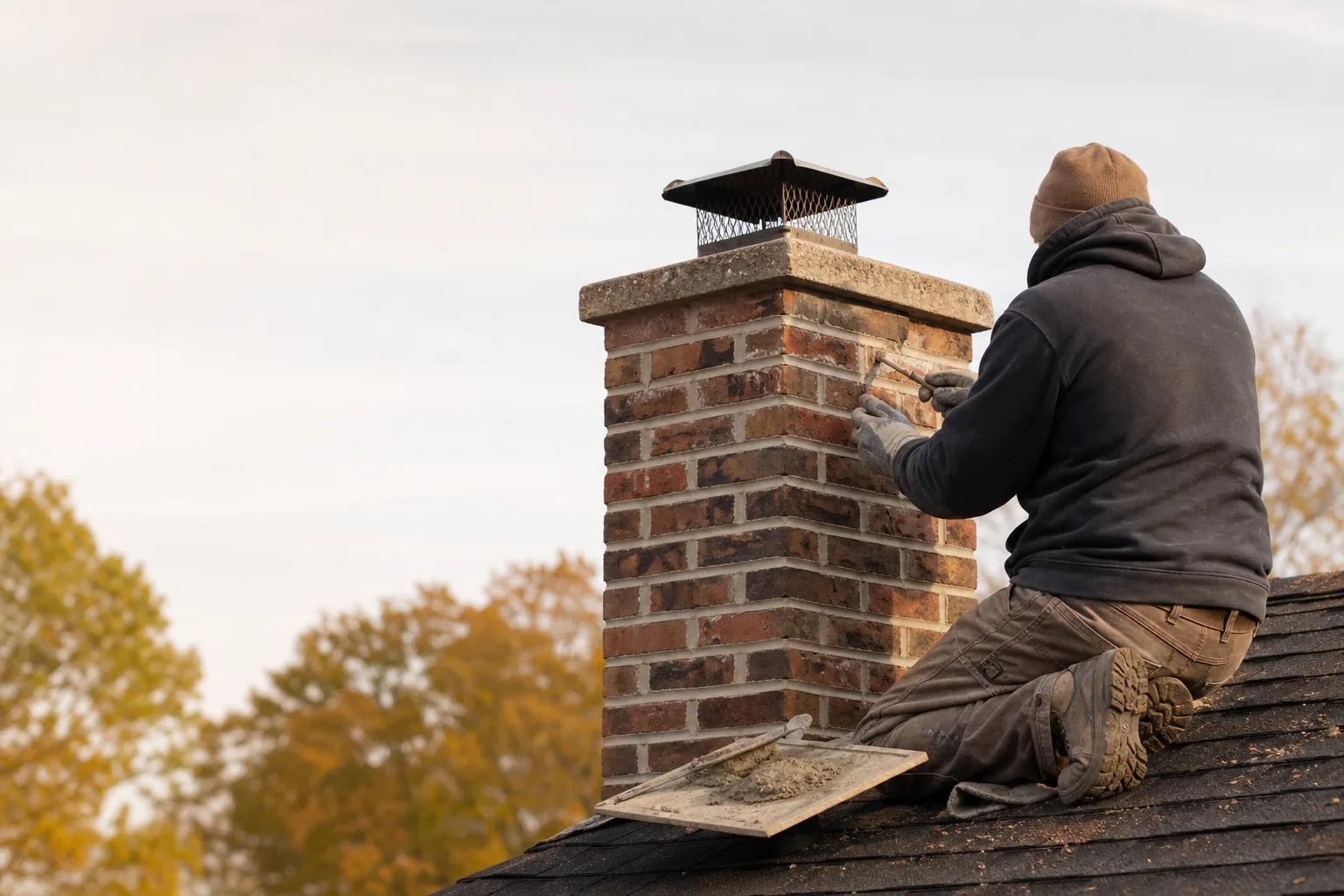
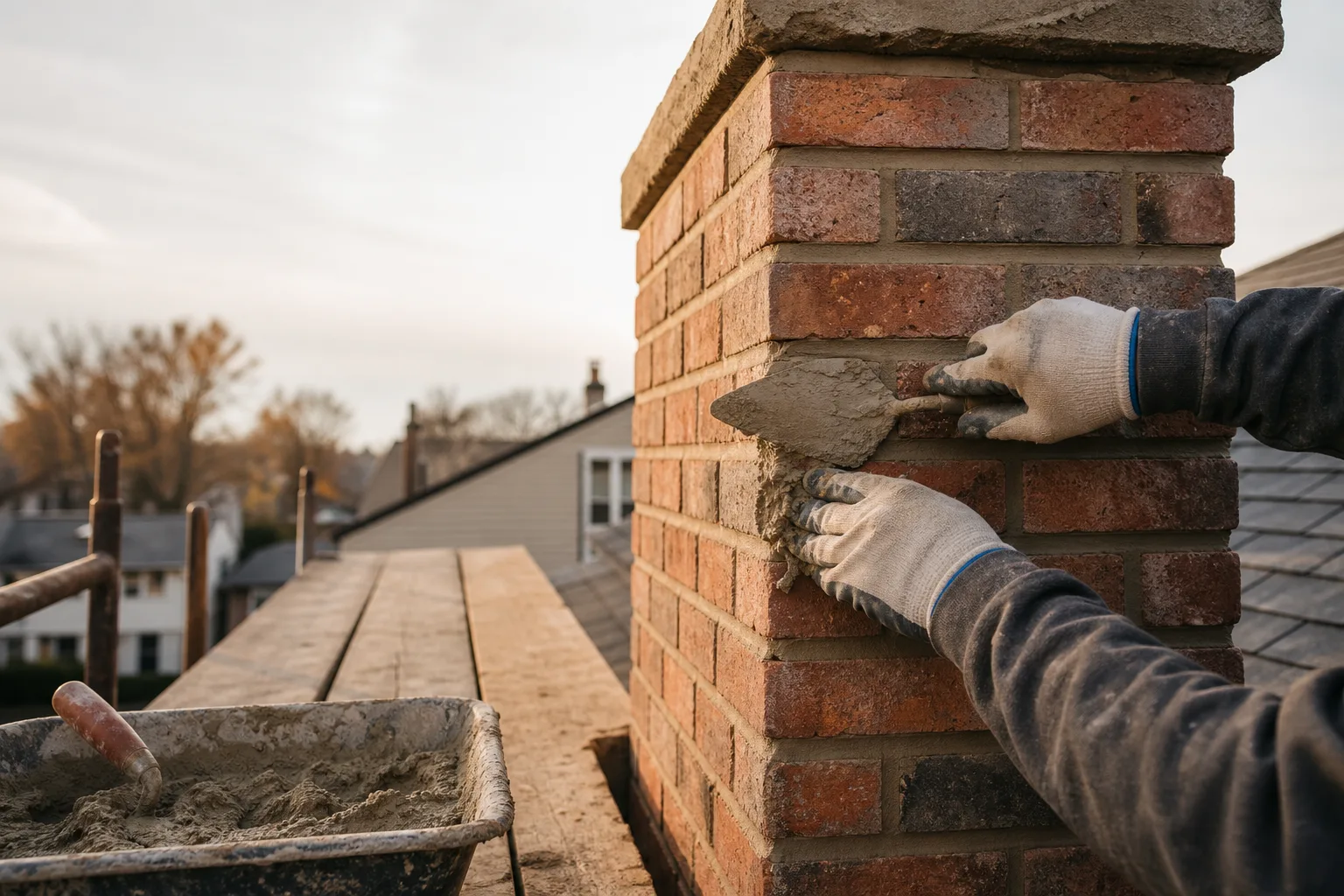
Matched materials. Lime mortar on pre-war brick, never modern Portland, which is harder than the brick and speeds up the damage it was meant to fix.
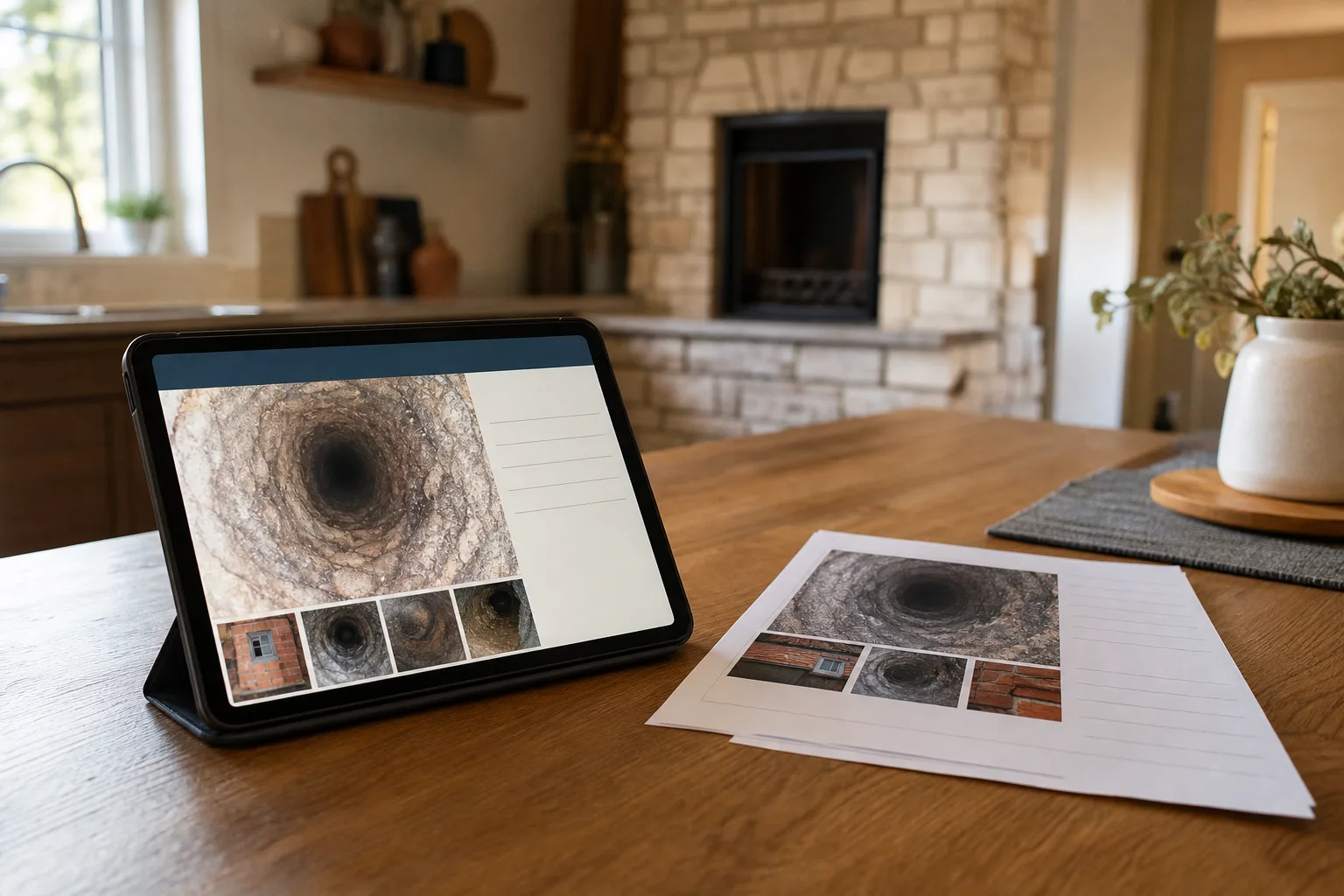
A second scan after the work, and written findings you can keep, hand to an inspector, or send to an insurer.
What it covers
Not every job on this list is equally urgent, so they are ordered that way. A cracked liner stops you using the fireplace tonight; waterproofing can wait for a dry week.
The job — most urgent first
What it involves
On site
A stainless liner or cast-in-place solution when clay tiles have cracked. This is a safety repair, not a cosmetic one.
On site: 1–2 days
When masonry above the roofline is beyond repointing, the stack is taken down to sound brick and rebuilt.
On site: Several days
Cutting out failed mortar joints and replacing them. The single highest-value chimney repair on older brick, because it stops water entry at the source.
On site: About a day
Patching a hairline crack, or casting a new crown with a proper overhang and drip edge when the old one has broken up.
On site: 1–2 days
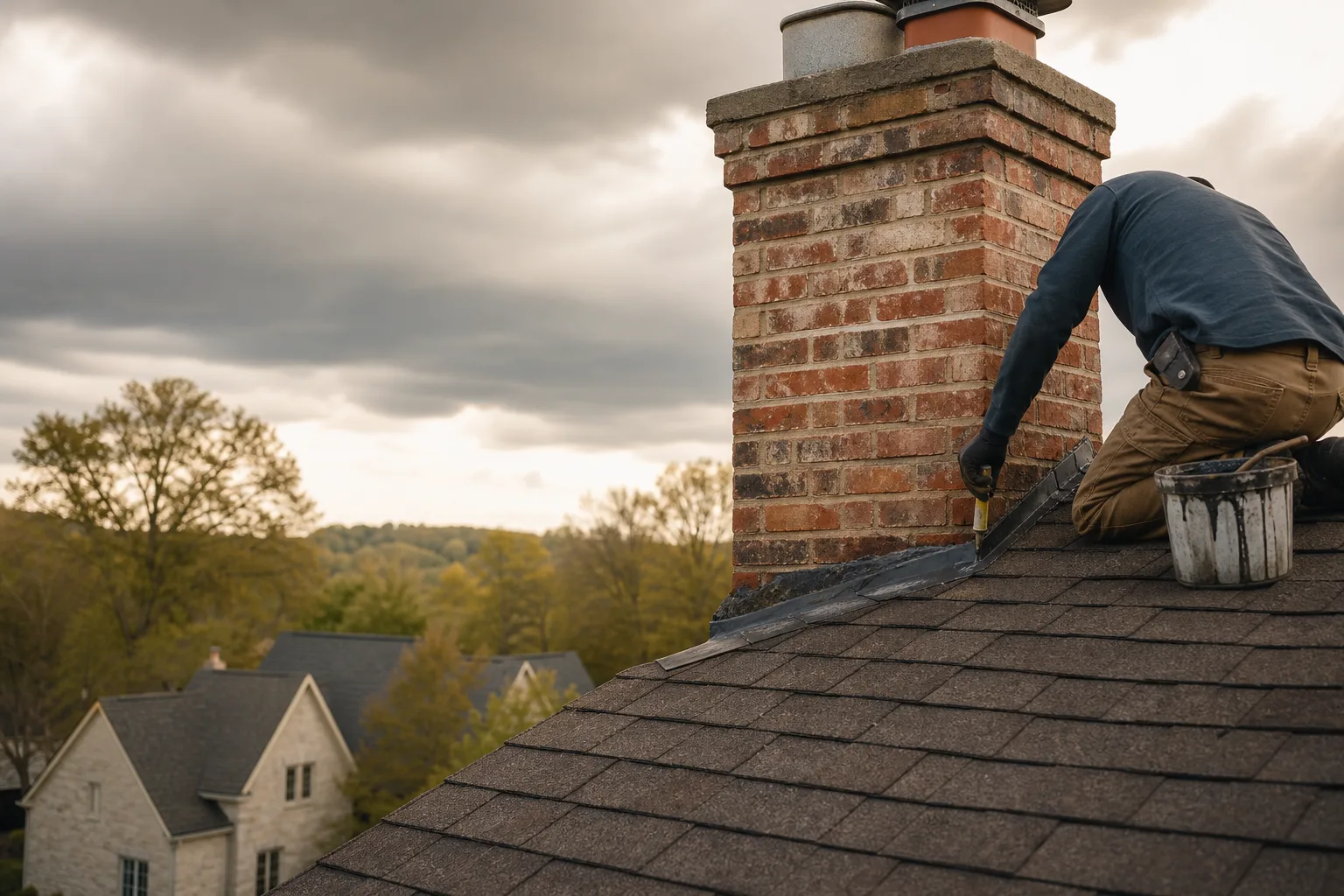
Resealing or replacing the metal where the chimney meets the roof. This is the single most common point of water entry on any chimney.
On site: About a day
A breathable sealant after repairs, so masonry can still dry outward while shedding rain. Never applied over damage, because that traps the moisture inside.
On site: Half a day
Times are for the work itself, not for scheduling. Masonry needs roughly 40°F to cure properly, which is what limits this work in a northern winter rather than whether a crew is free.
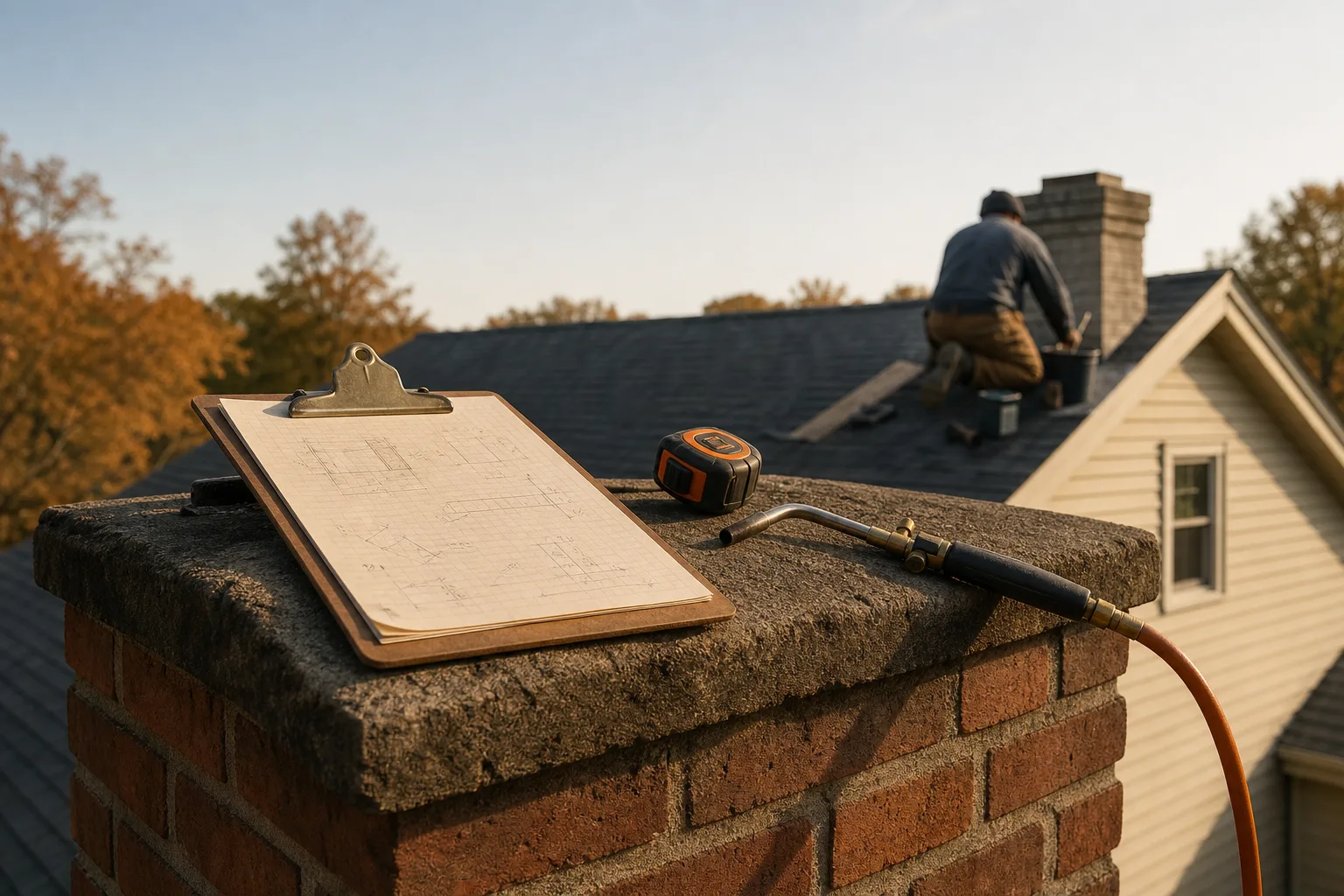
What drives the price
Small sealing and pointing jobs are small jobs. Crown replacement, relining and rebuilds are much bigger, because they are structural. Any figure quoted before someone has seen inside the flue is a guess.
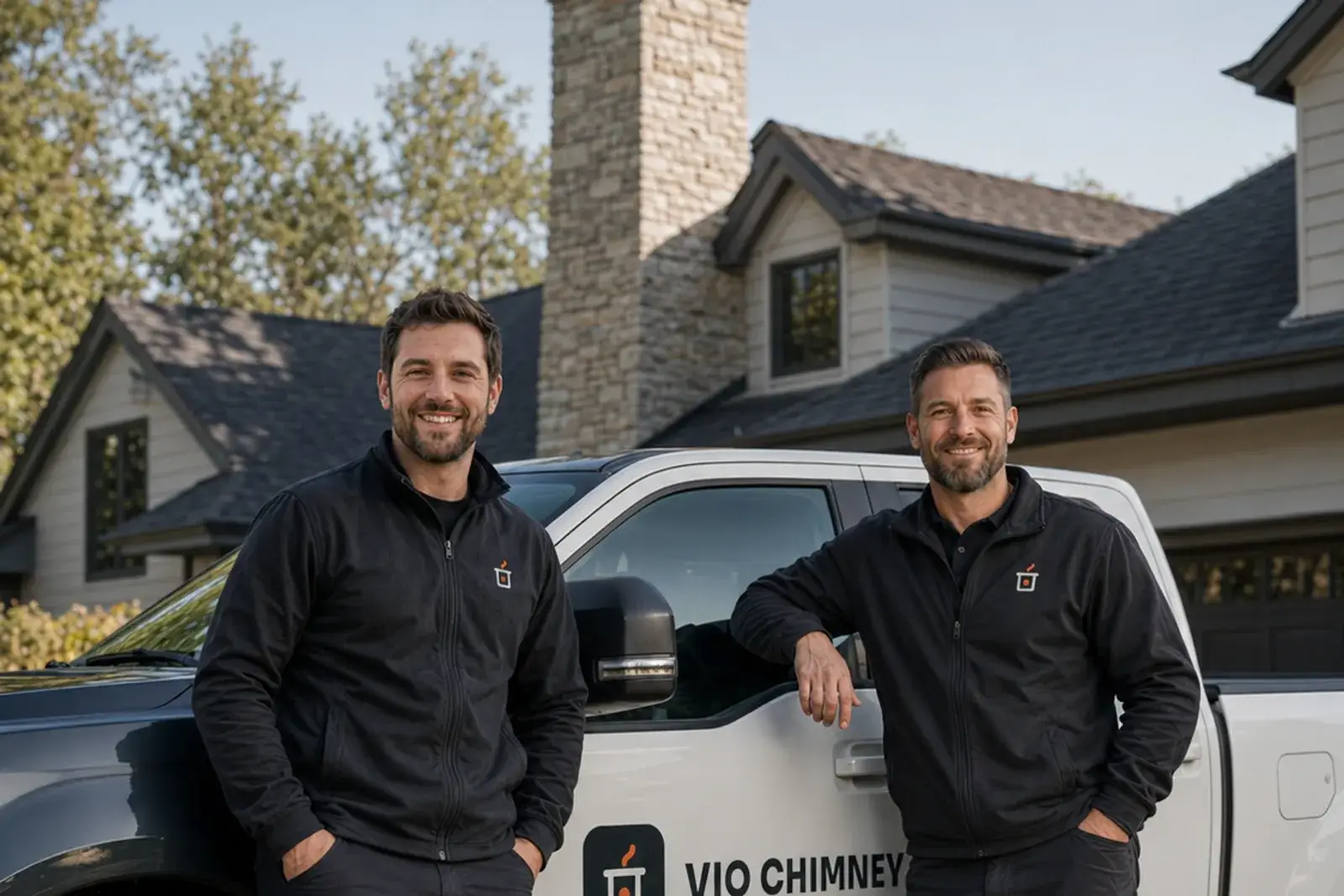
Founded by Ryan Carter in 2019. Every page you read here is reviewed by Ethan Miller, our chimney specialist. A written estimate before any work, and the findings in writing whether or not anything needs doing.
More about who we are →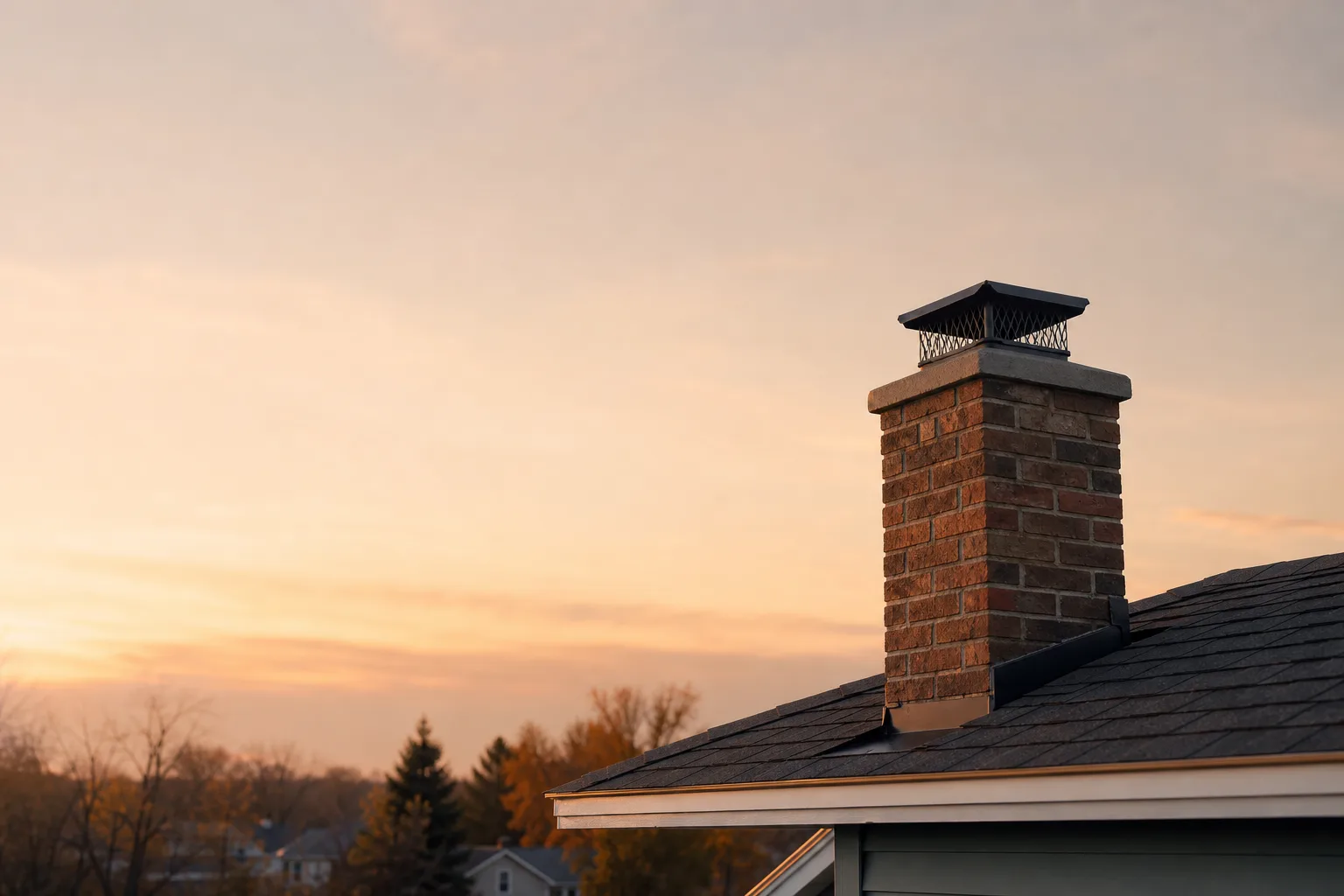
The VIO Standard
Good to know
Keep reading