


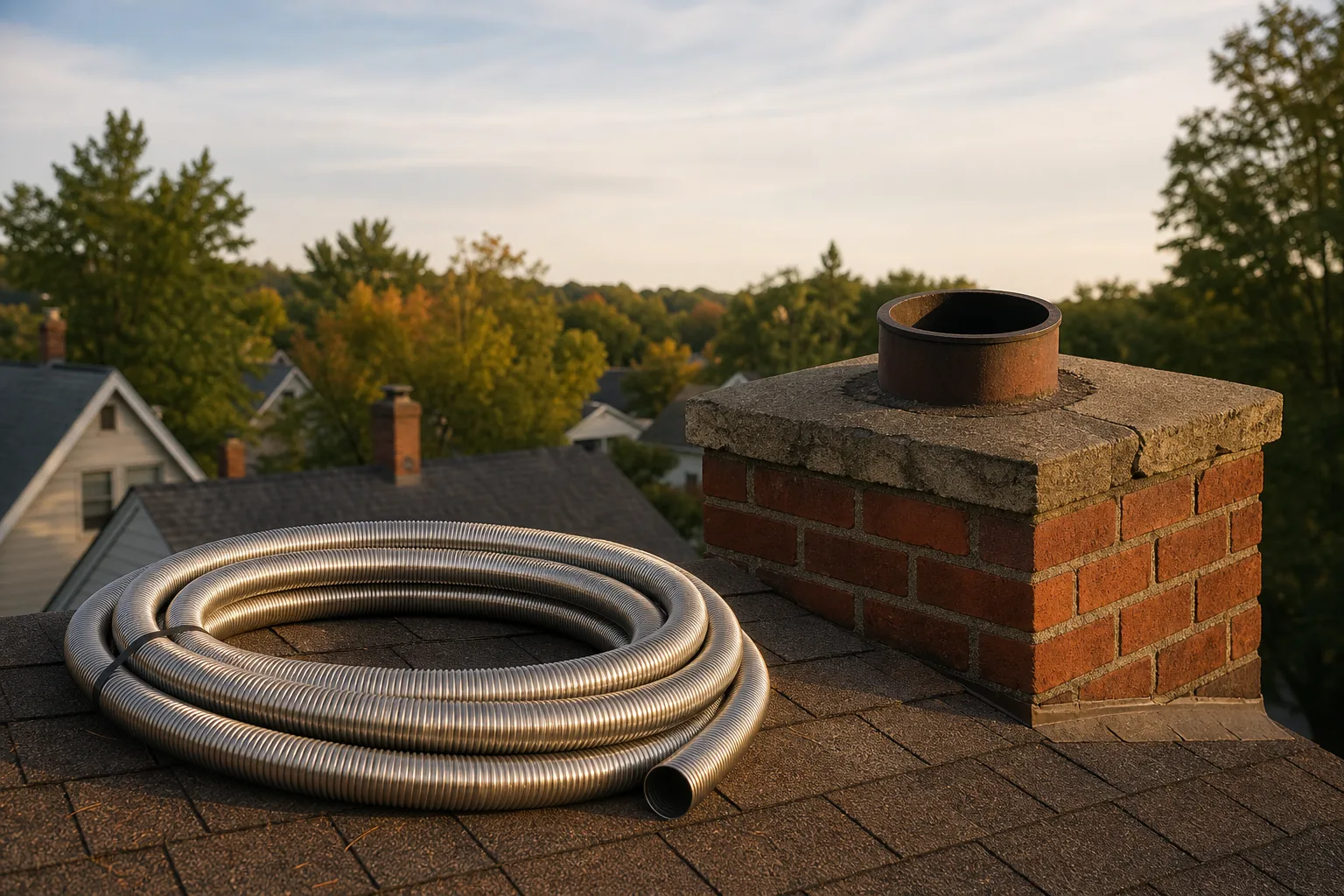
Chimney problem
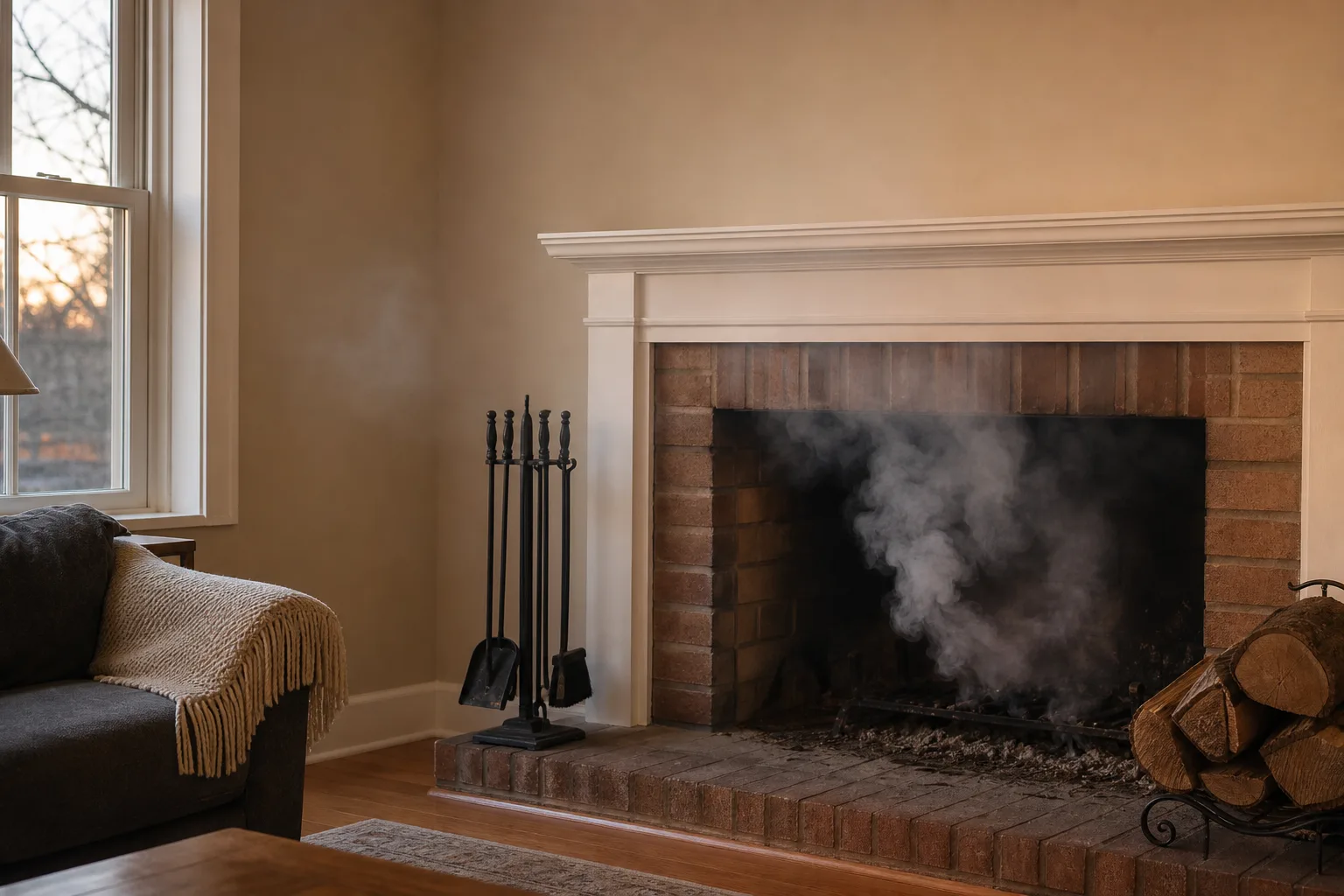
Why is my fireplace smoking into the room?
A puff on lighting is normal. Smoke that keeps coming after the flue has warmed is a draft fault, and it lives above the fireplace.
Do not light another fire until this has been looked at.
Nine times in ten the fireplace is fine and the flue is not.
Why is my fireplace smoking is almost always a draft question rather than a fireplace one. Smoke rises because hot gas is lighter than the cold air around it, and anything that interrupts that — a blockage, a flue too wide or too short, a cold flue that has not warmed, or a house pulling harder than the chimney — sends it back into the room instead. A brief puff while the flue warms is normal. Smoke still entering the room after fifteen minutes is a fault, and it should stop you using the fireplace until it is found, because whatever is holding the smoke back is holding carbon monoxide back with it.
Normal or not
Fifteen minutes is the test

A puff at lighting while the flue warms is expected. Smoke still coming after the fire is established is not.
What to do right now
None of this fixes it. All of it stops the problem getting more expensive between now and the visit.
Put the fire out. Whatever is stopping the smoke leaving is stopping carbon monoxide leaving too.
Check the damper is fully open, not just partly. A seized damper that looks open often is not.
Open a window in the same room and see if it clears. If it does, the house is starving the fire of air.
Turn off any extractor fan, range hood or dryer and try again. Those can out-pull a chimney easily.
Look up past the damper with a torch for nesting material or heavy creosote before relighting.
Why is my fireplace smoking — the six usual answers
Ordered by how often it turns out to be the answer, so you can stop reading once you recognise yours.
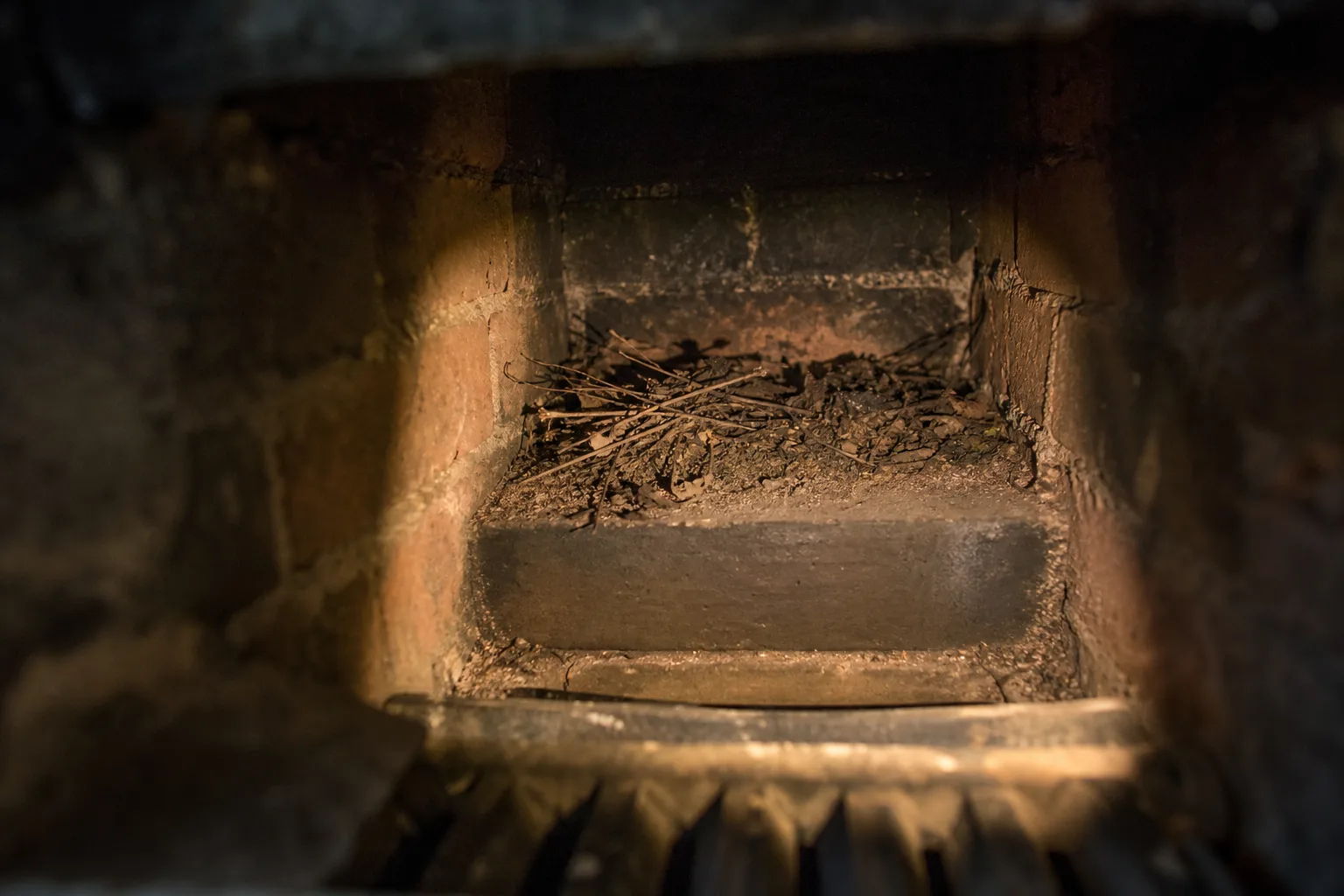
A blockage in the flue
Nesting material, debris or a fallen brick narrowing the passage. The most common single answer, and the one that changes fastest between seasons.
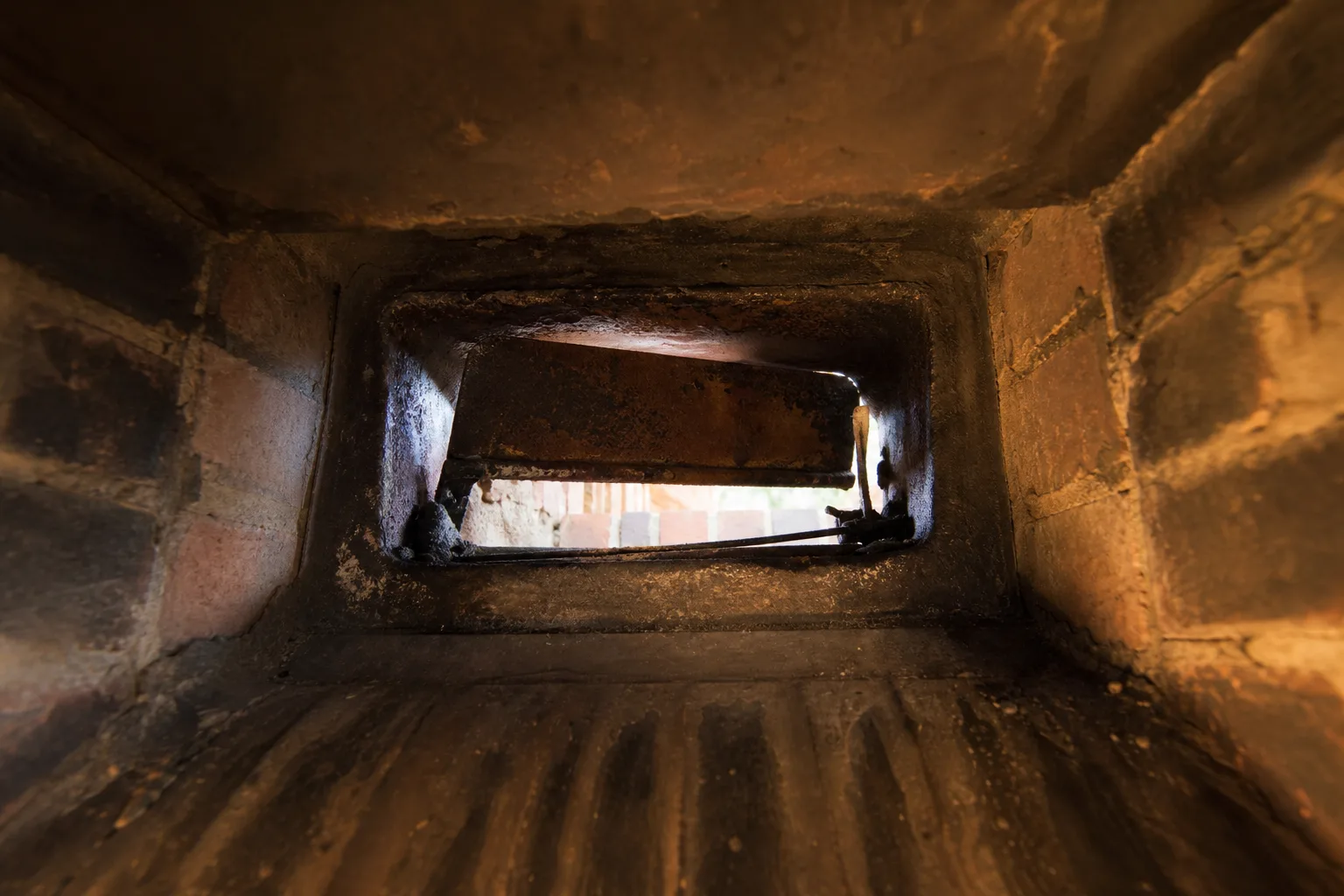
A damper that is not fully open
Rusted part-open, or a broken handle that moves without moving the plate. Worth checking by eye with a torch rather than by feel at the lever.

The house cannot supply enough air
A tight modern house with an extractor running pulls harder than the flue. If cracking a window fixes it, this is your answer and the fix is a supply of combustion air.
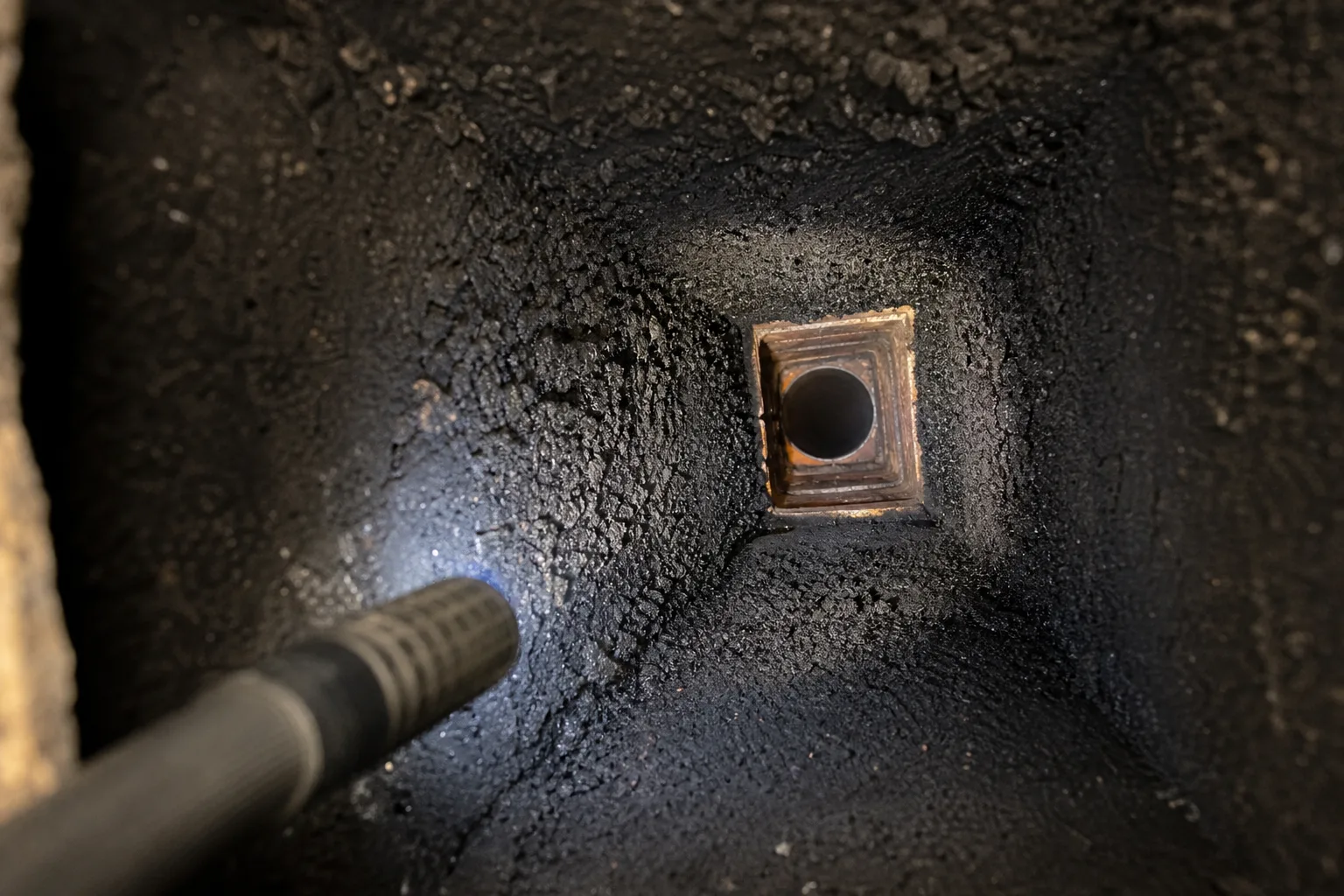
Heavy creosote narrowing the flue
A quarter inch of buildup around a flue is a meaningful reduction in area. Sweeping restores the draft and removes the fire risk in one visit.
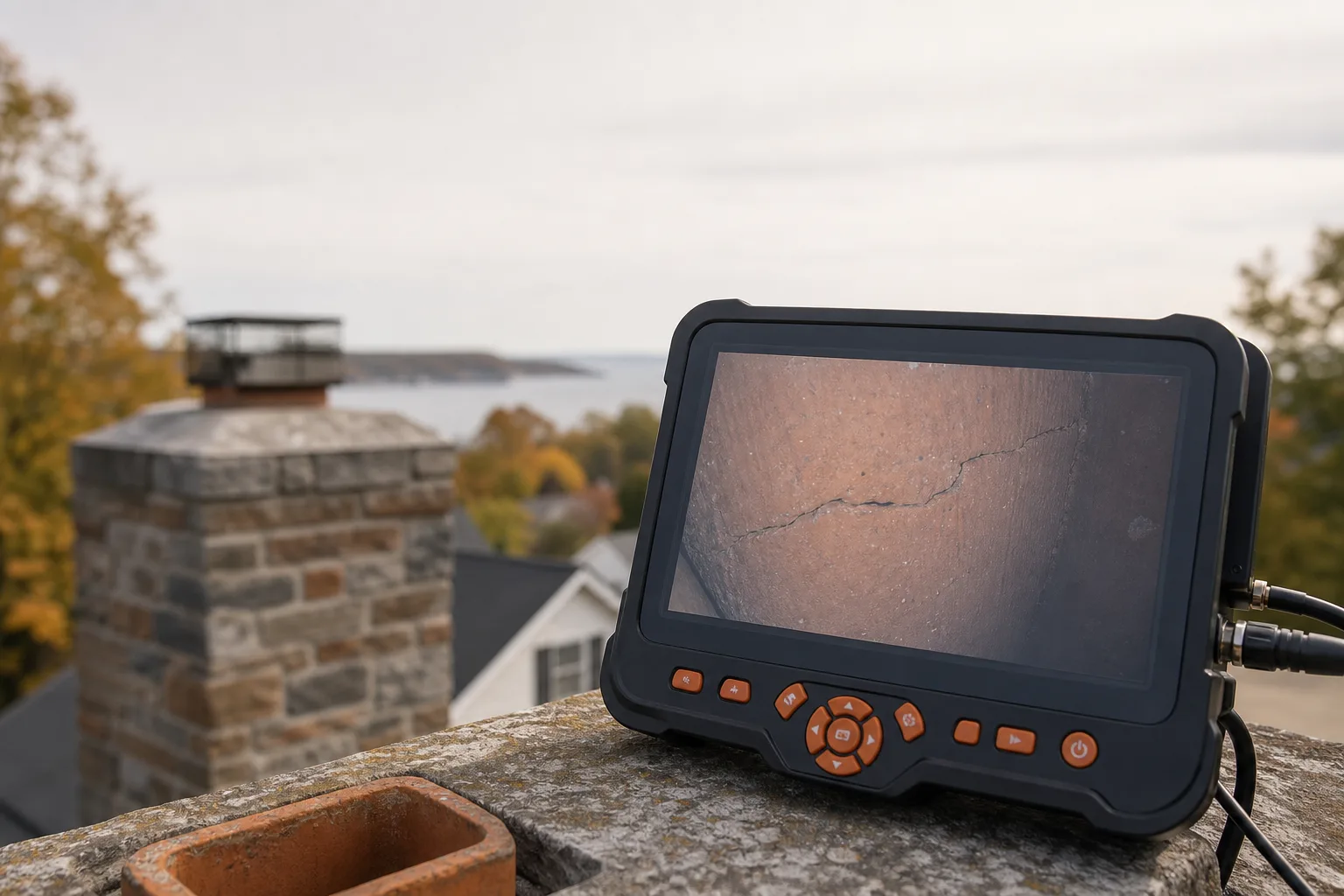
A flue too wide or too short for the opening
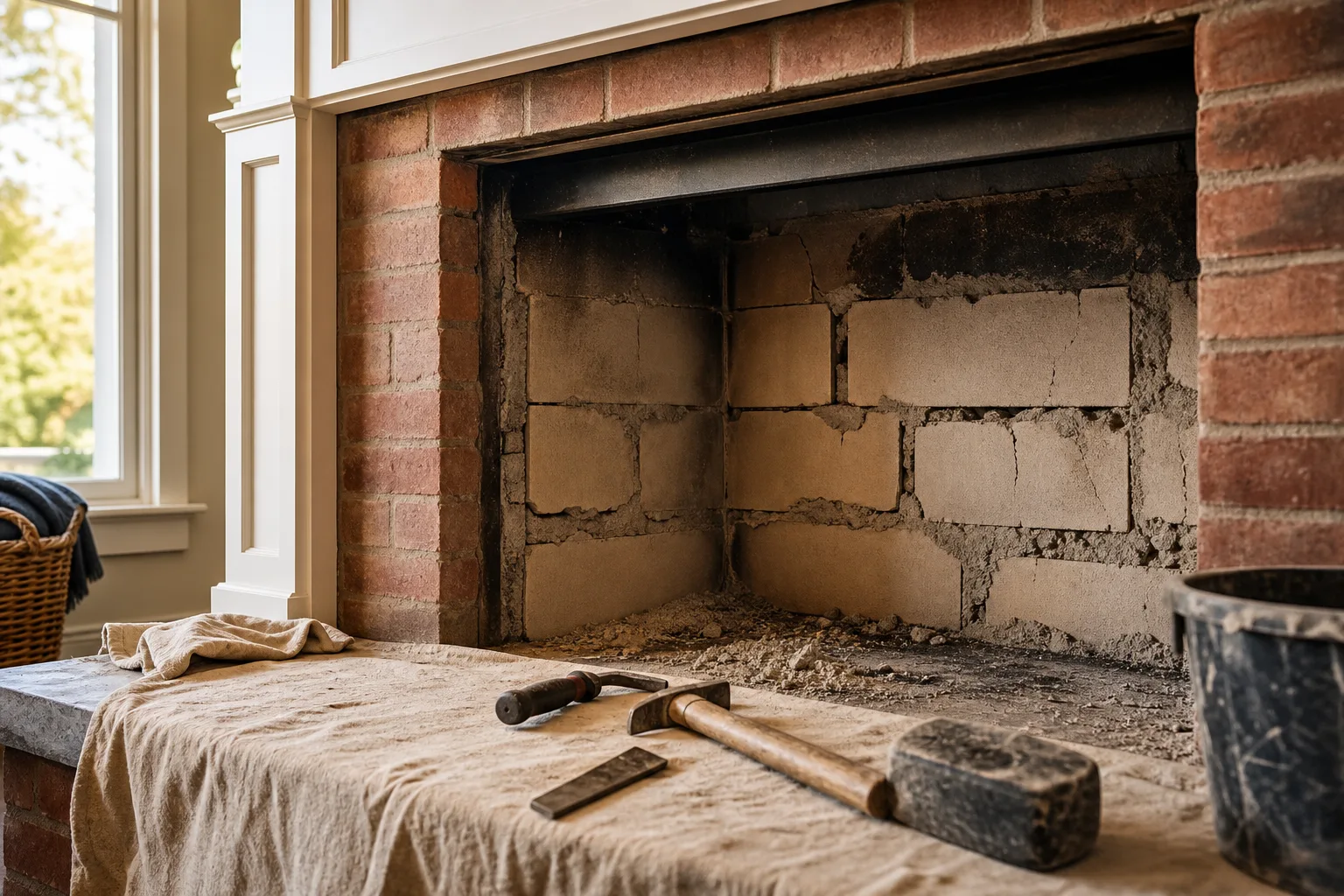
The flue area should be roughly a tenth of the fireplace opening, and the stack needs height above the roofline to draw. Both are design faults rather than wear, and both are fixable.
A rough or undersized smoke chamber
The chamber above the firebox should be smooth and tapered so smoke accelerates into the flue. Left rough by the original mason, it trips the smoke on its way up. Parging fixes it.
Checks you can make yourself
Does it clear once the flue has warmed for fifteen minutes?
That is a cold flue, which is normal. Warm the flue with a rolled newspaper before lighting and it goes away.
Does cracking a window fix it?
The house is starving the fire. Combustion air, not a chimney repair.
Does it happen only when an extractor or dryer is running?
Same answer, with the culprit identified. The appliance is out-pulling the chimney.
Can you see daylight looking up the flue?
If not, something is blocking it and nothing else matters until that is out.
Did it start after a stove or insert was fitted?
The flue is almost certainly the wrong size for the new appliance and needs lining down.
The repair each cause needs

Chimney Inspection
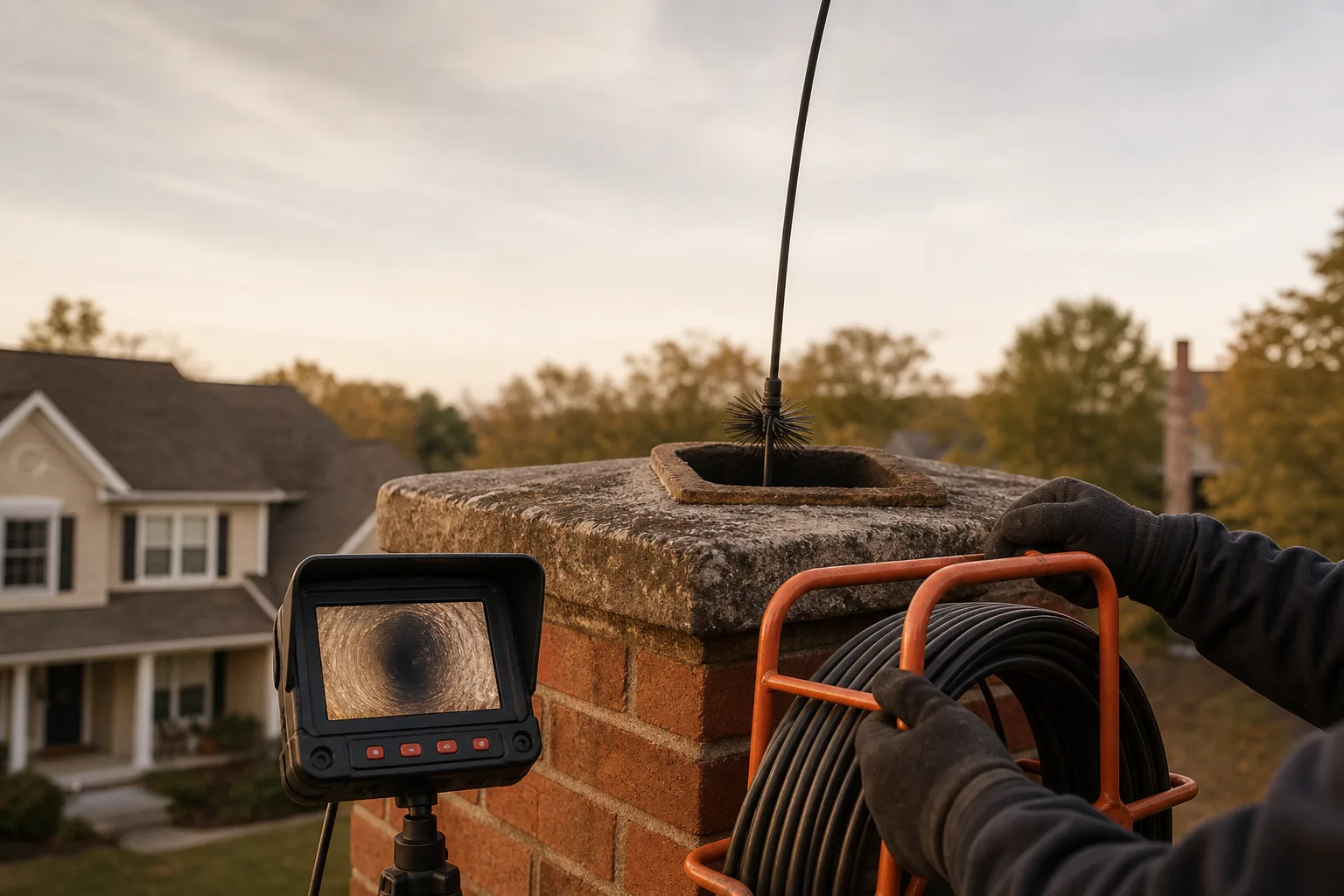
First, always. A camera scan separates a blockage from a sizing fault in an hour.

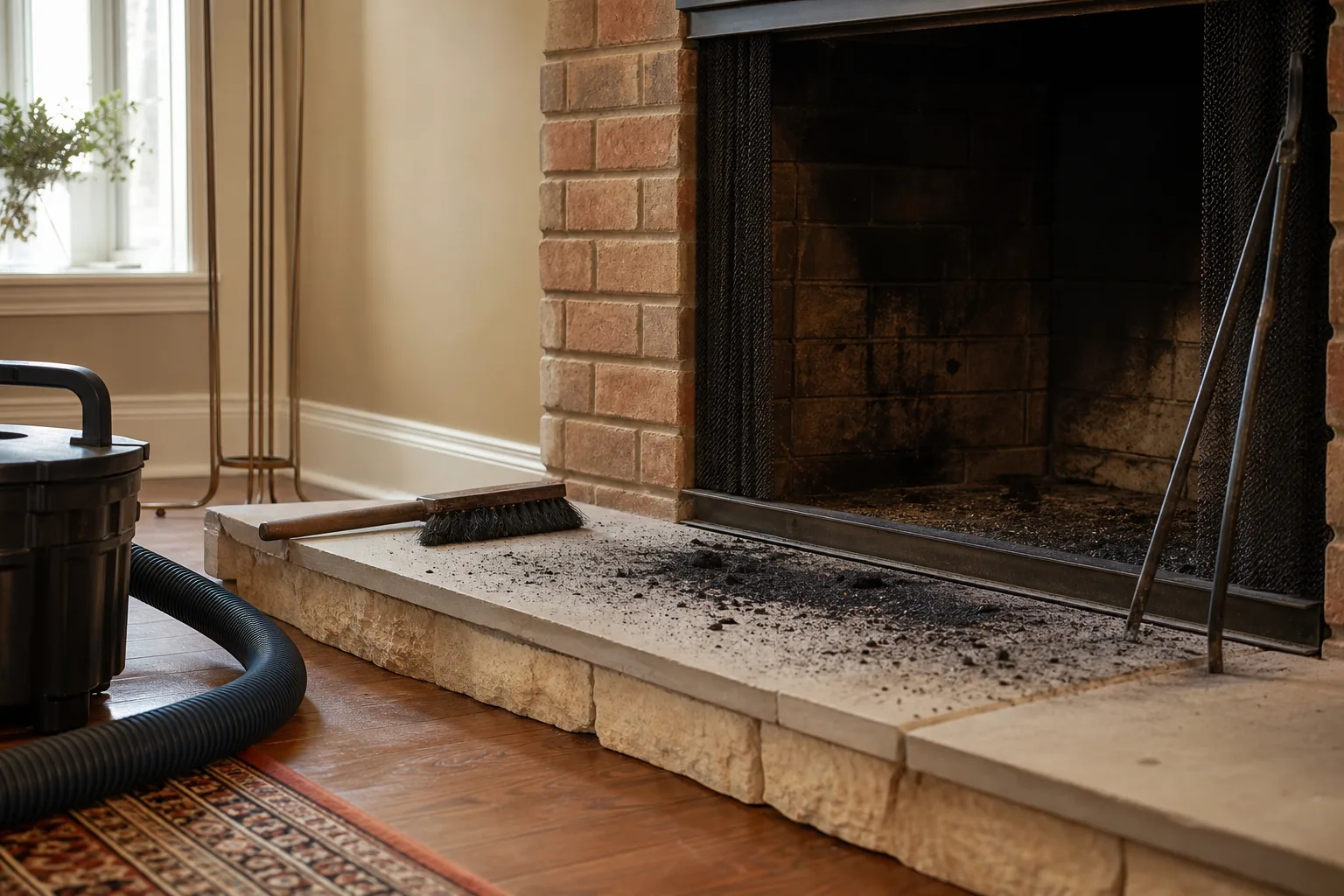
Chimney Sweep
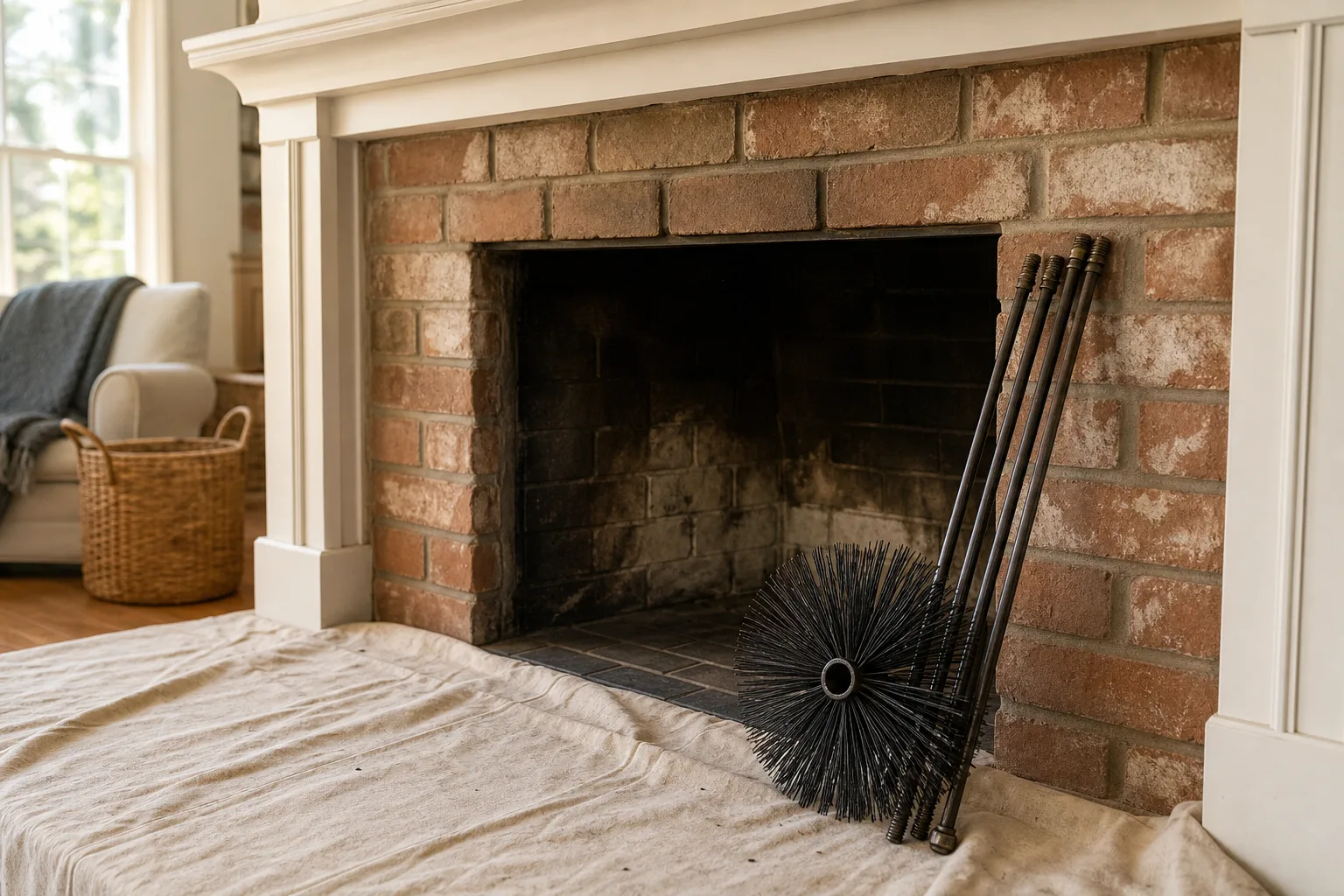
When the flue is narrowed by creosote or holding debris.

Fireplace Repair
Damper repair, smoke chamber parging, or a smoke guard where the opening is too large.

Chimney Liner Replacement
When the flue is oversized for the appliance and needs lining down.

The VIO Standard
- A written estimate first
- License and insurance checked
- Nothing starts without your OK
Common questions
Why is my fireplace smoking all of a sudden?
Something changed, and it is usually one of three things. Something moved into the flue — spring nesting is the classic, and it appears as a fault on the first cold evening in autumn. The house changed: new windows, new insulation, or a new extractor fan can tip the pressure balance enough to reverse the draft. Or the appliance changed. A fireplace that worked for years and stopped is telling you which of those to look at first.
Is a smoking fireplace dangerous?
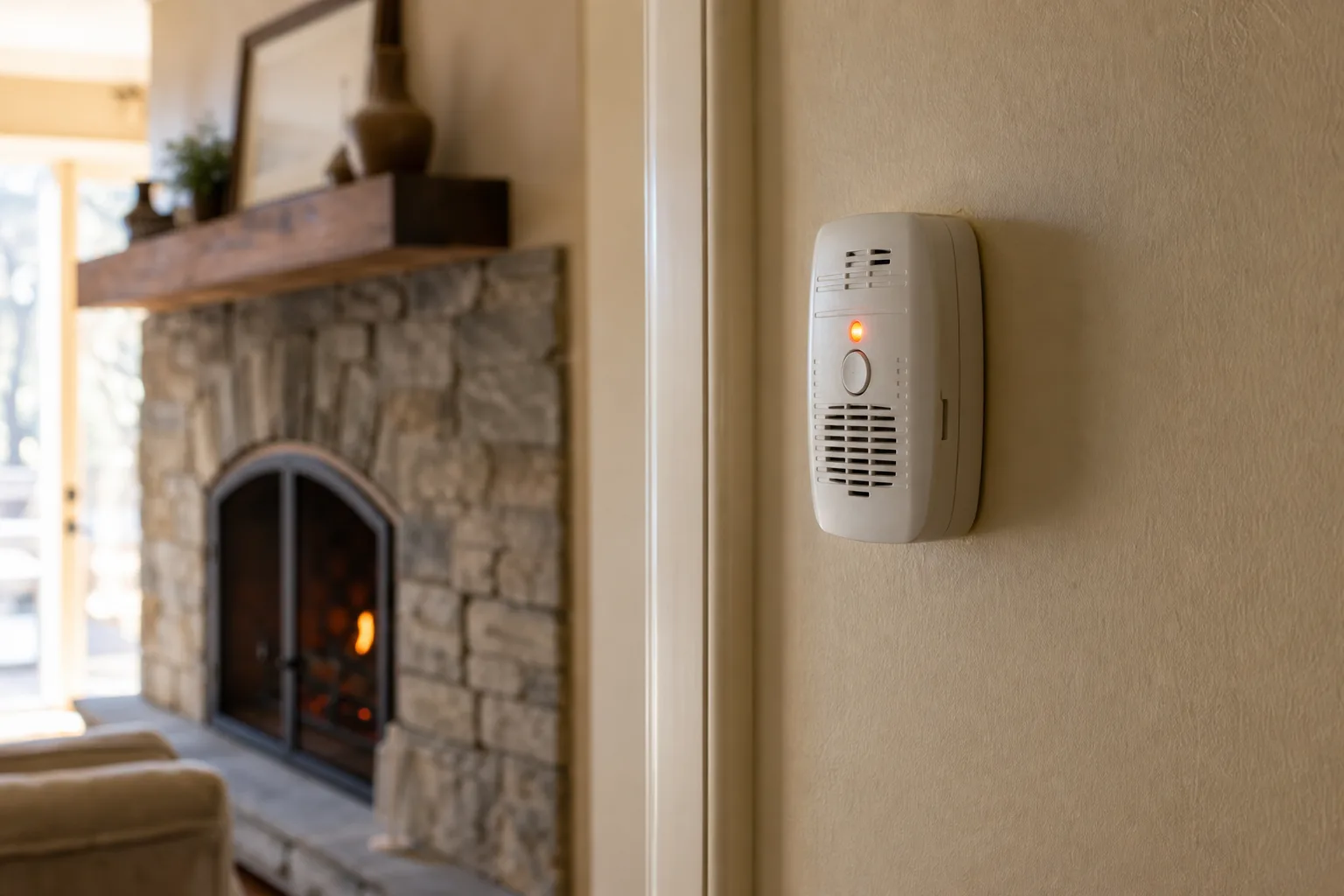
Yes, and not primarily because of the smoke. Anything preventing smoke from leaving is preventing carbon monoxide from leaving, and carbon monoxide has no smell or colour to warn you. Smoke in the room is the visible half of a problem whose other half you cannot detect. Put the fire out, get the flue looked at, and check you have a working detector on every floor.
Does opening a window really help a smoking fireplace?
It does, and it is a diagnosis as much as a fix. A fire needs a substantial volume of air, and a well-sealed house may not supply it — especially with an extractor fan running somewhere. If a cracked window solves it, the answer is a permanent combustion air supply rather than a chimney repair, which is a cheaper conversation than most people expect.
How do I stop my fireplace smoking?
Work in order, cheapest first. Confirm the damper is fully open by eye. Warm the flue with a rolled newspaper held up the throat before lighting. Crack a window and turn off extractors. If none of those change it, stop guessing and get the flue scanned — the remaining causes are all invisible from the room and expensive to guess at.
Can a chimney cap cause a fireplace to smoke?
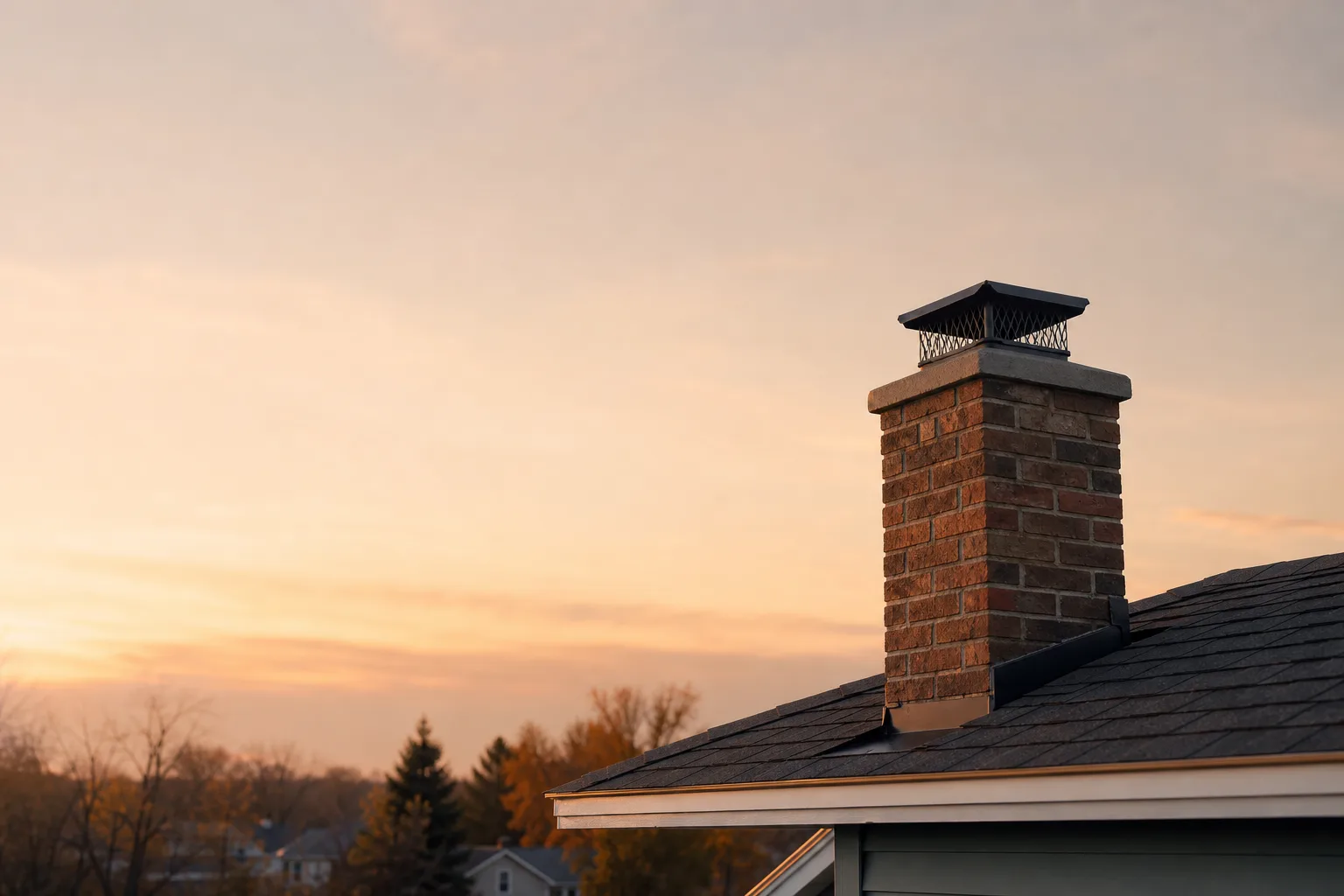
A correctly sized one will not — caps are designed with more open area than the flue, so they are never the restriction. Two things do cause it: a cap sized for a different flue, and a cap whose mesh has clogged with creosote. If your fireplace drew fine before a cap went on, the cap is wrong or needs cleaning; that is not an argument against having one.
you don't have to know what's wrong.
Do not light another fire until this has been looked at. Describe what you are seeing and a local pro works out the rest. You get the price in writing before anyone starts, and you can say no.

The people behind every visit
Founded by Ryan Carter in 2019. Every page you read here is reviewed by Ethan Miller, our chimney specialist. A written estimate before any work, and the findings in writing whether or not anything needs doing.
More about who we are →