



Chimney problem
Why does my fireplace smell like smoke in summer?
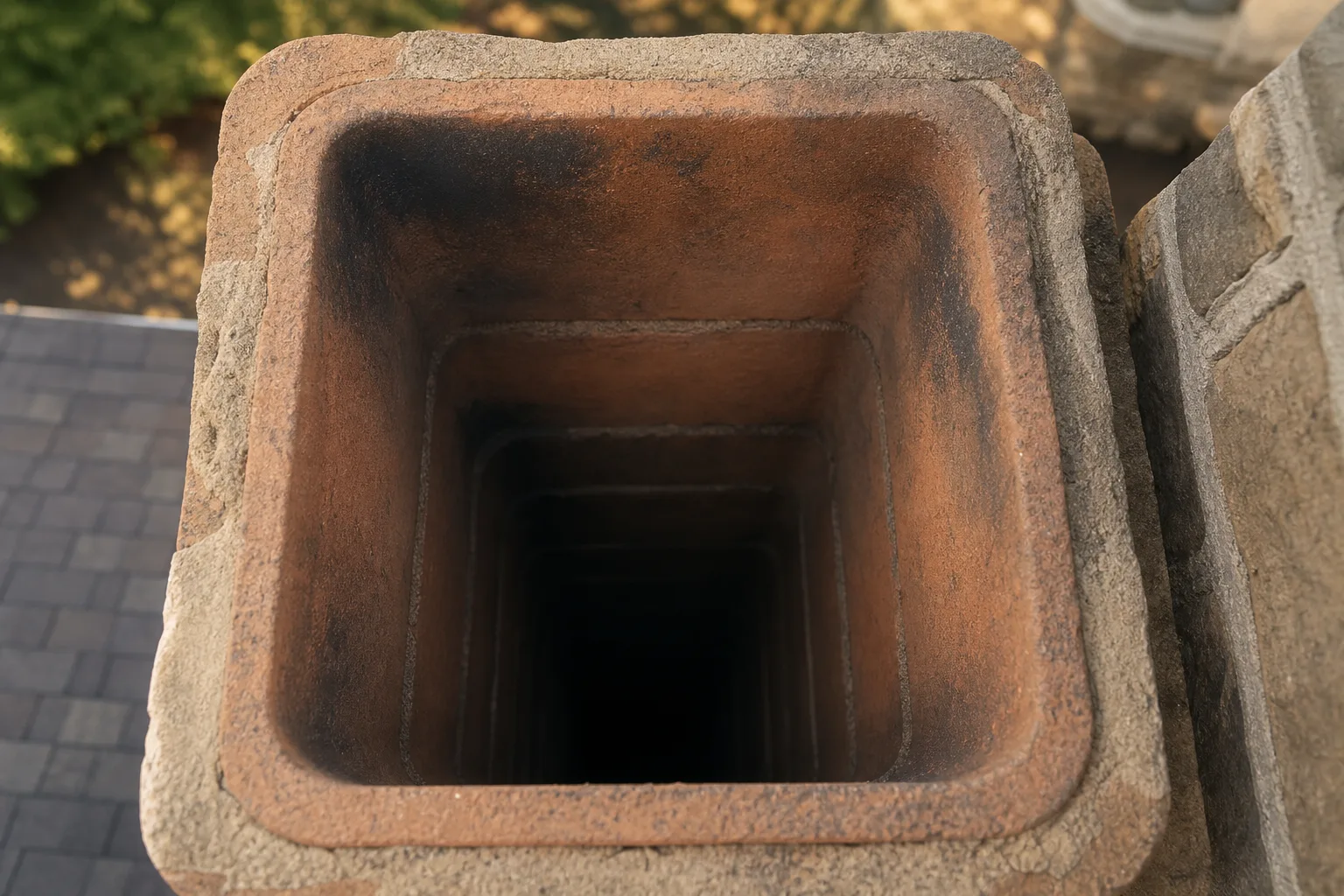
Creosote takes up moisture and gives off odour, so an unused fireplace smells worst on the warmest, dampest days of the year.
Annoying rather than dangerous. Worth fixing, not worth worrying about tonight.
It is worse in July than in January, and that is the clue rather than the mystery.
Why does my fireplace smell like smoke when nothing has been burnt for months is one of the most common questions in this trade, and the answer is humidity. Creosote is hygroscopic — it takes up water out of the air and releases odour as it does. Add a house that is under slight negative pressure in warm weather, pulling air down the flue instead of up it, and the smell arrives in the room rather than leaving. So the two halves of the fix are removing the source and reversing the airflow.
Why summer
Damp air, reversed draft

Creosote absorbs moisture and gives off odour. In warm weather the flue is often flowing downward, so it arrives in the room.
What to do right now
None of this fixes it. All of it stops the problem getting more expensive between now and the visit.
Close the damper properly. A throat damper that no longer seals is why the smell reaches the room at all.
Run the air conditioning rather than an extractor. Extractors pull the flue backwards; a balanced system does not.
Take out any old ash and unburnt logs — both hold odour and both are easy to remove.
Do not mask it with a plug-in air freshener. It comes back within the hour and hides the pattern.
Note whether it is worst on humid days. That single observation confirms creosote rather than an animal or a leak.
Why does my fireplace smell like smoke — four causes
Ordered by how often it turns out to be the answer, so you can stop reading once you recognise yours.
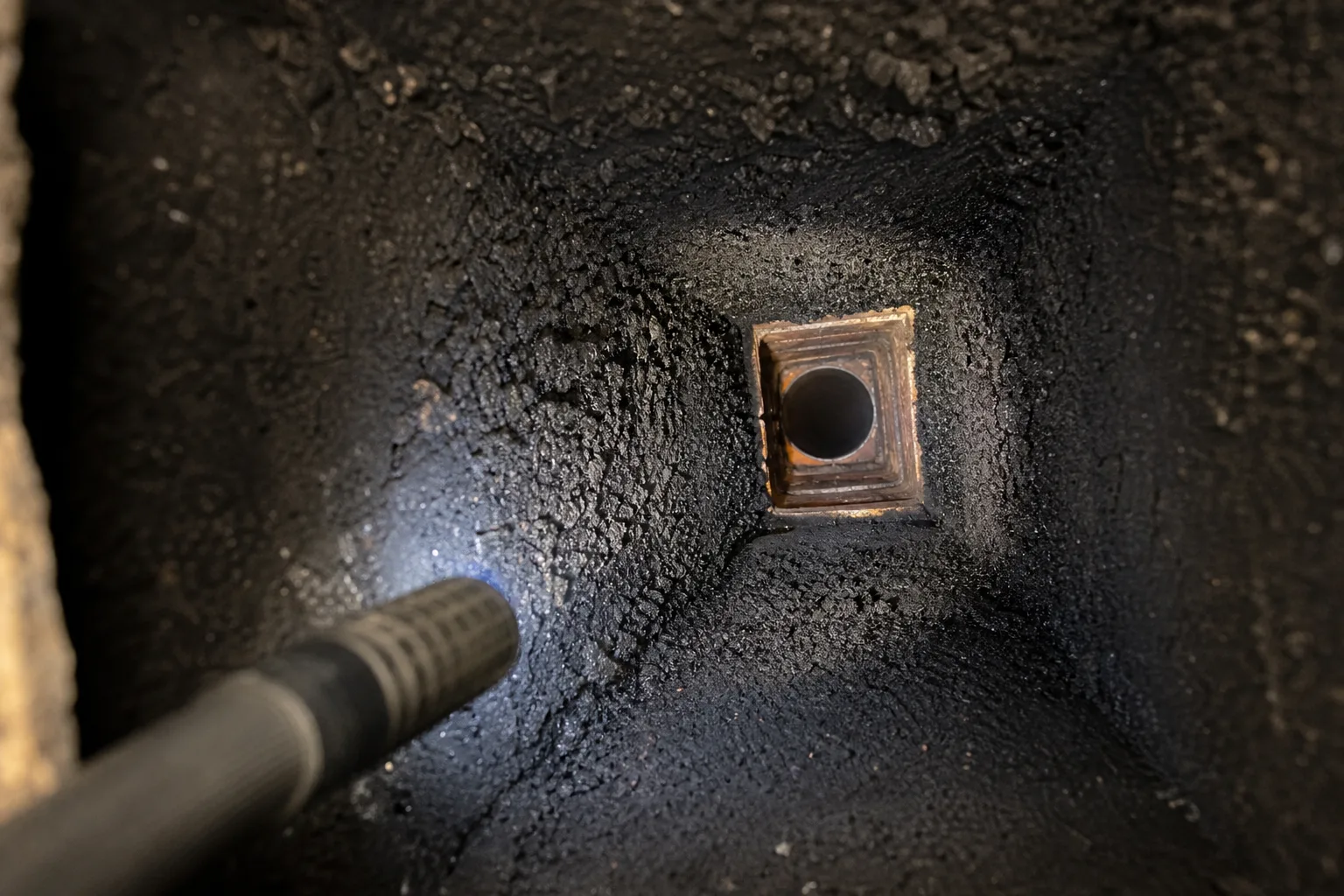
Creosote in the flue taking up moisture
The usual answer by a distance. Deposits absorb water from humid air and release odour as they do. A sweep removes the source, which is the only permanent half of the fix.

A damper that no longer seals
A cast throat damper closes metal onto metal and never sealed well; rusted, it barely closes at all. A top-sealing damper at the crown closes against a gasket and stops the smell reaching the room.
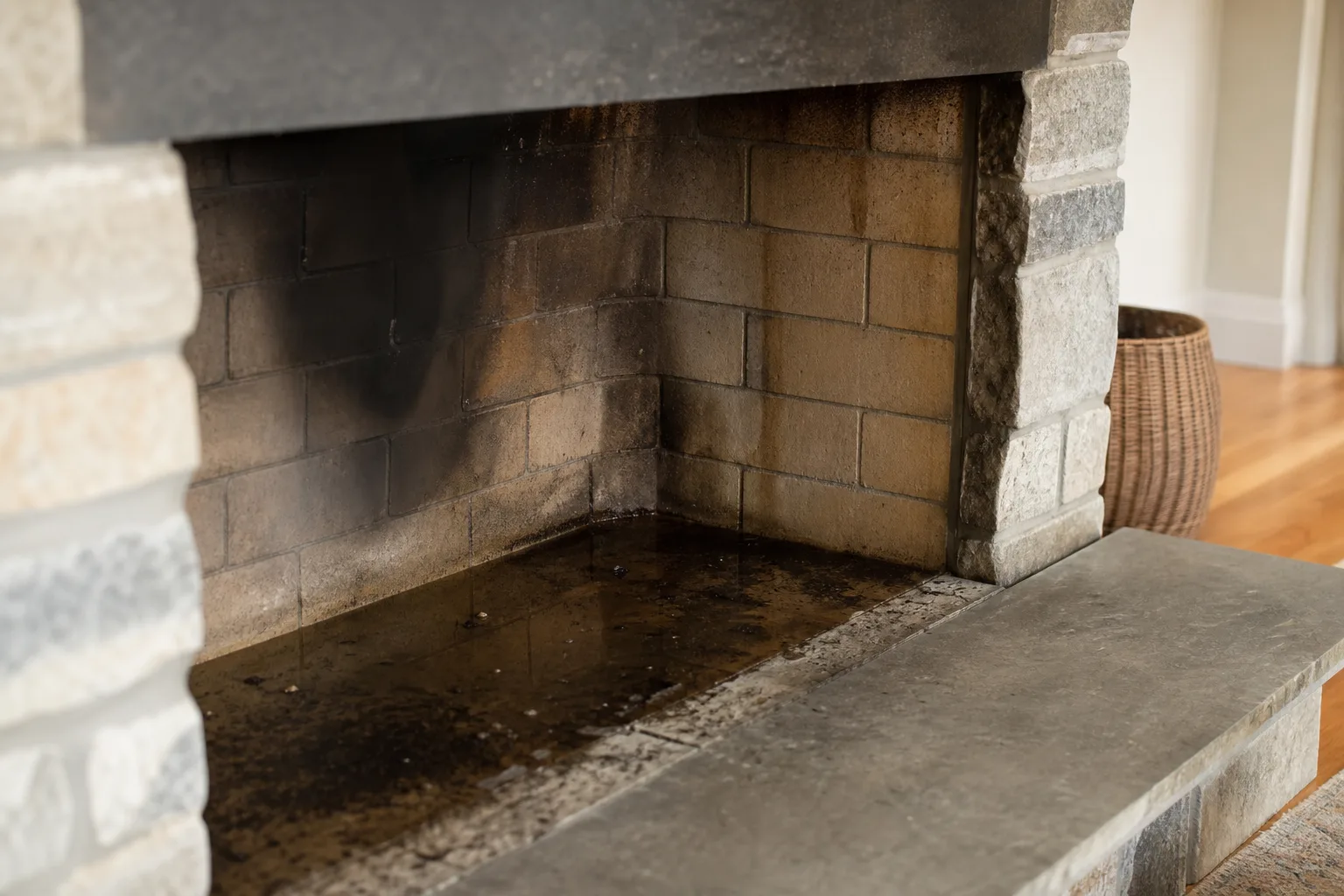
Water getting into the flue
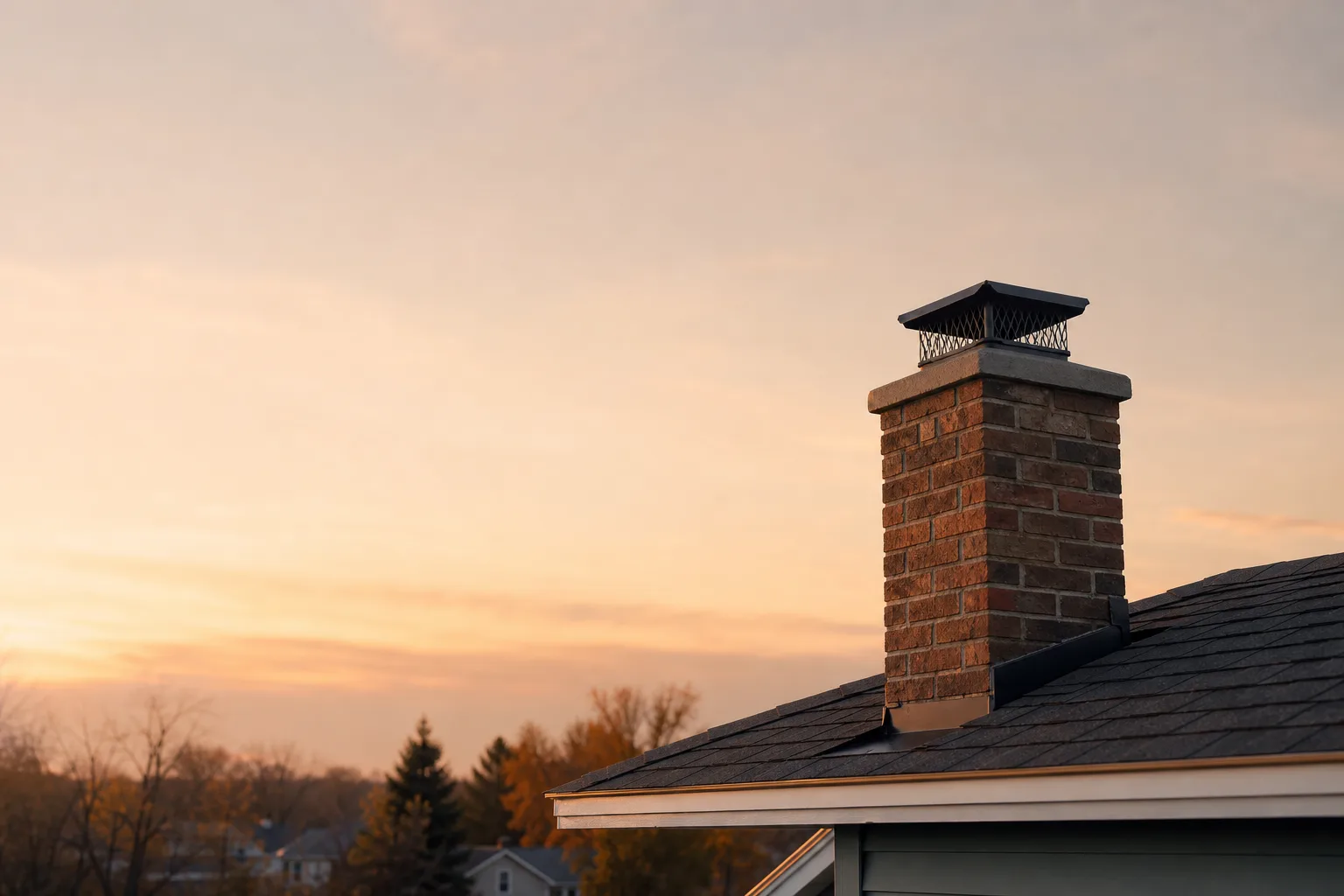
Damp creosote smells far more than dry creosote. A missing cap or a cracked crown keeps the flue wet all summer, which is why some chimneys smell and others do not.
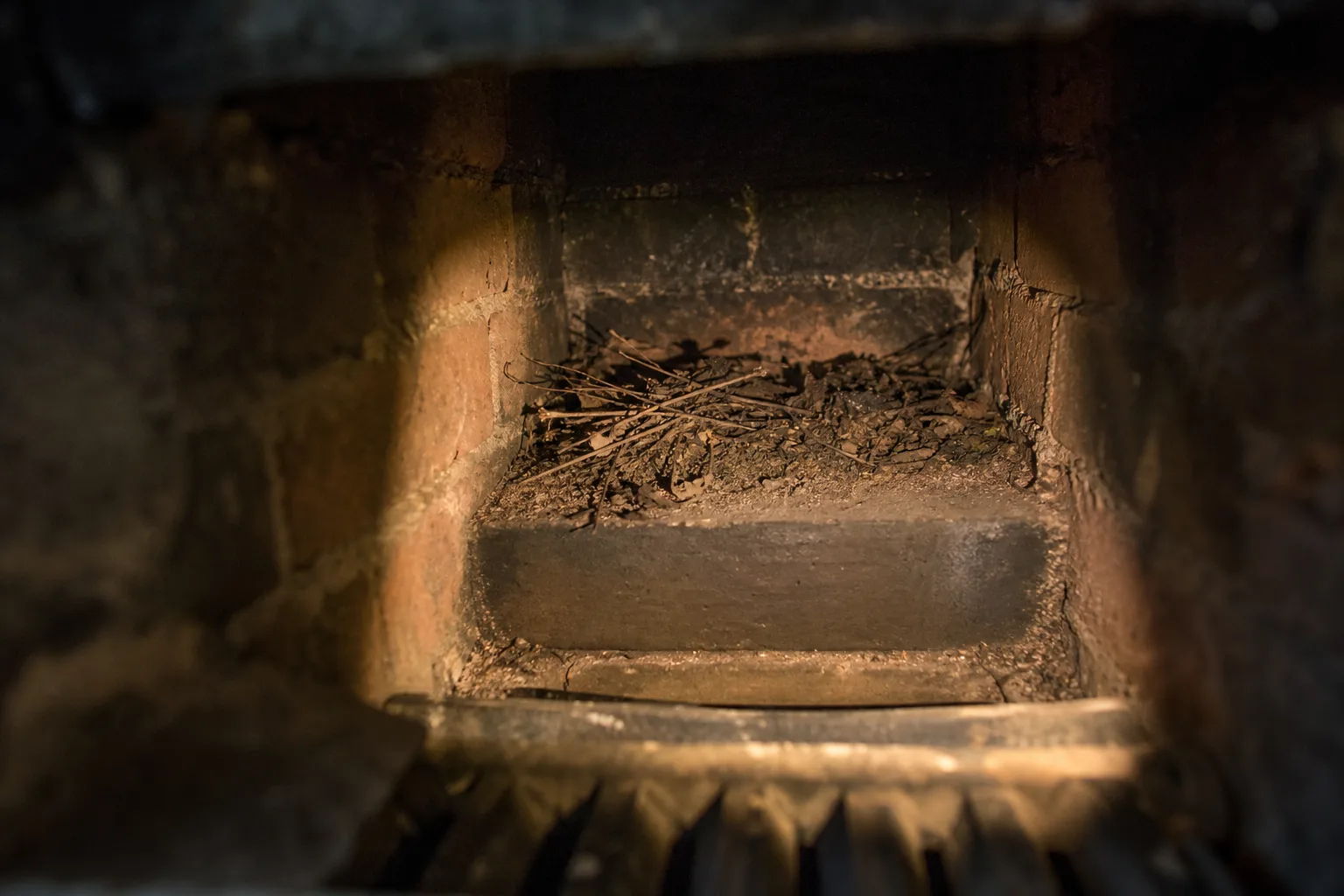
Something living or dead in the flue
A different smell — sharper, and it does not track humidity. Worth ruling in or out with a torch before booking a sweep for a problem that is not creosote.
Checks you can make yourself
Is it worst on warm humid days?
Creosote. The odour tracks the moisture in the air, which nothing else on this list does.
Does closing the damper reduce it?
Partly working. If it barely changes, the damper is not sealing and that is half your problem.
Does it get worse when the extractor fan is on?
The house is pulling the flue backwards. The airflow, not the deposits, is putting it in the room.
Is the smell sharp and sour rather than smoky?
Not creosote. Look for an animal or nesting material before sweeping.
Is there water or rust in the firebox?
A wet flue smells more. Cap and crown before anything else.
The repair each cause needs

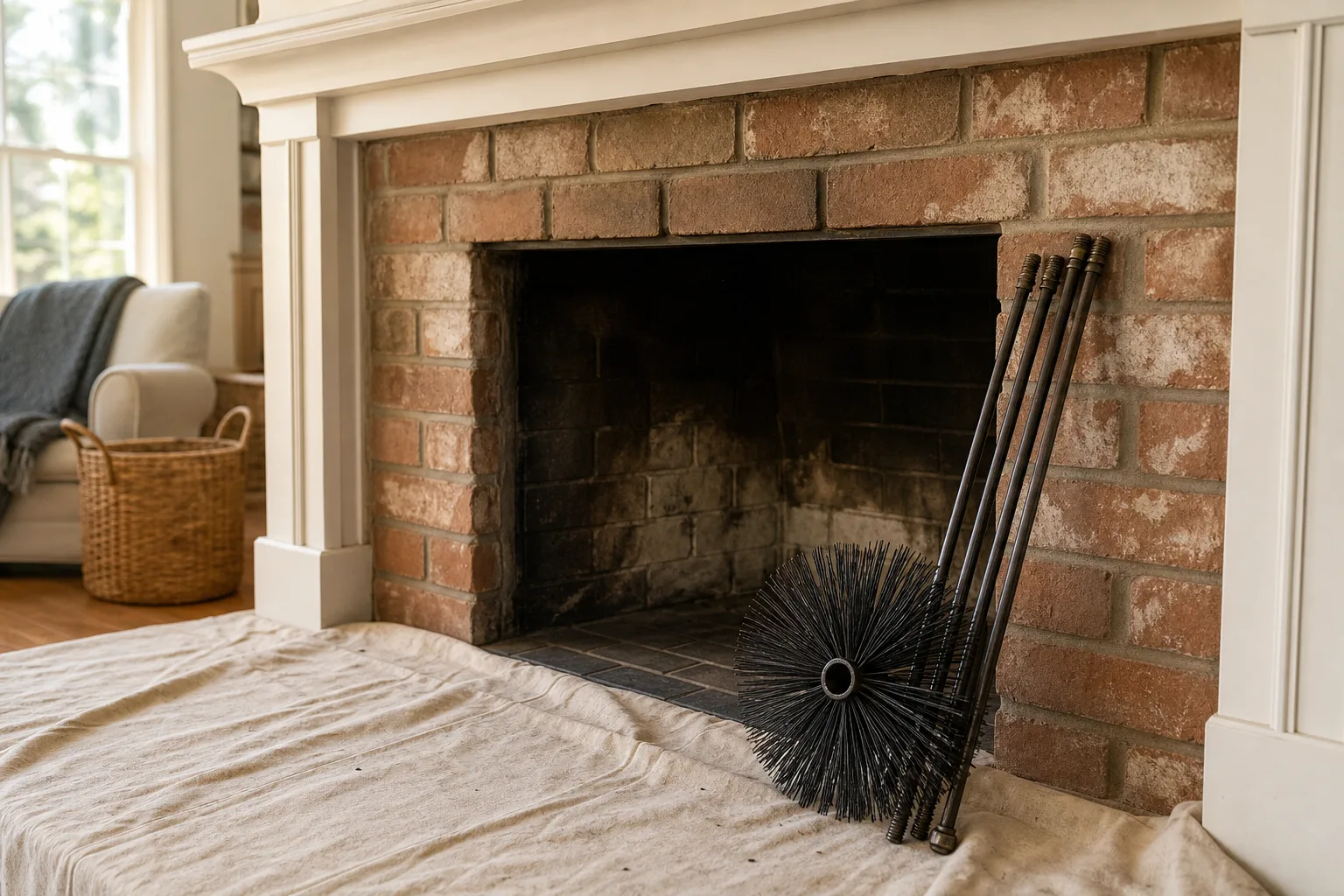
Chimney Sweep
Removes the source. The half of the fix that lasts.

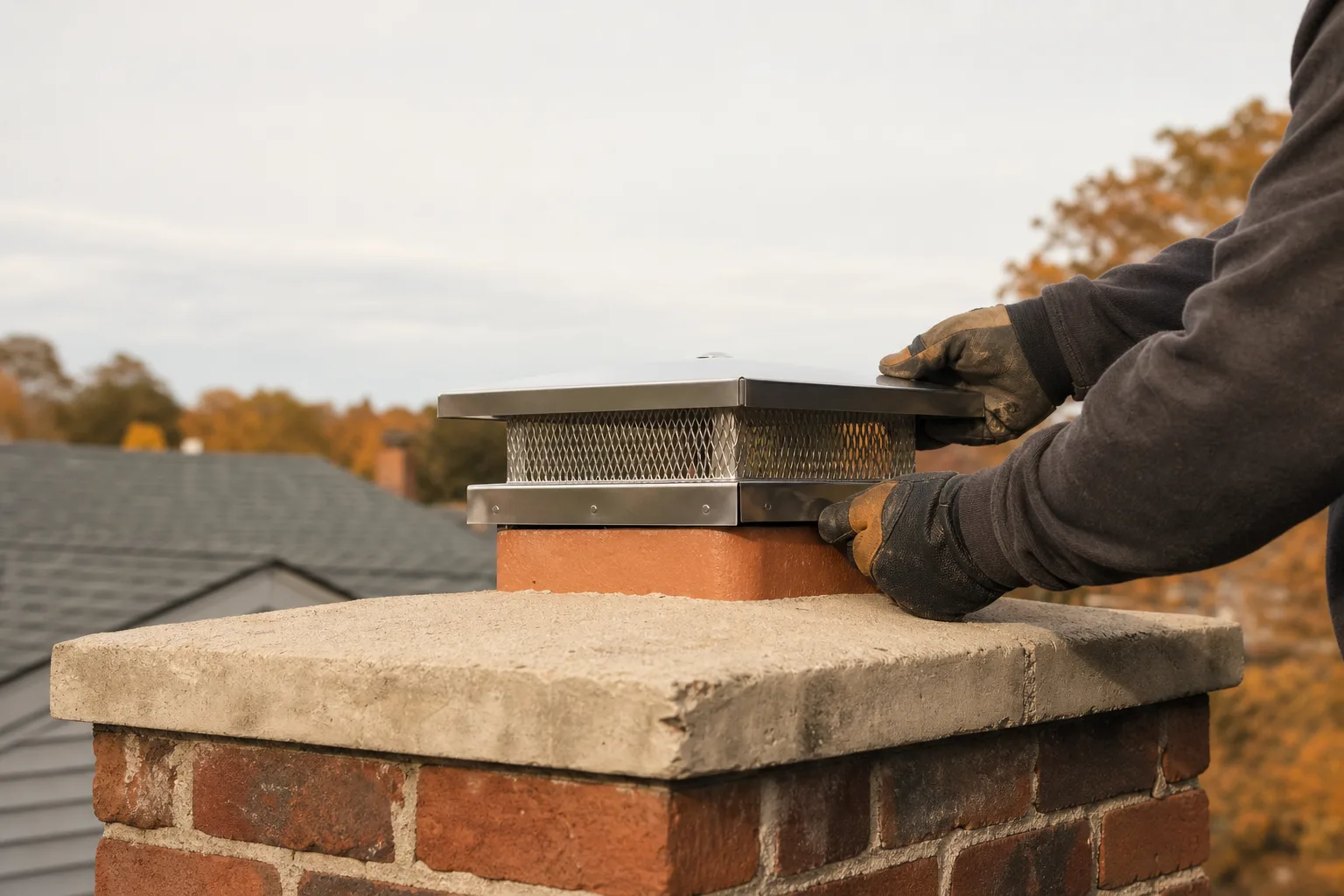
Chimney Cap Installation
A top-sealing damper cap closes against a gasket and stops the airflow reversing.

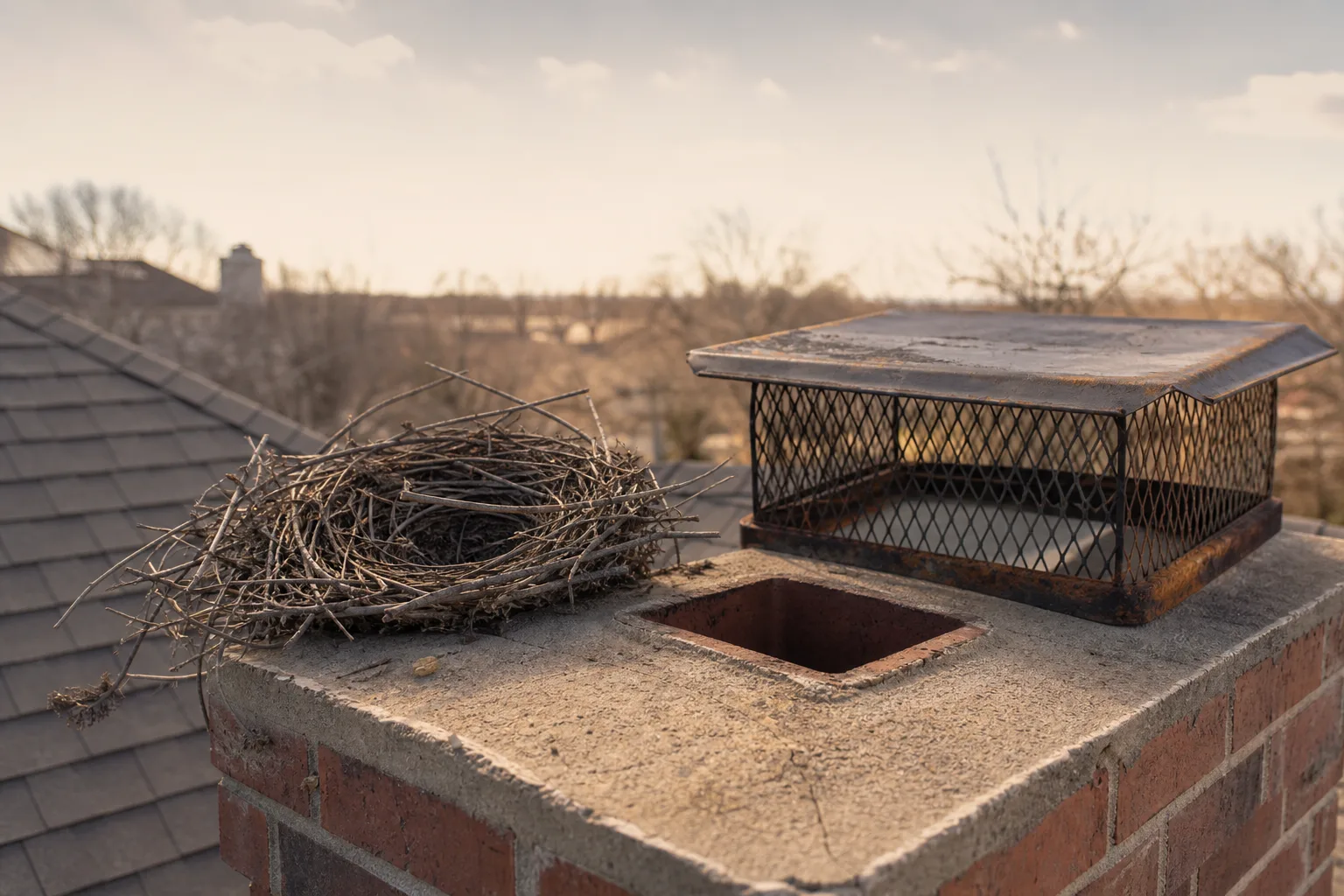
Chimney Animal Removal
When the smell is sharp rather than smoky and does not track humidity.

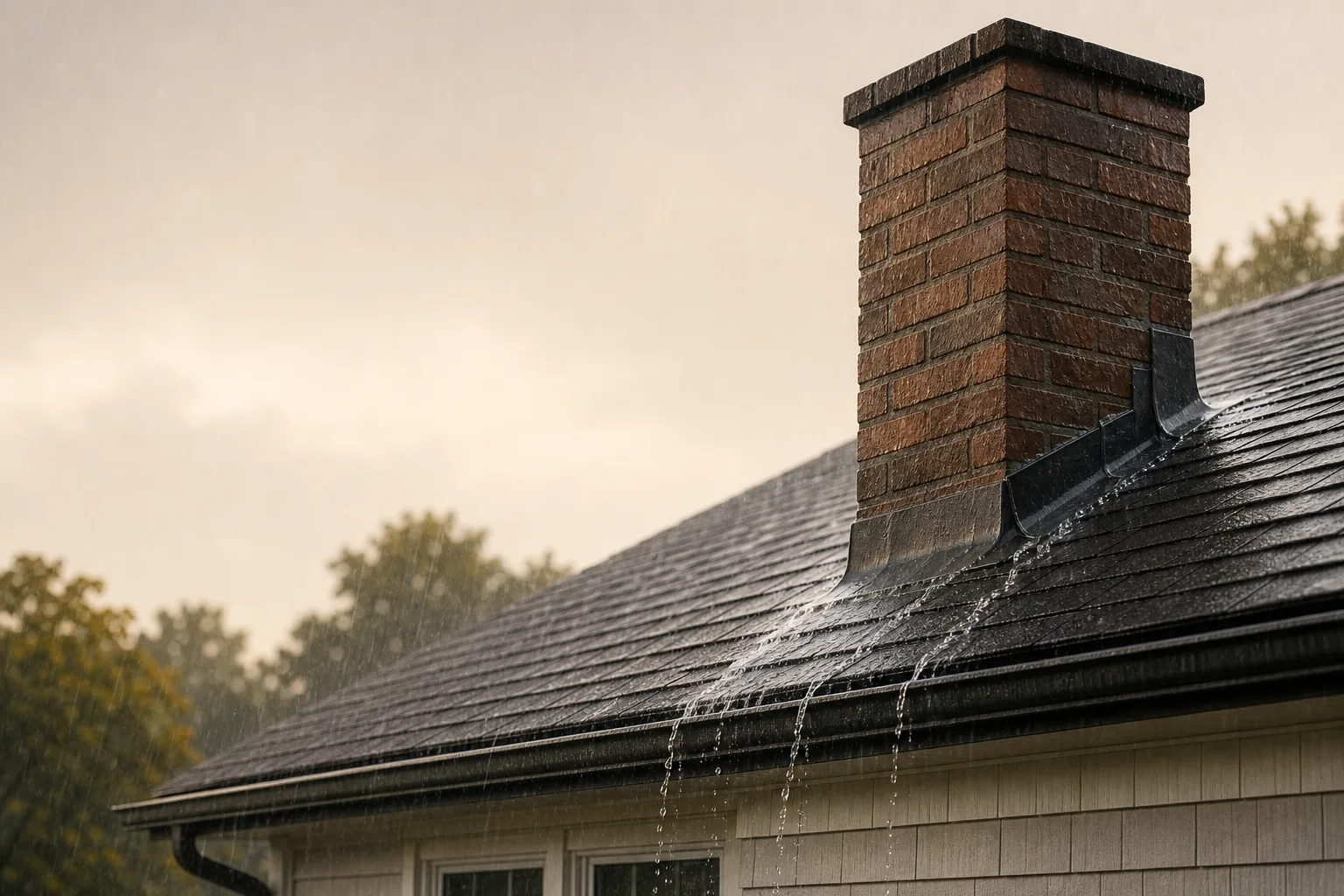
Chimney Leak Repair
When water is keeping the flue damp all summer.

The VIO Standard
- A written estimate first
- License and insurance checked
- Nothing starts without your OK
Common questions
Why does my fireplace smell worse in summer?
Two things line up. Creosote is hygroscopic, so it takes up moisture from humid air and gives off odour as it does — the more humid, the stronger. And in warm weather a house is often under slight negative pressure, so air flows down the flue instead of up it, carrying that odour into the room rather than out of the chimney. In winter the fire reverses both effects, which is why nobody notices in January.
Will sweeping the chimney stop the smell?
It removes the source, which is most of the answer, and it rarely eliminates the smell entirely on its own. Some odour is soaked into the masonry itself after years, and a damper that does not seal will still let it through. The reliable combination is a sweep plus a top-sealing damper at the crown, which closes against a gasket rather than metal on metal.
Can I use a deodoriser in the fireplace?
Commercial chimney deodorisers work better than an air freshener because they neutralise rather than mask, and they are genuinely useful in the gap between noticing and getting a sweep booked. What they cannot do is remove creosote or fix airflow, so treat them as a stopgap. If a product is being sold as an alternative to sweeping, it is not.
Is a smoky smell from the fireplace dangerous?
The smell itself is not — it is odour from deposits, not combustion gases, and nothing is burning. What it does tell you is that there is a meaningful amount of creosote in the flue and that air is flowing down the chimney into your house. The first is a fire risk next winter and the second means you would not get much warning if it were combustion gases instead.
Why does my fireplace smell like smoke after it rains?
Same mechanism, faster. Rain wets the creosote directly if the flue is open, and it raises the humidity everywhere else. A chimney that smells after every rain usually has no cap, or a cracked crown letting water down the stack. That is worth fixing regardless of the smell, because a wet flue also cracks tiles through freeze-thaw.
you don't have to know what's wrong.
Annoying rather than dangerous. Worth fixing, not worth worrying about tonight. Describe what you are seeing and a local pro works out the rest. You get the price in writing before anyone starts, and you can say no.

The people behind every visit
Founded by Ryan Carter in 2019. Every page you read here is reviewed by Ethan Miller, our chimney specialist. A written estimate before any work, and the findings in writing whether or not anything needs doing.
More about who we are →