



Chimney service

Chimney Leak Repair

Water traced to its actual entry point, then sealed there. The stain on your ceiling is rarely underneath the hole.

5.0/5
8 verified reviews
Ethan MillerEthan Miller · Chimney specialist, VIO CHIMNEYLast reviewed July 20265 min read
The short answer

The stain is not under the leak. That is why so many chimney leaks get fixed twice.

Water enters a chimney at one of five places — the crown, the cap, the flashing where it meets the roof, the mortar joints, or the brick face itself — and then runs down inside the structure until it finds somewhere to appear. It can travel several feet horizontally along a rafter before it drips. So chimney leak repair is a diagnosis job first: a hose test or a level 2 camera trace to find the entry point, and only then the sealing. Anyone who quotes a fix over the phone is quoting for the wrong hole.

Finding it first

Water travels before it shows

Traced with a hose, one section at a time, from the bottom up. The first appearance of water is what identifies the entry point.

On this pageSigns you need this3 sections+2
  1. Signs you need this
  2. The jobs this includes
  3. Common questions
Do you have this problem?

Signs you need chimney leak repair

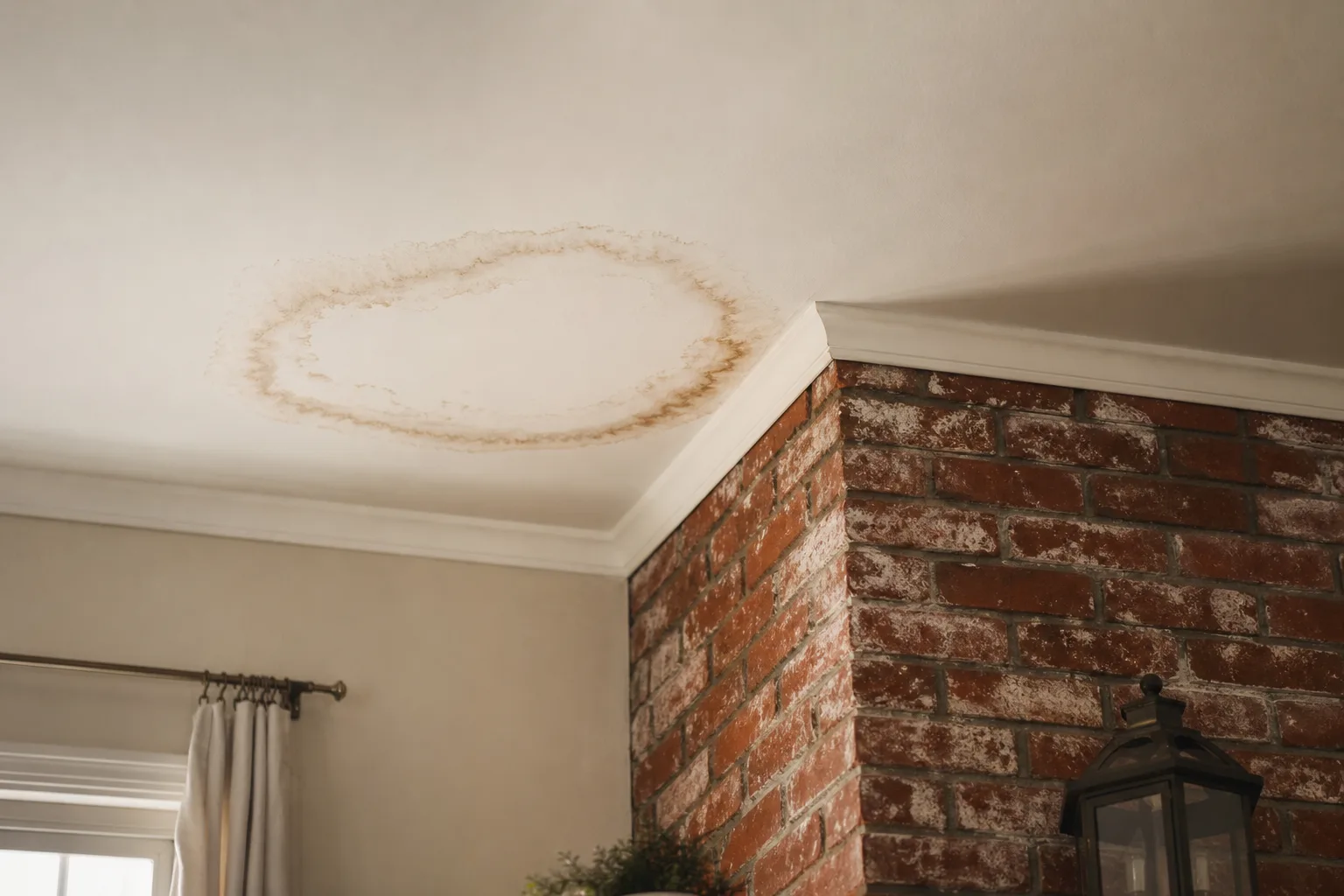
Brown ring-shaped water stain on a white ceiling next to the chimney breast

A stain on the ceiling near the chimney

The classic and the most misleading. The stain marks where water gave up travelling, not where it got in. Sealing above the stain is the most common wasted repair in this trade.
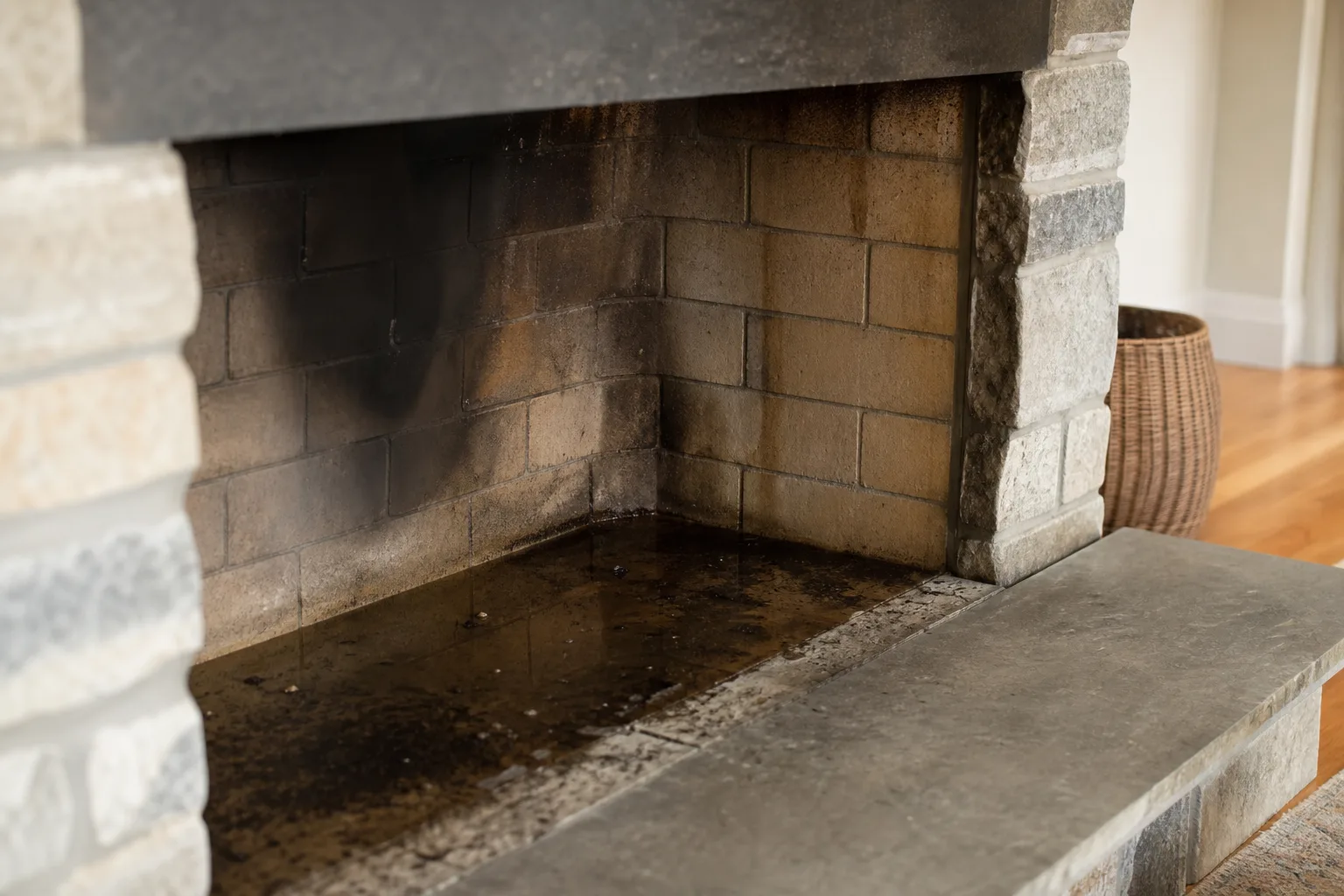
Rainwater pooled on a fireplace firebox floor with dark damp staining on the brick

Water pooling in the firebox after rain

The most direct evidence there is: water is coming down the flue itself. That points at the cap or the crown rather than the flashing.
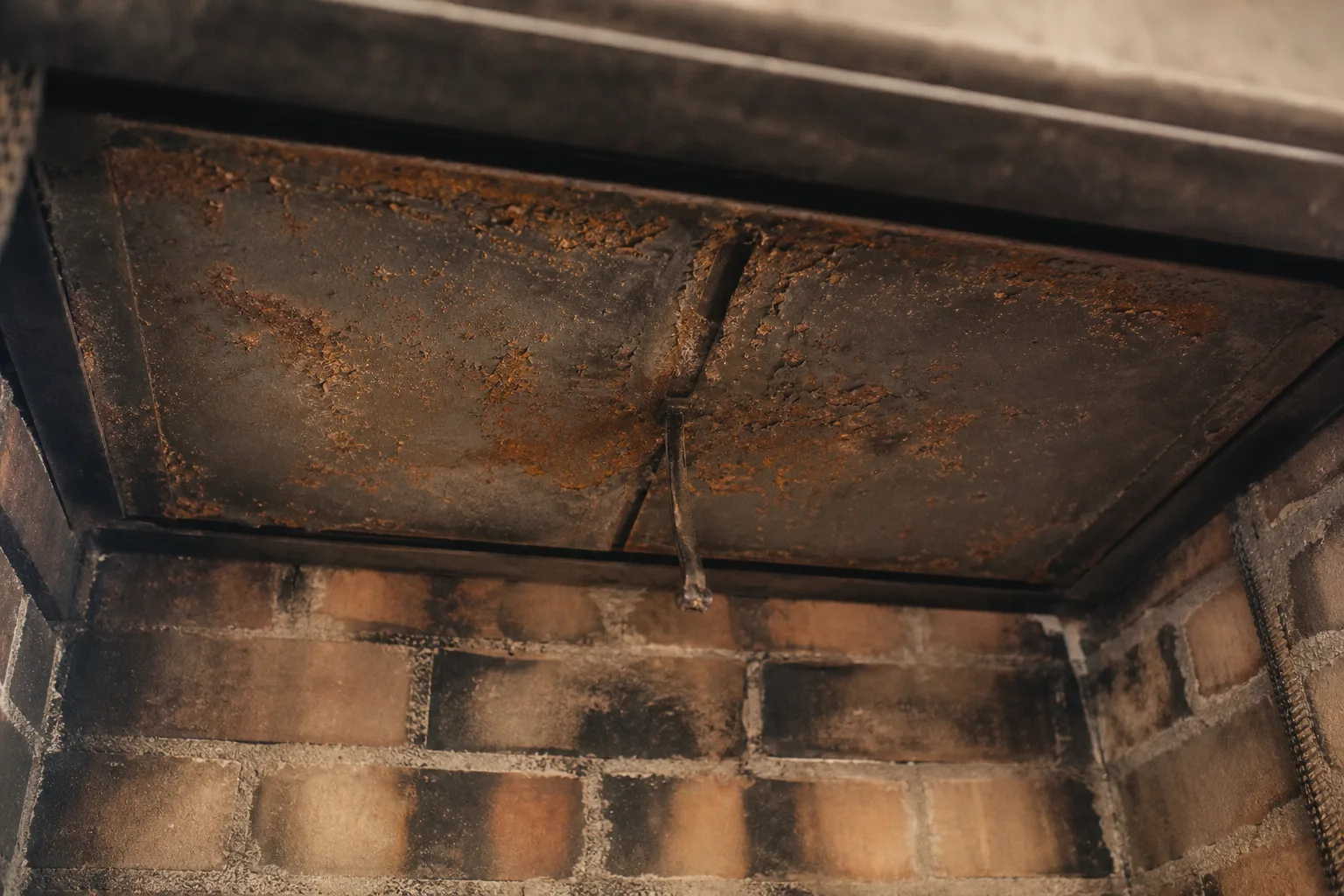
Looking up inside a firebox at a damper plate with rust stains and flaking metal

Rust on the damper or in the firebox

Rust means sustained moisture in a place designed to stay dry. It also means this has been happening for a while, not since the last storm.
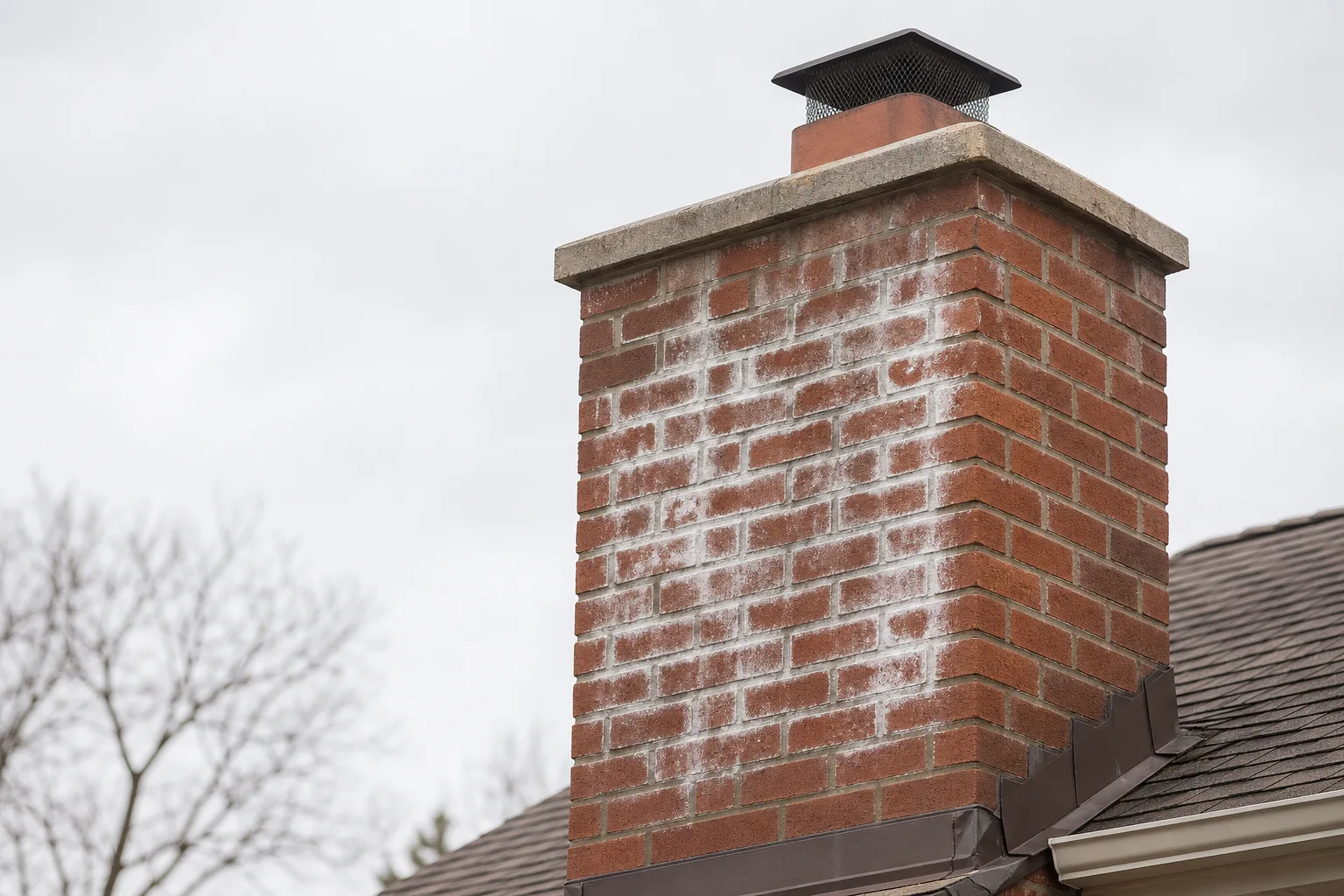
White chalky efflorescence staining spread across the face of a brick chimney

White chalky staining on the brick

Efflorescence is salt carried out of the masonry by water moving through it. Harmless in itself, and proof that the wall is wet inside.
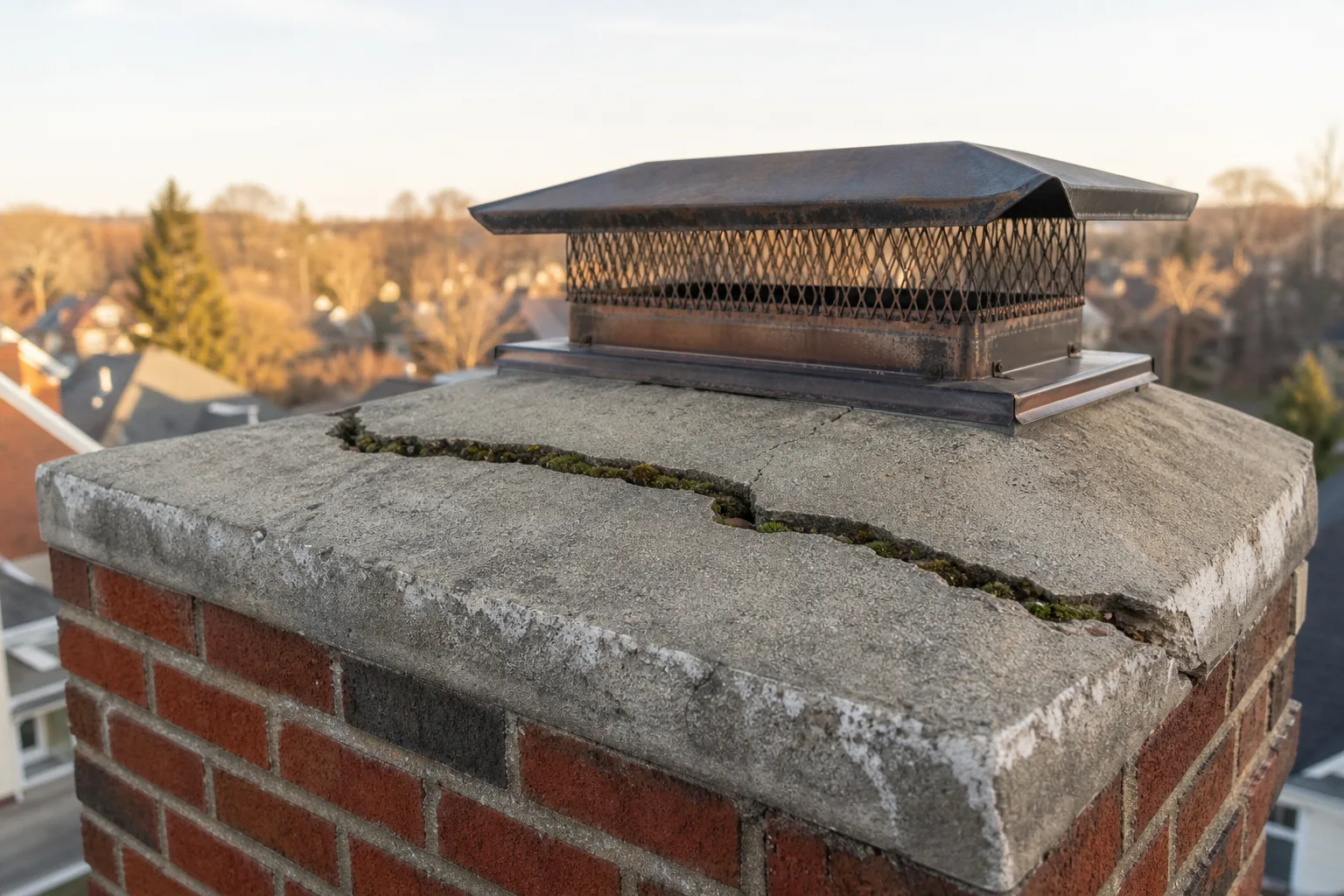
Concrete chimney crown viewed from above with a wide crack and moss growing inside

A cracked or sloping crown

The crown is the slab that throws rain clear of the brick. Once it cracks, every rainfall runs straight into the masonry underneath it.
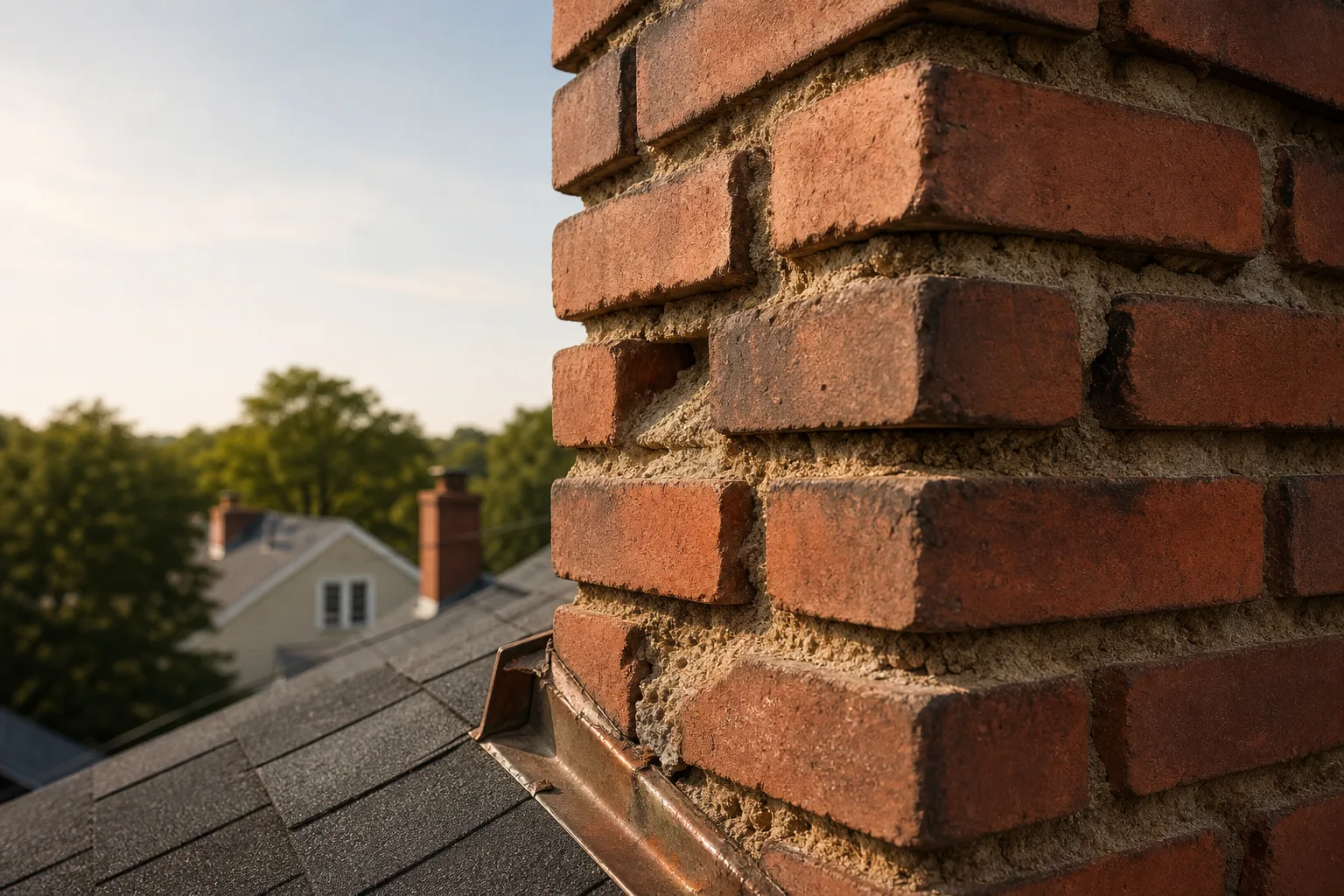
Eroded chimney mortar joints recessed behind the brick faces with loose sand and grit

Mortar joints you can scrape out

Open joints take water directly into the wall. On an older stack this is often the whole answer, and repointing is the repair.

How we work

How the visit works

The same four steps every time, whatever the repair turns out to be.
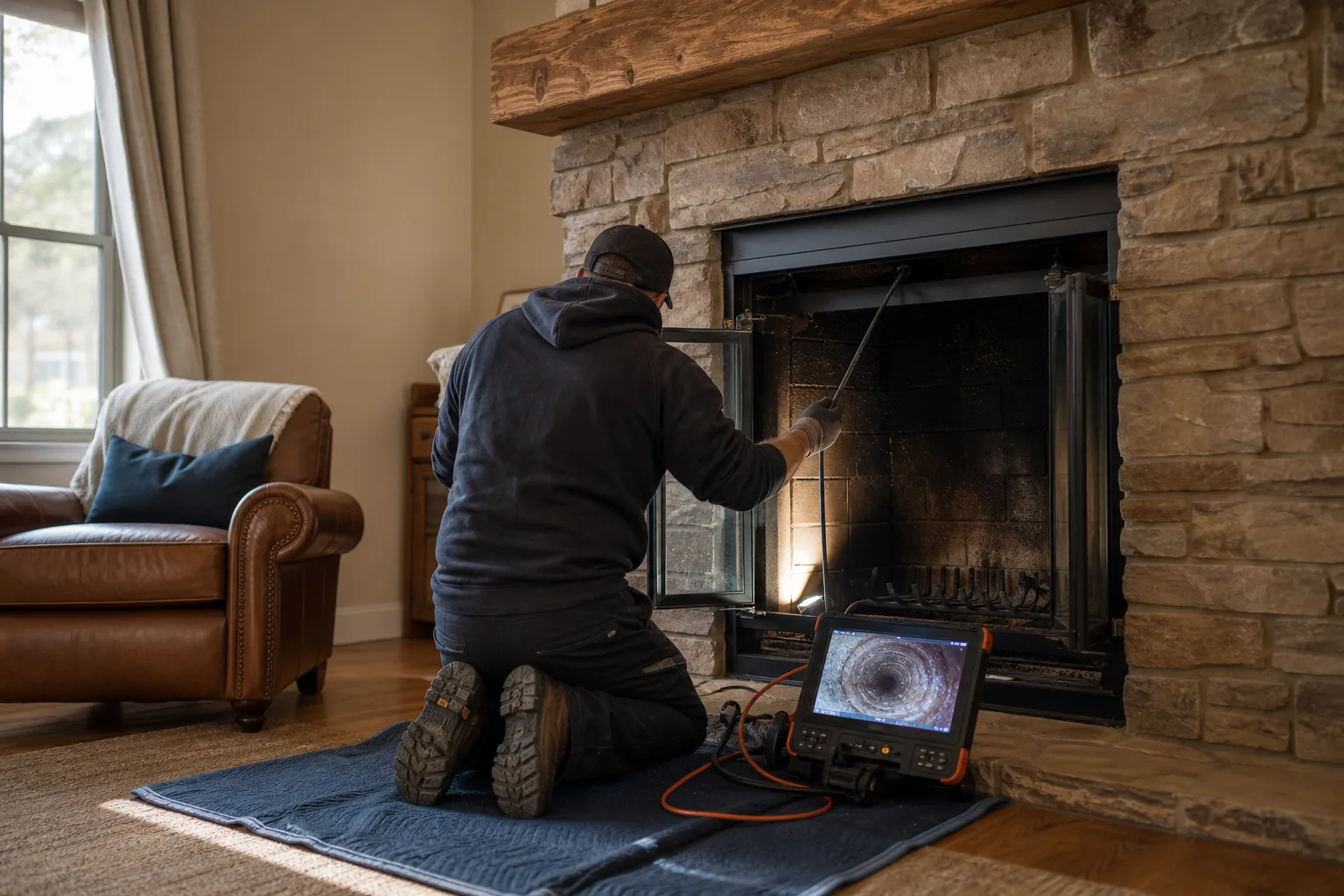
  1. Technician kneeling at an open fireplace feeding an inspection camera up the flue beside a monitor
    01

    Inspection first, always

    A look at the crown, cap, flashing and exterior masonry, then the flue, damper and firebox — with a camera where the job calls for a level 2 scan. Whatever needs work gets shown to you, not just described.
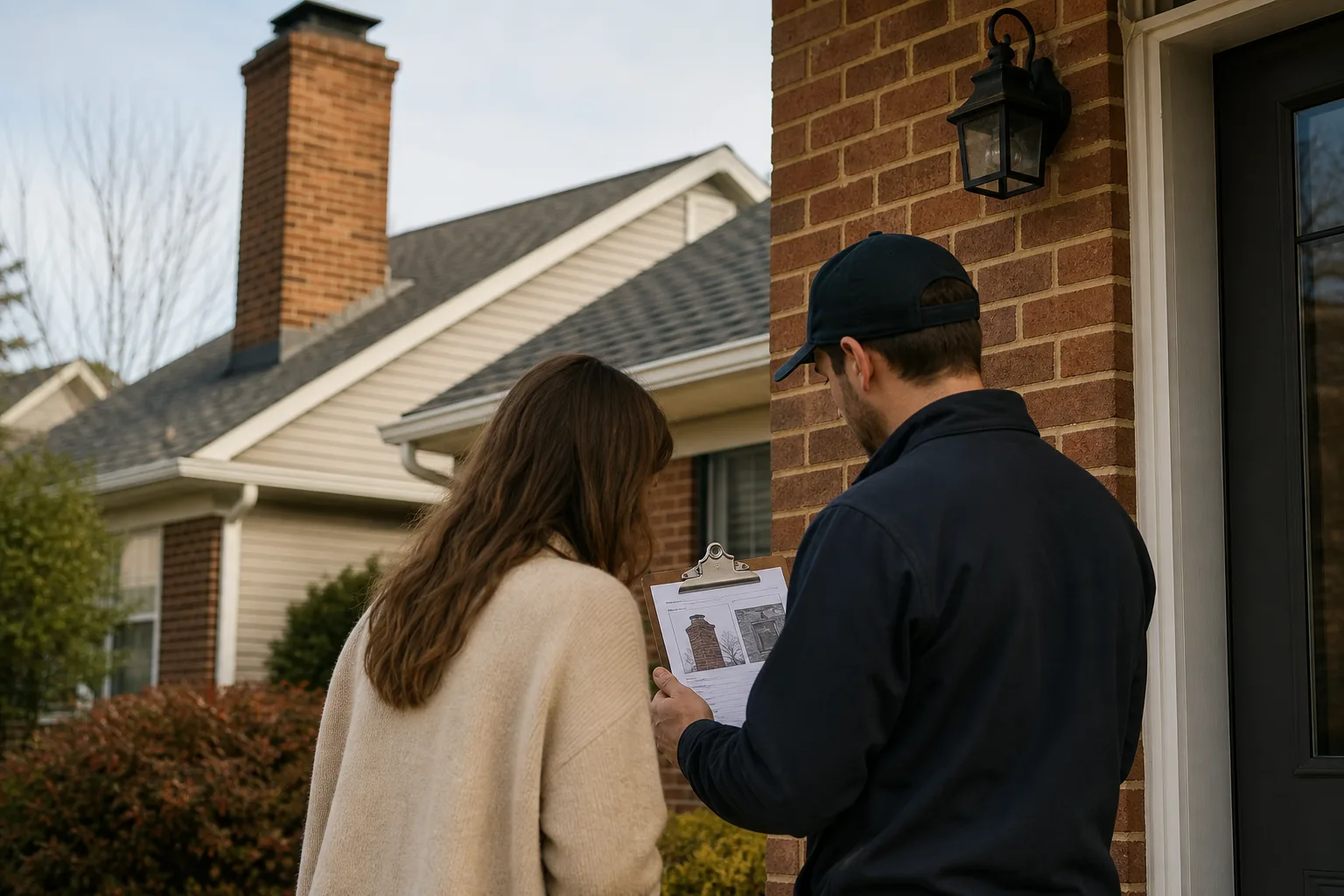
  2. Chimney technician reviewing a printed estimate on a clipboard with a homeowner at the front door
    02

    A written estimate before anything

    Scope, price and what is not included, in writing. Nothing starts until you approve it, and an emergency is not a reason to skip this step.
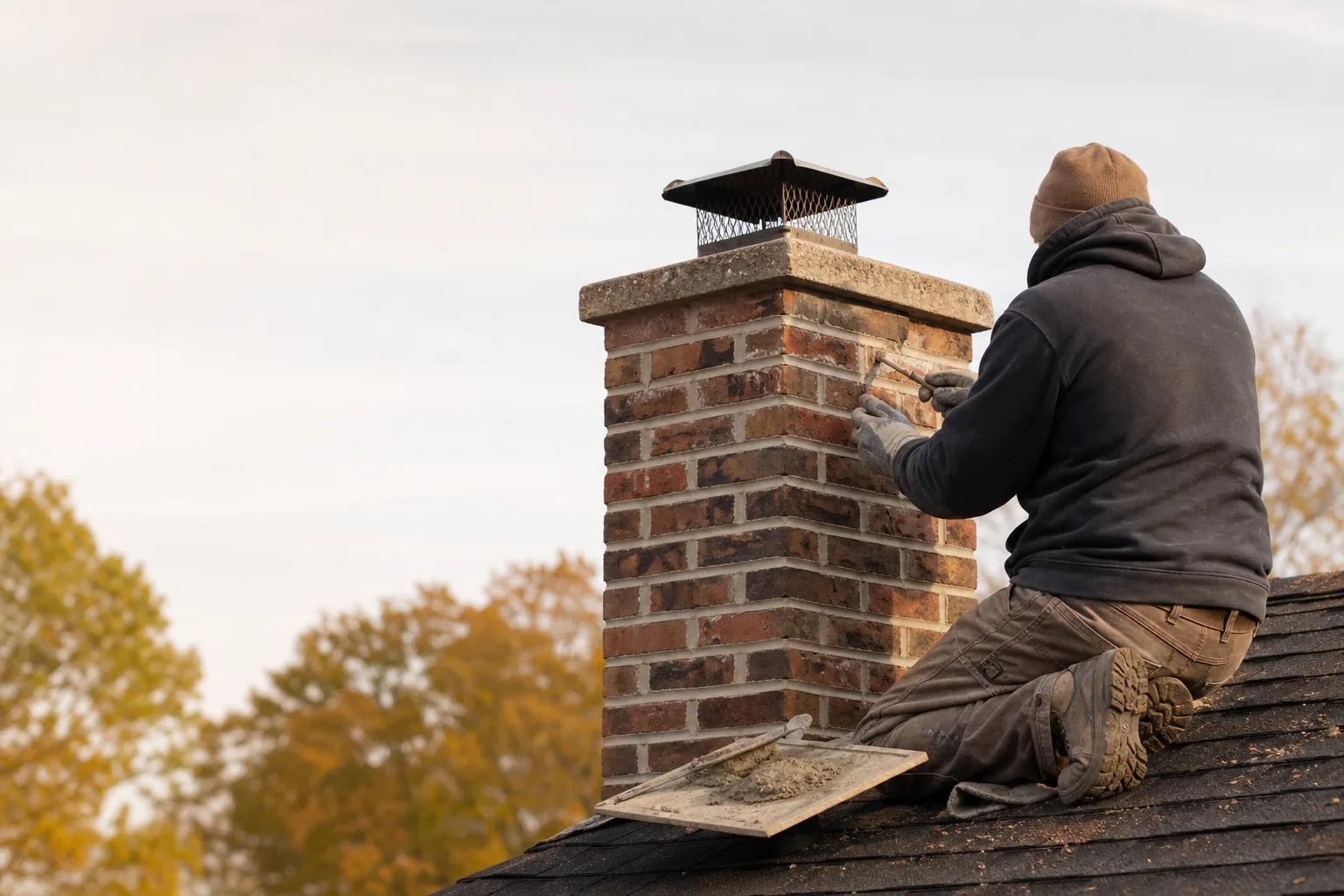
  3. Mason on a rooftop repointing mortar joints on a brick chimney with a trowel
    03

    The work itself

    Matched materials and the manufacturer's spec, not whatever is on the van. Drop cloths down, and the room left as it was found.
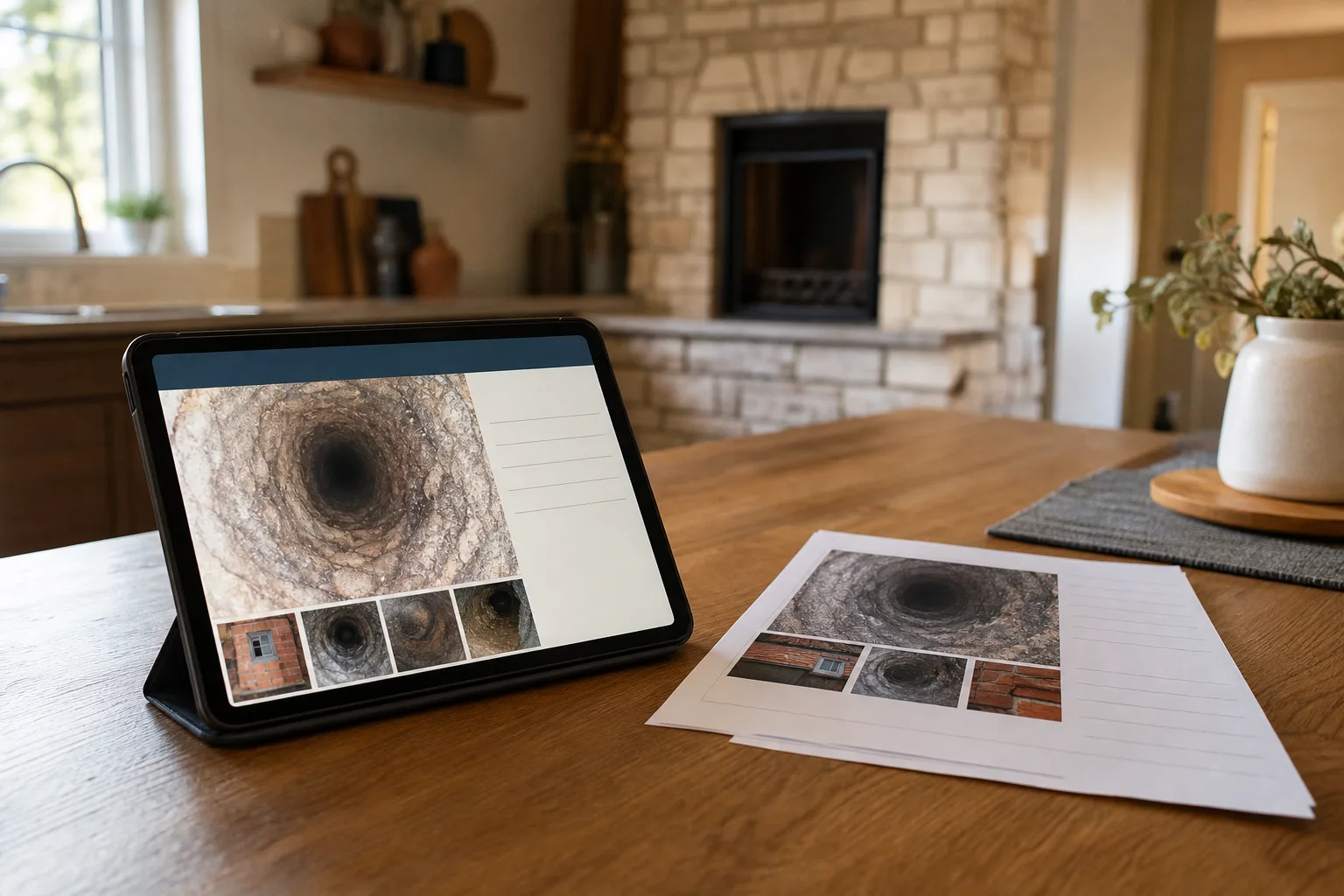
  4. Tablet on a kitchen table showing a chimney inspection report with flue camera still
    04

    Verification and a report

    A second scan after the work, and written findings you can keep, hand to an inspector, or send to an insurer.

What it covers

The jobs this actually includes

Not every job on this list is equally urgent, so they are ordered that way. A cracked liner stops you using the fireplace tonight; waterproofing can wait for a dry week.

  • Liner repair where water has got in

    Safety repair

    Water and freeze-thaw crack clay tiles from the inside. If the leak has been running a while, the liner is part of the damage rather than just the route.

    On site: 1–2 days

  • Flashing repair or replacement

    Stops water

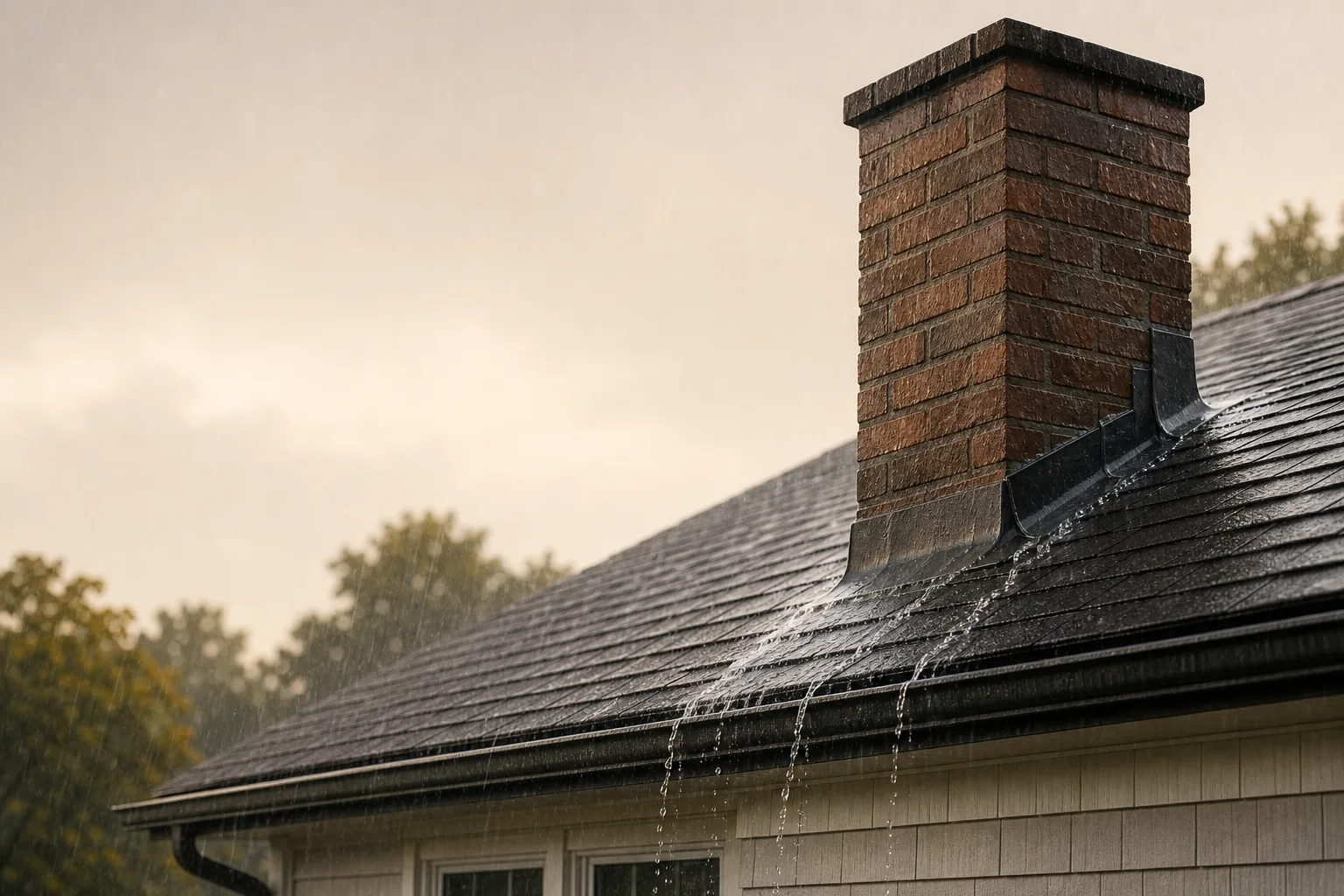
    Resealing or replacing the metal where the chimney meets the roof, including the step flashing and counter-flashing tucked into the mortar. This is the single most common entry point on any chimney.

    On site: About a day

  • Crown repair or recast

    Stops water

    Patching a hairline crack, or casting a new crown with a proper overhang and drip edge. A crown flush with the brick sheds water down the face instead of clear of it, which is a design fault rather than wear.

    On site: 1–2 days

  • Cap fitting or replacement

    Stops water

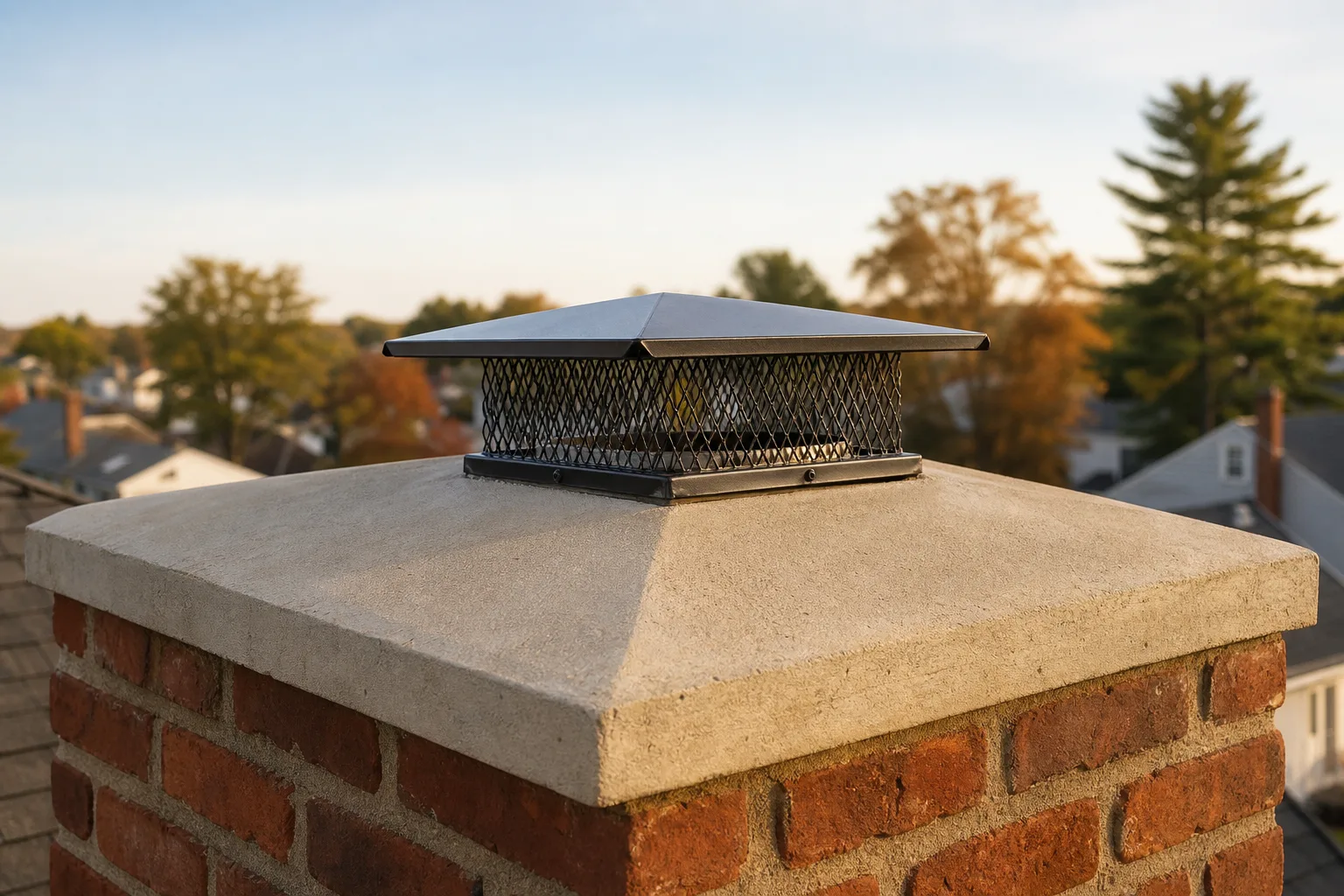
    An open flue takes rain straight down the middle. A stainless cap is the cheapest repair on this list and fixes the leak that puts water in the firebox.

    On site: About an hour

  • Repointing failed joints

    Stops water

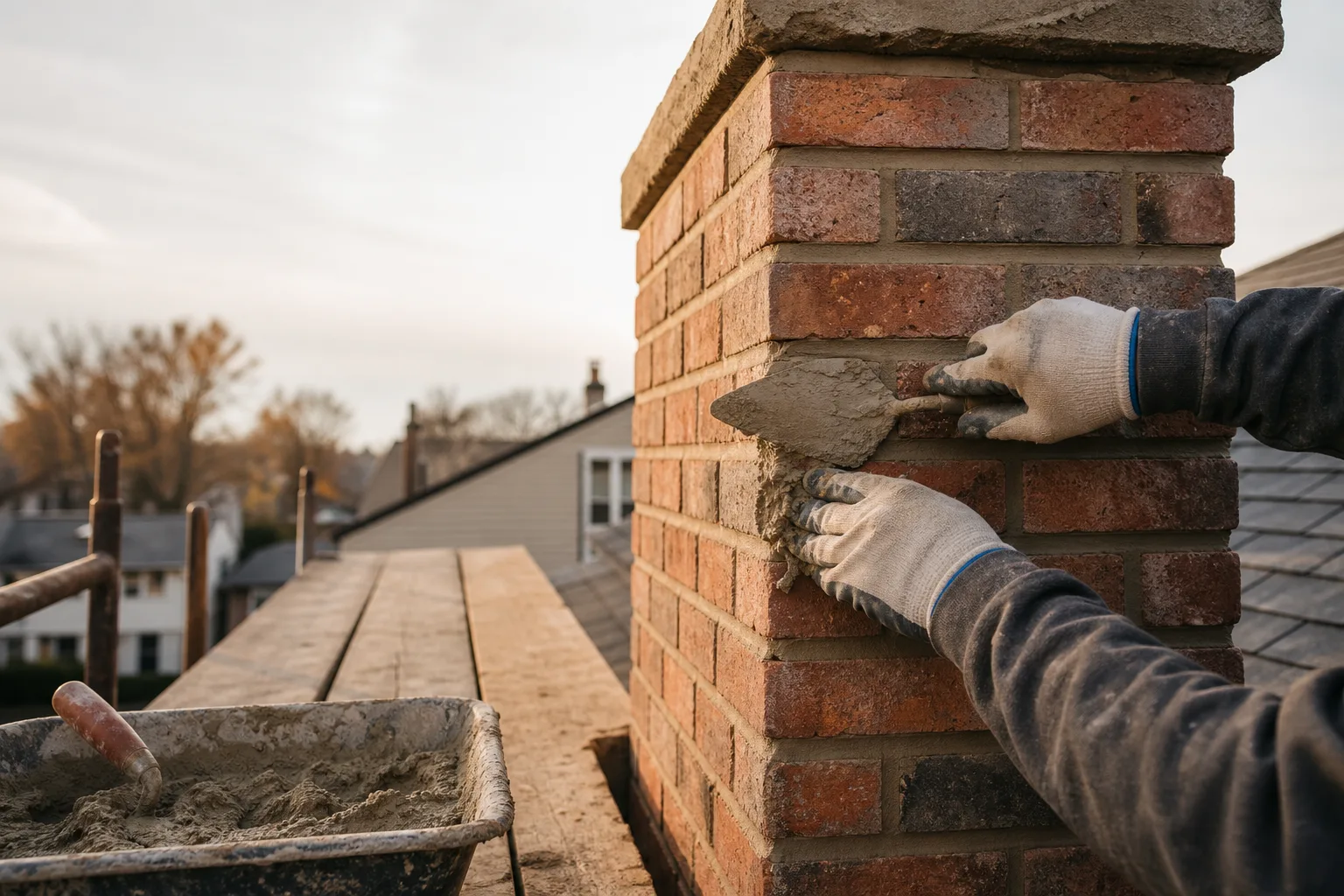
    Cutting out washed-out mortar and repointing in a matched mix. On an older stack this is frequently the leak rather than a contributor to it.

    On site: 1–2 days

  • Waterproofing the masonry

    Preventive

    A breathable sealant once the actual entry point is fixed, so the wall can still dry outward. Applied over an unfixed leak it traps the water inside and makes the damage worse.

    On site: Half a day

Times are for the work itself, not for scheduling. Masonry needs roughly 40°F to cure properly, which is what limits this work in a northern winter rather than whether a crew is free.
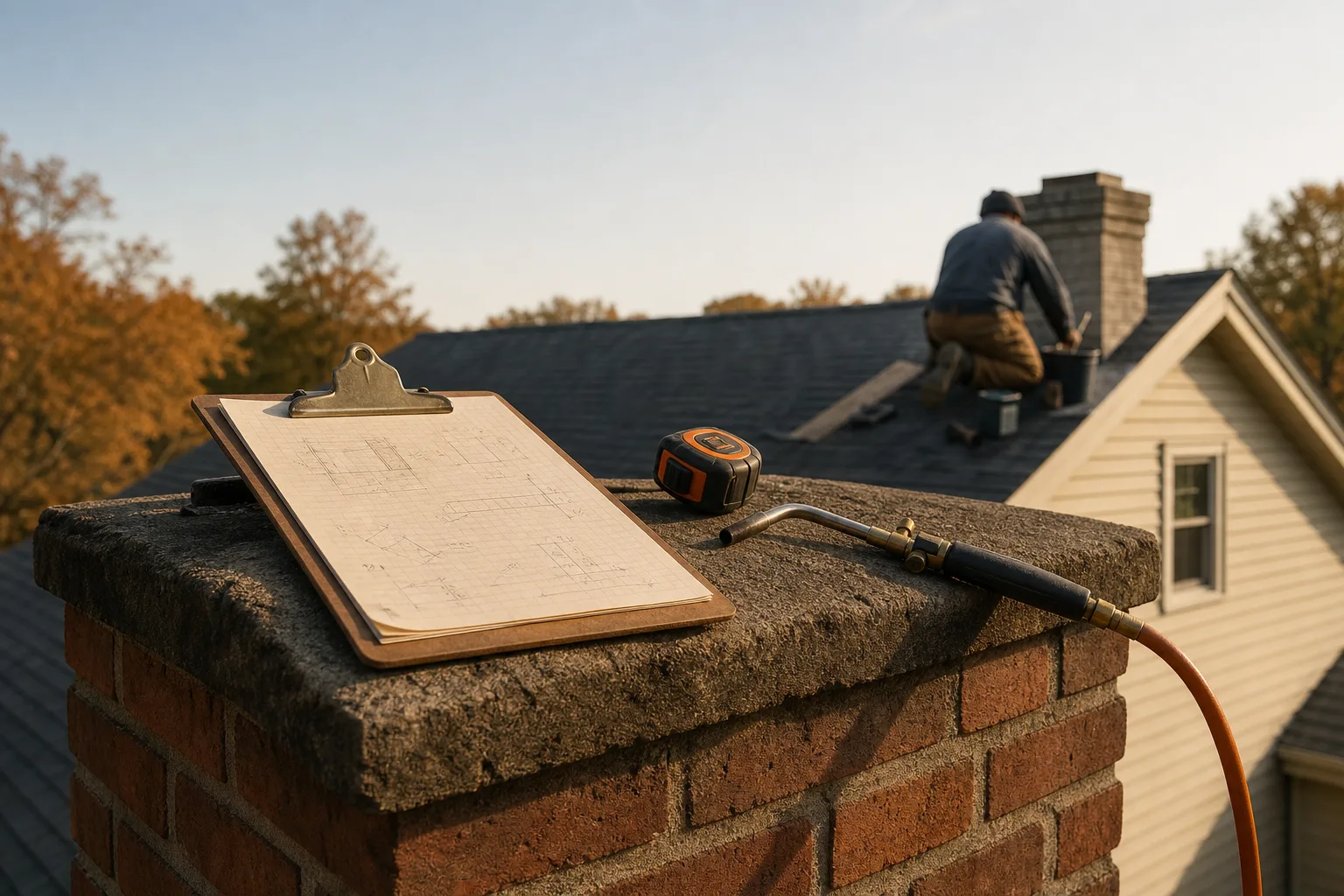
Handwritten estimate on a clipboard resting on a brick hearth beside a tape measure and torch
What drives the price

Why chimney leak repair quotes vary so much

  • Which of the five entry points it turns out to be — they are not close in price
  • Whether more than one is leaking, which is common on a neglected stack
  • Roof pitch and height, and whether scaffolding is needed
  • How long the water has been getting in before anyone looked
  • Whether interior damage — plaster, framing, the liner — has to be put right too

Fitting a cap or resealing flashing is a few hundred dollars. Recasting a crown or repointing a full stack runs into the low thousands. A leak that has been running for years and reached the framing is a different conversation entirely, which is the real argument for finding it early rather than living with a stain.

Ethan Miller and Ryan Carter of VIO CHIMNEY beside a branded service truck
Who we are

The people behind every visit

Founded by Ryan Carter in 2019. Every page you read here is reviewed by Ethan Miller, our chimney specialist. A written estimate before any work, and the findings in writing whether or not anything needs doing.

More about who we are →
Capped brick chimney silhouetted against a soft dusk sky above a tidy residential rooftop

The VIO Standard

  • A written estimate first
  • License and insurance checked
  • Nothing starts without your OK

Common questions

Why does my chimney only leak in heavy rain?

Because most entry points need volume or wind behind them. A hairline crack in the crown sheds light rain and takes on driving rain; flashing that has lifted slightly only lets water past when it is being pushed sideways. This is also why leaks appear to fix themselves for a season — the weather changed, not the chimney. A hose test recreates the conditions deliberately, which is how the entry point gets found rather than guessed.

How do you find where a chimney is leaking?

By elimination, from the bottom of the stack upward. Someone runs a hose on one section at a time while someone else watches inside, starting low and working up, so the first appearance of water identifies the section. It is slow and it is the only reliable method. The alternative — sealing everything that looks suspect — costs more and often misses, because the obvious crack is frequently not the one letting water in.

How much does chimney leak repair cost?

It depends entirely on which of the five entry points is at fault, and they are nowhere near each other in price. A cap is the cheapest thing on the list. Flashing is a day. Recasting a crown or repointing a whole stack is into the thousands. That range is exactly why the diagnosis comes first and why a phone quote for a chimney leak is not worth anything.

Is a chimney leak covered by insurance?

Sudden damage usually is — a storm lifting the flashing, a lightning strike, an impact. Long-term water entry from deteriorated mortar or a cracked crown generally is not, because insurers class that as maintenance. What an adjuster will ask for either way is documentation: dated photographs, written findings, and evidence of the condition. That is a good reason to have it looked at and written up even when the repair itself is straightforward.

Can I just waterproof the chimney to stop the leak?

Not on its own, and applied at the wrong time it makes things worse. A breathable sealant sheds rain while still letting the wall dry outward, which is useful after the entry point has been fixed. Sprayed over open joints or a cracked crown, it seals moisture inside the masonry, where it freezes and does more damage than it was meant to prevent. Waterproofing is the last step, never the first.

let's get it on the calendar.

Tell us your ZIP code and what you need. The pro who covers it quotes the job in writing, and nothing starts until you approve the number.

(513) 655-6702Get my estimate