



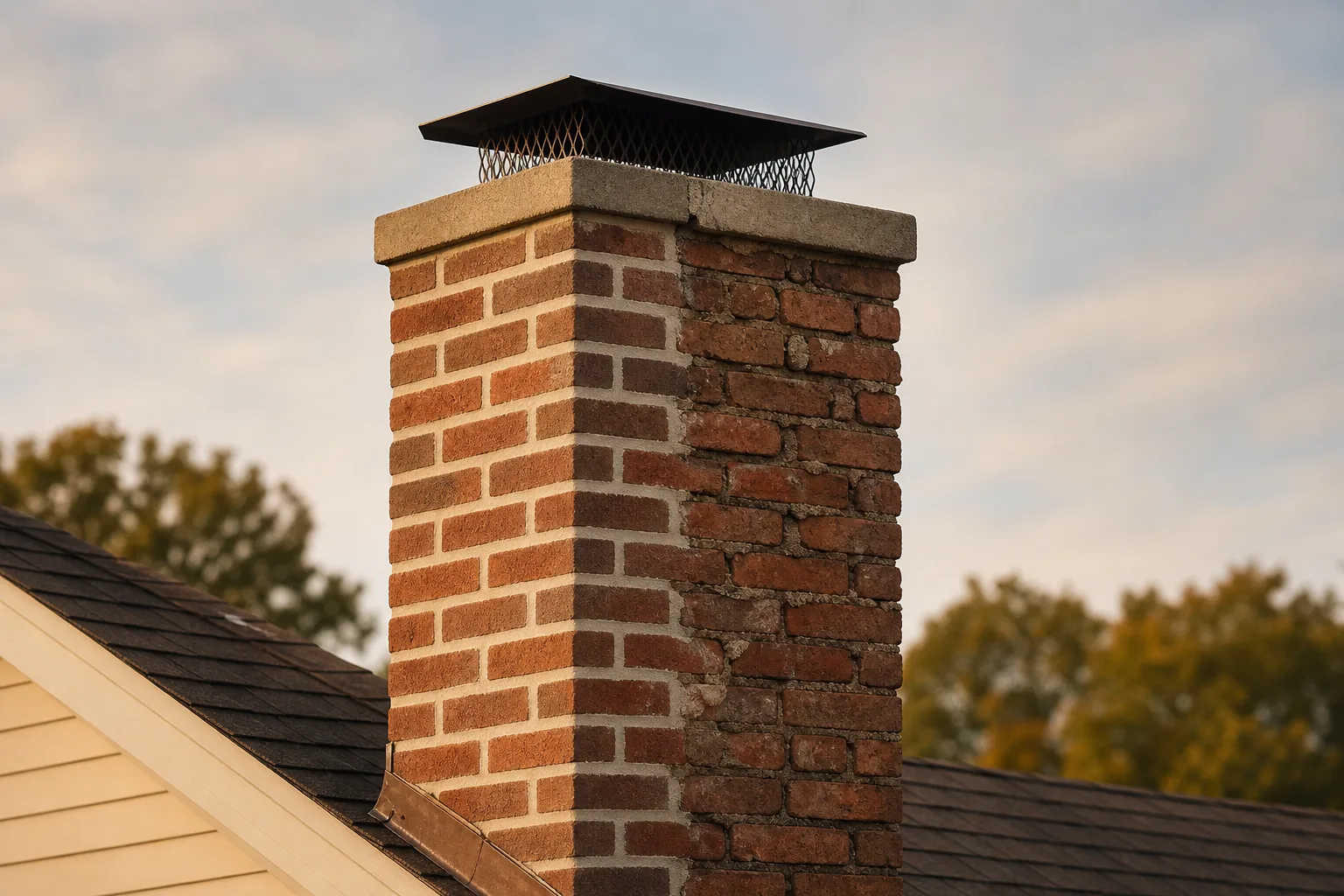
Chimney problem
Why is my chimney leaking?
Water is getting in at one of five places and travelling before it appears. Finding which one is the whole job.
Safe to use for now, and it gets more expensive every month you leave it.
The stain is not under the leak. That is why so many chimney leaks get fixed twice.
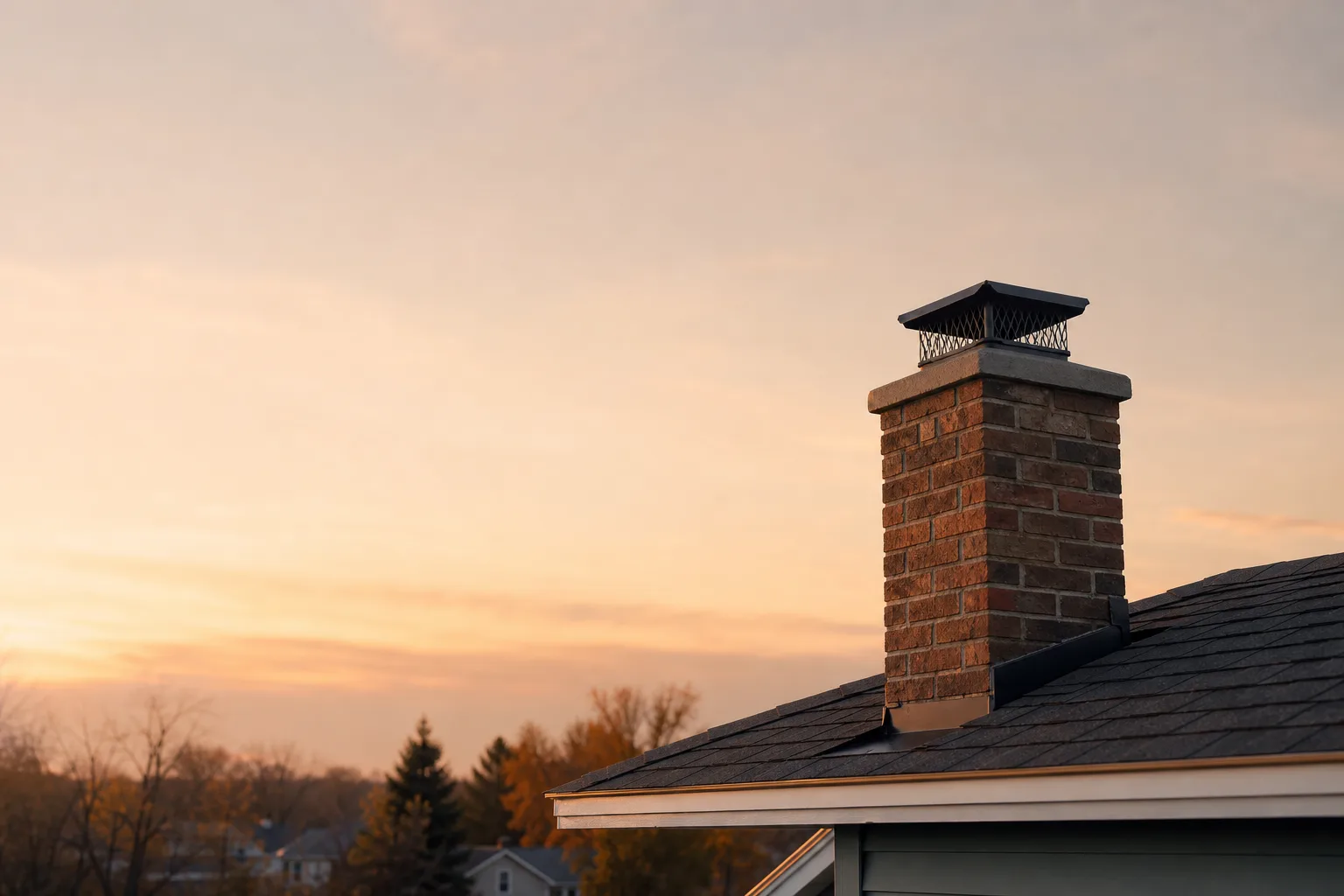
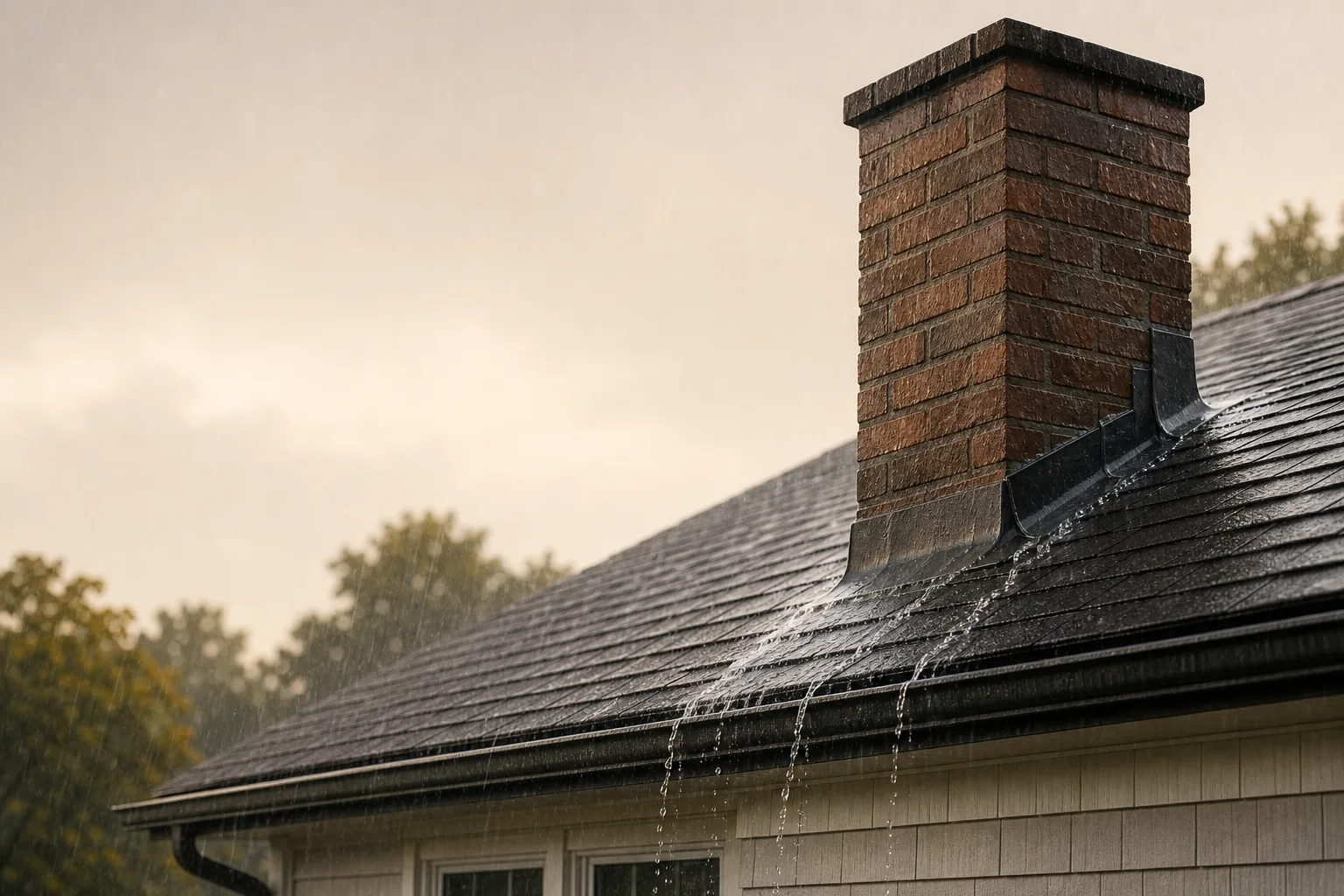
A chimney leaking almost always means water is entering at one of five points — the cap, the crown, the flashing where it meets the roof, the mortar joints, or the brick face — and then running down inside the structure until it finds somewhere to appear. It can travel several feet along a rafter before it drips. So the stain on your ceiling marks where the water gave up, not where it got in, and sealing above the stain is the most common wasted repair in this trade.
Where water gets in
Five points, one of them yours
Cap, crown, flashing, mortar joints, brick face. They are nowhere near each other in price, which is why the diagnosis comes before the quote.
What to do right now
None of this fixes it. All of it stops the problem getting more expensive between now and the visit.
Put a bucket under it and photograph the stain with today's date. An insurer will ask, and so will anyone quoting.
Do not light a fire if water is reaching the firebox. Wet masonry plus heat cracks tiles.
Note whether it only leaks in heavy or wind-driven rain. That single detail narrows five causes to two.
Leave the damper open so the flue can dry out between rains.
Do not seal anything yet. Sealant over the wrong spot hides the evidence needed to find the right one.
What a chimney leaking usually turns out to be
Ordered by how often it turns out to be the answer, so you can stop reading once you recognise yours.
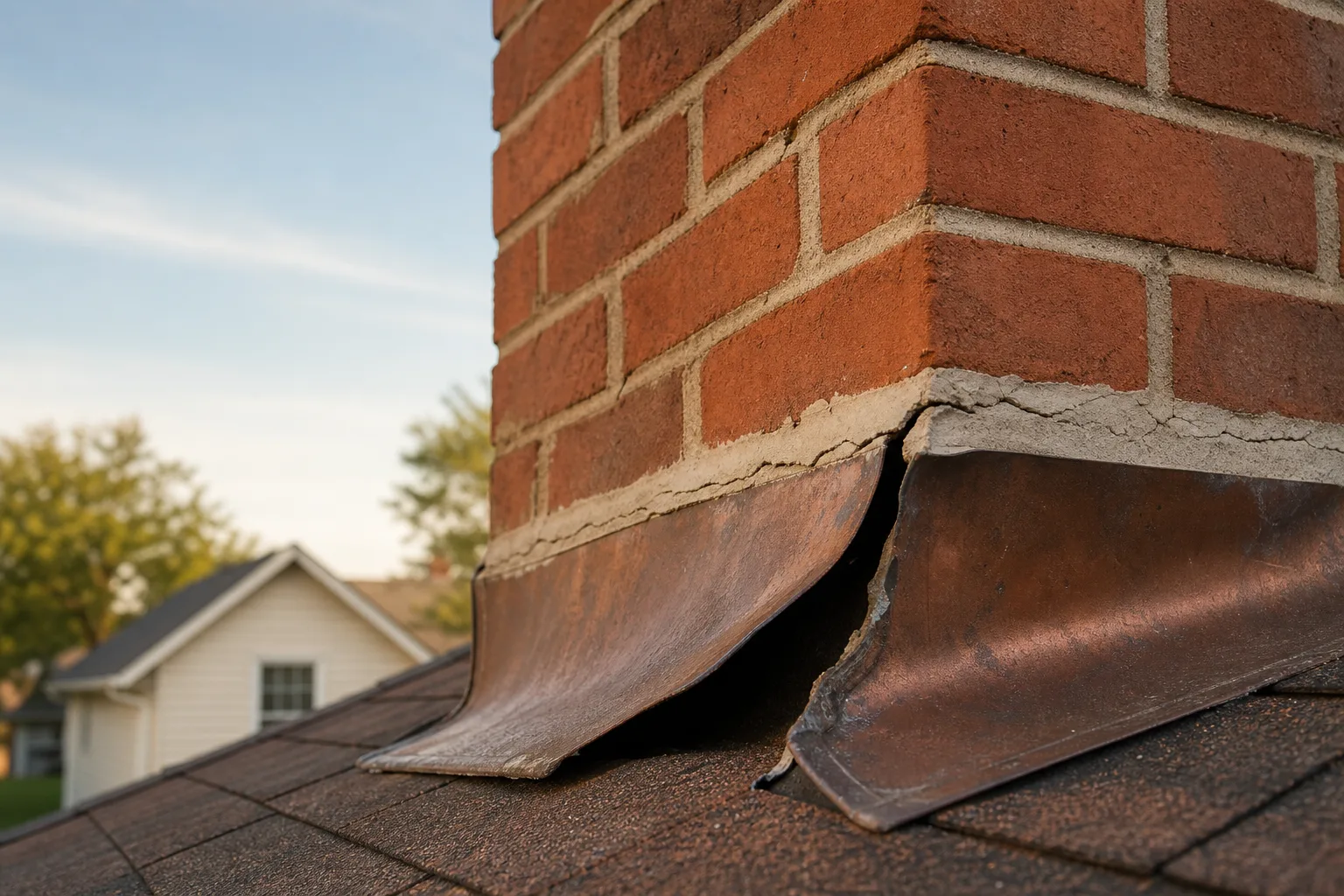
Failed flashing at the roofline
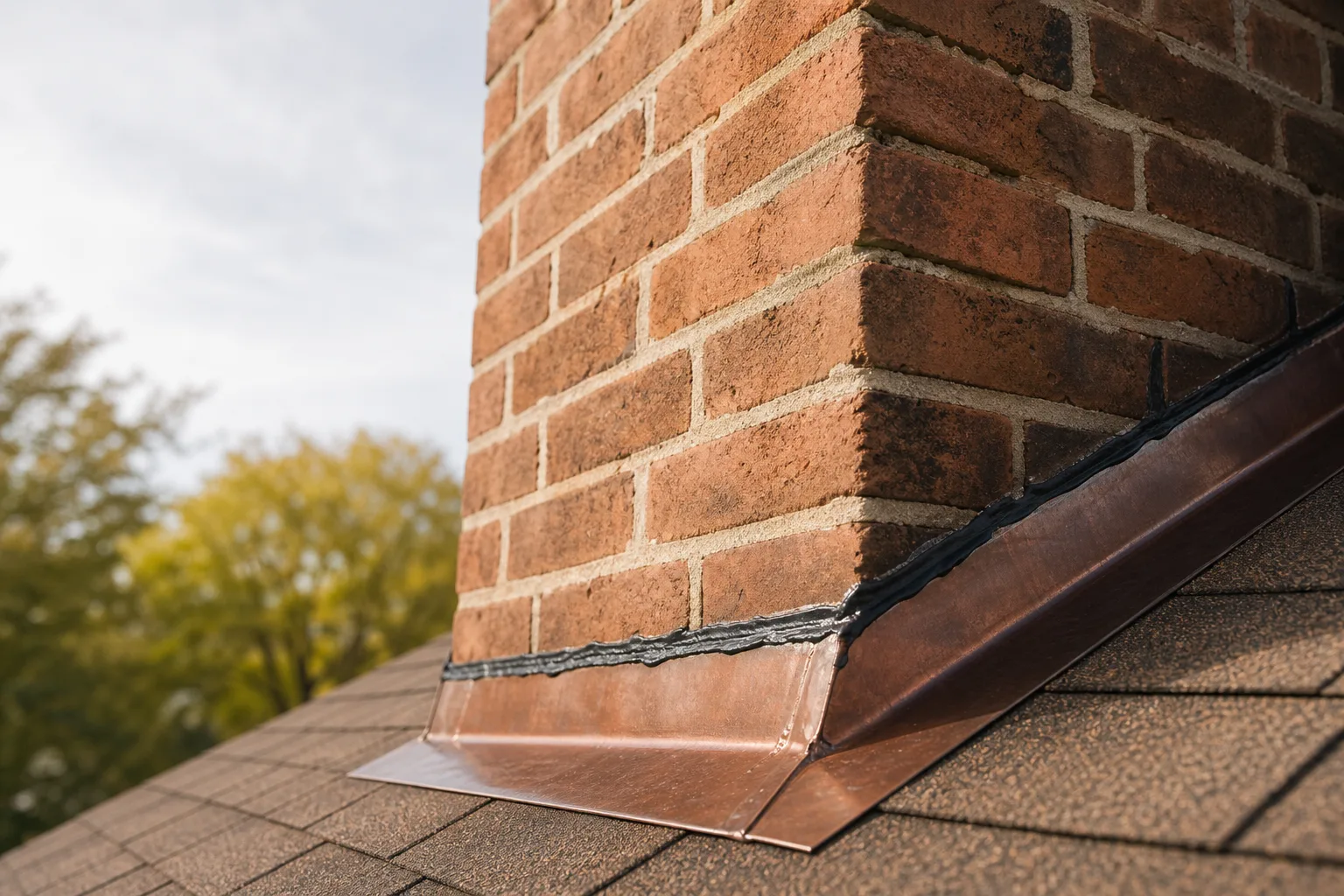
The metal joint where the chimney meets the roof is the single most common entry point on any chimney. It is a moving joint between materials that expand at different rates, so it has the shortest natural life of anything up there.
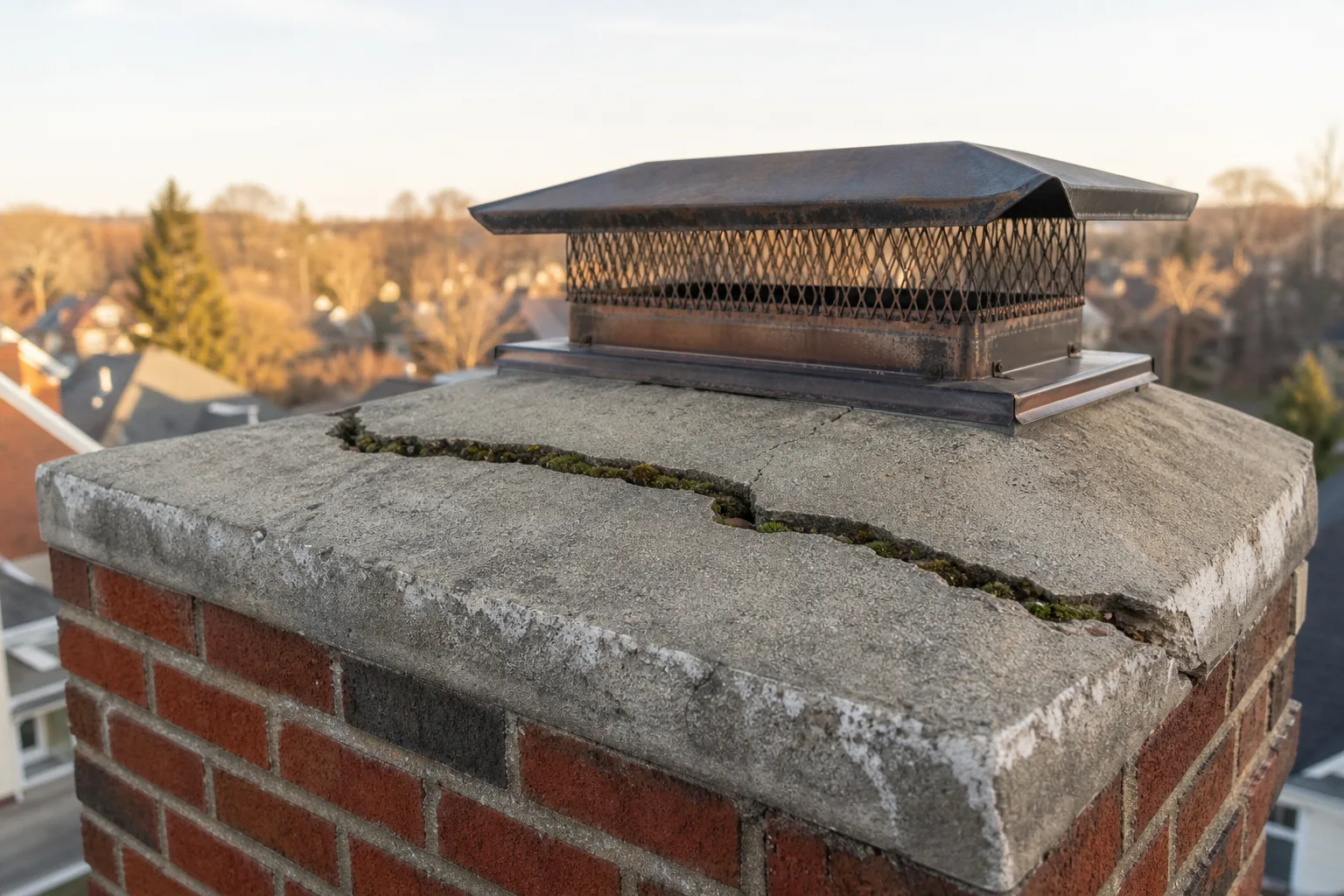
A cracked or badly built crown
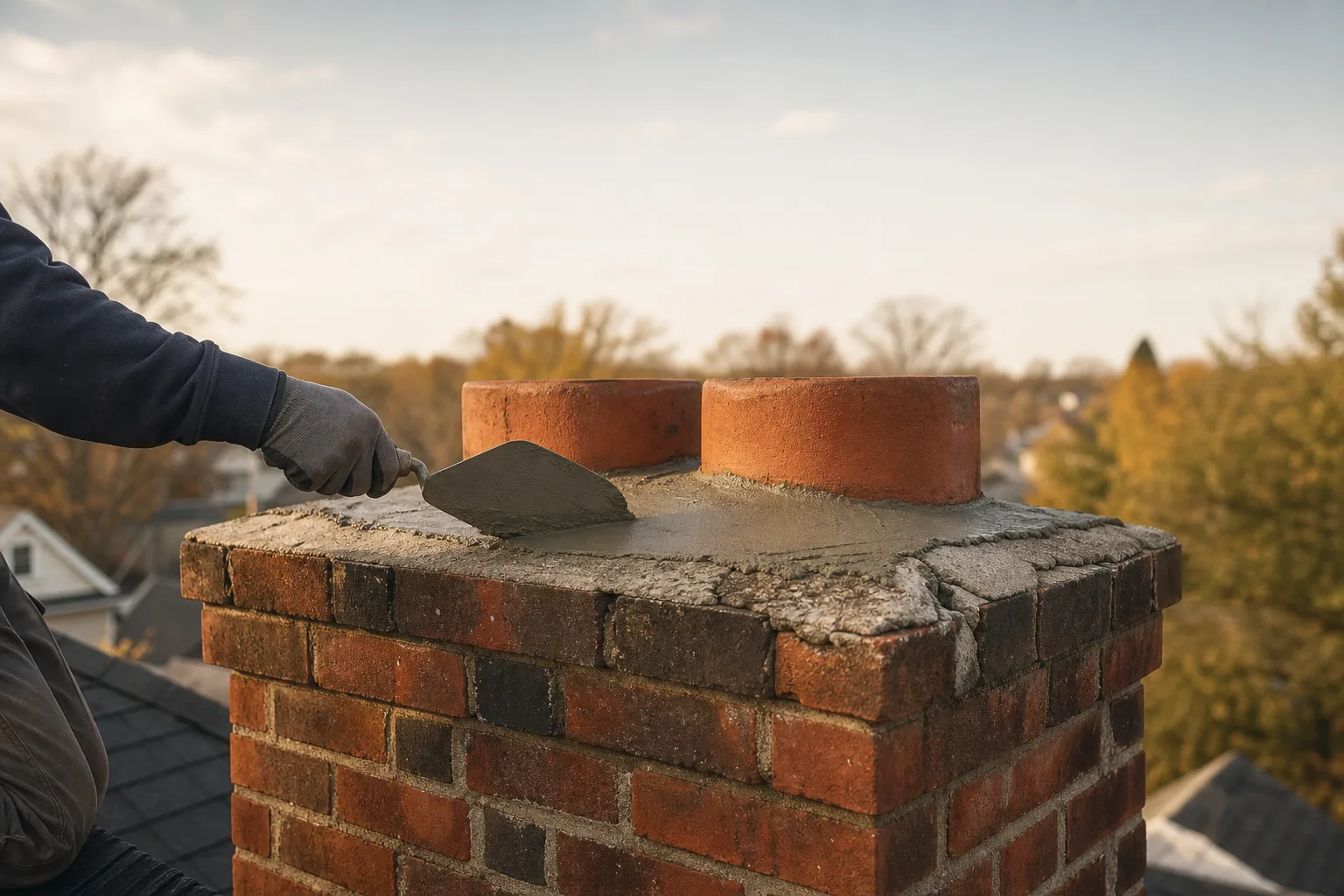
The crown should throw rain clear of the brick. Cracked — or built flush with no overhang, which many are — it sheds every drop straight down the face it was meant to protect.
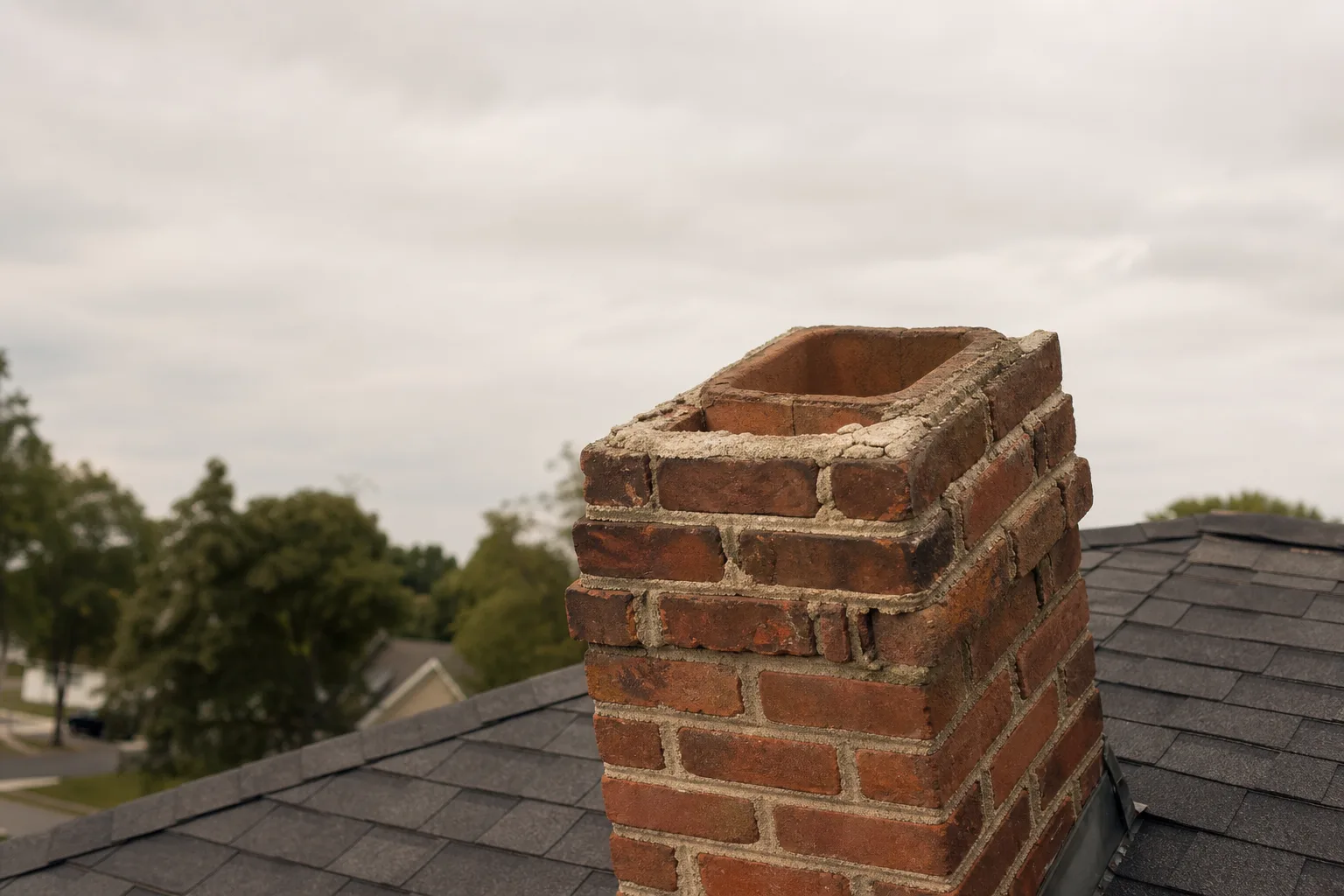
No cap, or a cap that has gone
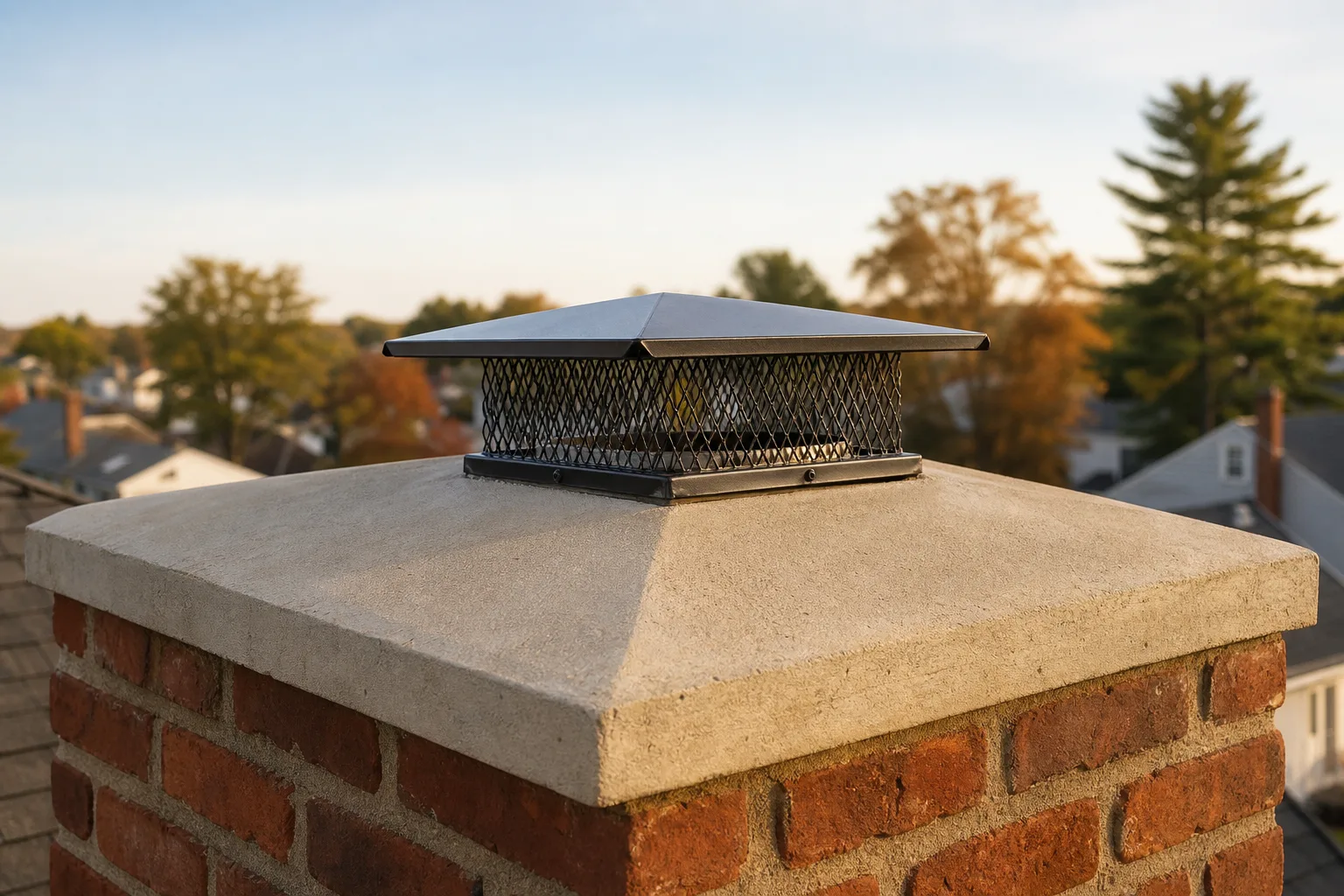
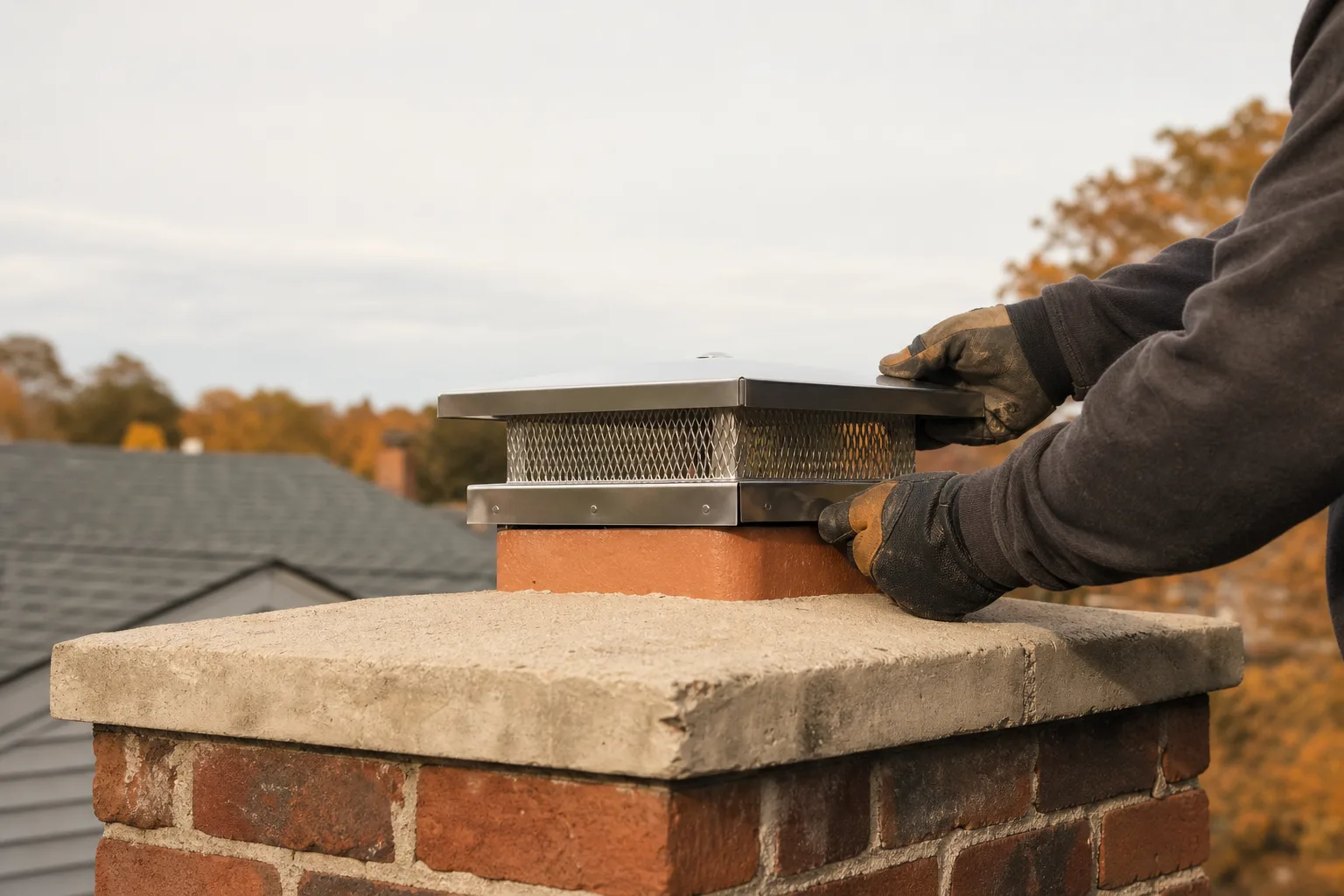
An open flue is a drainpipe pointed at your firebox. If water is appearing inside the fireplace rather than on the ceiling, this is where to look first, and it is the cheapest thing on the list to fix.
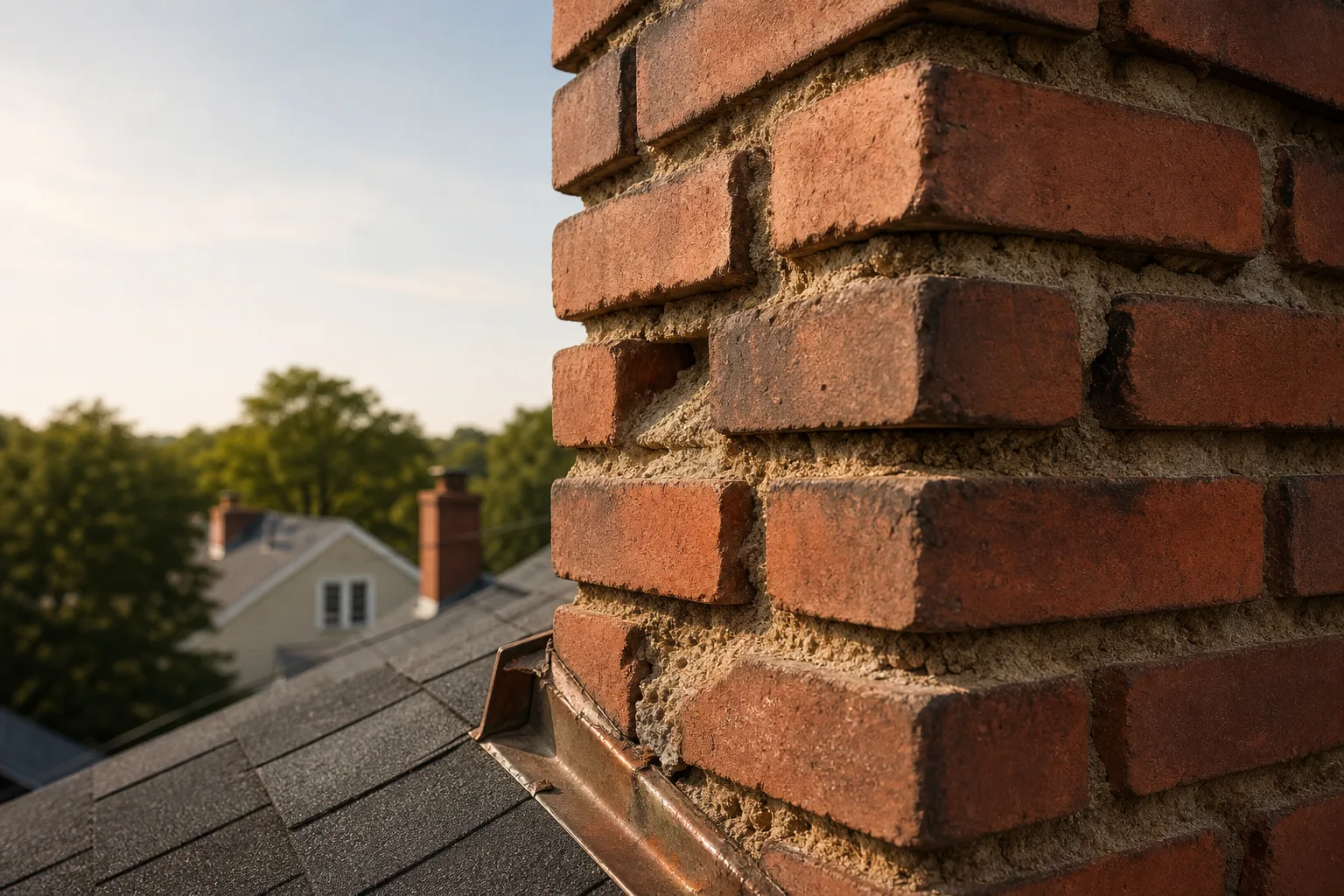
Mortar joints washed out
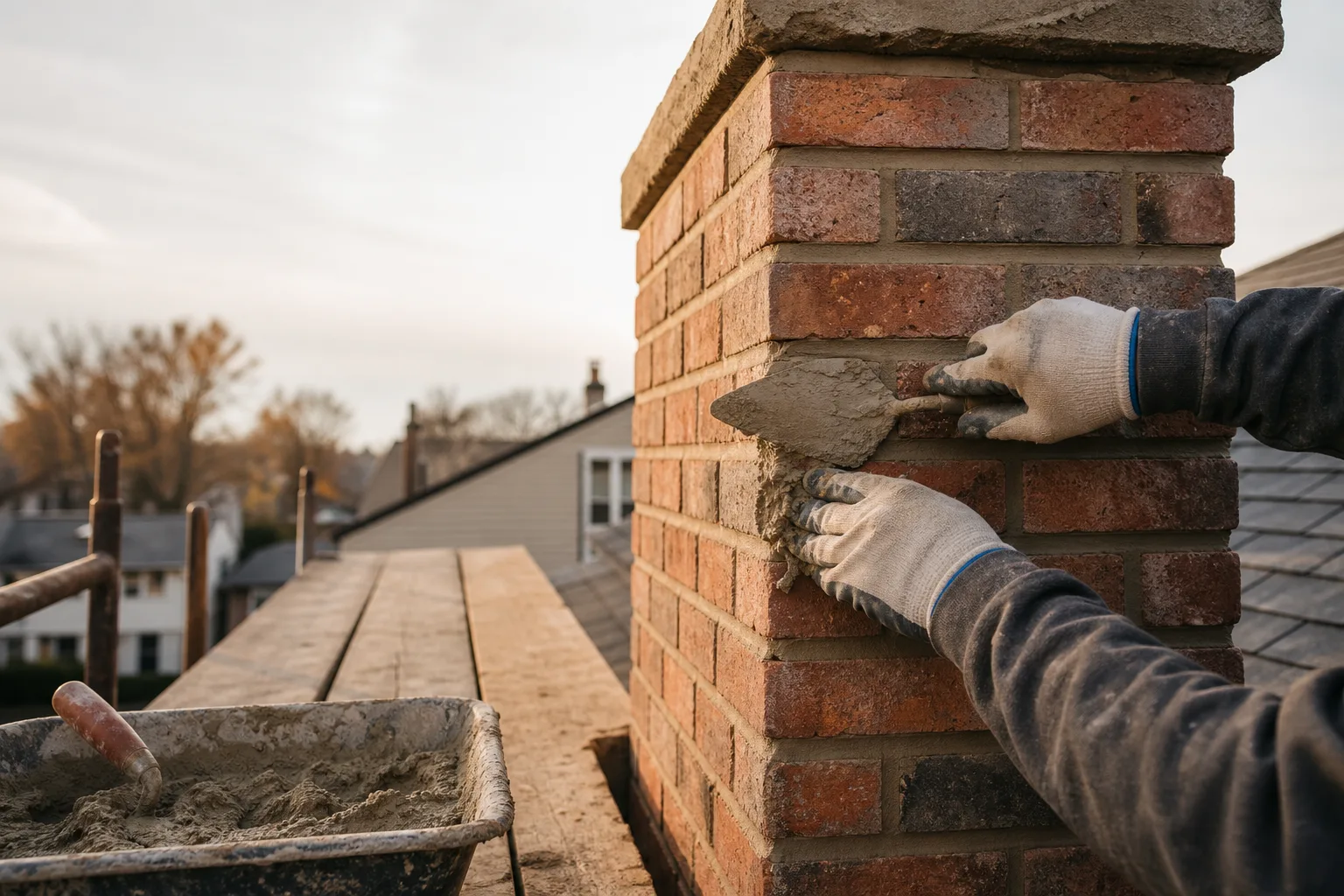
Open joints take water directly into the wall. On an older stack this is frequently the whole answer, and the repair is repointing rather than sealing.
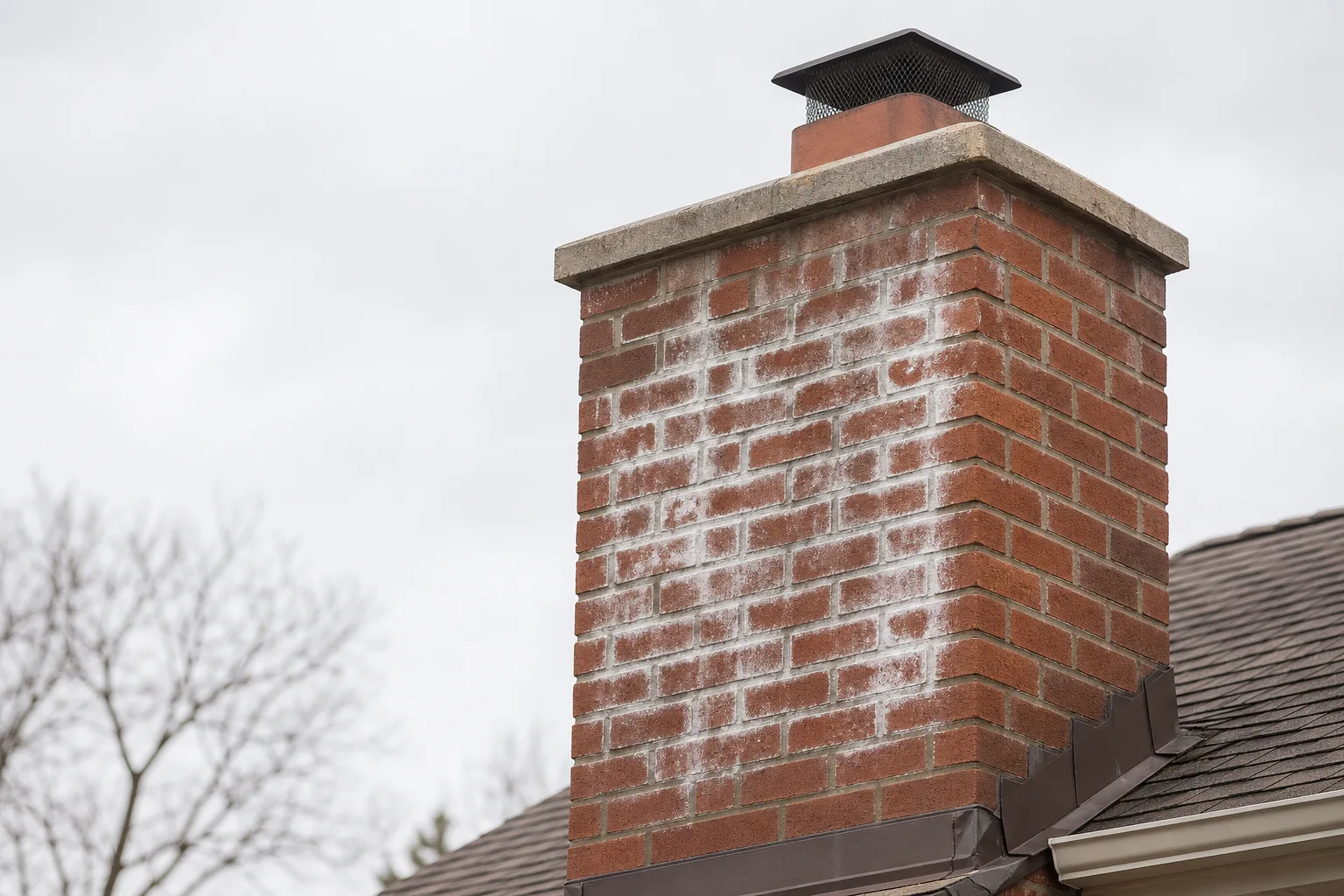
The brick itself is porous
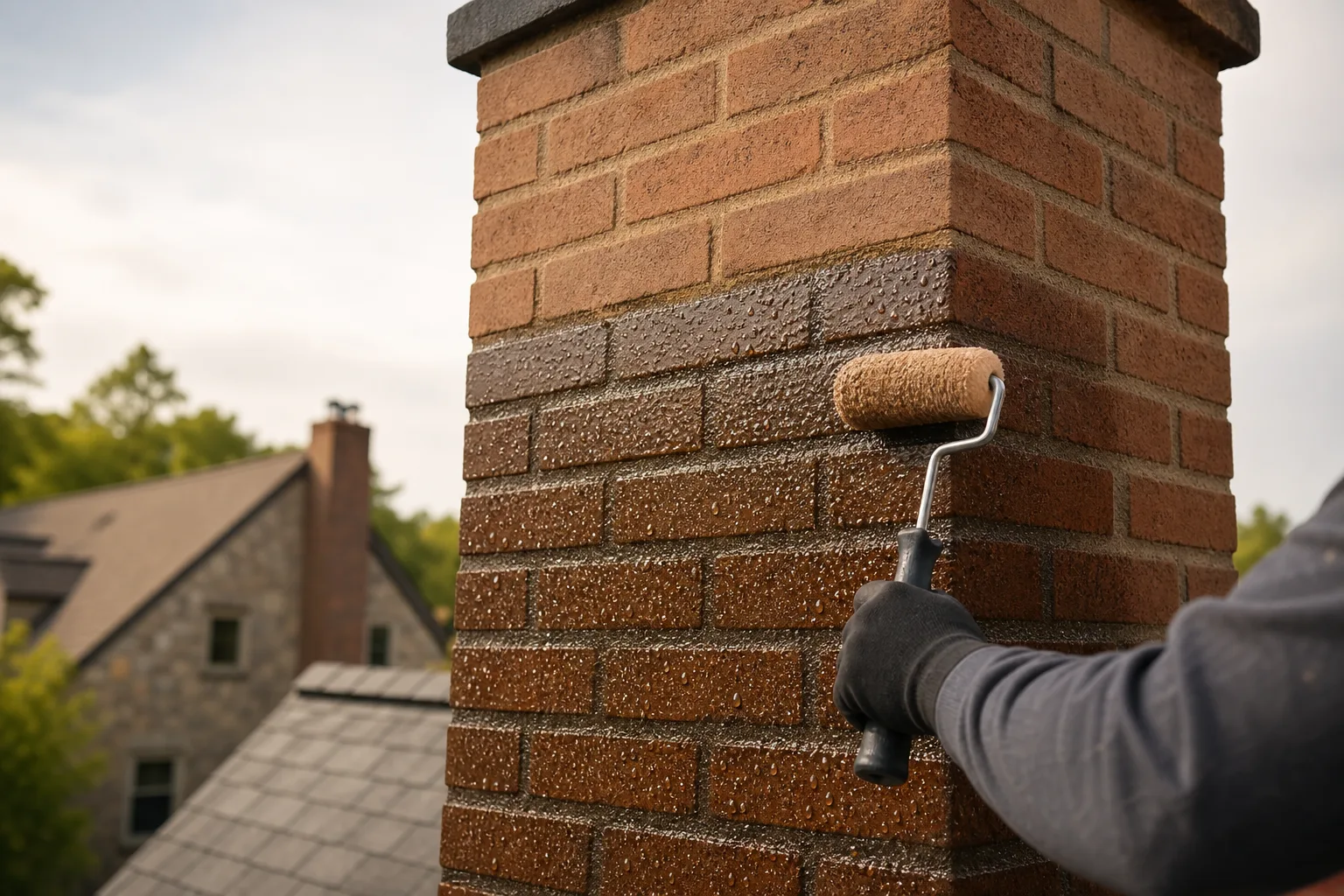
Brick absorbs water by design and gives it back. When it has been saturated for years, or spalled, it stops giving it back fast enough. The white chalky staining is the tell.
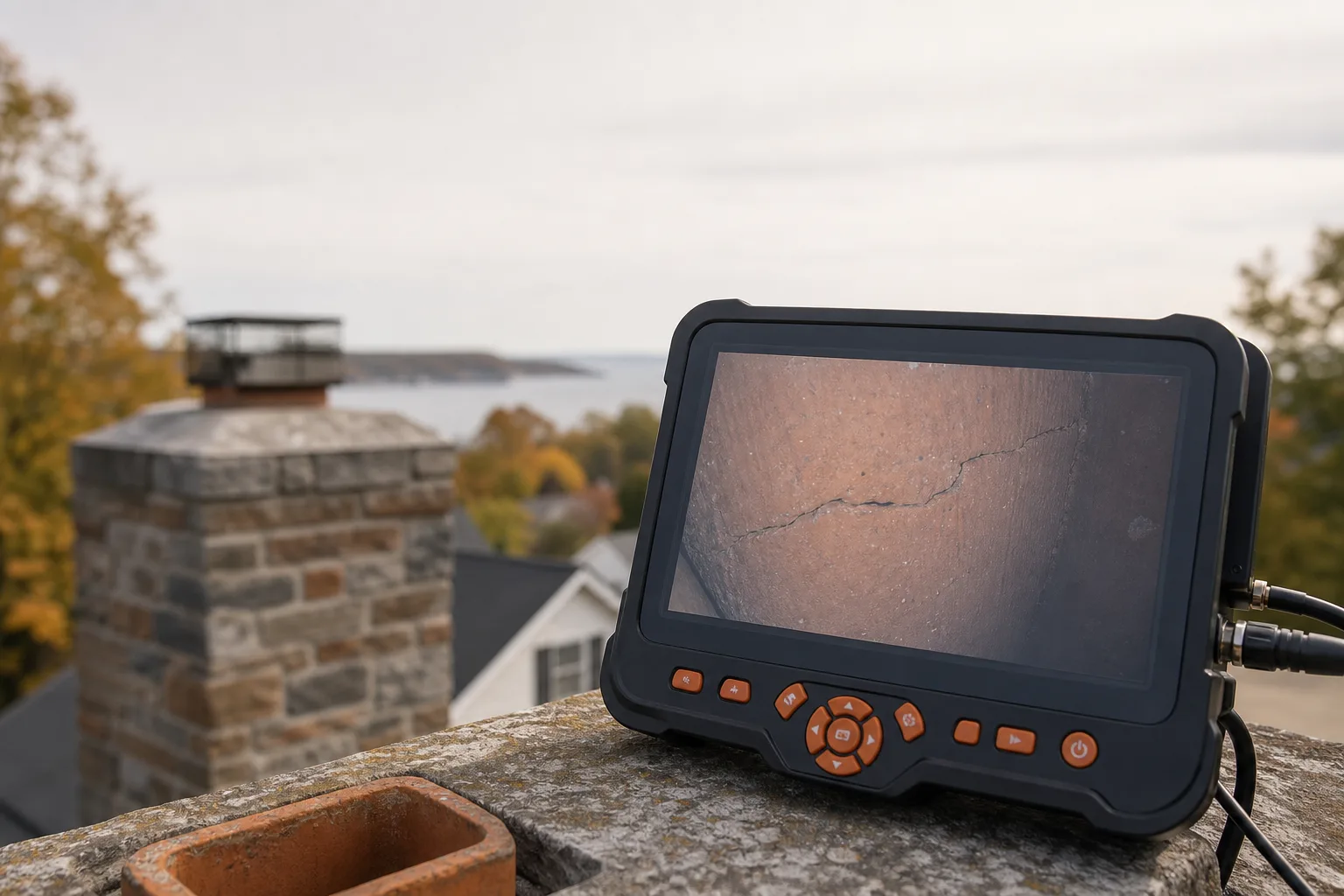
A cracked liner letting water track down
Less a cause than a consequence, and worth naming because it changes the price. Water that has been getting in for years cracks clay tiles through freeze-thaw from the inside.
Checks you can make yourself
Does it only leak in heavy or wind-driven rain?
Points at flashing or a hairline crown crack — both shed light rain and let driving rain past.
Is the water in the firebox rather than on the ceiling?
It is coming down the flue itself. Look at the cap and the crown, not the flashing.
Is there white chalky staining on the brick?
Efflorescence — salts carried out by water moving through the masonry. The wall is wet inside.
Is the damper or firebox rusty?
Sustained moisture somewhere it should be dry. This has been happening for a while, not since the last storm.
Can you see daylight through any mortar joint?
The wall is no longer continuous. Repointing is part of the answer whatever else is found.
The repair each cause needs

Chimney Leak Repair
When you do not yet know which of the five it is — this starts with the hose test.

Chimney Flashing Repair
When the leak follows heavy or wind-driven rain and the roofline joint looks lifted or tarred.

Chimney Crown Repair
When the crown is cracked, or is flush with the brick with no overhang.

Chimney Cap Installation
When water is landing in the firebox and the flue has no cap.

Chimney Tuckpointing
When the joints crumble under a key and daylight shows through.

The VIO Standard
- A written estimate first
- License and insurance checked
- Nothing starts without your OK
Common questions
Why does my chimney only leak in heavy rain?
Because most entry points need volume or wind behind them. A hairline crack in the crown sheds a drizzle and takes on driving rain. Flashing that has lifted slightly only lets water past when it is being pushed sideways. This is also why a chimney leaking appears to fix itself for a season — the weather changed, not the chimney. A hose test recreates the conditions deliberately, which is how the point gets found rather than guessed.
Can I stop a chimney leak myself?
You can stop it getting worse. Get a bucket under it, photograph the stain with a date, and leave the damper open so the flue dries between rains. What is worth not doing is sealing anything. A tube of roofing cement over the wrong spot hides the evidence needed to find the right one, and it has to be cut off before a proper repair can be made — so it makes the eventual job more expensive rather than less.
How much does it cost to fix a leaking chimney?
It depends entirely on which of the five entry points it turns out to be, and they are nowhere near each other. Fitting a cap is the cheapest thing we do. Resealing flashing is about a day. Recasting a crown or repointing a full stack runs into the thousands. That spread is exactly why the diagnosis comes first and why a phone quote for a chimney leak is not worth anything.
Is a leaking chimney covered by insurance?
Sudden damage usually is — a storm lifting the flashing, a lightning strike, an impact. Long-term water entry through deteriorated mortar or a cracked crown generally is not, because insurers treat that as maintenance. Either way an adjuster works from documentation: dated photographs and written findings. That is worth having even when the repair itself is straightforward.
Can I use the fireplace while the chimney is leaking?
If water is reaching the firebox, no. Wet masonry and heat is how clay tiles crack, and a cracked liner turns a few-hundred-dollar leak into a few-thousand-dollar reline. If the water is appearing on a ceiling some distance from the fireplace and the firebox is dry, occasional use is usually fine until someone can look — but get it looked at before the burning season rather than during it.
you don't have to know what's wrong.
Safe to use for now, and it gets more expensive every month you leave it. Describe what you are seeing and a local pro works out the rest. You get the price in writing before anyone starts, and you can say no.

The people behind every visit
Founded by Ryan Carter in 2019. Every page you read here is reviewed by Ethan Miller, our chimney specialist. A written estimate before any work, and the findings in writing whether or not anything needs doing.
More about who we are →