



Quick answer
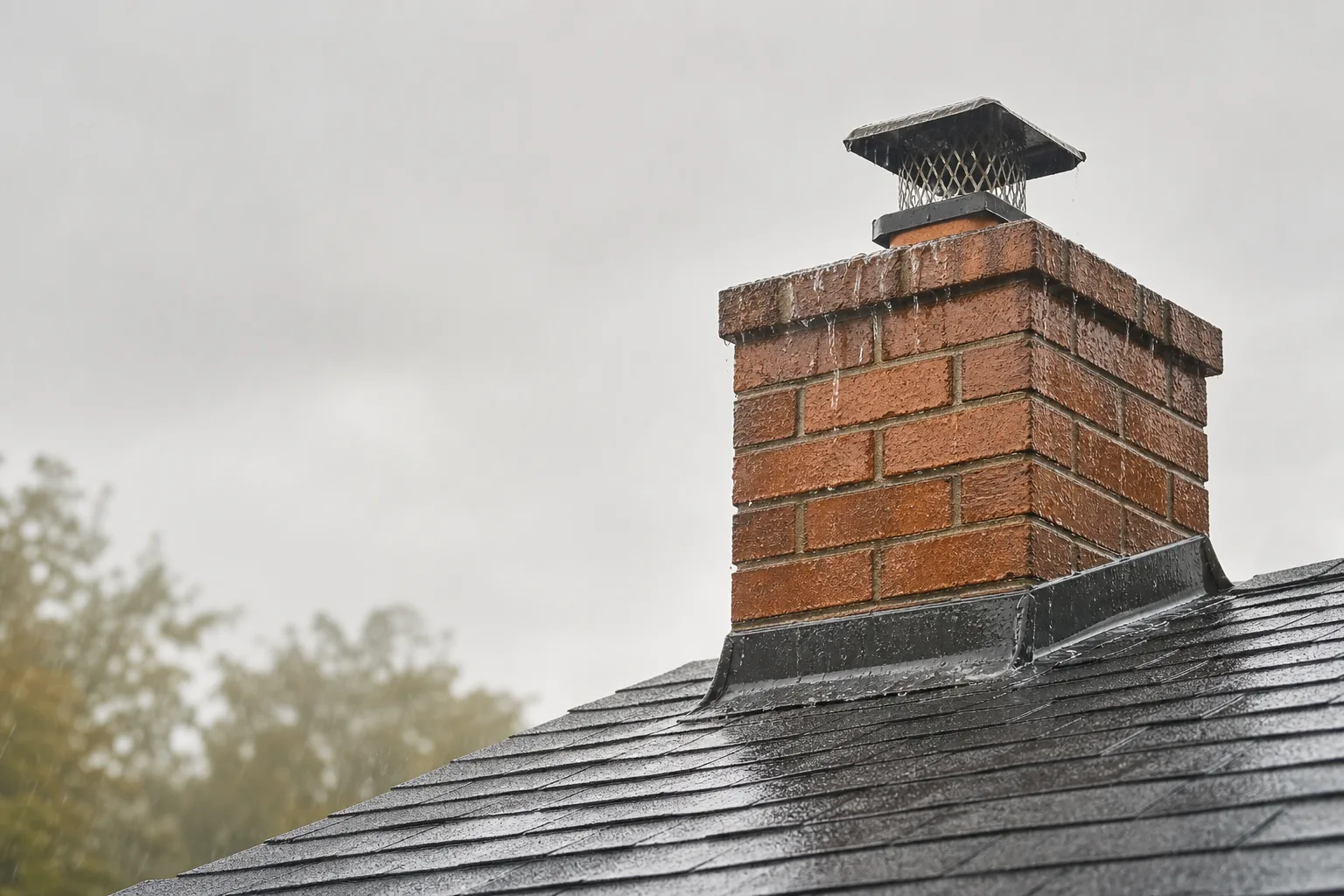
A chimney that leaks when it rains almost always has one of four problems: failed flashing, a cracked crown, a missing or damaged cap, or masonry that has started absorbing water. The stain you see indoors is rarely directly below the entry point — water travels along framing before it shows — which is why a proper diagnosis starts at the top of the chimney and works down.
The usual suspects, ranked
When the pros in our network diagnose a chimney leaking when it rains, the same causes come up again and again — in roughly this order:
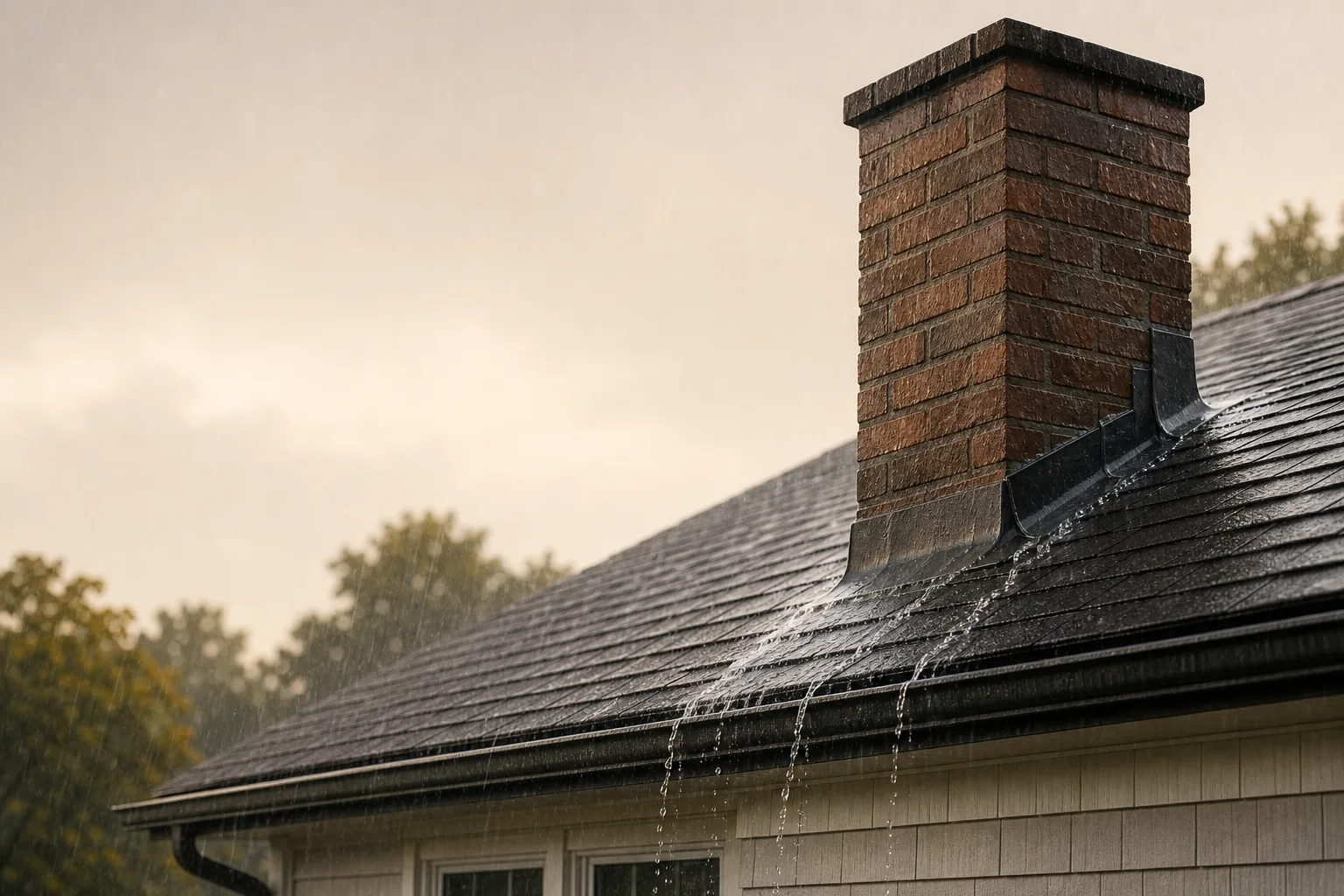
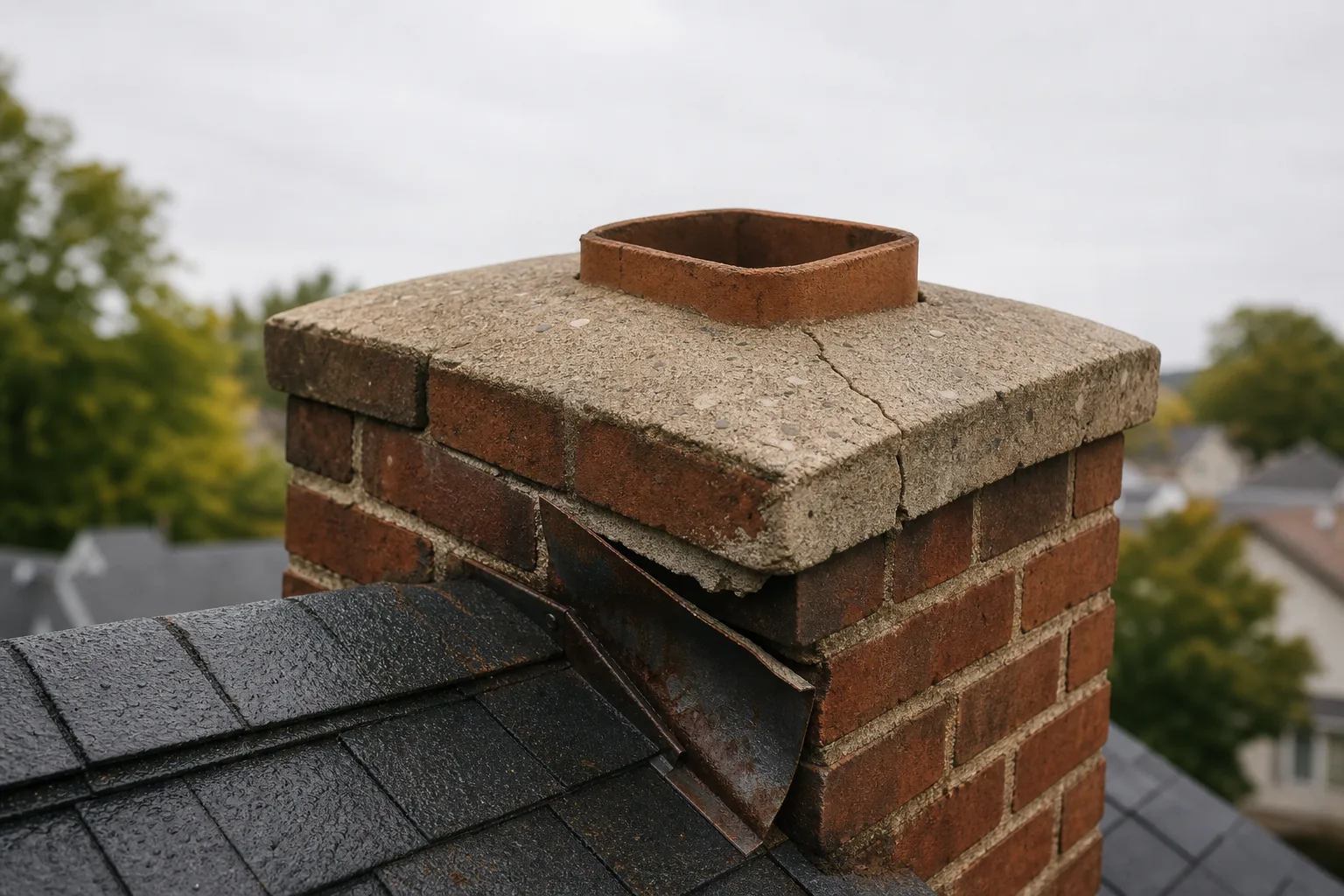
- Flashing failure. The metal weave where chimney meets roof is the most common culprit we find. Flashing lifts, rusts, or its sealant dries out, and every rain then runs down the chimney's face straight into the roof deck.
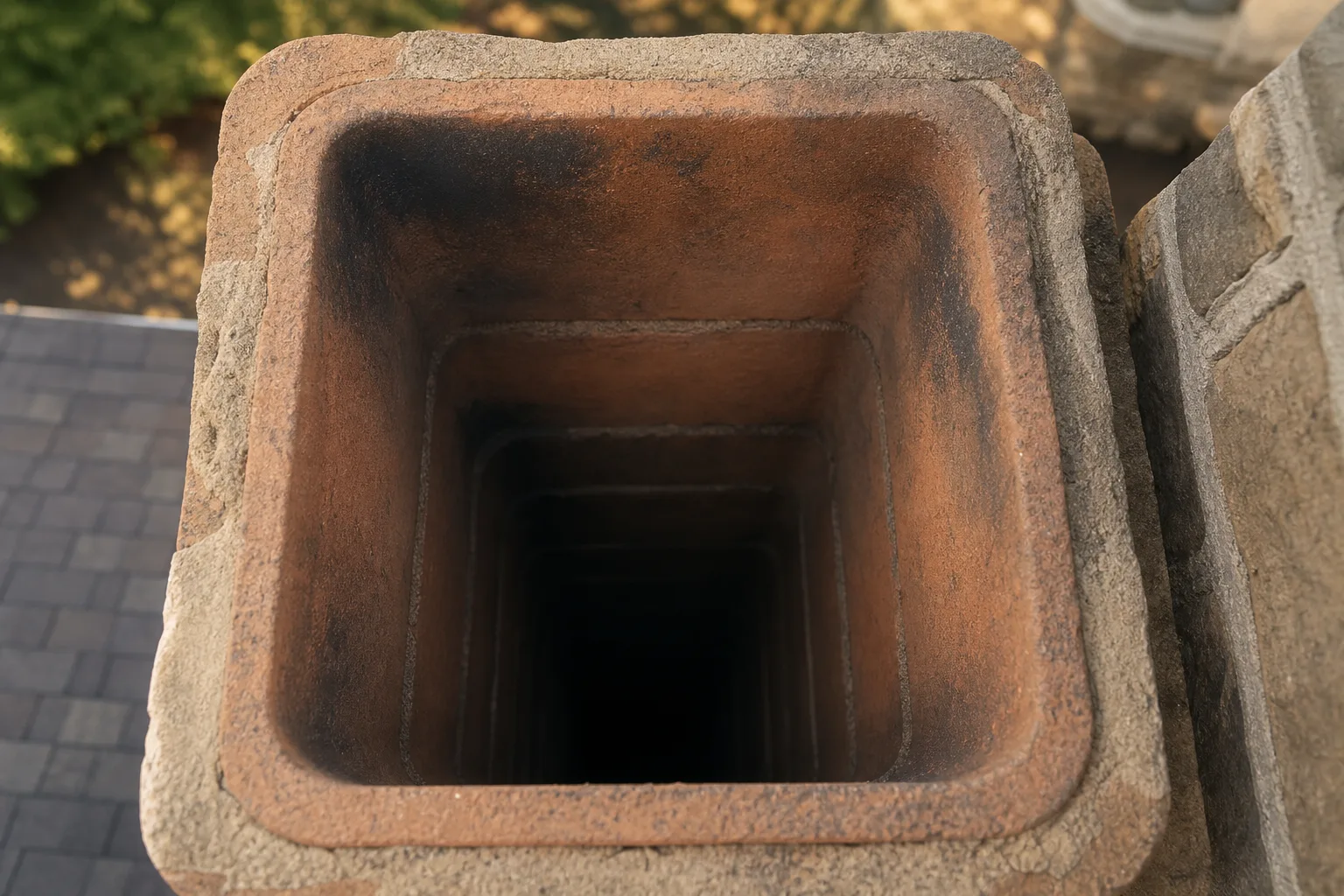
- A cracked crown. The concrete slab on top of the chimney is supposed to shed water. Cracked, it drinks instead, and the masonry below soaks it up until it shows inside.
- A missing or damaged cap. With no cap, rain falls directly down the flue, soaking the smoke shelf and damper. If you hear dripping in the firebox during a storm, start here.
- Porous masonry. Brick and mortar are sponges by nature. As mortar joints age and brick faces wear, a long soaking rain can push moisture clean through the chimney's walls.
- Condensation masquerading as a leak. Less common, but real: an oversized or unlined flue can condense enough vapor to mimic a rain leak — the giveaway is moisture that doesn't track with storms.
Often it isn't one of these. It's two or three, because they share a root cause: age plus water plus time.
What you can check from inside the house
You can't fix it from the couch, but you can narrow it down before we arrive. Where and when the water shows says a lot:
| What you're seeing | Most likely source |
|---|---|
| Dripping or damp firebox during rain | Missing or damaged cap — water coming straight down the flue |
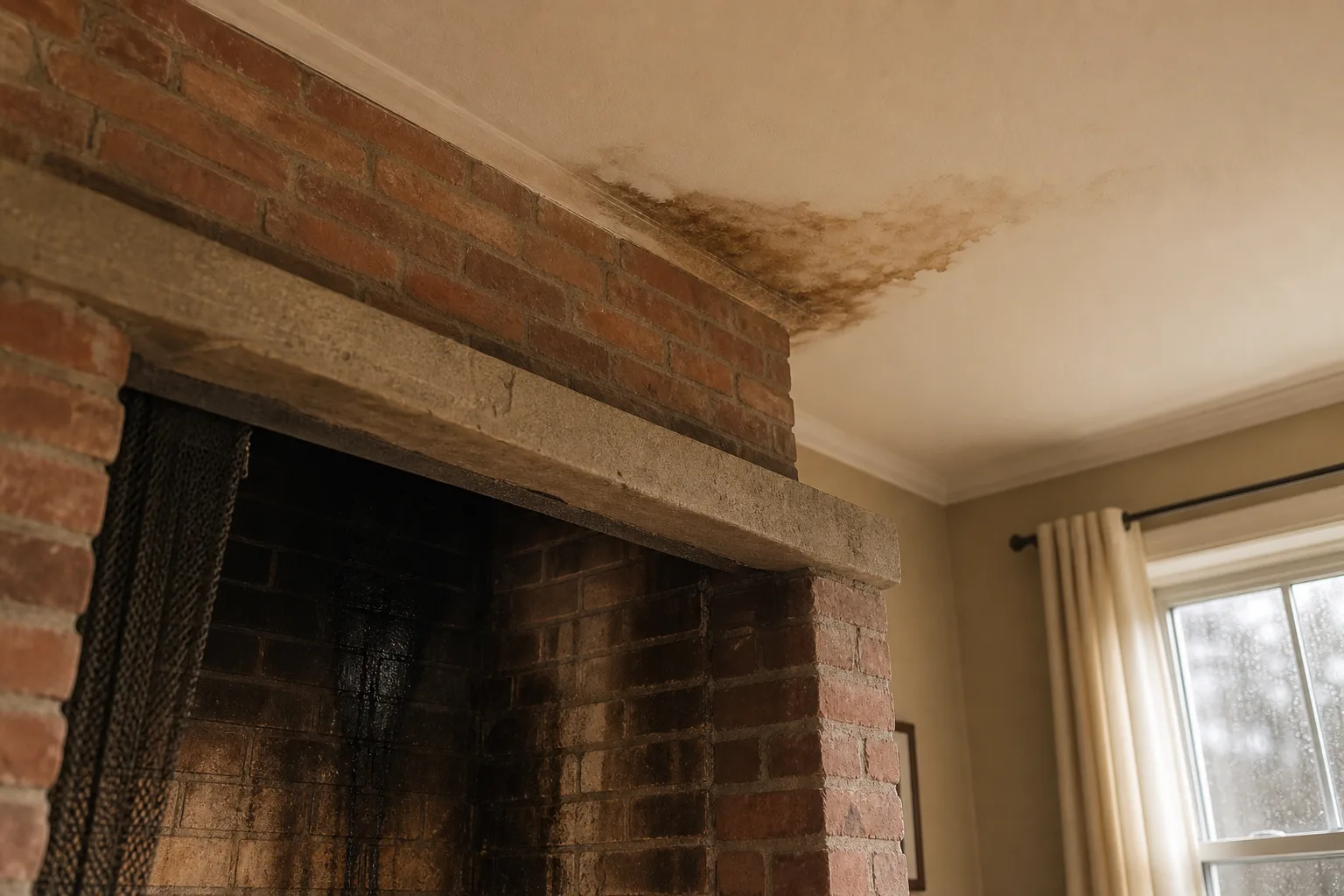
| Water stains on the ceiling near the chimney | Flashing failure at the roofline |
| Damp wall alongside the chimney, upstairs first | Crown or upper-masonry entry, traveling down inside the chase |
| White chalky staining (efflorescence) on interior brick | Water moving through the masonry itself |
| Musty smell after storms, no visible stain yet | Early-stage entry — water wicking into hidden framing |
| Moisture appearing in cold snaps, rain or shine | Condensation, not a rain leak |
Two useful observations to note for the technician: does the leak follow every rain or only wind-driven storms, and how soon after rain starts does moisture appear? Fast means a direct path (cap, flashing); slow means absorption (crown, masonry).
Tired of watching the ceiling every time it rains? Request a leak diagnosis — free to book, no obligation.
Why chimney leaks always get worse
There is no such thing as a stable chimney leak. Four compounding effects see to that:
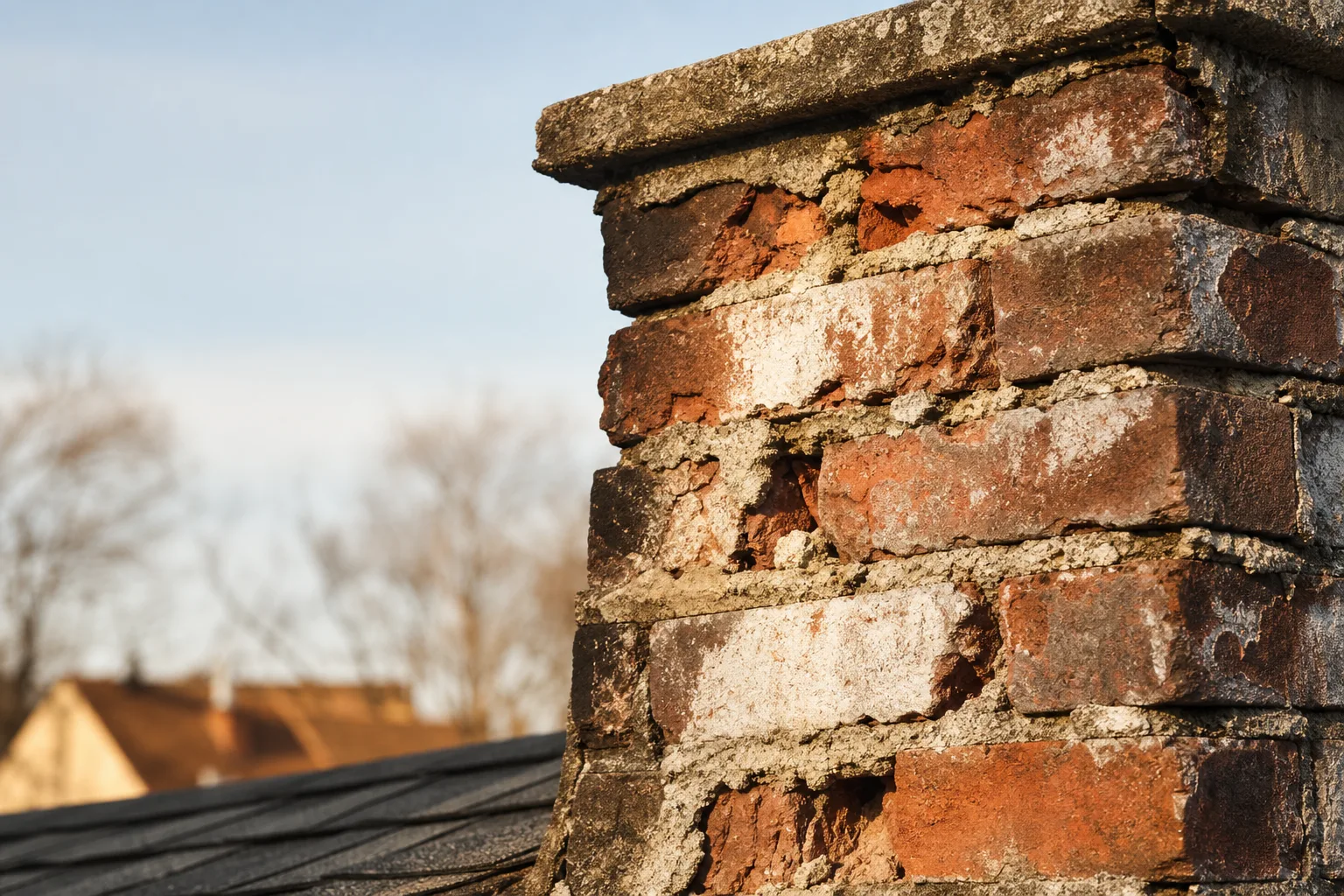
- Freeze-thaw expansion. In any climate that freezes, water inside masonry becomes a wedge. Ice expands roughly a tenth beyond the water's volume, and every cycle drives cracks wider — hairline in fall, finger-width by spring.
- Mortar erosion. Moving water dissolves and carries off mortar's binders. Joints recede, which opens more entry area, which admits more water. The process feeds itself.
- Hidden rot. The water you see on the ceiling already passed through roof deck and framing to get there. Wood that stays damp grows rot and mold long before anything sags.
- Rusted hardware. Dampers seize, firebox grates corrode, and on prefab systems the metal chase cover rusts through — each a separate repair born from one water source.
This is why the price of the same leak climbs the longer it waits. The entry point barely changes; the damage radius does. A leaking chimney caught in season one is usually a sealing job. The same leak in season four can involve carpentry.
How we diagnose a chimney leaking when it rains
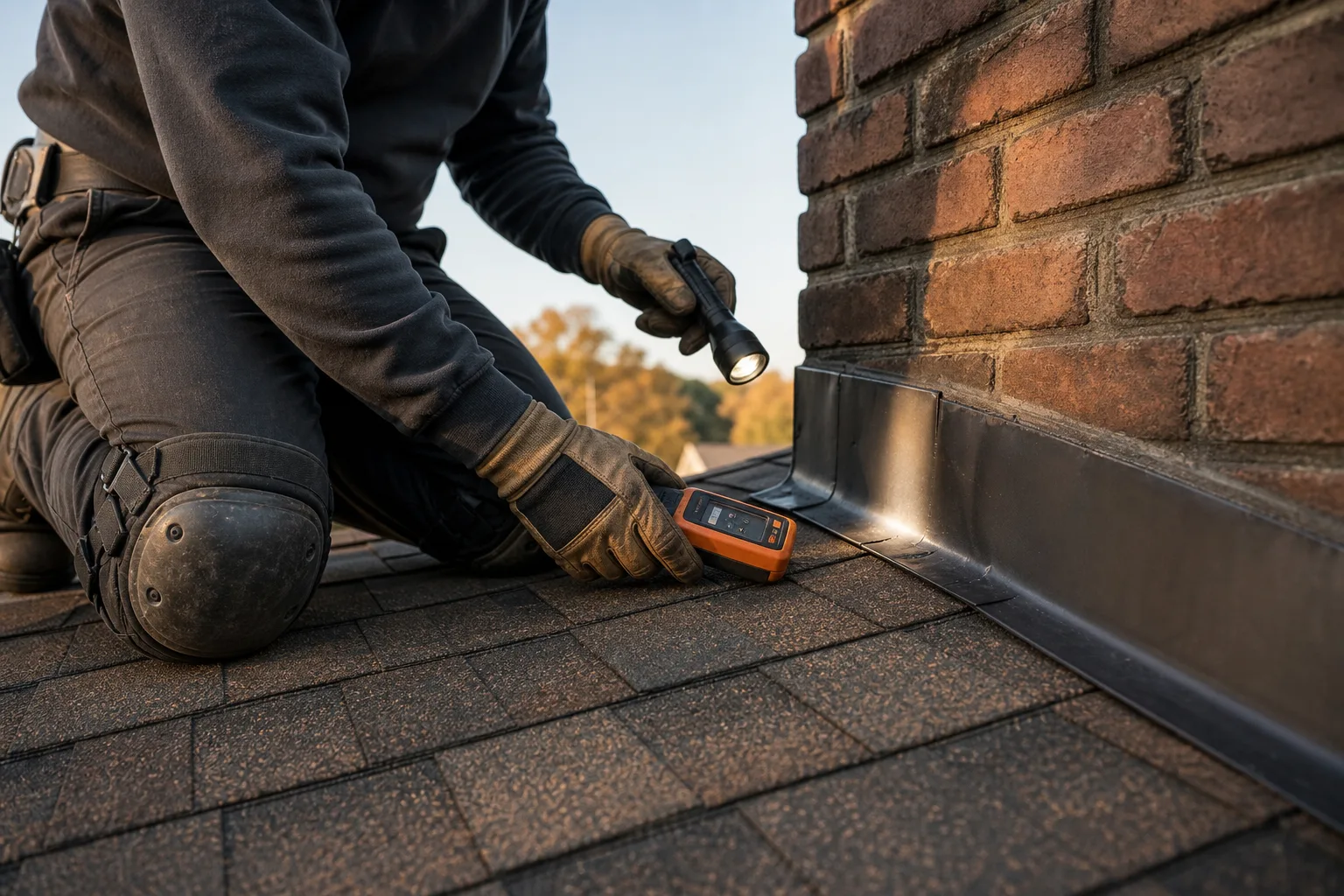
Guessing is the expensive way to fix leaks, so when a chimney leaks in the rain, the pros in our network follow the water instead:
- Start at the top. Cap, crown, and flue tile get inspected first — the direct-entry paths rule in or out fastest.
- Work the flashing line. Every inch of the roof-to-chimney joint gets checked for lifted metal, failed sealant, and improper original installation, the classic trouble spots.
- Read the masonry. Efflorescence, spalled faces, and receded joints map where water has been traveling — masonry keeps honest records.
- Check inside. The attic side of the chimney, the smoke shelf, and the firebox complete the picture of where water exits.
- Test when it's ambiguous. When findings don't line up, a controlled water test on one zone at a time confirms the entry point before anyone quotes a repair.
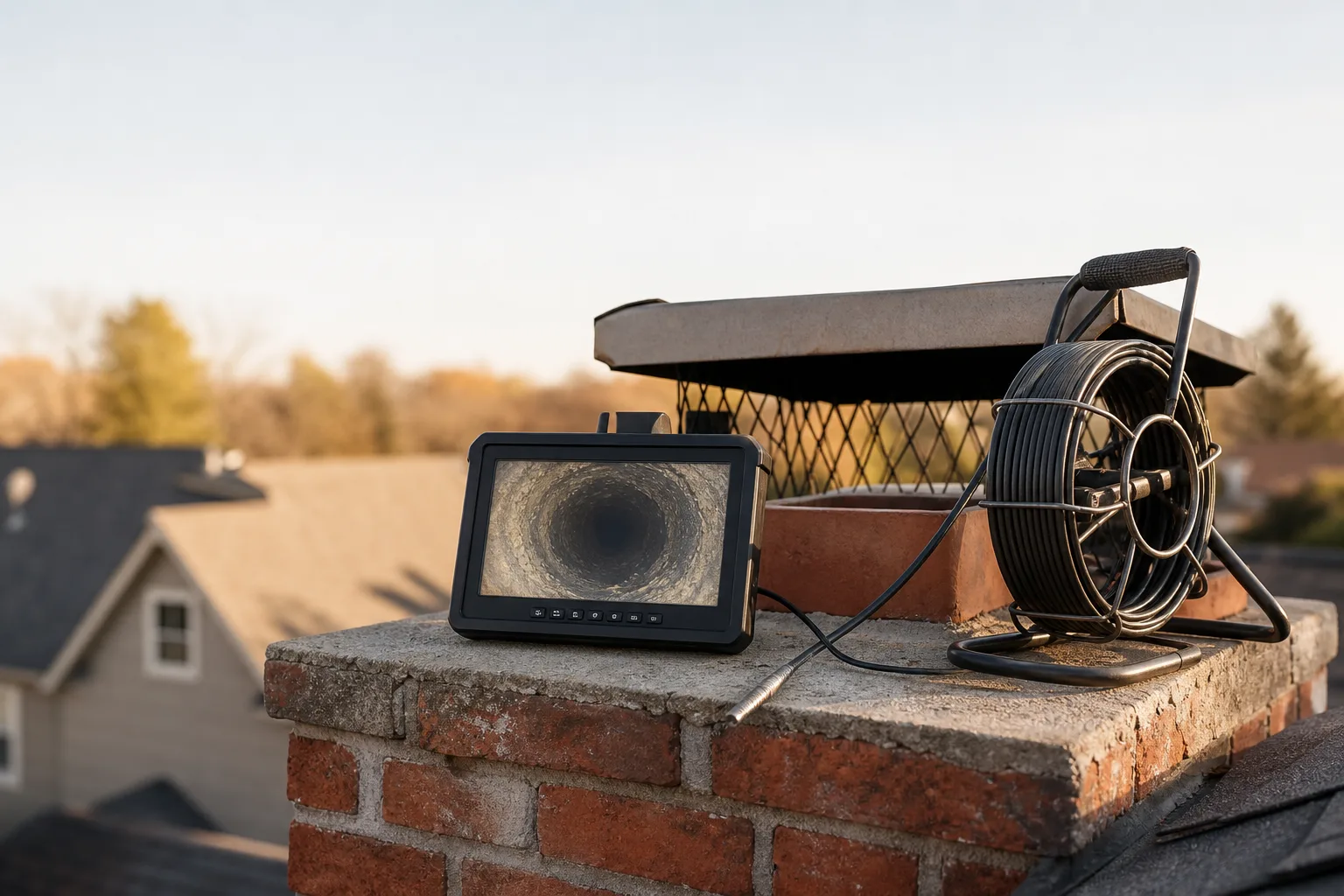
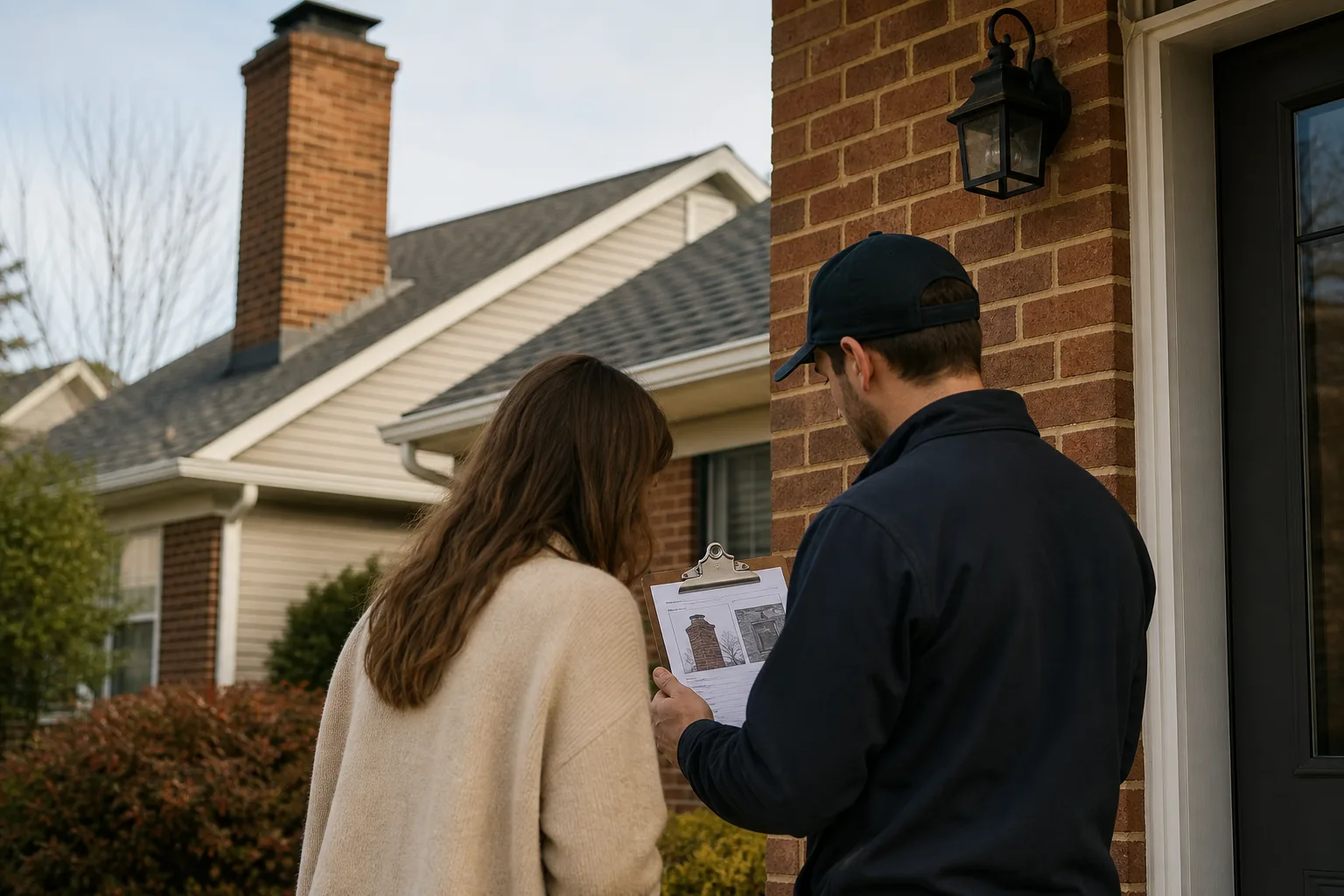
You should expect a diagnosis you can see — photos or camera footage, an explanation that matches your symptoms, and a written scope. If someone quotes a fix without identifying the entry point, they're selling a guess.
Fixes that last vs. fixes that fail
The repair menu is short, and matching the fix to the entry point is everything:
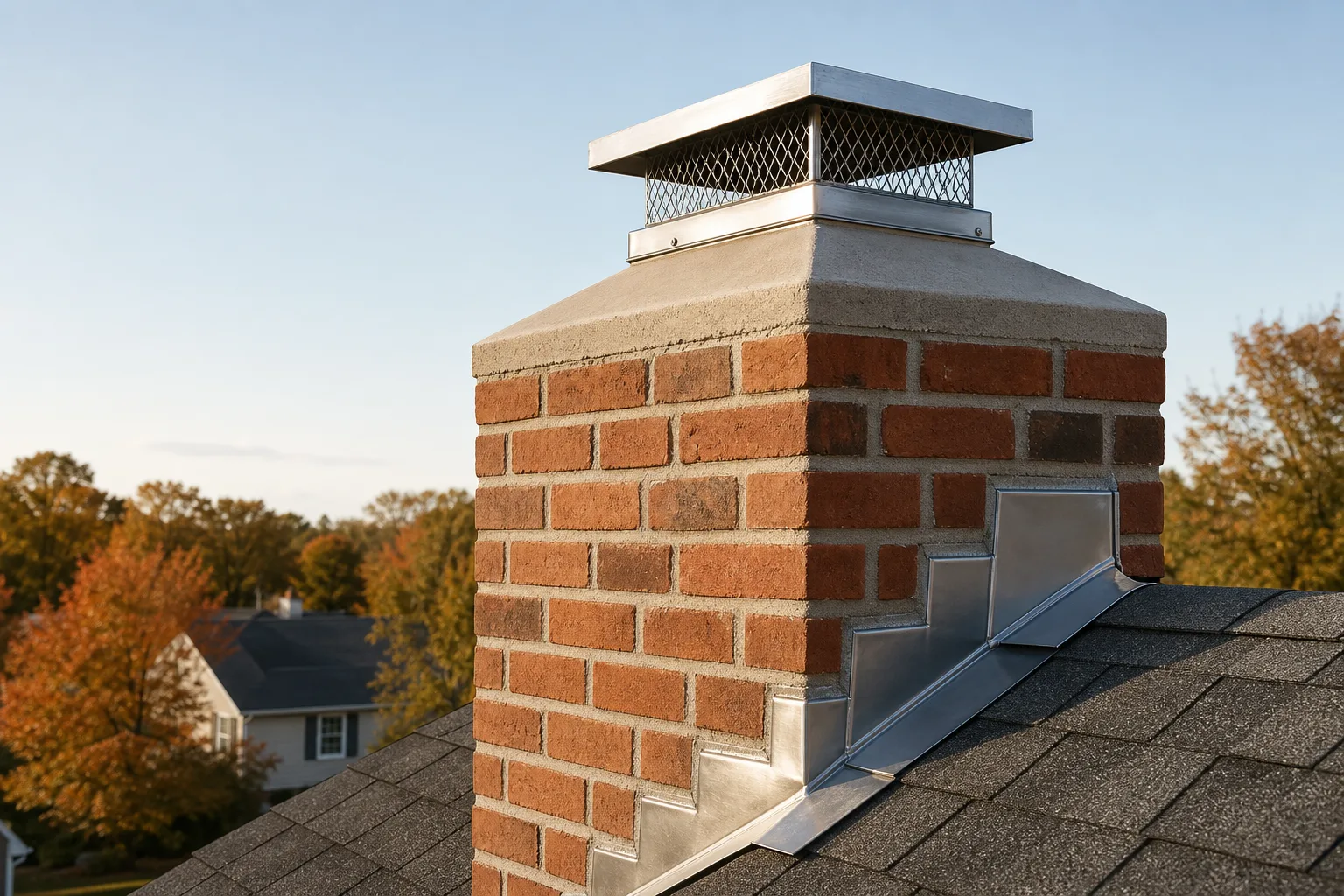
- Flashing: reseal when the metal is sound; re-flash when it isn't. A proper re-flash outlasts caulk-over-rust by many seasons.
- Crown: flexible sealant for early cracks; recoat or rebuild once cracking networks. Built right — sloped, with a drip edge — a crown stops being a repeat customer.
- Cap: fit a quality stainless cap sized to the flue. The cheapest permanent fix in chimney work.
- Masonry: repoint failed joints, then apply a breathable water repellent so brick sheds rain but still releases interior vapor.
What fails: surface caulk over failed flashing, paint-on sealers that trap moisture inside brick, and any patch applied without finding the entry point. Those buy a dry month and a worse spring.
One more honest note — leaks rarely travel alone. Water that's been in a flue for seasons often leaves rusted dampers or liner damage behind, so a post-repair inspection of the system is worth it when the leak has history. Dry is the goal; safe-and-dry is the standard, and it's exactly what our team signs off on before we leave.
After the repair: drying out and closing the file
The leak is fixed when the entry point is sealed, but the house isn't done until the water's tracks are cleaned up. A few closing moves worth making:
- Give the masonry time. Brick and mortar that spent months damp release their moisture slowly. A musty smell fading over weeks after the repair is normal; moisture returning with the next storm is not — that's the one signal worth an immediate callback.
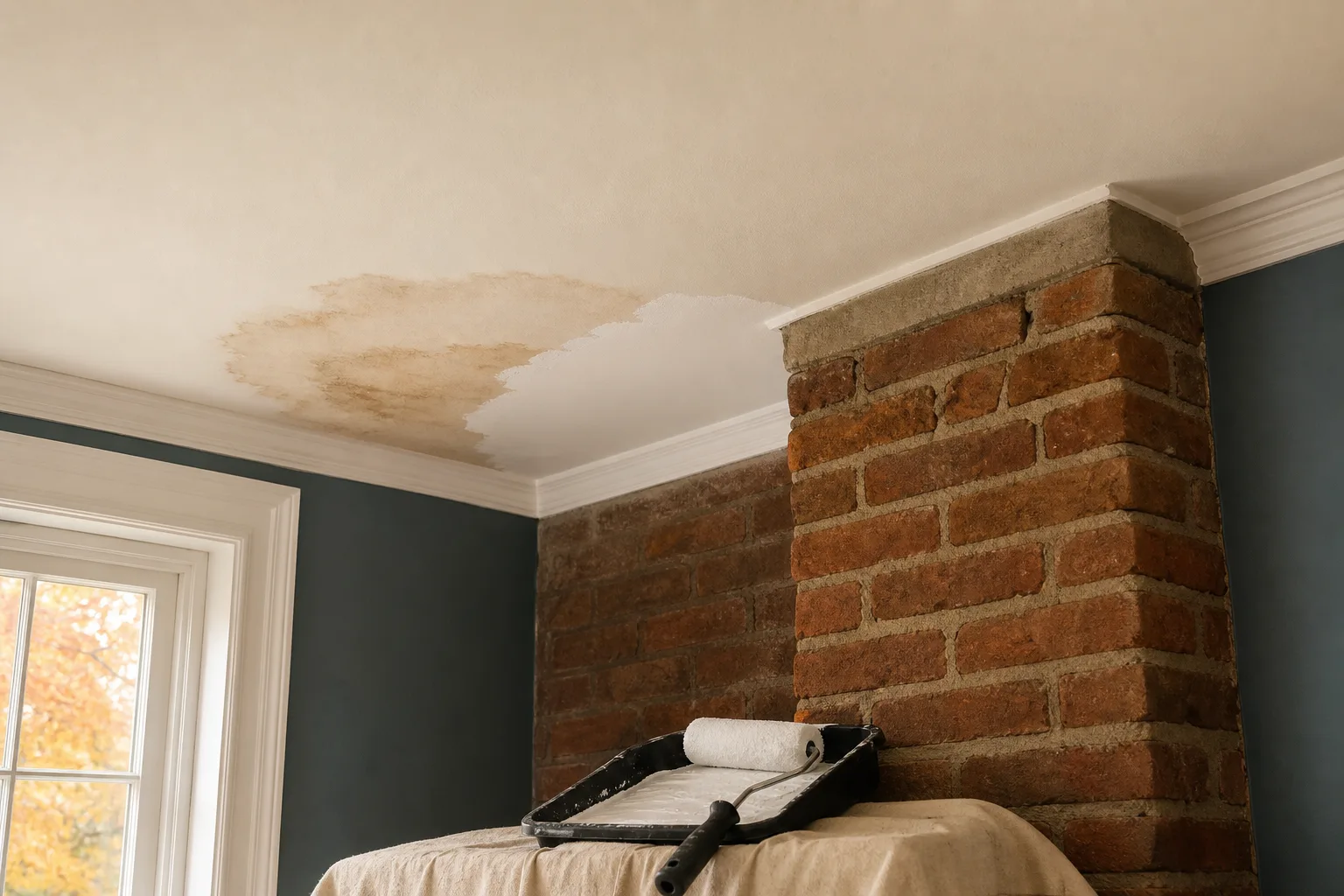
- Seal stains once, after confirmation. Water stains bleed through ordinary paint. The sequence that works: confirm the fix through a couple of hard rains, then stain-blocking primer, then paint. Painting first just schedules a repaint.
- Clean the firebox properly. Water plus soot makes an acidic paste that corrodes grates and dampers while it sits. Having the firebox and smoke shelf cleaned after a leak removes the residue along with the lingering odor.
- Watch the first storms. Keep casual eyes on the repaired area through the next few heavy rains. Honest repairs survive scrutiny — that's what the scrutiny is for.
- Put the system back on a schedule. A chimney that leaked once has told you how it ages. The annual inspection is how you hear the next warning at hairline size instead of ceiling-stain size.
Symptom checker
What is your chimney doing?
Tap the closest match for an honest first answer.