



Chimney problem
How much creosote buildup is dangerous?
Three stages, and only the first one a brush will touch. Knowing which you have is the difference between an hour's work and a job.
Safe to use for now, and it gets more expensive every month you leave it.
An eighth of an inch is the line. Past that, the fireplace stays cold until it is swept.
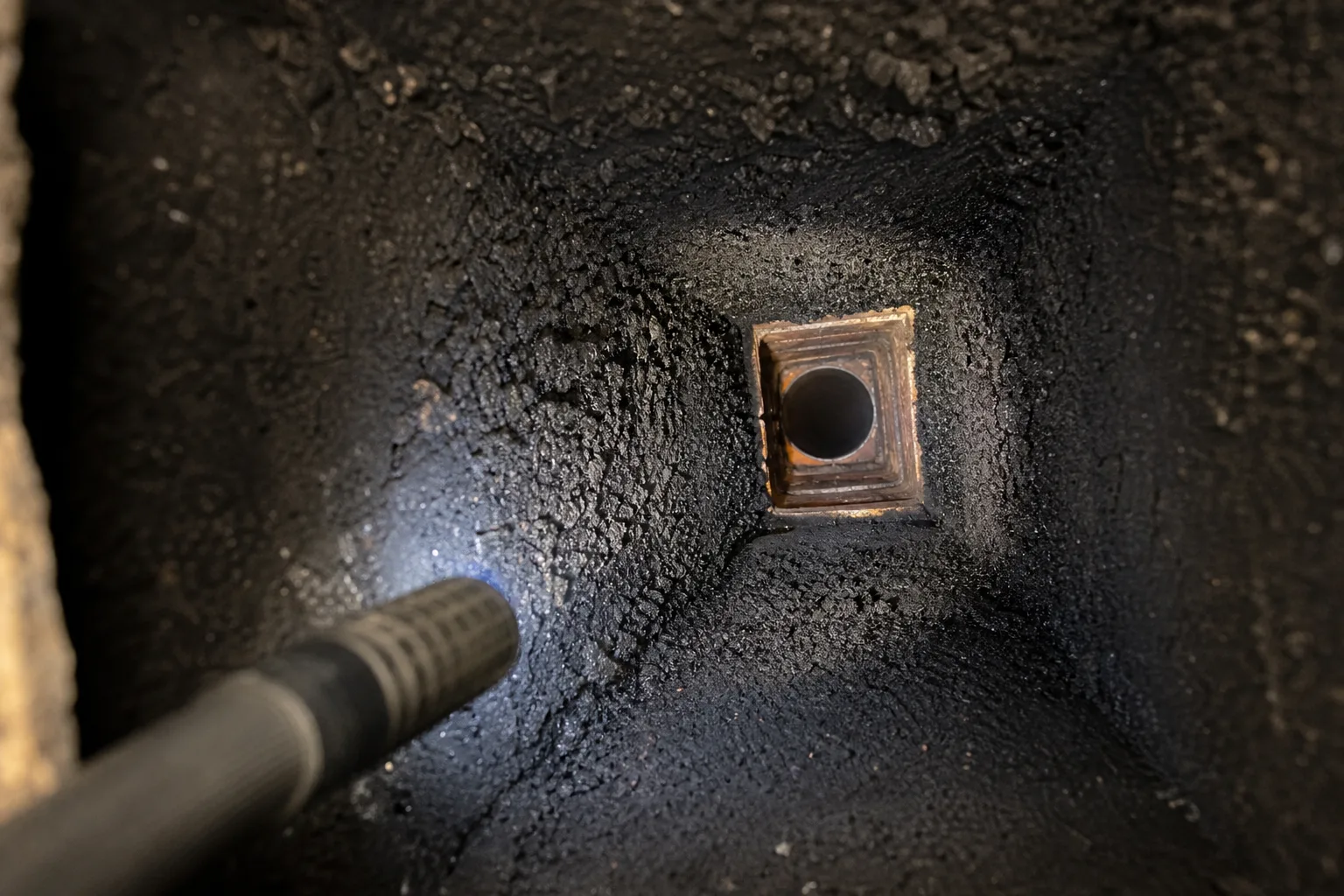
Creosote buildup is what condenses out of wood smoke onto a cool flue wall, and it comes in three stages. Stage one is a light flaky soot that a brush takes off. Stage two is a crunchy tar-like layer that needs a rotary head. Stage three is a hard shiny glaze that no brush touches at all — it has to be broken down chemically or ground off, and it is the stage that fuels chimney fires. The industry rule is an eighth of an inch: at that thickness it is due, and past a quarter inch the fireplace should not be used until it is dealt with.
What it looks like
Flaky, crunchy, or shiny

Flaky brushes off. Shiny does not — a glazed flue is stage three, and that is the one that burns.
What to do right now
None of this fixes it. All of it stops the problem getting more expensive between now and the visit.
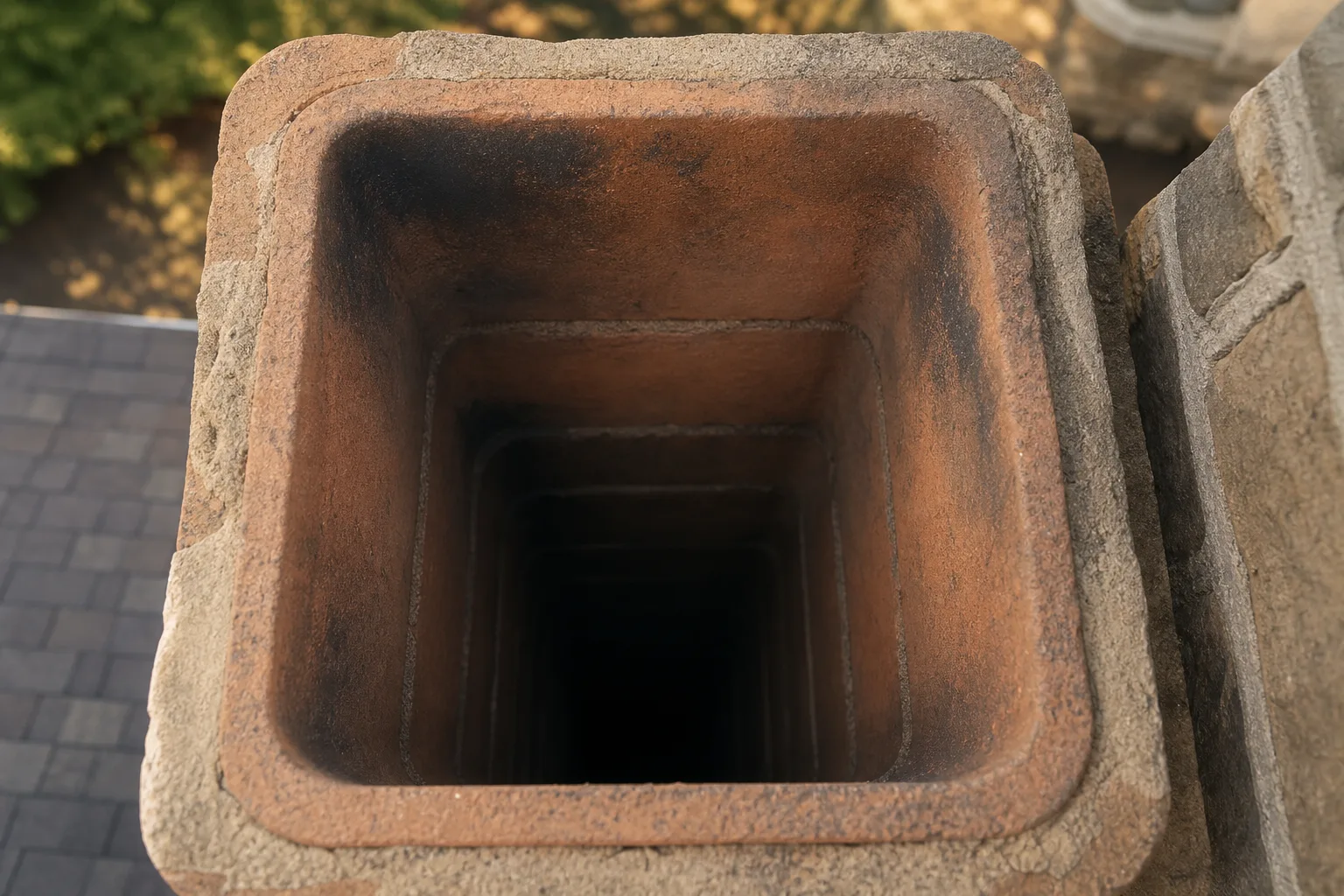
Shine a torch up past the damper and look at the flue wall. Flaky and matte is stage one; shiny and tar-like is stage three.
If you can scrape an eighth of an inch off with a fingernail, the flue is due a sweep. Past a quarter inch, stop burning until it has been dealt with.
Do not use a creosote-removing log as a substitute for sweeping. They loosen stage two at best and leave the debris in the flue.
Burn only seasoned hardwood from now on. Unseasoned or softwood logs build creosote several times faster.
Stop damping the fire right down overnight. A smouldering fire is the single biggest cause of creosote buildup.
What causes creosote buildup to accelerate
Ordered by how often it turns out to be the answer, so you can stop reading once you recognise yours.

Burning unseasoned or wet wood
Water in the log takes energy to boil off, so the fire burns cooler and the smoke condenses instead of leaving. Wood needs six to twelve months split and covered before it belongs in a fireplace.
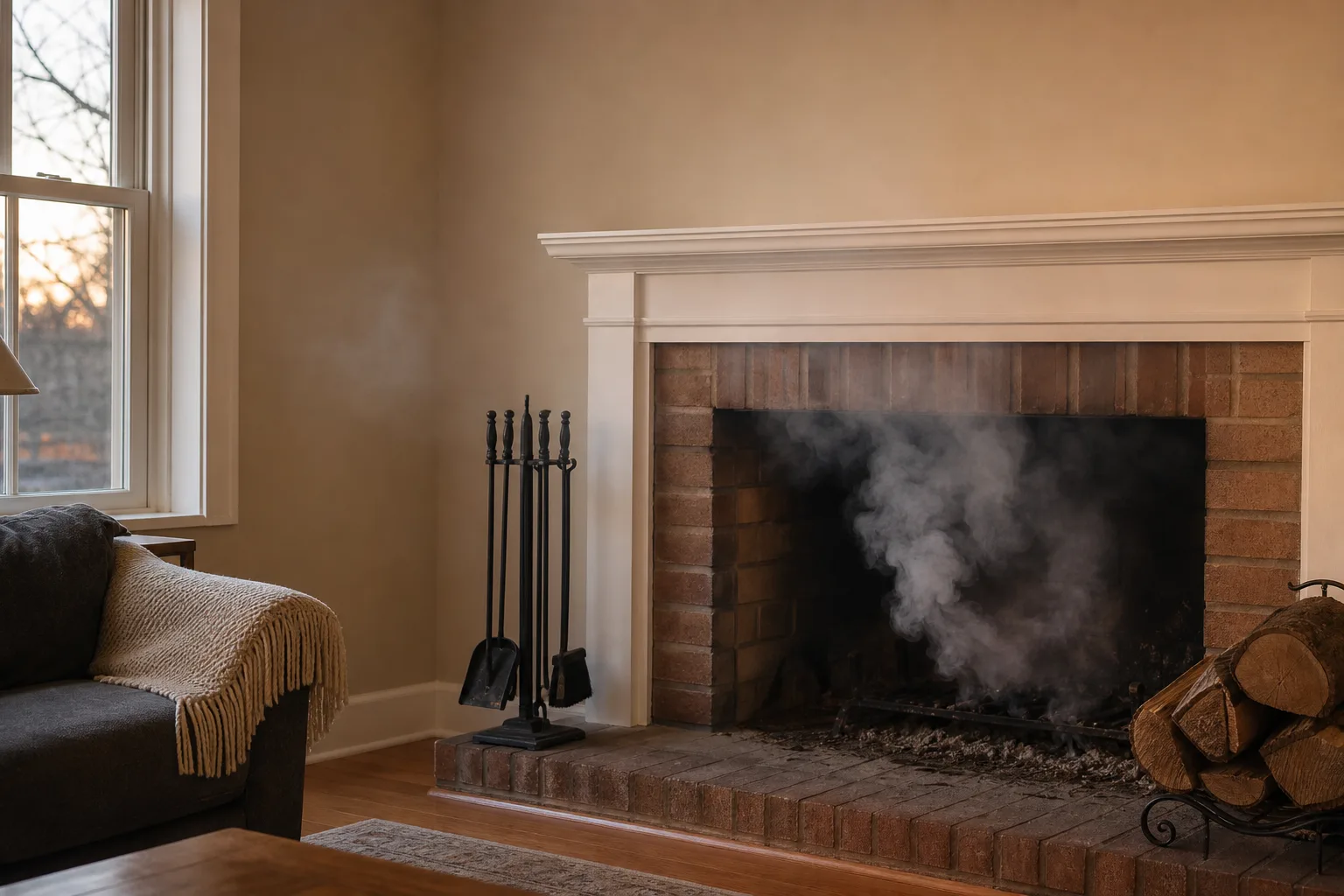
Damping the fire down for a long slow burn
Choking the air supply overnight feels efficient and produces a cool, smoky, incomplete burn — exactly the condition creosote forms in. A hot short fire deposits less than a smouldering long one.
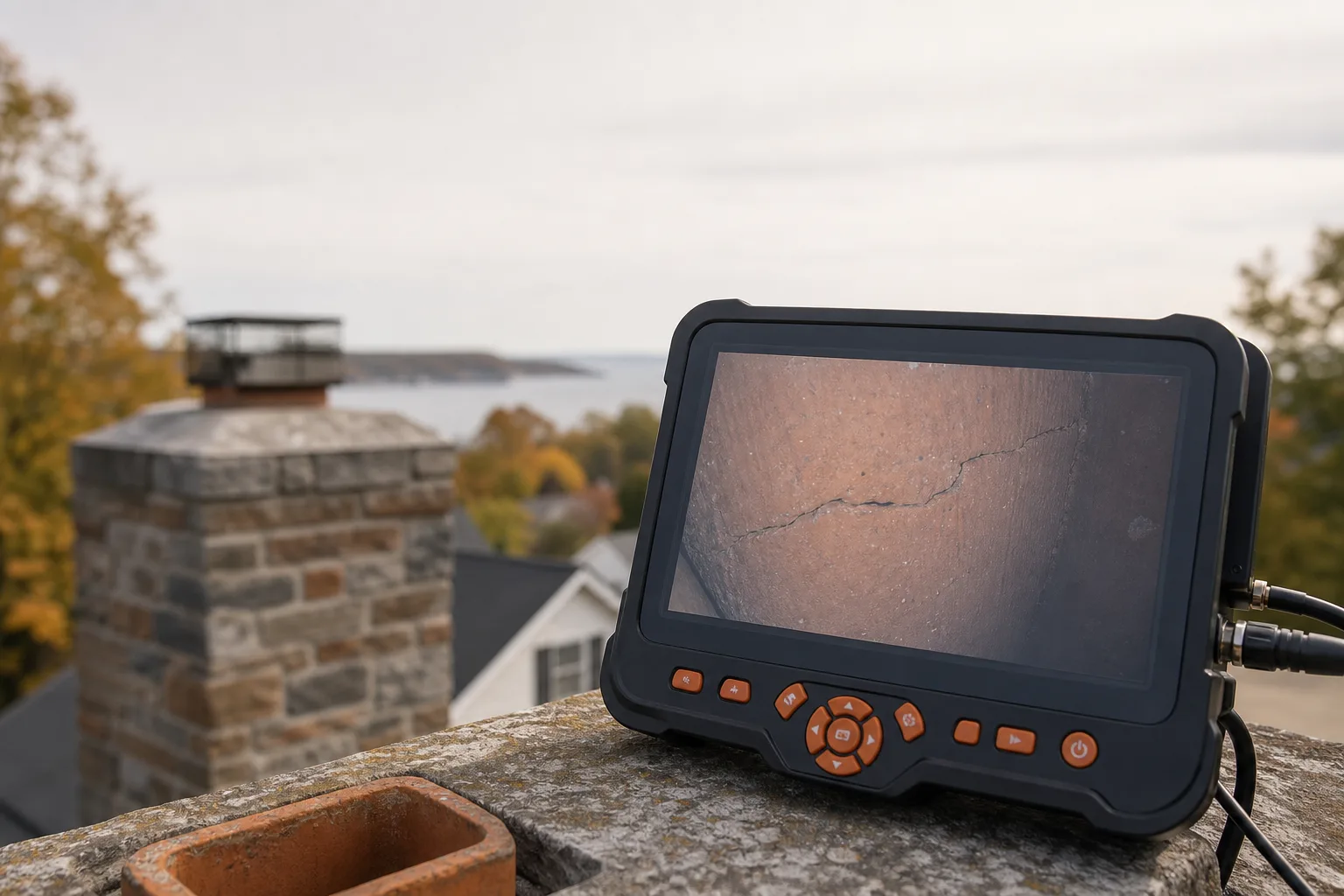
An oversized or uninsulated flue
Gases moving slowly through too much volume cool on the way up and condense on the walls. Common when a modern stove has been fitted to a flue built for an open fire.
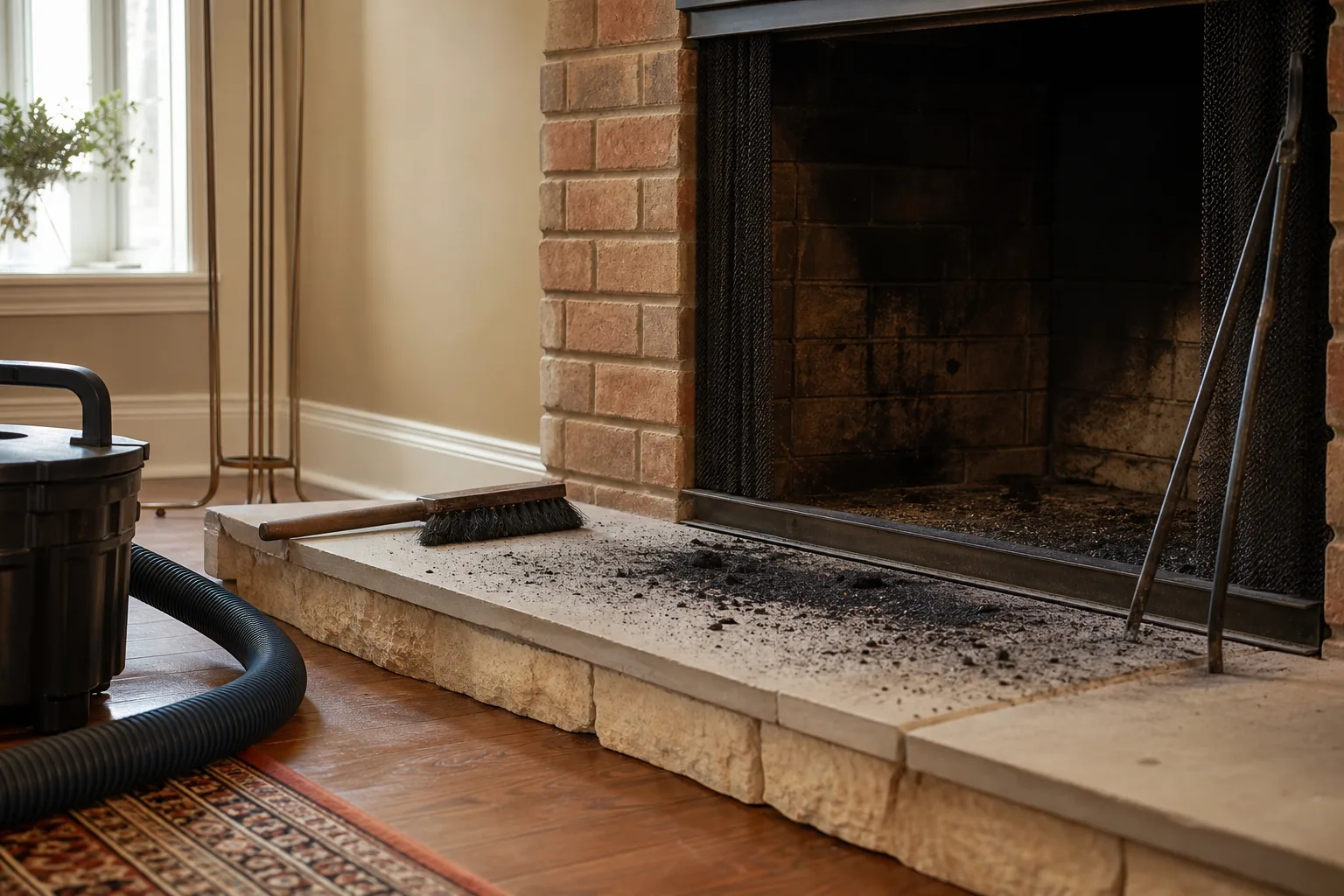
A flue on an exterior wall
Cold masonry on three sides keeps the flue below the temperature the smoke needs to stay a gas. Insulating the liner is what fixes it rather than sweeping more often.
Burning softwood or treated timber
Resinous softwood deposits far faster than hardwood. Painted, treated or manufactured board should never go in a fireplace at all, for reasons beyond creosote.
Checks you can make yourself
Is the deposit matte and flaky, or shiny and hard?
Matte flakes are stage one and a normal sweep. Shiny glaze is stage three and a separate job.
Can you scrape more than an eighth of an inch off?
It is overdue. Past a quarter inch, stop using the fireplace until it is swept.
Does the fireplace smell strongly on warm damp days?
Creosote takes up moisture. A summer smell means there is a meaningful amount up there.
Has the wood been split and covered for at least six months?
If not, the wood is the reason and sweeping alone will not stop it coming back.
Do you damp the fire right down overnight?
That habit builds more creosote than anything else on this list.
The repair each cause needs

Chimney Sweep
Stage one and two — the standard annual visit clears both.

Chimney Cleaning
When you want it booked before the season rather than after a problem.

Video Chimney Inspection
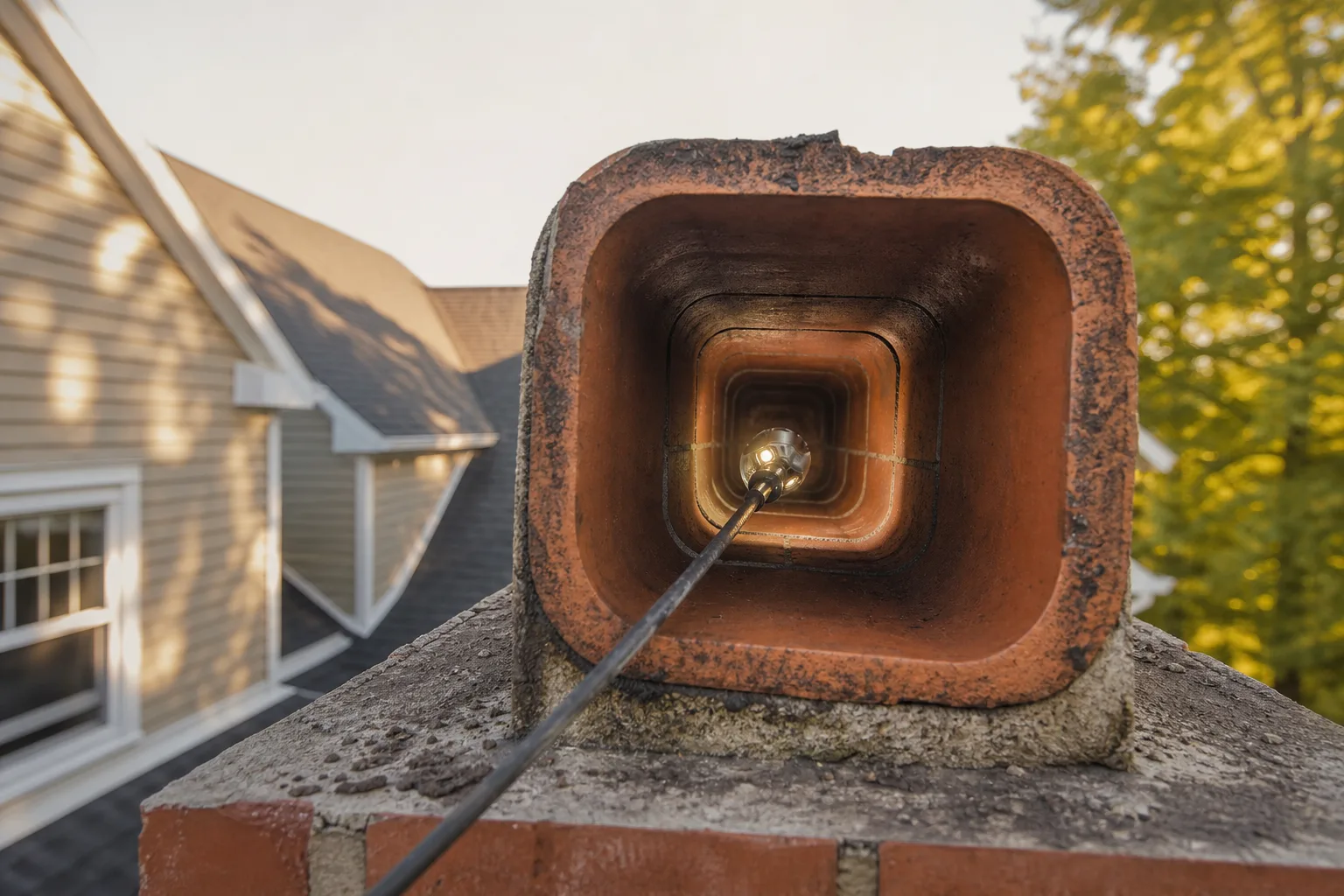
To see the stage and the liner condition rather than guess from below.

Chimney Liner Replacement
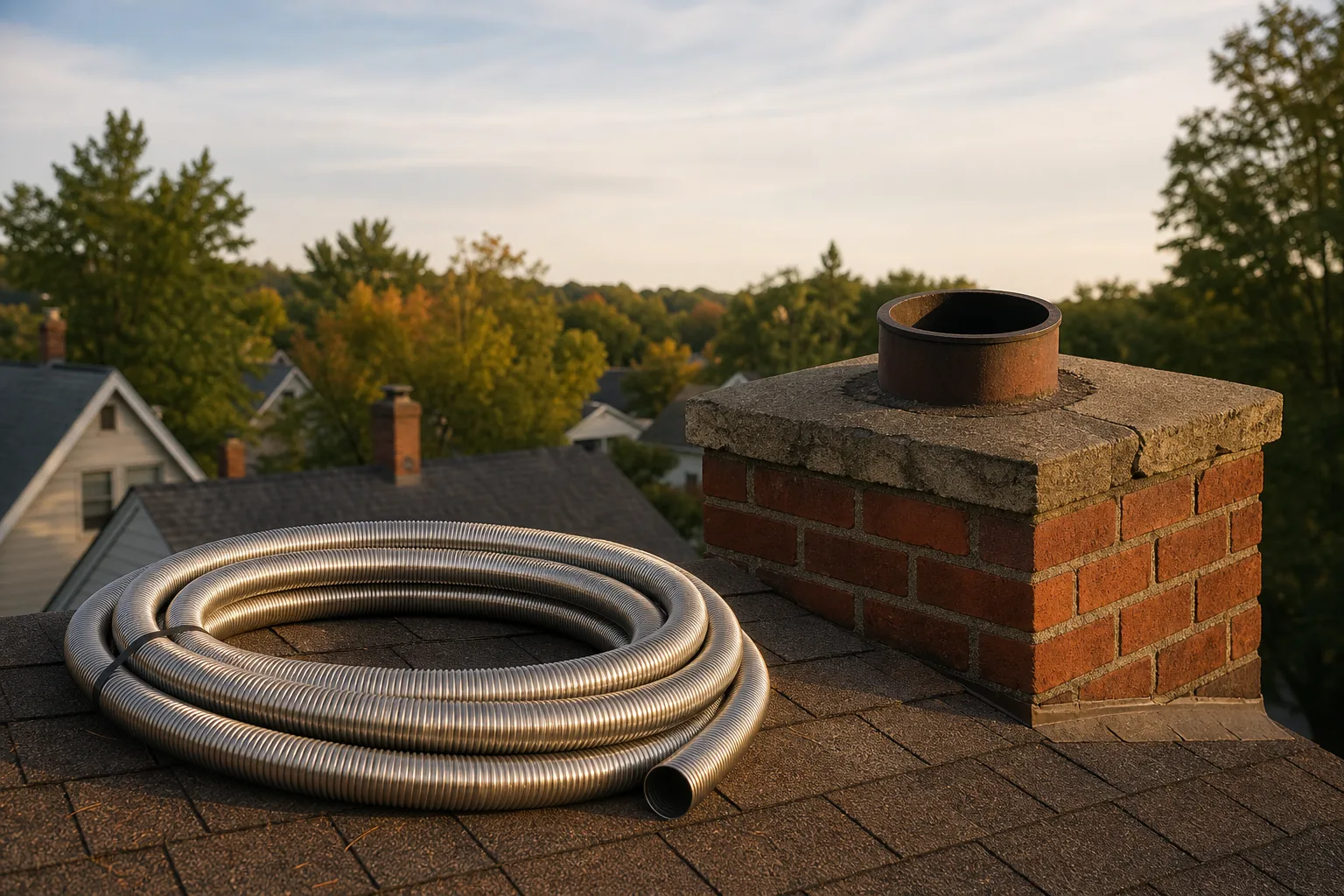
When an oversized or uninsulated flue is why it keeps coming back.

The VIO Standard
- A written estimate first
- License and insurance checked
- Nothing starts without your OK
Common questions
How much creosote buildup is dangerous?
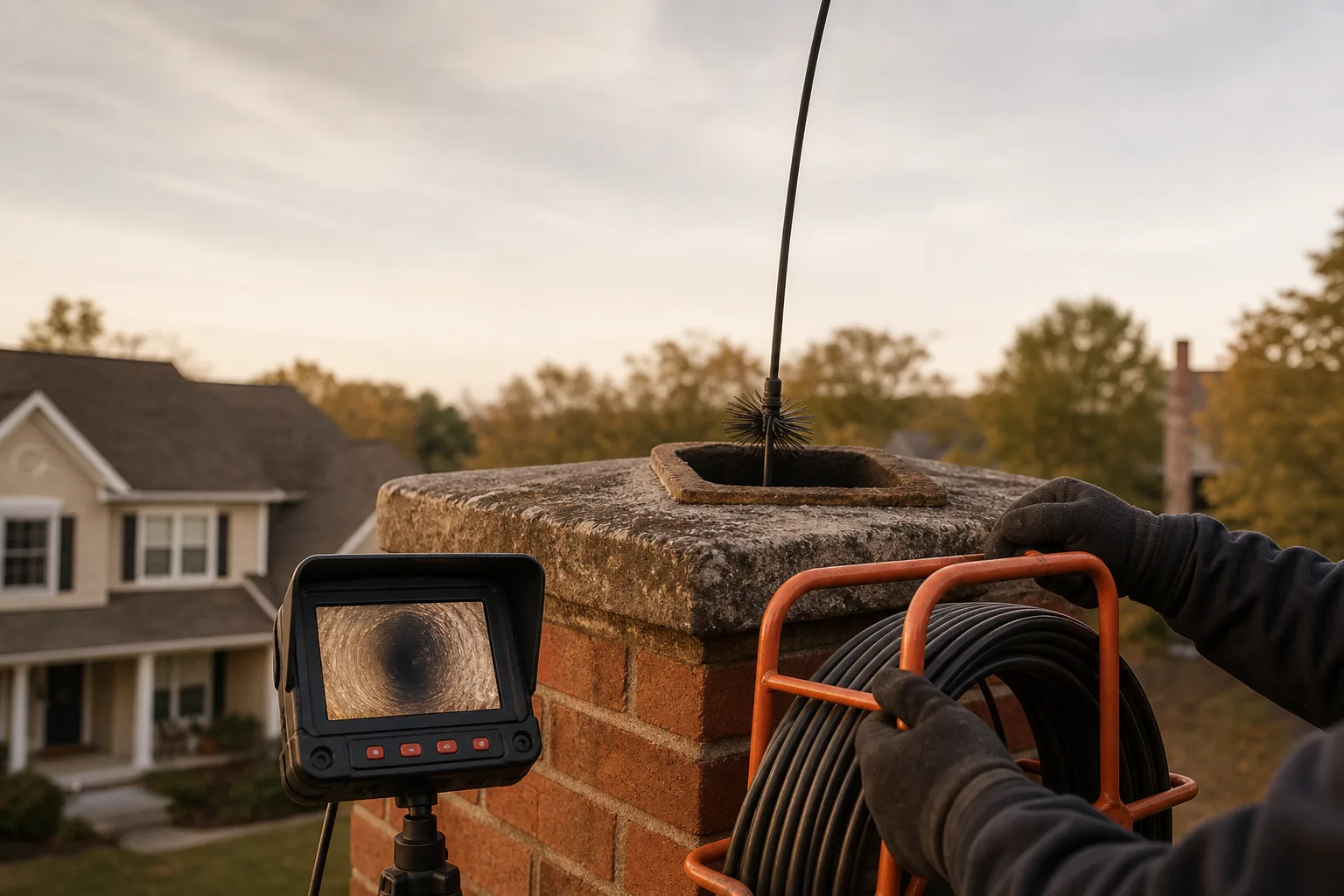
The working rule in this trade is an eighth of an inch — at that thickness the flue is due a sweep. At a quarter inch it is no longer a maintenance question: there is enough fuel in the flue to sustain a chimney fire, and the fireplace should stay cold until it has been dealt with. Stage matters alongside thickness: an eighth of an inch of glazed stage three is a more serious finding than the same depth of flaky stage one, because the glaze cannot be brushed off and burns hotter. Neither reading is something to judge from the living room — the camera scan is what settles the stage.
Do creosote removal logs work?
Partially, and not as a substitute for sweeping. They release a chemical that dries and loosens stage two deposits so a brush can take them off more easily — which is useful right before a sweep and useless instead of one, because the loosened material stays in the flue. On stage three glaze they do very little. Treat them as something that makes a sweep more effective, not something that replaces it.
Can I remove creosote buildup myself?
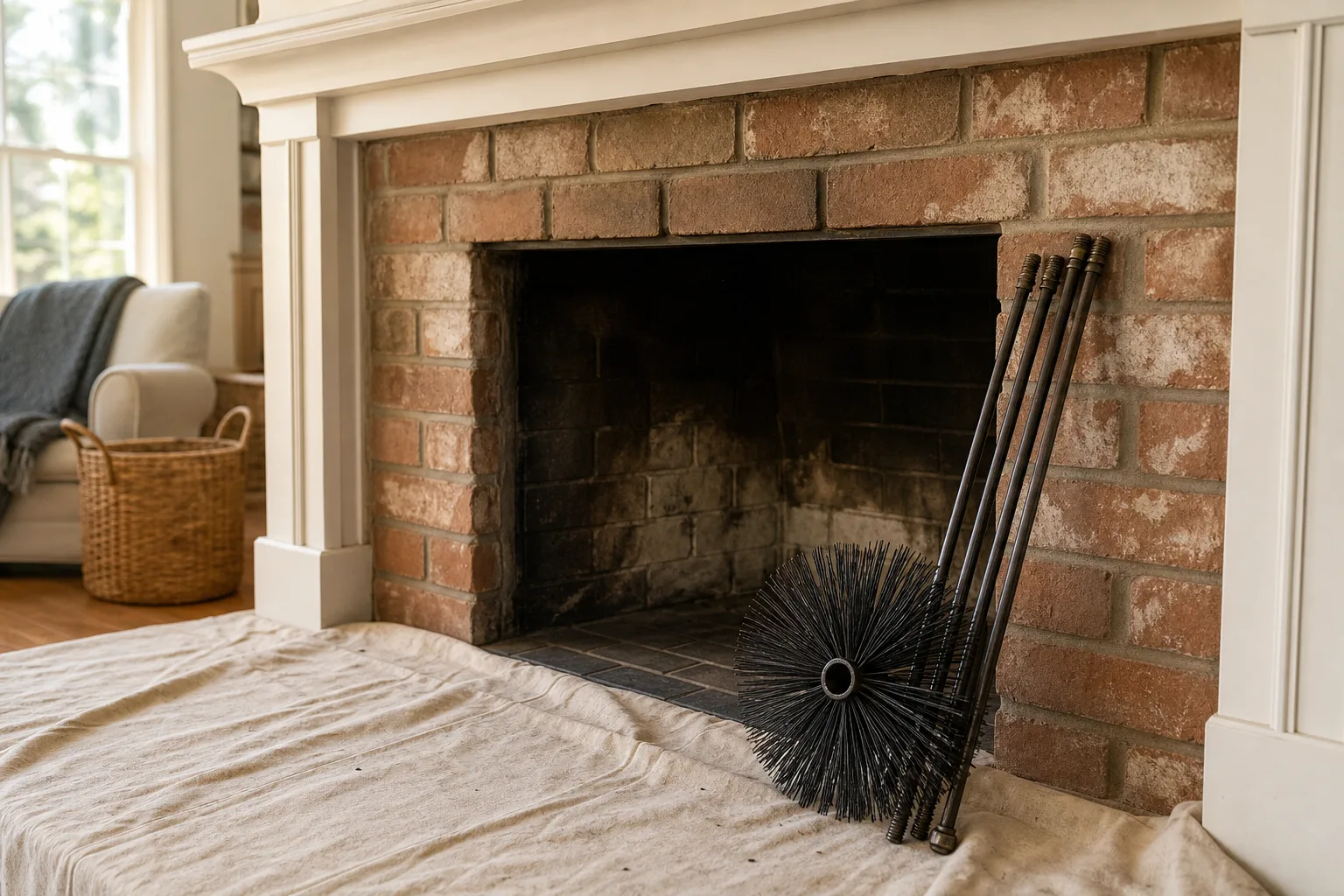
Stage one, with a proper rod-and-brush set and a lot of dust sheets, yes. What you cannot do from home is tell stage two from stage three with any confidence, and that distinction decides whether a brush is the right tool at all. Running a brush over glazed creosote polishes it. If you are going to do it yourself, at least get it looked at once so you know what you are dealing with.
How fast does creosote build up?
Anywhere from a season to a few weeks, and the wood is the biggest variable. Seasoned hardwood in a hot fire on a well-sized flue can go a full winter comfortably. Unseasoned wood damped down overnight on a cold exterior flue can put down a dangerous layer in a couple of months. That is why the annual interval is a minimum rather than a schedule.
Does creosote buildup mean I need a new liner?
Not by itself. But creosote that keeps coming back fast, on a flue swept every year, is usually telling you the flue is wrong for the appliance — too wide, or too cold because it runs up an exterior wall. Lining it down to the right diameter with insulation fixes the cause. Otherwise you are paying to sweep the same problem every year.
you don't have to know what's wrong.
Safe to use for now, and it gets more expensive every month you leave it. Describe what you are seeing and a local pro works out the rest. You get the price in writing before anyone starts, and you can say no.

The people behind every visit
Founded by Ryan Carter in 2019. Every page you read here is reviewed by Ethan Miller, our chimney specialist. A written estimate before any work, and the findings in writing whether or not anything needs doing.
More about who we are →