



Next-day appointments
Call or book today and we'll do our best to get a pro to you tomorrow.
Chimney service
The short answer
If they are chimney swifts, they are federally protected and nobody can legally remove them until they fledge.
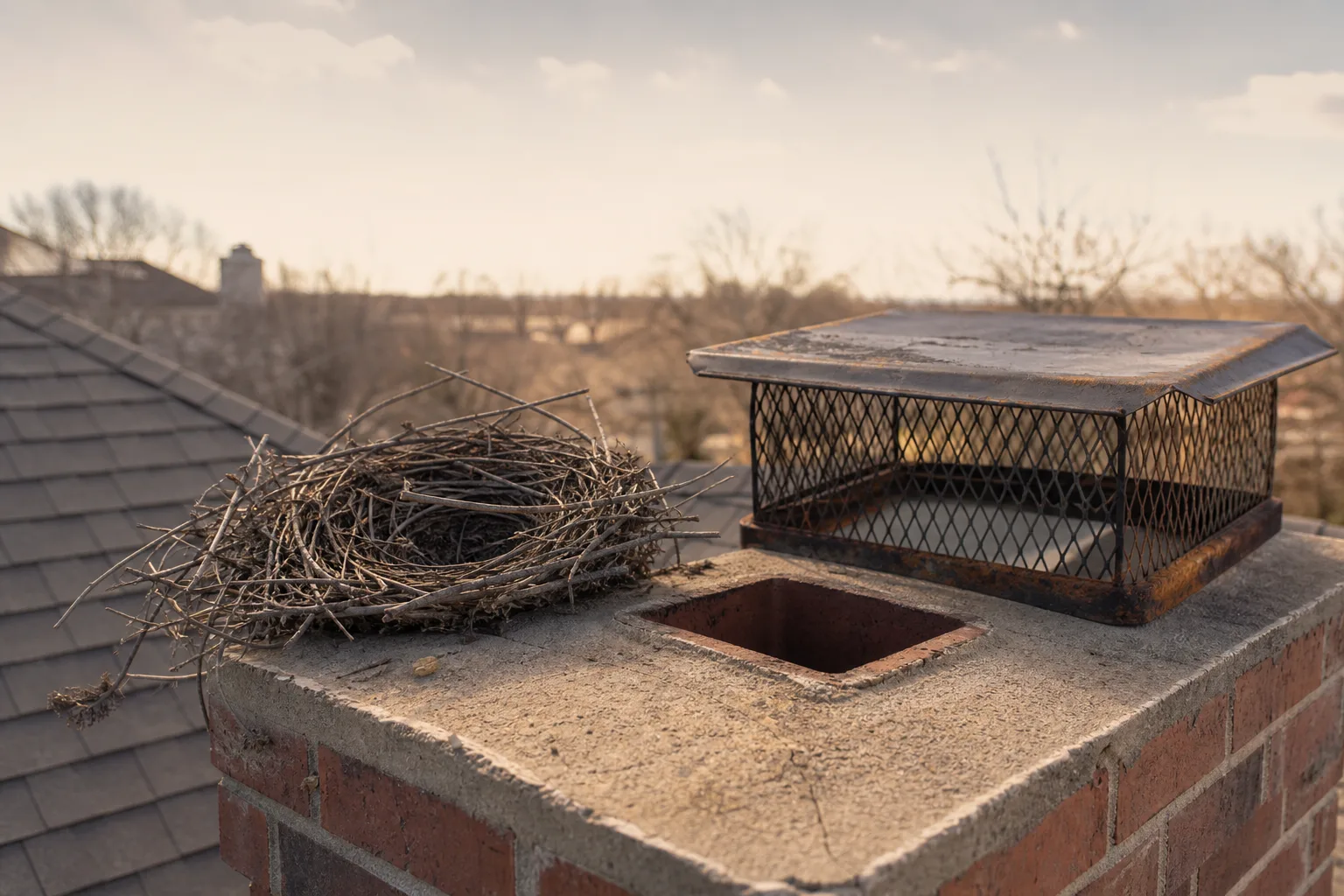
An uncapped flue is a sheltered vertical shaft, which is exactly what several species look for. Chimney swifts are protected under the Migratory Bird Treaty Act and cannot be removed while nesting — the wait is typically a few weeks until the young fledge, and then the nest comes out. Raccoons, squirrels and starlings can be removed at any time, and raccoons in particular need care because a mother denning on the smoke shelf will defend it. In every case the job is only finished when a cap goes on, because the flue is what attracted them and it is still there.
An open flue is an invitation
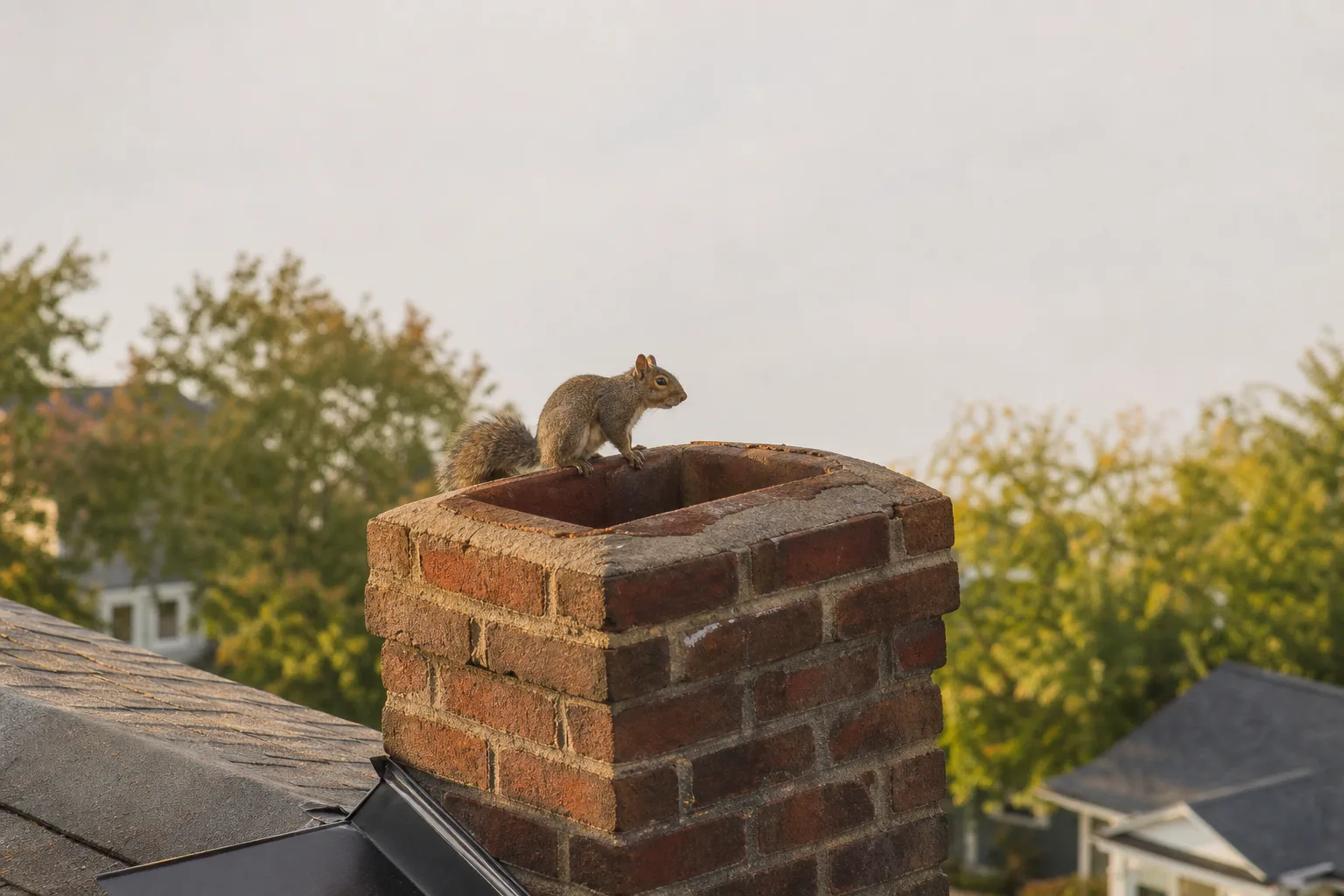
A sheltered vertical shaft is exactly what several species look for. Removal without fitting a cap is a visit you will repeat.
Fall Special
Call or book today and we'll do our best to get a pro to you tomorrow.
Anything that needs attention is shown to you and explained in plain words.
If something needs fixing, you get the price in writing first. Saying no costs nothing.
Do you have this problem?
Sound is usually the first sign, and the time of day narrows it down: daytime chirping suggests birds, evening and night activity suggests raccoons or squirrels.
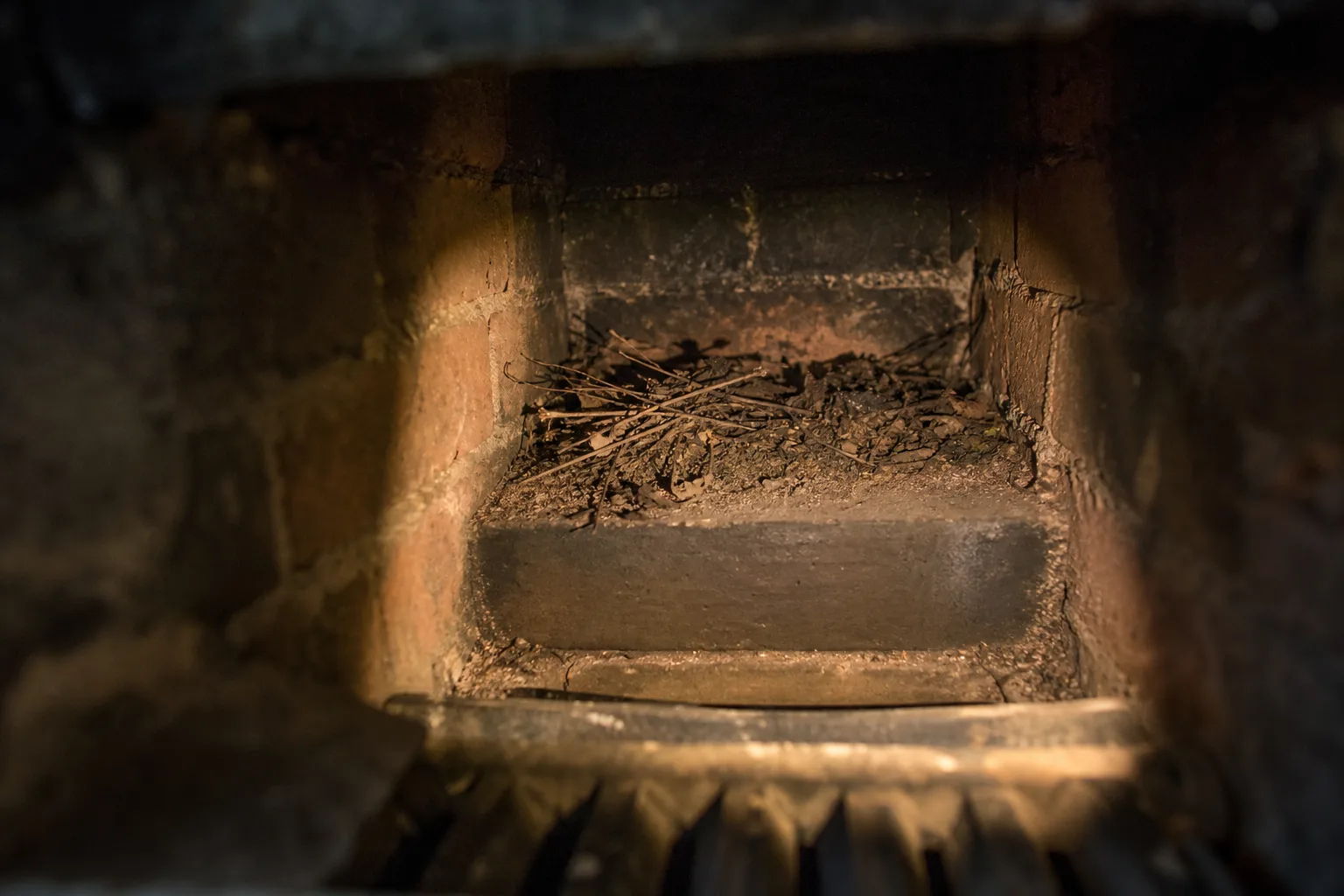
Look up past the damper with a torch. Debris on the shelf is a blockage and a fire risk together, whether or not anything is still living in it.
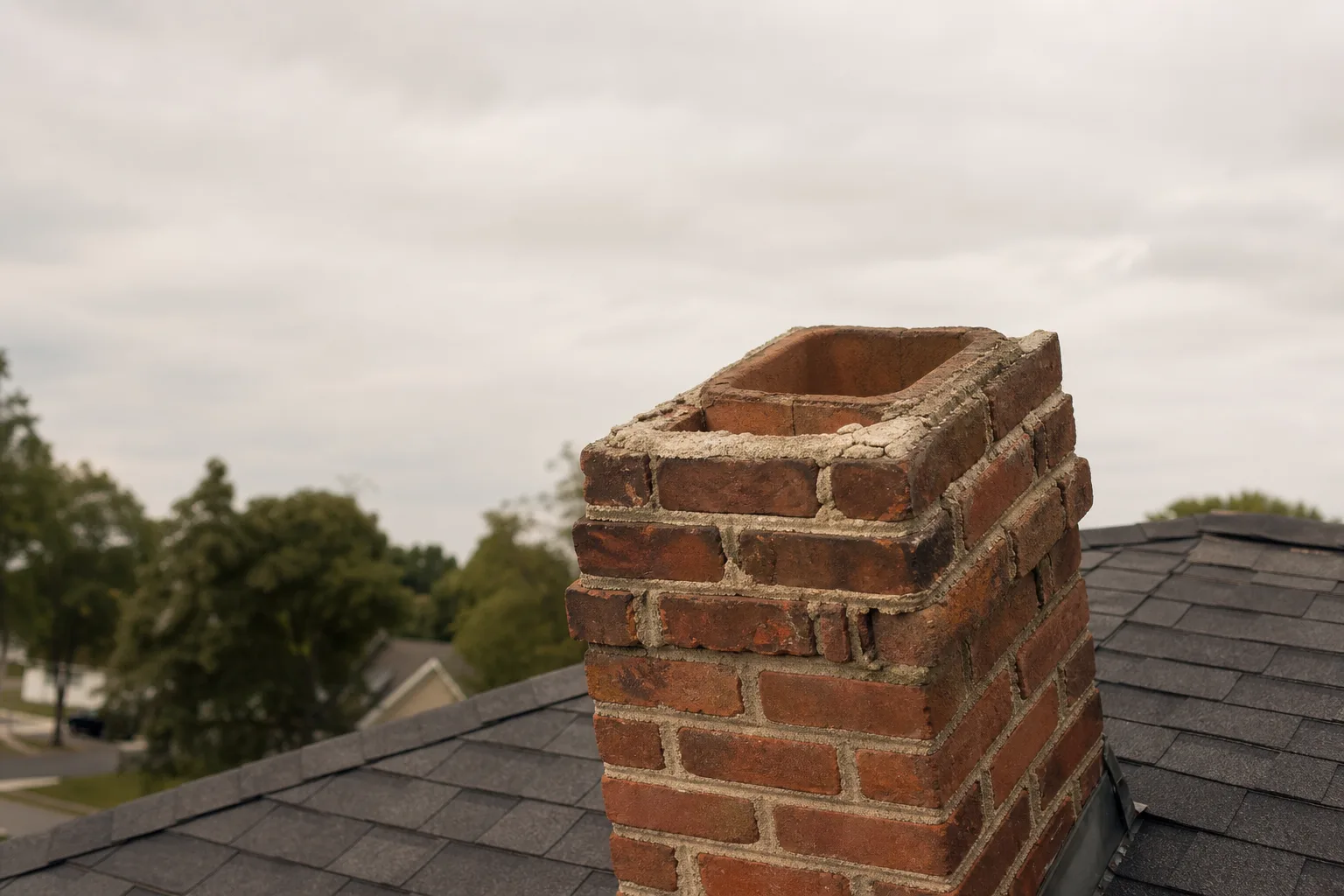
The cause rather than a symptom. An open flue will be found again next spring, and the removal you paid for this year will need repeating.
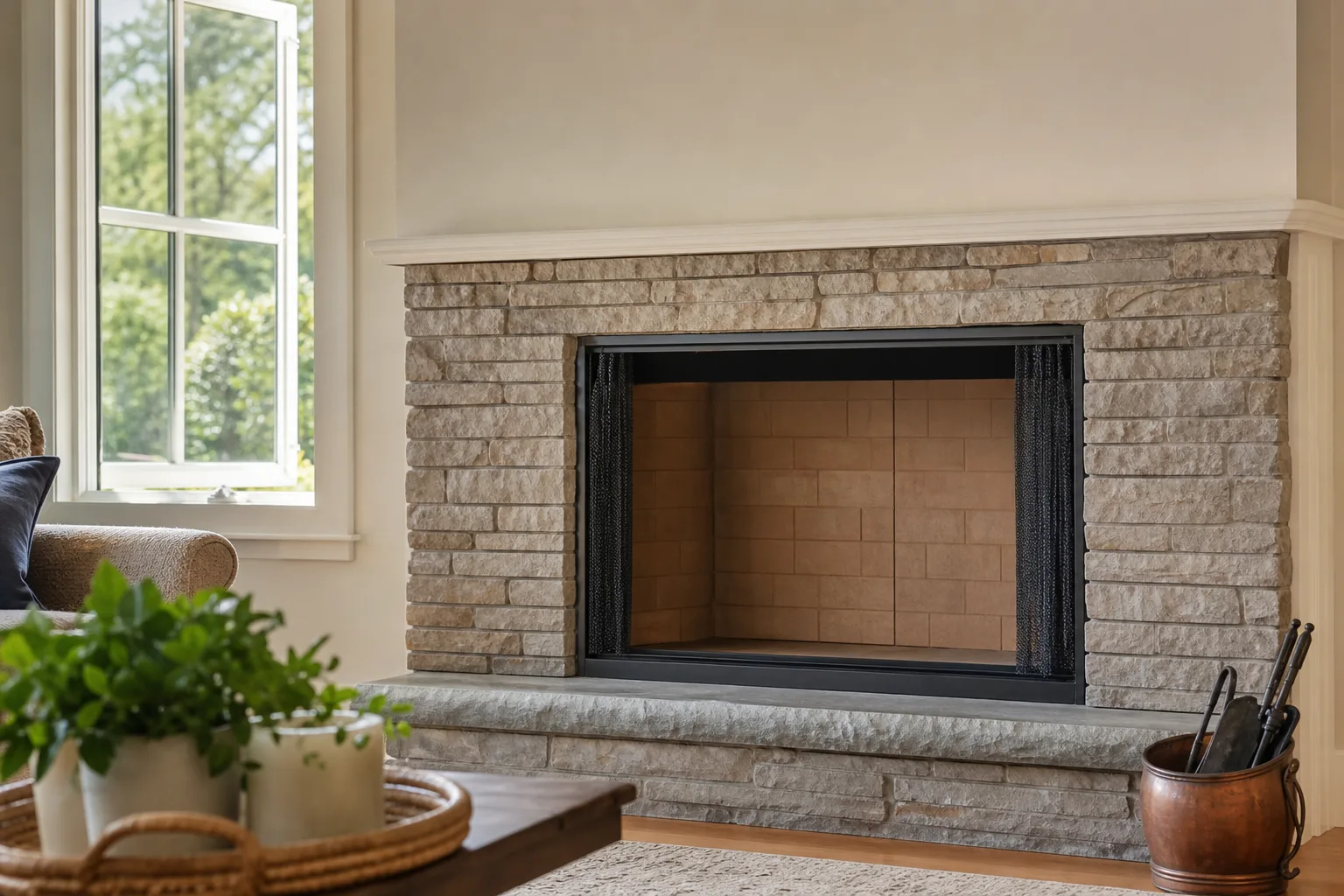
Droppings, nesting material, or an animal that did not get out. It gets worse in warm weather and no amount of airing the room addresses it.
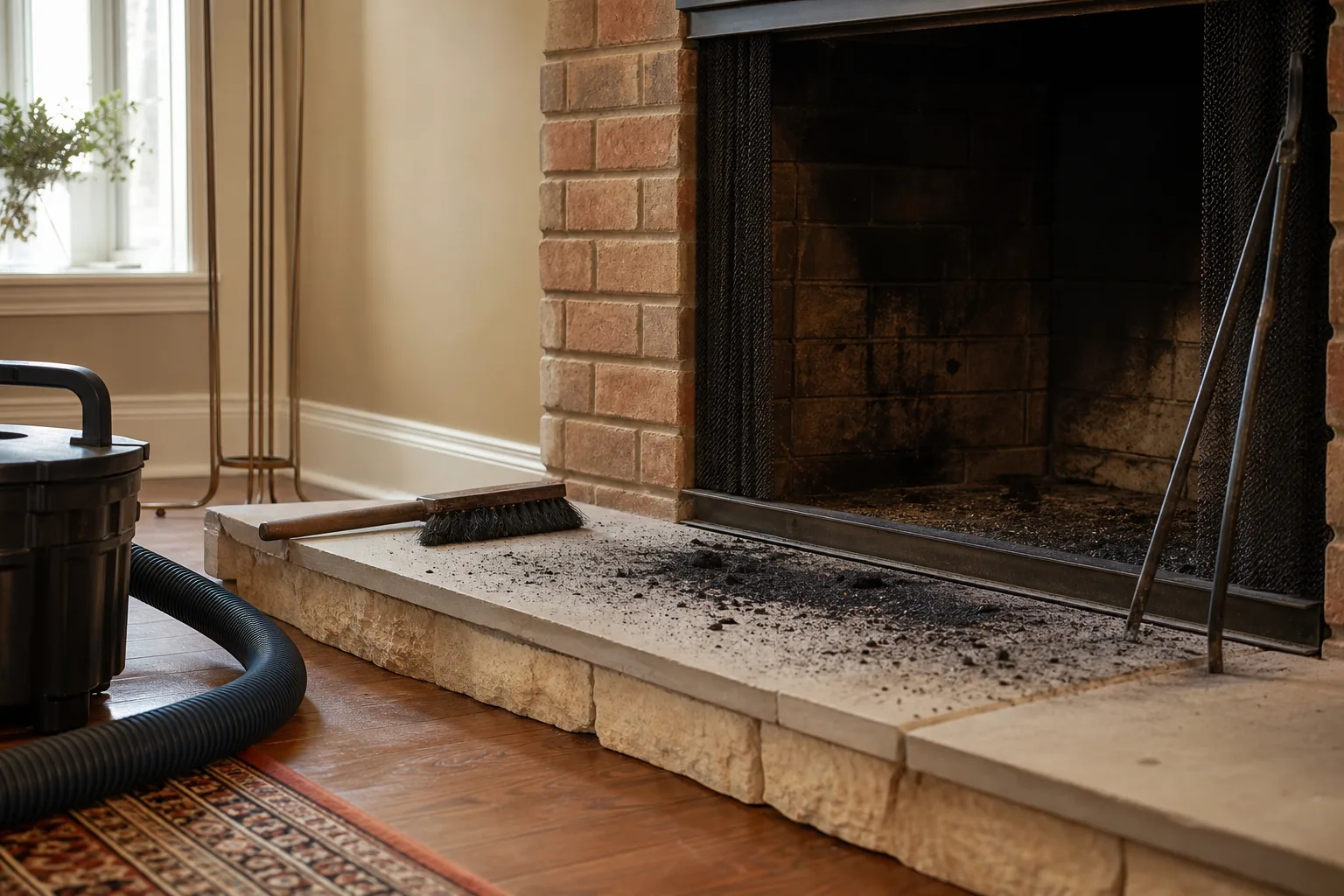
Sticks, straw or droppings arriving in the firebox mean the nest above is coming apart, and that material is directly in the path of any fire.
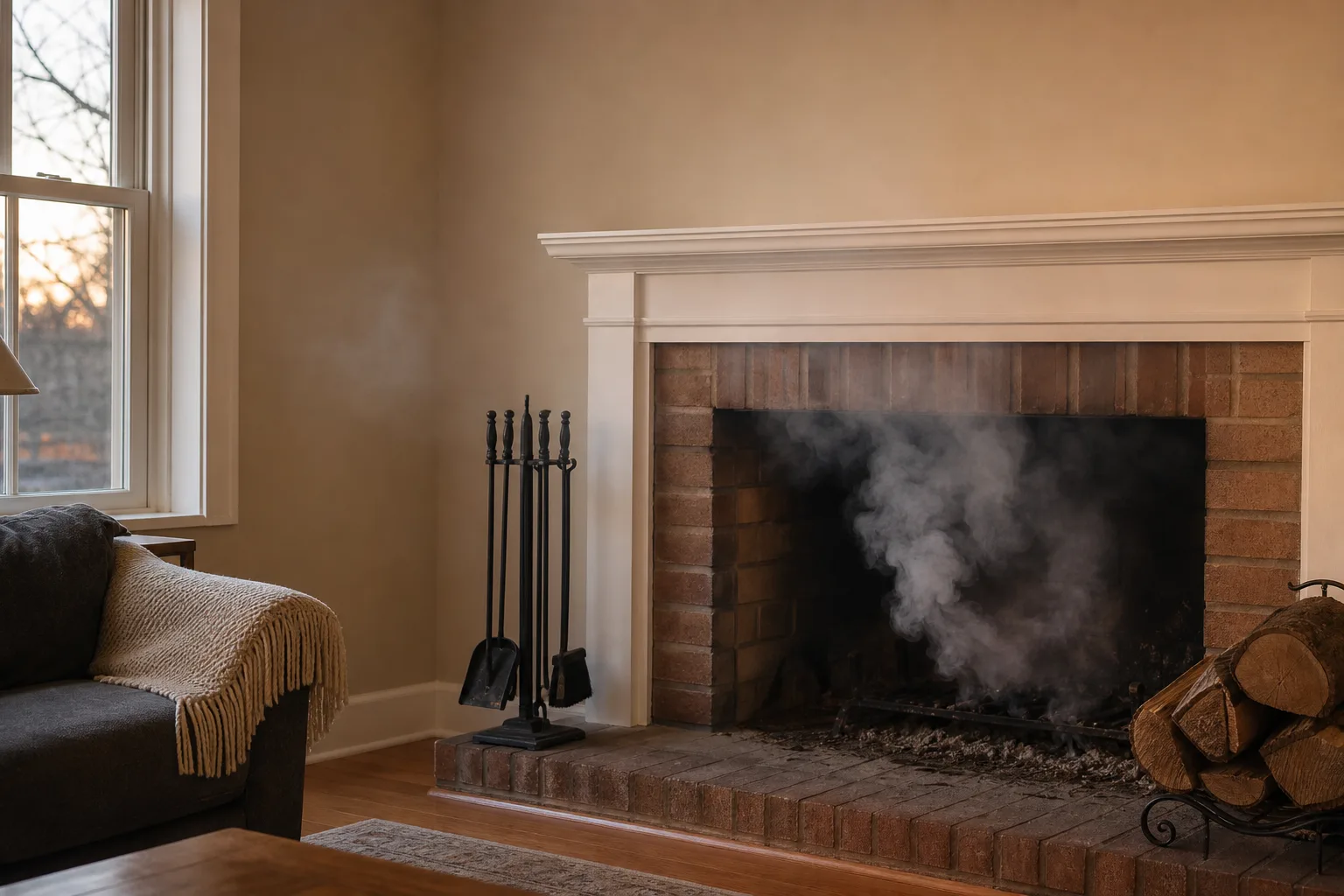
A nest is a blockage. If the fireplace drew fine last winter and does not now, do not force it — put the fire out and look up the flue first.
How we work
The same four steps every time, whatever the repair turns out to be.
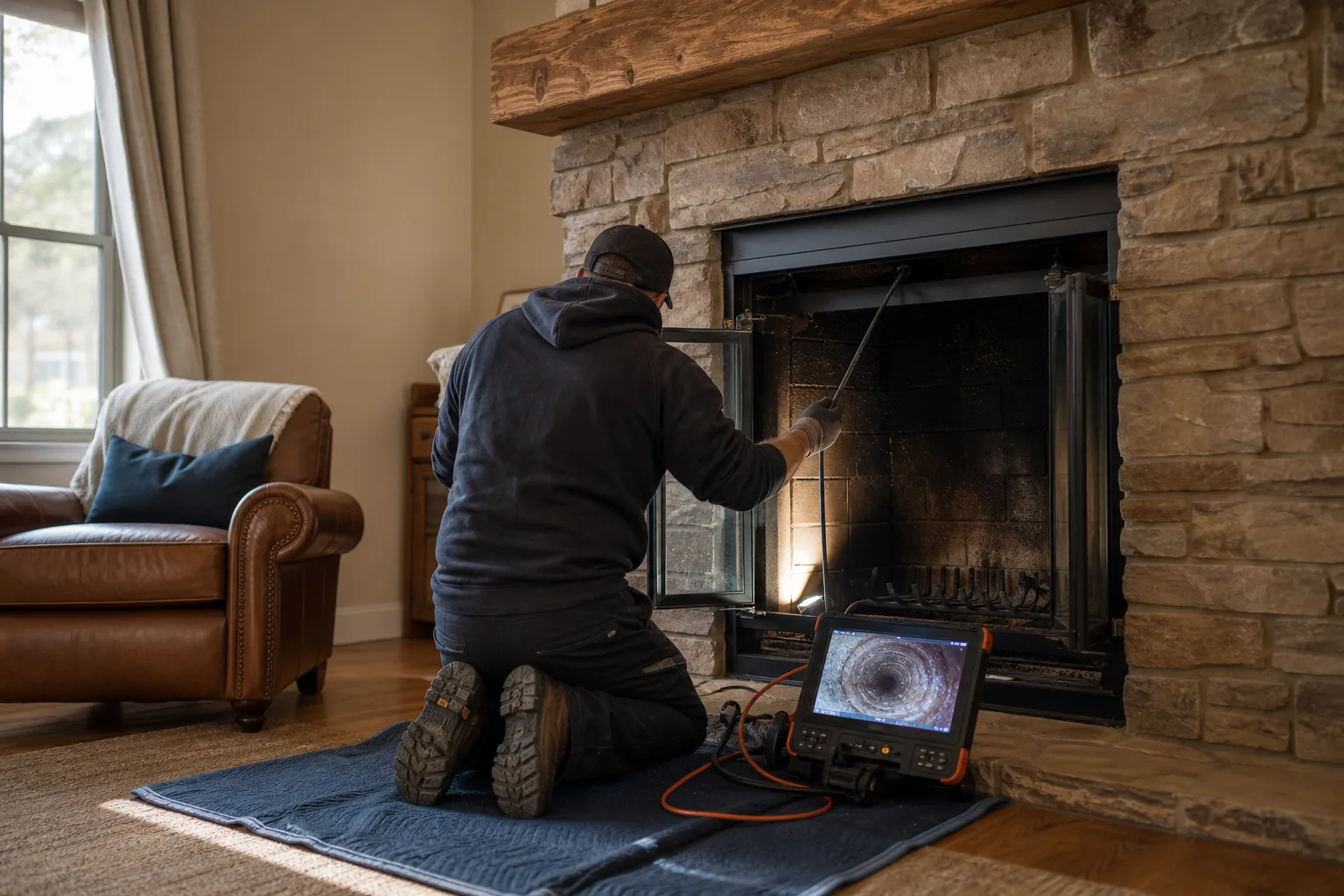
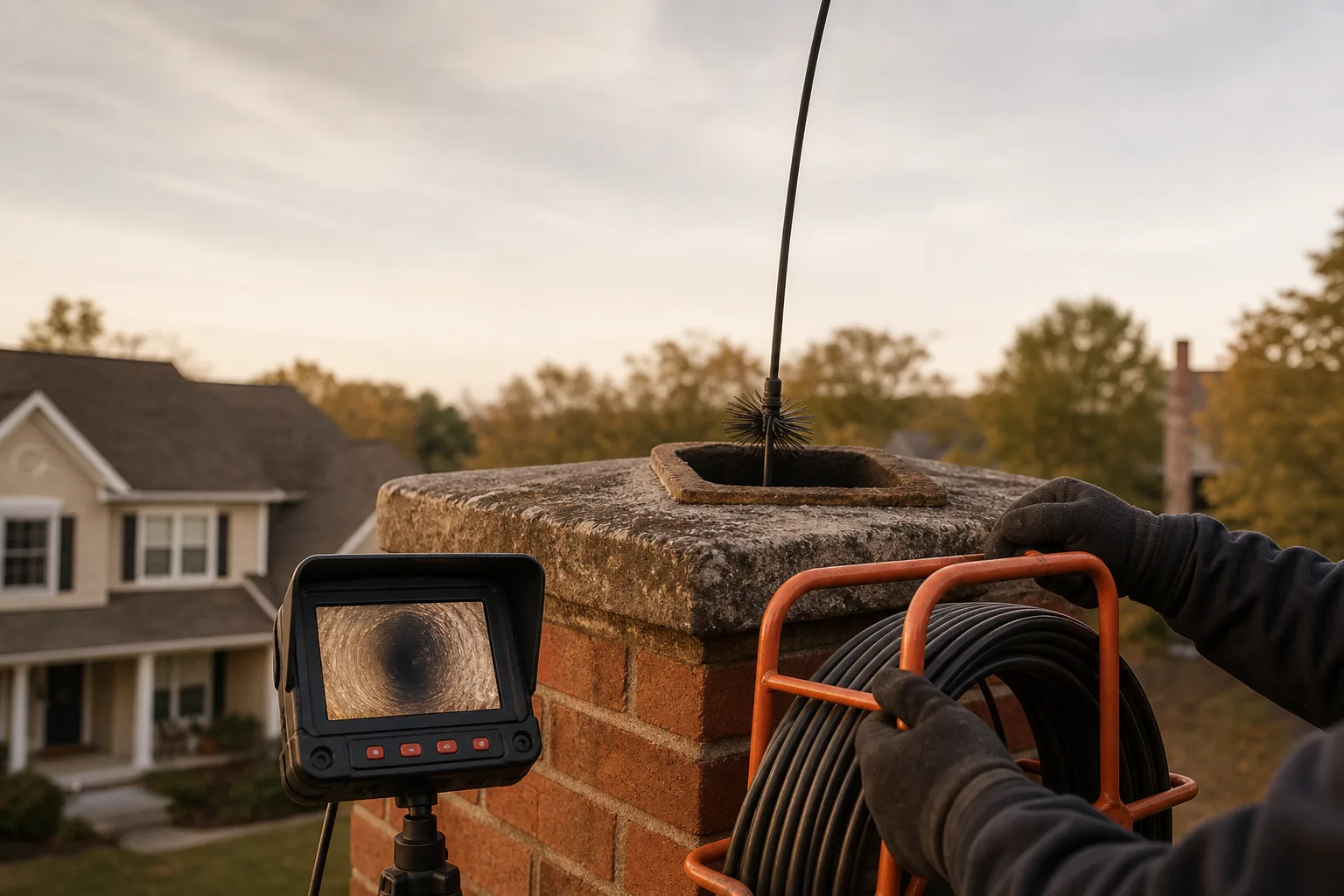
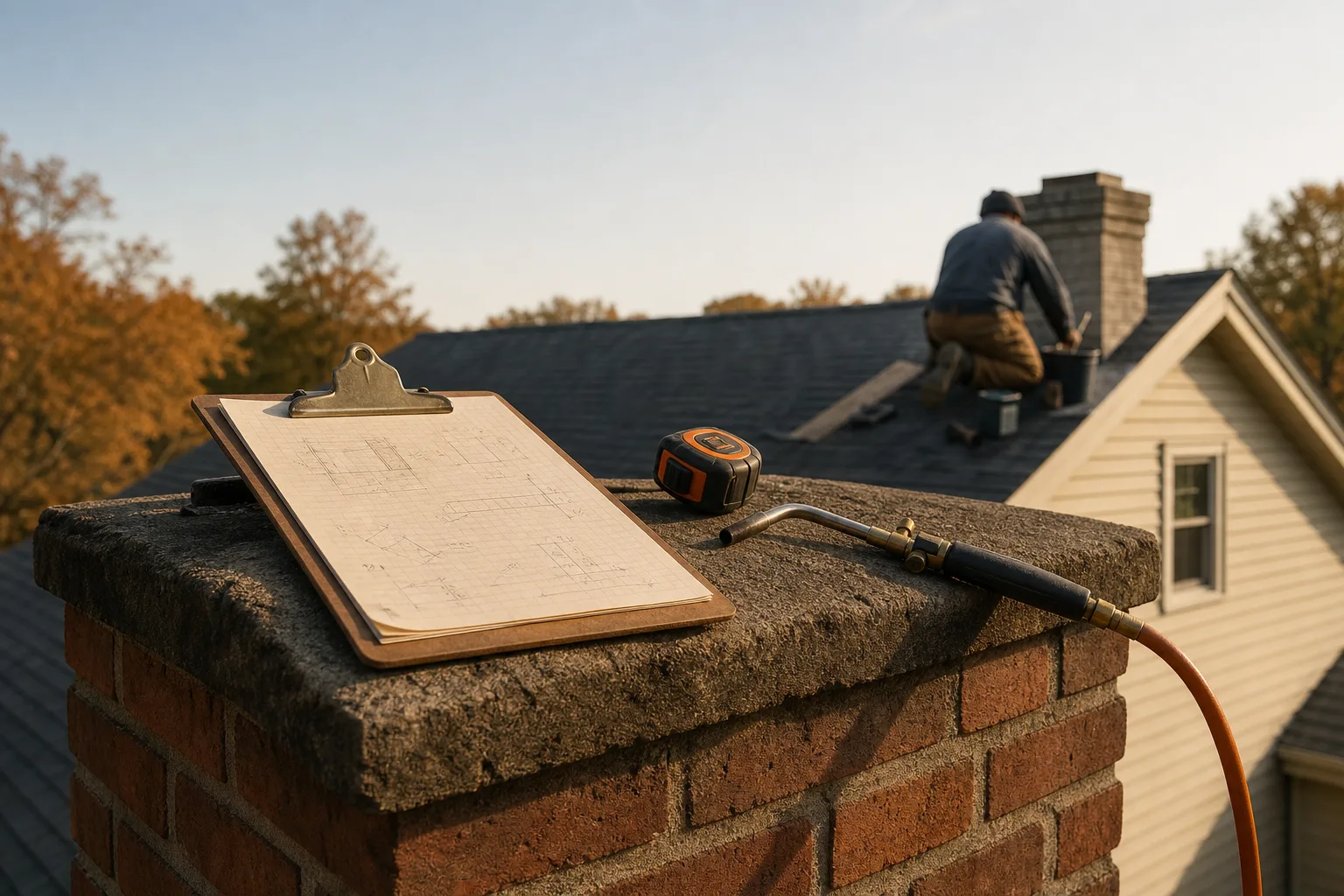
A look at the crown, cap, flashing and exterior masonry, then the flue, damper and firebox — with a camera where the job calls for a level 2 scan. Whatever needs work gets shown to you, not just described.
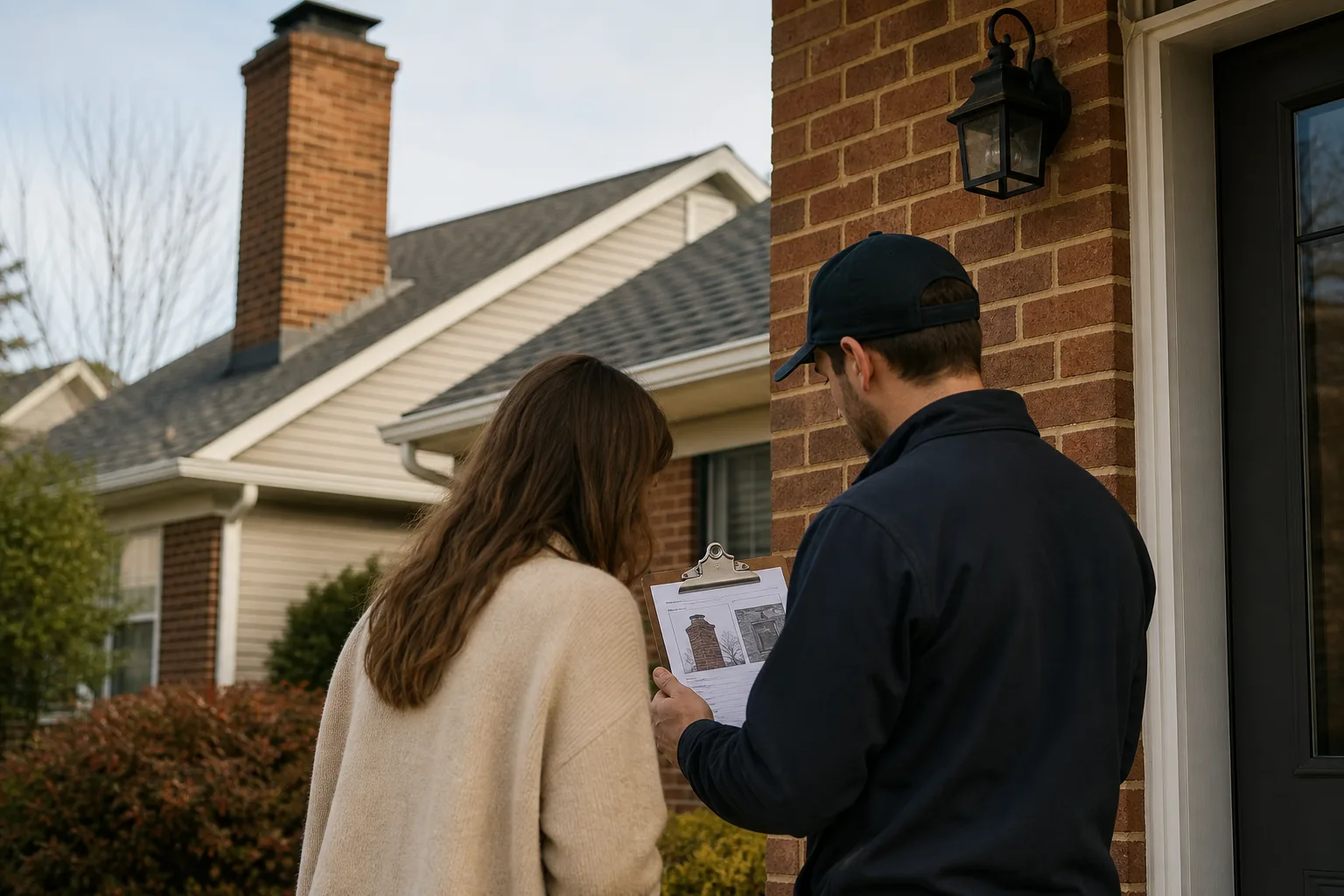
Scope, price and what is not included, in writing. Nothing starts until you approve it, and an emergency is not a reason to skip this step.
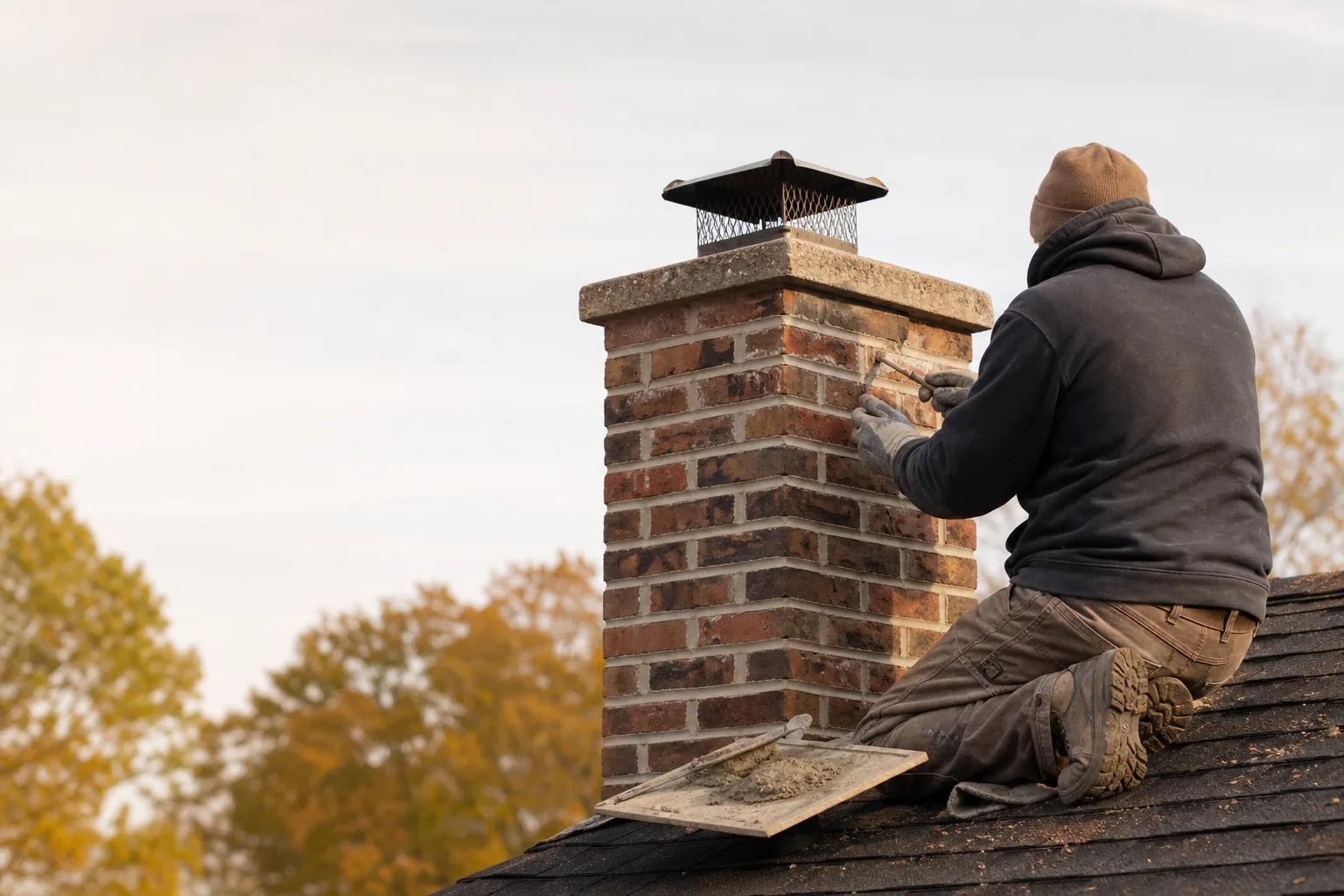
Matched materials and the manufacturer's spec, not whatever is on the van. Drop cloths down, and the room left as it was found.
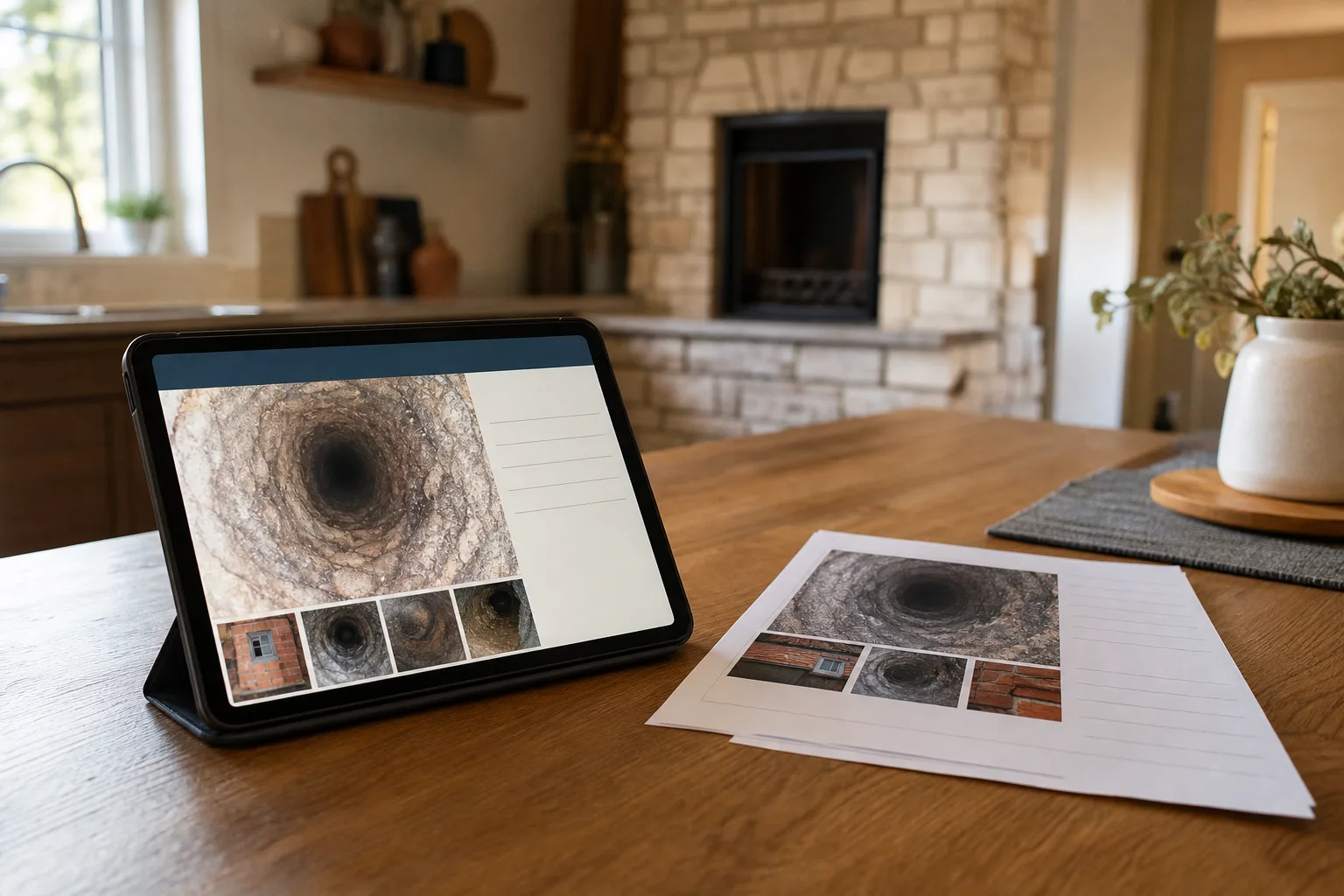
A second scan after the work, and written findings you can keep, hand to an inspector, or send to an insurer.
What it covers
Not every job on this list is equally urgent, so they are ordered that way. A cracked liner stops you using the fireplace tonight; waterproofing can wait for a dry week.
The job — most urgent first
What it involves
On site
Live extraction, usually of a mother and young denning on the smoke shelf. Handled by someone equipped for it — a cornered raccoon in a confined flue is a genuine hazard, not an inconvenience.
On site: Half a day
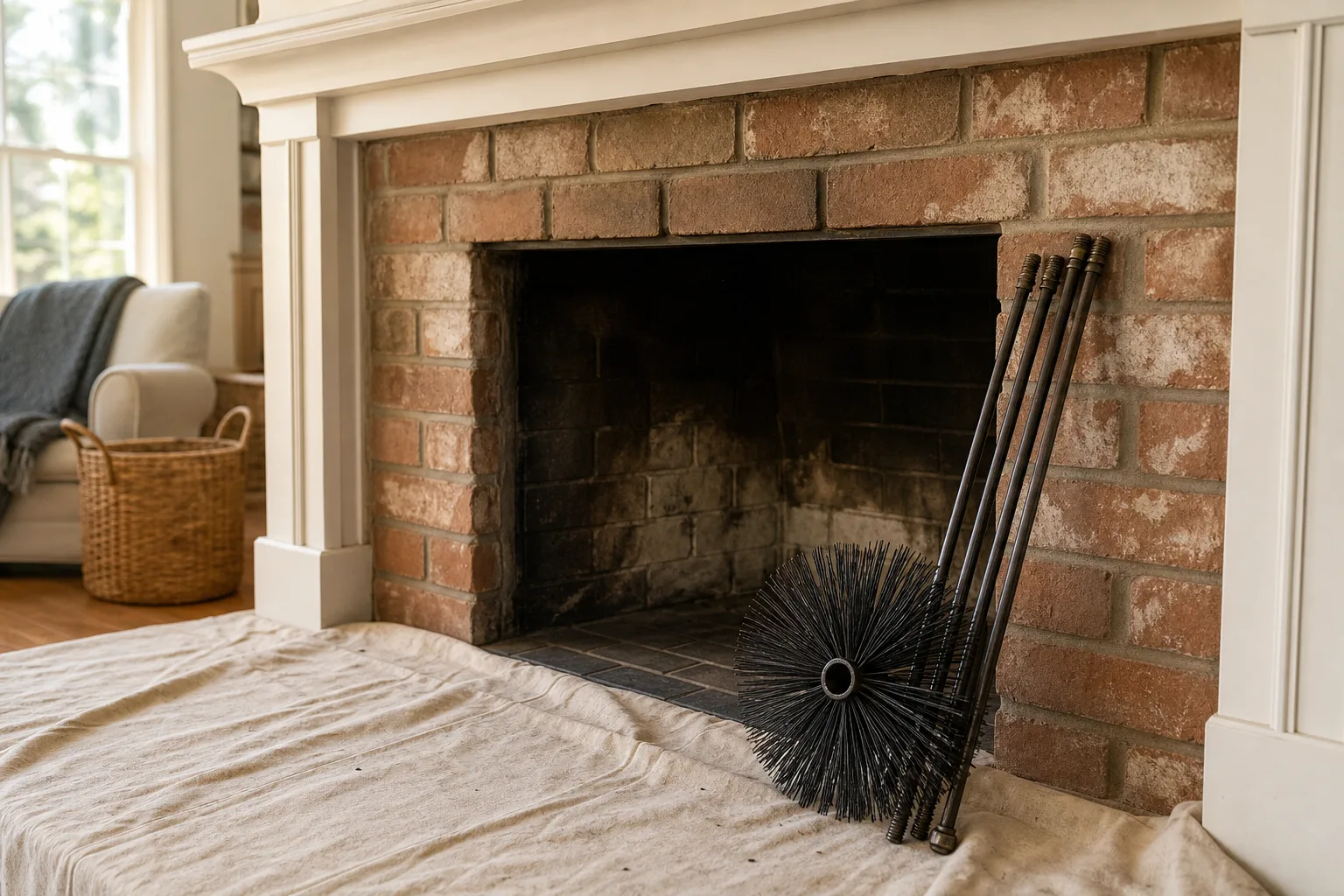
Nesting material out, the flue swept and scanned. A nest sitting on the smoke shelf for a season is dry tinder directly above the firebox, so this is not optional tidying.
On site: 1–2 hours
Chimney swifts and other migratory birds are federally protected while nesting. The nest is removed once the young have fledged, usually a few weeks. Anyone offering to remove them sooner is offering to break the law.
On site: After fledging
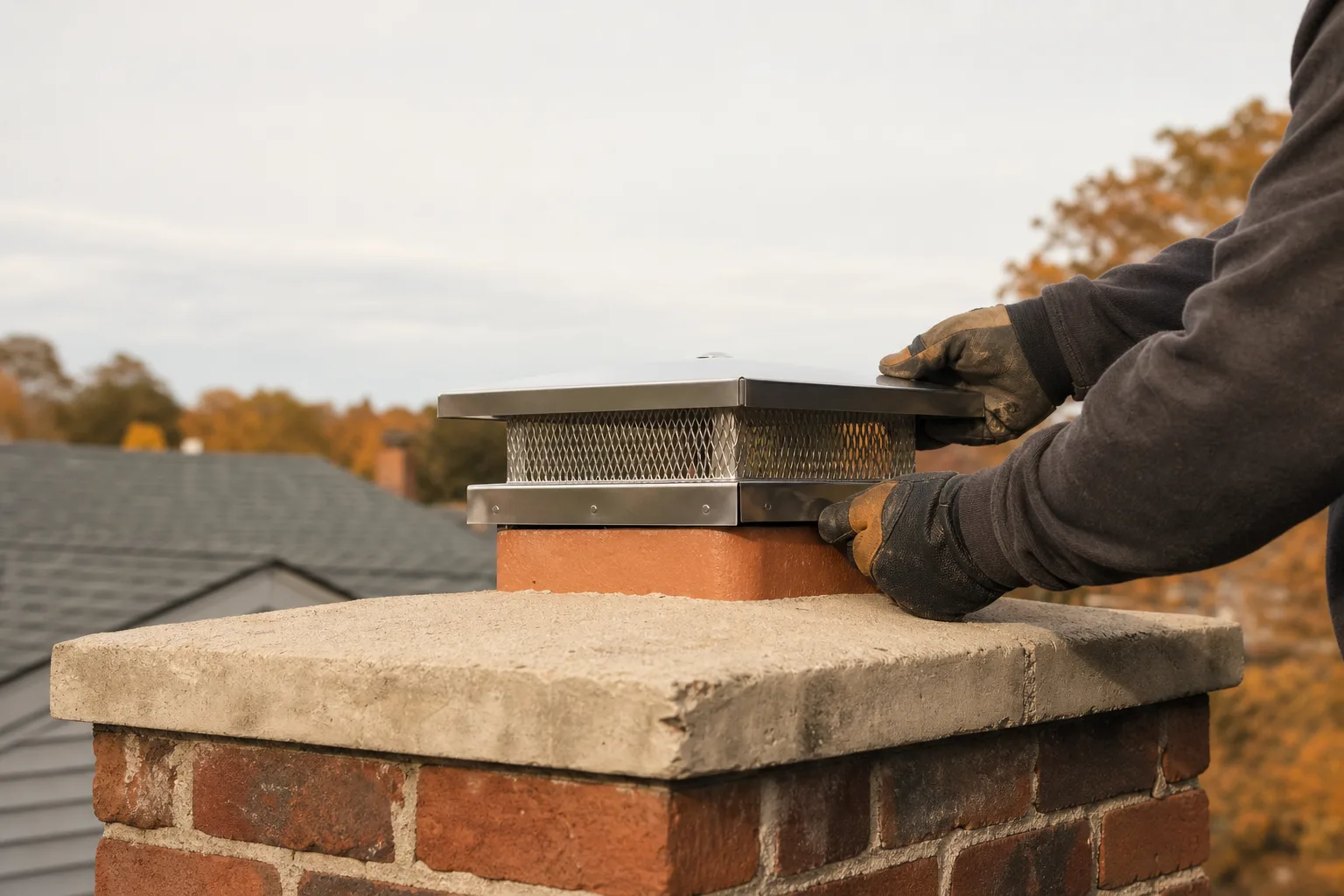
A stainless cap with mesh sides, fitted the same visit wherever possible. This is the part that makes the removal permanent, and skipping it is why people book this twice.
On site: About an hour
Droppings and debris cleared from the damper and firebox, and the smell dealt with at source. Bird and bat droppings carry health risks and are worth handling properly rather than sweeping out.
On site: 1–2 hours
Times are for the work itself, not for scheduling. Masonry needs roughly 40°F to cure properly, which is what limits this work in a northern winter rather than whether a crew is free.
What drives the price
Clearing an abandoned nest and fitting a cap is a modest half-day visit. Live removal of raccoons or squirrels costs more because it takes longer and needs the right equipment. Protected bird nests are not more expensive, they just cannot be done yet. Removal without a cap should always be the cheaper quote and it is the false economy on this page.
Founded by Ryan Carter in 2019. Every page you read here is reviewed by Ethan Miller, our chimney specialist. A written estimate before any work, and the findings in writing whether or not anything needs doing.
More about who we are →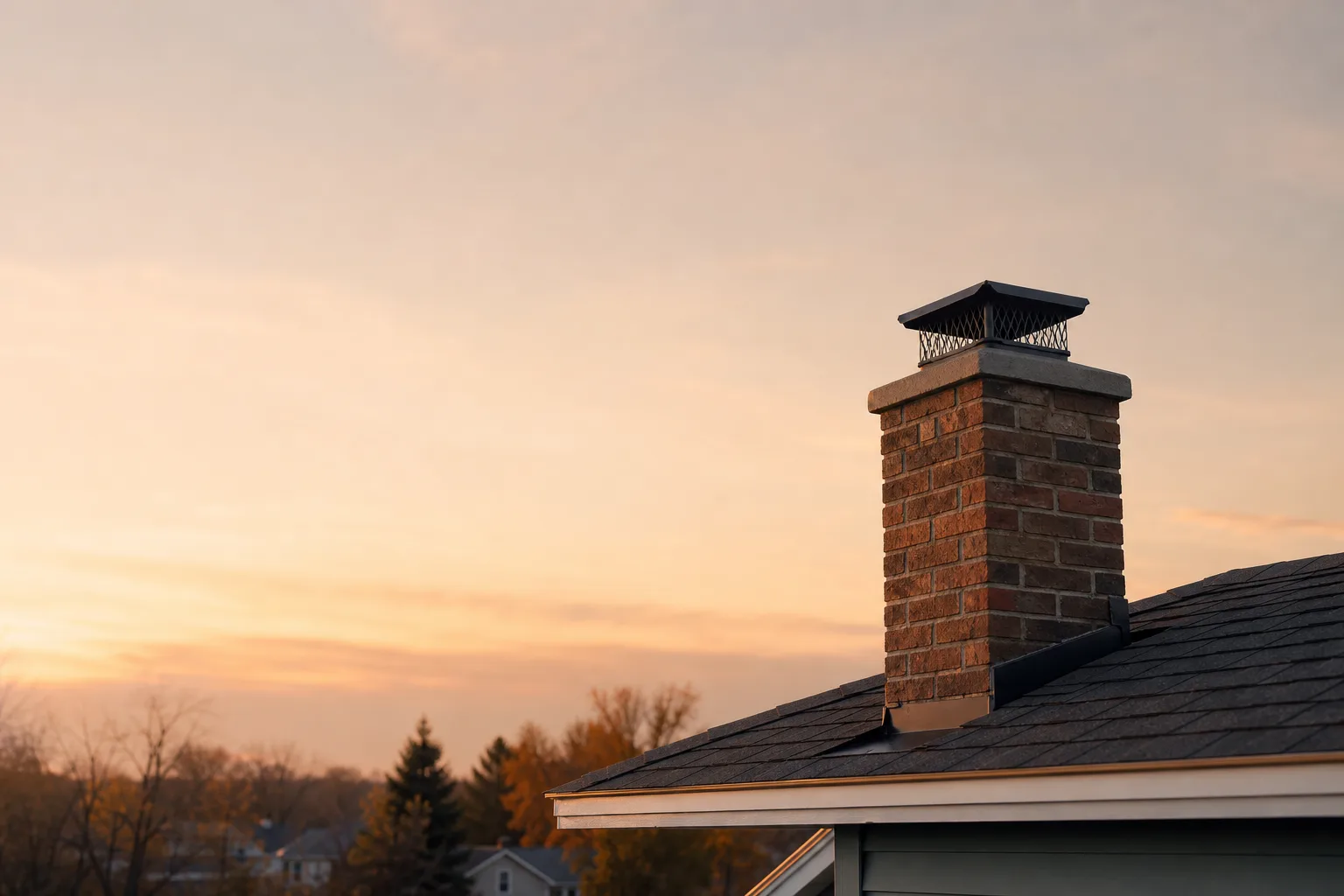
The VIO Standard
Good to know