



Chimney service

Chimney Sweep

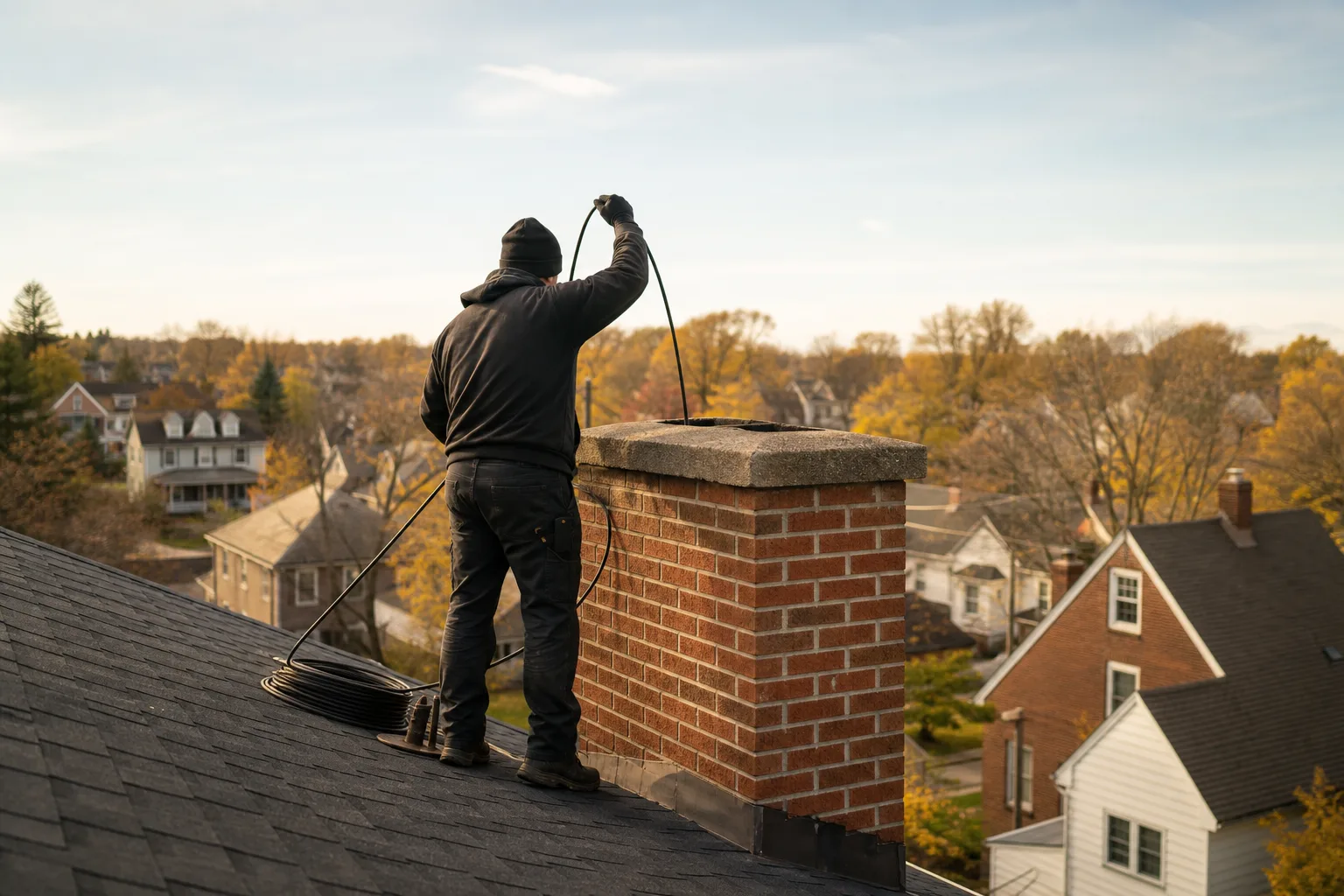
A full system sweep from firebox to cap, with the flue scanned on the way. The annual visit that keeps creosote from becoming the problem.

5.0/5
8 verified reviews
Ethan MillerEthan Miller · Chimney specialist, VIO CHIMNEYLast reviewed July 20264 min read
The short answer

A sweep is not a cleaner. Half the value of the visit is what gets found on the way down.

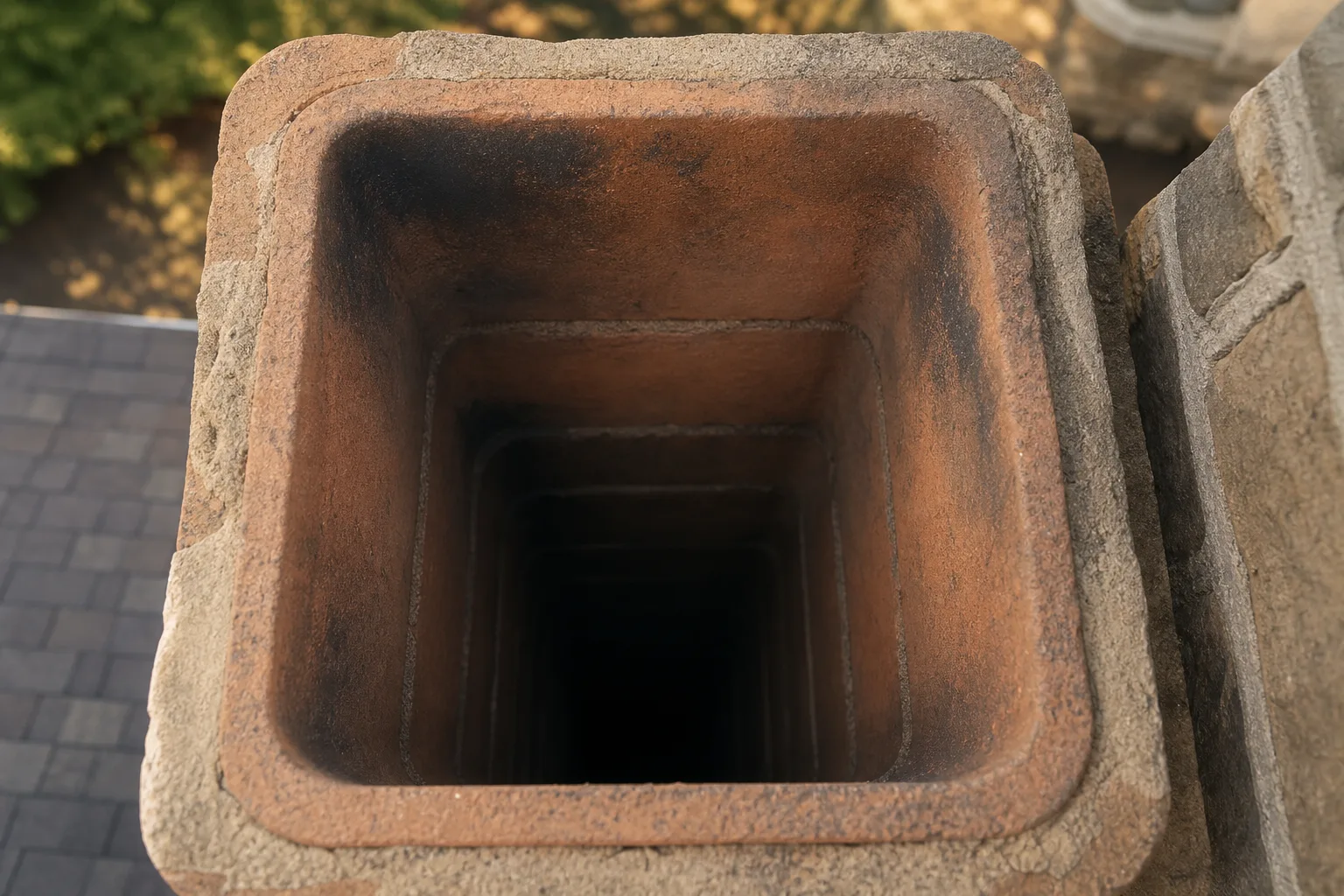
The brushing is the easy part. What a chimney sweep is actually doing is reading the flue: how much creosote there is and which stage it has reached, whether the liner is intact, whether anything has been nesting in there, and whether the damper and firebox are sound. Stage one creosote brushes off. Stage three is a hard glaze that no brush will touch and needs chemical treatment or a rotary head. Knowing which one you have is the difference between an hour's work and a job.

The visit

Firebox to cap, in one pass

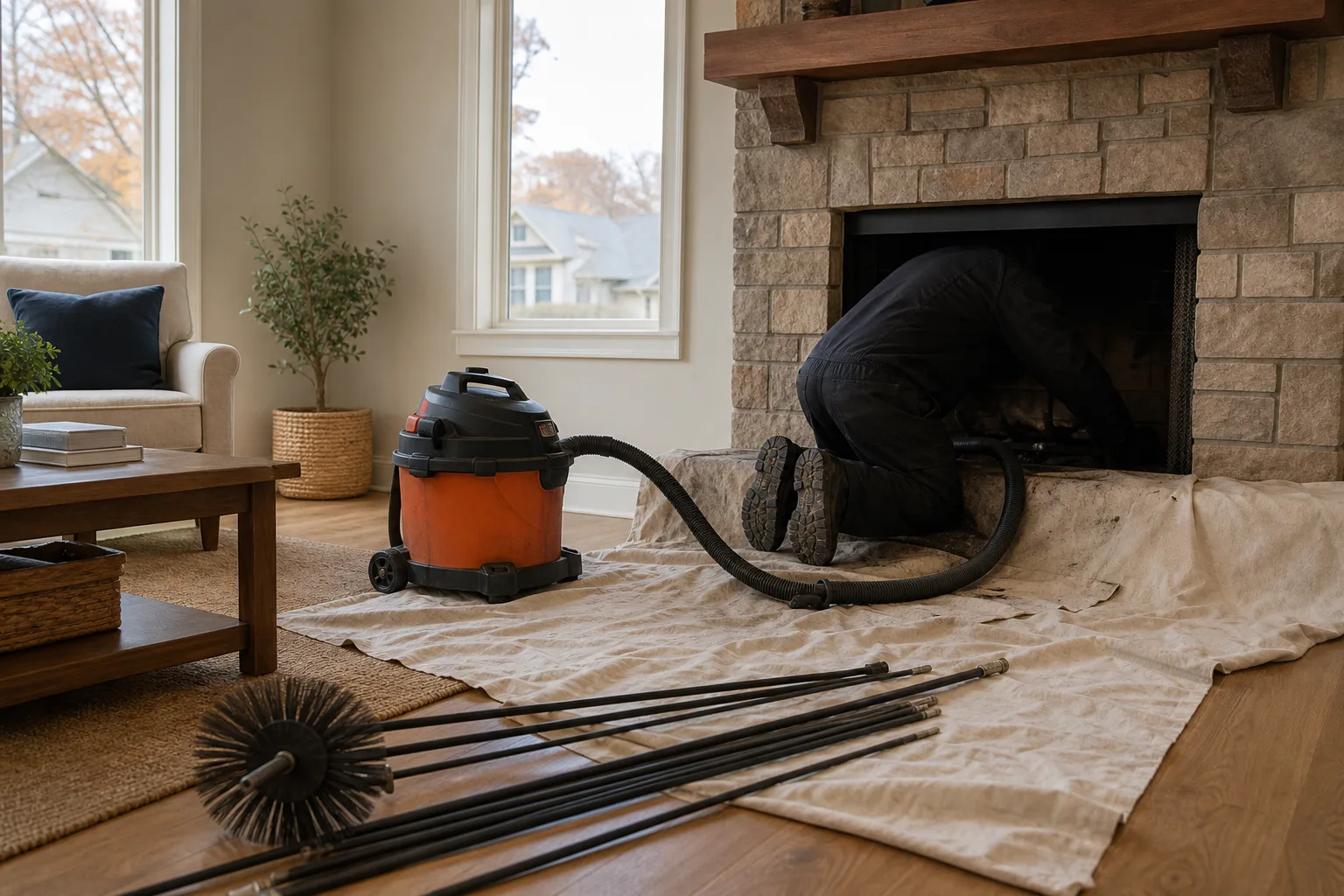
The hearth is sealed and a vacuum runs throughout. Soot in the room means the seal was not done properly.

On this pageSigns you need this3 sections+2
  1. Signs you need this
  2. The jobs this includes
  3. Common questions
Do you have this problem?

Signs you need chimney sweep

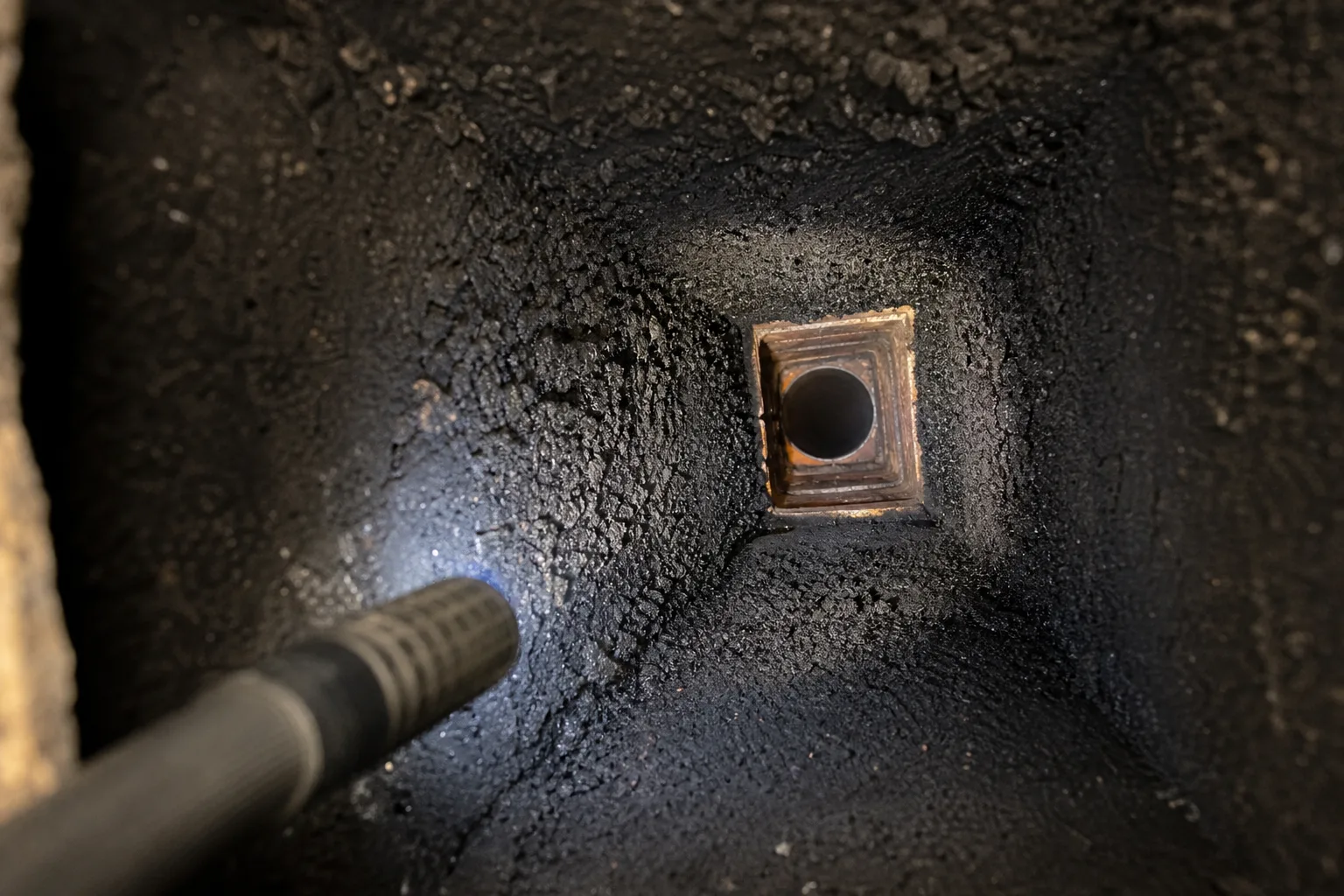
Torchlit view up a chimney flue coated in black flaky creosote

Black flaky buildup you can see in the flue

Shine a torch up past the damper. Anything more than a light dusting is due a sweep, and a shiny tar-like coating means it has gone past the stage a brush will clear.
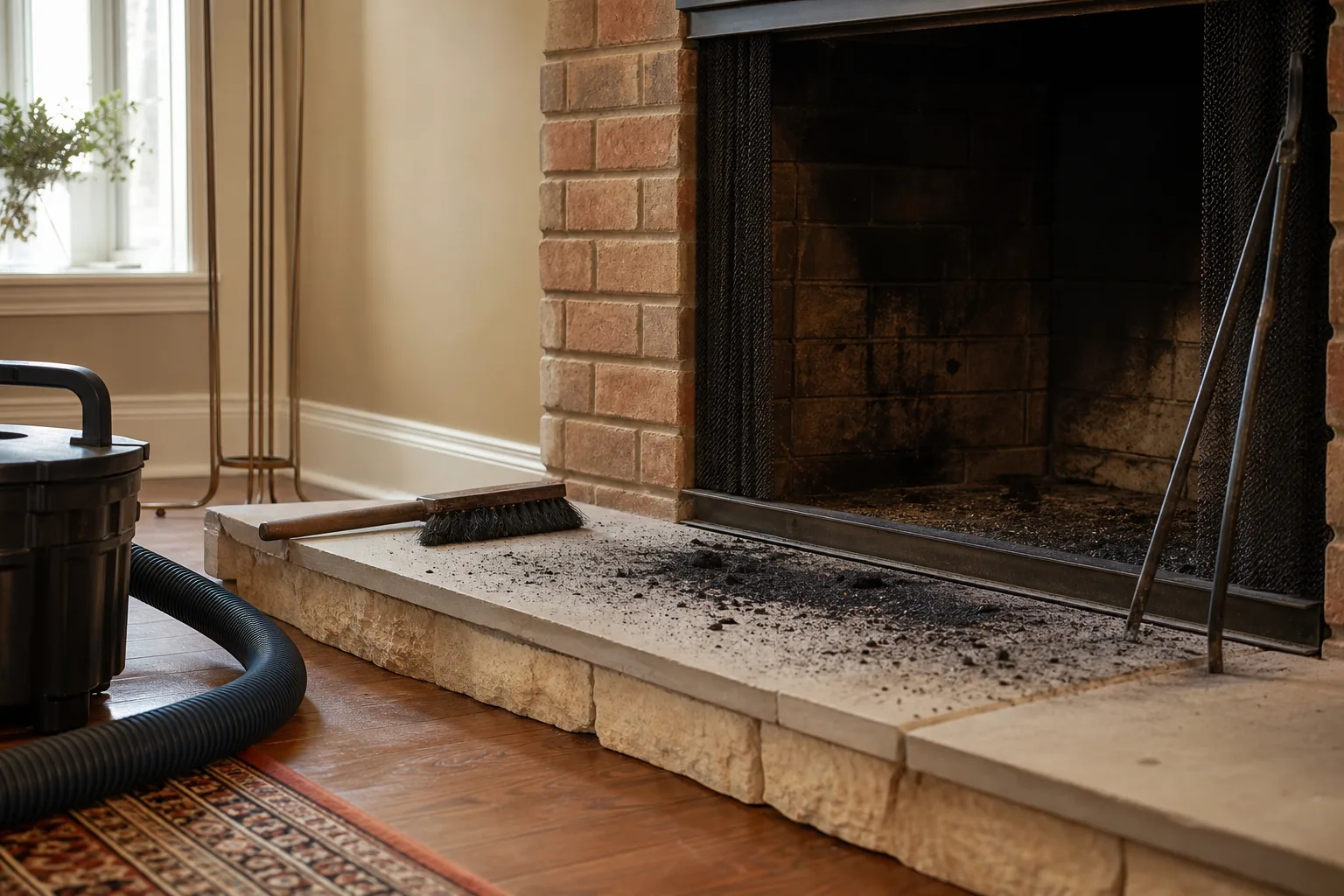
Loose black soot fallen onto the hearth in front of a fireplace opening

Soot falling into the hearth

Deposits letting go of the flue wall. Harmless in itself, and a straightforward sign that there is more up there than there should be.
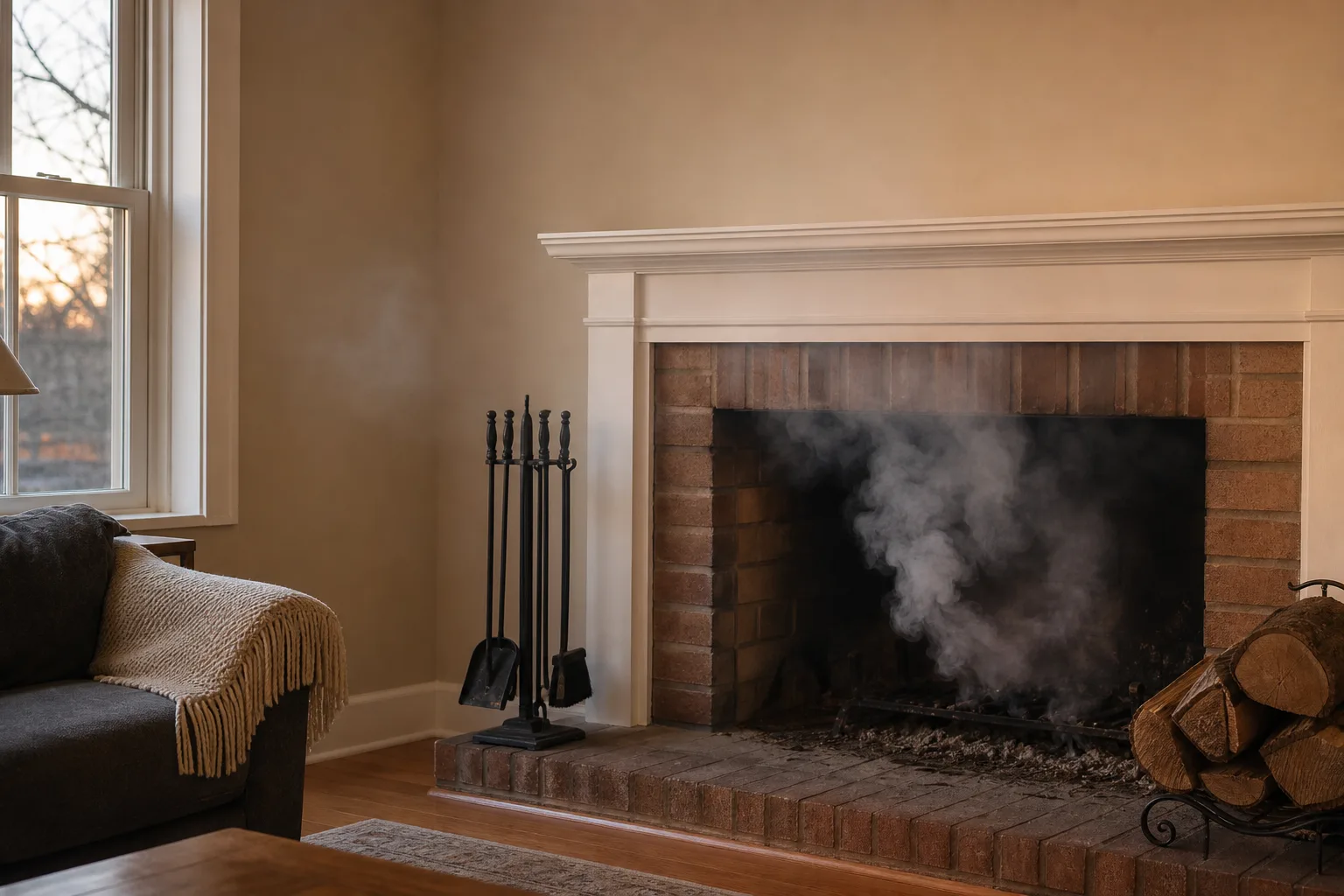
Smoke rolling out of a fireplace opening into a living room at dusk

The fire is hard to light and slow to draw

A narrowing flue moves less air. If a fire that used to catch in minutes now needs coaxing, the passage has changed rather than the wood.
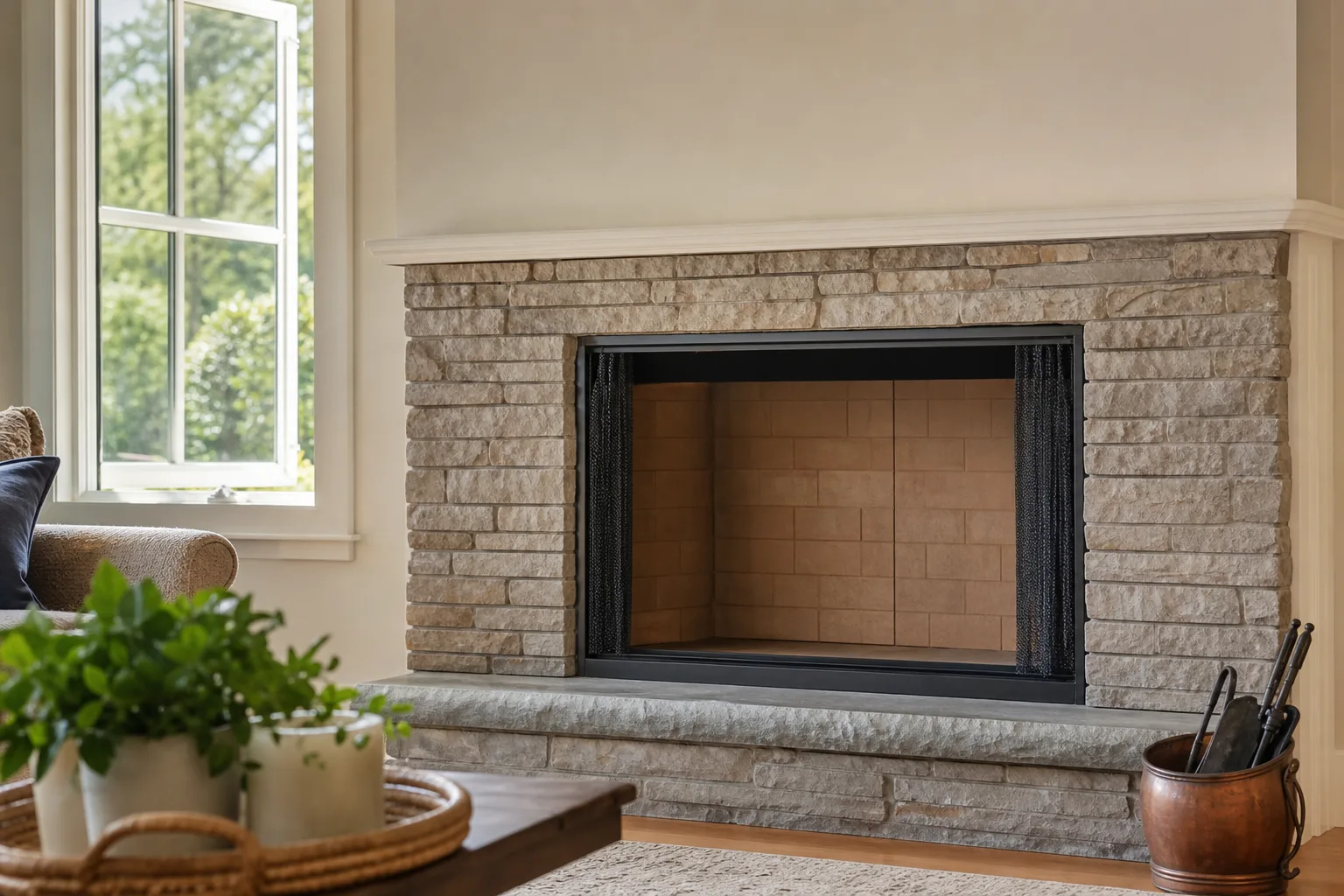
Unused fireplace in a sunlit summer living room with the window open

A campfire smell on warm damp days

Creosote is hygroscopic — it takes up moisture and gives off odour. A fireplace that smells in July has deposits in it, not a ventilation problem.
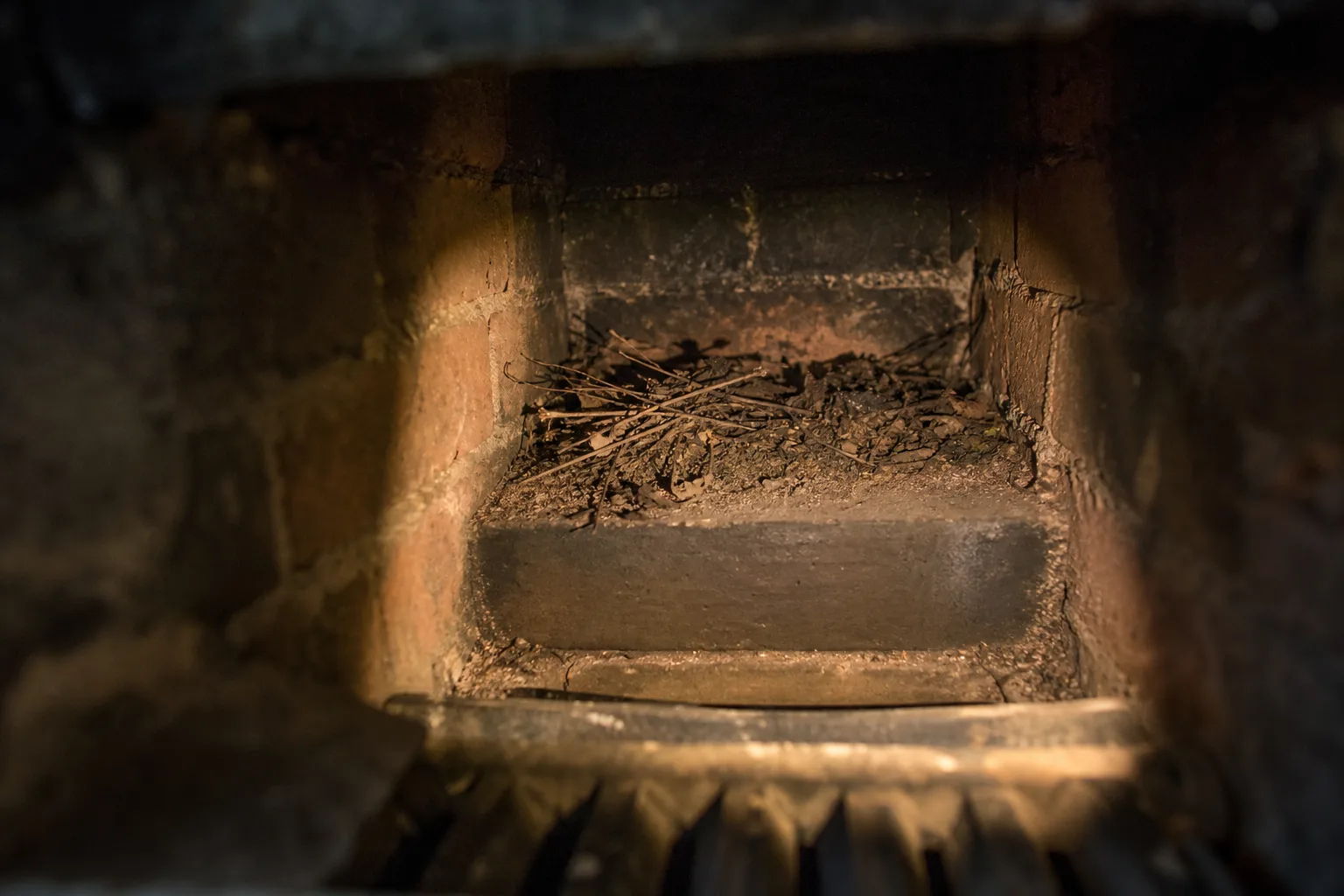
Twigs and nesting material piled on a chimney smoke shelf under torchlight

Birds, chattering or debris in the flue

Twigs on the smoke shelf, or noise in spring. A nest is both a blockage and a fire risk, and it means the cap is missing or broken.
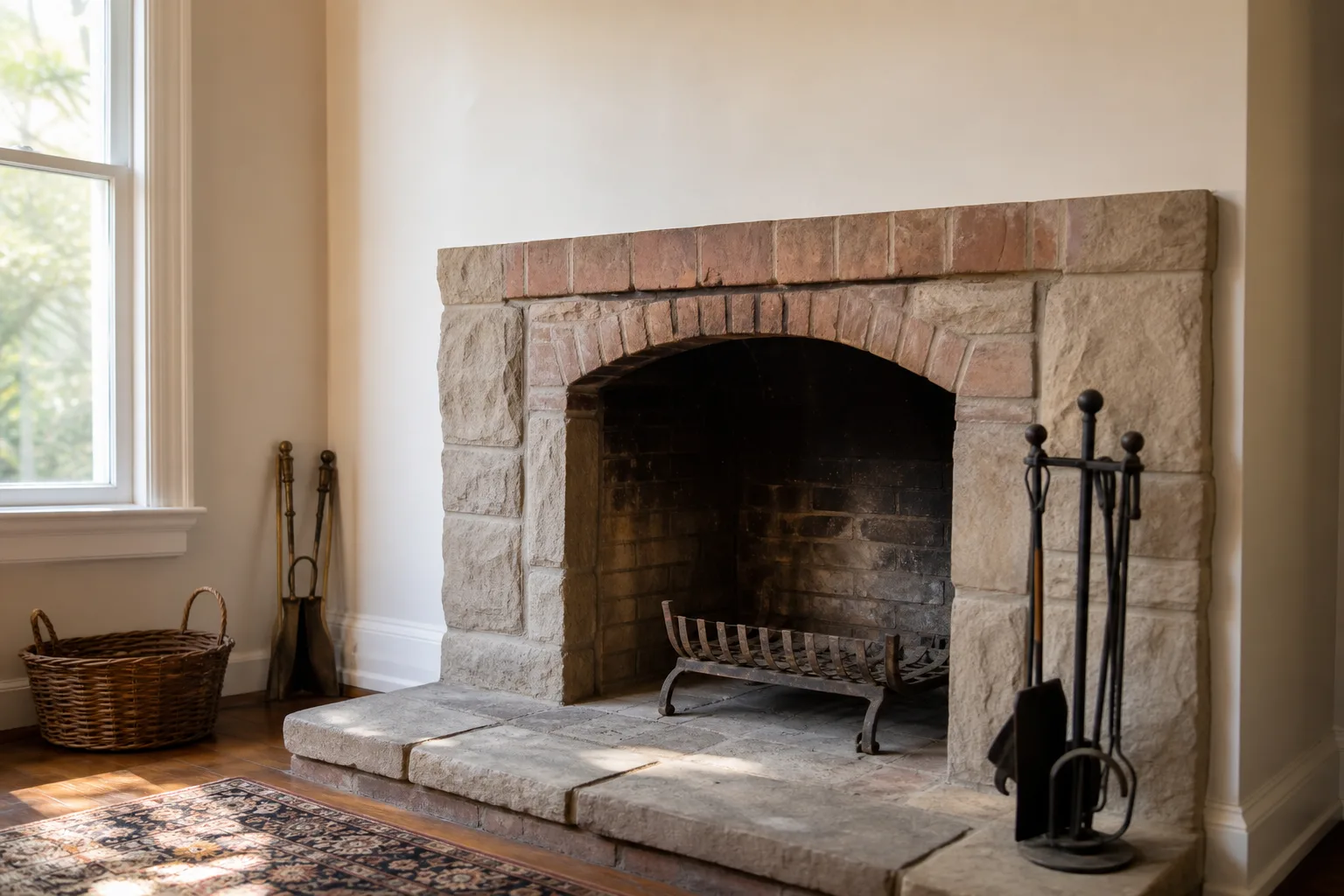
Cold unused fireplace with a dusty grate in an older living room

It has been over a year, or you do not know

NFPA 211 asks for an annual inspection whether or not the fireplace has been used. Inheriting a house with a fireplace nobody has told you about counts.

How we work

How the visit works

The same four steps every time, whatever the repair turns out to be.
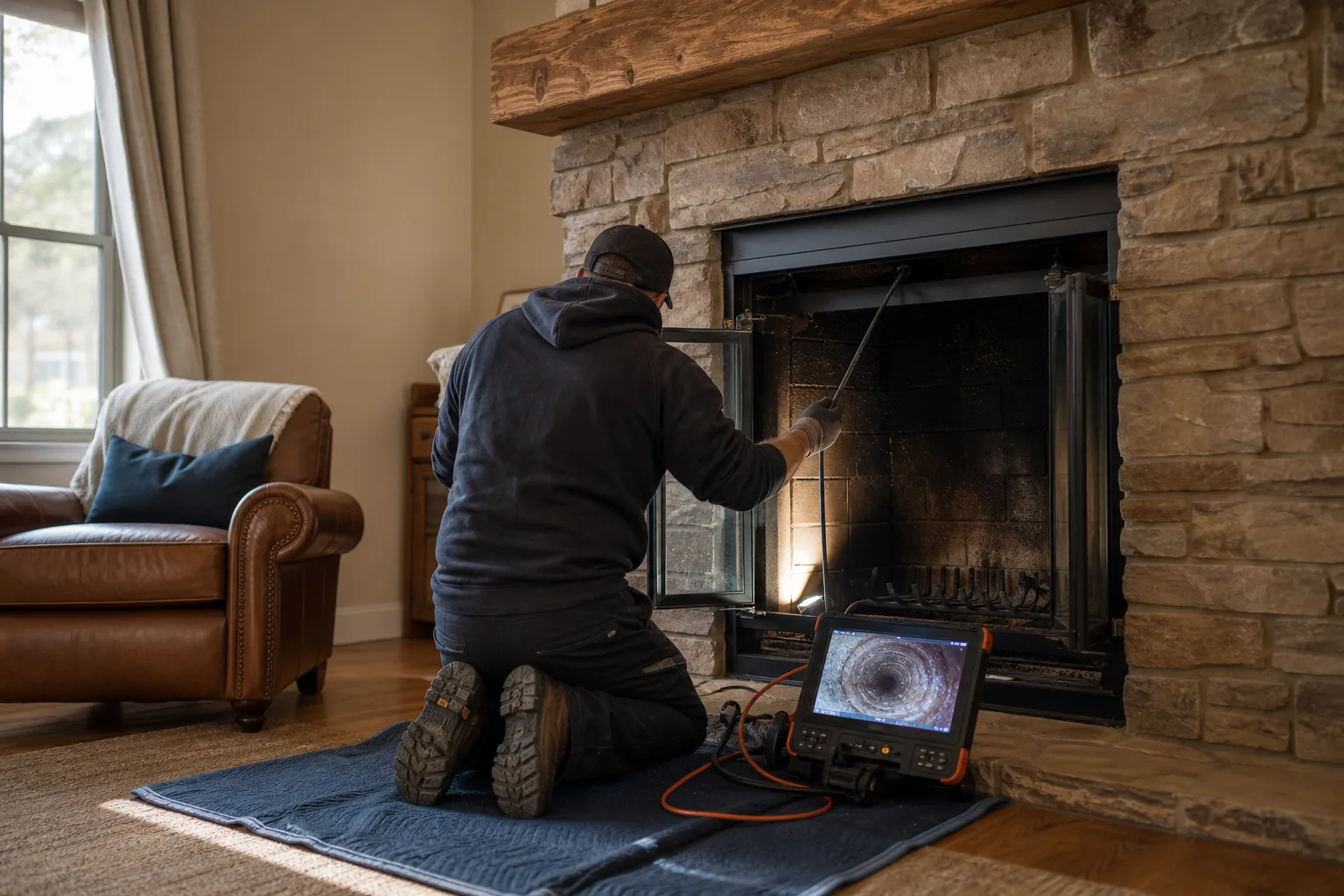
  1. Technician kneeling at an open fireplace feeding an inspection camera up the flue beside a monitor
    01

    Inspection first, always

    A look at the crown, cap, flashing and exterior masonry, then the flue, damper and firebox — with a camera where the job calls for a level 2 scan. Whatever needs work gets shown to you, not just described.
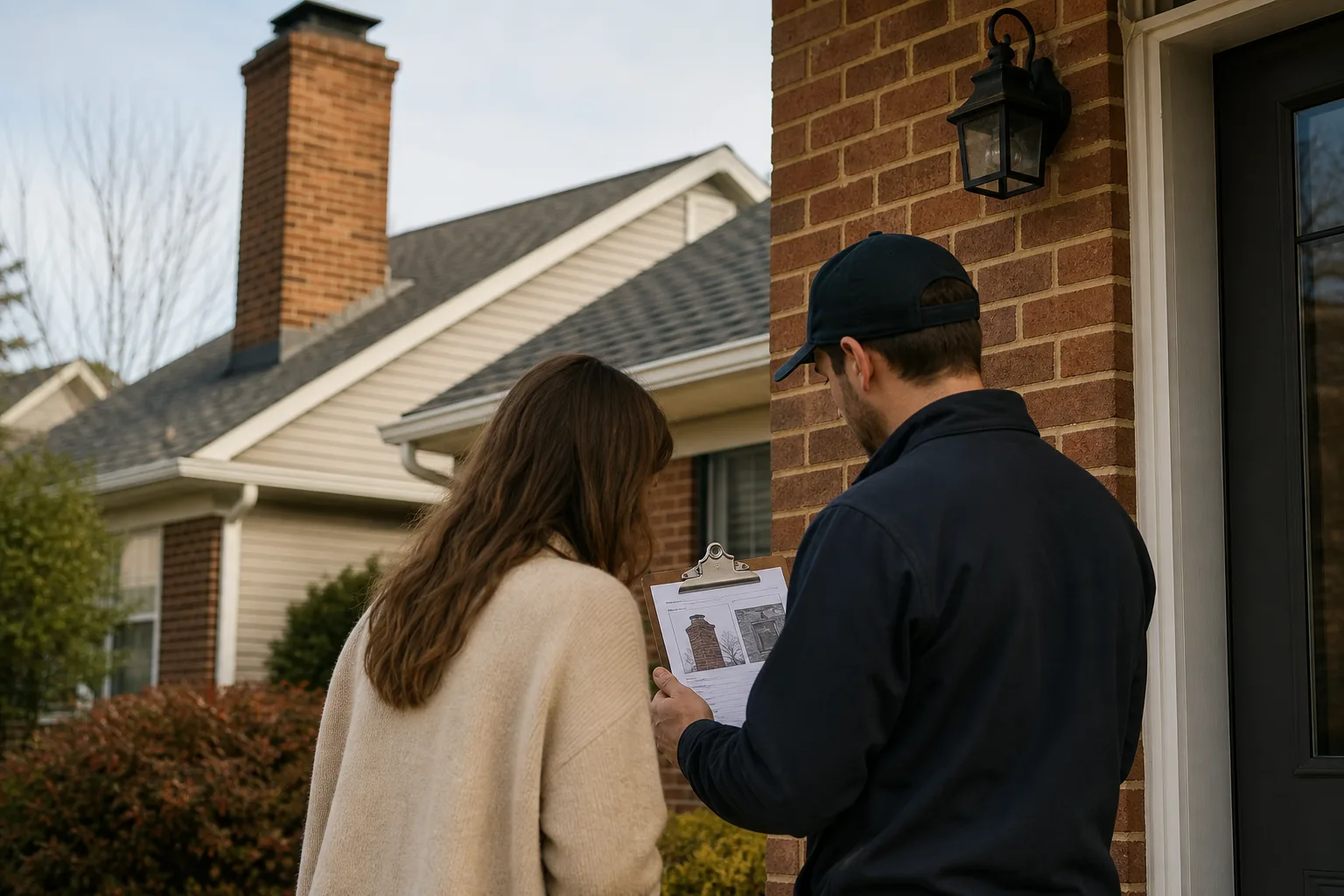
  2. Chimney technician reviewing a printed estimate on a clipboard with a homeowner at the front door
    02

    A written estimate before anything

    Scope, price and what is not included, in writing. Nothing starts until you approve it, and an emergency is not a reason to skip this step.
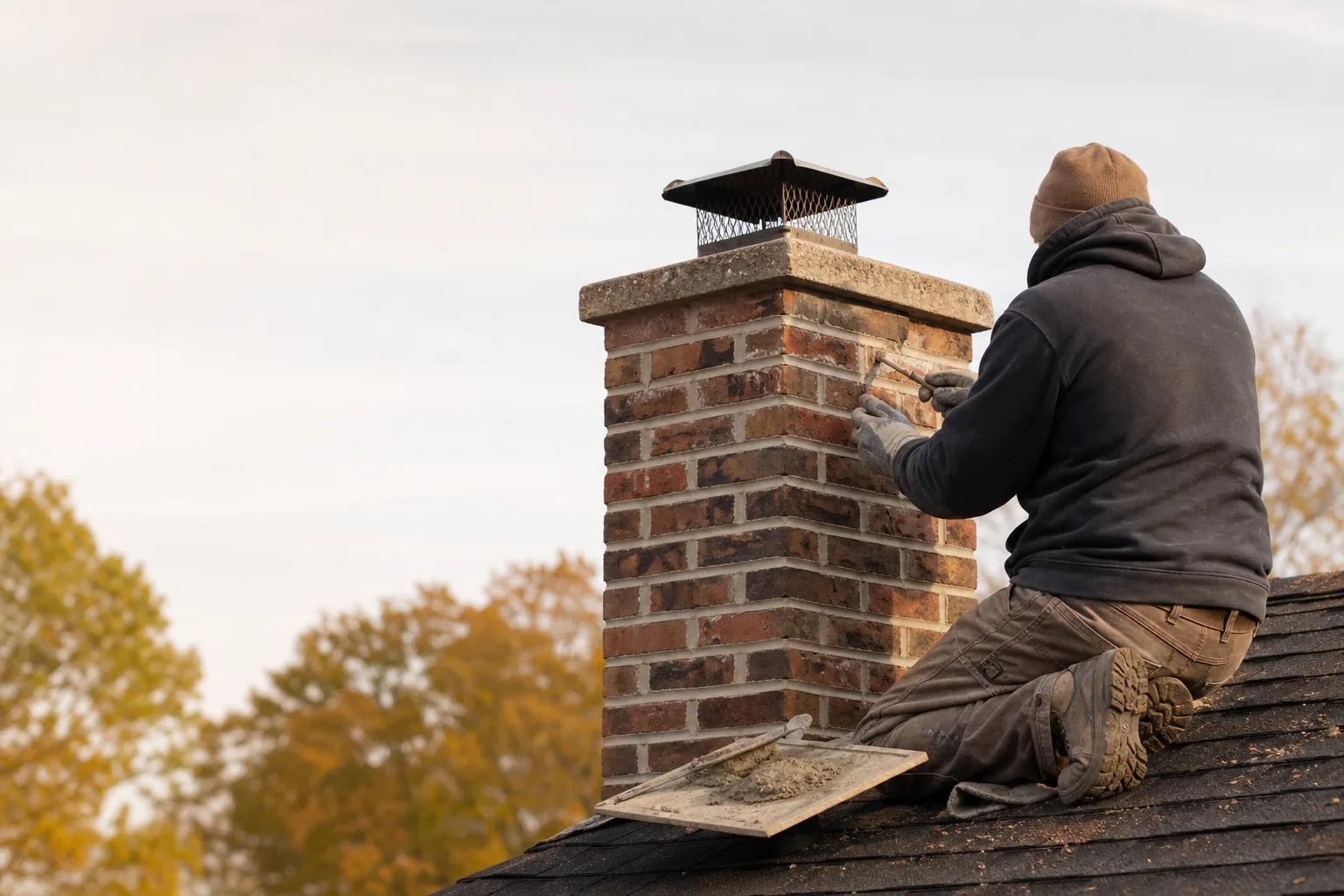
  3. Mason on a rooftop repointing mortar joints on a brick chimney with a trowel
    03

    The work itself

    Matched materials and the manufacturer's spec, not whatever is on the van. Drop cloths down, and the room left as it was found.
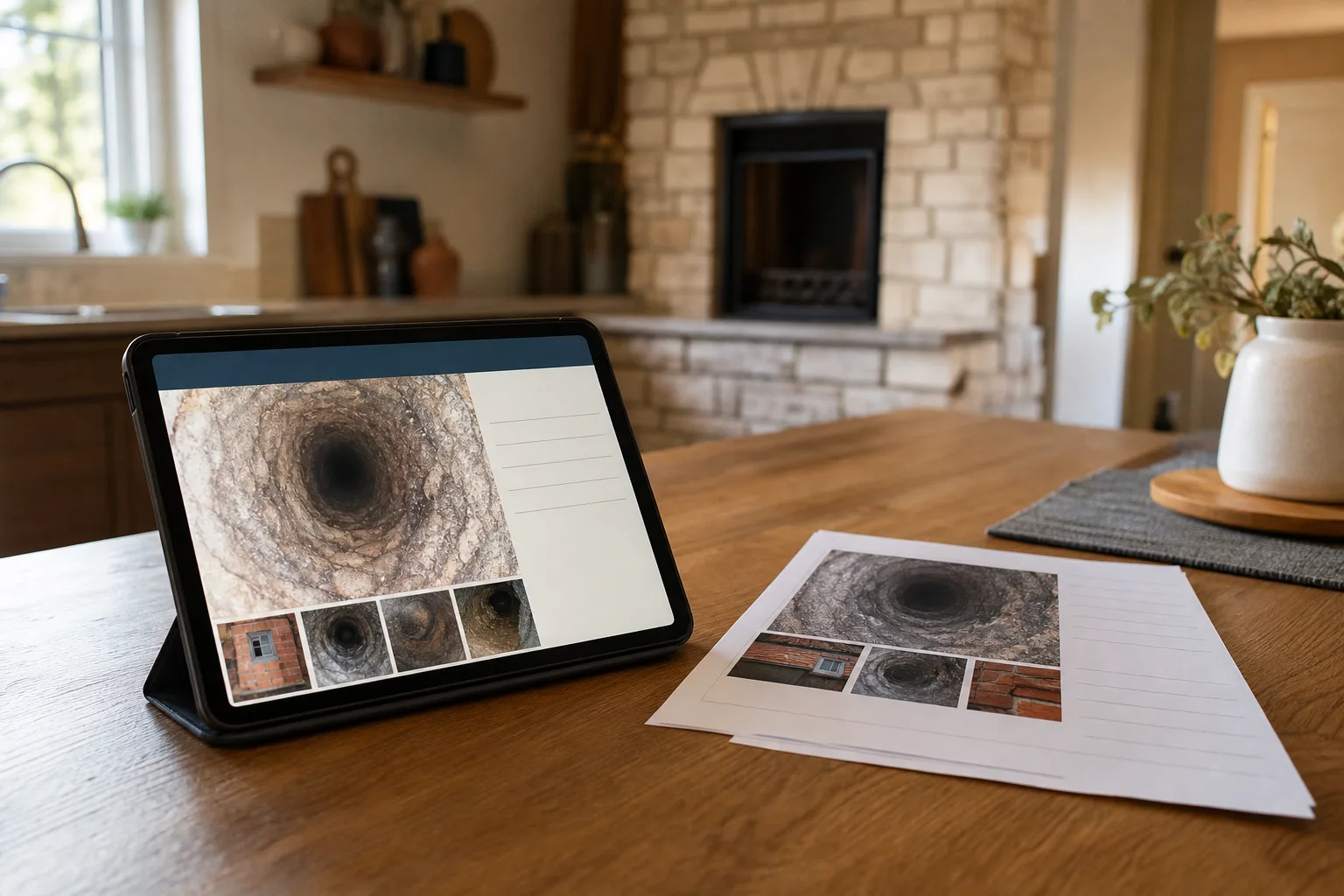
  4. Tablet on a kitchen table showing a chimney inspection report with flue camera still
    04

    Verification and a report

    A second scan after the work, and written findings you can keep, hand to an inspector, or send to an insurer.

What it covers

The jobs this actually includes

Not every job on this list is equally urgent, so they are ordered that way. A cracked liner stops you using the fireplace tonight; waterproofing can wait for a dry week.

  • Full system sweep, firebox to cap

    Safety repair

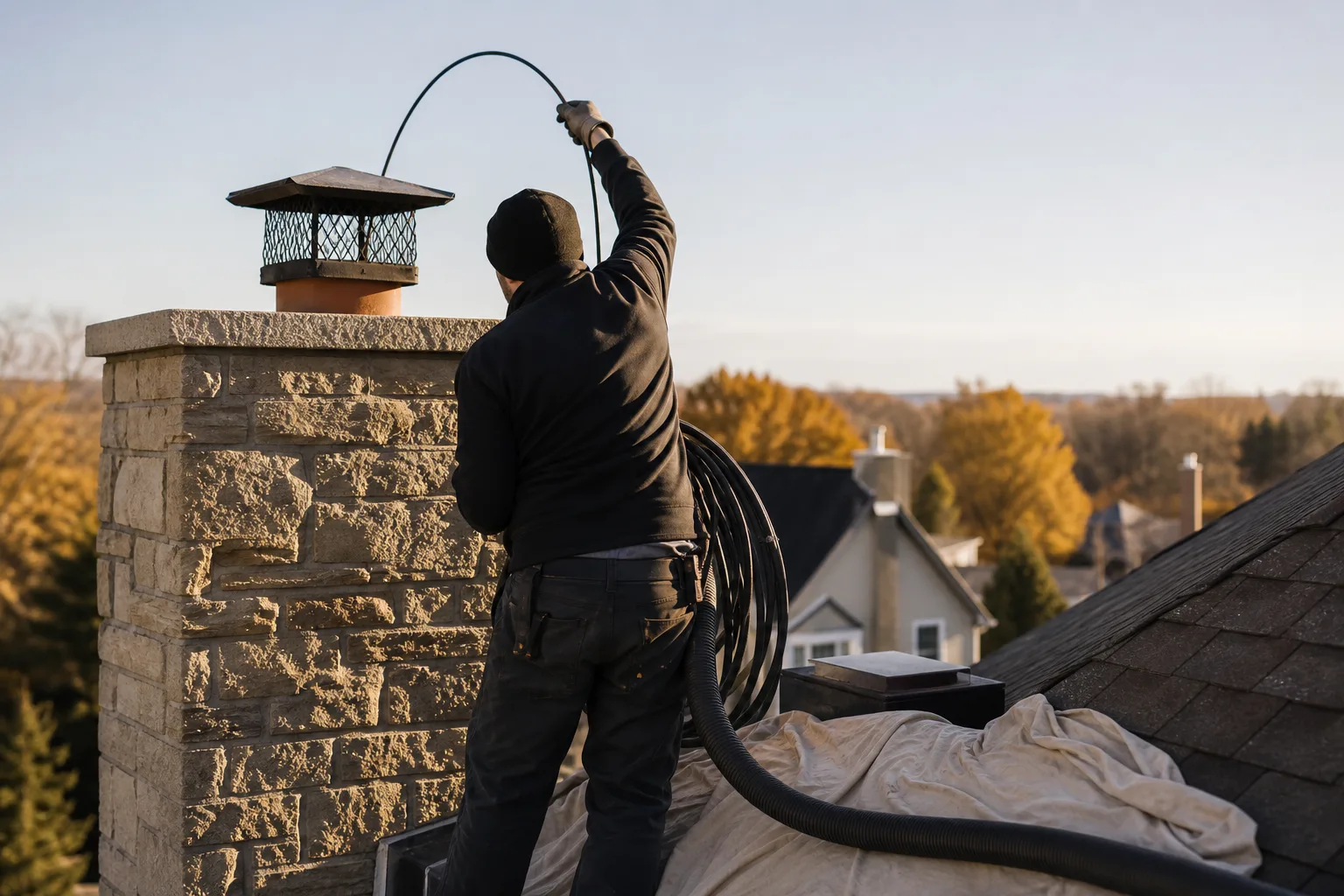
    Rods and brush through the full flue with the hearth sealed and a HEPA vacuum running, then the smoke shelf, damper and firebox cleared by hand. Nothing should end up in the room.

    On site: 1–2 hours

  • Stage three creosote removal

    Safety repair

    Hard glazed creosote that a brush slides over. Treated chemically to break it down, or taken off with a rotary chain head. This is a separate job from a sweep and is priced as one.

    On site: Half a day

  • Nest and blockage removal

    Safety repair

    Nesting material, leaves or a fallen brick cleared from the flue, and a cap fitted so it does not come back. Removal without a cap is a visit you will repeat.

    On site: 1–2 hours

  • Gas and pellet appliance venting

    Structural

    No creosote, but venting still blocks and still needs checking. Gas appliances fail quietly, which is the reason this is on the list at all.

    On site: 1–2 hours

  • Camera scan with the sweep

    Preventive

    A clean flue is the only time the liner can actually be seen. Scanning immediately after brushing is when a cracked tile shows up, rather than a year later.

    On site: Add 30 minutes

Times are for the work itself, not for scheduling. Masonry needs roughly 40°F to cure properly, which is what limits this work in a northern winter rather than whether a crew is free.
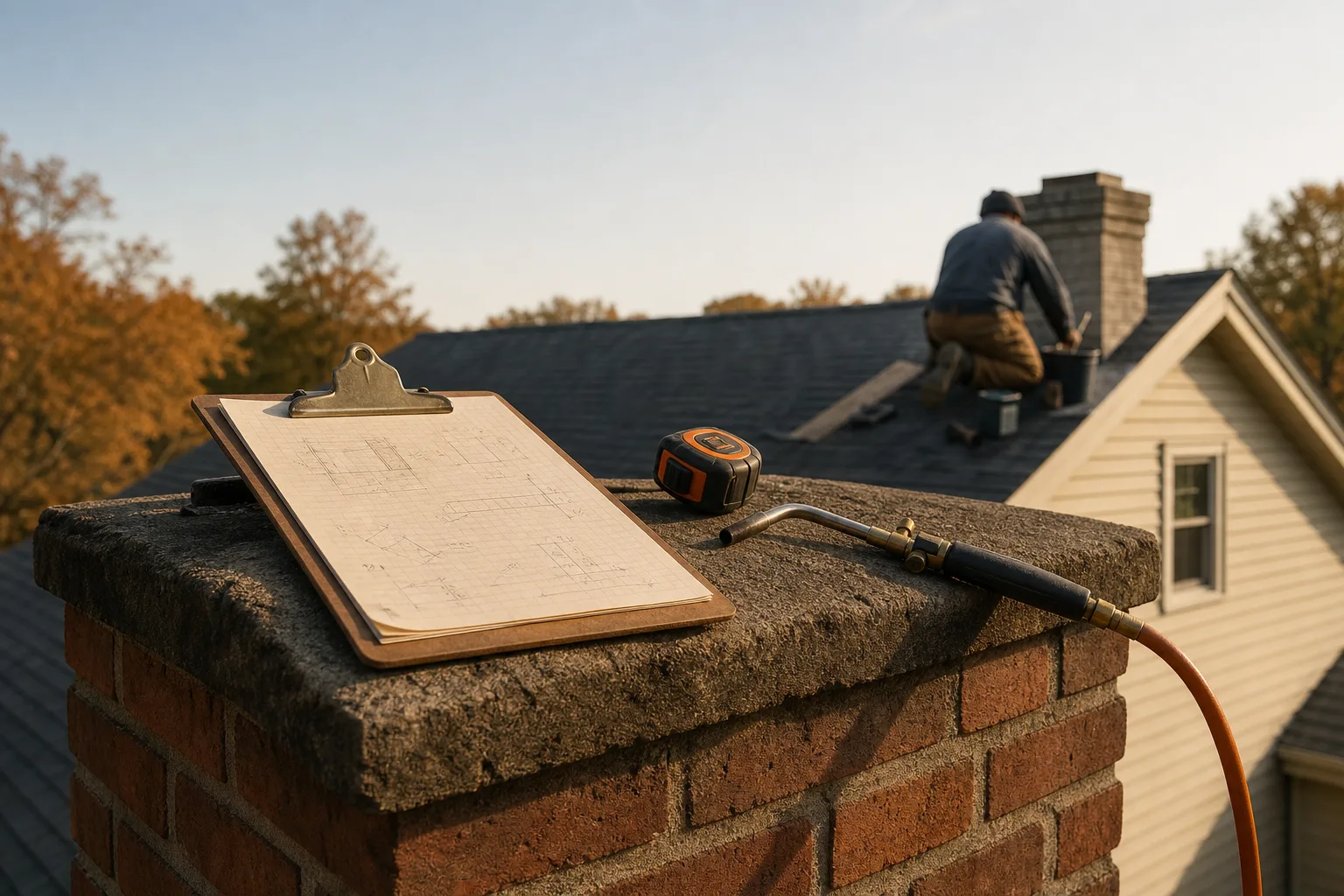
Handwritten estimate on a clipboard resting on a brick hearth beside a tape measure and torch
What drives the price

Why chimney sweep quotes vary so much

  • How many flues the chimney serves, and whether each needs doing
  • Creosote stage — stage three is a different job, not a longer sweep
  • Whether access is from the roof, and how steep that roof is
  • Whether the appliance is an open fire, a stove, or a sealed insert
  • Whether anything is nesting in there, which changes the visit

A standard annual sweep on a single open fireplace is a flat, modest price and includes the inspection. What changes the number is stage three creosote, a second flue, or a blockage that has to come out before brushing can start. Any of those get quoted before work begins rather than added at the end.
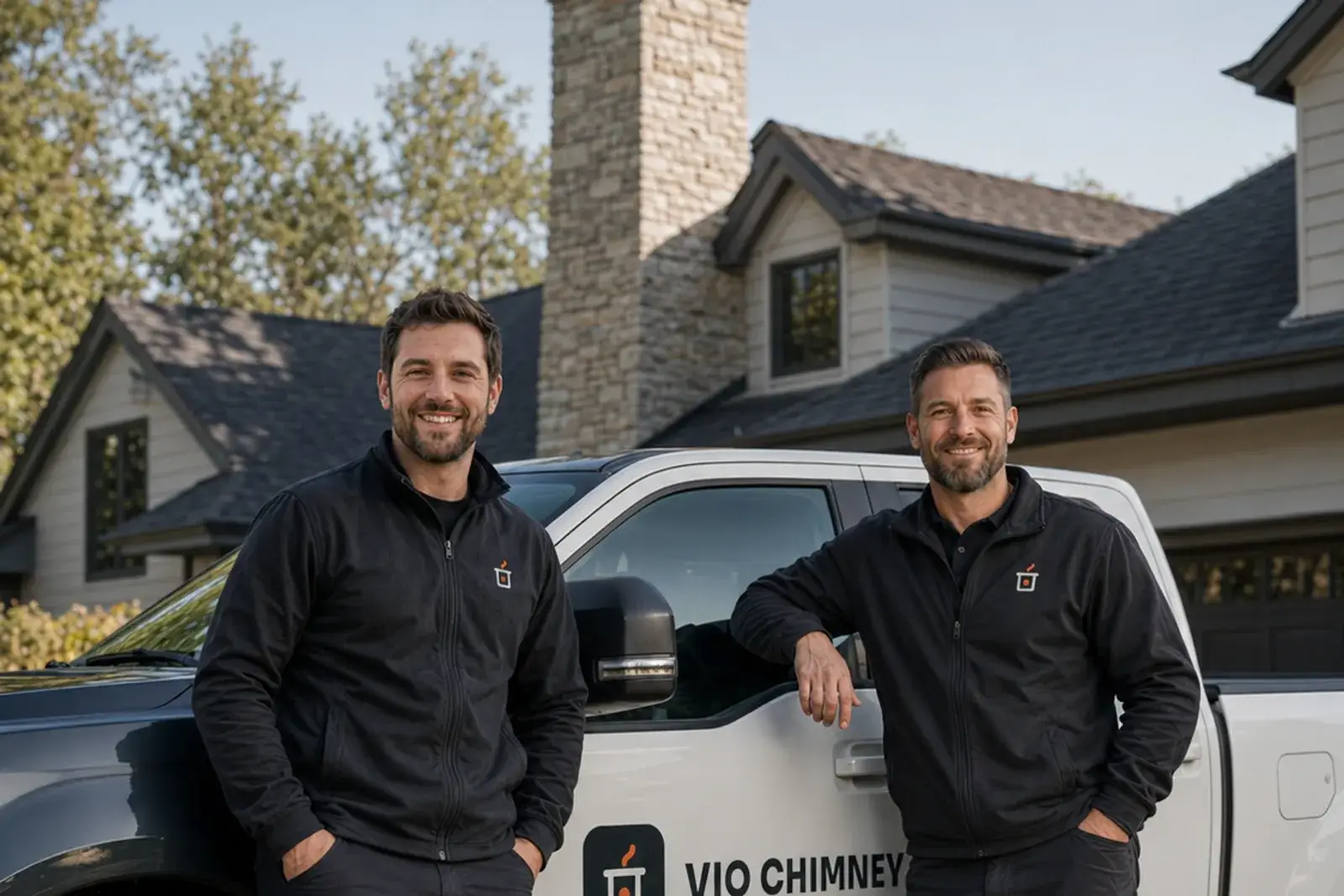
Ethan Miller and Ryan Carter of VIO CHIMNEY beside a branded service truck
Who we are

The people behind every visit

Founded by Ryan Carter in 2019. Every page you read here is reviewed by Ethan Miller, our chimney specialist. A written estimate before any work, and the findings in writing whether or not anything needs doing.

More about who we are →
Capped brick chimney silhouetted against a soft dusk sky above a tidy residential rooftop

The VIO Standard

  • A written estimate first
  • License and insurance checked
  • Nothing starts without your OK

Common questions

How often should a chimney be swept?

Once a year is the standard, and NFPA 211 asks for an annual inspection whether or not you have used the fireplace. If you burn most nights through the winter, or you burn softwood or unseasoned logs, twice a season is more realistic — those produce creosote far faster than dry hardwood. A fireplace used a handful of times a year still needs the annual look, because nesting and masonry damage do not care how often you light it.

What is the difference between a chimney sweep and a chimney cleaning?

Nothing, in practice. They are two names for the same visit, and you can book either and get the same work. The trade calls it sweeping; most homeowners call it cleaning. What actually varies between companies is whether the visit includes an inspection and a camera scan of the flue, which is the part worth asking about before you book.

How much does a chimney sweep cost?

A standard annual sweep on one open fireplace is a flat modest price in most markets, and a good one includes the Level 1 inspection. Where it goes up is stage three glazed creosote, which needs chemical treatment or a rotary head and is a different job; a second flue in the same stack; or a blockage that has to be removed before a brush can pass. All three get quoted before anyone starts.

Will a chimney sweep make a mess?

It should not. The hearth gets sealed, a HEPA vacuum runs the whole time to hold the fireplace under negative pressure, and drop cloths go down over the floor. Soot in the room means the seal was not right. It is a fair thing to ask about when you book, and a fair thing to raise if it happens.

Do gas fireplaces need a chimney sweep?

They do not build creosote, so there is nothing to brush in the usual sense, but the venting still needs an annual check. Gas appliances vent into flues that block with nests and debris exactly like wood ones do, and a partially blocked gas vent produces carbon monoxide with no smoke to warn you. The visit is shorter, and skipping it is the more dangerous shortcut of the two.

let's get it on the calendar.

Tell us your ZIP code and what you need. The pro who covers it quotes the job in writing, and nothing starts until you approve the number.

(513) 655-6702Get my estimate