



Chimney service

Dryer Vent Installation

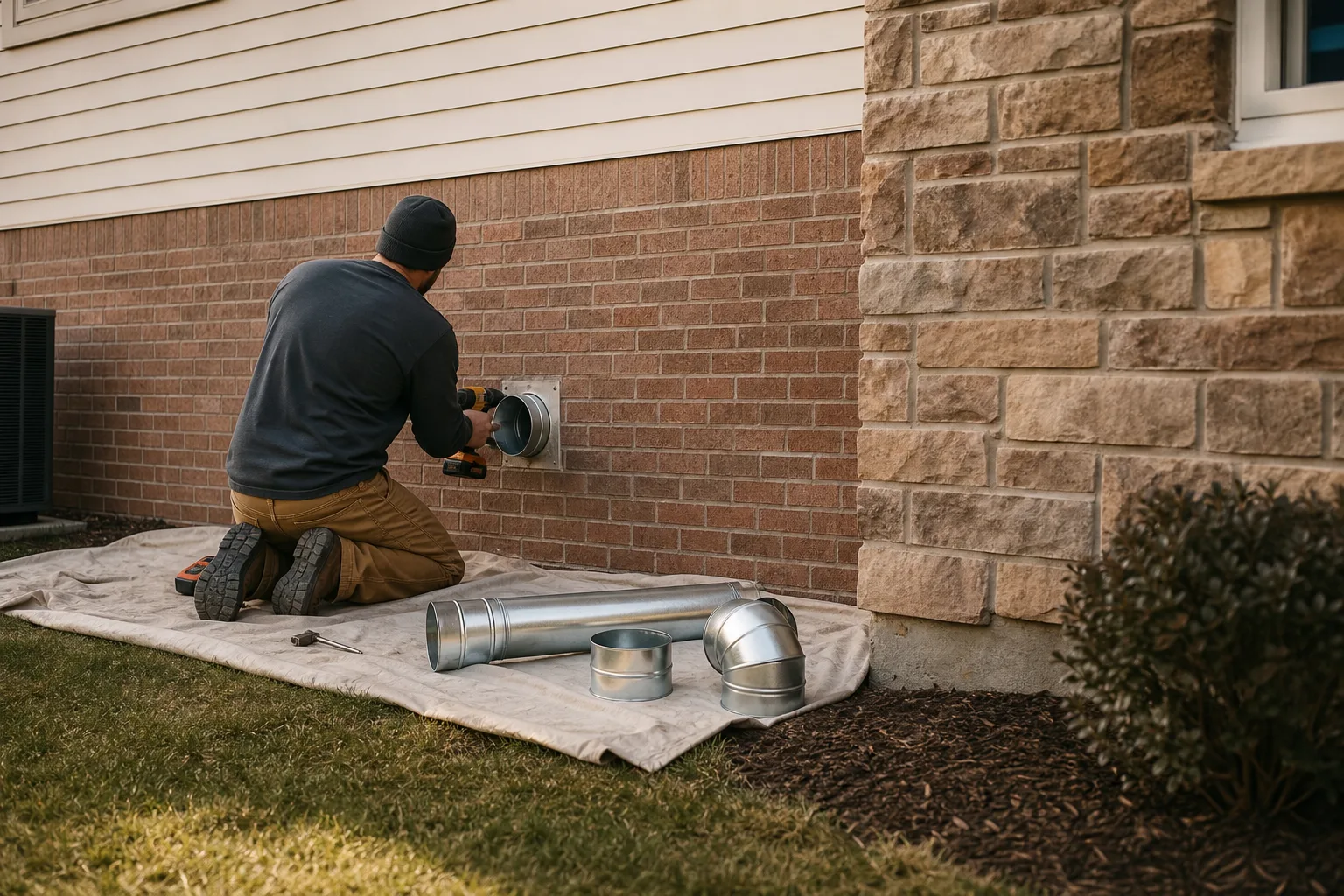
A new duct run in rigid metal, routed the short way out. The decisions made on install day are the ones you live with every year after.

5.0/5
8 verified reviews
Ethan MillerEthan Miller · Chimney specialist, VIO CHIMNEYLast reviewed July 20265 min read
The short answer

The route you choose today is the route you clean every year for the next twenty.

Dryer vent installation is mostly two decisions and a little work. Material: rigid metal duct, never the ribbed foil concertina hose, because every ridge catches lint by design and code has not allowed it in concealed runs for years. And route: the shortest practical path to an outside wall. Code allows 35 feet of duct, but every 90-degree elbow subtracts five feet from that budget and every bend is where lint packs. A run done properly needs cleaning once a year; a run done badly needs it twice and never really works.

What not to use

Foil hose is the whole problem

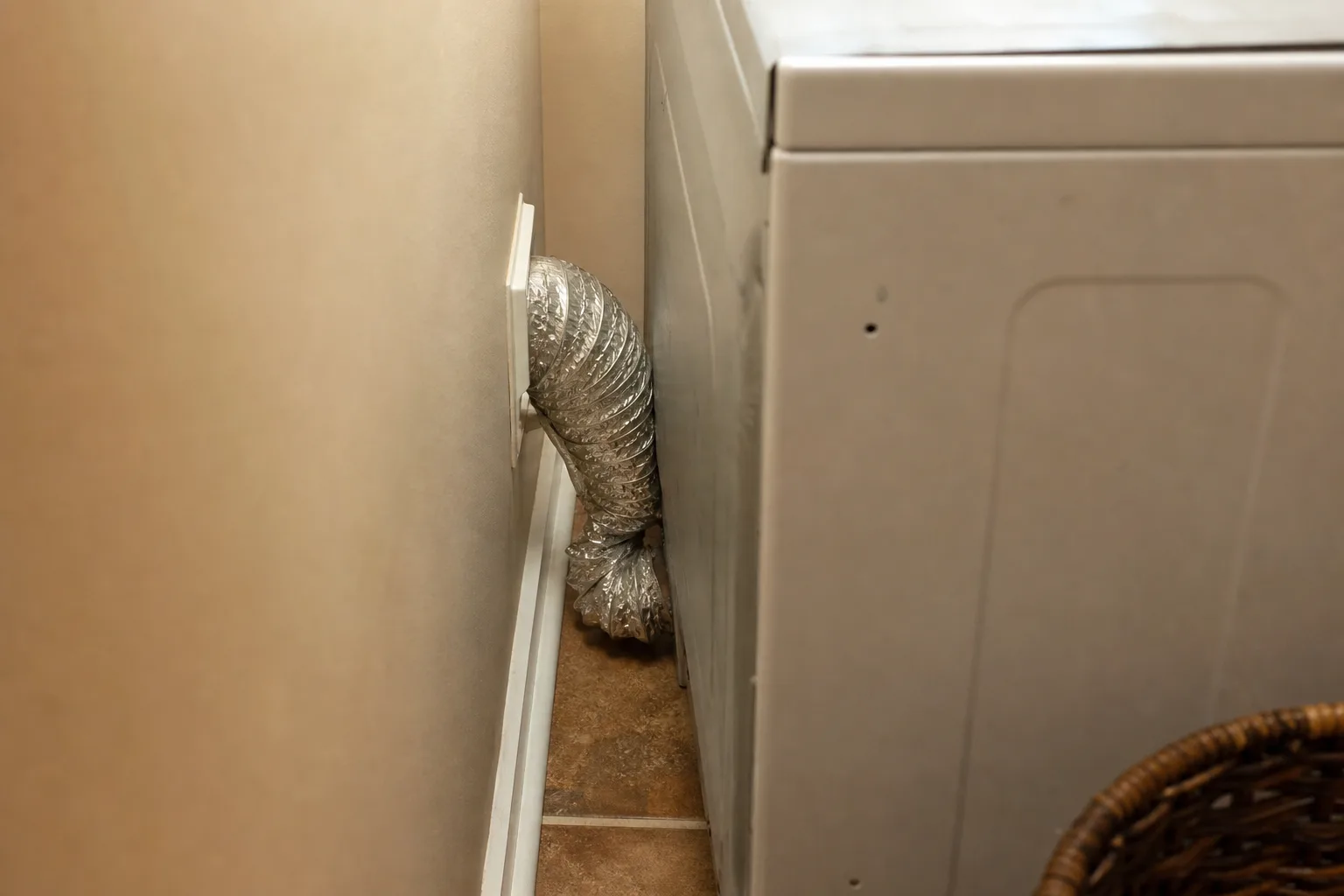
Crushed silver foil dryer hose kinked tightly behind a clothes dryer

Every ridge in a concertina hose catches lint, and it crushes the moment the machine is pushed back. Rigid metal is the fix and it is not expensive.

On this pageSigns you need this3 sections+2
  1. Signs you need this
  2. The jobs this includes
  3. Common questions
Do you have this problem?

Signs you need dryer vent installation

Crushed silver foil dryer hose kinked tightly behind a clothes dryer

The duct behind the dryer is foil hose

The silver concertina kind. It catches lint on every ridge, kinks when the machine is pushed back, and is not permitted in a concealed run. Replacing it is the highest-value dryer job there is.
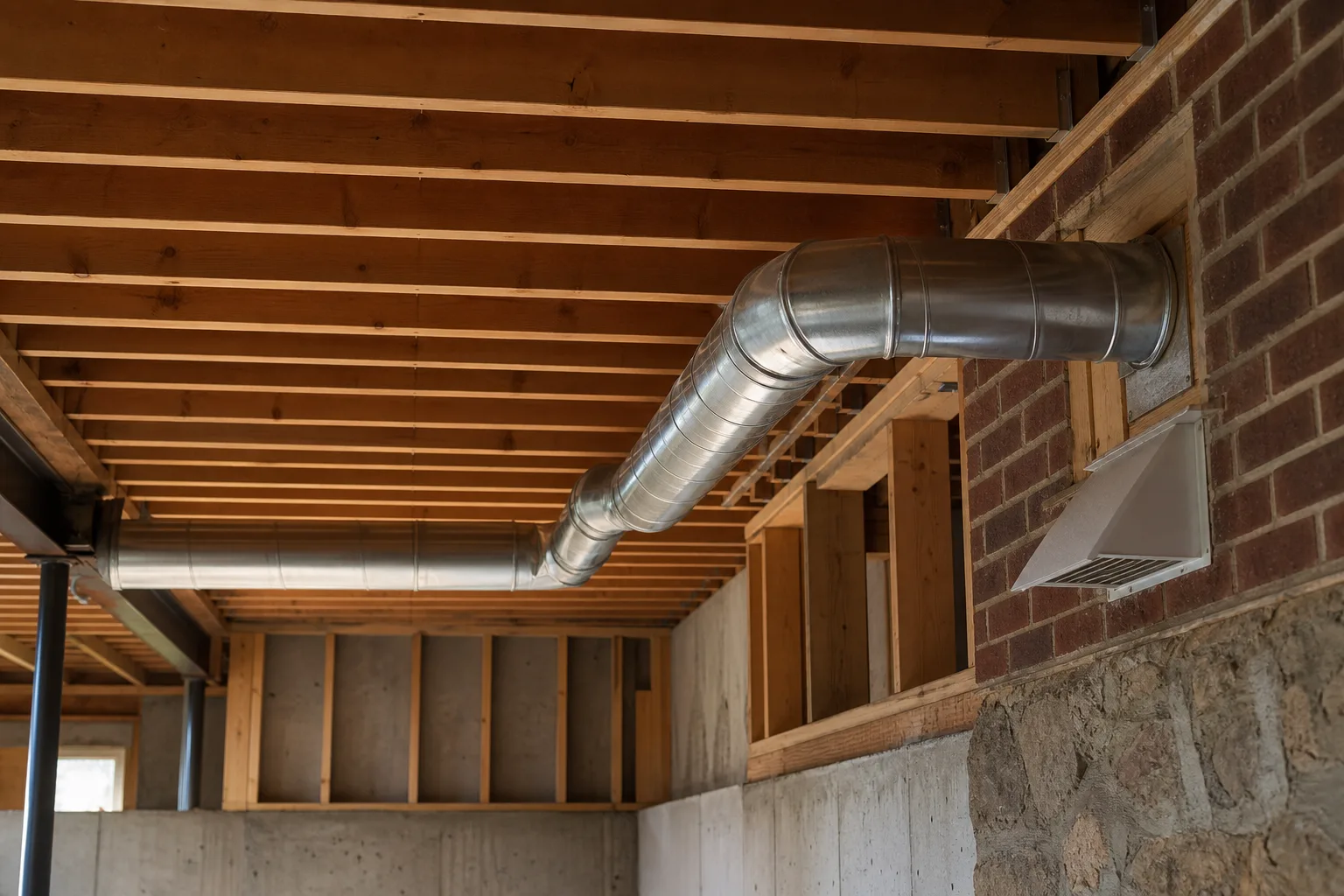
Long dryer duct run bending through several elbows across a basement ceiling

The run turns through several bends

Code allows 35 feet, but each 90-degree elbow costs you five of them. A run with four elbows has effectively used half its budget before it has gone anywhere.
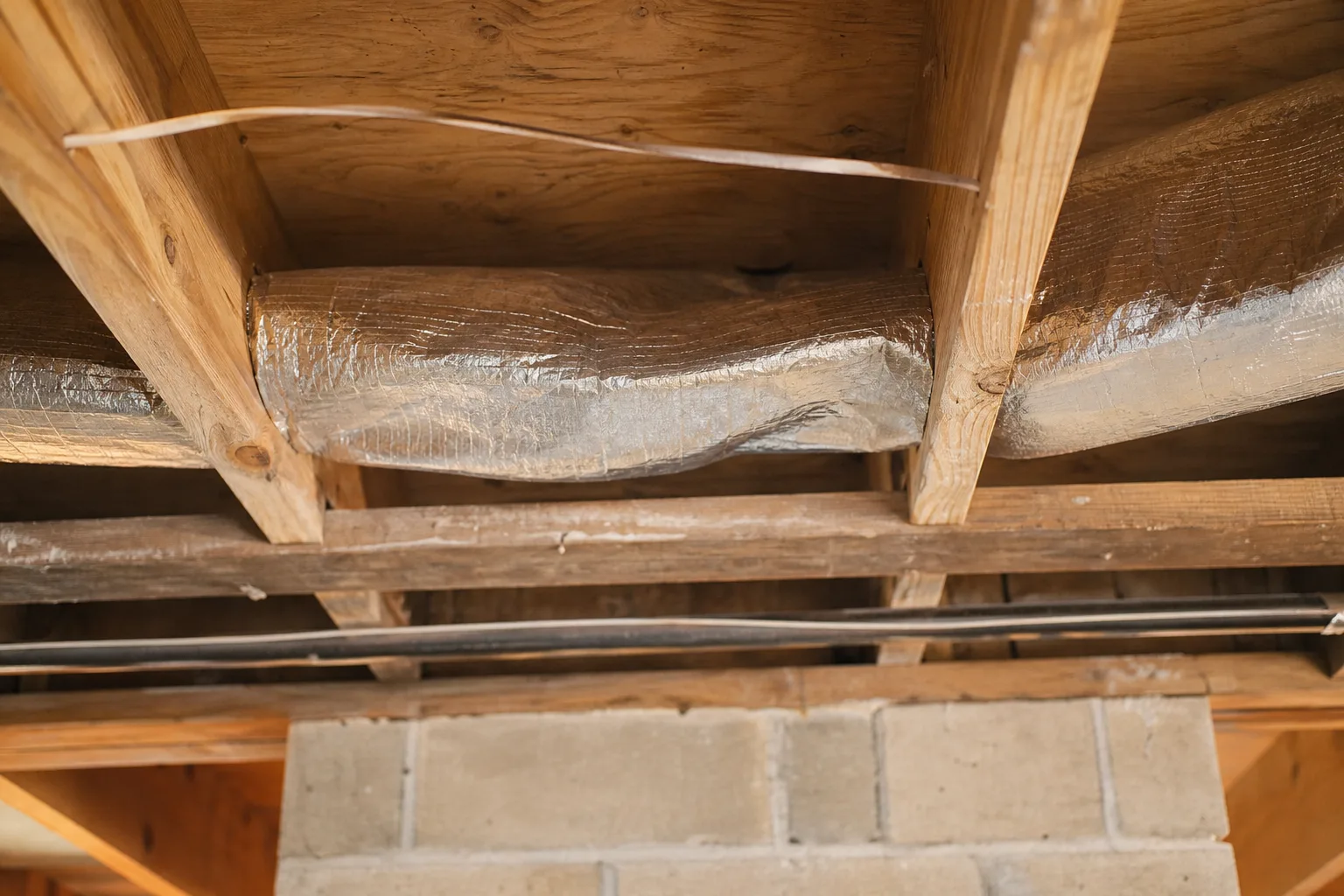
Dryer duct flattened where it passes a floor joist in an unfinished basement

Duct crushed where it crosses a joist

A flattened section is a permanent restriction that no amount of cleaning fixes. It gets rerouted or replaced, not brushed.

Condensation fogging a laundry room window beside a running dryer with humid air

You are moving the laundry room

A new location means a new route, and this is the one moment when the short path is still available. It is far cheaper to plan than to fix later.
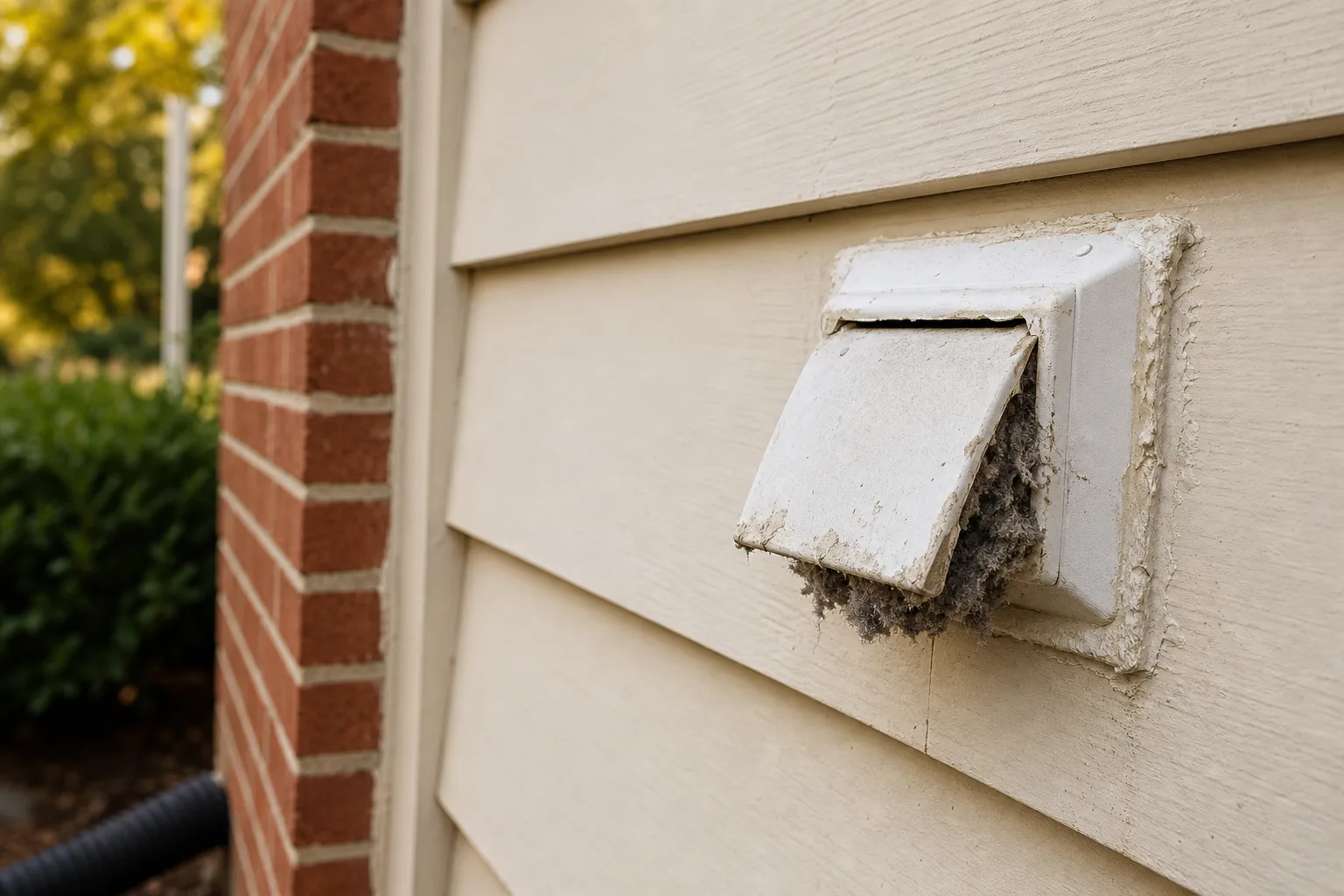
Paint-sealed dryer vent hood on lap siding with the flap clogged shut

The vent hood has a mesh screen

Fine mesh clogs solid within a season — lint needs a clear opening, not a filter. A louvred or damper hood is what belongs on a dryer.
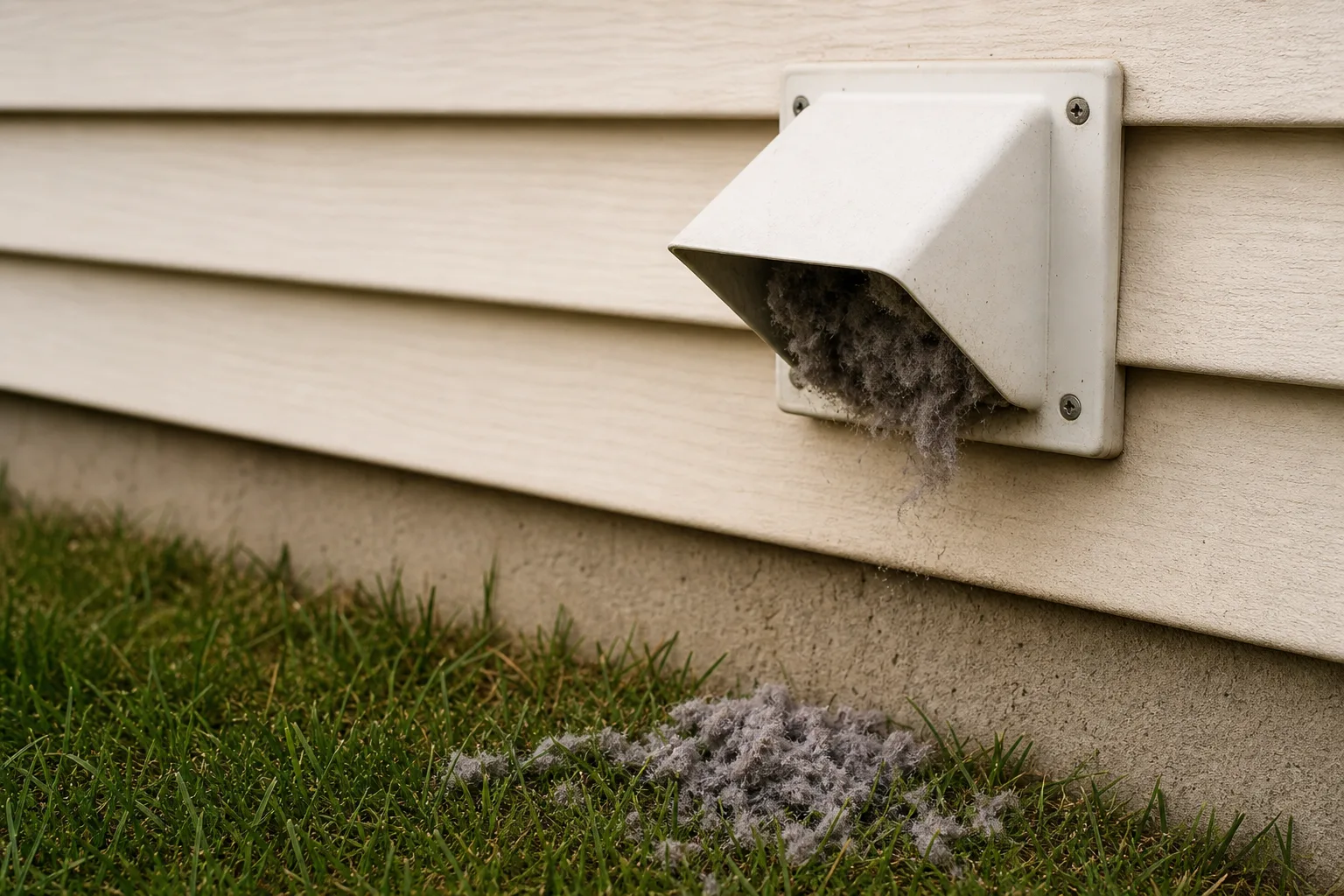
Grey lint caught around an exterior dryer vent hood flap on house siding

The dryer vents into a crawl space or attic

Not to code anywhere, and it puts warm wet air into the structure. This one is a rebuild of the run rather than a repair to it.

How we work

How the visit works

The same four steps every time, whatever the repair turns out to be.
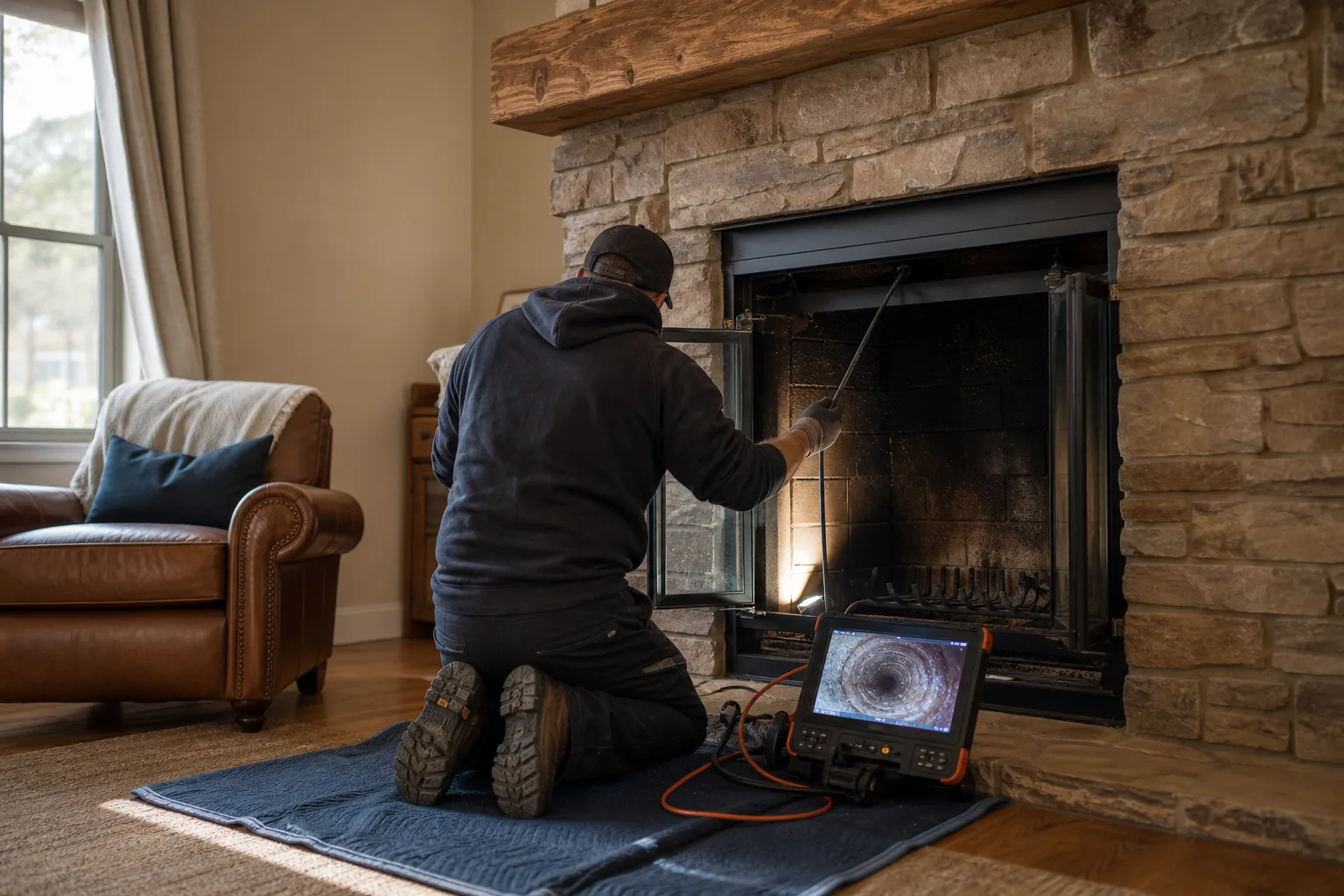
  1. Technician kneeling at an open fireplace feeding an inspection camera up the flue beside a monitor
    01

    Inspection first, always

    A look at the crown, cap, flashing and exterior masonry, then the flue, damper and firebox — with a camera where the job calls for a level 2 scan. Whatever needs work gets shown to you, not just described.

  2. Chimney technician reviewing a printed estimate on a clipboard with a homeowner at the front door
    02

    A written estimate before anything

    Scope, price and what is not included, in writing. Nothing starts until you approve it, and an emergency is not a reason to skip this step.
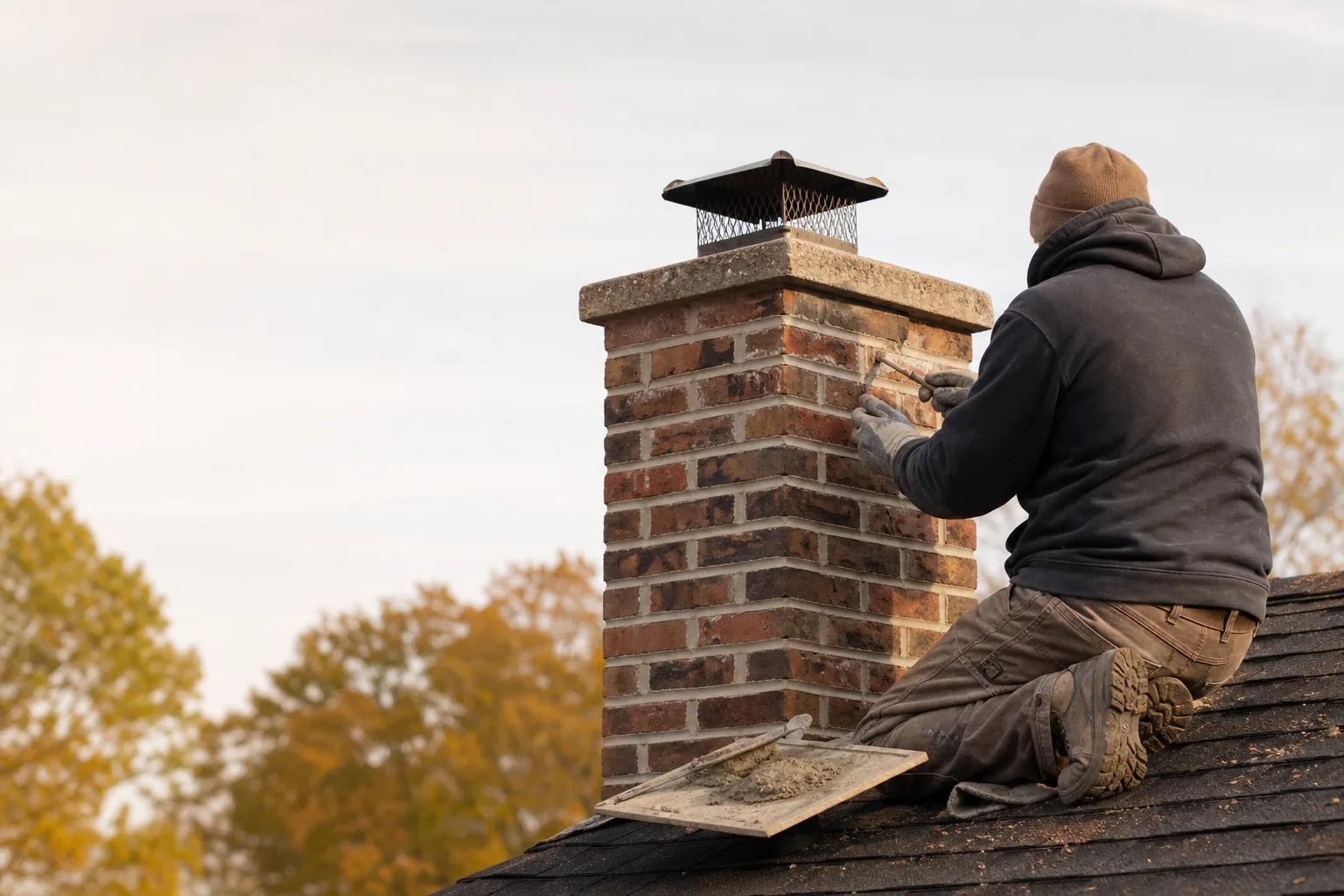
  3. Mason on a rooftop repointing mortar joints on a brick chimney with a trowel
    03

    The work itself

    Matched materials and the manufacturer's spec, not whatever is on the van. Drop cloths down, and the room left as it was found.

  4. Tablet on a kitchen table showing a chimney inspection report with flue camera still
    04

    Verification and a report

    A second scan after the work, and written findings you can keep, hand to an inspector, or send to an insurer.

What it covers

The jobs this actually includes

Not every job on this list is equally urgent, so they are ordered that way. A cracked liner stops you using the fireplace tonight; waterproofing can wait for a dry week.

  • Replacing foil hose with rigid metal

    Safety repair

    Rigid galvanised or aluminium duct through the concealed run, with a short listed transition connector at the machine. The single change that most improves a dryer's performance and its risk.

    On site: Half a day

  • Rerouting a long or over-elbowed run

    Structural

    Finding a shorter path to an outside wall. Sometimes the honest answer is that the laundry is in the wrong place for the outside wall it was given, and a new penetration is cheaper than cleaning the old run forever.

    On site: Half a day

  • New exterior wall penetration and hood

    Structural

    Cored through the wall, sleeved, sealed and flashed, with a louvred or damper hood outside. Done badly this is a water entry point, so the sealing matters as much as the duct.

    On site: Half a day

  • Roof-terminated runs

    Stops water

    Sometimes the only option in a middle-of-the-house laundry. It needs a proper roof cap and it will need cleaning more often, because lint has to travel up. Worth knowing before it is chosen.

    On site: Half a day

  • Booster fan for a run that cannot be shortened

    Preventive

    A listed dryer booster fan where the geometry genuinely will not allow a shorter path. It is the last resort rather than the first, because it adds a part that itself needs servicing.

    On site: Half a day

Times are for the work itself, not for scheduling. Masonry needs roughly 40°F to cure properly, which is what limits this work in a northern winter rather than whether a crew is free.
Handwritten estimate on a clipboard resting on a brick hearth beside a tape measure and torch
What drives the price

Why dryer vent installation quotes vary so much

  • The length of the run and how many bends it has to turn
  • Whether an existing path can be reused or a new penetration is needed
  • Wall construction — brick and stone core very differently from siding
  • Whether the run is accessible or boxed into a finished ceiling
  • Whether it terminates at a wall or has to go up to a roof cap

Swapping foil hose for rigid metal on an accessible short run is a half day and inexpensive. A new exterior penetration, or rerouting through a finished ceiling, costs meaningfully more because of the making-good rather than the duct. Roof terminations are the most expensive and the ones worth avoiding if a wall is reachable.

Ethan Miller and Ryan Carter of VIO CHIMNEY beside a branded service truck
Who we are

The people behind every visit

Founded by Ryan Carter in 2019. Every page you read here is reviewed by Ethan Miller, our chimney specialist. A written estimate before any work, and the findings in writing whether or not anything needs doing.

More about who we are →
Capped brick chimney silhouetted against a soft dusk sky above a tidy residential rooftop

The VIO Standard

  • A written estimate first
  • License and insurance checked
  • Nothing starts without your OK

Common questions

How long can a dryer vent run be?

The standard allowance is 35 feet of total duct, and that number is not the whole story because bends spend it. Each 90-degree elbow counts as roughly five feet and each 45 as two and a half. So a run with four right-angle turns has used twenty of its thirty-five before covering any distance. Manufacturers publish their own maximums for a given machine, and where those are shorter than code, the manufacturer's figure is the one that applies.

Can I use flexible foil duct for a dryer vent?

Only as a short listed transition connector between the machine and the wall, and even there rigid or semi-rigid is better. In the concealed run — through walls, ceilings or floors — it is not permitted, for two good reasons: every ridge catches lint, and it crushes flat the moment somebody pushes the dryer back against the wall. If your concealed run is foil, replacing it is the most worthwhile thing on this page.

How much does dryer vent installation cost?

Replacing foil with rigid metal on a short accessible run is a half-day job at the low end of this trade. A new exterior wall penetration costs more, mostly for coring, sealing and making good rather than for duct. Routing through a finished ceiling, or terminating at the roof, is higher again. The two things that move the number most are wall construction and whether the path already exists.

Can a dryer vent go through the roof?

It can, and sometimes a middle-of-the-house laundry leaves no alternative. It needs a proper roof cap rather than a wall hood, and it should be planned knowing that lint has to travel upward, so the run will need cleaning more often than a wall-terminated one. If an outside wall is reachable at reasonable cost, take it — the difference in maintenance over twenty years is not small.

Where should a dryer vent not terminate?

Not into a crawl space, attic, garage, soffit or wall cavity — all of which put warm wet lint-laden air into the structure, and all of which we still find. Not into a chimney flue, ever. And not somewhere the discharge blows straight back at a window, an air intake or a walkway. The termination needs a hood with a backdraft flap and no fine mesh screen.

let's get it on the calendar.

Tell us your ZIP code and what you need. The pro who covers it quotes the job in writing, and nothing starts until you approve the number.

(513) 655-6702Get my estimate