



Next-day appointments
Call or book today and we'll do our best to get a pro to you tomorrow.
Chimney service
The short answer
A rust stain running down your chimney chase is the cover telling you it has already failed.
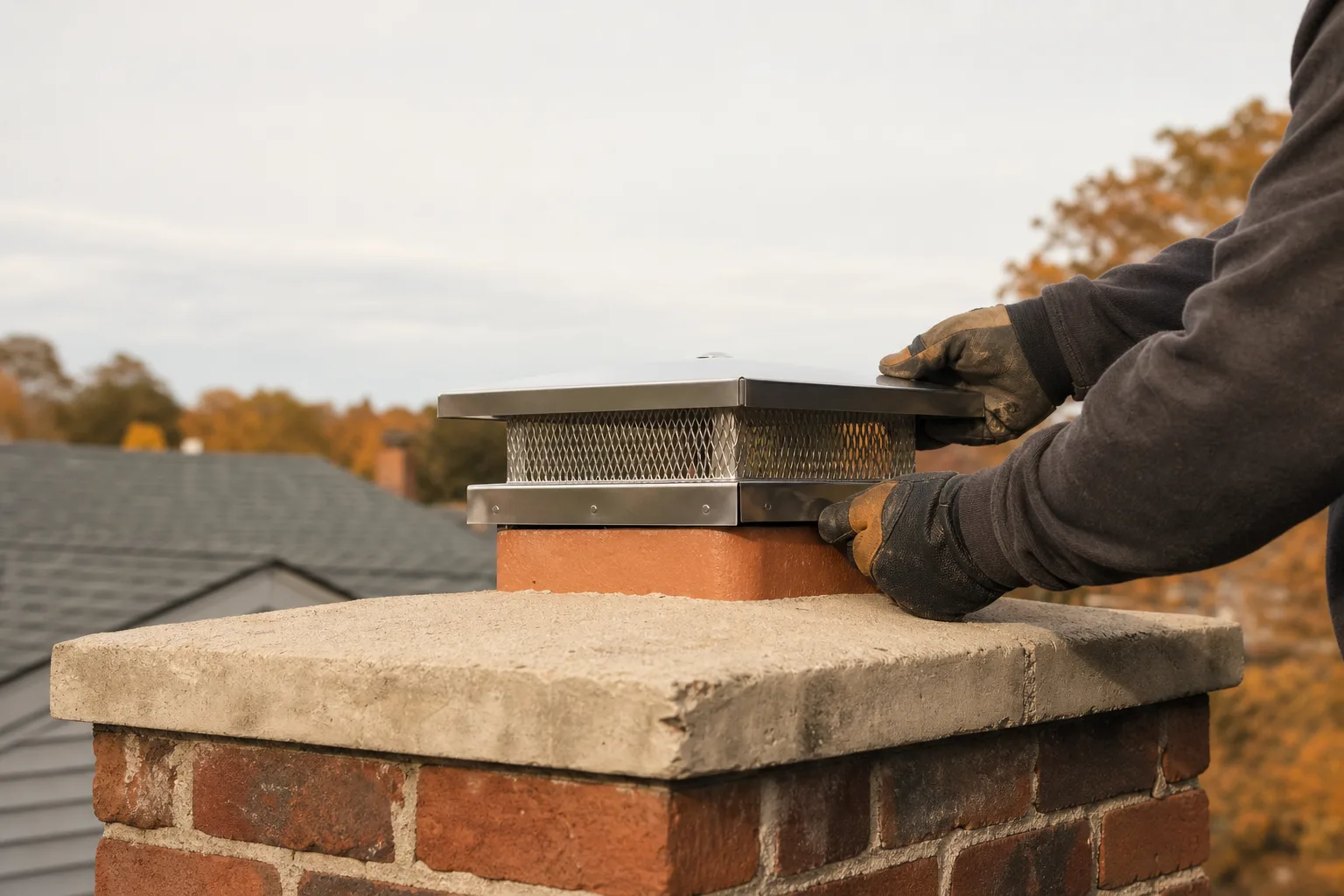
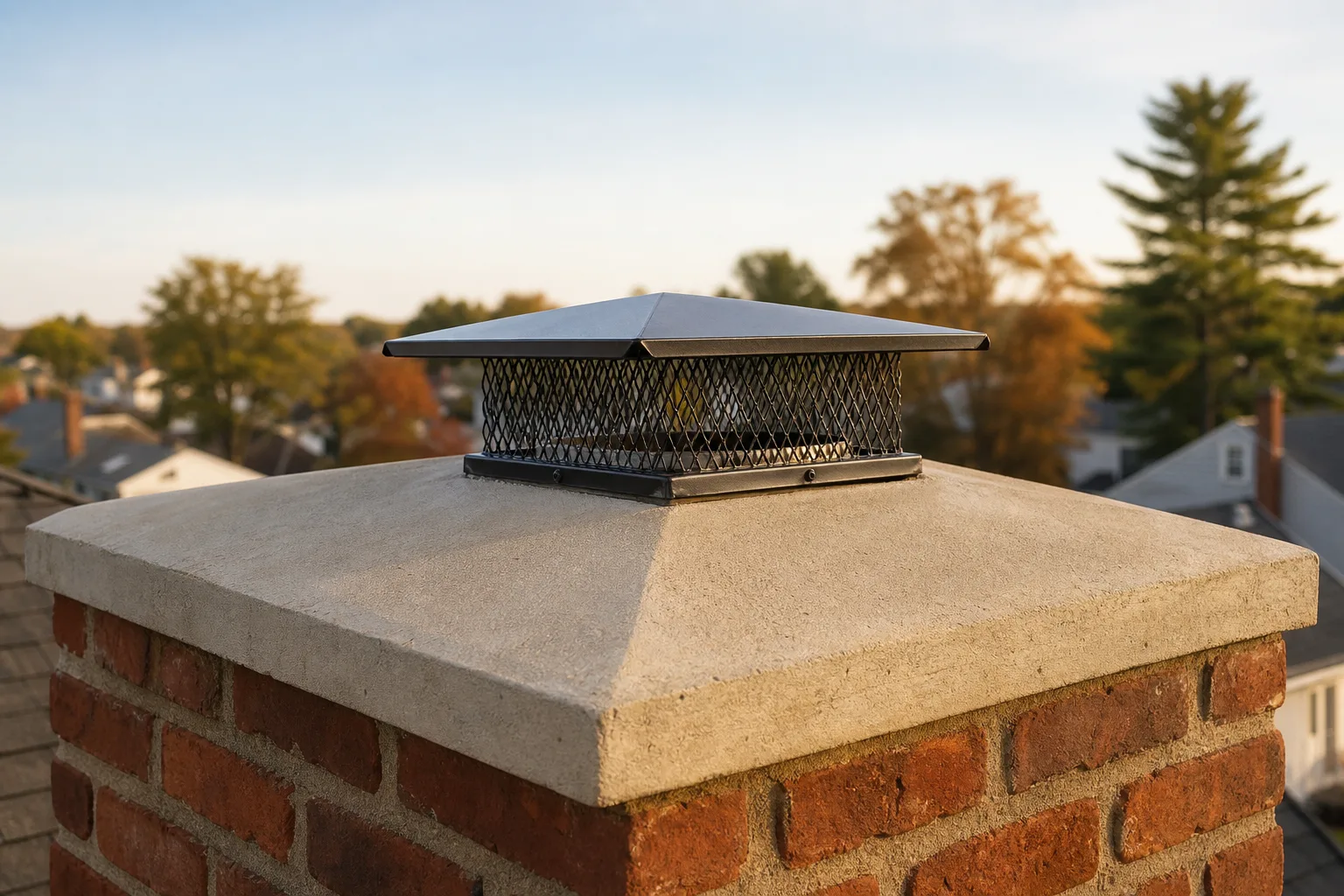
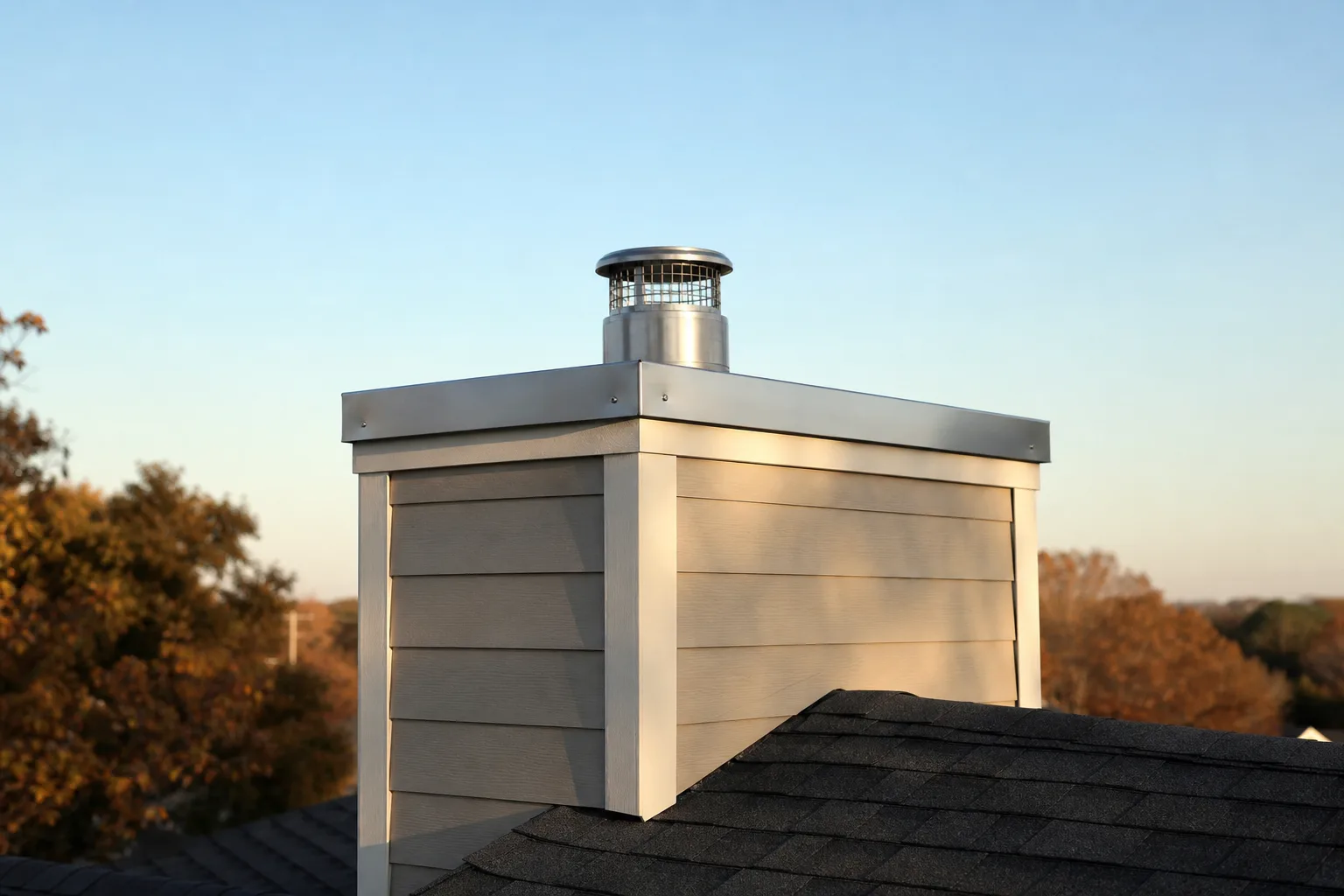
If your chimney is a framed and sided box rather than brick, the lid on top is a chase cover, not a crown. It is a sheet of metal, and which metal decides everything. Galvanised rusts through in ten to fifteen years and then drains straight into the wood framing underneath. Stainless does not. A cover also needs a crown — a slight peak so water runs off — because a flat one holds standing water at exactly the spot it is meant to protect, which is how most of them fail early.
Rust runs before it leaks
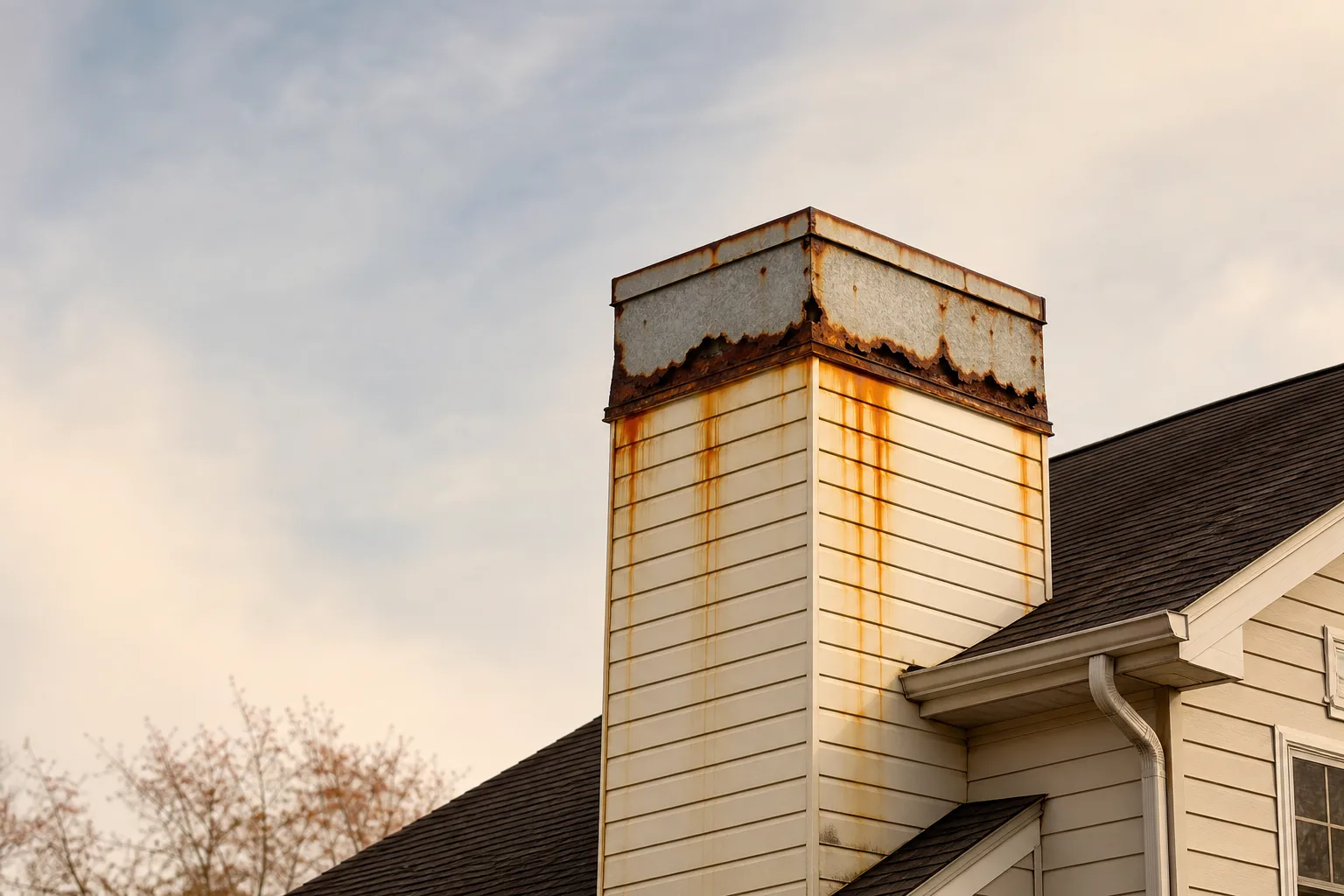
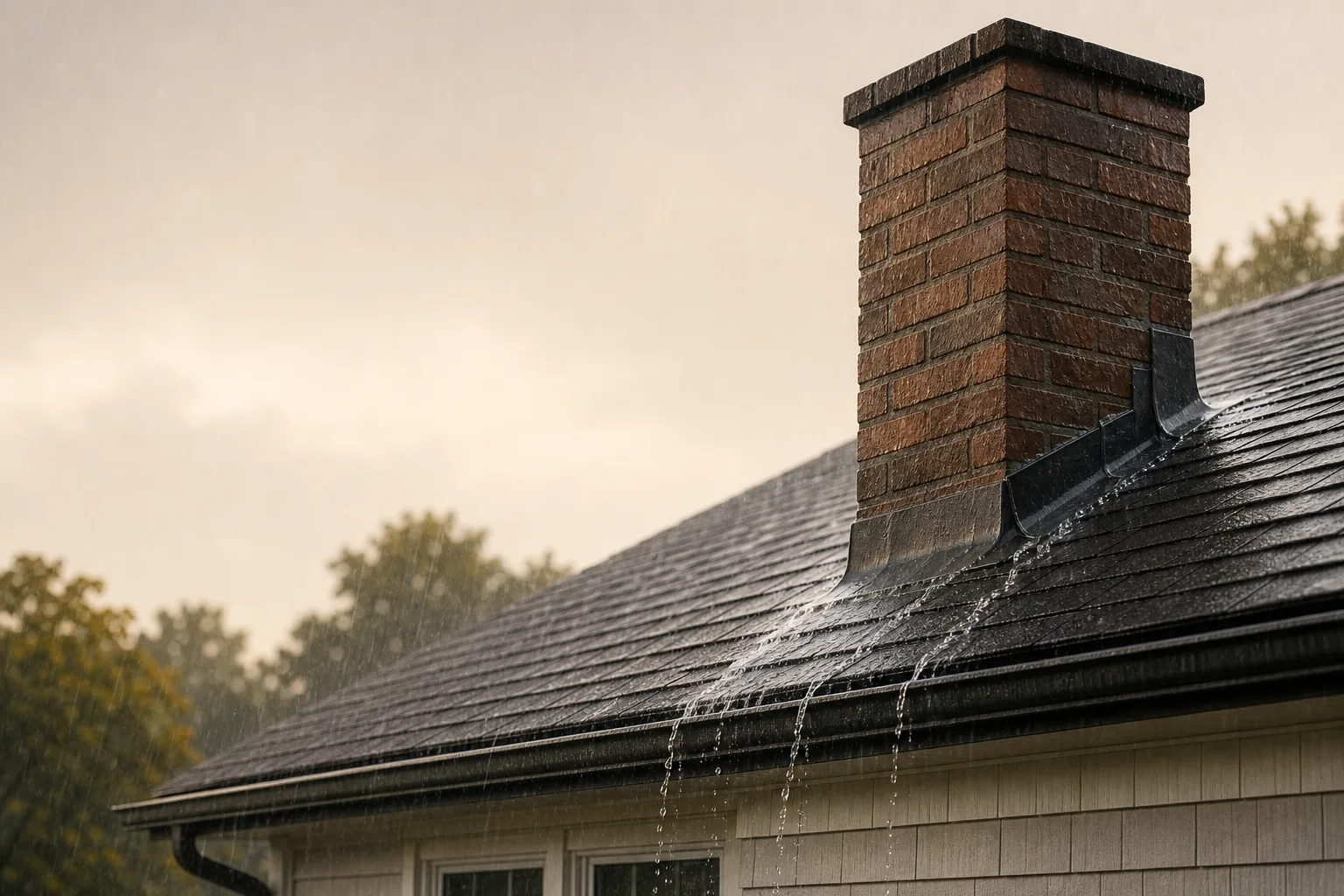
Orange staining down the siding means the cover has been holding water for a while. The framing under it has been wet for just as long.
Fall Special
Call or book today and we'll do our best to get a pro to you tomorrow.
Anything that needs attention is shown to you and explained in plain words.
If something needs fixing, you get the price in writing first. Saying no costs nothing.
Do you have this problem?
The earliest visible sign, and it appears long before water comes inside. By the time it is running down the siding the cover has been failing for a season or more.
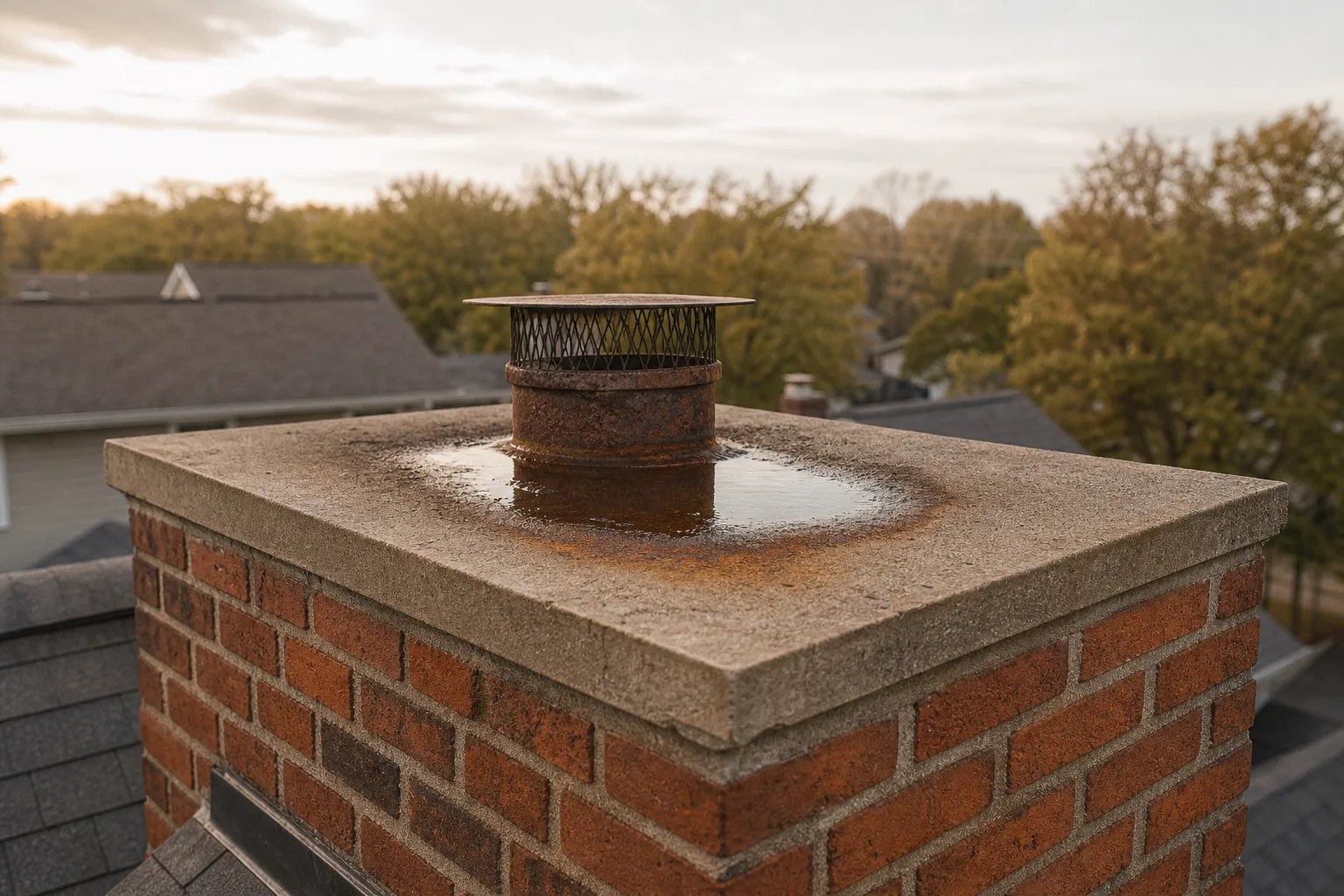
A flat cover with no crown holds a puddle after every rain. That standing water is what rusts it through, so a flat cover is a countdown rather than a design.
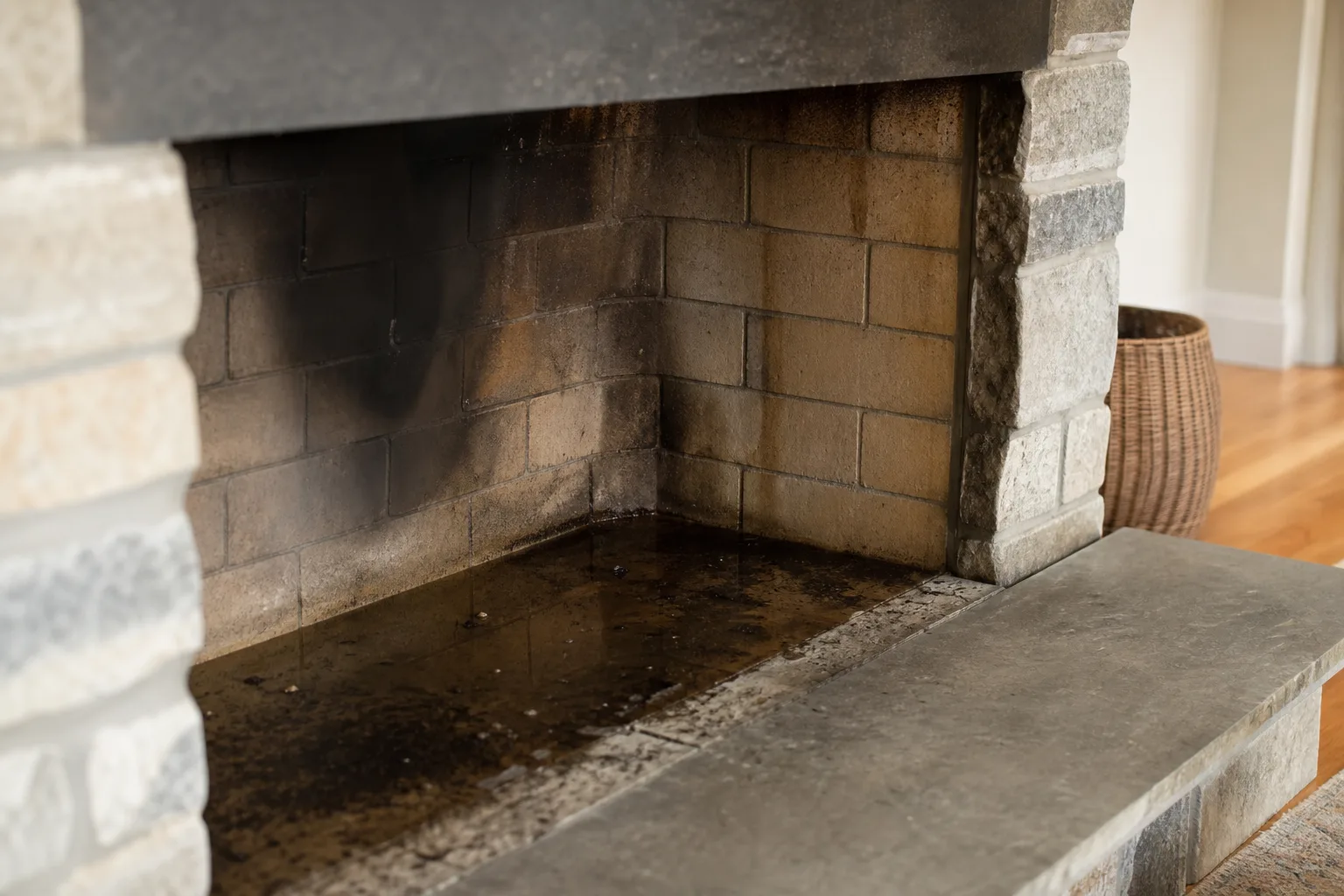
On a prefabricated fireplace this points at the chase cover or the storm collar around the pipe. Both are on top of the chase and both are reachable.
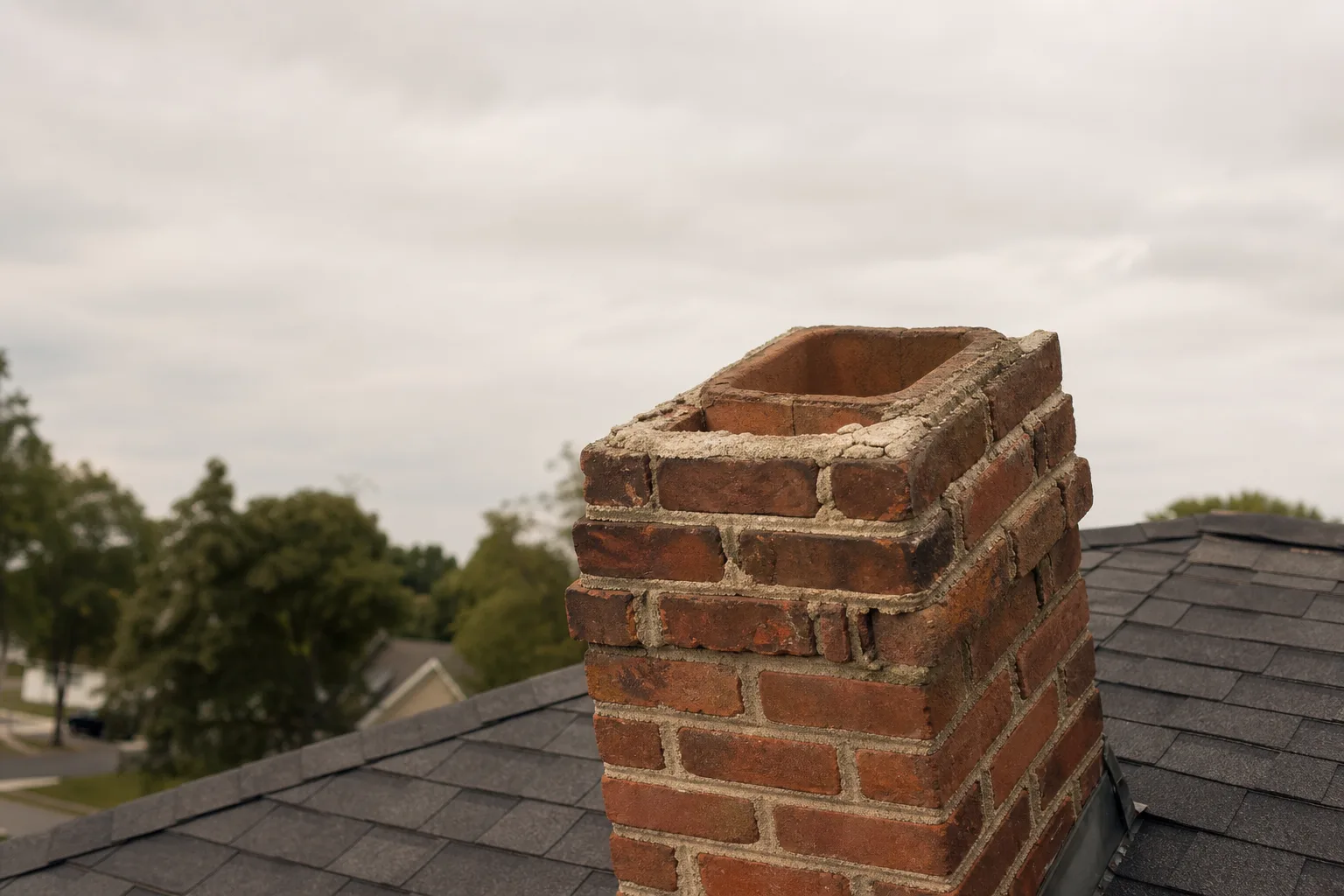
The collar seals where the pipe passes through the cover. Without it, or with the sealant perished, water goes straight down the outside of the pipe into the chase.
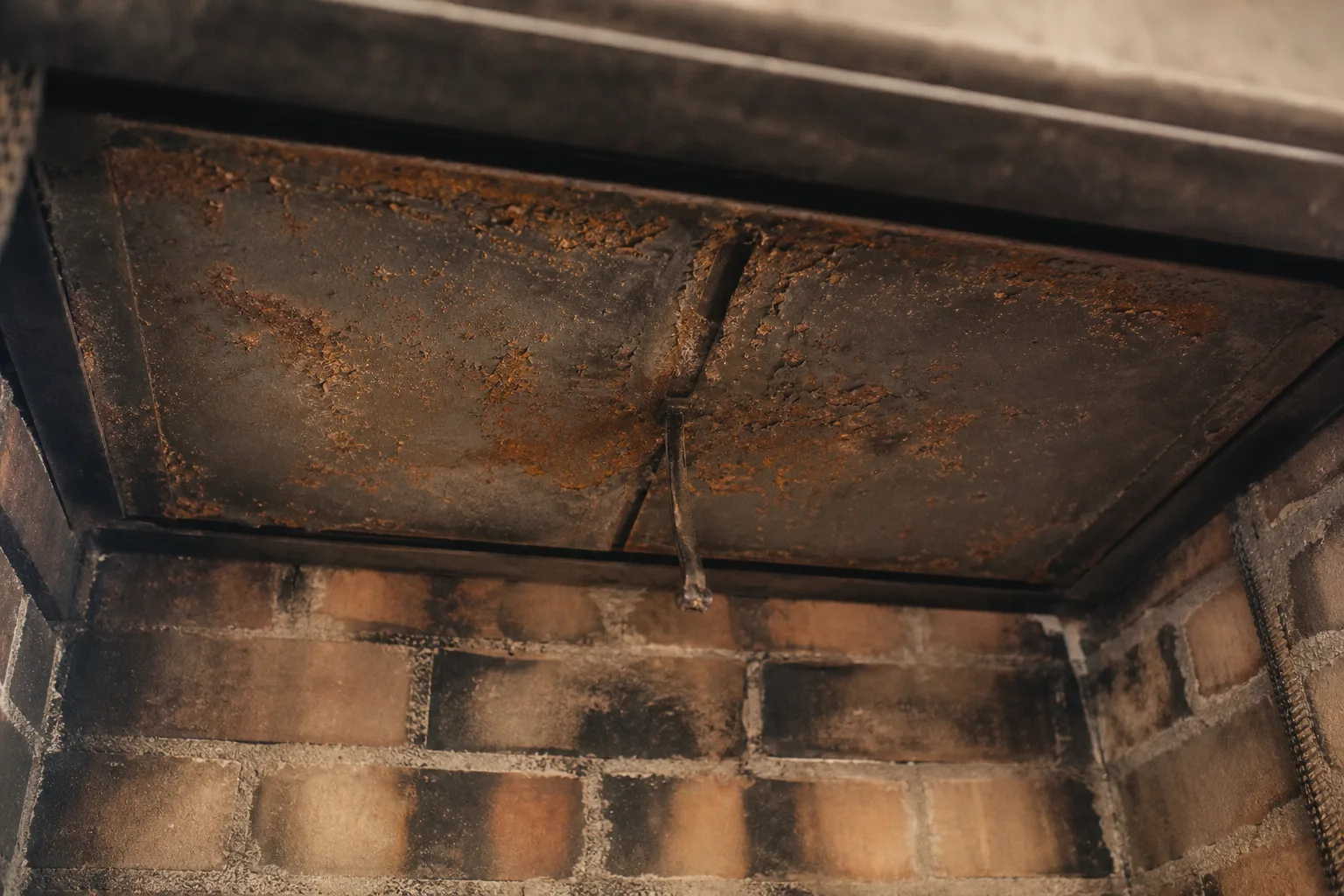
Steel does not rust in a dry chase. Rust inside a prefabricated fireplace almost always means the cover above it has been letting water through.
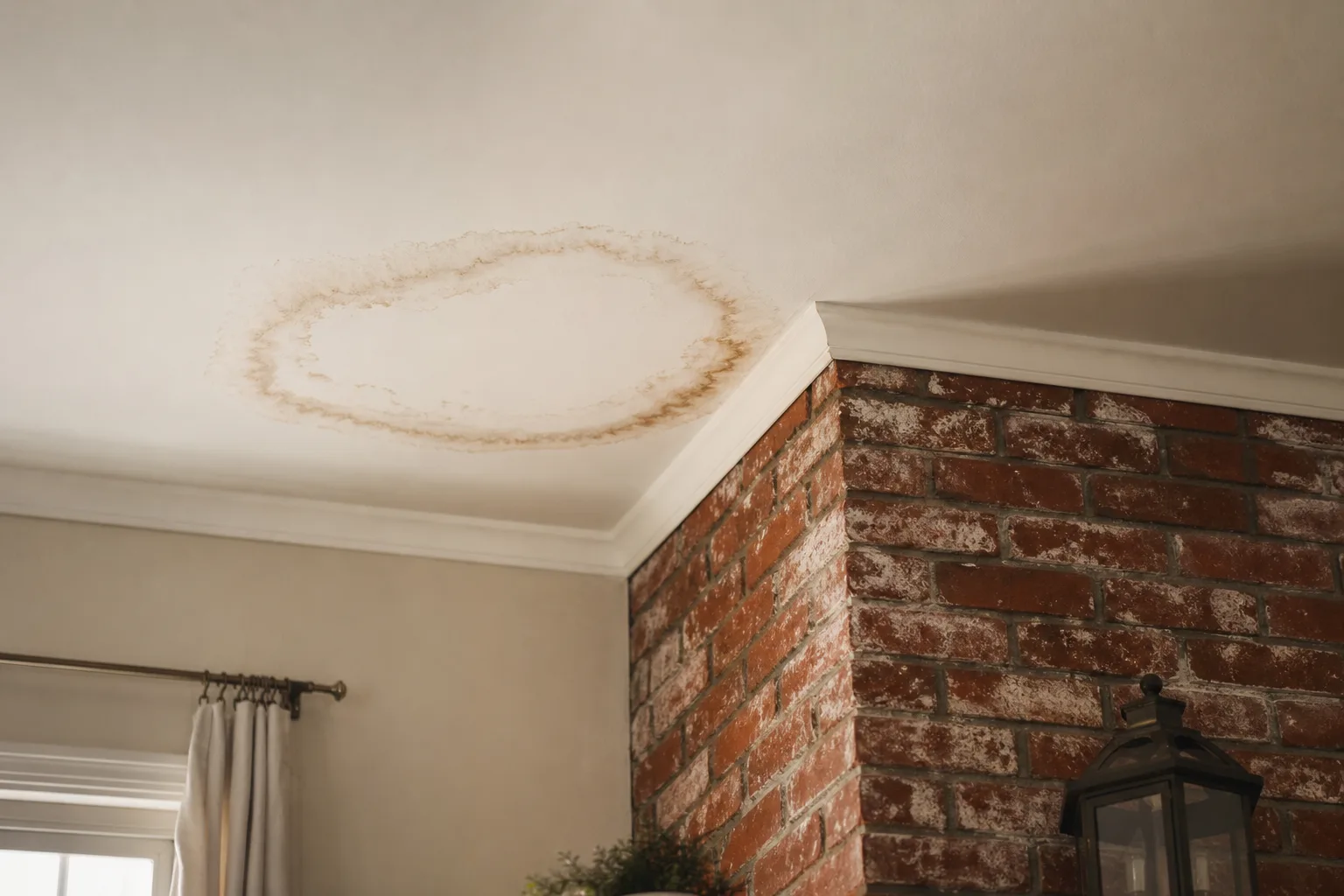
Water that has got past the cover and run down inside the framing. At this point the repair includes finding out how much of the wood has been affected.
How we work
The same four steps every time, whatever the repair turns out to be.
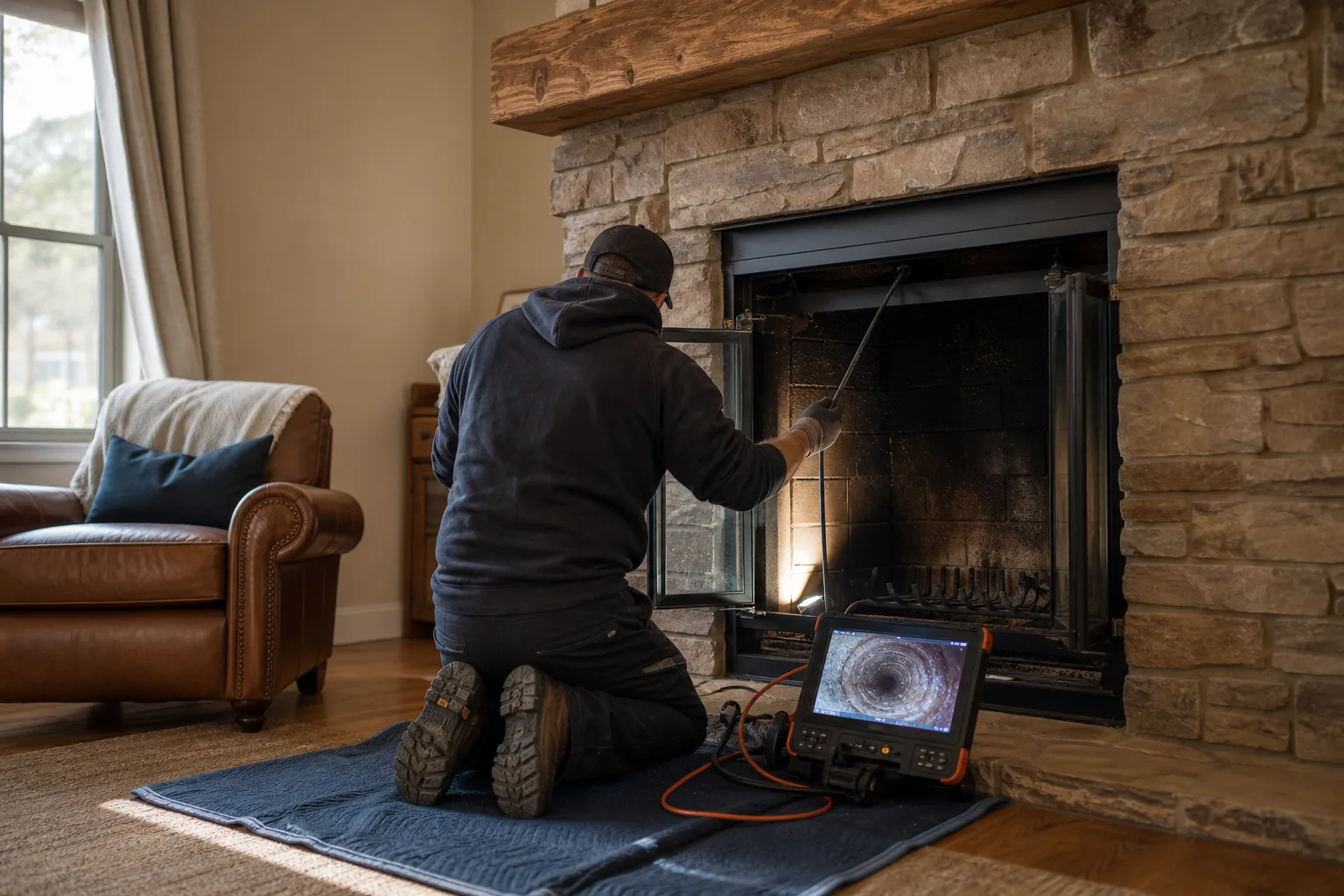
A look at the crown, cap, flashing and exterior masonry, then the flue, damper and firebox — with a camera where the job calls for a level 2 scan. Whatever needs work gets shown to you, not just described.
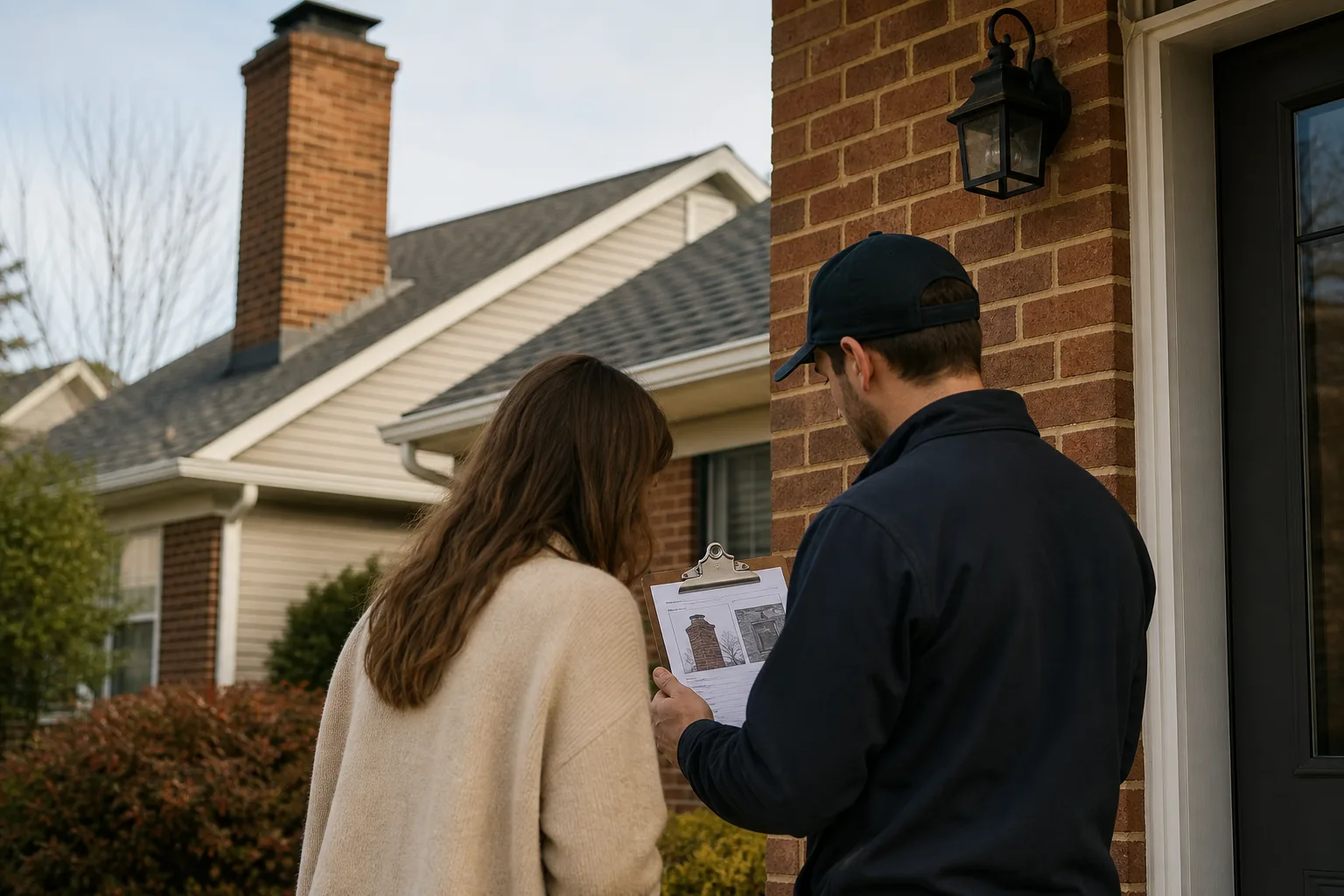
Scope, price and what is not included, in writing. Nothing starts until you approve it, and an emergency is not a reason to skip this step.
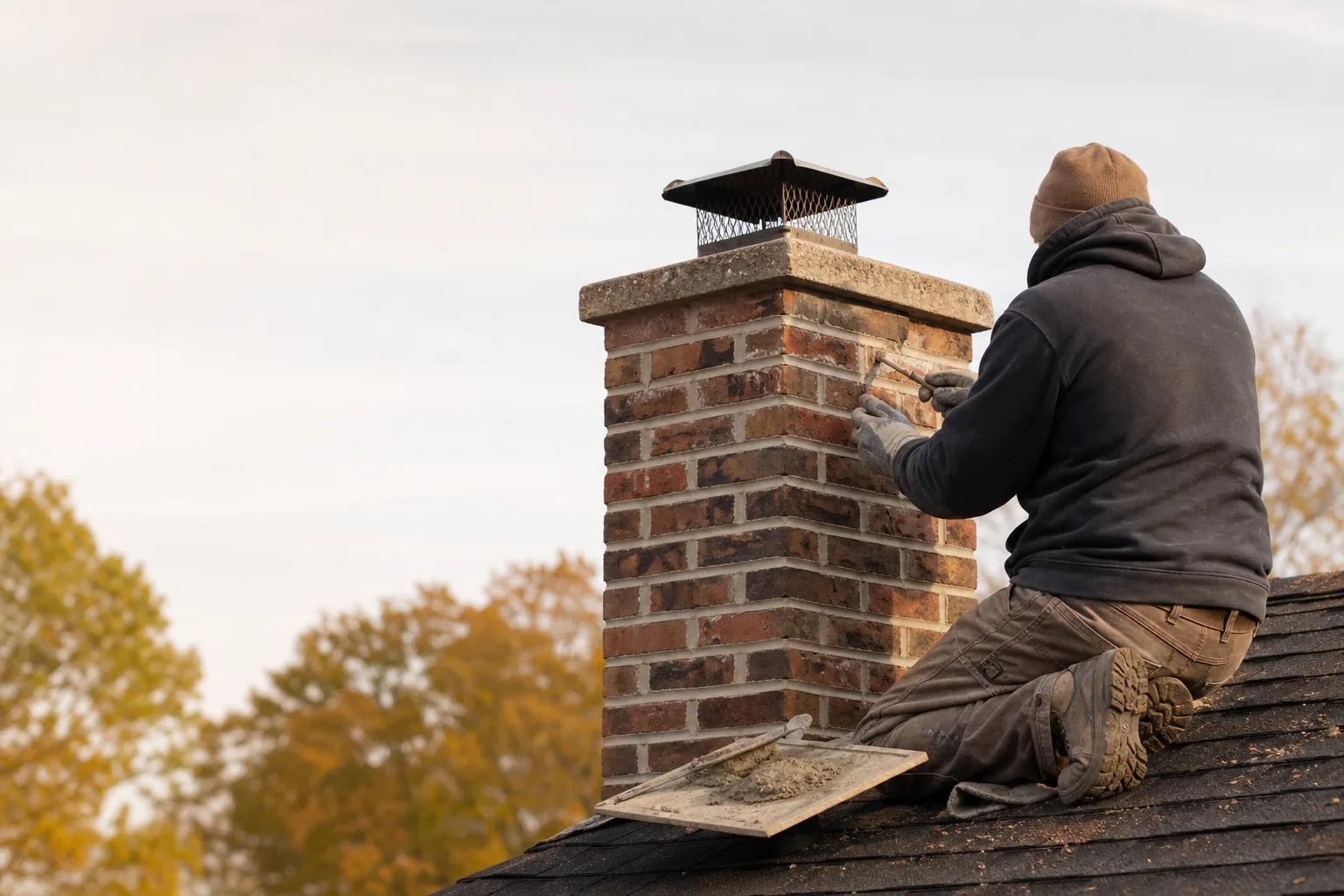
Matched materials and the manufacturer's spec, not whatever is on the van. Drop cloths down, and the room left as it was found.
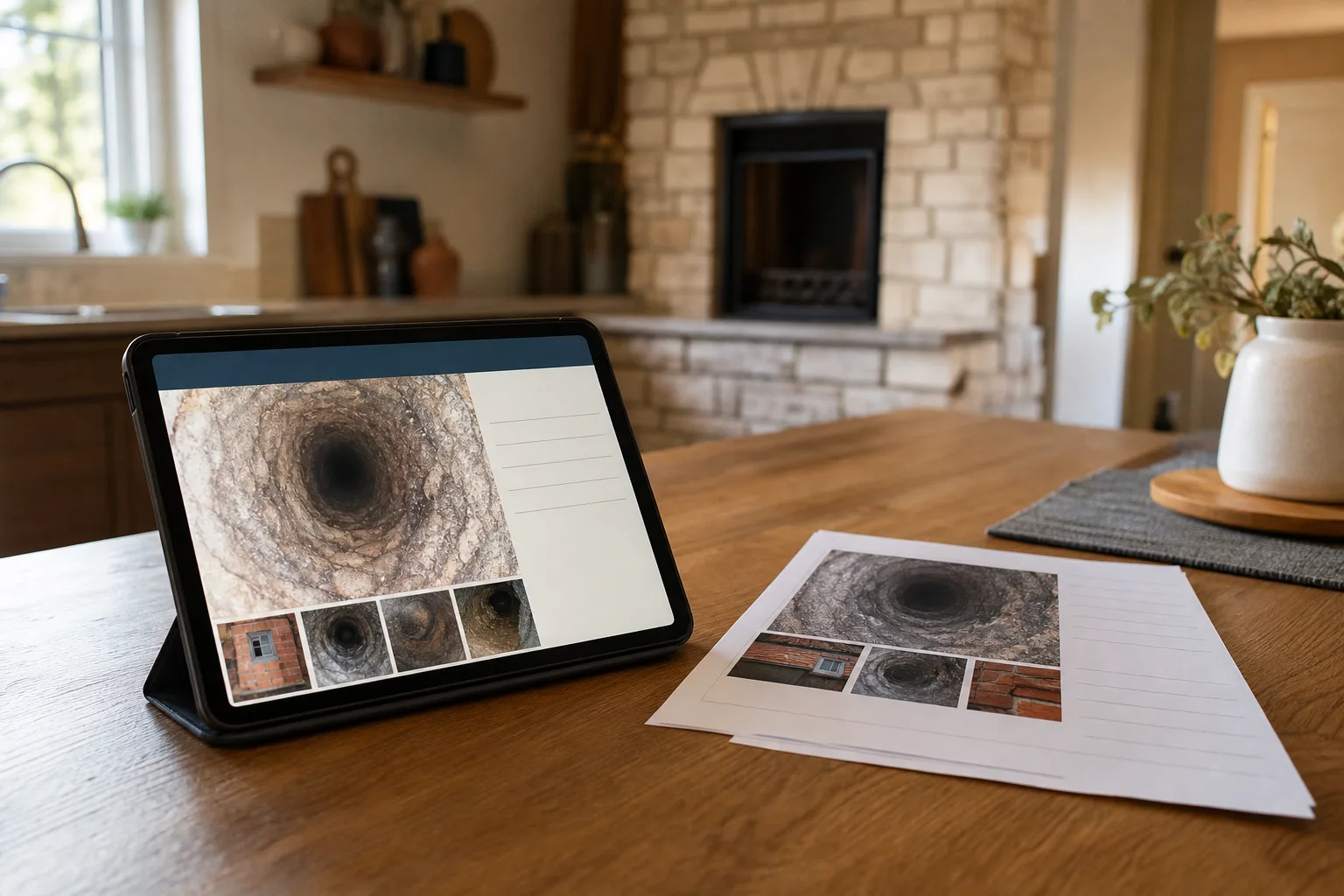
A second scan after the work, and written findings you can keep, hand to an inspector, or send to an insurer.
What it covers
Not every job on this list is equally urgent, so they are ordered that way. A cracked liner stops you using the fireplace tonight; waterproofing can wait for a dry week.
The job — most urgent first
What it involves
On site
When water has been getting in long enough to reach the wood. Rot in a chase is structural, and it is why an early cover replacement is the cheap option.
On site: Several days
Measured on site and fabricated in 304 stainless with a crowned centre, drip edge and collars sized to the flues. It is the last one the chase will need.
On site: About a day
The usual job. Galvanised gives ten to fifteen years and then drains into the framing. Replacement includes checking what the water has already reached underneath.
On site: About a day
The collar and sealant where the flue pipe passes through the cover. Often the actual leak on a cover that otherwise looks sound, and by far the cheapest thing on this list.
On site: About an hour
Where the chase is a feature of the elevation. Costs more than stainless and lasts as long. Worth it for appearance rather than performance.
On site: About a day
Times are for the work itself, not for scheduling. Masonry needs roughly 40°F to cure properly, which is what limits this work in a northern winter rather than whether a crew is free.
What drives the price
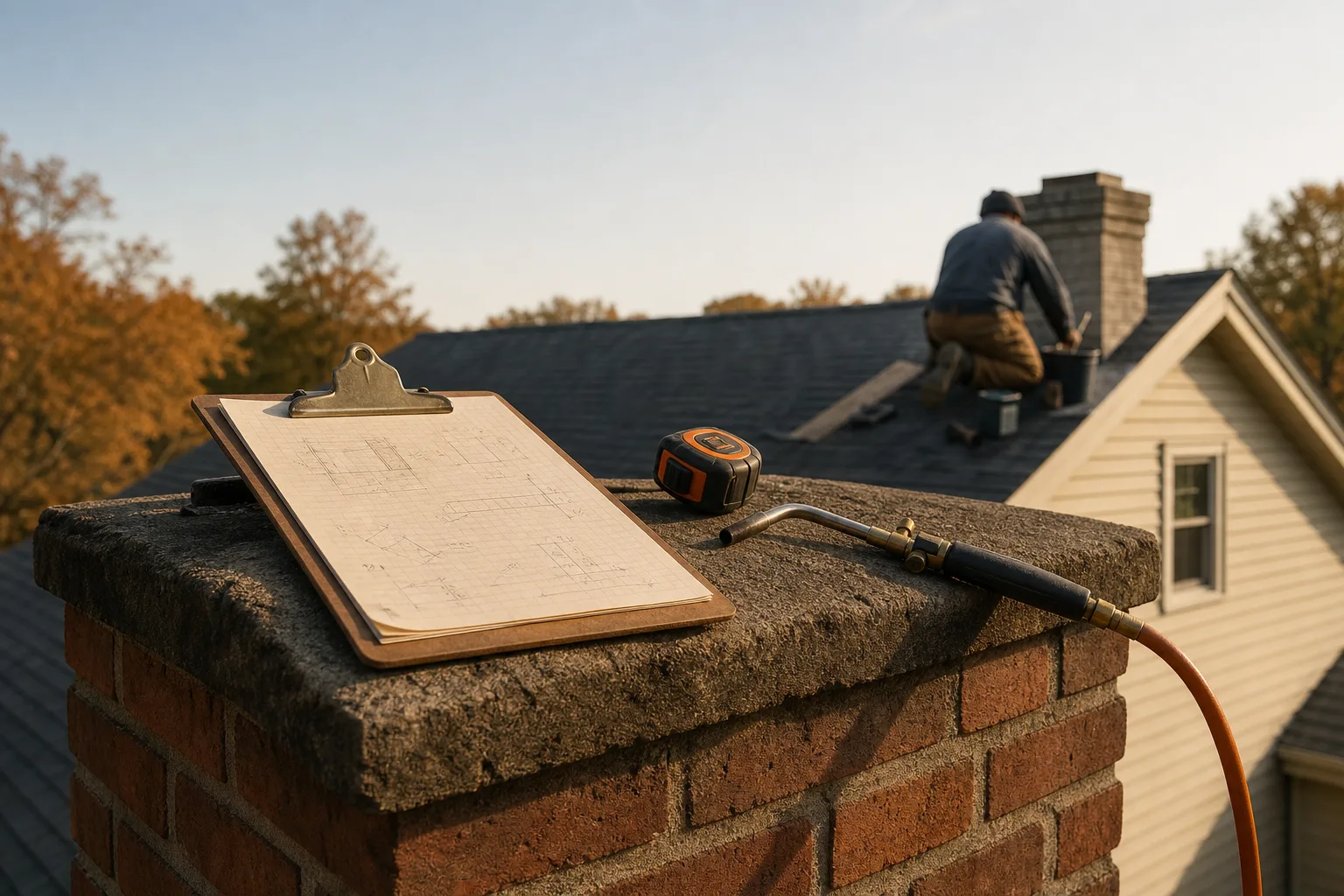
A stainless cover is fabricated to your chase, so the price tracks its size rather than a catalogue number. It costs more than galvanised on the day and less than galvanised over the life of the house, because you buy it once. What blows the budget is discovering rot in the framing, which is the argument for replacing a rusting cover before it stains.
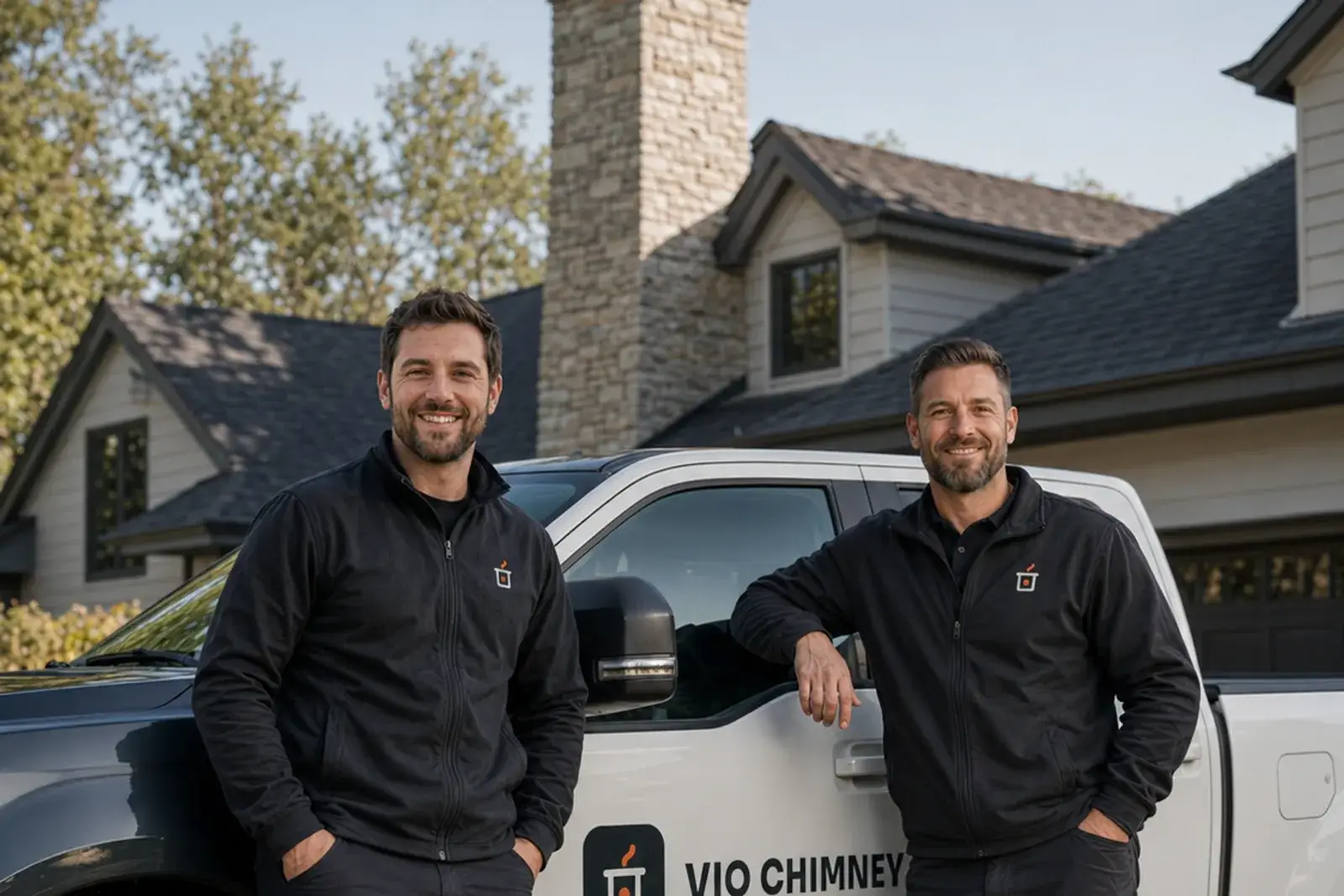
Founded by Ryan Carter in 2019. Every page you read here is reviewed by Ethan Miller, our chimney specialist. A written estimate before any work, and the findings in writing whether or not anything needs doing.
More about who we are →
The VIO Standard
Good to know