



Next-day appointments
Call or book today and we'll do our best to get a pro to you tomorrow.
Chimney service
The short answer
Most crowns do not fail from age. They fail because of how they were built.
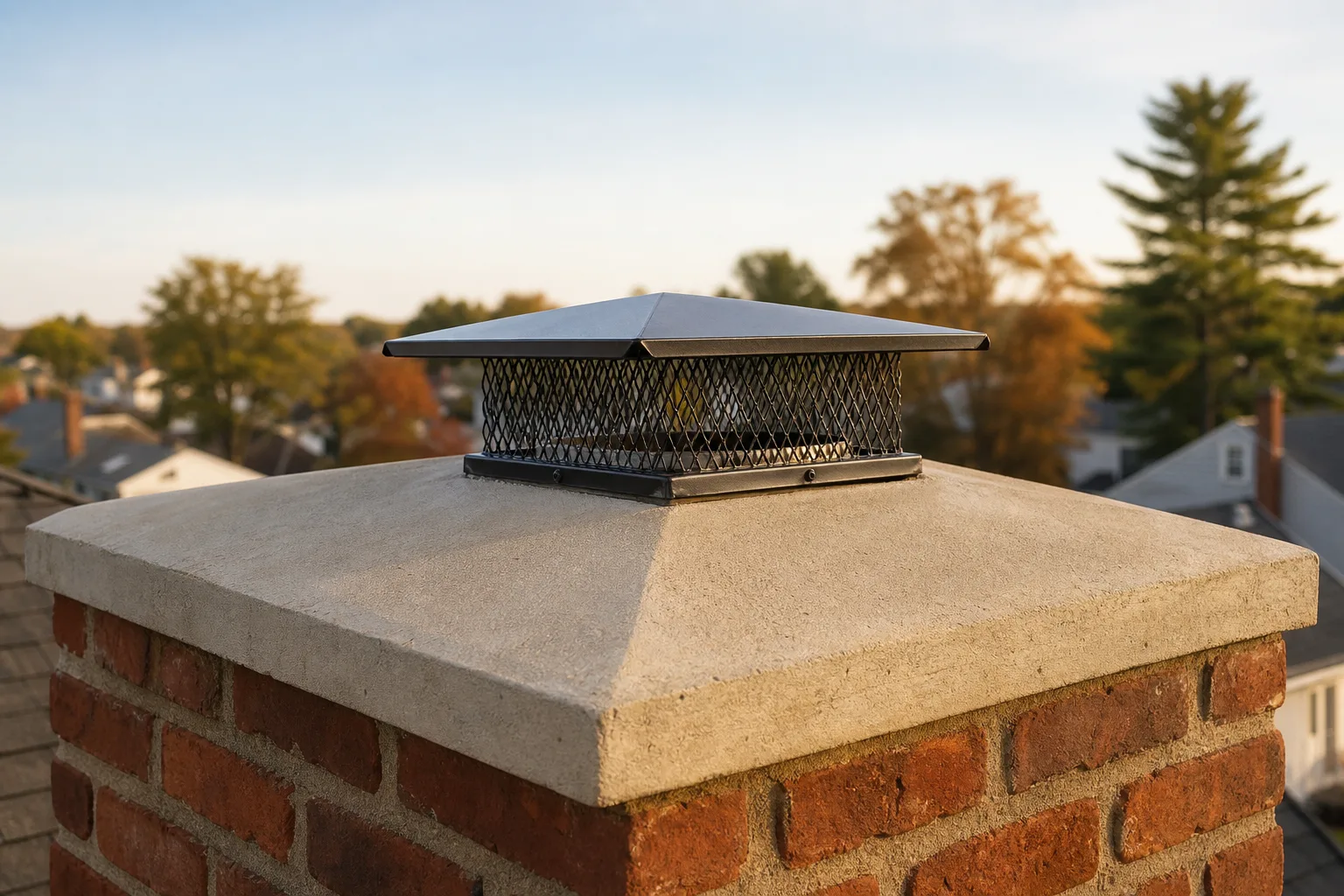
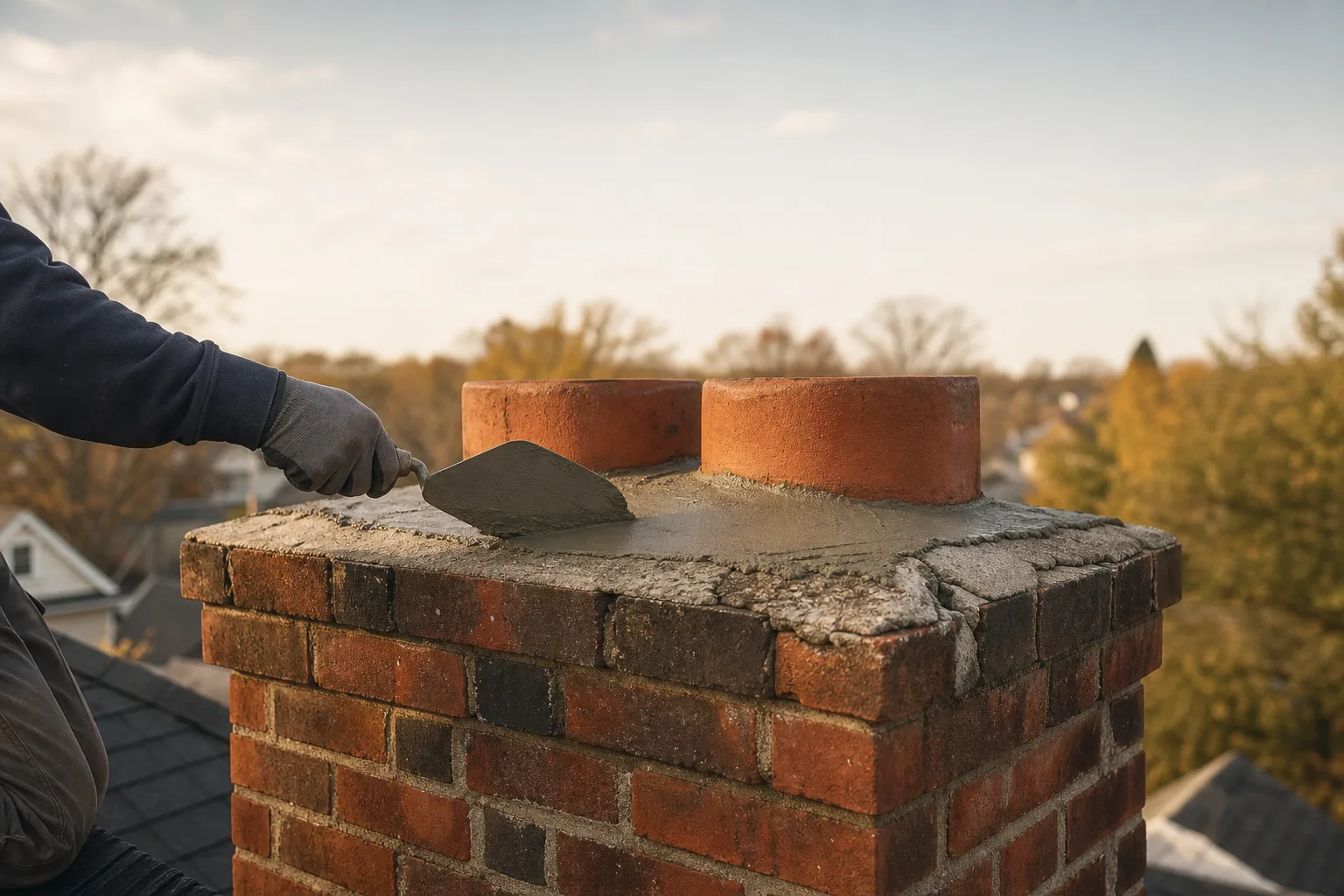
A crown should be a reinforced concrete slab that overhangs the brick by an inch or two and carries a drip edge underneath, so water is thrown clear of the masonry. What a great many houses have instead is a thin skim of mortar sloped off the top course, flush with the brick face. That version cracks within a decade and sheds every drop straight down the wall it was supposed to protect. Which one you have decides whether chimney crown repair means sealing a crack or casting a new crown, and those are not close in price.
Three parts people mix up
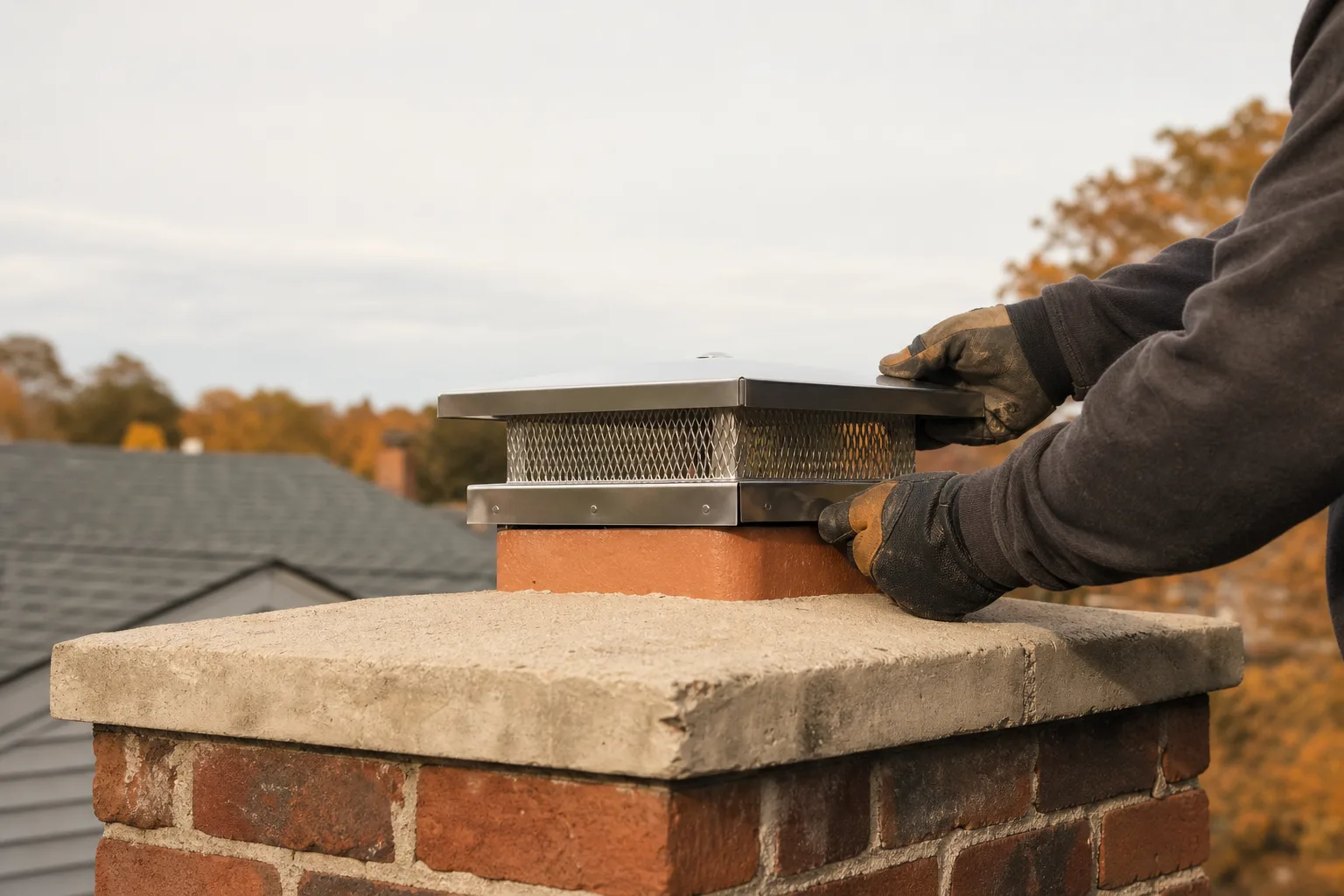
The crown is the slab covering the masonry. The cap is the metal lid over the flue. A chimney needs both, and a quote should say which it means.
Fall Special
Call or book today and we'll do our best to get a pro to you tomorrow.
Anything that needs attention is shown to you and explained in plain words.
If something needs fixing, you get the price in writing first. Saying no costs nothing.
Do you have this problem?
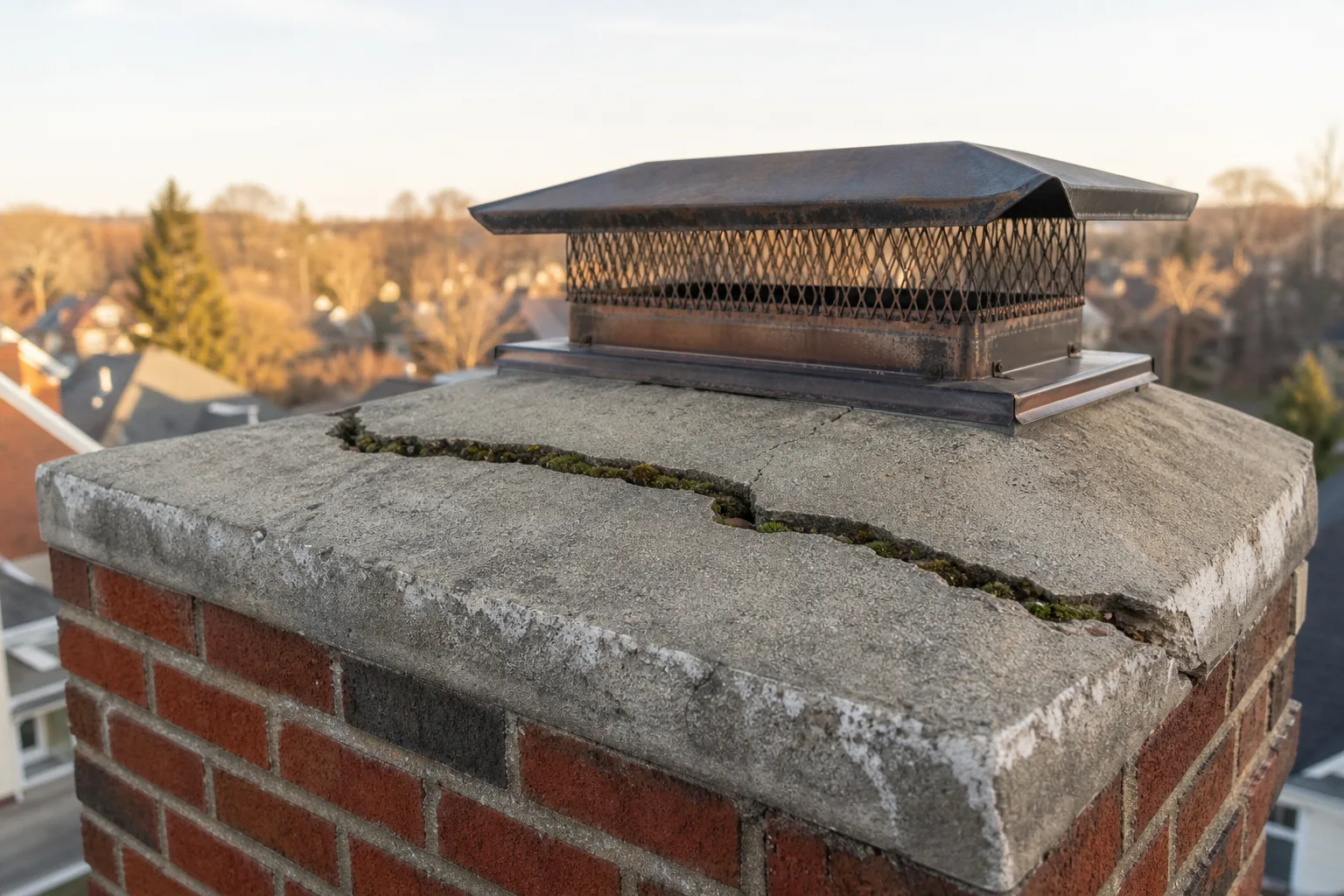
Hairline cracks can be sealed. Anything you can get a fingernail into is a route straight into the masonry below, and it widens with every freeze.
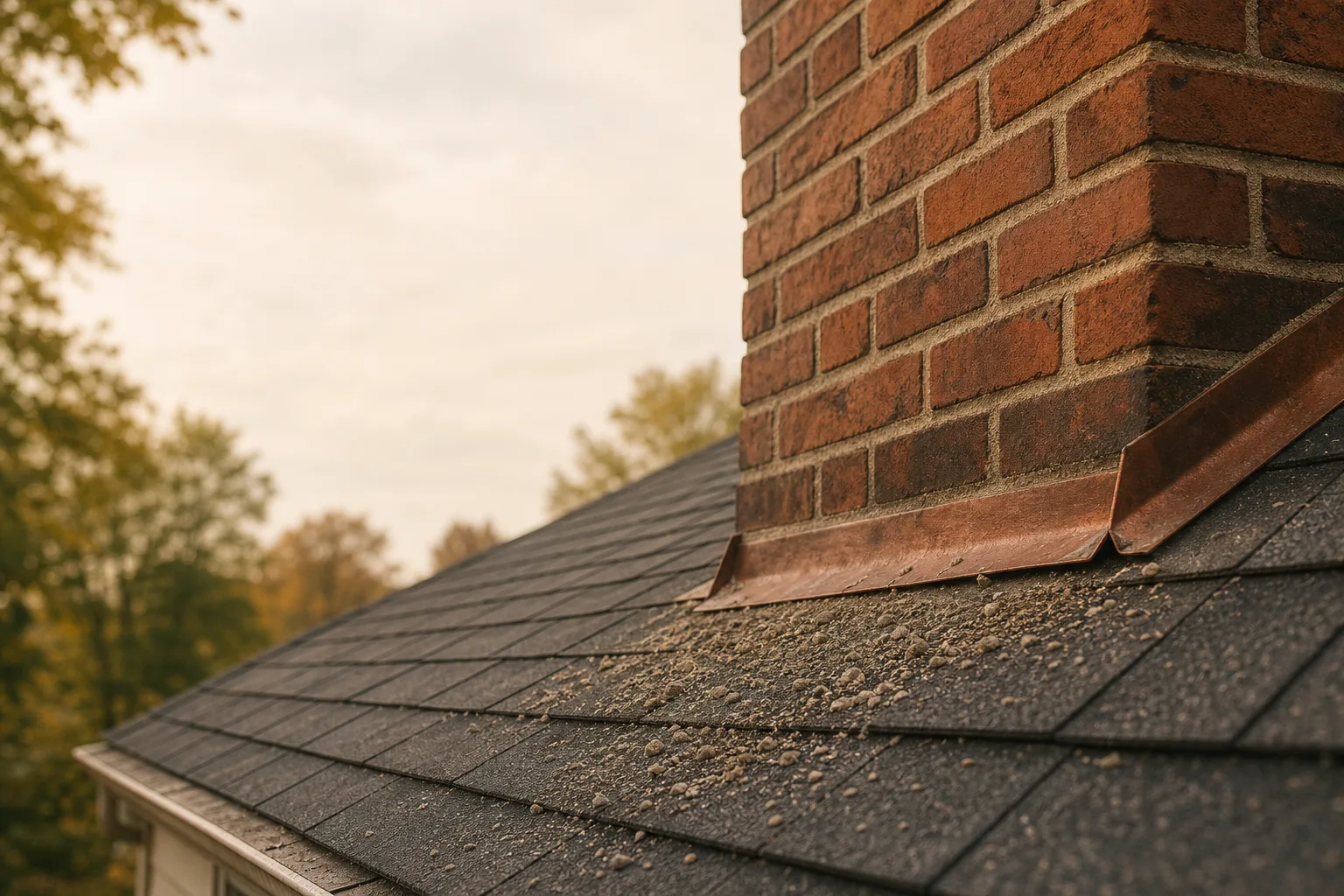
No overhang and no drip edge means water runs off the top and down the face by design. This crown will keep failing however many times it is patched.
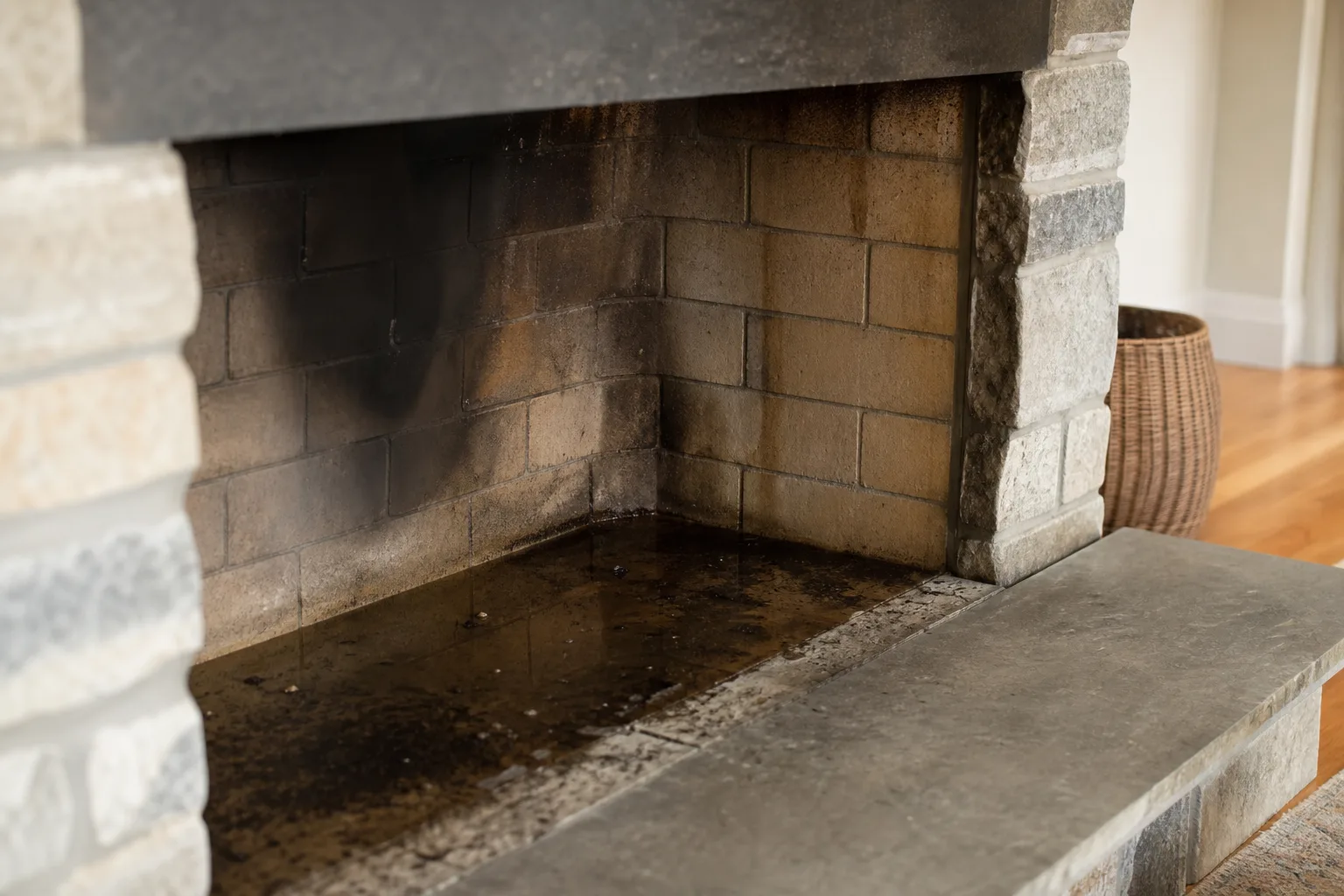
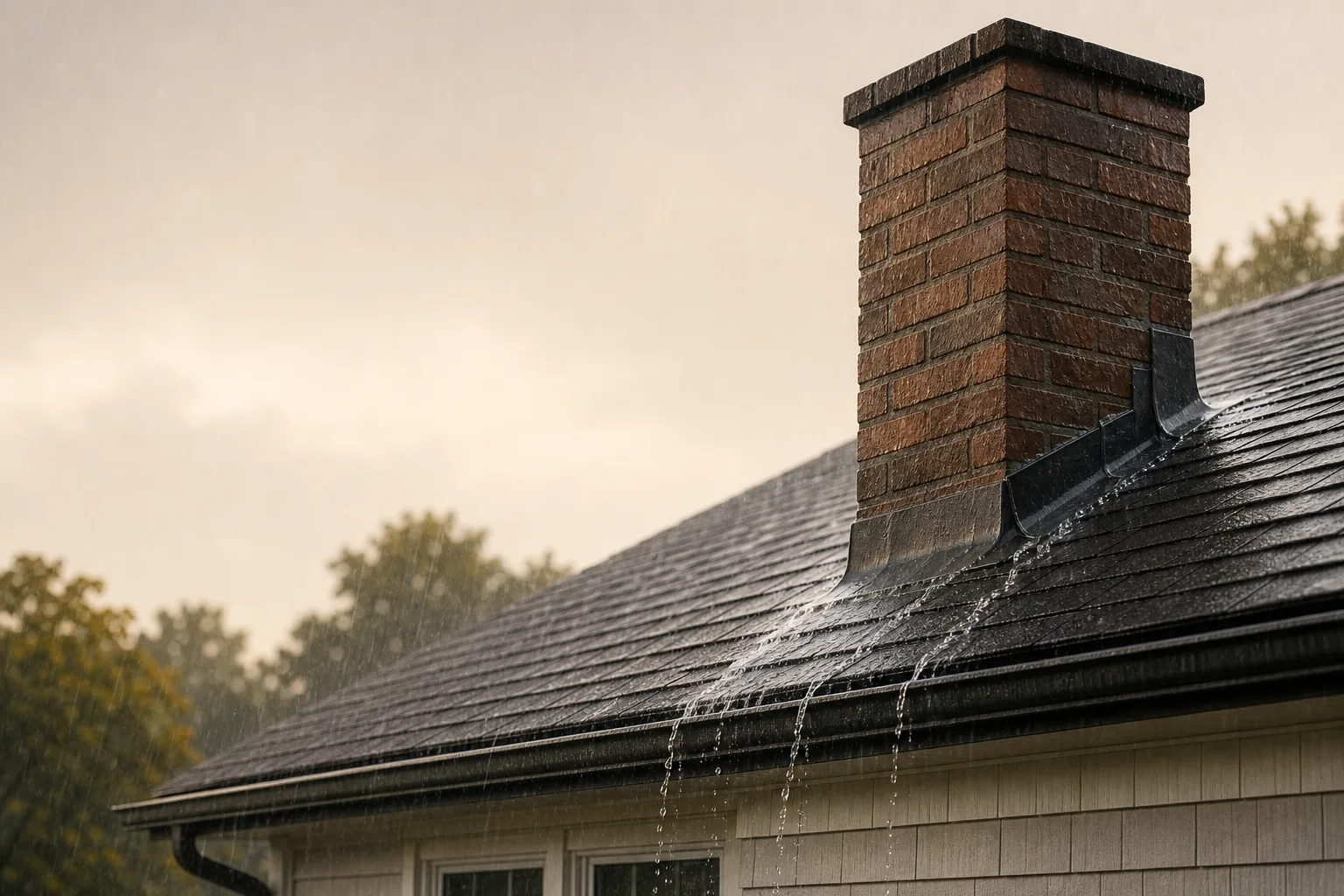
Water coming down the flue or through the stack. With a cap fitted and sound flashing, the crown is where to look next.
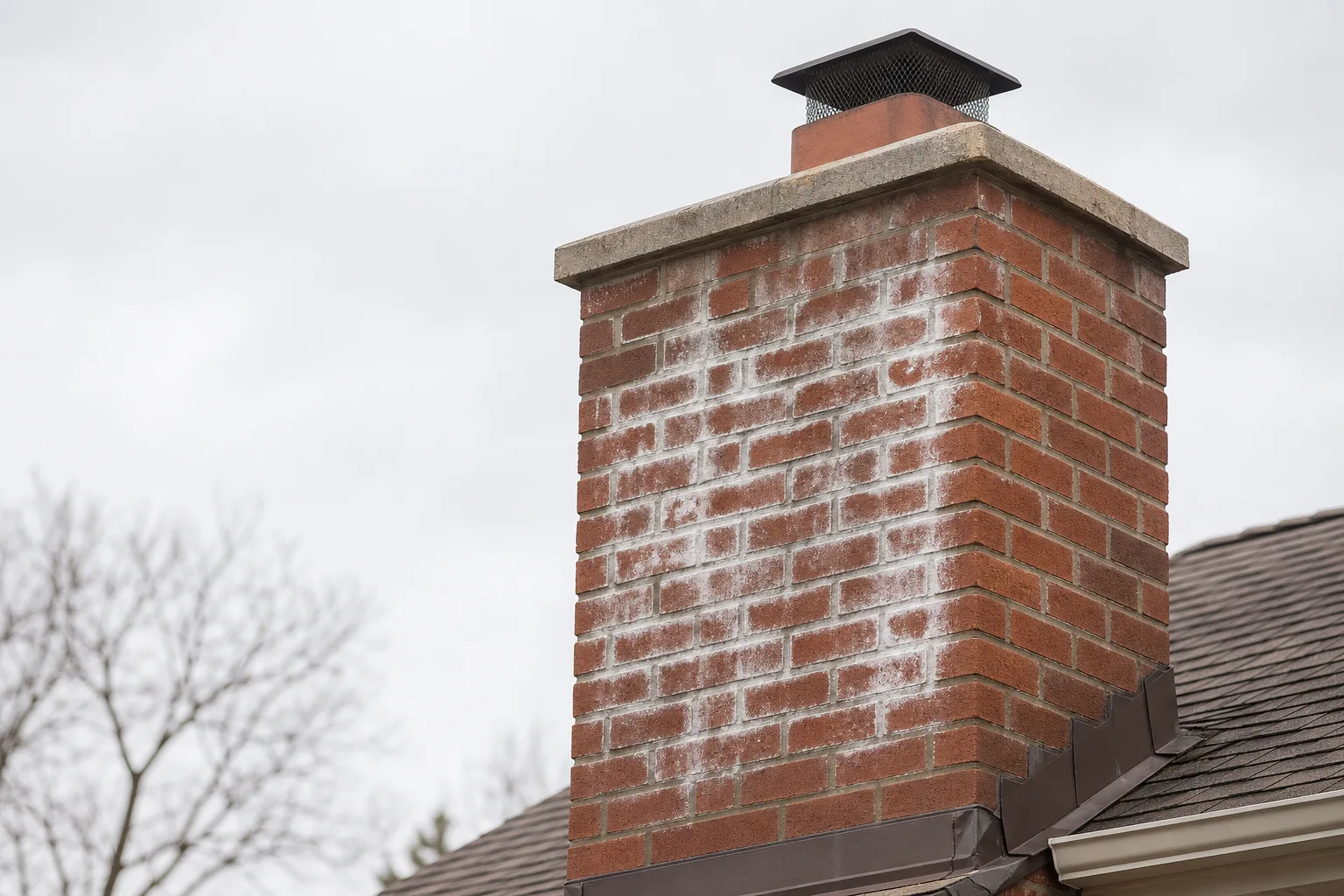
Salts carried out of the brick by water moving through it, worst directly under a failing crown. The pattern points at the source.
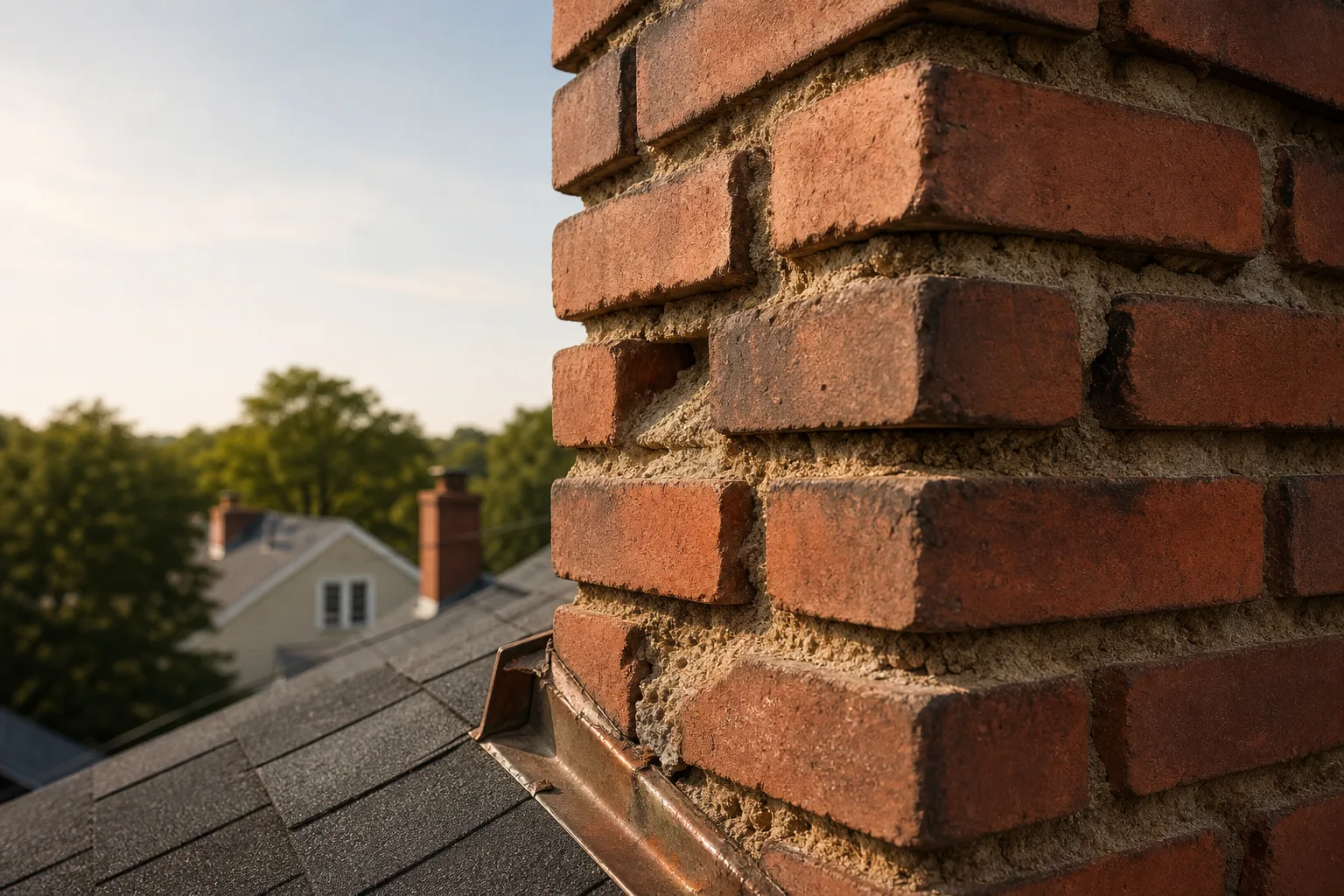
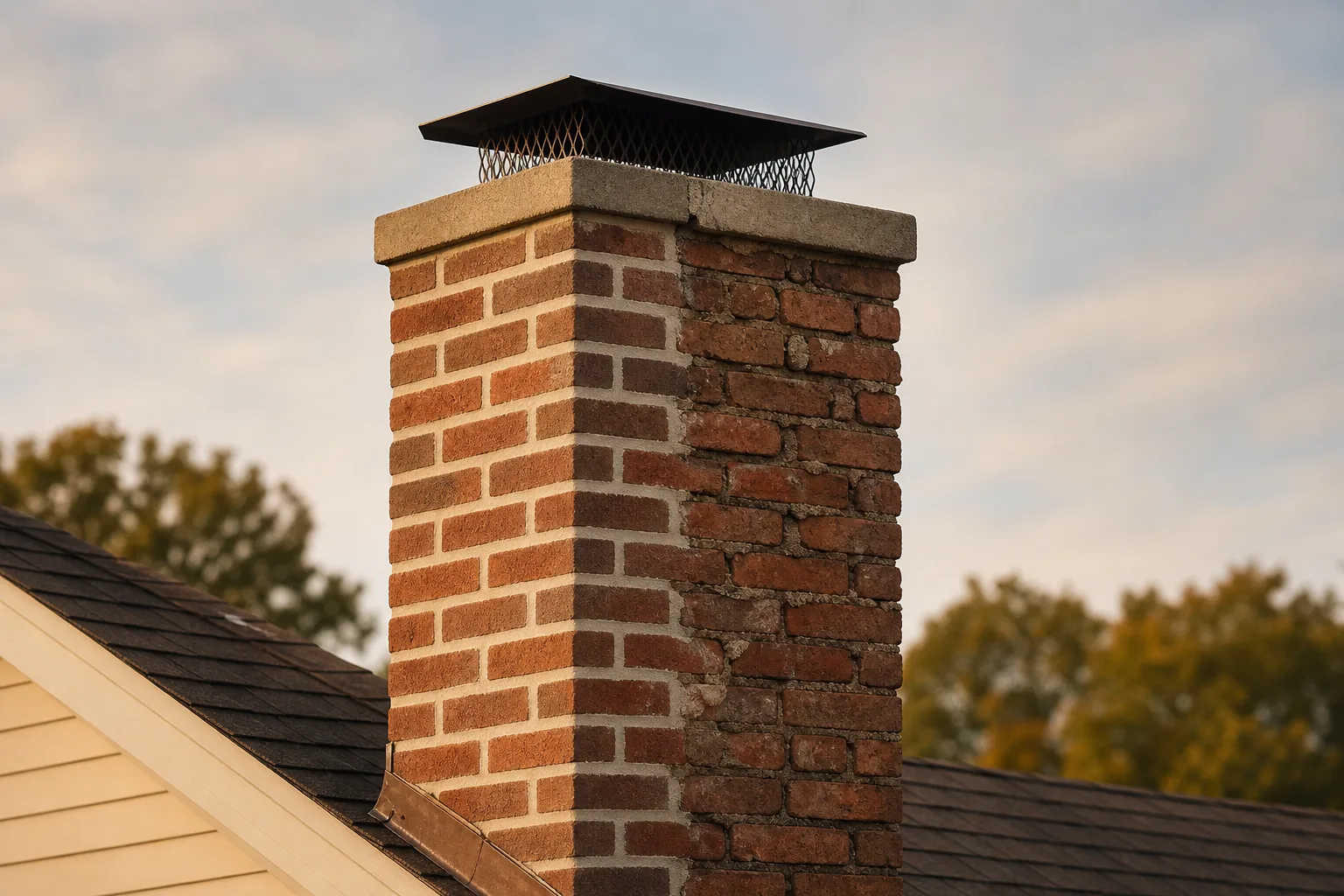
The courses immediately below the crown take the most water of anywhere on the stack. They go first, and they are the usual reason a crown repair turns into pointing as well.
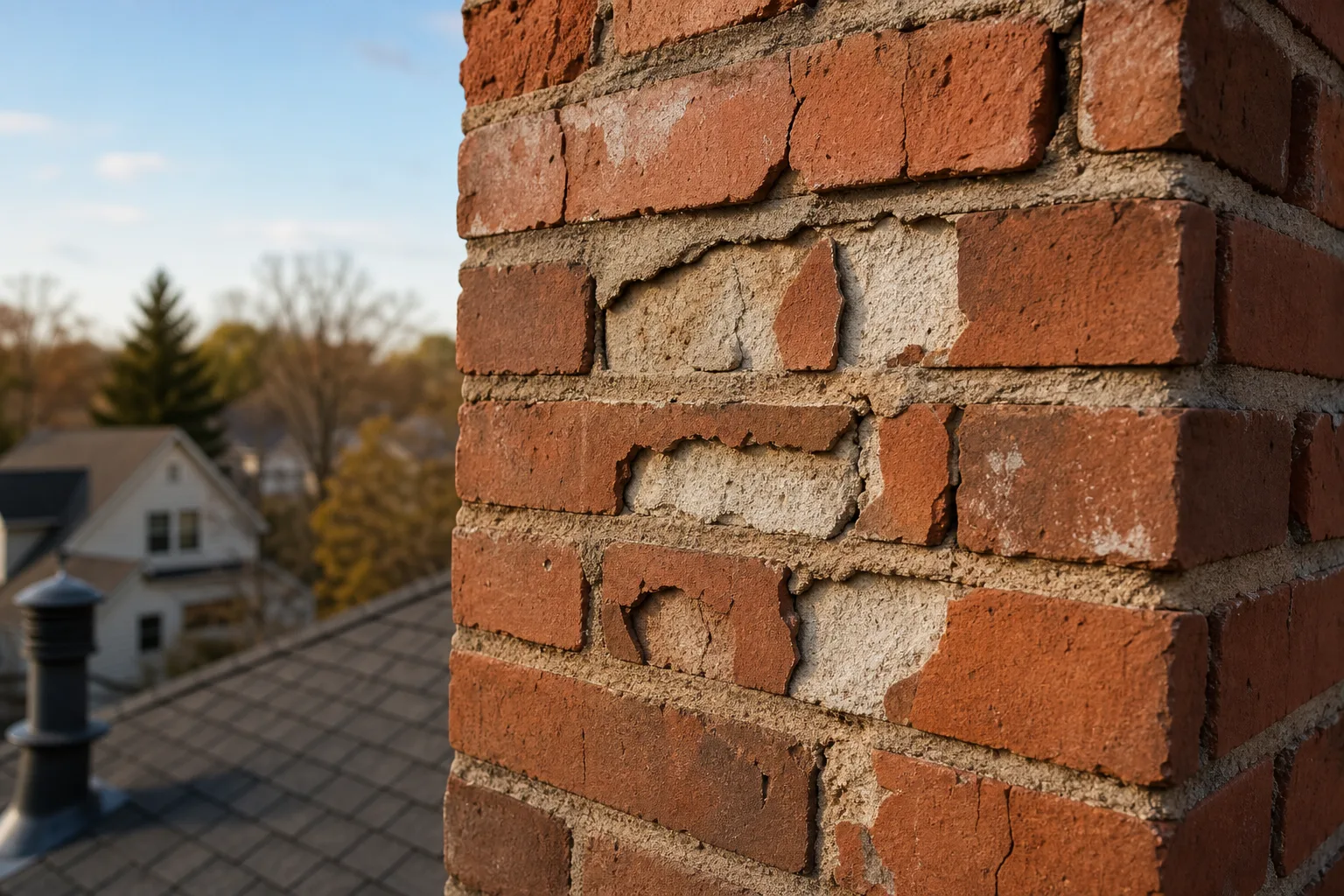
Freeze-thaw damage concentrated where the crown has been feeding water in. Sealing the crown now stops it spreading down the stack.
How we work
The same four steps every time, whatever the repair turns out to be.
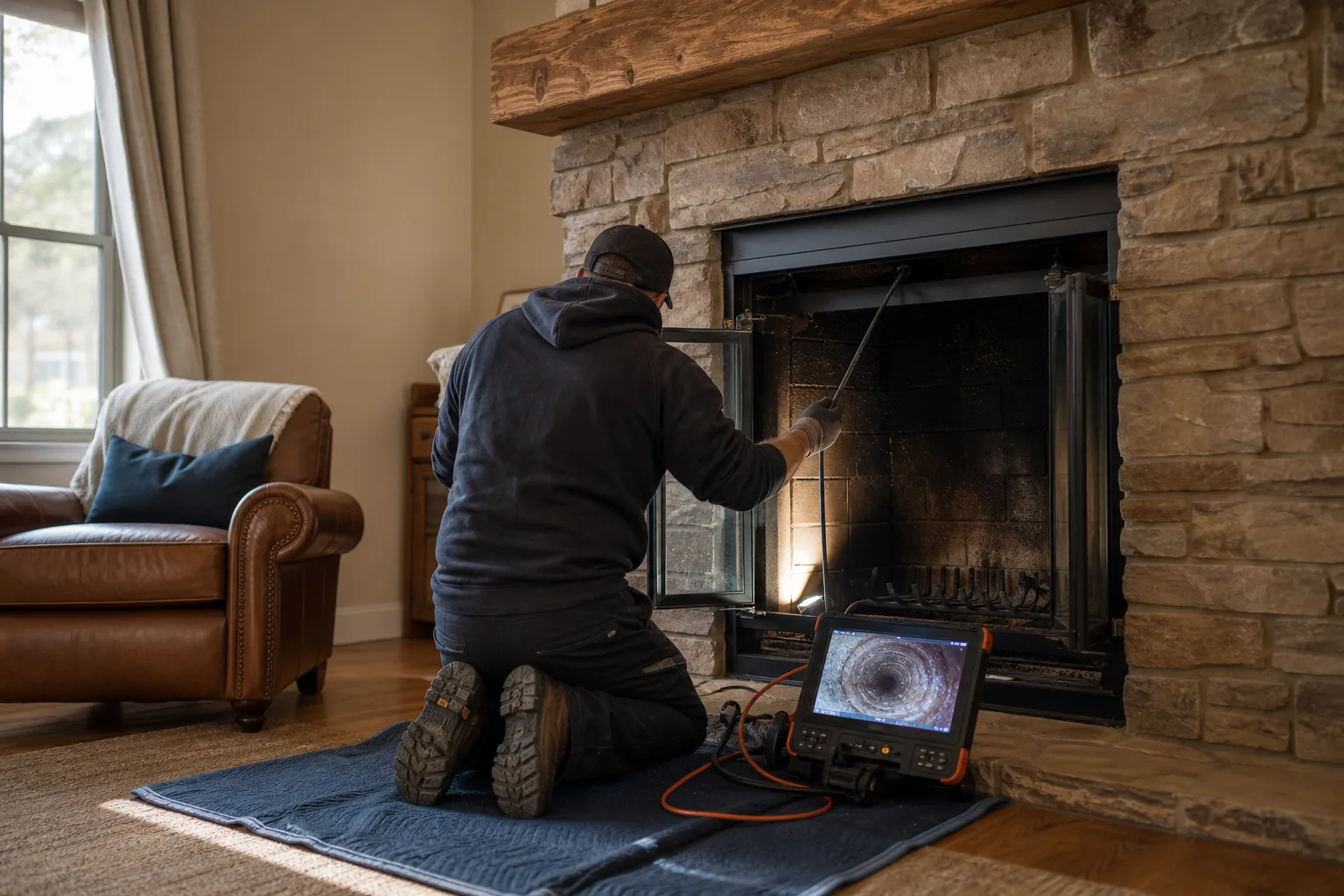
A look at the crown, cap, flashing and exterior masonry, then the flue, damper and firebox — with a camera where the job calls for a level 2 scan. Whatever needs work gets shown to you, not just described.
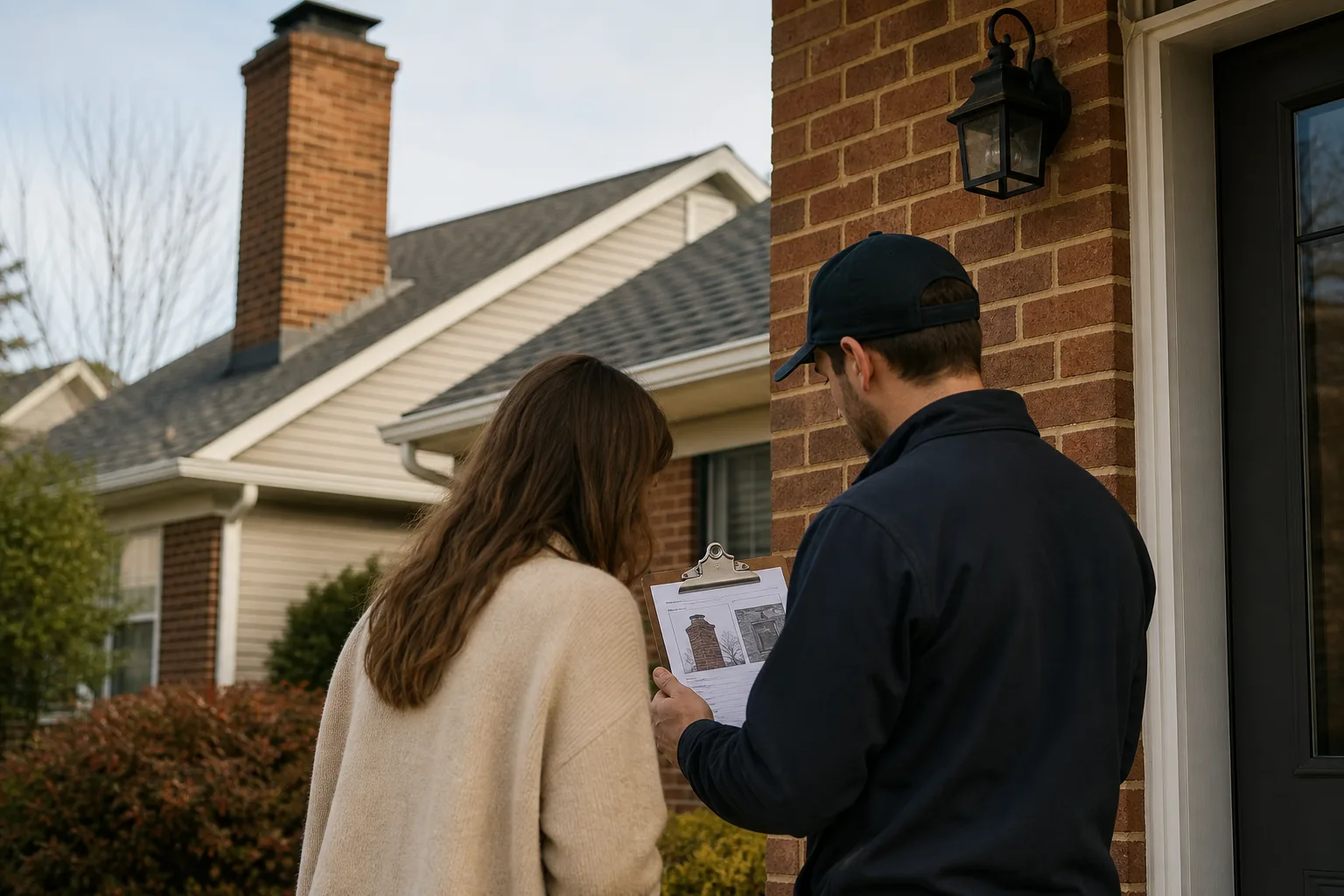
Scope, price and what is not included, in writing. Nothing starts until you approve it, and an emergency is not a reason to skip this step.
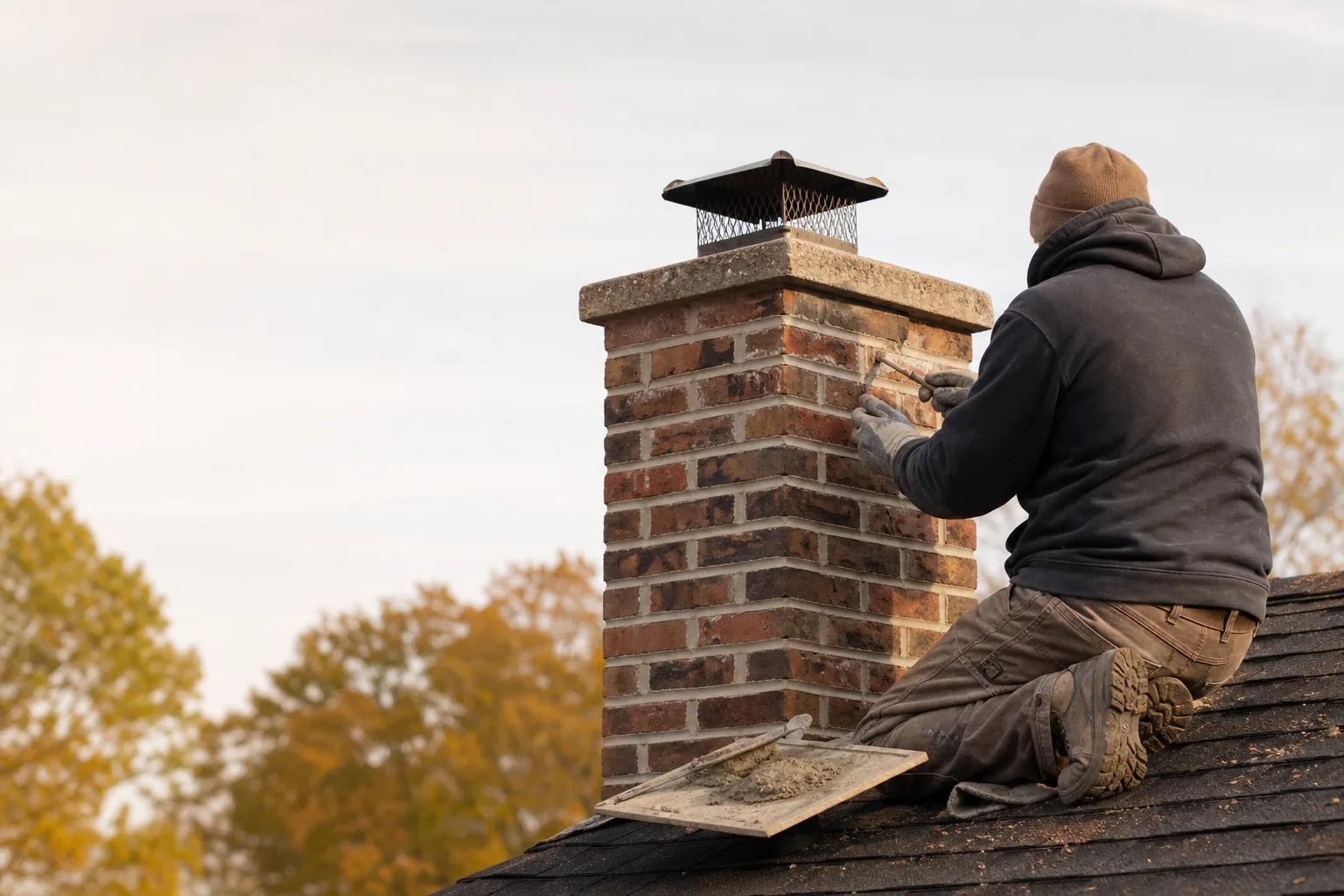
Matched materials and the manufacturer's spec, not whatever is on the van. Drop cloths down, and the room left as it was found.

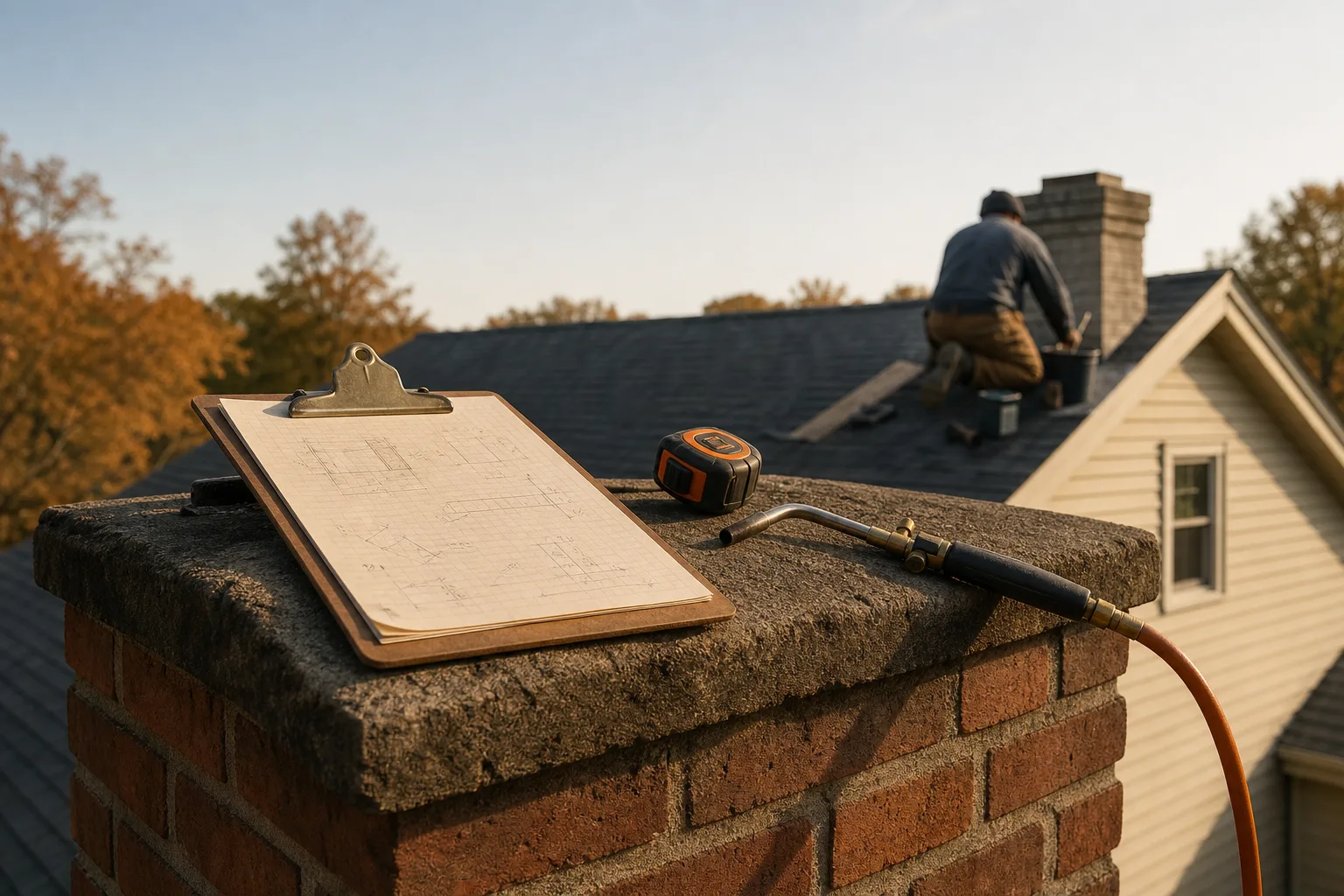
A second scan after the work, and written findings you can keep, hand to an inspector, or send to an insurer.
What it covers
Not every job on this list is equally urgent, so they are ordered that way. A cracked liner stops you using the fireplace tonight; waterproofing can wait for a dry week.
The job — most urgent first
What it involves
On site
The old crown removed and a new one cast in reinforced concrete with a proper overhang, a drip edge and an expansion joint around the flue tile. The permanent answer, and the only one worth doing on a crown that was built flush.
On site: 1–2 days plus cure
Crowns poured tight against the flue tile crack radially, because the tile expands with heat and the concrete does not. A compressible joint at that boundary is what stops it happening again.
On site: Half a day
A brush-applied elastomeric membrane over a sound crown with hairline cracks. It stays flexible through the movement that caused the cracks. Buys years on a good crown; it is a delaying tactic on a bad one.
On site: Half a day
Cutting out and filling a localised break where the rest of the slab is in good order. Honest work when the crown is genuinely sound elsewhere, and wasted money when it is not.
On site: Half a day
A cap shelters the crown as well as the flue, so the two jobs belong together. Doing them in one visit costs less than two trips to the same roof.
On site: About an hour
Times are for the work itself, not for scheduling. Masonry needs roughly 40°F to cure properly, which is what limits this work in a northern winter rather than whether a crew is free.
What drives the price
Sealing a sound crown with a flexible coating is a half day and inexpensive. A full recast is a multi-day job with materials and cure time, running into the low thousands. The gap between them is exactly why the first question is which kind of crown you have, and why nobody can answer that from the ground.

Founded by Ryan Carter in 2019. Every page you read here is reviewed by Ethan Miller, our chimney specialist. A written estimate before any work, and the findings in writing whether or not anything needs doing.
More about who we are →
The VIO Standard
Good to know