



Quick answer
The chimney cap is the metal cover over the flue opening; the crown is the concrete slab sealing the top of the masonry around it. The cap keeps rain, animals, and embers from passing through the flue — the crown sheds water away from the brick structure below. They fail differently, but both failures end the same way: water inside your chimney.
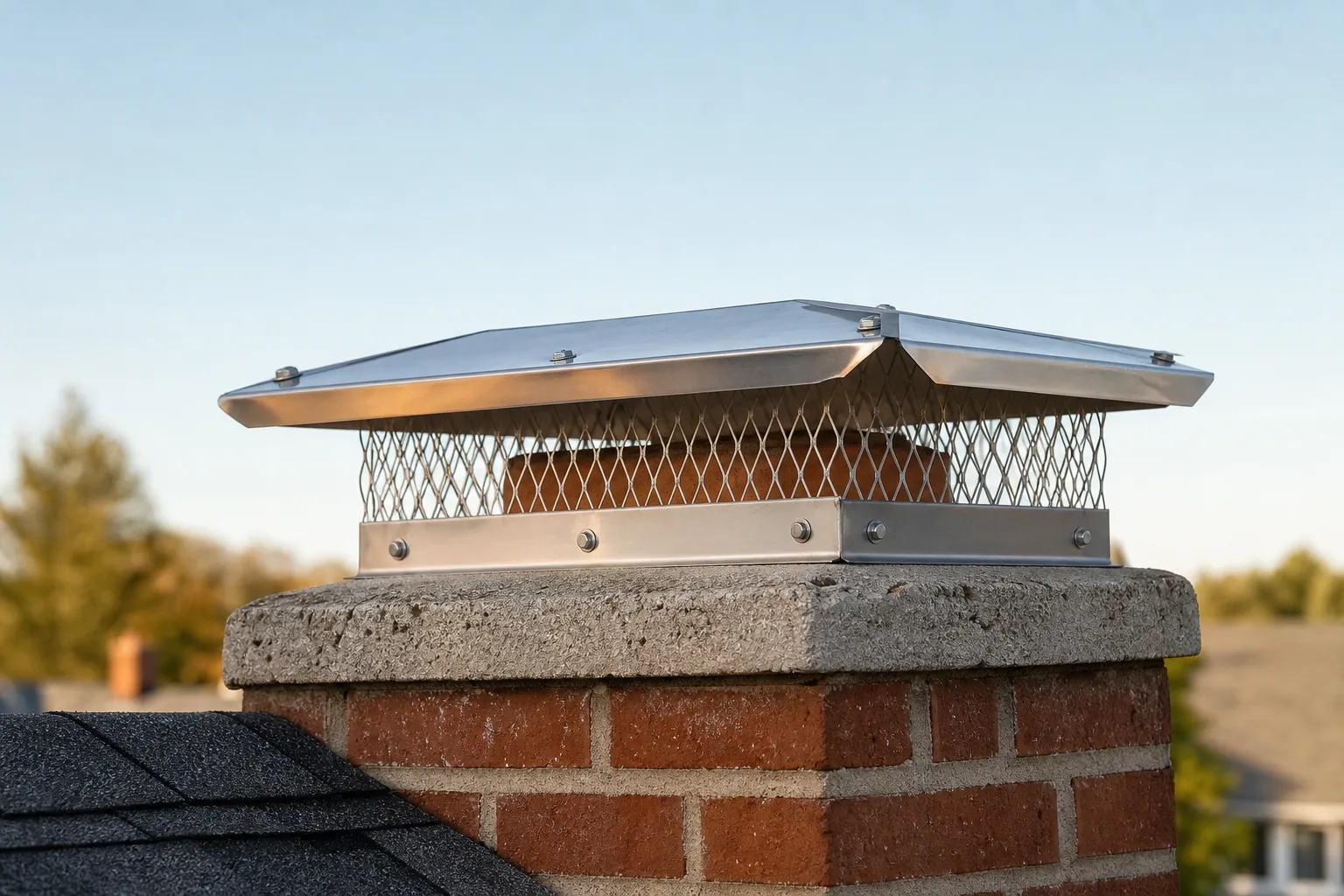
What a chimney cap does
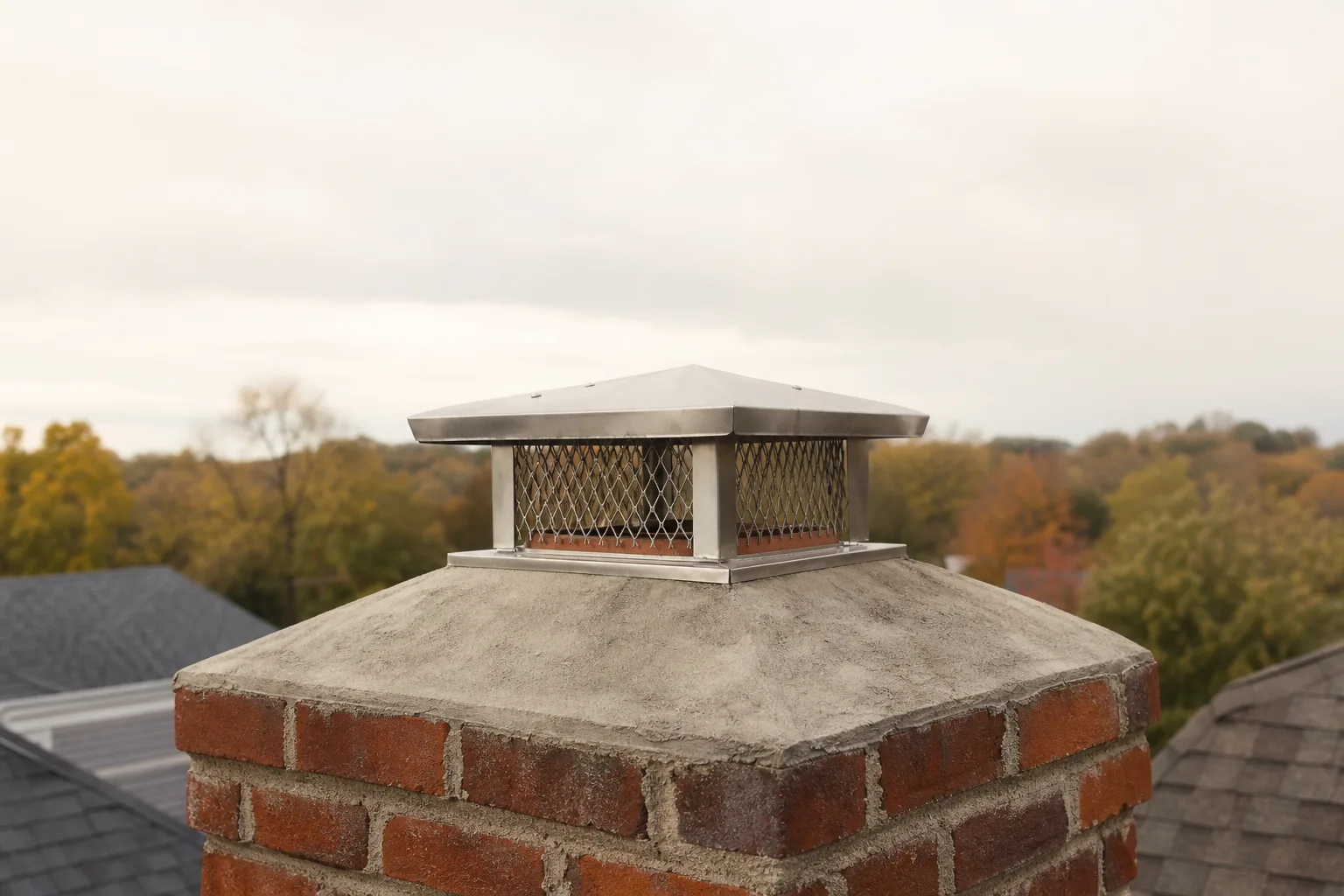
The cap is the piece most people can picture: a metal cover, usually stainless steel or copper, mounted over the flue opening, with mesh sides and a solid lid. It's simple hardware doing four jobs at once:
- Keeps rain and snow out of the flue. An uncapped flue funnels water directly onto the smoke shelf, the damper, and eventually the firebox, where it mixes with soot into an acidic mess.
- Keeps animals out. Birds, squirrels, and raccoons treat an open flue as a ready-made den. Nests block exhaust; blocked exhaust sends smoke, and carbon monoxide, back into the house.
- Arrests sparks. The mesh catches stray embers before they land on your roof or a neighbor's.
- Calms downdrafts. The lid disrupts wind that would otherwise push cold air and odor down the flue.
Caps are the unsung value pick of the whole chimney: modest to buy, quick to install, and they prevent problems that cost many times more to fix. When we find a chimney with no cap at all, it's usually because a storm took it and nobody could see the difference from the ground.
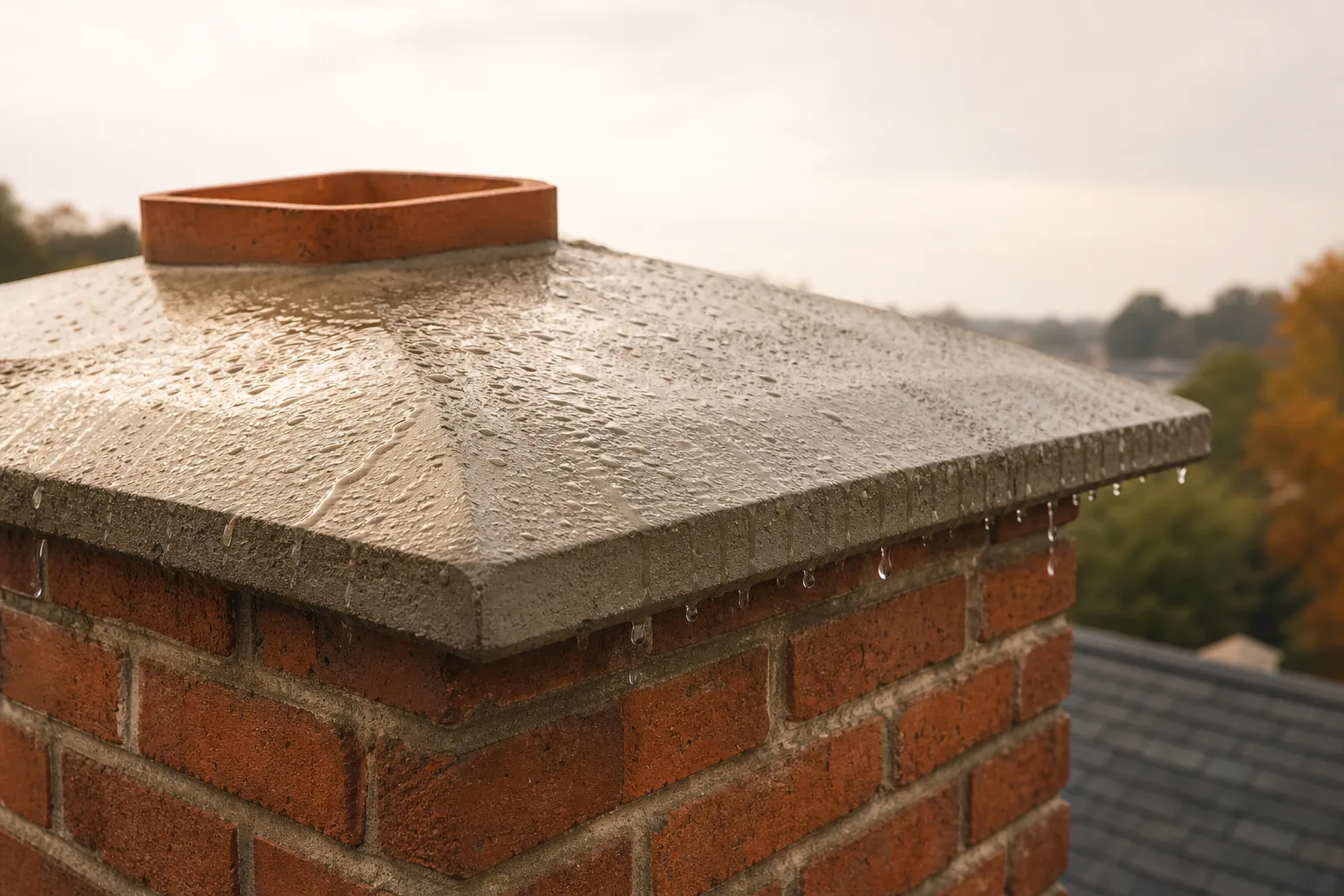
What a chimney crown does
The crown is easier to miss and harder to overstate. It's the sloped slab (properly, a purpose-built concrete pour) that covers the entire top surface of the chimney from the flue tile out to the edges of the brick. Its one job: shed water off the top of the masonry so the structure below stays dry.
A good crown has a slope to drain water, an overhang (drip edge) that carries runoff past the brick faces, and a bond-break around the flue tile so the two can expand independently. A bad crown, and many original ones were just leftover mortar troweled flat, cracks early and drinks water.
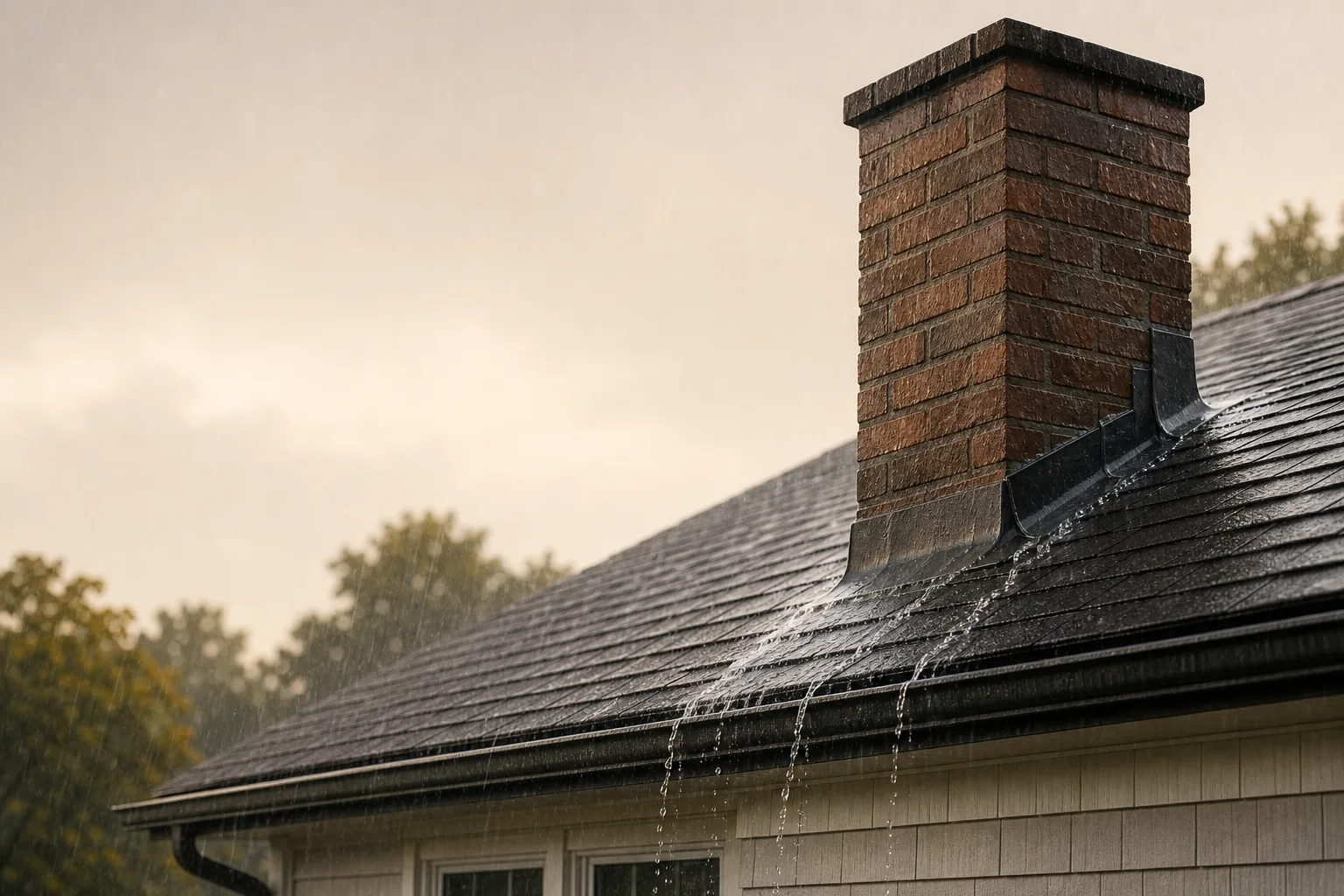
Why that matters: masonry is porous. Water that enters through a cracked crown soaks downward into brick and mortar joints. In any climate with freezing weather, that water expands as ice, and every freeze-thaw cycle wedges the cracks wider. Crown failure is how chimneys start crumbling from the top down. It's one of the most common root causes behind a leaking chimney.
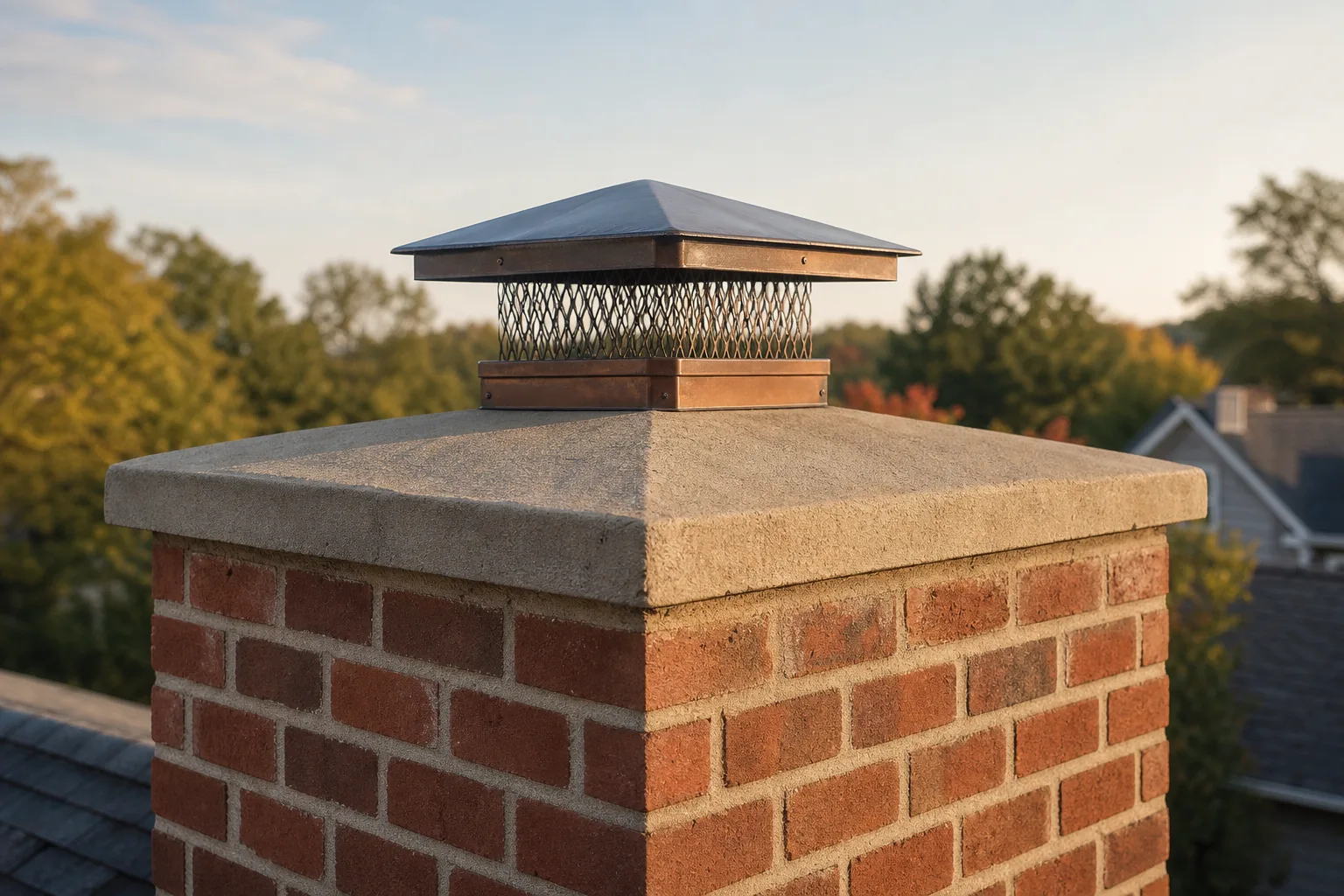
Chimney cap vs crown: side-by-side
Most homeowners raise the chimney cap vs crown question after a leak, when someone on the phone uses both words and neither one means much yet. This is the short version of what separates them:
| Chimney cap | Chimney crown | |
|---|---|---|
| What it is | Metal cover mounted over the flue opening | Sloped concrete slab sealing the top of the masonry |
| What it protects | The flue interior, damper, and firebox | The brick-and-mortar structure of the chimney itself |
| Keeps out | Rain down the flue, animals, debris; catches sparks | Water soaking into the masonry from the top |
| Common failure | Blows off, dents, mesh clogs with creosote, rusts | Hairline cracks that widen with freeze-thaw; eroded edges |
| Typical fix | Reattach or replace, usually a same-visit job | Seal small cracks; recoat or rebuild when damage spreads |
| If ignored | Water and animals in the flue, flue-blockage hazards | Spalling brick, failing mortar, leaks, structural repair |
The shorthand: cap failure floods the flue; crown failure rots the structure. You want neither, and each protects against something the other can't.
Not sure which part is failing on yours? Request a visit: booking is free, there's no obligation, and you'll get a straight answer with photos.
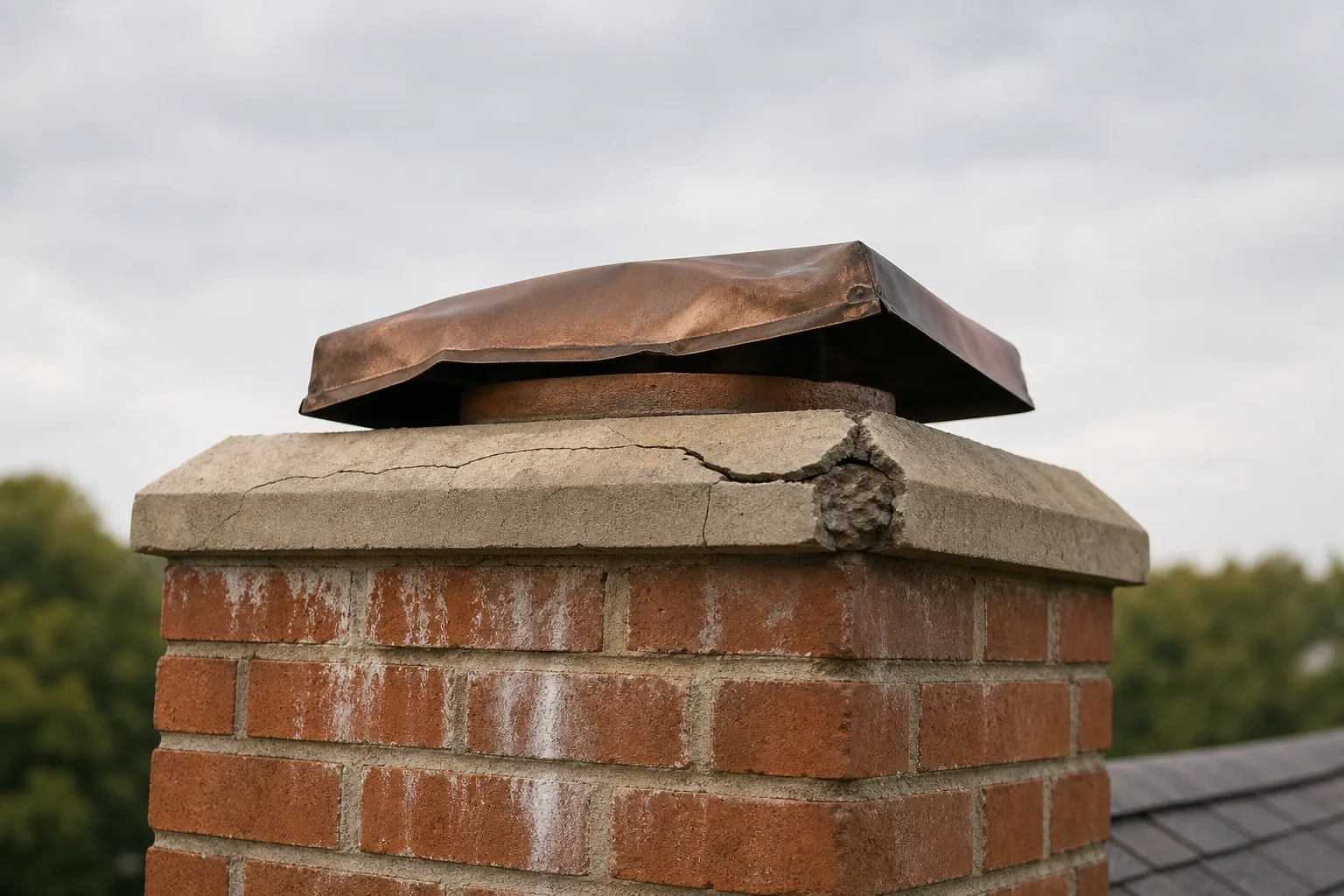
Failure signs: how each part tells you it's in trouble
Neither part is visible in detail from the ground, but both leave clues you can catch:
Cap warning signs
- Metallic rattling or banging on windy nights, a loose cap announcing itself
- A cap visibly tilted, dented, or simply gone after a storm
- Animal sounds in the flue, or debris and nesting material on the smoke shelf
- Water sounds or drips in the firebox during rain
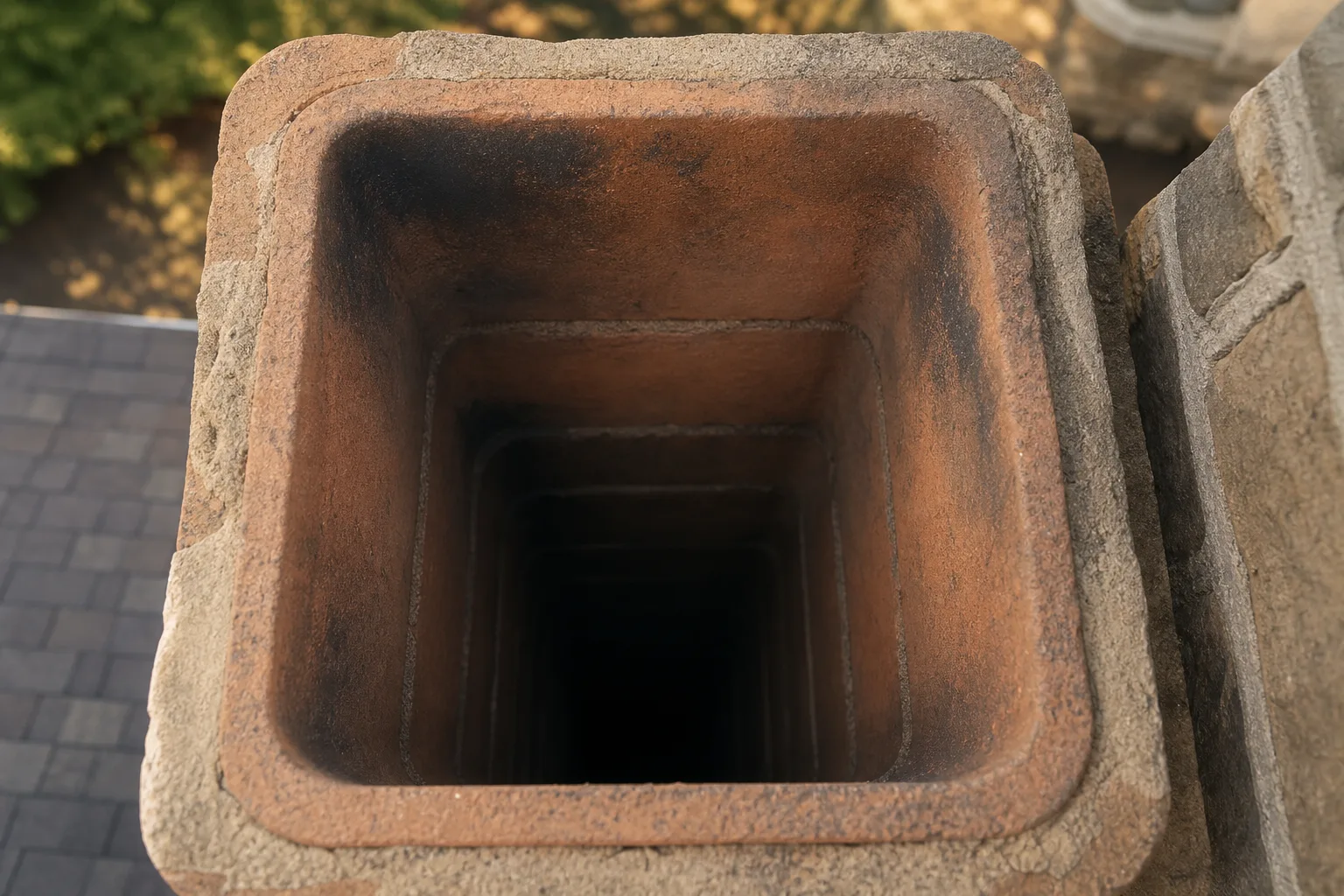
- Smoke exiting sluggishly: a mesh screen clogged with creosote chokes the draft
Crown warning signs
- White staining (efflorescence) on the upper courses of brick, minerals left behind by water moving through masonry
- Flakes or chips of brick face on the roof or at the chimney's base (early spalling)
- Visible cracks or missing chunks at the chimney's top edge, sometimes spottable with binoculars
- Damp patches on interior walls near the chimney after long rains
Any one of these deserves a look. Two or more usually means water has already been getting in for a while.
The maintenance rhythm that keeps both healthy
Neither the cap nor the crown asks for much; they just ask annually:
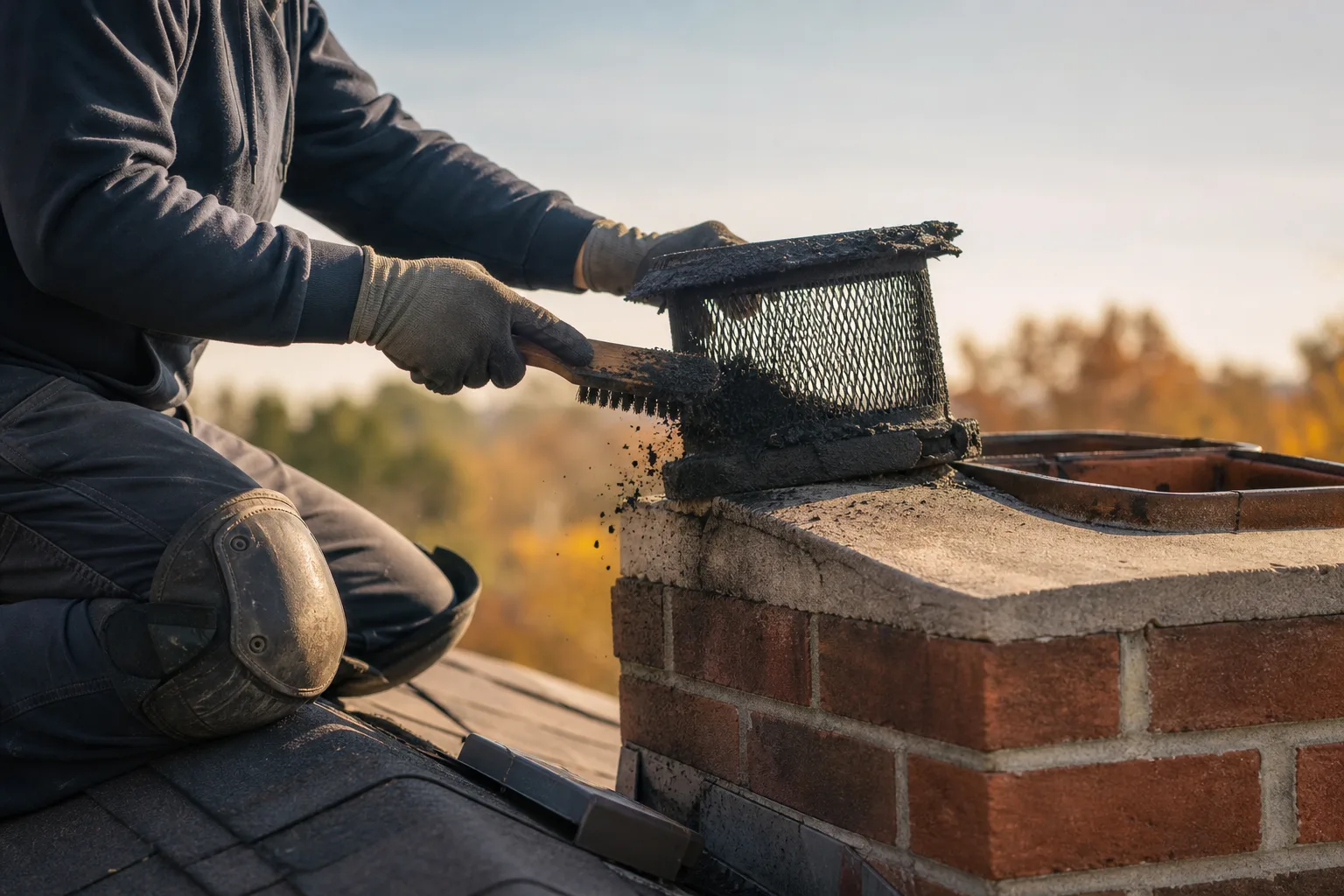
- Have the mesh cleaned with every sweep. Cap screens clog with creosote in heavy-burning households, and a choked screen strangles the draft long before it fails outright. It takes minutes during a routine chimney cleaning and pays back instantly in smoother fires.
- Get the crown looked at every year. Crowns fail in slow motion, which makes them perfect candidates for the annual inspection: every year of early warning converts repair money into sealant money.
- After big weather, look up. Wind takes caps; hail and falling limbs crack crowns. A thirty-second glance from the yard after a serious storm catches the failures that would otherwise announce themselves through your ceiling.
- When one fails, check the other. Cap and crown share the same weather, the same age, and usually the same neglect. If a storm took the cap, the crown beside it deserves a look in the same visit.
The top of the chimney is out of sight in the most literal way: invisible from the yard, the street, and every window in the house. An annual appointment is how it stays out of mind for the right reasons.
Repair or replace: how the decision usually goes
Here's the honest version of how these calls get made once the pros in our network are on the roof:
- Caps are usually replaced, not repaired. A quality stainless cap sized correctly to the flue outperforms a patched old one, and the cost difference rarely justifies rehabilitating failing hardware. Clogged mesh, though, just gets cleaned.
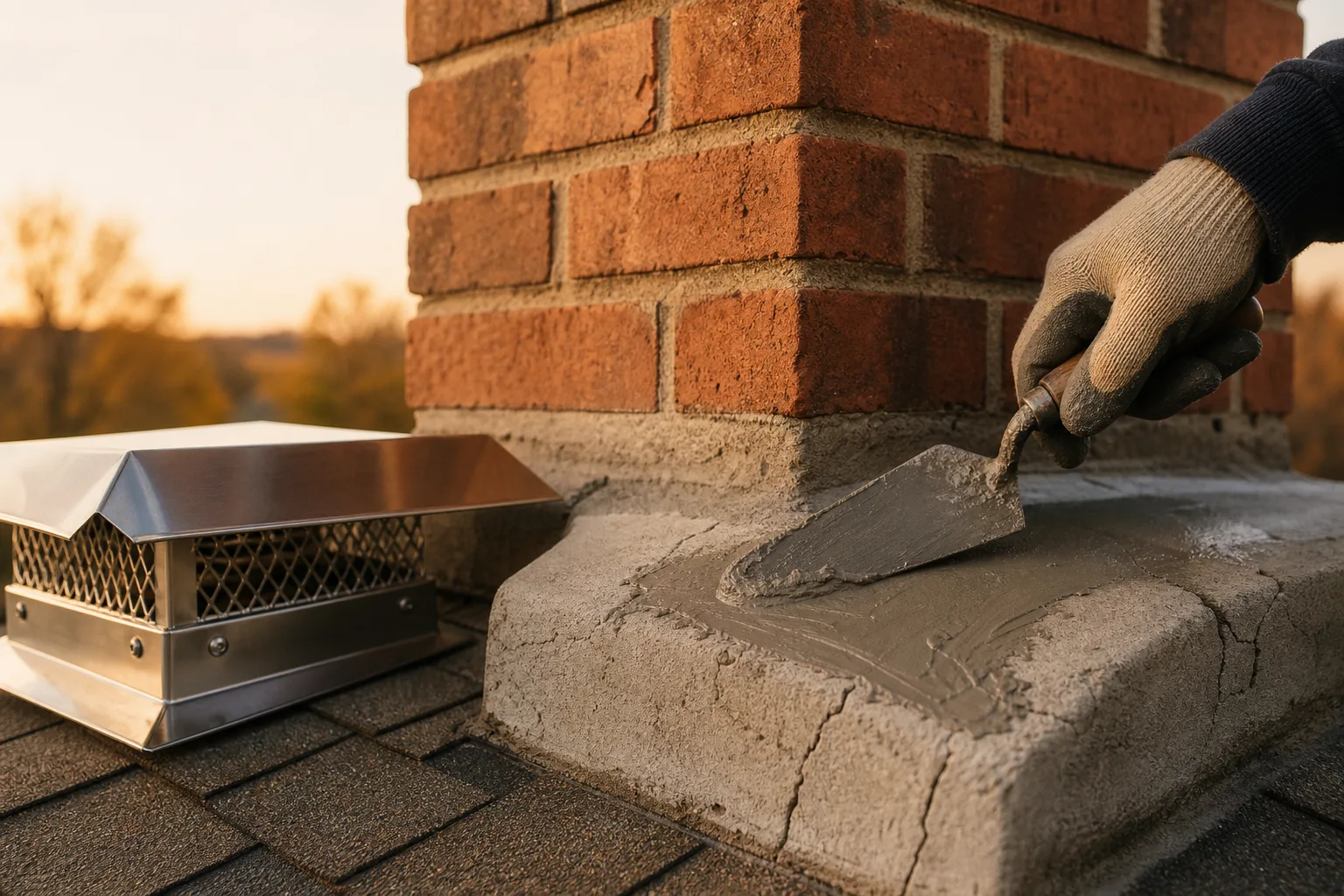
- Small crown cracks get sealed. Hairline cracking caught early takes a flexible crown sealant that moves with temperature swings. This is the cheap window. The whole point of annual checks is catching crowns here.
- Widespread cracking gets recoated or rebuilt. Once cracks network across the crown or the edges erode, sealant is a bandage. A proper repair rebuilds the crown with the slope, overhang, and bond-break the original probably never had.
- Chronic water damage triggers a bigger conversation. If a failed crown has been feeding water into the masonry for years, the crown repair may come with tuckpointing or brick replacement below it. Better to learn that from an inspection than from a contractor mid-job.
In budget terms, the chimney cap vs crown split is stark: replacing a cap is hardware and an hour on the roof, while a rebuilt crown is materials, cure time, and sometimes masonry work underneath it. The pattern across all four calls is the same: the earlier the catch, the smaller the invoice. An annual inspection that includes the top end costs little and keeps you permanently in the cheap column, and if you're unsure what's up there right now, that's exactly the visit to book through our service request page.
Symptom checker
What is your chimney doing?
Tap the closest match for an honest first answer.