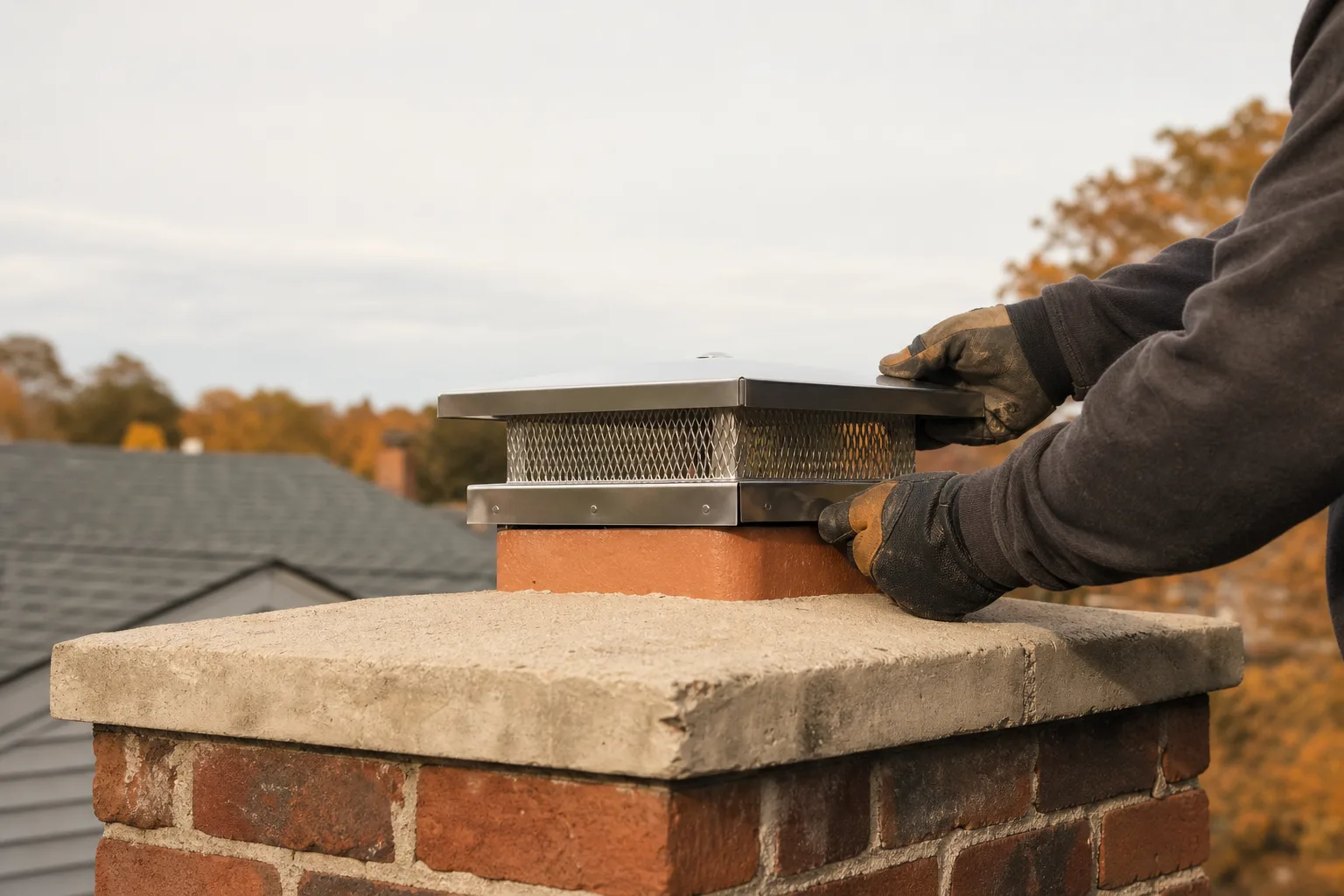



Chimney service

Chimney Waterproofing

A breathable sealant that sheds rain while letting masonry dry outward. The last step after repairs, never a substitute for them.

5.0/5
8 verified reviews
Ethan MillerEthan Miller · Chimney specialist, VIO CHIMNEYLast reviewed July 20264 min read
The short answer

Seal a wet chimney and you have not stopped the water. You have locked it in.

Brick is porous by design — it takes on moisture and gives it back. Chimney waterproofing uses a breathable siloxane or silane formula that stops liquid water entering while still letting vapor escape outward. That distinction is the entire job. A film-forming sealer, or any paint-on product that leaves a visible sheen, traps moisture inside the masonry where it freezes, and spalls the brick faces off from behind. Which is why the sequence matters: repairs first, then sealant, and never the other way round.

How it goes on

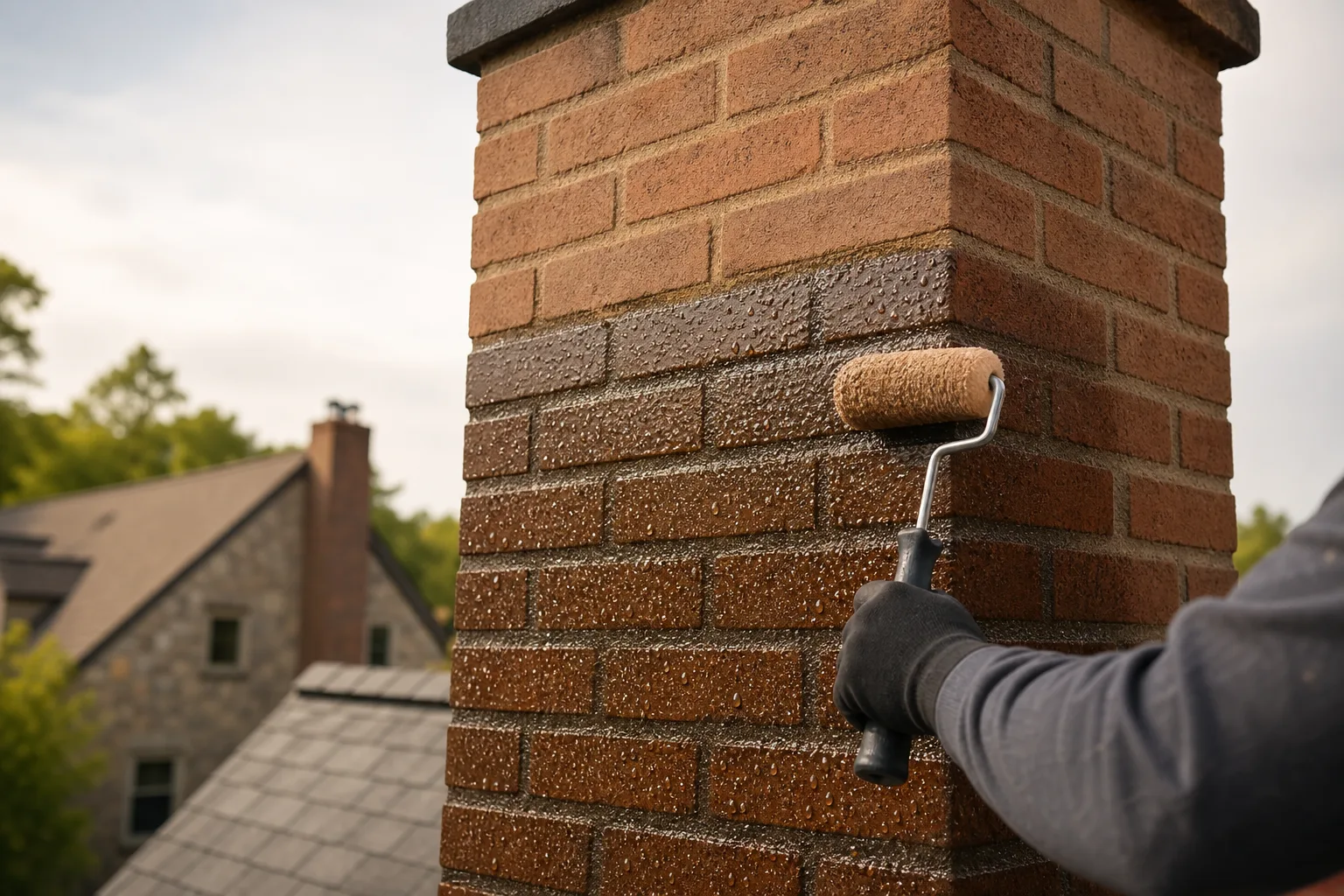
Flooded, not brushed thin

Sealant rolled onto chimney brick with water beading on the treated section

Applied to visible run-down so it soaks in. A thin brushed coat sits on the surface and wears off in a season.

On this pageSigns you need this3 sections+2
  1. Signs you need this
  2. The jobs this includes
  3. Common questions
Do you have this problem?

Signs you need chimney waterproofing

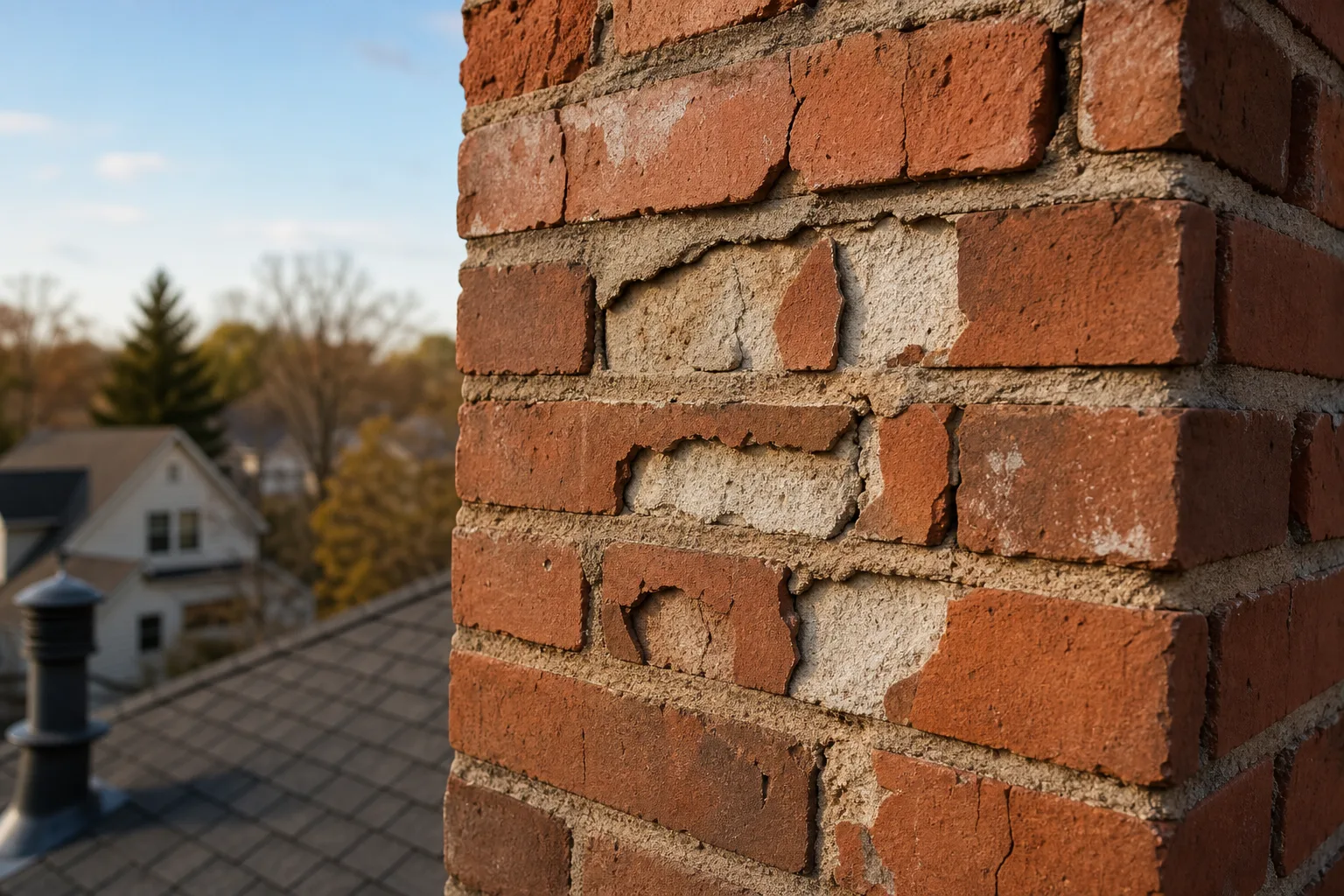
Chimney brick faces flaking and popping off, exposing pale powdery masonry underneath from freeze damage

Brick faces flaking off

Freeze-thaw damage already under way. Sealing over spalled brick locks moisture behind the coating. This needs the brick replaced first, then sealing.
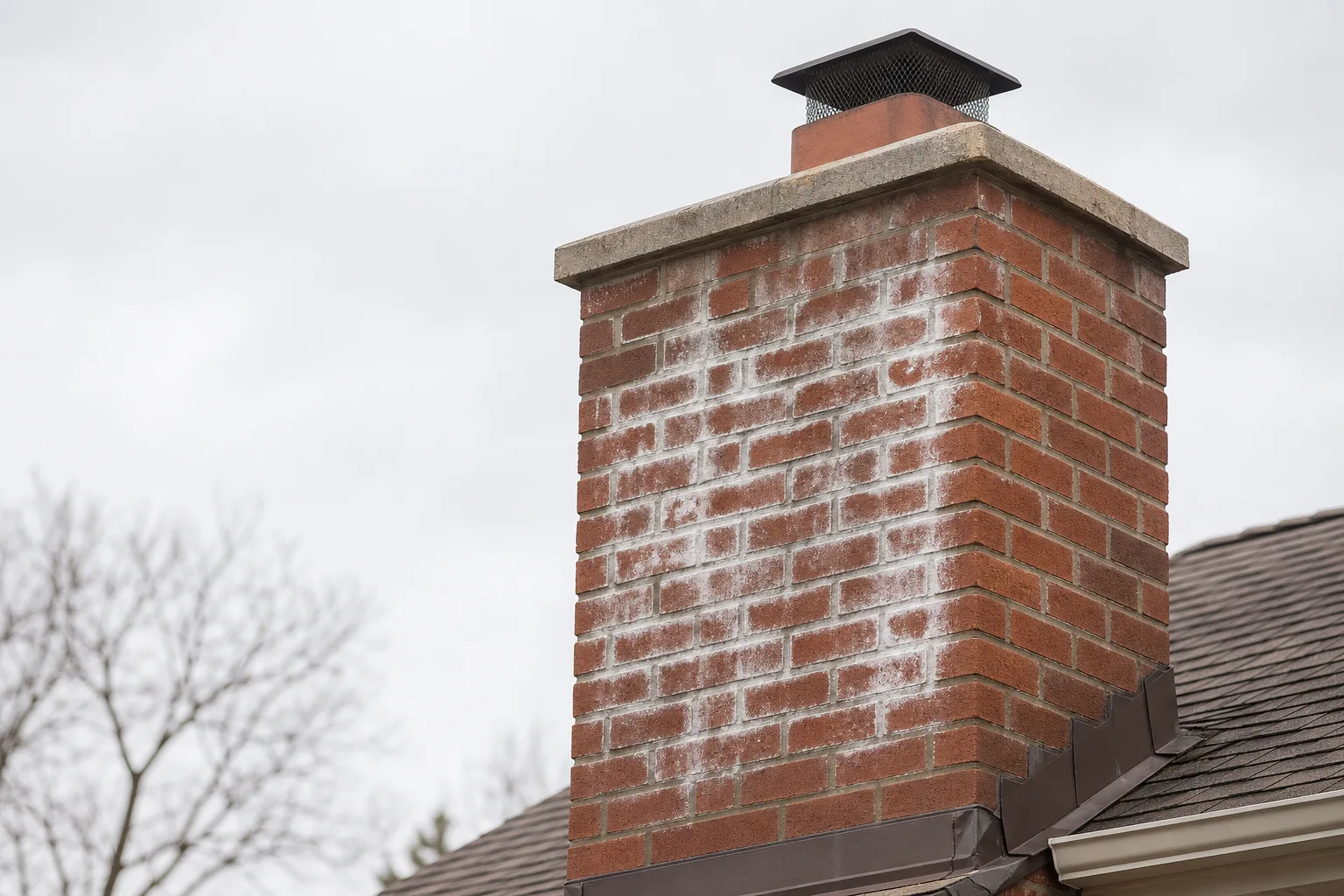
White chalky efflorescence staining spread across the face of a brick chimney

White chalky staining on the stack

Salts carried out by water moving through the masonry. Proof the wall is taking on water, and the clearest case for sealing once the entry point is fixed.
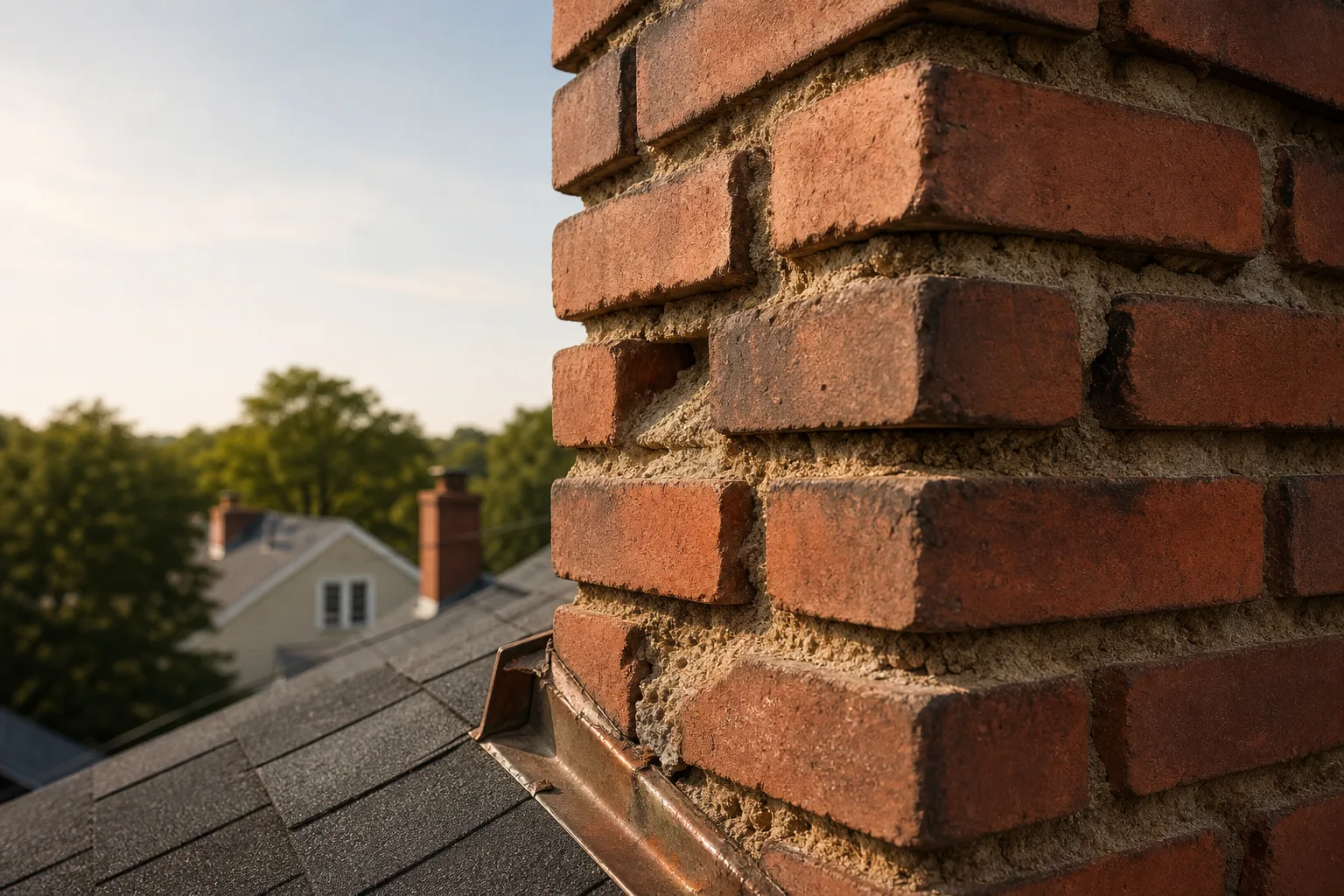
Eroded chimney mortar joints recessed behind the brick faces with loose sand and grit

Mortar joints eroding back from the face

Open joints let water in faster than any face ever will. Sealant over failed pointing is money spent on the wrong problem. Repoint, wait for the cure, then seal.
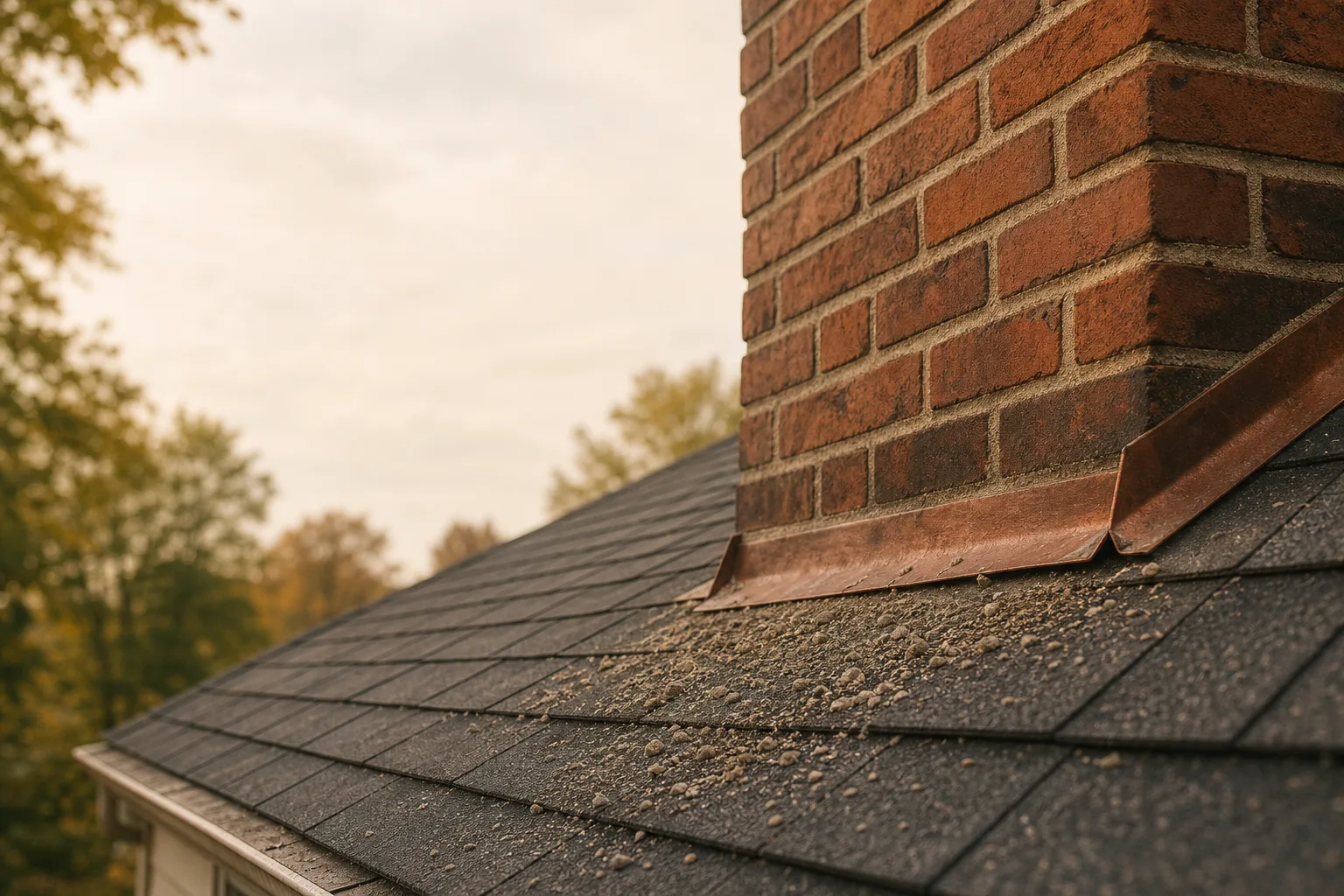
Sand and mortar crumbs on roof shingles at the base of a chimney

Sand and grit on the roof after rain

Joints washing themselves out. The stack is shedding material every storm, and that has to be put right before anything goes over it.
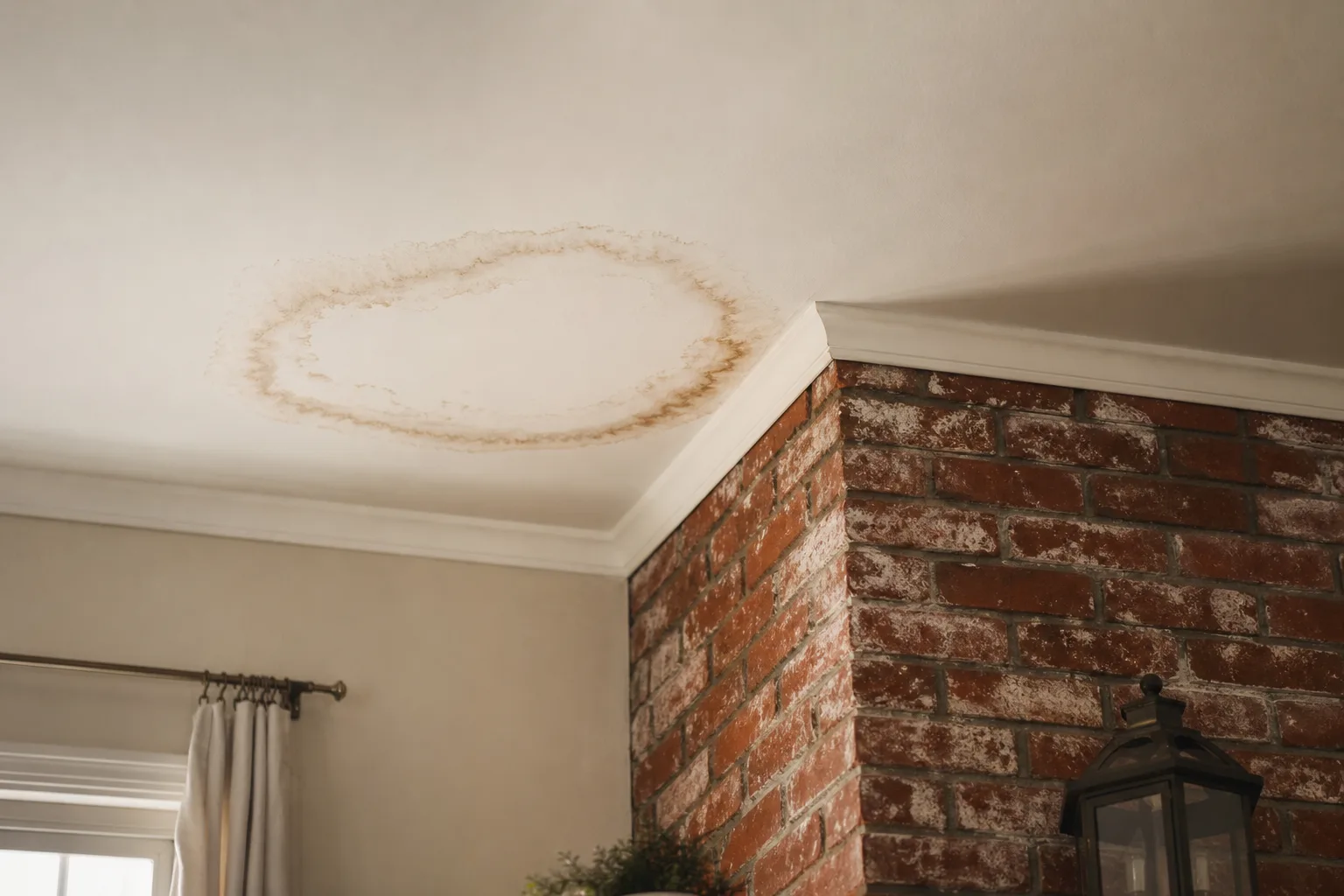
Brown ring-shaped water stain on a white ceiling next to the chimney breast

A stain on the ceiling near the chimney

An active leak somewhere above. Sealing the exterior will not touch it — the water is coming through the crown, the cap or the flashing, not through the brick face.
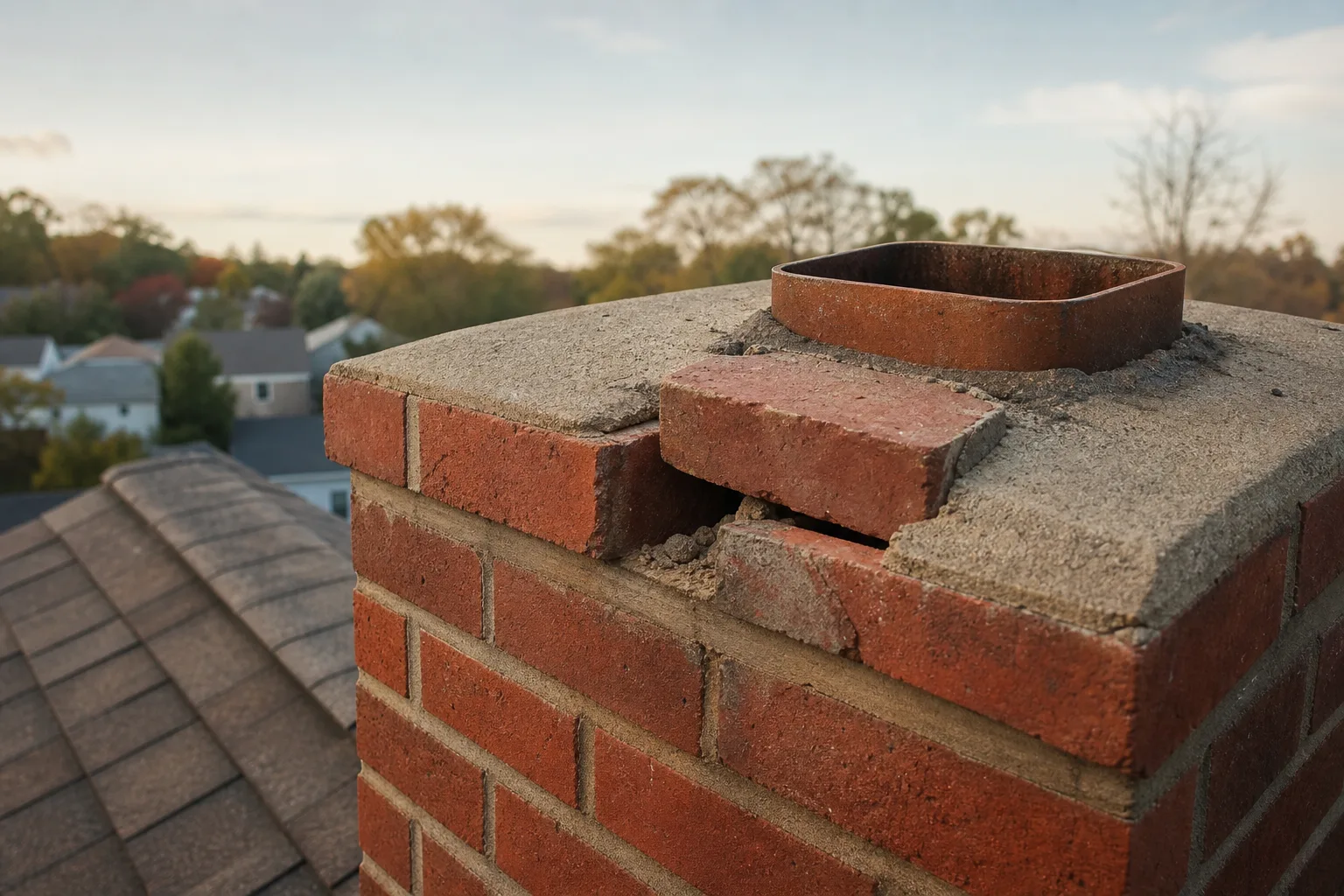
One brick displaced and loose in the top course of a chimney

Sound brick that has never been treated

The best case there is. Masonry in good condition, sealed before damage starts, is the version of this job that actually earns its price.

How we work

How the visit works

The same four steps every time, whatever the repair turns out to be.
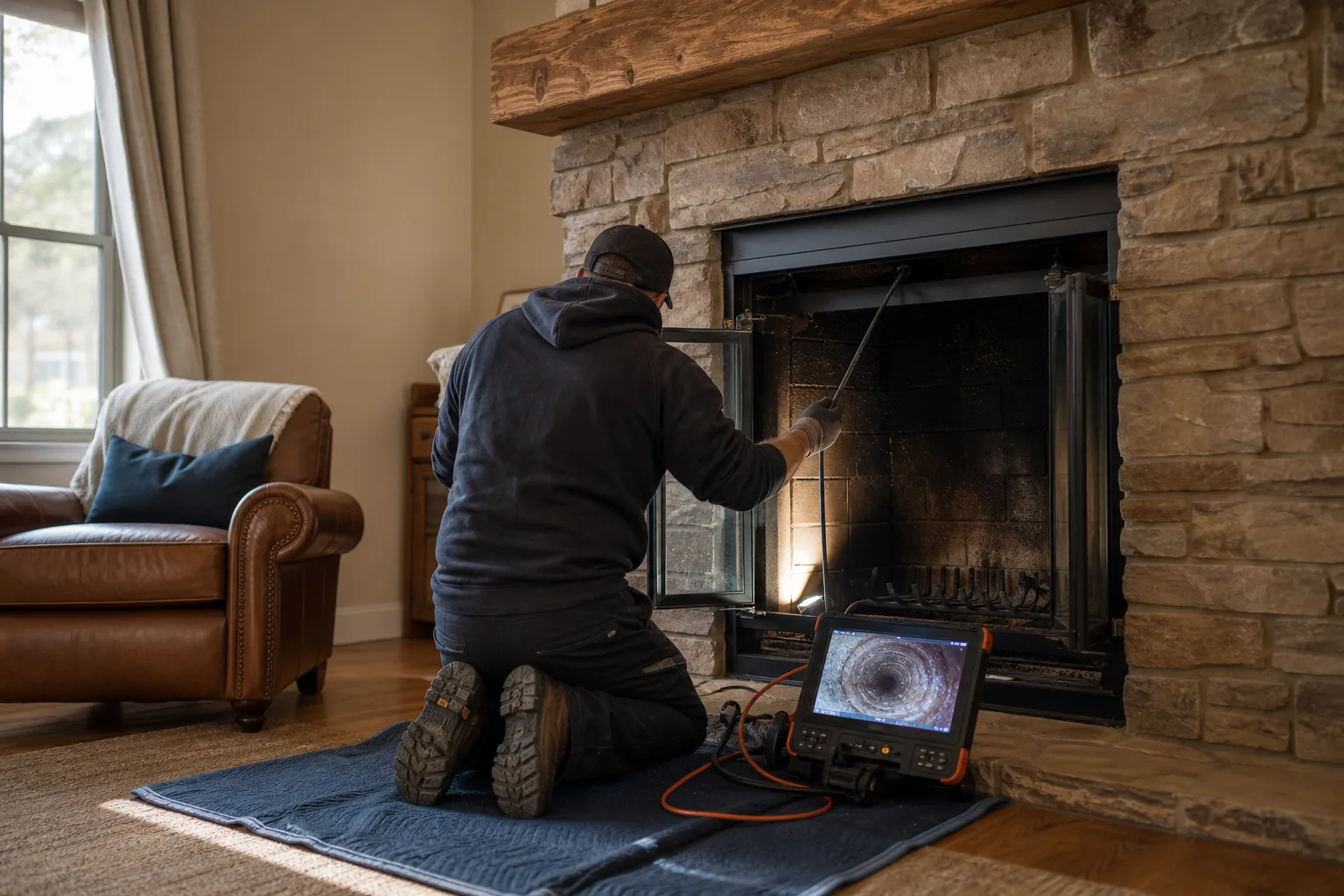
  1. Technician kneeling at an open fireplace feeding an inspection camera up the flue beside a monitor
    01

    Inspection first, always

    A look at the crown, cap, flashing and exterior masonry, then the flue, damper and firebox — with a camera where the job calls for a level 2 scan. Whatever needs work gets shown to you, not just described.
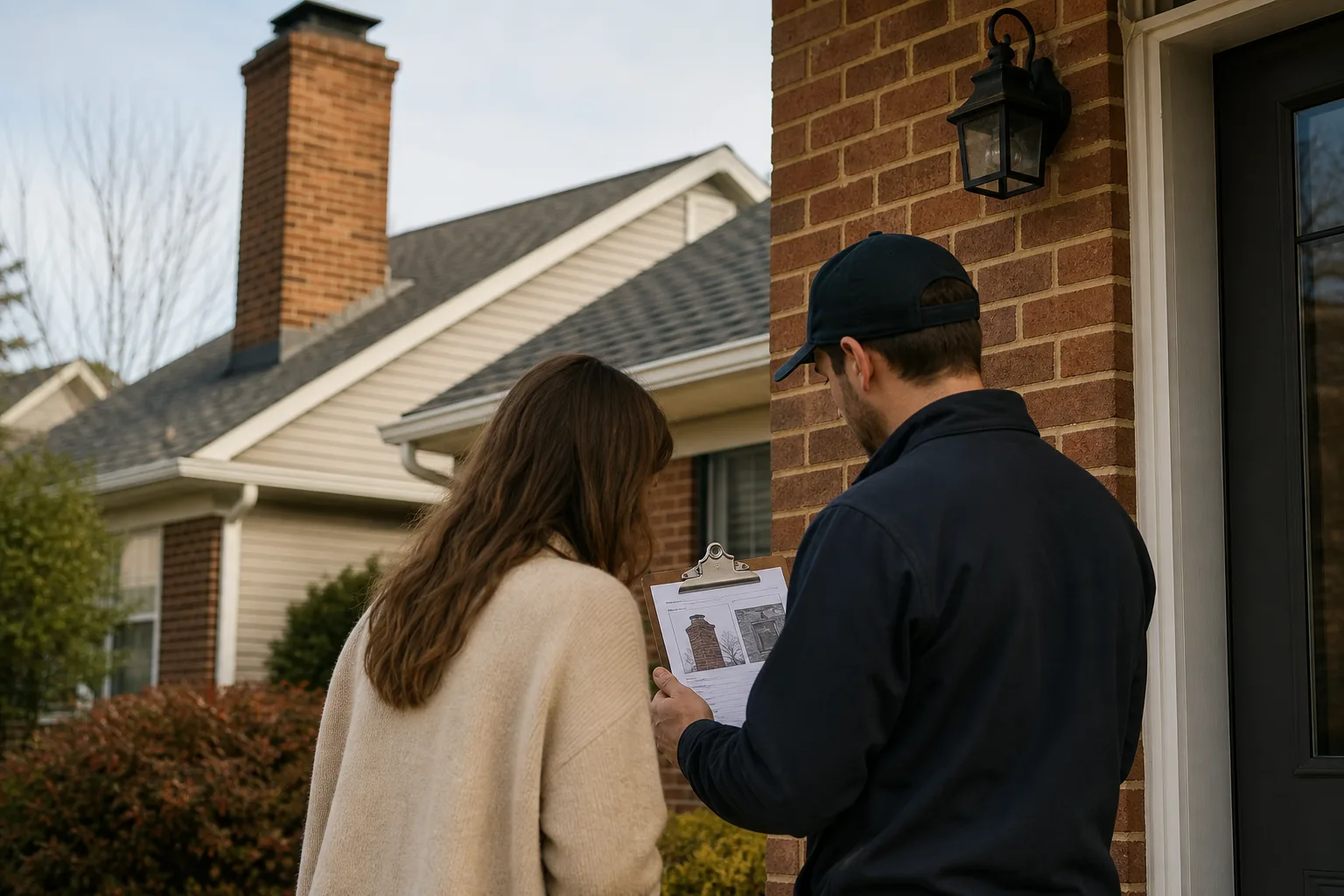
  2. Chimney technician reviewing a printed estimate on a clipboard with a homeowner at the front door
    02

    A written estimate before anything

    Scope, price and what is not included, in writing. Nothing starts until you approve it, and an emergency is not a reason to skip this step.
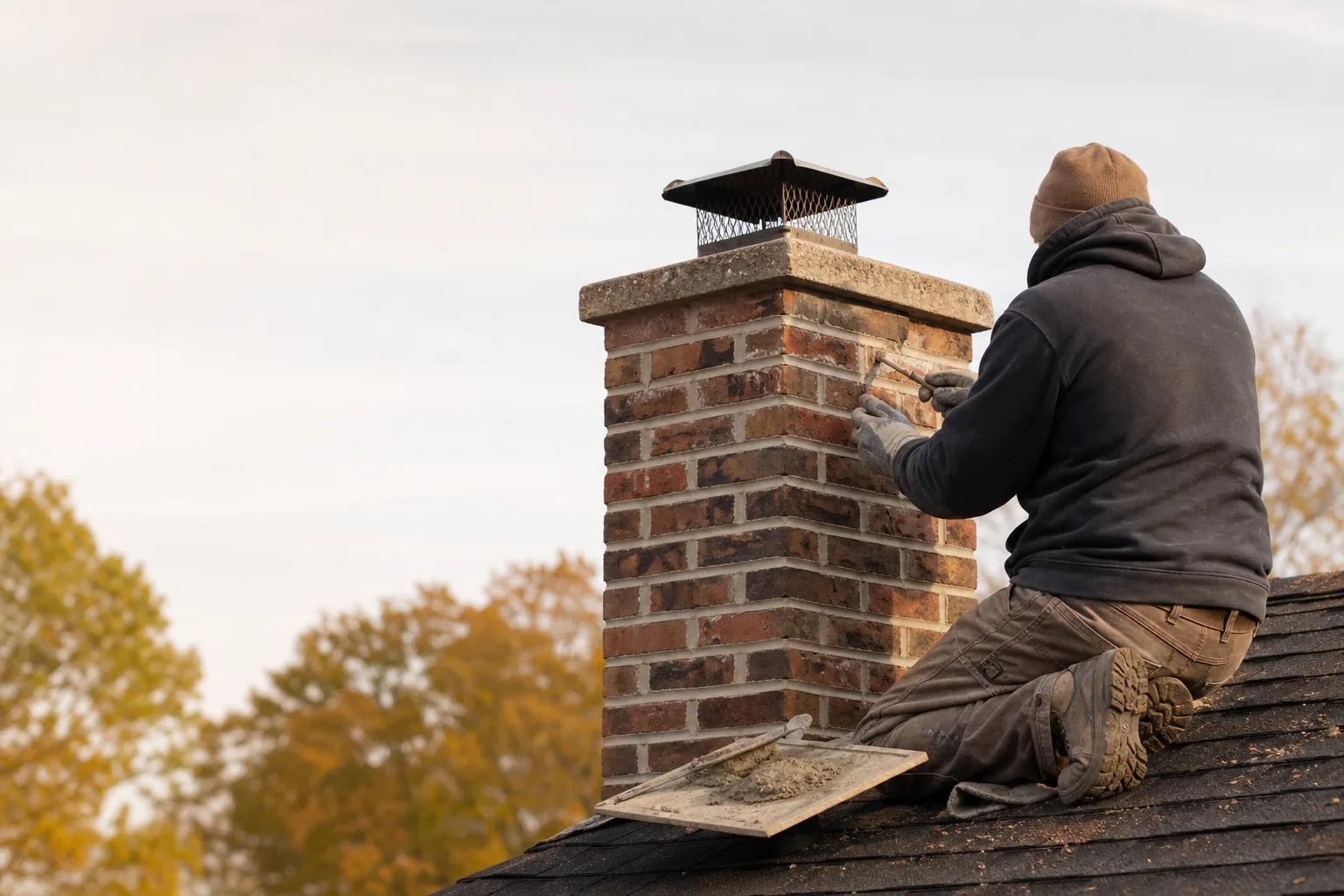
  3. Mason on a rooftop repointing mortar joints on a brick chimney with a trowel
    03

    The work itself

    Matched materials and the manufacturer's spec, not whatever is on the van. Drop cloths down, and the room left as it was found.
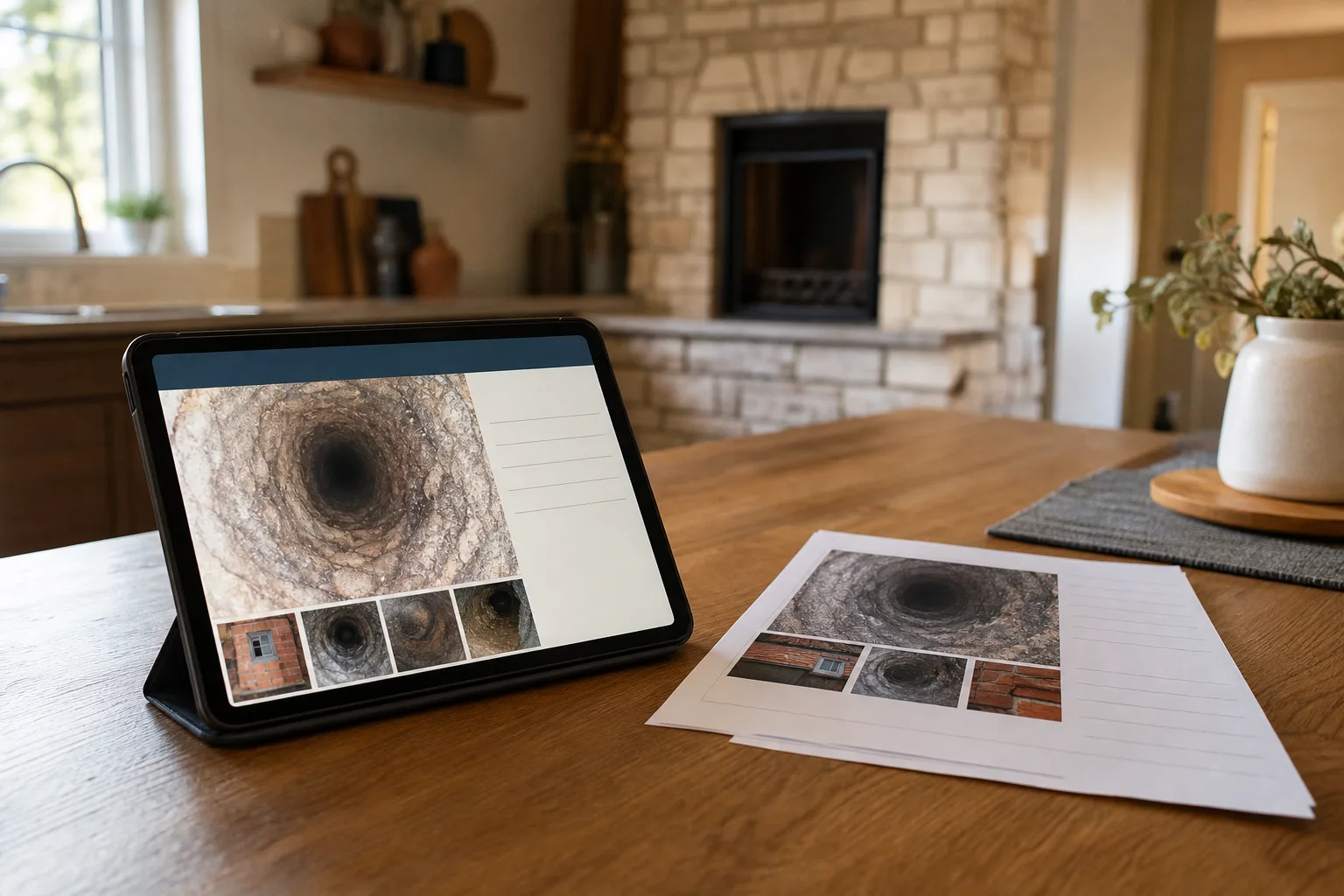
  4. Tablet on a kitchen table showing a chimney inspection report with flue camera still
    04

    Verification and a report

    A second scan after the work, and written findings you can keep, hand to an inspector, or send to an insurer.

What it covers

The jobs this actually includes

Not every job on this list is equally urgent, so they are ordered that way. A cracked liner stops you using the fireplace tonight; waterproofing can wait for a dry week.

  • Repairs first, then sealing

    Structural

    Repointing or brick replacement, a full mortar cure, then the sealant. It is two visits and it is the only sequence that works. Sealing damaged masonry is the mistake this service is best known for.

    On site: 1–2 days plus cure

  • Removing a previous film sealer

    Structural

    Stripping an old paint-on or acrylic coating that has been holding moisture in. Unpleasant, slow, and necessary before anything breathable can do its job.

    On site: 1–2 days

  • Breathable siloxane treatment

    Stops water

    Vapor-permeable siloxane or silane, flood-applied to saturation rather than brushed thin, over sound masonry. Leaves no sheen. This is the product that belongs on a chimney.

    On site: Half a day

  • Crown sealing

    Stops water

    A flexible elastomeric coat over the crown, which is a different product from the brick treatment because a crown moves and cracks where a wall does not.

    On site: Half a day

  • Reapplication on treated masonry

    Preventive

    A good siloxane treatment lasts seven to ten years on a chimney, less on the weather-facing side. Reapplying on schedule is cheaper than the pointing it prevents.

    On site: Half a day

Times are for the work itself, not for scheduling. Masonry needs roughly 40°F to cure properly, which is what limits this work in a northern winter rather than whether a crew is free.
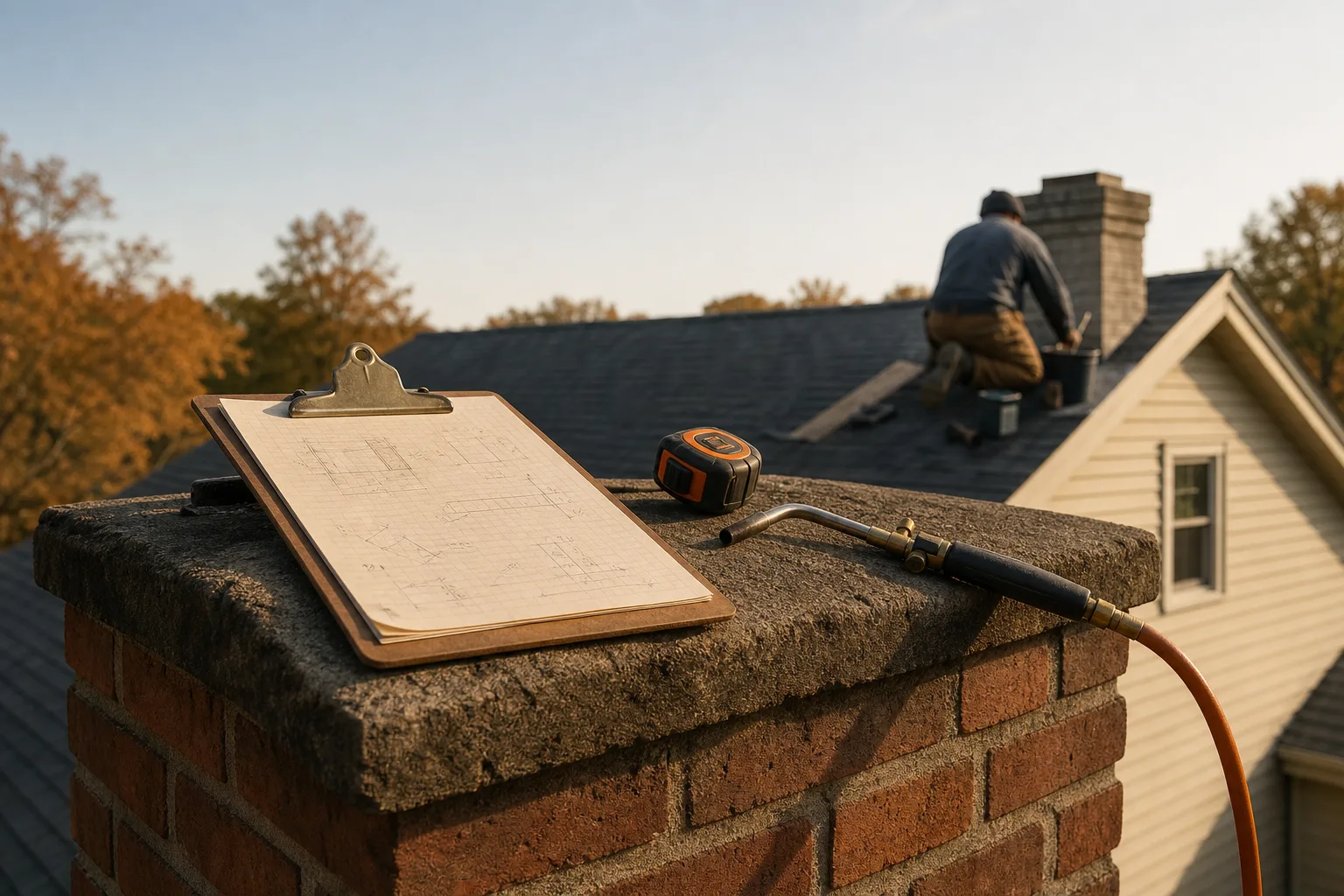
Handwritten estimate on a clipboard resting on a brick hearth beside a tape measure and torch
What drives the price

Why chimney waterproofing quotes vary so much

  • The surface area of the stack, and how much of it is above the roofline
  • Roof pitch and height, and whether scaffolding is needed
  • Whether repairs are needed first, which is a separate job and a separate visit
  • Whether an old film-forming sealer has to be stripped
  • Product grade — a proper siloxane costs several times a hardware-store sealer

Sealing a sound, accessible stack is a half-day job and priced modestly. What changes the number is everything that has to happen first: repointing, brick replacement, or stripping a previous coating. If a quote for waterproofing arrives without anyone having looked at the mortar, it is a quote for the wrong job.

Ethan Miller and Ryan Carter of VIO CHIMNEY beside a branded service truck
Who we are

The people behind every visit

Founded by Ryan Carter in 2019. Every page you read here is reviewed by Ethan Miller, our chimney specialist. A written estimate before any work, and the findings in writing whether or not anything needs doing.

More about who we are →
Capped brick chimney silhouetted against a soft dusk sky above a tidy residential rooftop

The VIO Standard

  • A written estimate first
  • License and insurance checked
  • Nothing starts without your OK

Common questions

Does chimney waterproofing actually work?

On sound masonry, with the right product, yes — a breathable siloxane cuts water absorption dramatically and stops the freeze-thaw cycle that spalls brick. On damaged masonry it does nothing useful and can do harm. And with the wrong product it causes the exact damage it was bought to prevent. So the honest answer is that it works when it is the last step in a sequence and fails when it is used as a shortcut past one.

What kind of sealer should be used on a chimney?

A vapor-permeable siloxane or silane, applied to saturation. The test is simple: after it cures, the brick should look exactly as it did before, just darker when wet. Anything that leaves a gloss, a sheen or a visible film is a coating rather than a water repellent, and coatings trap moisture in masonry. That includes most general-purpose masonry sealers sold for driveways and patios.

How much does chimney waterproofing cost?

Treating a sound, accessible stack is a half day and priced accordingly — it is one of the cheaper preventive jobs. The cost rises with height and access, and it rises a lot if repointing or brick replacement has to happen first, because that is a separate job with its own timeline. Professional-grade siloxane costs several times what a hardware-store sealer does, and that difference is the whole product.

How long does chimney waterproofing last?

Seven to ten years on a typical stack, and less on the face that takes the prevailing weather. It does not fail suddenly; it wears off, and the sign is that the brick starts darkening in the rain again where it used to shed. Reapplying on schedule costs a fraction of the repointing it defers.

Can I waterproof a chimney myself?

The application is straightforward — it is flood-applied with a low-pressure sprayer, bottom up, to visible run-down. The two things that go wrong are working at height and buying the wrong product, and the second is the more expensive mistake. If you do it yourself, buy a siloxane water repellent from a masonry supplier rather than a general sealer from a hardware shop, and be honest about whether the mortar needs work first.

let's get it on the calendar.

Tell us your ZIP code and what you need. The pro who covers it quotes the job in writing, and nothing starts until you approve the number.

(513) 655-6702Get my estimate