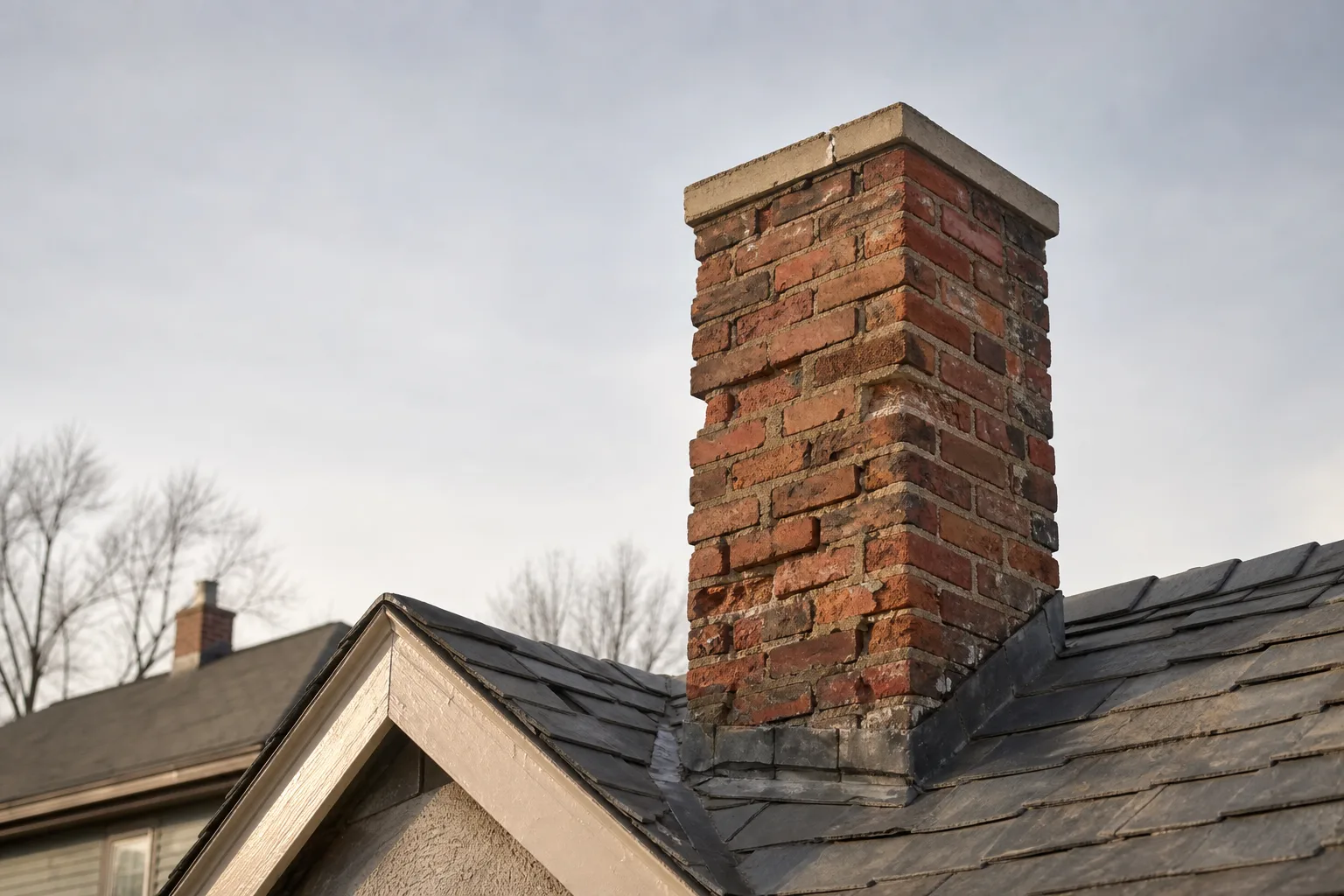




On this pageWhy Cleveland brick takes a beating6 sections+5
Quick answer
Cleveland's lake-effect winters put chimneys through dozens of freeze-thaw cycles every season, and the pre-war brick common across the city absorbs the water that powers the damage. Spalled faces and receding mortar joints compound year over year — tuckpointing plus water management is what stops the cycle.
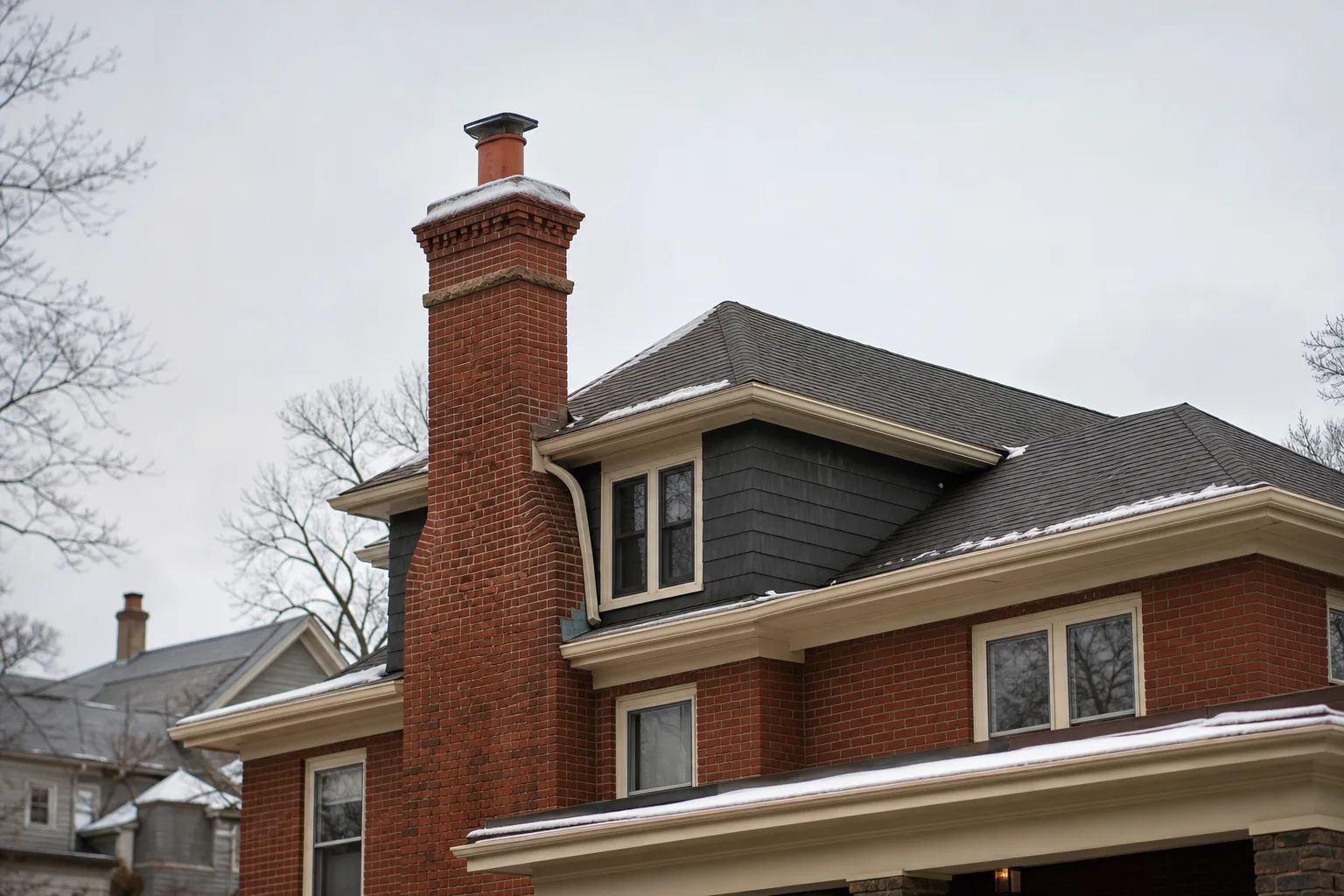
Why Cleveland brick takes a beating
Almost every case of Cleveland chimney masonry damage we're called out to look at traces back to the same handful of local conditions:
- Lake Erie keeps everything wet. Lake-effect snow, wind-driven rain, and long gray stretches of humidity mean Cleveland masonry spends the cold months damp — and damp is the raw material of freeze-thaw damage.
- The temperature crosses freezing constantly. A deep-freeze climate freezes masonry once and holds it. Cleveland's winters oscillate — thaw, refreeze, thaw again — delivering dozens of expansion cycles to whatever water the brick is holding.
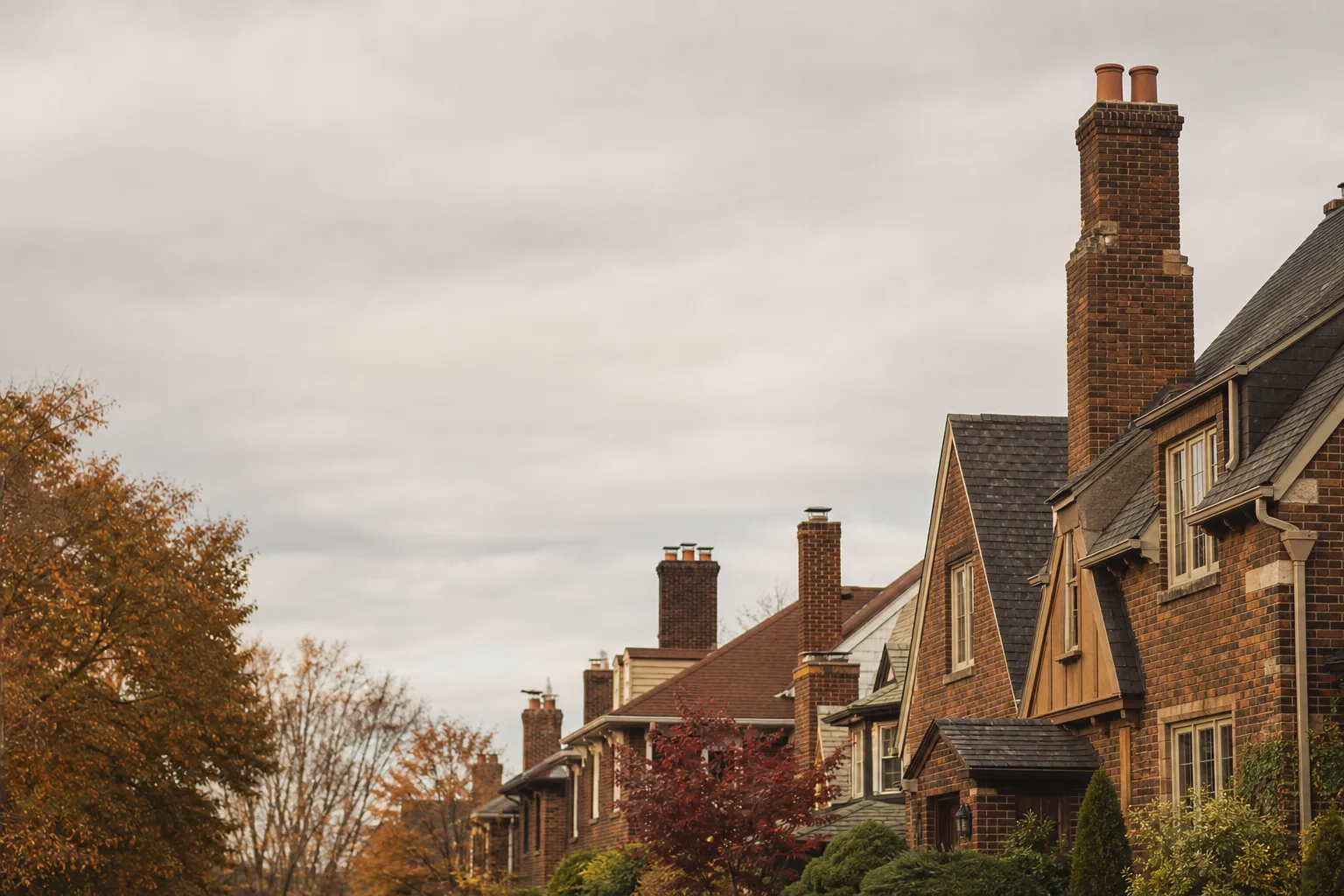
- The housing stock is proudly old. Lakewood, Ohio City, Tremont, Cleveland Heights — huge swaths of the area's homes are pre-war, with chimneys built from softer brick and lime-rich mortar, many carrying original clay tile flues. Beautiful, serviceable — and more absorbent than modern hard-fired brick.
- Chimneys get the worst exposure. The stack stands above the roofline in the wind, catches weather from every side, and — unlike walls — has no eaves protecting it. It's always the first masonry on the house to show the damage.
None of this dooms a Cleveland chimney. It just means the maintenance story here is a water-management story, and the calendar matters more than it does in gentler climates.
What homeowners are describing when they search "cleveland chimney masonry damage"
Almost everyone who types cleveland chimney masonry damage into a phone is looking at one of four things:
- Brick faces flaking or popping off — spalling, covered below
- Mortar joints that have receded a quarter inch or more, deep enough to lay a fingertip into the line
- A cracked or crumbling crown — the sloped concrete slab on top of the stack that's supposed to shed water away from the brick
- Evidence indoors — a damp patch on the ceiling beside the chimney chase, rust on the damper, or a musty smell after a thaw
Three of those four are the same problem at different stages, which is why an honest assessment looks at the whole stack rather than the one spot that caught your eye.
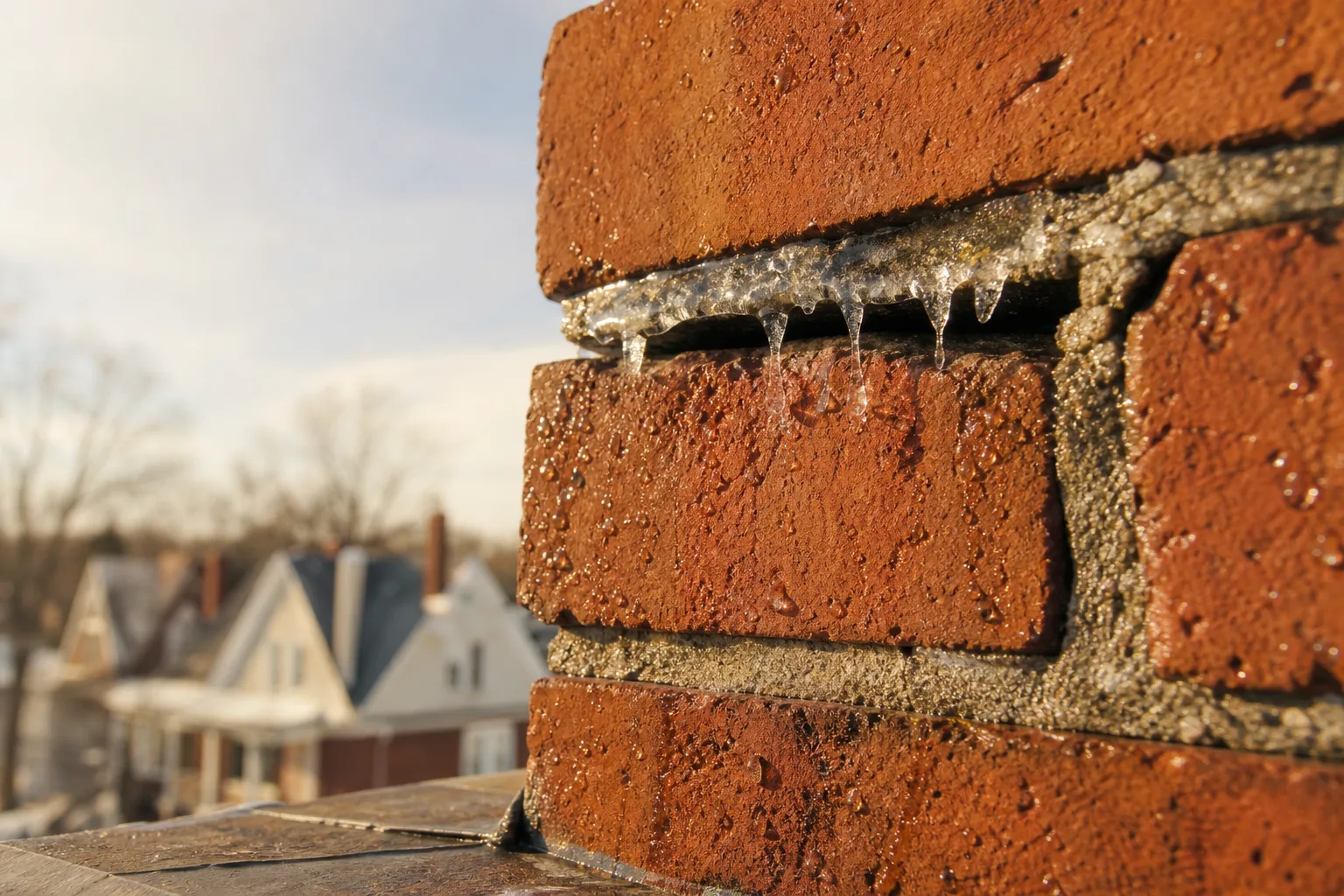
How Cleveland Chimney Masonry Damage Happens
The mechanism is simple physics doing patient work:
- Water enters the masonry. Through a cracked crown, failed flashing, receding mortar joints, or straight through the pores of aging brick — the entry points of a leaking chimney are the entry points of freeze-thaw too.
- The temperature drops through freezing. The absorbed water becomes ice and expands — roughly a tenth beyond its liquid volume — inside pores and hairline cracks that have no give.
- Something yields. The expanding ice wedges cracks wider and pops the faces off brick from within.
- The thaw reloads the system. Melted water sinks deeper into the newly widened openings, and the next freeze finds more water in more places.
Each cycle is small. Cleveland's winters run the loop over and over, every season, which is why the damage curve here isn't linear — a chimney can look weathered-but-fine for years, then visibly crumble across two bad winters once enough faces and joints have failed. The loop only breaks where the water stops.
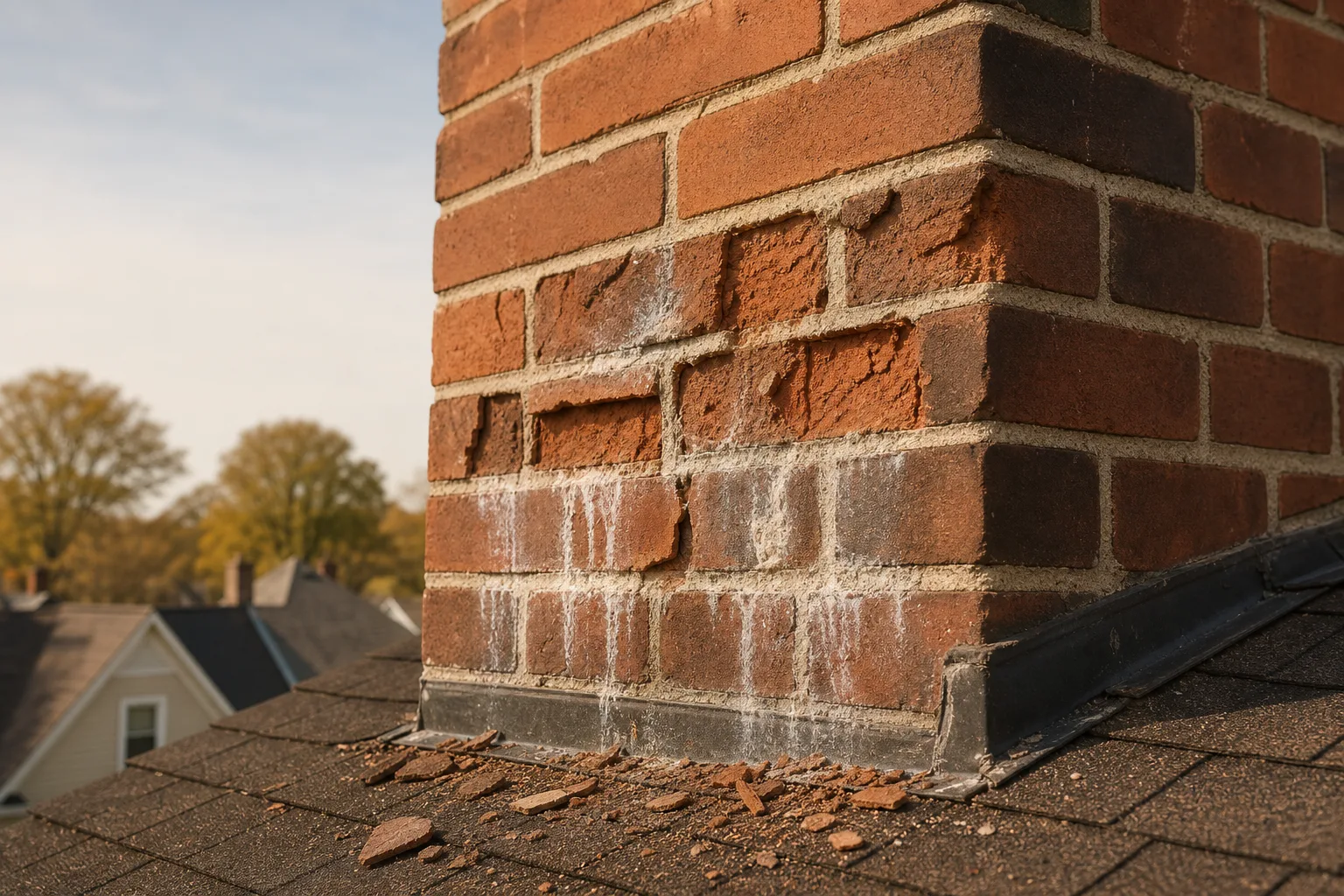
Spalling: The Most Visible Cleveland Chimney Masonry Damage
Spalling is freeze-thaw's signature and the most visible form of Cleveland chimney masonry damage — the faces of bricks flaking, peeling, or popping off entirely. Around Cleveland you'll spot it as:
- Brick chips and flakes collecting on the roof, in gutters, or at the chimney's base — often the first evidence anyone notices
- Rough, reddish exposed cores where smooth brick faces used to be — the fired outer skin is gone, and the softer interior is now taking the weather
- White chalky staining (efflorescence) — minerals left on the surface by water moving through the masonry; not damage itself, but proof of the water traffic that causes it
- Receding mortar joints — lines between bricks turning to shadowed grooves as soft mortar erodes ahead of the brick
Why it accelerates: a brick's hard-fired face is its armor. Once spalling removes it, the porous core absorbs water far faster, freezes deeper, and sheds material quicker — and every failed joint routes more water to its neighbors. Spalling near the top of the stack also feeds the flue a second problem, since loose material and moisture work on the liner and crown from the outside while flue gases age them from the inside.
Seeing brick flakes at the base of your chimney? Request a Cleveland masonry assessment — free to book, no obligation, and photos in hand before you decide anything.
Tuckpointing: the repair that saves pre-war brick
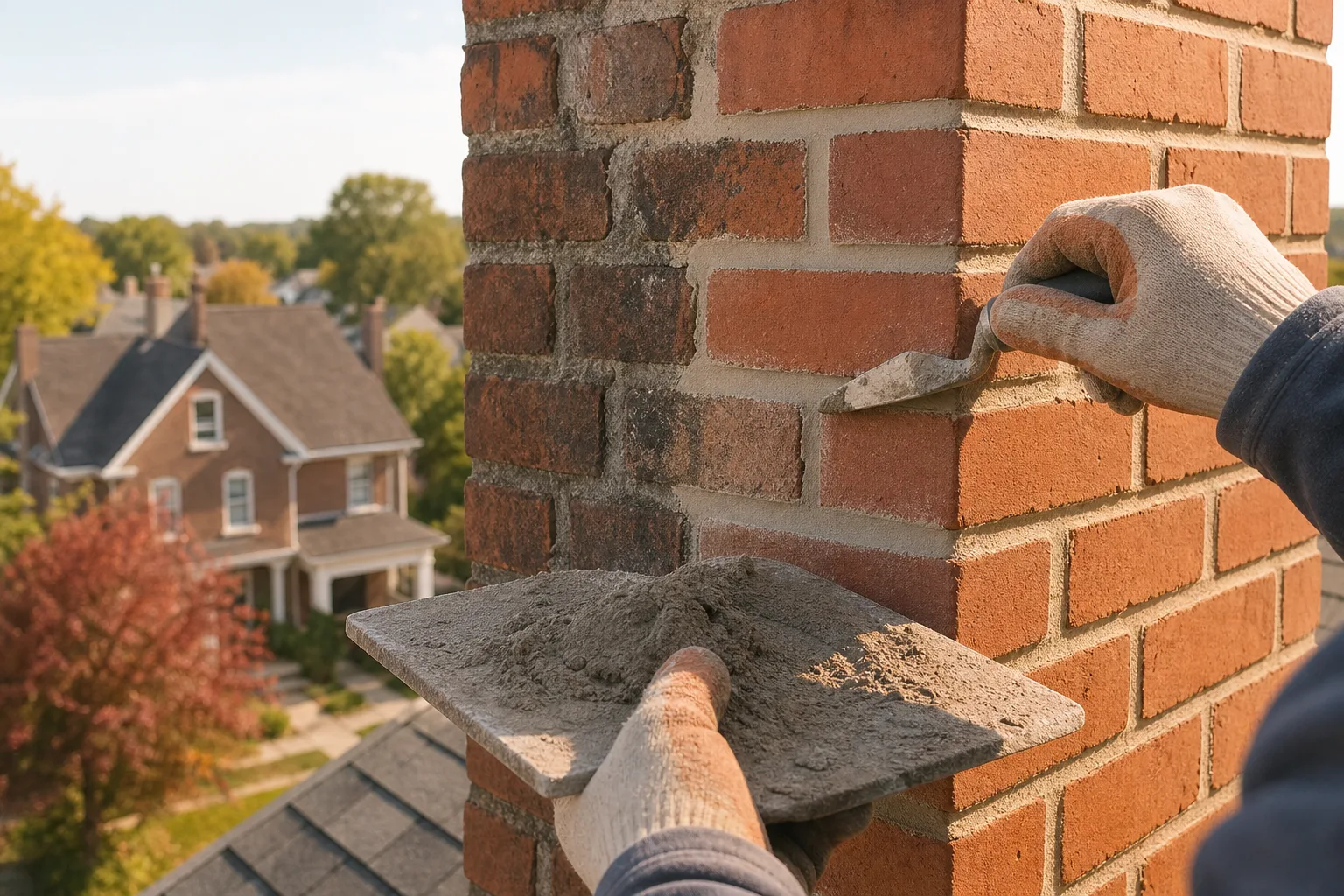
Tuckpointing — grinding out failed mortar joints and repacking them with fresh mortar — is the core repair for Cleveland chimney masonry damage in the area's pre-war housing stock, and done right it buys decades:
- It restores the sacrificial layer. Mortar is designed to weather instead of the brick. Renewing the joints puts the wear back where it belongs.
- It closes the water's front door. Failed joints are the widest, most numerous entry points on an aging stack; repacked joints drop the masonry's water intake dramatically.
- Mortar match matters on pre-war brick. Old lime-based mortars are softer than modern mixes on purpose. Repointing century brick with mortar that's too hard traps stress in the brick itself and can accelerate spalling — the classic well-intentioned mistake. Matching strength and composition to the original is the difference between a repair and a slow-motion injury.
- It scales with the damage. Localized tuckpointing handles a weather-side patch; a full repoint refreshes the stack; and where spalling has consumed whole bricks, cut-and-replace work swaps casualties before rebuilding becomes the only option.
After the joints are sound, water management finishes the job: a crown in good repair, flashing that seals, a proper cap, and — where the brick warrants it — a breathable siloxane-type water repellent that sheds rain while letting interior moisture escape. (Non-breathable sealers, like paint, trap moisture inside masonry and hand freeze-thaw a better weapon.)
The inside story: what freeze-thaw means for the flue
Freeze-thaw headlines the exterior damage, but Cleveland winters work on the chimney's interior too — and the two stories meet in the middle:
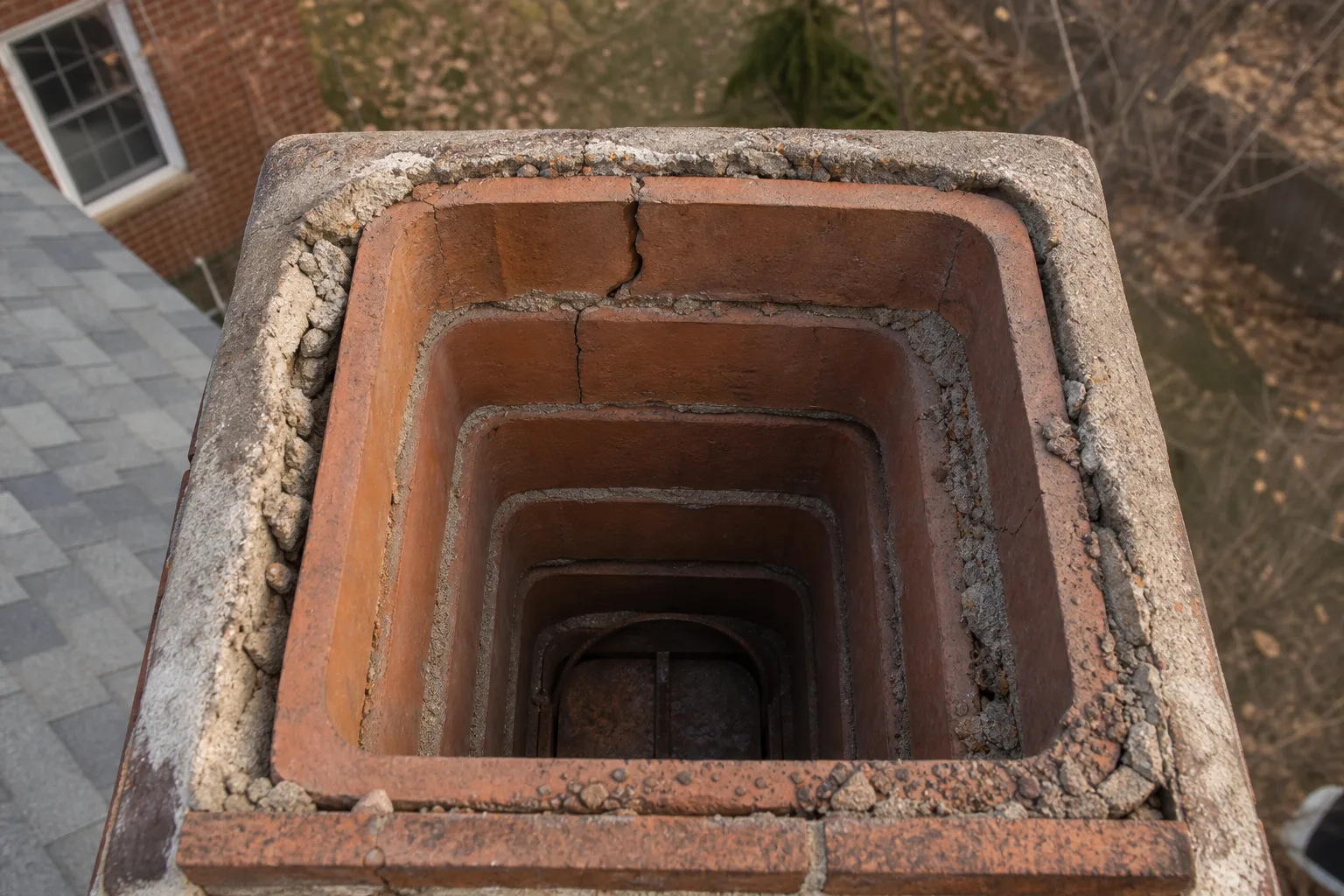
- Pre-war flues are clay tile, and clay tile is masonry. The same expansion cycles that spall brick crack flue tiles and erode the mortar joints between them. From the living room everything looks fine; on camera, a century flue often shows its age tile by tile.
- Exterior damage leaks inward. Once the crown or upper courses admit water, it doesn't stay in the brick — it tracks into the flue, rusts the damper, soaks the smoke shelf, and mixes with soot into an acidic sludge that accelerates everything it touches.
- Heavy burning seasons add their own layer. Cleveland fireplaces work hard from November to March, which means real creosote accumulation in exactly the years the flue is weakening. A cracked tile hiding behind heavy buildup is the combination nobody wants — and it's invisible until the flue is swept clean enough to scan.
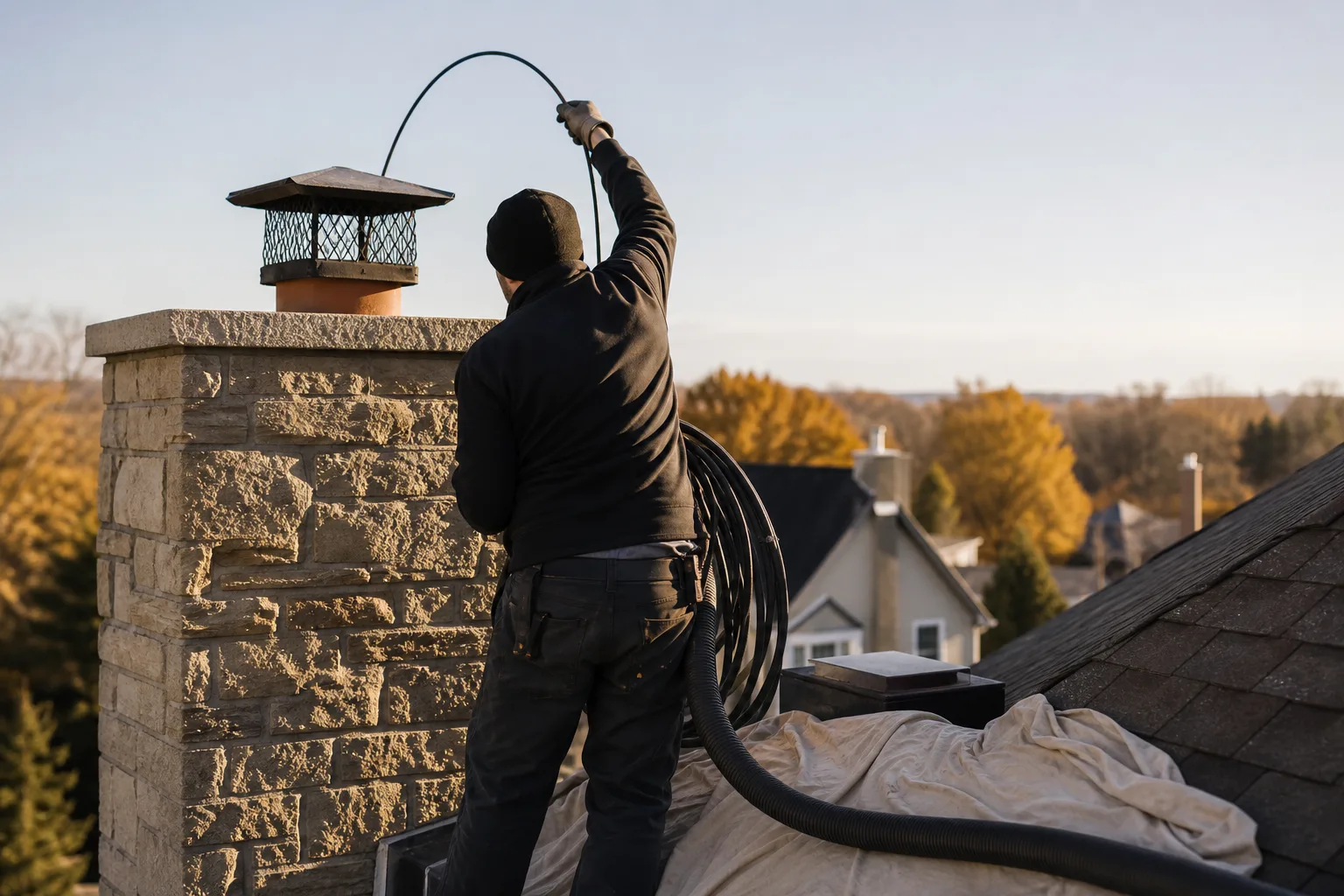
This is why our Cleveland technicians treat the annual sweep and inspection and the masonry assessment as one conversation, not two trades. The spring visit that scopes your tuckpointing can also verify the flue that winter just finished stressing — one appointment, the whole system, inside and out.
Timing the work: Cleveland's repair calendar
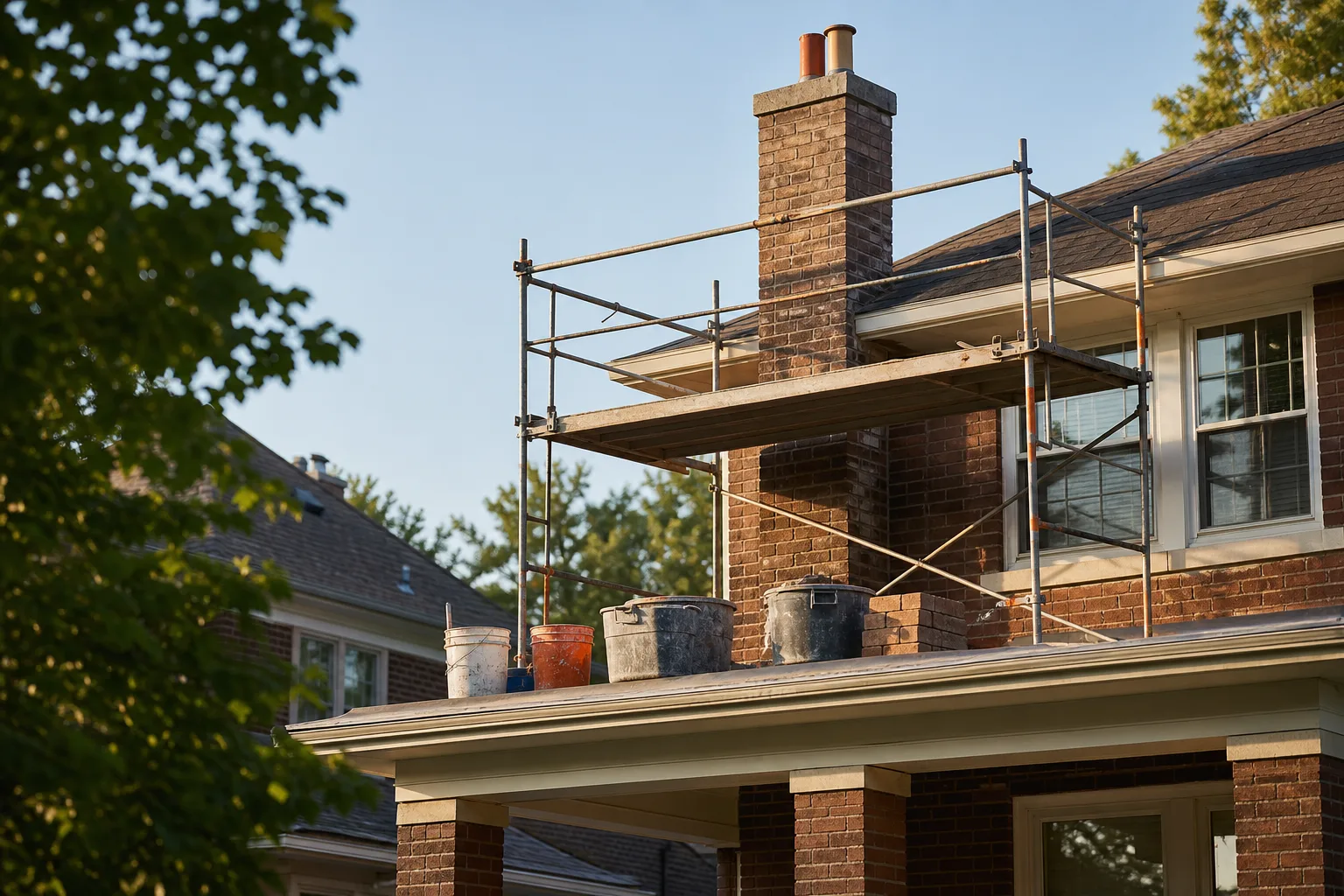
Masonry repair in Cleveland is seasonal work — mortar needs sustained above-freezing temperatures to cure — so the calendar is part of the repair plan:
| What you're seeing | The typical fix | When to do it |
|---|---|---|
| Efflorescence, hairline crown cracks | Sealing + water management | Any warm stretch — small window, small job |
| Receding joints, first spalled faces | Localized tuckpointing | Late spring through early fall |
| Widespread spalling, deep joint loss | Full repoint + brick replacement | Book spring; done by fall |
| Leaning stack, failed upper courses | Partial rebuild | Prime season only — plan ahead |
Two Cleveland-specific realities to plan around. First, the good-weather window is short and shared — the same warm months serve every masonry project in the county, so calendars fill early. Second, waiting a winter is never neutral here: Cleveland chimney masonry damage compounds on itself, because the freeze-thaw loop runs all season on whatever damage already exists, so this year's tuckpointing estimate is next year's tuckpointing-plus-brick-replacement estimate.
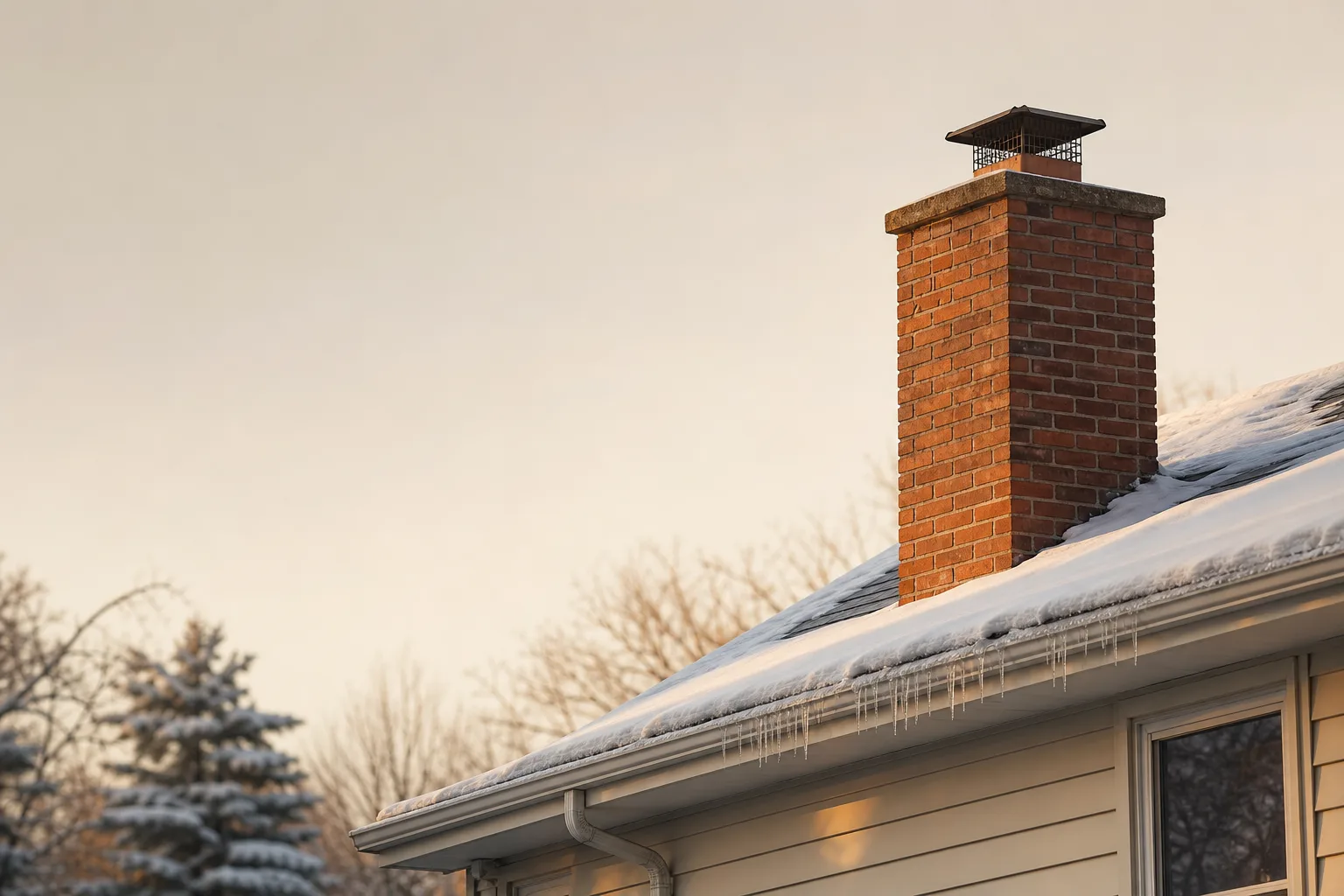
If you found this page by searching cleveland chimney masonry damage in the middle of February, the timing is better than it feels. Winter is when the evidence is easiest to read — icicles hanging off a failing crown, fresh flakes on the snow at the base, staining that shows up after each thaw — and it's when spring slots are still open.
The efficient path: get eyes on the masonry in spring, scope the work with photos and a written plan, and have the chimney sealed up before the lake starts delivering. Our Cleveland technicians live on that rhythm — and getting on the schedule starts with a quick service request.
Symptom checker
What is your chimney doing?
Tap the closest match for an honest first answer.