


Next-day appointments
Call or book today and we'll do our best to get a pro to you tomorrow.
Chimney service
The short answer
A fireplace that smokes, will not shut, or has cracks you can see is not safe to keep using.
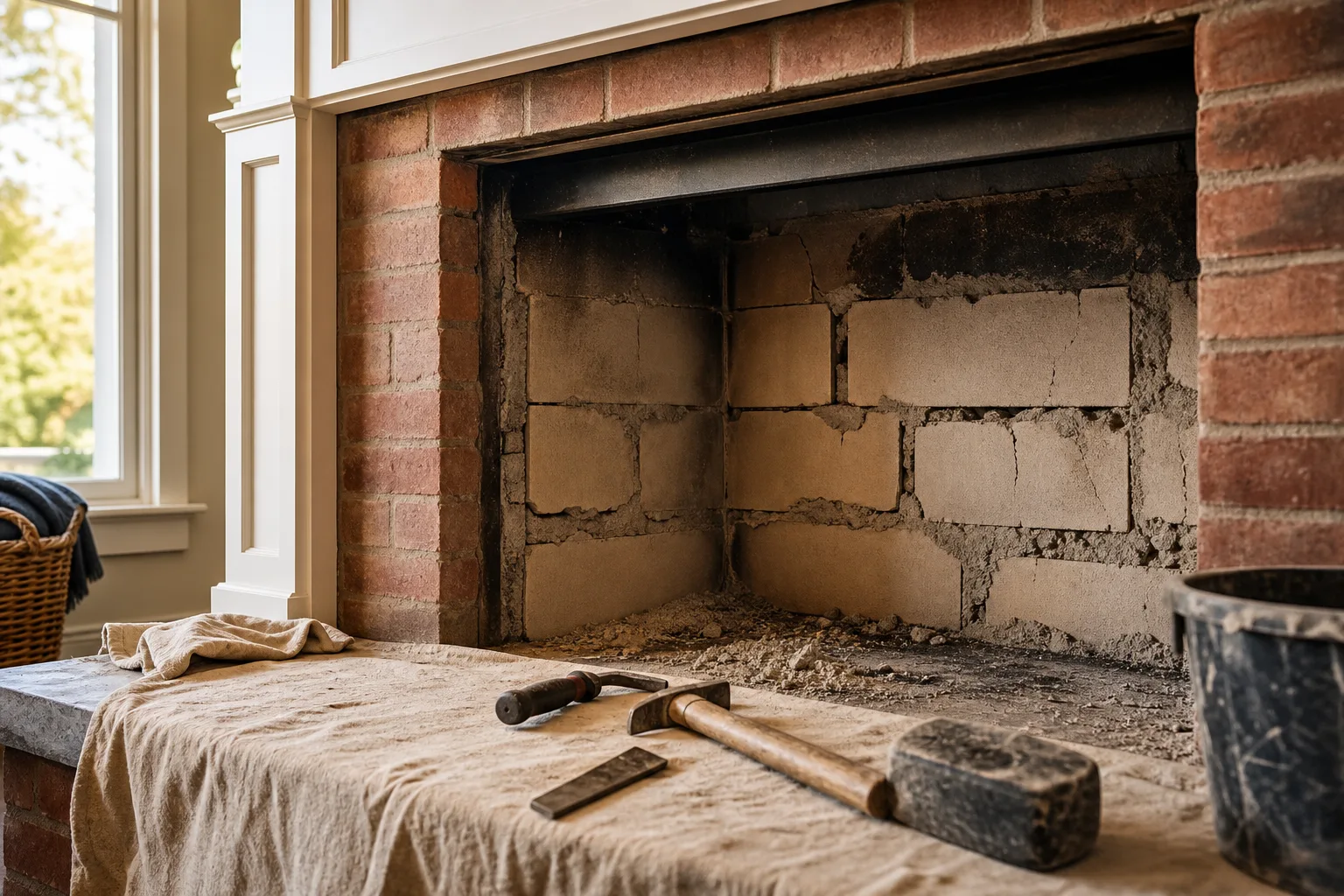
Most fireplace repair falls into three buckets. The firebox itself — panels, refractory mortar, a cracked back wall — which is a heat containment problem. The damper, which either will not open, will not close, or has rusted through, and decides whether your heating goes up the flue all winter. And draft, where smoke comes into the room instead of leaving, which is usually a flue problem wearing a fireplace costume. Which one you have changes the fix completely, and two of the three are visible from a chair.
Inside the firebox
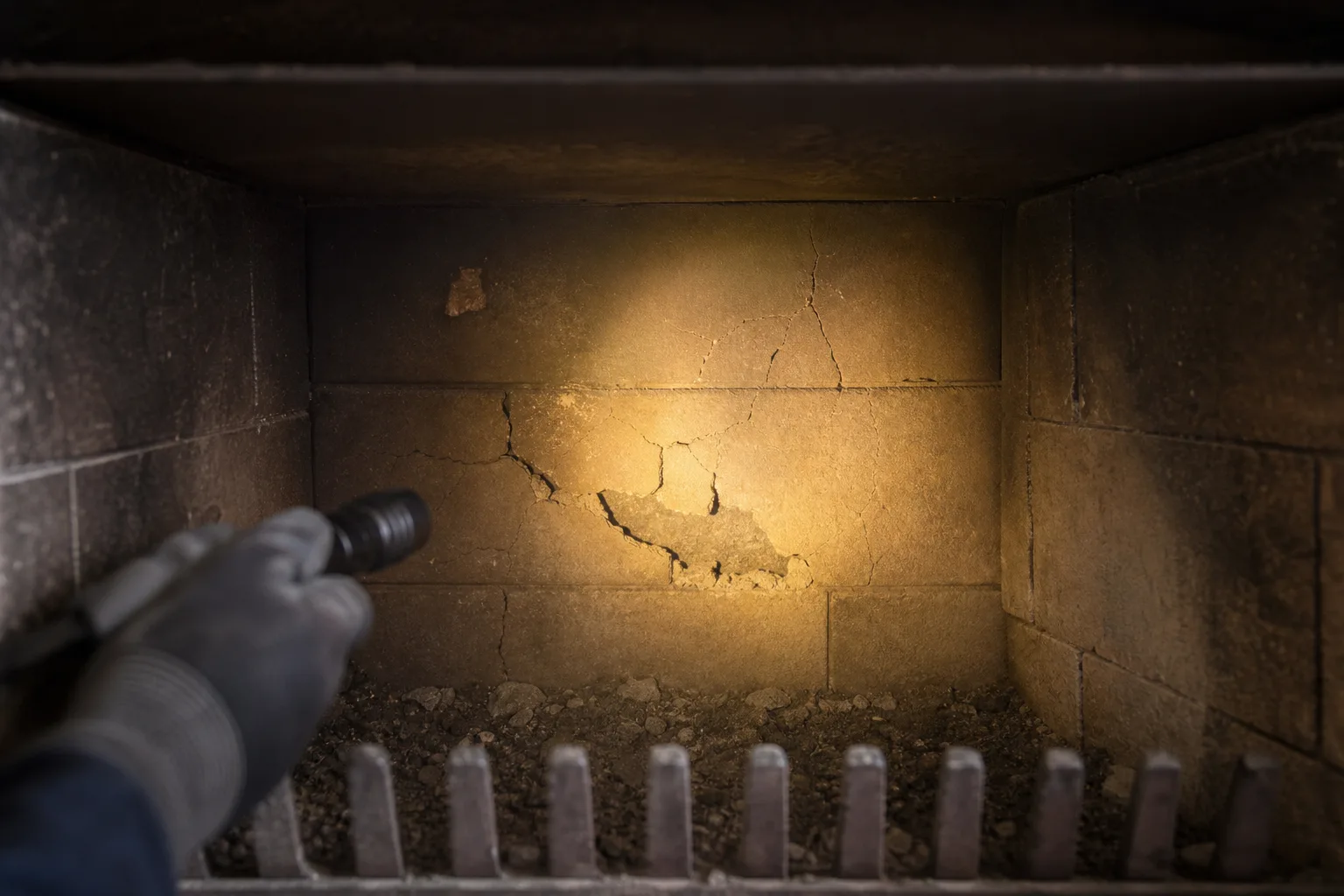
Panels are what stand between the fire and the framing behind the wall. Cracks wider than a coin need the panel out, not a patch.
Fall Special
Call or book today and we'll do our best to get a pro to you tomorrow.
Anything that needs attention is shown to you and explained in plain words.
If something needs fixing, you get the price in writing first. Saying no costs nothing.
Do you have this problem?
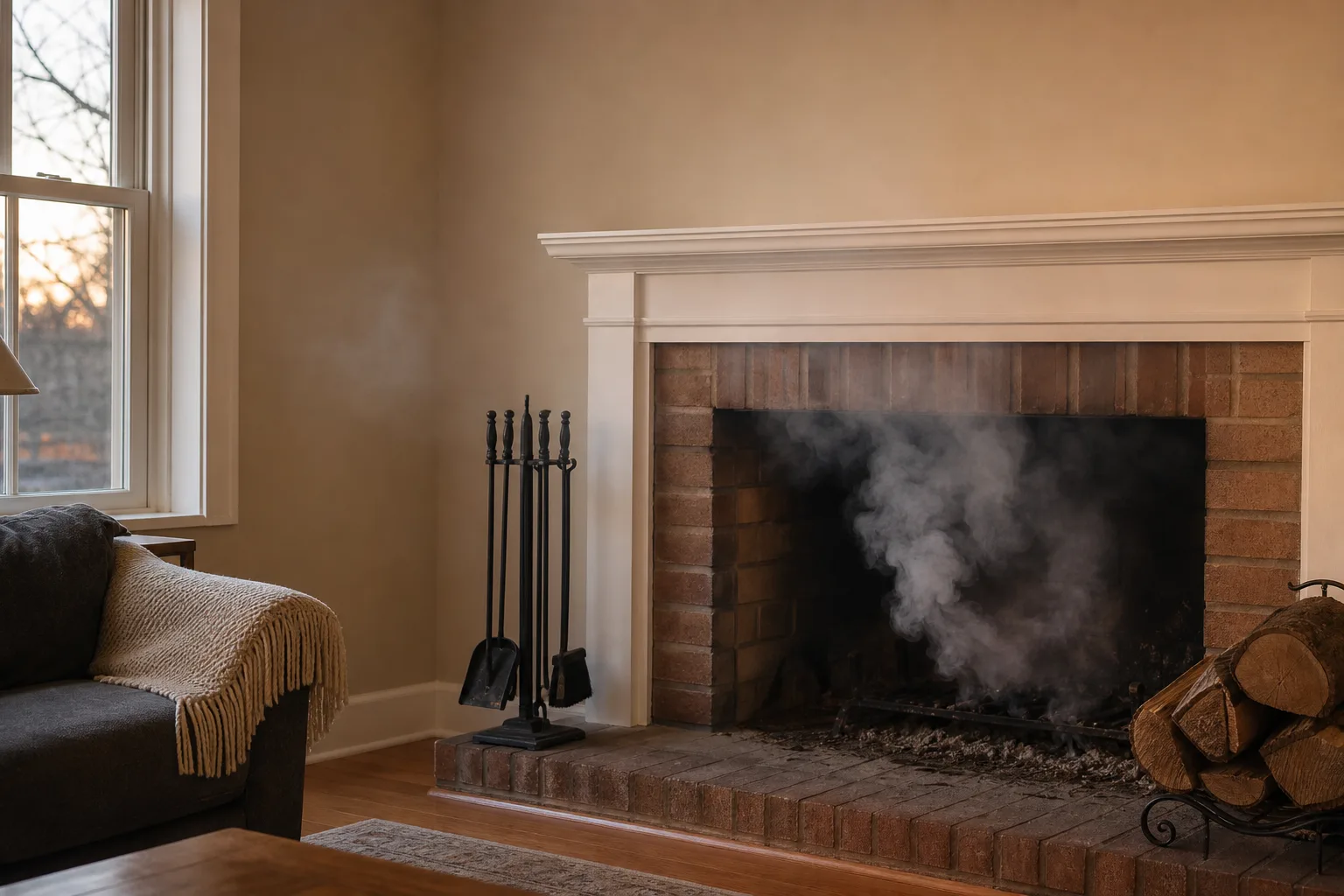
A puff on lighting is normal until the flue warms. Smoke that keeps coming after fifteen minutes is a draft fault — a blockage, an undersized flue, or a smoke chamber that was never parged properly.
The panels are what stand between the fire and the framing behind the wall. Cracks wider than a coin, or panels that have started to spall, need replacing before the next fire.
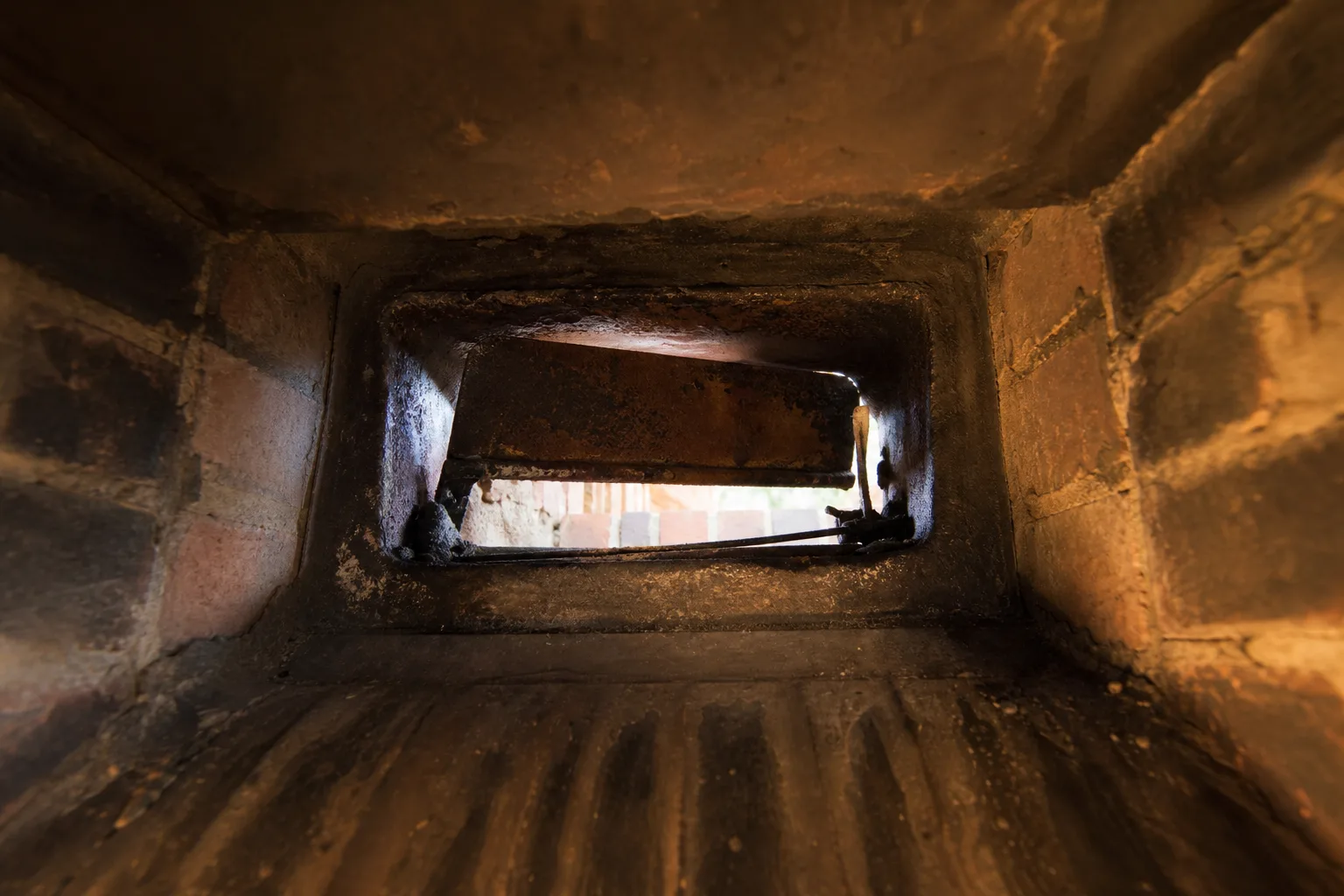
Seized on rust, or a broken handle. Stuck open, you are heating the sky all winter. Stuck closed, the room fills with smoke the first time somebody forgets to check.
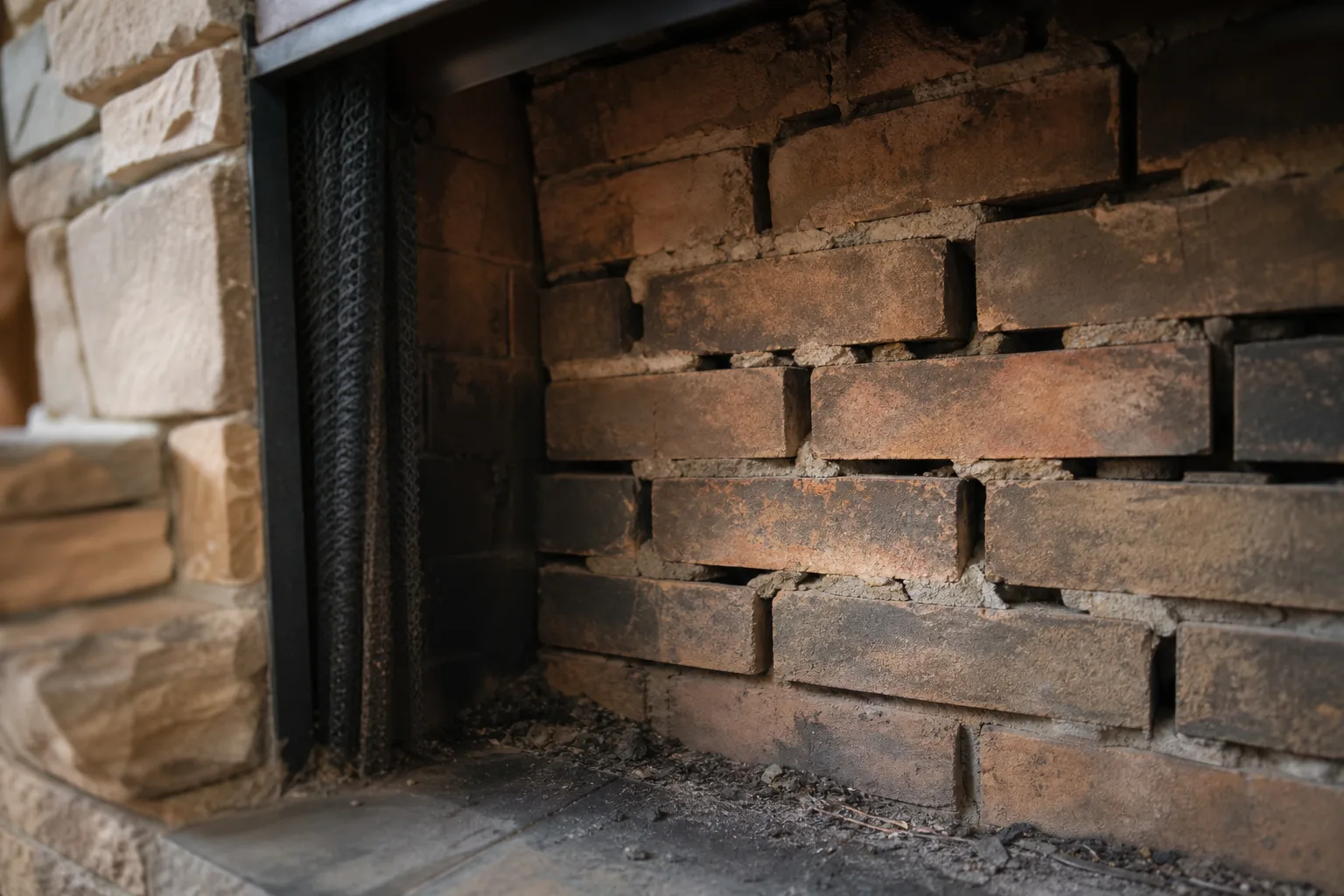
Refractory mortar joints open up with heat cycling. Once you can see into a gap, heat and gas are reaching what is behind it. This is a repair, not a cosmetic touch-up.
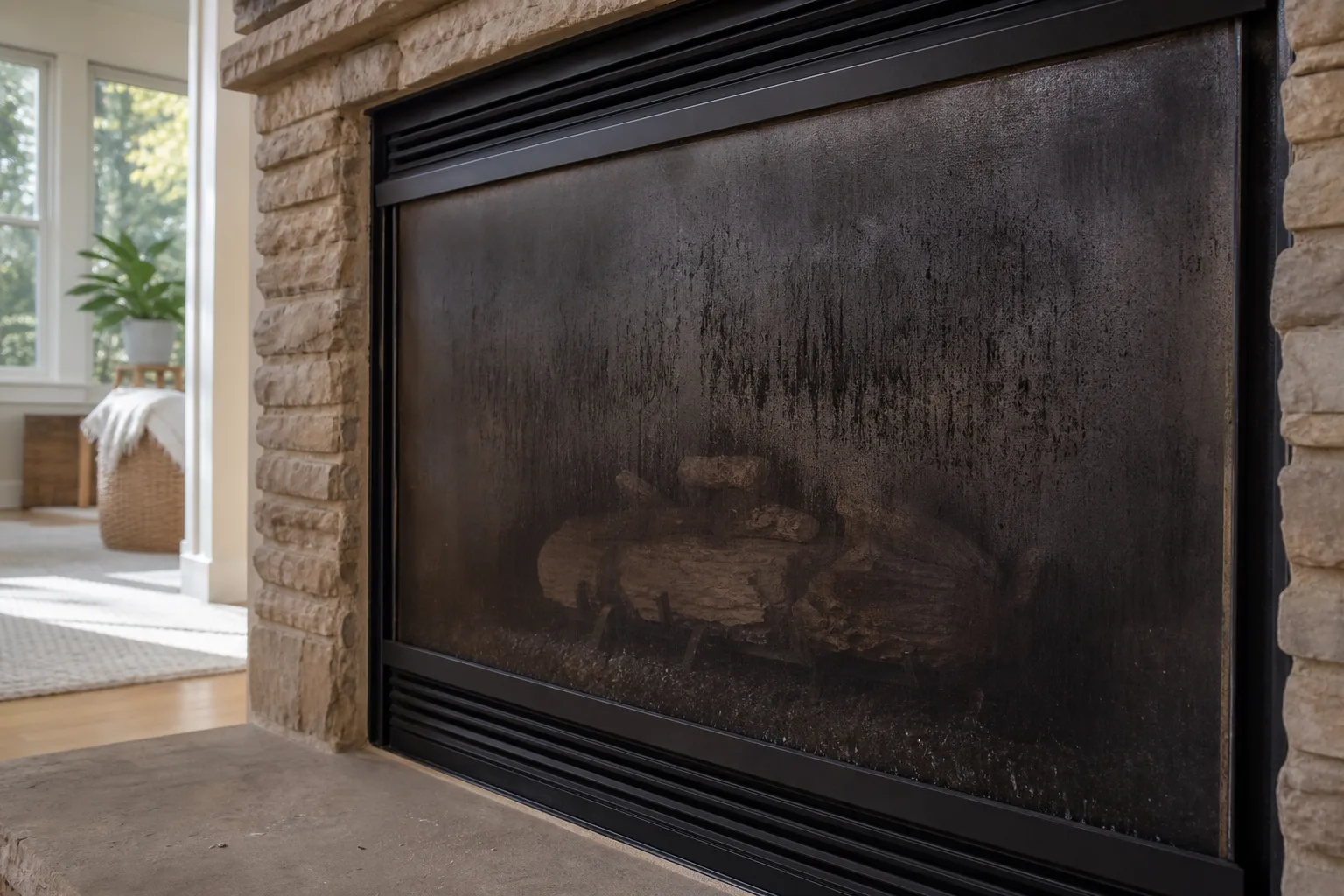
Gas burns clean when it burns right. Black film on the glass means incomplete combustion, which produces carbon monoxide. Turn it off and get it looked at.
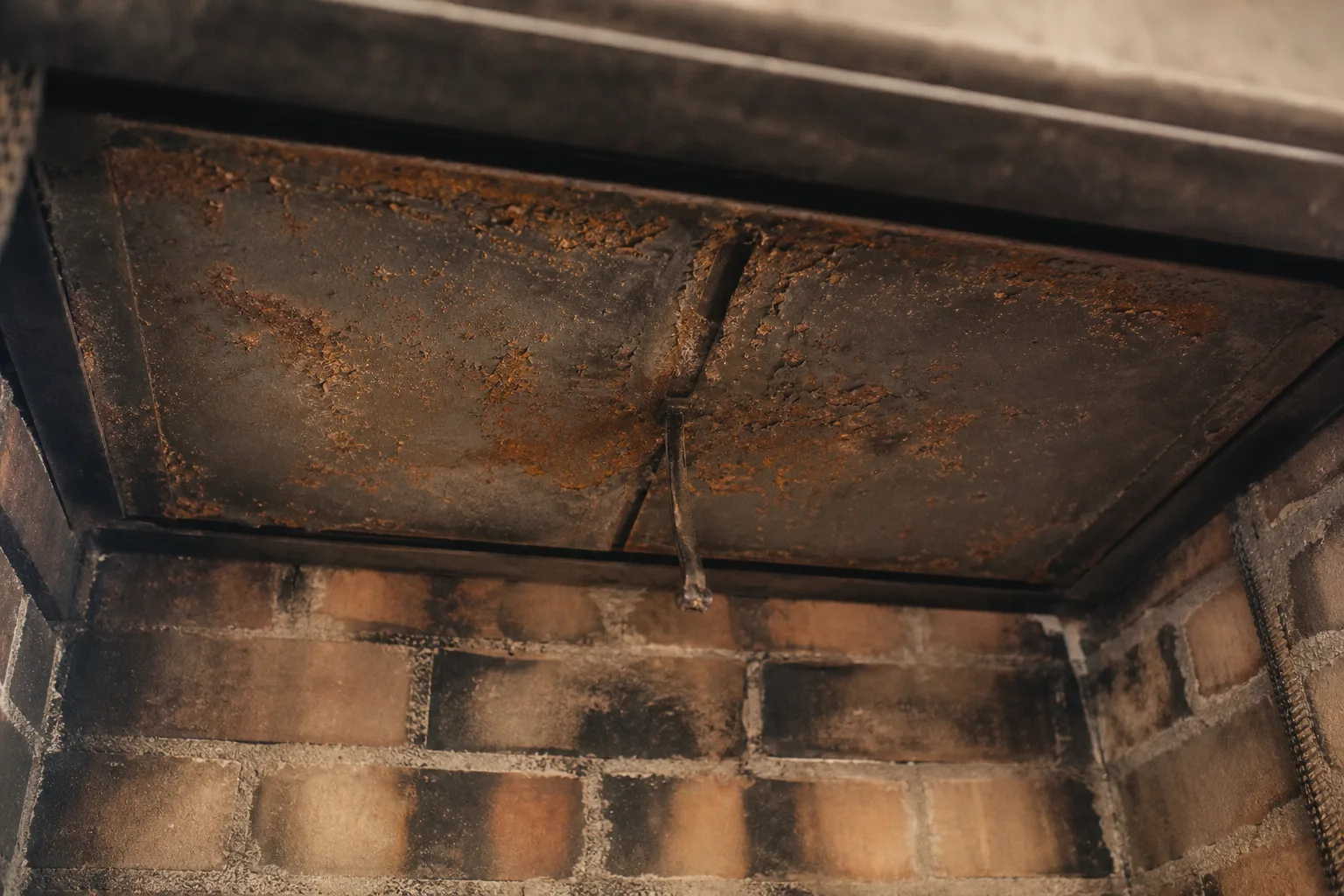
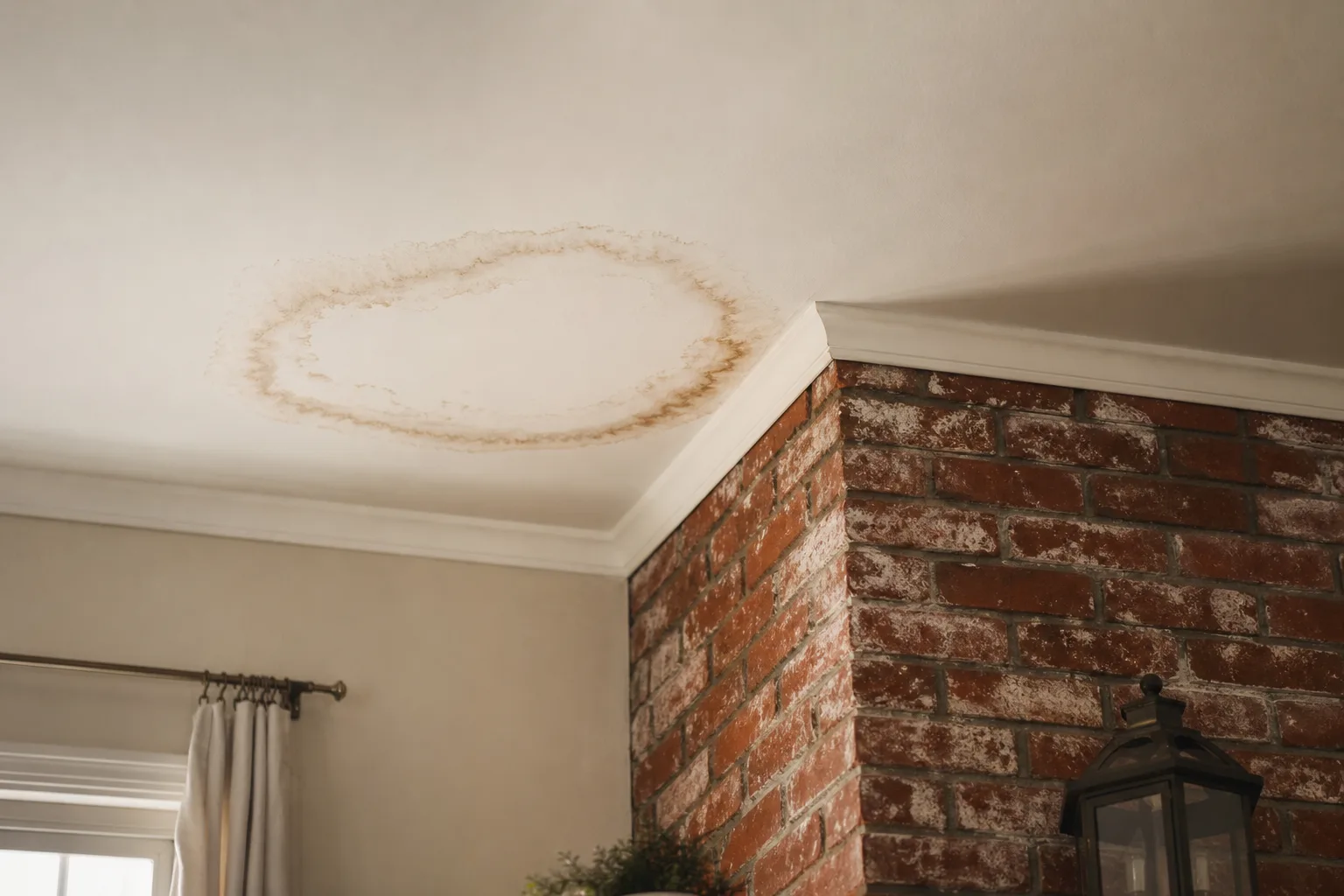
Rust means sustained moisture where there should be none. The fireplace is the symptom; the leak is somewhere above it and has been running a while.
How we work
The same four steps every time, whatever the repair turns out to be.
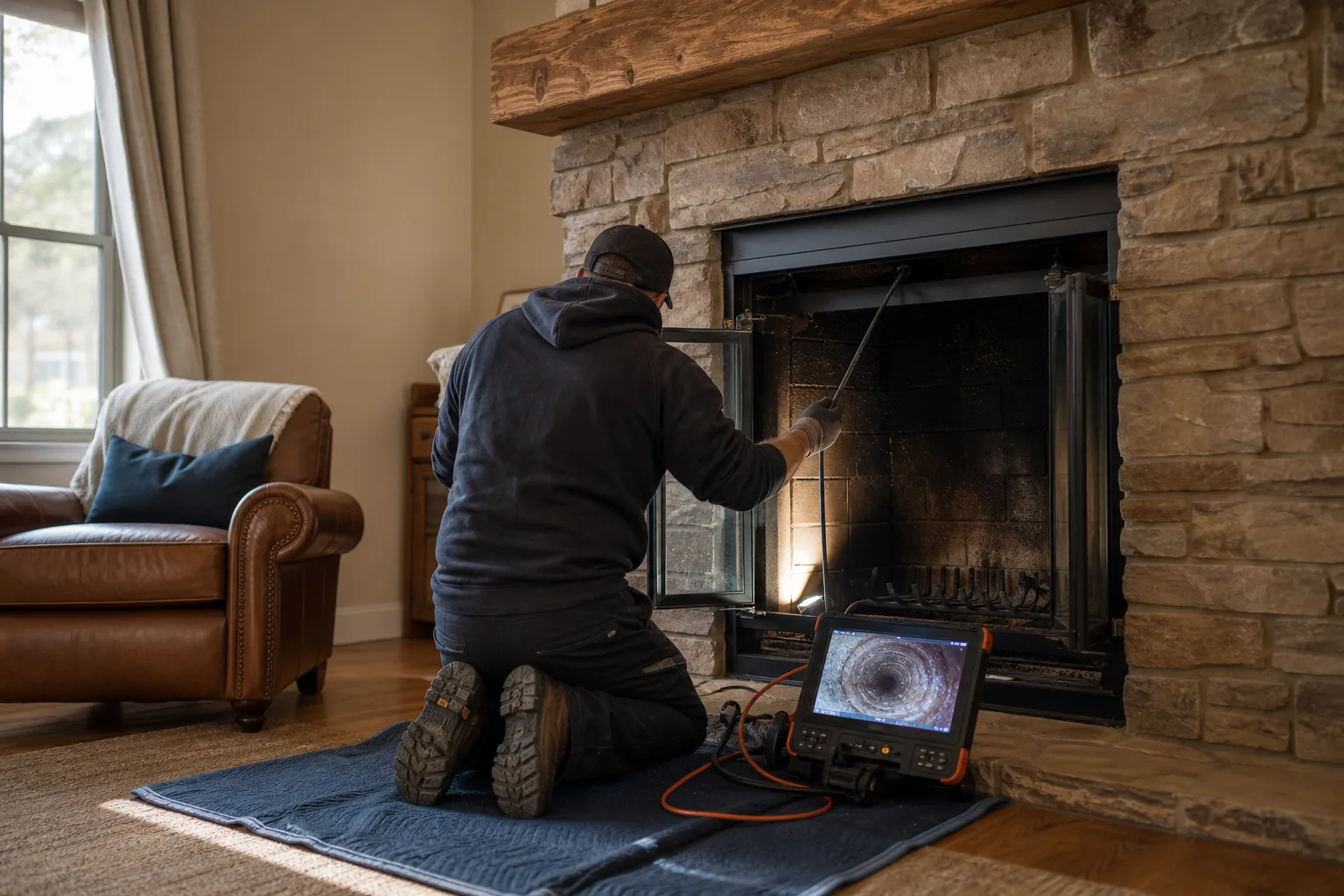
A look at the crown, cap, flashing and exterior masonry, then the flue, damper and firebox — with a camera where the job calls for a level 2 scan. Whatever needs work gets shown to you, not just described.
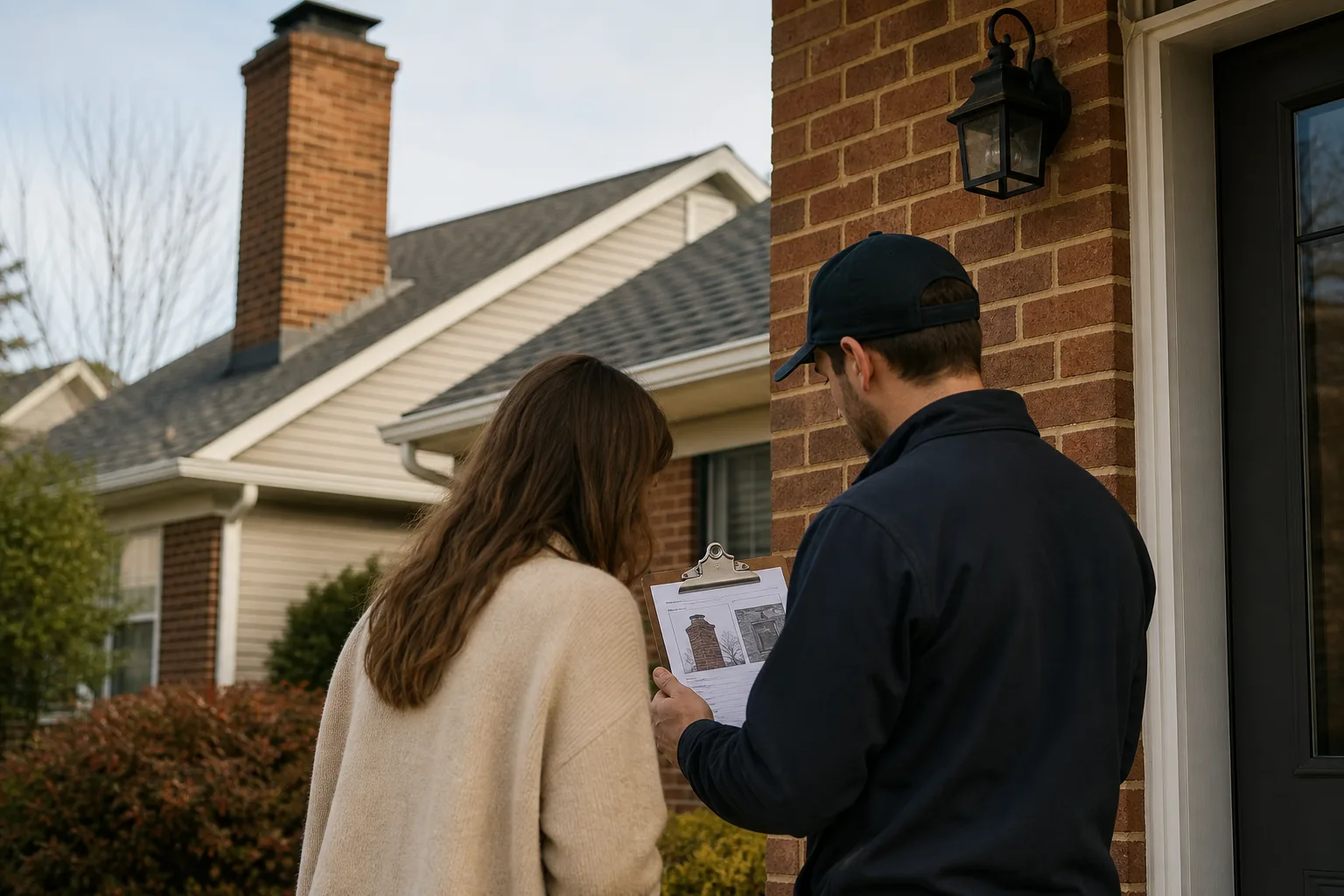
Scope, price and what is not included, in writing. Nothing starts until you approve it, and an emergency is not a reason to skip this step.
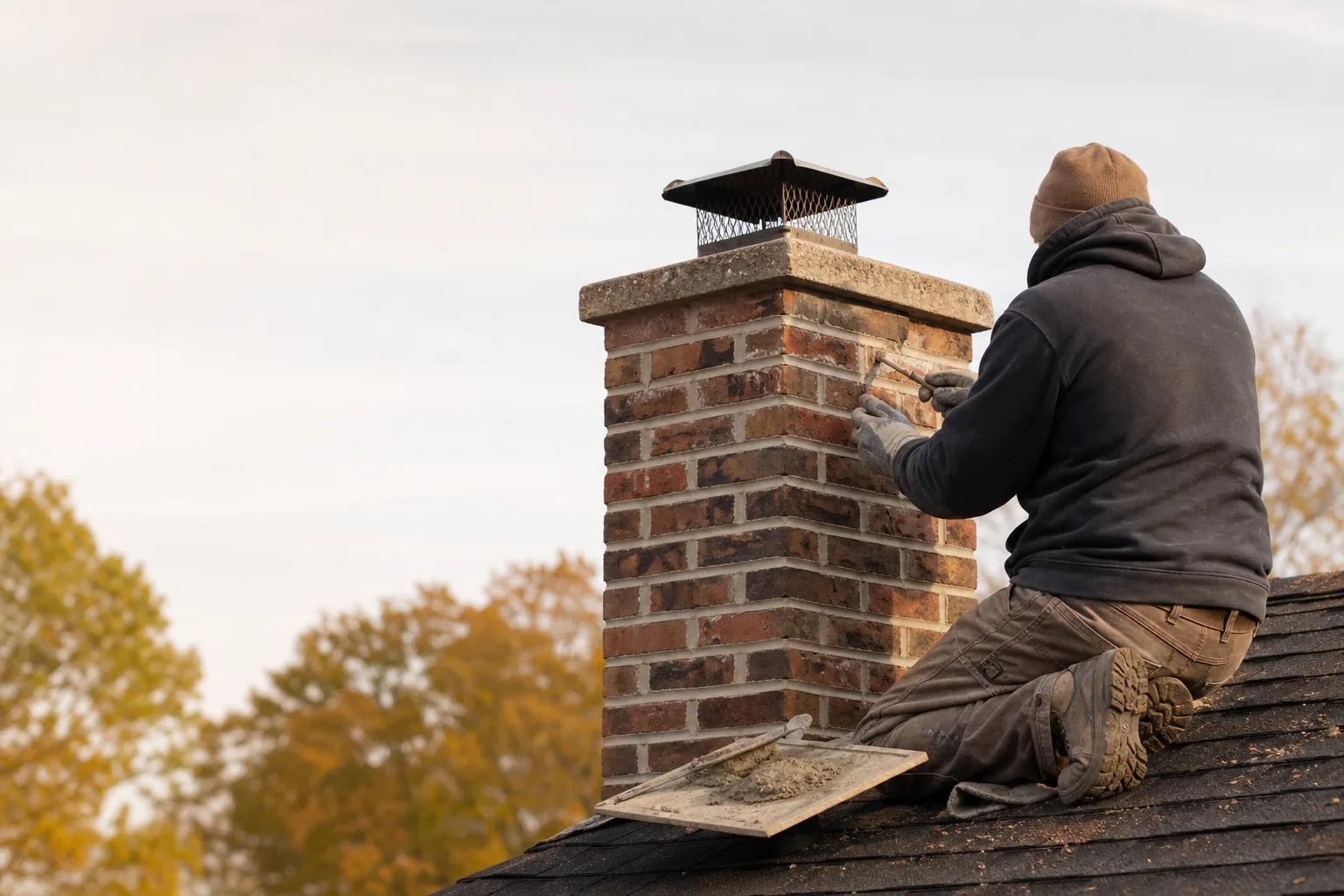
Matched materials and the manufacturer's spec, not whatever is on the van. Drop cloths down, and the room left as it was found.
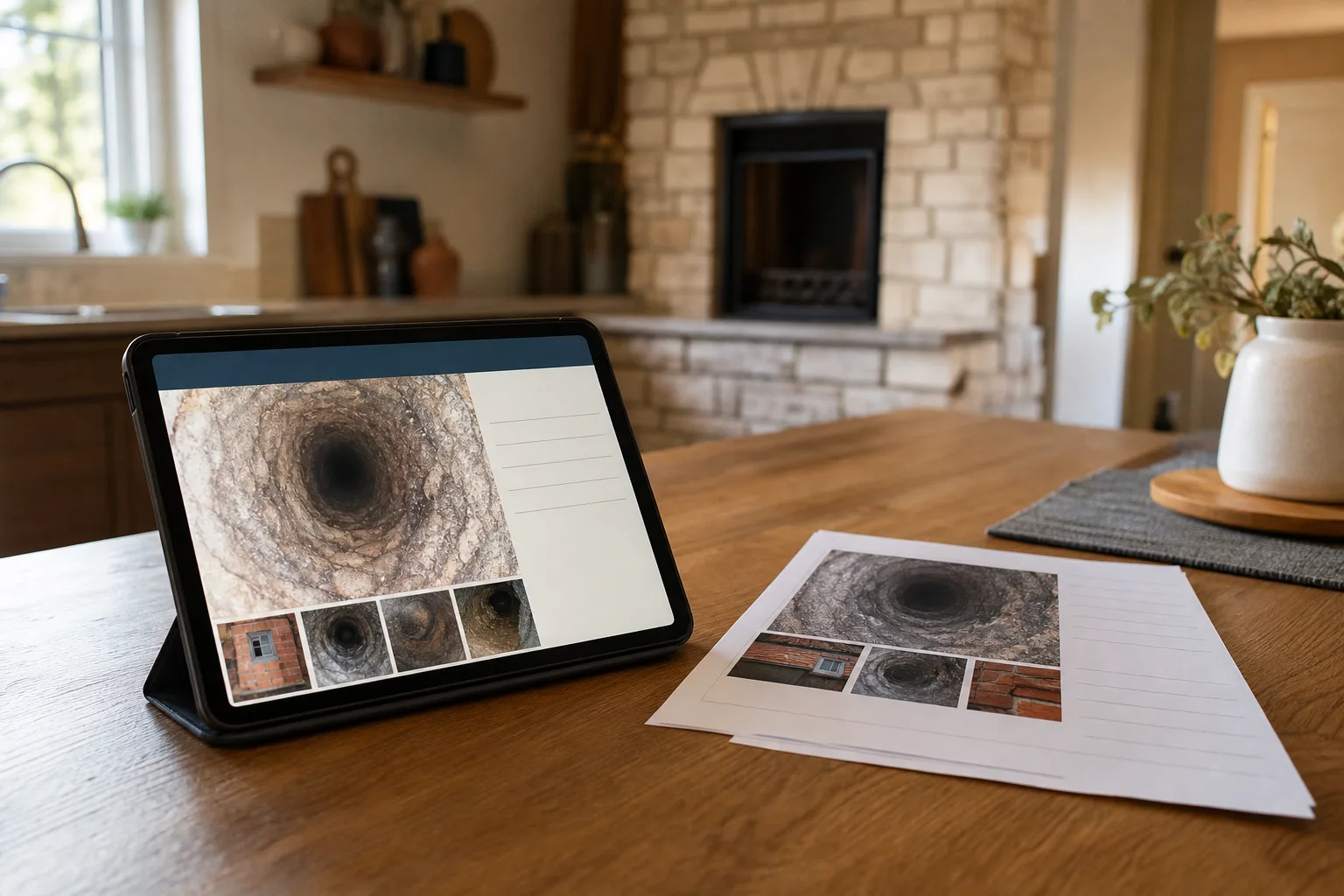
A second scan after the work, and written findings you can keep, hand to an inspector, or send to an insurer.
What it covers
Not every job on this list is equally urgent, so they are ordered that way. A cracked liner stops you using the fireplace tonight; waterproofing can wait for a dry week.
The job — most urgent first
What it involves
On site
Cracked refractory panels cut out and replaced to the manufacturer's spec. On a prefabricated fireplace the panels must be the ones made for that model — a generic panel voids the listing and the insurance with it.
On site: 1–2 days
Pilot and thermocouple faults, a burner running rich, a failed valve, or a glass seal that has gone. Gas appliances fail quietly, which is exactly why they get an annual look even though nothing appears wrong.
On site: About a day
Freeing a seized throat damper, replacing a broken plate, or fitting a top-sealing damper at the crown instead. A top-sealing unit closes against a gasket and stops the draft a throat damper never really did.
On site: About a day
Raking out failed joints in the firebox and repointing in refractory mortar. Ordinary mortar in a firebox fails within a season, because it was never made to sit against flame.
On site: About a day
Parging a rough smoke chamber smooth, or fitting a smoke guard where the opening is too large for the flue. This is the fix when the fireplace smokes and the flue is otherwise clear.
On site: 1–2 days
Cracked hearth slabs, loose facing tile, and the clearance to combustibles around the opening. Cosmetic until the clearance is wrong, at which point it is not cosmetic at all.
On site: About a day
Times are for the work itself, not for scheduling. Masonry needs roughly 40°F to cure properly, which is what limits this work in a northern winter rather than whether a crew is free.
What drives the price
Freeing a damper or repointing a few firebox joints is a modest job. Full panel replacement, a new top-sealing damper or gas valve work runs into the high hundreds because of parts. Rebuilding a firebox is thousands. The reason nobody can quote fireplace repair over the phone is that a smoking fireplace and a cracked firebox look identical in a description and cost ten times apart.
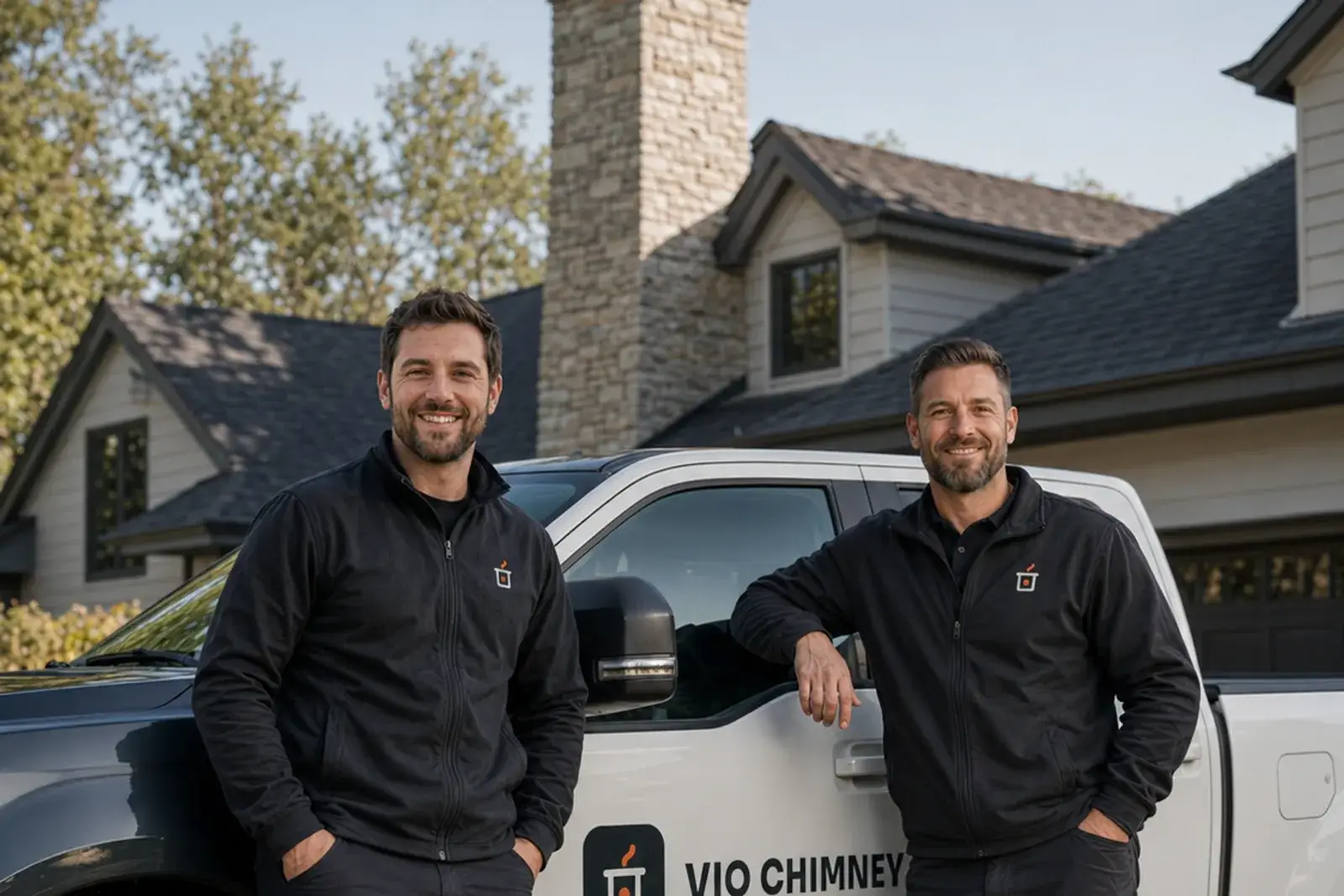
Founded by Ryan Carter in 2019. Every page you read here is reviewed by Ethan Miller, our chimney specialist. A written estimate before any work, and the findings in writing whether or not anything needs doing.
More about who we are →
The VIO Standard
Good to know