



On this pageNo wood, no creosote, so why maintain it?6 sections+5
Quick answer
Gas fireplaces need annual professional service even though they make no creosote: burners clog, pilot assemblies drift out of spec, seals age, and vents get blocked — all quietly, with few visible warnings. A yearly gas fireplace maintenance visit plus working carbon monoxide alarms is the whole program, and it's a short one.
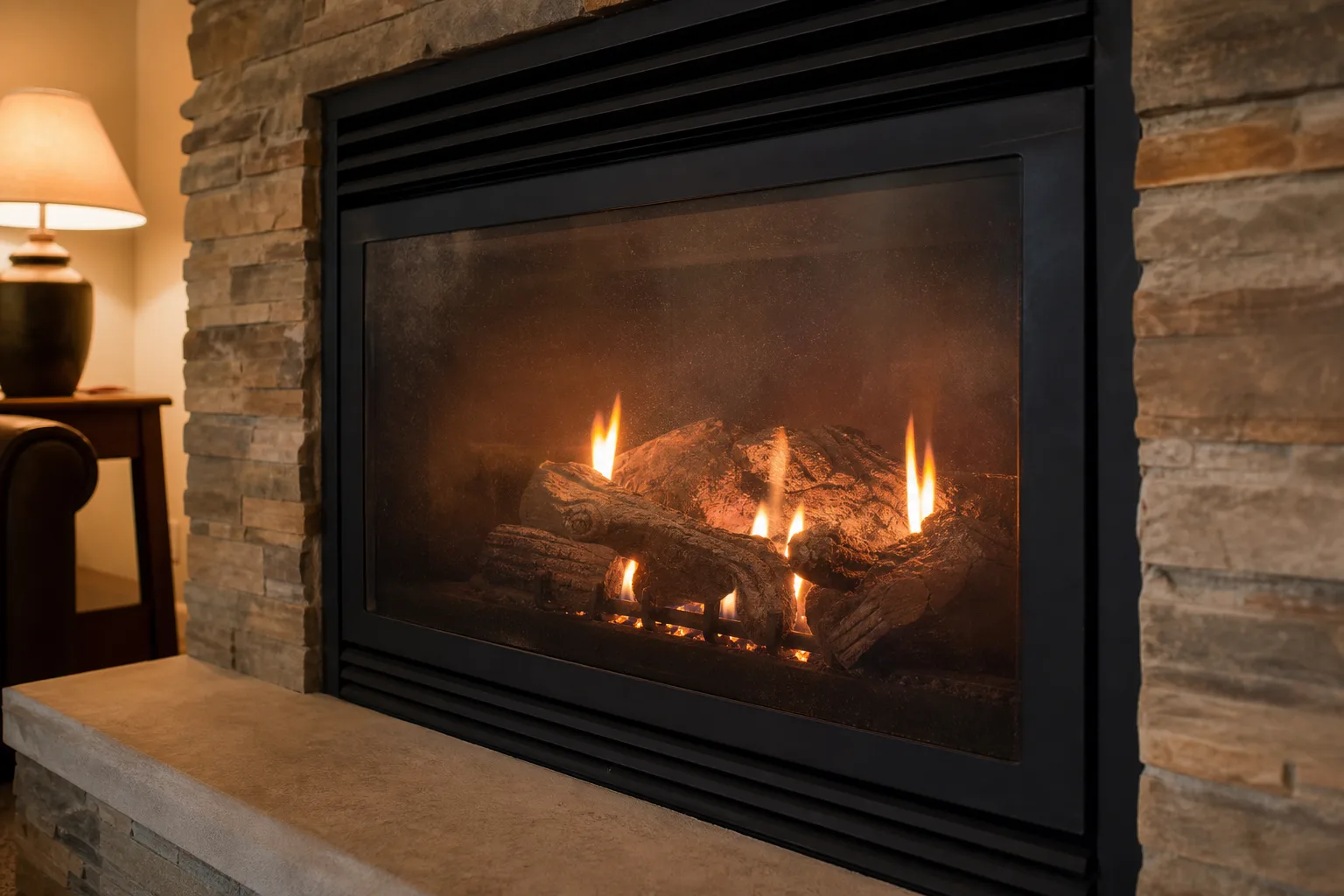
No wood, no creosote, so why maintain it?
Gas fireplaces earn their reputation for convenience — push a button, get a fire. What they haven't earned is the folk belief that convenience means zero upkeep. The failure modes are just different from wood, and quieter:
- Burners and ports clog with dust, pet hair, and debris, producing uneven or sooty flames.
- Pilot and ignition assemblies drift: thermocouples and sensors age until one cold night the unit won't light.
- Combustion byproducts are mildly corrosive. Gas exhaust contains water vapor and acids that slowly attack metal vents and masonry flues from the inside.
- Seals and gaskets age. Direct-vent units depend on a sealed combustion path; a degraded glass gasket compromises the whole design.
- Ceramic logs shift and crack. Logs placed even slightly wrong can disrupt flame patterns and cause sooting: placement is engineered, not decorative.
Every one of those develops gradually and invisibly. That's the actual argument for a schedule: with gas, there's no smoke alarm moment that tells you things went wrong; there's just a system slowly leaving spec. Annual inspection guidance (NFPA 211) explicitly includes gas appliances and their venting for exactly this reason, which is why gas fireplace maintenance is best treated as a date on the calendar rather than a reaction to symptoms.
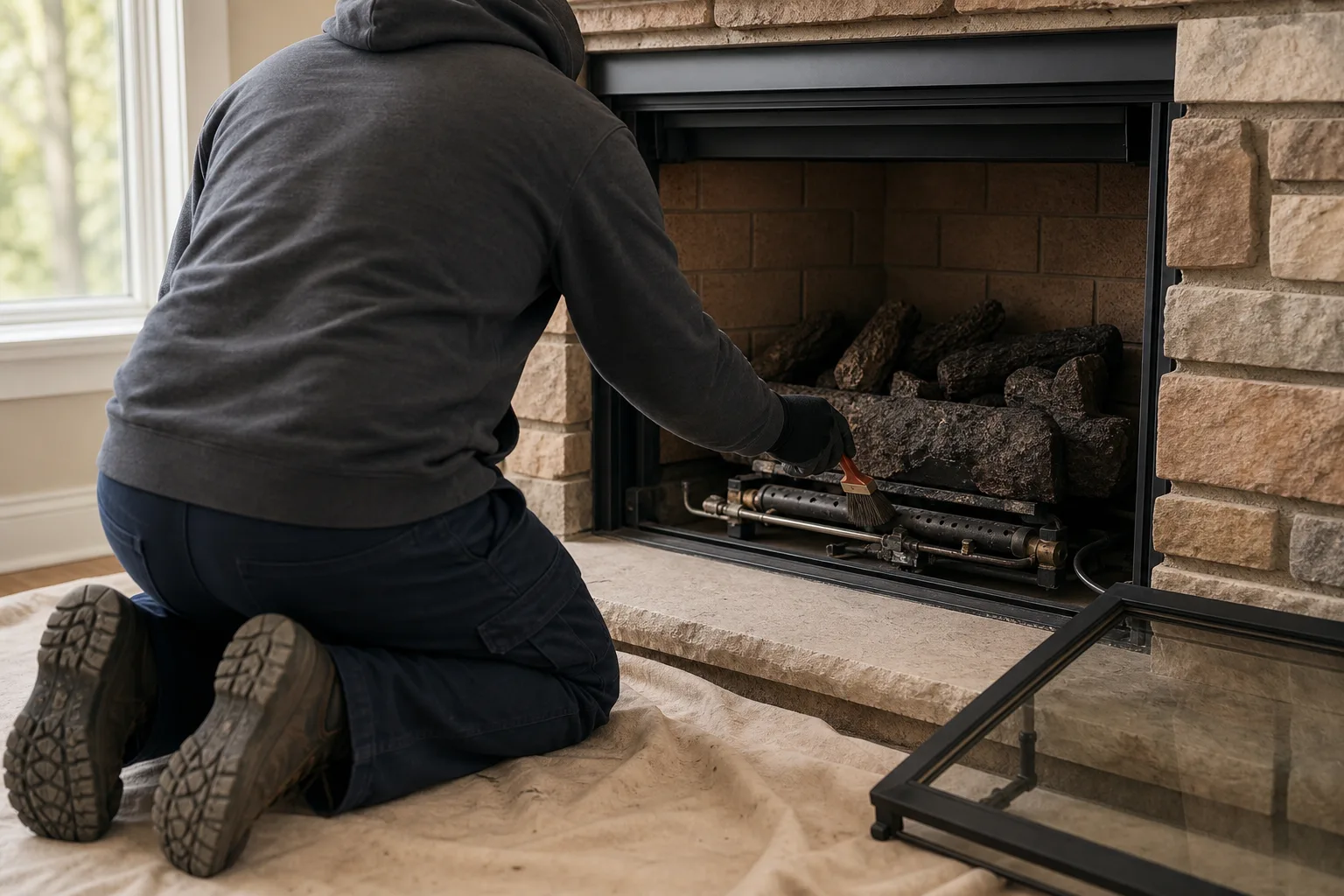
What annual gas fireplace maintenance includes
A proper service visit is systematic. This is what the pros in our network work through:
- Glass off, firebox open. The unit is shut down, cooled, and opened up for a real look, not a glance.
- Burner and pilot cleaning. Ports cleared, pilot assembly cleaned, ignition components checked for wear.
- Log inspection and repositioning. Cracked logs flagged, everything returned to the engineered layout.
- Gasket and seal check. Door and glass gaskets inspected for compression and decay.
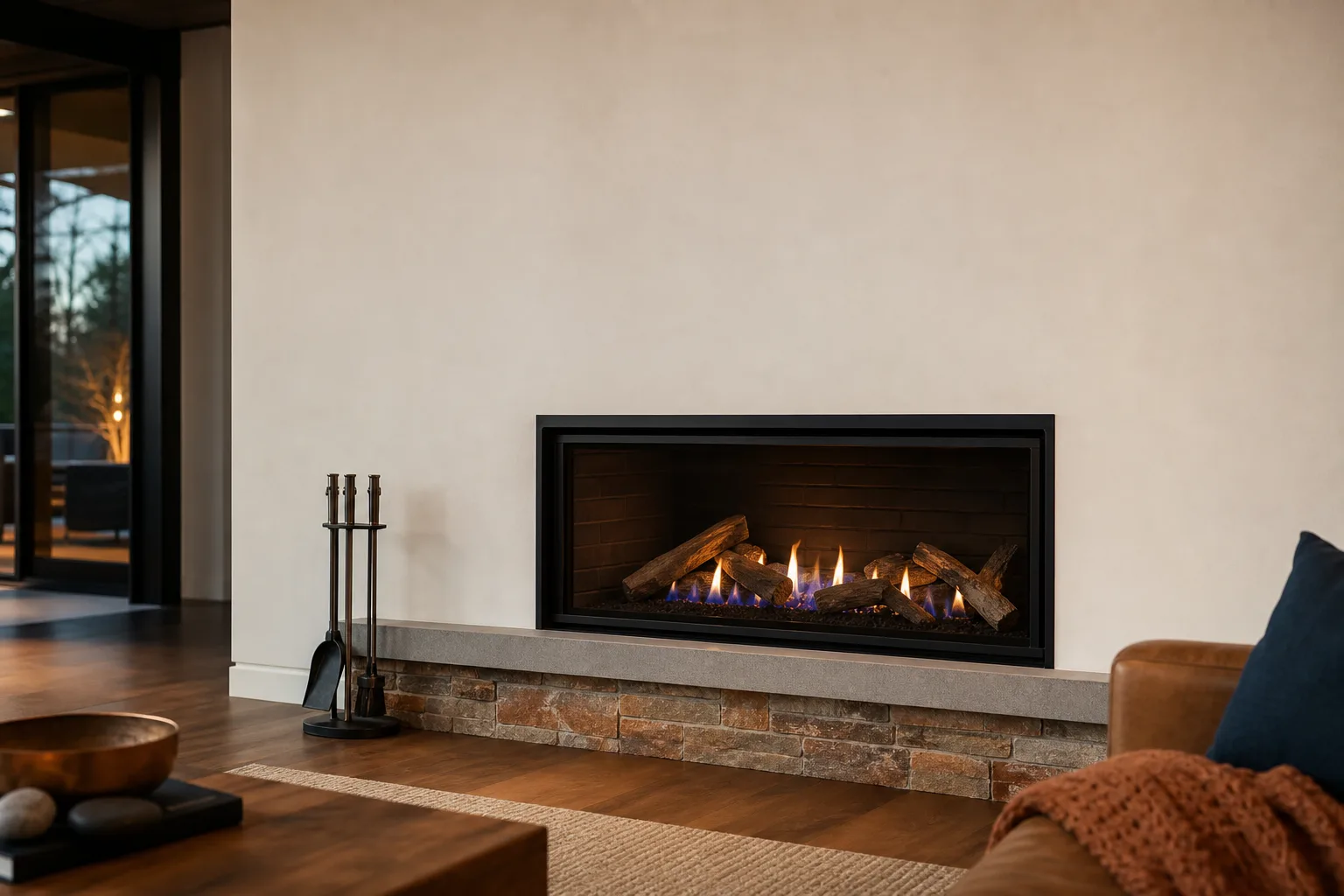
- Flame quality check. Steady blue-based flames with warm tips are the target; lazy, wavering, or heavily yellow flames trigger diagnosis, since flame character is combustion quality made visible.
- Controls and safety systems. Thermostat and remote functions, safety shutoffs, connections inspected, with any gas-supply concern referred to the right specialist immediately.
- Glass cleaned and reinstalled. The white film that builds on gas fireplace glass comes off with the proper cleaner before it etches permanently.
- Venting examined. The part important enough to get its own section below.
Most visits run about an hour on a straightforward direct-vent unit, longer if logs need repositioning or a vent termination has to be reached from a ladder. Late summer and early fall are the easy months to book; by the first cold snap the calendar tightens and a dead pilot becomes a wait.
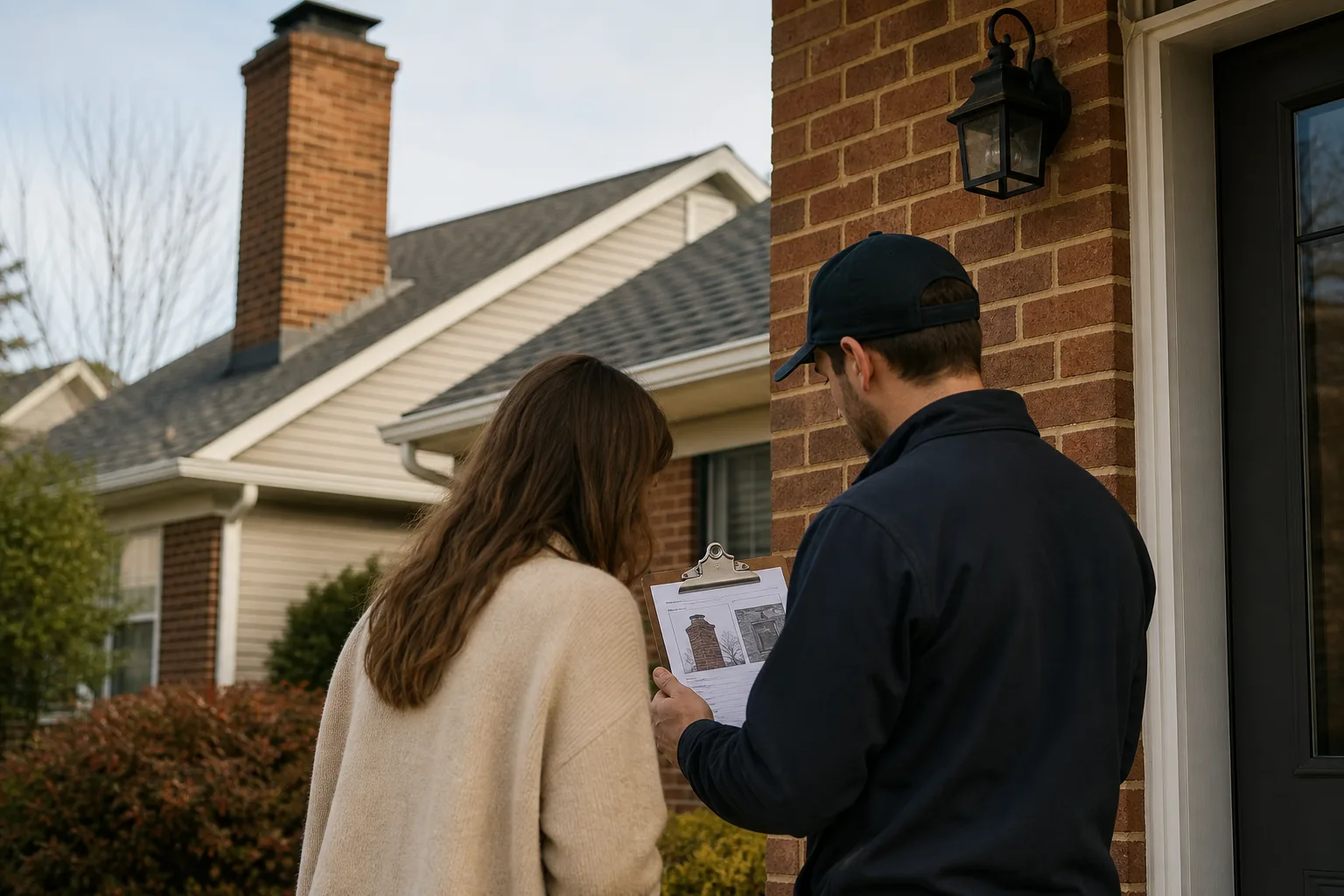
Can't remember your last service? Request a gas fireplace tune-up: free to book, no obligation, and comfortably done before the season starts.
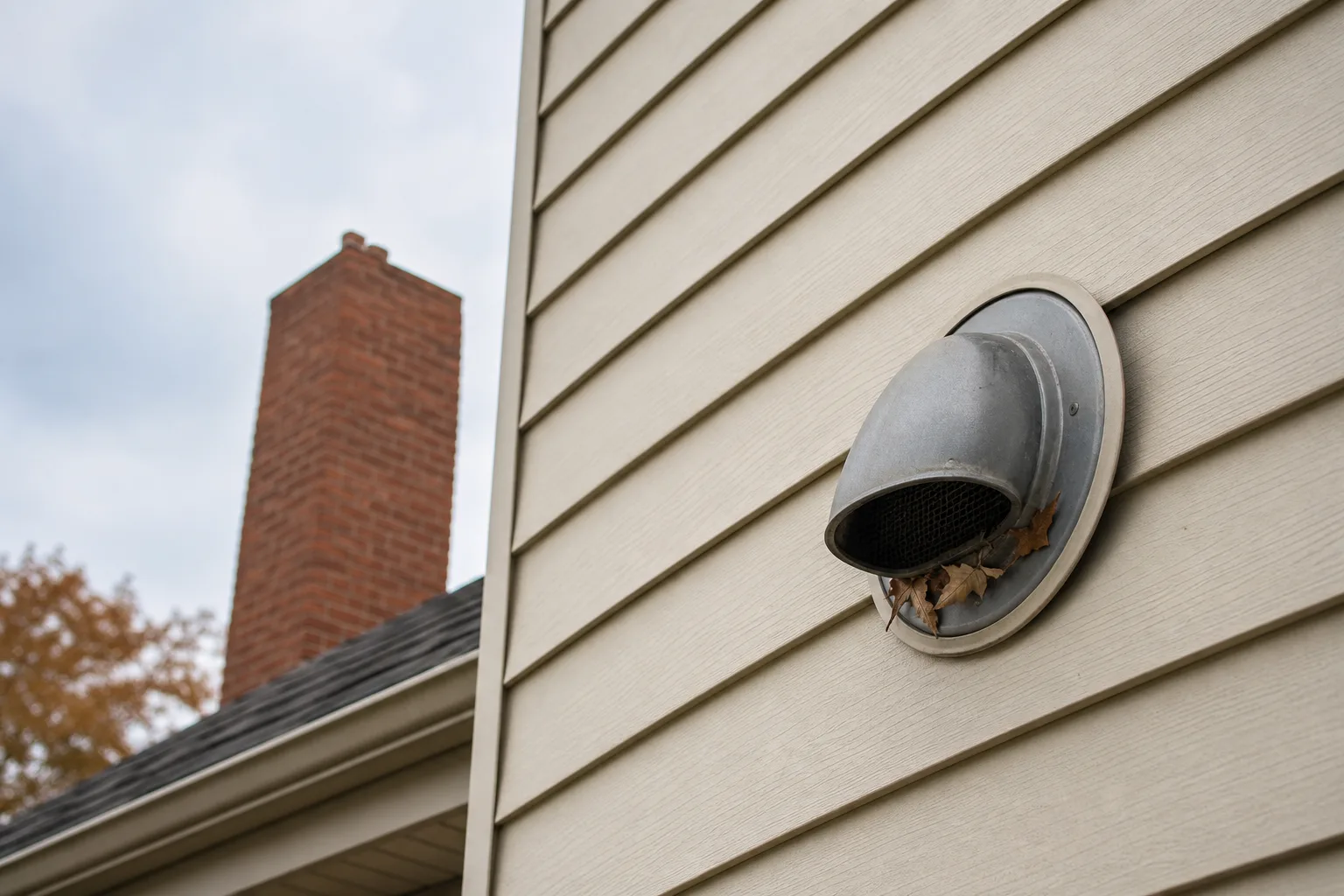
Venting: the part everyone forgets
Ask a homeowner about gas fireplace maintenance and they'll picture the flames and the glass. The venting, the part that carries combustion gases out of your house, rarely makes the mental list. It should top it.
What we check depends on the system:
- Direct-vent units exhaust through a sealed coaxial pipe. We verify the termination cap outside is clear of nests, leaves, and snow-drift lines, and that the intake and exhaust paths are intact and unobstructed.
- B-vent units rely on natural draft up a metal flue. We check for corrosion, disconnected sections, and blockage.
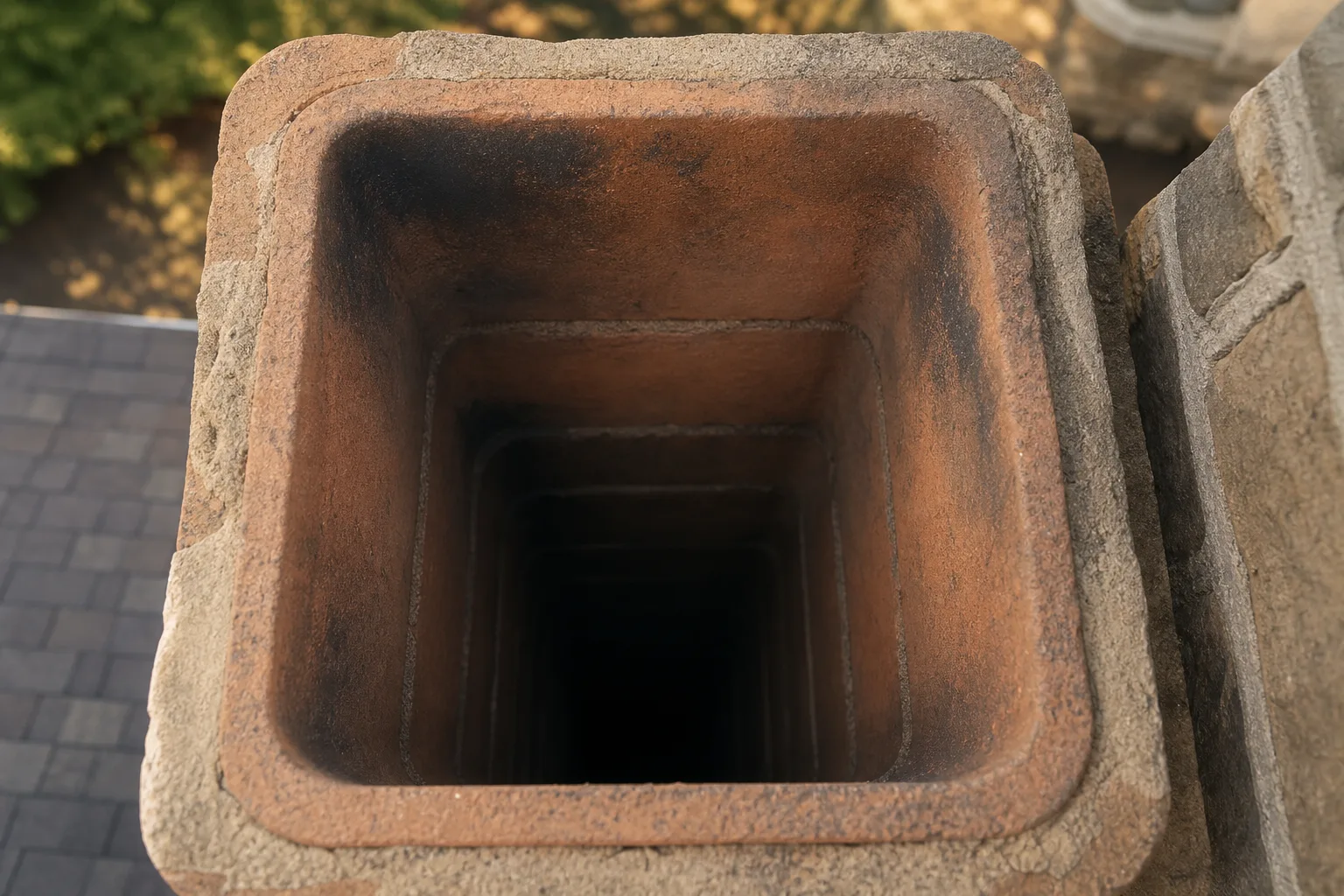
- Gas logs in a masonry fireplace vent up the original chimney, which means cap, flue, and damper all still matter. Moisture-heavy gas exhaust is genuinely hard on old clay tile and mortar joints, and a chimney showing water symptoms affects the gas system above it.
Two things make vent problems sneaky. First, they're mostly invisible: the failure is outside, on the roof, or inside a wall. Second, a blocked or corroded vent doesn't stop the fireplace from running; it changes where the exhaust goes. The unit keeps looking normal while the margin quietly disappears. That's why the vent check is the least skippable line on the service sheet.
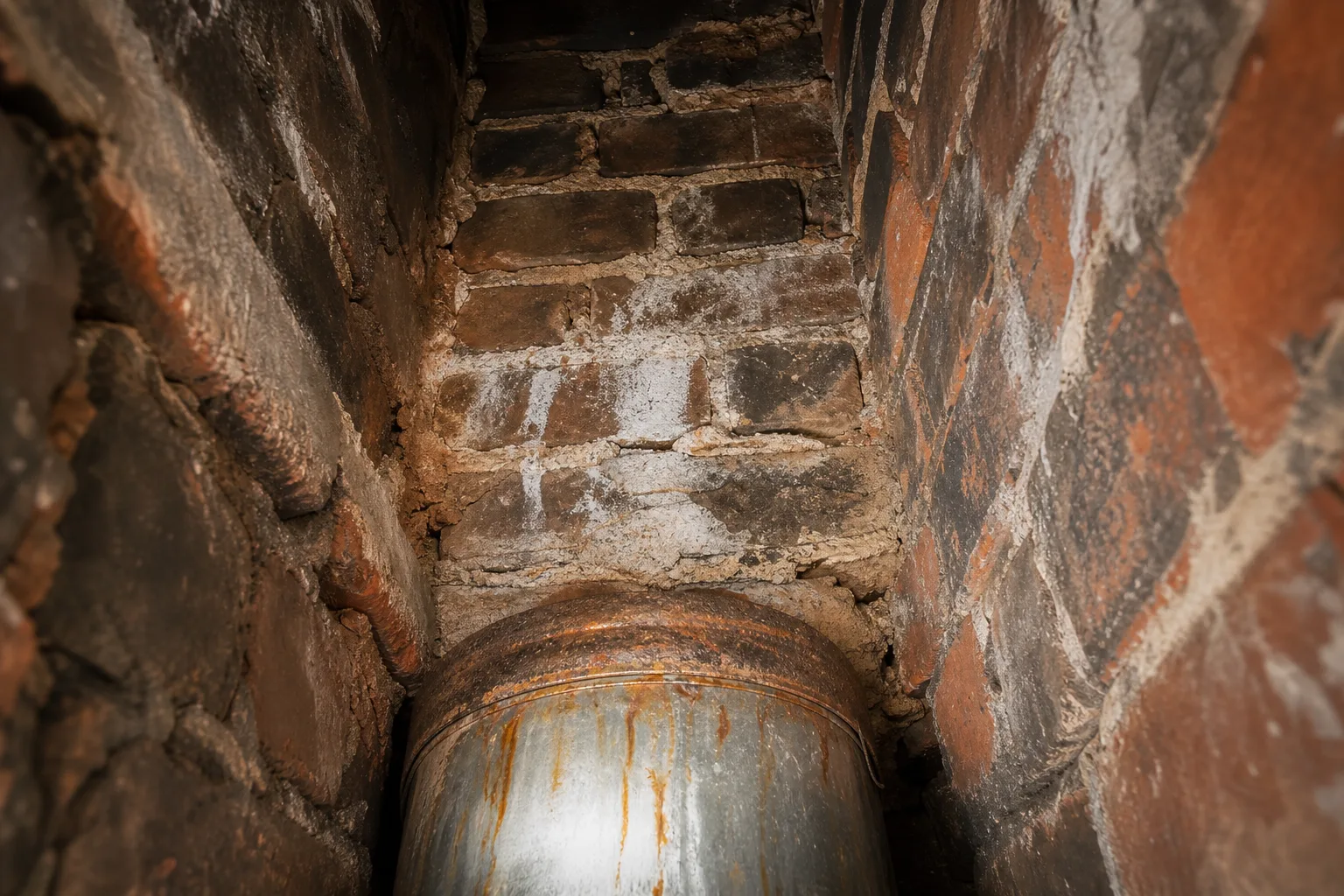
Water and your gas fireplace: the corrosion connection
Gas heat has a wet side. Burning gas produces significant water vapor, and that vapor turns mildly acidic as it condenses, which makes moisture the quiet antagonist of gas systems on two fronts:
- From the inside: every burn sends warm, moist exhaust up the vent. In a properly sized run it exits before condensing; in a long, cold, or oversized flue it condenses on the walls instead, and years of acidic condensate work on metal vents, clay tile, and mortar joints. Gas logs installed in a big old masonry chimney are the classic case: a flue that comfortably served wood fires is often far too large for gas exhaust, so the vapor lingers and condenses rather than leaving.
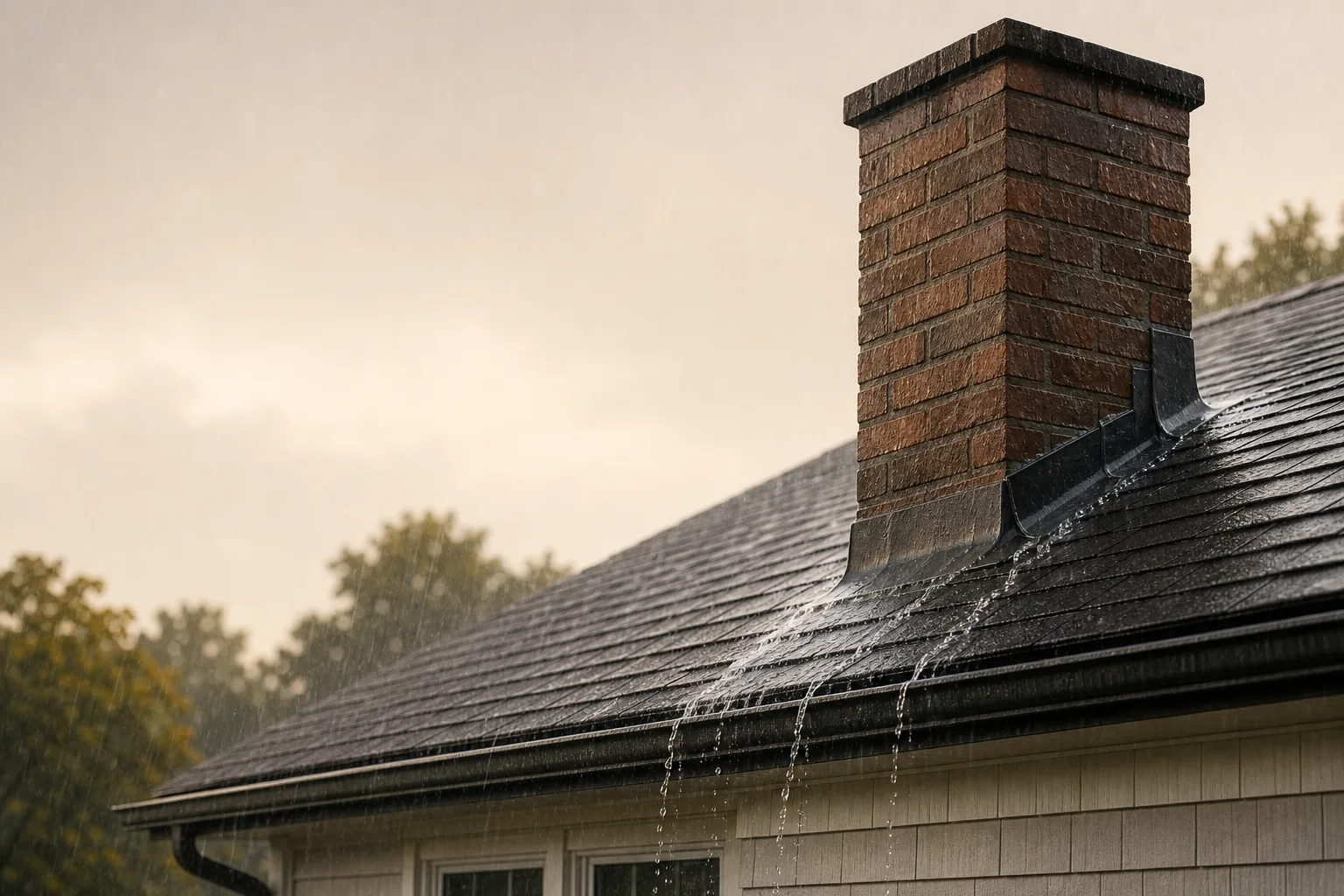
- From the outside: the usual suspects (cap, crown, flashing) admit rain over a gas system just as they would over a wood one. The difference is what the water lands on: damper hardware, firebox panels, vent connections, and controls that all corrode. A chimney problem above a gas fireplace is still a chimney problem; the appliance below it just rusts more expensively.
Symptoms worth reporting at your annual service: rust streaks in or around the firebox, white mineral staining on interior chimney surfaces, dampness or odor after storms, and paint bubbling on the chimney wall. Each points at moisture working somewhere in the system, and caught early, the fix is usually modest: correct the venting, seal the entry point, replace the corroded part before it fails.
Carbon monoxide safety, without the scare tactics
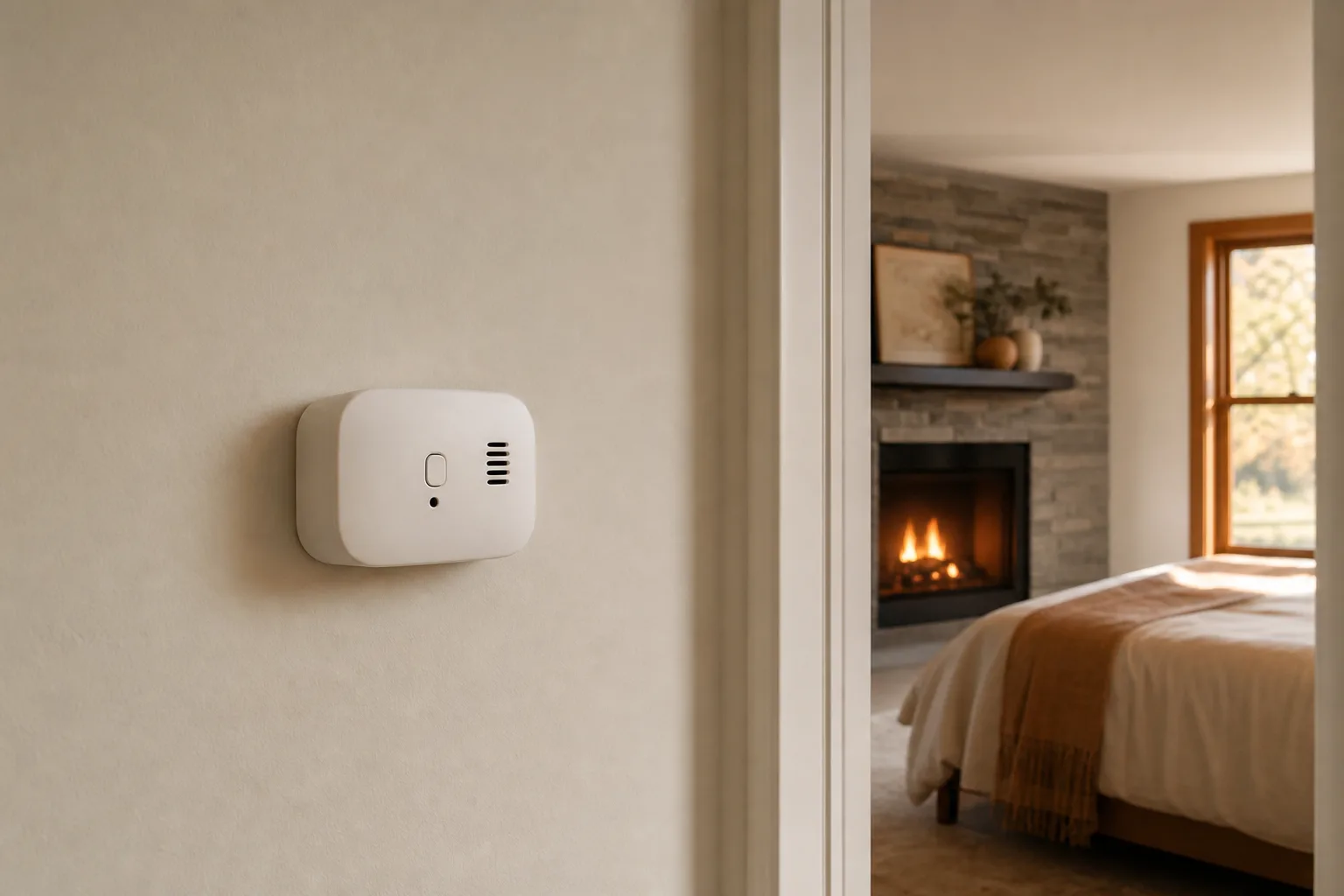
Here's the calm version. Properly installed, properly vented, properly maintained gas fireplaces are safe appliances; millions run all winter without incident. Carbon monoxide risk comes from the failure states: blocked vents, degraded seals, bad combustion. So CO safety is really three habits layered over the annual service:
- Alarms on every level of the home and near sleeping areas, installed per the manufacturer, batteries refreshed on a schedule you'll actually keep. This is the non-negotiable layer: CO is colorless and odorless, and detection is instrumentation's job, not intuition's.
- Know the two symptom patterns. Flu-like symptoms (headache, dizziness, nausea) that improve when you leave the house and return when you're back; or an alarm activation. Either one: fresh air first, then emergency services, then the appliance stays off until it's inspected.
- Treat soot as a stop sign. Black deposits on the glass or logs of a gas unit mean incomplete combustion. That's not cosmetic; it's the visible end of the exact process that produces CO. Shut it down and get it looked at.
The safety fundamentals are the same as for any combustion appliance: respect the exhaust path, instrument the house, service on schedule. None of it is complicated. It just can't be skipped in bulk.
What you can do between visits
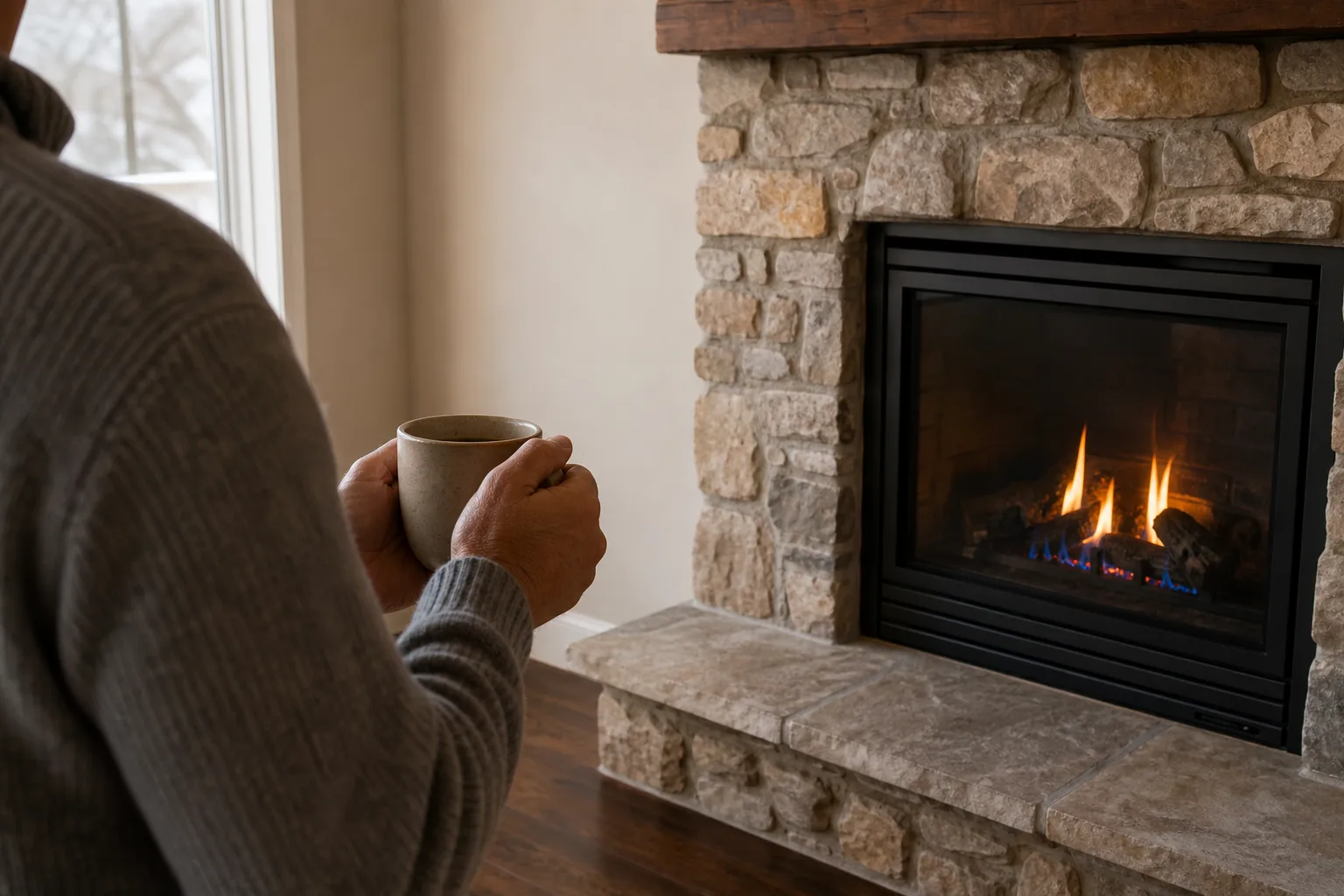
The division of labor is clean. Light observation for you, everything invasive for us:
| Yours, anytime | Ours, on the annual visit |
|---|---|
| Watch flame color and steadiness | Clean burners, ports, and pilot assembly |
| Notice new odors, sounds, or sooting | Inspect and reposition logs; replace gaskets |
| Keep vents and terminations visibly clear outside | Evaluate the full venting run |
| Test CO alarms; replace batteries | Check safety shutoffs and controls |
| Keep combustibles off the hearth | Diagnose anything the small symptoms point to |
The homeowner column takes minutes a month, and its whole job is catching the polite early signals: the slightly lazier flame, the film returning faster, the pilot that needs two tries. Small symptoms in gas systems are rarely urgent and never meaningless; they're the system requesting its appointment. When you notice one, a quick service request is the entire fix, and it beats a no-heat morning in January every single time.
Symptom checker
What is your chimney doing?
Tap the closest match for an honest first answer.