


Next-day appointments
Call or book today and we'll do our best to get a pro to you tomorrow.
Chimney service
The short answer
Ask to keep the footage. A finding you cannot look at again is a finding you have to take on trust.
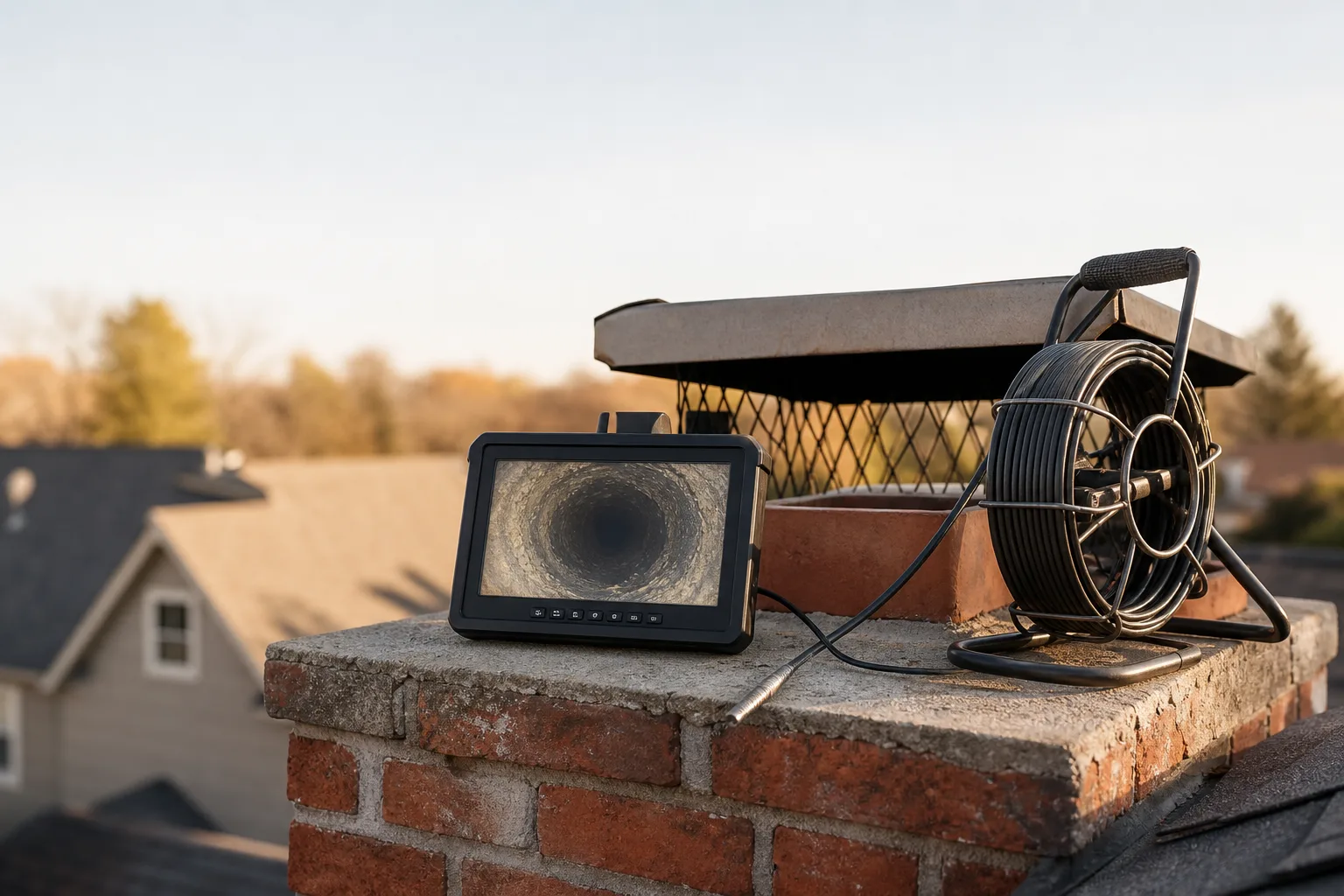
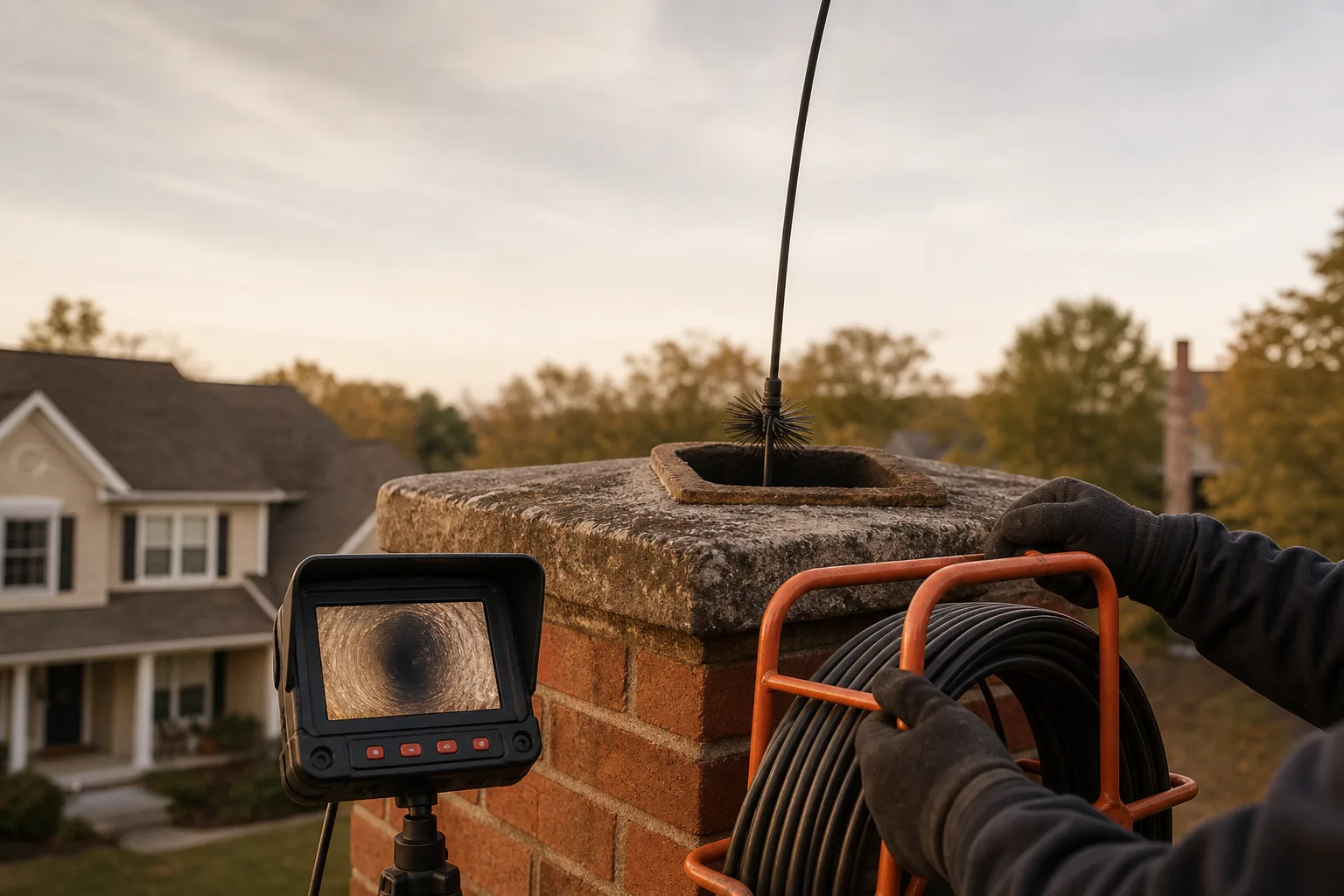
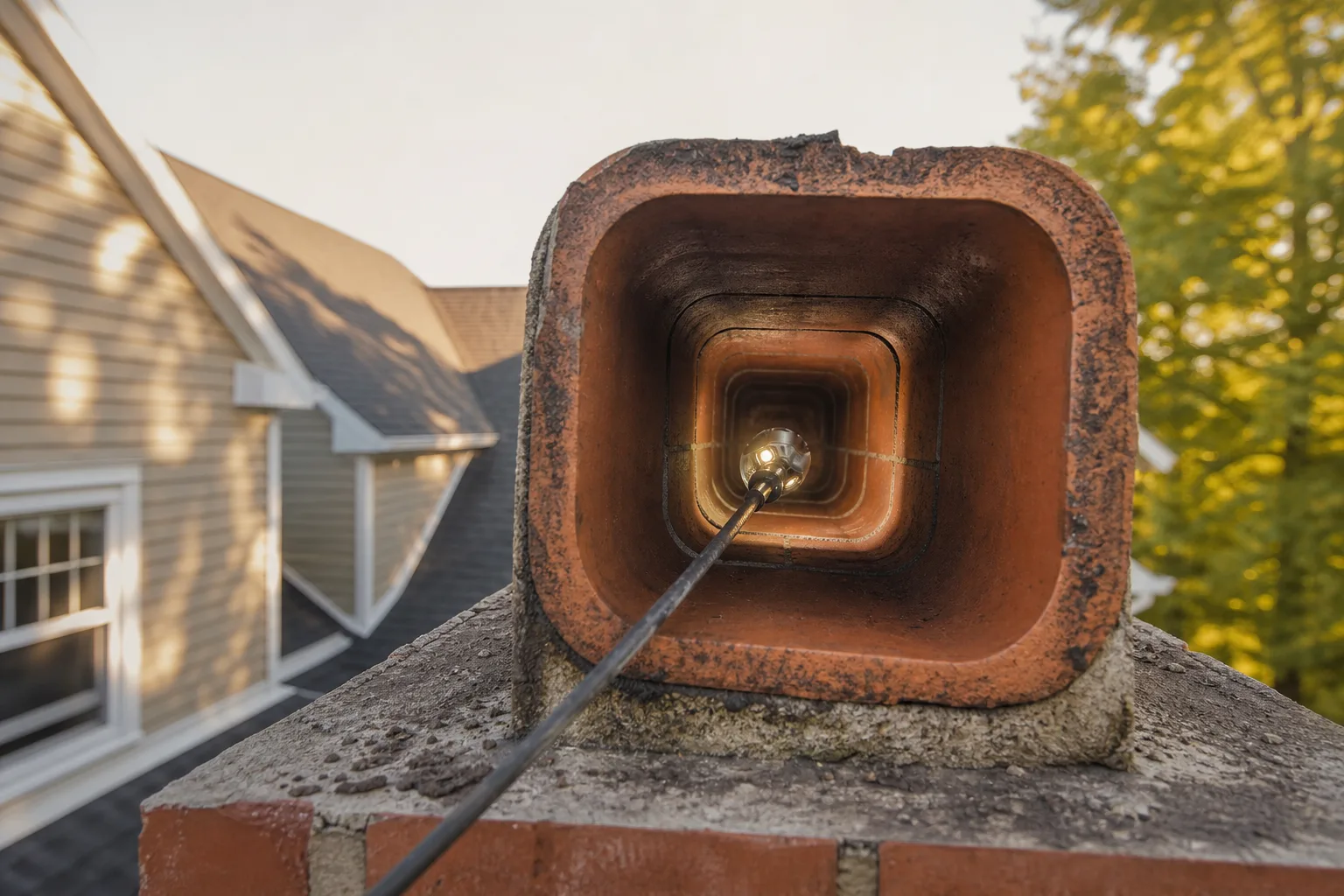
A video chimney inspection lowers a camera on a rod or cable the full height of the flue, showing the liner joint by joint on a monitor at level 2. It is the only way to see cracked tiles, missing mortar between them, breaches, and blockages above the smoke shelf. Two things decide whether it is worth doing. The flue has to be swept first, because a camera cannot see a hairline crack through creosote. And you should be given the footage to keep, because the recommendations that follow a scan are often expensive and a second opinion needs something to look at.
The full height, on camera
Ask for the footage. Recommendations that follow a scan get expensive, and a second opinion needs something to look at.
Fall Special
Call or book today and we'll do our best to get a pro to you tomorrow.
Anything that needs attention is shown to you and explained in plain words.
If something needs fixing, you get the price in writing first. Saying no costs nothing.
Do you have this problem?
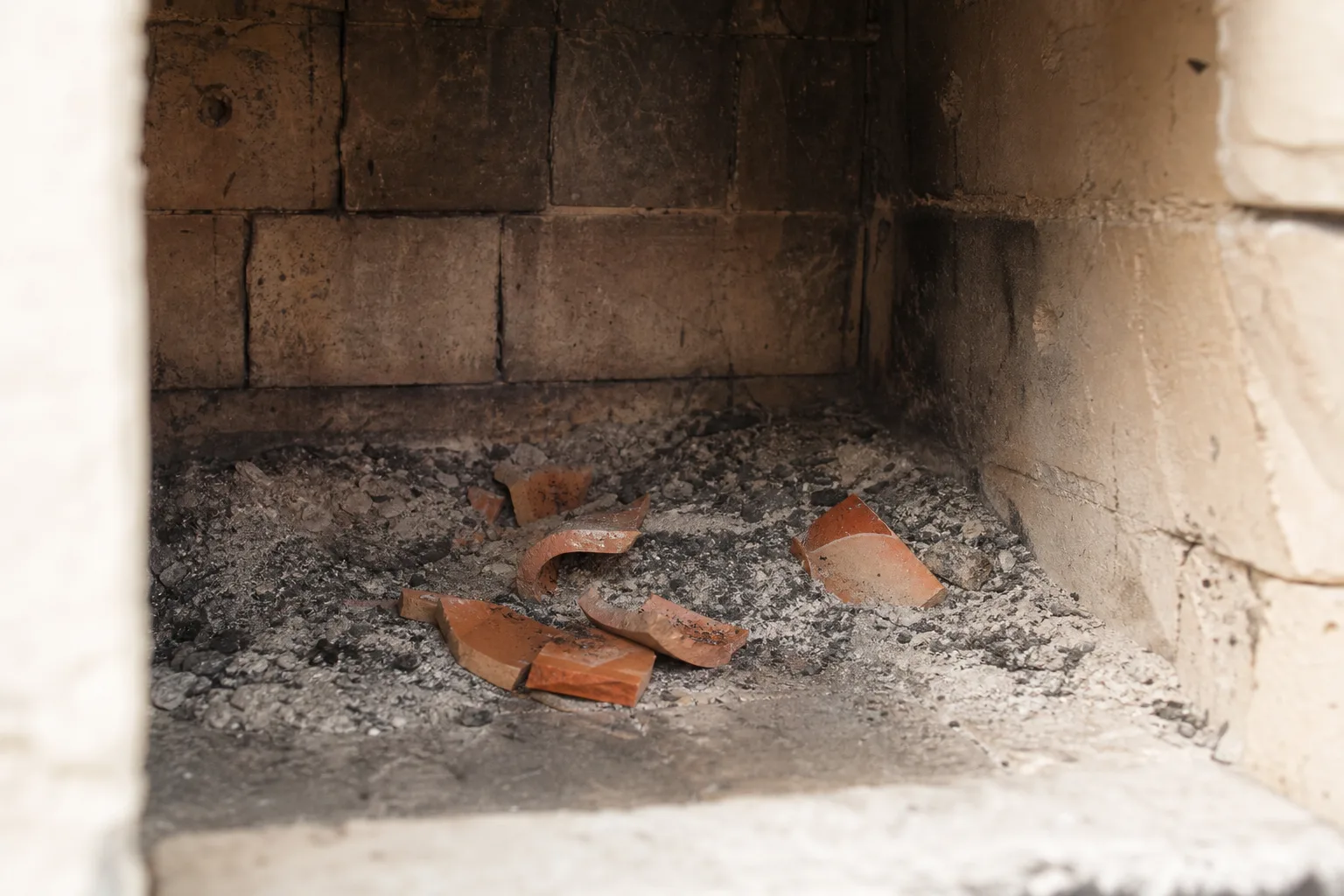
The clearest reason to put a camera up there. Tile arriving in the hearth means the liner is failing somewhere above, and only a scan shows how far it has gone.
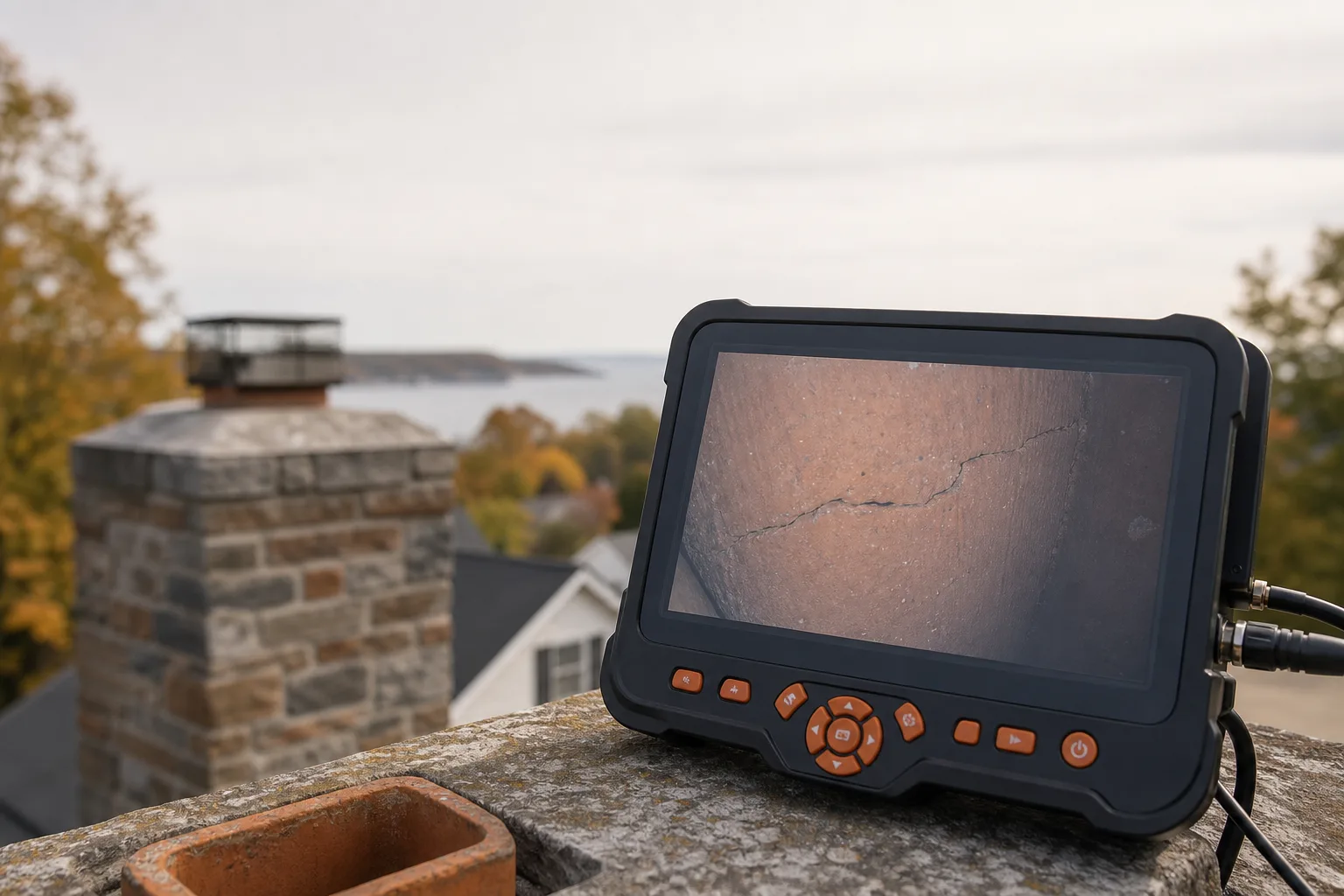
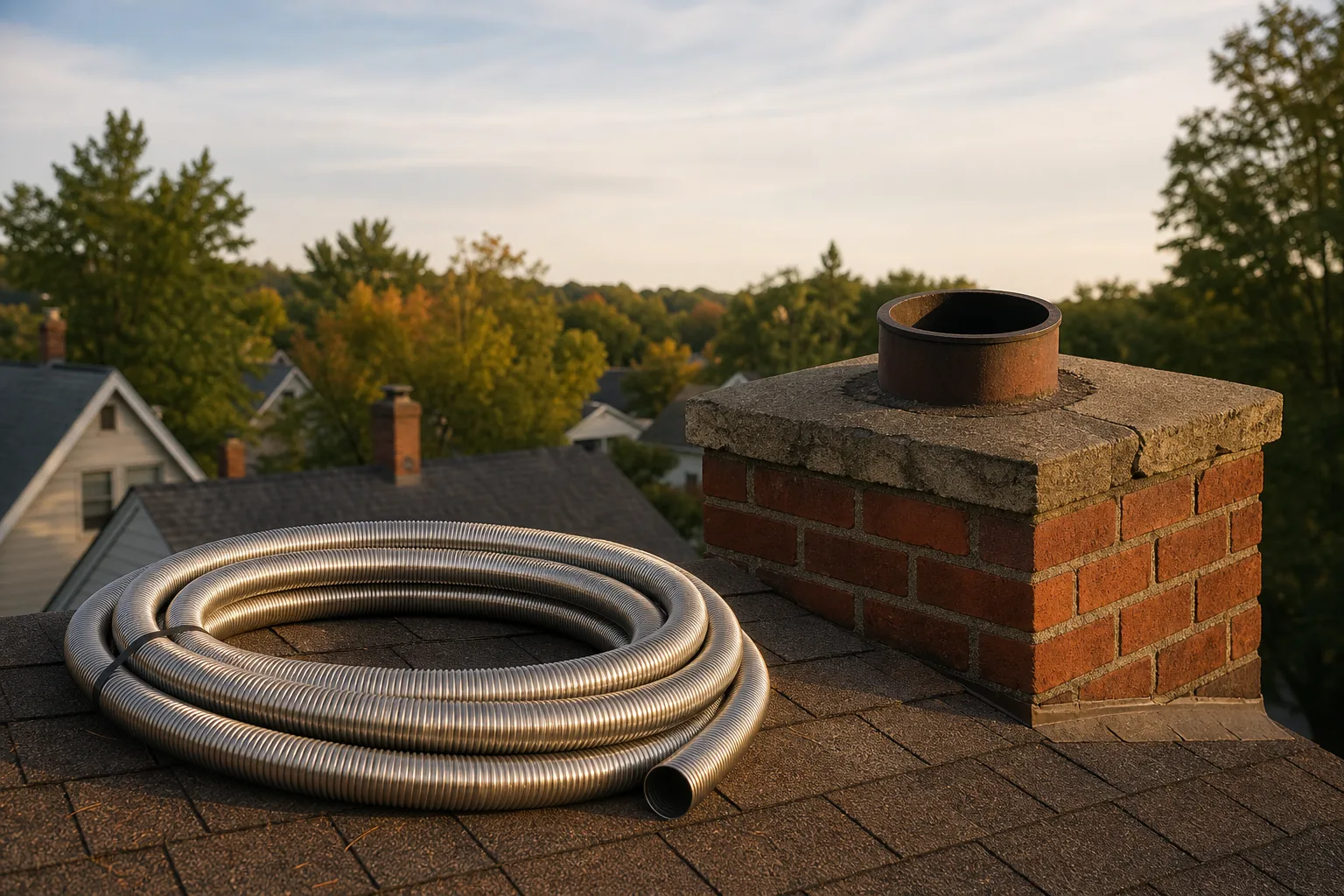
A reline is the most expensive routine job in this trade. A documented scan is a cheap way to verify a very large recommendation, and any company confident in its finding will be happy to show you.
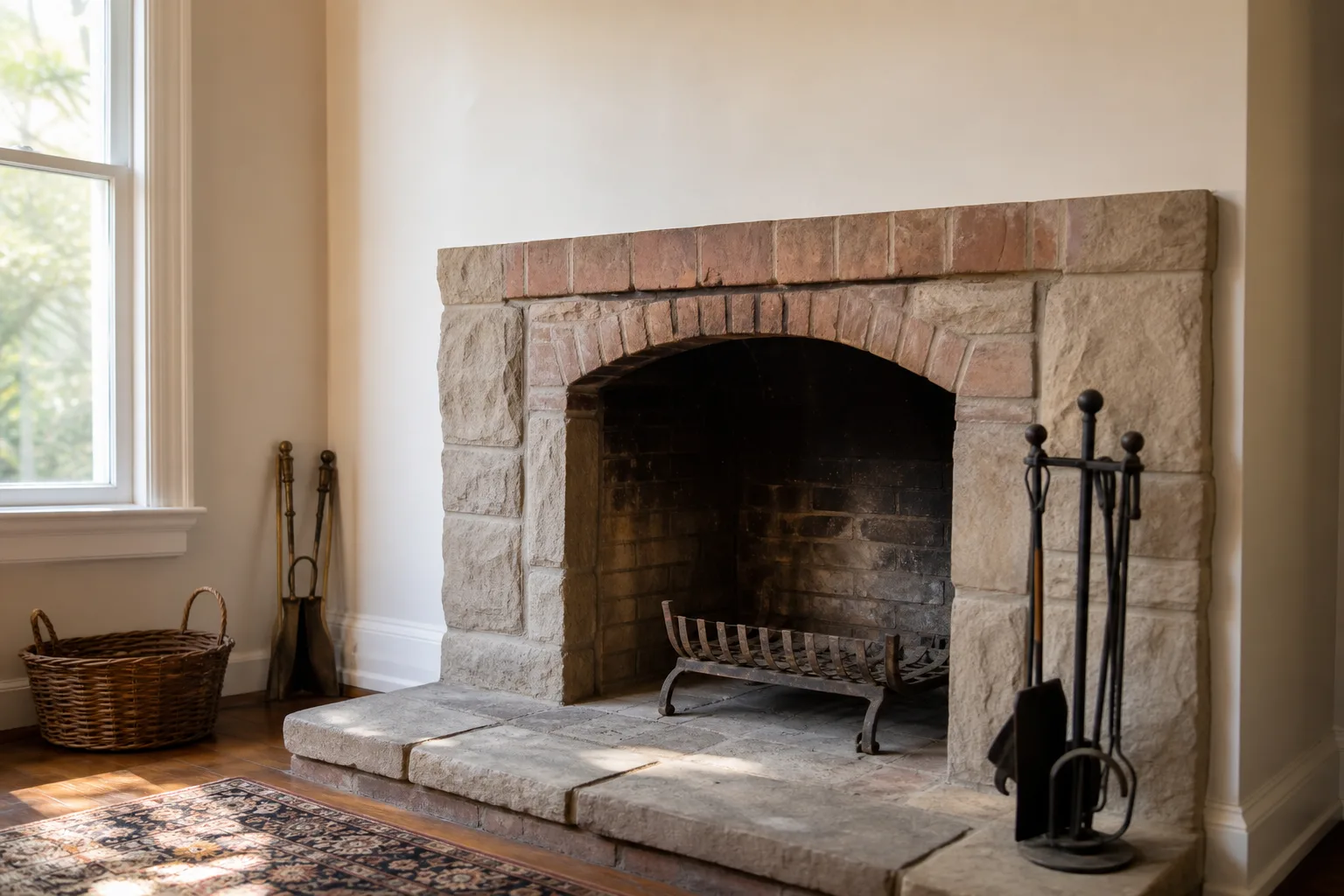
A camera scan is part of a Level 2, which is what a property transfer calls for. Bought on its own it still answers the question a home inspection leaves open.
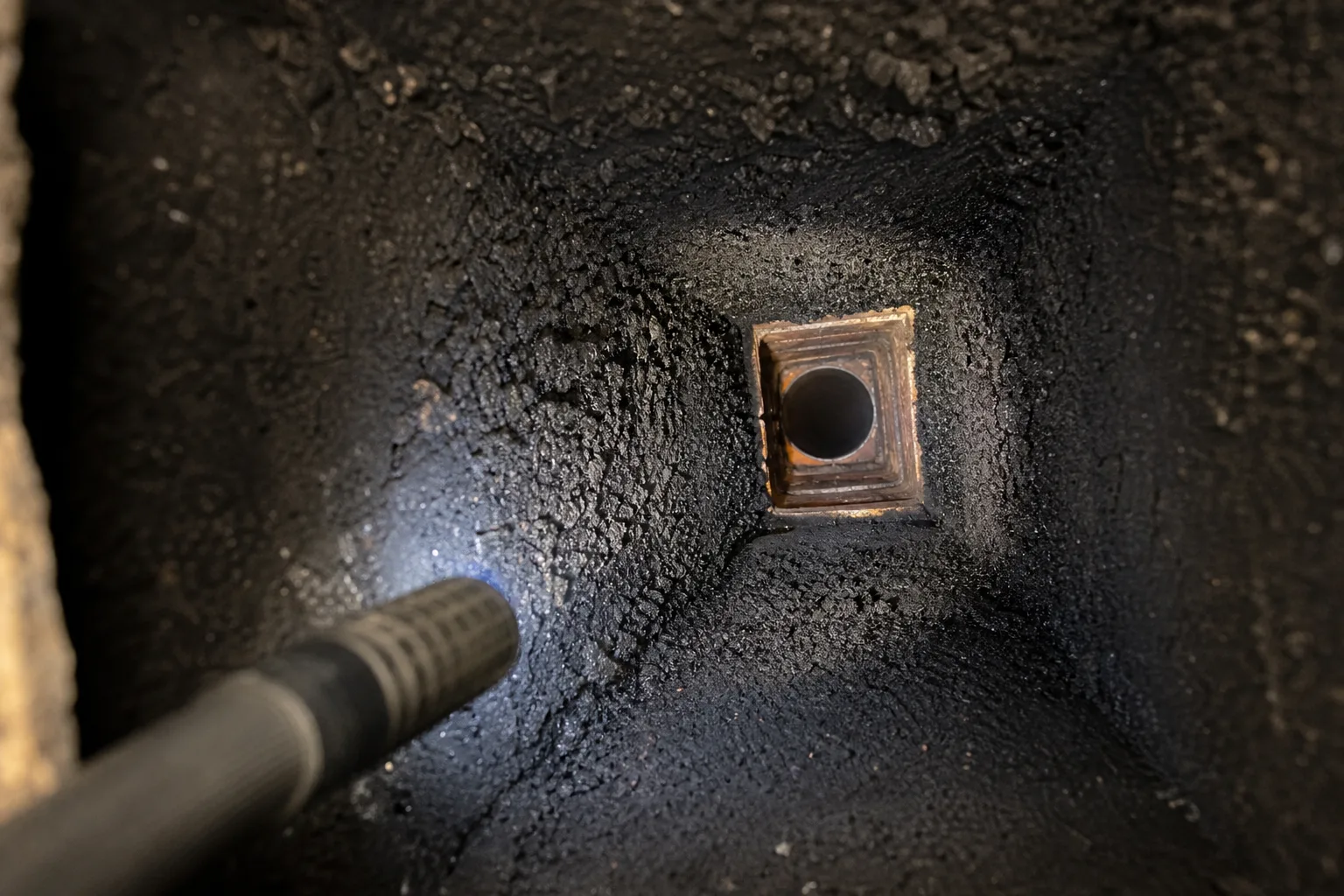
Flue fires crack tiles almost every time. The damage is inside the flue and invisible from either end, which is what the camera is for.
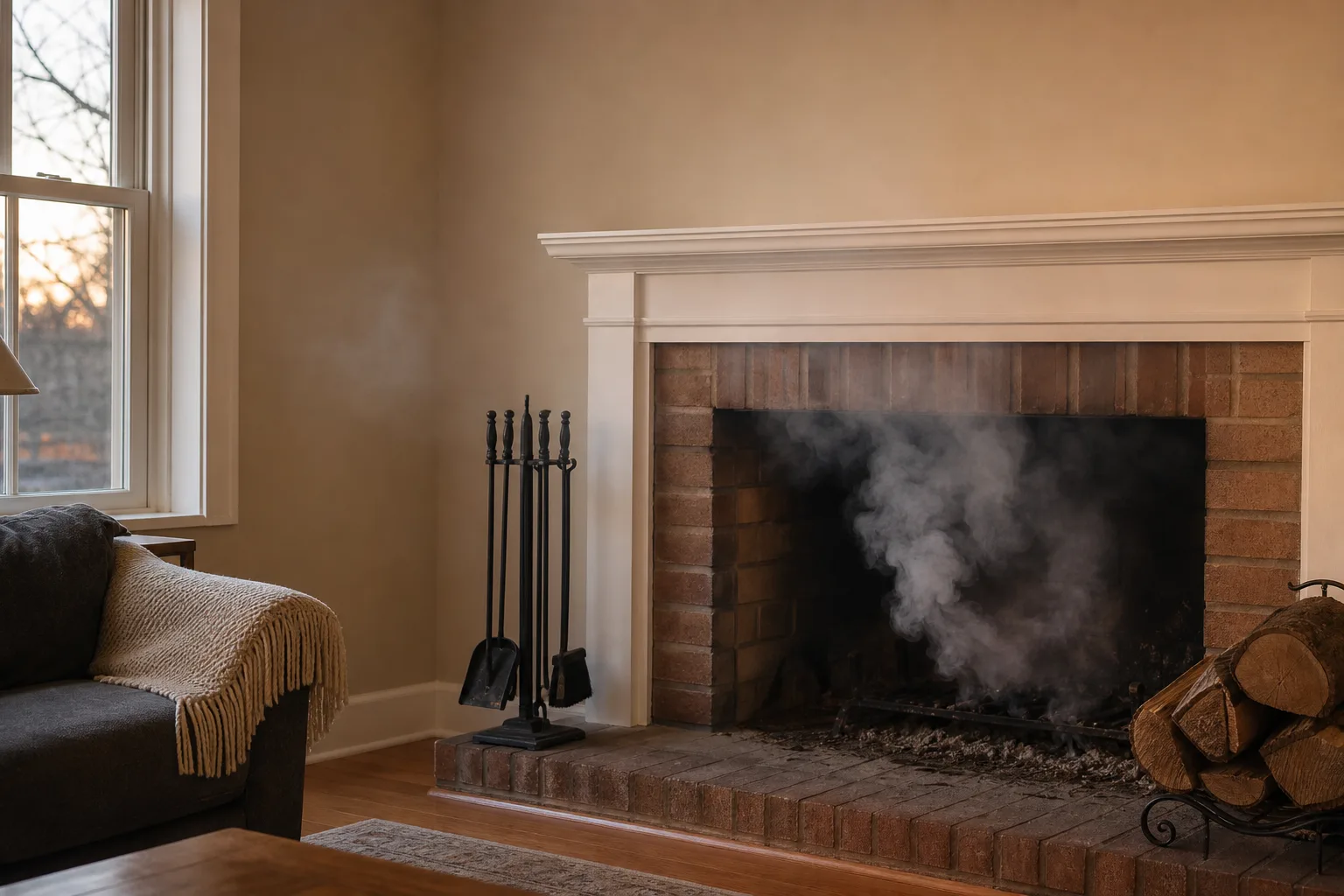
Smoke reaching an upstairs room or a neighbouring flue means gases are leaving the liner somewhere. A scan finds the breach; guessing at it does not.
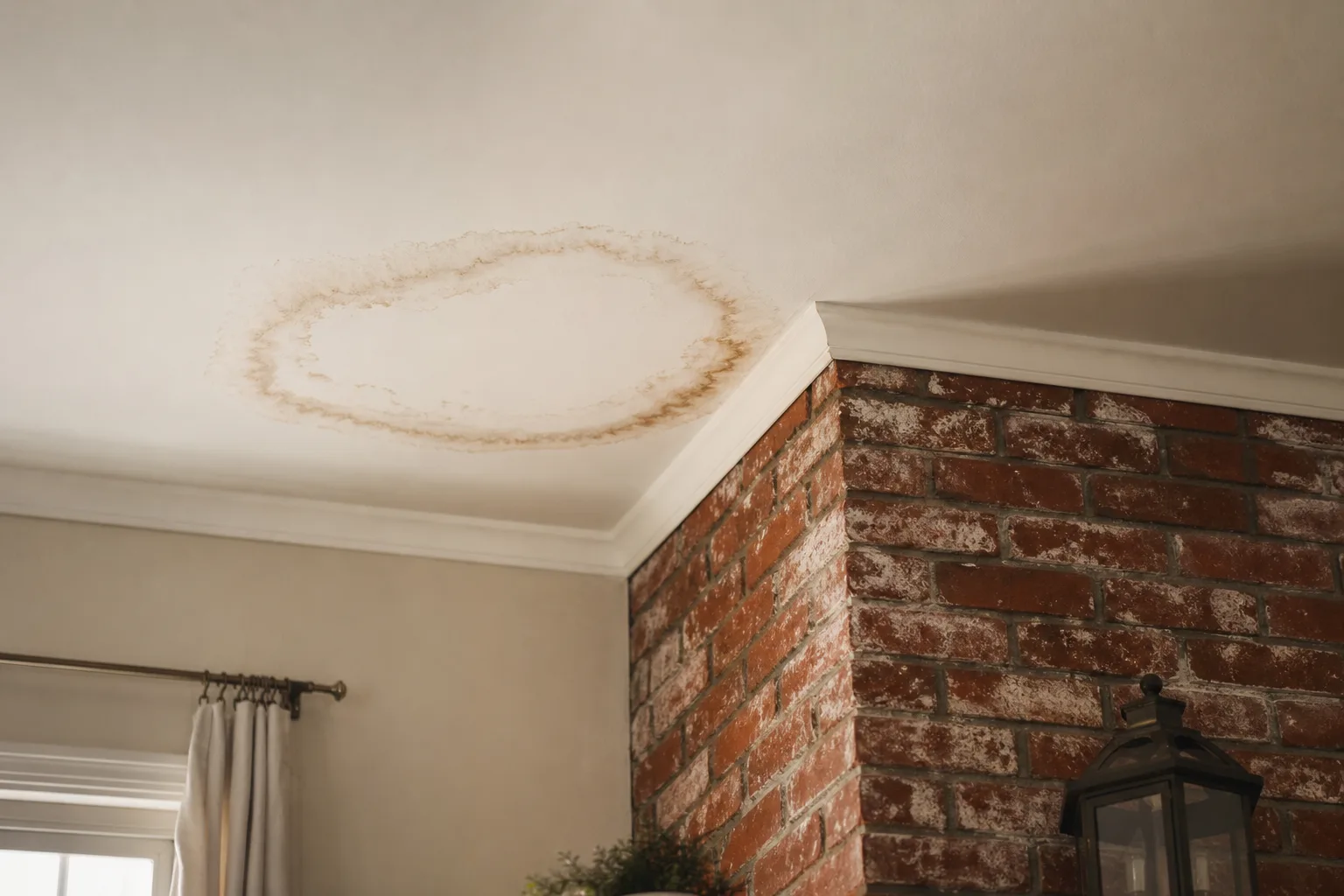
Stills and video with a date on them are what an adjuster works from. A written opinion without images is much weaker in a claim.
How we work
The same four steps every time, whatever the repair turns out to be.
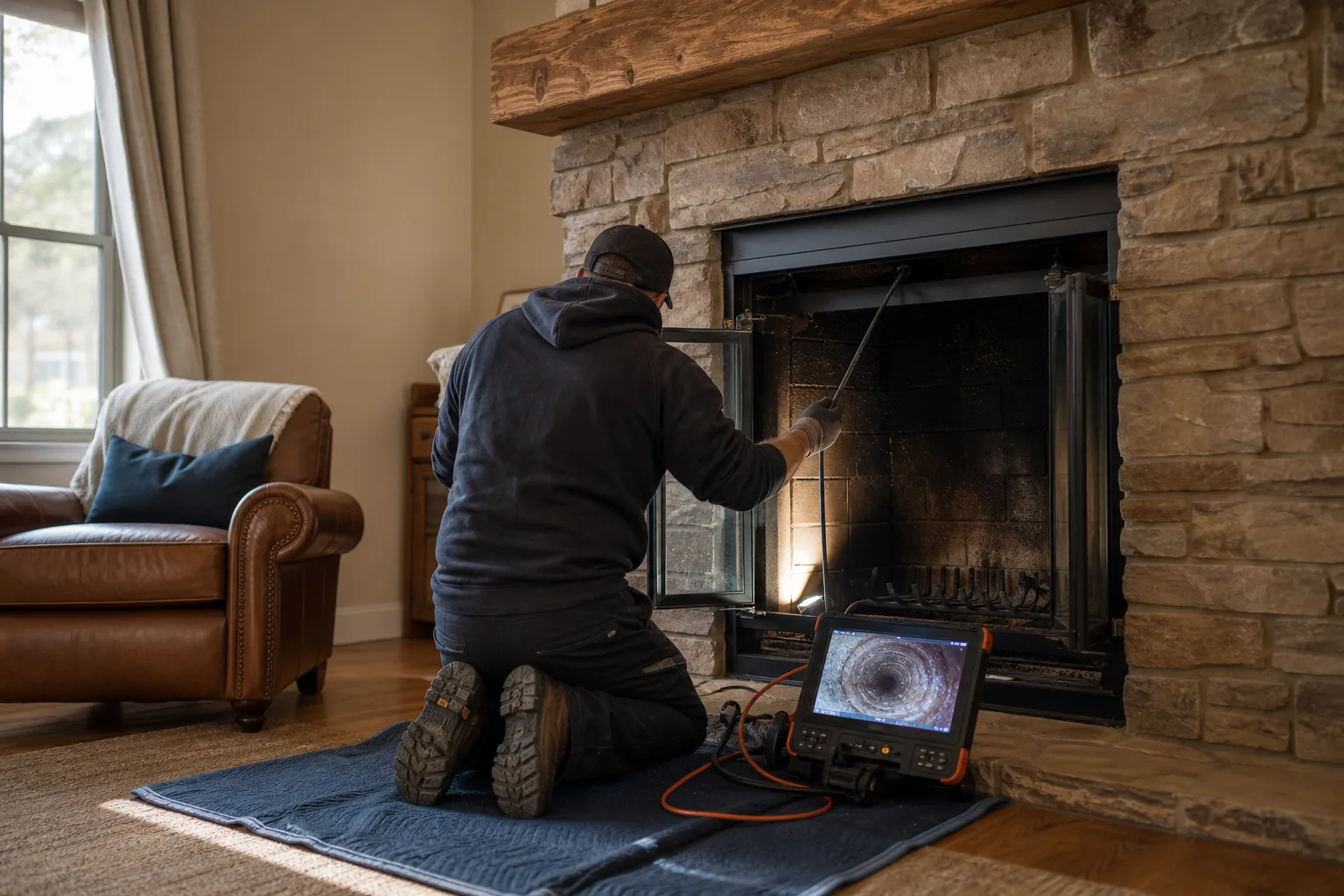
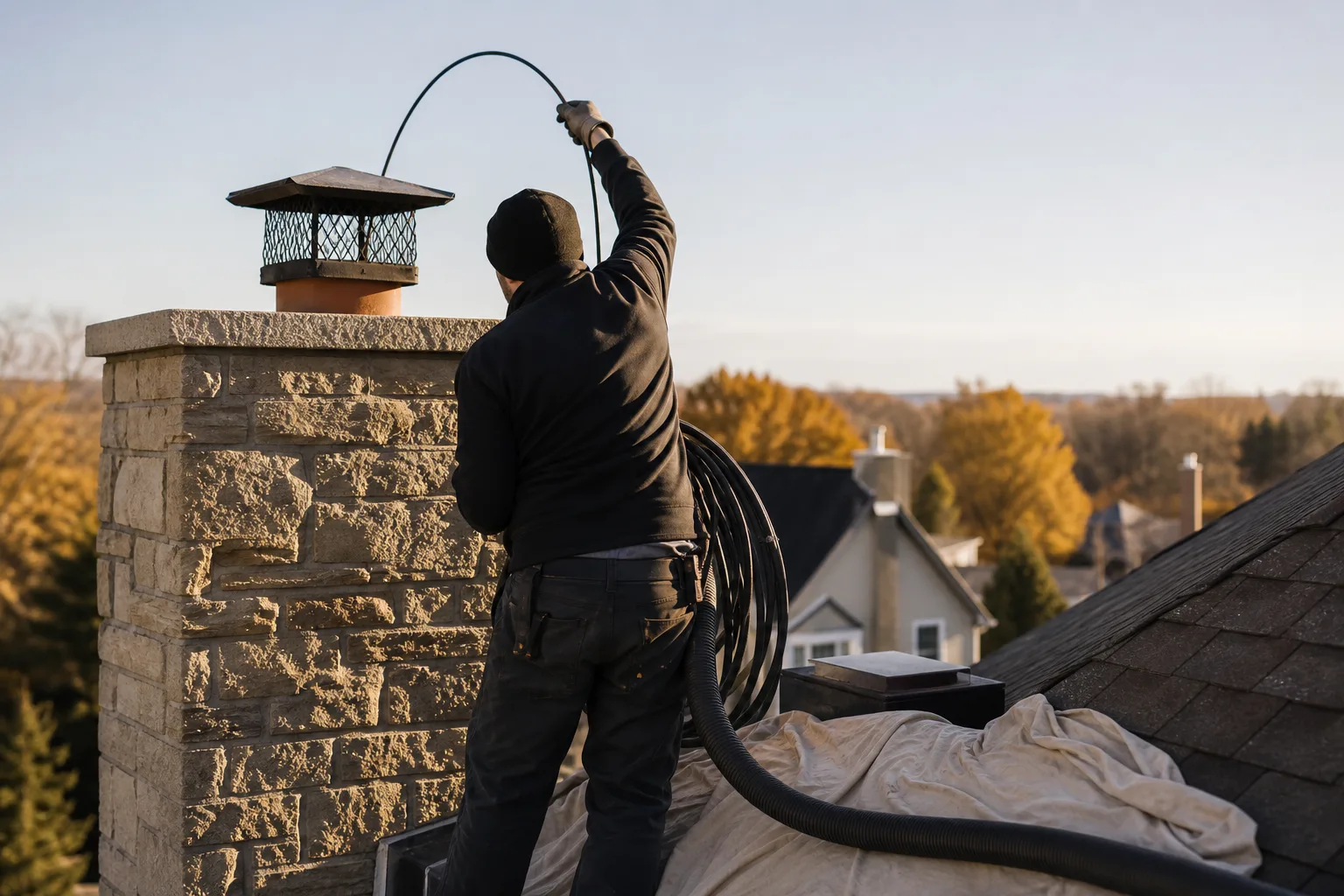
A look at the crown, cap, flashing and exterior masonry, then the flue, damper and firebox — with a camera where the job calls for a level 2 scan. Whatever needs work gets shown to you, not just described.
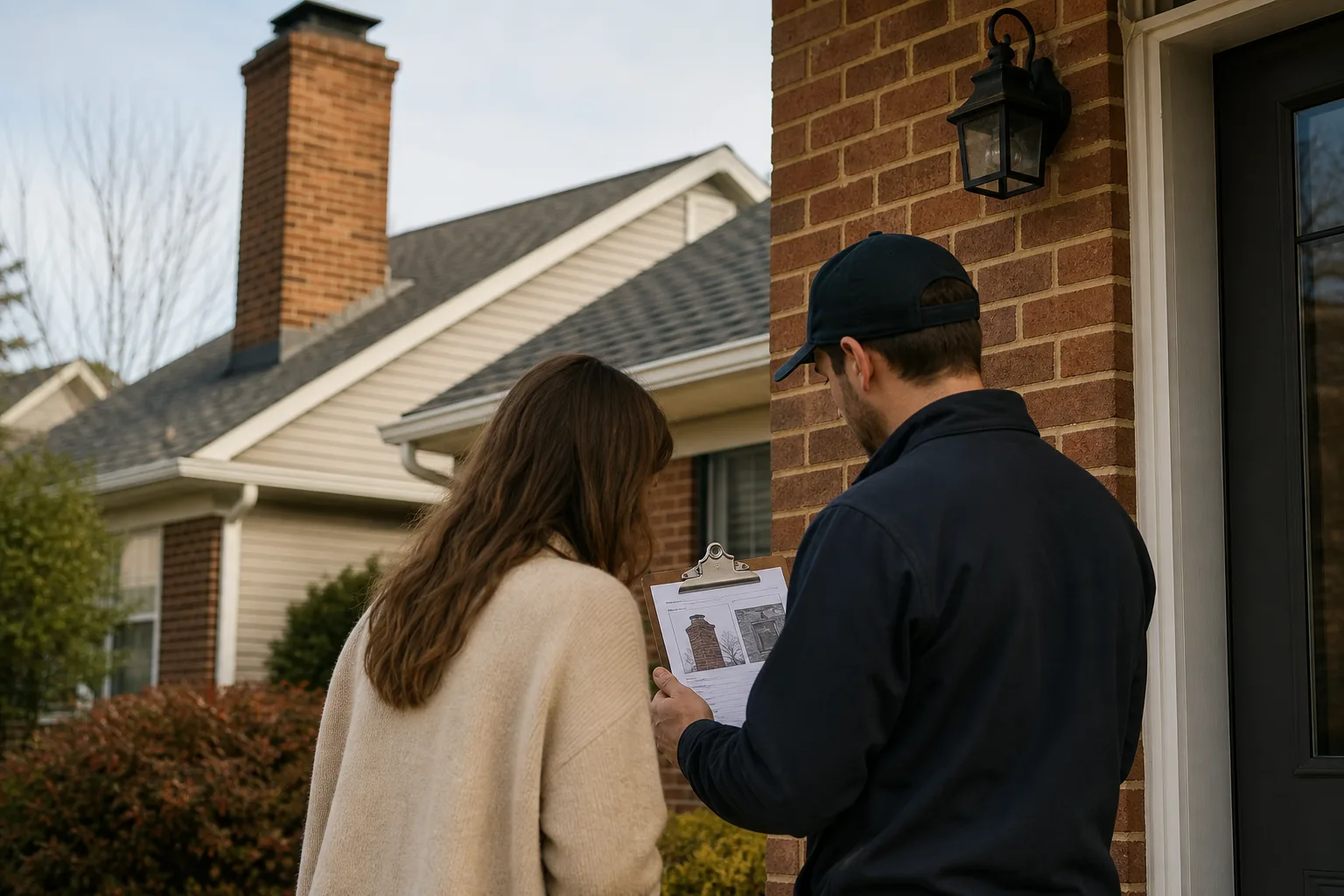
Scope, price and what is not included, in writing. Nothing starts until you approve it, and an emergency is not a reason to skip this step.
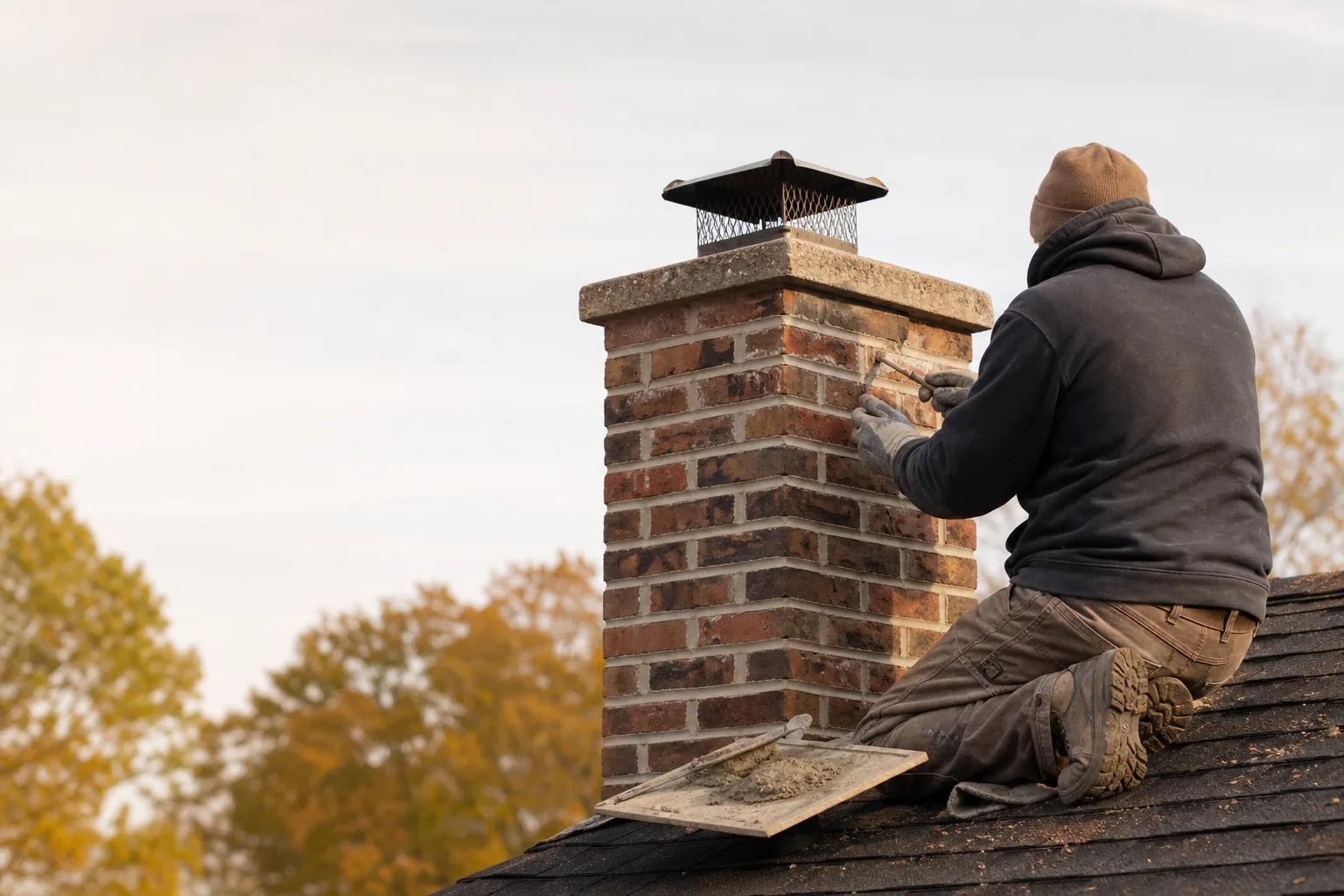
Matched materials and the manufacturer's spec, not whatever is on the van. Drop cloths down, and the room left as it was found.
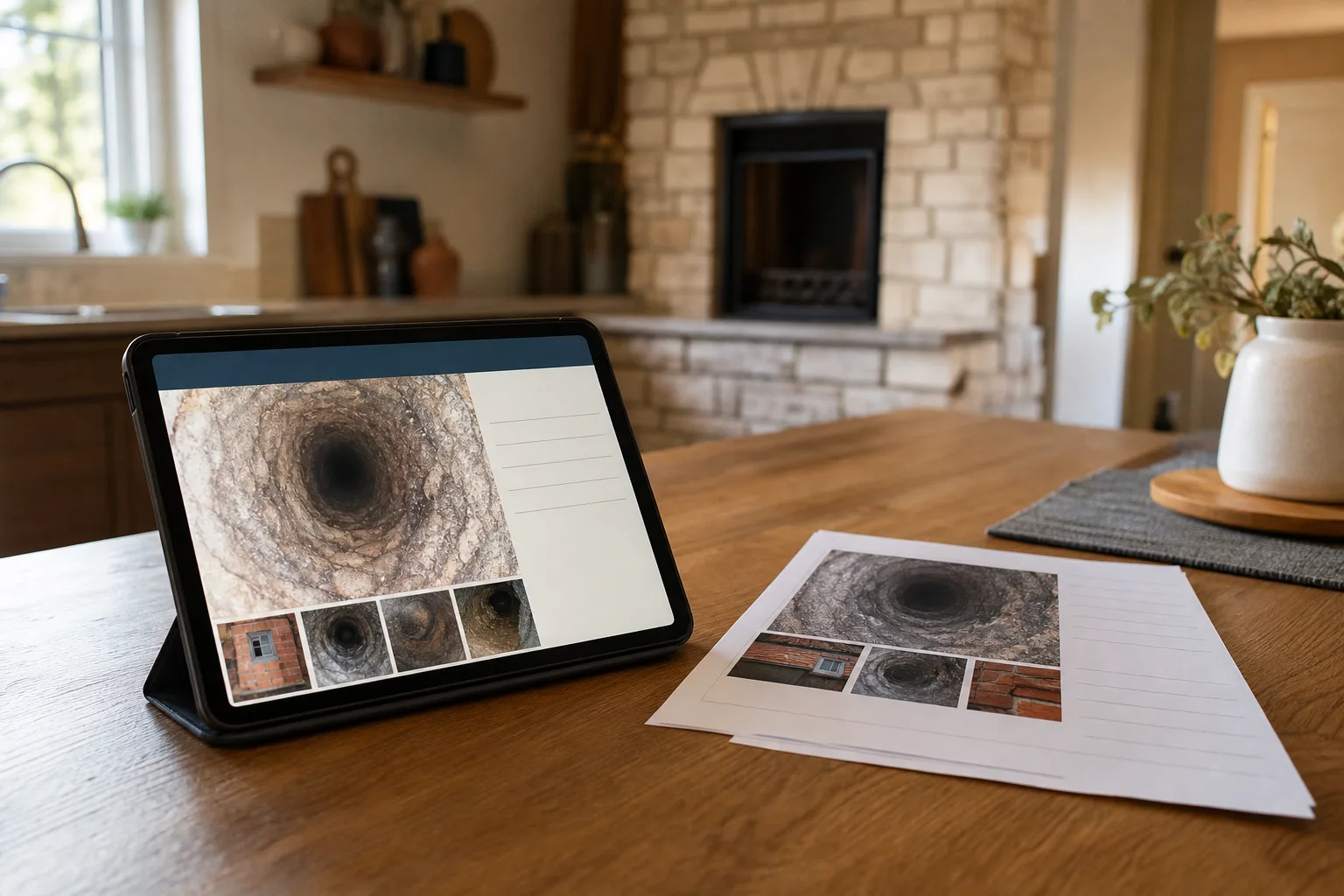
A second scan after the work, and written findings you can keep, hand to an inspector, or send to an insurer.
What it covers
Not every job on this list is equally urgent, so they are ordered that way. A cracked liner stops you using the fireplace tonight; waterproofing can wait for a dry week.
The job — most urgent first
What it involves
On site
The proper version: flue swept, then the camera run top to bottom with stills captured at anything of note. Scanning a dirty flue produces a video of soot and a false all-clear.
On site: About an hour
The camera work inside a full Level 2, with the attic and roof access and a written report. This is what a property sale or a post-fire claim needs, rather than the scan alone.
On site: 1–2 hours
An independent scan when someone has recommended a reline or a rebuild. Given the sums involved, this is proportionate rather than distrustful, and it is one of the better uses of an hour.
On site: About an hour
A second scan after work is finished, so you can see the difference rather than being told about it. It should come as standard with any liner or masonry job, and it is worth asking whether it does.
On site: About an hour
Older houses often run two or three flues up one chimney. Each is scanned separately, and a breach between two of them is exactly the fault this finds.
On site: Half a day
Times are for the work itself, not for scheduling. Masonry needs roughly 40°F to cure properly, which is what limits this work in a northern winter rather than whether a crew is free.
What drives the price
A standalone scan on a clean flue is a modest hourly job. Add sweeping, which most chimneys need first, and a written report if a transaction or a claim depends on it. It stays well below the cost of a Level 2 because it does not include the attic and roof access — which also means it is not a substitute for one when a sale is involved.
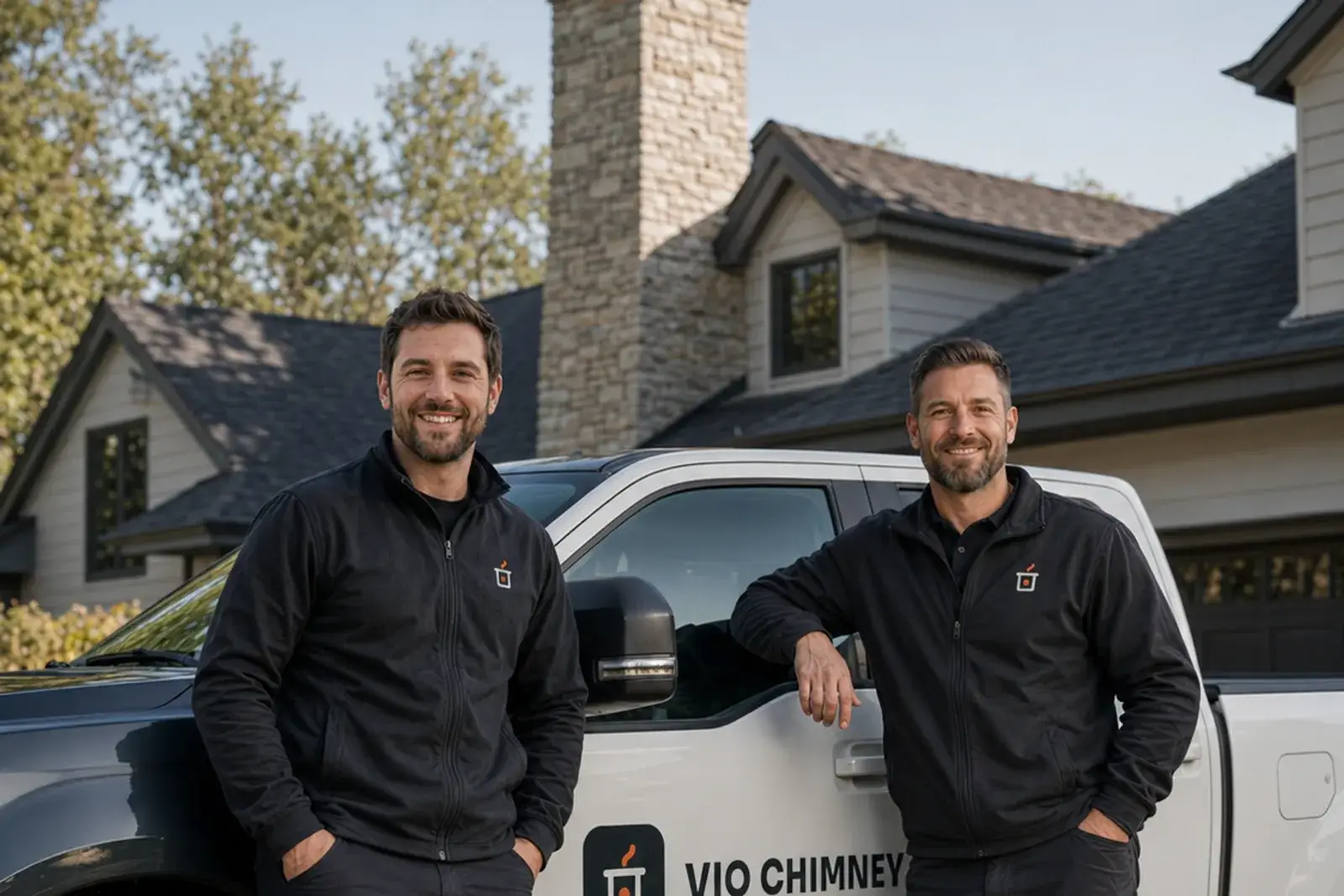
Founded by Ryan Carter in 2019. Every page you read here is reviewed by Ethan Miller, our chimney specialist. A written estimate before any work, and the findings in writing whether or not anything needs doing.
More about who we are →
The VIO Standard
Good to know