


Next-day appointments
Call or book today and we'll do our best to get a pro to you tomorrow.
Chimney service
The short answer
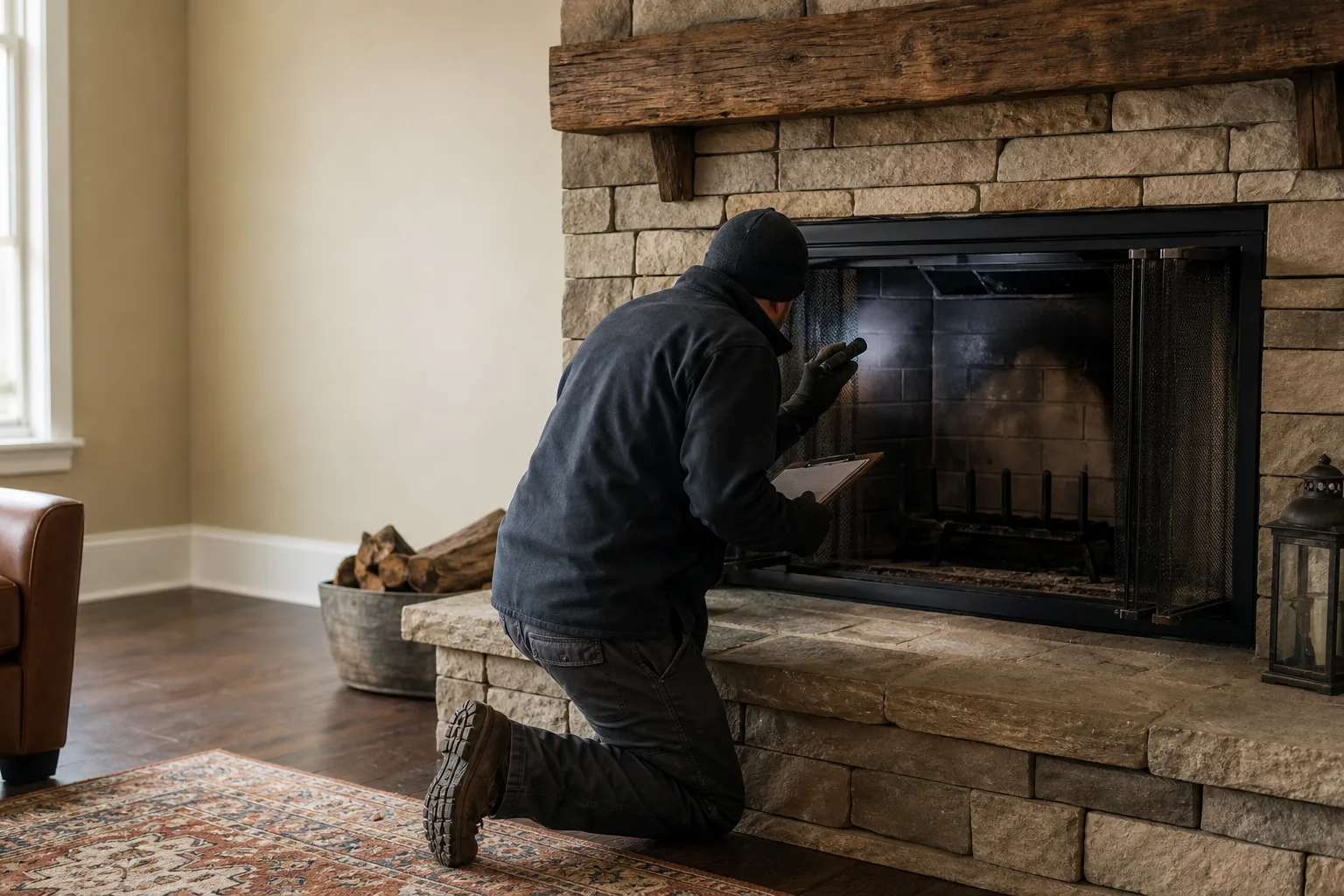
A home inspector looks at your fireplace. This looks up your flue, and that is where the expensive faults are.
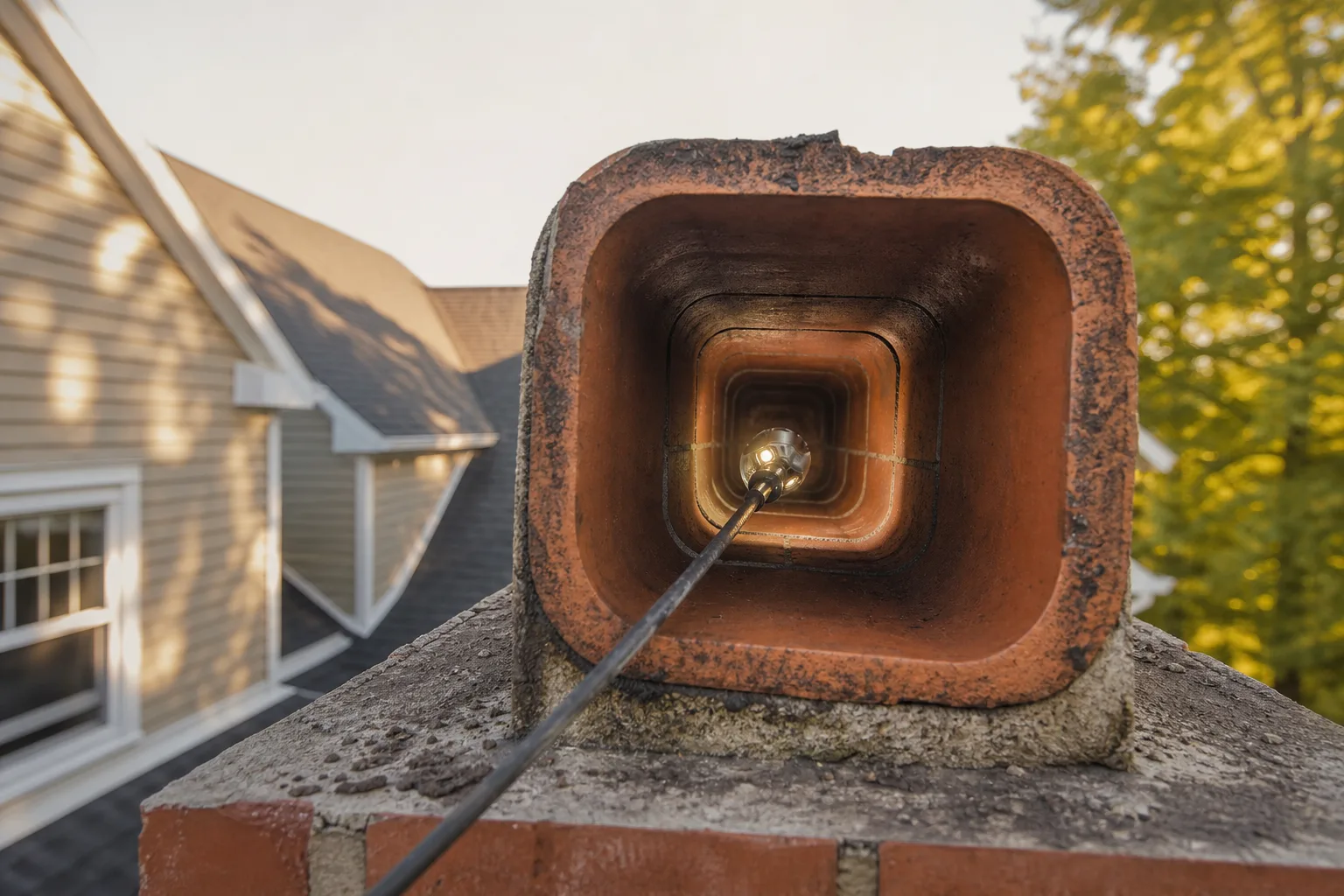
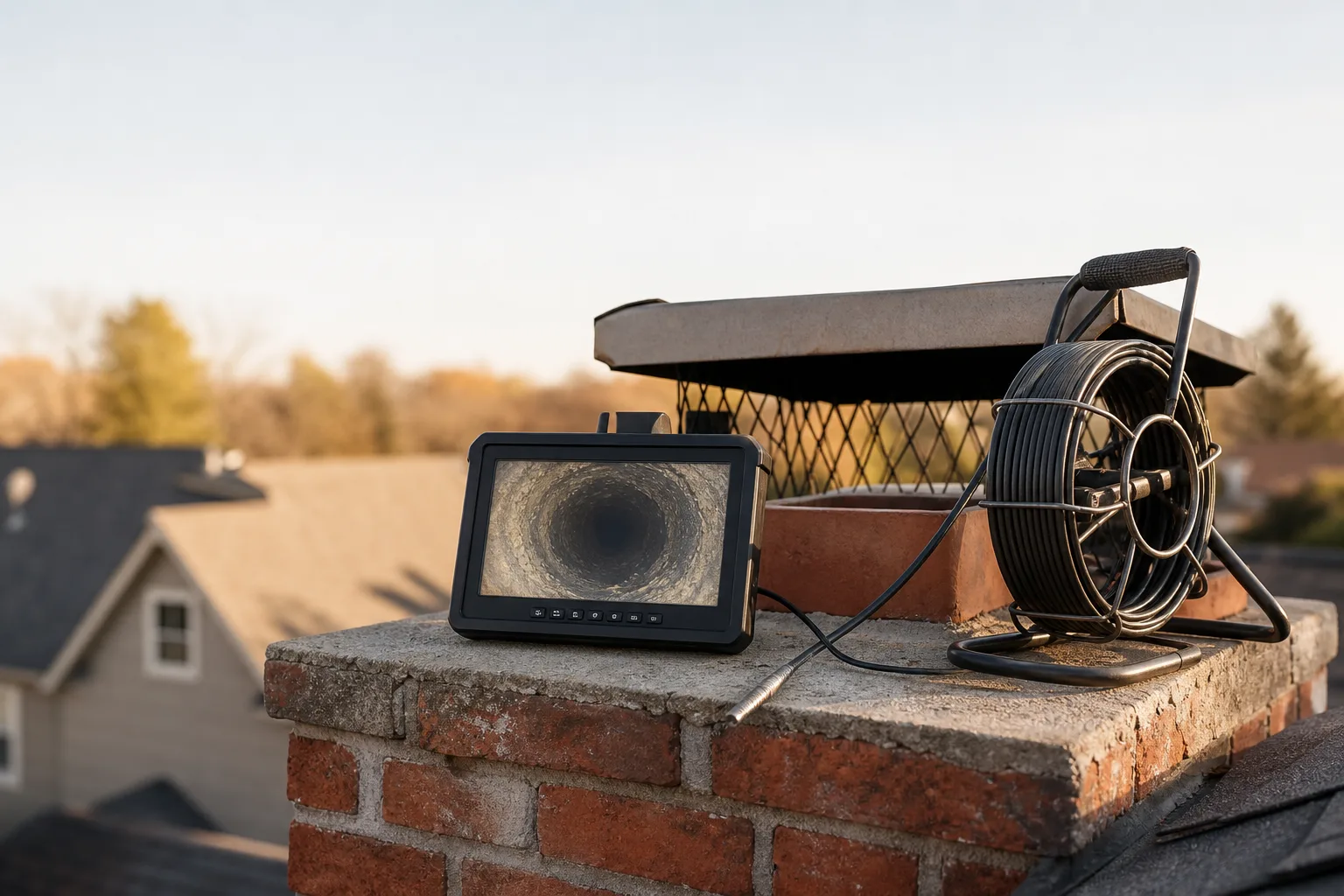
NFPA 211 names three situations that require a Level 2 chimney inspection: a property changing hands, a change of appliance or fuel, and any event that could have damaged the chimney — a flue fire, a lightning strike, an earthquake, a serious storm. It adds two things to a Level 1: a video camera scan of the entire flue interior, and access to the attic, crawl space and roof where the chimney passes through. That is where cracked tiles, breached liners and scorched framing live, and none of them appear in a general home inspection report.
Camera, attic and roof
The scan plus access to where the chimney passes through the structure. That combination is what a property sale calls for.
Fall Special
Call or book today and we'll do our best to get a pro to you tomorrow.
Anything that needs attention is shown to you and explained in plain words.
If something needs fixing, you get the price in writing first. Saying no costs nothing.
Do you have this problem?
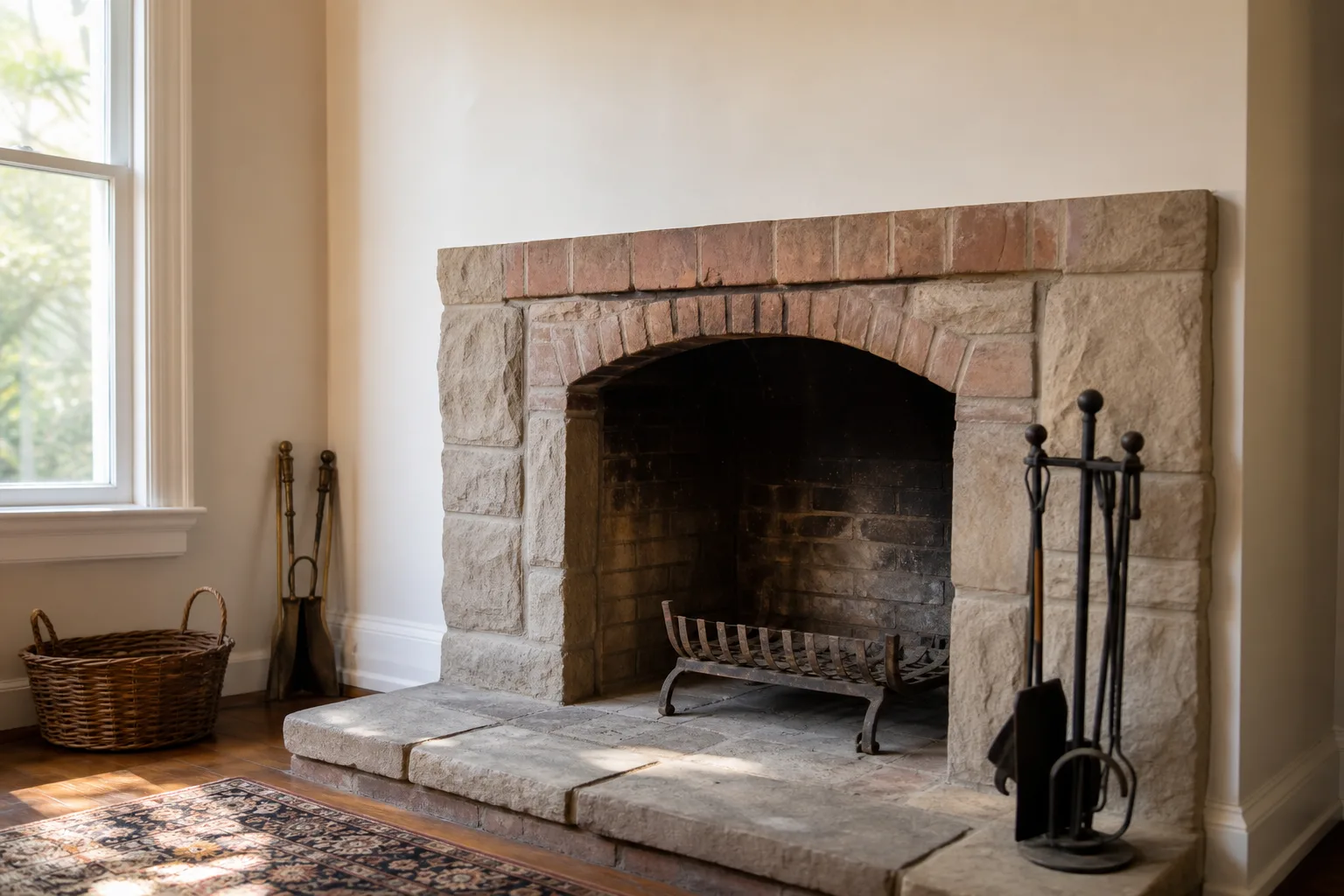
The clearest trigger in the standard. A cracked liner is a multi-thousand-dollar item that will not show up in a general home inspection, and finding it before closing is a negotiation rather than a surprise.
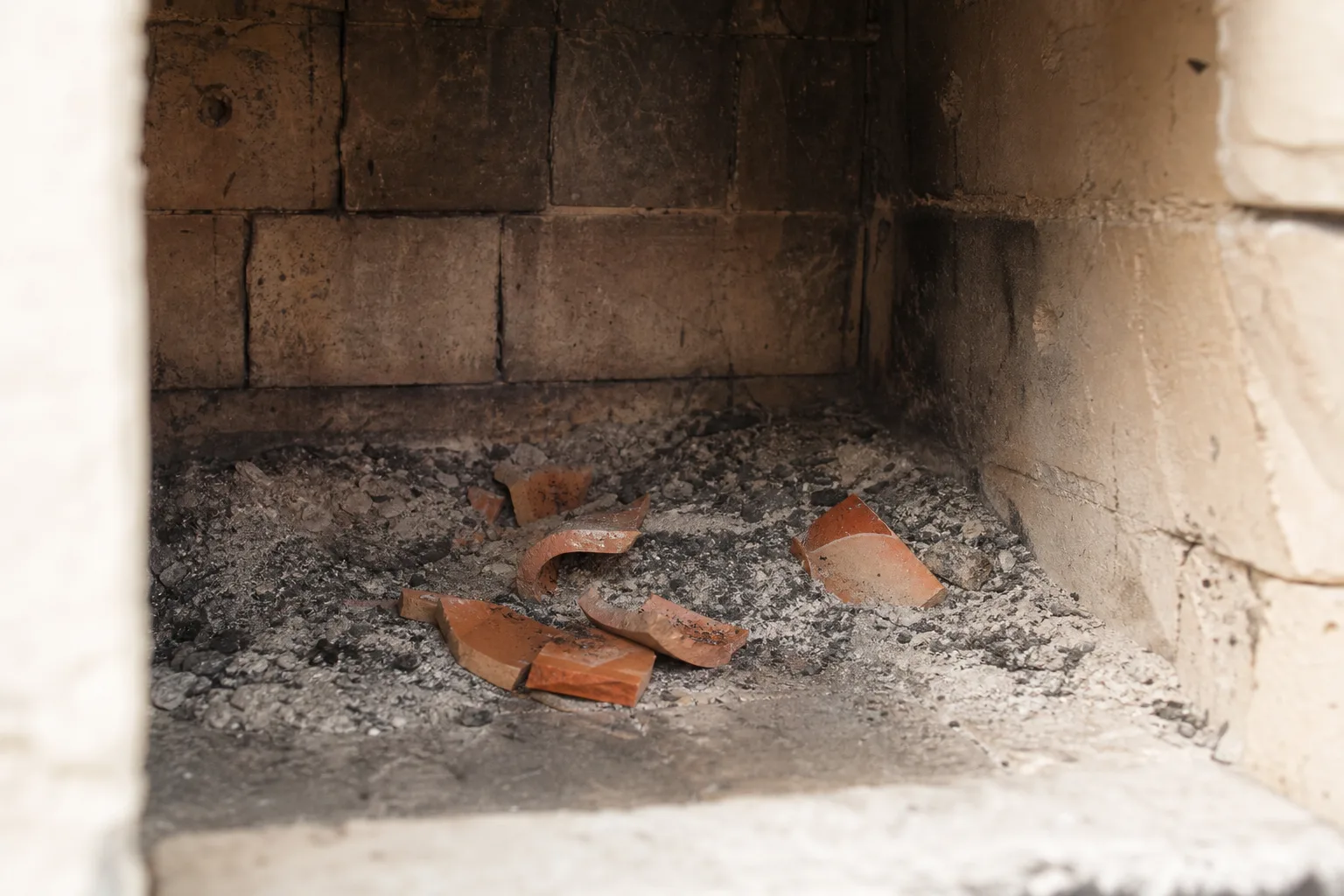
Even a brief flue fire reaches temperatures clay was not made for. The standard requires this level afterwards, and insurers ask for it. It is not a judgement call.
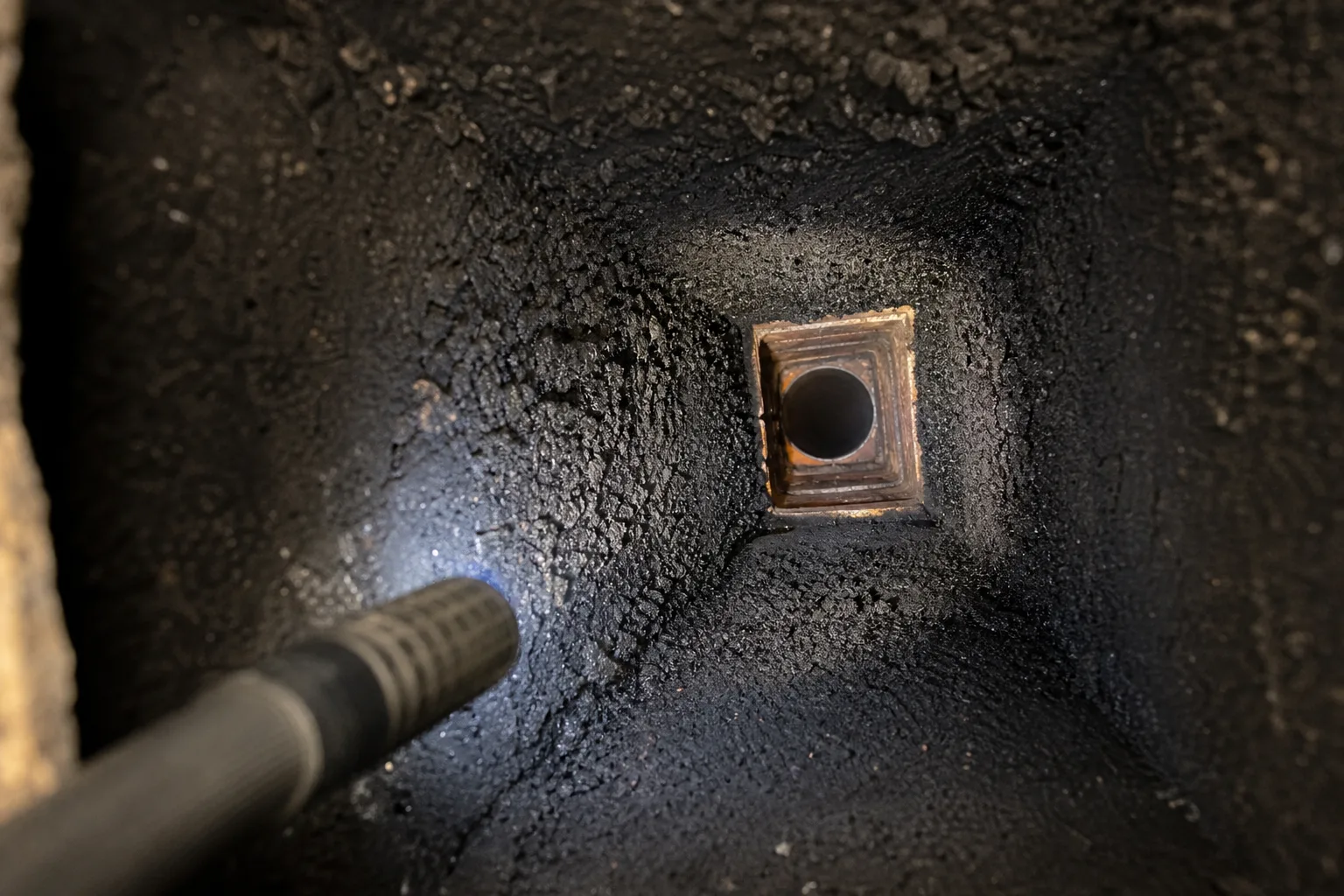
The liner is coming apart above. A level 2 camera scan is the only way to see how far it has gone, and until it has been seen the fireplace should stay unused.
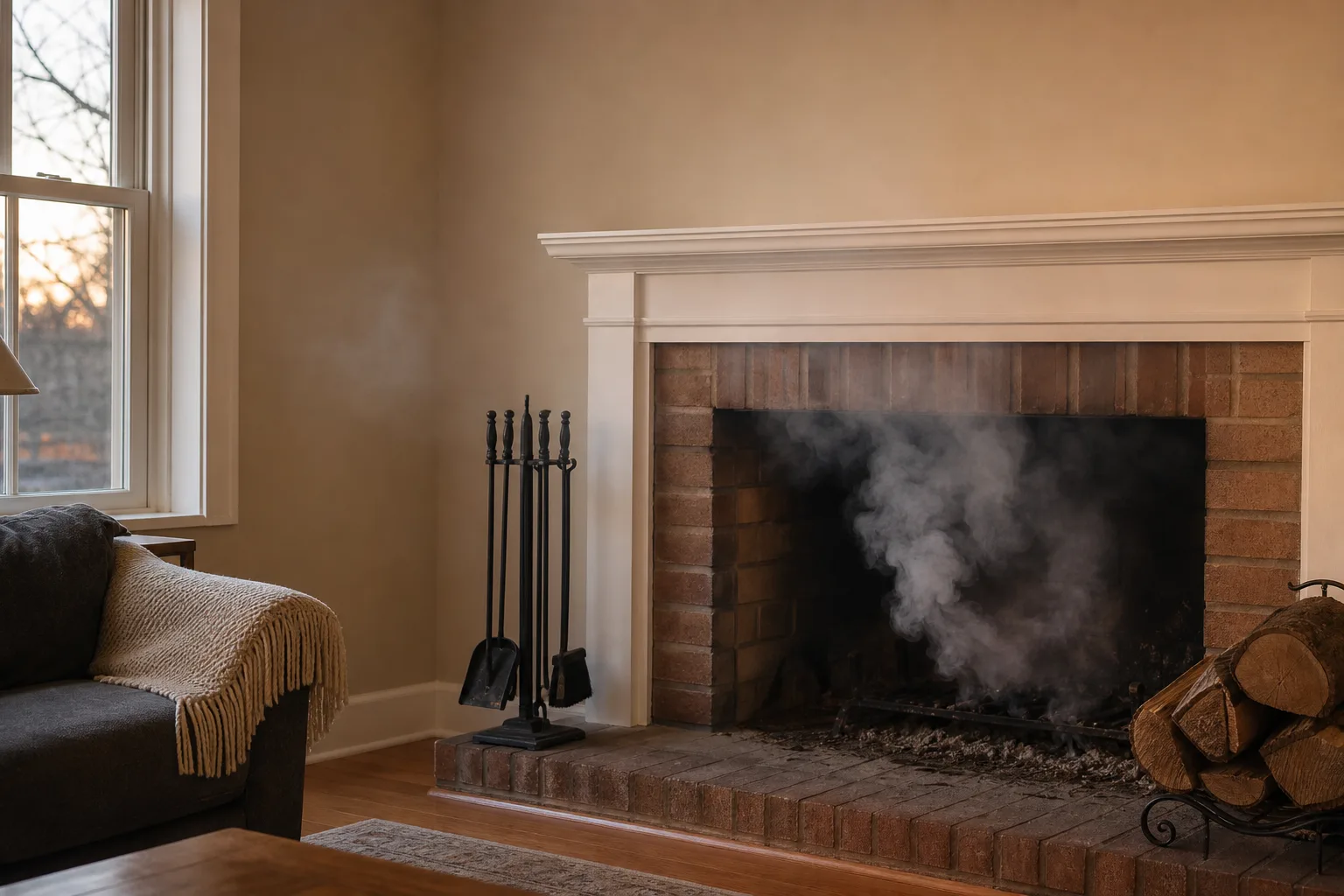
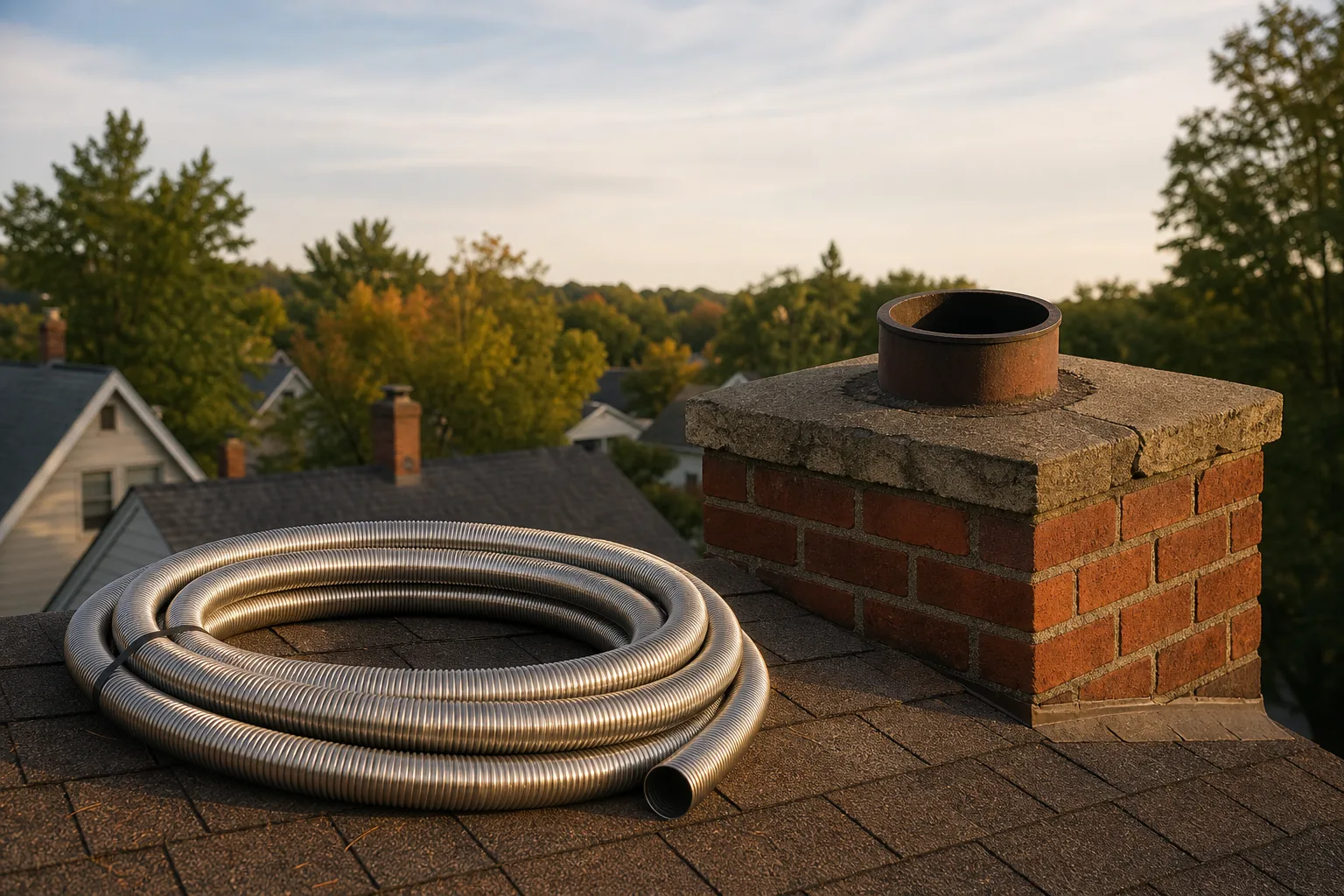
A change of appliance changes what the flue has to handle — different temperature, different volume, often a different required diameter. Changing the appliance is a named Level 2 trigger.
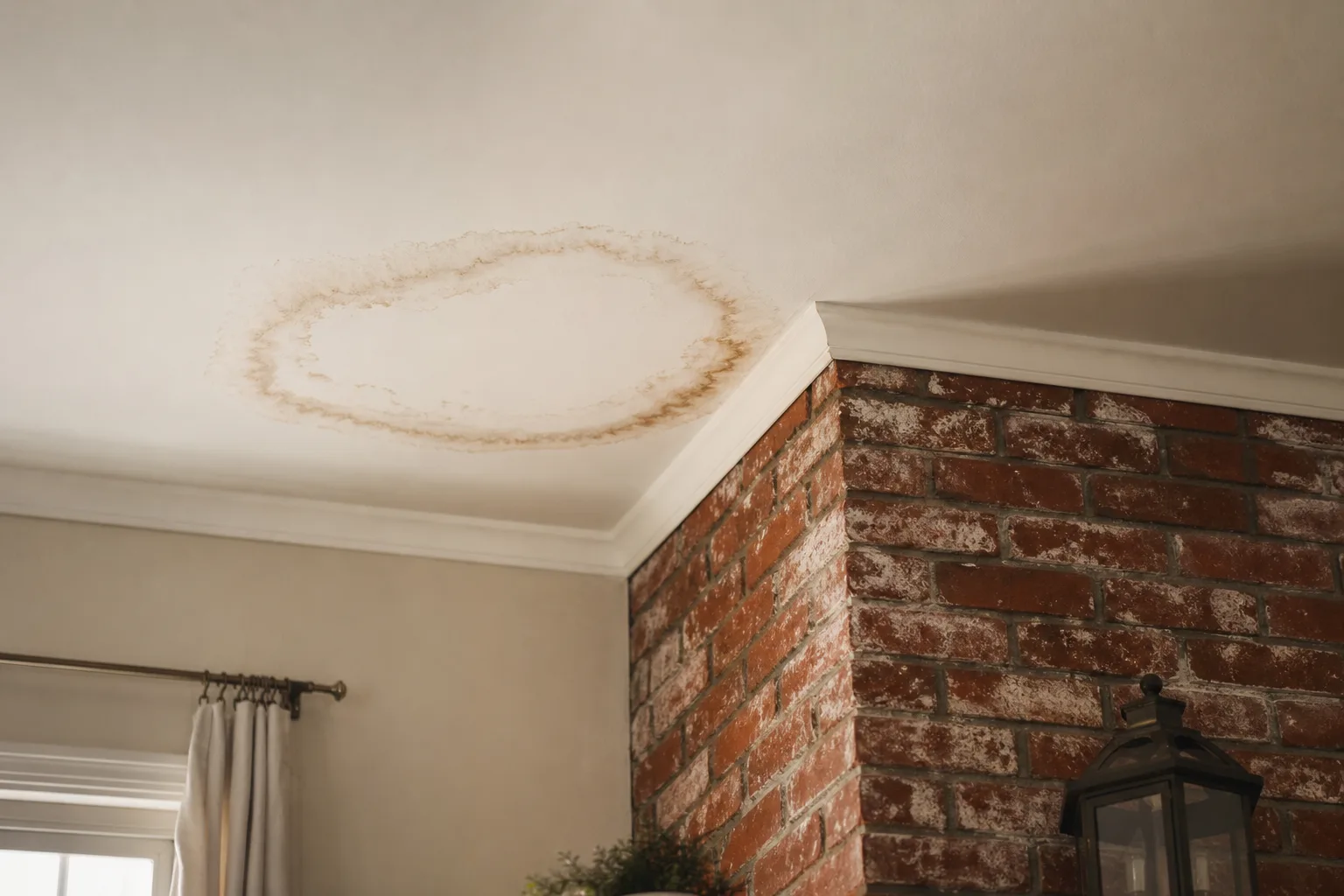
Water in the structure. The attic access a Level 2 includes is how you find out whether the framing around the chimney has been getting wet as well.
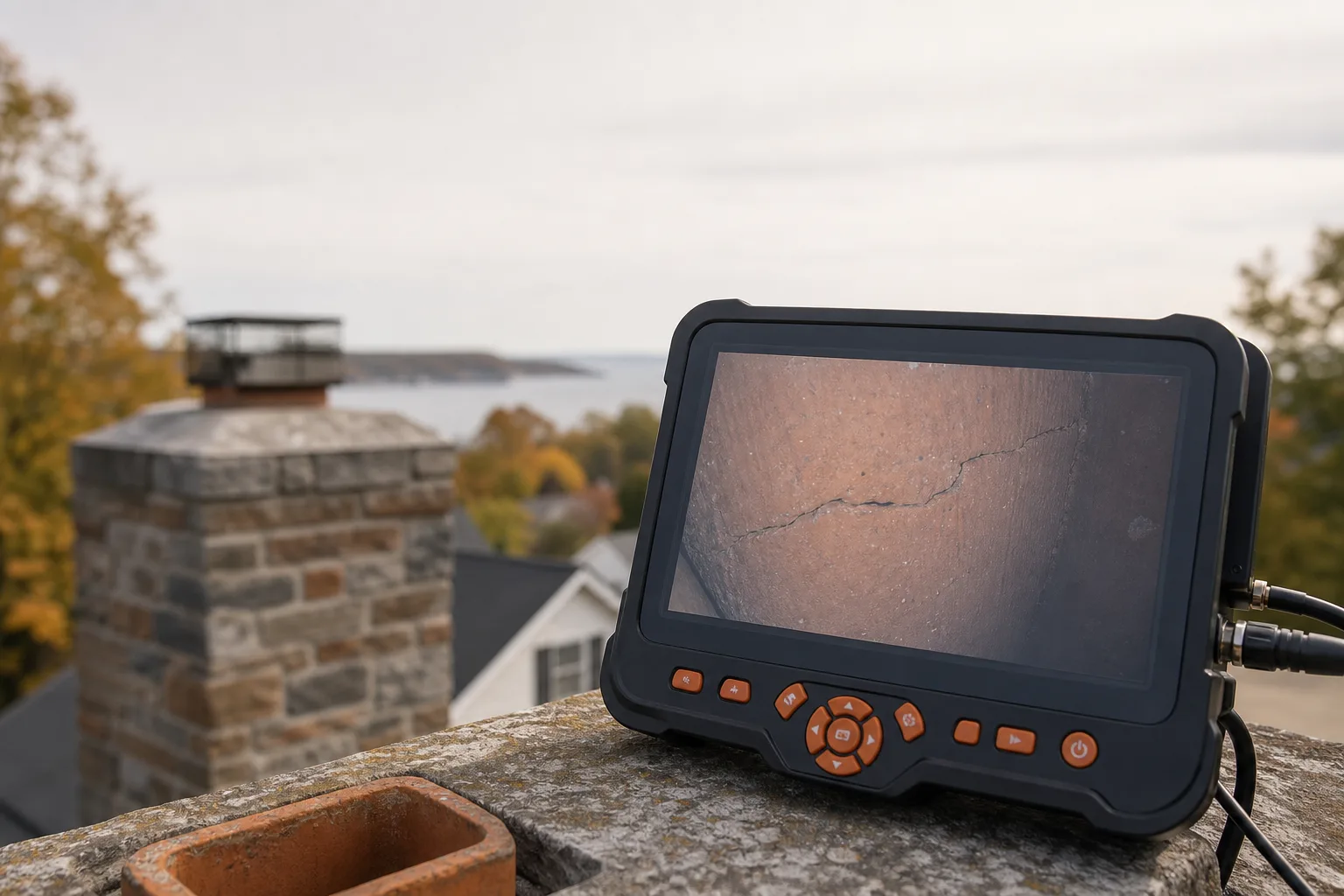
If someone has shown you a crack and quoted a reline off the back of it, a documented second scan is the cheapest way to check a very expensive recommendation.
How we work
The same four steps every time, whatever the repair turns out to be.
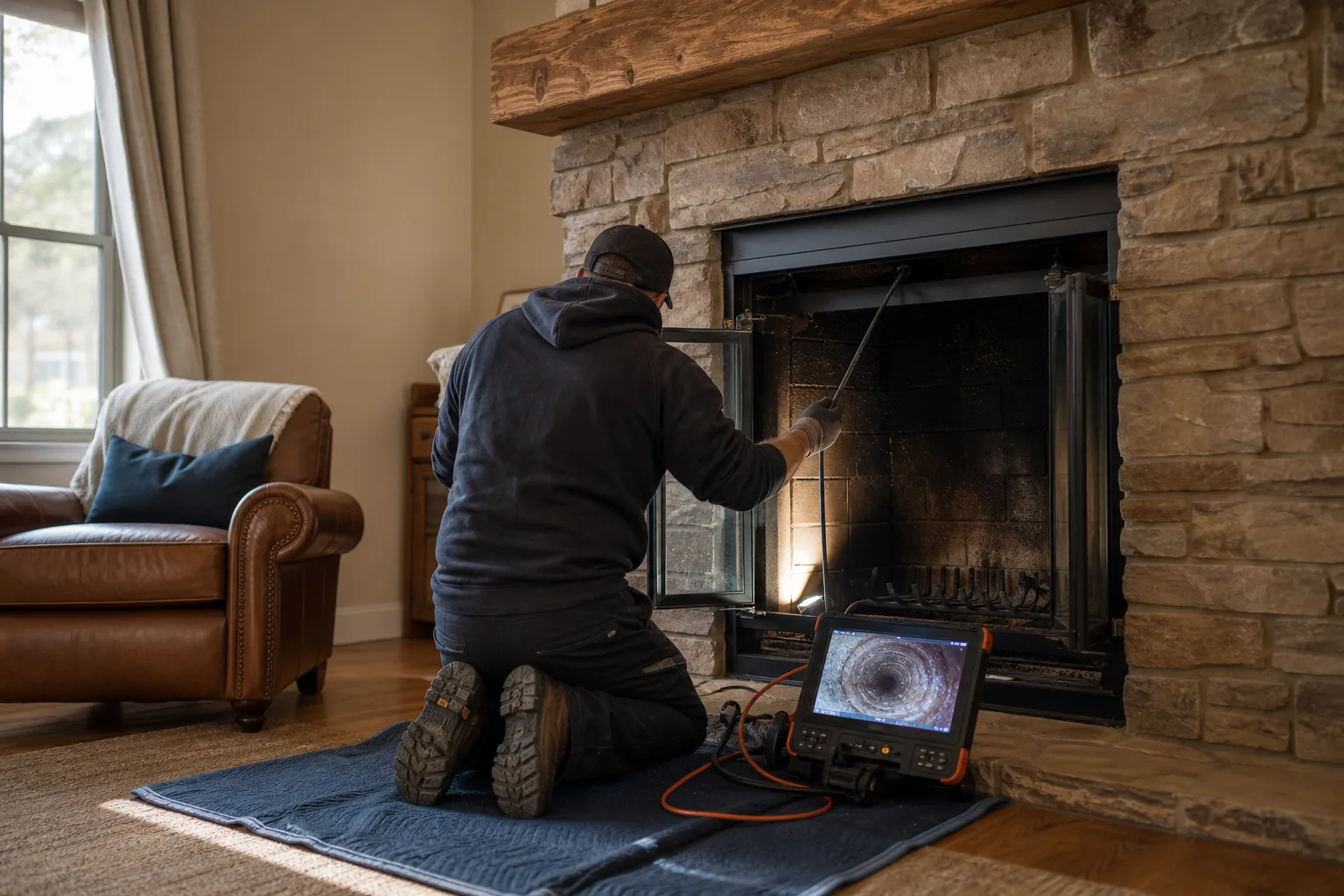
A look at the crown, cap, flashing and exterior masonry, then the flue, damper and firebox — with a camera where the job calls for a level 2 scan. Whatever needs work gets shown to you, not just described.
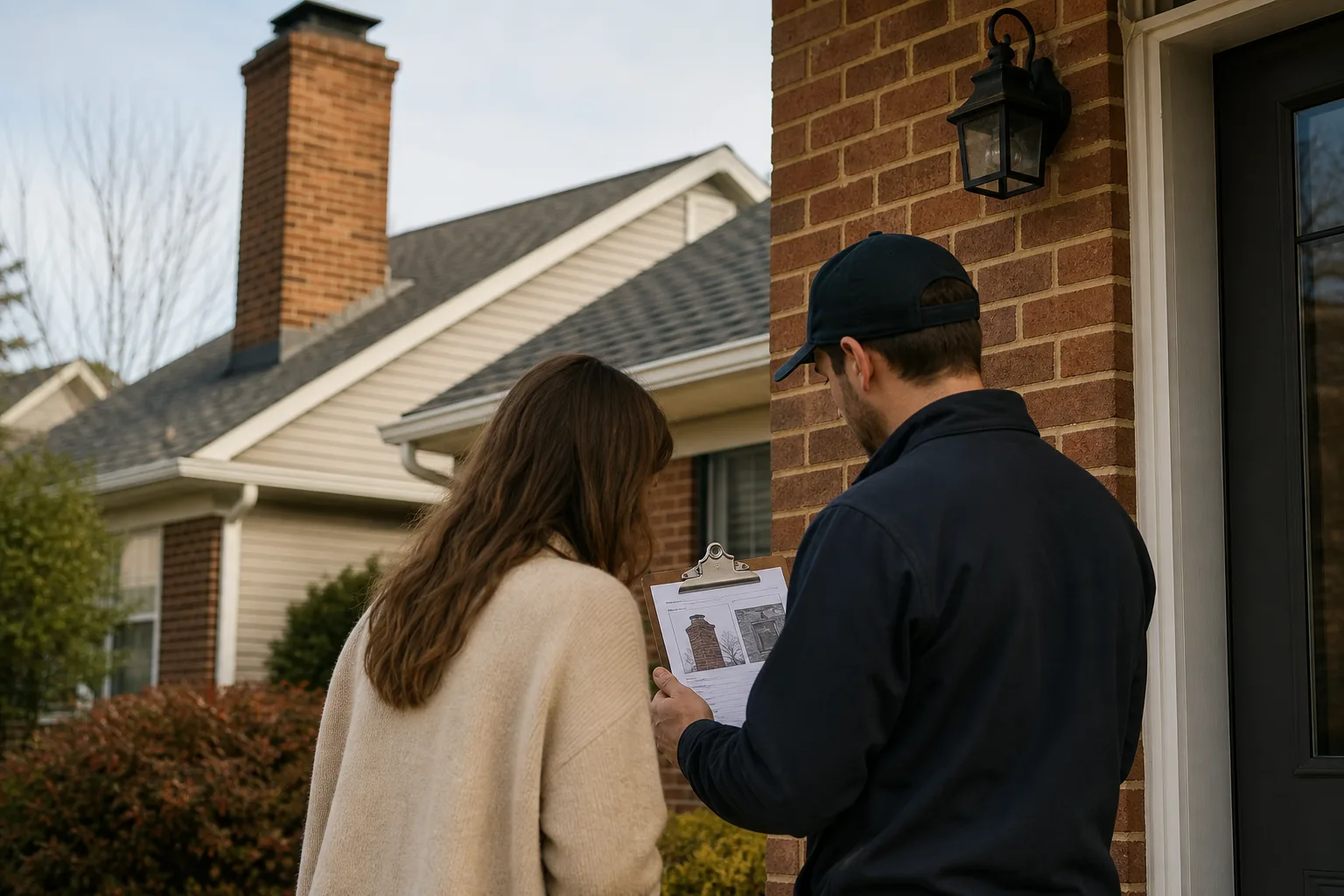
Scope, price and what is not included, in writing. Nothing starts until you approve it, and an emergency is not a reason to skip this step.
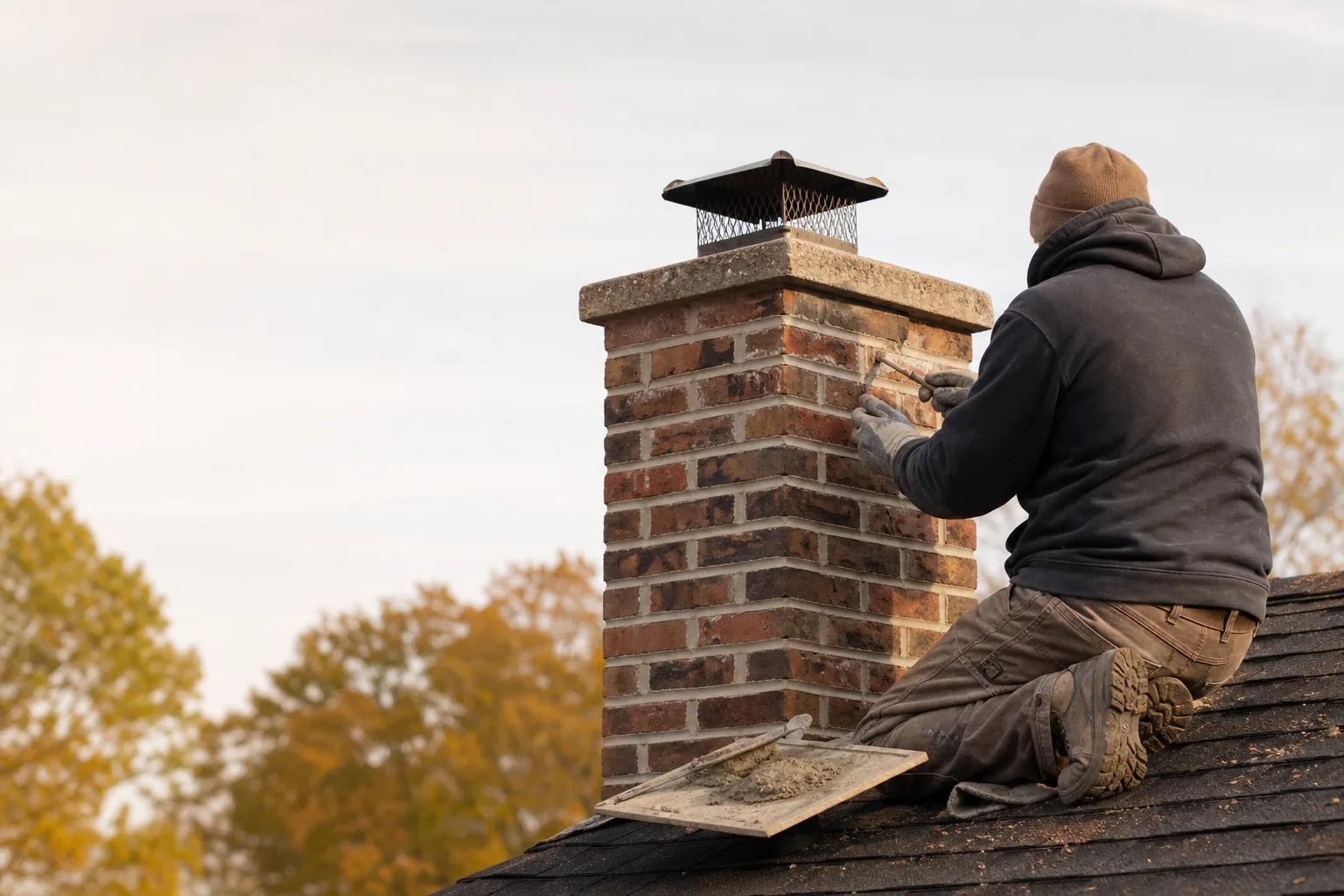
Matched materials and the manufacturer's spec, not whatever is on the van. Drop cloths down, and the room left as it was found.
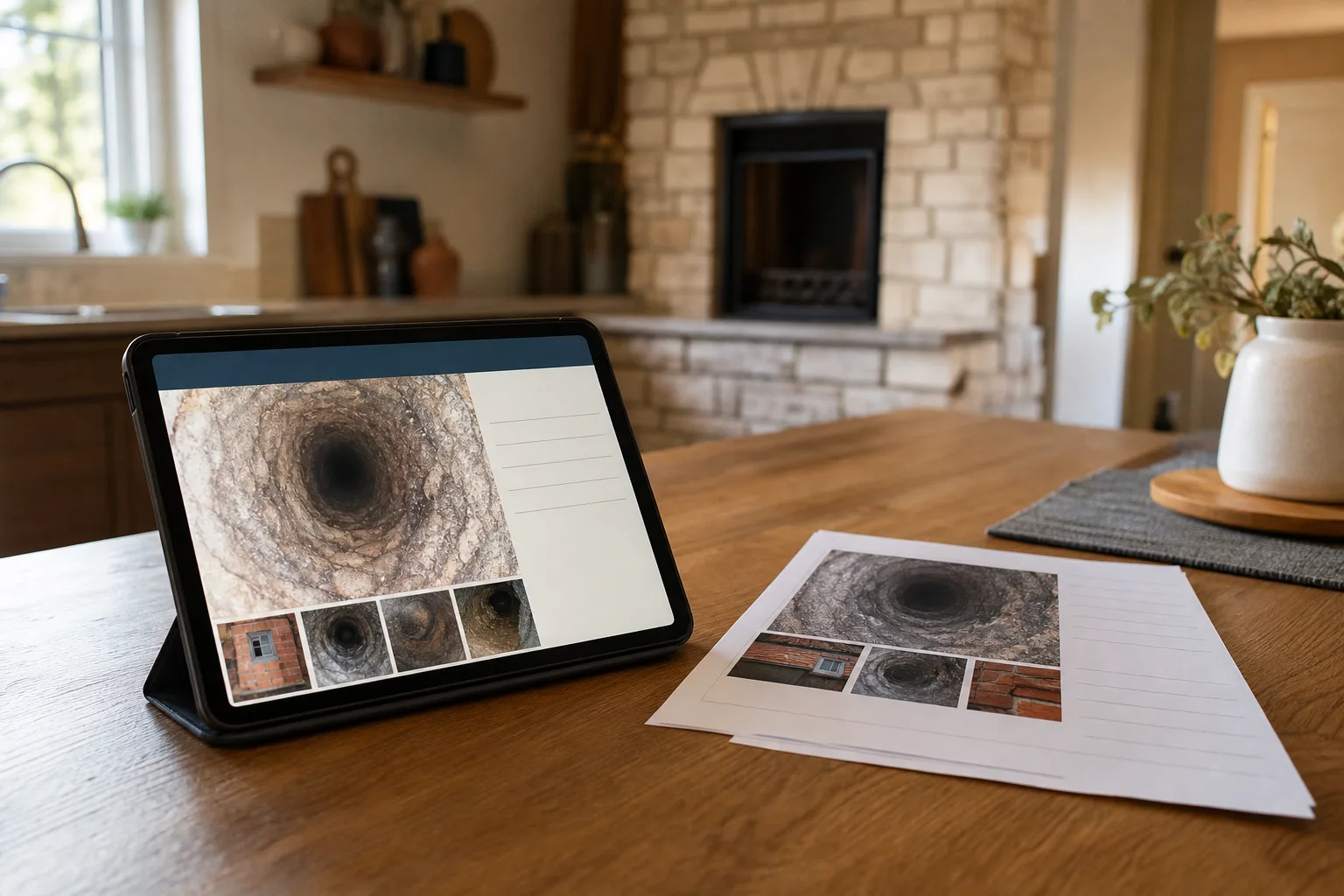
A second scan after the work, and written findings you can keep, hand to an inspector, or send to an insurer.
What it covers
Not every job on this list is equally urgent, so they are ordered that way. A cracked liner stops you using the fireplace tonight; waterproofing can wait for a dry week.
The job — most urgent first
What it involves
On site
The full scan plus attic and roof access, written up for a transaction: findings, footage, and what putting it right would cost. Usable by an agent, a buyer, or a solicitor.
On site: 1–2 hours
Looking specifically for cracked tiles, breached joints and heat damage to the framing. This is what an insurer will want before settling, and what makes the difference to a claim.
On site: 1–2 hours
Confirming the flue suits the new appliance — diameter, condition and draw. Done beforehand it prevents an expensive discovery after the stove is in.
On site: 1–2 hours
External damage is visible; internal damage is not. Lightning in particular cracks liners without leaving much to see from the ground, and this is the documentation a claim depends on.
On site: 1–2 hours
A sooty flue hides exactly what the camera is looking for. If the chimney has not been swept, cleaning has to happen first, and it is worth booking both together rather than paying for two visits.
On site: Add 1–2 hours
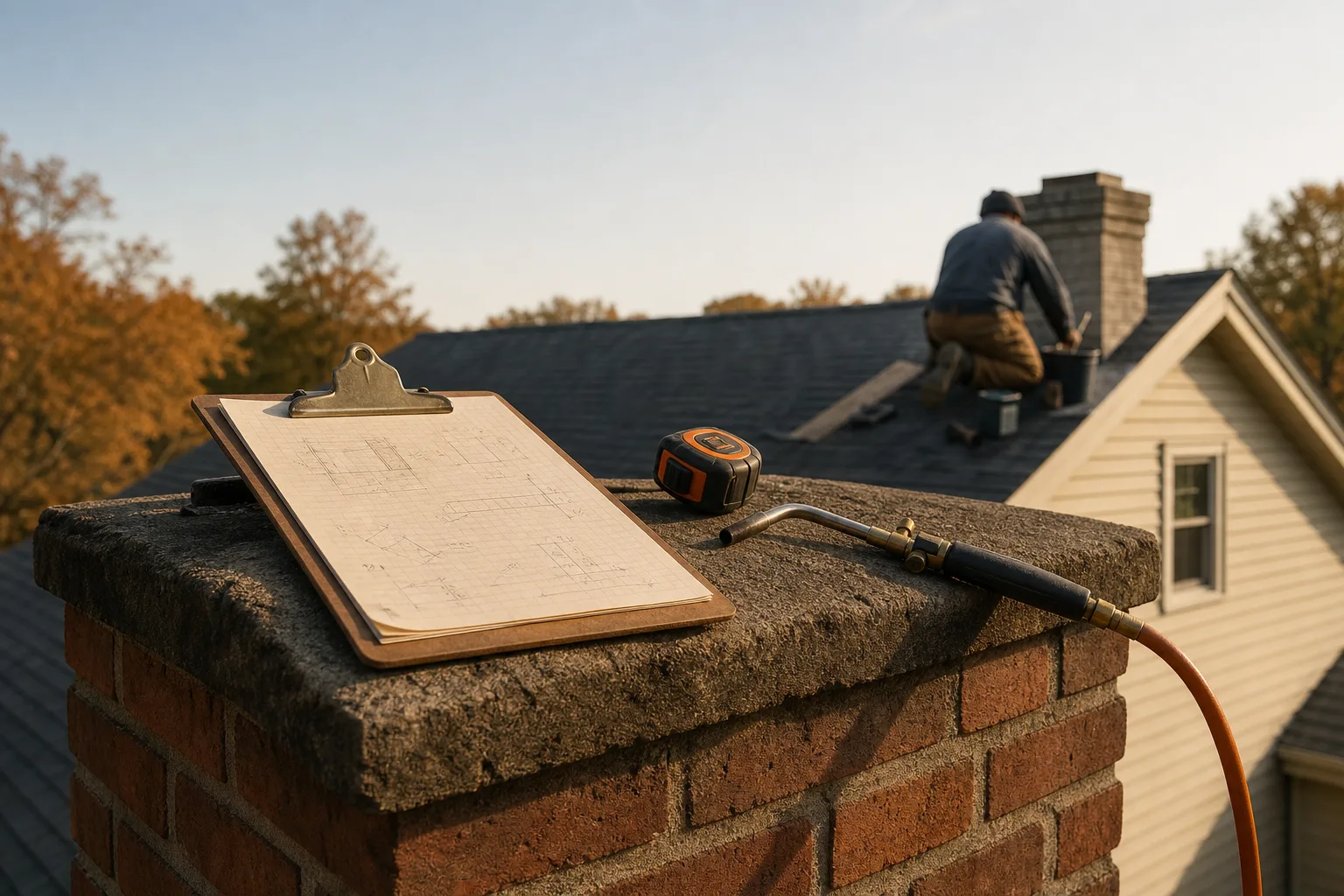
Times are for the work itself, not for scheduling. Masonry needs roughly 40°F to cure properly, which is what limits this work in a northern winter rather than whether a crew is free.
What drives the price
A Level 2 costs several times a Level 1, and the difference is real work rather than markup: camera equipment, attic and roof access, and a written report with footage. Expect sweeping to be needed first on most chimneys. Against the cost of discovering a failed liner after closing, it is the cheapest part of a property transaction.
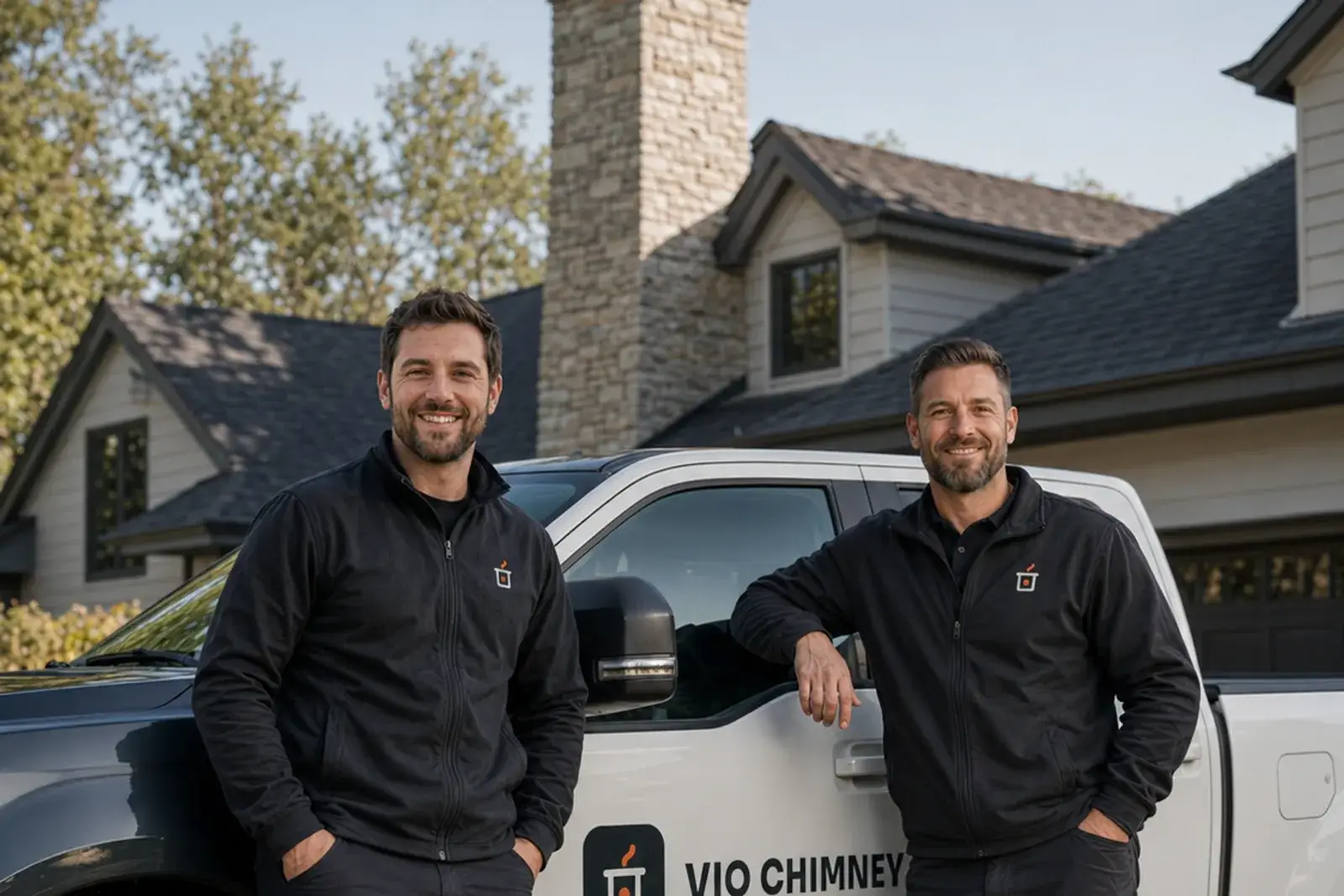
Founded by Ryan Carter in 2019. Every page you read here is reviewed by Ethan Miller, our chimney specialist. A written estimate before any work, and the findings in writing whether or not anything needs doing.
More about who we are →
The VIO Standard
Good to know