



On this pageWhat Is Creosote, and Why Does It Form?7 sections+6
Quick answer
Creosote is a combustible residue that forms when wood smoke cools and condenses inside a chimney or flue. It may appear dusty, flaky, crusty, sticky, or glazed, and accumulated deposits can restrict draft or fuel a chimney fire.
What Is Creosote, and Why Does It Form?
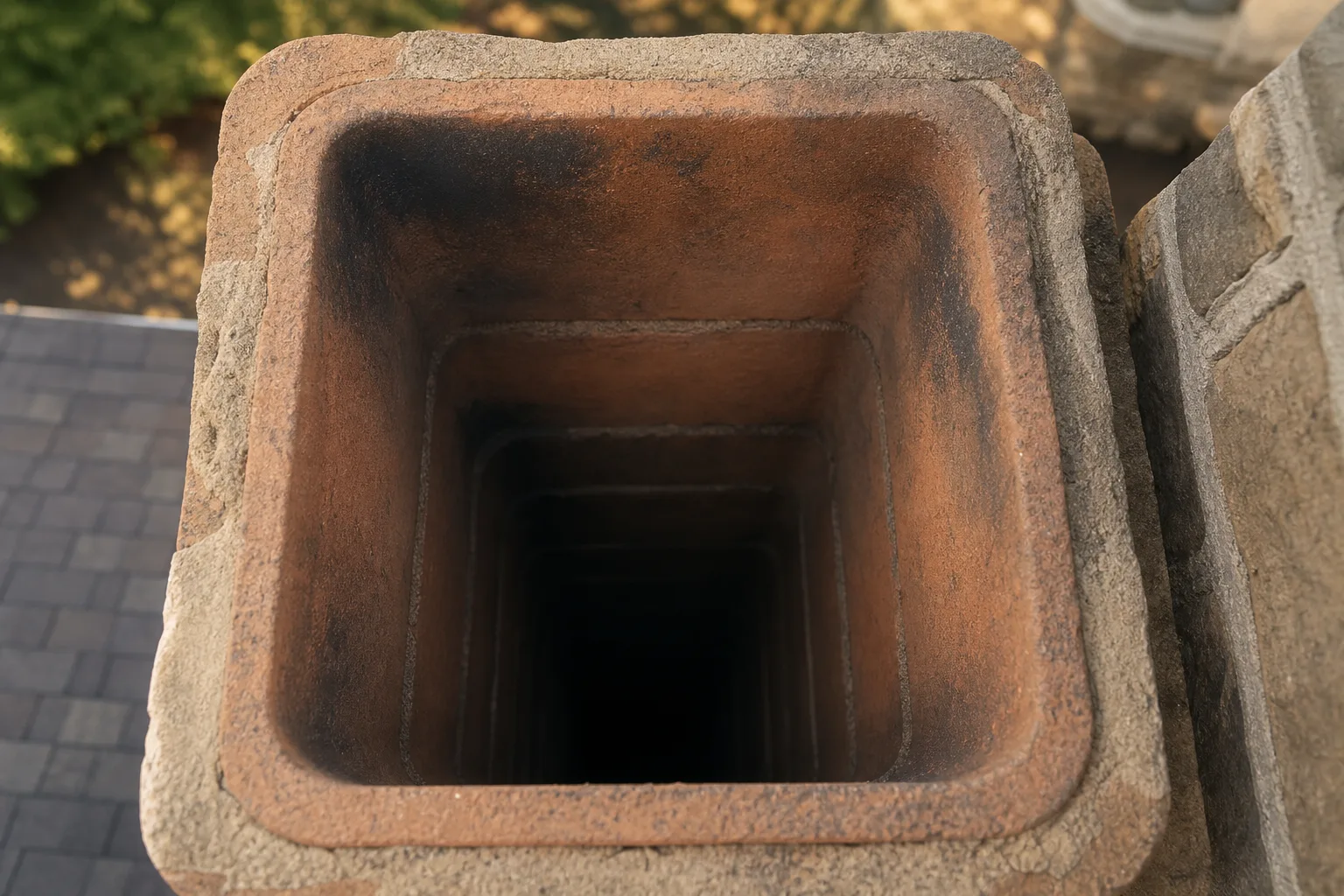
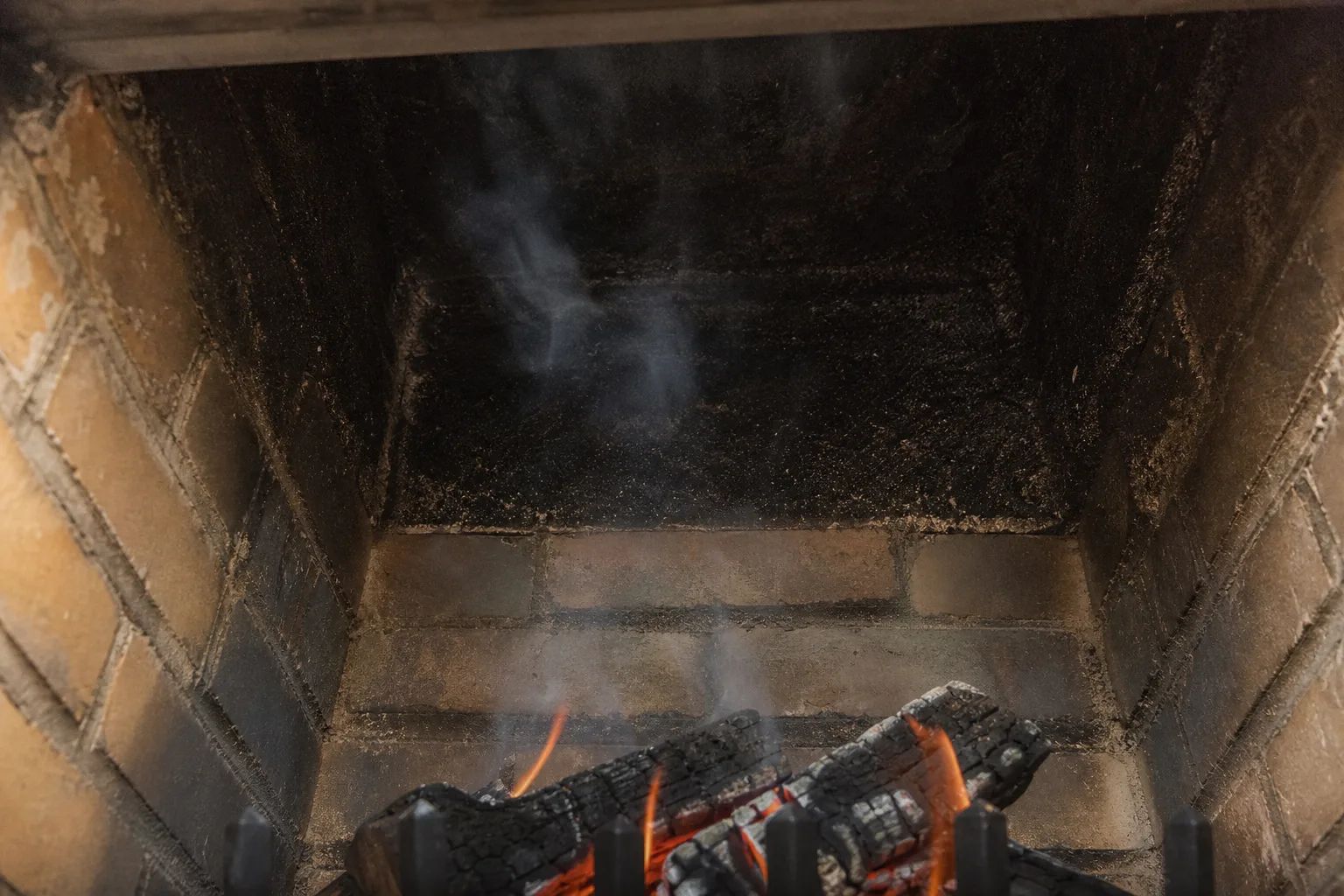
The plain answer to “what is creosote?” is that it is a combustible residue produced when wood smoke cools and condenses inside a chimney or flue. It can begin as soft black dust, then develop into crusty deposits or a hard, shiny coating as more smoke passes through the system.
Wood does not burn all at once. As it heats, it releases water vapor, gases, smoke particles, and organic compounds, and some of that material remains unburned when the fire lacks enough heat or oxygen. If the exhaust reaches a cool flue surface before those compounds burn, they condense and stick to the liner.
Incomplete combustion is one part of the problem, and chimney temperature is another. A low, smoky fire sends cooler exhaust upward, while an exterior chimney may lose heat quickly on a cold evening. Restricted airflow can make both conditions worse by slowing combustion and keeping the smoke dense.
From the field: Technicians often find heavier deposits near the top of a chimney, where exhaust has cooled the most. They may also find concentrated buildup around offsets, rough mortar joints, or damaged liner areas that disturb the flow of smoke.
Creosote, soot, and ash are related to burning, but they are not interchangeable. Soot is primarily fine carbonaceous material created by incomplete combustion, while ash is the mineral residue left behind in the firebox after wood burns. Creosote contains condensed smoke compounds and may feel dusty, flaky, sticky, tar-like, or glassy depending on its condition.
When someone asks what is creosote, the practical answer is also that it is a normal byproduct of venting wood smoke, not proof that a fireplace was used carelessly. Every wood-burning fireplace, stove, or insert can produce it. Burning practices and system conditions determine how quickly it accumulates and how difficult it becomes to remove.
Even a hot, clean-looking fire can leave some residue behind. Firewood moisture, appliance settings, flue size, liner condition, chimney location, and weather all affect how the exhaust behaves after it leaves the flames. A professional chimney inspection can identify where deposits are forming and whether a venting defect is contributing to them.
Good to know: A clean firebox does not mean a clean chimney. Ash can be removed from below while creosote remains several feet above the damper, hidden inside the flue.
The Main Types and Stages of Creosote Buildup
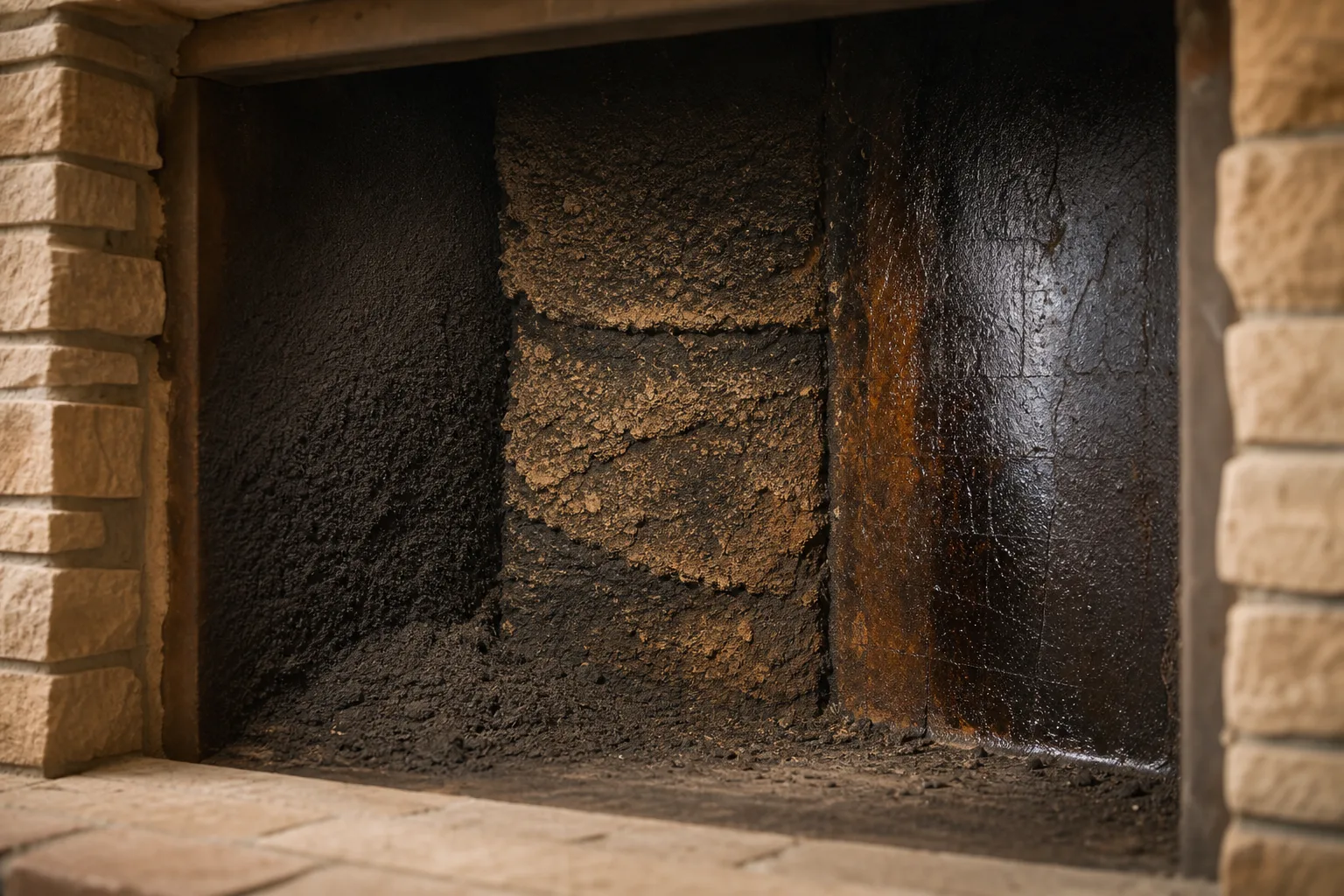
Creosote is commonly described in three stages based on its texture, attachment, and resistance to removal. These stages are useful descriptions rather than perfectly separate categories, since one chimney can contain loose flakes in one area and hardened glaze in another.
First-stage creosote is usually dry, loose, and dull black or brown. It may resemble soot, powder, or brittle flakes, and it is generally the easiest form to remove with standard chimney-sweeping tools. Easier removal does not make it harmless, because loose material can still burn and may conceal defects in the liner.
Second-stage buildup has been exposed to additional heat and smoke cycles. It becomes thicker, crunchier, and more firmly attached, sometimes looking like layered black bark or hardened scales. Mechanical cleaning may take more effort because brushes must break deposits away rather than simply sweep out loose material.
Glazed creosote is the hardest form. It can look shiny, smooth, lumpy, or tar-like, and its surface may resemble black glass under a flashlight. Glaze often forms when dense smoke repeatedly condenses in a cool flue, then is heated and hardened by later fires.
| Deposit type | Common appearance | Typical attachment | Removal considerations |
|---|---|---|---|
| First stage | Dusty, flaky, or powdery | Loose to lightly attached | Often responds to routine mechanical sweeping |
| Second stage | Crusty, layered, or crunchy | Firmly attached | May require more aggressive tools and added cleaning time |
| Glazed | Shiny, smooth, tar-like, or glassy | Hard and strongly bonded | Often needs specialized treatment and more than one visit |
Myth vs. fact: Myth: Every dark mark inside a flue is the same and can be brushed away in one pass. Fact: Texture and bonding matter. Hard glaze can resist ordinary brushes, while rough or damaged liners may limit which tools can be used safely.
Deposits rarely form in a neat, uniform layer from bottom to top. Smoke temperature changes as it rises, and bends or offsets create turbulence that can push particles against one side of the flue. A chimney passing through warm indoor space may remain relatively clean below the roofline but collect heavier material in its colder upper section.
The liner material also affects how deposits appear. Creosote can cling to rough masonry joints and cracks, while a smoother liner may show streaks, patches, or sheets of glaze. An assessment of hardened chimney deposits helps determine whether routine sweeping is suitable or a different removal approach is needed.
Ready for a clear assessment? Request chimney service or call (513) 655-6702 to have the deposit type and flue condition checked before the next fire.
Why Creosote in a Chimney Is Dangerous
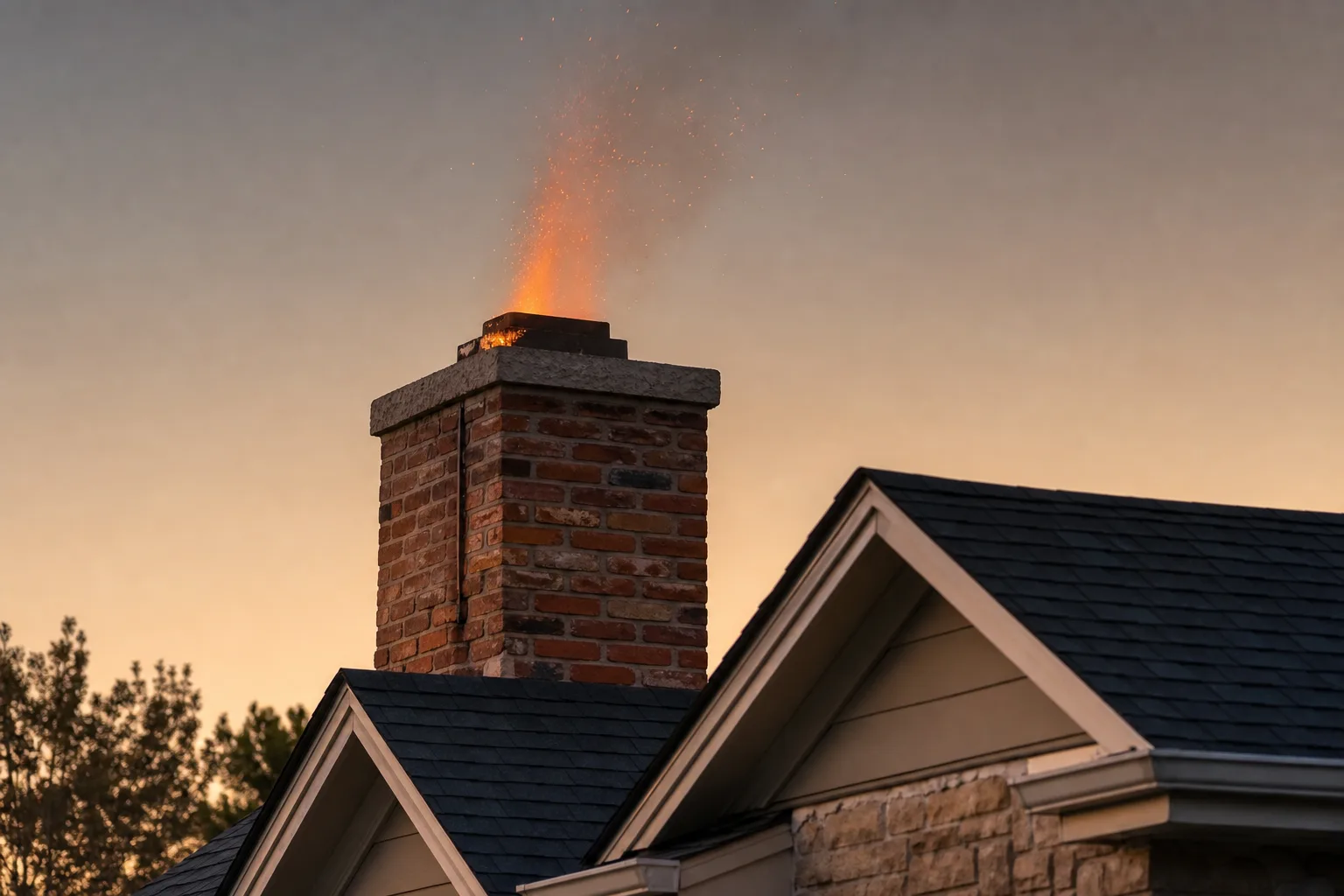
Creosote is dangerous because it can ignite inside the flue and supply fuel for a chimney fire. Once burning, the deposit may produce intense heat, flames, and sparks in a part of the house that was designed to vent exhaust, not contain a fire along its full height.
A chimney fire may announce itself with a loud roaring or rumbling noise. Other warning signs include a sharp hot odor, dense smoke, popping sounds, visible flames above the chimney, or glowing embers and sparks landing on the roof. If these signs appear, get everyone out, call emergency services, and do not try to keep using the appliance.
Safety note: Never pour water into a hot fireplace or stove in an attempt to stop a chimney fire. Sudden cooling can damage hot components, and steam or splashing can injure anyone standing nearby.
Not every chimney fire is dramatic. A small or oxygen-starved event may burn briefly and go unnoticed, especially in a remote flue or while no one is in the room. The absence of visible flames does not show that the liner, masonry, connector pipe, or nearby combustible construction escaped damage.
High heat can crack clay flue tiles, open mortar joints, warp metal components, and damage insulation. Once a liner is compromised, later fires may expose surrounding framing to heat, sparks, or combustion gases. A chimney that has experienced a suspected fire should remain unused until a post-fire chimney inspection confirms what was affected.
Creosote can also cause trouble without igniting. Heavy deposits narrow the passage available for exhaust, and a restricted flue may draft poorly when you open the damper or start a fire. Smoke can spill from the fireplace opening, while a stove may burn sluggishly or release smoke when its door is opened.
Poor draft raises concern about combustion gases entering the living area. Carbon monoxide has no color or smell, so a smoky odor cannot be treated as the only warning. Keep working carbon monoxide alarms installed according to their instructions, but remember that an alarm does not correct the blockage or venting problem.
Pro tip: If a fireplace that normally drafts well suddenly sends smoke into the room, stop adding wood. Check that the damper is fully open, then arrange an inspection rather than assuming wind is the only cause.
A suspected chimney fire calls for more than a quick look from the hearth. Damage may be hidden above the smoke chamber or behind sections of connector pipe, and another fire can make an existing defect more dangerous.
Concerned about a recent flare-up or heavy buildup? Schedule a chimney evaluation or call (513) 655-6702 before lighting another fire.
How to Recognize Creosote Buildup
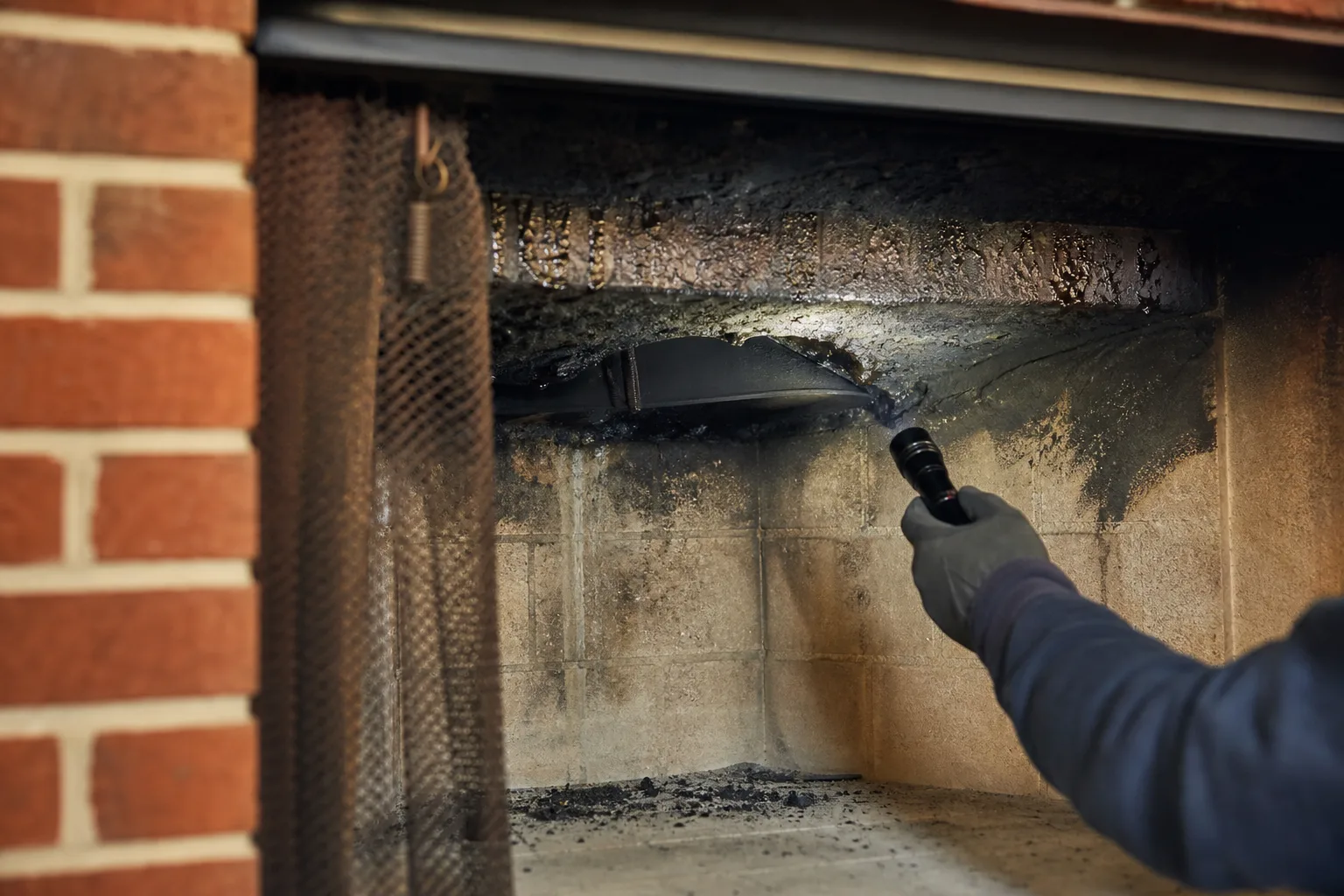
Creosote buildup may appear as black dust, brittle flakes, crusty scales, sticky tar, or a hard glazed coating. You may see some of it around the damper, smoke chamber, stovepipe connection, or lower flue, but those accessible areas do not reveal the condition of the entire chimney.
Loose first-stage material can fall into the firebox as small black flakes. Thicker deposits may form uneven ridges that reduce the opening, while glazed material often reflects light and may look wet even when it is hard. Brown staining can also appear where moisture has mixed with combustion residue.
A persistent smoky, acrid, or tar-like odor may point to creosote inside the chimney. The smell can become more noticeable during warm or humid weather, when air may travel downward through the flue and carry odors into the room. Water intrusion can intensify the smell by dampening old deposits.
Changes in fireplace performance deserve attention as well. A sluggish fire, smoke that hesitates below the damper, repeated smoke spillage, or difficulty establishing draft may accompany a restricted flue. Similar symptoms can come from a closed damper, house depressurization, animal nesting, or a sizing problem, so appearance and odor alone cannot confirm the cause.
You can make a few safe observations without climbing onto the roof:
- Check the firebox. Look for fallen black flakes, shiny chunks, or unusual staining above the fireplace opening.
- Open the damper. When the system is cold and unused, use a flashlight to look for thick deposits around accessible surfaces.
- Stand back from the chimney. From the ground, look for a displaced cap, leaning components, or branches and debris near the termination.
- Notice the room air. Pay attention to recurring smoky odors, especially during damp weather or when exhaust fans are running.
- Watch the next cold start. If smoke enters the room or the fire struggles to draft, let it go out and arrange service.
Safety note: Do not climb onto the roof, reach into an operating appliance, or test a suspicious deposit with a flame. A chimney can look reachable from the ground and still have loose roofing, steep pitches, hidden ice, or an unstable cap.
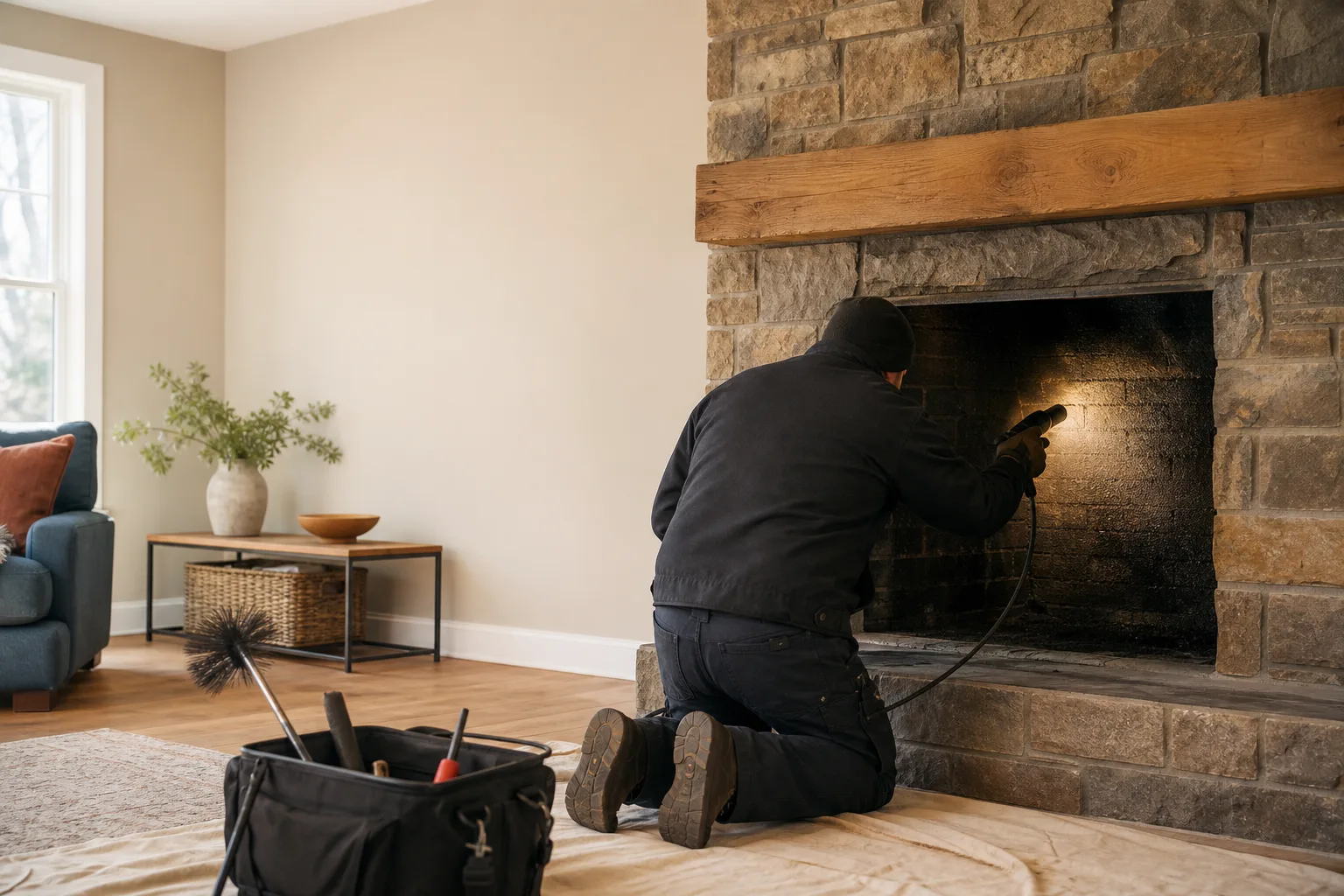
Visible deposits near the firebox provide only a partial picture. The heaviest accumulation may sit high in the flue, behind an offset, or around a liner defect that cannot be seen with a household flashlight. A full flue inspection is the reliable way to assess the deposit level and look for blockages or damage.
Photographs taken from the hearth can help you describe what you see, but they should not be used to decide that a chimney is safe. Texture, deposit depth, liner condition, and access all affect the next step, and those details are difficult to judge from below.
For a direct answer about odors, draft problems, or visible deposits, book an inspection or call (513) 655-6702. Keep the fireplace or stove off until it has been checked if you suspect a blockage, chimney fire, or damaged flue.
What Causes Creosote to Build Up Faster?
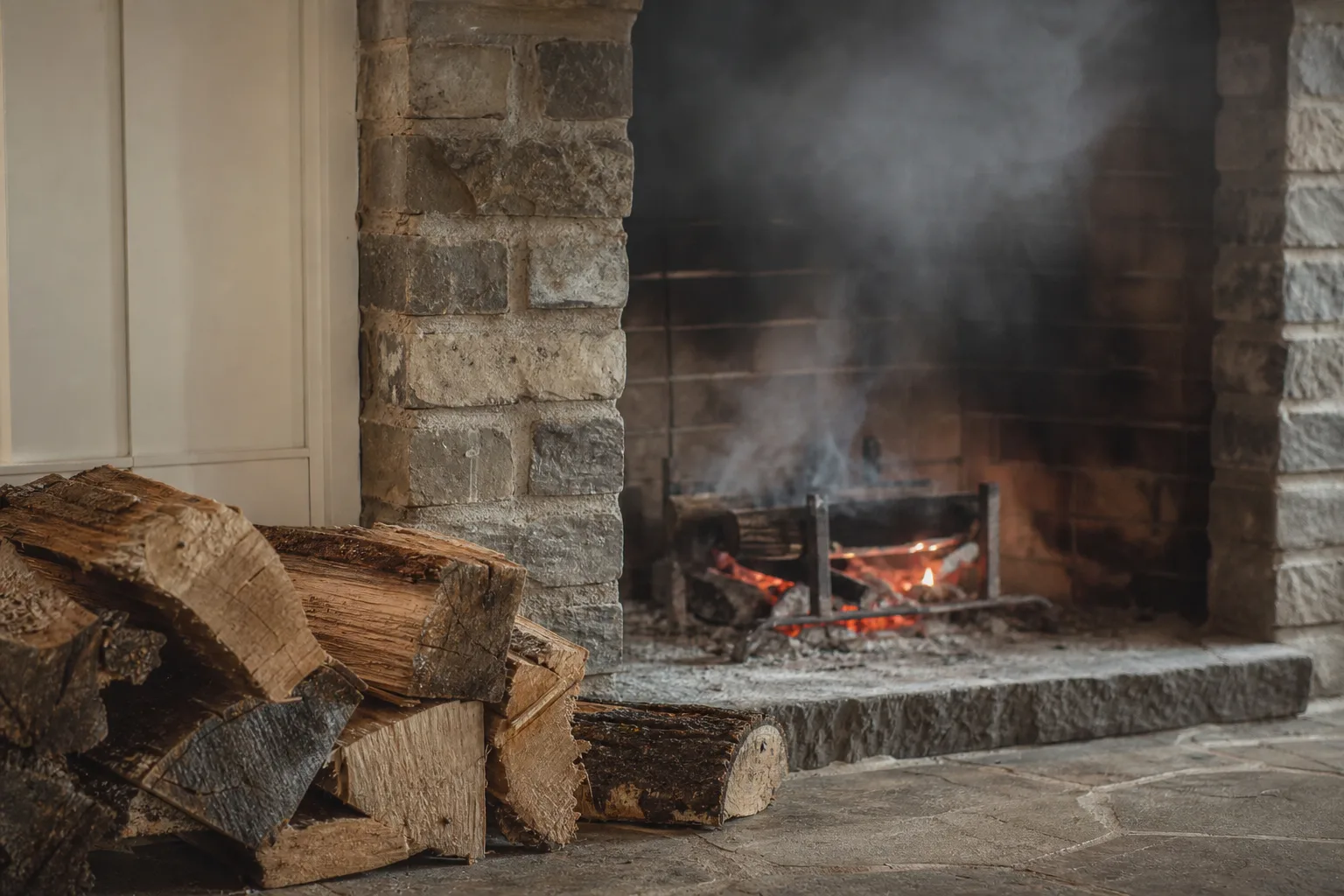
The question “what is creosote?” leads directly to what makes it accumulate faster: cool, smoky combustion and flue conditions that let vapor condense before it exits. Wet wood, low air settings, oversized fuel loads, and a cold or poorly matched chimney can turn an otherwise ordinary burn into a deposit-making session.
Wet or unseasoned firewood spends much of its heat boiling away moisture. The fire burns cooler, produces heavier smoke, and sends more water vapor into the chimney, where that vapor helps residue cling to the flue walls. Properly seasoned wood feels lighter than fresh wood, shows checking at the ends, and makes a sharper sound when two pieces are struck together.
Smoldering fires create a similar problem. Closing the air control too far, packing the firebox with more wood than the appliance can burn cleanly, or letting a large load idle overnight can produce thick smoke with too little heat to carry it out efficiently. Follow the appliance manufacturer’s loading and air-control instructions rather than trying to stretch every load as long as possible.
Pro tip: Watch the smoke after the fire has warmed up. Heavy, persistent smoke from the chimney often means the fuel is wet, the fire needs more air, or the appliance is not burning the load cleanly.
Chimney construction also changes how quickly deposits form. Exterior masonry chimneys stay colder than chimneys routed through heated parts of a home, while an uninsulated flue can lose heat quickly on a cold evening. Improper flue sizing, gaps or damage in the liner, and long venting paths can further slow or cool the exhaust.
Put plainly, what is creosote? It is combustible residue left when wood smoke cools and condenses, so anything that creates more smoke or lowers flue temperature can speed up accumulation. Appliance type, chimney design, fuel quality, burning technique, and frequency of use all affect how soon cleaning may be needed.
Ready for a clear assessment? Request chimney service or call (513) 655-6702 to have the flue and venting conditions checked before the next fire.
How Creosote Is Removed Safely
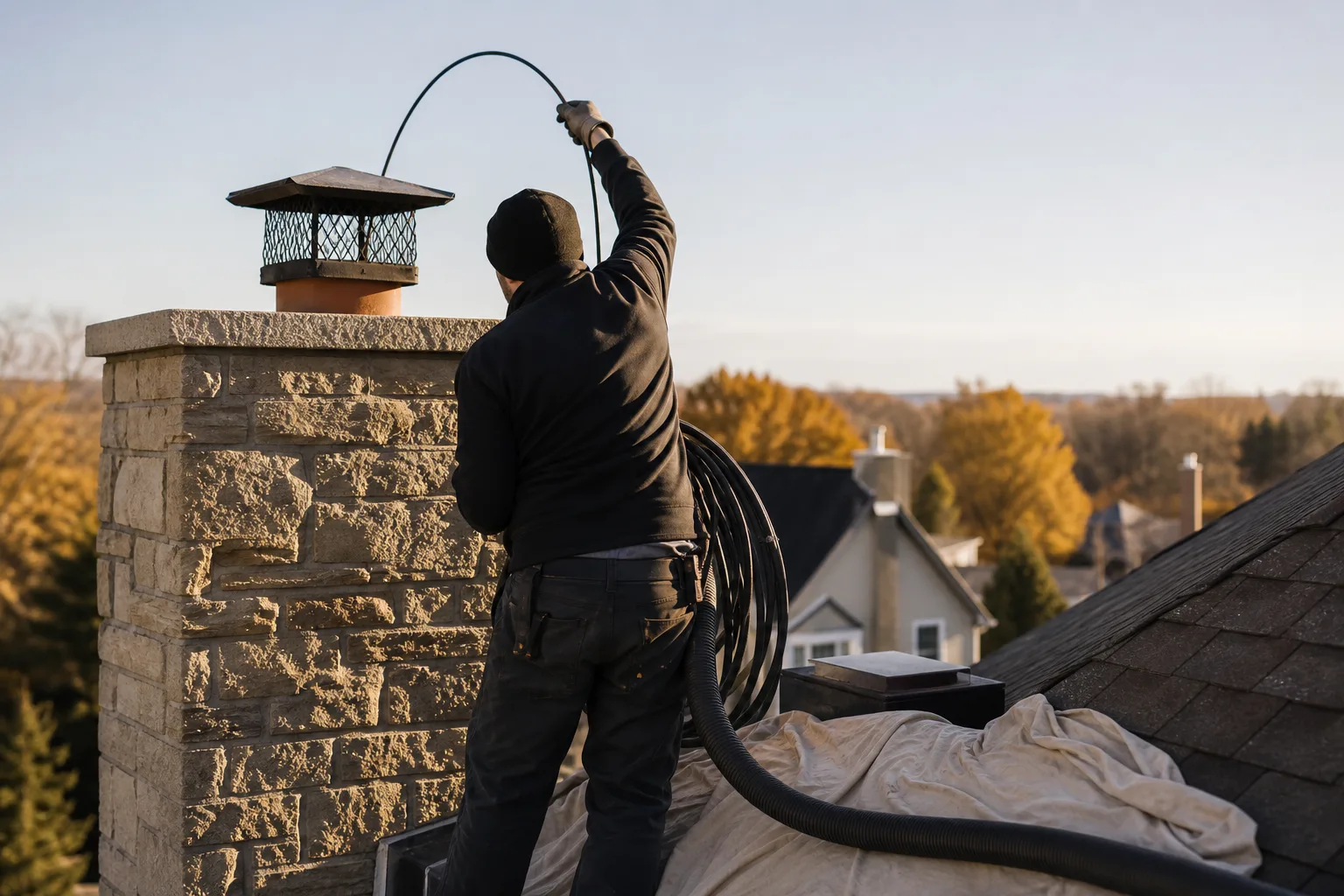
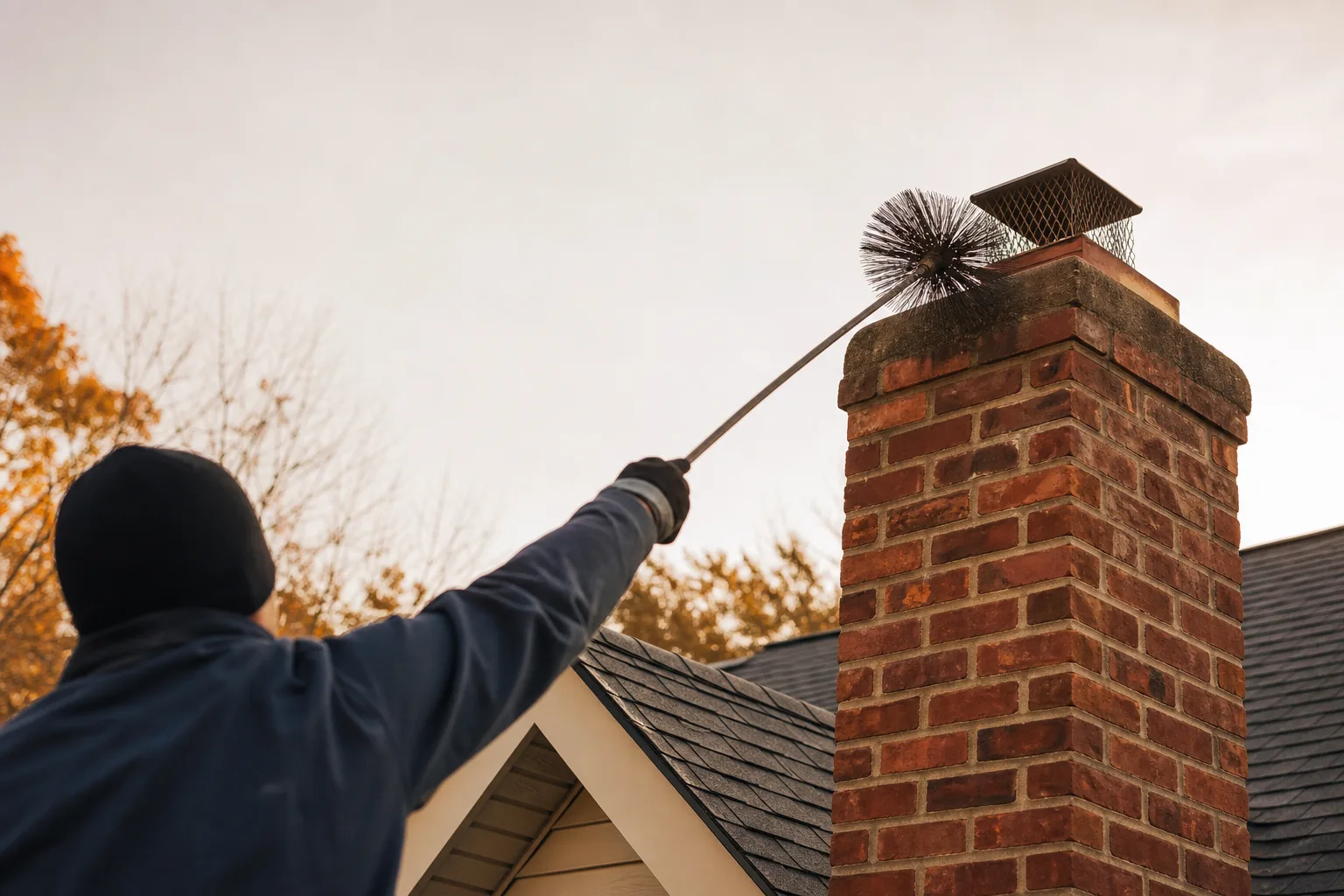
Safe removal starts with an inspection to identify the flue material, the amount and type of deposit, and any access limitations. A chimney professional can then choose brushes, rods, rotary equipment, vacuums, and containment methods suited to the chimney rather than forcing one tool through every system.
Loose, dusty, and flaky deposits are often removed through standard mechanical sweeping. Thicker second-stage material may require more aggressive tools and repeated passes, especially around offsets, smoke chambers, or areas where the flue stays cold. The work should protect the liner while keeping loosened debris out of the living space.
Glazed creosote is harder because it forms a dense, shiny coating that may look like black glass or hardened tar. Specialized treatments or removal equipment may be required to loosen it without damaging clay tile, metal, or other liner materials. Heavy glazing sometimes takes more than one visit, with inspection between stages to judge what remains.
| Removal option | Where it may help | Main limitation |
|---|---|---|
| Mechanical sweeping | Loose and moderate deposits | May not remove hard glazing by itself |
| Specialized professional treatment | Hardened or glazed deposits | The method must match the liner and deposit |
| Consumer logs or powders | May alter some deposits when used as directed | Cannot replace inspection or mechanical cleaning |
| Home scraping or improvised tools | No reliable role in safe chimney care | Can damage the liner and leave hidden deposits |
Myth vs. fact: The myth is that a sweeping log or powder cleans the entire chimney. The reality is that such products cannot confirm the flue is clear, remove every deposit, or reveal damage hidden beneath the residue.
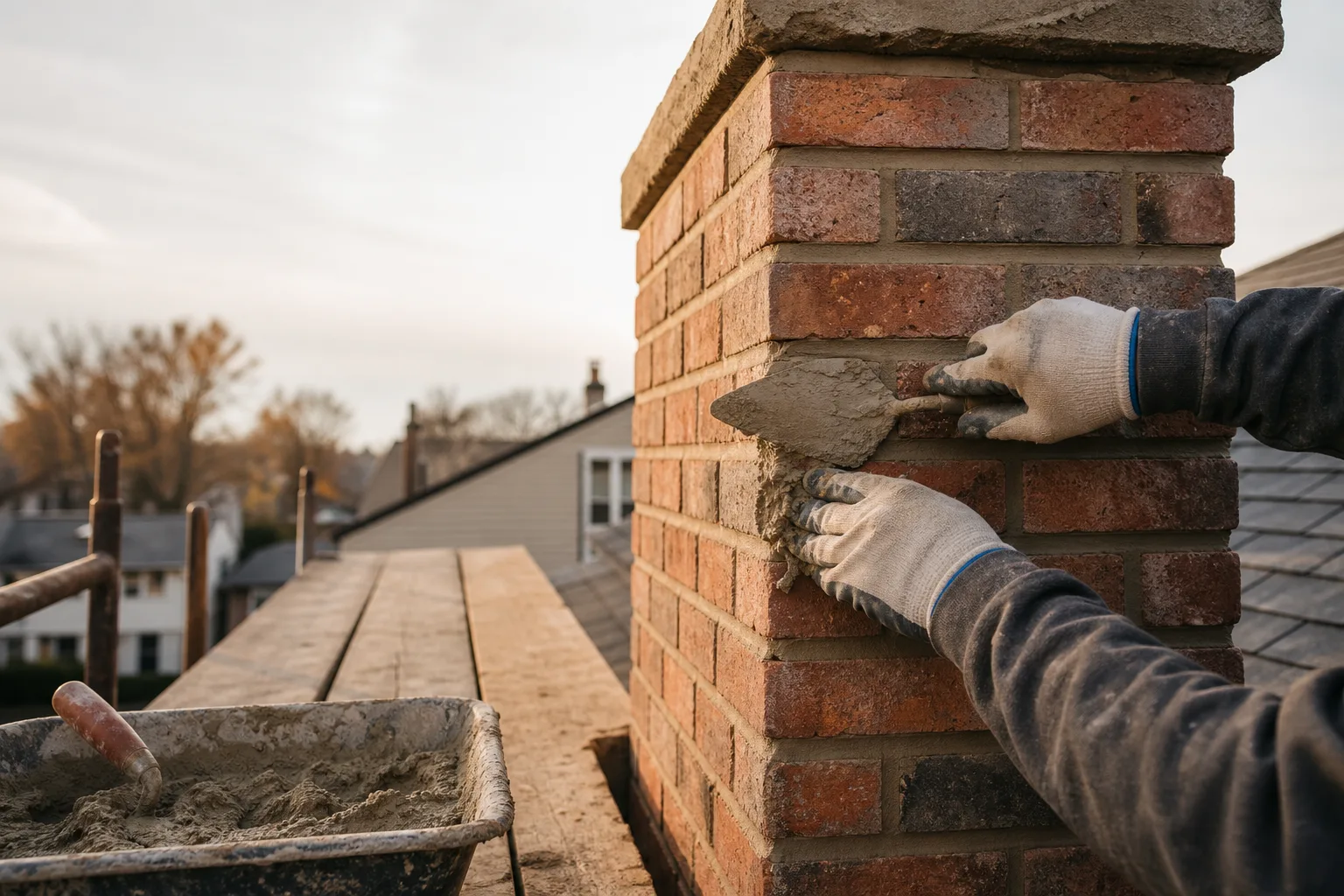
Cleaning is only part of the service. Once deposits are removed, the chimney should be checked for cracked tiles, open joints, corrosion, missing components, animal nesting, fallen masonry, and other blockages that could still interfere with venting. Evidence of a past chimney fire may also become easier to see after the flue surface is exposed.
Safety note: Do not scrape glazed material with improvised metal tools or try to burn it out with an unusually hot fire. Either approach can damage the liner, ignite deposits, or spread heat to nearby framing.
Concerned about a hard, shiny deposit? Schedule an inspection and cleaning assessment or call (513) 655-6702 for guidance based on the chimney you actually have.
How to Reduce Creosote and Know When to Schedule Service
You can reduce buildup by burning properly seasoned firewood, maintaining active flames, and operating air controls as the appliance manufacturer directs. These habits support cleaner combustion, but they do not eliminate the need for inspection because even a well-run fireplace, stove, or insert can produce deposits.
Build fires with dry kindling and smaller splits so the flue warms promptly. Add wood in manageable loads, avoid choking the fire down until it smolders, and never burn household trash, painted wood, treated lumber, or other unsuitable materials. At the same time, do not overfire the appliance in an attempt to clean the chimney with heat.
The venting system must also remain sound. A correctly sized, intact liner helps maintain draft and carries exhaust out without leaking into concealed spaces. A secure cap, open flue path, sound masonry, and properly connected appliance pipe all support steadier performance.
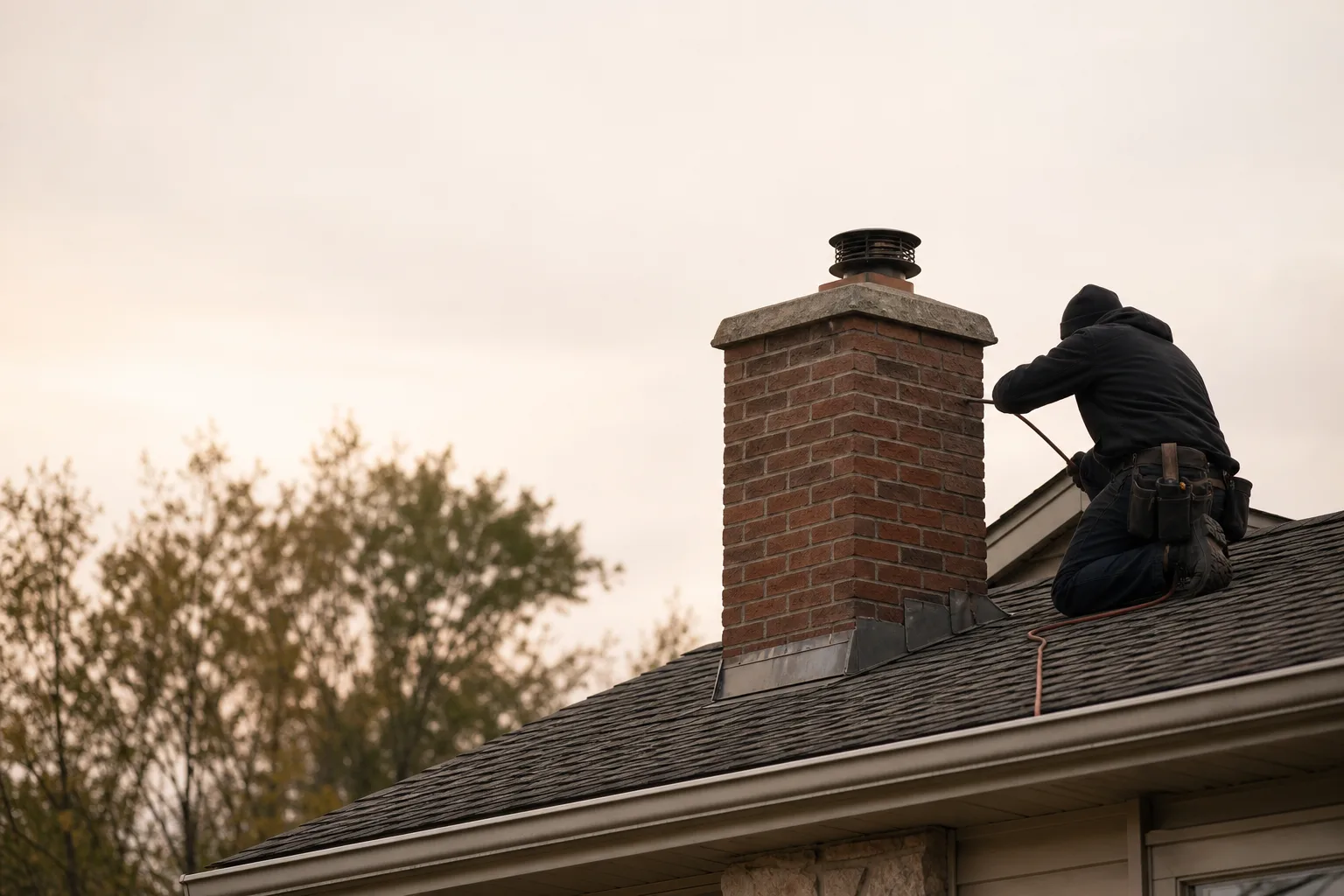
A homeowner can make a useful ground-level check before the burning season. Stay off the roof, use binoculars if needed, and look for conditions that warrant professional attention:
- Check the cap. Look for a missing, tilted, rusted, or visibly blocked cap.
- Check the crown. Look for open cracks, loose sections, or plants growing from joints.
- Check the masonry. Look for spalling brick, missing mortar, stains, or pieces on the ground.
- Check the flashing. Look for lifted edges, gaps, or staining near the roofline.
- Check the smoke. Once a fire is established, watch for unusually dense smoke or smoke spilling from another opening.
From the field: Technicians often find that the heaviest deposits are not visible from the firebox. Cooler sections near the top of an exterior chimney, offsets in the flue, and areas above a damaged liner joint can collect more residue than the lower opening suggests.
NFPA 211 calls for chimneys, fireplaces, and vents to be inspected at least annually. The answer to how often to clean a chimney is not identical for every home because it depends on the appliance, fuel, chimney design, burning habits, amount of use, and deposits observed during inspection. Homes used only occasionally may still develop blockages, animal nests, moisture damage, or deterioration between fires.
Schedule service sooner if you notice a persistent tar-like odor, falling black flakes, sticky deposits, reduced draft, sluggish fires, or smoke entering the room. A change in fireplace behavior deserves attention even when the chimney was cleaned during a previous season, since a blockage or damaged component can appear later.
Good to know: A smoky odor may become stronger during warm or humid weather when air moves downward through the chimney. Deodorizing the room will not correct deposits, moisture entry, or draft problems inside the system.
Stop using the fireplace or stove if you suspect a chimney fire, severe blockage, or damaged flue. Roaring sounds, visible flames or sparks from the chimney, intense heat, or dense smoke call for immediate evacuation and emergency assistance, followed by a chimney inspection before the system is used again.
For a clear next step, book chimney service or call (513) 655-6702. The crew can inspect the system, explain what they find, and recommend cleaning or repairs based on its actual condition.
Symptom checker
What is your chimney doing?
Tap the closest match for an honest first answer.