



On this pageWhy you get a chimney smell in summer6 sections+5
Quick answer
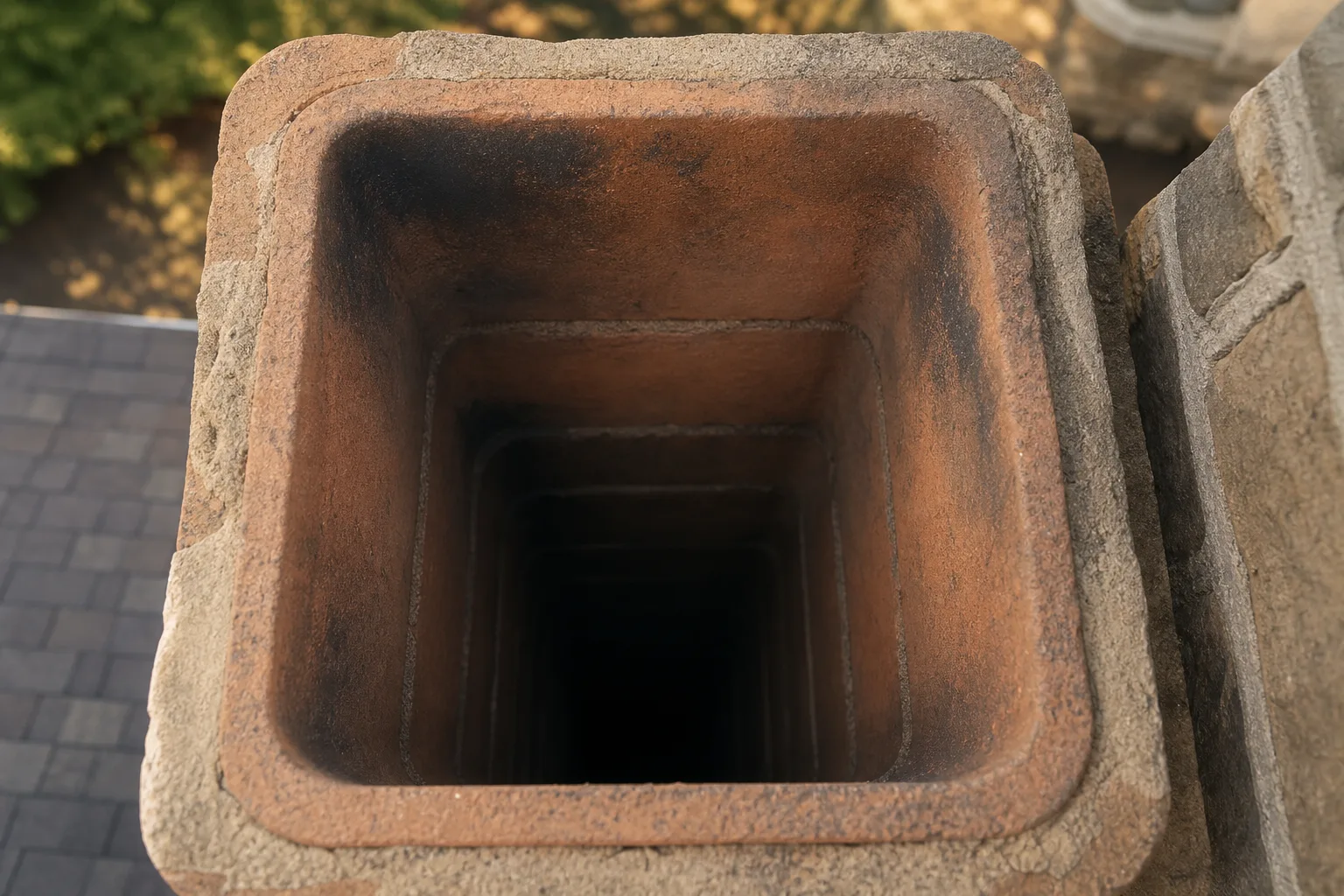
Summer chimney smell is humid air activating creosote in the flue, then negative pressure pulling that air down into the house instead of up and out. Cleaning removes the source, airflow fixes stop the delivery — and the smell is also a free reminder that the flue is due for service anyway.
Why you get a chimney smell in summer
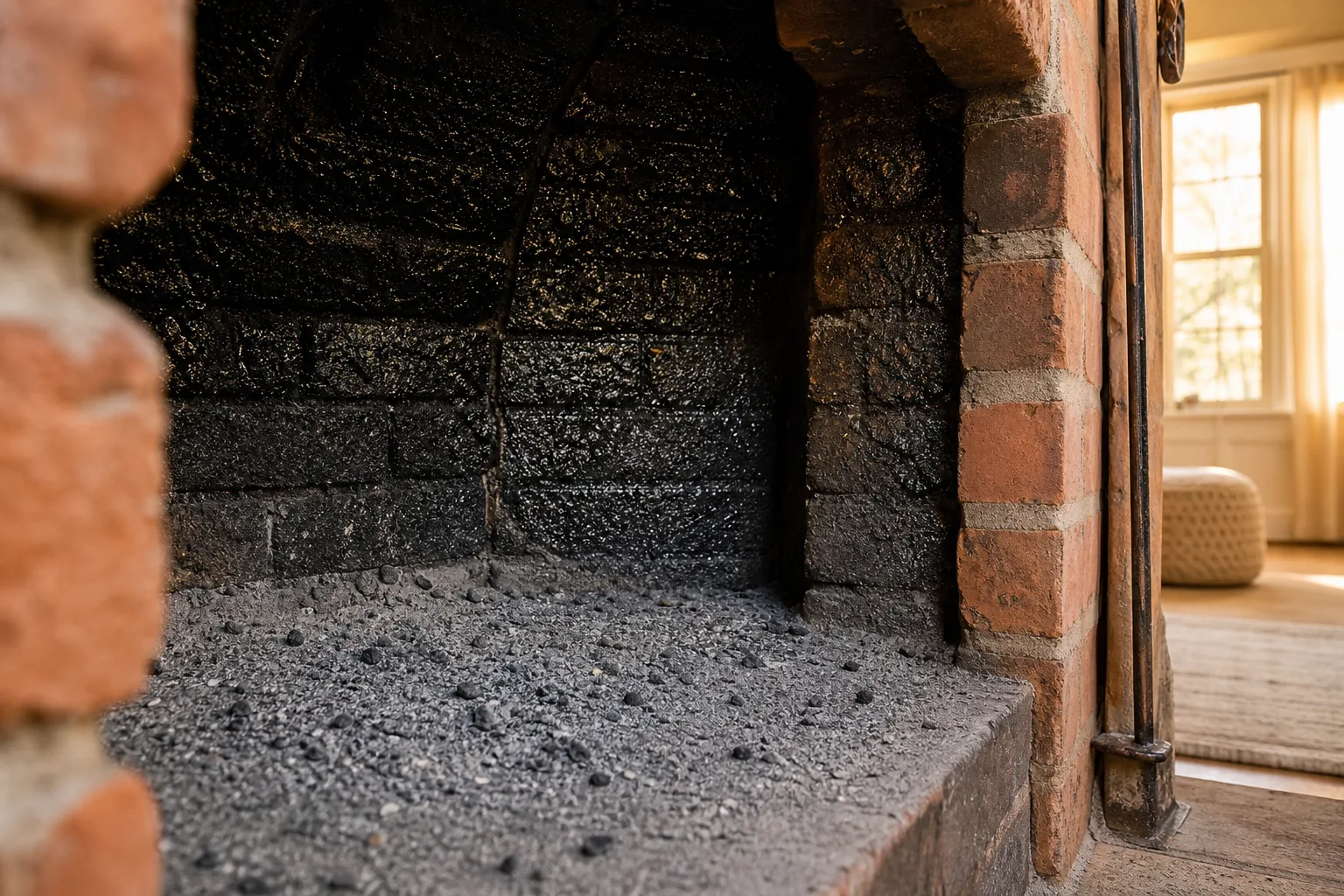
That campfire-ashtray odor that shows up with the first humid week isn't your imagination, and it isn't a coincidence. A chimney smell in summer is chemistry plus weather:
- Creosote is hygroscopic: the tar-like residue wood fires leave in the flue absorbs moisture from the air. Humid summer air essentially rehydrates it, releasing the volatile compounds you smell. It's the same reason a cold, dead campfire pit smells stronger after rain.
- Heat amplifies it. A chimney in summer sun becomes a warm column that bakes those compounds out of the deposits.
- Rain feeds it directly. An uncapped or poorly capped flue lets rain hit the smoke shelf, where water plus soot brews the strongest version of the odor.
Winter hides the problem: the flue is warm, the draft is strong, and everything airborne rides it up and out. Summer reverses the physics, which brings us to the delivery mechanism.
Negative pressure: why the smell comes in instead of going up
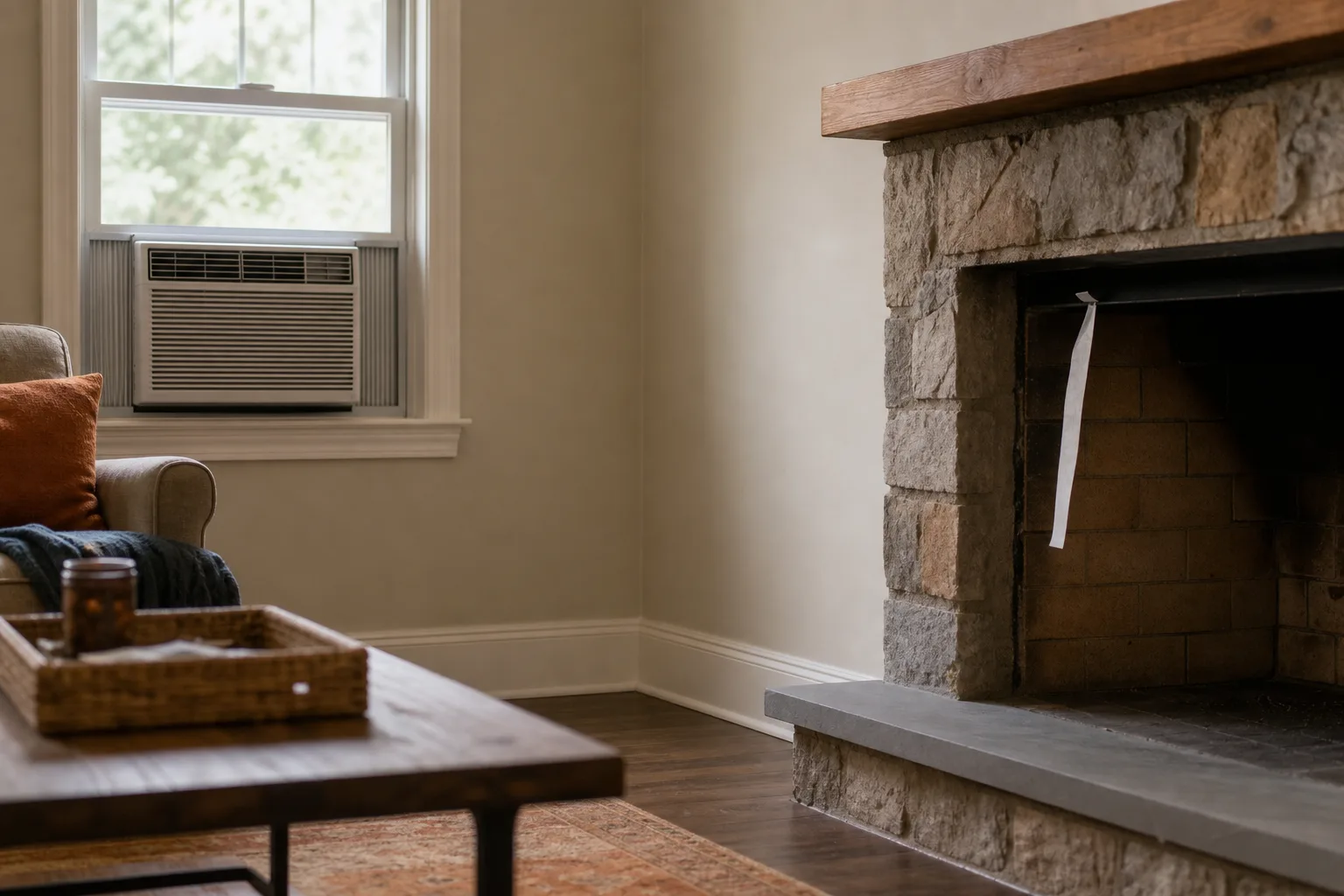
A flue full of odor still needs a reason to share it with your living room. That reason is negative pressure: the house pulling air down the chimney because more air is leaving the building than entering it.
Summer stacks the deck for this:
- Air conditioning and exhaust fans: AC systems, bathroom fans, range hoods, and dryers all expel or move air; the house makes it up wherever it can, and an open flue is the path of least resistance.
- The stack effect flips. In winter, warm indoor air rises and exits high, keeping flow moving up the flue. In summer, a cool house under a hot roof can reverse that flow entirely. The chimney becomes the intake.
- Tight houses make it worse. Modern air sealing means fewer leaks elsewhere, so the chimney gets promoted to primary air supply.
The tell: the smell surges when the AC kicks on, when the kitchen fan runs, or on the stillest, most humid days. If that matches your house, you don't just have a creosote problem; you have an airflow problem carrying it. The fix list addresses both.
Fixes that actually work, in order
Work this list top to bottom. It's sequenced by payoff:
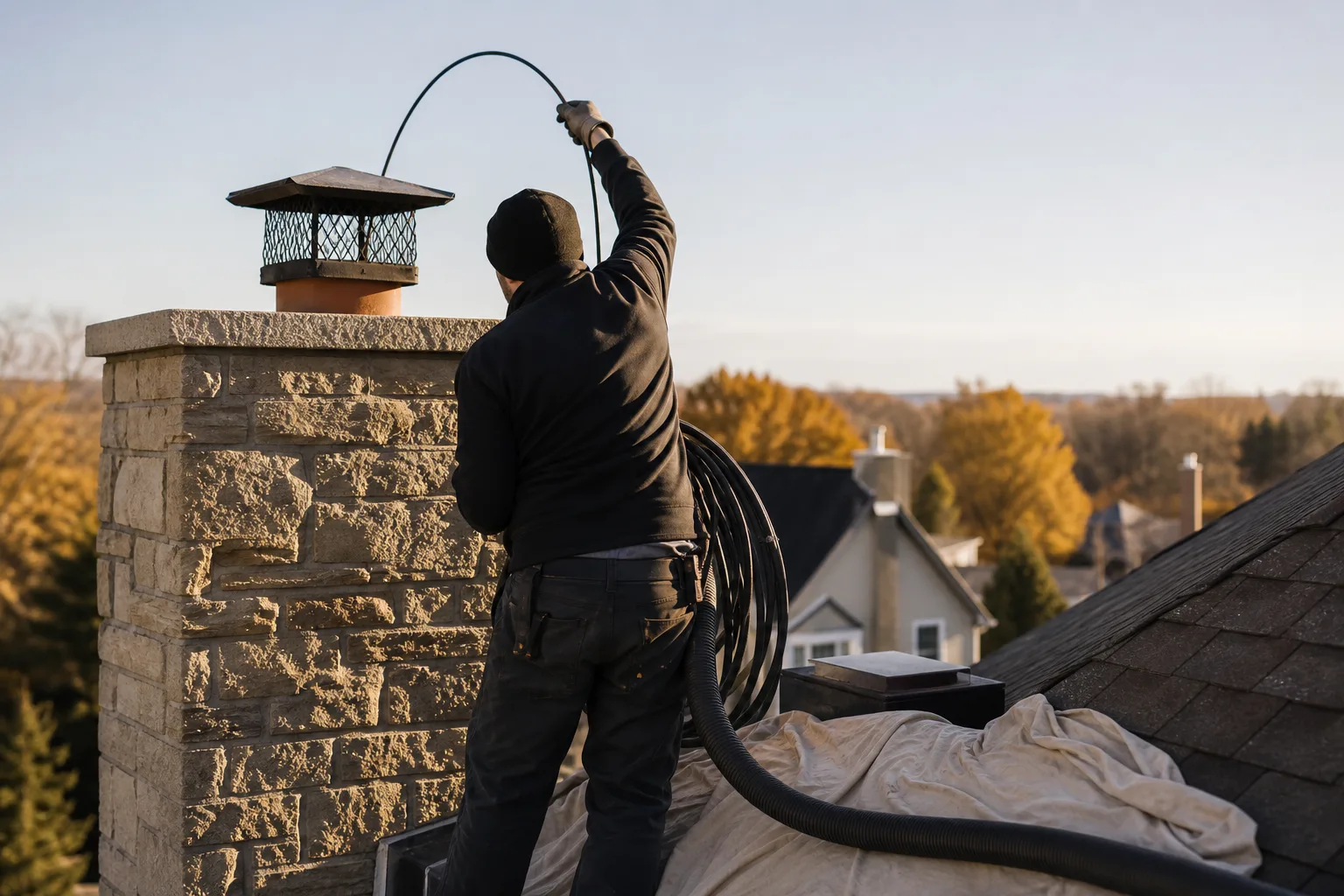
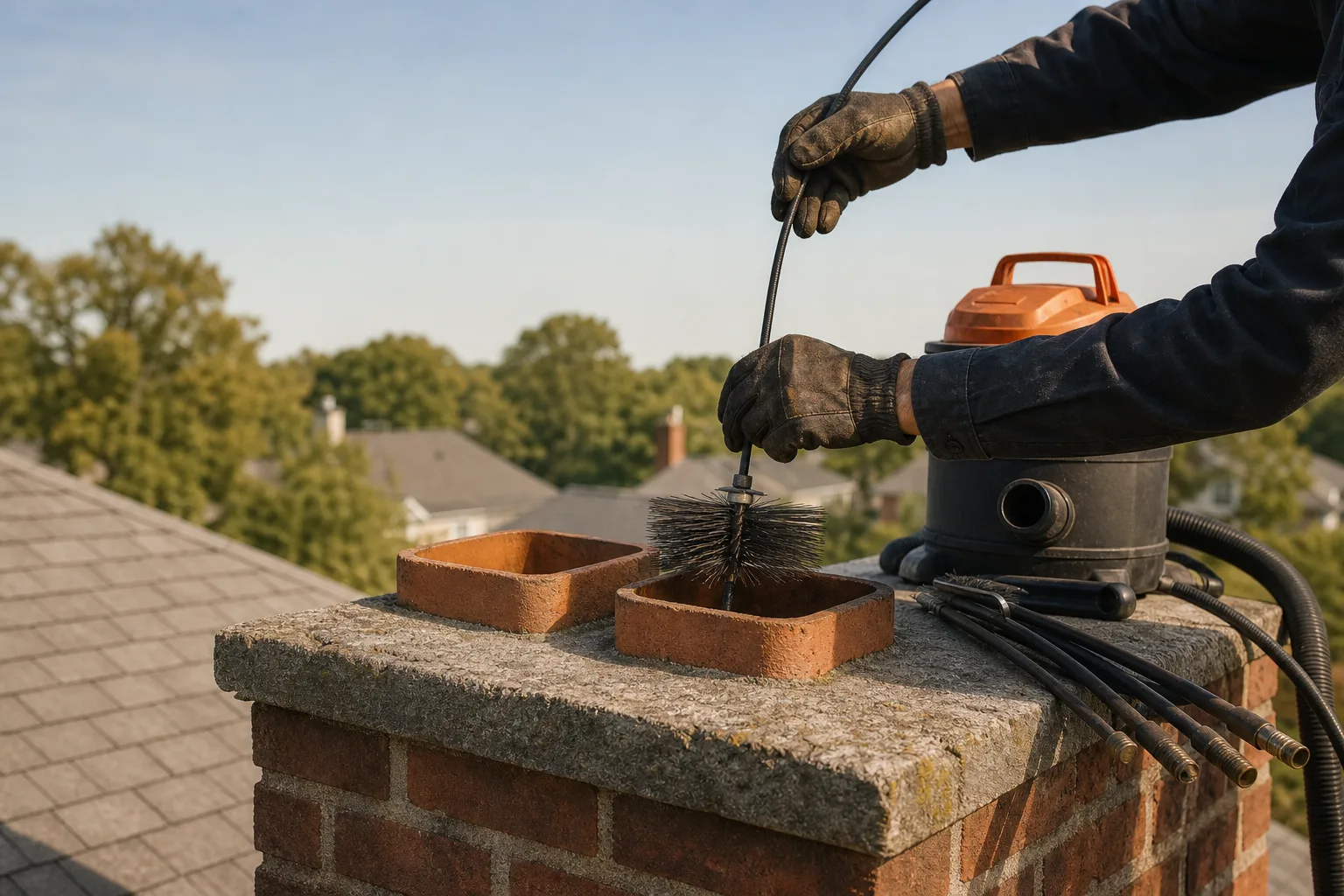
- Sweep the flue. No source, no smell. Removing the creosote and the smoke-shelf debris eliminates most of the odor at its origin, and summer is the easy season to book a cleaning, before the fall rush.
- Fit a top-sealing damper. Standard throat dampers leak by design: warped metal on a metal seat. A top-sealing damper closes the flue at the crown with a gasket, blocking both downdrafts and the humid air exchange that activates deposits. For a chronic chimney smell in summer, this is the single highest-impact piece of hardware.
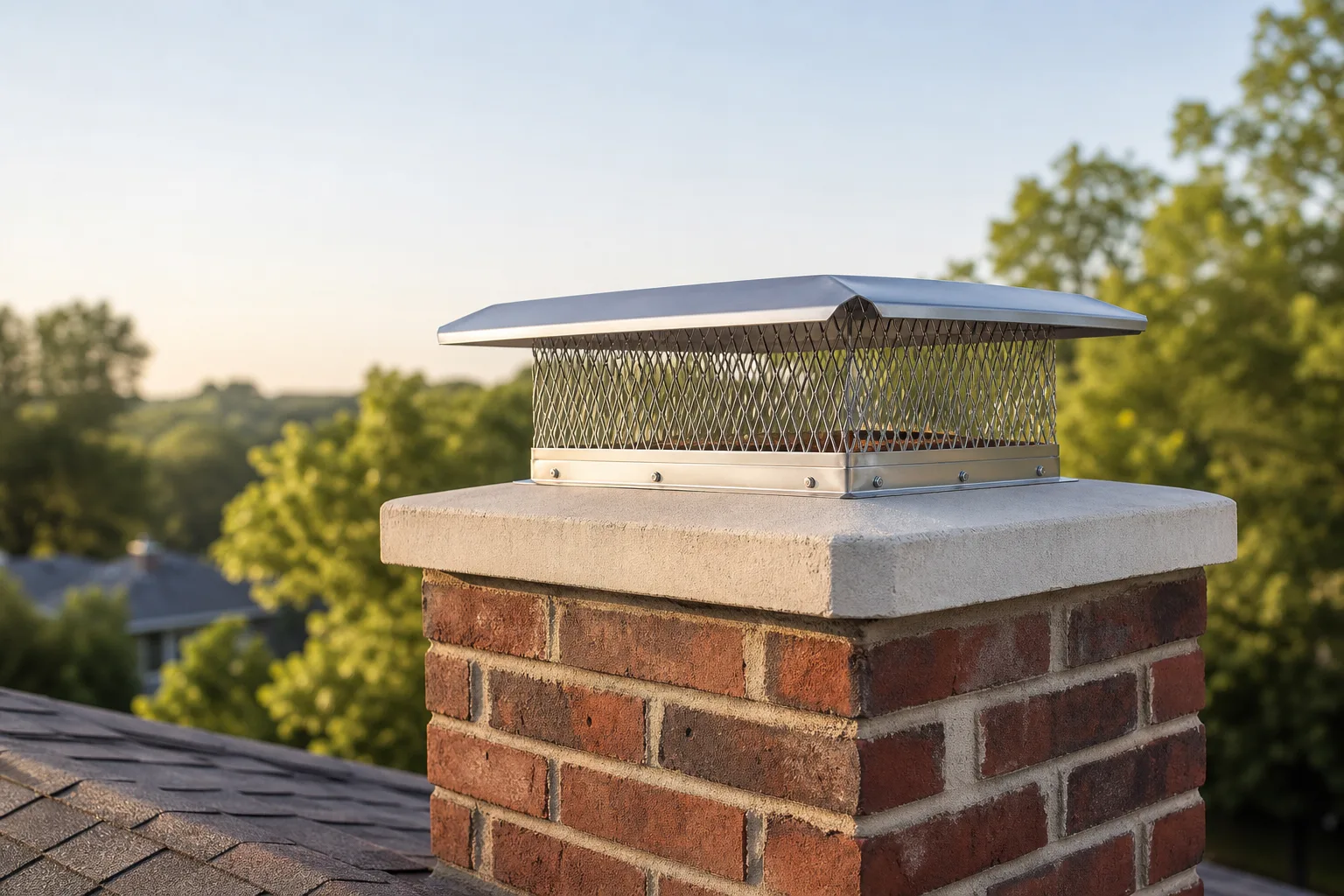
- Verify the cap. A proper cap keeps rain off the smoke shelf, removing the water that brews the worst odors.
- Manage house pressure. Ease the vacuum: crack a window near the fireplace when running heavy exhaust, and have serious airflow imbalances evaluated. Every bit of pressure relief slows the downdraft.
- Only then, deodorize. Once source and airflow are handled, absorbers can mop up residual odor in the room. As a first step they're a bandage on a draft.
| Quick relief | Lasting fix |
|---|---|
| Close the throat damper fully | Top-sealing damper with gasket |
| Odor absorbers by the hearth | Flue sweeping: remove the source |
| Crack a window when fans run | Cap verified; pressure imbalance corrected |
Tired of holding your breath every July? Request a visit: free to book, no obligation, and one visit usually covers the sweep, the cap check, and the damper conversation.
The water connection: why leaks and smells travel together
If the odor survives a good sweeping, water is the next suspect, because moisture doesn't just activate creosote; it's often the underlying problem:
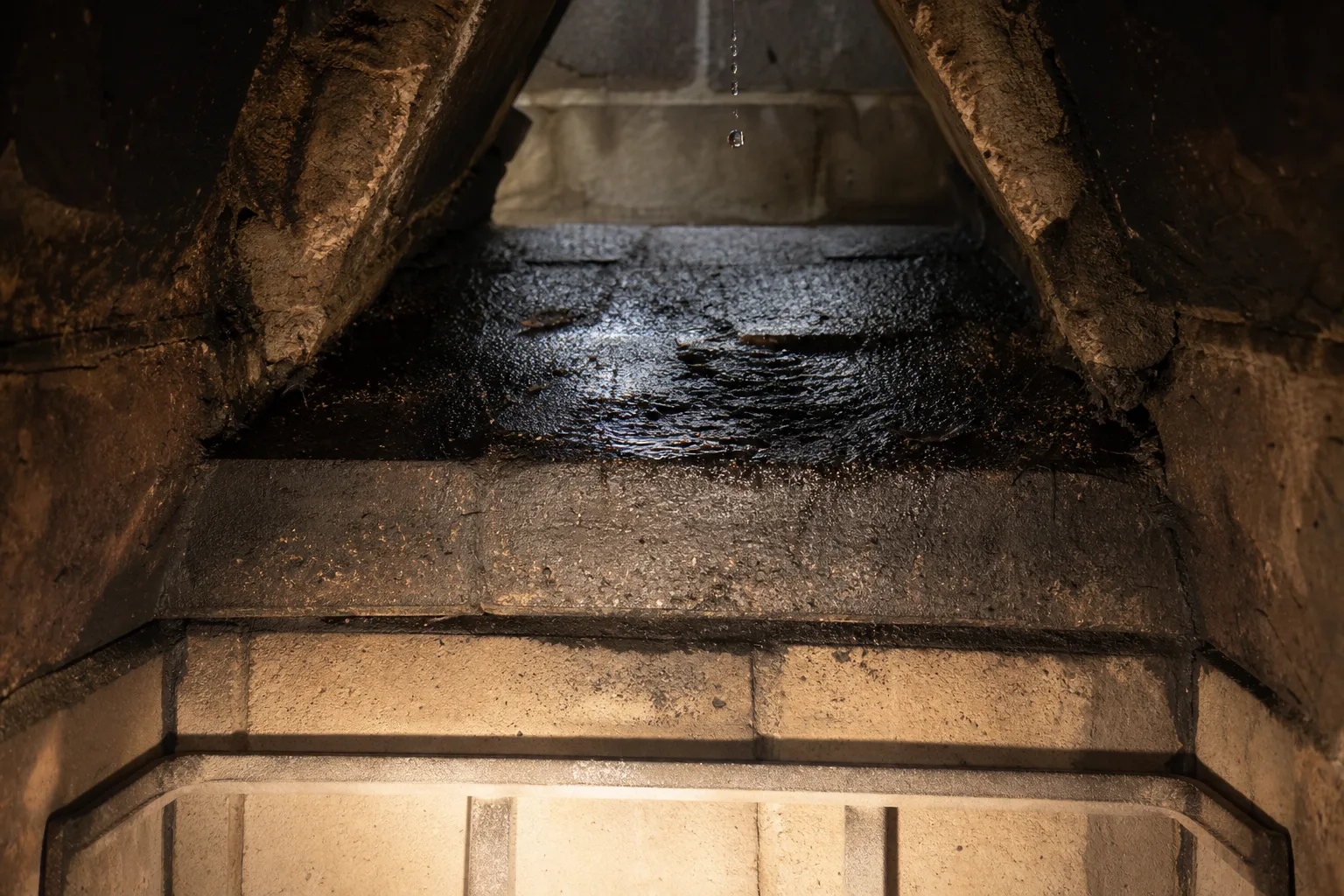
- Rain on the smoke shelf brews the worst version. The smoke shelf, the ledge behind the damper, collects soot for a living. Add rainwater through a missing or undersized cap and it becomes a standing pool of creosote tea, radiating odor every warm day. A shelf cleanout plus a proper cap ends this one permanently.
- A damp flue smells like a damp anything. Water entering at the crown or flashing keeps flue walls and masonry wet, and wet chimneys develop the same musty character as wet basements. Mustiness layered under campfire odor is the classic signature of a chimney with a water problem.
- Moisture keeps deposits "fresh." Creosote that never fully dries releases odor continuously instead of only on humid days, so a leak upstream can make the smell strangely persistent, even in mild weather.
- The stains confirm it. White chalky staining on the exterior brick, rust trails from the damper, dark tide marks in the firebox. Masonry documents its water history. If any of those accompany the smell, you have two linked problems and one efficient fix.
The upside of the connection: a single top-end repair (cap, crown, or flashing) frequently resolves the odor, the staining, and a future structural repair in one scope. The smell is simply the first symptom that made it indoors.
When the smell means something more
Most summer chimney odor is creosote and airflow. A few varieties are different messages:
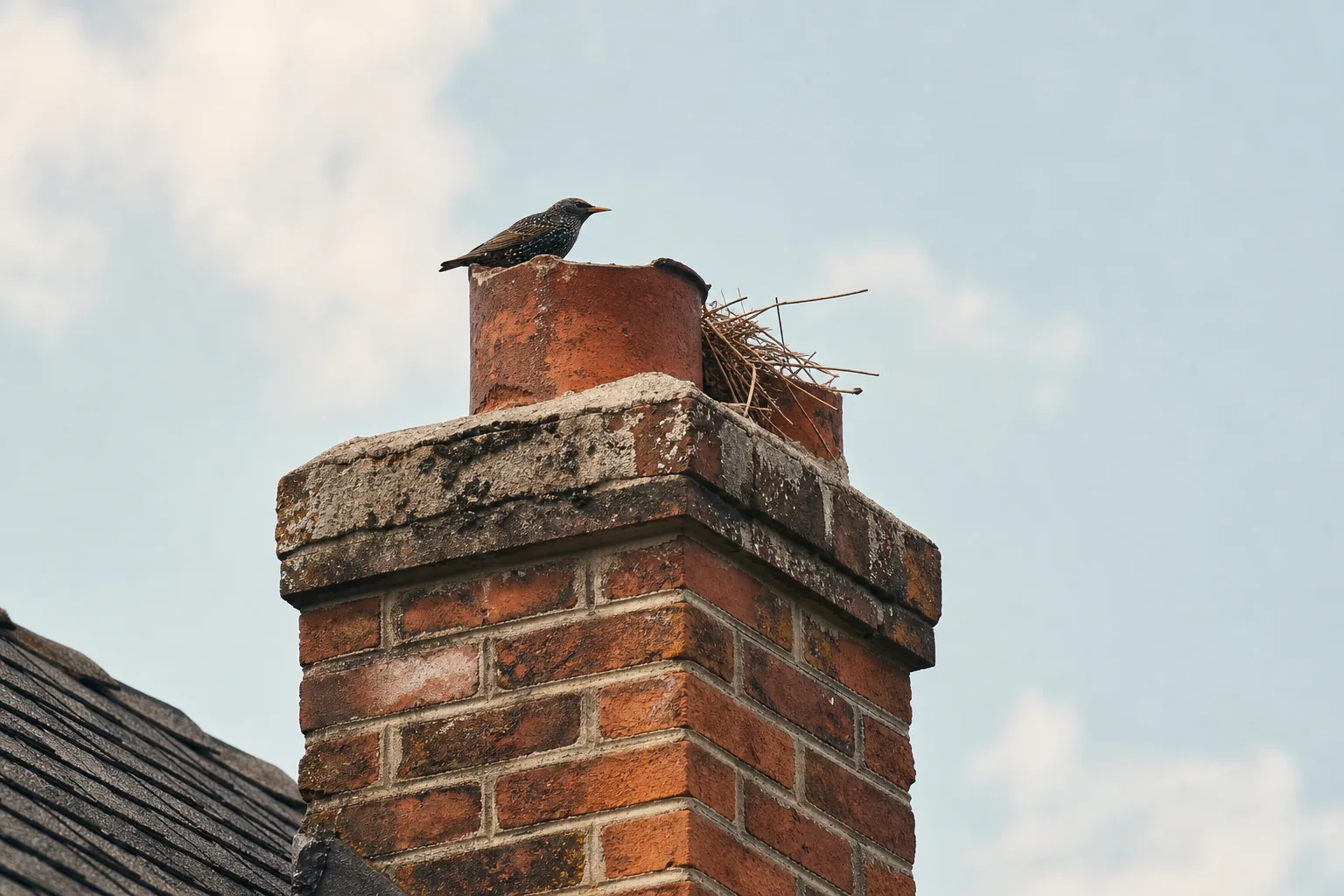
- Sharp decay: a sudden dead-animal odor usually is exactly that: a bird or squirrel that got into an uncapped flue. It needs removal, not masking, and it's why cap screens exist.
- Musty, damp-basement notes: persistent mustiness suggests water in the system: a leak at the cap, crown, or flashing keeping the flue damp. Mold in a chimney means a moisture problem to trace, not a candle to light.
- Sewer-like smell: occasionally the chimney is the innocent bystander to a dried floor-drain trap or venting issue nearby; if the odor doesn't track with humidity or AC cycles, widen the search.
- Smoke smell during use: a fireplace that smells strongly of smoke while burning is a draft or blockage issue, and it's a stop-and-inspect situation rather than a summer annoyance.
The common thread: odors are diagnostic data. A flue that's been inspected annually rarely surprises anyone in July, because every one of these causes leaves earlier, quieter evidence first.
Keeping the smell from coming back
Permanent victory is a maintenance rhythm, not a product:
- Sweep on the findings, not the calendar mood. An annual inspection tells you when buildup is enough to matter: for regular burners, that's often every season; the smell threshold arrives even sooner than the safety one.
- Burn cleaner all winter. Seasoned hardwood and hot, active fires deposit less creosote than smoldering burns of damp wood. Next summer's odor is being decided in January.
- Close the loop each spring. A five-minute spring ritual — damper sealed, cap intact after winter storms, one last look at the firebox — sets the flue up for a scentless summer.
- Recheck after any wet spring. Storm-bent caps and cracked crowns turn rain into smell within weeks; if a stormy season just ended, assume the top end deserves a look.
Handled this way, the fireplace disappears from your summer entirely (no odor, no ritual of candles on the mantel), and reappears in October cleaner and safer than you left it. If this summer already smells like a campfire, the pro we match you with can reset the whole cycle with one scheduled visit.
Symptom checker
What is your chimney doing?
Tap the closest match for an honest first answer.