



On this pageWhat creosote is, and why your flue makes it6 sections+5
Quick answer
Creosote develops in three stages: dusty soot, crunchy tar-like flakes, and hardened shiny glaze — and each stage is harder to remove and more flammable than the last. If you can see shiny black deposits in the flue, smell strong campfire odor when the fireplace is cold, or your fires draft poorly, stop burning and have the flue checked before the next fire.
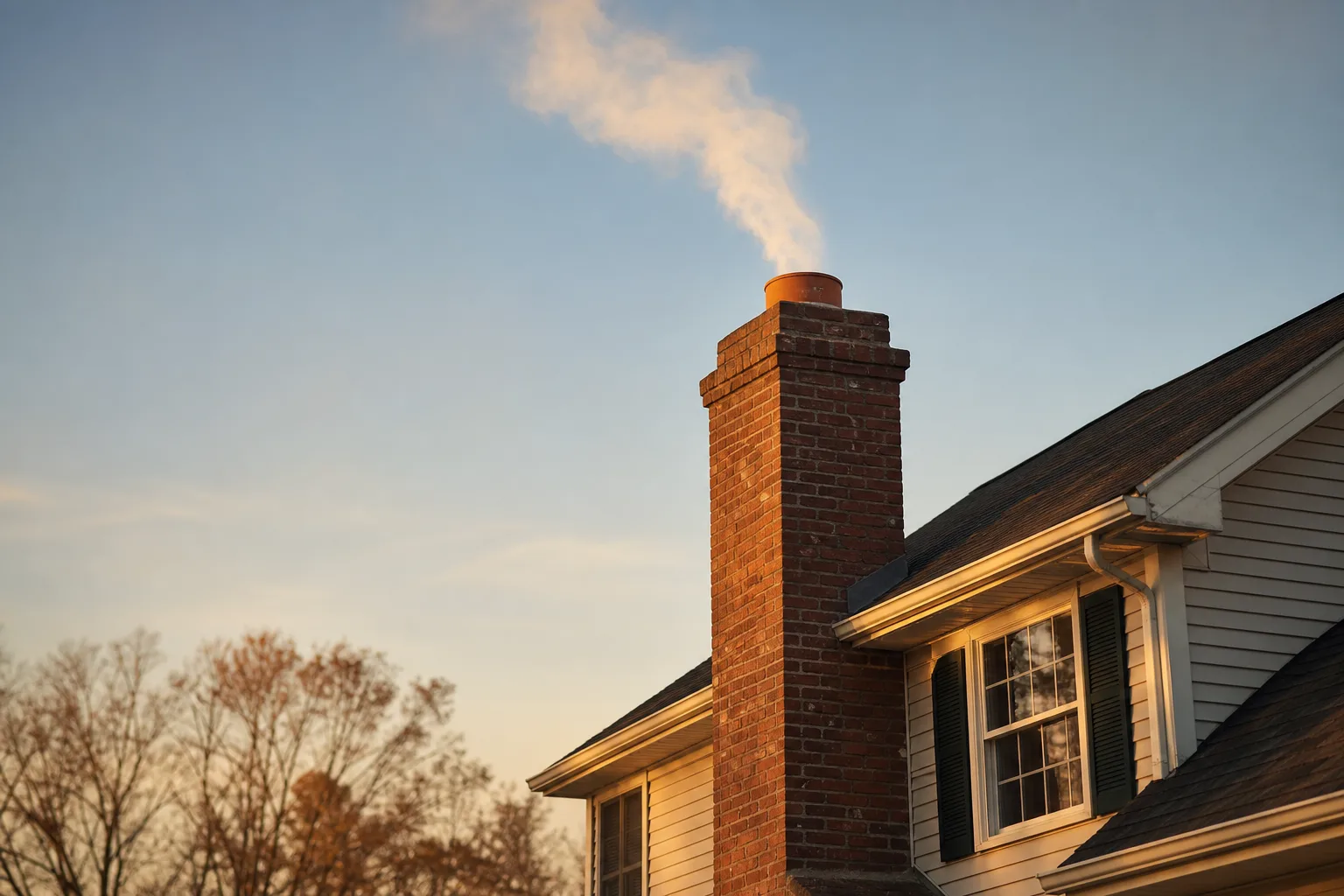
What creosote is, and why your flue makes it
Every wood fire sends more than heat up the chimney. Smoke carries unburned particles, water vapor, and volatile gases, and when that mix touches flue walls cooler than itself, it condenses and sticks. That residue is creosote, and no wood-burning system avoids it entirely.
What varies is the speed. A few things accelerate buildup dramatically:
- Wet or unseasoned wood. Moisture cools the fire and loads the smoke with vapor — the single biggest factor.
- Slow, smoldering burns. Damped-down overnight fires produce cool, smoky exhaust that condenses heavily.
- An oversized or exterior chimney. Cooler flue walls condense more of every fire's smoke.
- Restricted airflow. A closed damper, a clogged cap screen, or a blocked flue keeps smoke lingering where it can settle.
The condensation itself is chemistry, not neglect. Neglect is what happens next, because creosote doesn't sit still. It accumulates, hardens, and climbs through three distinct stages, and the creosote buildup signs you can notice from the room change with each one.
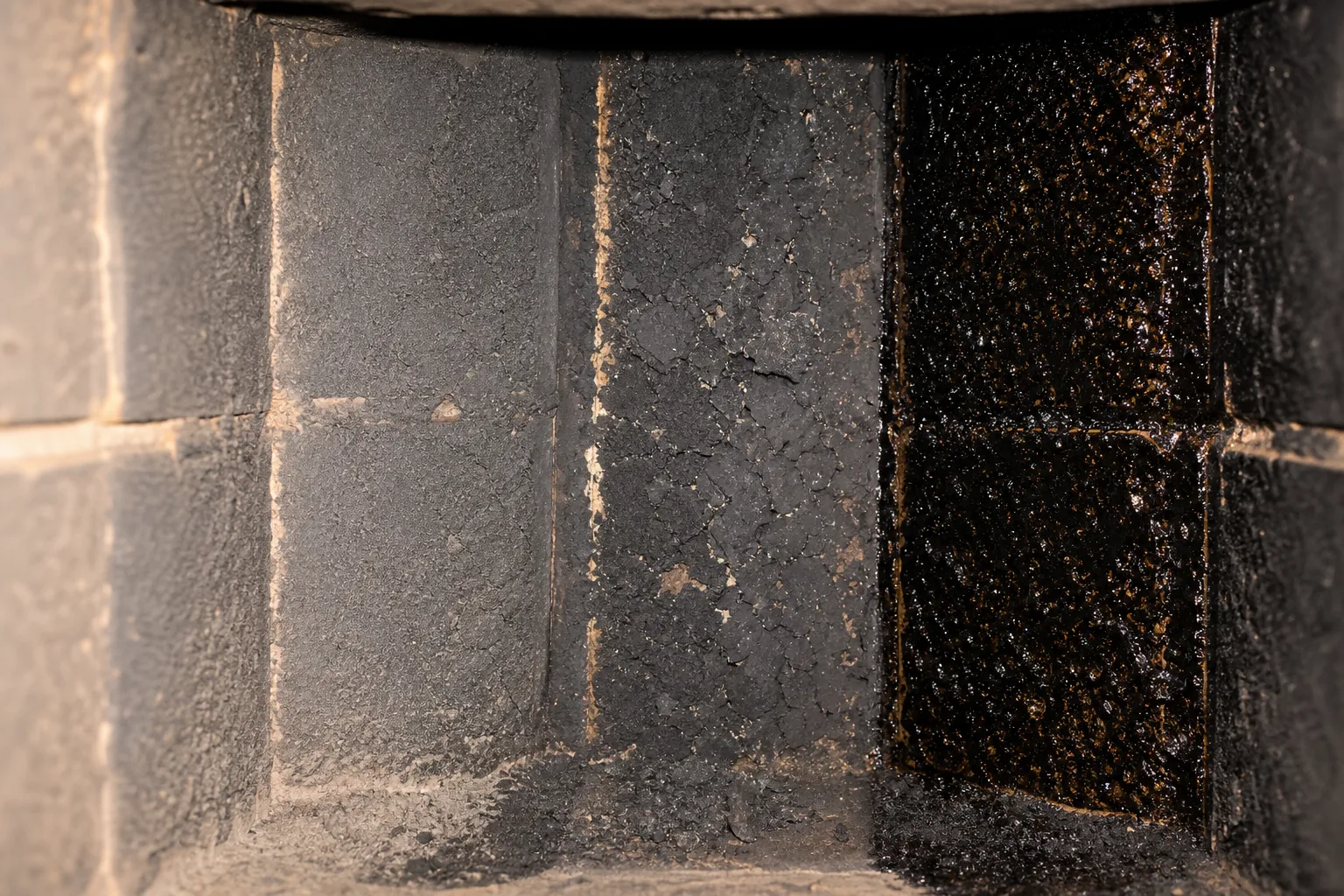
The three stages of creosote buildup
The pros in our network grade creosote by what it takes to remove it, and that maps neatly to how it looks and how dangerous it is.
| Stage 1 | Stage 2 | Stage 3 | |
|---|---|---|---|
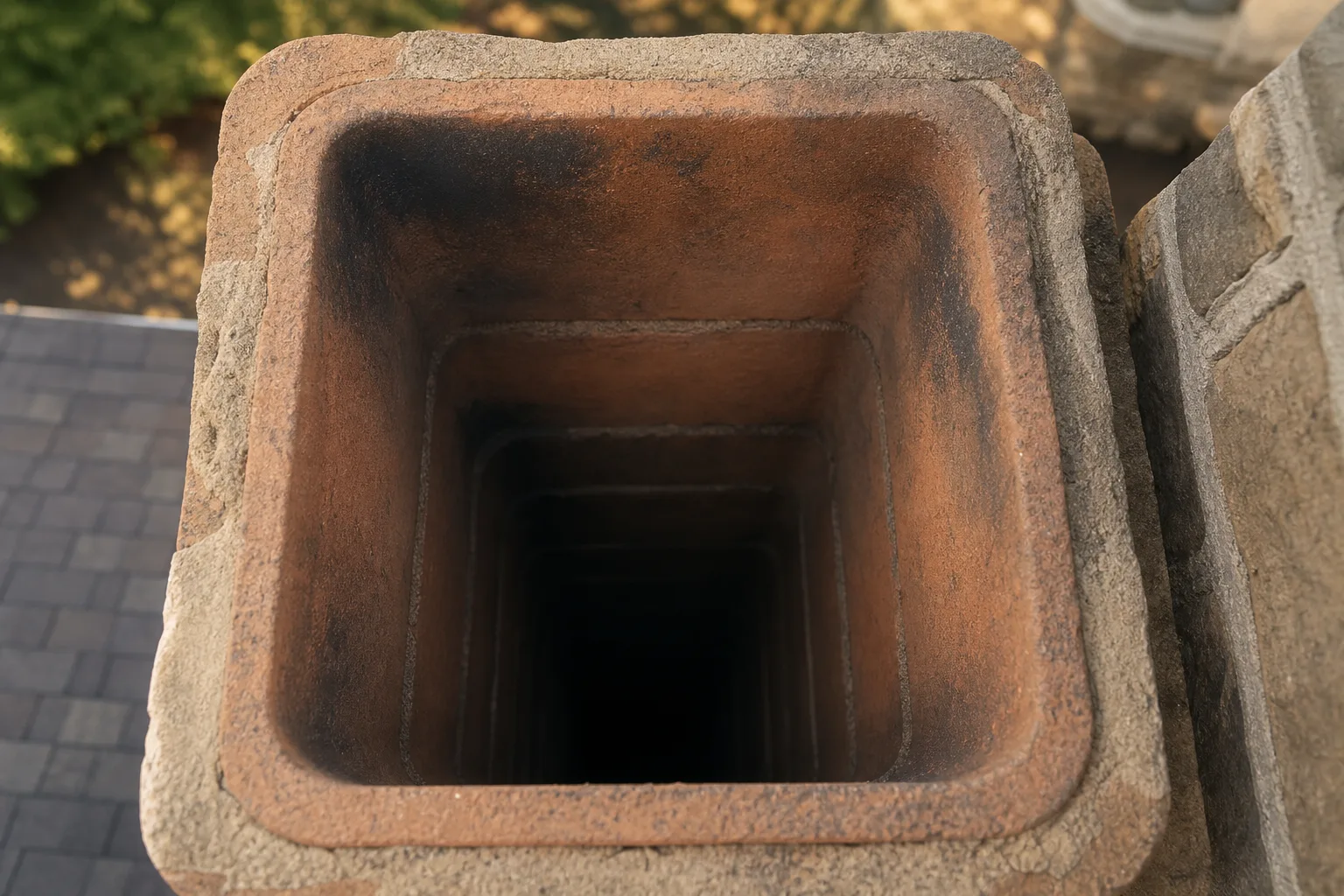
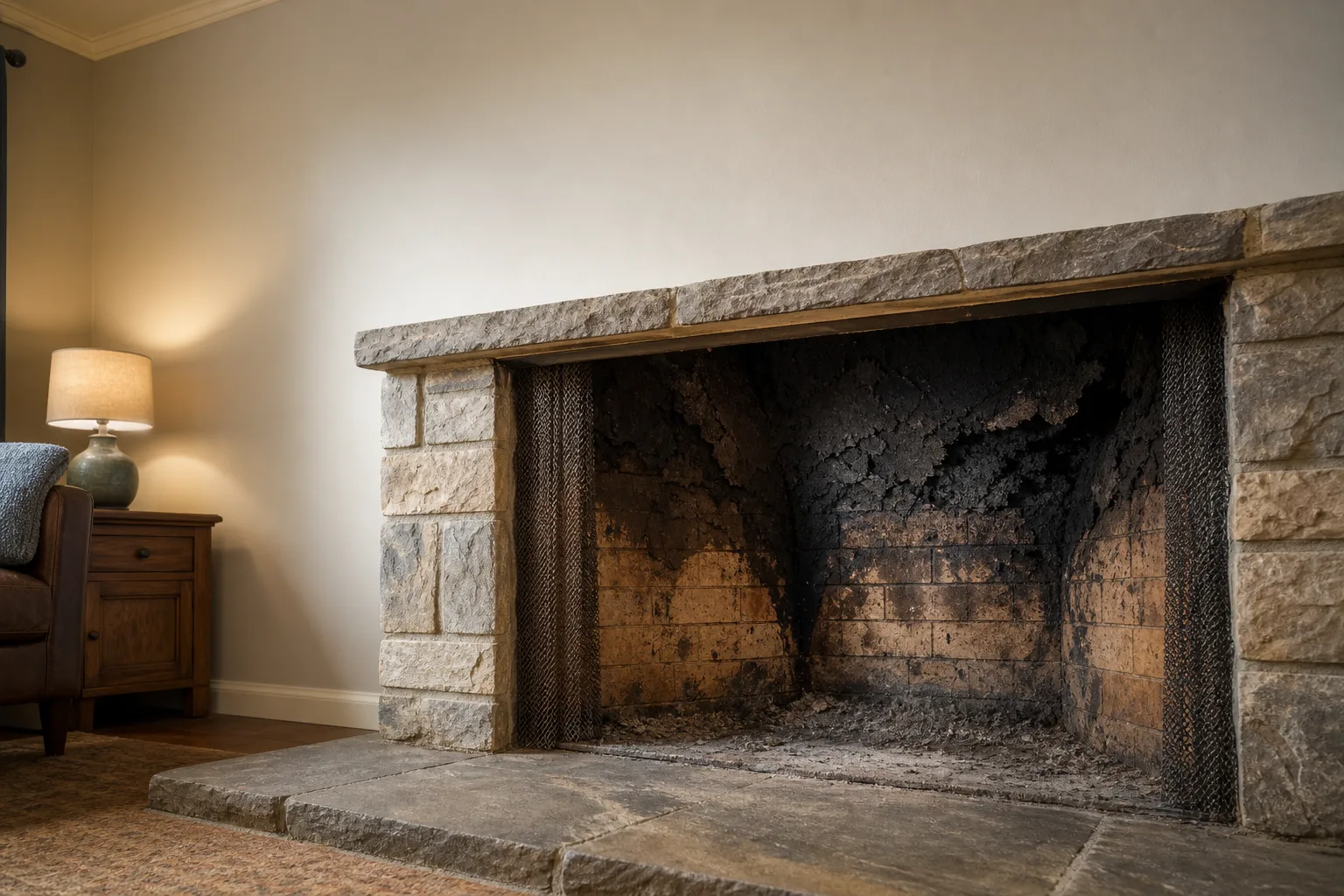
| Looks like | Velvety gray-black dust or soot | Dry, crunchy black flakes — like burnt cornflakes | Shiny, hardened tar; a black glaze coating the flue |
| Texture | Brushes off easily | Breaks off in chips | Rock-hard, sometimes drips and re-hardens |
| Removal | Standard sweeping | Firm brushing, sometimes specialty tools | Professional treatment — brushes alone won't touch it |
| Fire risk | Low, if removed on schedule | Real — it's concentrated fuel | Severe — glaze is dense fuel that burns extremely hot |
Stage 1 is normal life with a fireplace. Stage 2 means conditions in your flue favor buildup and your maintenance interval is too long. Stage 3 — glazed creosote — usually means years of smoldering fires, wet wood, or a flue that has never been properly cleaned. Glaze can also signal a past flue fire the homeowner never knew about.
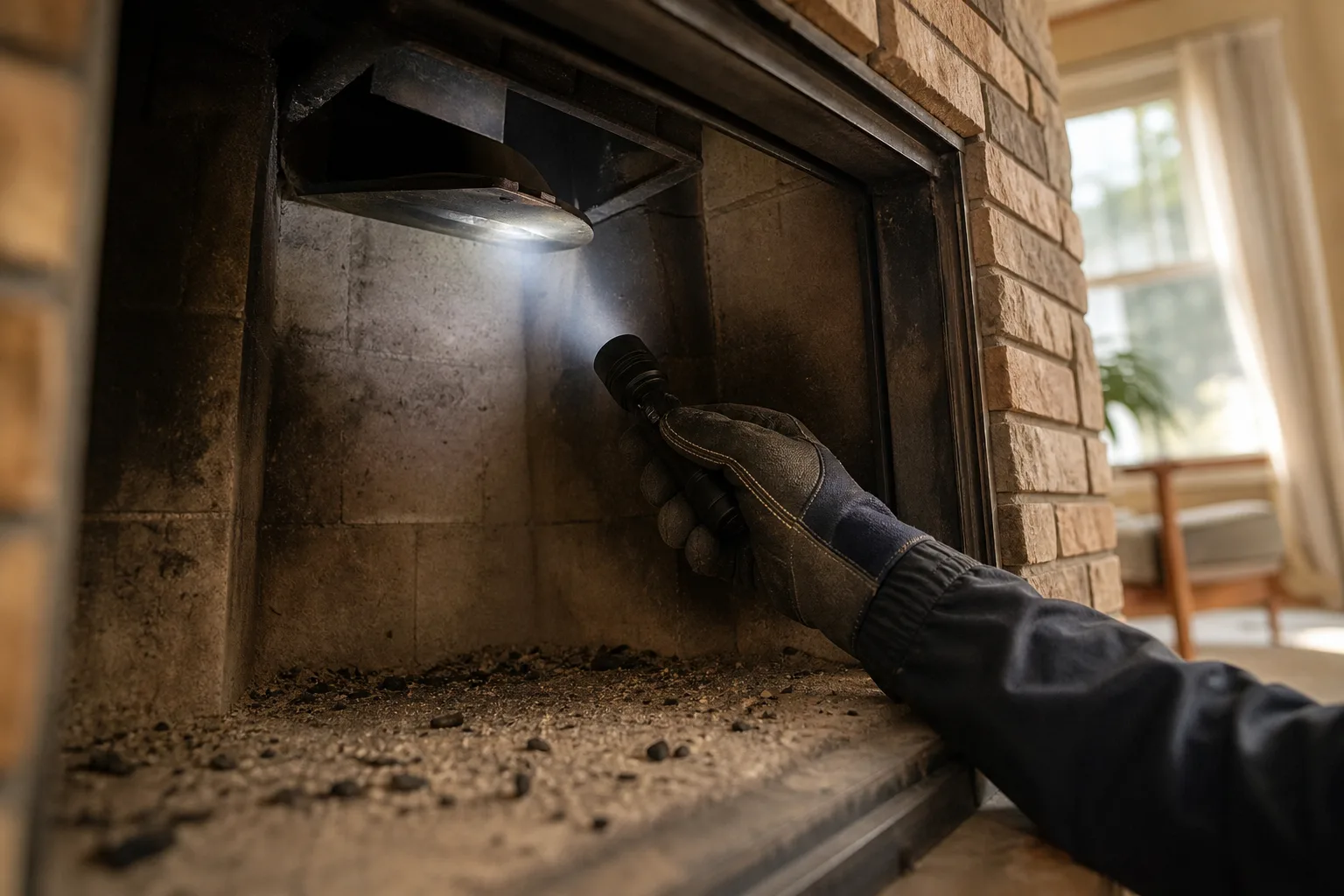
Creosote buildup signs you can spot without climbing on the roof
You don't need to scale anything to catch the early warnings. From ground level, watch for:
- Campfire smell when nothing is burning: especially on humid days or when the AC is running. Odor is often the first sign buildup has passed "trace."
- Black flakes in the firebox or on the smoke shelf — bits of stage 2 creosote breaking loose and falling.
- A weaker draft. Fires that are harder to start or smoke that hesitates at the flue opening can mean deposits are narrowing the passage.
- Visible black buildup on the damper or the lower flue when you look up with a flashlight — if you can see accumulation at arm's reach, assume there's more above it.
- Dark staining around the flue opening on top of the chimney, sometimes visible from the yard.
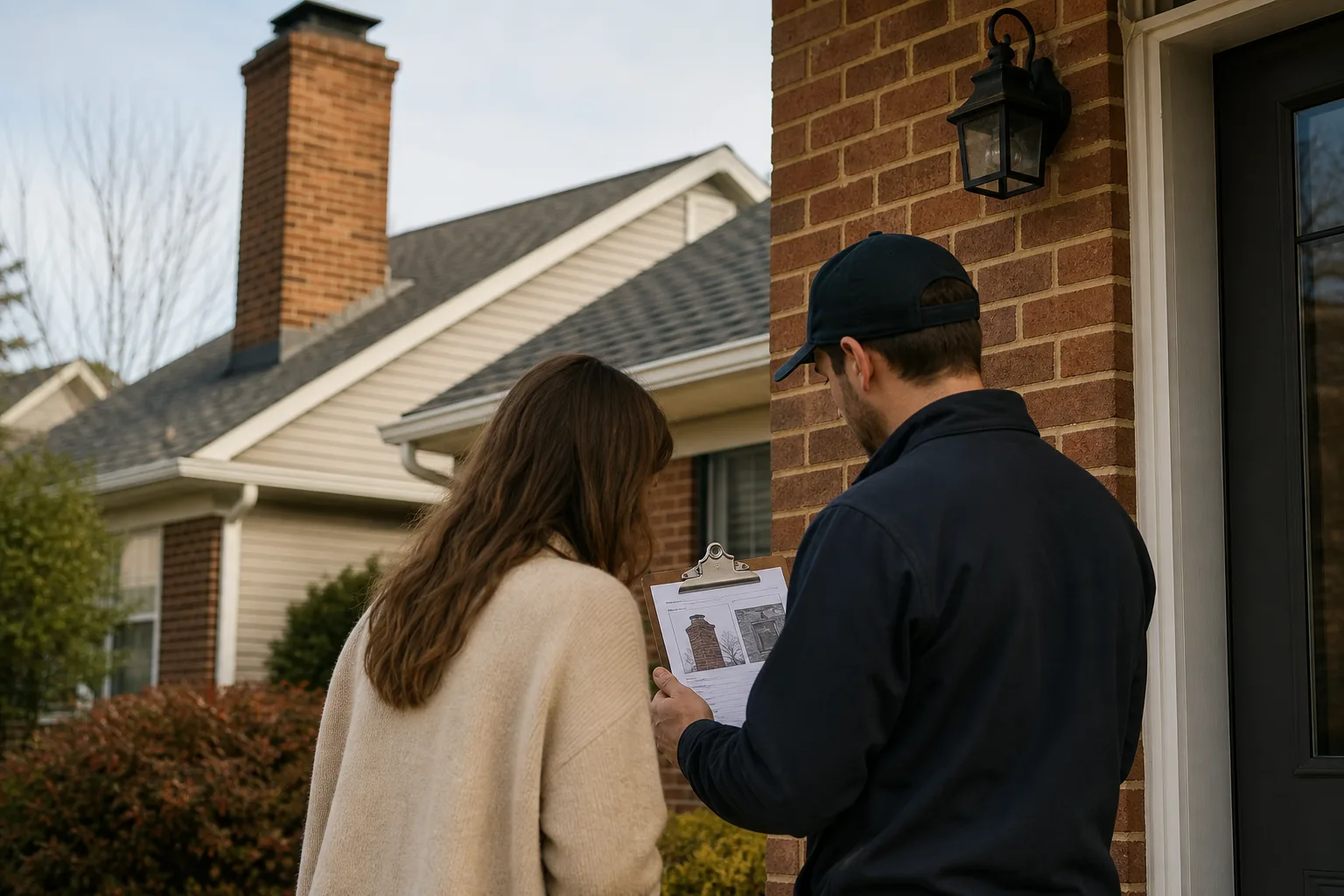
Not sure what you're seeing? Request a visit — free to book, no obligation, and you'll know the stage before the next fire.
One honest caveat: the absence of these signs proves nothing. Plenty of flues with serious buildup look fine from below, which is why annual inspection guidance doesn't say "inspect when you notice something."
What each stage means for urgency
Here's how we'd triage it in your living room:
- Stage 1: schedule normally. Book a sweep at your convenience — before the heavy-burning season starts is ideal. This is maintenance, not an emergency.
- Stage 2: schedule now, and adjust habits. Get the cleaning on the calendar this month, then fix the cause — burn only seasoned wood, keep fires hot and active, and shorten your service interval.
- Stage 3: stop burning entirely. Glazed creosote is dense fuel sitting in the one place a stray spark can reach it. No fire is worth lighting above it. The flue needs professional treatment, and the burning habits that created the glaze need to change, or it will simply come back.
The safety logic is blunt: a chimney fire doesn't announce itself politely. Some roar; many burn quietly, crack the flue liner, and leave the chimney dangerous for every fire that follows.
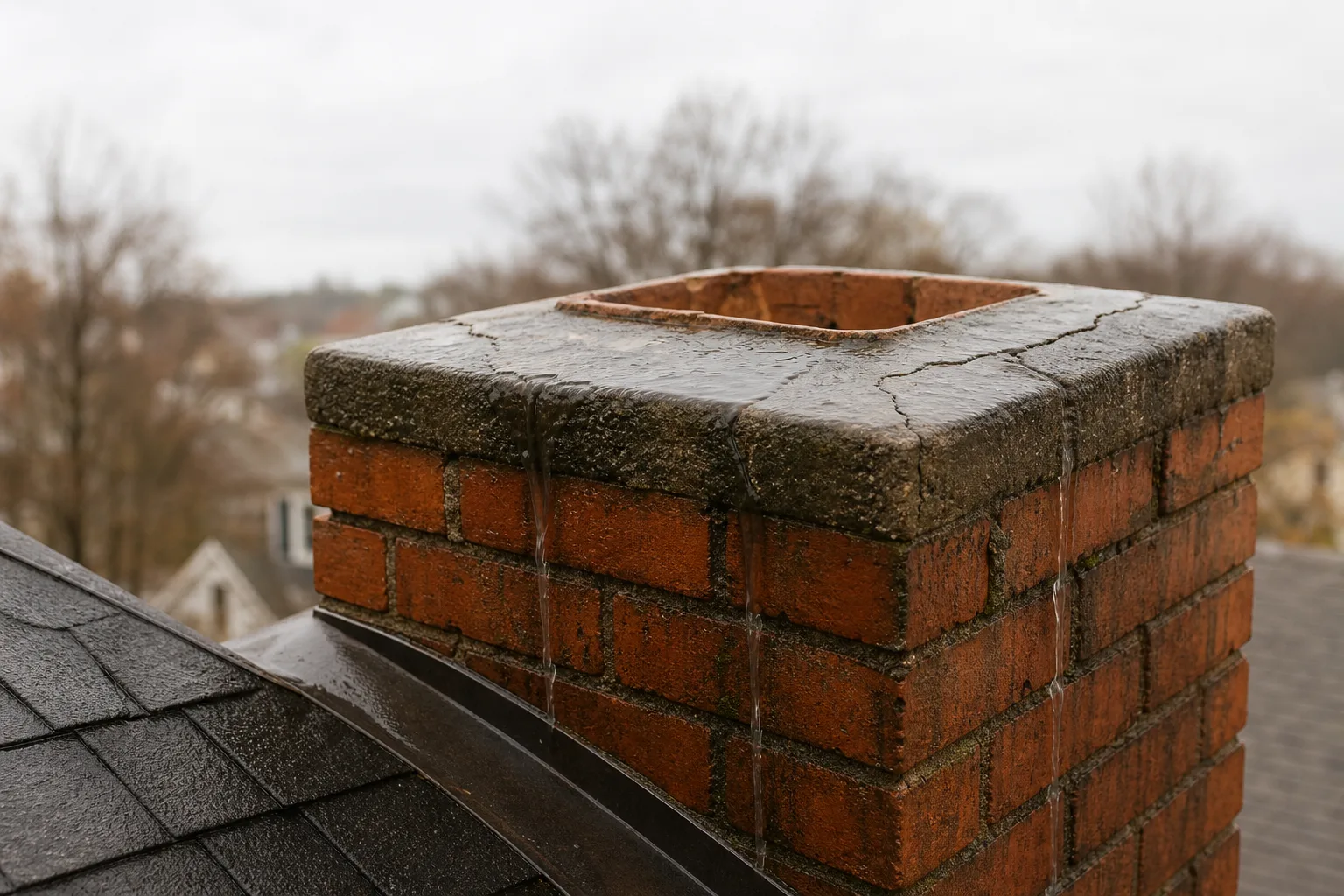
The moisture connection: water makes creosote worse
Creosote has an accomplice most homeowners never suspect: water. The two feed each other, and the loop accelerates both problems:
- Wet wood starts the cycle. Moisture in unseasoned firewood cools the fire and loads the smoke with vapor — exactly the conditions that condense creosote fastest. A single season of wet wood can deposit what several seasons of dry hardwood would.
- A leaky top end soaks the deposits. Rain entering through a missing cap or cracked crown lands on the smoke shelf and flue walls, where it soaks into whatever creosote is already there. The result is an acidic sludge that clings harder, smells stronger, and is measurably nastier to remove.
- Creosote holds moisture against the masonry. Damp deposits keep flue walls wet between fires, and wet, acidic creosote slowly works on mortar joints and clay tile from the inside. Water damage and heavy buildup turn up together in the same flues for exactly this reason.
- Humidity broadcasts the evidence. That campfire smell on muggy days is humid air activating the deposits — one of the most reliable creosote buildup signs a homeowner can catch without any tools, and a useful warning that buildup has passed "trace."
The practical takeaways are simple: burn only seasoned wood, and treat the cap and crown as part of your creosote strategy rather than a separate roofing concern. If the chimney smells stronger after rain, or you've noticed signs of water getting in, have both looked at in one visit — they're usually related, and fixing the water half makes the cleaning half last longer.
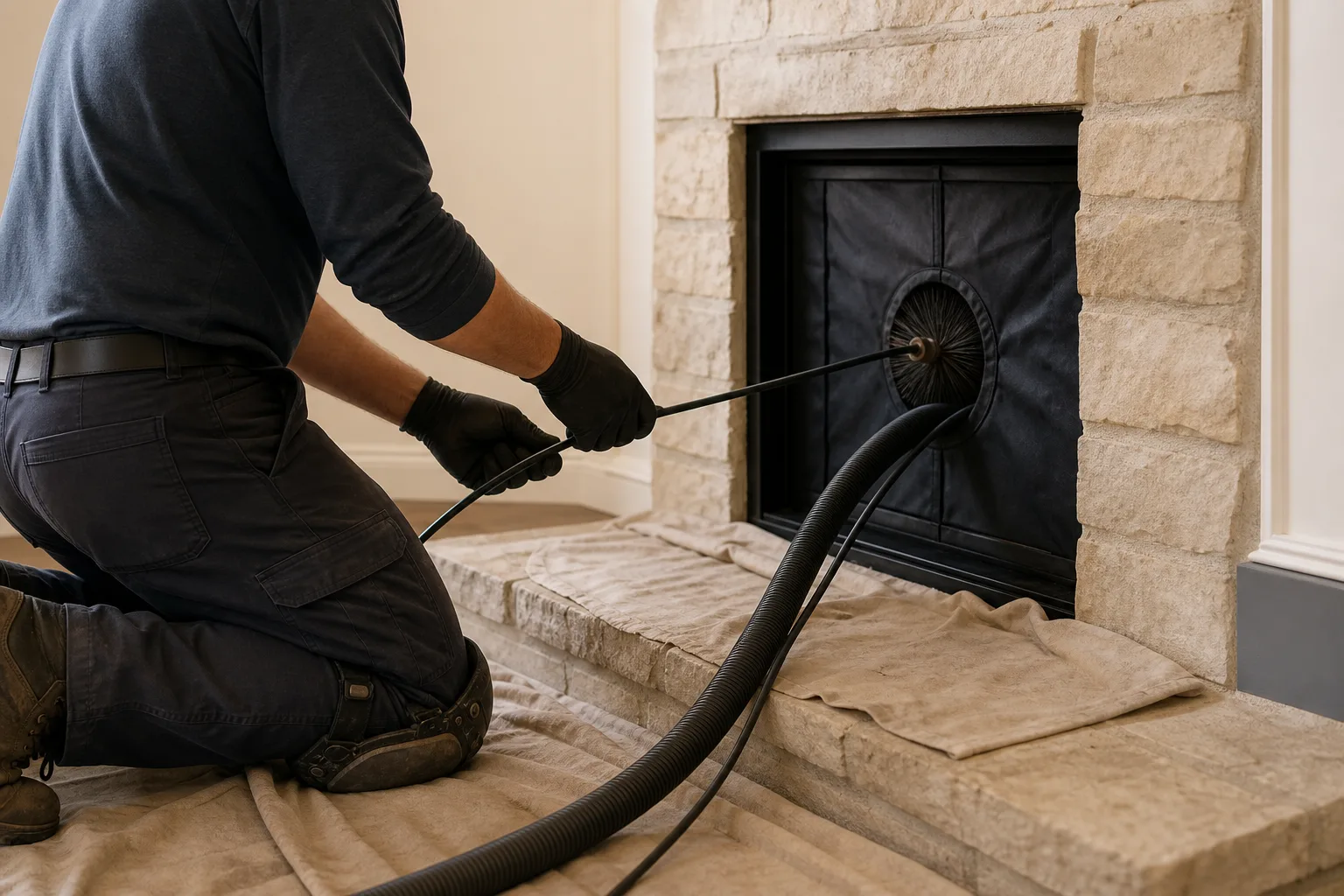
How the pros in our network remove creosote at each stage
Removal is matched to the stage, which is why the inspection comes first:
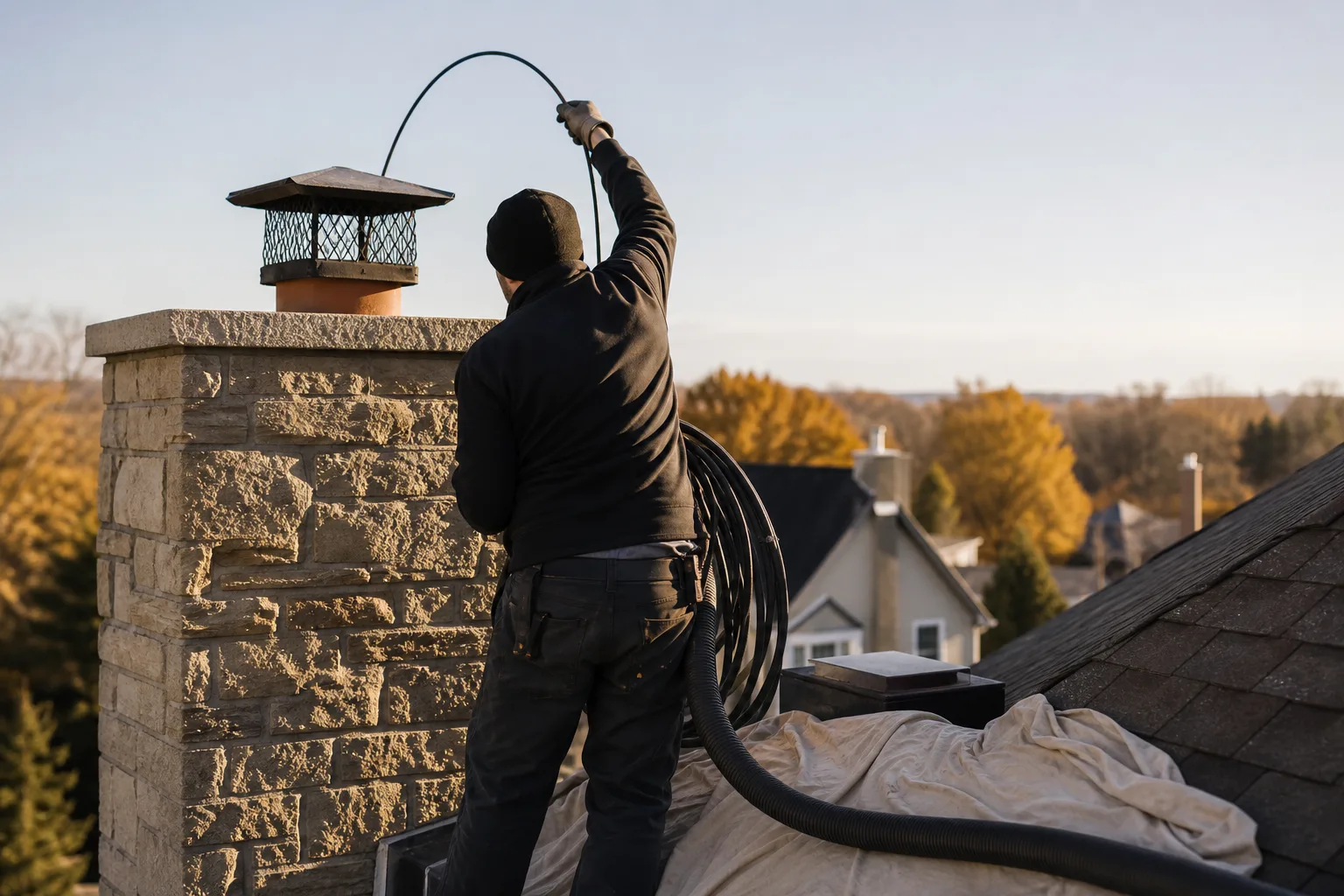
- Stage 1 comes off with standard sweeping — rods and brushes sized to your flue, with the firebox sealed and a HEPA vacuum controlling dust. Quick, tidy, routine.
- Stage 2 takes firmer mechanical work and sometimes specialty brush heads to break the flake layer, plus a careful look at why buildup ran ahead of schedule.
- Stage 3 is its own discipline. Glaze bonds to the liner, so we use professional-grade treatments and tools designed to break it down without damaging the flue, and afterward, a camera check confirms what condition the liner is actually in underneath.
After any cleaning, you should hear two things from us: what stage we found, and what will keep you at stage 1 from now on. That second part is the one that saves you money every year after.
Symptom checker
What is your chimney doing?
Tap the closest match for an honest first answer.