



Quick answer
A Level 2 inspection adds a video scan of the entire flue interior plus accessible attic, crawlspace, and roof areas to the standard visual check. NFPA 211 calls for it at every property sale or transfer, after any chimney fire or weather event, and whenever the system changes (new liner, new appliance, fuel switch).
Chimney inspections come in three levels defined by NFPA 211, the national standard for chimneys, fireplaces, vents, and solid fuel-burning appliances. Level 1 is the routine annual look. Level 2 is the one real estate agents, insurance adjusters, and code officials ask for, because it puts a camera inside the flue and documents what's there in writing. Level 3 is invasive and rare.
If you're buying a house with a fireplace, a Level 2 chimney inspection is the only level that shows you what the inside of the flue actually looks like — from the smoke chamber up to the top of the crown — before you own the repair bill.
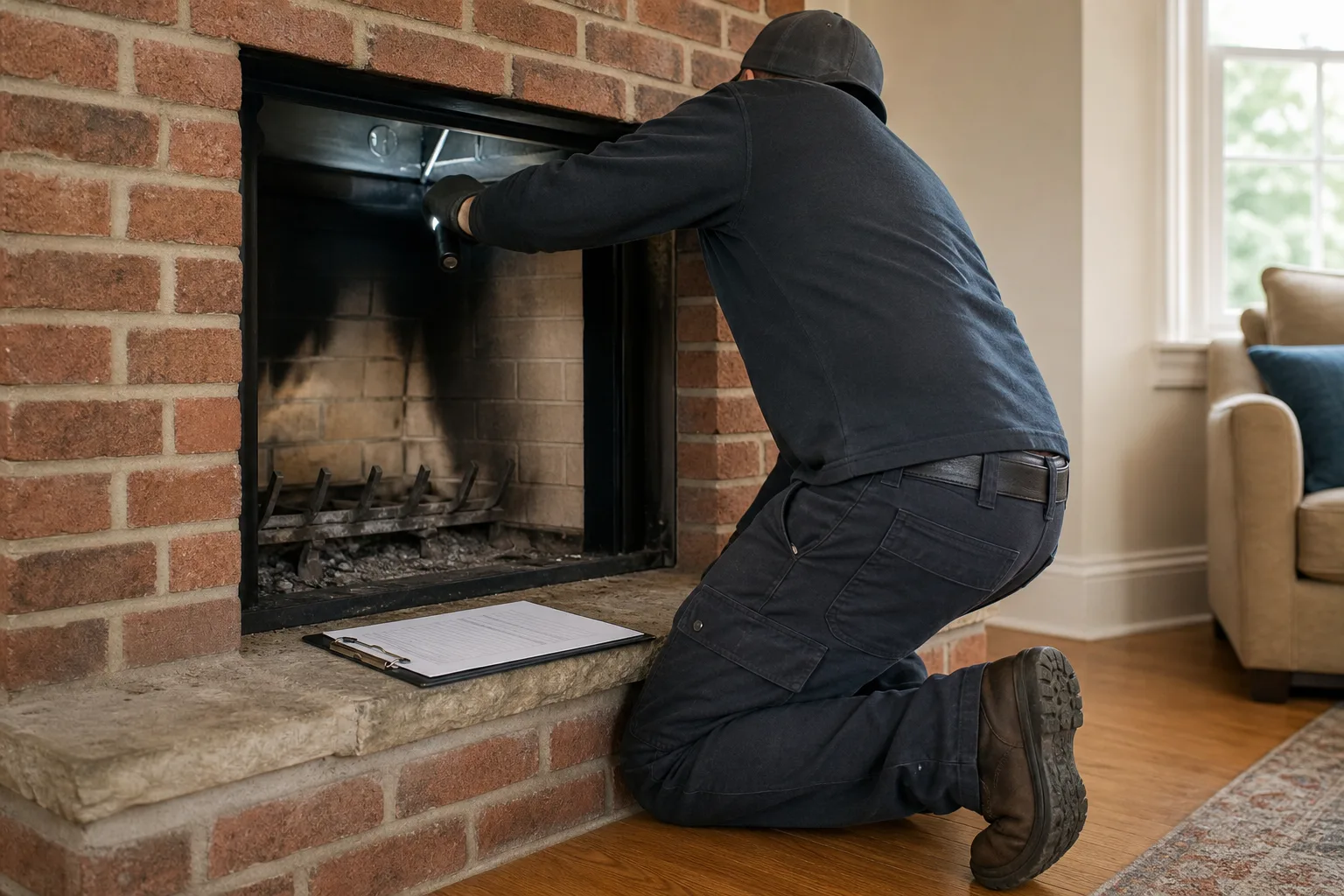
Level 1 vs. Level 2 vs. Level 3
| Level | What's examined | When it's called for |
|---|---|---|
| L1 | Visual check of readily accessible interior and exterior surfaces — firebox, damper, visible flue, cap, crown. | Annual maintenance with no changes to the system and no known problems. |
| L2 | Everything in Level 1 plus a video scan of the full flue interior and accessible attic, crawlspace, and roof areas. Written report. | Property sale or transfer, after a chimney fire or severe weather, or any change to the system. |
| L3 | Everything in Level 2 plus removal of building components (walls, chimney sections) where hidden hazards are suspected. | Only when L1/L2 findings indicate a concealed hazard that can't be evaluated otherwise. |
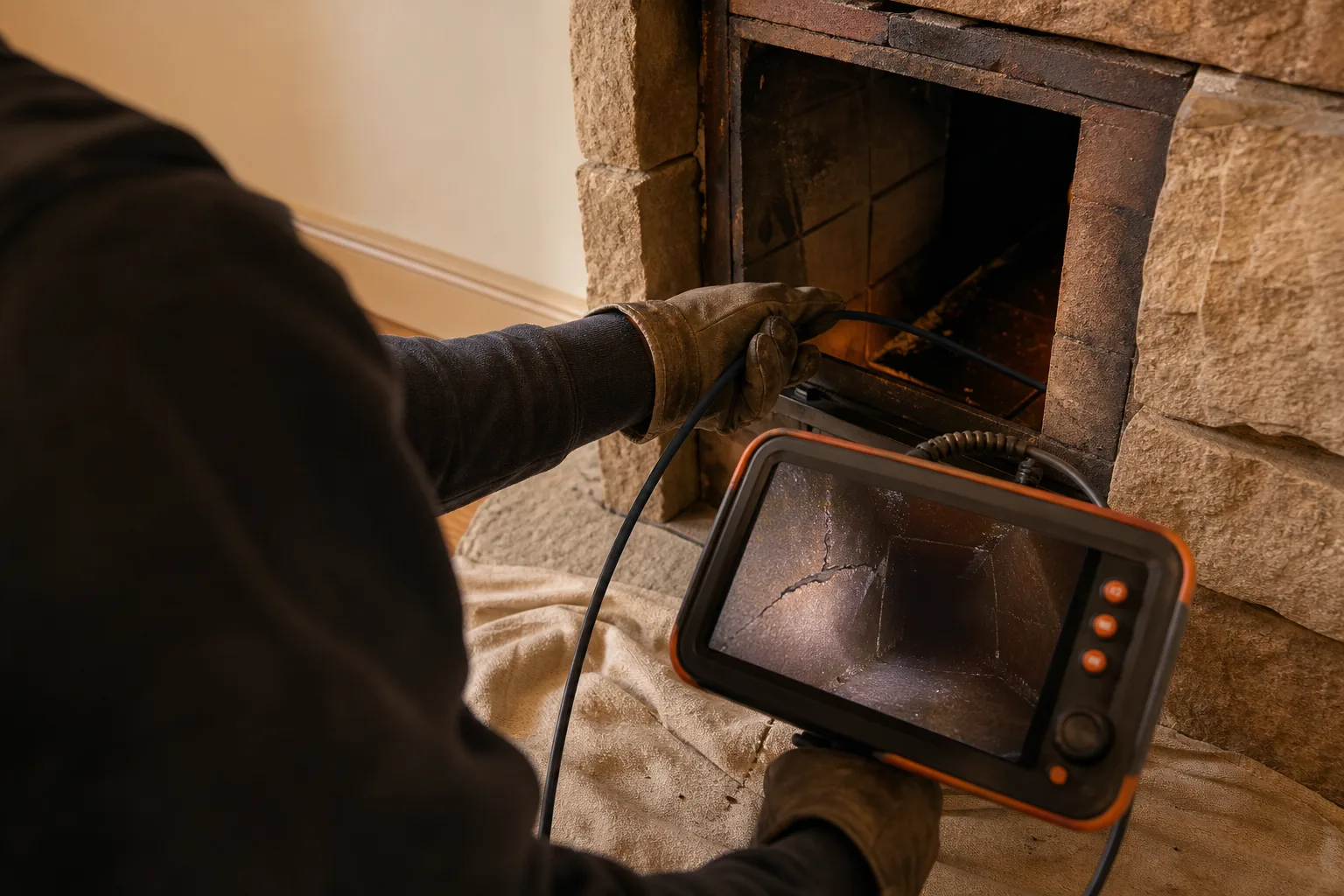
What the video scan catches that eyes can't
- Cracked or shifted flue tiles: invisible from below, and the most common serious finding in older clay-tile flues.
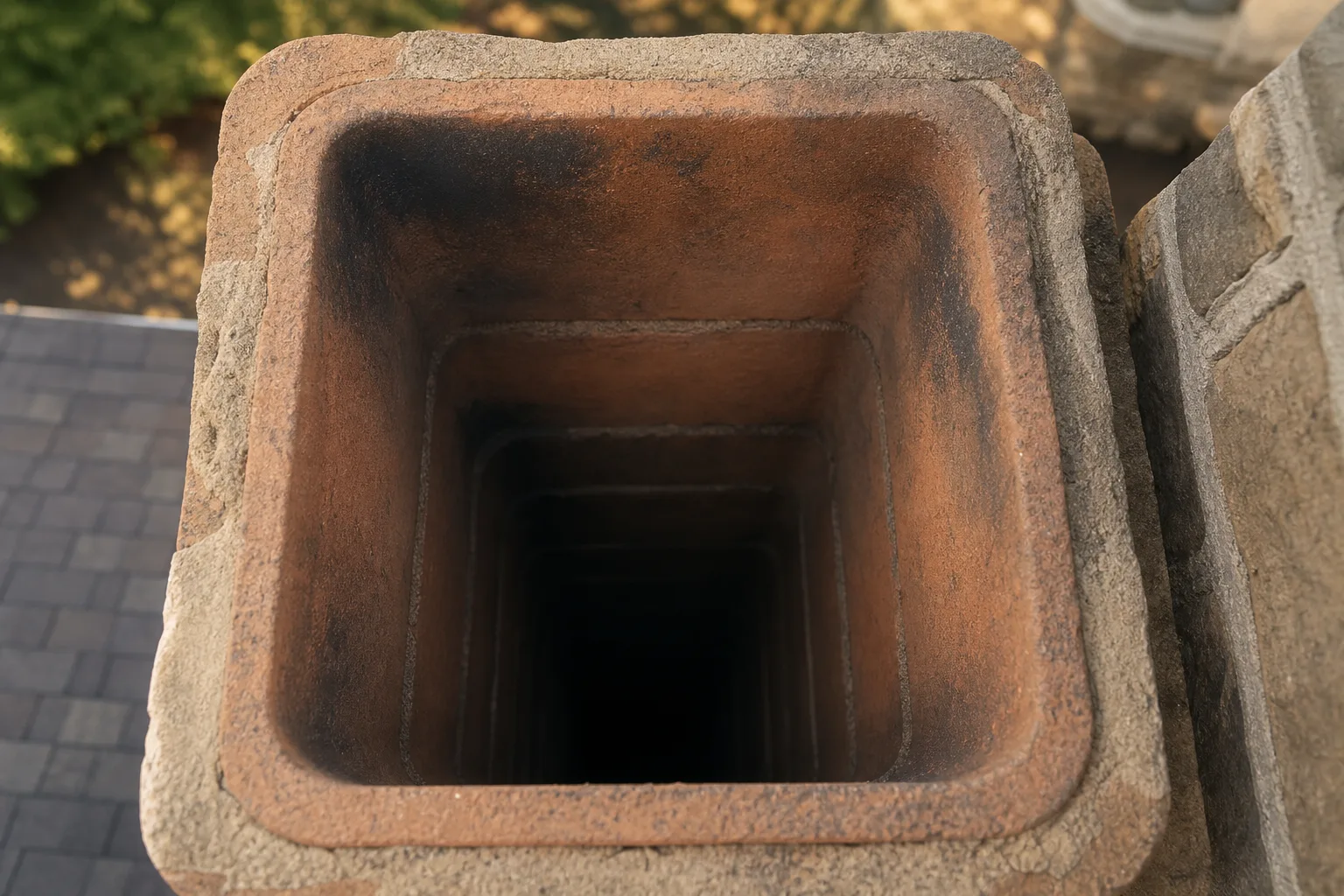
- Flue-fire glazing: shiny hardened creosote that signals a past chimney fire the seller may not even know about.
- Missing mortar joints: gaps between tiles that let heat and gases reach framing — a fire path you can't see.
- Offsets and blockages: nests, collapsed sections, or construction debris deep in the flue.
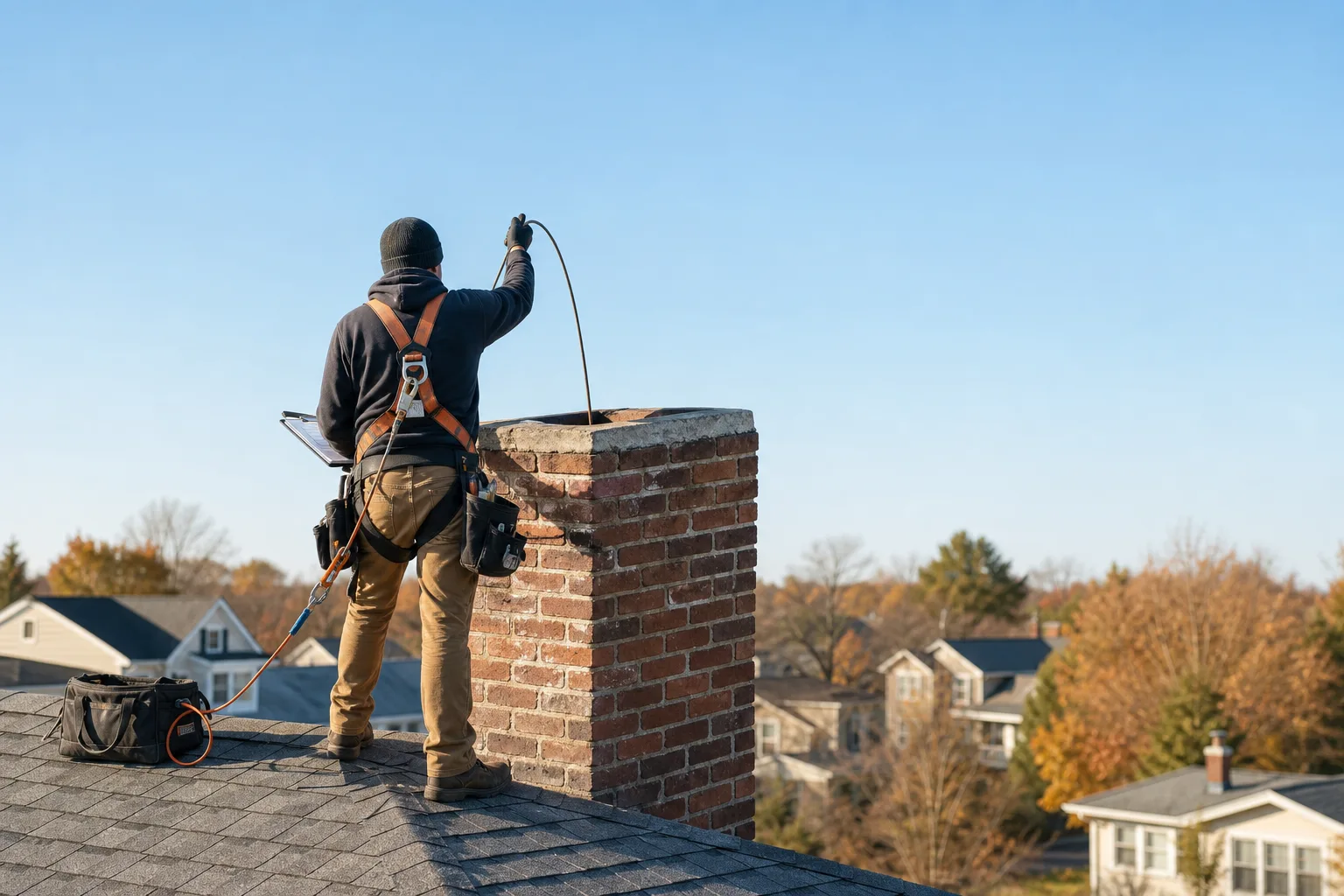
What a Level 2 chimney inspection includes, step by step
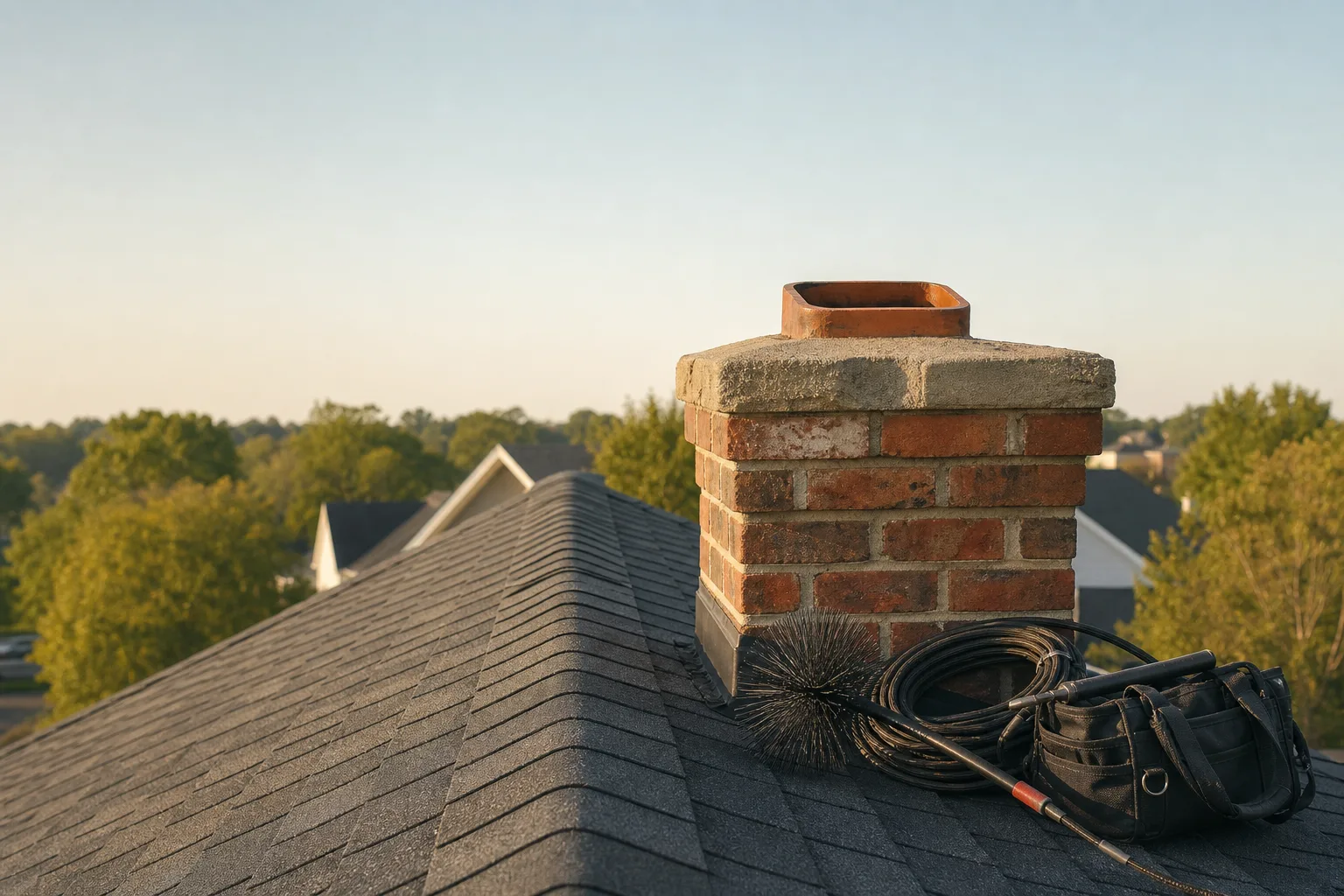
- Exterior and roof. Crown condition, cap and spark arrestor, flashing seal, chase cover on prefab chimneys, brick and mortar joints, and how far the chimney rises above the roofline (the 3-2-10 rule: at least 3 feet above its own roof penetration and 2 feet higher than anything within 10 feet).
- Firebox and smoke chamber. Firebrick and refractory panel cracks, damper operation and seal, hearth extension size, and clearance from the opening to any combustible mantel or trim.
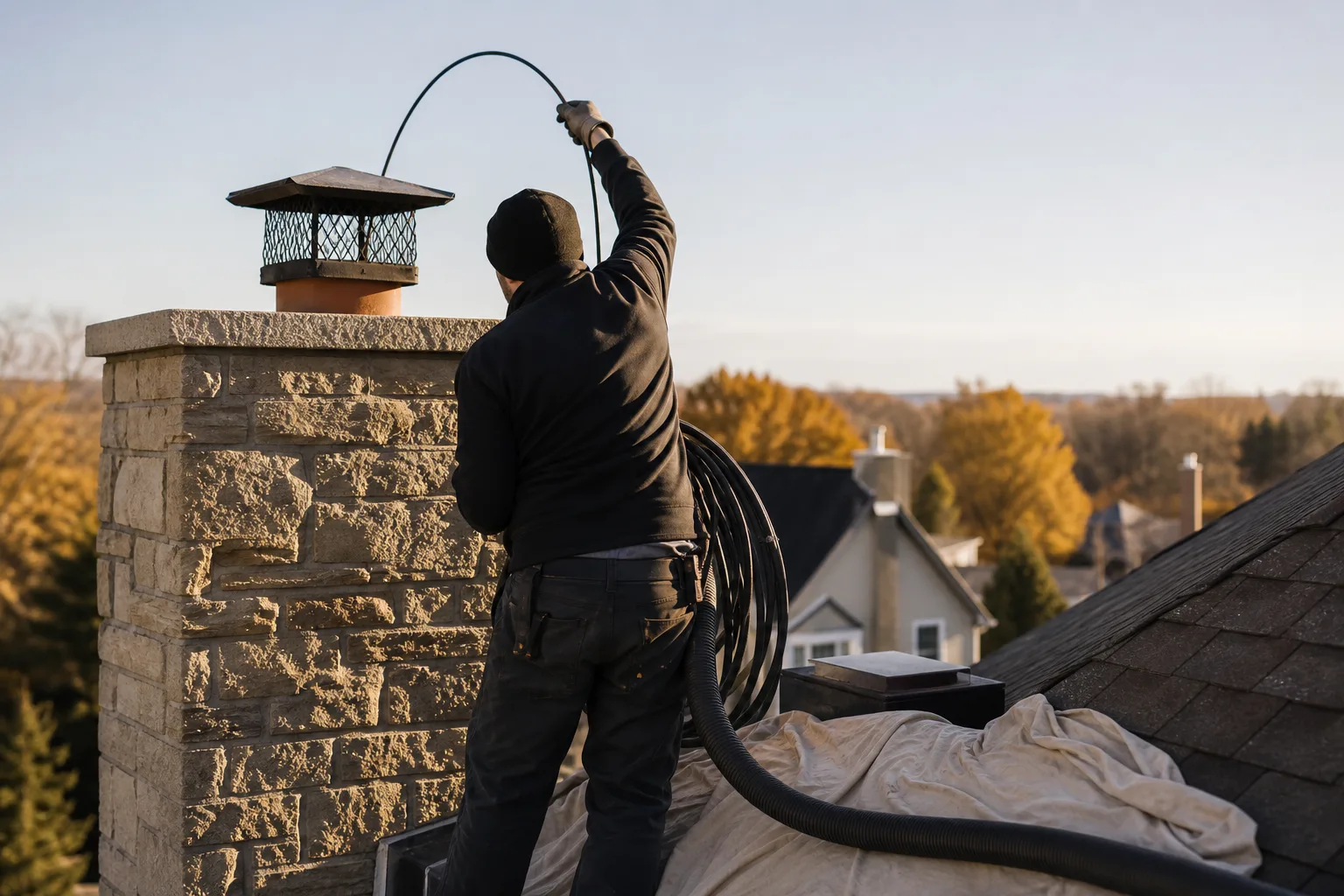
- Full flue camera scan. A closed-circuit camera runs the entire flue, usually from both the bottom and the top, recording every joint. On a wood-burning flue we look for tile cracks, gaps, glazing, and liner separation; on a gas or oil flue we also look for scaling and condensation damage.
- Attic, crawlspace, and accessible concealed areas. We check where the chimney passes through framing for scorching, staining, and clearance to combustibles — 2 inches for masonry chimneys and 1 inch for factory-built units, unless the manufacturer says otherwise.
- Appliance and connector. Liner size versus the appliance it serves, connector pitch and support, and shared-flue violations (a furnace and a wood stove should never vent into the same flue).
- Written report. Photos, video stills, flue-by-flue findings, and a plain-language list of what needs fixing.
Budget 60 to 90 minutes for a single flue and another 20 to 30 minutes for each additional flue. If the flue is heavily sooted, it has to be swept first — a camera can't see through a quarter inch of creosote.
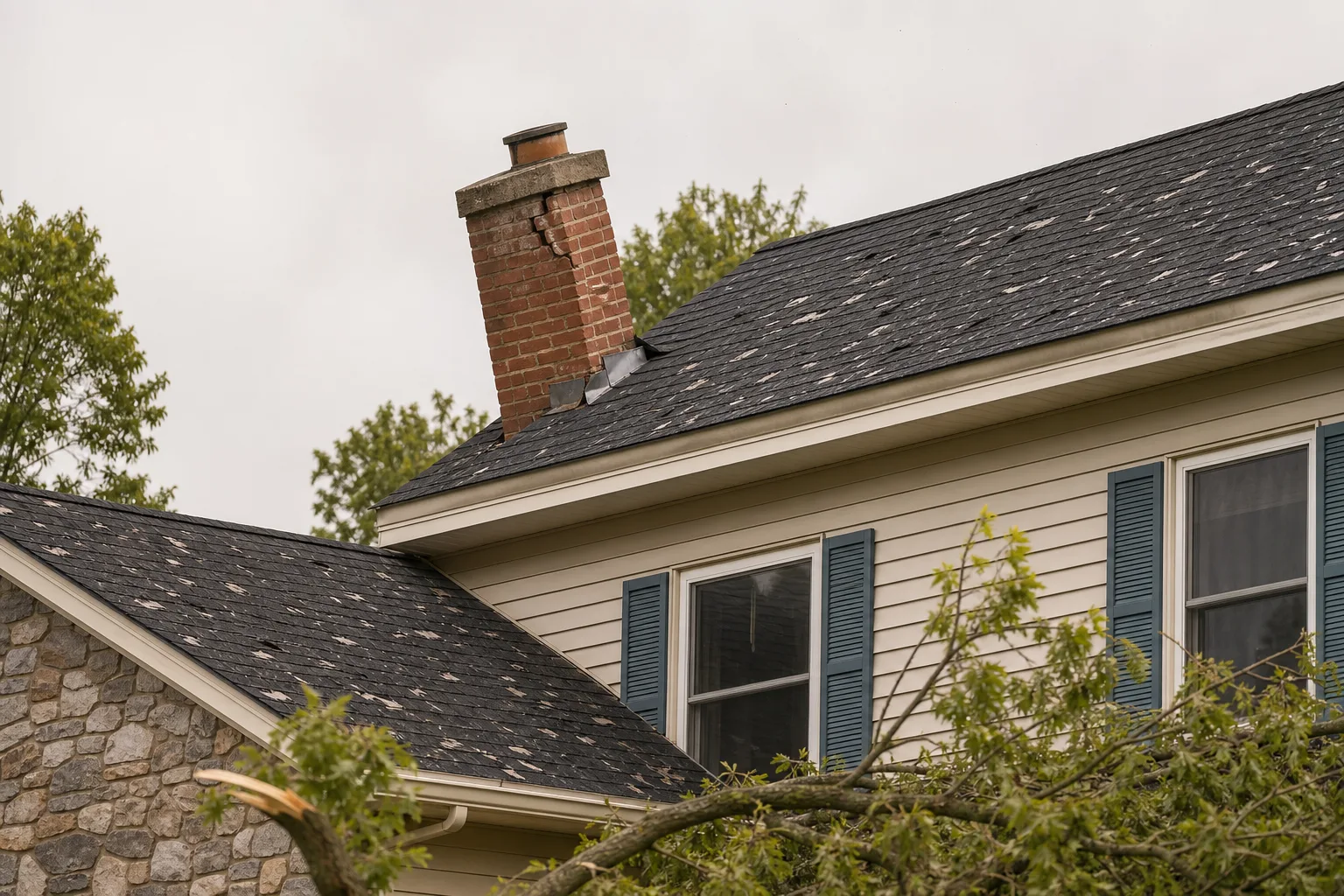
When NFPA 211 calls for one
- Sale or transfer of the property. This is the big one, and it applies to every fireplace and every flue in the house, not just the one in the living room.
- After a chimney fire, lightning strike, earthquake, hurricane, tornado, or hail event.
- Any change to the system: a new liner, a new insert or stove, a fuel switch from wood to gas, or a change in appliance size or BTU input.
- When a Level 1 turns up something questionable the technician can't fully evaluate from the outside.
- When an insurer or municipality requires documentation after a claim or before a permit sign-off.
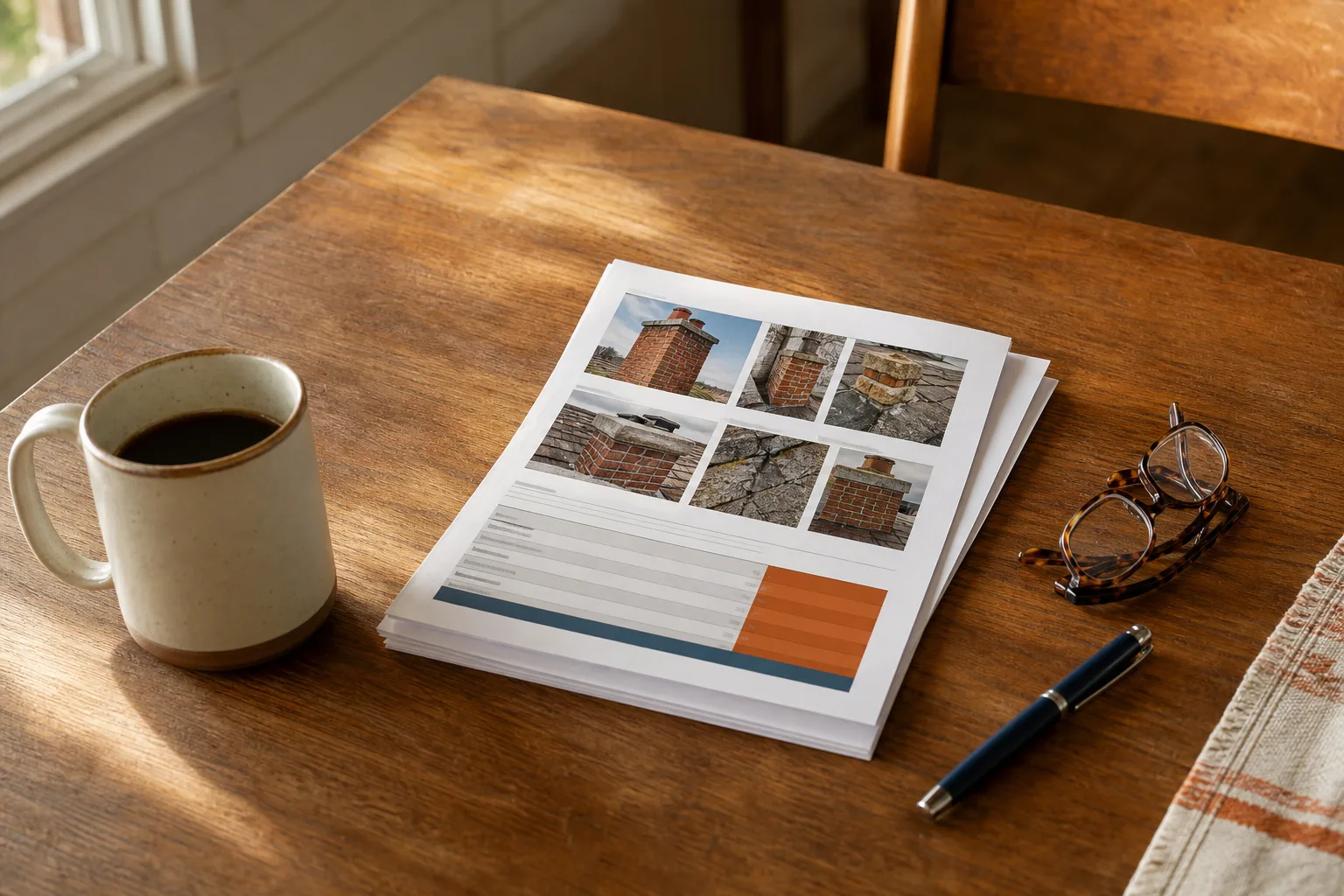
What a Level 2 chimney inspection costs
The price depends on the number of flues, the height and pitch of the roof, and whether the flue needs sweeping before the camera can see anything, and you get it in writing first. Ask up front whether cleaning is included, whether you get the video file, and whether the technician is CSIA- or NFI-certified.
Repairs that commonly show up in the report: crown resurfacing, new flashing, a stainless steel relining, or rebuilding the chimney above the roofline. Knowing what the report found before closing is exactly why the inspection is worth ordering early in your contingency window.
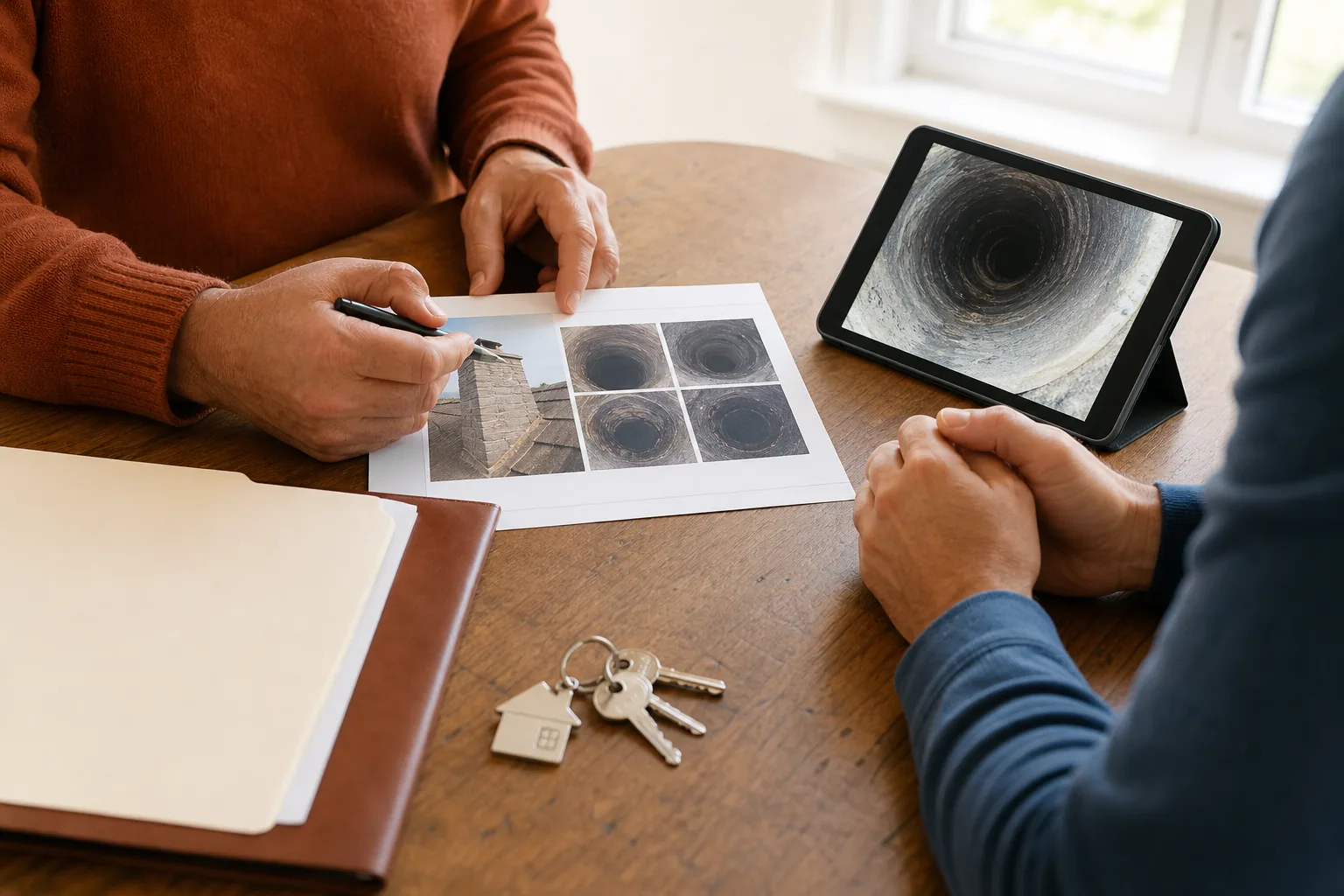
Reading the report before you close
A useful report separates safety-critical defects — anything that can leak carbon monoxide or expose framing to heat — from cosmetic and maintenance items. Look for photo evidence tied to each finding, the code or standard being cited, and a repair estimate you can hand to the seller. If the report says "do not use until repaired," treat that as binding: a compromised flue is a carbon monoxide and house-fire risk, not a bargaining detail.
Symptom checker
What is your chimney doing?
Tap the closest match for an honest first answer.