Cleveland, Ohio · 74 ZIP codes
Chimney Sweep in Cleveland, OH




- License & insurance checkedBefore a pro joins the network
- Upfront estimatesIn writing, before any work
- Complaints go to a personAnd can remove a pro from the network
- NFPA 211 standardsThe inspection benchmark we point to
The short answer
Half the flues in this city are the wrong size for what is venting into them. A sweep that does not mention it has not looked.
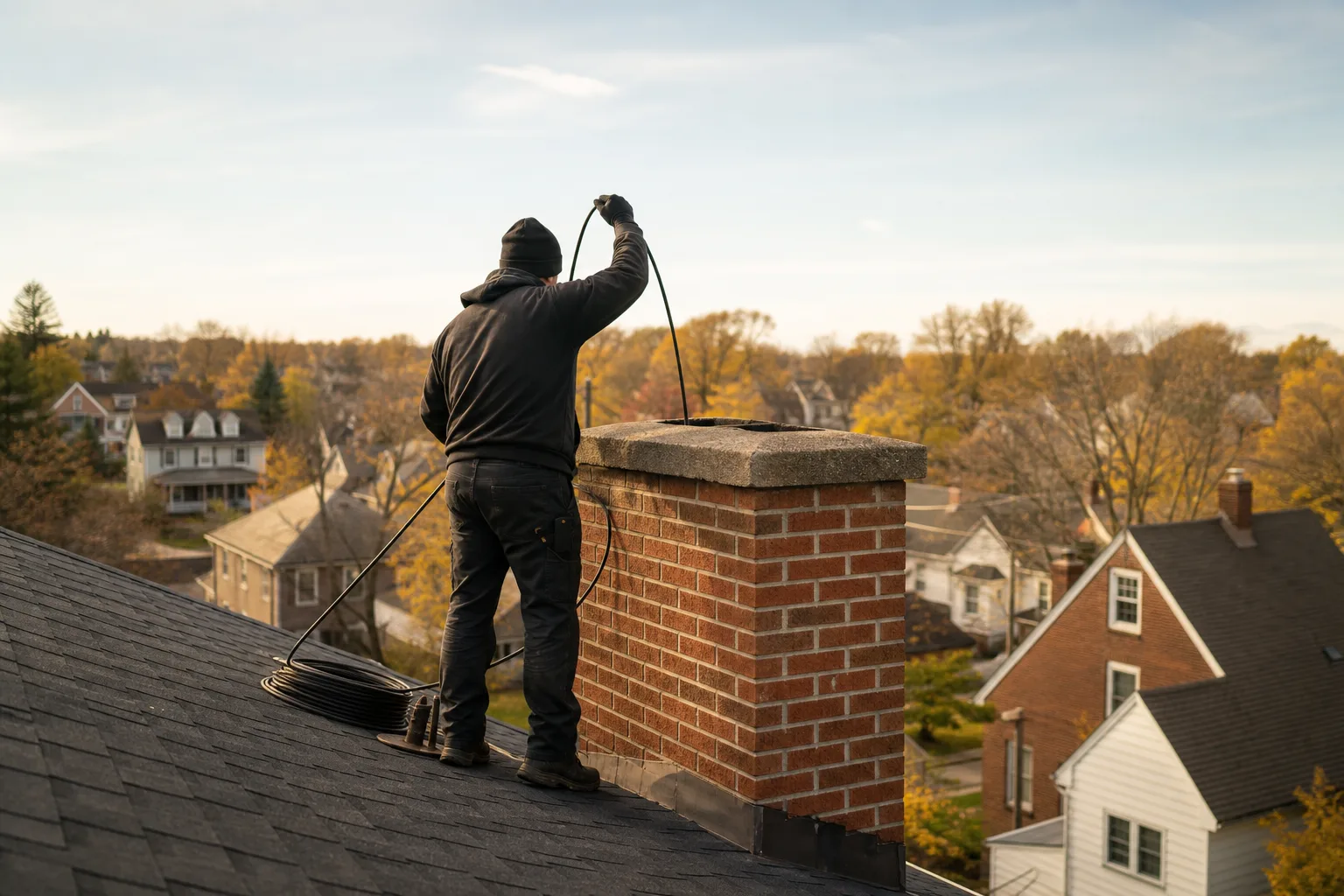
A chimney sweep in Cleveland covers the same core work as anywhere: brushing the flue to bare tile, clearing the smoke chamber and firebox, and the liner checked on the way down. But the housing stock changes what that work finds. Cleveland has one of the oldest housing stocks in the country, most of it built when the furnace burned coal and vented into a wide masonry flue. When those houses were converted to gas, the appliance changed and the flue did not. An oversized flue runs cool, the exhaust condenses on the way up instead of leaving, and the liner deteriorates from the inside while the fireplace above it looks fine. That is the fault a Cleveland sweep should be looking for, and it is the one a fifteen-minute brush-and-go will never see.
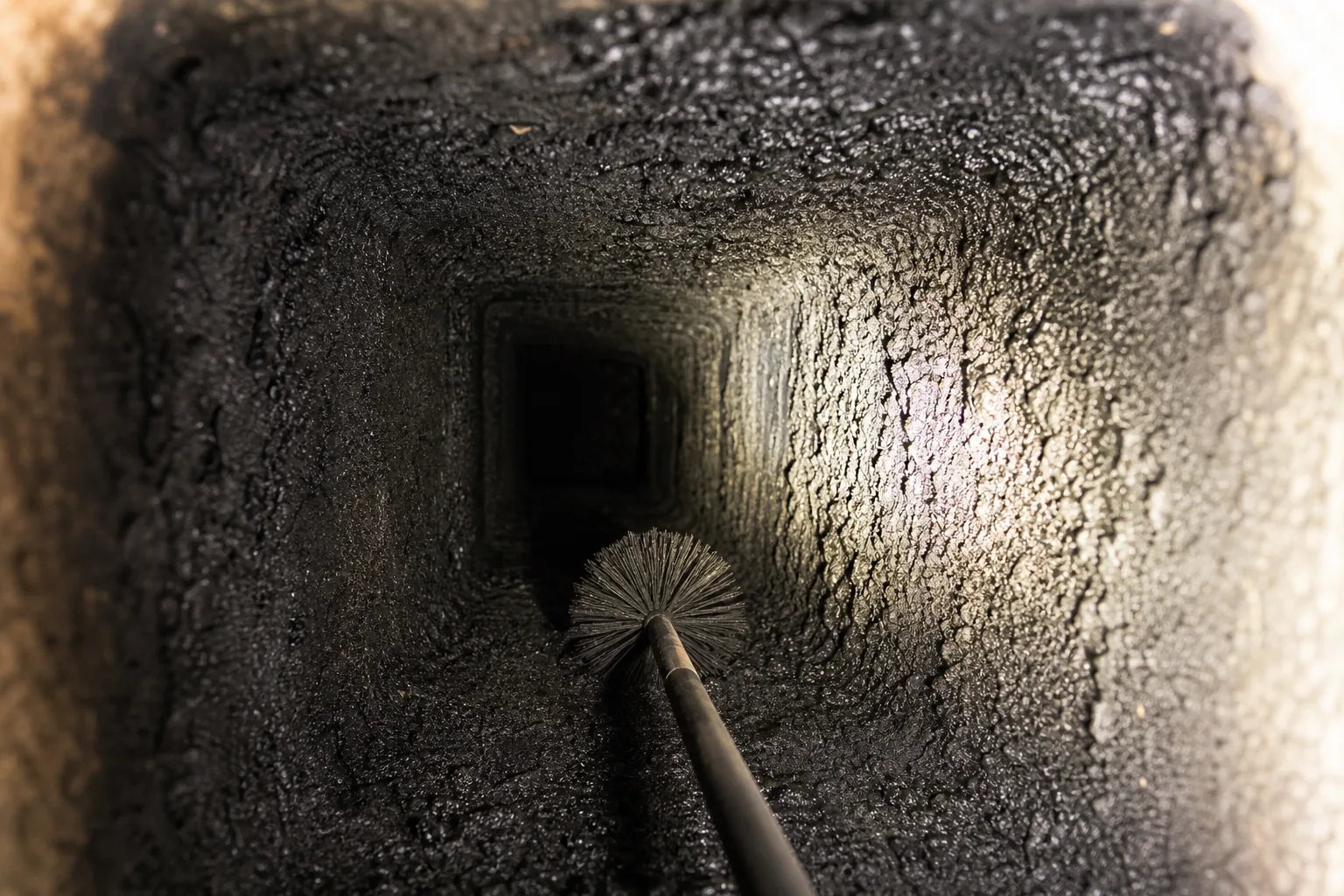
A liner that failed from the inside
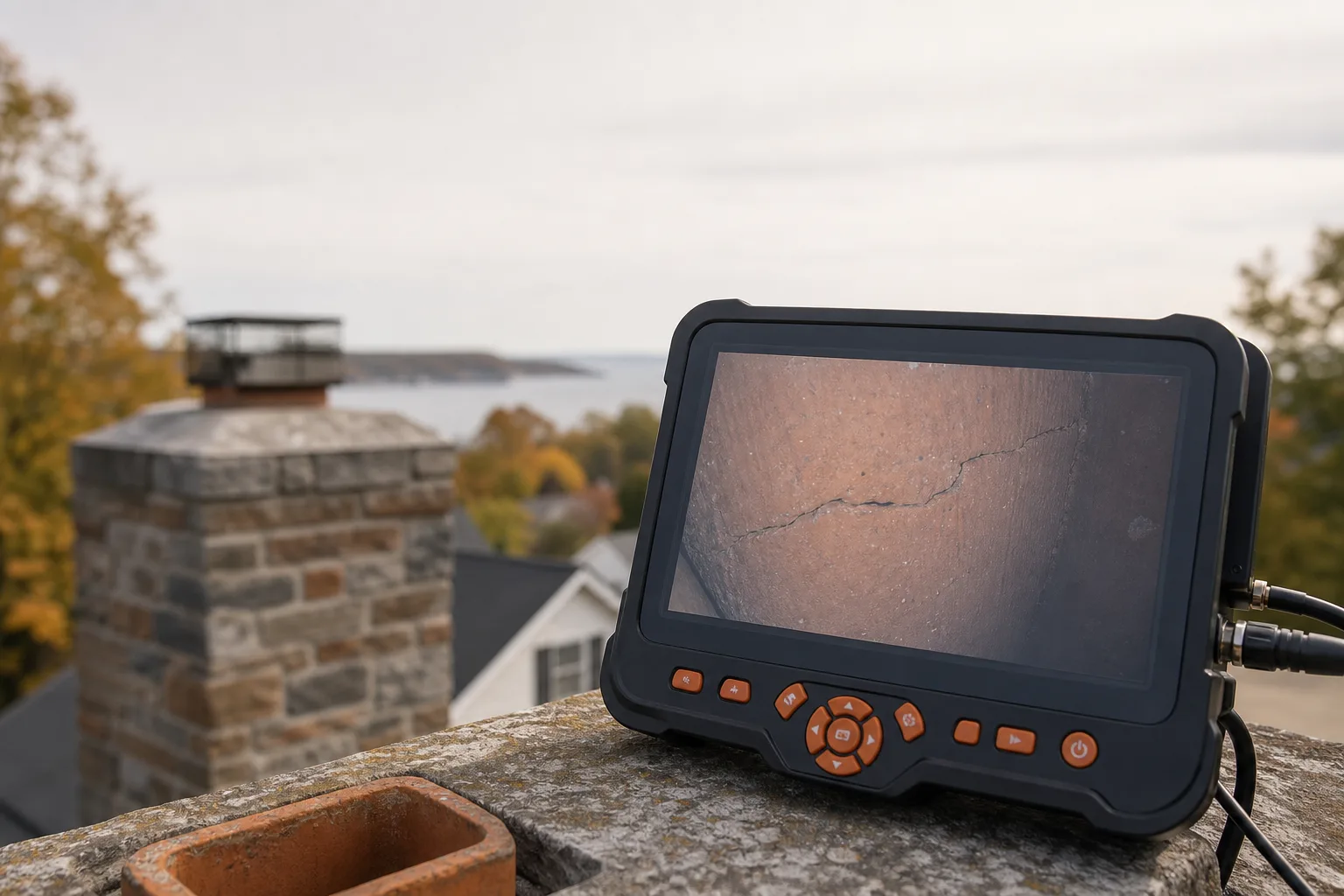
Condensation in an oversized coal-era flue attacks the tile from within. The firebox below it can look perfect the whole time.
Local conditions
What Cleveland weather does to a flue
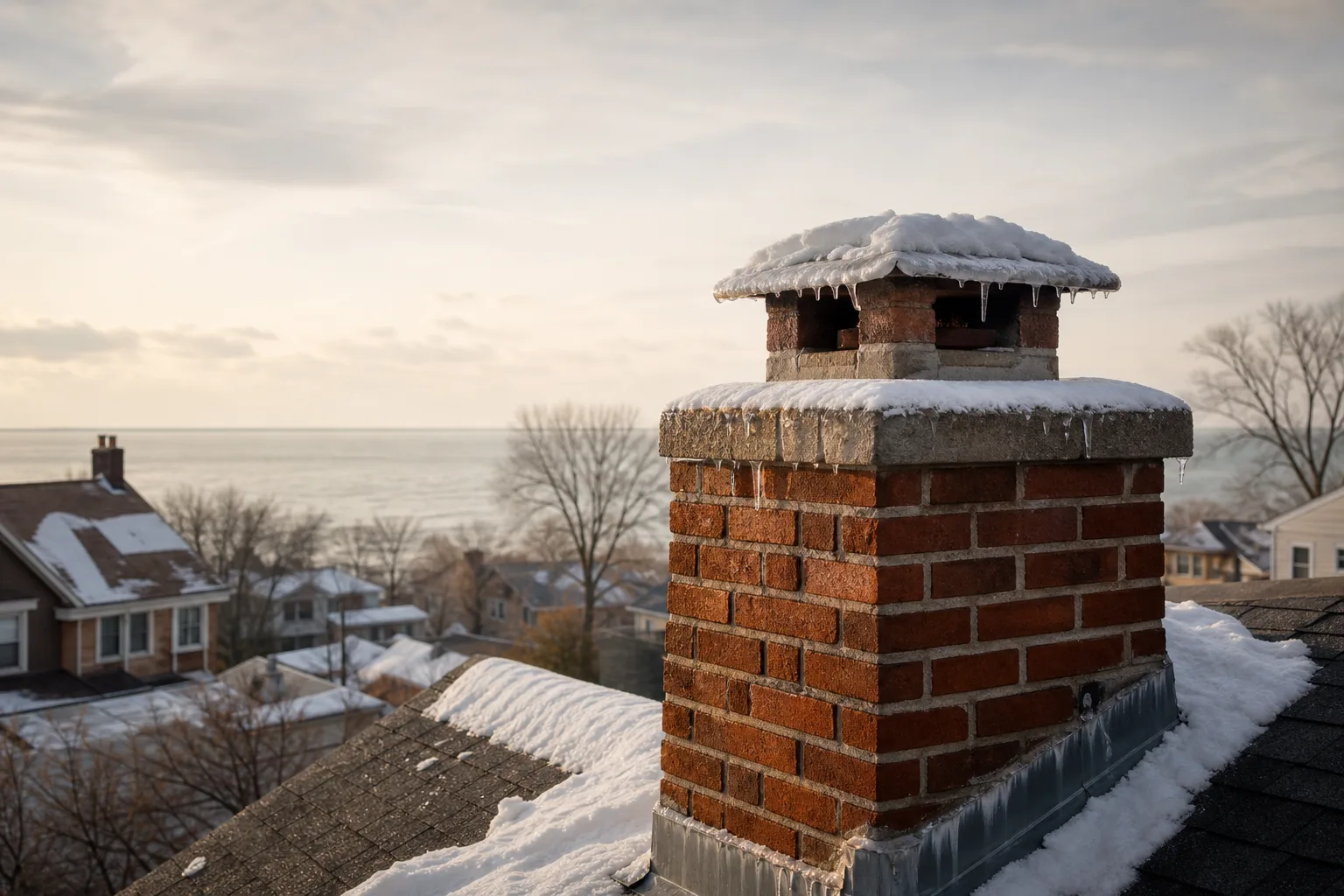
More moisture than anywhere inland
Cleveland sits under the Lake Erie snow belt. Wind-driven wet snow gets into crowns and open flues that a drier climate would forgive, and every gallon that goes in has to leave, usually through the masonry.
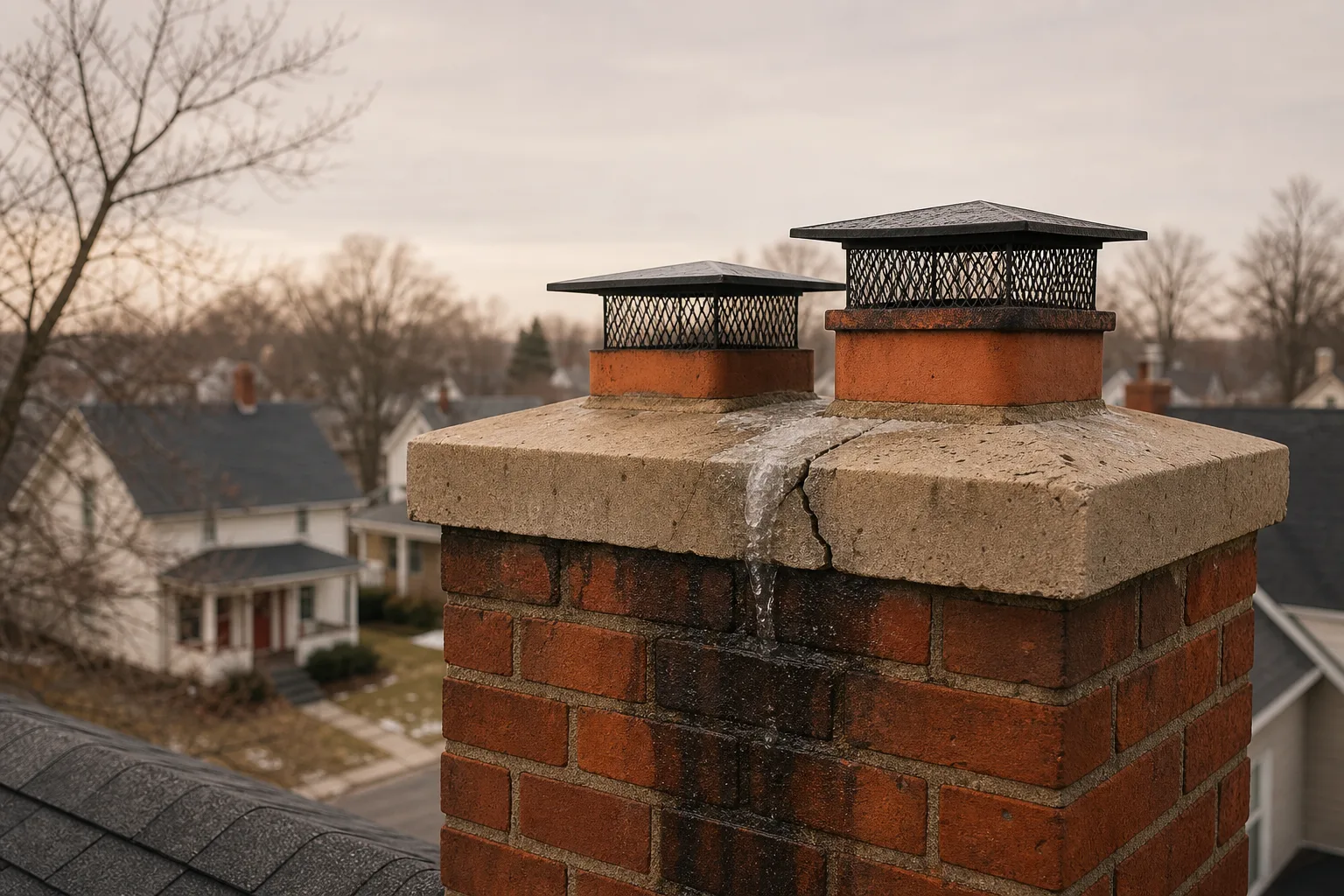
Dozens of crossings per winter
Northeast Ohio crosses freezing repeatedly rather than staying cold. Water that soaked into brick during a thaw expands the next night, and the tile inside the flue takes the same treatment as the brick outside it.
October to April, every year
A Cleveland fireplace runs roughly six months. That is well above the national average burn hours a maintenance interval is usually written around, which is why annual is a floor here rather than a suggestion.
The housing stock
Why a Cleveland chimney sweep is a different job
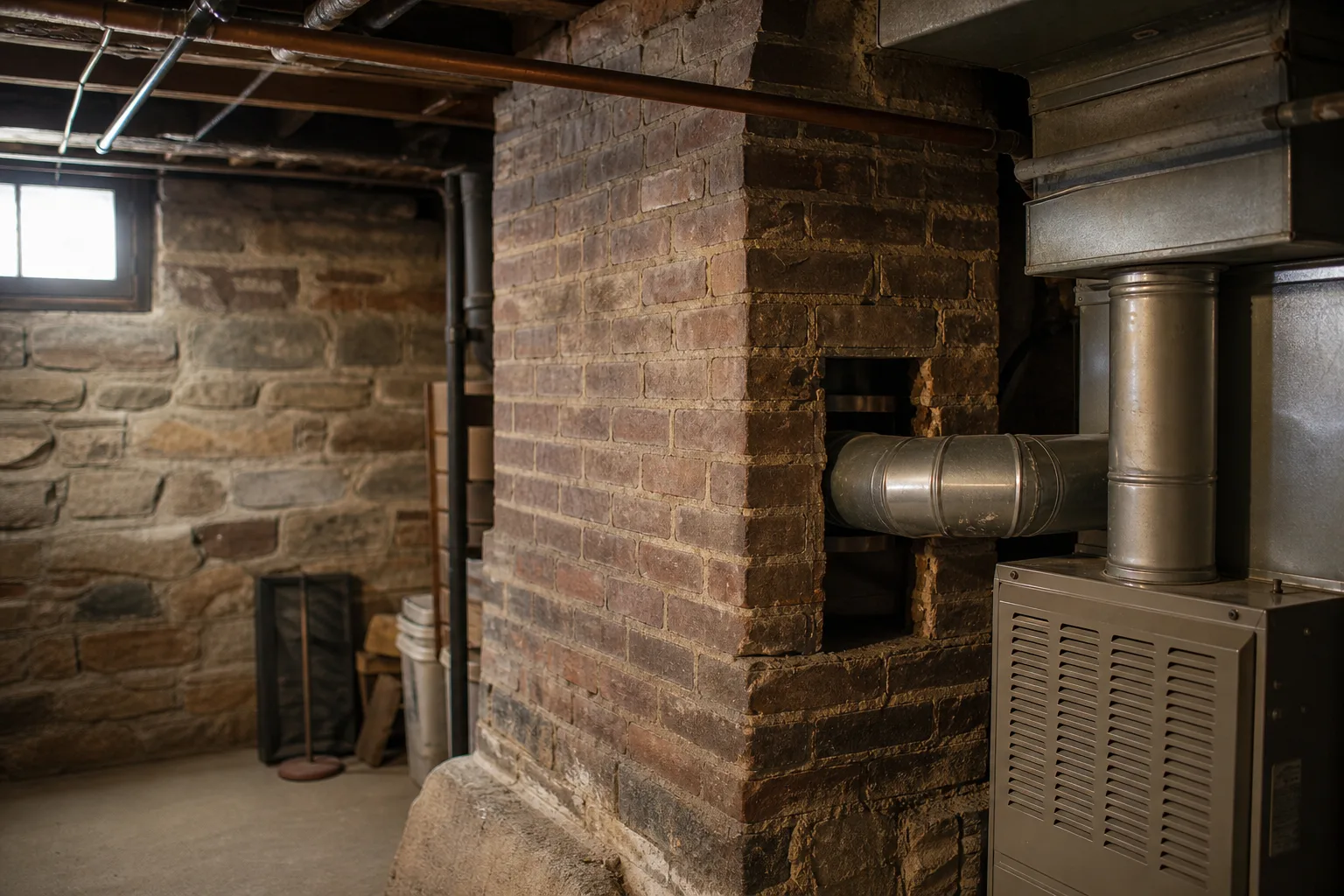
Coal-era flues venting modern appliances
The defining fault of this city's housing. A flue sized for a coal furnace is enormous compared with what a modern gas appliance needs. Exhaust moves slowly through that volume, cools below its dew point, and condenses as a mildly acidic liquid that eats clay tile and mortar from the inside out. The fireplace above can be spotless while the flue serving the basement is failing. We find it constantly, and almost never on a job where the previous sweep left a receipt and nothing else.
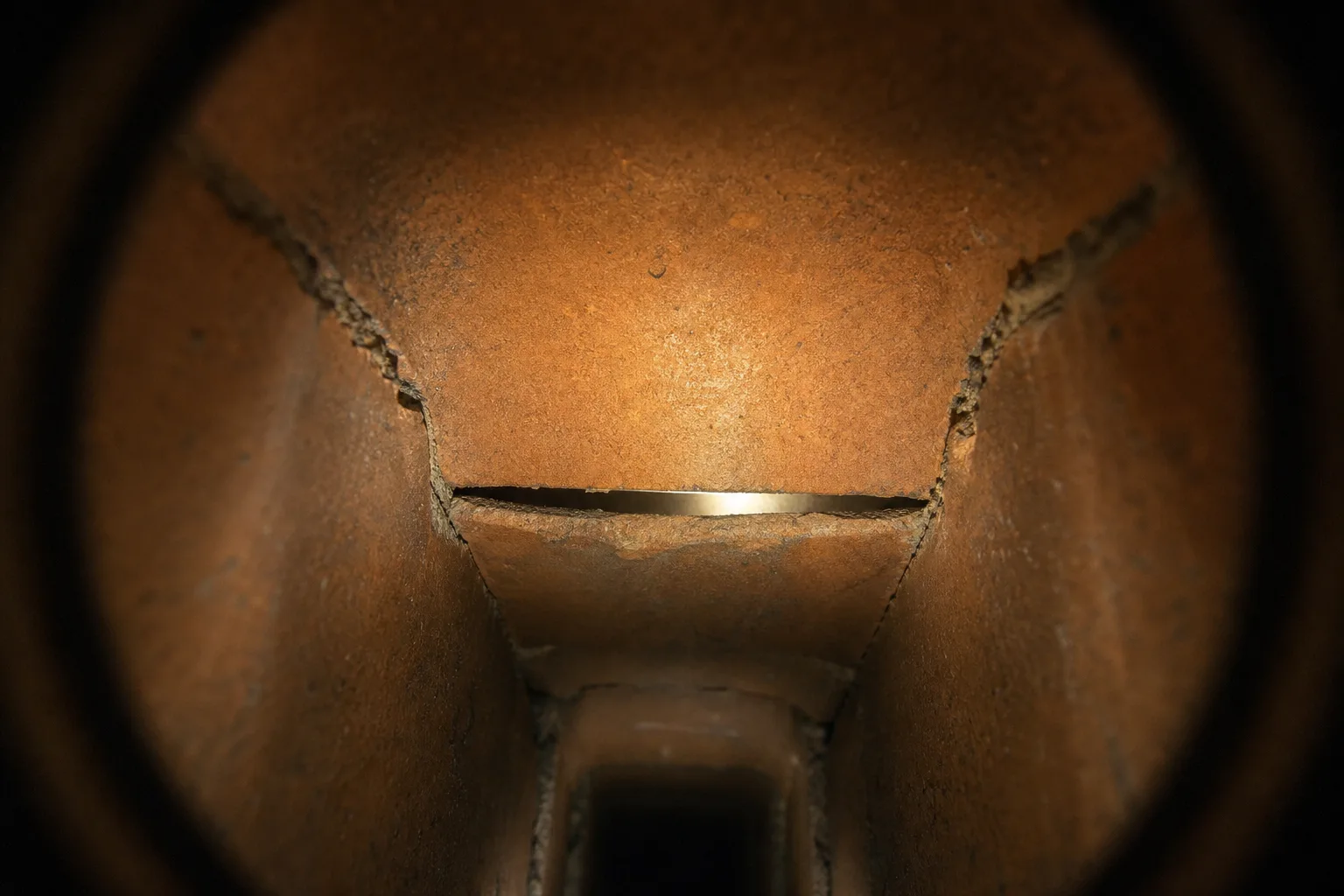
Clay tile laid before anyone standardized it
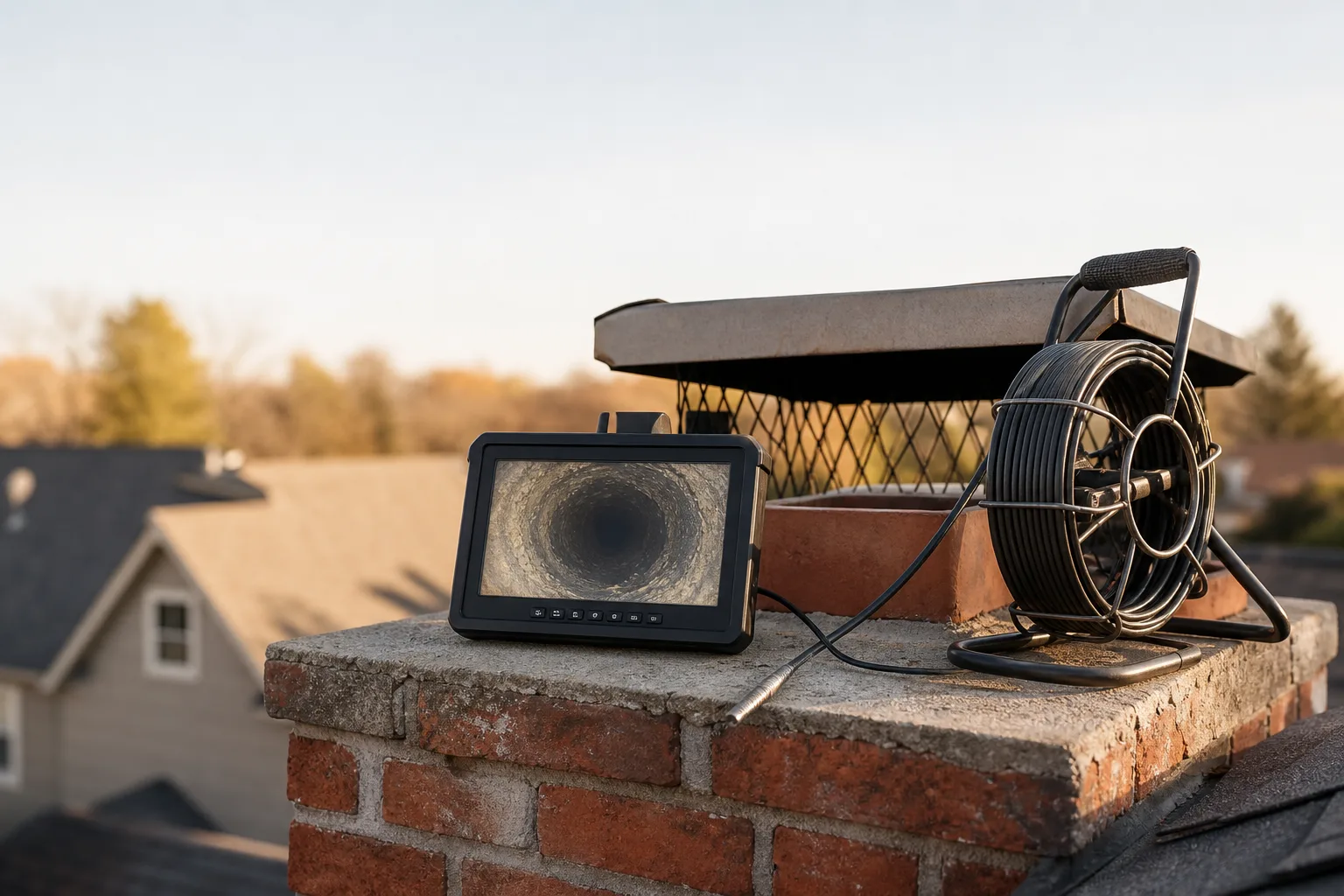
Tile liners became normal in Cleveland construction through the 1920s, which means a great many of them are now a century old and were installed to whatever the mason that day considered correct. Joints are frequently unmortared, tiles are frequently offset, and both are invisible from the firebox. They matter, because a gap between tiles is a route for heat and gas into the wall cavity. That is what a camera pass is actually for.
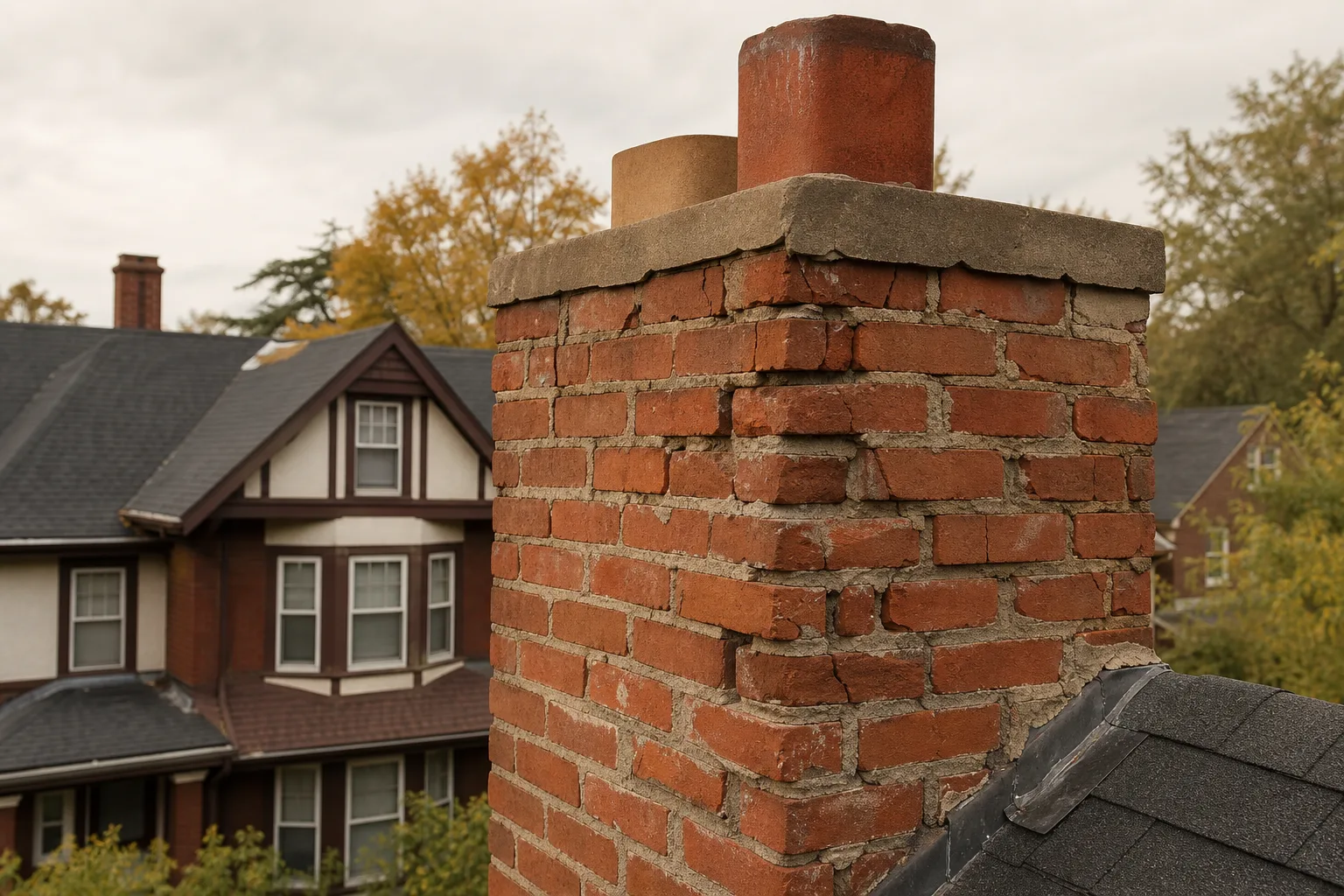
Soft brick that was never meant for this much water
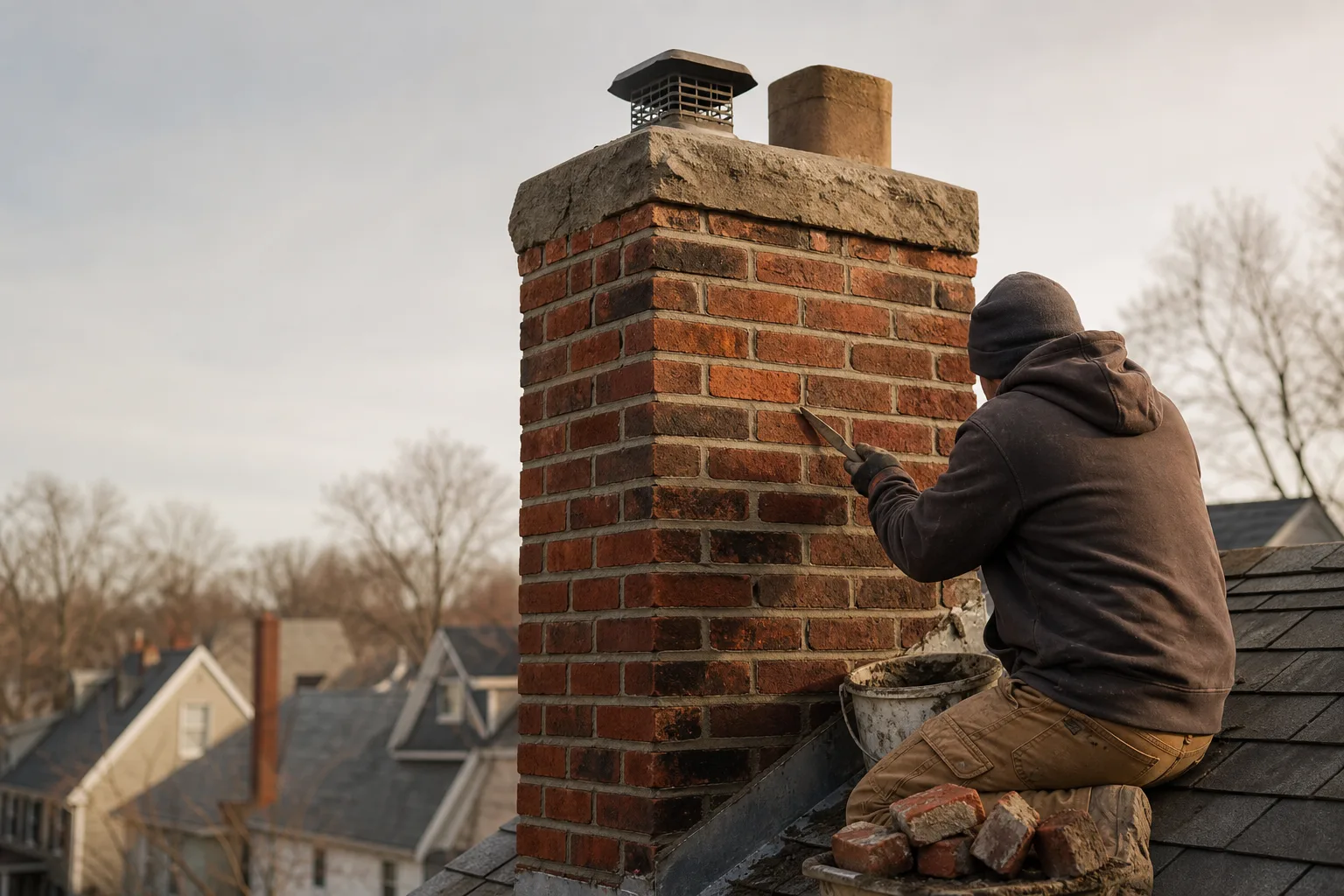
Pre-war brick was fired at lower temperatures and set in lime mortar that was deliberately softer than the brick, so the joint would fail before the masonry did. It works well until the stack has taken on water for eighty winters. By then the face spalls, joints wash out, and a stiff wire brush on the exterior does more damage in an afternoon than the weather did in a decade.
Do you have this problem?
Signs you need a chimney sweep in Cleveland
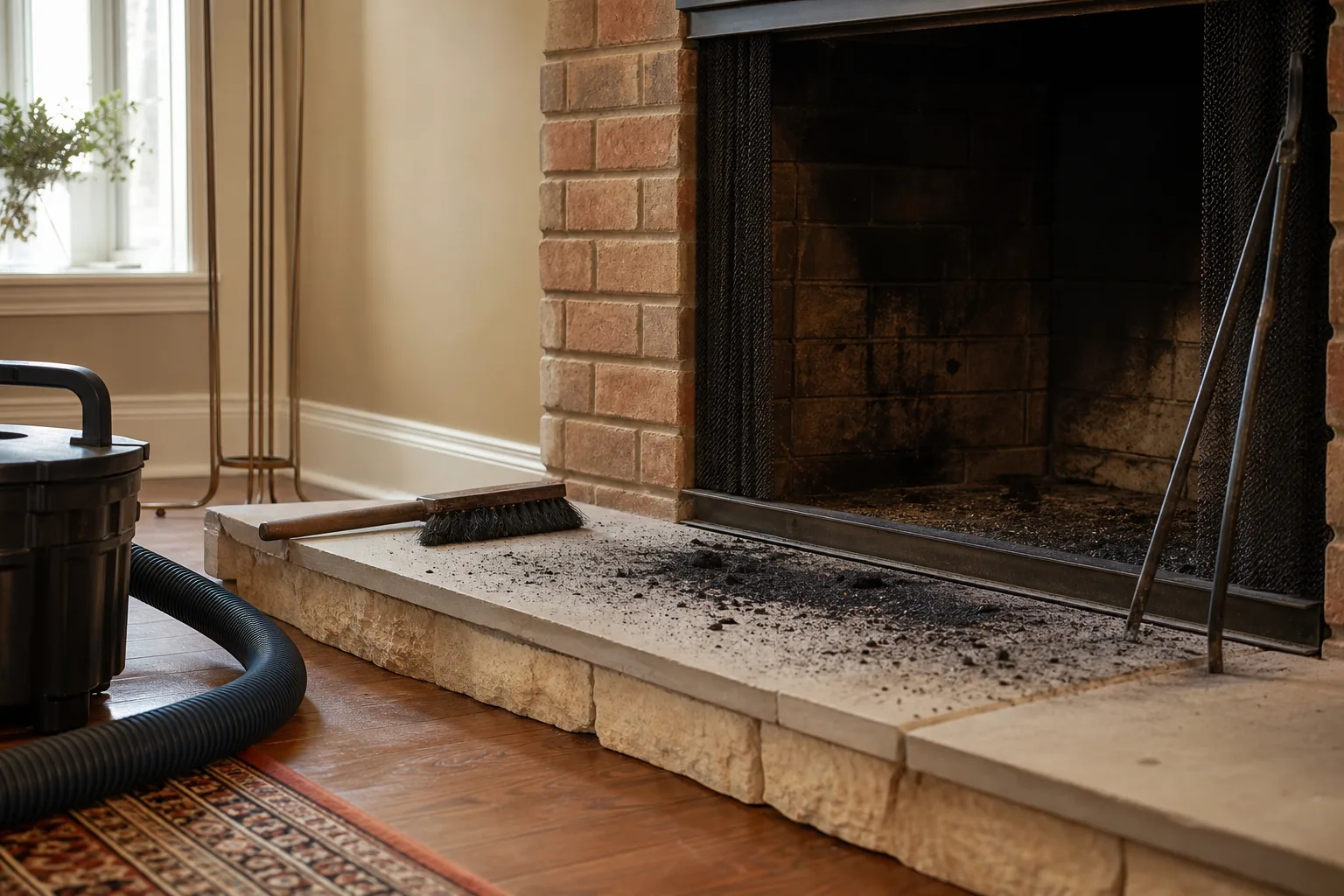
Soot or debris falling into the firebox
Material coming down means material is coming loose. On a century flue that is often tile or mortar rather than soot, which changes the job from cleaning to repair.
A smell that gets worse in humid weather
Creosote reactivating with moisture. It means deposits are still up there from last season, and Cleveland's damp summers make it obvious around July.
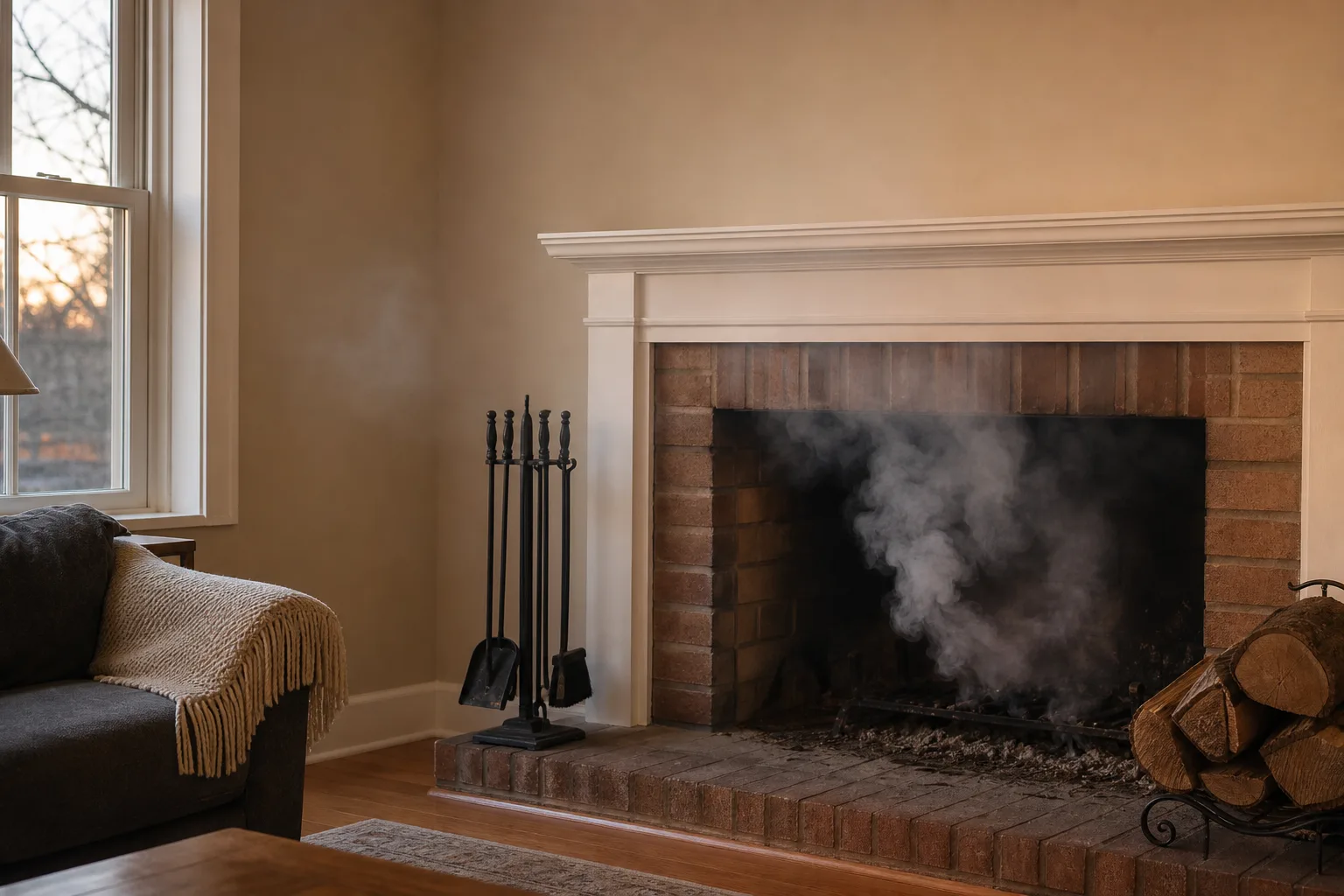
Smoke rolling back into the room
Restriction, a cold flue, or a blockage. On the season's first fire this is the flue telling you something moved into it over the summer.
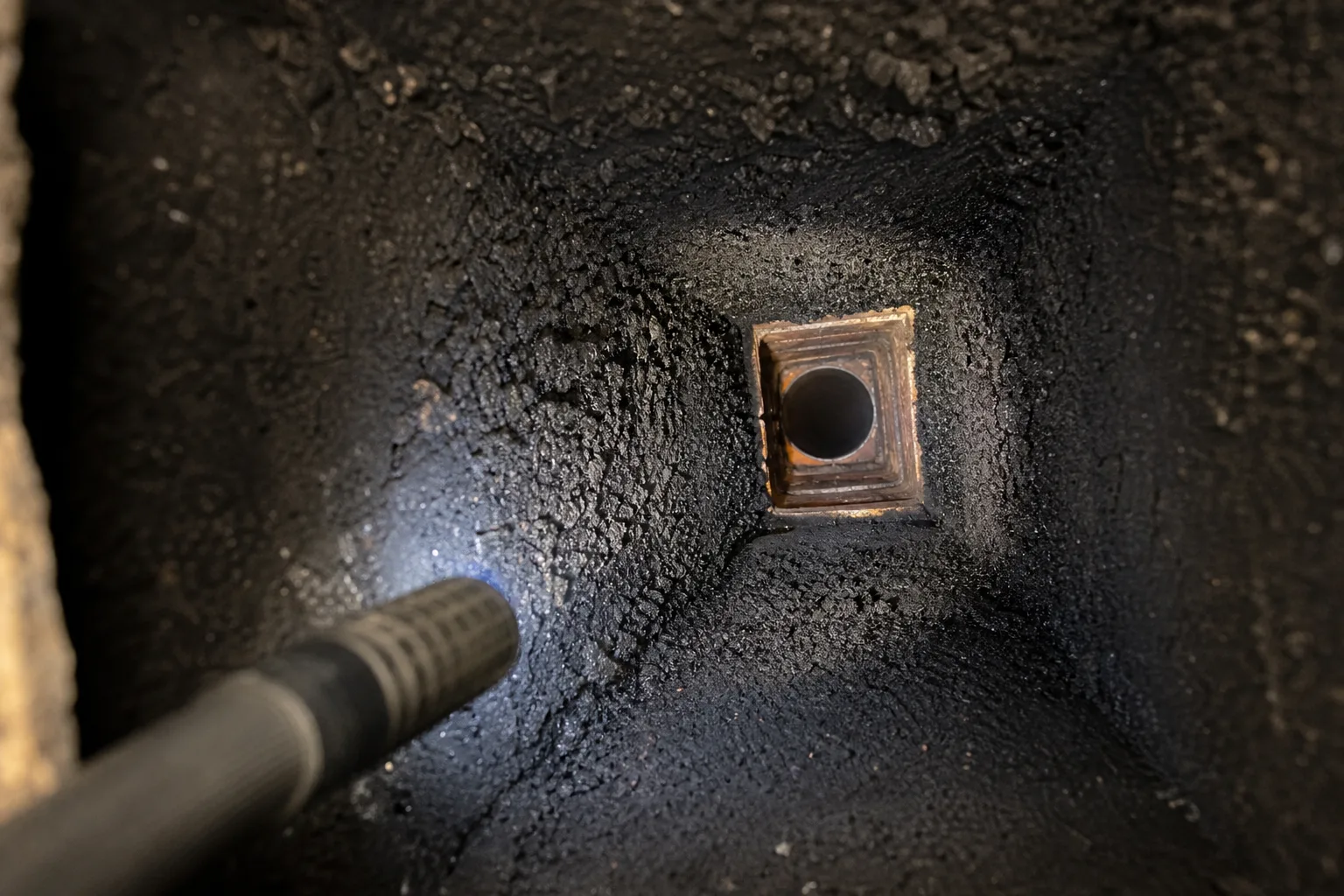
Black glassy buildup on the tile
Stage-three creosote, and it does not brush off. It has to be removed chemically or mechanically, and it is the deposit that actually starts chimney fires.
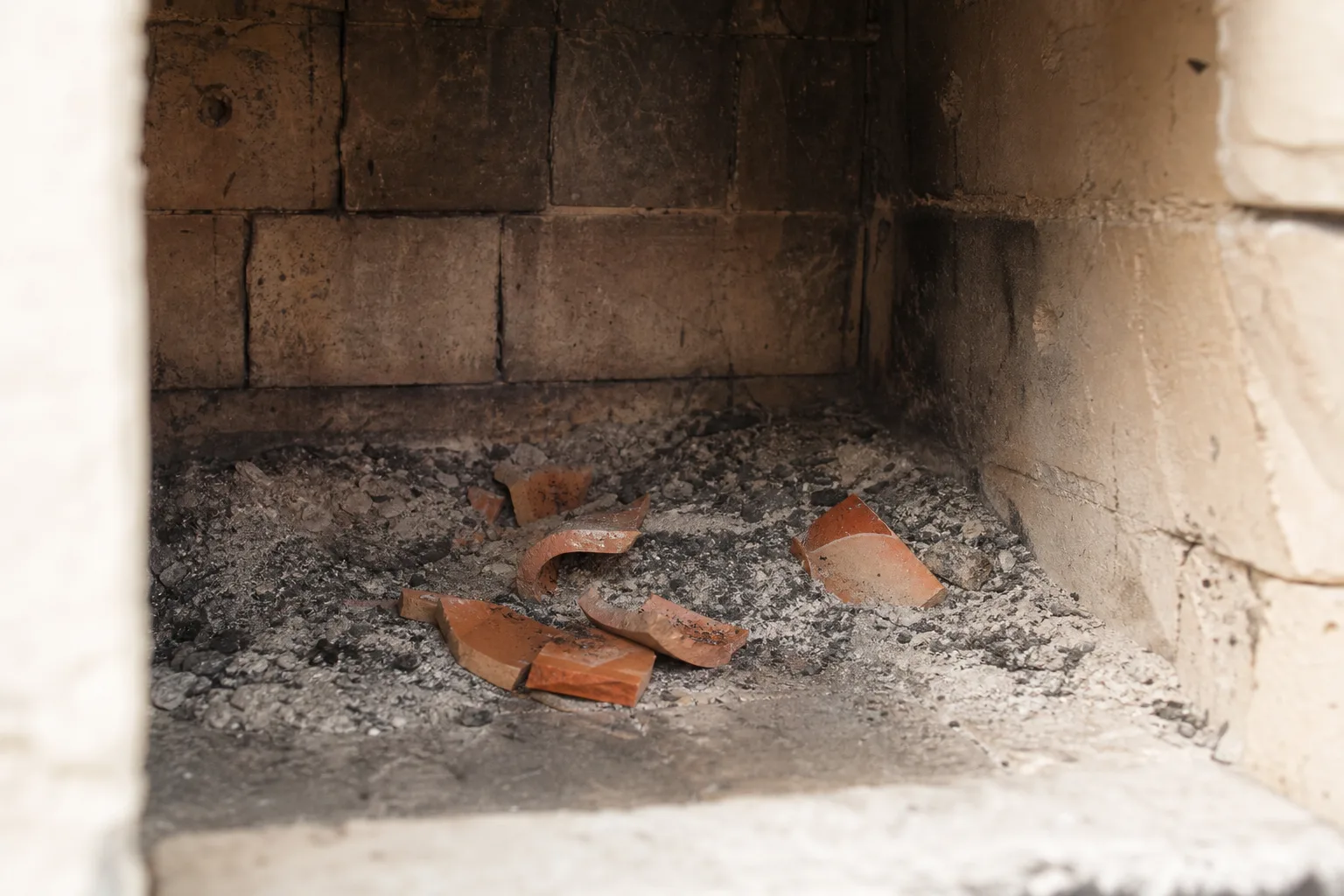
Chunks of clay tile in the hearth
The liner is coming apart. Sweeping is not the answer here — a scan and a relining conversation is. Common on flues that have been condensing for years.
You have never had the second flue scanned
If the stack serves a furnace or water heater as well as the fireplace, and only the fireplace has ever been looked at, the riskiest flue in the house is the unexamined one.
How we work
How the visit works
The same four steps every time, whatever the scan turns out to find.
- 1
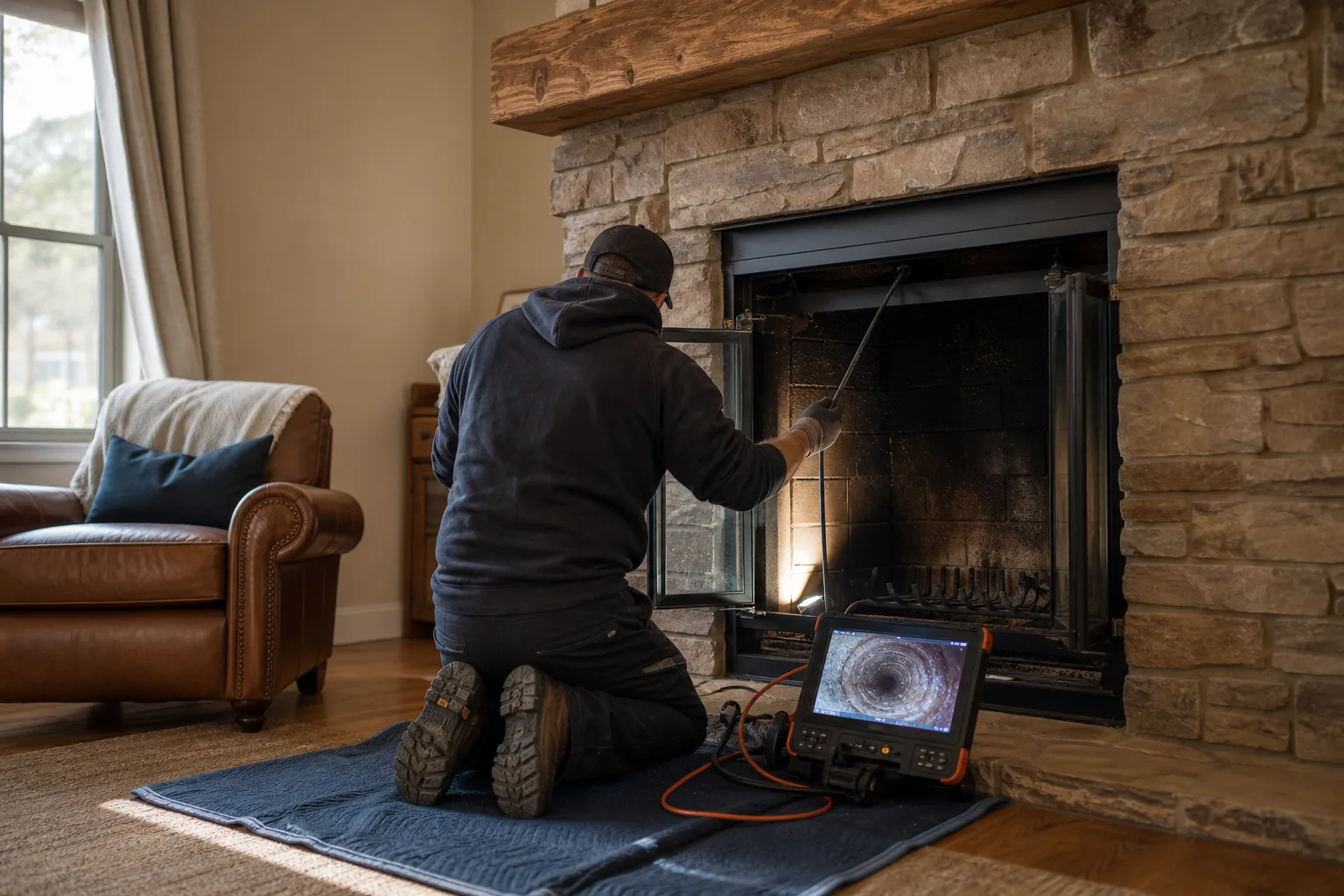
Inspection first, always
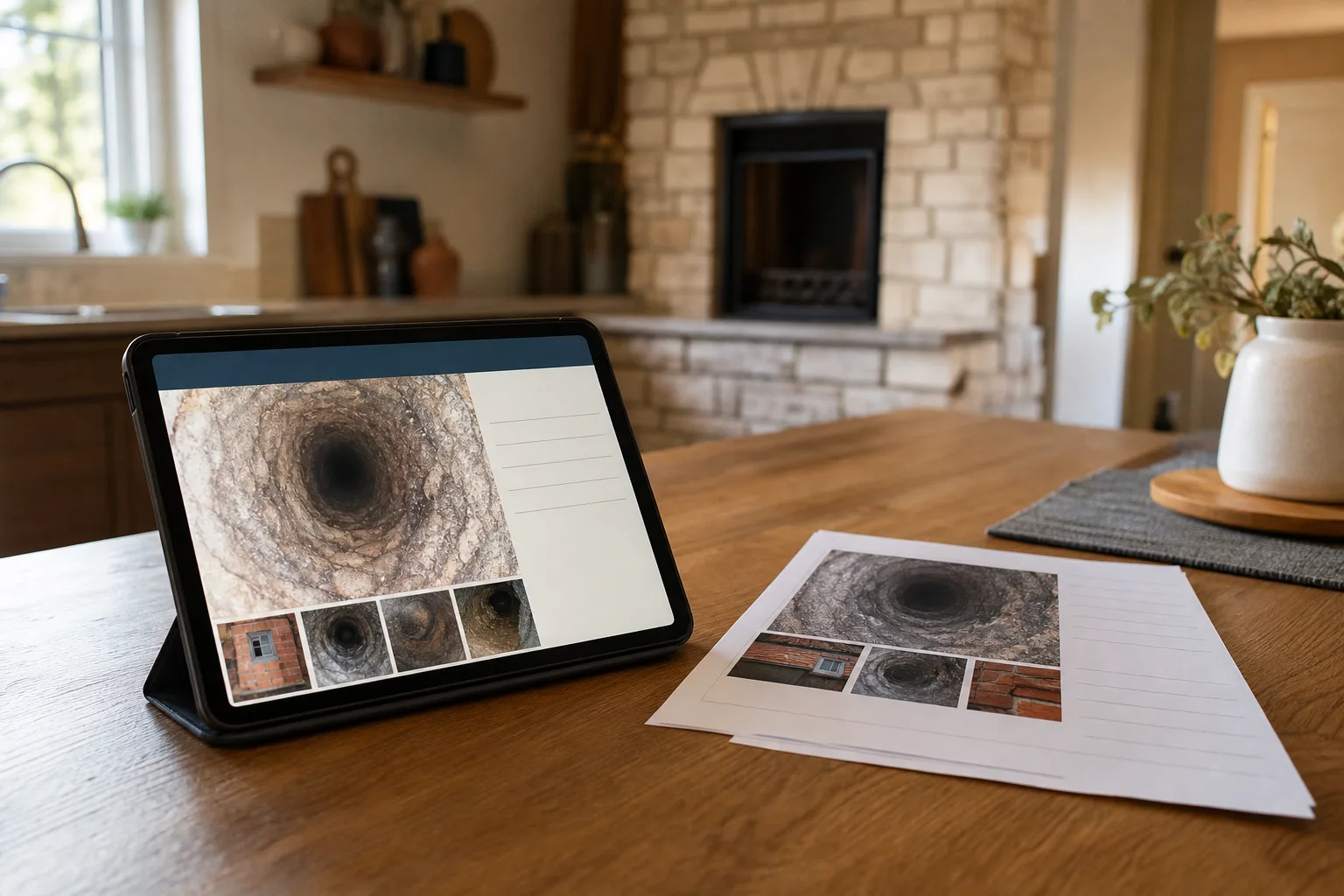
A look at the crown, cap, flashing and exterior masonry, then the flue, damper and firebox — with a camera where the job calls for a level 2 scan. Whatever needs work gets shown to you, not just described.
- 2
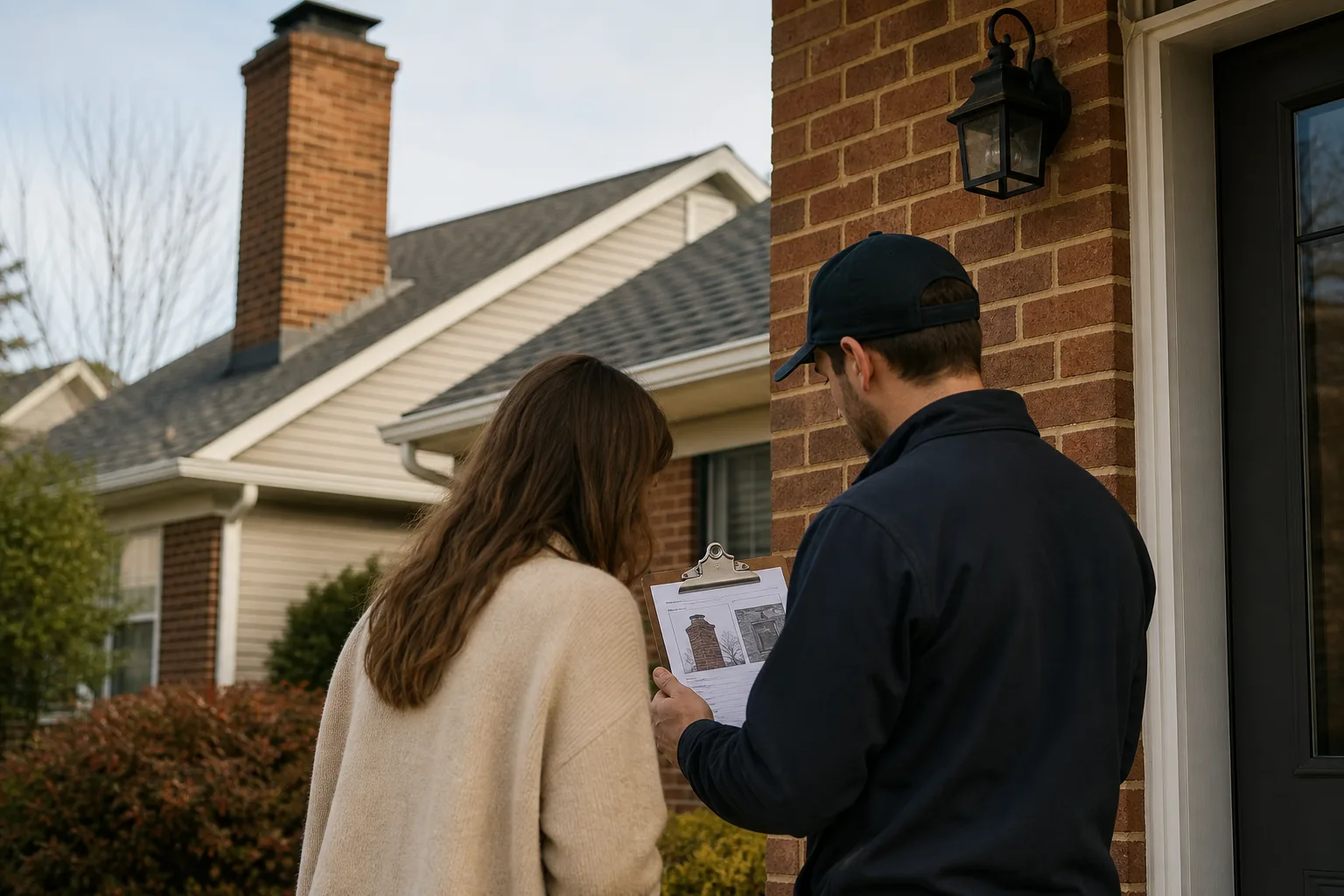
A written estimate before anything
Scope, price and what is not included, in writing. Nothing starts until you approve it, and an emergency is not a reason to skip this step.
- 3
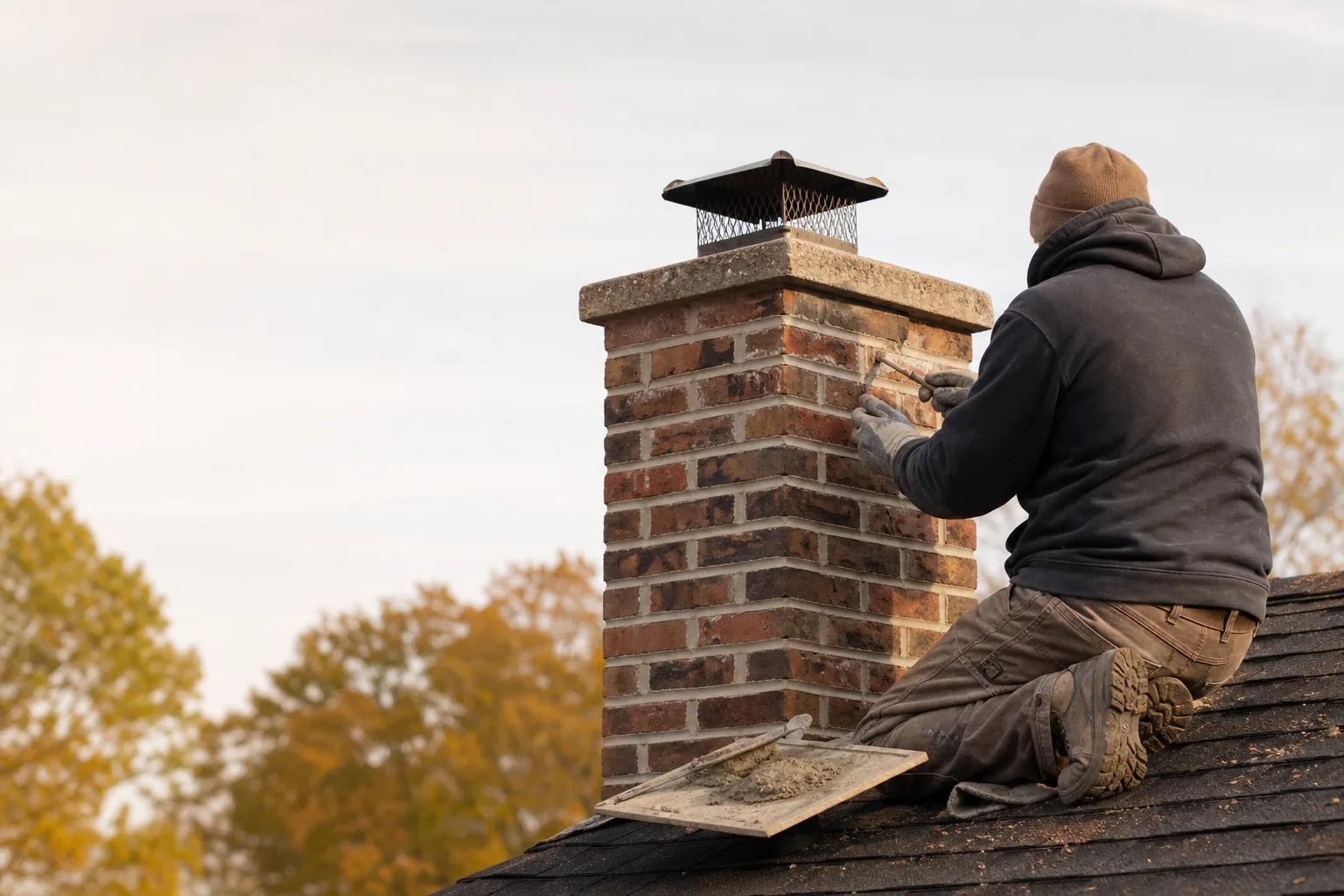
The work itself
Matched materials and the manufacturer's spec, not whatever is on the van. Drop cloths down, and the room left as it was found.
- 4
Verification and a report
A second scan after the work, and written findings you can keep, hand to an inspector, or send to an insurer.
What it covers
The jobs this actually includes
Not every job on this list is equally urgent, so they are ordered that way — safety first, then structure, then water, then prevention.
The job — most urgent first
What it involves
On site
Full-stack scan: every flue, not just the fireplace
Safety repairThe one that matters most in Cleveland. Camera down each flue in the stack including the furnace and water-heater runs, because the coal-era flue nobody looks at is the one most likely to have failed.
On site: Add 30–45 minutes
Glazed creosote removal
Safety repairStage-three deposits do not come off with a brush. Chemical treatment or rotary work, then a second scan to confirm it is actually gone rather than thinned.
On site: Half a day
Level 2 inspection for a sale or after an event
Safety repairRequired at a property transfer, after a chimney fire, and after any appliance change. Video of every flue plus written findings an inspector or insurer will accept.
On site: 2 hours
Nest and blockage clearing
StructuralCommon on uncapped flues after summer. Chimney swifts are federally protected and cannot be removed while nesting, so timing is part of the answer and we will say so plainly.
On site: 1–2 hours
Standard sweep and Level 1 inspection
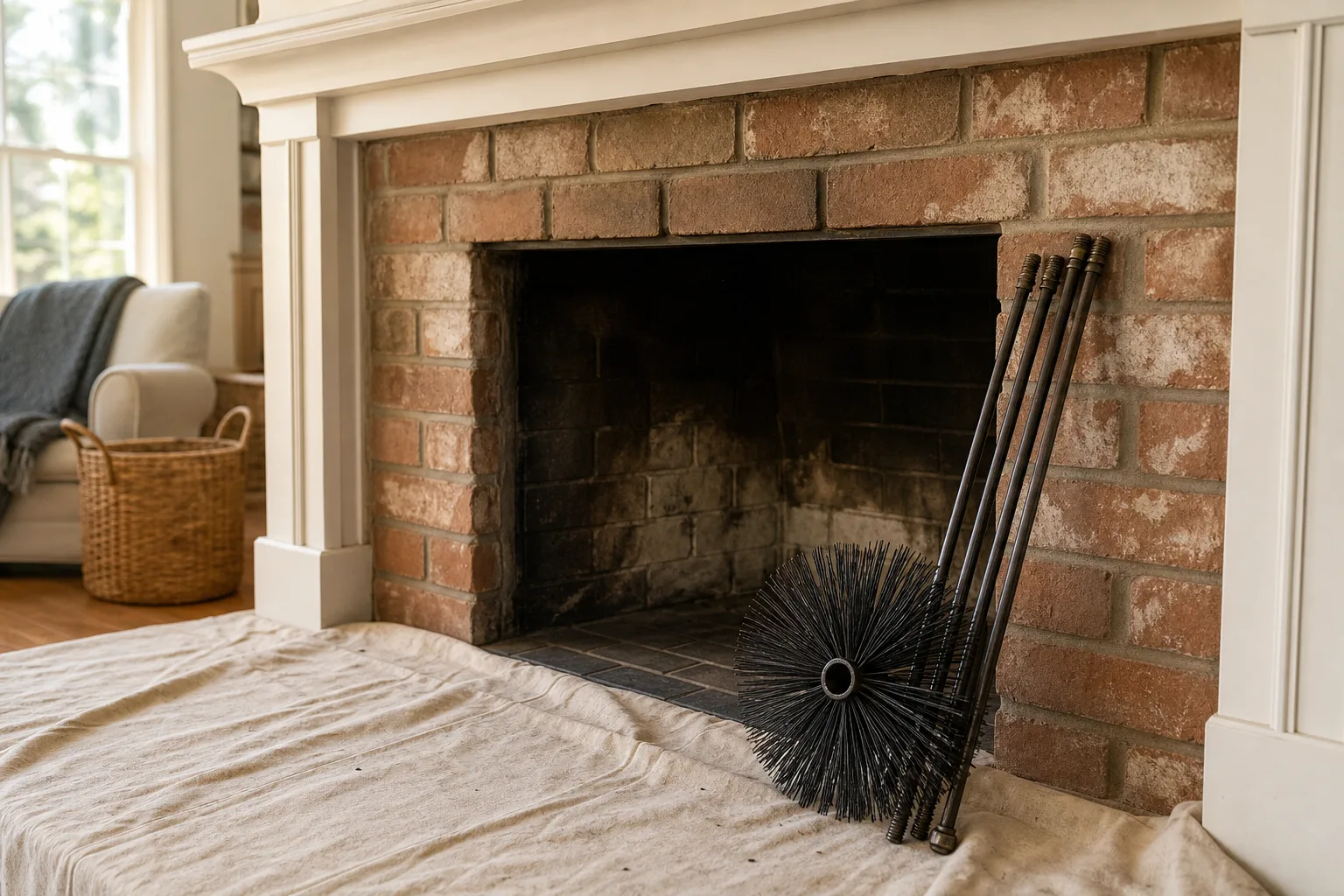
PreventiveThe annual job: flue brushed to bare tile, smoke chamber and firebox cleared, damper checked, and a readily-accessible inspection to NFPA 211. Drop cloths down and a HEPA vacuum running the whole time.
On site: About 90 minutes
Cap fitting on the same visit
PreventiveIf the scan finds an open flue, and on a Cleveland stack there is usually at least one, capping it while the ladders are already up costs a fraction of a separate trip.
On site: Add an hour
Times are for the work itself, not for scheduling. Masonry needs roughly 40°F to cure properly, which is what limits this work in a northern winter rather than whether a crew is free.
Timing
When to book a chimney sweep in Cleveland
The quiet window, and the right one
Nobody thinks about the fireplace in July, which is exactly why it is the best time. Availability is wide, and anything the inspection finds still has three months of above-freezing weather to be repaired in. Masonry needs warmth to cure; a crown recast booked in July is finished, a crown recast booked in November waits until spring.
Peak, and it books out
The season's first cold night is when most of Cleveland remembers the chimney at once. This is when the calendar fills and when a two-week wait becomes normal. Still fine for a straightforward sweep. The risk is that a scan finds masonry work and the first freeze arrives before it can be done.
Sweeping only, realistically
We sweep all winter and we scan all winter. What we cannot reliably do is mortar work below freezing, because it will not cure and a repair that has not cured fails faster than the damage it replaced. If a scan finds a cracked crown in January, the honest answer is to stop using the fireplace and book the repair for spring.
The damage report
Spring is when winter's bill arrives: spalled faces, washed joints, a crown that opened up over four months of freeze-thaw. Booking here gets the repair done in the same season it was caused, which is the cheapest version of every masonry job.
What shapes the job
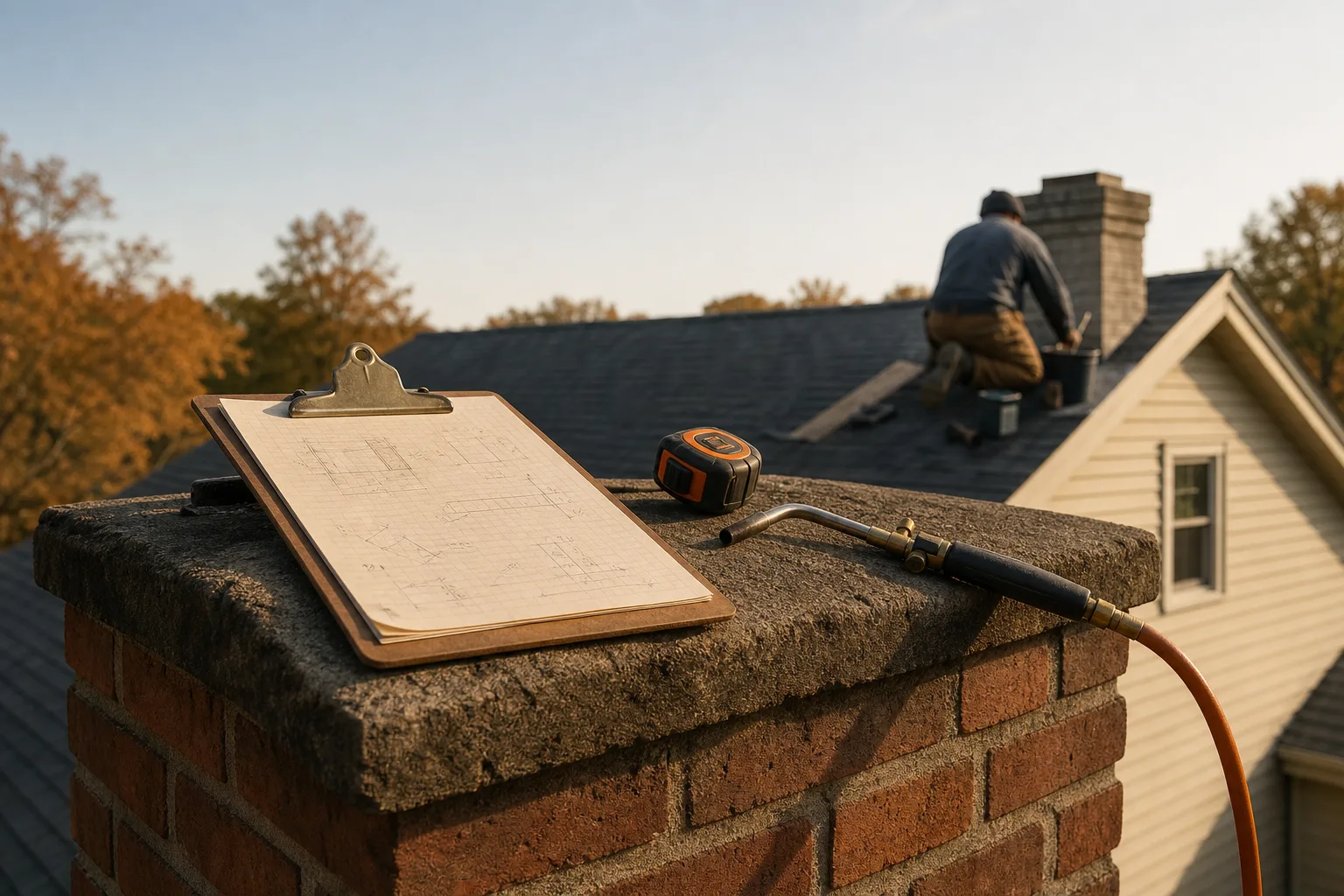
What decides the work on a chimney sweep in Cleveland
- How many flues the stack actually contains: most Cleveland stacks have more than one
- Whether the deposit is brushable soot or glazed stage-three creosote
- Roof pitch and access, which on Lakewood and Tremont lots can be tight
- Whether a Level 1 inspection is enough or the situation calls for Level 2
- What the scan finds: a sweep can turn into a repair quote, and it should
A standard sweep with a Level 1 inspection on a single flue is the base number, and it is the same across our Cleveland coverage; we do not price by neighborhood. Adding flues adds time rather than multiplying the price. Glazed creosote is the item that genuinely costs more, because it is a different job with different tools. What we will not do is quote a Cleveland chimney sweep over the phone without knowing how many flues are in the stack, because on this city's housing that is the question that decides the number.
From our own jobs
What we keep finding in Cleveland
The furnace flue nobody scanned
The most common serious finding in this city is not in the fireplace. It is the second flue in the same stack, the one venting the furnace or the water heater, which is oversized from the coal era and has been condensing for years. Homeowners are surprised because the fireplace was swept last year, but a sweep quoted on the fireplace often only touches the fireplace. Ask what the price covers. If a stack has three flues, a real inspection scans three flues.
Unmortared joints between century tiles
We expect to find them and we usually do. On 1920s Cleveland construction the tile joints were frequently laid dry. For decades it changes nothing; then one bad chimney fire, or thirty years of acidic condensate, and the gaps become a route into the wall cavity. This is the single strongest argument for paying for a level 2 camera scan over the visual check a sweep includes, because there is no way to see it from either end.
Wire brushing that caused the spalling
A mistake we see repeatedly on the exterior. Someone attacks century brick with a stiff wire brush or a pressure washer to clean it up, and strips the fired outer skin that was keeping water out. The brick then drinks, freezes, and flakes. Soft brick gets soft methods, and if a contractor reaches for a pressure washer on a pre-war Cleveland stack, that tells you what you need to know.
Caps missing on the flue nobody uses
Almost every stack we look at here has at least one unused flue, usually from a decommissioned appliance. Nobody caps it because nothing vents through it, so it takes rain and snow straight down into the middle of the masonry all winter, and the damage shows up on the flue next to it. Capping a dead flue is one of the cheapest things we do and one of the most consistently skipped.
Where we cover in Cleveland
All Cleveland services →74 ZIP codes covered. If your address falls outside the area we say so on the call rather than booking a visit we cannot honour.
The people behind every visit
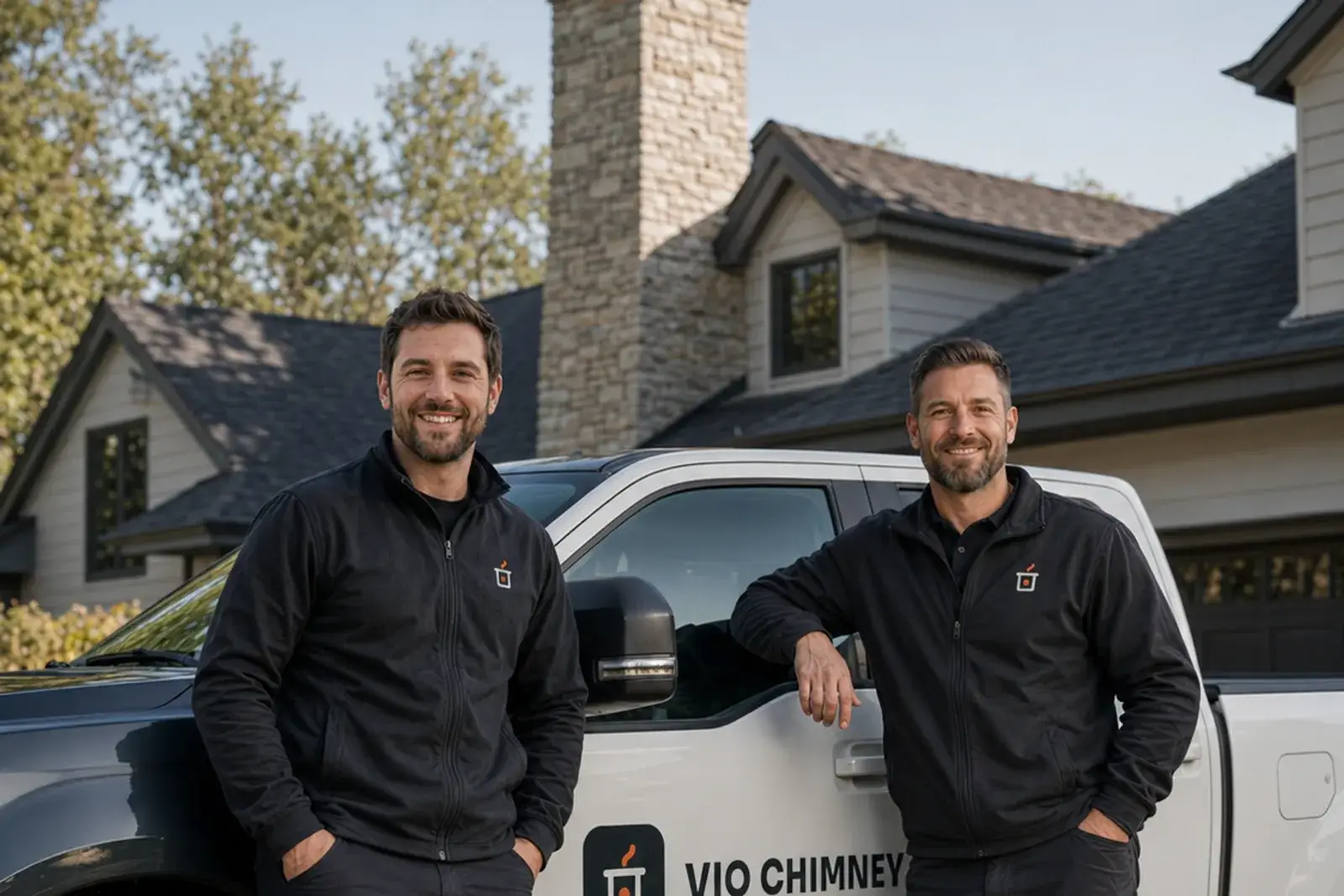
Founded by Ryan Carter in 2019. Every page you read here is reviewed by Ethan Miller, our chimney specialist. A written estimate before any work, and the findings in writing whether or not anything needs doing.
More about who we are →
The VIO Standard
- A written estimate first
- License and insurance checked
- Nothing starts without your OK
Cleveland questions