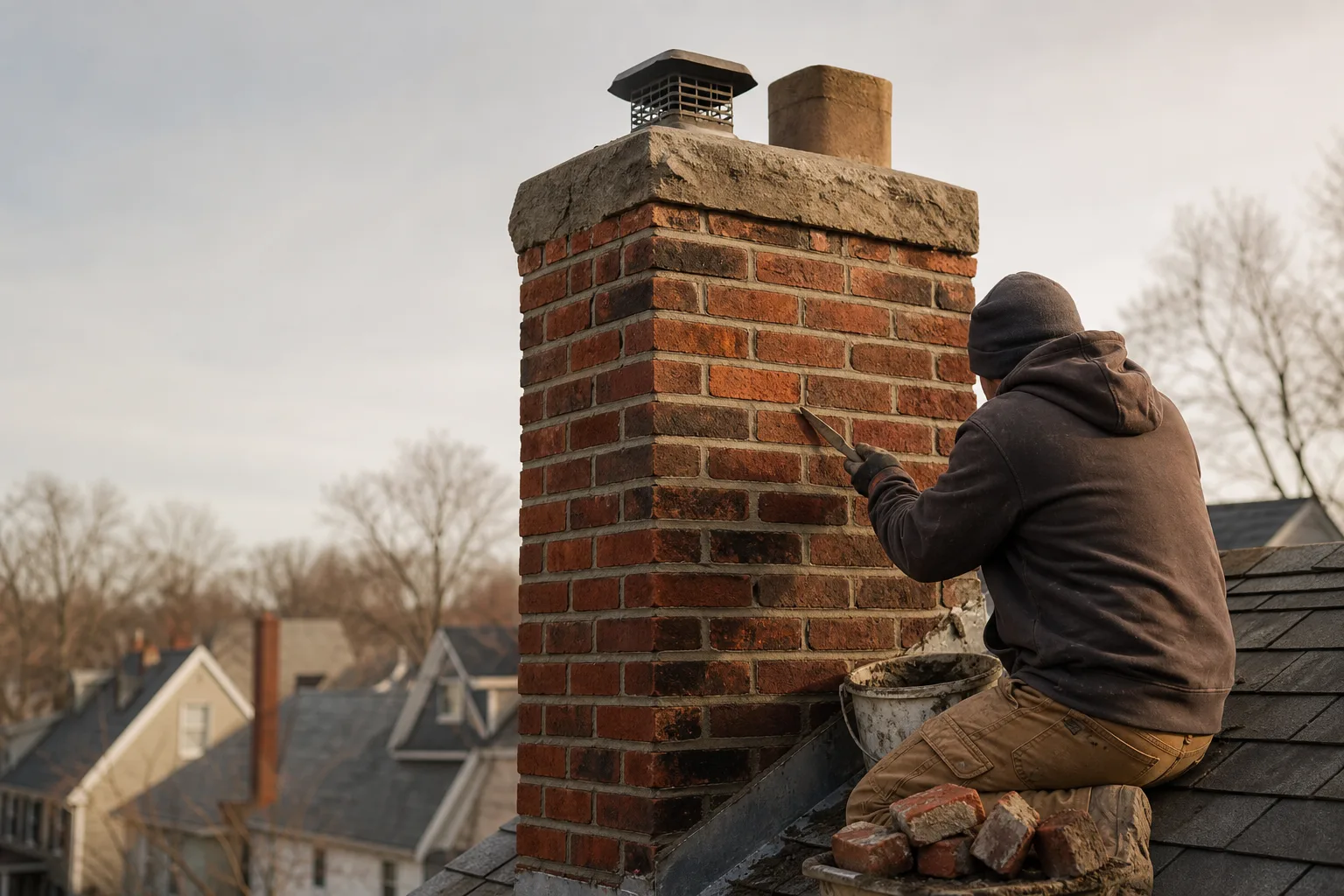
Cleveland, Ohio · 74 ZIP codes
Chimney Repair in Cleveland, OH



- License & insurance checkedBefore a pro joins the network
- Upfront estimatesIn writing, before any work
- Complaints go to a personAnd can remove a pro from the network
- NFPA 211 standardsThe inspection benchmark we point to
The short answer
The wrong mortar destroys a Cleveland stack faster than the weather that damaged it.
Most chimney repair in Cleveland comes down to water that got into soft masonry and then froze. The city's pre-war housing was built with brick fired at lower temperatures and set in lime mortar chosen to be softer than the brick, so that seasonal movement cracked the joint instead of the brick face. That system works — until eighty winters of freeze-thaw wash the joints back and the brick starts drinking. The repair that lasts is repointing with a mortar matched to the original. The repair that ruins the stack is modern Portland cement, which is harder than century brick: the joint stops giving, so the brick face takes the movement instead and spalls off. We see that outcome on Cleveland roofs constantly, and it is almost always someone's recent repair rather than old neglect.
The face comes off, not the joint
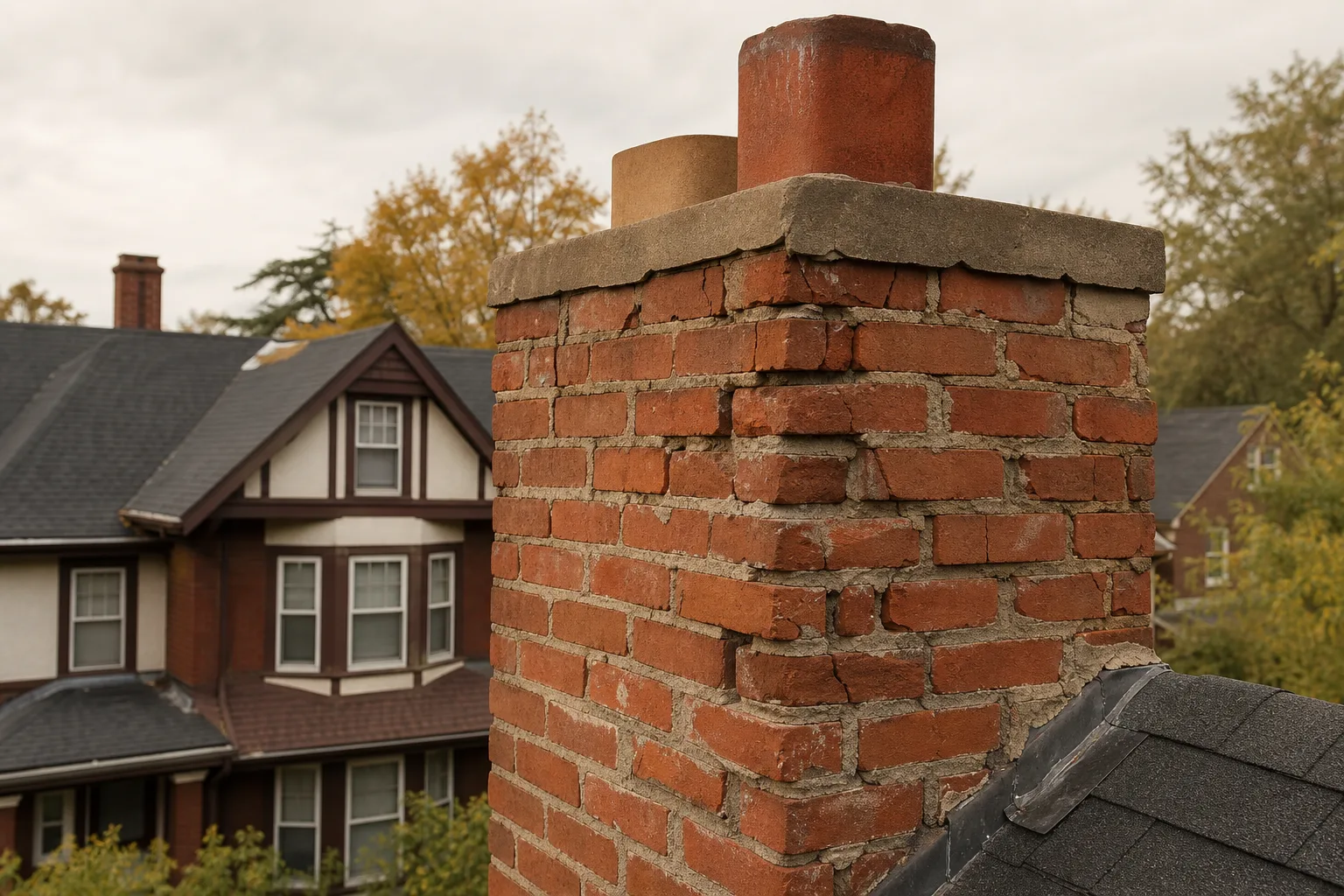
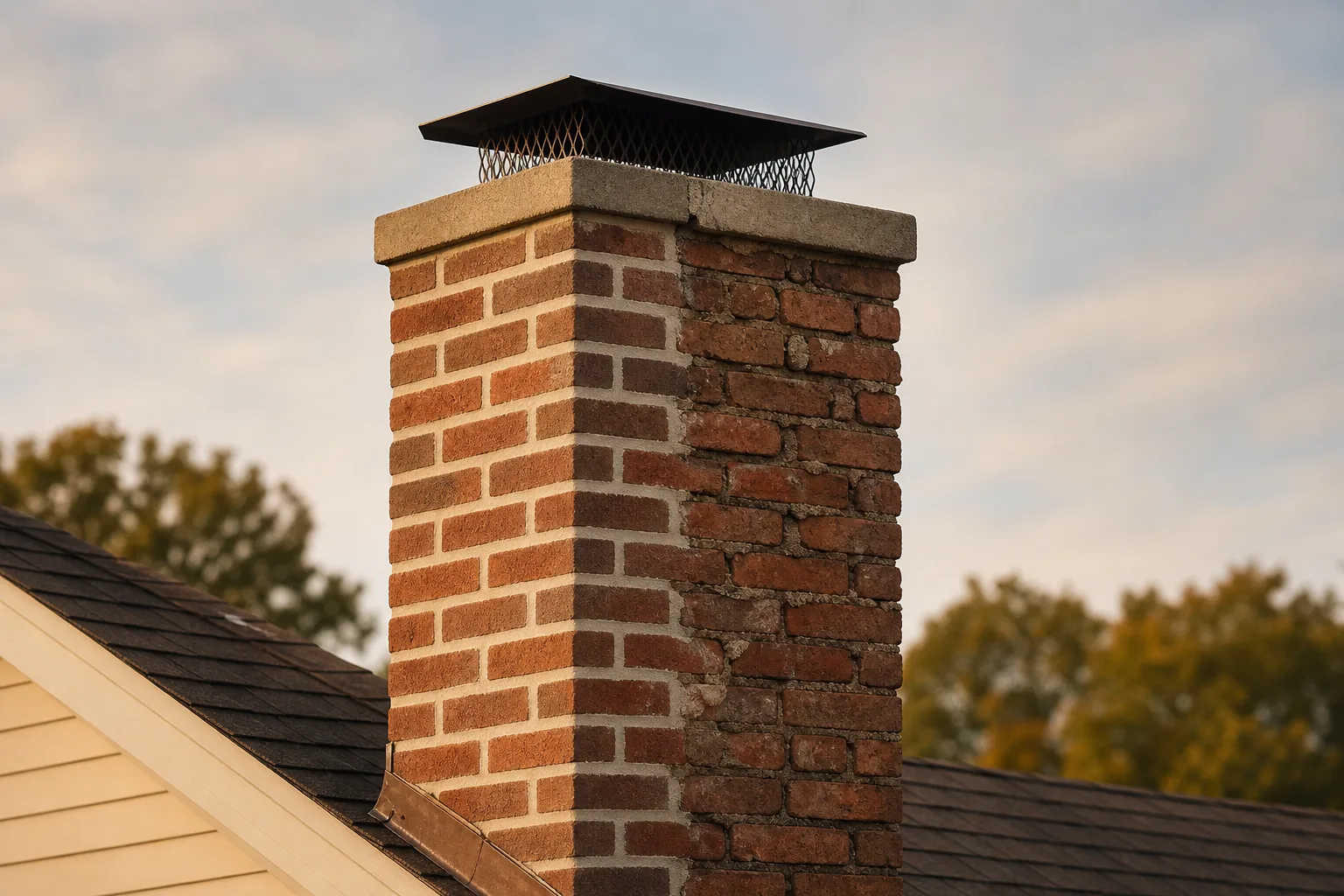
When the mortar is harder than the brick, the brick loses. Sheets of fired outer skin on the roof are the tell.
Local conditions
What actually breaks a Cleveland chimney
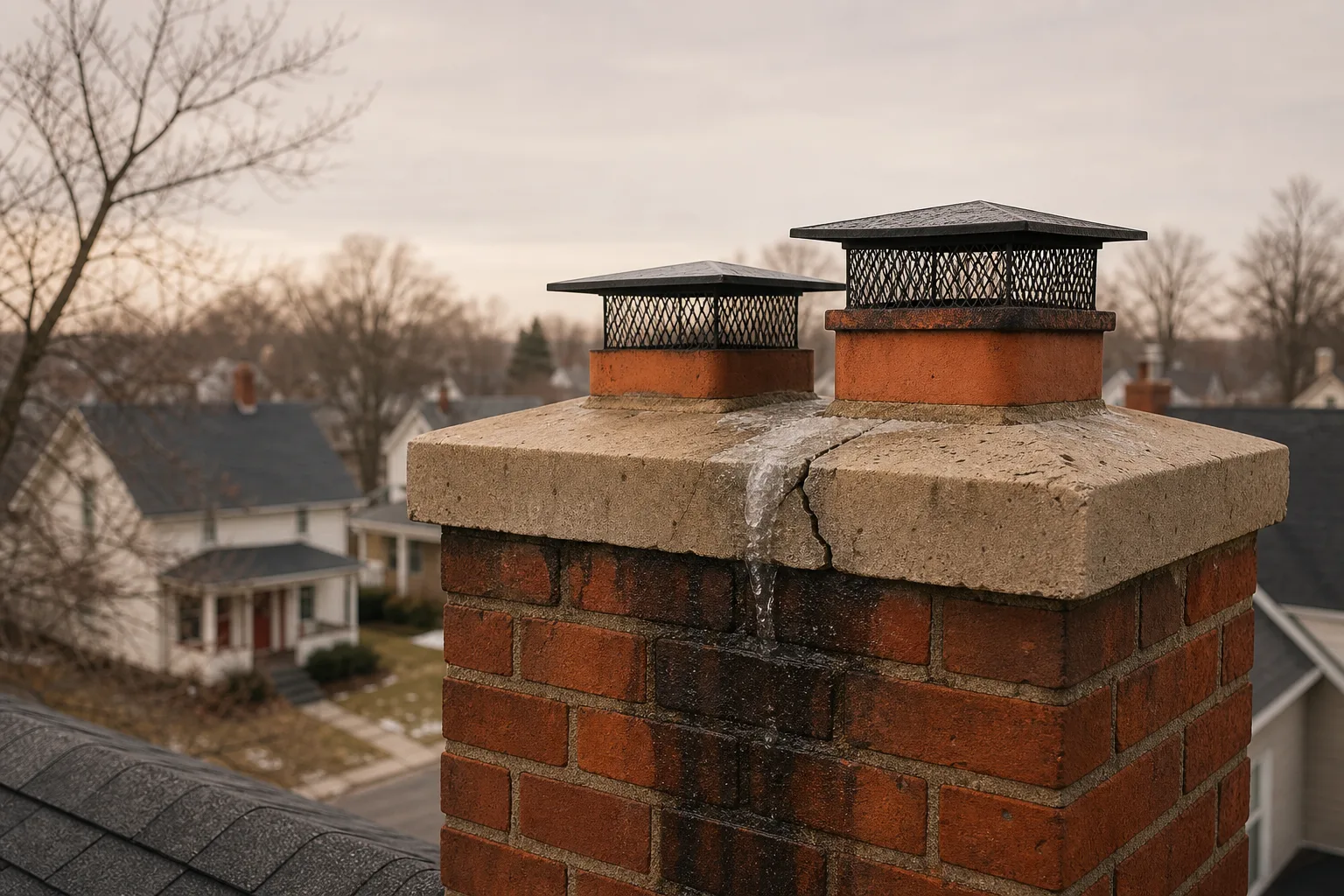
The mechanism behind most of it
Water absorbed by brick and mortar expands roughly nine percent when it freezes. Northeast Ohio crosses freezing dozens of times a season rather than staying cold, so the cycle runs again and again through one winter.
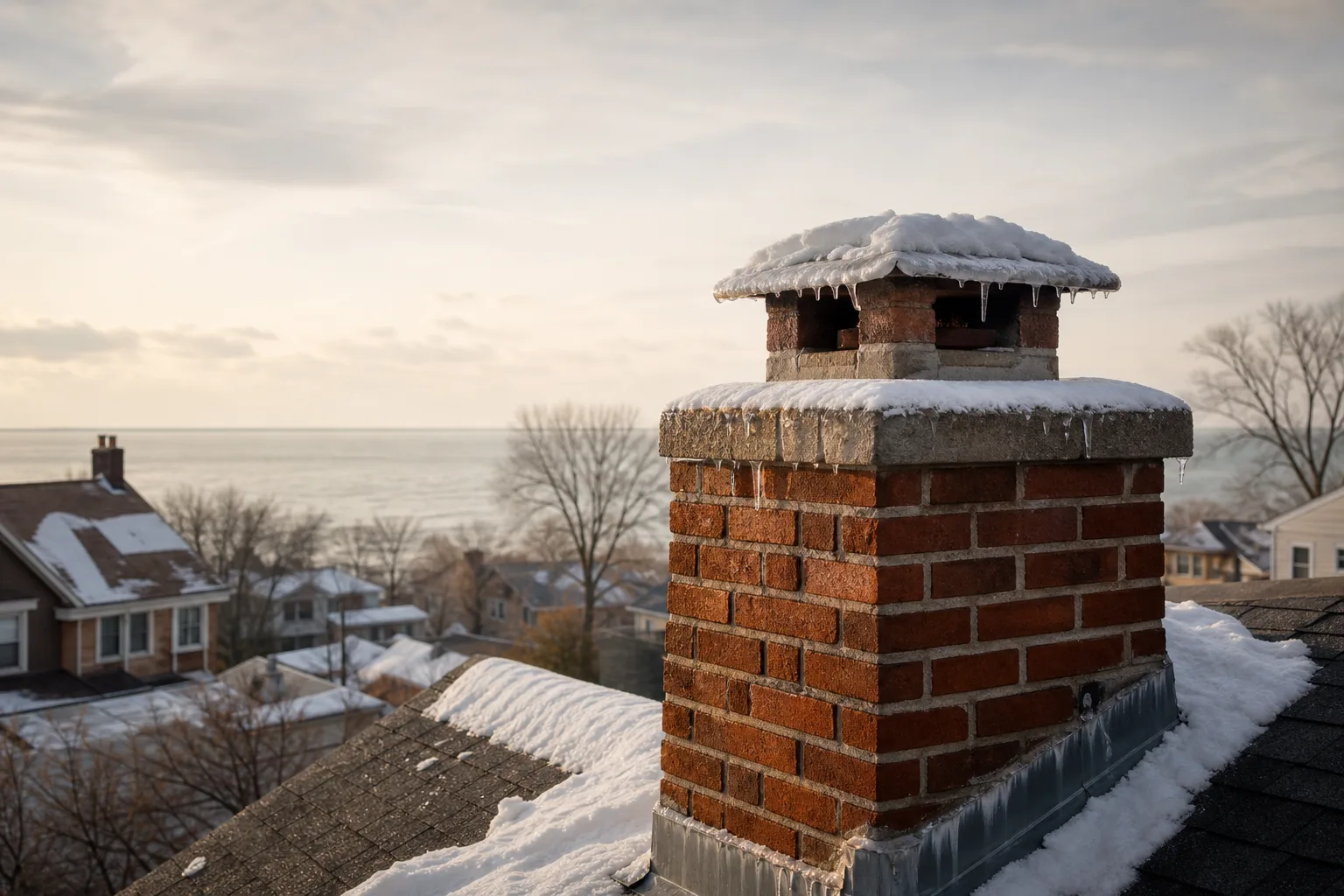
The water that makes it possible
Freeze-thaw needs water to work with, and the Lake Erie snow belt supplies it. Wind-driven wet snow packs against the windward face and melts into the masonry, which is why damage here is almost always worse on one side.
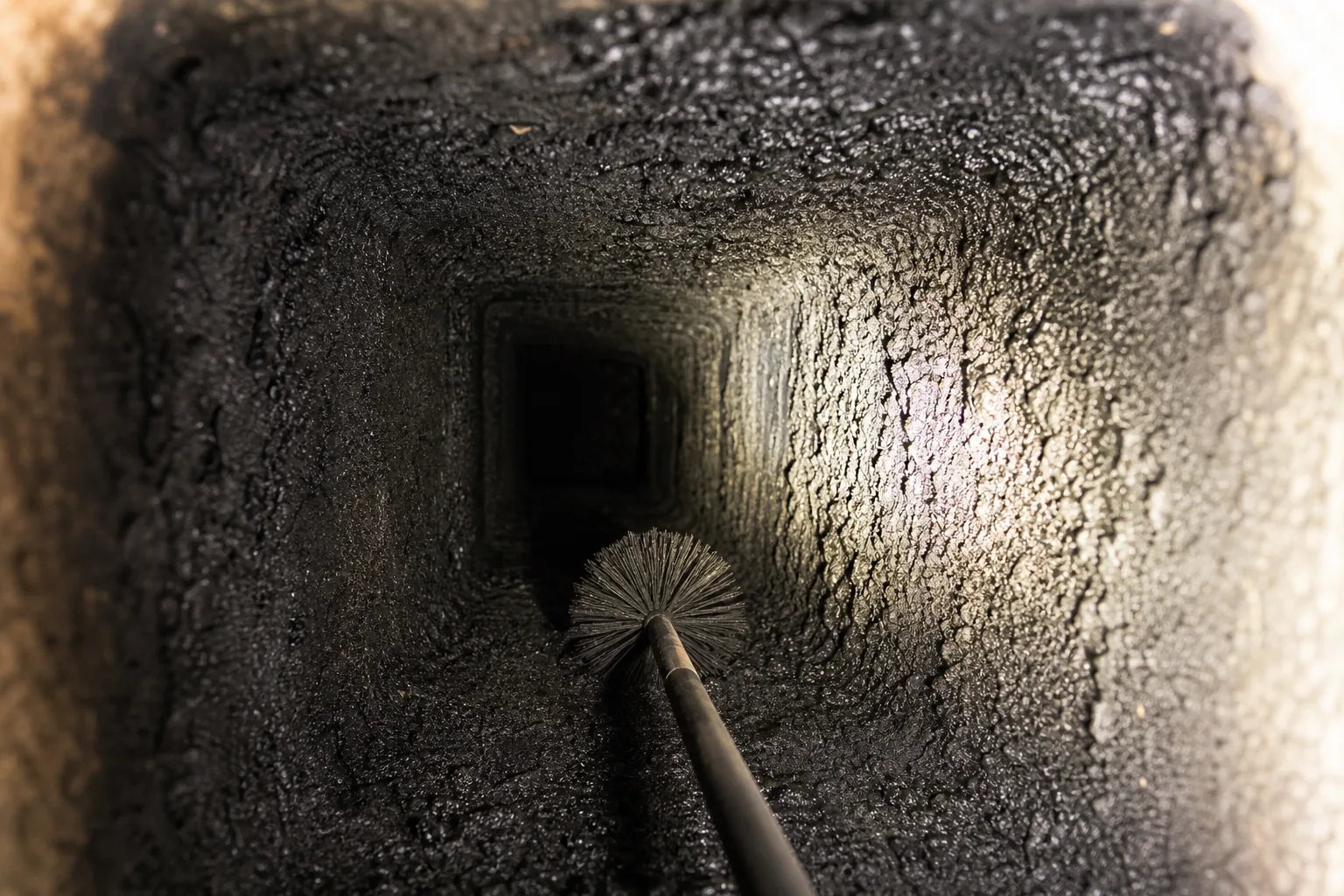
When the bill arrives
Damage done in January shows in March: spalled faces, open joints, a crown that has opened along its cracks. This is the season most Cleveland repair calls come in, and it is the right one to book.
The housing stock
Why chimney repair in Cleveland is a masonry problem
Soft brick and softer mortar, by design
Pre-war brick was fired at lower temperatures than modern brick and carries a hard outer skin over a much more absorbent core. Lime mortar was chosen to be the weaker element on purpose, so that movement and freezing would sacrifice a joint rather than a brick. Repointing this correctly means matching that softness. Using modern Portland cement inverts the system: the joint becomes the strong part, the brick becomes the sacrificial one, and within a few seasons the faces spall off around perfectly intact grey lines. Once that has happened the only honest fix is rebuilding the affected courses.
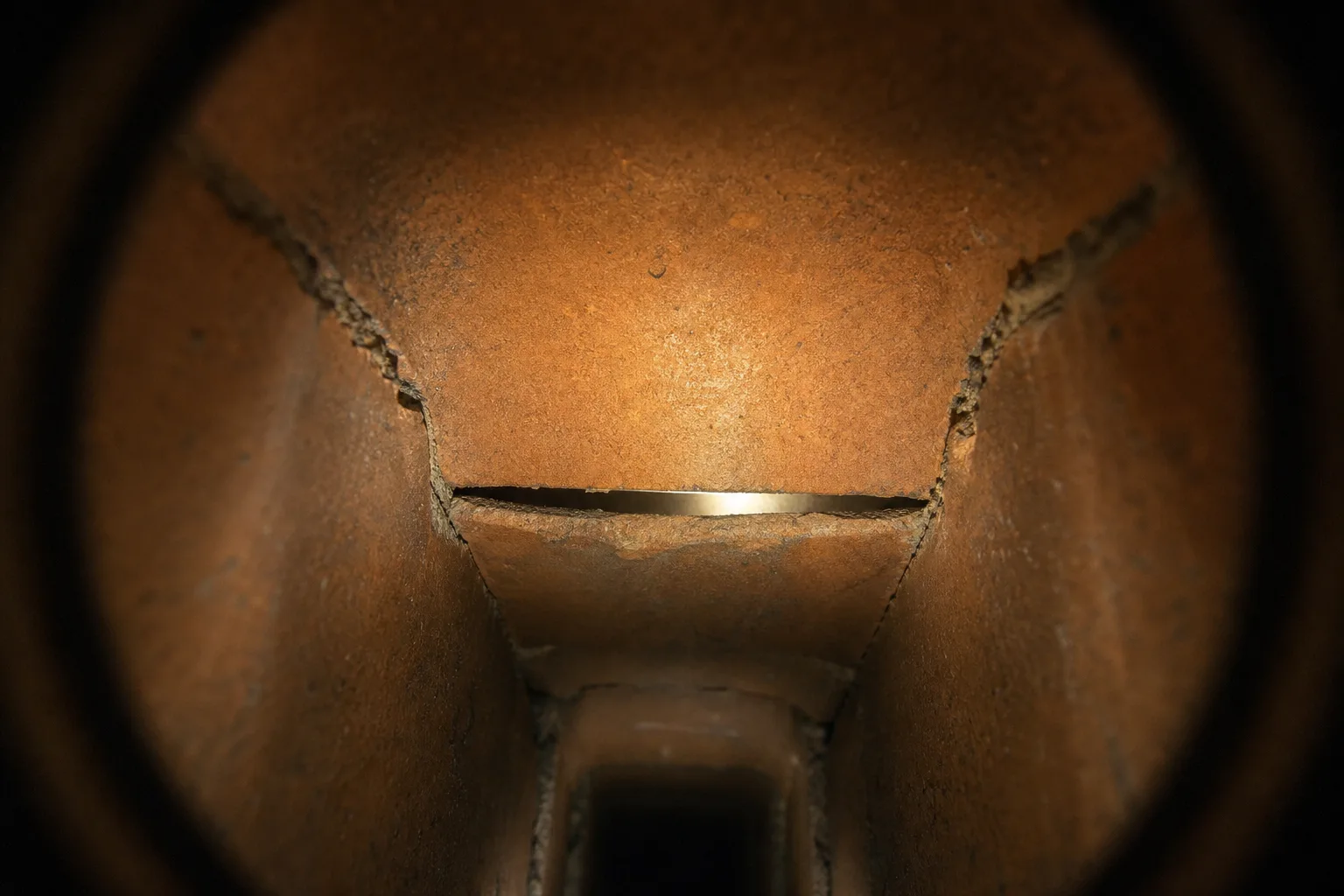
Crowns poured flat, with no overhang
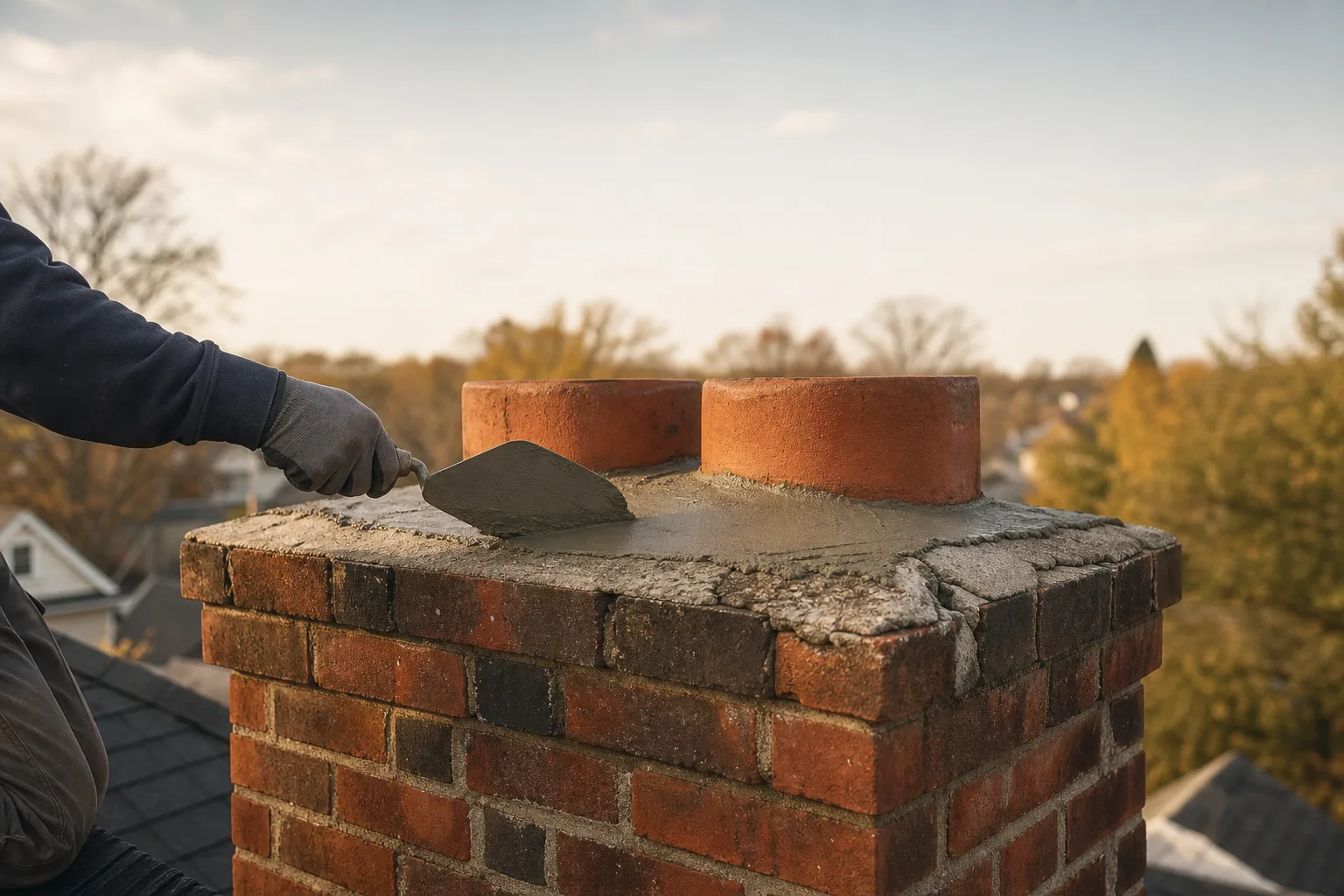
The crown is the concrete cap on top of the stack, and its job is to throw water clear of the brick below. A great many Cleveland crowns were finished flush with the brick face (no overhang, no drip edge), so every drop that lands on them runs straight down the masonry they were meant to protect. Add freeze-thaw and the crown itself cracks along its span. A recast crown with a proper overhang and a bond break at the flue is the single repair that prevents the most future work on this city's housing.
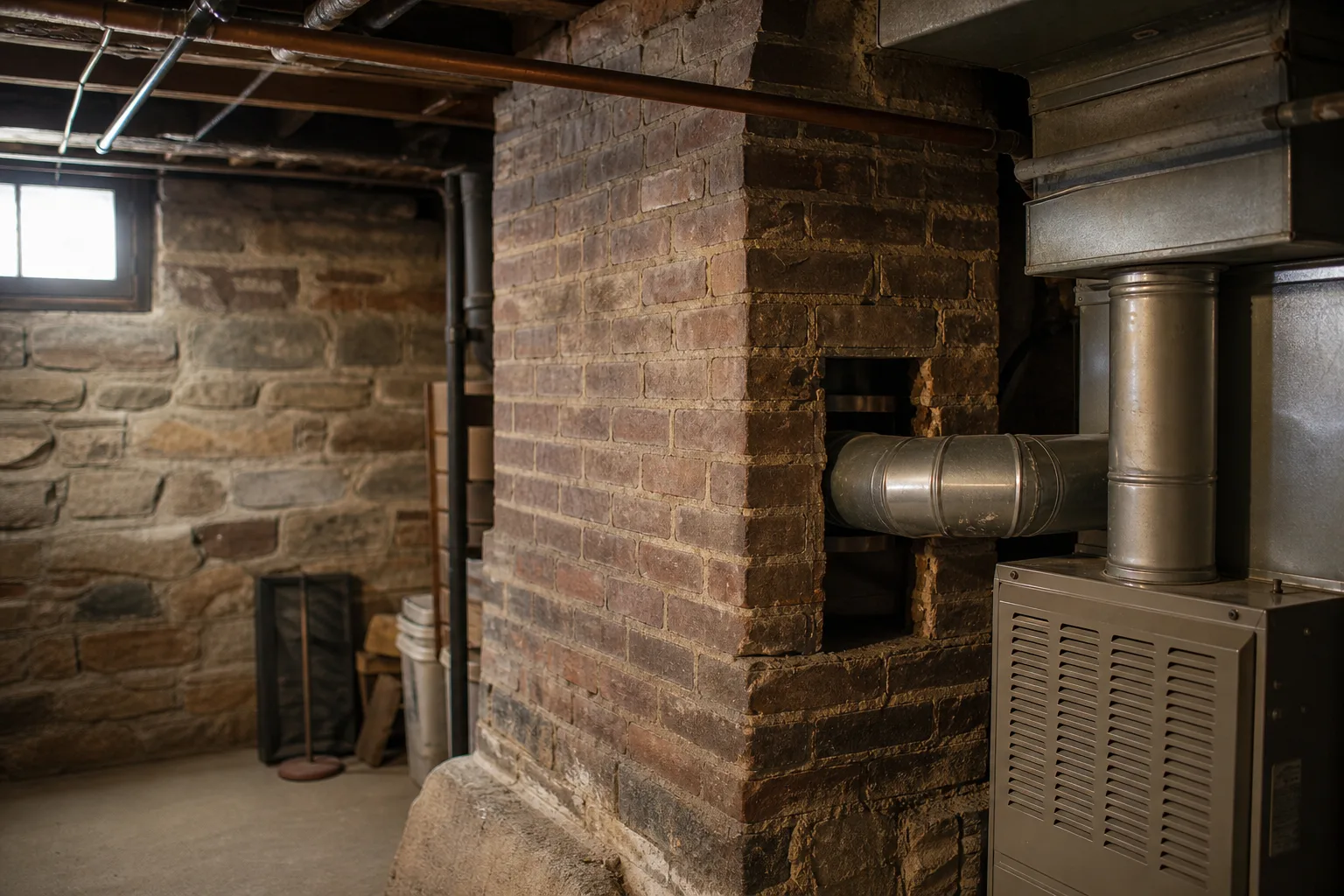
Flashing that was tarred instead of replaced
The joint where the chimney meets the roof is the most common leak point anywhere, and in Cleveland it has usually been patched at least once with roofing cement. Tar is not a repair; it is a way of hiding one. It shrinks, cracks, and traps water against the masonry, and it has to be cut off before anything proper can be done, so it makes the eventual job more expensive rather than less. Correct flashing is two-part, step and counter, cut into the mortar joint rather than smeared over it.
Do you have this problem?
Signs you need a chimney repair in Cleveland
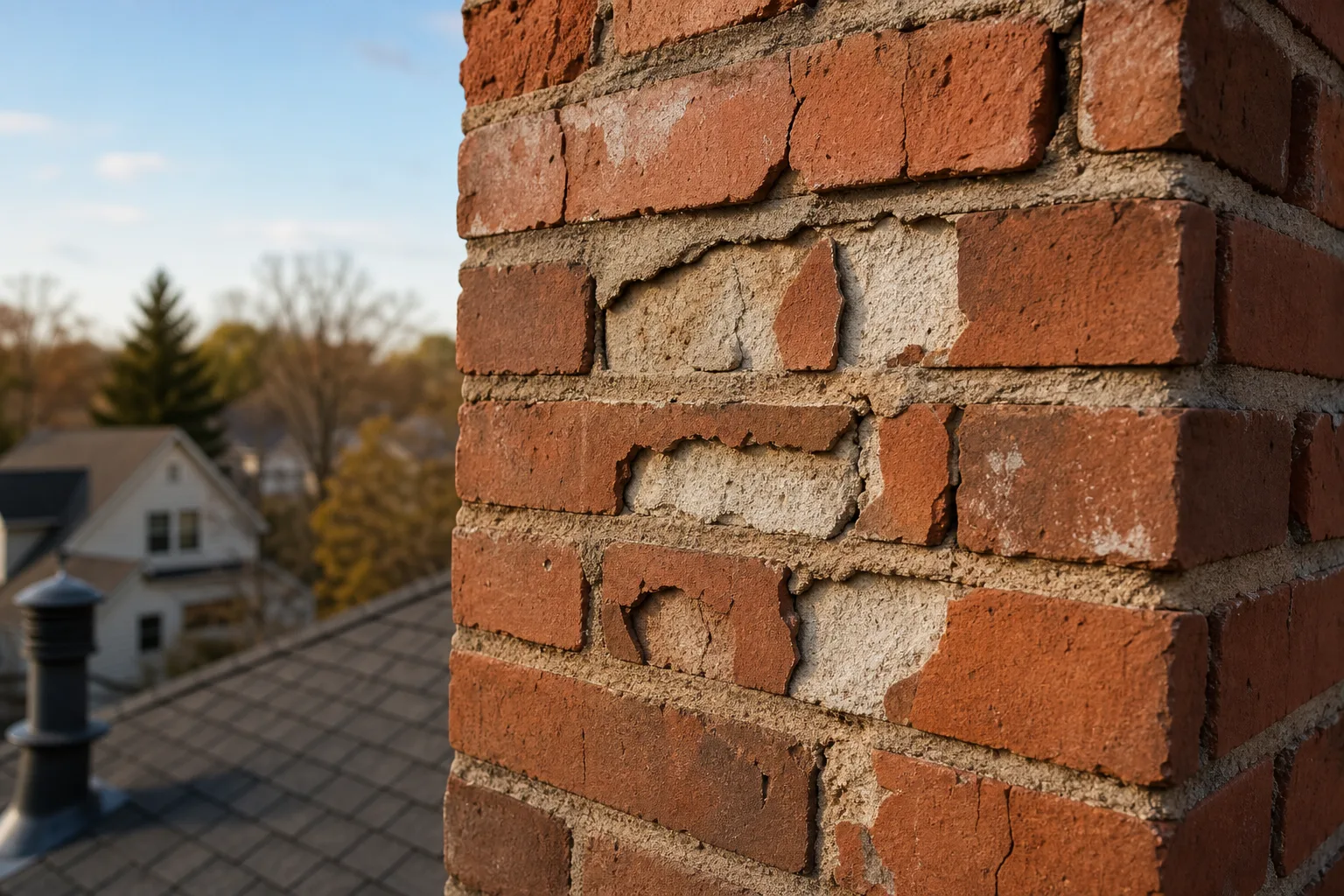
Brick faces flaking off in sheets
Spalling. The fired outer skin has gone and the brick is drinking. Once it is this far, the affected courses need replacing rather than sealing.
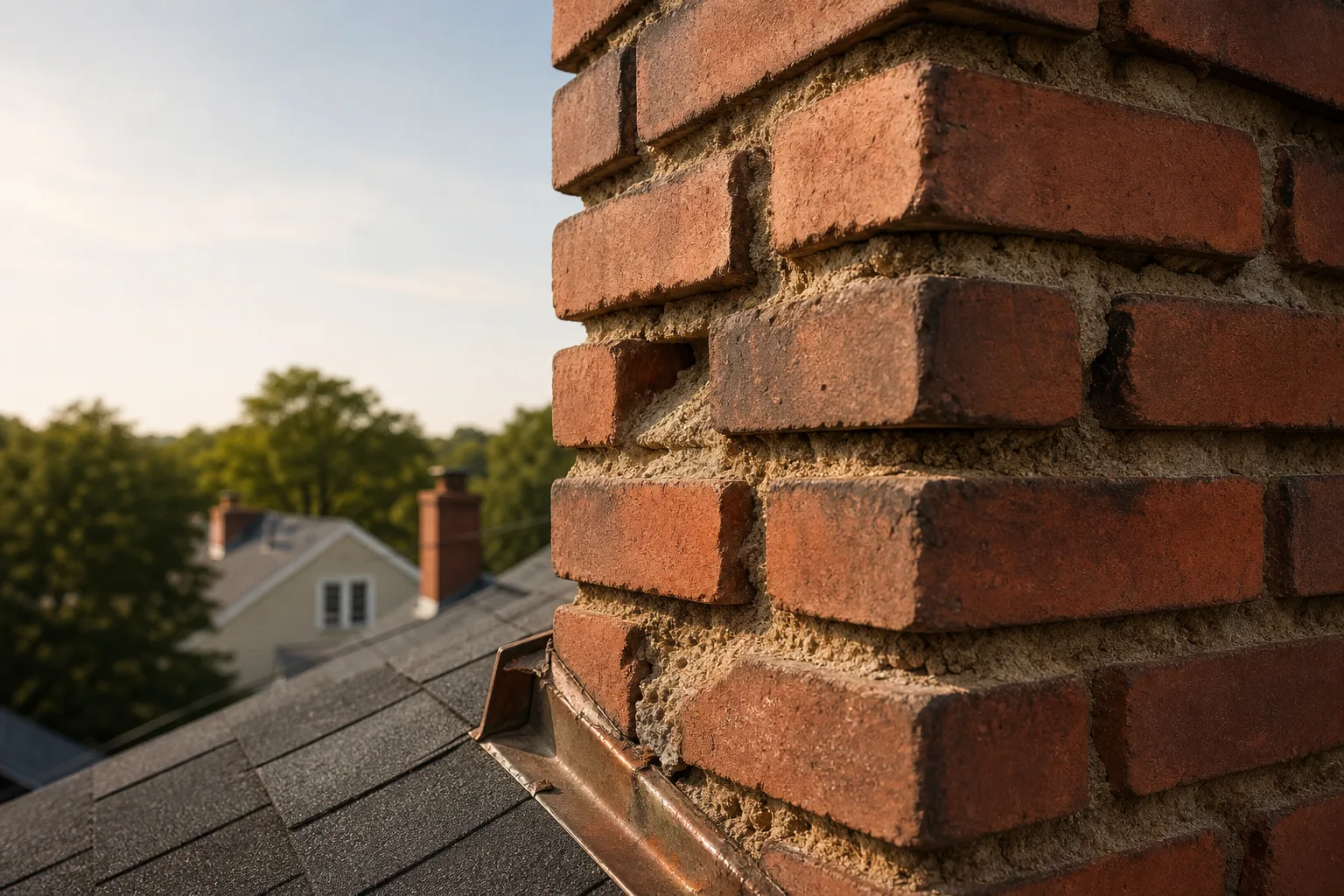
Mortar you can rake out with a key
The joints have washed back and the stack is taking water directly into the wall. This is the classic repointing case, and it only gets more expensive.
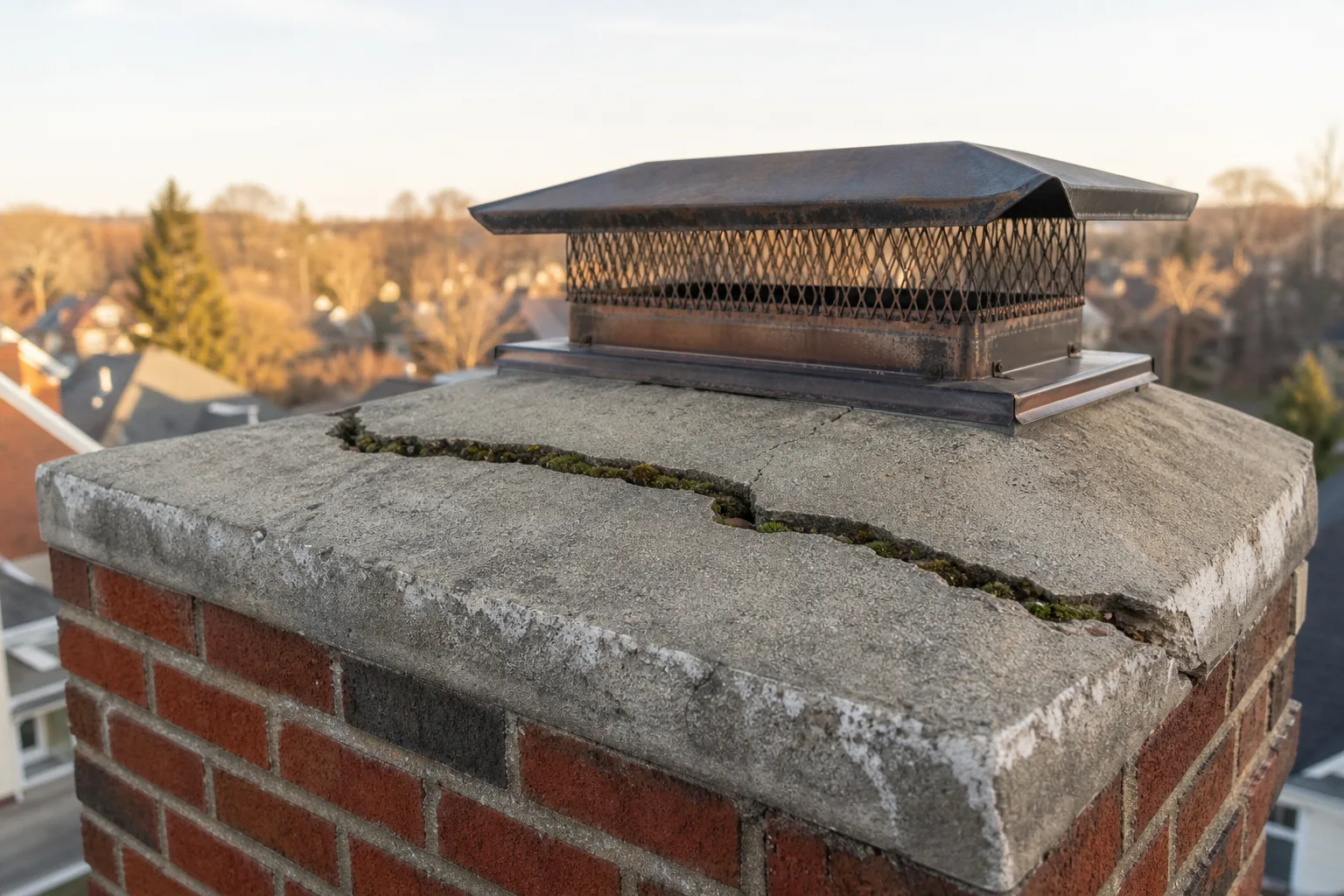
A crown cracked across its span
The cap on top of the stack has opened up. It is the fastest route for water into the middle of the masonry, and patching it does not address why it cracked.
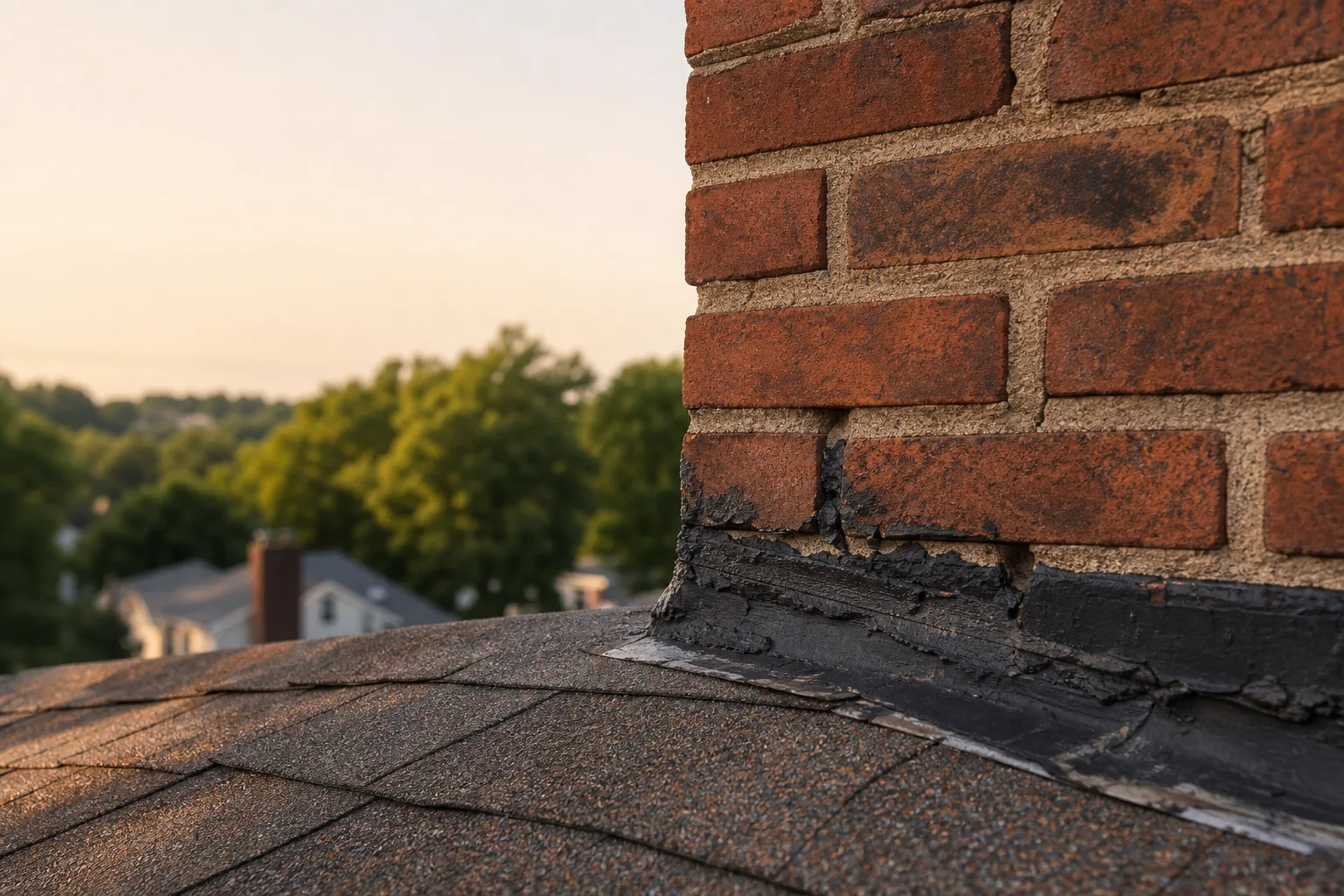
Tar smeared where the chimney meets the roof
Somebody has already tried to stop a leak here. Roofing cement shrinks and cracks, and it has to come off before proper flashing can go on.
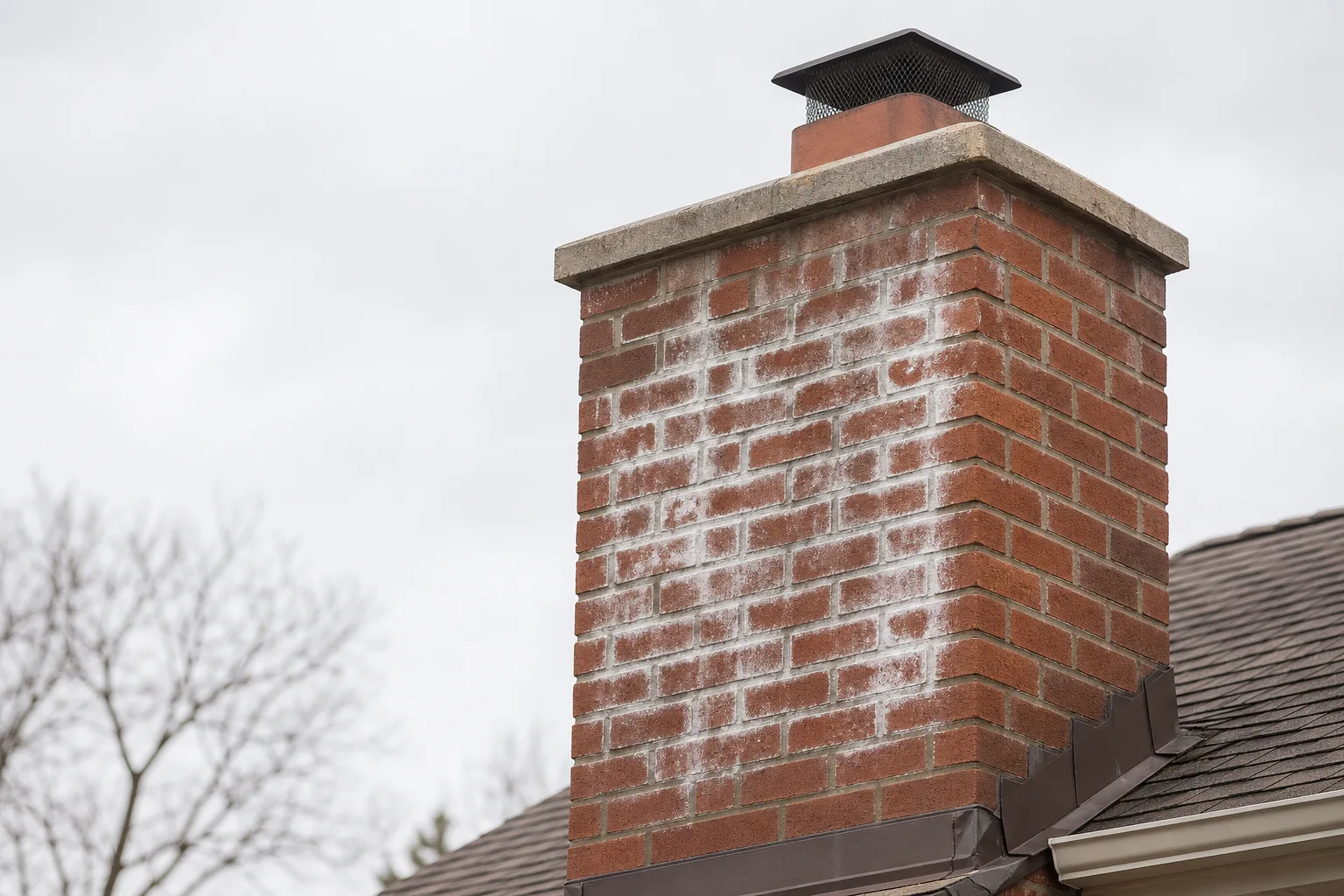
White chalky staining on the brick
Efflorescence: salts carried out of the masonry by water moving through it. The wall is wet inside, whatever the surface looks like.
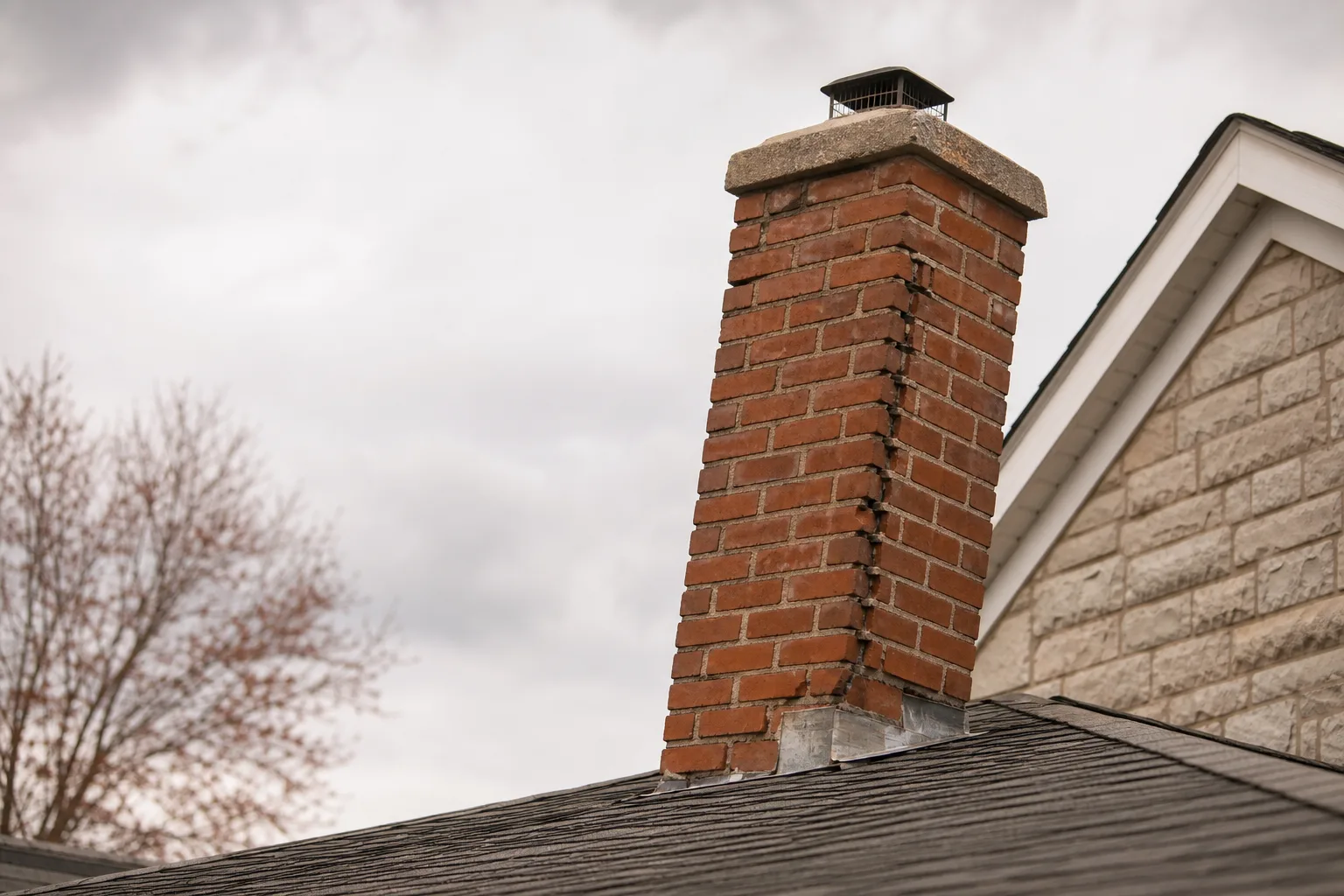
The stack is visibly out of plumb
A leaning chimney is a structural matter, not a maintenance one. Stop using the fireplace and get it looked at before anything else on this list.
How we work
How the visit works
The same four steps every time, whatever the scan turns out to find.
- 1
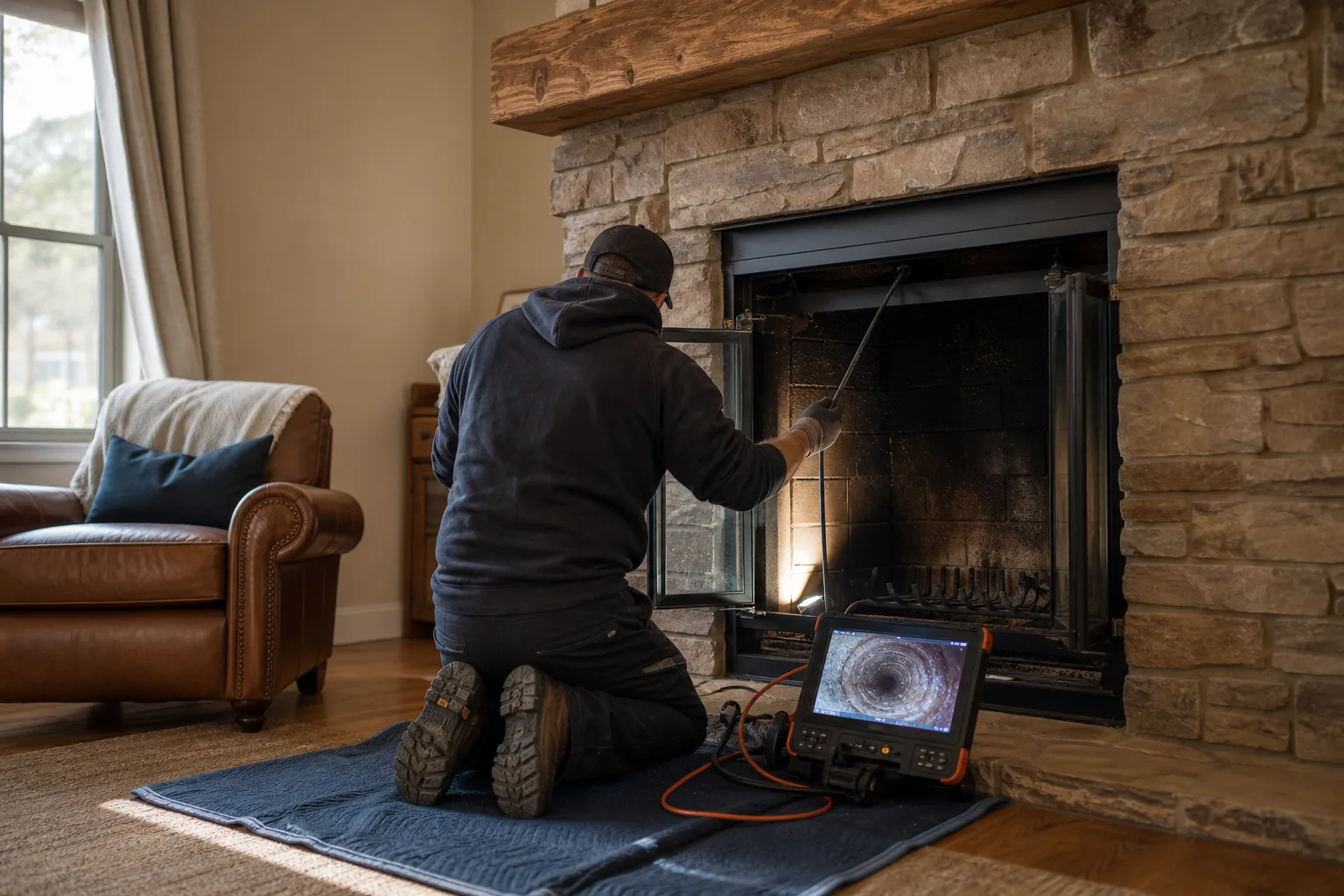
Inspection first, always
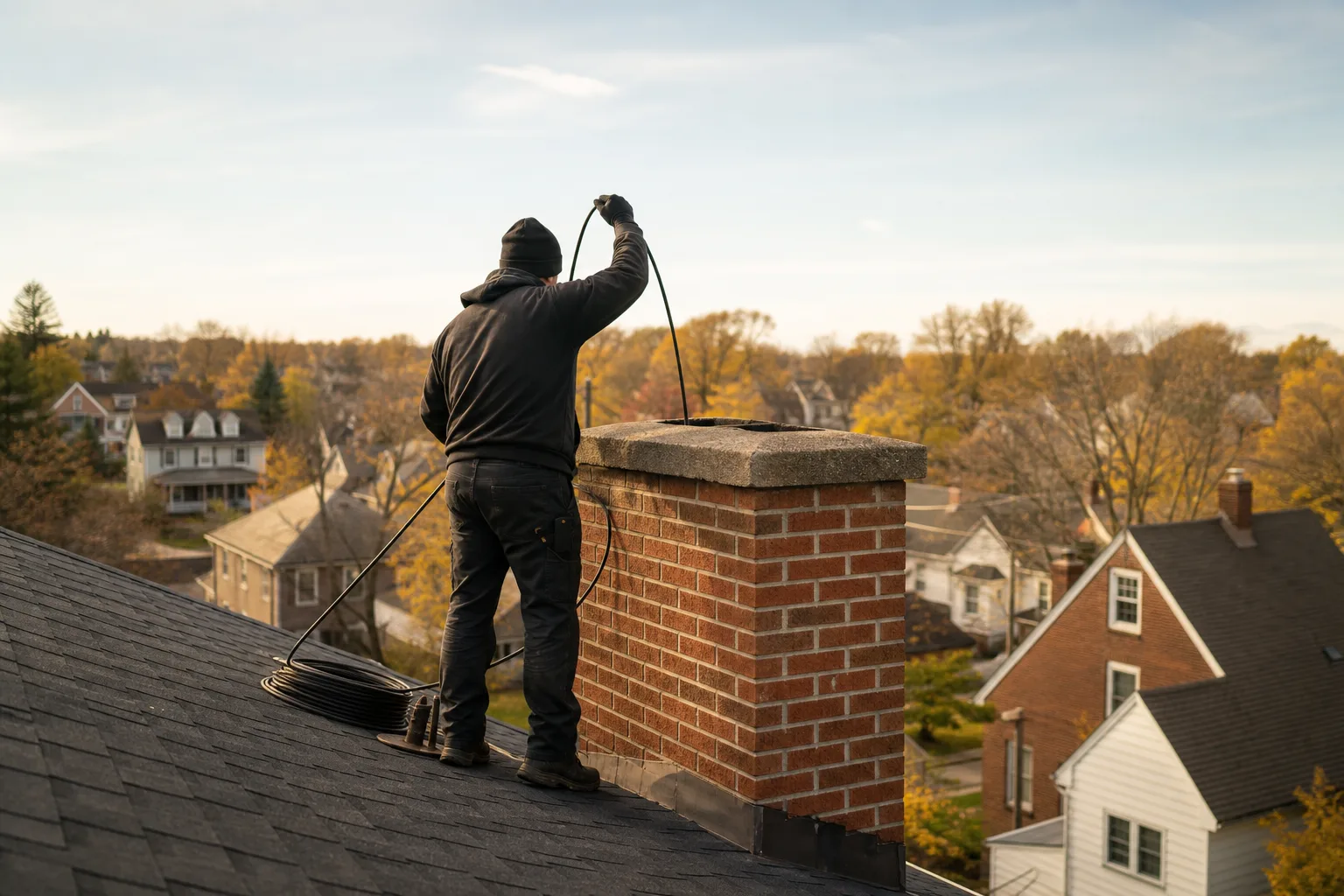
A look at the crown, cap, flashing and exterior masonry, then the flue, damper and firebox — with a camera where the job calls for a level 2 scan. Whatever needs work gets shown to you, not just described.
- 2
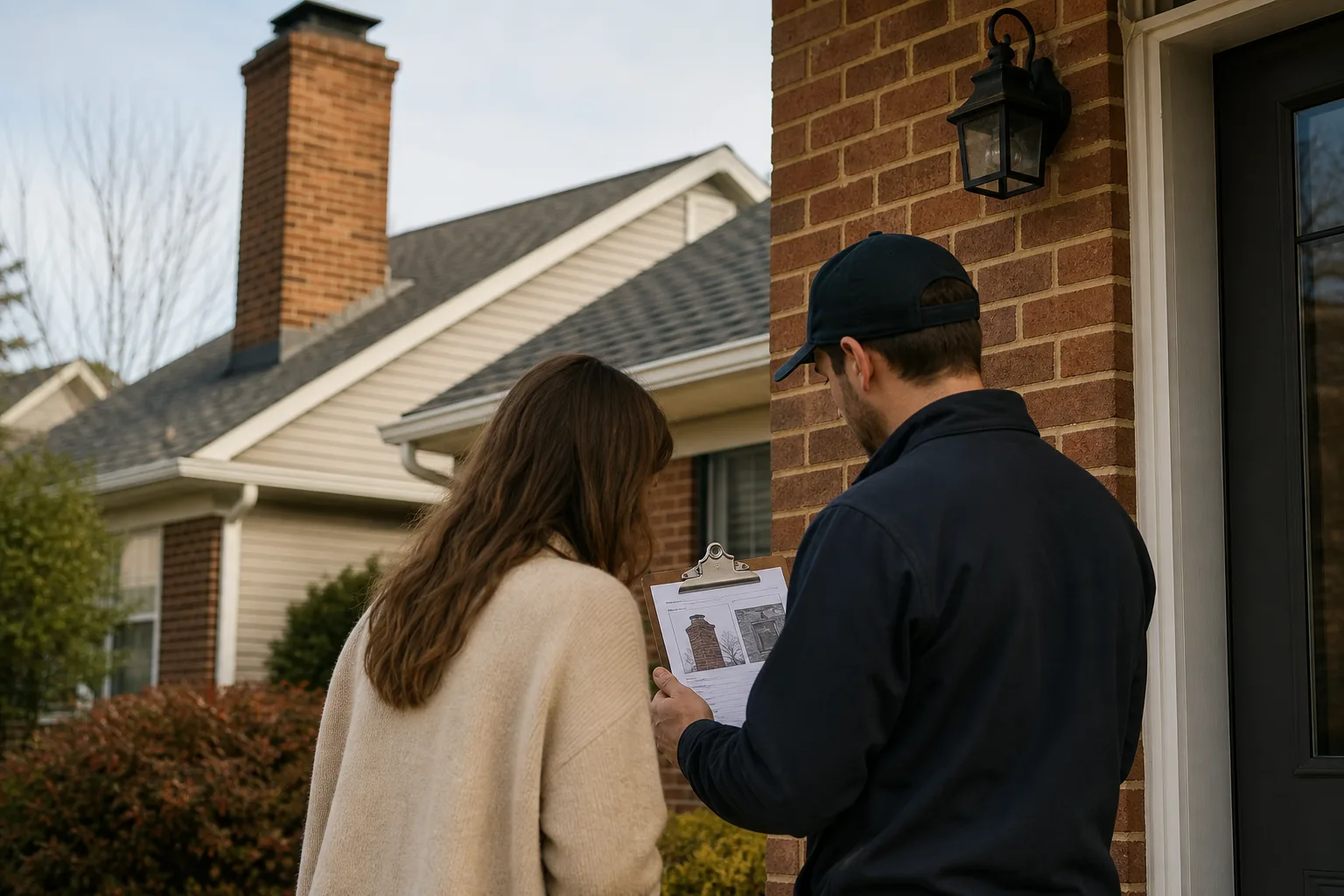
A written estimate before anything
Scope, price and what is not included, in writing. Nothing starts until you approve it, and an emergency is not a reason to skip this step.
- 3
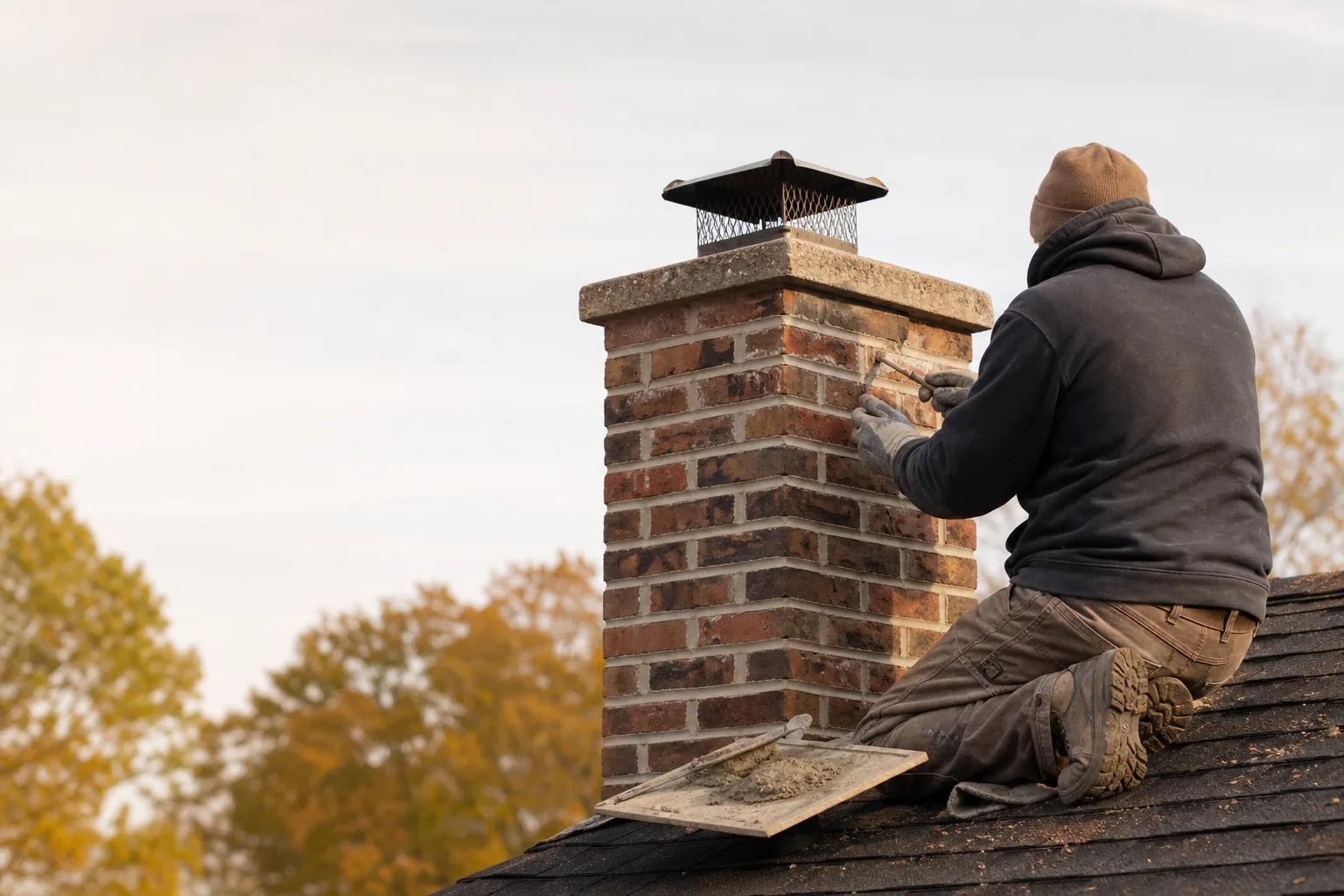
The work itself
Matched materials and the manufacturer's spec, not whatever is on the van. Drop cloths down, and the room left as it was found.
- 4
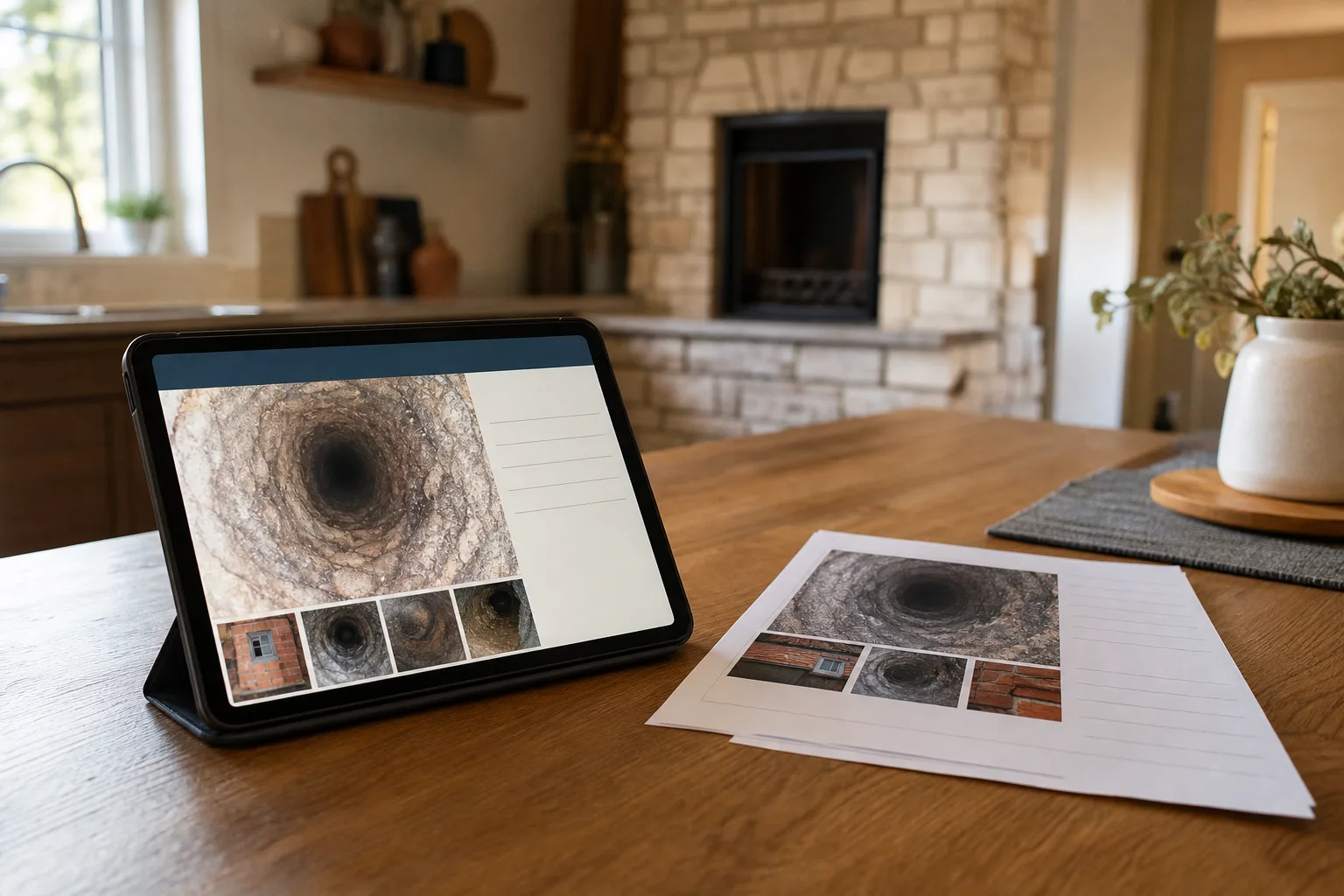
Verification and a report
A second scan after the work, and written findings you can keep, hand to an inspector, or send to an insurer.
What it covers
The jobs this actually includes
Not every job on this list is equally urgent, so they are ordered that way — safety first, then structure, then water, then prevention.
The job — most urgent first
What it involves
On site
Structural assessment on a leaning stack
Safety repairComes first when it applies. Plumb, footing, and the condition of the courses below the roofline. Nothing cosmetic is worth doing on a stack that is moving.
On site: 2 hours
Liner repair or replacement
Safety repairA breached flue puts combustion gases into the wall cavity. Common on Cleveland's century clay tile, especially the coal-era flues that have been condensing since the furnace went over to gas.
On site: 1–2 days
Crown recast with a proper overhang
StructuralCast rather than patched, with an overhang and drip edge that throws water clear of the brick, and a bond break where it meets the flue so it can move without cracking.
On site: 1 day plus cure
Repointing with matched mortar
StructuralJoints raked out to depth and refilled with a mix matched to the original in strength and colour. On pre-war Cleveland masonry that means lime-based, not modern Portland.
On site: 1–3 days
Flashing rebuilt, not tarred
Stops waterTwo-part step and counter flashing cut into the mortar joint and sealed. Any existing roofing cement comes off first, which is part of why tar patches make the eventual job dearer.
On site: About a day
Waterproofing once the repairs are done
PreventiveA vapor-permeable masonry sealer, applied after the joints are sound and never before. Sealing a wet or open stack traps the water inside, which is worse than doing nothing.
On site: Half a day
Times are for the work itself, not for scheduling. Masonry needs roughly 40°F to cure properly, which is what limits this work in a northern winter rather than whether a crew is free.
Timing
When to book chimney repair in Cleveland
The best window there is
Winter's damage is visible, temperatures are reliably above freezing, and the calendar has not filled. Mortar needs warmth to cure properly, and booking here means the repair is done in the same season the damage was caused, before another summer of rain gets into an open joint.
Full masonry season
Anything can be done: repointing, crown recasts, partial rebuilds, waterproofing. Long dry spells and warm nights are exactly what a masonry cure wants. If a repair is large enough to need scaffolding, this is when it happens without weather delays.
The last honest window
Still workable, but the first hard freeze usually lands in late October and the whole city is booking at once. Anything involving mortar needs to be finished and cured before that date, so a job quoted in mid-October may genuinely have to wait rather than be rushed.
Assess now, repair in spring
We inspect and we make things safe all winter: capping, temporary covers, taking a fireplace out of service. What we will not do is lay mortar below freezing, because it will not cure and an uncured repair fails faster than the damage it replaced. Anyone who offers to repoint your stack in January is telling you something about their work.
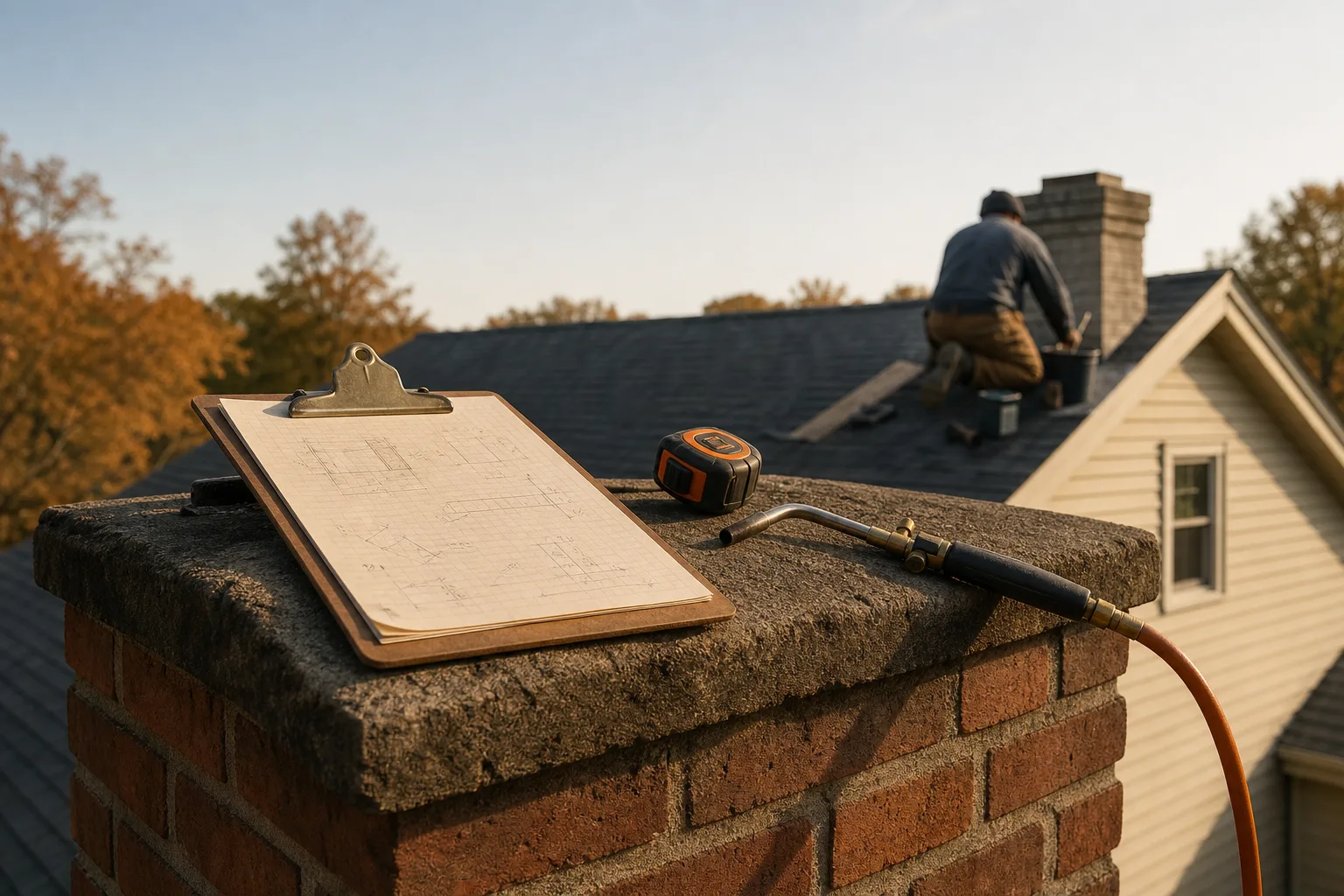
What shapes the job
What decides the work on a chimney repair in Cleveland
- Whether the joints alone have failed or the brick faces have spalled through
- How much of the stack is above the roofline, and how much of it is reachable
- Whether the crown can be recast or the top courses have to come down first
- Access: Cleveland's west-side lots are narrow and some jobs need scaffolding
- Whether the liner has to come out, which changes the job from masonry to rebuild
Chimney repair in Cleveland has the widest price range of anything we do, because "repair" covers resealing a flashing joint and it covers taking a stack down to the roofline and rebuilding it. Repointing a few courses is a day. A full crown recast with matched repointing runs into the low thousands. A rebuild above the roofline with a new liner is a different order again. That spread is exactly why we will not quote masonry over the phone, and why a contractor who does should be treated with suspicion: nobody can price a century stack from a description.
From our own jobs
What we keep finding on Cleveland repairs
Portland cement over lime mortar
The most damaging thing we find, and it is always recent work rather than original. A previous contractor repointed a century stack with a modern high-strength mix, and three or four winters later the brick faces are coming off around joints that look immaculate. It is not a cosmetic issue: once the fired skin is gone the brick absorbs water freely, and the affected courses have to be rebuilt. If a quote for a pre-war Cleveland chimney does not mention matching the existing mortar, ask why.
A crown patched instead of recast
Sealant troweled into a cracked crown buys one season, sometimes two. The crack is structural: it opened because the crown was poured flat and thin against the flue with no expansion joint, and filling it does nothing about that. We keep being called back to stacks where the crown has been patched three times over six years, at a cumulative cost well above a single proper recast. When the cracks are through-and-through, recast it once.
Water damage blamed on the wrong entry point
A ceiling stain is where water gave up, not where it got in; it can travel several feet along a rafter first. The most common wasted repair we are asked to redo is sealant applied above the stain. On a Cleveland stack there are five realistic entry points and they are nowhere near each other in price, which is why we hose-test from the bottom up one section at a time rather than quoting from a photograph.
Rebuilds sold where repointing would have held
Worth saying because it cuts against us: not every deteriorated Cleveland stack needs taking down. If the brick faces are sound and only the joints have washed back, repointing is the correct repair and it costs a fraction of a rebuild. A rebuild is the honest answer when the brick itself has spalled through, when the stack is out of plumb, or when the liner has failed and the masonry has to come apart anyway. We would rather write the smaller quote and be called again in ten years.
Where we cover in Cleveland
All Cleveland services →74 ZIP codes covered. If your address falls outside the area we say so on the call rather than booking a visit we cannot honour.
The people behind every visit
Founded by Ryan Carter in 2019. Every page you read here is reviewed by Ethan Miller, our chimney specialist. A written estimate before any work, and the findings in writing whether or not anything needs doing.
More about who we are →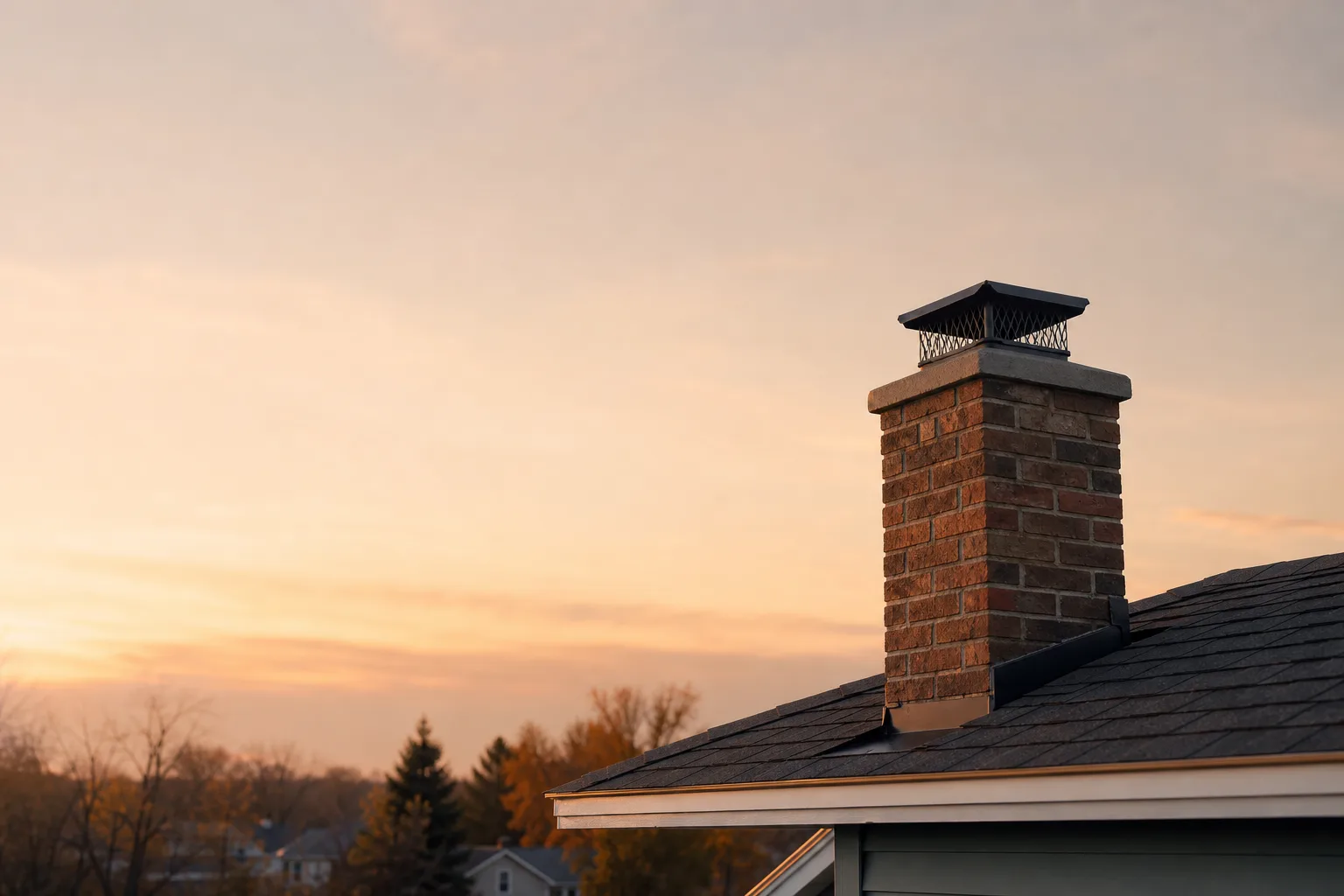
The VIO Standard
- A written estimate first
- License and insurance checked
- Nothing starts without your OK
Cleveland questions