



On this pageThe September checklist7 sections+6
Quick answer
Do the roof-side work by late September: masonry and crown repairs need above-freezing cure time, and Cuyahoga County sweep calendars fill by mid-October. The first lake-effect event will find whatever you left unsealed.
The September checklist
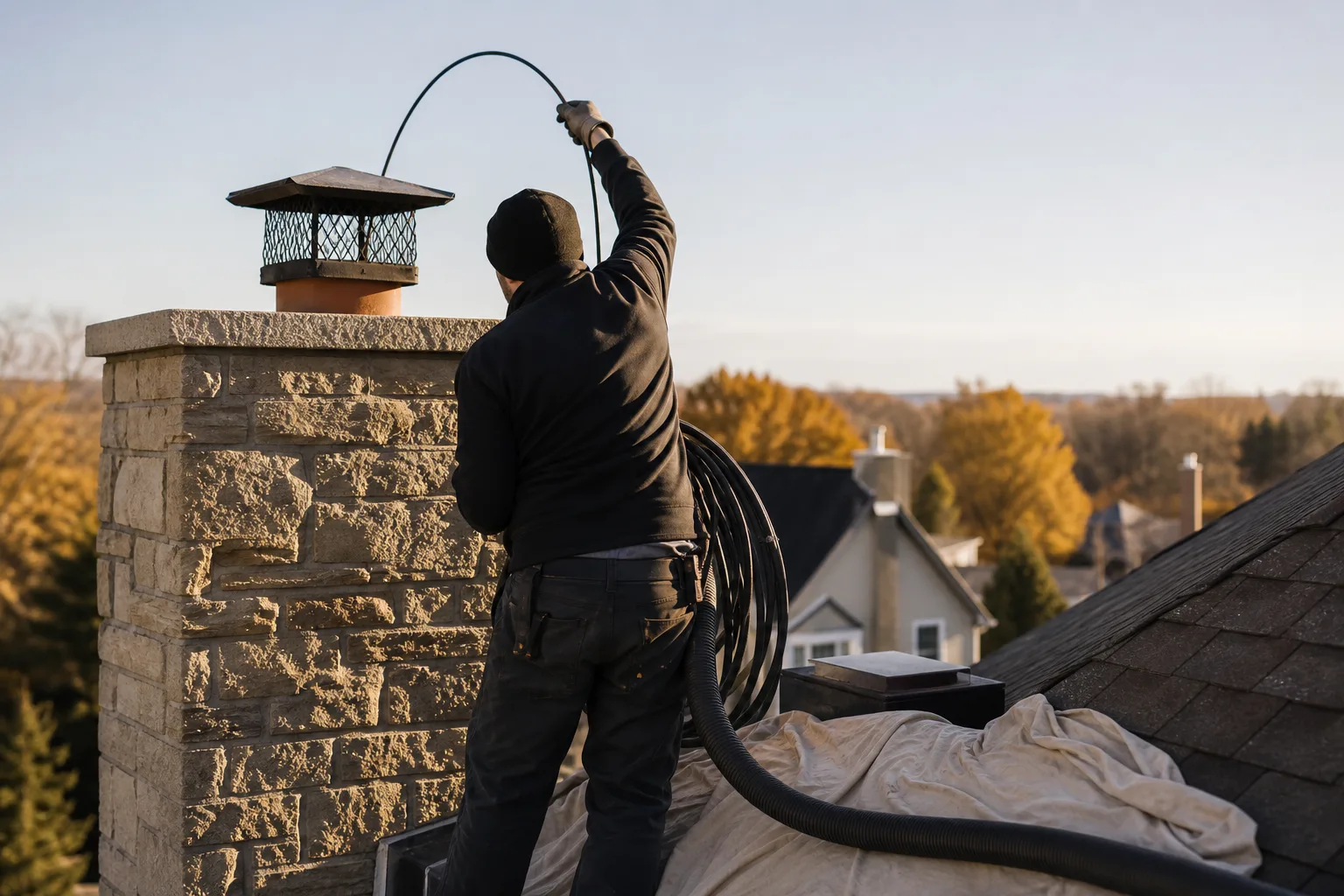
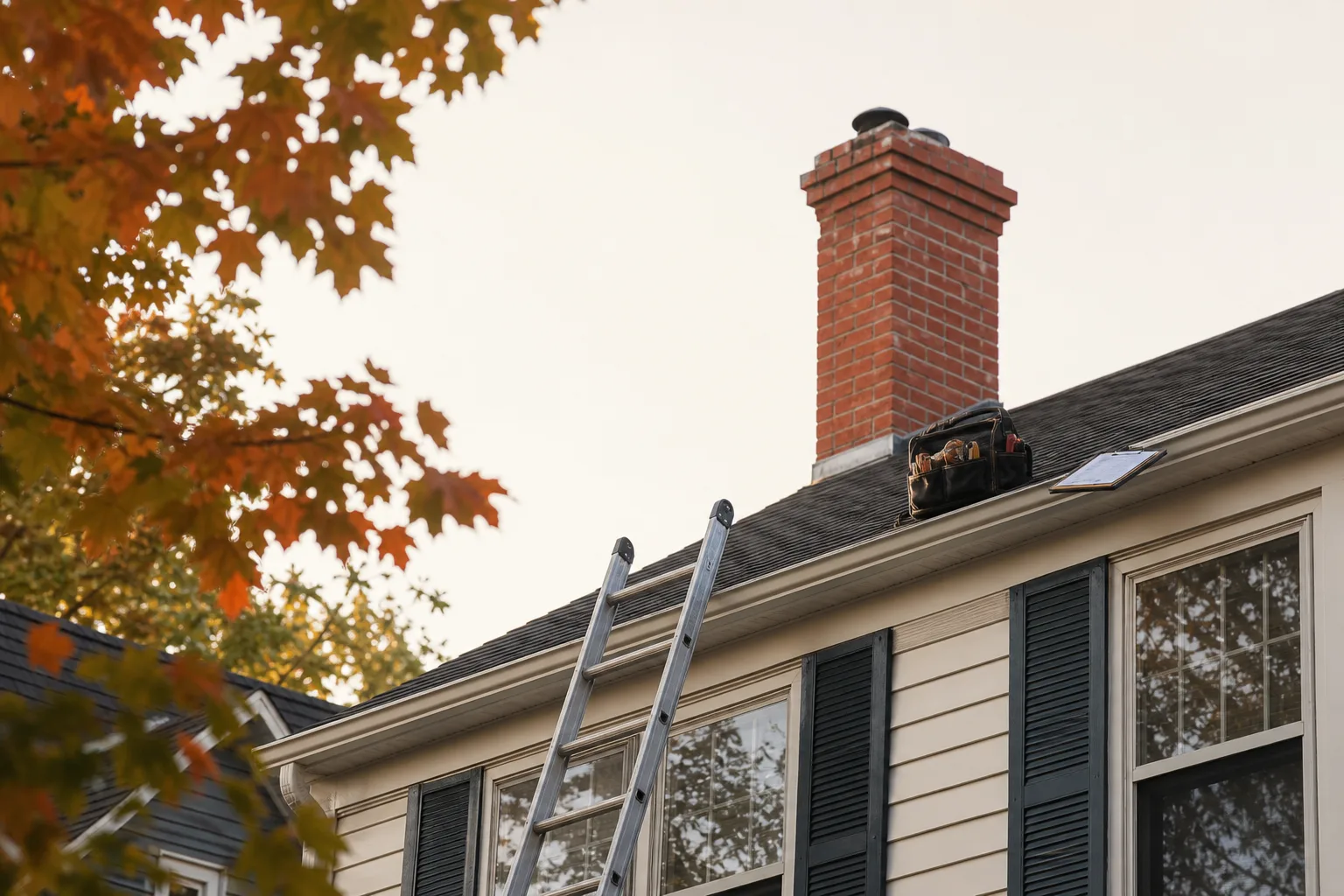
- Sweep + Level 1 inspection — Clear the season's creosote and get eyes on the flue before first fire. If it's been 12+ months, this is non-negotiable.
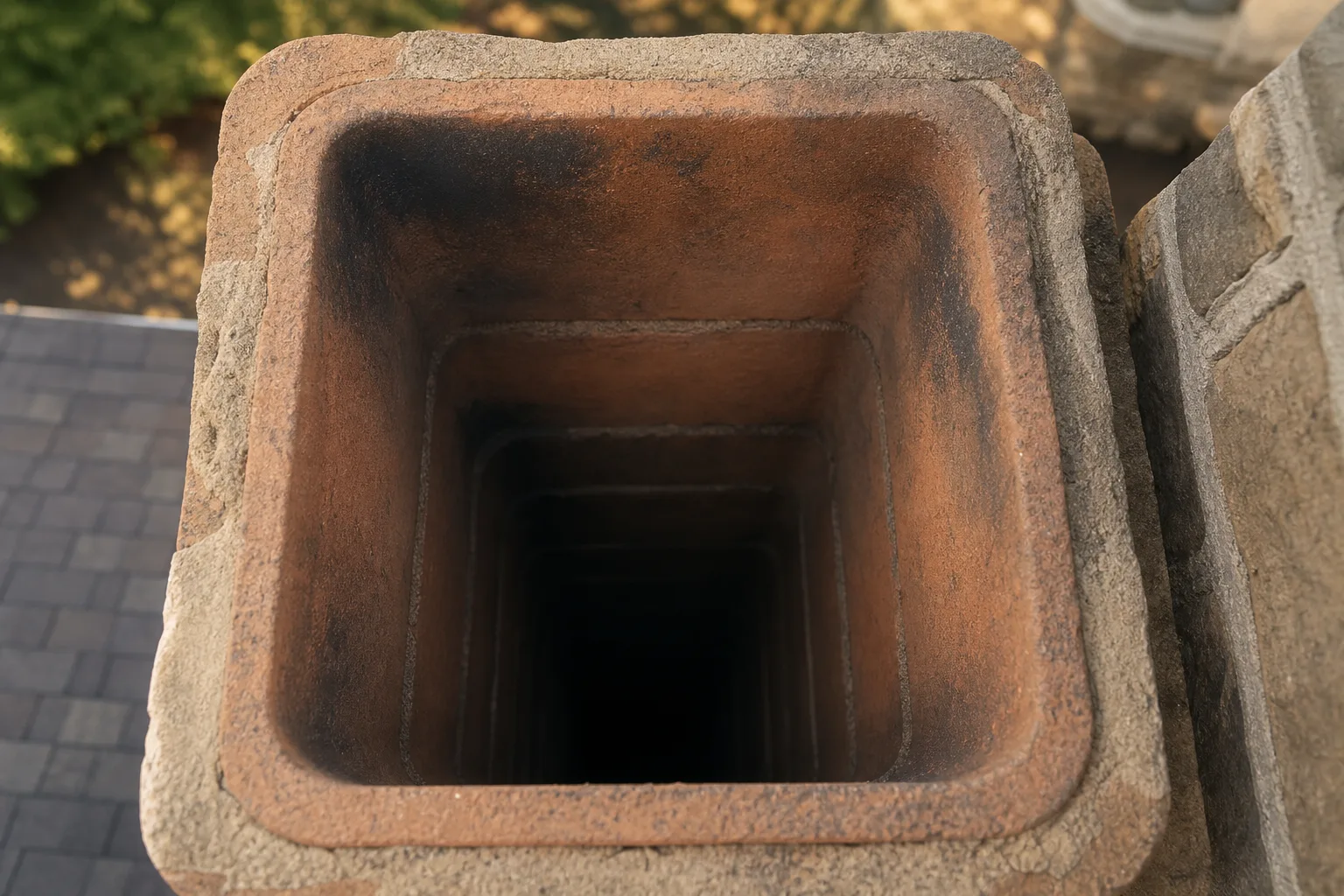
- Check the crown for cracks — Hairline cracks are cheap to seal in September and expensive to rebuild in spring. Freeze-thaw does the widening for free.
- Confirm the cap is on and intact — Lake-effect snow falls sideways. An uncapped or bent cap lets water, and nesting animals — straight into the flue.
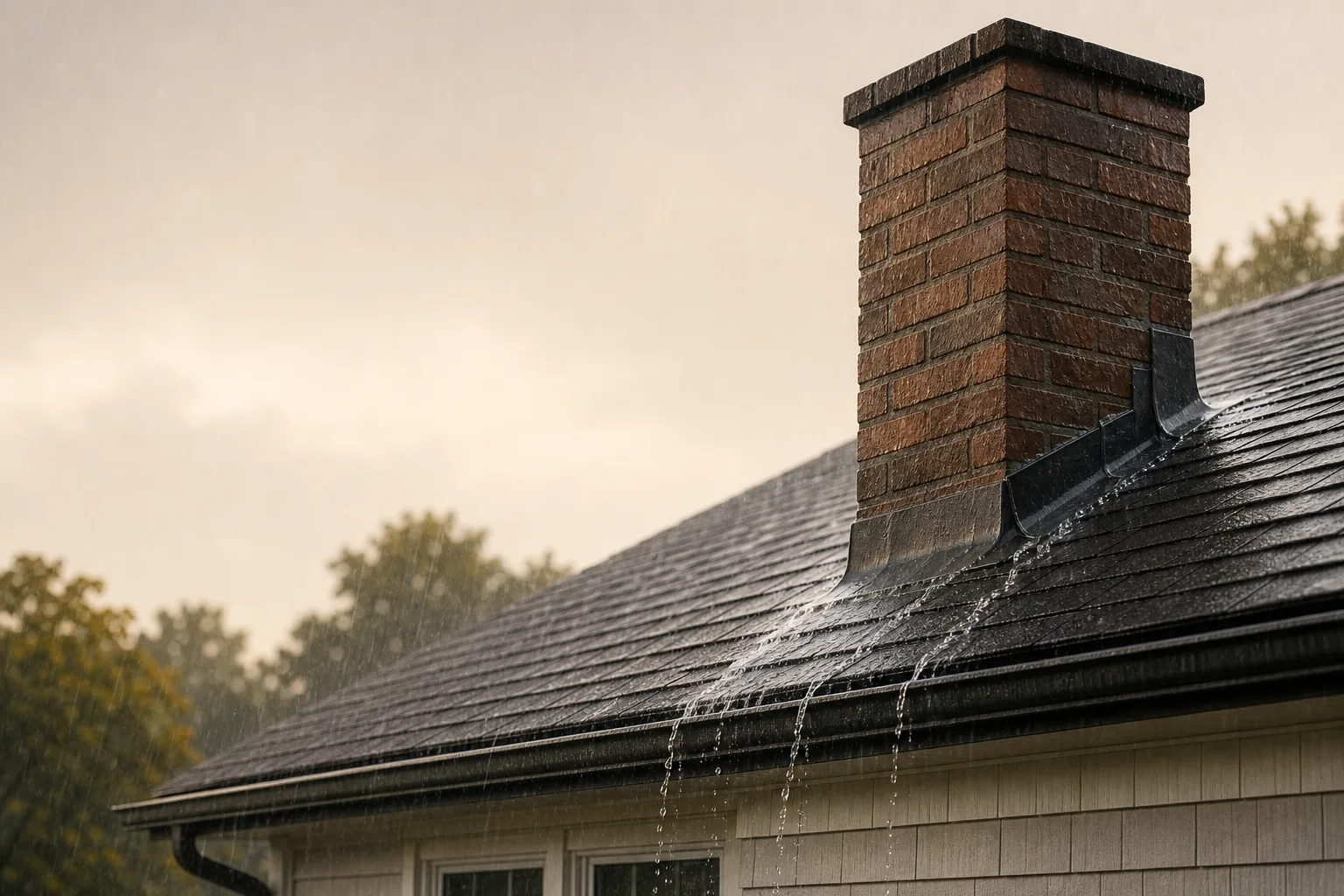
- Look at the flashing line — Lifted or rusted flashing is Cleveland's #1 winter leak source. A reseal now beats a ceiling stain in January.
- Test the damper seal — A damper that won't close is an open window all winter — cold air in, heating dollars out.
- Stack seasoned hardwood only — Wood split and dried since spring burns hot and clean. Wet wood is how next year's creosote problem starts.
Why Cleveland chimney winter prep is a September job, not a December one
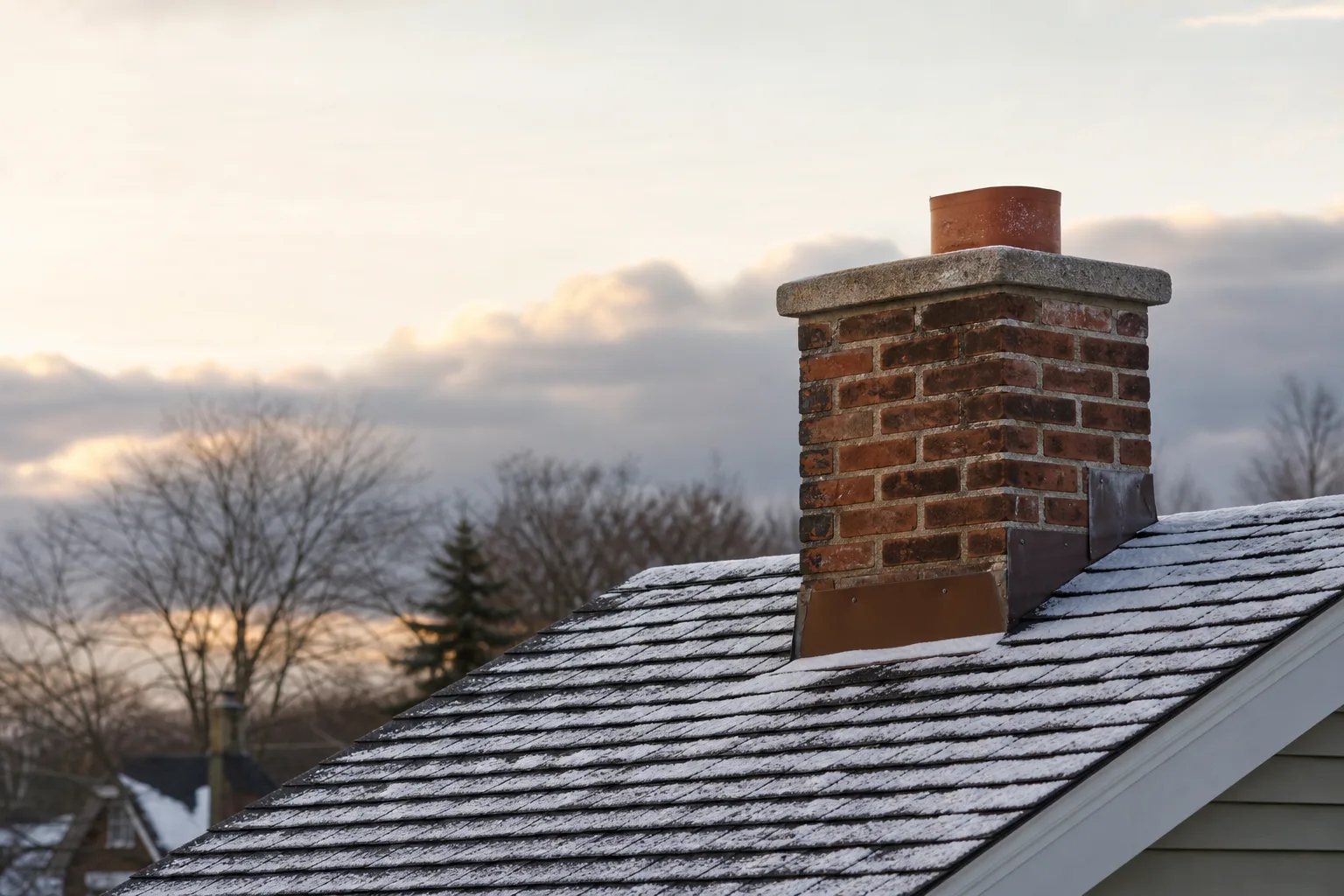
The repair side of the list is temperature-dependent. Mortar needs air temperatures above roughly 40°F for a day or two to cure properly, and most crown sealants and flashing membranes want 50°F and a dry surface. Cleveland's average first measurable snow lands in the second week of November, and overnight lows are already dipping below freezing by mid-October. That leaves a narrow window, which is exactly why Cleveland chimney winter prep gets scheduled while the weather still cooperates.
The calendar is the other constraint. Sweep schedules across Cuyahoga, Lake and Lorain counties fill up once the first cold snap sends everyone reaching for the phone. A September or early-October appointment is usually a one-week wait. The same call in November is often three to four weeks, and if the inspection turns up a repair, you're waiting on weather too.
What a Level 1 inspection actually covers
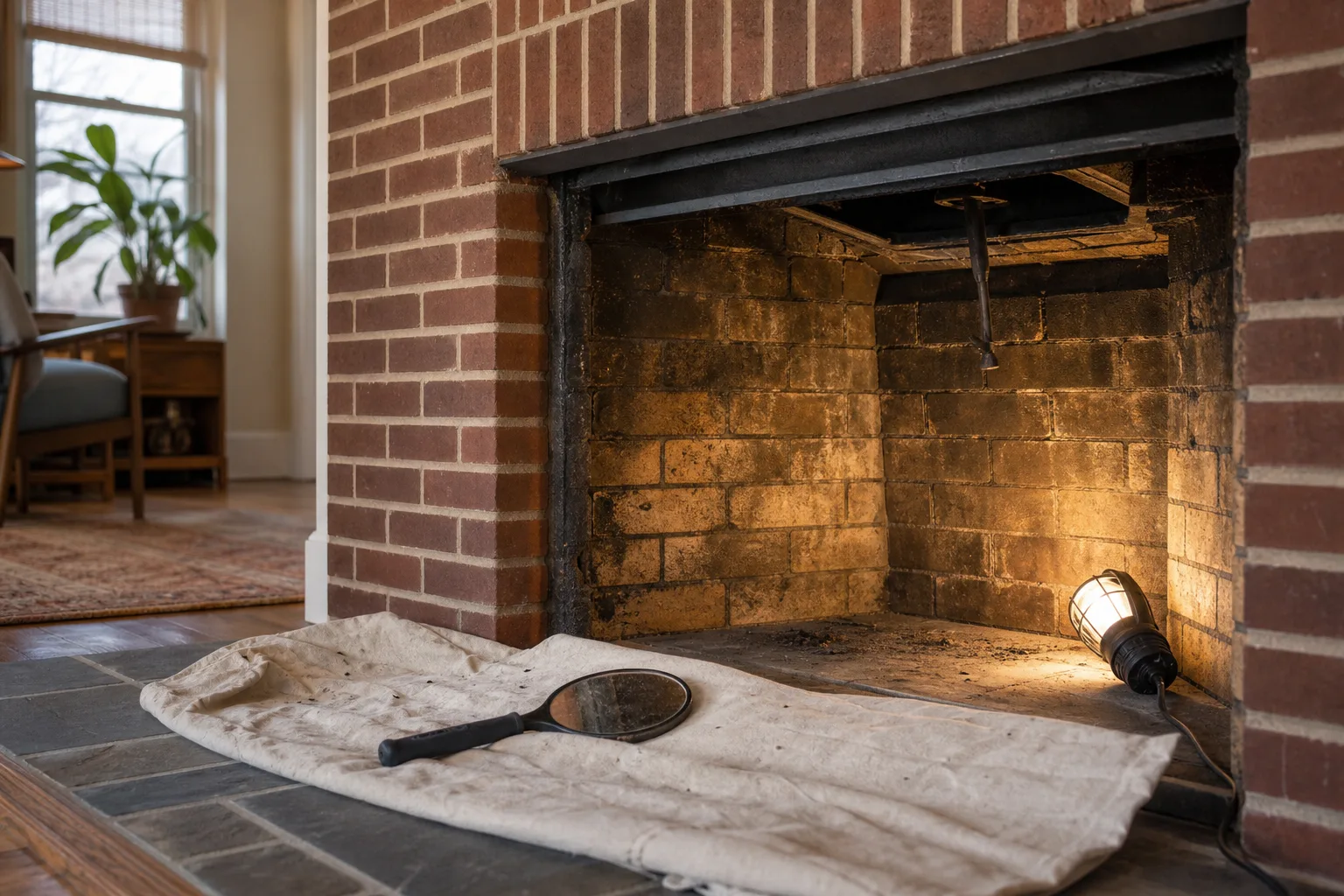
A Level 1 inspection follows the NFPA 211 standard and covers all readily accessible portions of the chimney, the appliance connection and the flue interior. On a typical Cleveland fireplace, that means:
- Firebox brick and mortar joints, checking for gaps wider than about 1/8 inch
- Damper operation and seal
- Smoke chamber and shelf condition
- Camera scan of the flue for creosote glaze, cracked clay tiles and offsets
- Crown, cap, flashing and the top three or four courses of brick from the roof
- Combustion air and clearance to combustibles at the hearth
We measure creosote thickness rather than eyeballing it. Anything past about 1/8 inch of hard glaze gets flagged, because that's the form that ignites and burns hot enough to crack tile.
The three failures we find most often here
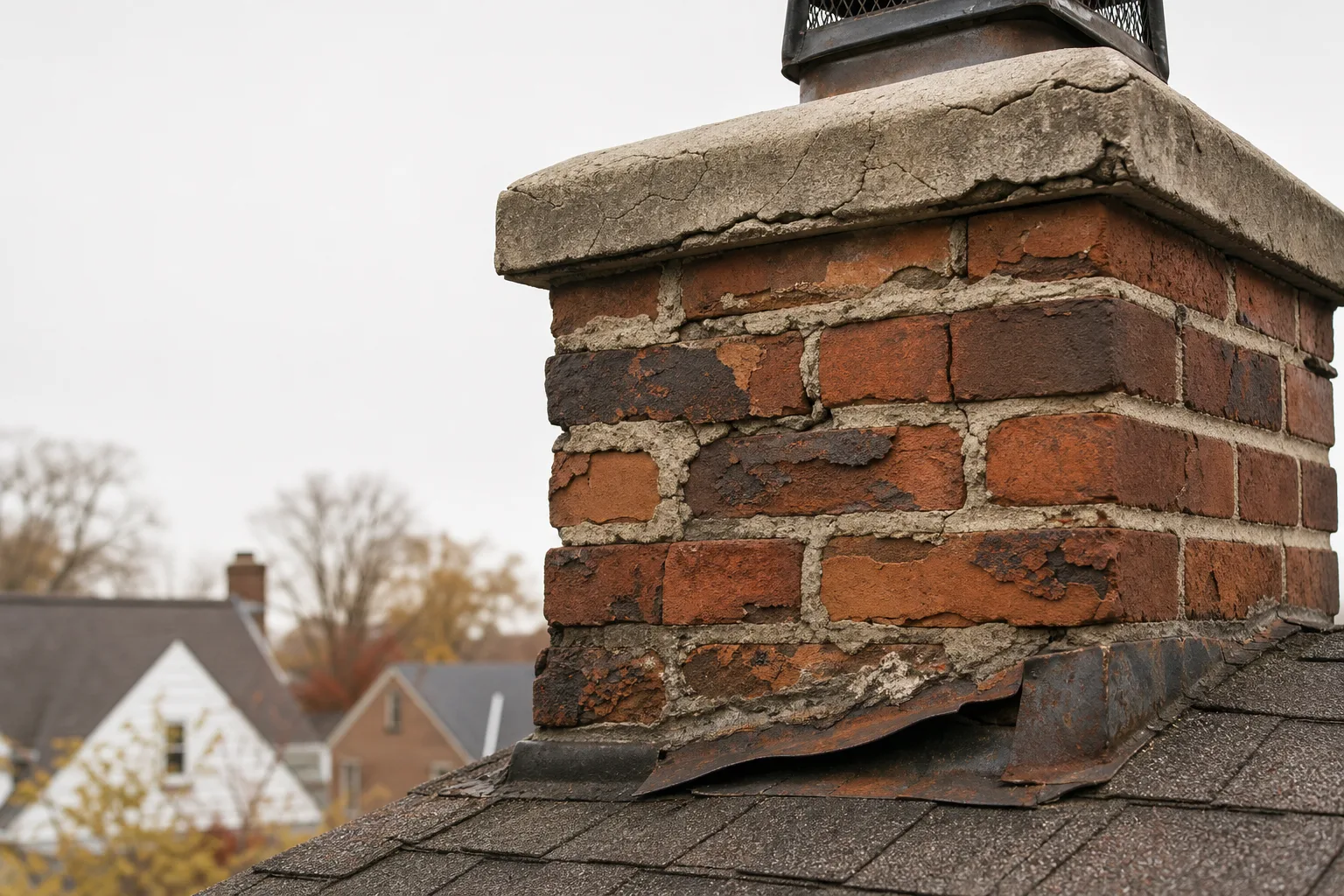
Crown deterioration. Most pre-war Cleveland chimneys were topped with a thin mortar wash instead of a proper cast crown with an overhang and drip edge. Those washes crack. A sealant coat buys years; a rebuilt crown runs a few hundred dollars and lasts decades.
Flashing separation. Older Lakewood, Ohio City and Tremont roofs often have flashing that was face-nailed and caulked rather than stepped and counterflashed into a mortar reglet. Wind-driven snow finds it every time.
Spalling brick and failing clay tile. When water soaks into brick and freezes, the face pops off. Inside the flue, water plus creosote makes an acidic mix that eats mortar joints between tiles. A stainless liner is the permanent fix on a badly deteriorated flue.
Gas appliances need prep too
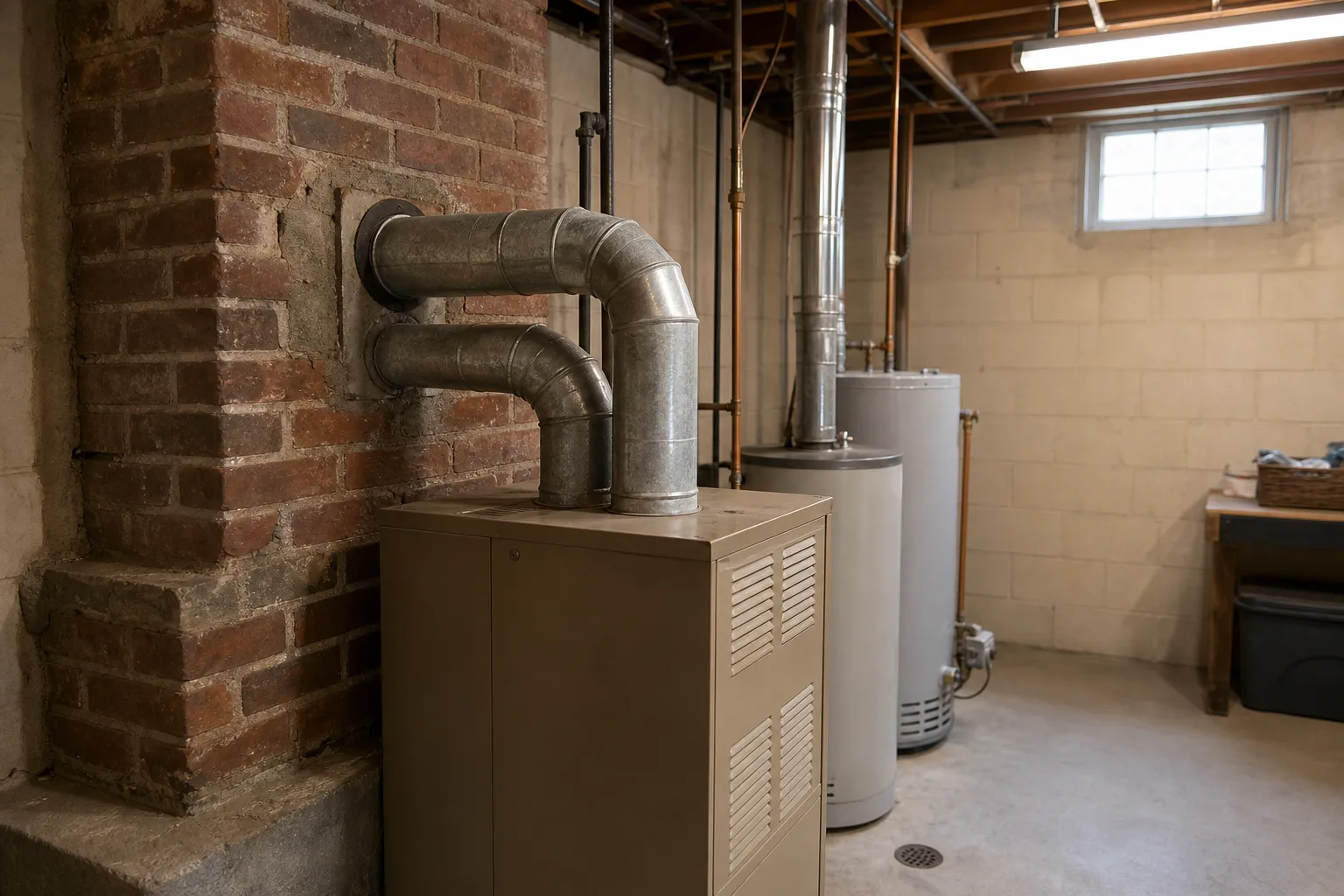
If your furnace or water heater vents into a masonry chimney, that flue still needs an annual look. Acidic condensate from modern high-efficiency equipment attacks clay tile, and an oversized flue lets flue gases cool and condense instead of drafting. A blocked or deteriorated gas flue is a carbon monoxide risk, not just a draft complaint.
Wood that's actually ready to burn
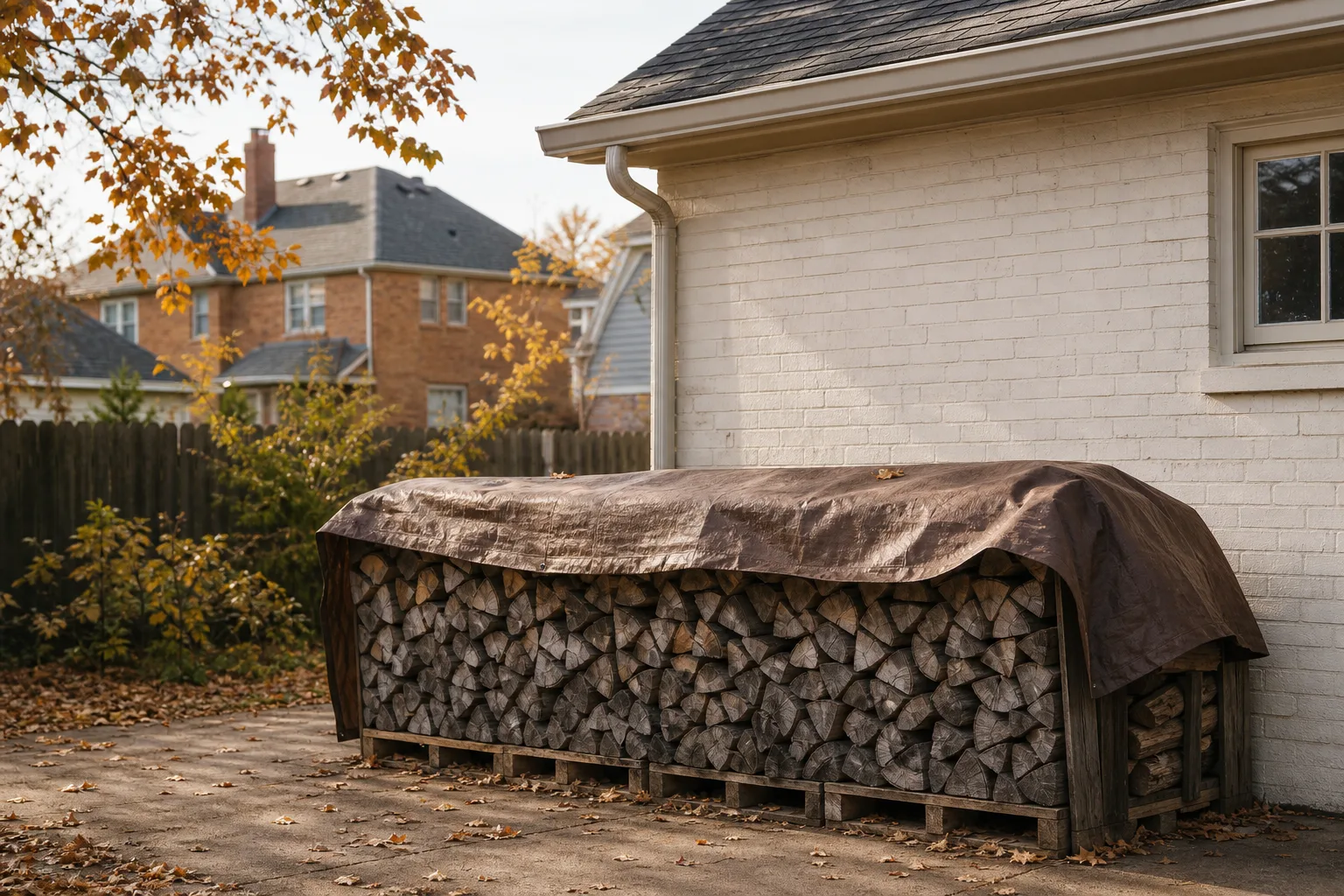
Seasoned means under 20 percent moisture on a meter, not "cut last month." Ash and cherry get there in six to nine months; oak needs a full 18 to 24. Split it, stack it off the ground with the top covered and the sides open, and keep it away from the house. Never burn pressure-treated lumber, pallets or driftwood.
What it costs and how to book
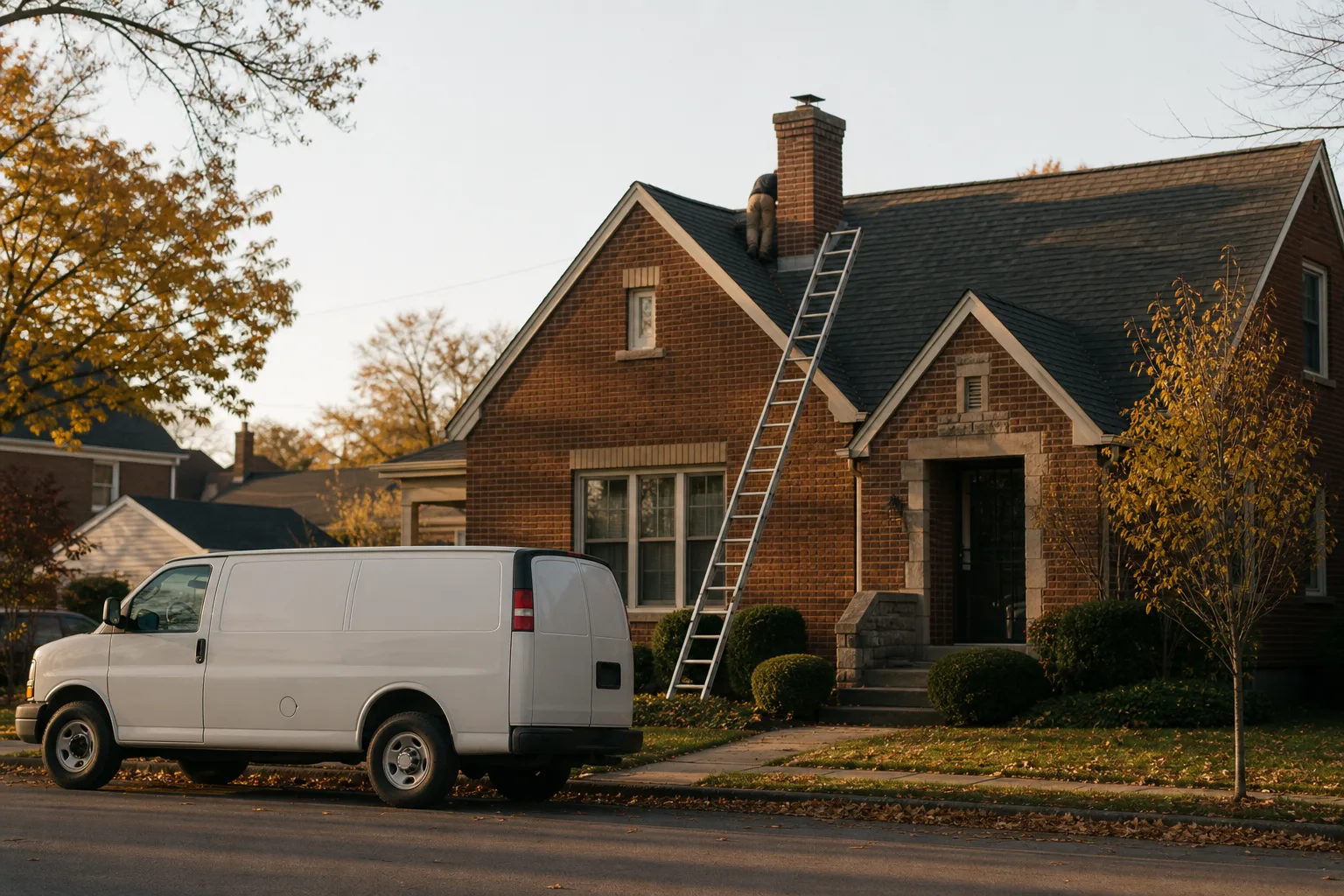
A sweep comes with a Level 1 inspection, and anything it turns up (a crown to seal, flashing to reseal, a liner to replace) is quoted in writing before work starts. Bundling the sweep and any roof-side work into one visit keeps the trip charge to one. Call in September, get the whole Cleveland chimney winter prep list handled in a single morning, and burn with confidence when the lake turns on.
Symptom checker
What is your chimney doing?
Tap the closest match for an honest first answer.