



Chimney problem

Birds in chimney flues: the law, the wait, the fix

Chimney swifts are protected by federal law. Which bird you have decides whether this is a call today or a wait of a few weeks.

5.0/5
8 verified reviews
Ethan MillerEthan Miller · Chimney specialist, VIO CHIMNEYLast reviewed July 20264 min read
Address soon

Safe to use for now, and it gets more expensive every month you leave it.

The short answer

If they are chimney swifts, nobody can legally remove them until the young fledge.

Birds in chimney flues fall into two groups and the law treats them very differently. Chimney swifts nest in flues by preference and are protected under the Migratory Bird Treaty Act — removing an active nest is a federal offence, and the wait is typically two to four weeks until the young leave. Starlings and pigeons are not protected and can be removed at any time. A bird that has fallen in and cannot climb out is the third case, and that one is urgent for the bird's sake as much as yours.

What you are hearing

Nesting, or fallen in

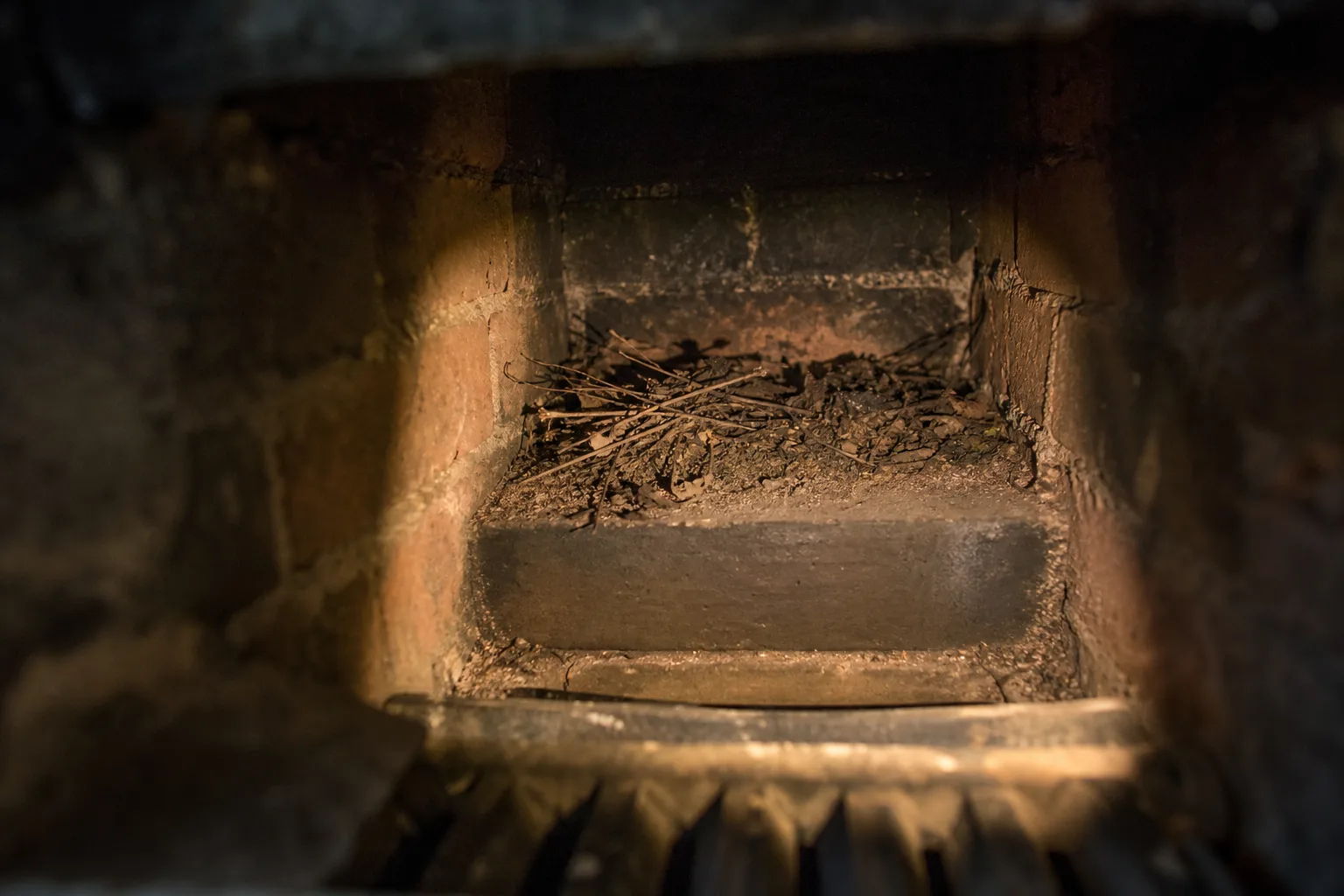
Twigs and nesting material piled on a chimney smoke shelf under torchlight

A rhythmic chatter high in the flue is a nest. Frantic flapping low down is a bird that cannot climb out, and that one needs help today.

Before we get there

What to do right now

None of this fixes it. All of it stops the problem getting more expensive between now and the visit.

  1. Do not light a fire. Nesting material sitting above the firebox is dry tinder, and a fire under it is how chimney fires start.

  2. Keep the damper closed so nothing gets into the room, unless you think a bird has fallen below it.

  3. Listen at different times of day. Daytime chattering that rises when you open the damper is swifts; night scrabbling is a mammal.

  4. Do not try to smoke them out. It is illegal with a protected species, cruel with any, and leaves you with a blocked flue.

  5. Note when the noise started. Swift season runs spring into late summer, and the date narrows what you are dealing with.

Work out which is yours

Why birds in chimney flues happen at all

Ordered by how often it turns out to be the answer, so you can stop reading once you recognise yours.
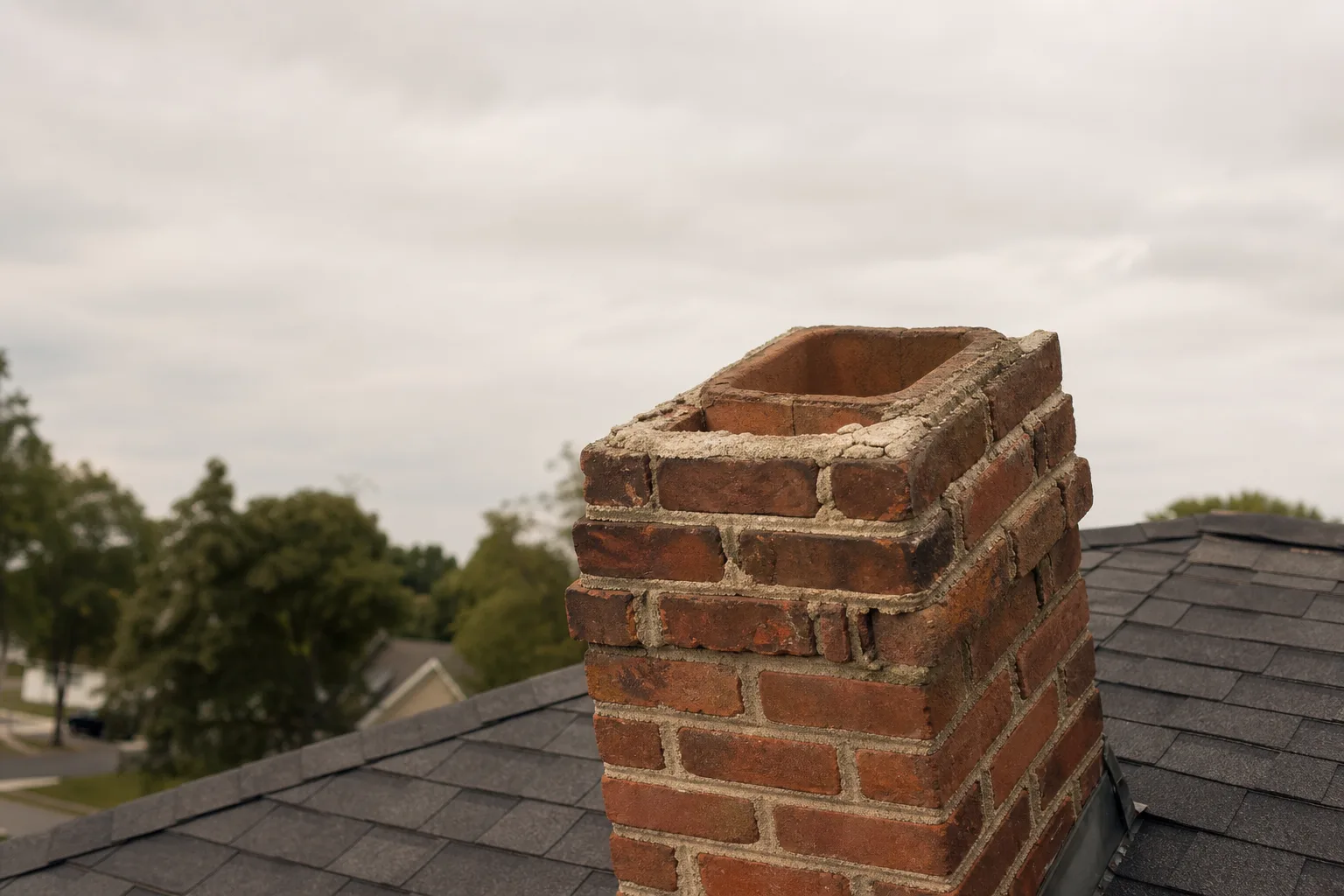
Brick chimney missing its cap, flue opening exposed to an overcast sky above the roof
Most common

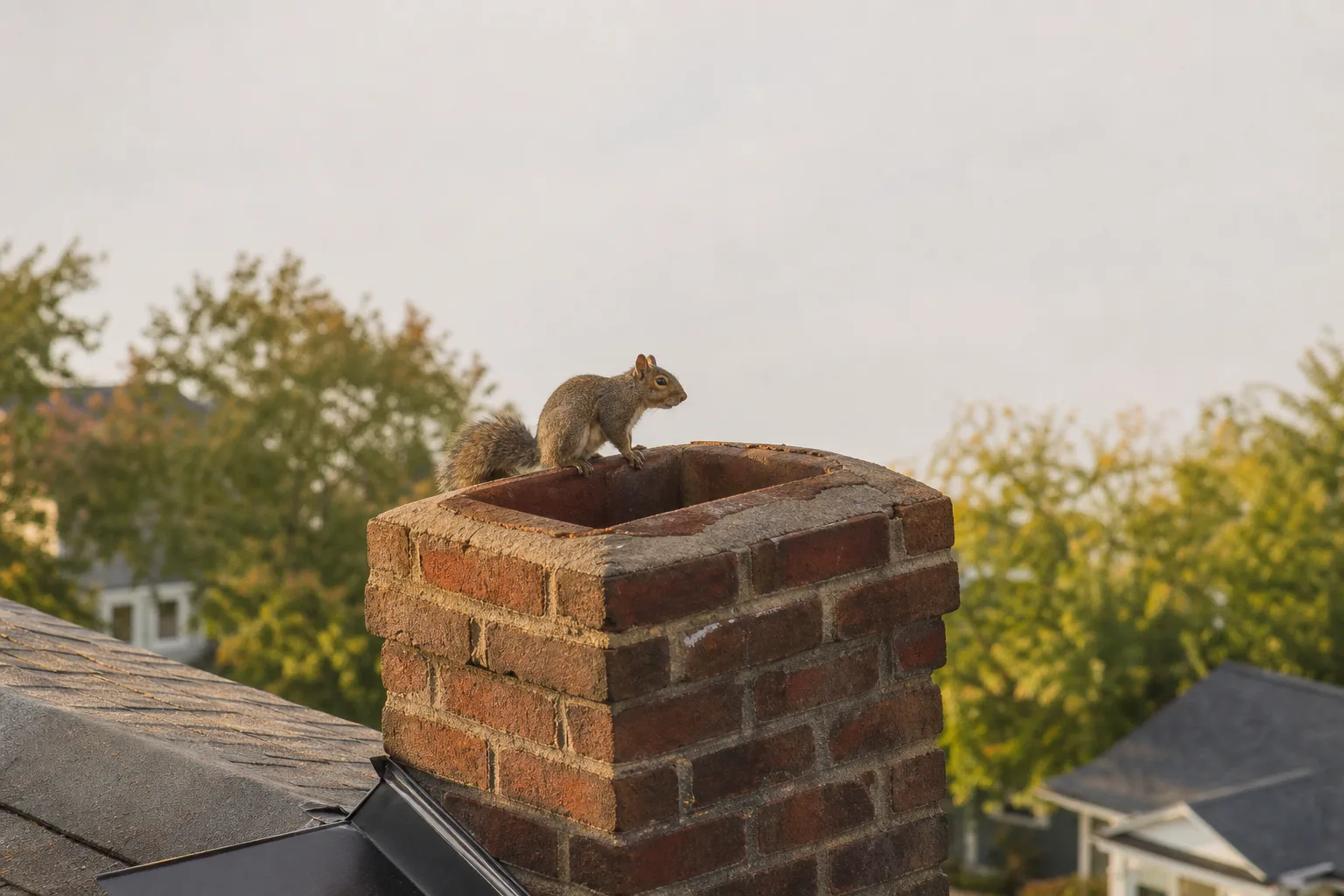
The flue has no cap

An open flue is a sheltered vertical shaft with a rough interior — which is precisely what a chimney swift evolved to nest in. This is the cause, not a contributing factor, and until it is capped it will happen again.
Squirrel perched on the open top of an uncapped brick chimney flue in daylight
Most common

Chimney swifts have chosen it

Swifts cannot perch and need a vertical wall to cling to. Hollow trees used to do the job; chimneys replaced them. They are protected, which makes the timing rather than the removal the difficult part.

Brick chimney missing its cap, flue opening exposed to an overcast sky above the roof
Common

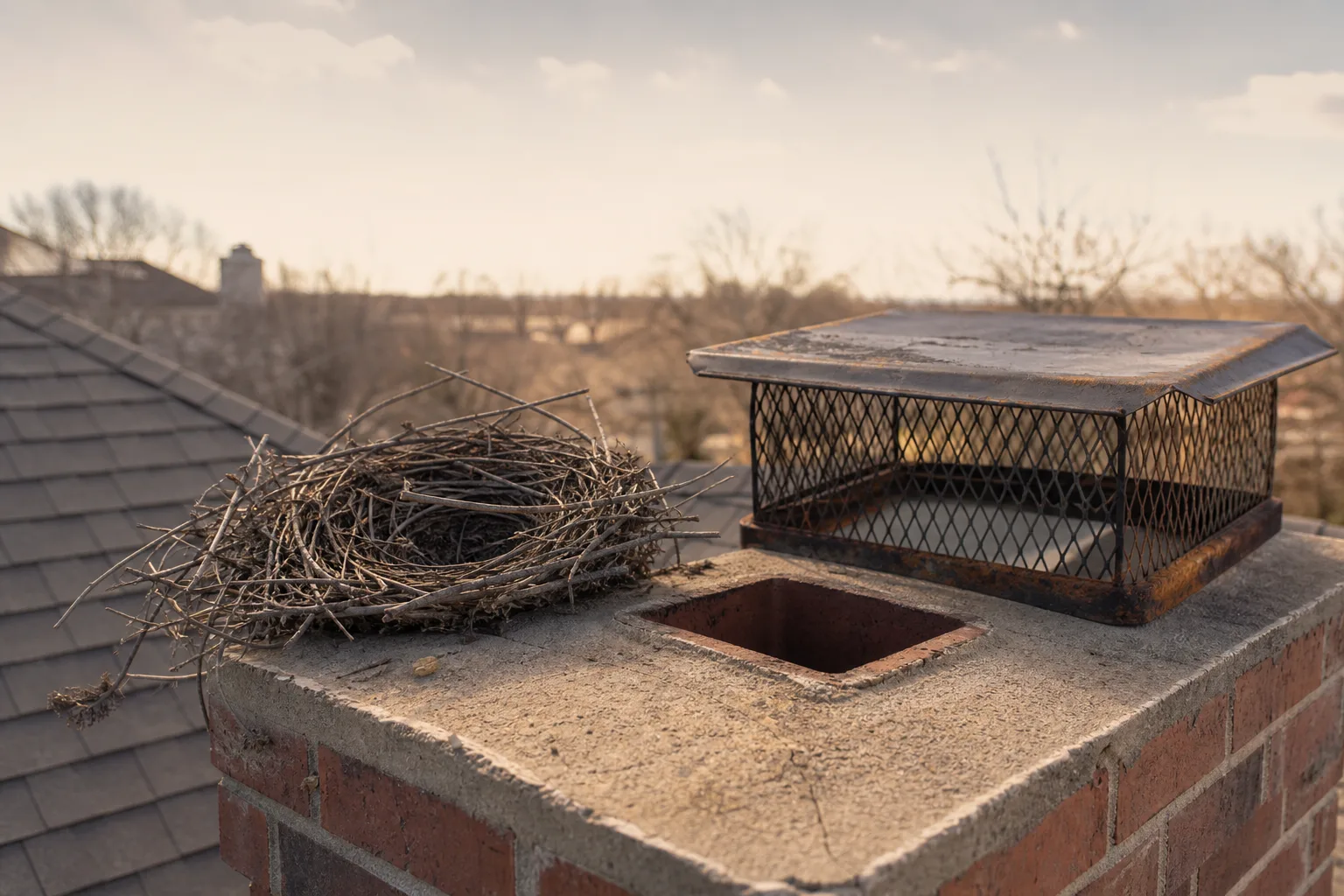
A cap with a broken or missing mesh

A cap that has rusted through or lost its screen looks like protection from the ground and is an open door from the air. Worth checking before assuming there is no cap at all.
Loose black soot fallen onto the hearth in front of a fireplace opening
Common

A bird has fallen in and cannot climb out

Starlings and pigeons cannot climb a smooth flue. If the sound is frantic and low, it is trapped rather than nesting, and it will not free itself.

Twigs and nesting material piled on a chimney smoke shelf under torchlight
Less common

Last year's nest was removed without capping

Clearing a nest and leaving the flue open is a visit you repeat every spring. The removal is the easy half of the job.

Five minutes, no ladder

Checks you can make yourself

  • Is the sound a rhythmic chatter high in the flue?

    Almost certainly chimney swifts, and almost certainly a wait until they fledge.

  • Is it frantic flapping low down, near the damper?

    A bird has fallen in. It cannot climb out and needs help today.

  • Is it scrabbling or scratching at night?

    Not a bird. Raccoons and squirrels are active at dusk and after dark.

  • Is the nest a twiggy heap, or a small half-cup stuck to the flue wall?

    A heap on the smoke shelf is starlings or pigeons and can be cleared today. A shallow cup of twigs glued to the vertical wall with saliva is a swift nest, and that one is protected while it is in use.

  • Can you see a cap on the flue from the ground?

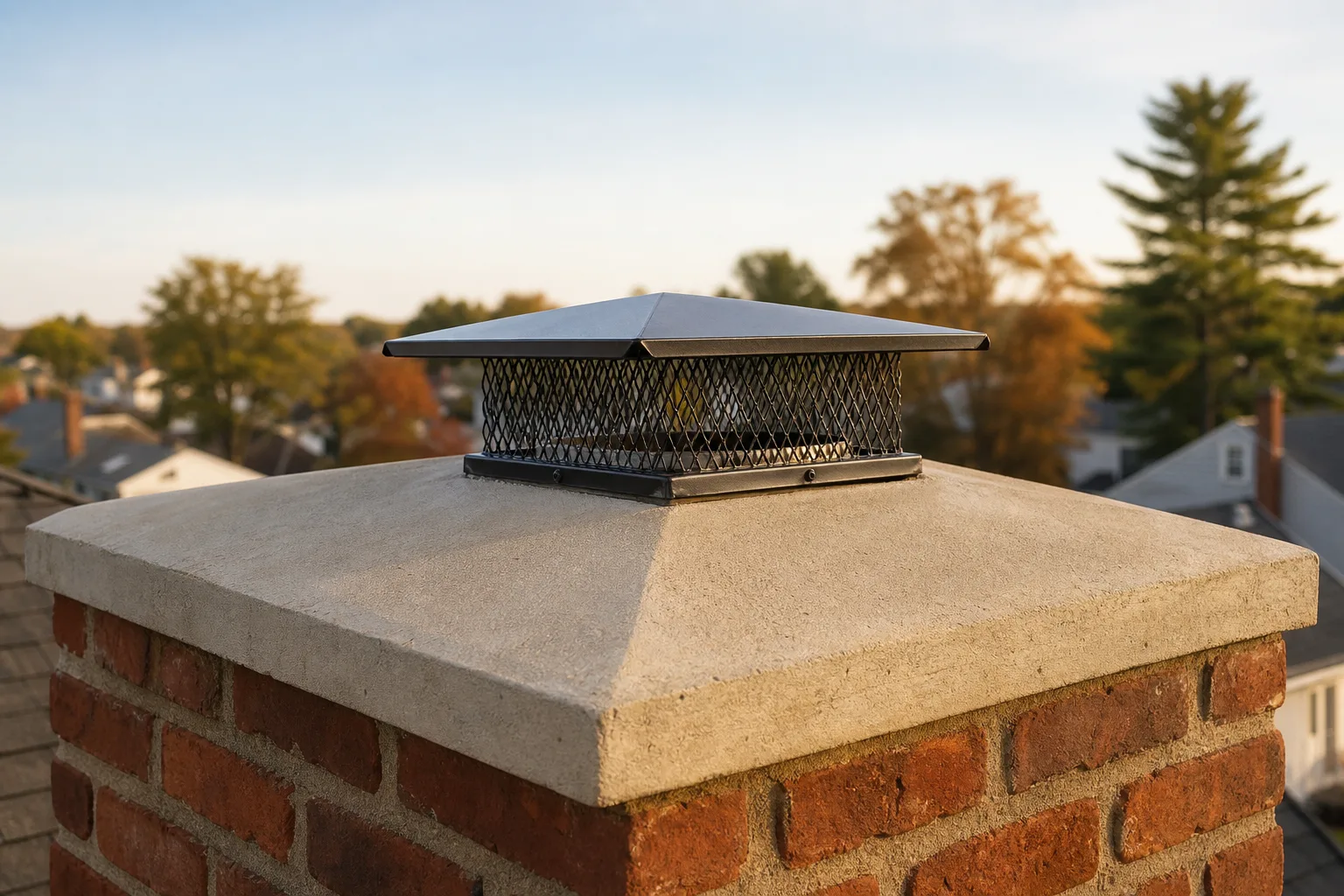
    An open flue is why they chose you, and a mesh cap is what ends it. Timing is the catch: capping an occupied flue seals birds inside, so the cap goes on after they have gone, not before.

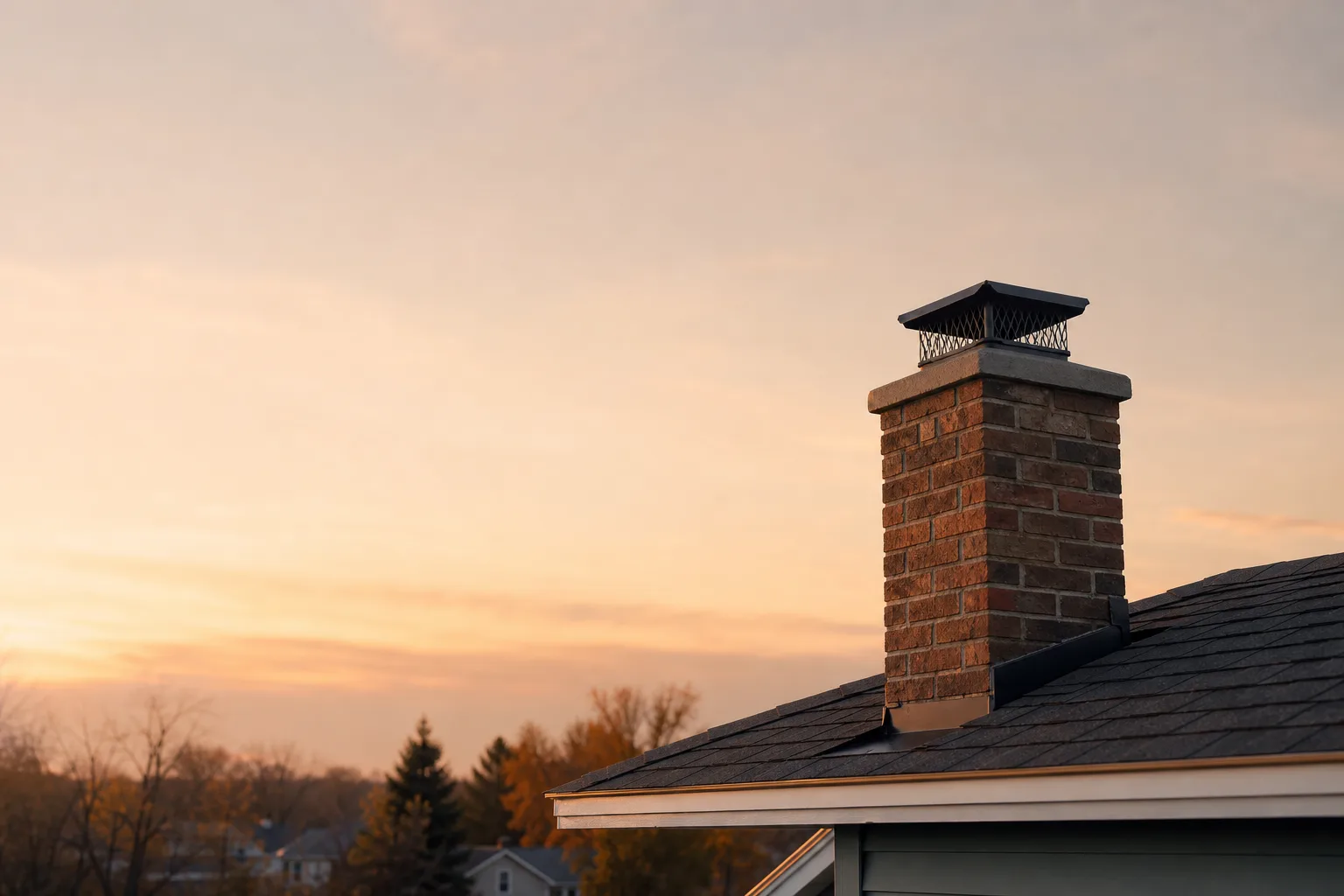
Capped brick chimney silhouetted against a soft dusk sky above a tidy residential rooftop

The VIO Standard

  • A written estimate first
  • License and insurance checked
  • Nothing starts without your OK

Common questions

Is it illegal to remove birds from a chimney?

If they are chimney swifts, yes. Swifts are protected under the Migratory Bird Treaty Act and disturbing an active nest is a federal offence — not a guideline. Most other migratory species carry the same protection. Starlings and pigeons are non-native and are not covered, so they can be removed at any time. A company that offers to remove a protected species immediately is telling you something useful about how it works generally.

How long do I have to wait for chimney swifts to leave?

Two to four weeks from when you first hear them, in most cases. The noise gets louder before it stops, because the young get louder as they grow — that is the sign it is nearly over, not that it is getting worse. Once they have fledged the nest comes out and a cap goes on the same visit, which is the moment to book rather than the moment to wait again.

How do I get a bird out of my chimney that has fallen in?

If it is below the damper and you can reach the firebox: close off the room, open the damper, put a bright light in the fireplace and leave a window open — many will find their own way out toward the light. If it is above the damper, or it has been more than a few hours, call someone. Do not open the damper and leave the room open to the house, and never try to smoke or flush it out.

How much does bird removal from a chimney cost?

Less than most people expect, and the variable is the calendar rather than the work. Once a nest is abandoned, clearing it and capping the flue is a single modest visit. A bird that has fallen below the damper is usually quicker again. What costs money is doing it twice — a removal quoted without a cap leaves the flue exactly as attractive as it was, and swifts return to the same chimney year after year.

Will a chimney cap stop birds getting in?

Yes — with one timing rule that matters more here than anywhere else on this site. A mesh-sided cap ends the problem permanently and costs very little. But fitting it while a nest is active seals the birds in to die in the flue, which is both a federal offence with a protected species and the source of a smell that takes a full teardown to resolve. The order is: confirm the flue is empty, then cap it. Autumn, after fledging, is the natural window.

you don't have to know what's wrong.

Safe to use for now, and it gets more expensive every month you leave it. Describe what you are seeing and a local pro works out the rest. You get the price in writing before anyone starts, and you can say no.

Ethan Miller and Ryan Carter of VIO CHIMNEY beside a branded service truck
Who we are

The people behind every visit

Founded by Ryan Carter in 2019. Every page you read here is reviewed by Ethan Miller, our chimney specialist. A written estimate before any work, and the findings in writing whether or not anything needs doing.

More about who we are →
(513) 655-6702Get my estimate