



Chimney problem

Why is there black soot in my house?

Not always the fireplace. Candles, a rich-burning gas appliance and ghosting on walls all leave the same black film.

5.0/5
8 verified reviews
Ethan MillerEthan Miller · Chimney specialist, VIO CHIMNEYLast reviewed July 20264 min read
Address soon

Safe to use for now, and it gets more expensive every month you leave it.

The short answer

Before you blame the fireplace, work out whether the soot is even coming from it.

Black soot in my house has four common sources and only one of them is the chimney. Candles — especially scented ones in jars — are the biggest single cause and produce a fine black film that settles everywhere. A gas appliance burning rich produces soot and carbon monoxide together, which makes it the one to rule out first. Ghosting, where soot collects in stripes on walls and ceilings, follows cold framing behind the plaster. And an actual fireplace fault puts soot near the hearth rather than evenly through the house. Where it lands tells you which.

Where it lands

Even film, or near the hearth?

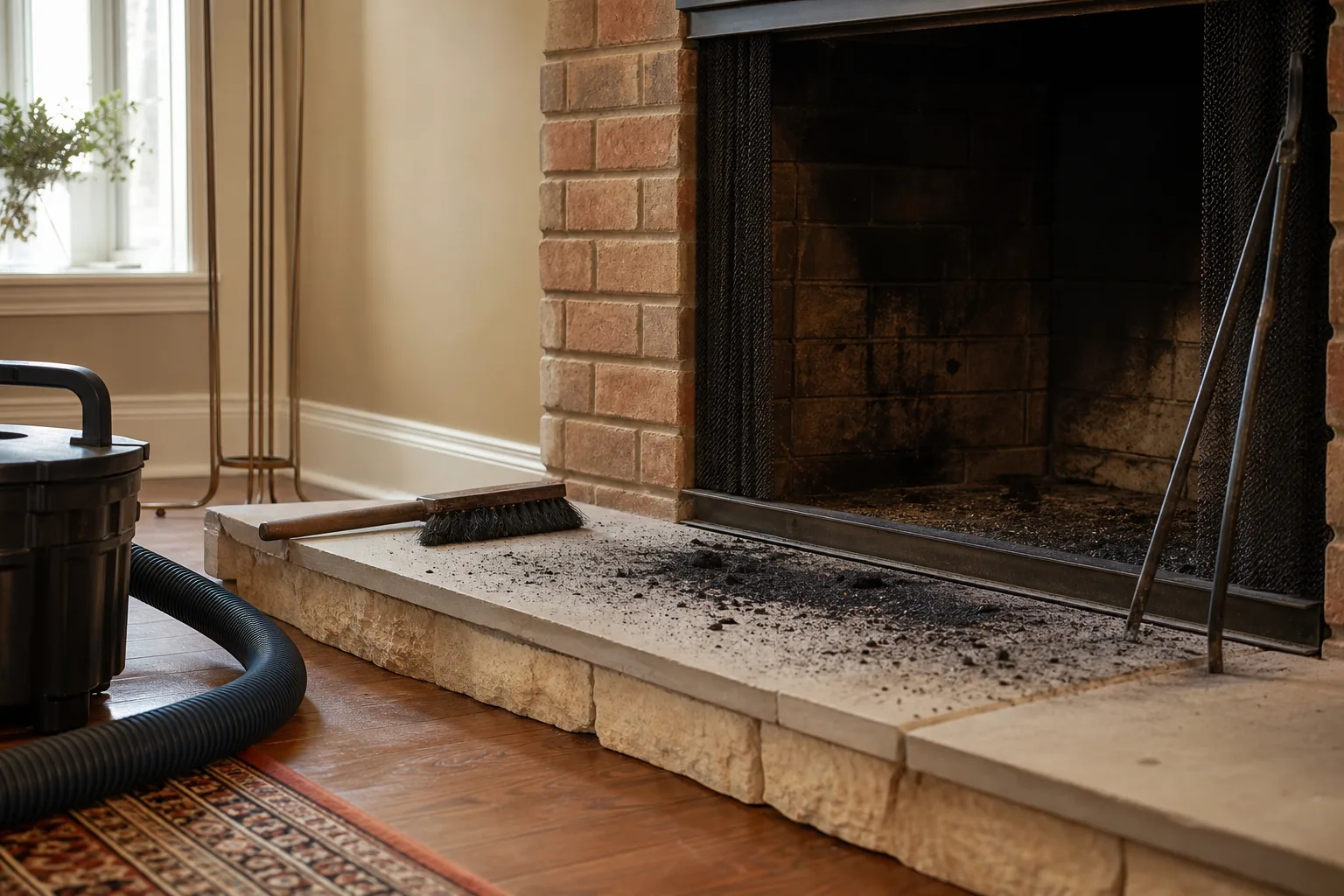
Loose black soot fallen onto the hearth in front of a fireplace opening

Soot spread evenly through the house is rarely the chimney. Soot concentrated at the fireplace usually is.

Before we get there

What to do right now

None of this fixes it. All of it stops the problem getting more expensive between now and the visit.

  1. Check every gas appliance for soot on or around it. A rich burn makes carbon monoxide as well as soot, and that one is urgent.

  2. Stop burning jar candles for two weeks and see whether it stops. It is free and it settles the question more often than anything else.

  3. Do not wipe soot off walls with a damp cloth. It smears into the paint and turns a cleanable film into a repaint.

  4. Photograph where it collects — stripes on a ceiling, a ring above a doorway, a film near the hearth. The pattern is the diagnosis.

  5. Check that you have a working carbon monoxide detector before doing anything else.

Work out which is yours

Where black soot in my house actually comes from

Ordered by how often it turns out to be the answer, so you can stop reading once you recognise yours.

Loose black soot fallen onto the hearth in front of a fireplace opening
Most common

Candles, especially scented jar candles

The single biggest source in most homes and the one nobody suspects. A long wick in a deep jar burns dirty and puts out a fine film that settles on every surface in the house.
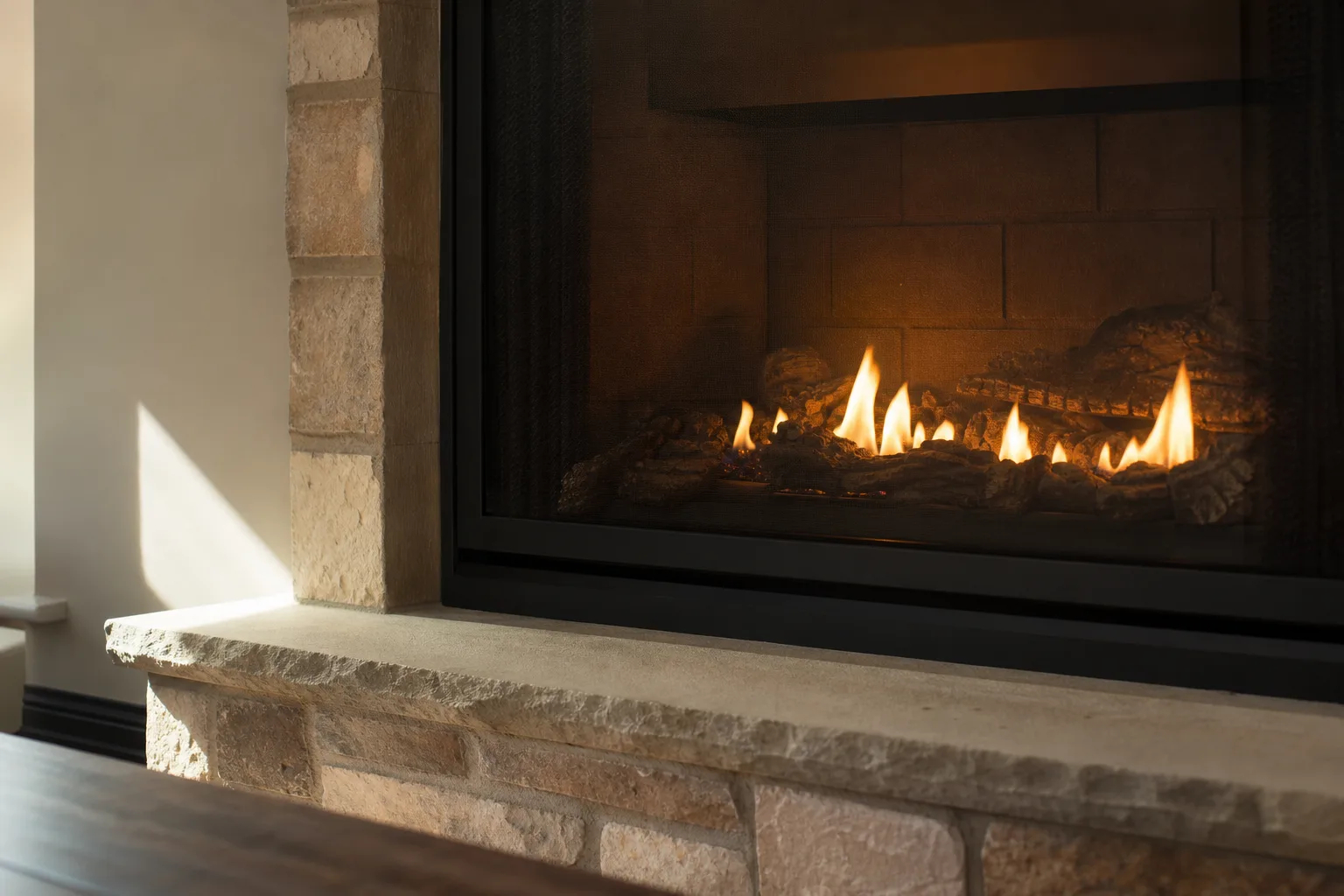
Close-up of lazy yellow gas fireplace flames behind glass instead of blue
Most common

A gas appliance burning rich

Yellow lazy flames instead of blue, soot on the glass of a gas fireplace, or black marks around a furnace. This produces carbon monoxide alongside the soot, so it is the one to rule out first.
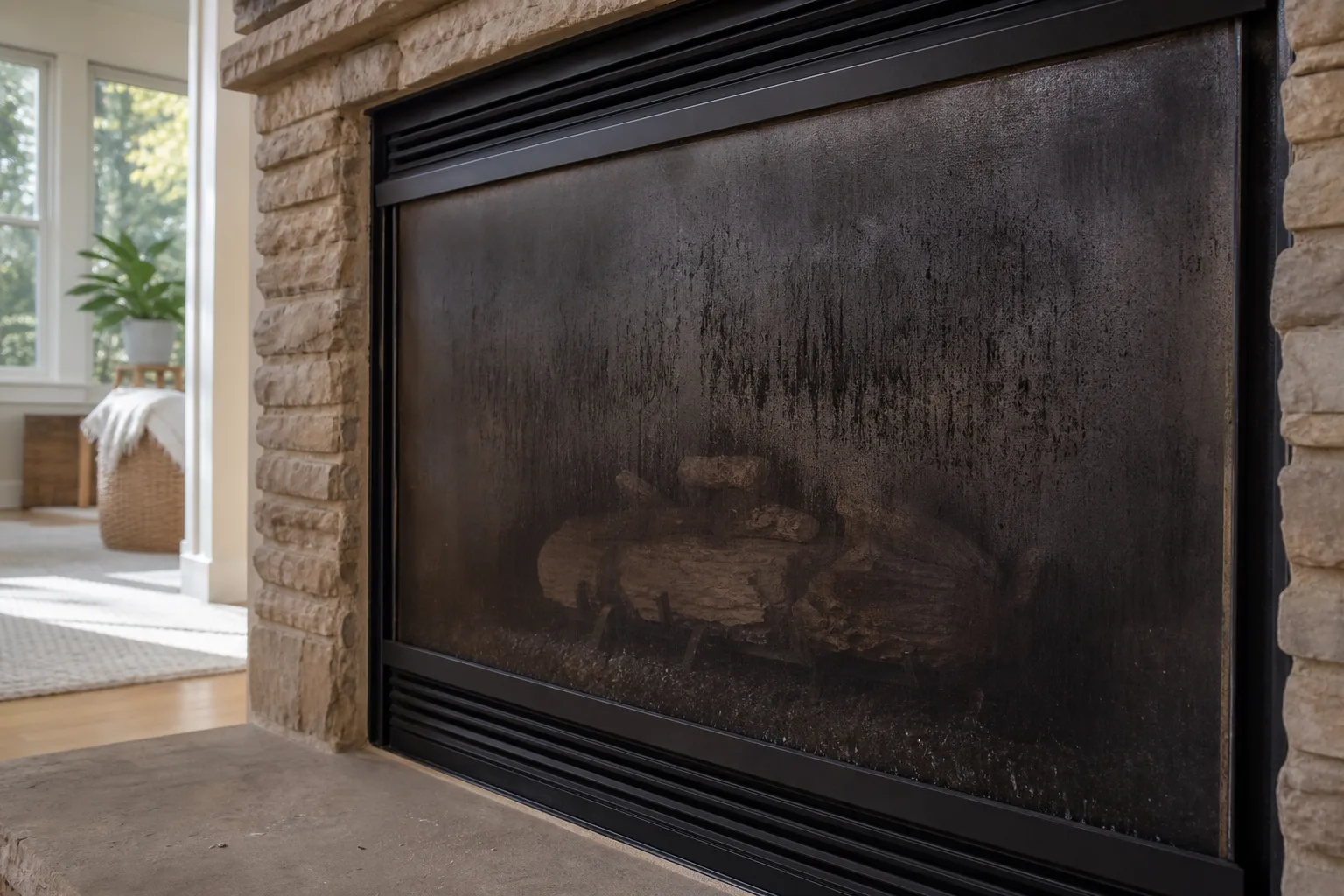
Black soot film clouding the unlit glass front of a gas fireplace
Common

Ghosting on walls and ceilings

Dark stripes tracking the studs or joists behind the plaster. Soot and dust collect where the surface is coldest. It looks alarming and is a thermal-bridging problem rather than a combustion one.
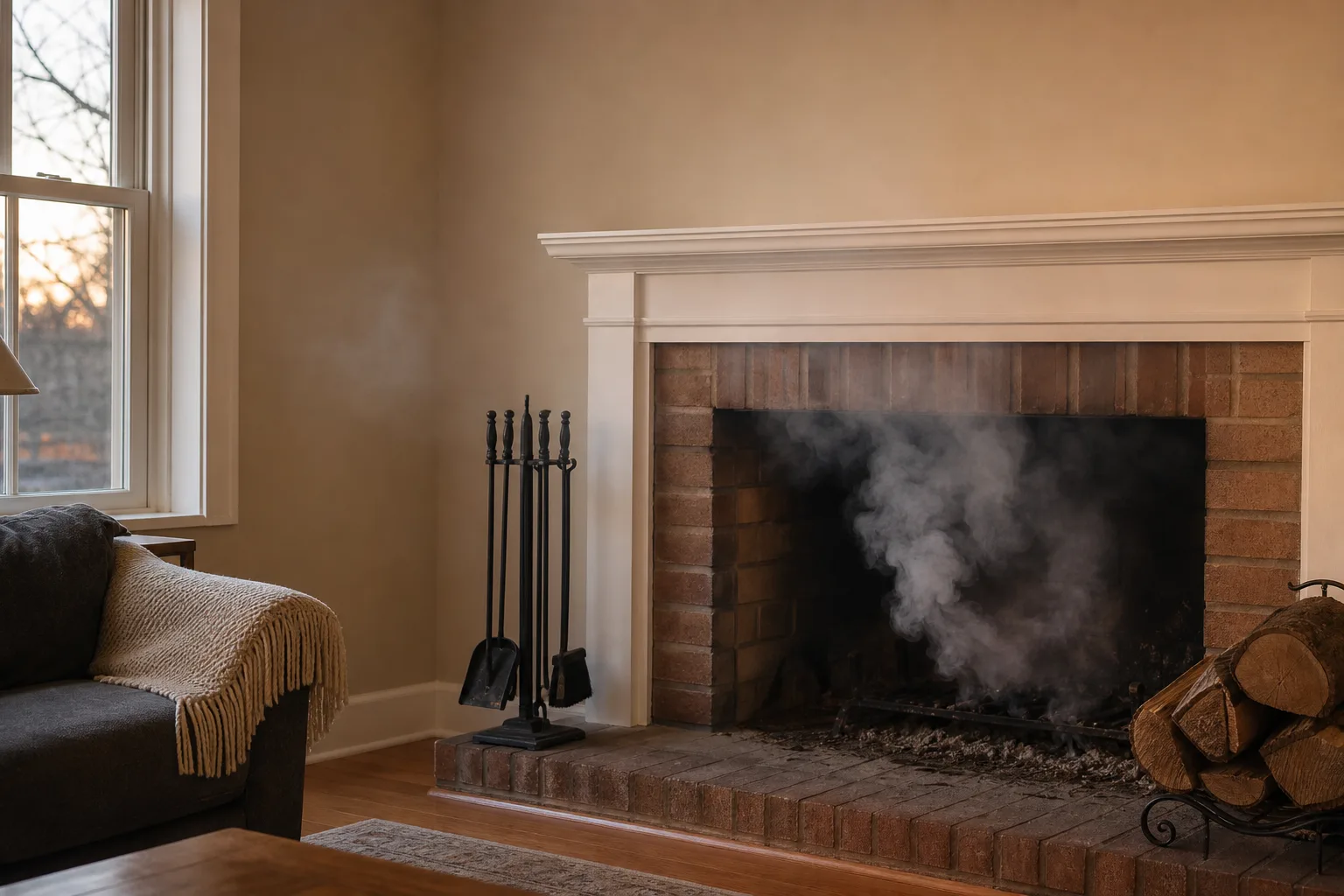
Smoke rolling out of a fireplace opening into a living room at dusk
Common

A fireplace that is not drawing properly

Soot concentrated near the hearth and on the wall above it. A draft fault putting some of the smoke into the room rather than up the flue.
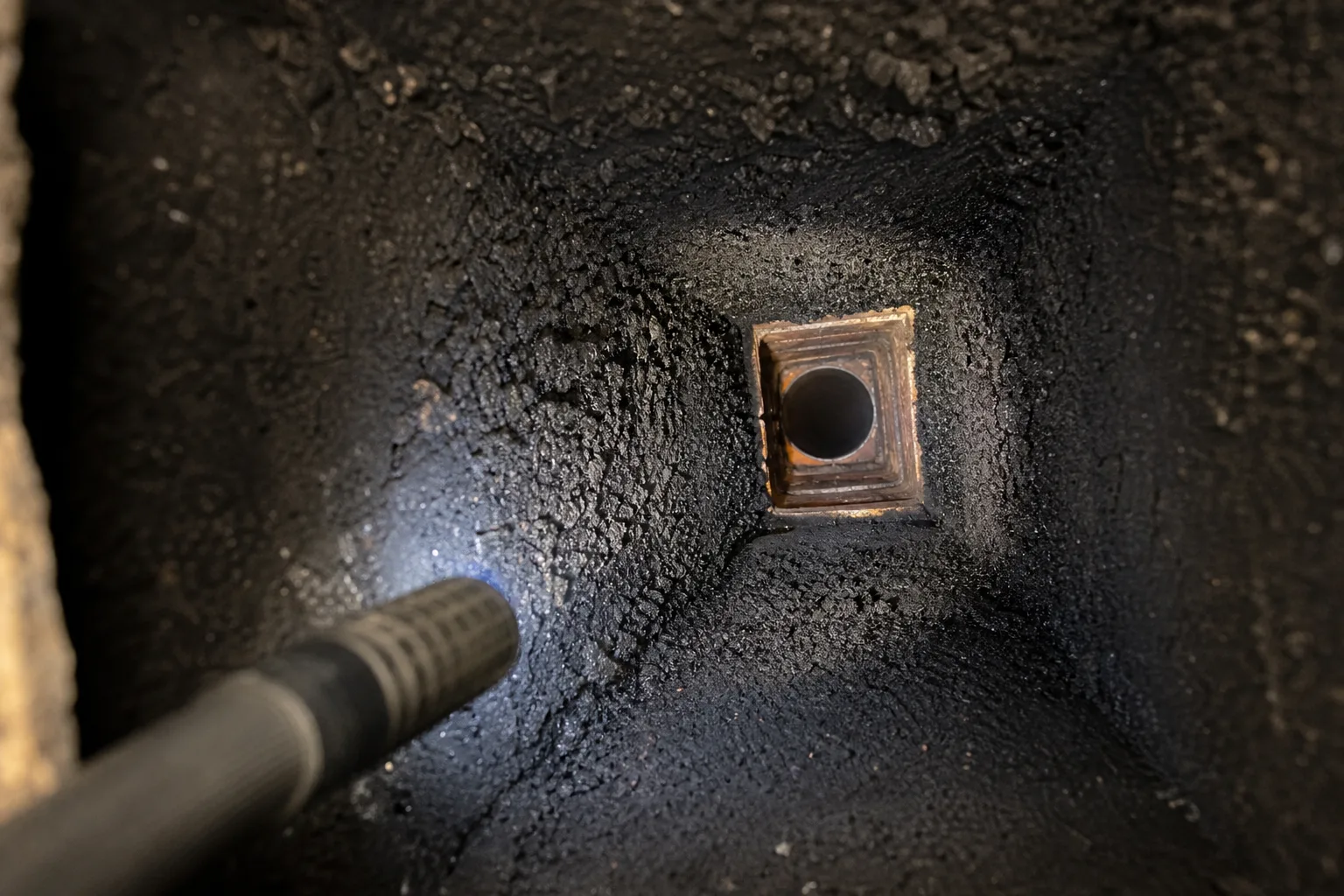
Torchlit view up a chimney flue coated in black flaky creosote
Less common

Deposits falling from the flue

Loose creosote letting go and dropping into the firebox. Harmless in itself, and it confirms there is more up there than there should be.

Five minutes, no ladder

Checks you can make yourself

  • Is the soot spread evenly through the whole house?

    Rarely the chimney. Look at candles and gas appliances first.

  • Is it concentrated near the fireplace and the wall above it?

    That is the fireplace, and it means smoke is entering the room.

  • Does it form stripes on walls or ceilings?

    Ghosting. It follows cold framing behind the surface and is not a combustion fault.

  • Is there soot on the glass of a gas fireplace?

    Incomplete combustion. Turn it off and get it looked at — that reaction makes carbon monoxide.

  • Does it stop when you stop burning candles for a fortnight?

    Then it was the candles. Free to test and it is the answer more often than anything else.

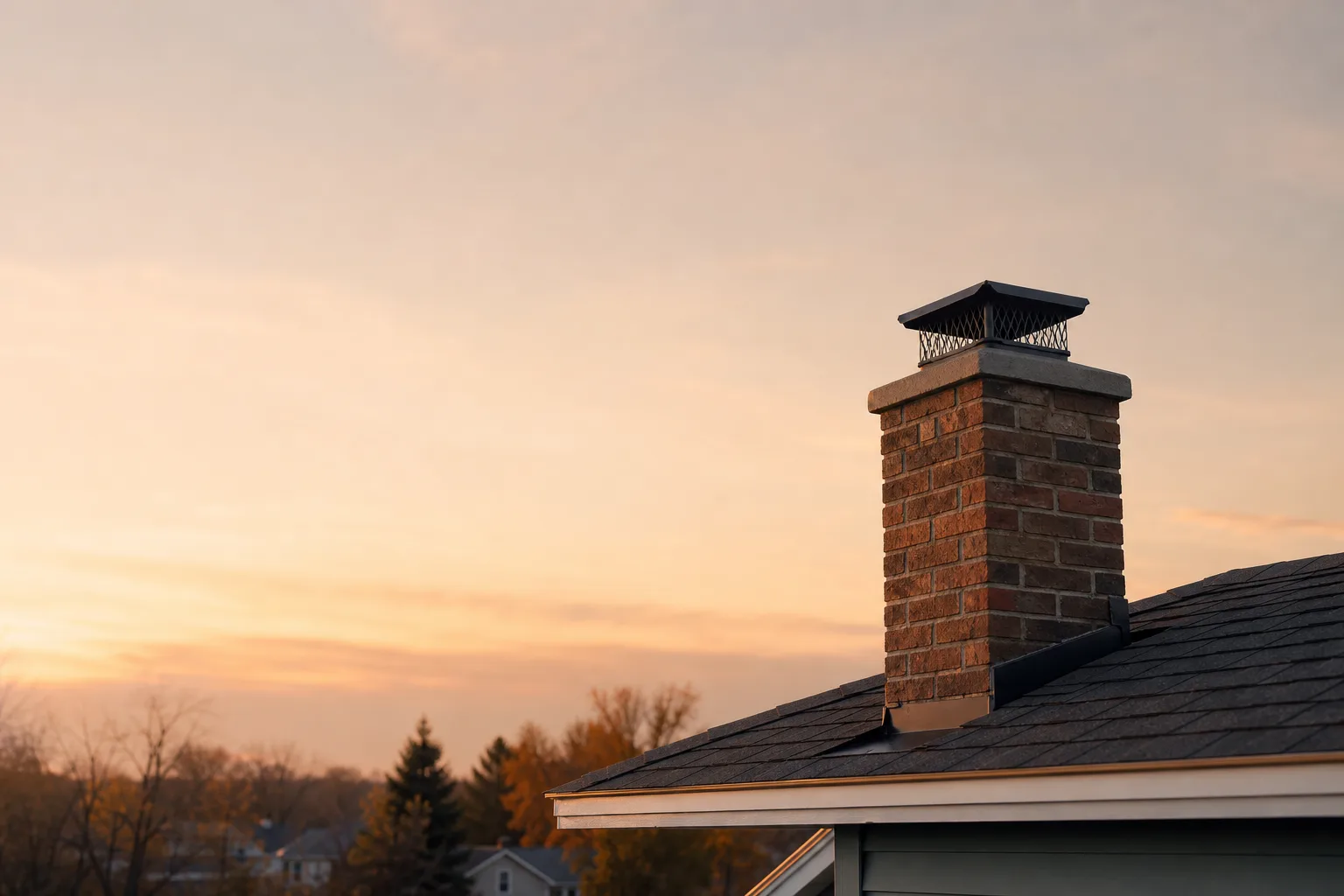
Capped brick chimney silhouetted against a soft dusk sky above a tidy residential rooftop

The VIO Standard

  • A written estimate first
  • License and insurance checked
  • Nothing starts without your OK

Common questions

Is black soot in the house dangerous?

The soot itself is fine particulate and worth not breathing over long periods, but the real question is what is producing it. If a gas appliance is sooting, the same incomplete combustion is producing carbon monoxide, and that is dangerous in a way soot is not. So the sequence is: rule out gas appliances first, then candles, then the fireplace. Never treat sooting on a gas appliance as a cleaning problem.

Can candles really cause that much soot?

Yes, and it surprises almost everyone. A scented candle in a deep jar with a long wick burns with a starved oxygen supply, and the fine carbon it releases circulates on the air currents in the house and settles everywhere — worst on cold surfaces and above doorways. Two weeks without them is the cheapest diagnostic on this page, and it identifies the cause more often than any other single test.

What is ghosting on walls?

Dark stripes or patches on walls and ceilings that follow the framing behind them. Studs and joists conduct heat differently from the insulation between them, so those lines stay cooler, and airborne soot and dust settle preferentially on cold surfaces. It looks like a fire or damp problem and is neither. Reducing the soot in the air fixes it; so does insulating, if you were doing that anyway.

How do I clean black soot off walls?

Dry first, always. A dry chemical sponge lifts it off the surface; a damp cloth grinds it into the paint and turns a cleanable film into a repaint. Work top to bottom, replace the sponge as it loads up, and only use a mild detergent afterwards on what the dry pass did not take. And find the source first, or you will do it again next month.

Why is there soot on the glass of my gas fireplace?

Because the gas is not burning completely — blocked burner ports, incorrect gas pressure, a venting restriction, or ceramic logs moved out of their set positions into the flame path. All four are repairs rather than cleaning. Turn it off and get a combustion check, because that same incomplete burn produces carbon monoxide, which has no film to warn you.

you don't have to know what's wrong.

Safe to use for now, and it gets more expensive every month you leave it. Describe what you are seeing and a local pro works out the rest. You get the price in writing before anyone starts, and you can say no.

Ethan Miller and Ryan Carter of VIO CHIMNEY beside a branded service truck
Who we are

The people behind every visit

Founded by Ryan Carter in 2019. Every page you read here is reviewed by Ethan Miller, our chimney specialist. A written estimate before any work, and the findings in writing whether or not anything needs doing.

More about who we are →
(513) 655-6702Get my estimate