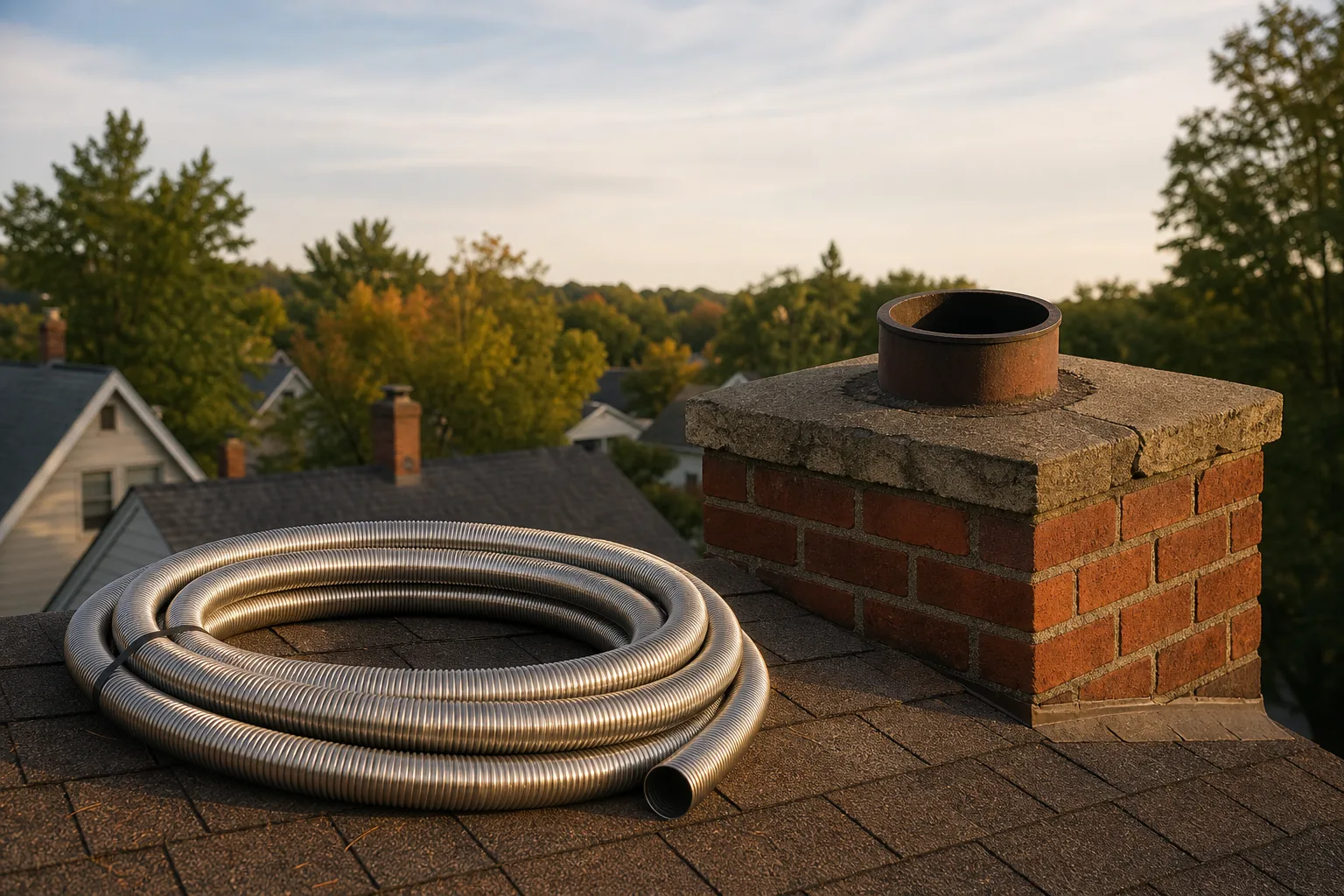



Chimney service

Chimney Rebuilding

Taking a failing stack down to sound brick and building it back. The largest job here, and the one worth a second opinion.

5.0/5
8 verified reviews
Ethan MillerEthan Miller · Chimney specialist, VIO CHIMNEYLast reviewed July 20265 min read
The short answer

Get a second opinion. This is the easiest job in the trade to sell to someone who cannot get on their own roof.

Chimney rebuilding means dismantling the stack to the last course of sound masonry and rebuilding from there. Most of the time that means above the roofline, because that is where the weather is. A stack is genuinely past repointing when the brick itself has gone soft or spalled through rather than just the joints, when courses have shifted out of plumb, or when the mortar is failing throughout rather than on one face. Anything short of that is repointing and brick replacement, which costs a fraction as much — and telling the two apart is exactly what a second opinion is for.

What it involves

Down to sound brick

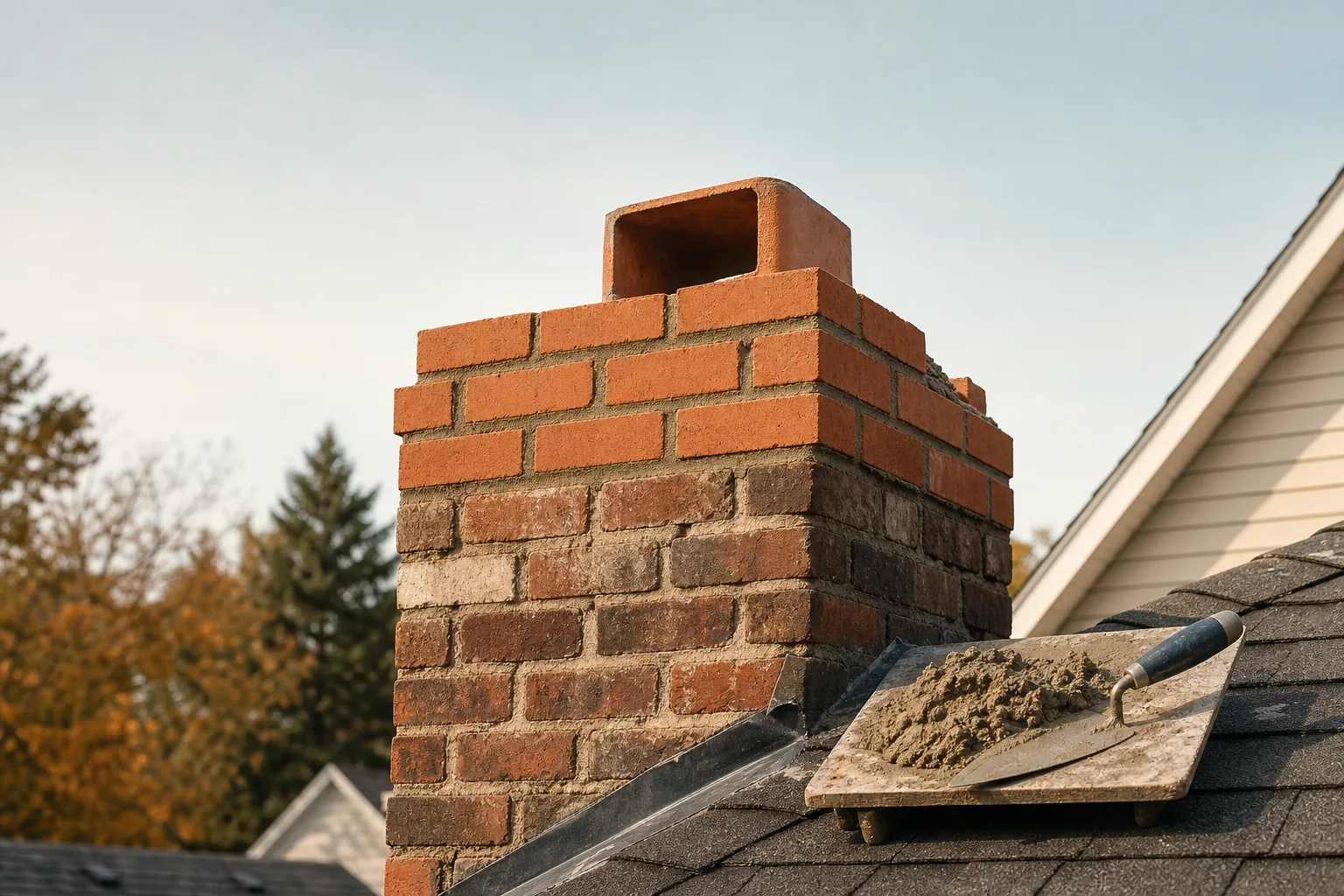
Partly rebuilt chimney stack with new brick courses above weathered ones and a mortar board

The stack comes down to the last course that is still holding, then goes back up. How far down that is decides the whole price.

On this pageSigns you need this3 sections+2
  1. Signs you need this
  2. The jobs this includes
  3. Common questions
Do you have this problem?

Signs you need chimney rebuilding

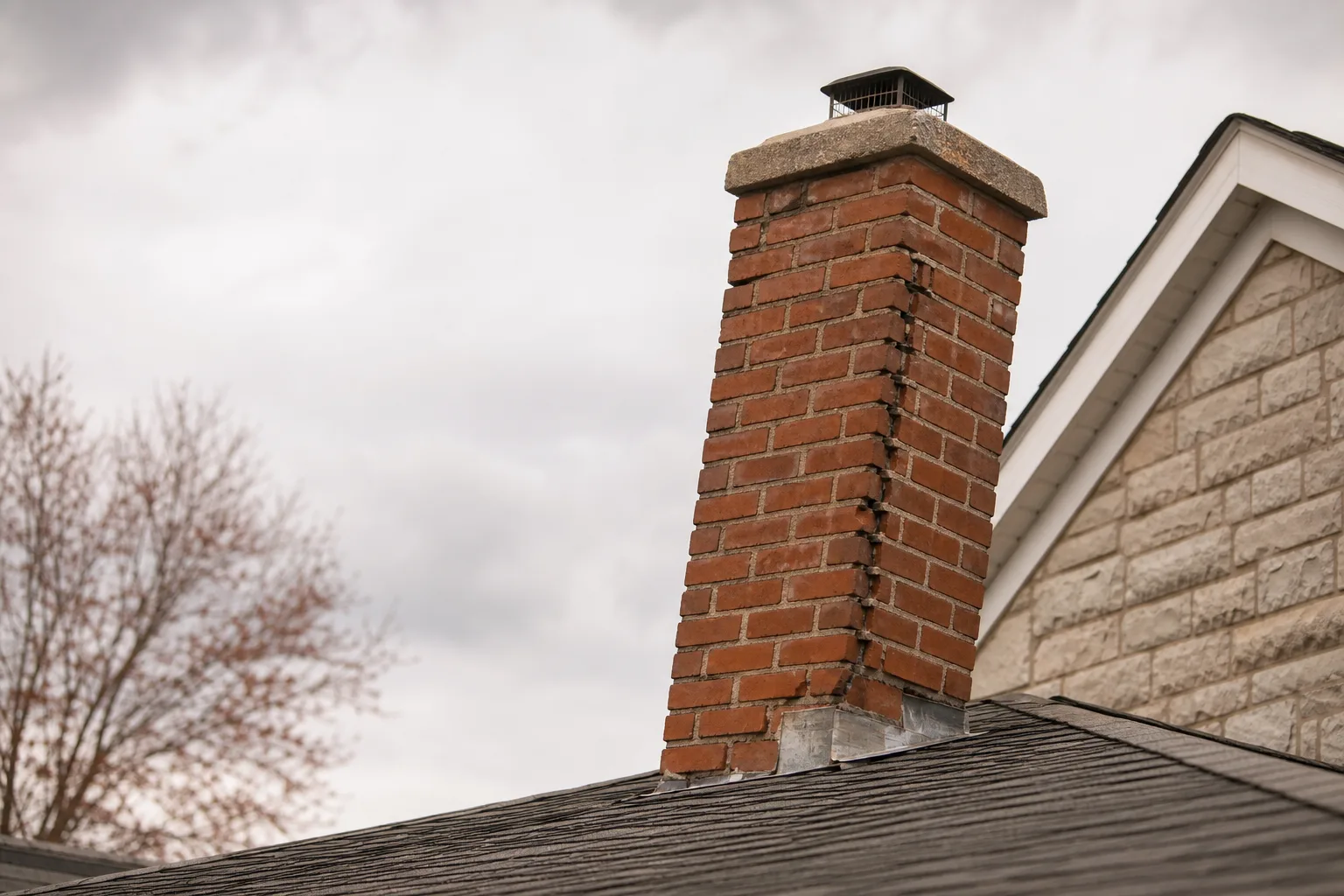
Brick chimney stack leaning off the roofline with open mortar joints under overcast sky

The stack is visibly leaning

Movement out of plumb is structural and it does not correct itself. Sight up the corner against a downpipe or a wall edge. A leaning stack is a rebuild and it is also a hazard.
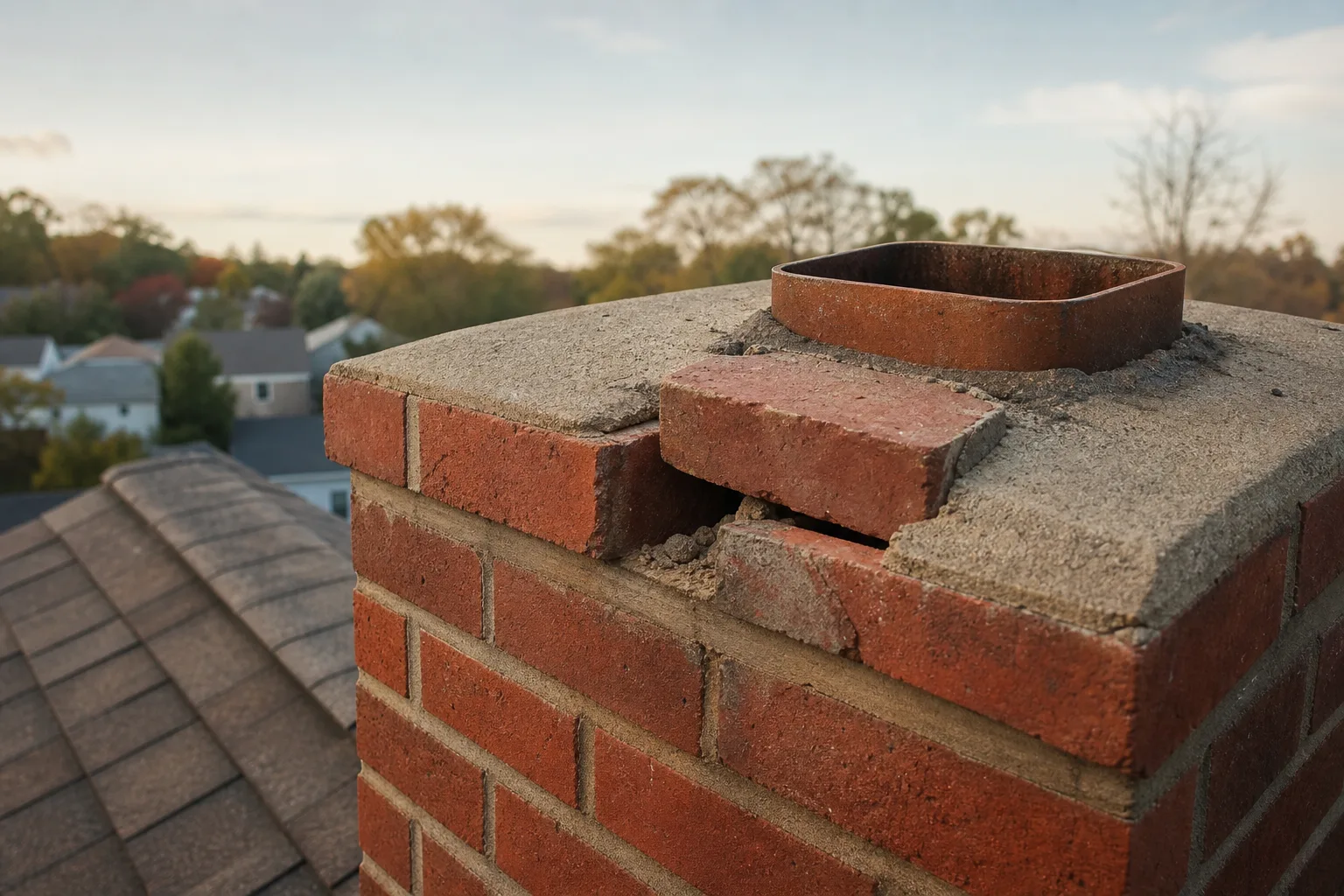
One brick displaced and loose in the top course of a chimney

Bricks you can move by hand

Once individual bricks are loose the courses are no longer bonded. Pointing around them puts new mortar against something that is not holding.
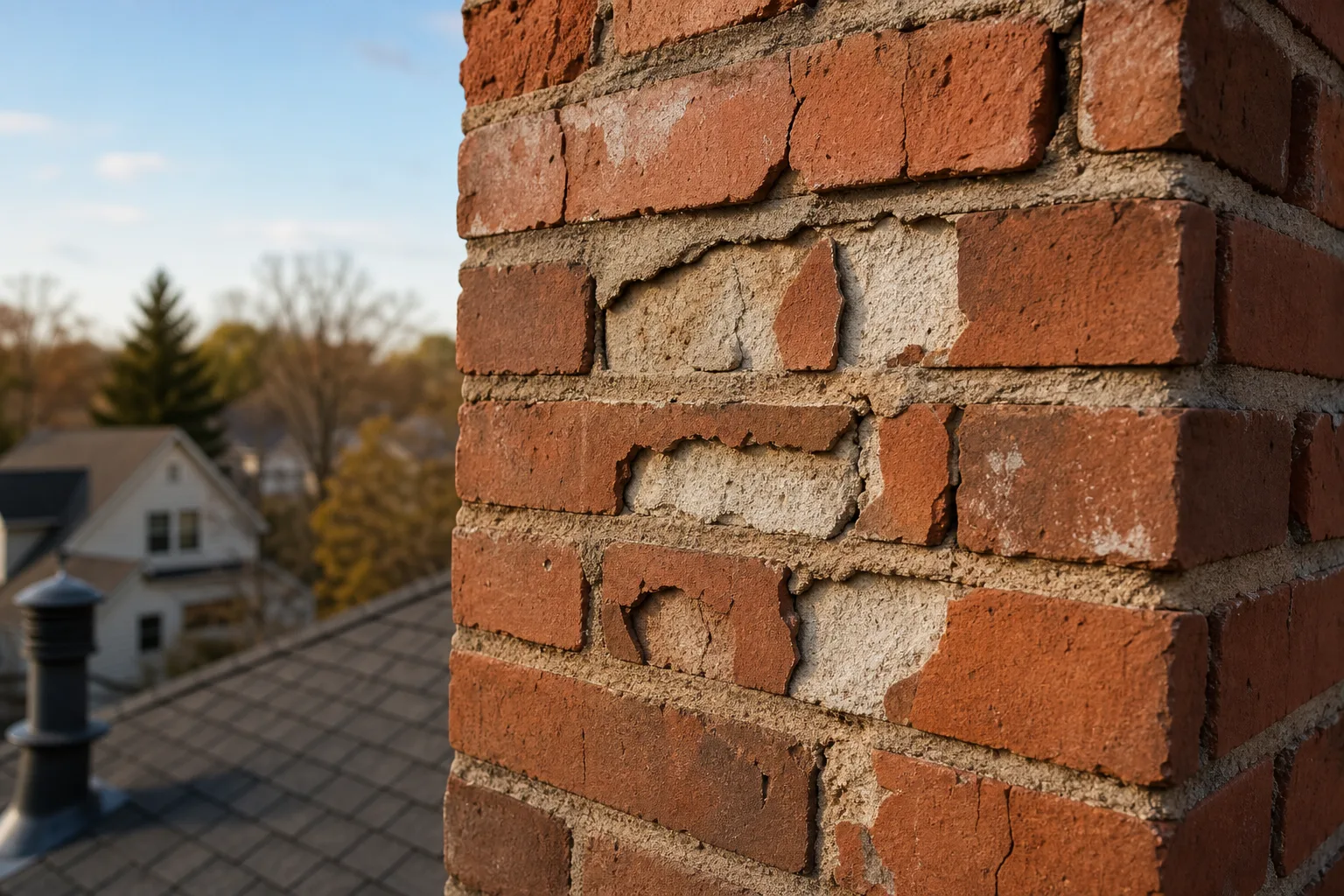
Chimney brick faces flaking and popping off, exposing pale powdery masonry underneath from freeze damage

Brick faces gone, not just the joints

Repointing replaces mortar. When the brick itself has spalled through and gone soft behind the face, there is nothing sound for new mortar to bond to.
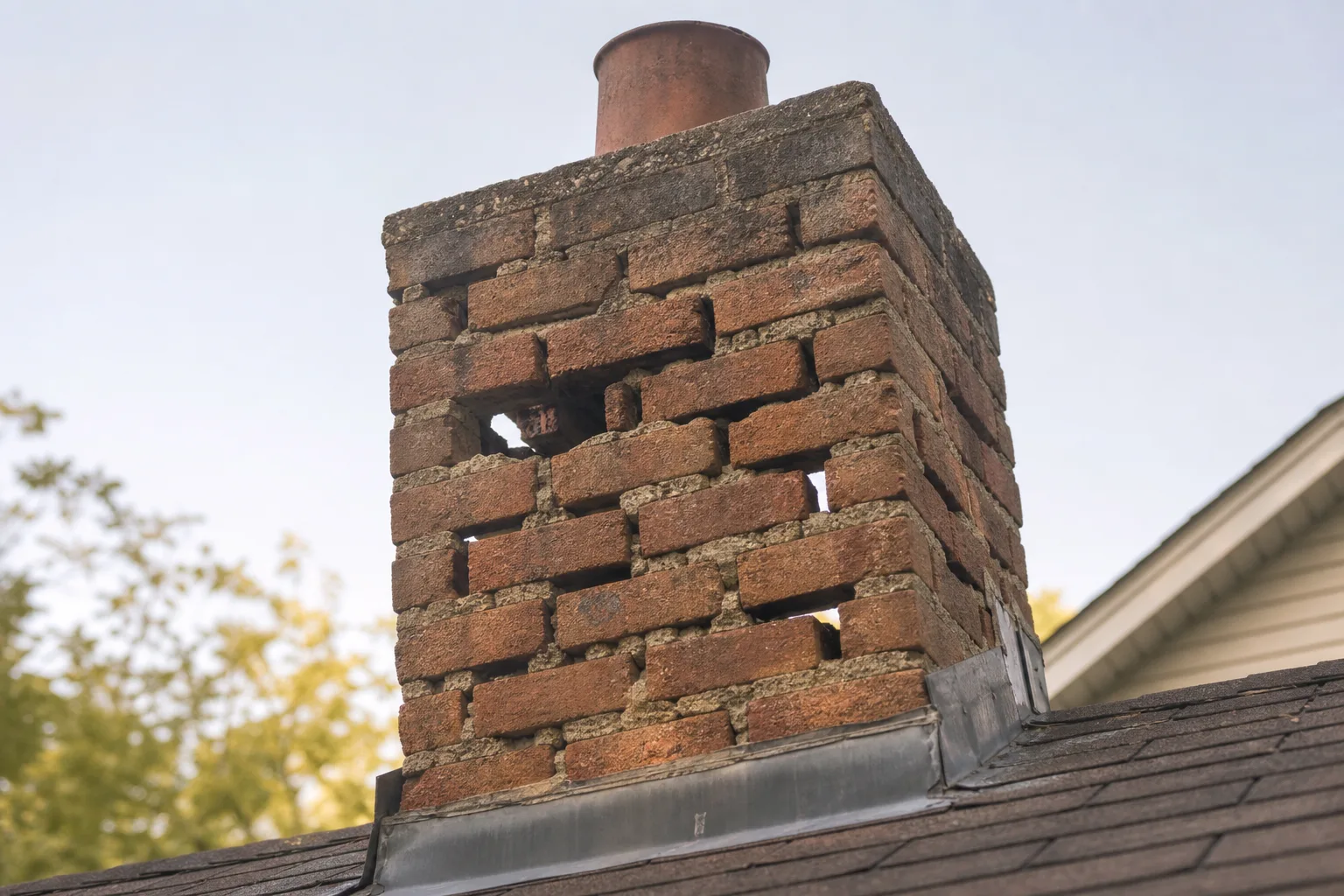
Brick chimney stack with mortar joints washed out, leaving gaps through to daylight

Joints open right through the wall

Daylight through a joint means the wall is no longer continuous. Isolated, that is a repair. Across several faces, it is a rebuild.
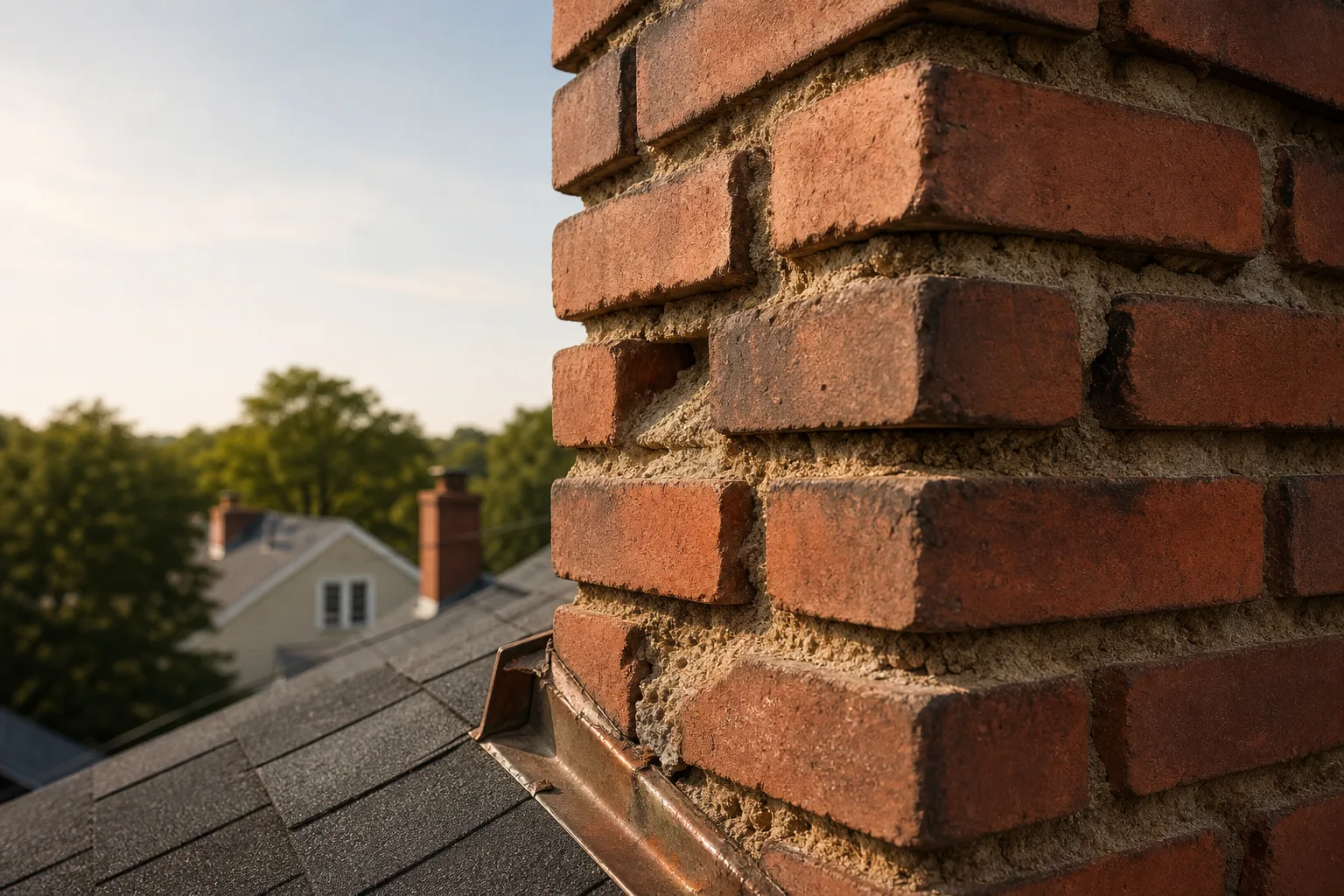
Eroded chimney mortar joints recessed behind the brick faces with loose sand and grit

Mortar failing on every face, not one

One weather-facing side going first is normal and repointable. All four sides at once usually means the original mortar has reached the end of its life throughout.
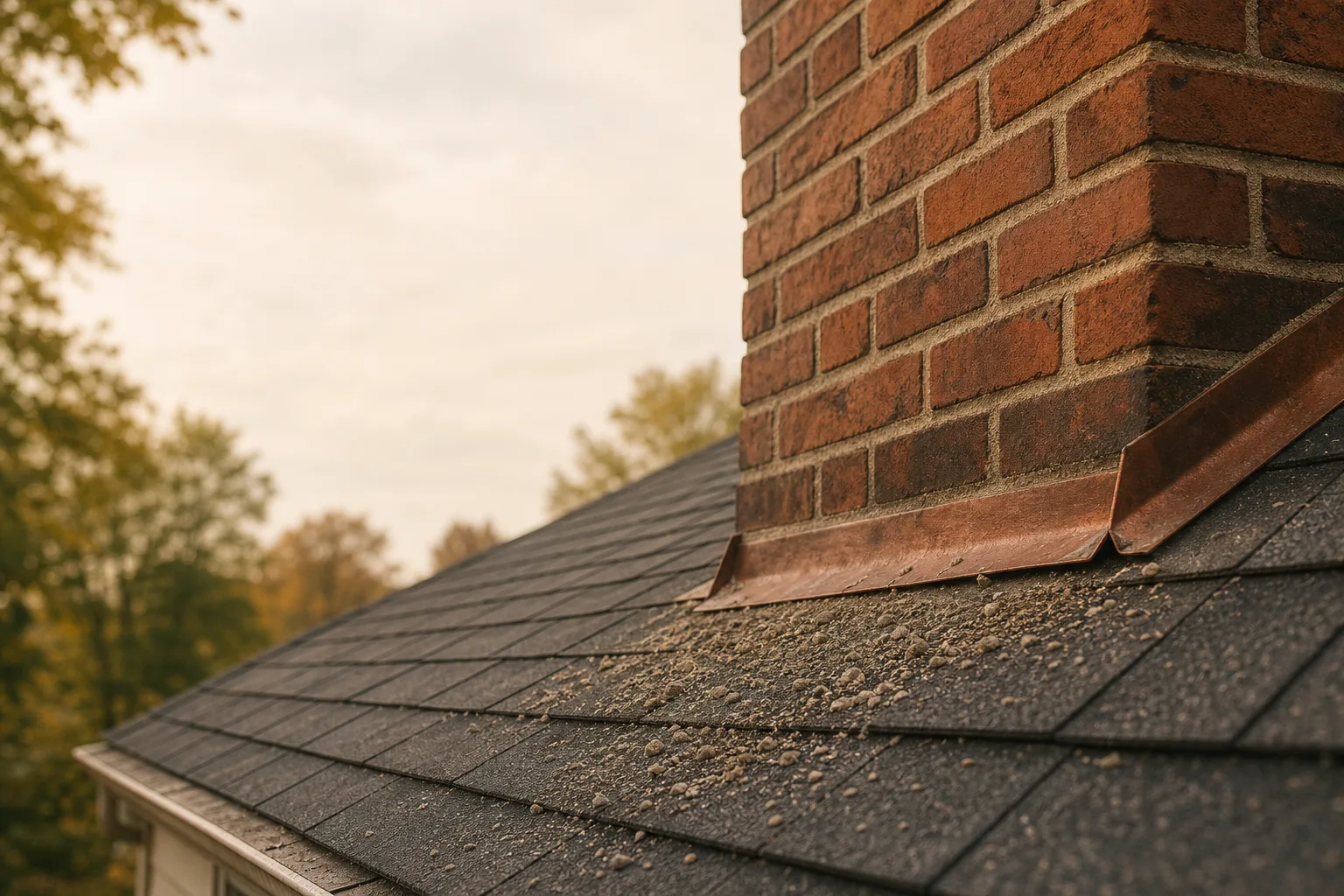
Sand and mortar crumbs on roof shingles at the base of a chimney

Brick and mortar collecting on the roof

The stack shedding itself onto the roof below. That is material loss rather than surface wear, and material loss is what puts a chimney past repair.

How we work

How the visit works

The same four steps every time, whatever the repair turns out to be.
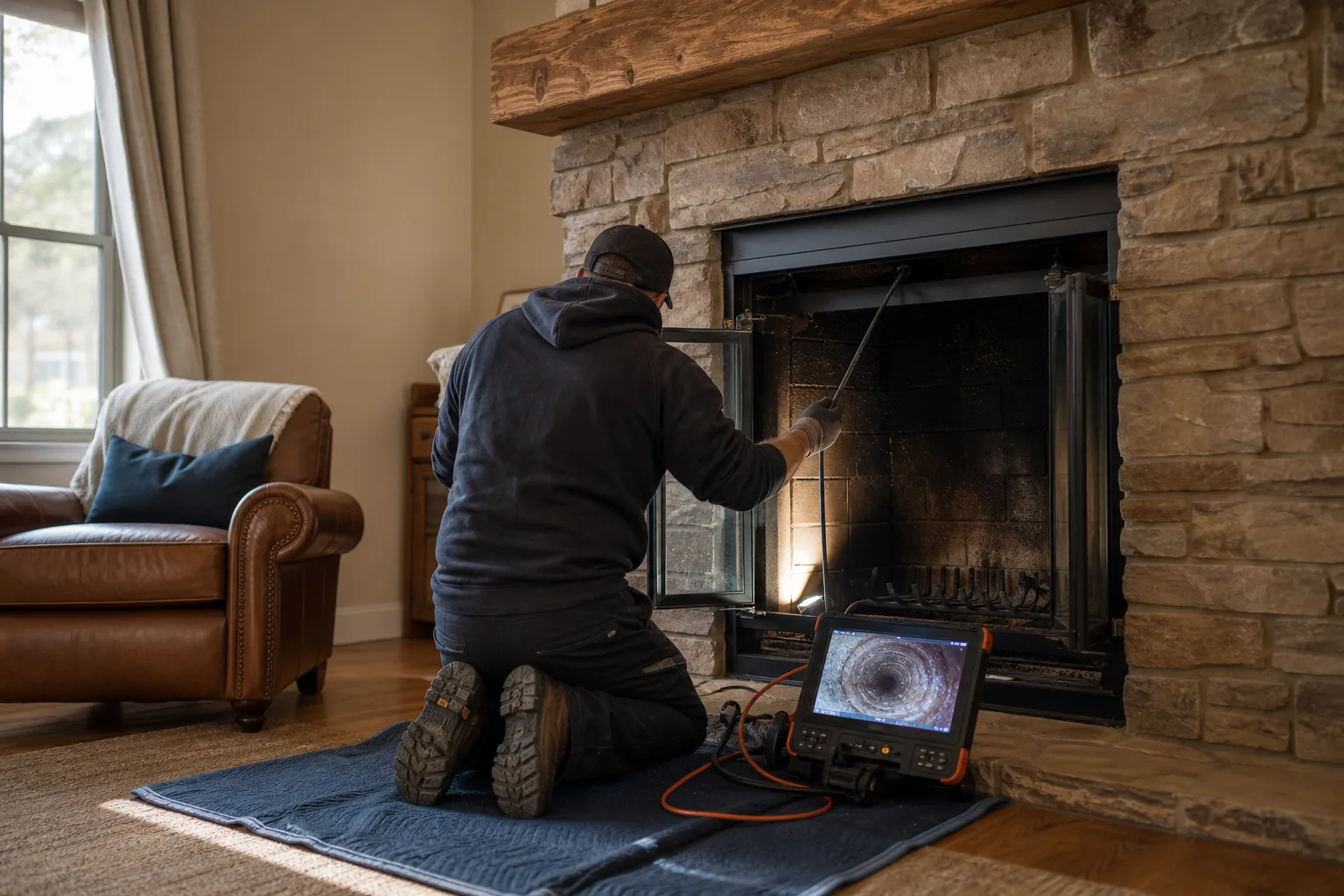
  1. Technician kneeling at an open fireplace feeding an inspection camera up the flue beside a monitor
    01

    Inspection first, always

    A look at the crown, cap, flashing and exterior masonry, then the flue, damper and firebox — with a camera where the job calls for a level 2 scan. Whatever needs work gets shown to you, not just described.
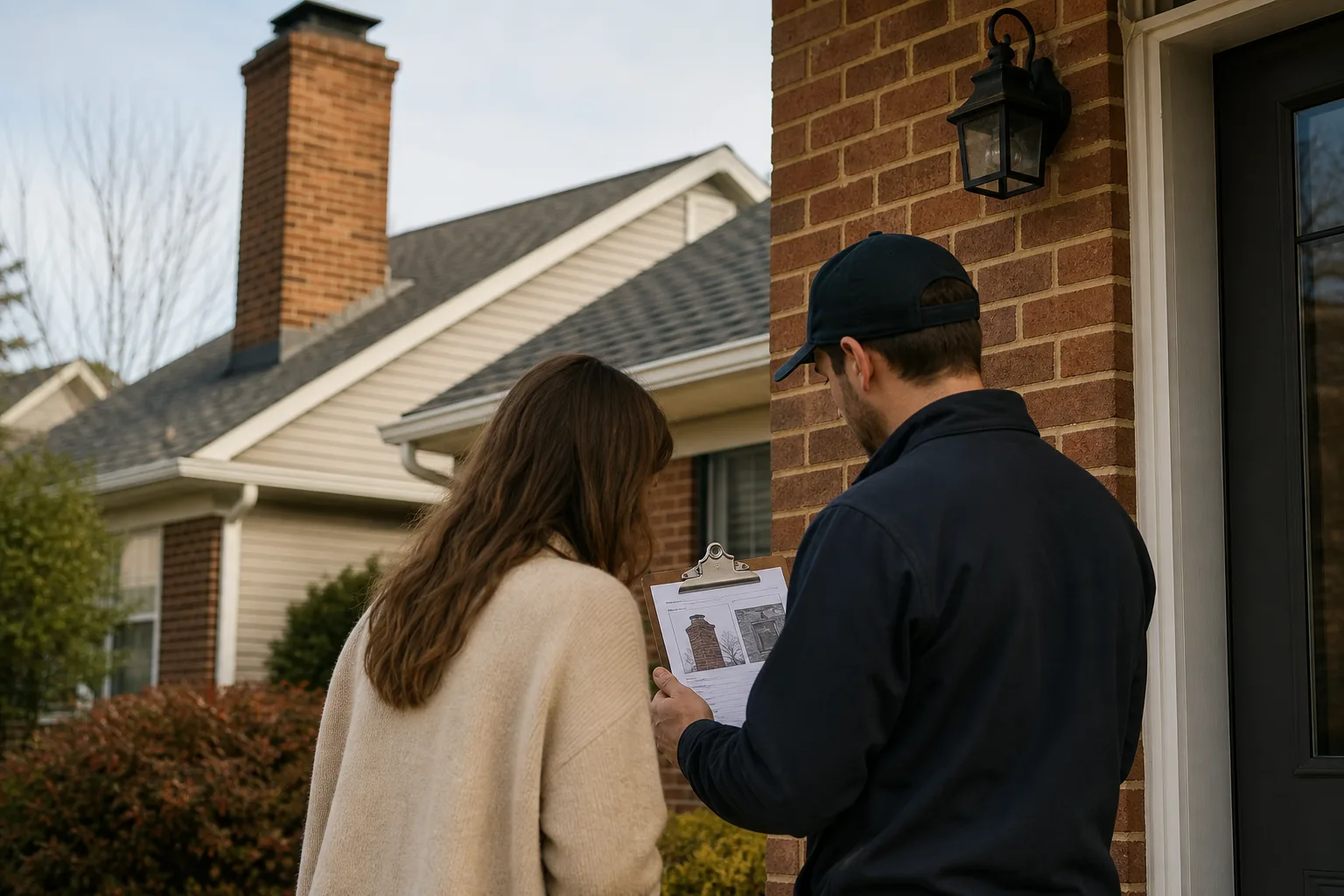
  2. Chimney technician reviewing a printed estimate on a clipboard with a homeowner at the front door
    02

    A written estimate before anything

    Scope, price and what is not included, in writing. Nothing starts until you approve it, and an emergency is not a reason to skip this step.
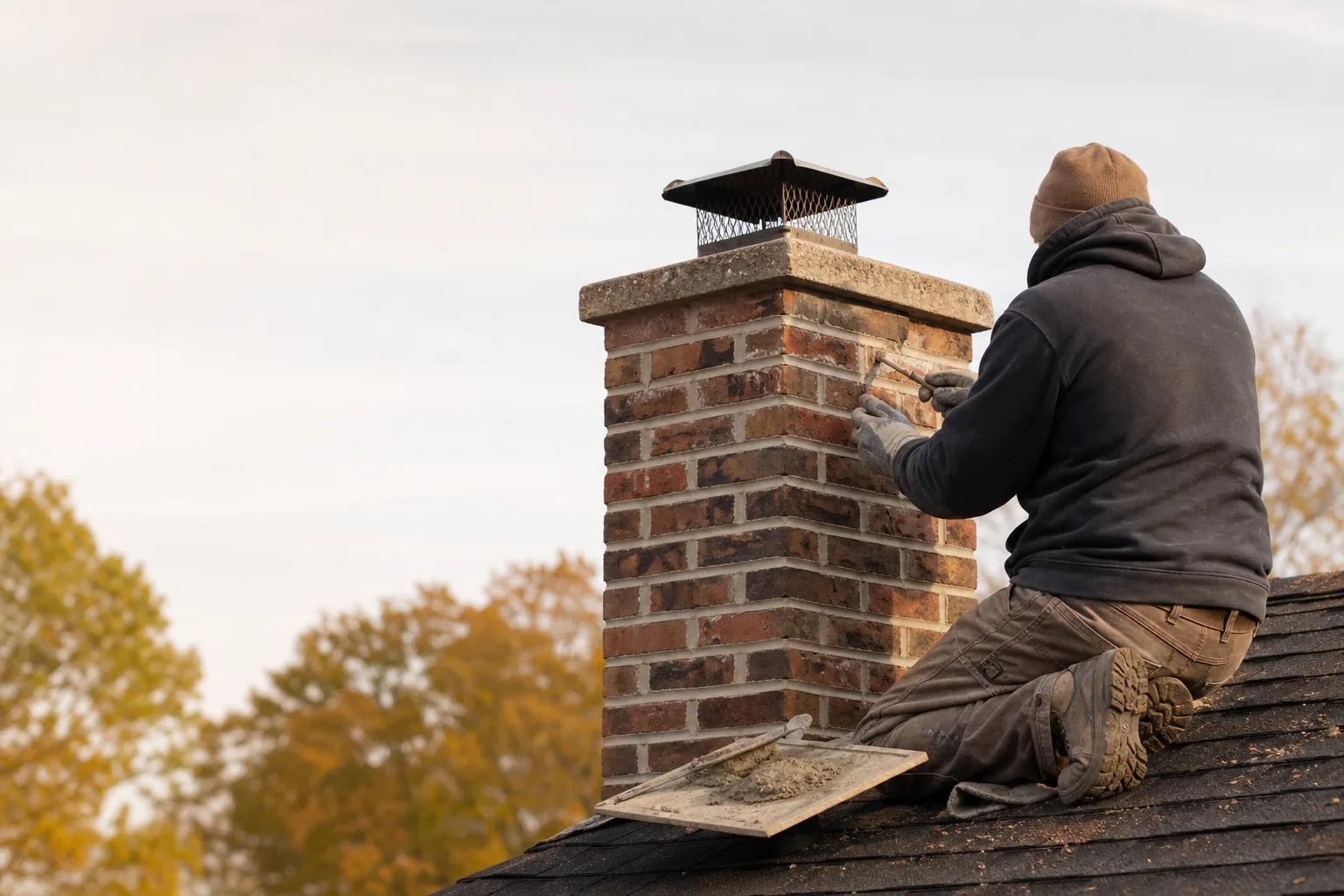
  3. Mason on a rooftop repointing mortar joints on a brick chimney with a trowel
    03

    The work itself

    Matched materials and the manufacturer's spec, not whatever is on the van. Drop cloths down, and the room left as it was found.
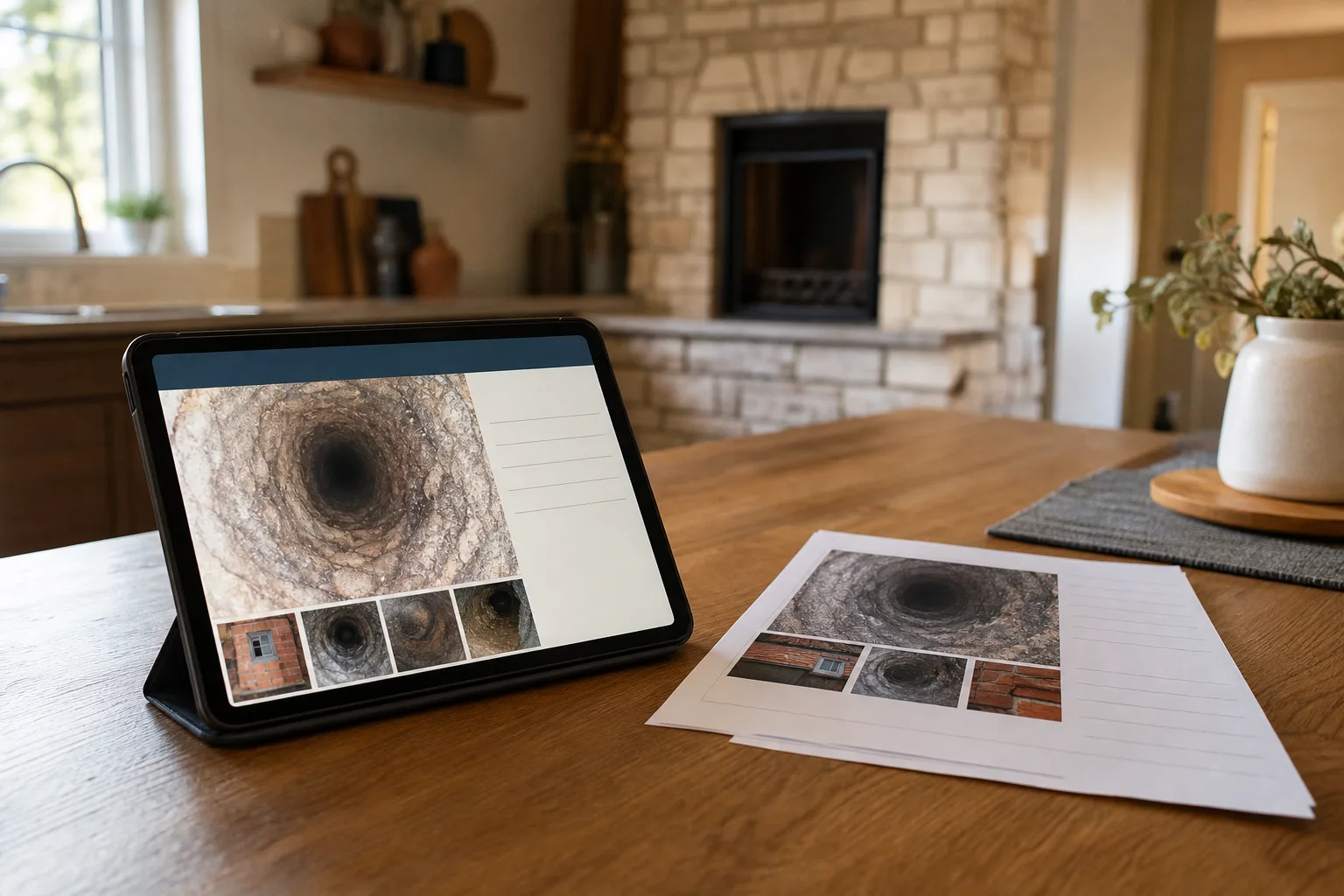
  4. Tablet on a kitchen table showing a chimney inspection report with flue camera still
    04

    Verification and a report

    A second scan after the work, and written findings you can keep, hand to an inspector, or send to an insurer.

What it covers

The jobs this actually includes

Not every job on this list is equally urgent, so they are ordered that way. A cracked liner stops you using the fireplace tonight; waterproofing can wait for a dry week.

  • Full rebuild from the foundation

    Safety repair

    The whole stack down and rebuilt, including the portion inside the house. Rare, expensive, and the answer when the chimney has moved at its base or the interior masonry has failed too.

    On site: 1–2 weeks

  • Rebuild above the roofline

    Structural

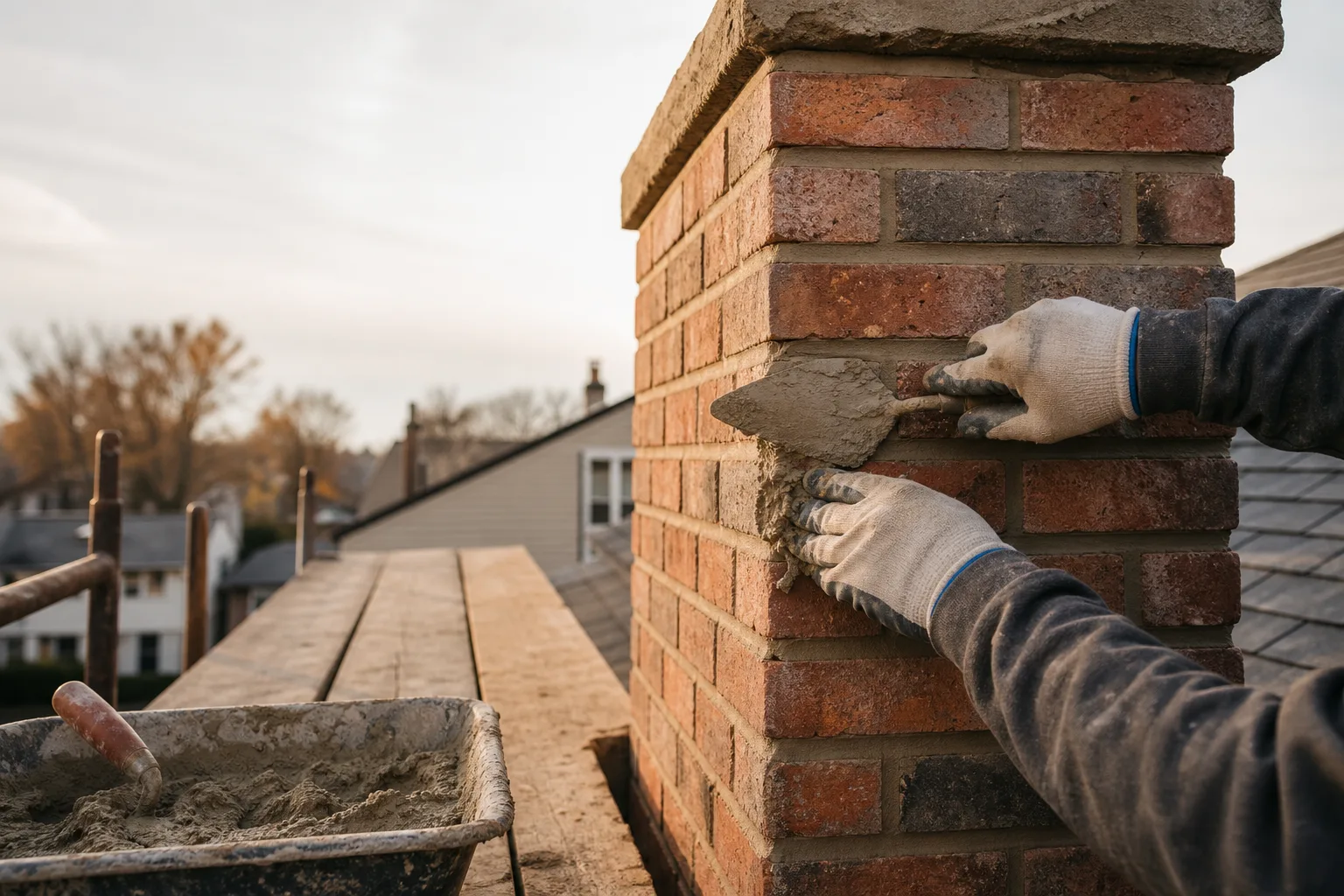
    The exposed section taken down to the last sound course and rebuilt with matched brick, a new crown and new flashing. This is what the great majority of rebuilds actually are.

    On site: Several days

  • Rebuild with a new liner

    Structural

    If the flue has to be relined as well, doing it during the rebuild costs far less than doing it afterwards — the stack is already open and the access is already paid for.

    On site: 1–2 weeks

  • Partial rebuild of one face

    Structural

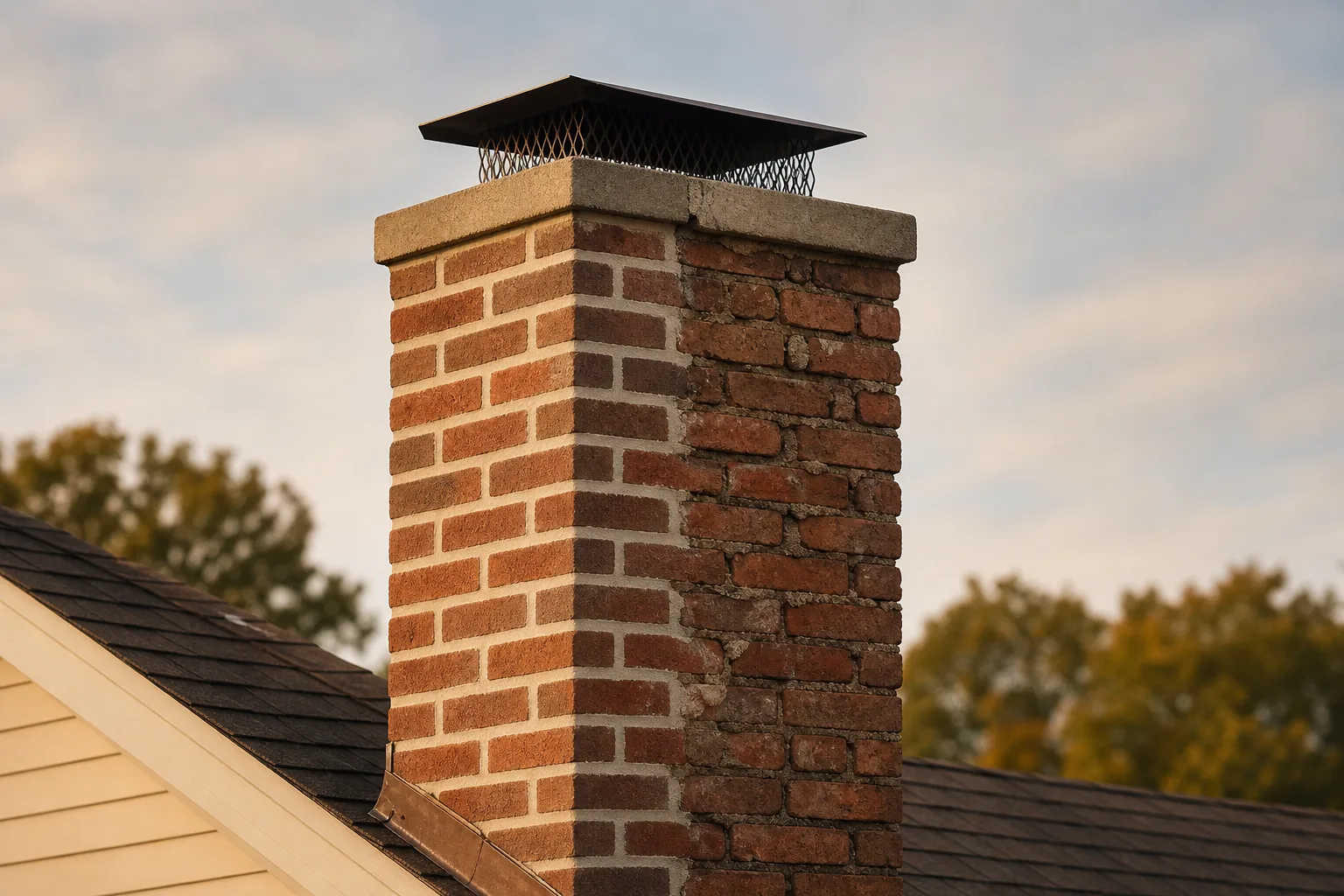
    Where one weather-facing side has gone and the rest is sound. Bricks are toothed into the existing courses so the repair carries load rather than sitting against it.

    On site: Several days

  • Removal to below the roofline

    Preventive

    For a chimney nobody uses and nobody wants to keep. Taken down below the roof and capped over, with the roof made good. Frequently cheaper than rebuilding, and worth putting on the table.

    On site: Several days

Times are for the work itself, not for scheduling. Masonry needs roughly 40°F to cure properly, which is what limits this work in a northern winter rather than whether a crew is free.
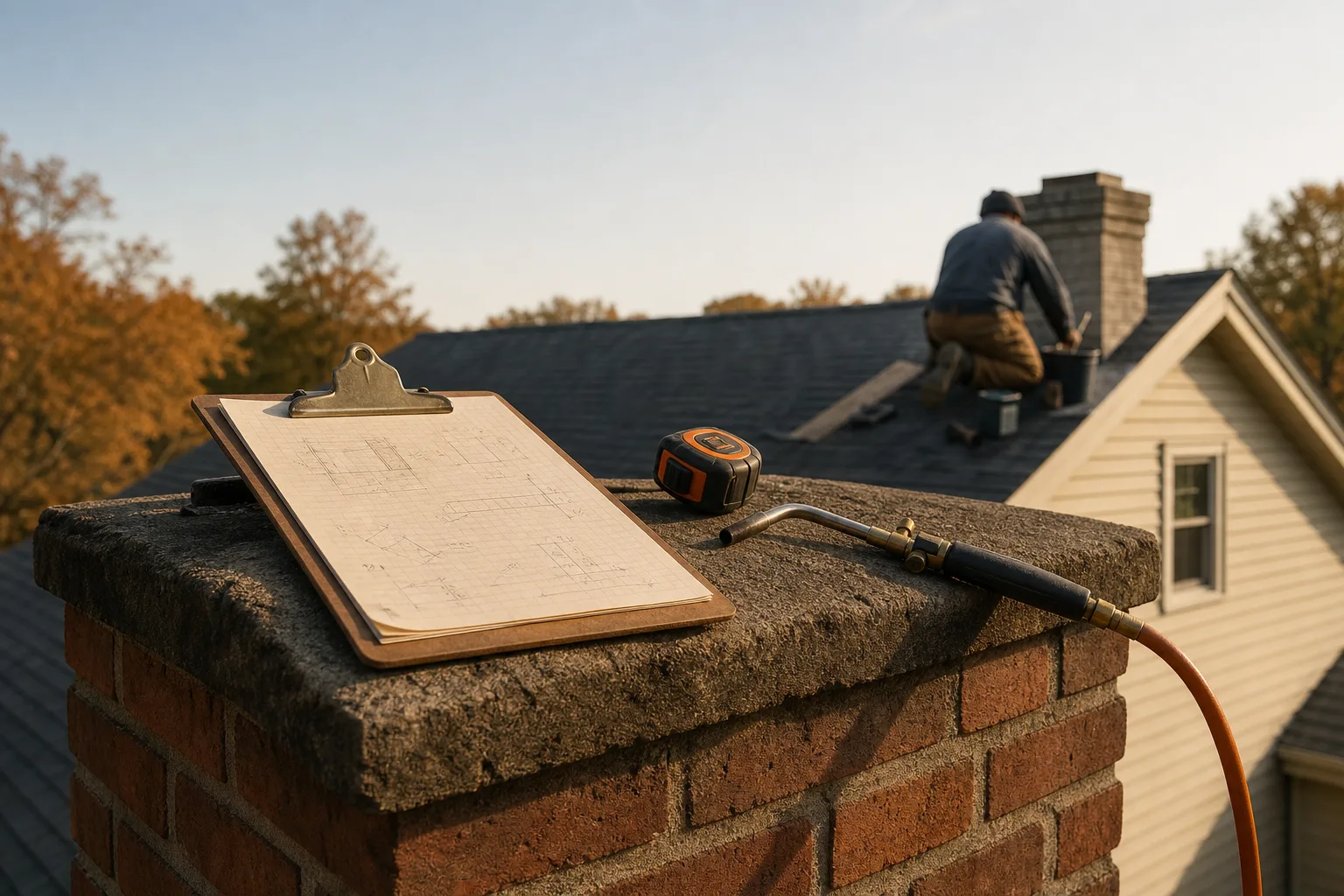
Handwritten estimate on a clipboard resting on a brick hearth beside a tape measure and torch
What drives the price

Why chimney rebuilding quotes vary so much

  • How far down the stack sound masonry begins
  • Whether matched brick is available or has to be sourced
  • Roof pitch, height and access, which decide scaffolding
  • Whether the flue is relined during the work
  • Season, because masonry needs roughly 40°F to cure

A rebuild above the roofline is a several-thousand-dollar job before anything unusual is added. A full rebuild to the foundation runs several times that. Given the numbers, a second opinion is proportionate rather than paranoid — and any company worth using will expect you to get one.

Ethan Miller and Ryan Carter of VIO CHIMNEY beside a branded service truck
Who we are

The people behind every visit

Founded by Ryan Carter in 2019. Every page you read here is reviewed by Ethan Miller, our chimney specialist. A written estimate before any work, and the findings in writing whether or not anything needs doing.

More about who we are →
Capped brick chimney silhouetted against a soft dusk sky above a tidy residential rooftop

The VIO Standard

  • A written estimate first
  • License and insurance checked
  • Nothing starts without your OK

Common questions

How do I know if my chimney needs rebuilding or just repointing?

The test is whether the brick has failed or only the mortar. Repointing replaces mortar, and it works as long as there is sound brick either side of the joint to bond to. Once the brick faces have spalled through and the brick behind them is soft, or once courses have shifted out of plumb, there is nothing left for new mortar to hold onto. Loose bricks and a visible lean are rebuild territory. Crumbling joints on a stack whose brick is still hard are not.

How much does chimney rebuilding cost?

A rebuild above the roofline — which is what most rebuilds are — runs into several thousand dollars before scaffolding or a liner. A full rebuild to the foundation is several times that, because it involves the interior of the house. The main variables are how far down sound brick starts, access, and whether matched brick can be found. This is the most expensive job on this site, and it is the one where a second quote is worth the wait.

How long does a chimney rebuild take?

Above the roofline, several days for the masonry plus curing time before a crown can be finished. A full rebuild is one to two weeks. Weather runs the schedule more than crew availability does — masonry needs roughly 40°F to cure, so a rebuild started in a cold snap stops until it warms up, and that is not a delay anyone can shortcut safely.

Should I rebuild or just remove the chimney?

If it is unused and you have no plans for it, removal down to below the roofline is a real option and it is frequently cheaper. The stack comes down, the roof is closed over and made good, and there is nothing left up there to maintain. The reasons not to are wanting the fireplace one day, a period house where the chimney is part of the elevation, and any shared flue serving an appliance. It is worth having both numbers before deciding.

Will the new brick match the old?

It will be close, and honestly it will rarely be invisible. New brick sits beside a hundred years of weathering, and the difference softens over several seasons rather than disappearing. Salvaged brick of the right period matches far better and takes longer to source. If appearance matters — a period property, a street elevation — say so before the quote, because it changes both the price and the lead time.

let's get it on the calendar.

Tell us your ZIP code and what you need. The pro who covers it quotes the job in writing, and nothing starts until you approve the number.

(513) 655-6702Get my estimate