Nashville, Tennessee · 71 ZIP codes
Chimney Sweep in Nashville, TN




- License & insurance checkedBefore a pro joins the network
- Upfront estimatesIn writing, before any work
- Complaints go to a personAnd can remove a pro from the network
- NFPA 211 standardsThe inspection benchmark we point to
The short answer
The first question is not how dirty it is. It is whether you own a chimney or an appliance.
A chimney sweep in Nashville splits into two genuinely different jobs, and which one you need depends on what was built. Older Middle Tennessee housing (the bungalows and Victorians in East Nashville, Germantown and Belmont-Hillsboro) has brick stacks with clay tile liners, and those get the classic treatment: brushed to bare tile, smoke chamber cleared, liner checked on the way down. But Nashville's enormous growth since 2010 filled the metro with factory-built fireplaces sitting inside wood-framed chases clad in siding. Those are listed appliances, not masonry. They are cleaned differently, they fail differently, and almost nothing you read about chimney maintenance applies to them. A sweep who does not establish which one you have before quoting has not started work yet.
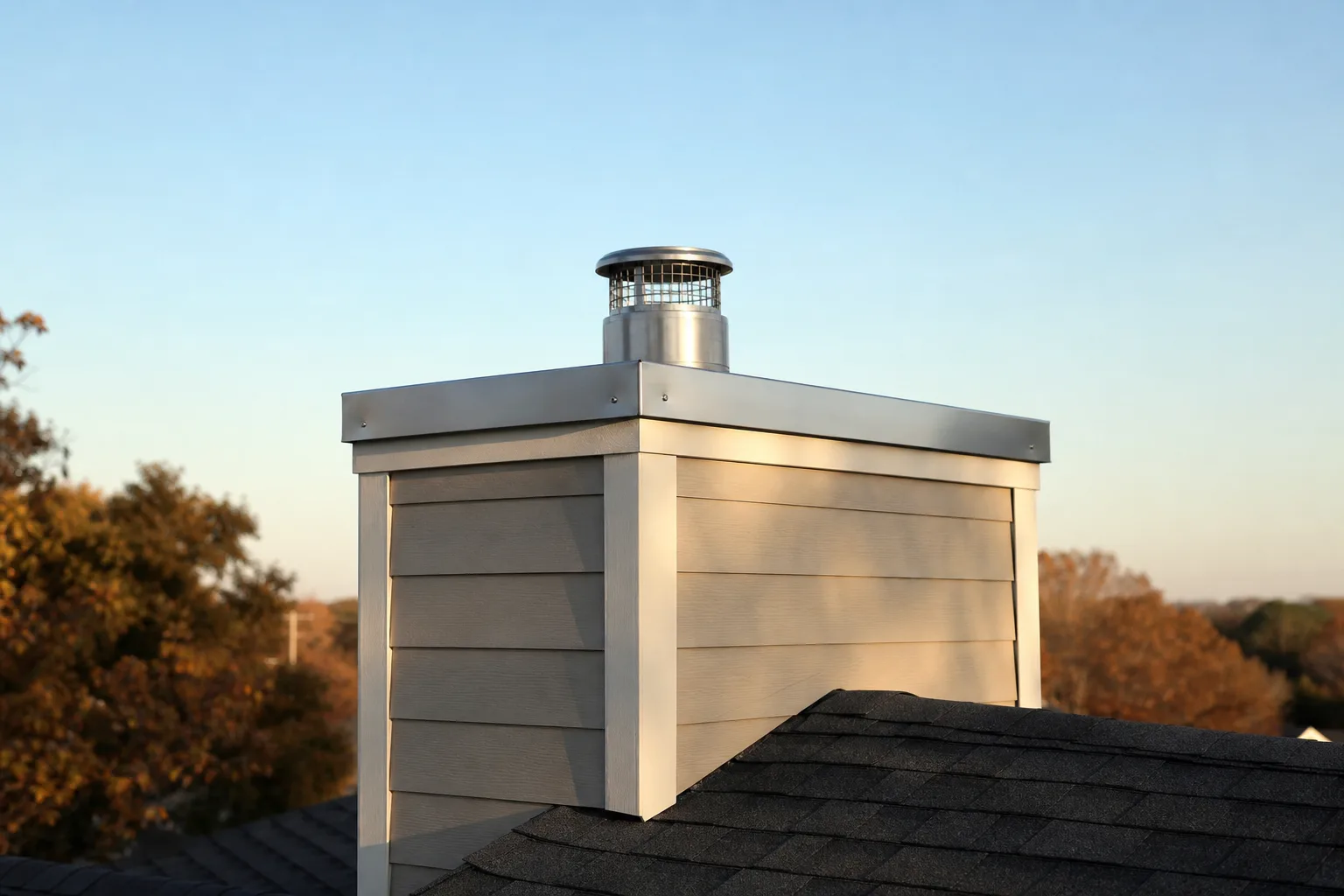
A chase is not a chimney
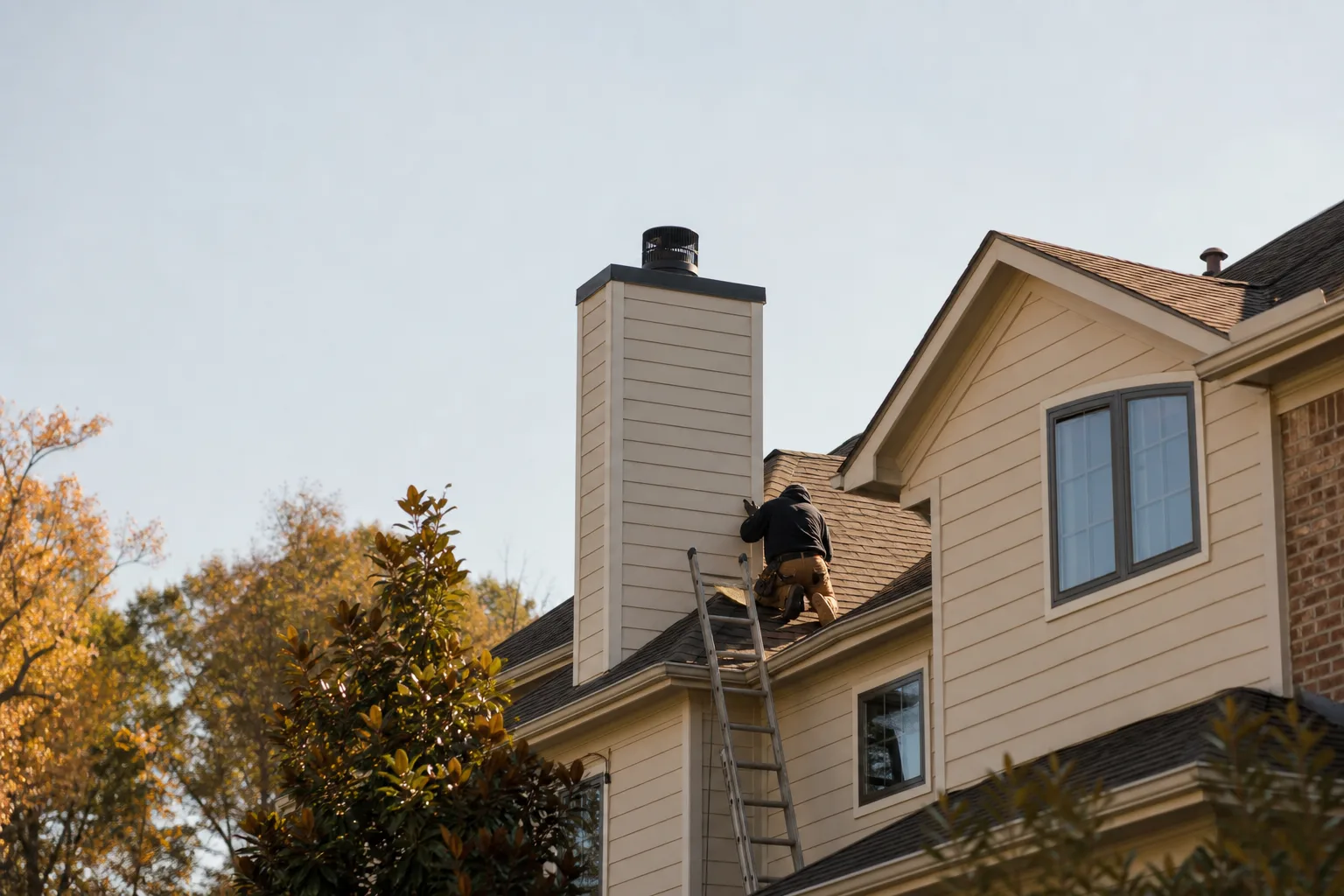
Siding rather than brick, a metal cover on top. Inside is a listed factory appliance with its own rules and its own lifespan.
Local conditions
What Middle Tennessee weather does to a flue
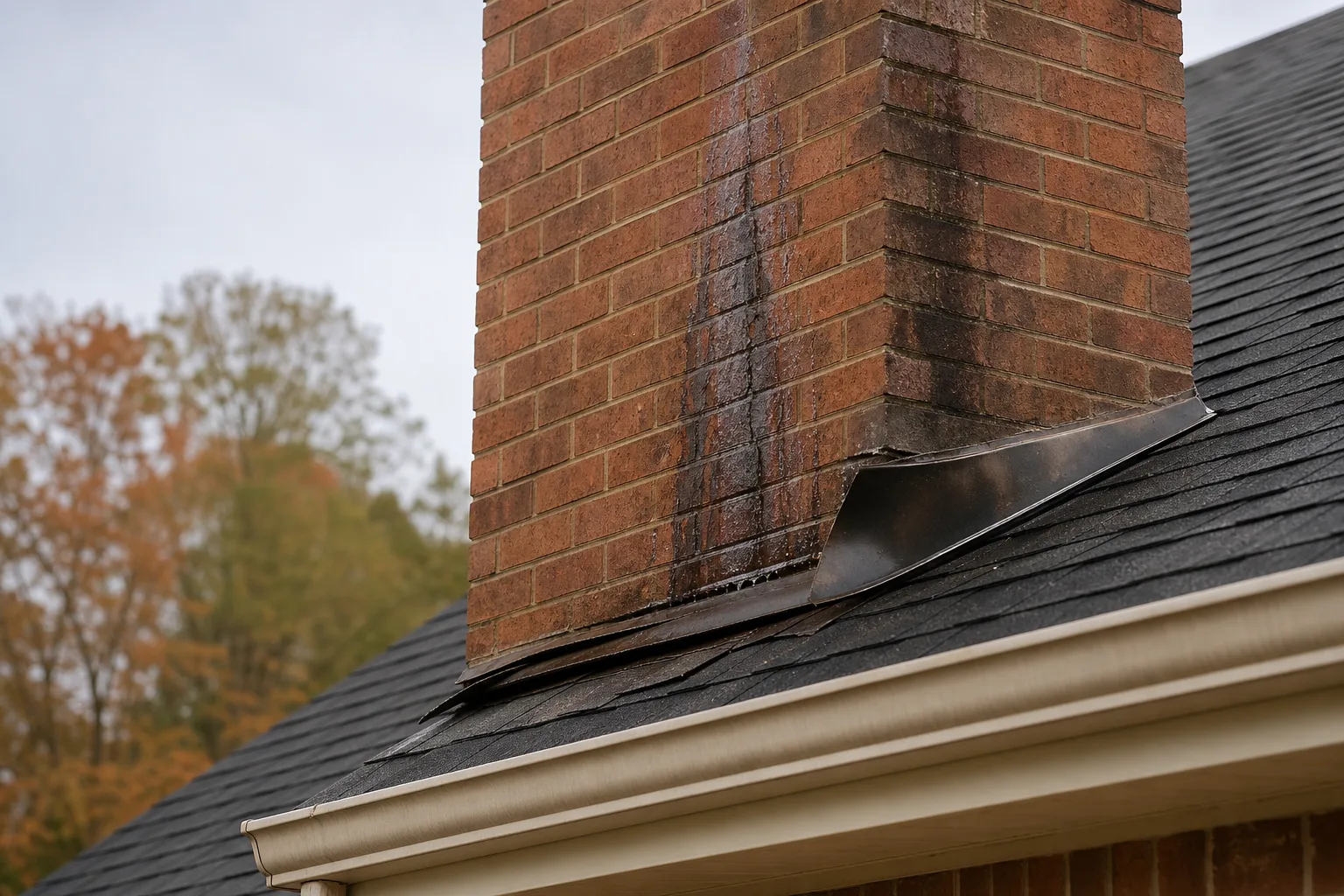
Water, not frost, is the enemy here
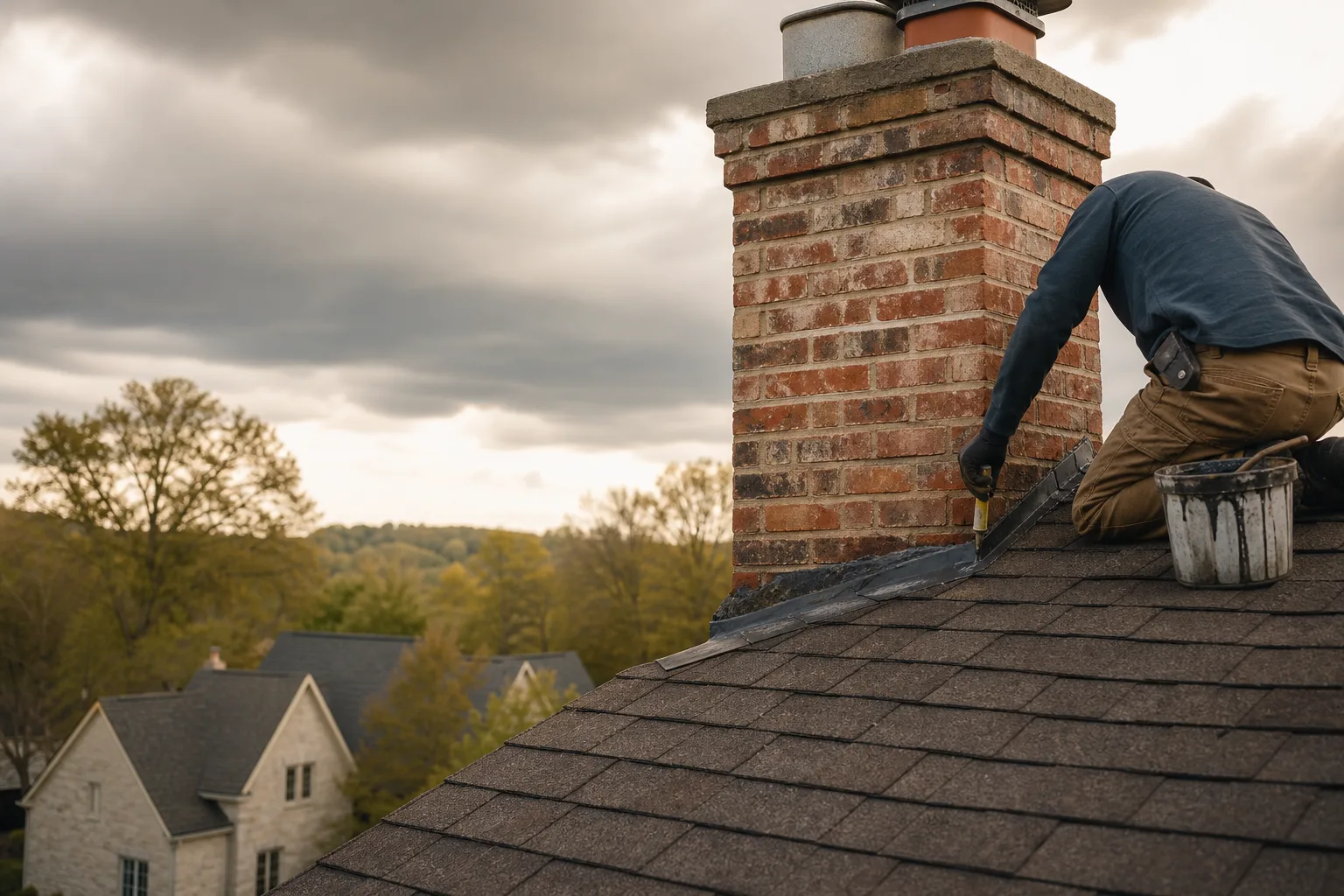
March through May is Middle Tennessee's severe season. Wind-driven rain finds lifted flashing and open chase covers, and unlike a northern climate the damage shows as water inside rather than cracked masonry outside.
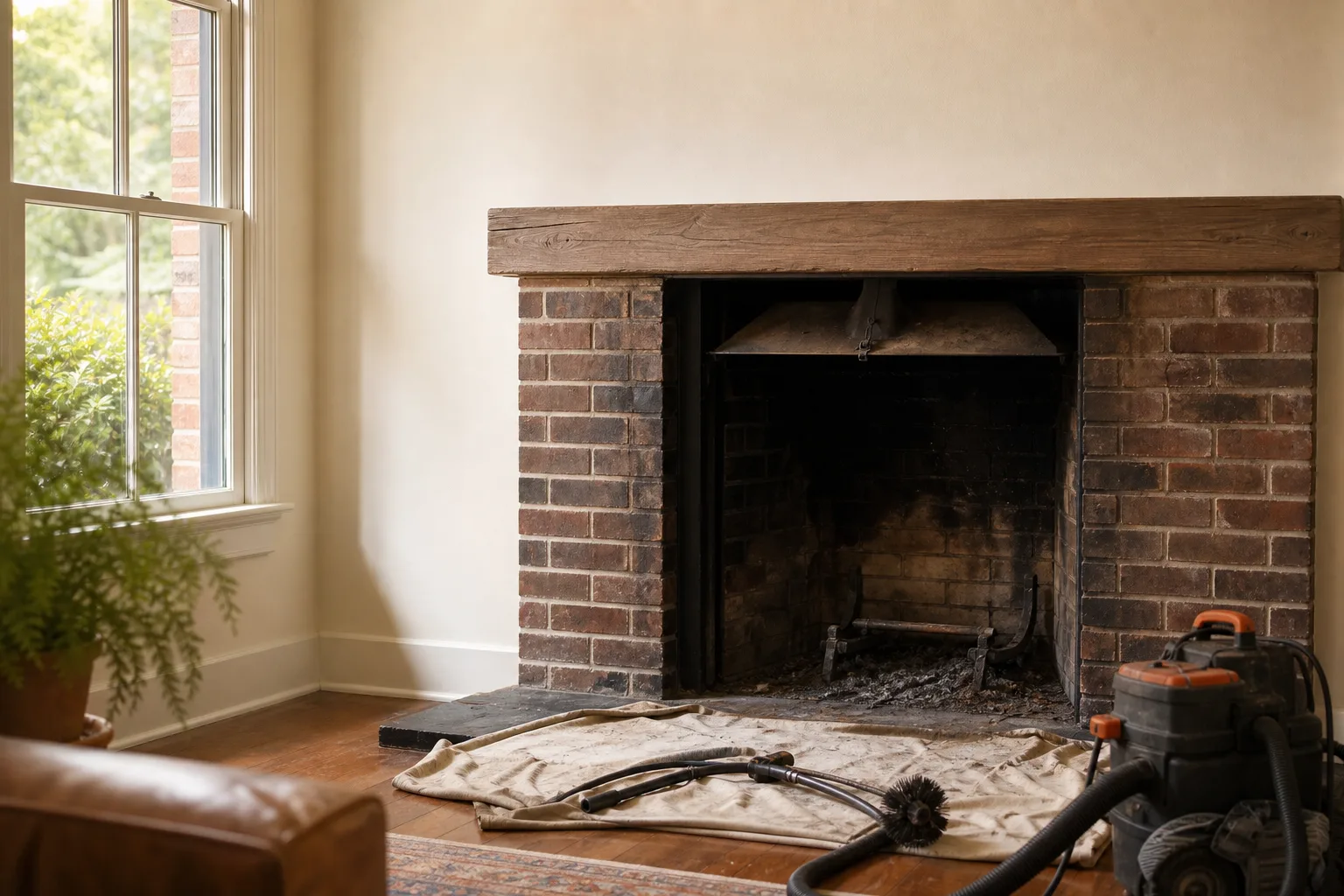
The summer smell everyone calls about
High humidity reactivates creosote left in a flue that skipped its cleaning, and the smell comes down into the room whenever the air conditioning pulls air the wrong way. It is our most common warm-weather call.

Shorter season, same buildup
A Nashville fireplace burns fewer months than a northern one, which persuades people the flue can wait a year. It cannot — deposits do not expire over summer, they sit there absorbing moisture.
The housing stock
Why a chimney sweep in Nashville depends on what you own
Factory-built fireplaces in framed chases
The signature of Nashville's growth years. From the outside it looks like a chimney: a tall boxed structure clad in siding or stone veneer. Inside there is no masonry at all: a metal firebox listed by its manufacturer, a double- or triple-wall metal flue, and a sheet-metal chase cover on top. These are maintained by the manufacturer's instructions, not by masonry practice. Refractory panels crack and are replaced as listed parts. Chase covers rust through and pond water straight down inside the framing. And the unit has a service life: at some point the honest answer is replacement, not repair, and any sweep telling you a cracked factory firebox can be patched with mortar is describing something that voids its listing.
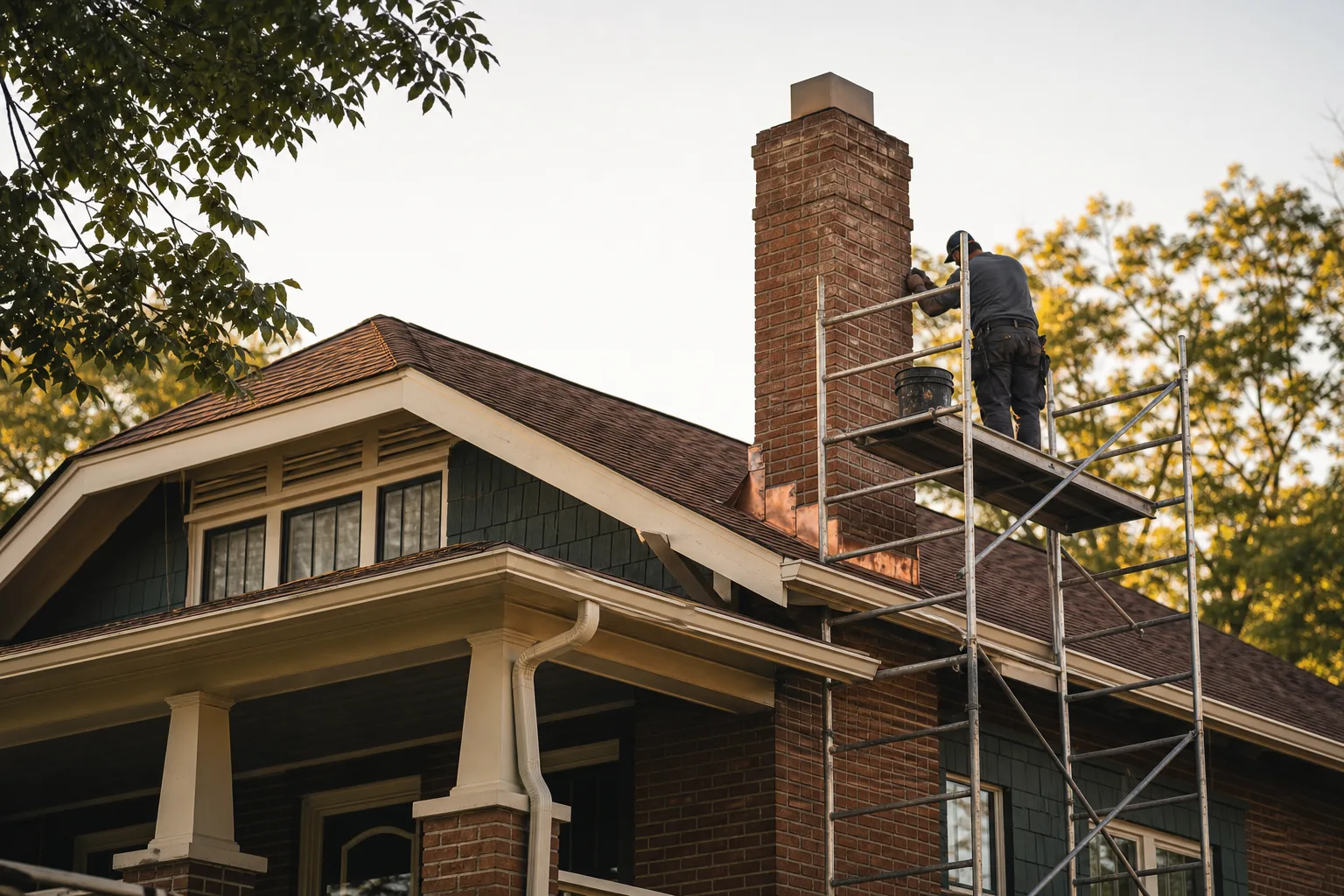
Pre-war masonry in the established neighborhoods
East Nashville, Germantown, Belmont-Hillsboro, Sylvan Park and Franklin's older streets hold the city's real chimneys: 1900s to 1930s brick with clay tile liners, and the occasional unlined flue in the oldest of them. These get the full masonry treatment, and the useful difference from a northern city is that Middle Tennessee's mild winters mean far less freeze-thaw damage to the brick. What they get instead is water: storm-driven rain at the flashing, and crowns that were never given an overhang.
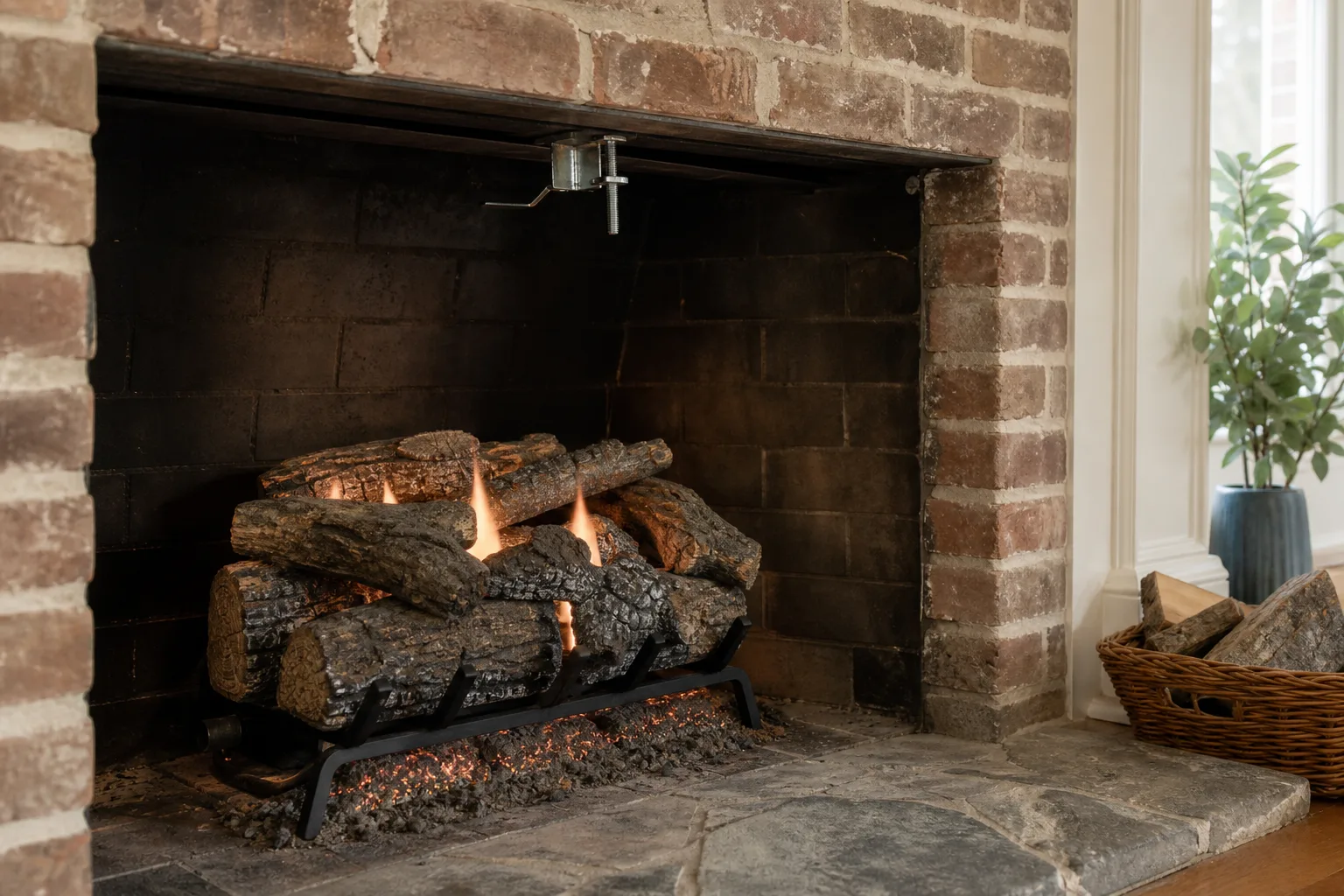
Gas logs dropped into working fireplaces
Extremely common here, and the source of a specific hazard we find repeatedly. When a vented gas log set goes into a masonry fireplace, the damper has to be permanently clamped open so combustion products cannot back up into the room. Sets get installed without the clamp, or a later homeowner closes the damper to stop drafts and does not know why that matters. It is a two-minute check and it is the first thing we look at on any Nashville fireplace with gas logs in it.
Do you have this problem?
Signs you need a chimney sweep in Nashville

A smell that arrives with the humidity
Nashville's signature summer call. Deposits reactivating with moisture, and often air being pulled down the flue rather than up.
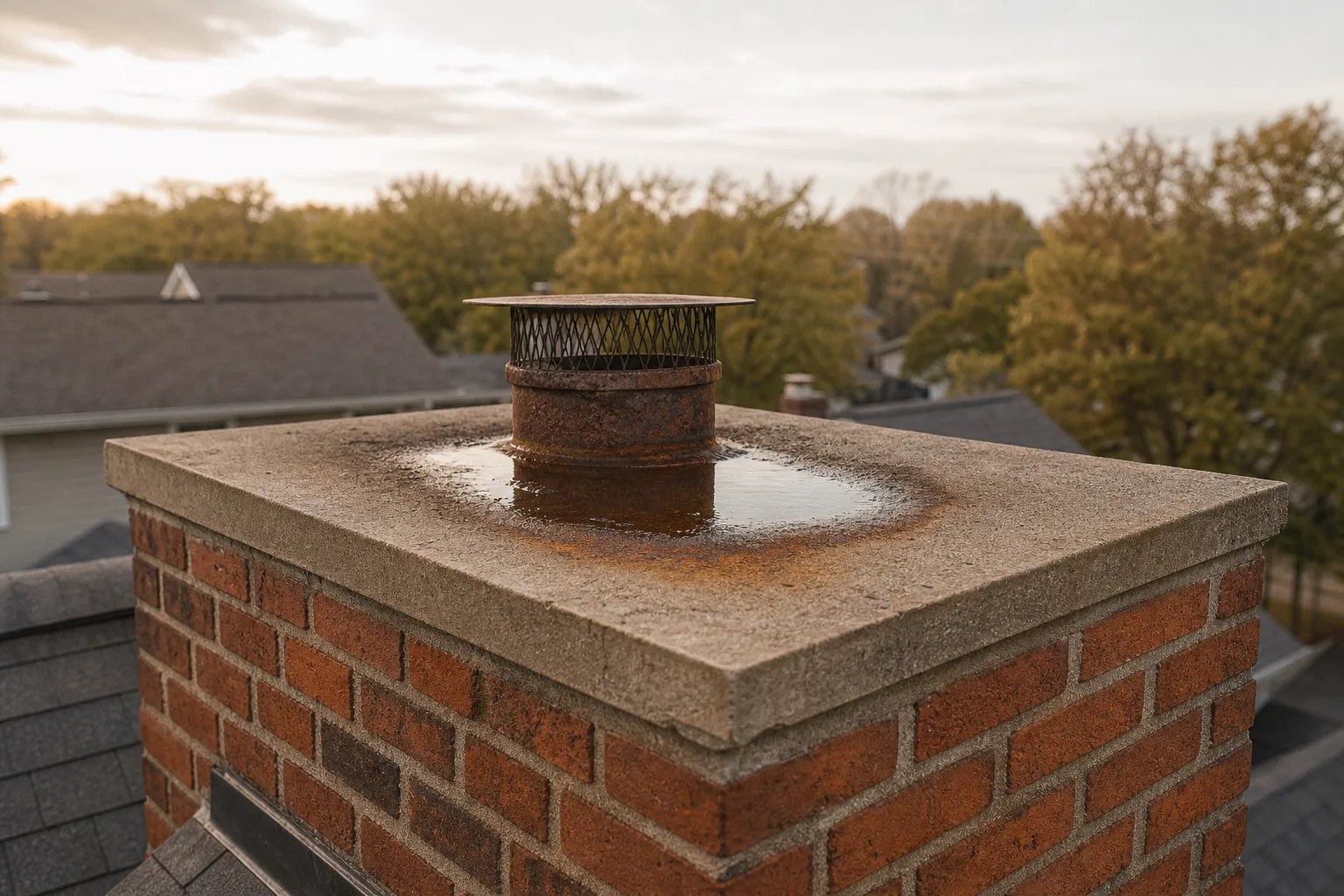
Water pooling on the chase cover
A flat metal cover holding rain. It rusts through and drains into the framing, where the damage stays hidden until a ceiling shows it.
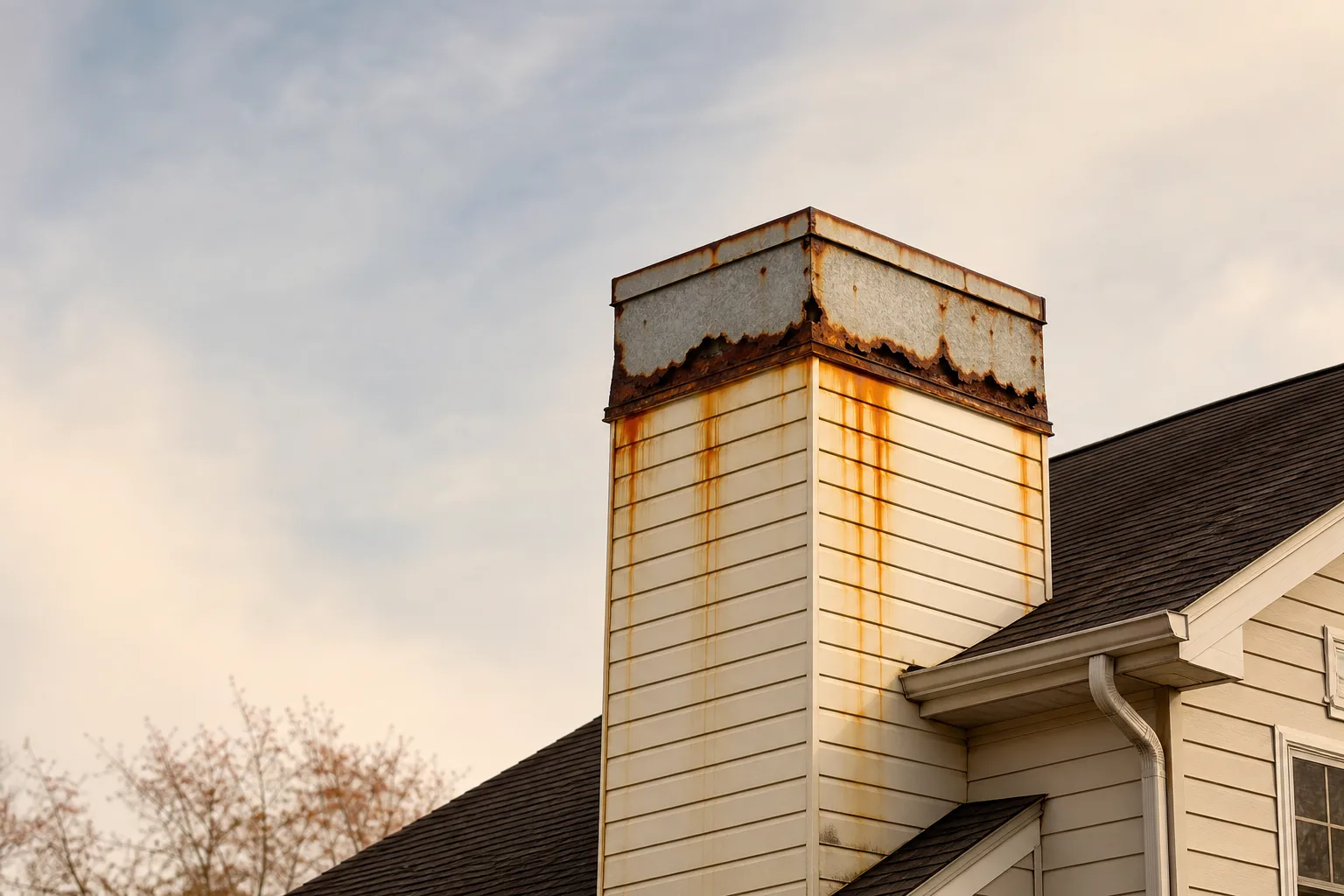
Rust streaks down the chase or firebox
Water has already been getting in for a while. On a factory-built unit, rust in the firebox is a condition question, not a cosmetic one.
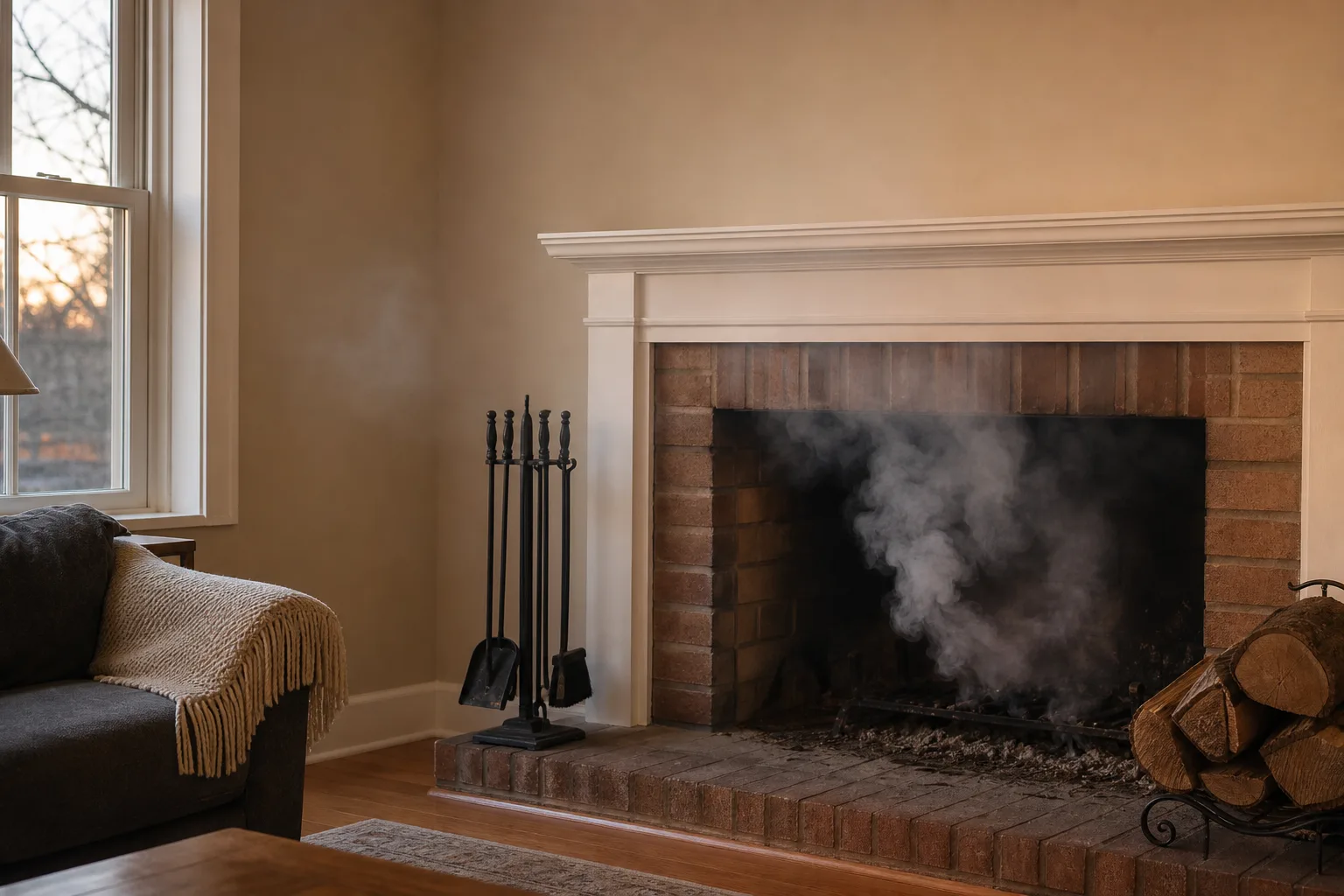
Smoke rolling back into the room
Blockage, a cold flue, or house pressure. On the season's first fire it usually means something moved in over the summer.
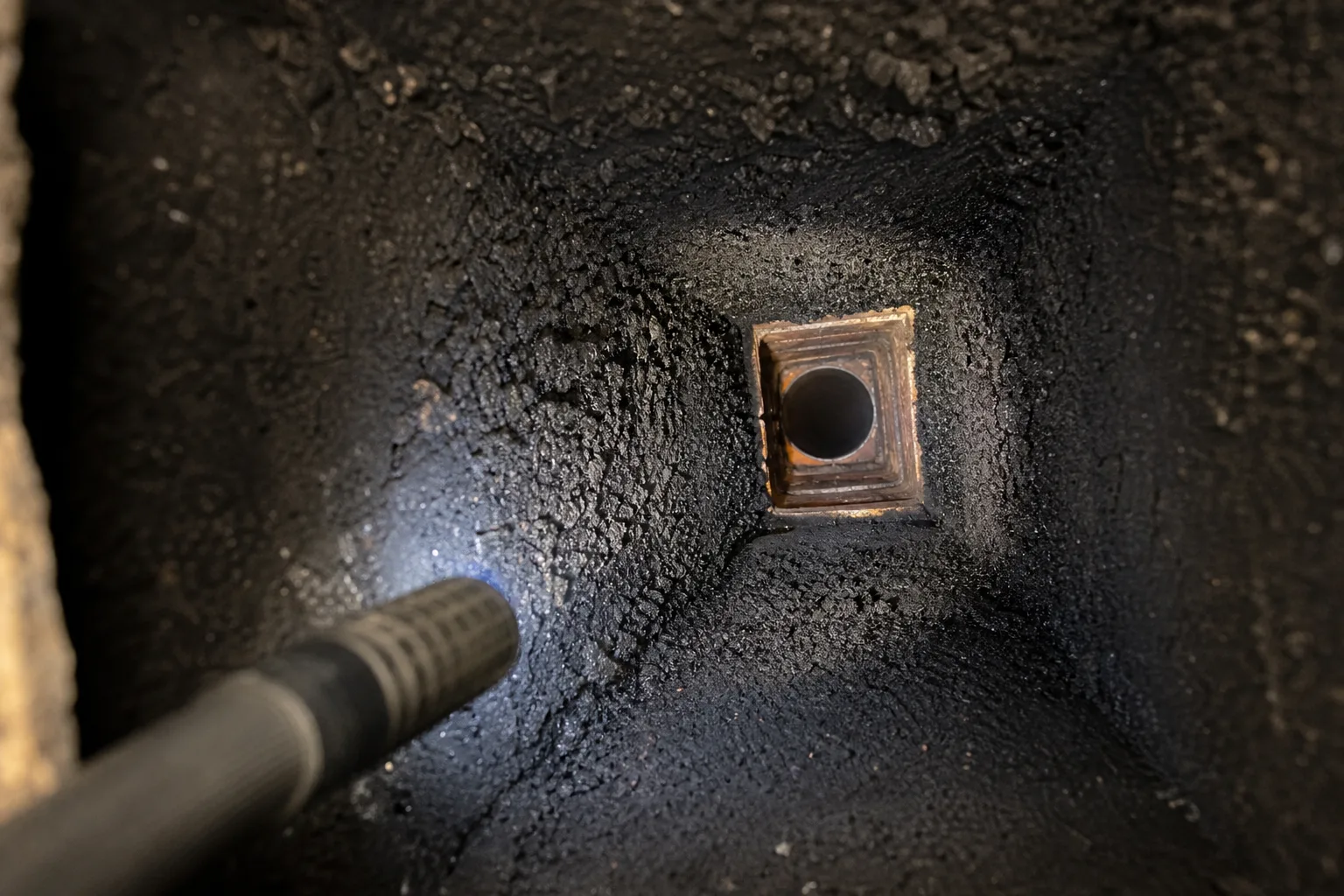
Black glassy buildup on the flue wall
Stage-three creosote. It does not brush off and it is the deposit that actually starts chimney fires. Mild winters do not exempt anyone from it.
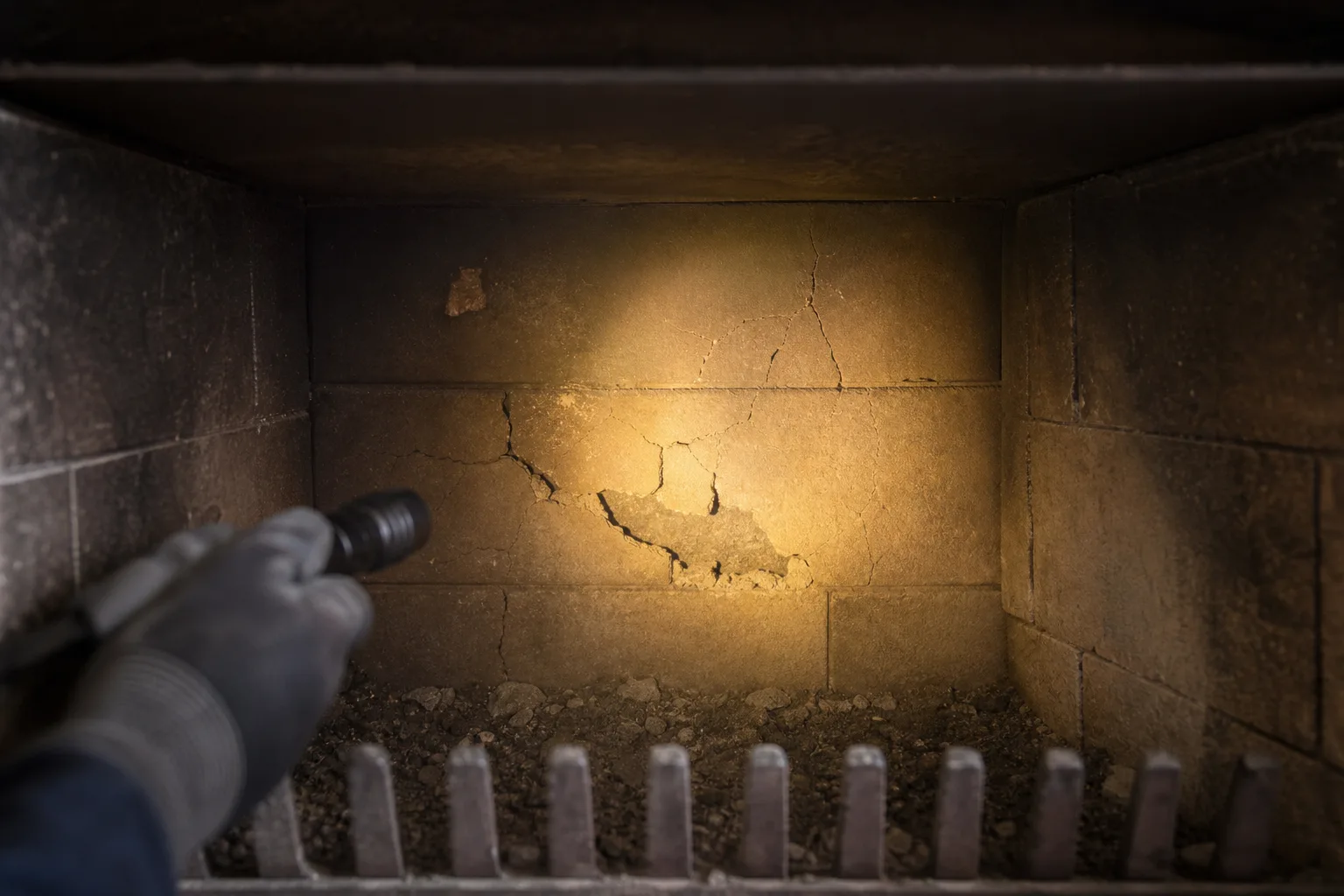
Cracked panels in a metal firebox
Refractory panels in a factory-built unit are listed replacement parts. They are not repaired with mortar, and a cracked panel takes the fireplace out of service.
How we work
How the visit works
The same four steps every time, whatever the scan turns out to find.
- 1
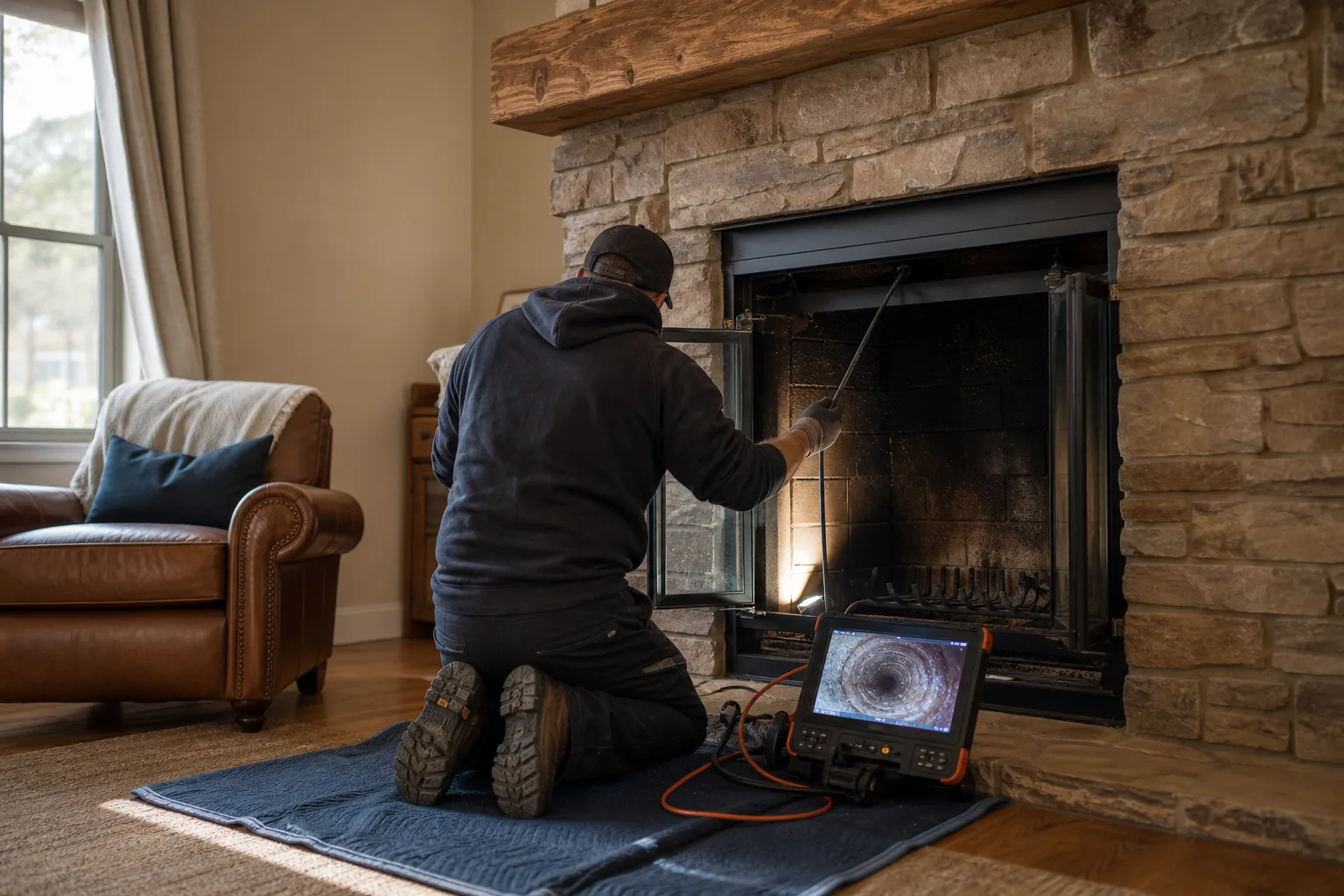
Inspection first, always
A look at the crown, cap, flashing and exterior masonry, then the flue, damper and firebox — with a camera where the job calls for a level 2 scan. Whatever needs work gets shown to you, not just described.
- 2

A written estimate before anything
Scope, price and what is not included, in writing. Nothing starts until you approve it, and an emergency is not a reason to skip this step.
- 3
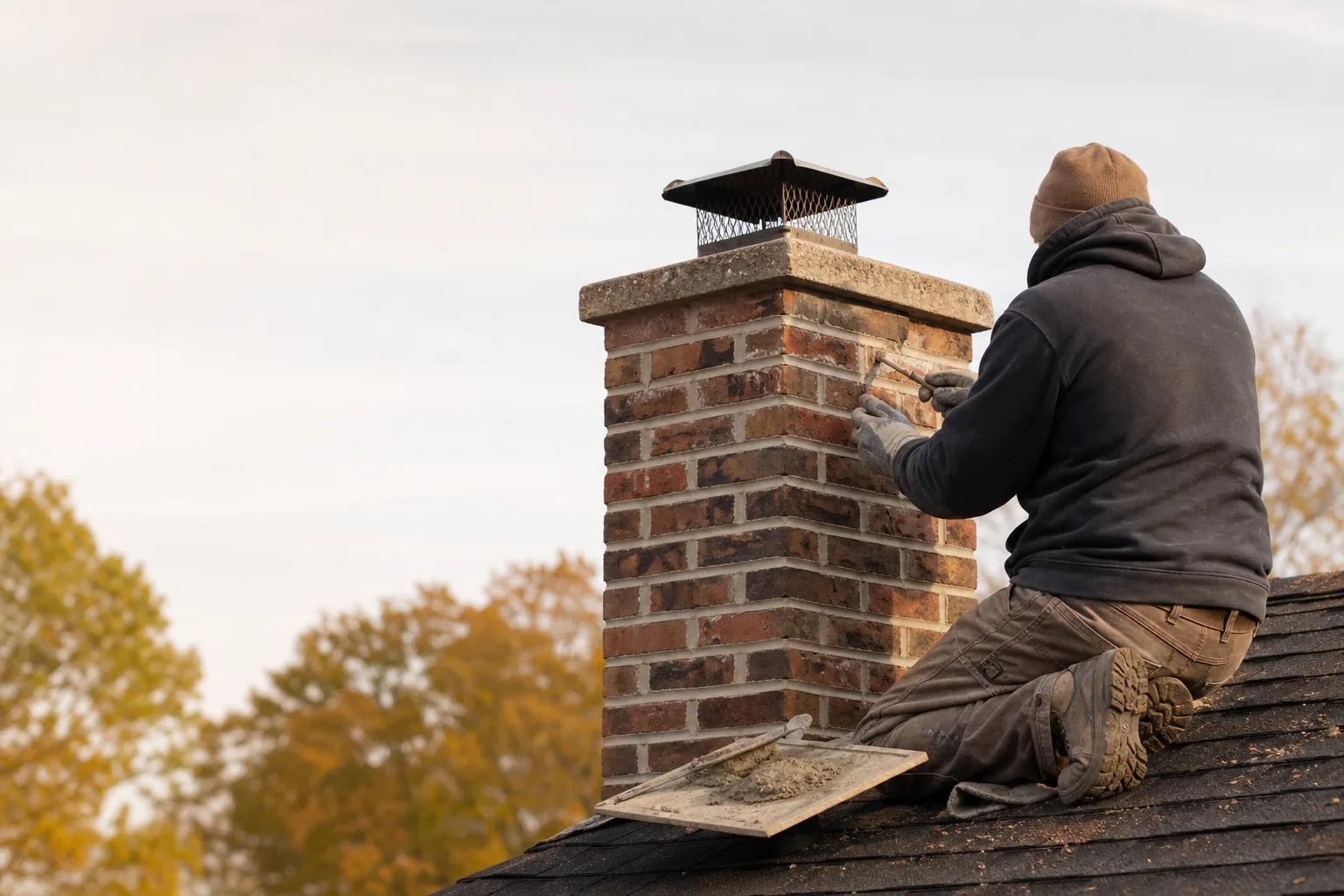
The work itself
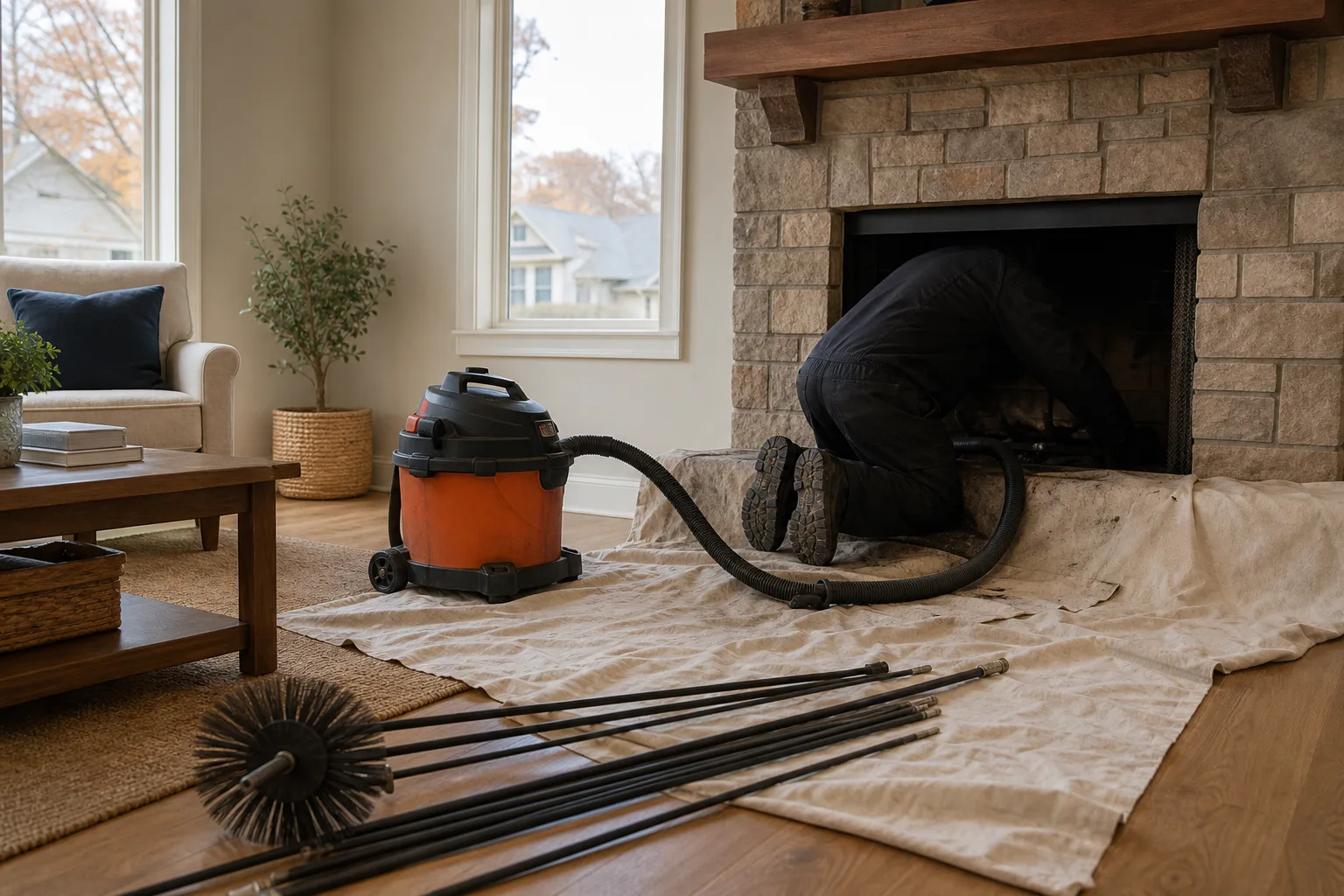
Matched materials and the manufacturer's spec, not whatever is on the van. Drop cloths down, and the room left as it was found.
- 4
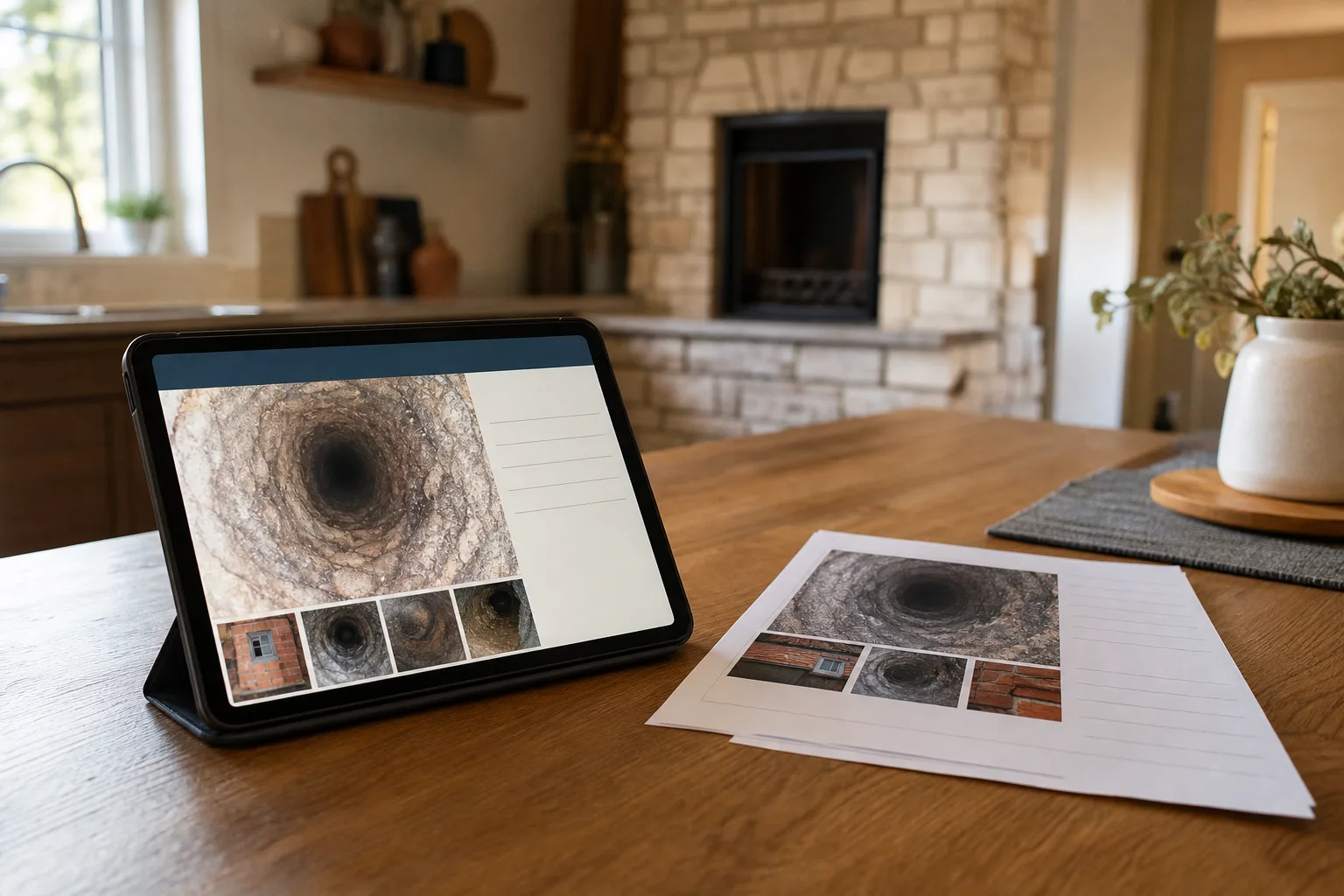
Verification and a report
A second scan after the work, and written findings you can keep, hand to an inspector, or send to an insurer.
What it covers
The jobs this actually includes
Not every job on this list is equally urgent, so they are ordered that way — safety first, then structure, then water, then prevention.
The job — most urgent first
What it involves
On site
Establishing what you actually have
Safety repairMasonry stack or factory-built chase, and if factory-built, which manufacturer and model. Everything after this depends on the answer, and it costs nothing to get right.
On site: First 15 minutes
Gas-log safety check and damper clamp
Safety repairConfirming a vented set has its damper permanently fixed open, and fitting the clamp if it is missing. Standard on every Nashville fireplace with gas logs in it.
On site: Add 20 minutes
Glazed creosote removal
Safety repairStage-three deposits need chemical or rotary work rather than a brush, then a second scan to confirm removal rather than thinning.
On site: Half a day
Level 2 inspection for a sale or after an event
Safety repairRequired at a property transfer, after any chimney fire, and after an appliance change. Nashville's turnover rate means we do a lot of these, and the report is what a buyer's inspector will read.
On site: 2 hours
Chase cover assessment and replacement
Stops waterThe highest-value preventive item on a framed chase. Stainless, sloped, with a drip edge. Replacing a ponding cover before it rusts through is far cheaper than the framing repair after.
On site: Half a day
Standard sweep and Level 1 inspection
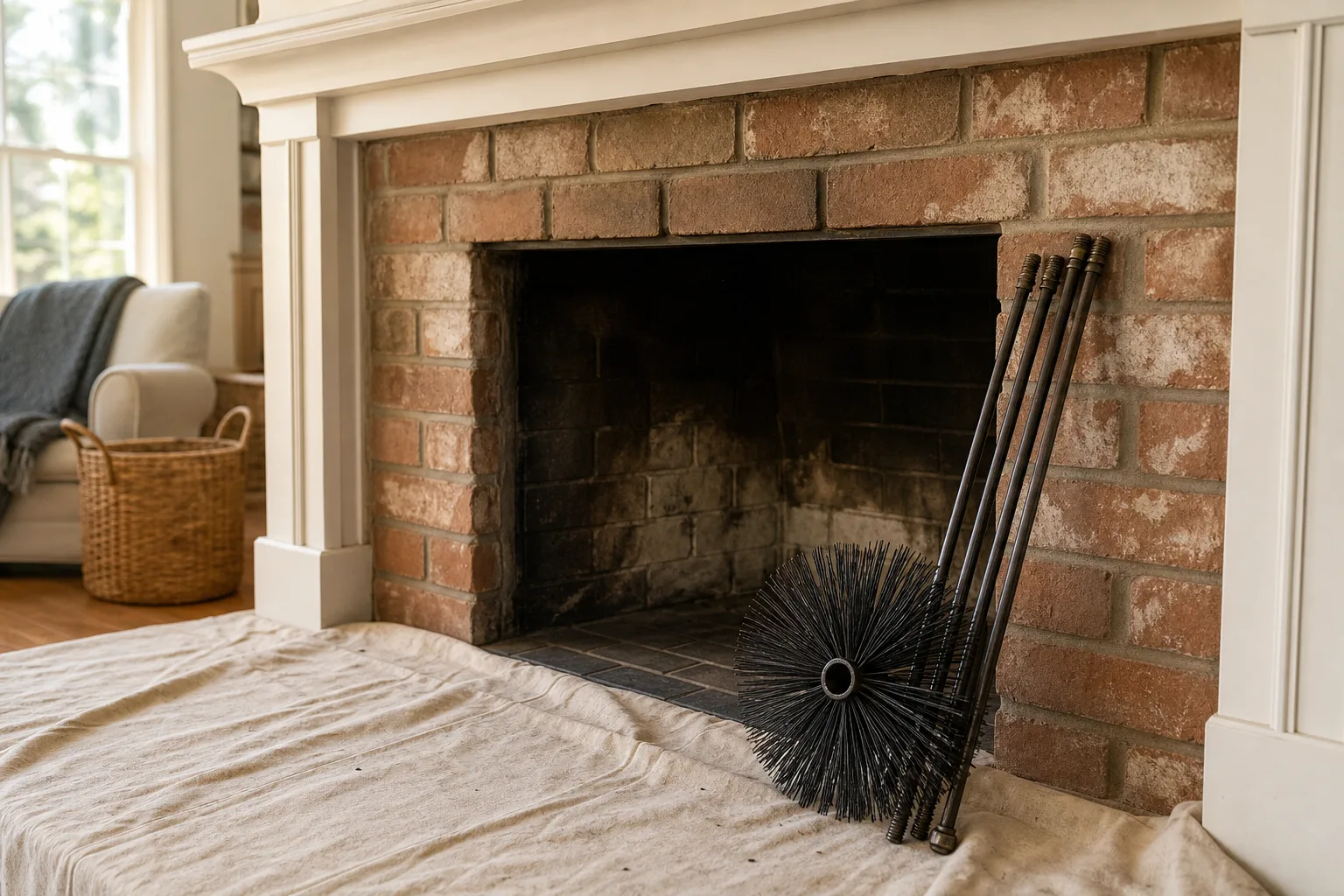
PreventiveFlue brushed to bare tile or to clean metal, smoke chamber and firebox cleared, damper checked, and an inspection to NFPA 211 with the findings written down.
On site: About 90 minutes
Times are for the work itself, not for scheduling. Masonry needs roughly 40°F to cure properly, which is what limits this work in a northern winter rather than whether a crew is free.
Timing
When to book a chimney sweep in Nashville
The quiet window
Nobody is thinking about the fireplace, so availability is wide and prices are not being driven by a queue. It is also the right time to deal with a summer creosote smell at the cause rather than masking it, and to get any storm damage from the spring severe season repaired before autumn.
Peak, and it fills
The first genuinely cool evening puts the whole metro on the phone at once. Still the most sensible time for an annual sweep if you have not booked earlier, but expect a wait, and expect that anything the scan finds is competing for the same calendar.
In season, still workable
Middle Tennessee's mild winters mean we can do far more here in January than we could in Ohio. Masonry work is often possible between cold snaps, and chase-cover replacement is not temperature-dependent at all. Sweeping and scanning continue all winter.
Storm damage season
The severe weather window. This is when flashing that had been holding finally lets go, and when chase covers that were already rusted start putting water into the framing. If a storm has come through and you have any doubt, a scan now is cheaper than the ceiling repair later.
What shapes the job
What decides the work on a chimney sweep in Nashville
- Whether the structure is masonry or a factory-built unit in a framed chase
- How many flues the stack serves: older Nashville masonry often has more than one
- Whether the deposit brushes off or is glazed stage-three creosote
- Roof pitch and height, which on newer two-storey builds adds real time
- Whether the visit is a Level 1 annual check or a Level 2 for a sale
A standard sweep with a Level 1 inspection is the base, and it is the same across all 71 ZIP codes we cover in Middle Tennessee: Green Hills pays what Donelson pays. Factory-built units are usually quicker to clean than masonry and priced accordingly, which is one of the few places where owning a chase works in your favour. What genuinely costs more is glazed creosote, and a Level 2 inspection for a sale, because both are different jobs rather than longer versions of the same one. We will tell you which category you are in before we quote.
From our own jobs
What we keep finding in Nashville
Masonry quotes written for factory-built units
The most expensive mistake in this market. A homeowner with a framed chase is quoted for repointing, crown repair or a masonry liner, none of which exist on their structure. Sometimes it is ignorance and sometimes it is not, but the outcome is the same: money spent on work that cannot be performed. If you have siding rather than brick and a metal cover on top, any quote mentioning mortar is a signal to stop and get a second opinion.
Chase covers ponding water
The single most common real fault on Nashville's newer housing. A flat sheet-metal chase cover with no slope holds rainwater, rusts through from the top, and then drains straight into the wood framing below, where it does its damage invisibly for years before a ceiling stain appears downstairs. A replacement cover in stainless with a proper slope and drip edge is inexpensive and it is the highest-value preventive item on a framed chase.
Gas logs with the damper unclamped
We find this regularly enough that it is now the first thing checked on any gas-log fireplace here. A vented set requires the damper permanently fixed open; without the clamp, a closed damper puts combustion products into the room. Occasionally the set was installed correctly and a homeowner removed the clamp to stop a draft, not knowing what it was for. Either way it is a carbon monoxide risk and it takes minutes to correct.
Summer smell treated as a cleaning problem
It usually is, but not always. The exceptions matter. If a flue has been swept and the smell persists in humid weather, the cause is more often air pressure than deposits: modern tight construction plus air conditioning pulls air down the flue instead of up, bringing the odour with it. Sweeping a clean flue again will not fix that. A top-sealing damper or addressing house pressure will, and knowing the difference saves a homeowner from paying twice.
Where we cover in Nashville
All Nashville services →71 ZIP codes covered. If your address falls outside the area we say so on the call rather than booking a visit we cannot honour.

The people behind every visit
Founded by Ryan Carter in 2019. Every page you read here is reviewed by Ethan Miller, our chimney specialist. A written estimate before any work, and the findings in writing whether or not anything needs doing.
More about who we are →
The VIO Standard
- A written estimate first
- License and insurance checked
- Nothing starts without your OK
Nashville questions