



Chimney problem
Why is brick spalling on my chimney?
Faces flaking off a stack is water that got in and froze. It spreads downward every winter and sealing over it locks the water in.
Safe to use for now, and it gets more expensive every month you leave it.
Brick spalling is not the brick wearing out. It is water inside the brick, freezing.
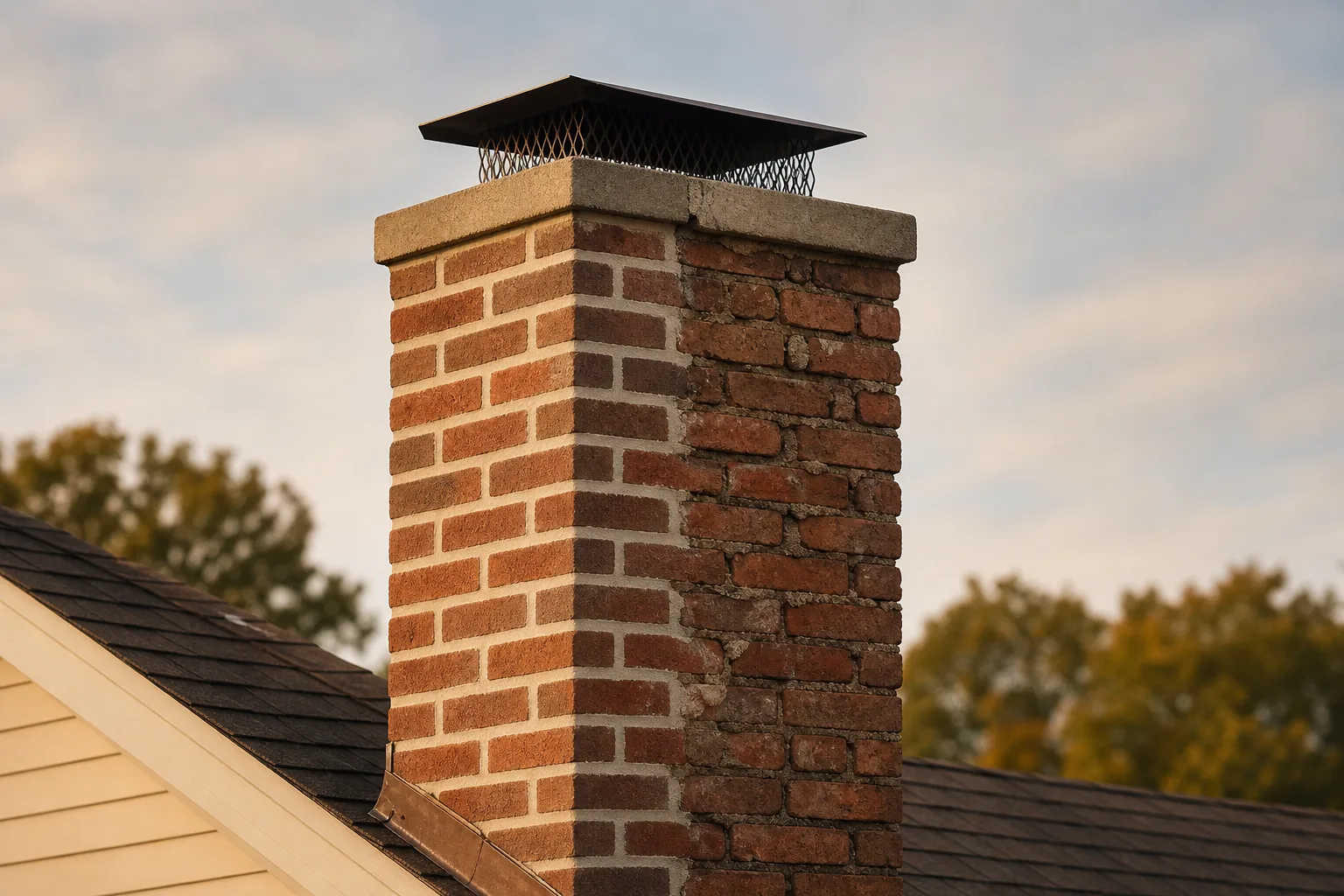
Brick is porous by design — it takes on moisture and gives it back. Brick spalling starts when water gets in faster than it leaves, then freezes and expands by about nine percent. That pressure pushes the hard fired face off, exposing the soft body behind it, which absorbs water faster still. So the damage accelerates rather than levelling off, and each winter takes more than the last. The reason it appears on chimneys before walls is simple: a stack is exposed on four sides and takes the crown's runoff as well.
What you are looking at
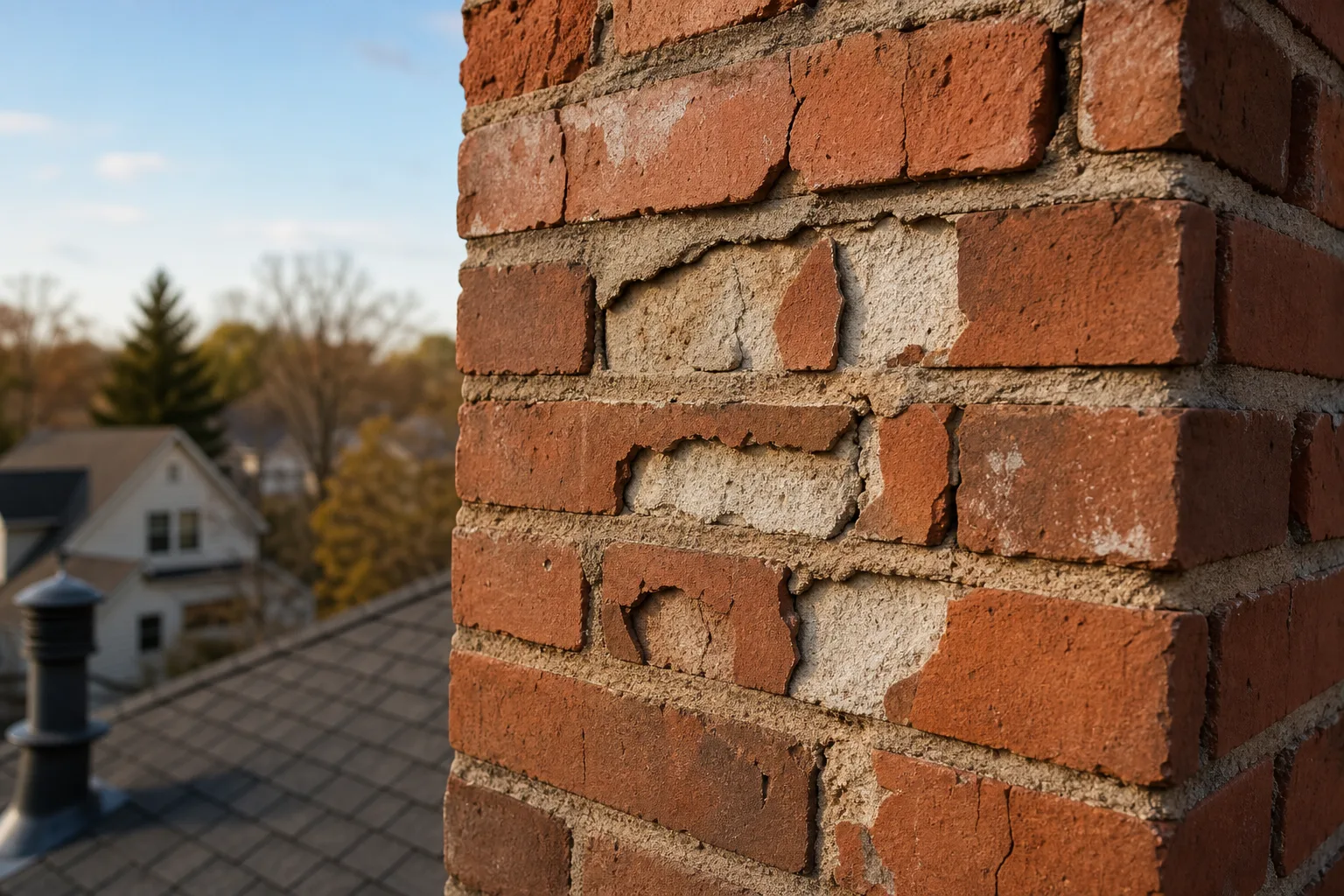
The face is gone, not worn

A clean broken edge with pale powdery brick behind it is freeze damage. Smooth erosion would be weathering, and that is far rarer.
What to do right now
None of this fixes it. All of it stops the problem getting more expensive between now and the visit.
Photograph the worst face with something for scale, and again after the next freeze. The rate matters as much as the extent.
Do not apply sealant. Sealing spalled brick traps the water already in the wall and accelerates exactly what you are trying to stop.
Look directly above the damage for the source — a cracked crown, a missing cap, or open joints are usually feeding it.
Clear anything holding water against the stack: a blocked gutter, ivy, or a leaf pile in a roof valley.
If bricks have gone soft enough to crumble under a thumb, keep off the roof around them.
What causes brick spalling on a chimney
Ordered by how often it turns out to be the answer, so you can stop reading once you recognise yours.
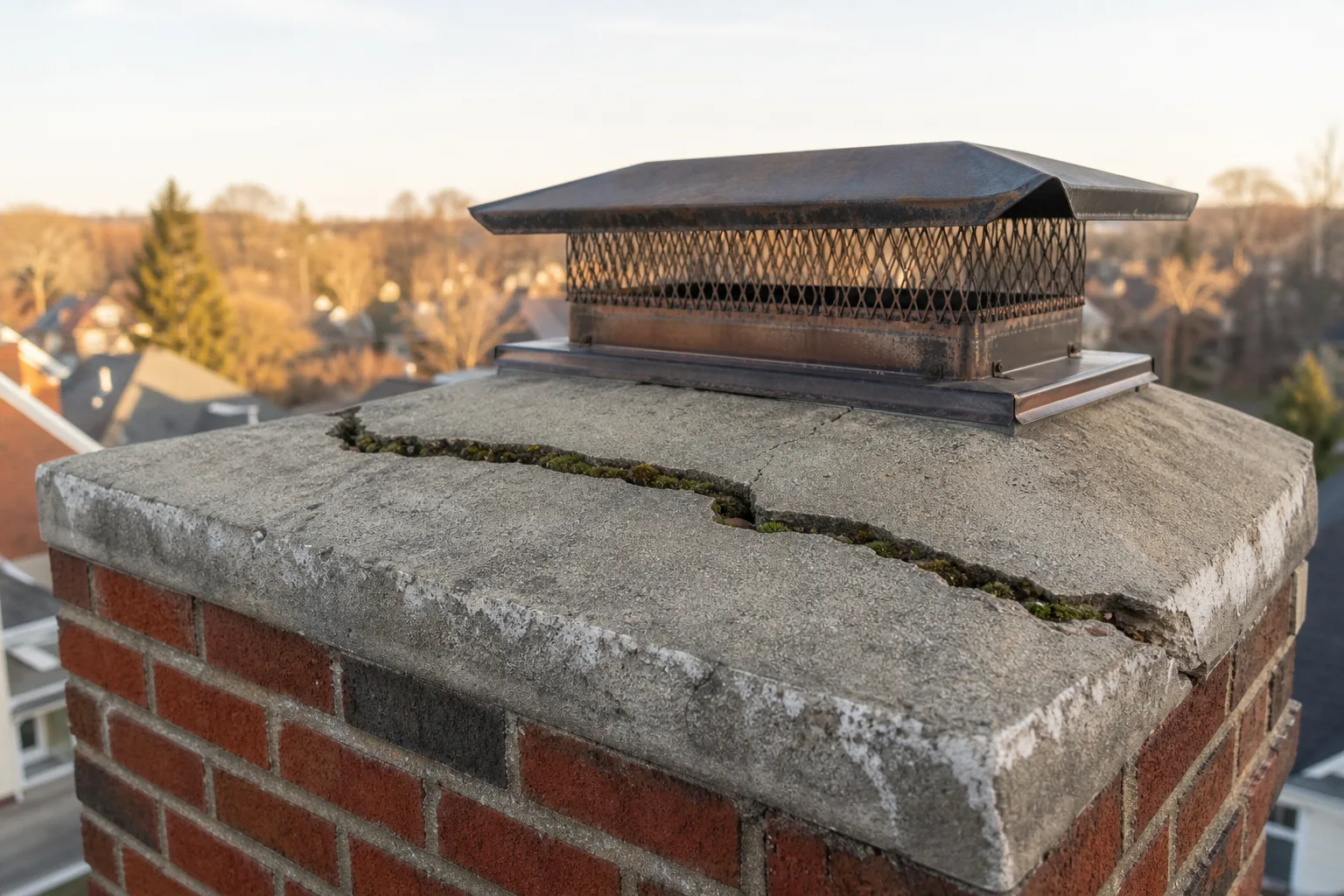
Water entering above and soaking down
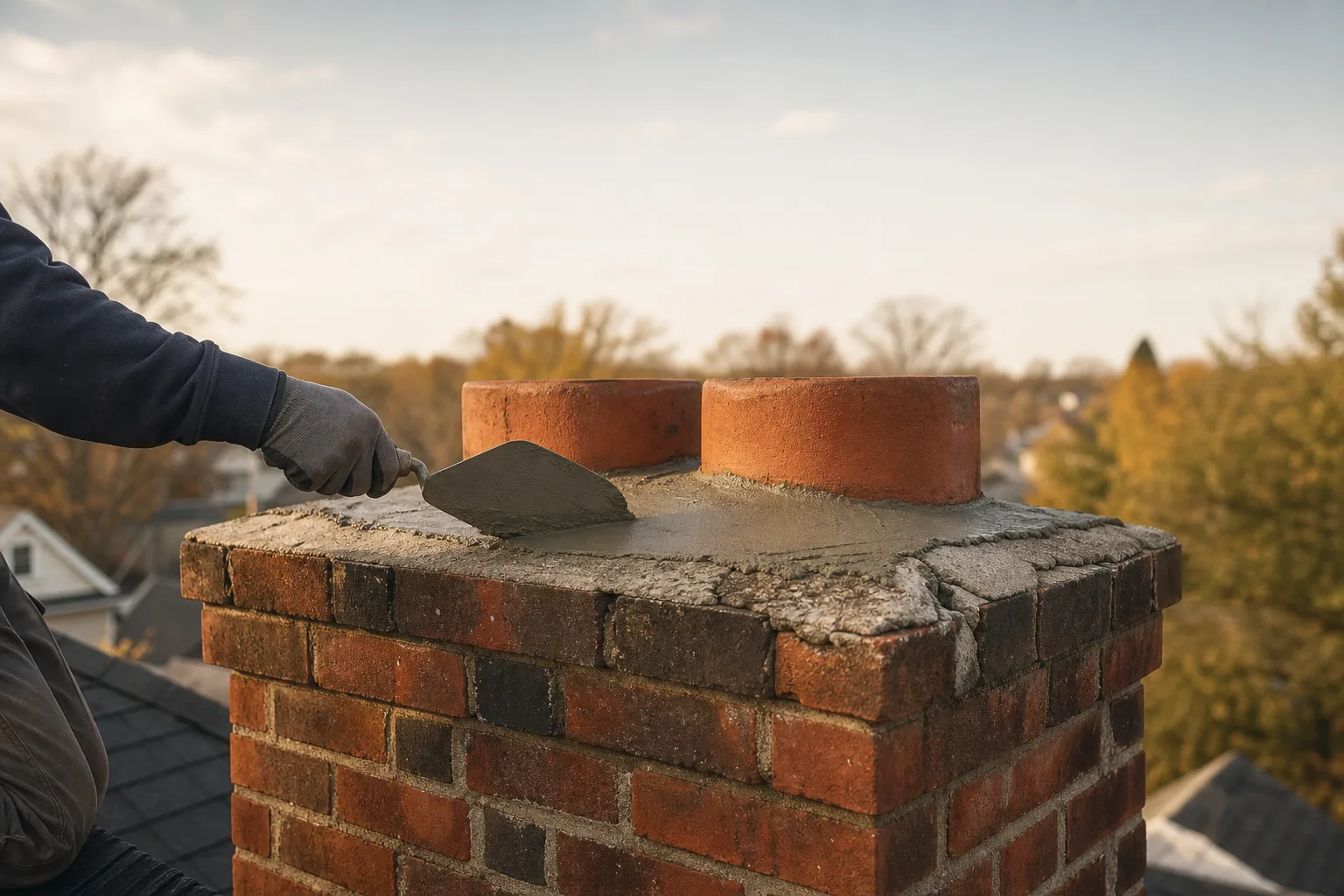
A cracked crown or a missing cap feeds water into the top of the stack, and it works downward through the masonry. Fixing the spalling without fixing the source buys you a few seasons at most.
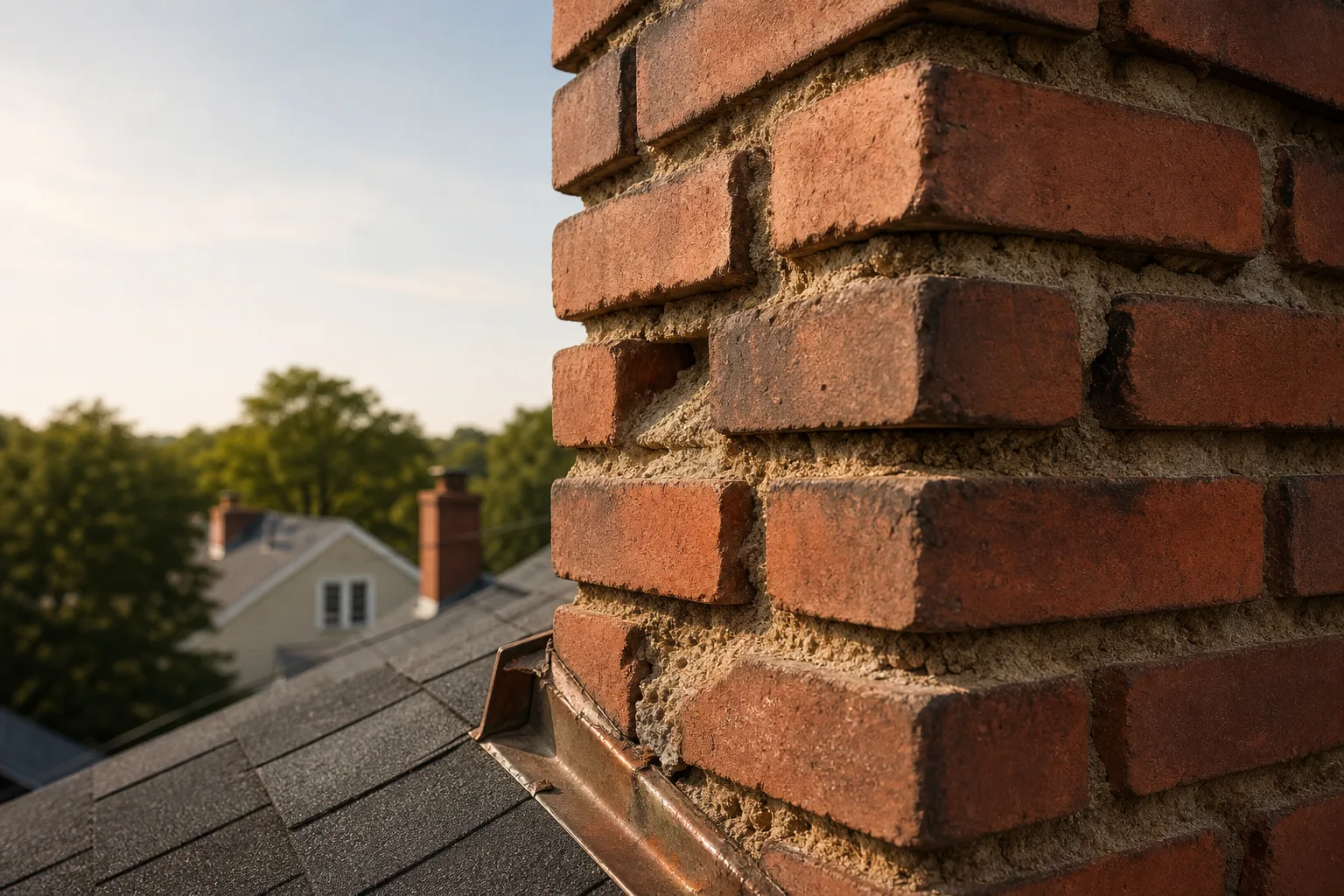
Open mortar joints
Failed joints let water straight into the wall. Mortar is meant to be the sacrificial part — once it has gone, the brick becomes the sacrificial part instead.
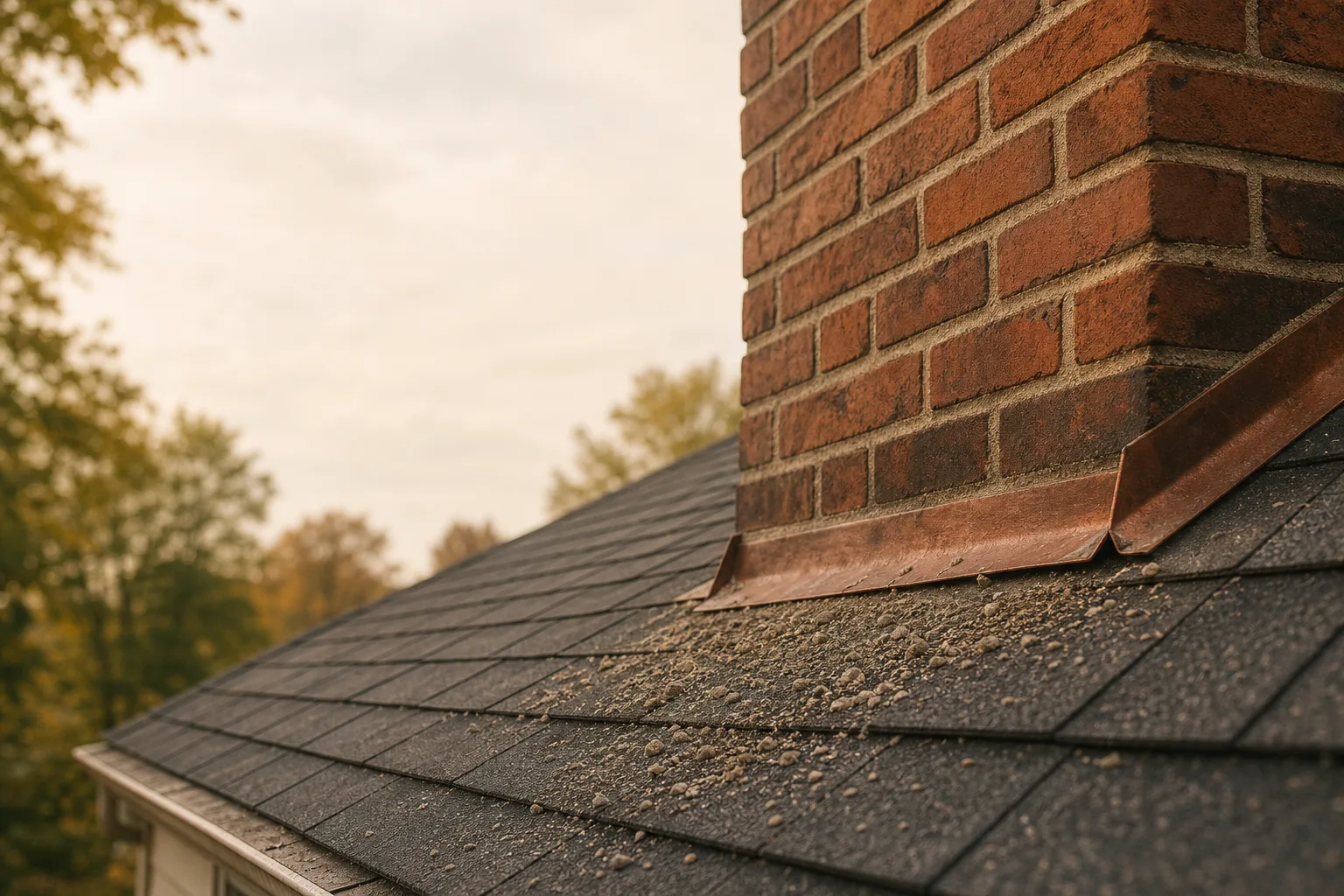
A previous repair in the wrong mortar
Portland cement pointed into soft pre-war brick is harder than the brick around it. Water then leaves through the brick face rather than the joint, and the face is what breaks.
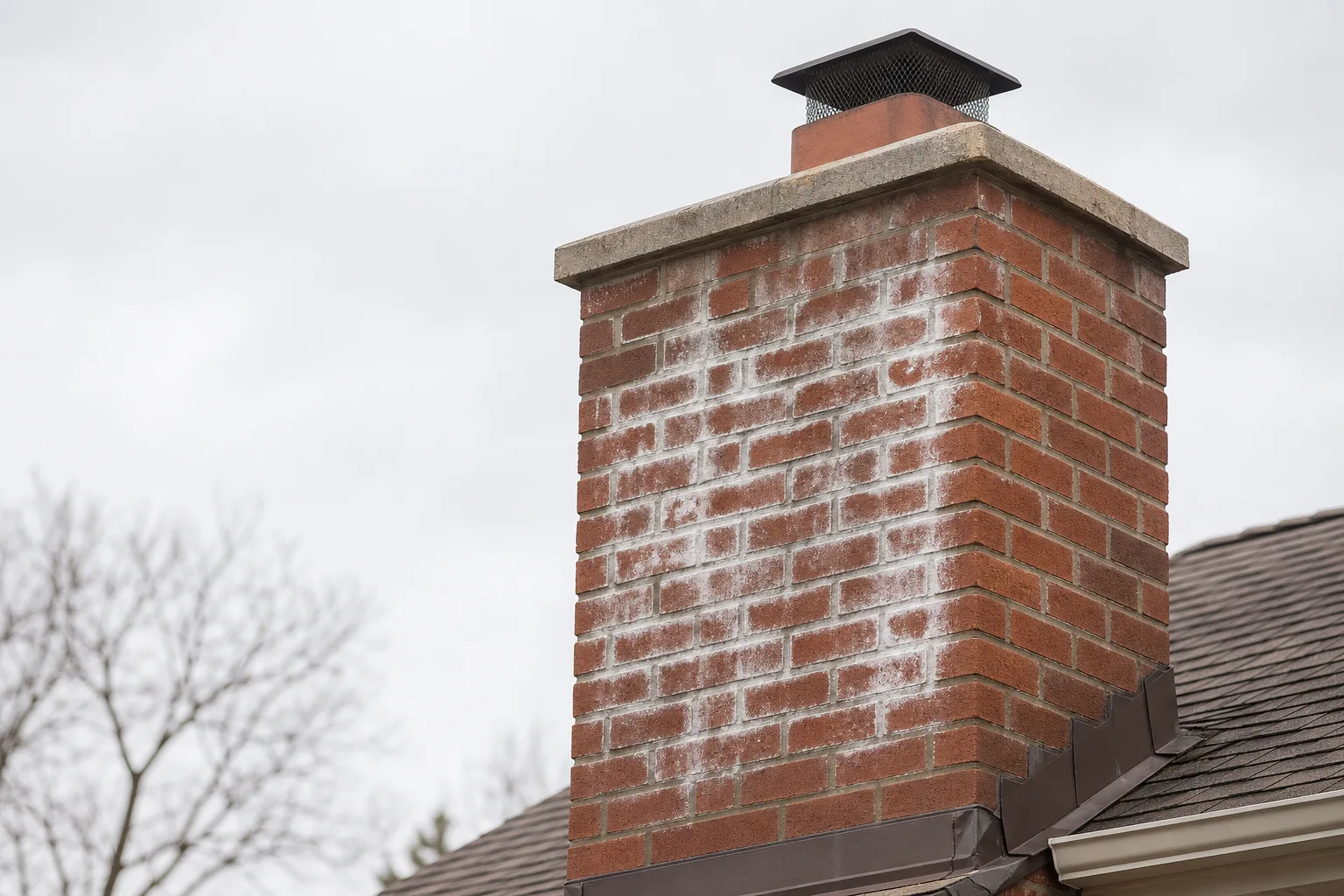
A film-forming sealer applied earlier
Anything that left a sheen is a coating rather than a repellent. It stops the wall drying outward, so moisture stays in and freezes where it sits.
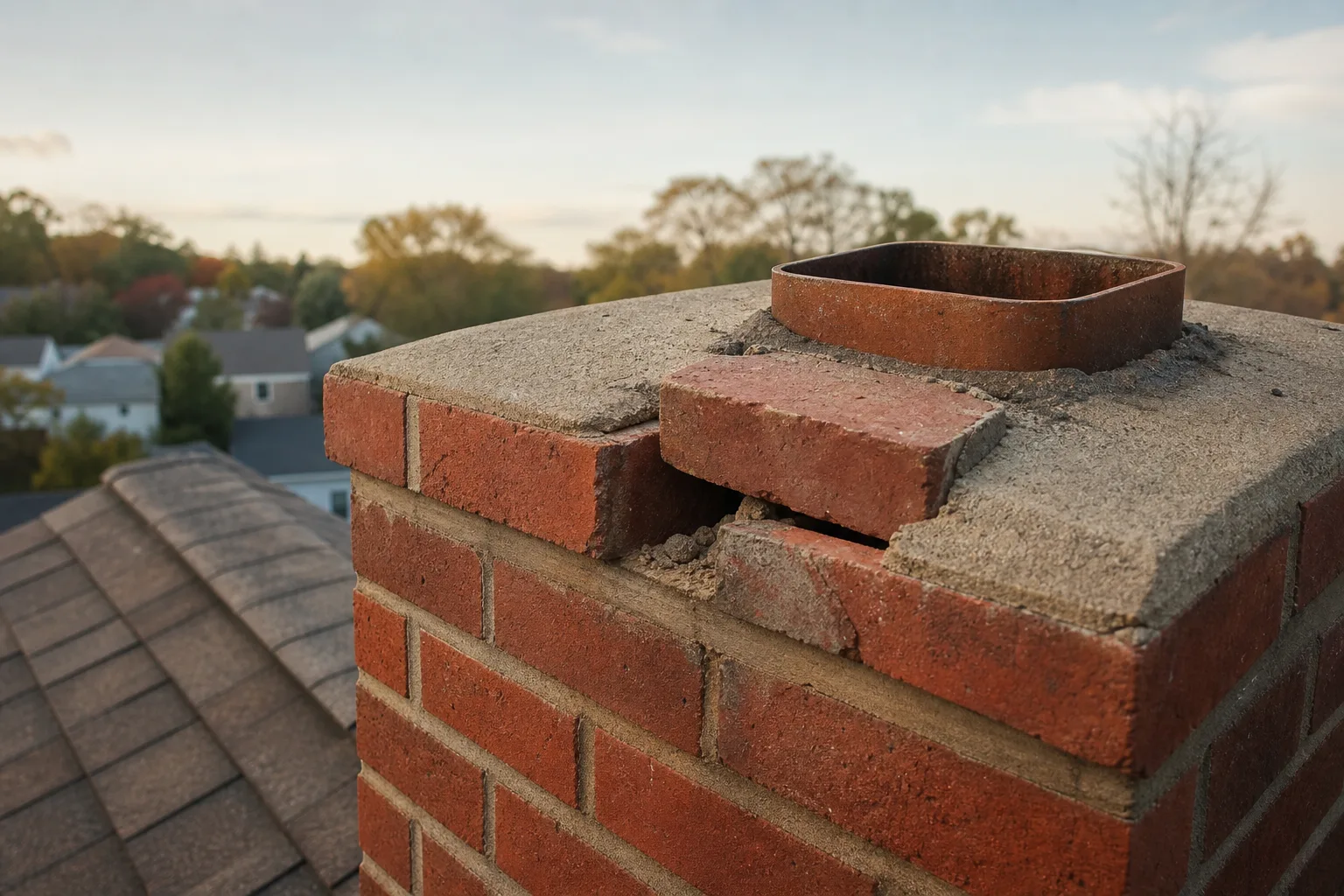
Freeze-thaw cycling on a northern exposure
The face that stays damp longest goes first. In a climate that crosses freezing repeatedly through a winter, one exposure can be years ahead of the others.
Checks you can make yourself
Is the broken edge sharp, with pale powder behind it?
Freeze damage. Smooth rounded erosion would be weathering, which is far less common and far less urgent.
Is it concentrated below the crown or below a joint?
Water is coming from that point. Fix the source first or the repair does not hold.
Can you crumble the exposed brick with a thumbnail?
The body has gone soft. That brick needs replacing, not pointing around.
Is there white chalky staining nearby?
Efflorescence — salts carried out by water moving through. Confirms the wall is wet inside.
Has the stack ever been sealed or painted?
If it left a sheen, that coating is part of the cause and has to come off before anything else.
The repair each cause needs

Chimney Tuckpointing
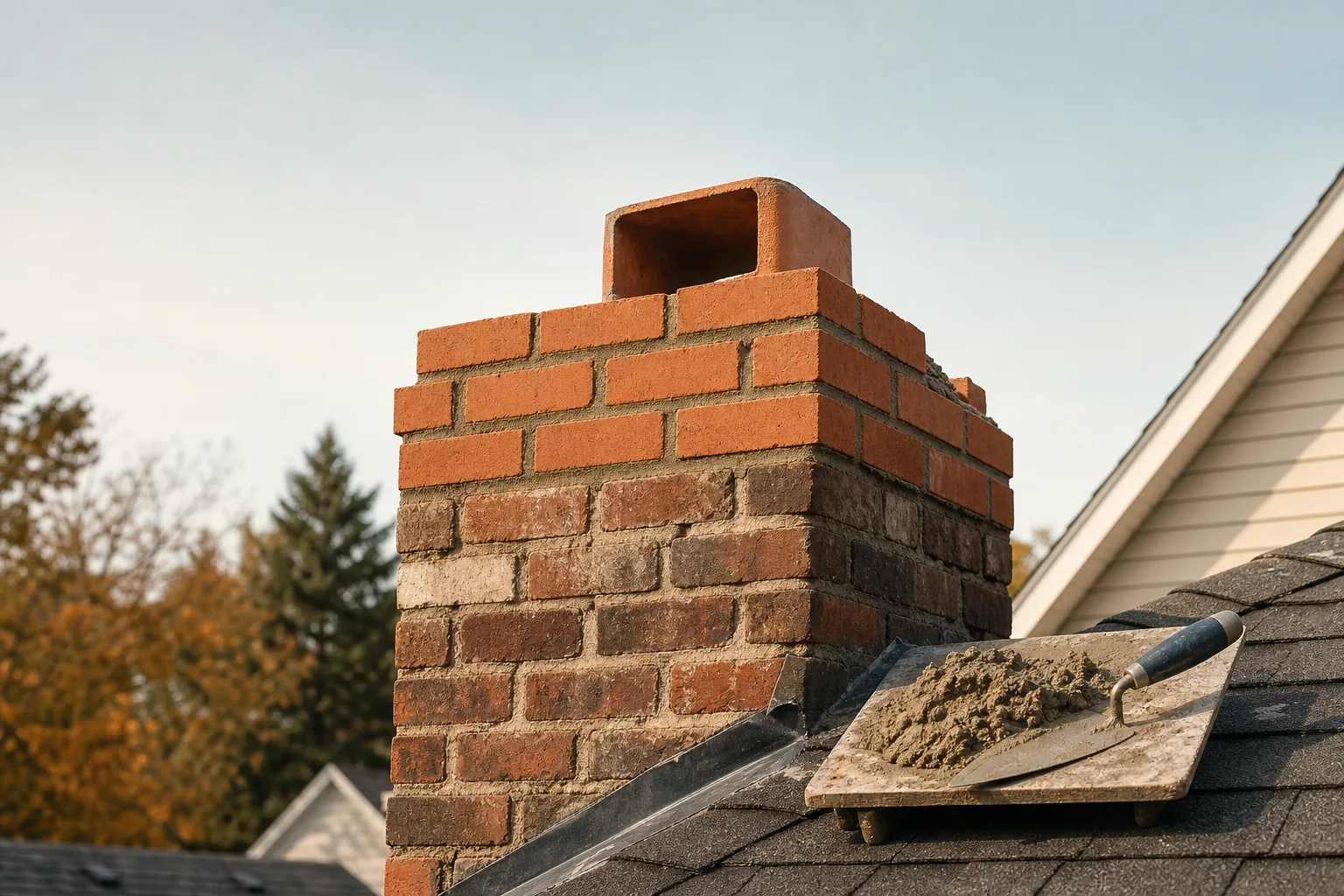
The core repair: failed joints cut out, spalled brick replaced, matched mortar.

Chimney Crown Repair
When the crown above the damage is cracked or has no overhang.

Chimney Waterproofing
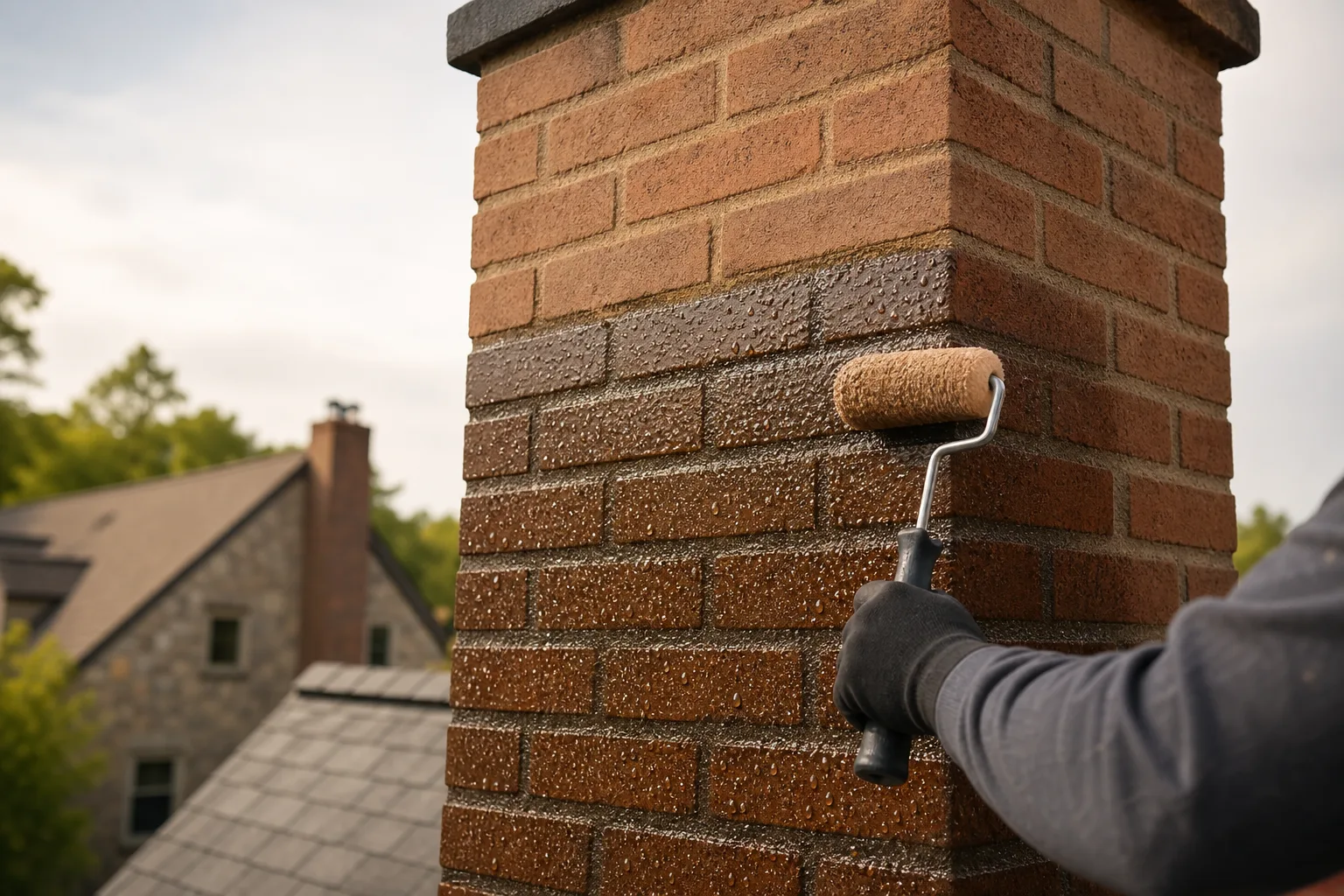
After the repairs cure, never before — a breathable repellent, not a coating.

Chimney Rebuilding
When the brick itself has gone rather than the joints, across several faces.

The VIO Standard
- A written estimate first
- License and insurance checked
- Nothing starts without your OK
Common questions
Is brick spalling serious?
It is progressive, which is what makes it serious rather than any single winter. Each face that comes off exposes soft brick that takes on water faster, so the rate increases. Cosmetically it is unpleasant from the start; structurally it becomes a problem when enough of the wall thickness has gone that courses stop bonding, and at that point you are into rebuild rather than repair. Caught in the first year or two it is a day of pointing.
Can I just seal spalling brick?
No, and this is the single most common expensive mistake on this page. A sealant over spalled brick traps the moisture already inside the wall, where it keeps freezing with nowhere to go. Waterproofing has a real place — a breathable siloxane over sound masonry, after repairs have cured — but applied to damage it accelerates the damage. If a quote offers sealing without addressing the source of the water, get another quote.
How much does it cost to fix brick spalling?
It tracks how many bricks have to come out and how much of the stack needs pointing. A single face on an accessible chimney is about a day. A full four-sided repoint at height with scaffolding is several times that. Replacing spalled brick with a salvaged match costs more than pointing and is what stops it recurring. The number blows out when the damage reaches the point that a partial rebuild is the honest answer.
Why is only one side of my chimney spalling?
Because that face stays wet longest. Prevailing weather, a northern exposure that gets no sun, or a roof valley draining toward it all keep one side damp while the others dry between rains. It is normal for one face to be years ahead of the rest, and it does mean the others are on the same path unless the source of the water is dealt with.
Will brick spalling stop on its own?
No. Every exposed face absorbs water faster than the fired face it replaced, so the process feeds itself. What can slow it is removing the source — a new crown, a cap, repointed joints — because the brick stops being saturated going into each freeze. That is why the sequence is always source first, damage second, repellent last.
you don't have to know what's wrong.
Safe to use for now, and it gets more expensive every month you leave it. Describe what you are seeing and a local pro works out the rest. You get the price in writing before anyone starts, and you can say no.

The people behind every visit
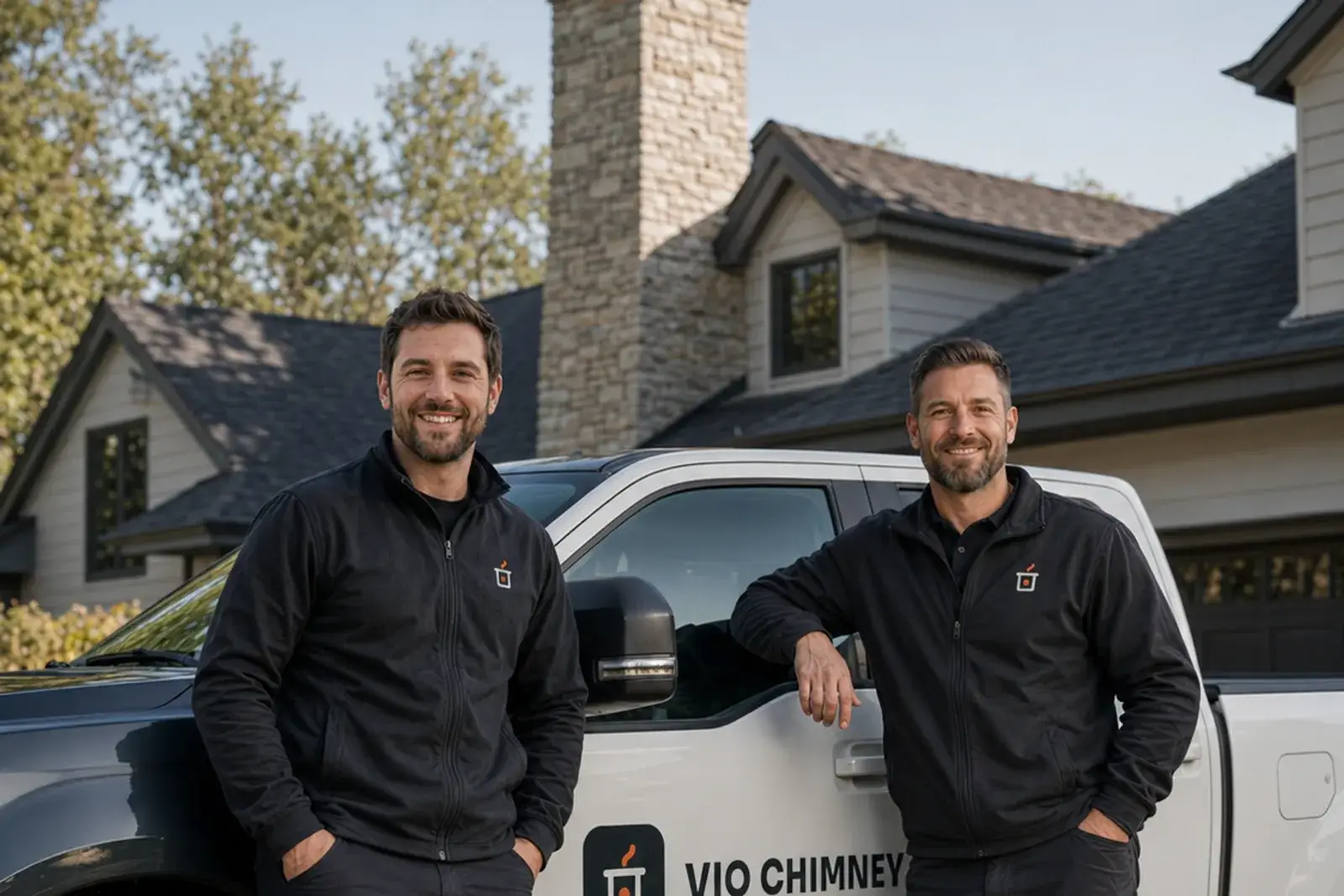
Founded by Ryan Carter in 2019. Every page you read here is reviewed by Ethan Miller, our chimney specialist. A written estimate before any work, and the findings in writing whether or not anything needs doing.
More about who we are →