


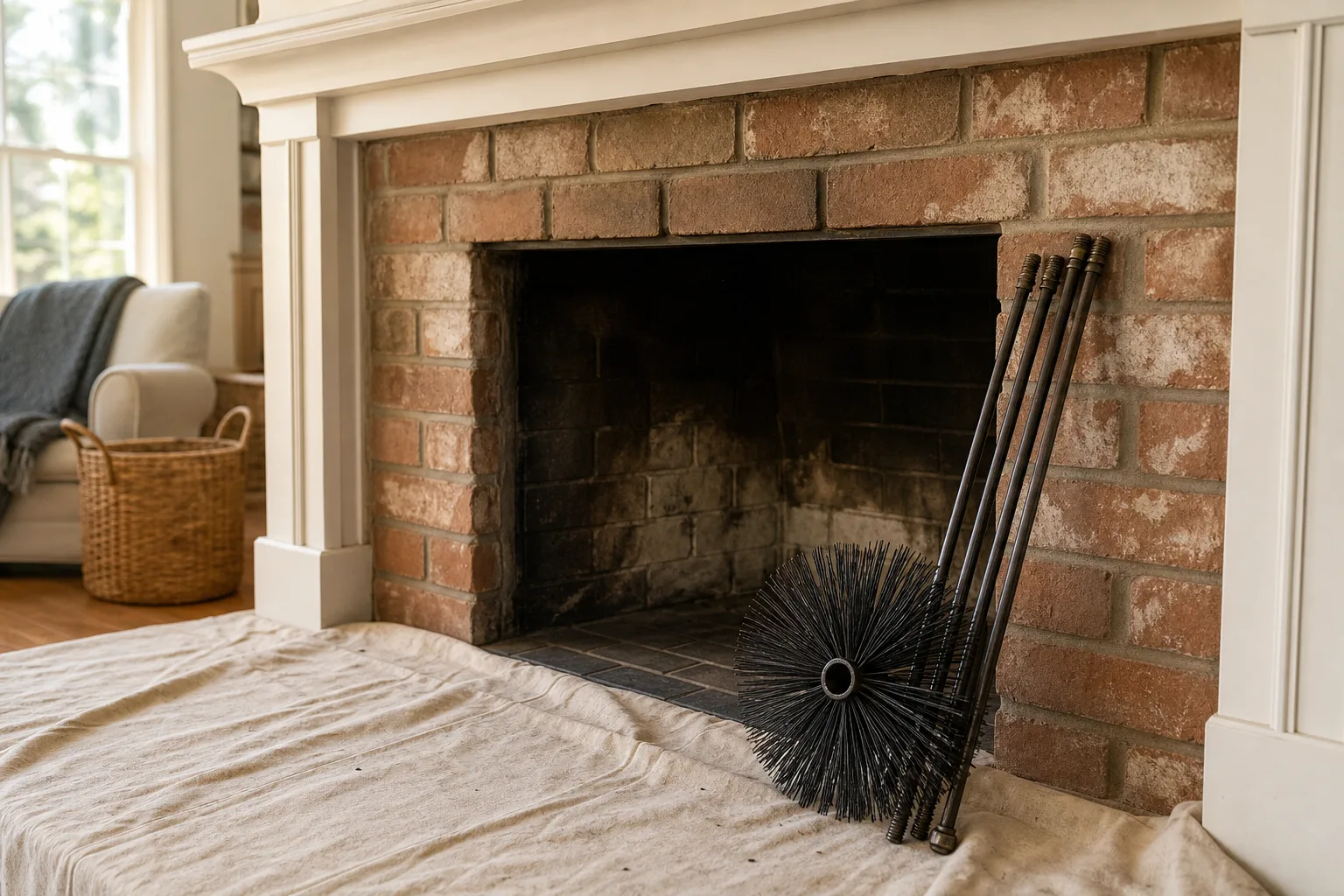
Chimney problem
What are the signs of a chimney fire?
Most chimney fires are never noticed while they happen. The evidence they leave is what a scan is looking for afterwards.
Do not light another fire until this has been looked at.
The dramatic ones announce themselves. The dangerous ones are the quiet ones you find later.
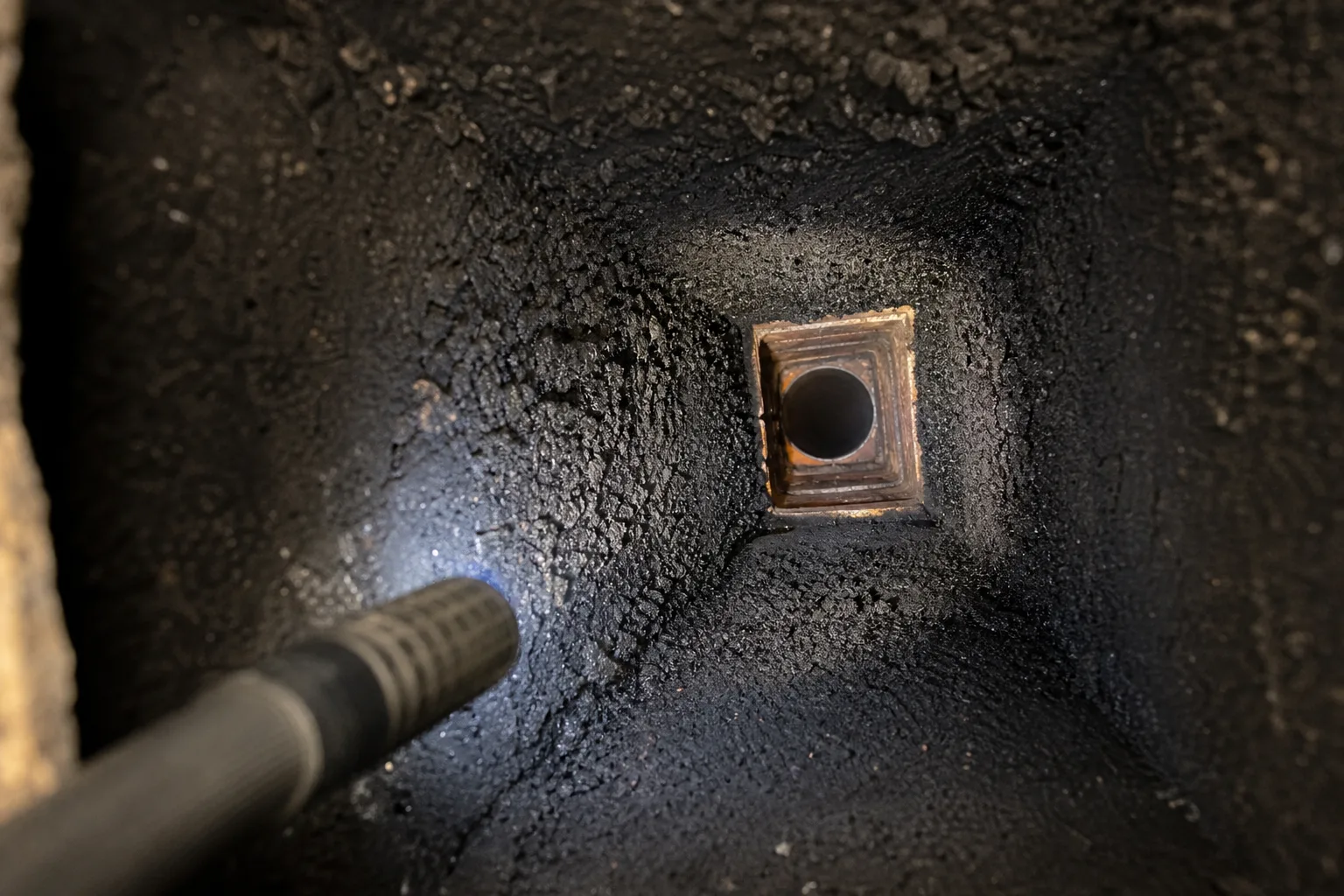
The signs of a chimney fire split into two lists. During: a low roaring like a freight train, dense smoke, a sharp intense smell, and flames or sparks visible at the top of the stack. Those are the fast-burning ones and they are unmistakable. Slow-burning fires get enough air to burn but not enough to roar, so they consume creosote quietly and damage the flue without anyone in the room noticing. That is why the second list matters more — the evidence, found afterwards, on a level 2 camera scan.
What burns
Creosote is the fuel

A flue fire is creosote igniting. No buildup, no fire — which is why sweeping is a fire-prevention measure rather than housekeeping.
What to do right now
None of this fixes it. All of it stops the problem getting more expensive between now and the visit.
If it is happening: get everyone out, call 911, and close the damper and any air supply only if you can do it safely on the way past.
Do not throw water up the flue. The steam expansion can crack the liner and split the masonry.
After any suspected fire, do not light another until the flue has been scanned. NFPA 211 requires a Level 2 inspection and insurers ask for it.
Photograph anything you find on the roof or in the hearth — puffed creosote, tile fragments, discoloured metal.
Tell your insurer even if there appears to be no damage. A flue fire on record before a later claim is worth far more than one discovered after.
The signs of a chimney fire, during and after
Ordered by how often it turns out to be the answer, so you can stop reading once you recognise yours.

A loud roaring or rumbling
The sound people describe as a freight train or a low-flying plane. It is air being drawn hard through a flue that is burning along its whole length.
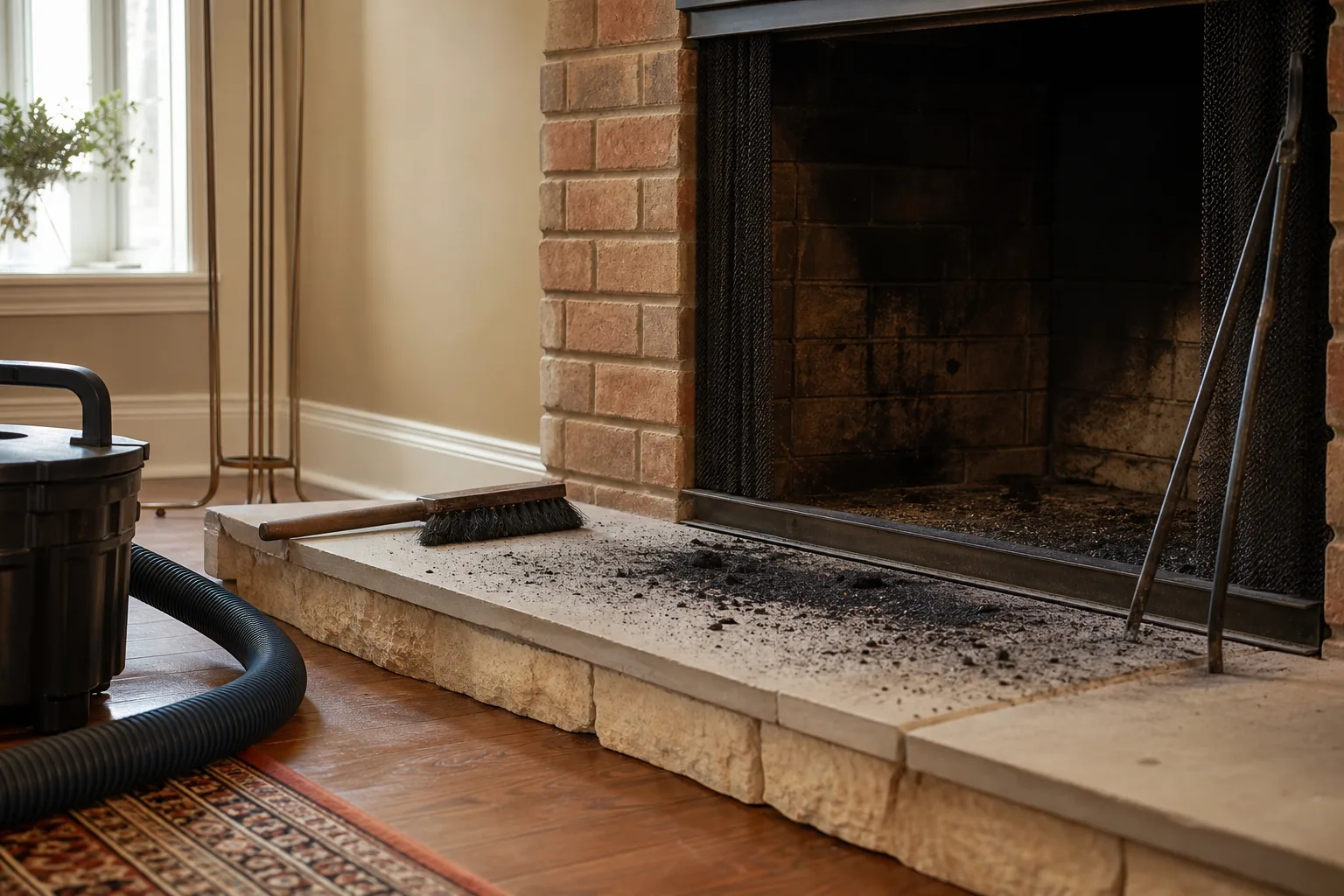
Puffed, honeycombed creosote
The clearest after-the-fact evidence. Creosote that has burned expands into a light spongy texture quite unlike the hard glaze it was. A sweep spots it immediately.
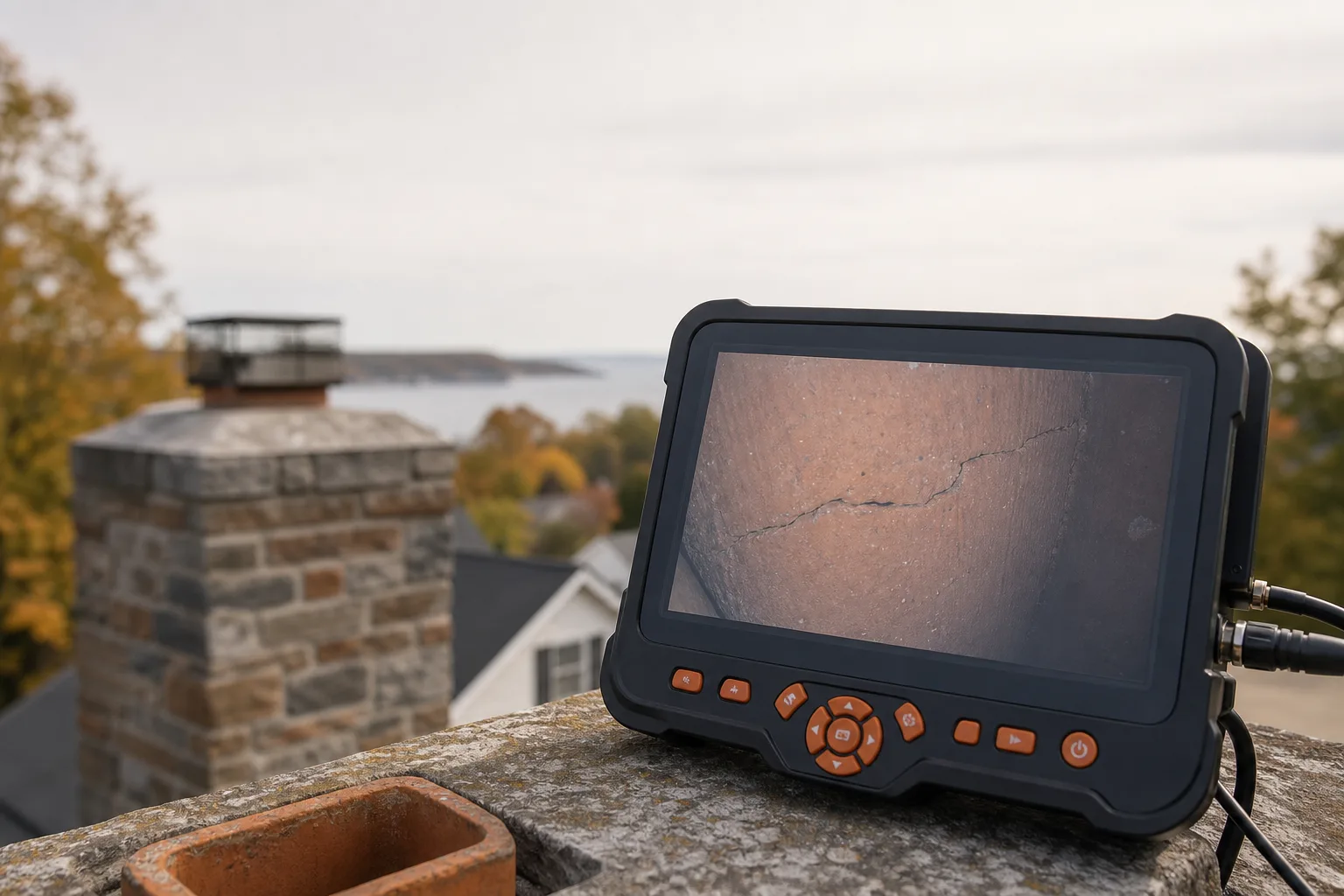
Cracked or displaced flue tiles
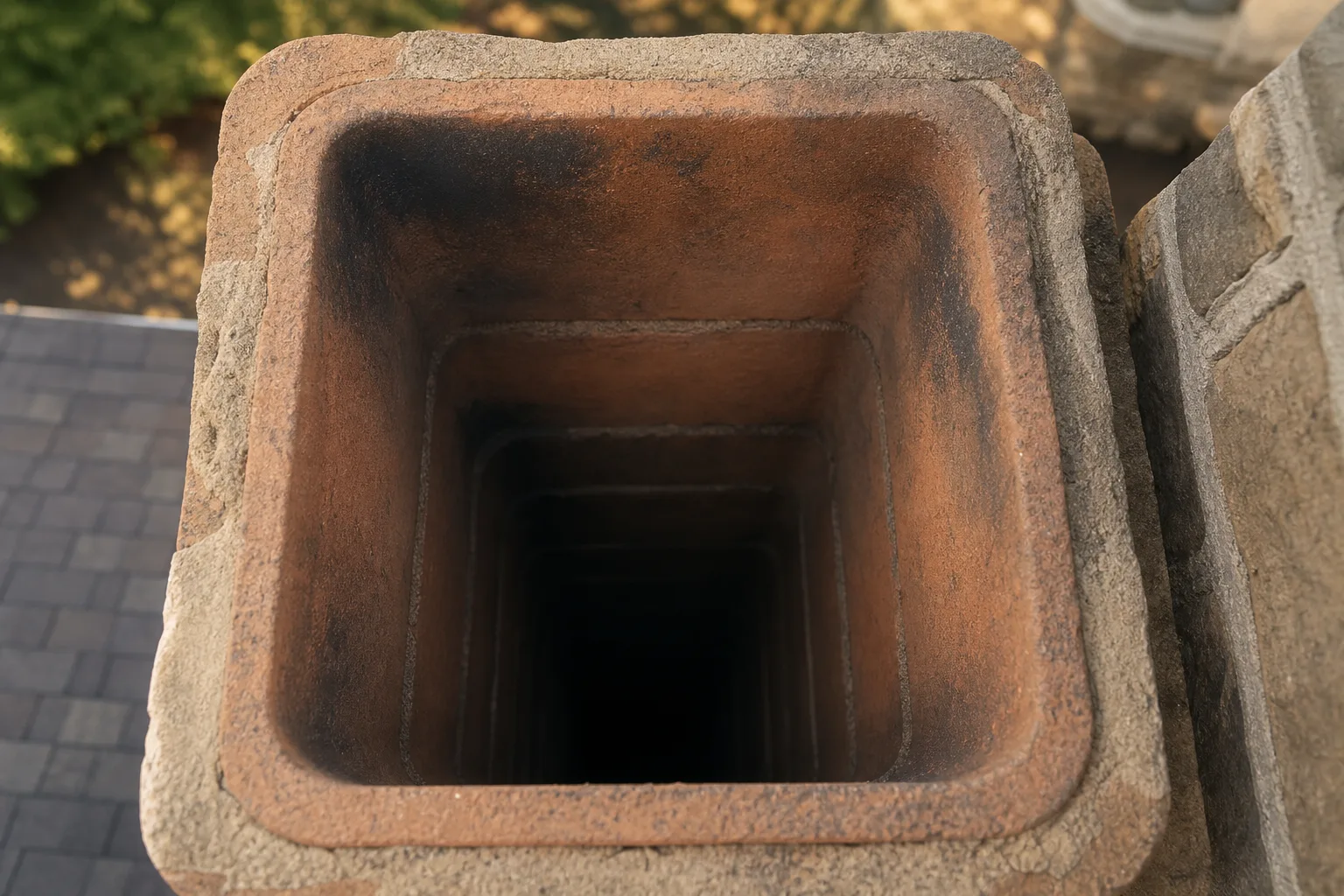
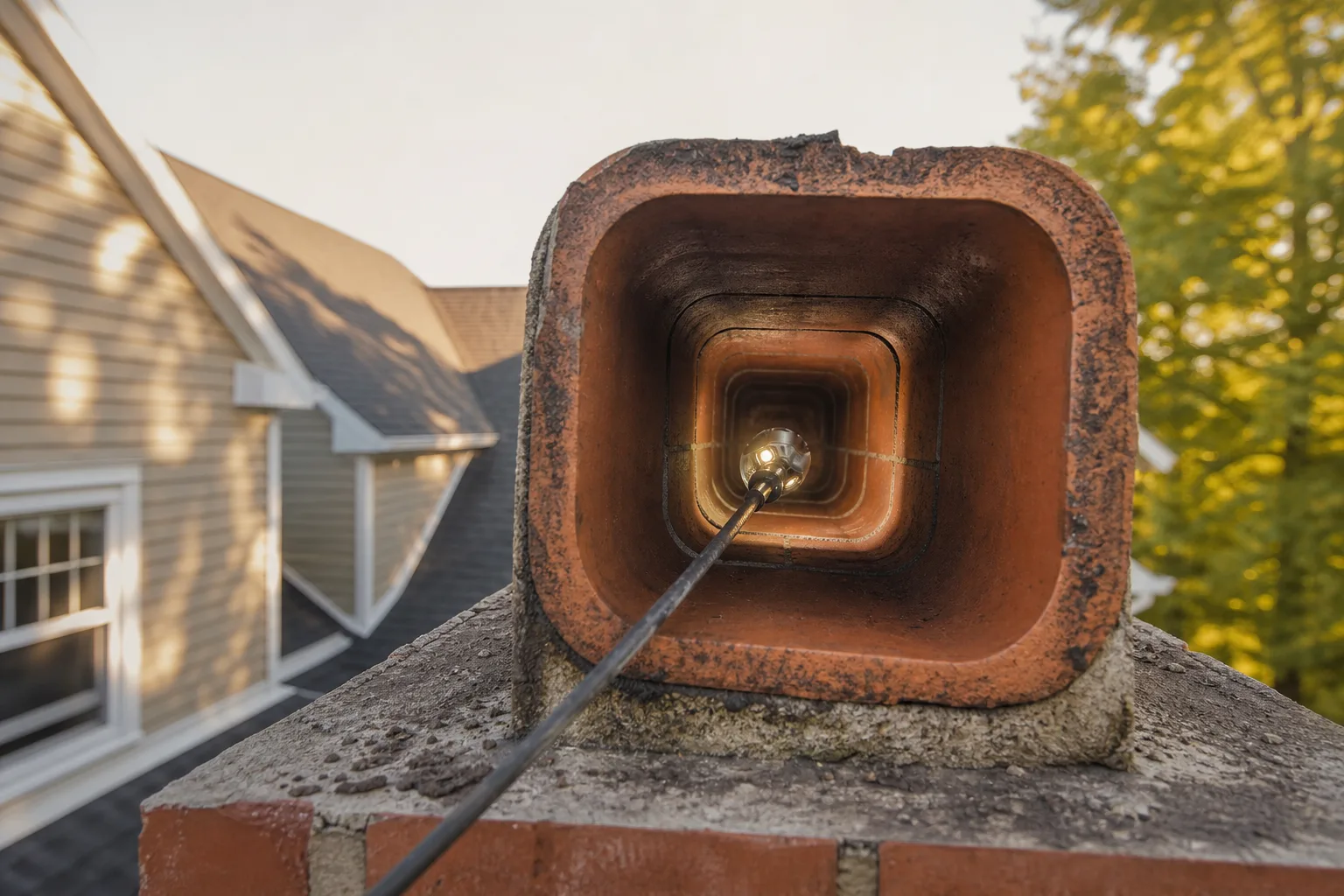
Clay tiles are not built for the temperatures a flue fire reaches. Cracks and shifted joints are what a camera scan is looking for, and they are the reason the inspection is not optional.
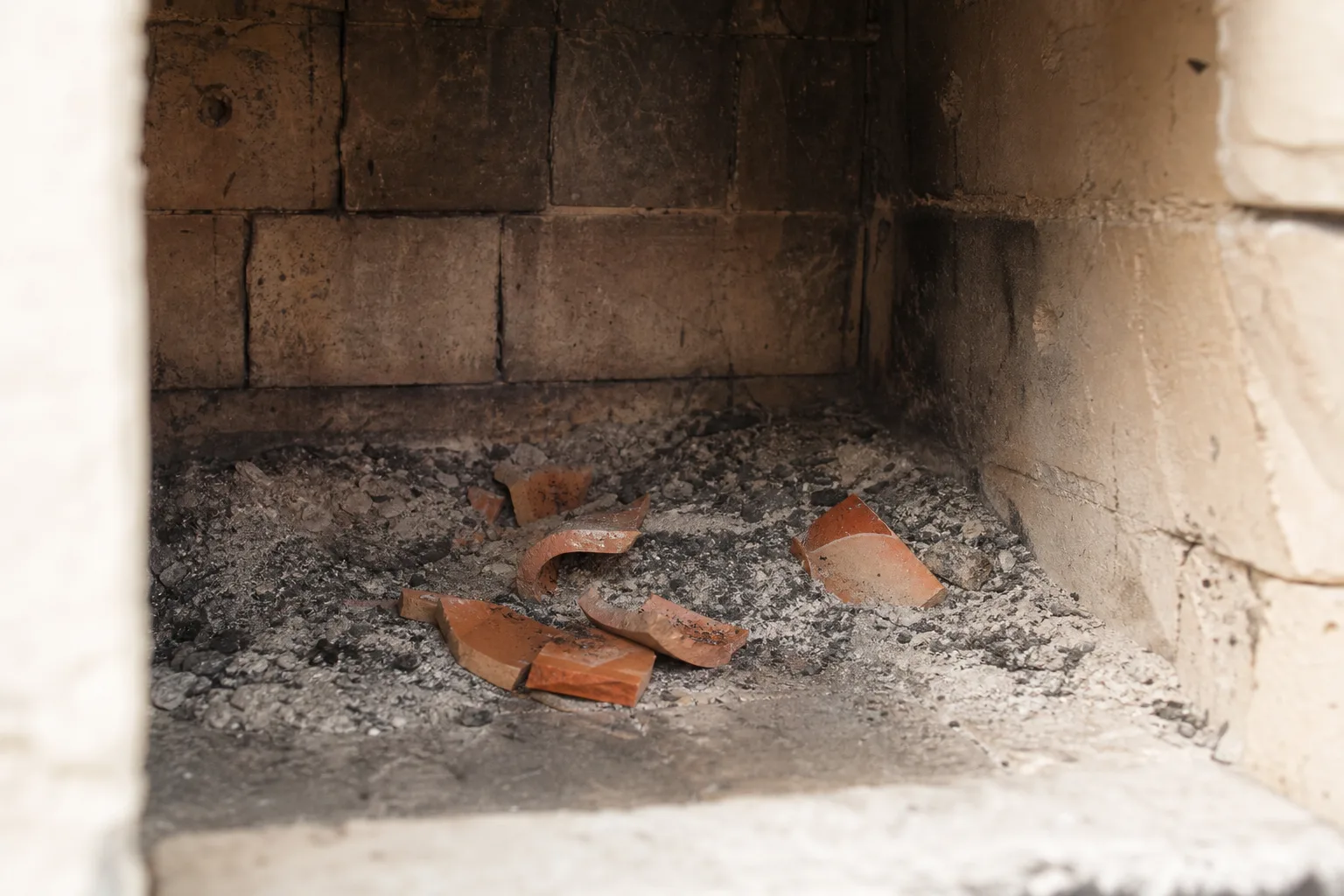
Tile fragments in the firebox
Pieces of clay in the hearth after a suspected fire mean the liner has come apart. Stop using the fireplace now rather than at the end of the season.
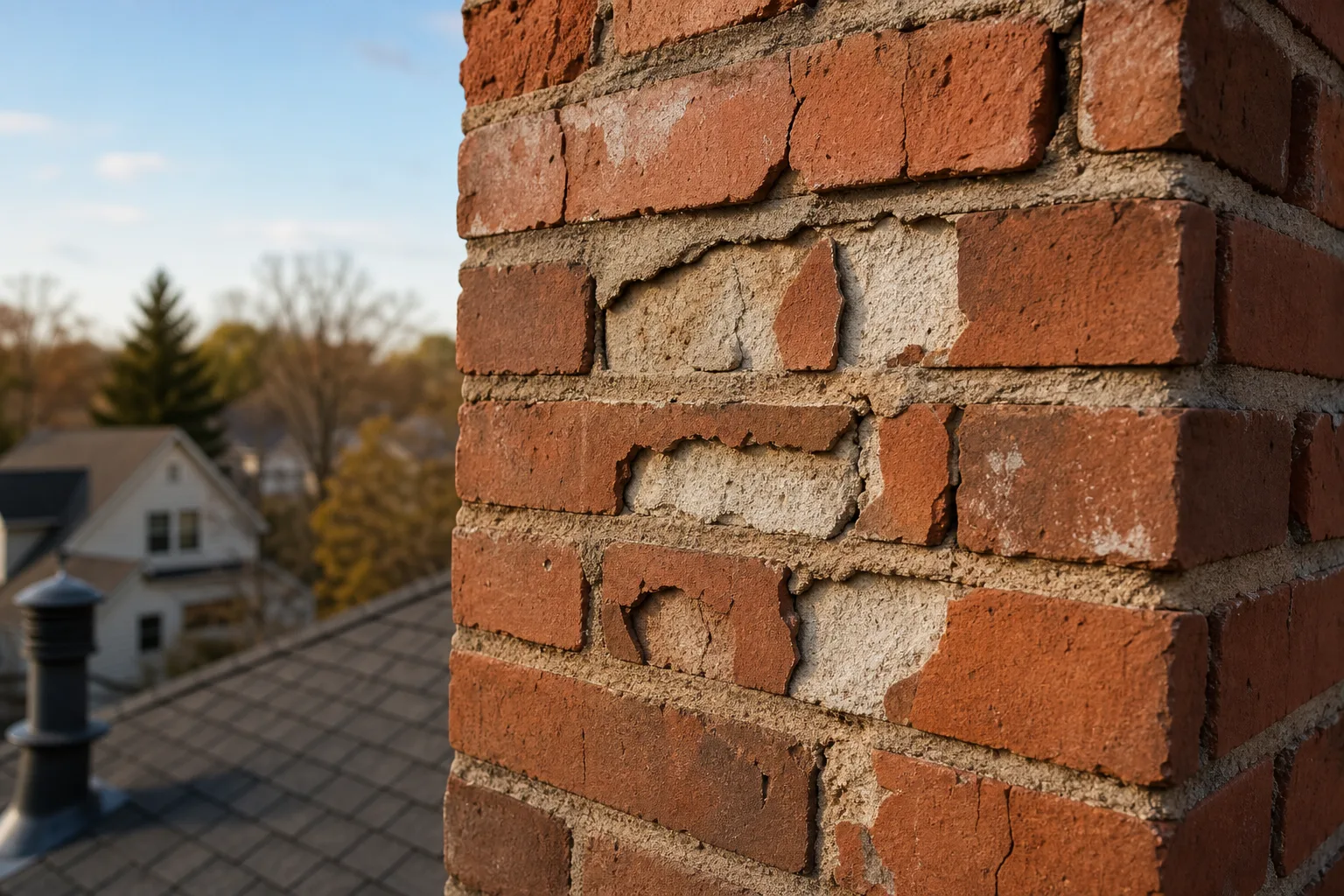
Discoloured or warped metal
A rain cap, damper or flashing that has heat-discoloured or distorted. Visible from the roof, and hard to explain any other way.
Checks you can make yourself
Did you hear a sustained roaring while a fire was lit?
A fast-burning flue fire. Treat it as one whether or not there was visible damage afterwards.
Is there light spongy creosote in the flue?
Puffed creosote is burned creosote. Something happened, whether or not anyone noticed.
Are there tile fragments in the hearth?
The liner has broken up. The fireplace goes out of use until it has been scanned.
Is there heat damage to the cap, damper or flashing?
Temperatures reached the top of the stack. That is a fast burn rather than a slow one.
Are there scorch marks or smoke staining on the exterior masonry?
Gases escaped the flue somewhere. That is a breach, and it is the most serious finding on this list.
The repair each cause needs

Level 2 Chimney Inspection
Required after any suspected fire, and what an insurer will ask for.

Video Chimney Inspection
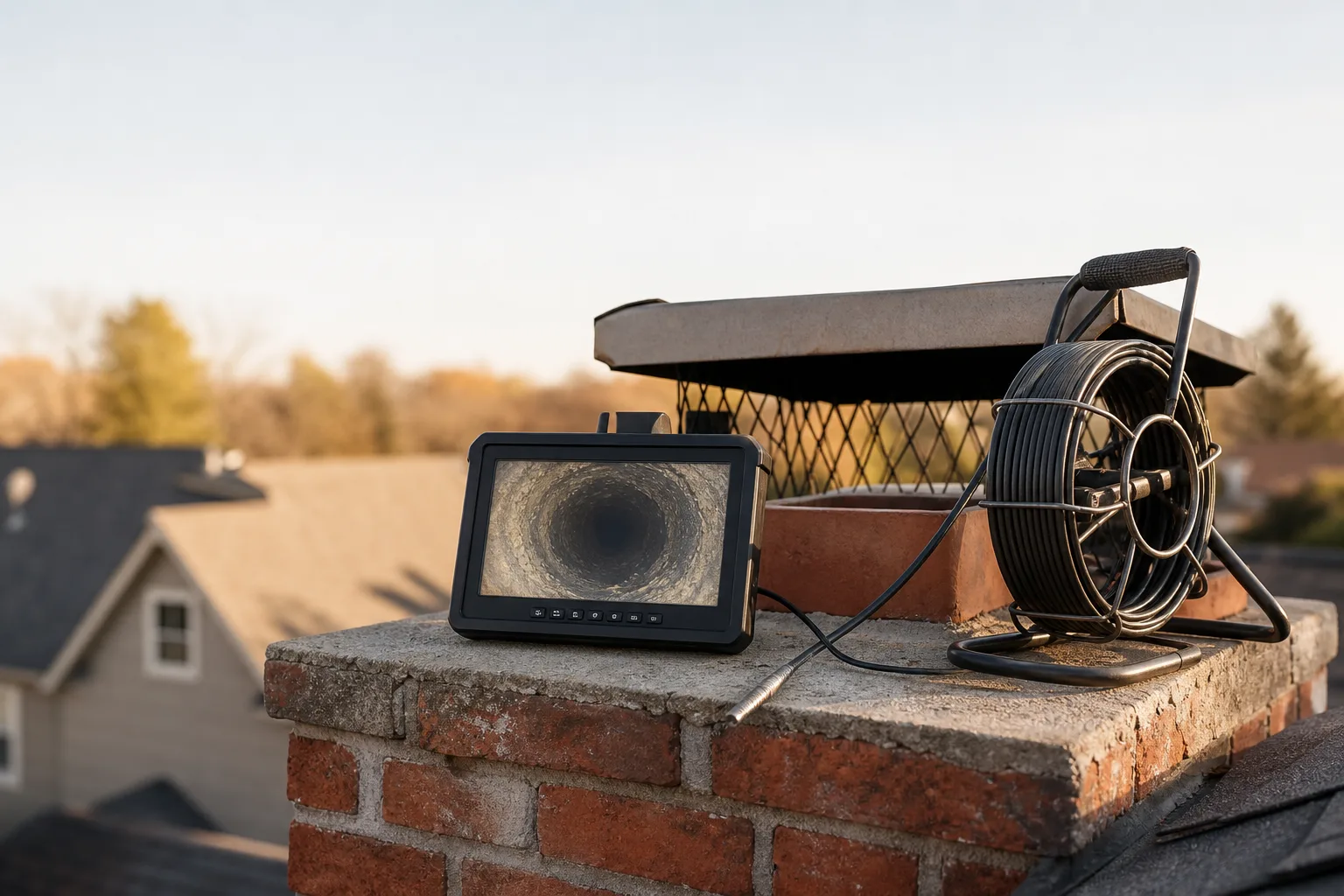
The level 2 camera work that finds cracked tiles — with the flue swept first.

Chimney Liner Replacement
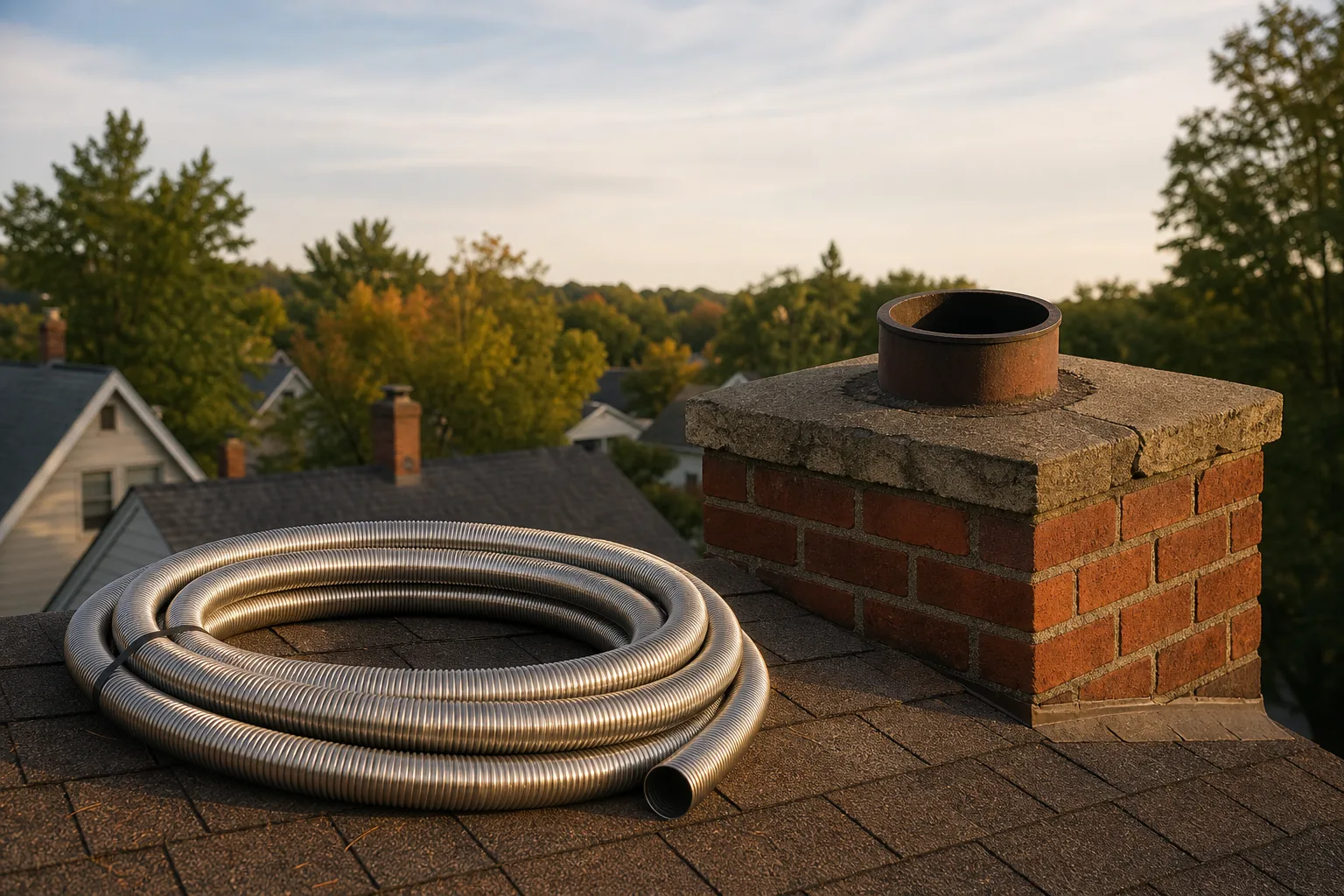
When the scan shows the liner has been breached. Not optional.

Chimney Sweep
Prevention. No creosote, no fuel, no fire.

The VIO Standard
- A written estimate first
- License and insurance checked
- Nothing starts without your OK
Common questions
Can you have a chimney fire without knowing?
Easily, and it is the more common case. A slow-burning flue fire gets enough air to consume creosote but not enough to roar, so it can burn for a long time with nothing audible in the room. It still reaches temperatures clay tiles were never built for. That is why the signs that matter most are the ones found afterwards on a scan rather than the ones people expect to hear at the time.
What should I do during a chimney fire?
Get everyone out and call 911 first — before anything else. If you can do it safely on the way past, close the damper and any air inlet to starve it, and use a fire extinguisher in the firebox rather than up the flue. What you should not do is throw water up the chimney: the steam expands violently and can crack the liner and split the masonry, turning a contained fire into a structural problem.
How much damage does a chimney fire do?
Anywhere from none visible to a full reline. The variable is temperature and duration rather than drama. A brief fast fire may crack a couple of tiles; a long slow one can breach the liner along much of its length. Neither is assessable from the room, which is why the standard requires a Level 2 inspection afterwards without exception — and why an insurer will want that report before settling anything.
How do I prevent a chimney fire?
Remove the fuel. A flue fire is creosote igniting, so a flue swept annually and burned correctly has very little to catch. Burn seasoned hardwood, never damp the fire right down for an overnight smoulder, and have it swept every year whether or not it looks dirty. That is the whole prevention strategy, and it is why sweeping is a safety measure rather than housekeeping.
Does insurance cover a chimney fire?
Usually yes for the fire damage itself, since it is sudden rather than gradual. What insurers push back on is a claim where the flue had not been maintained, so records matter — dated sweep receipts and inspection reports are what turn a disputed claim into a settled one. Report it even if nothing appears damaged: a fire on record beforehand is worth far more than one discovered during a later claim.
you don't have to know what's wrong.
Do not light another fire until this has been looked at. Describe what you are seeing and a local pro works out the rest. You get the price in writing before anyone starts, and you can say no.

The people behind every visit
Founded by Ryan Carter in 2019. Every page you read here is reviewed by Ethan Miller, our chimney specialist. A written estimate before any work, and the findings in writing whether or not anything needs doing.
More about who we are →