Chimney safety

How do chimney fires start?

Creosote is the fuel and the flue is the firebox. Remove the fuel and there is nothing to catch.

5.0/5
8 verified reviews
Ethan MillerEthan Miller · Chimney specialist, VIO CHIMNEYLast reviewed July 20264 min read
Address soon

Safe to use for now, and it gets more expensive every month you leave it.

The short answer

A chimney fire is creosote burning. No creosote, no fire - it really is that direct.

How do chimney fires start is a question with an unusually simple answer for a safety question. Wood smoke carries unburnt volatiles; when they meet a flue wall cooler than about 250F they condense as creosote. Creosote is fuel. Once enough of it lines the flue, a hot enough fire - or a burning ember carried up - ignites it, and a flue full of fuel with a strong draft through it burns extremely hot. So everything that prevents chimney fires works on one of two levers: burn in a way that deposits less, and remove what has deposited.

The fuel

This is what burns

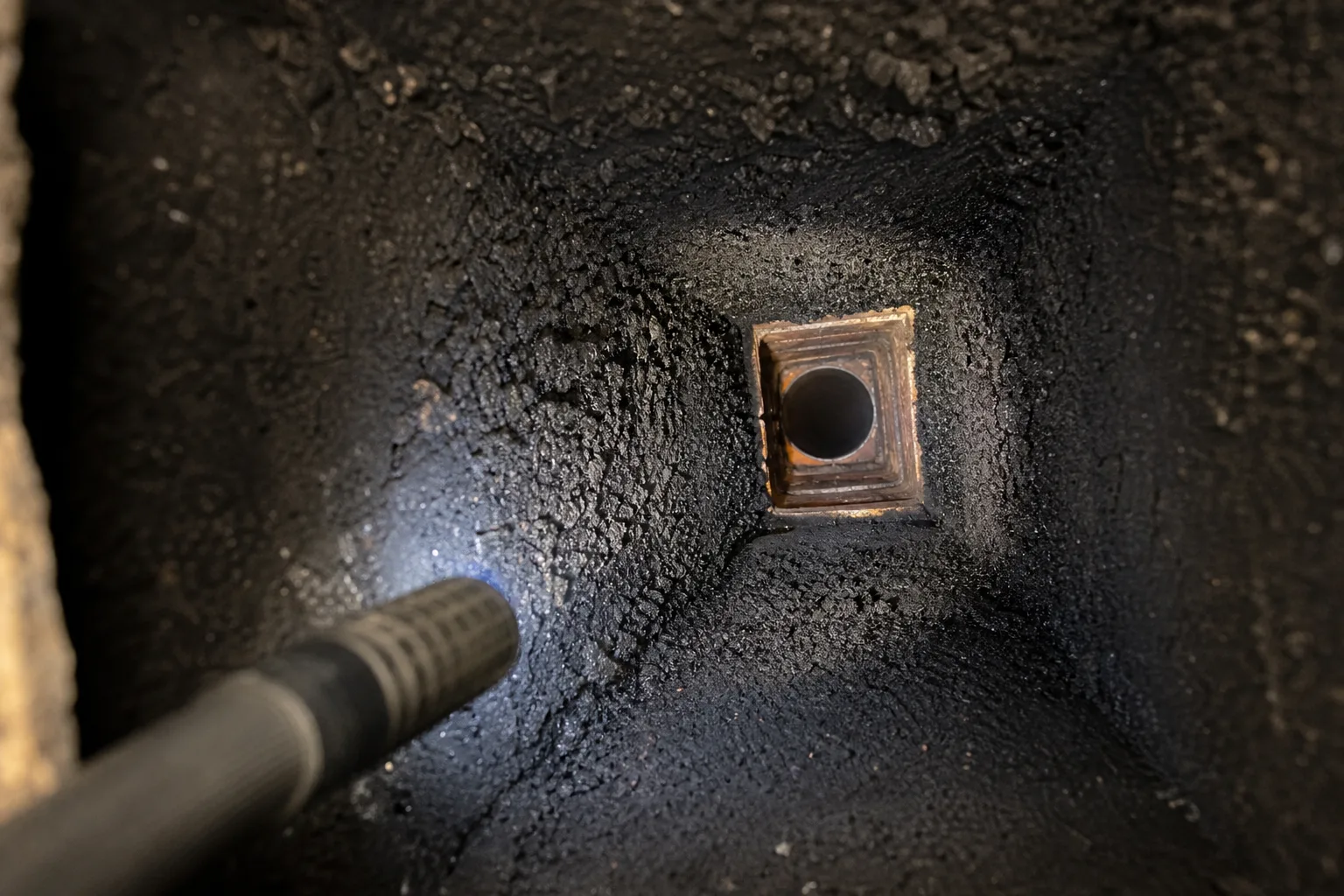
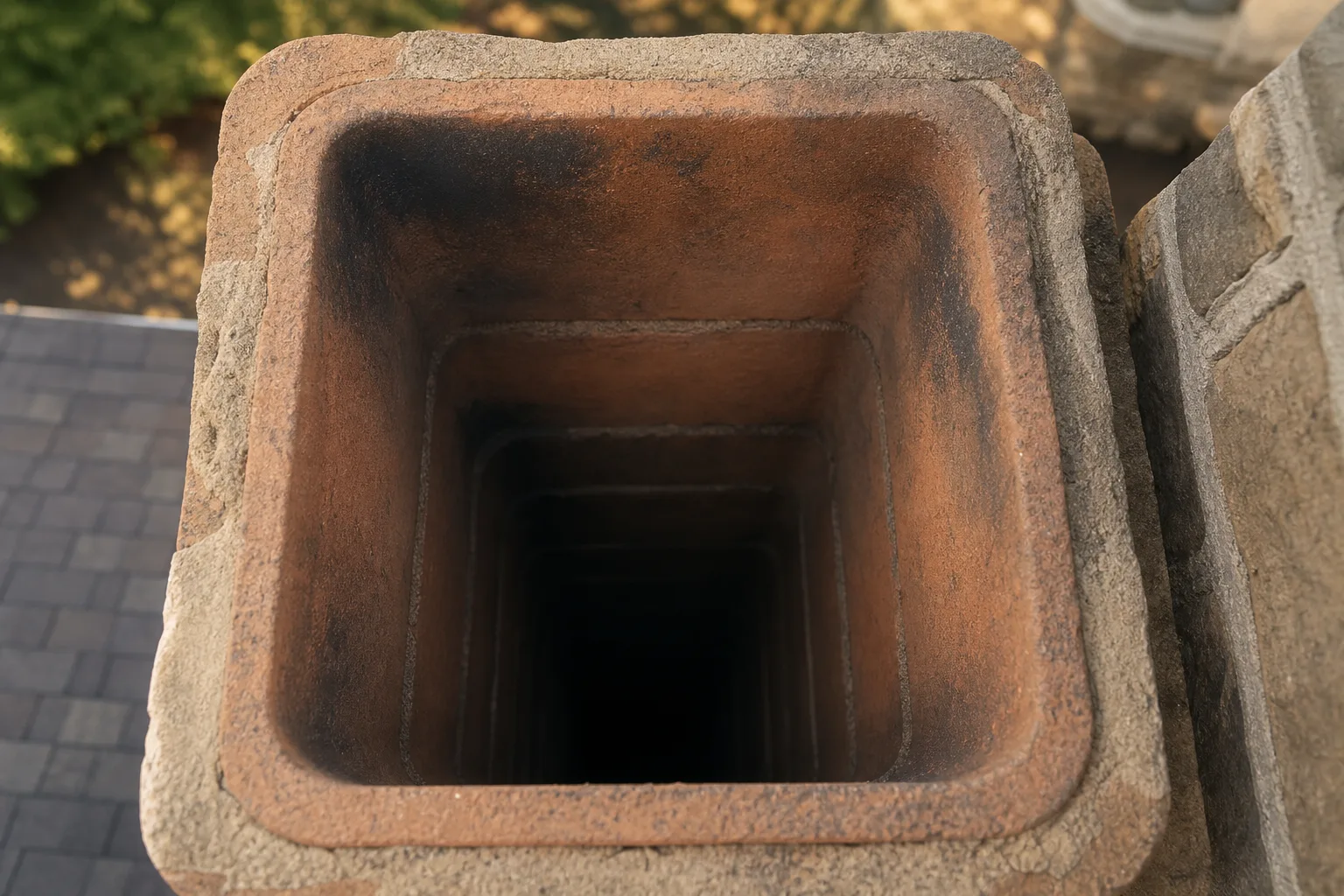
Torchlit view up a chimney flue coated in black flaky creosote

Flaky stage one brushes off. Shiny stage three glaze is the one that sustains a fire, and no brush touches it.

Before we get there

What to do right now

None of this fixes it. All of it stops the problem getting more expensive between now and the visit.

  1. If it is happening now: get everyone out, call 911, and close the damper and air supply only if you can do it safely on the way.

  2. Never throw water up the flue. The steam expands violently and can crack the liner and split the masonry.

  3. Afterwards, do not light another fire until a Level 2 inspection has been done. The standard requires it and insurers ask for it.

  4. Stop damping the fire down overnight. A smouldering fire is the single largest creosote producer.

  5. Check your wood. Split and covered for six to twelve months, or it is depositing far faster than it needs to.

What actually matters

How do chimney fires start, and what actually prevents them

What to do, why it matters, and the part people most often get wrong.

Torchlit view up a chimney flue coated in black flaky creosote

Unseasoned wood cools the flue

Water in the log takes energy to boil off, so the fire burns cooler and the smoke condenses instead of leaving. Wood needs six to twelve months split and covered before it belongs in a fireplace.
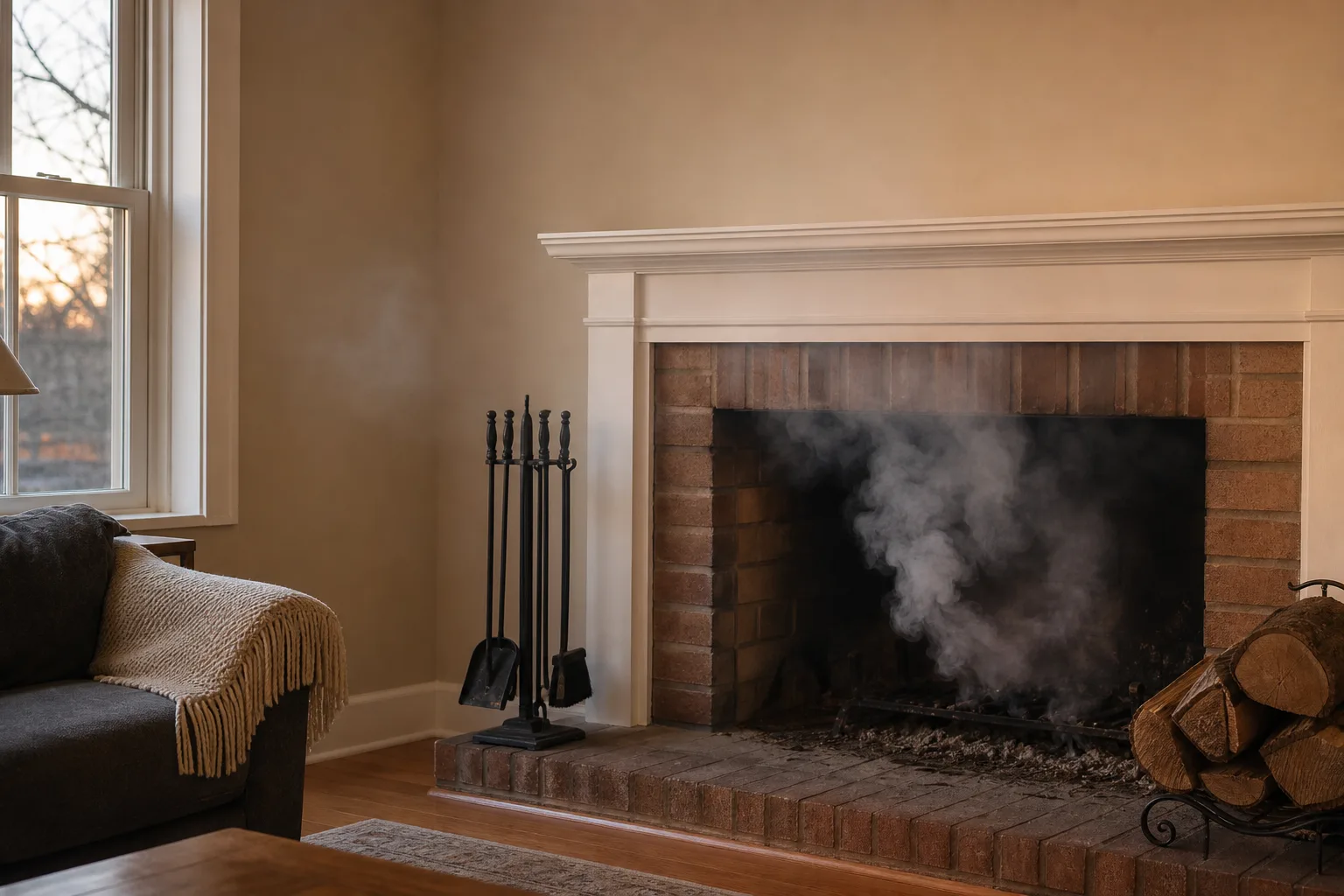
Smoke rolling out of a fireplace opening into a living room at dusk

Damping down overnight is the worst habit

Choking the air feels efficient and produces exactly the cool, smoky, incomplete burn creosote forms in. A hot short fire deposits less than a smouldering long one.
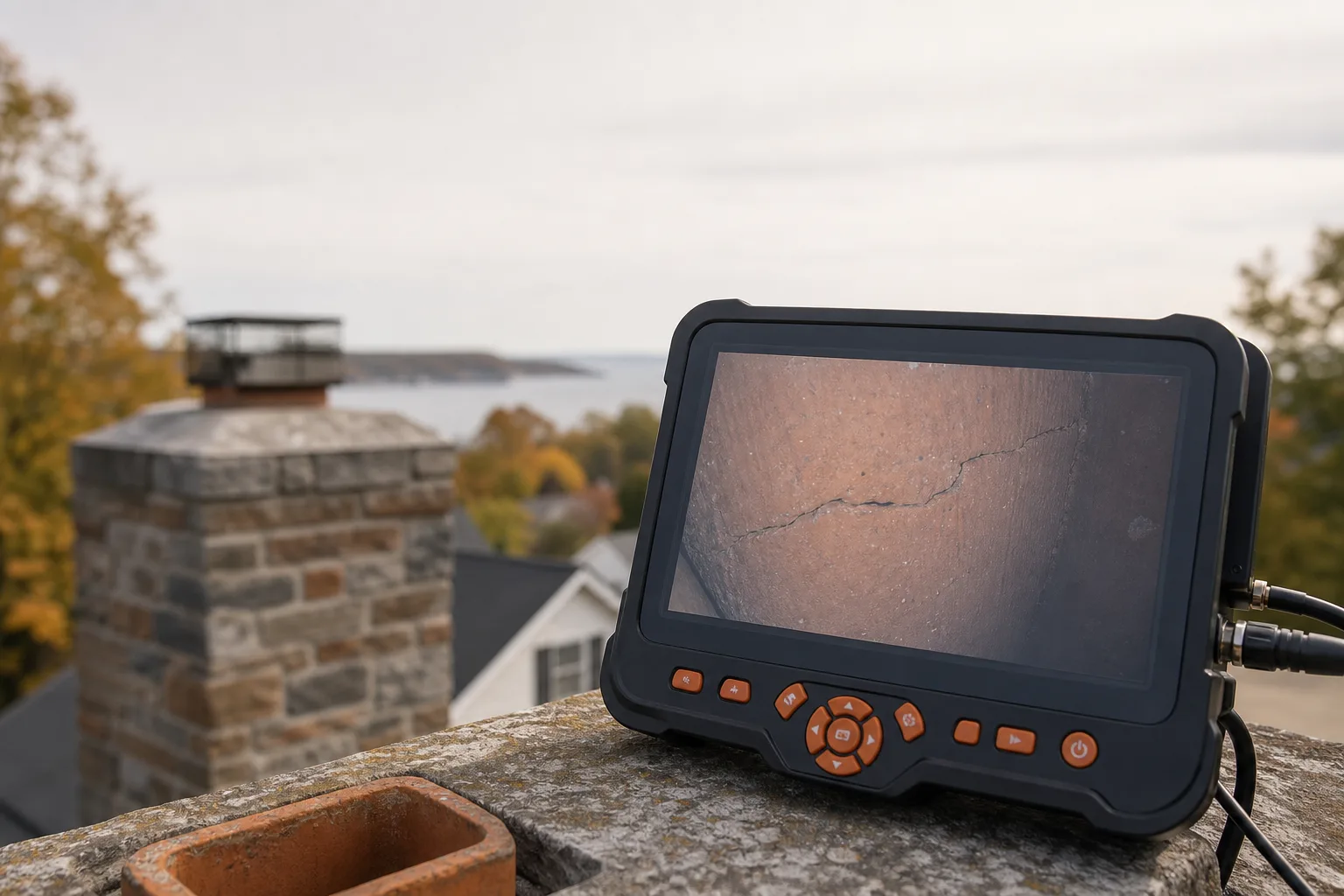
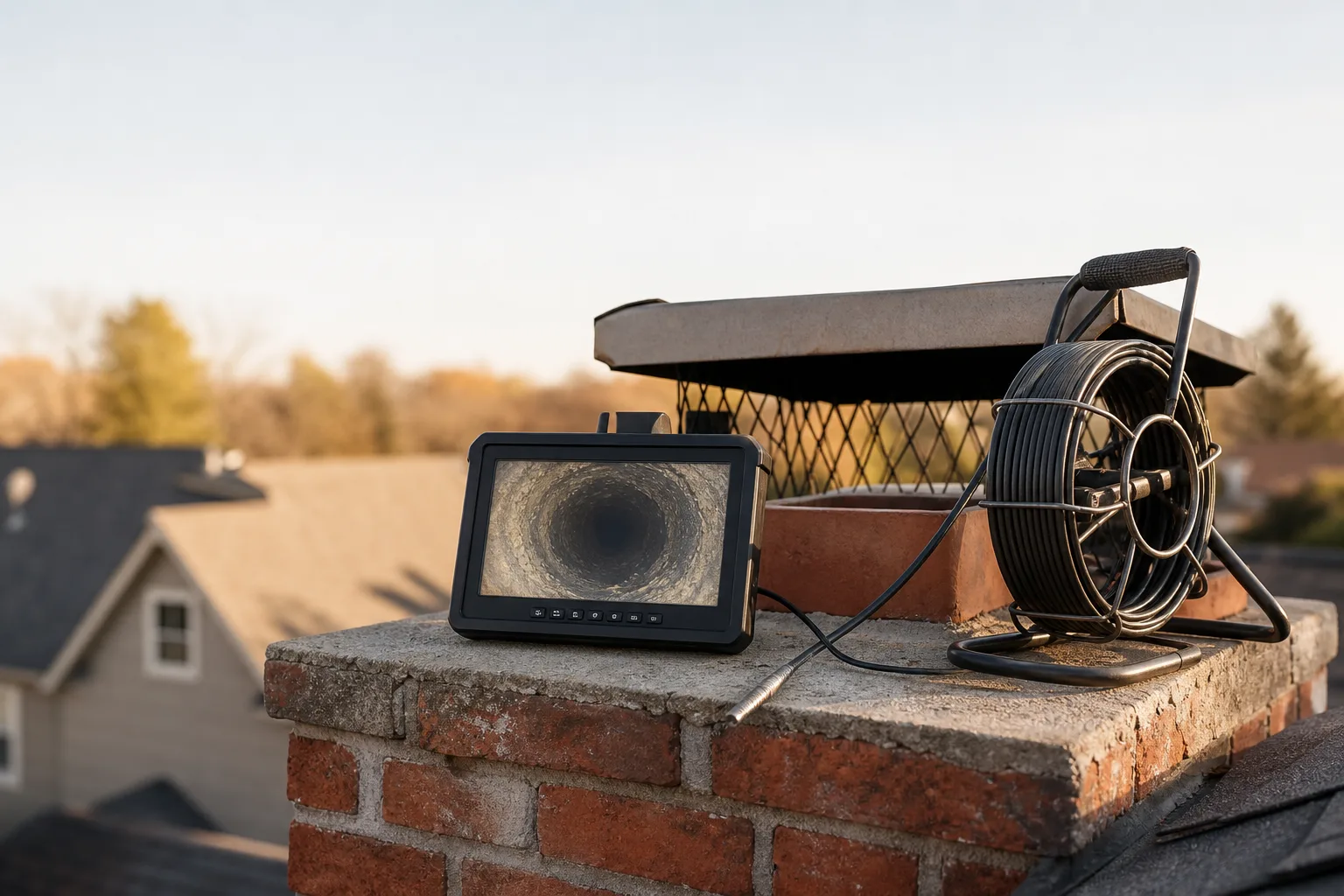
Inspection camera monitor showing a crack running across a clay flue tile inside a chimney

A cold flue condenses more

An oversized flue, or one running up an exterior wall, keeps gases below the temperature at which they stay gases. This is an installation fault presenting as a maintenance problem.
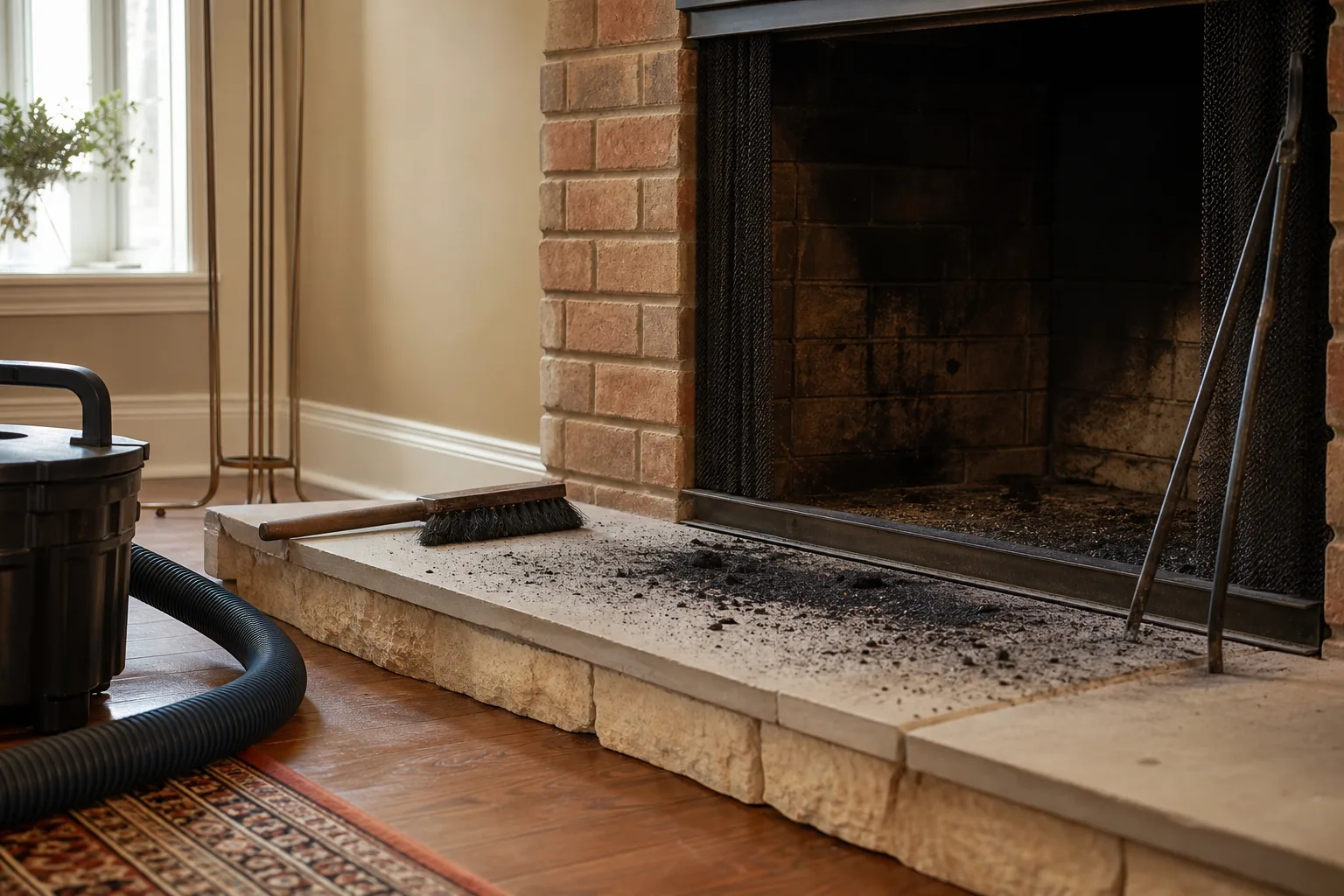
Loose black soot fallen onto the hearth in front of a fireplace opening

Stage three is the dangerous one

Flaky stage one brushes off. Hard shiny glaze does not, and it is what sustains a fire once lit. Knowing which you have is the difference between an hour and a job.
Unused fireplace in a sunlit summer living room with the window open

Softwood and treated timber deposit fastest

Resinous softwood loads a flue far quicker than hardwood. Painted, treated or manufactured board should never go in a fireplace for reasons well beyond creosote.
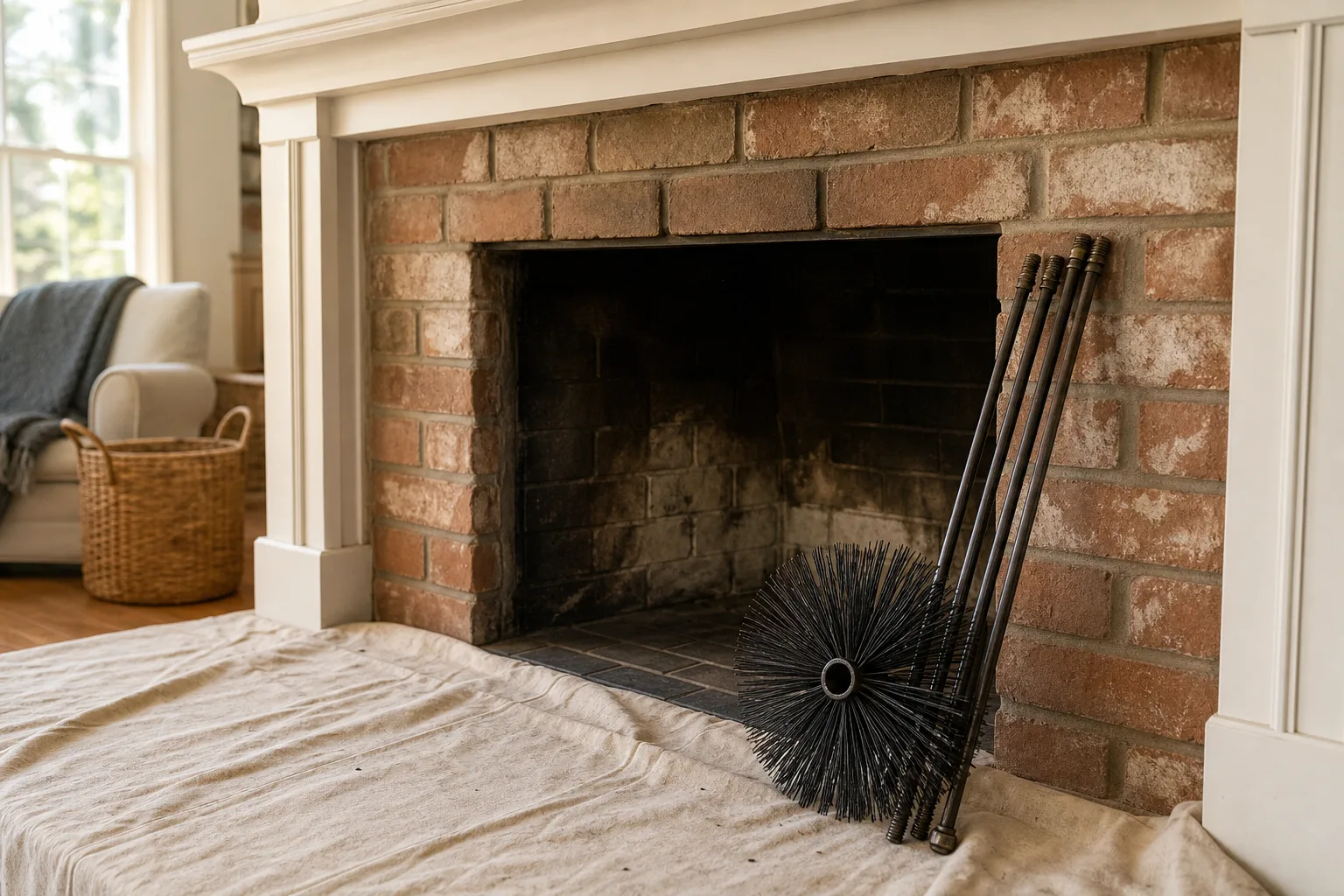
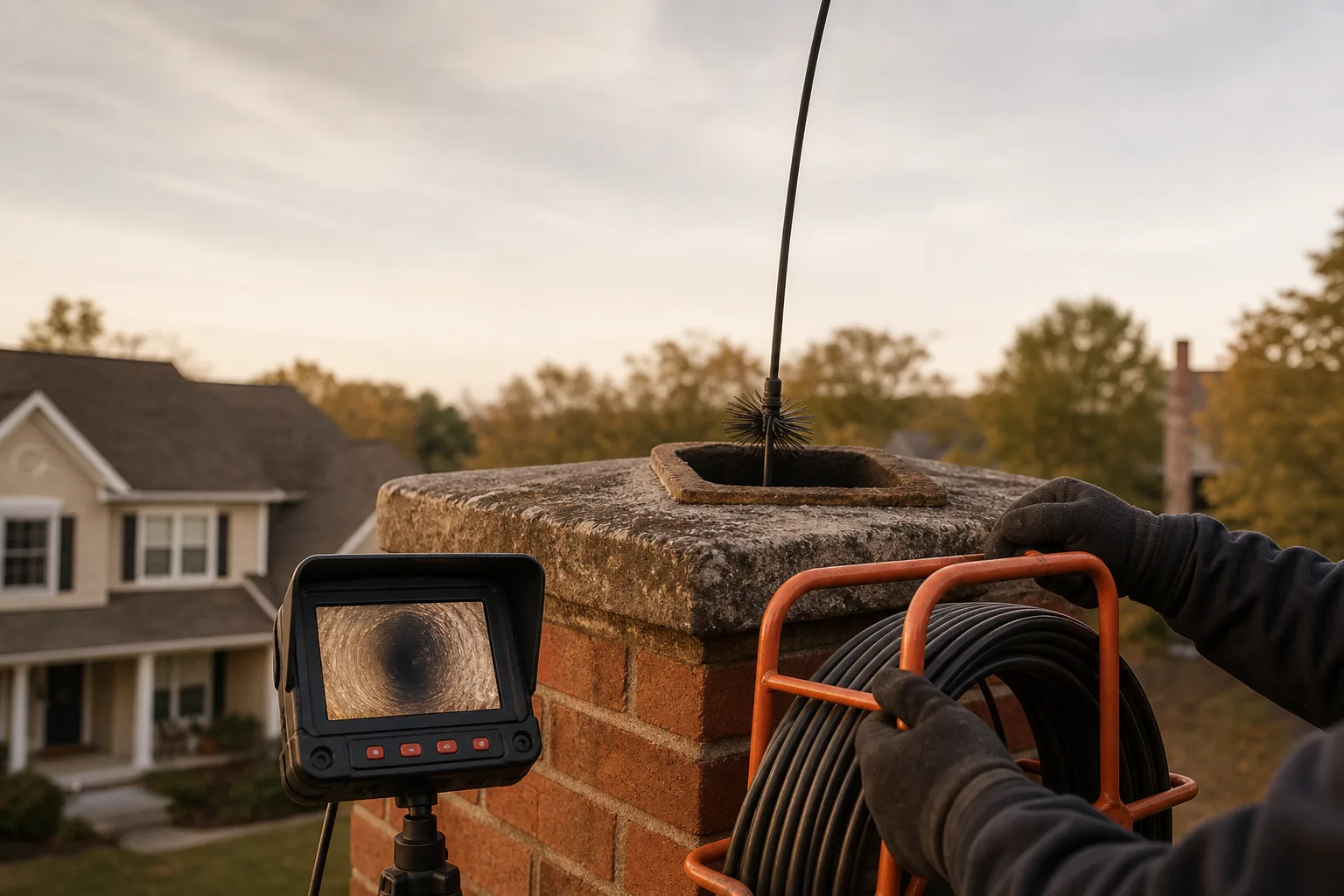
Sweep's brush head and rods leaning against a freshly swept firebox on a drop cloth

Sweeping is the whole prevention strategy

Remove the fuel and there is nothing to catch. An annual sweep on a correctly burned fire is not housekeeping, it is the fire prevention.

Check it yourself

Checks you can make right now

  • Can you scrape more than an eighth of an inch off the flue wall?

    It is overdue. Past a quarter inch, stop using the fireplace until it is swept.

  • Is the deposit matte and flaky, or shiny and hard?

    Matte is a routine sweep. Shiny is stage three and a separate job.

  • Has the wood been split and covered for at least six months?

    If not, the wood is why it keeps coming back and sweeping alone will not stop it.

  • Do you close the air right down overnight?

    That habit builds more creosote than anything else on this page.

  • Does the fireplace smell strongly on warm damp days?

    Creosote takes up moisture. A summer smell means there is a meaningful amount in there.

Capped brick chimney silhouetted against a soft dusk sky above a tidy residential rooftop

The VIO Standard

  • A written estimate first
  • License and insurance checked
  • Nothing starts without your OK

Common questions

What temperature does creosote ignite at?

Around 450 to 500F for stage three glaze, which a hot fire in a clean flue reaches without difficulty - flue gas temperatures of 300 to 500F are normal, and a hot burn goes higher. That is the uncomfortable part of the answer: it does not take an unusual fire to ignite creosote, it takes an unusual amount of creosote to be there in the first place.

Can a chimney fire happen without you noticing?

Easily, and it is the more common case. A slow-burning flue fire gets enough air to consume creosote but not enough to roar, so it can burn for a long time with nothing audible in the room while still reaching temperatures clay tiles were never built for. That is why the evidence found afterwards on a level 2 camera scan matters more than the sounds people expect to hear.

Do creosote logs prevent chimney fires?

Partially, and not as a substitute for sweeping. They release a chemical that dries and loosens stage two deposits so a brush can take them off more easily - useful immediately before a sweep, useless instead of one, because the loosened material stays in the flue. On stage three glaze they do very little.

How fast does creosote build to a dangerous level?

Anywhere from a full season to a few weeks, and the wood is the biggest variable. Seasoned hardwood burned hot on a correctly sized flue can go a whole winter comfortably. Unseasoned wood damped down overnight on a cold exterior flue can lay down a dangerous layer in a couple of months. The annual interval is a minimum, not a schedule.

Is a chimney fire covered by insurance?
Usually yes for the fire damage, since it is sudden rather than gradual. Where insurers push back is a claim on a flue that had not been maintained, which is why dated sweep receipts and inspection reports matter. Report a fire even if nothing appears damaged: one on record beforehand is worth far more than one discovered during a later claim.

Stop using it and get it checked.

Safe to use for now, and it gets more expensive every month you leave it. Describe what happened and a local pro will tell you whether it can wait. Nothing gets done to the chimney until you have the price in writing.

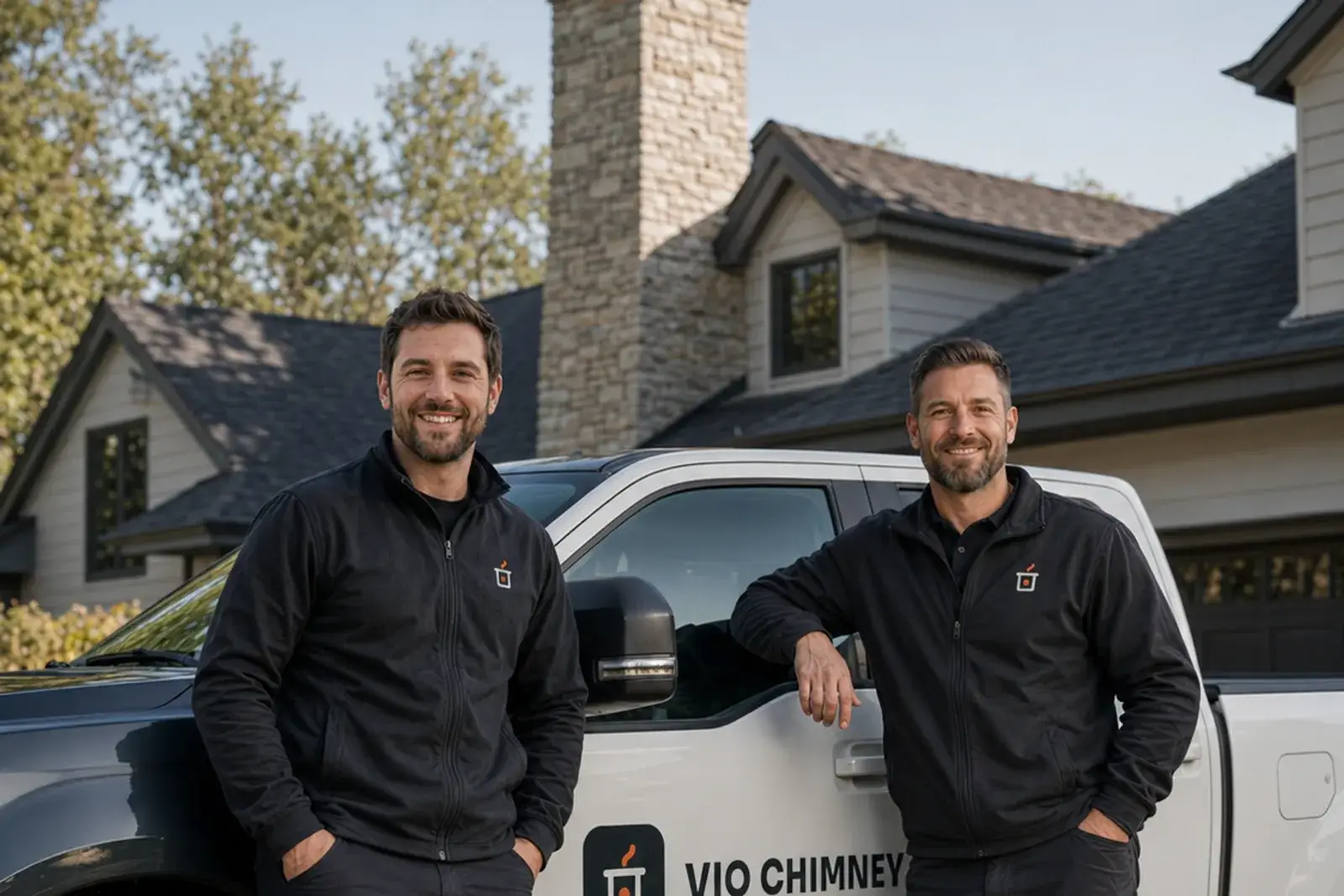
Ethan Miller and Ryan Carter of VIO CHIMNEY beside a branded service truck
Who we are

The people behind every visit

Founded by Ryan Carter in 2019. Every page you read here is reviewed by Ethan Miller, our chimney specialist. A written estimate before any work, and the findings in writing whether or not anything needs doing.

More about who we are →
(513) 655-6702Get my estimate