



On this pageWhat a home inspection misses about fireplaces6 sections+5
Quick answer
A general home inspection does not examine the inside of the flue — inspectors note what's visible and write "recommend chimney evaluation." Before buying a house with a fireplace, order a Level 2 chimney inspection with a full camera scan during your contingency window, and use the written report at the negotiating table.
What a home inspection misses about fireplaces
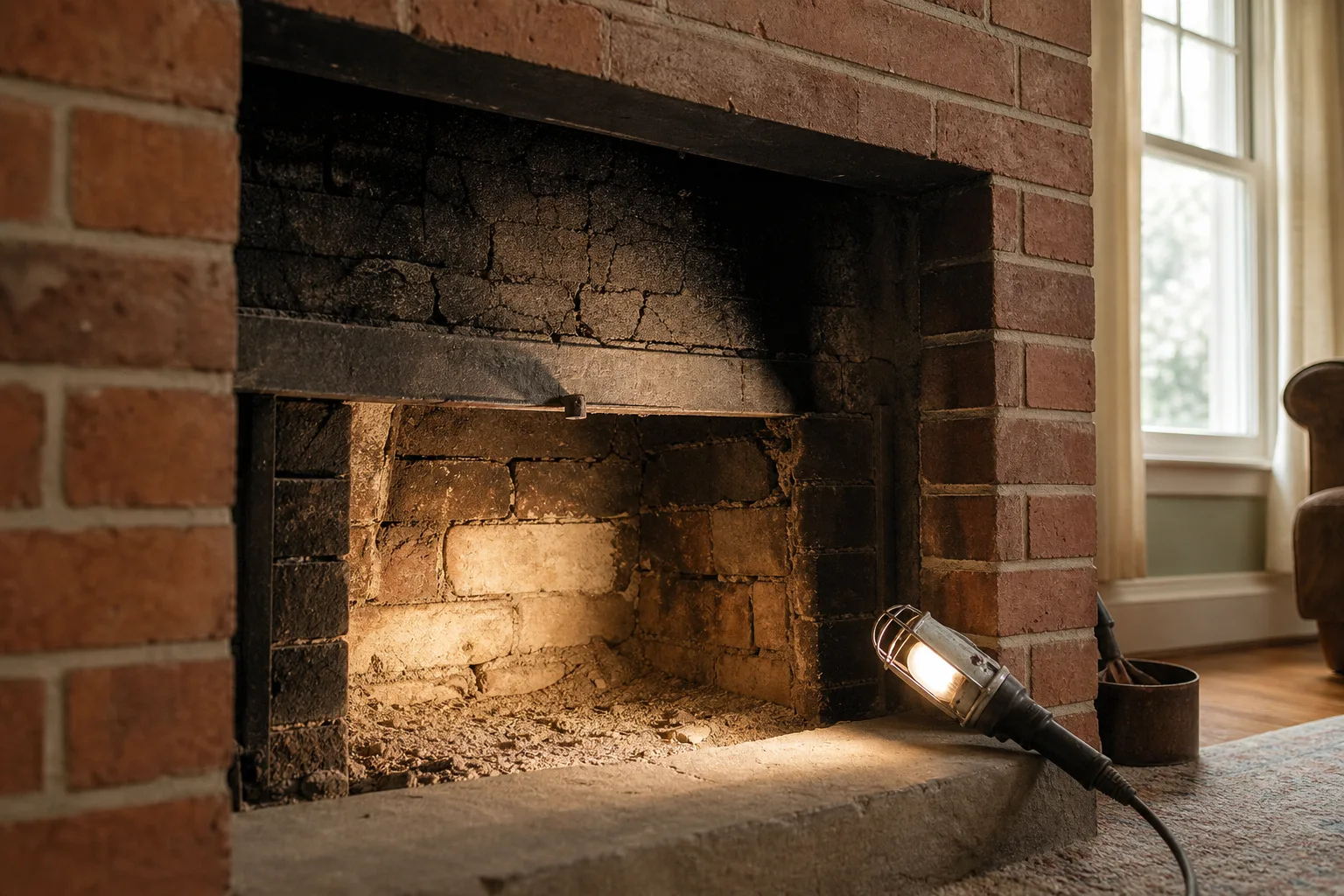
Most people buying a house with a fireplace assume the general home inspection covers it. It doesn't — not in the way that matters. Home inspectors do valuable work, and nearly all of them will tell you themselves that the chimney isn't fully part of it. A standard home inspection covers what's readily visible: the firebox, the hearth, maybe the damper's movement and the chimney's exterior from the ground.
What it does not cover is the system that actually determines safety:
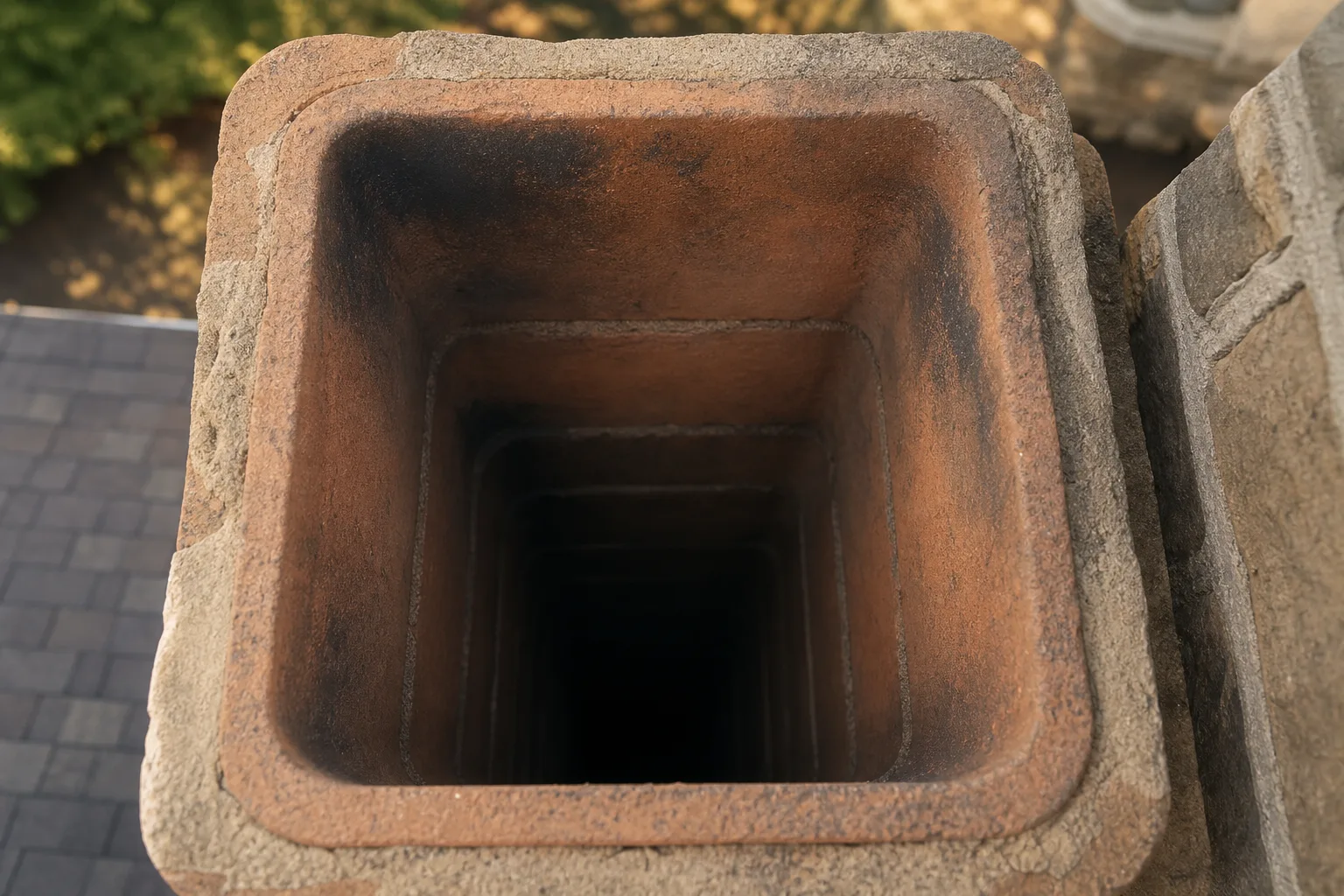
- The flue interior: where cracked tiles, failed mortar joints, and past fire damage live
- The liner's condition along its full height, invisible without a camera
- Evidence of past chimney fires: glazing and heat damage the seller may genuinely not know about
- Hidden water damage inside the chase, the attic penetration, and the smoke chamber
- Whether the flue is even the right size for the appliance attached to it
That's why inspection reports so often carry the phrase "recommend evaluation by a qualified chimney professional." It isn't inspectors covering themselves — it's an accurate statement that a different tool is required. The mistake buyers make is reading that line as boilerplate instead of as a to-do item with a deadline.
Your checklist for buying a house with a fireplace
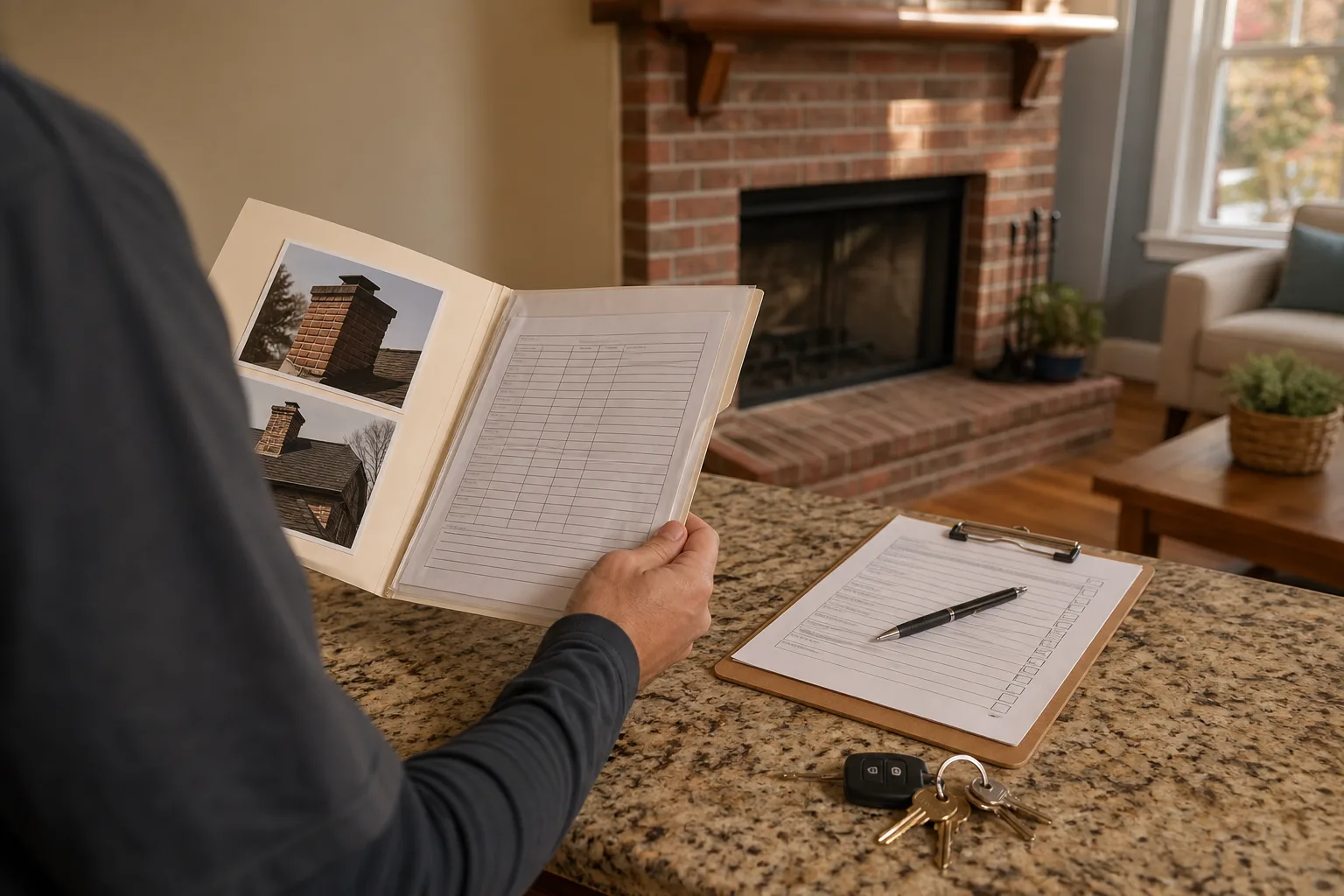
Here's the sequence that protects you, in order:
- Ask for service records. When was the chimney last swept and inspected, and by whom? A seller with paperwork is a good sign; a shrug is information too.
- Ask direct questions in writing. Any chimney fires, leaks, animal issues, or repairs? Disclosure obligations vary, but asking creates a record.
- Look for the cheap clues at the showing. Staining on the ceiling near the chimney, white residue on exterior brick, a firebox that smells sharply of smoke in a "rarely used" fireplace, missing cap visible from the street.
- Schedule the Level 2 inspection early in your contingency window. This is the keystone step — everything after it depends on the findings, and you want time to act on them.
- Read the report with the repair list separated into "safety" and "eventually." Not every finding is urgent. The report should make the difference clear.
- Negotiate from the document, not from worry. Written findings with repair scopes are exactly the kind of evidence price discussions respect.
- After closing, before first fire: sweep if it wasn't done. New-to-you flue, known-clean start.
Found a house you love? Book a pre-purchase chimney inspection with the pro we match you with — free to book, and scheduling moves fast when a contingency clock is running.
Why Level 2 is the right inspection for a sale
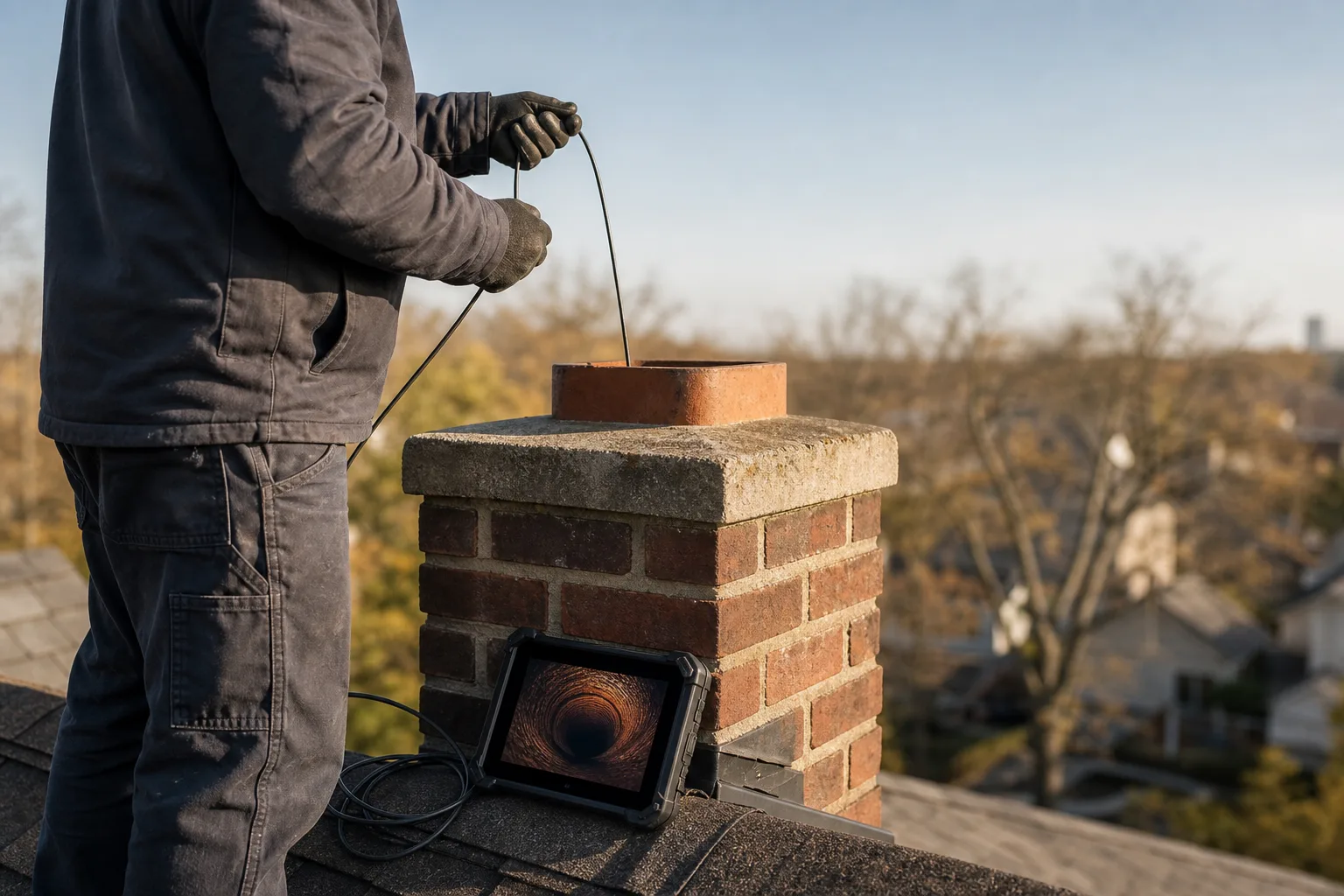
The industry standard (NFPA 211) is unambiguous here: a Level 2 inspection is called for at every sale or transfer of property. Not as an upsell — as the defined minimum for the situation, because a sale is precisely when nobody has operating history to lean on.
Here's what that standard buys you over the checks that typically happen anyway:
| Home inspection | Level 2 chimney inspection | |
|---|---|---|
| Firebox & hearth | Visual check | Full evaluation |
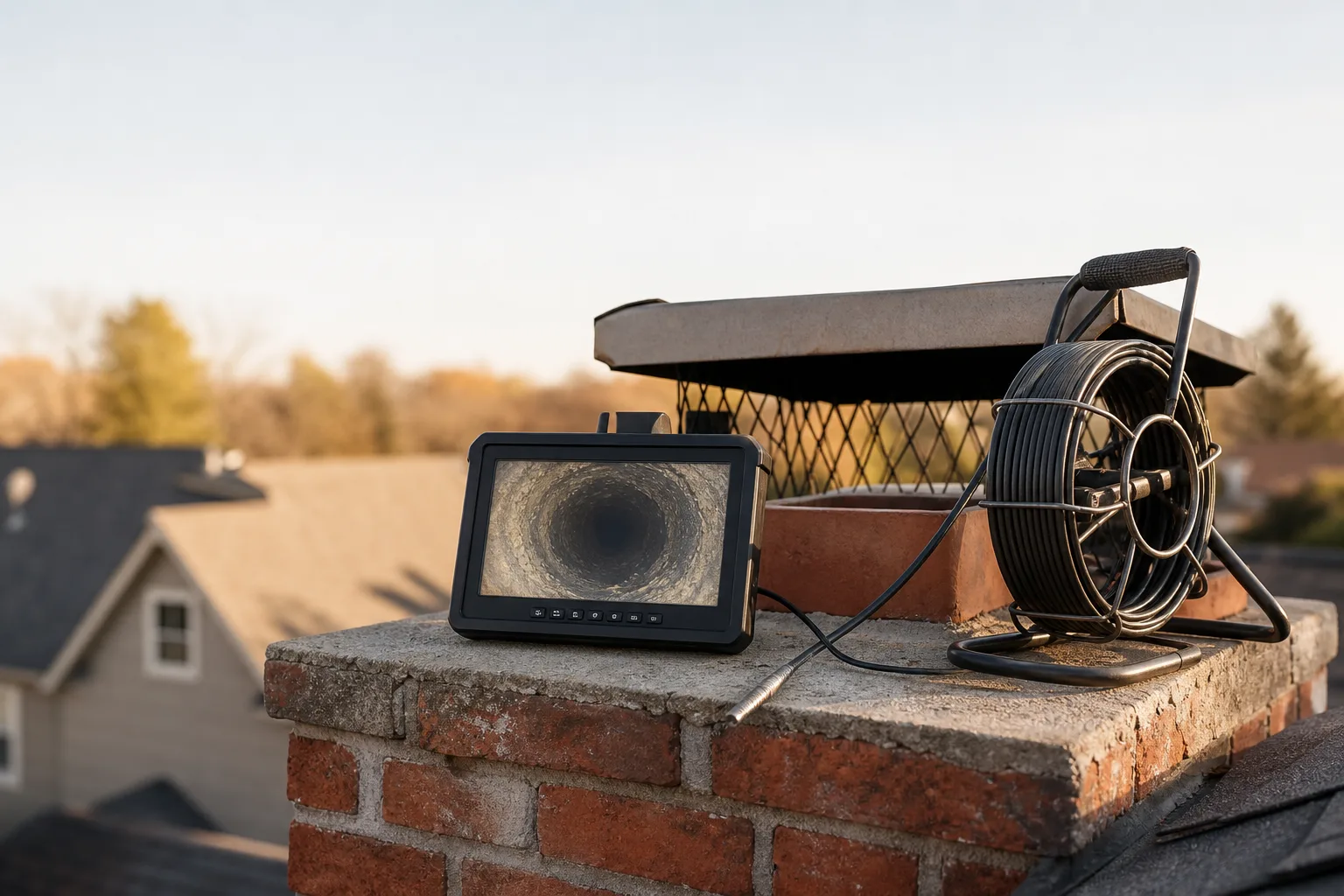
| Flue interior | Not examined | Complete camera scan, top to bottom |
| Attic & roof penetrations | General look | Chimney-specific examination |
| Past fire evidence | Rarely detectable | Identified on camera (glazing, heat damage) |
| Documentation | "Recommend evaluation" note | Written report with findings you can negotiate with |
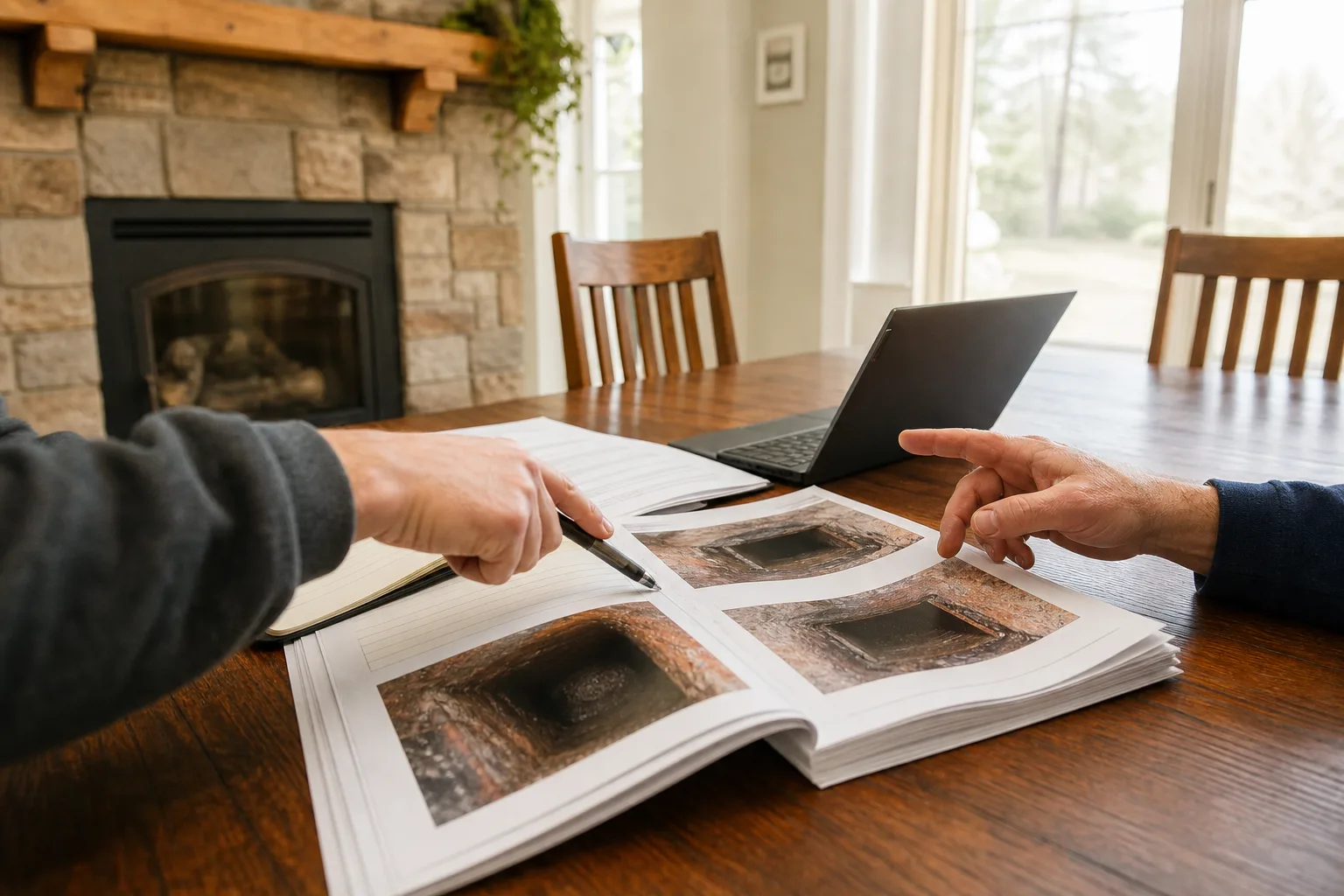
The camera is the point. Clay tile flues crack invisibly, mortar joints fail between tiles, and a Level 2's video scan is the only way anyone — including the seller — actually knows the flue's condition. We've scanned flues behind pristine mantels that hadn't been safe to use in years, and immaculate-looking chimneys with decades left in them. From the living room, those two houses look identical.
The negotiation angle: using the report
A Level 2 report changes your position in three concrete ways:
- It converts unknowns into line items. "The chimney is old" is a feeling. "Cracked flue tiles requiring relining" is a scope with a price, and scopes are negotiable in ways feelings aren't.
- It gives you options, not just objections. Depending on findings, you can request repairs before closing, a price adjustment that funds them after, or seller credits — whichever suits the timeline. Your agent will know the local convention; the report powers any of the three.
- It protects the walk-away. When findings are serious — significant fire damage, structural issues — the report documents your reason inside the contingency, protecting your deposit and your leverage.
And when the scan comes back clean? You just bought certainty about the one system the standard process skips — plus a documented baseline that makes every future inspection cheaper to interpret. There is no losing outcome to running the inspection; there's only the losing outcome of skipping it.
Red flags that should slow the deal down
None of these necessarily kill a purchase, but each one means price it before you sign, because you're looking at the visible edge of something bigger:
- Evidence of a past chimney fire the sellers didn't mention — glazed creosote, warped dampers, heat-cracked tiles
- Active water intrusion: staining, efflorescence, damp smells, which compounds every season and rarely travels alone
- A flue mismatched or improperly lined for the appliance it serves, common after furnace swaps and remodels
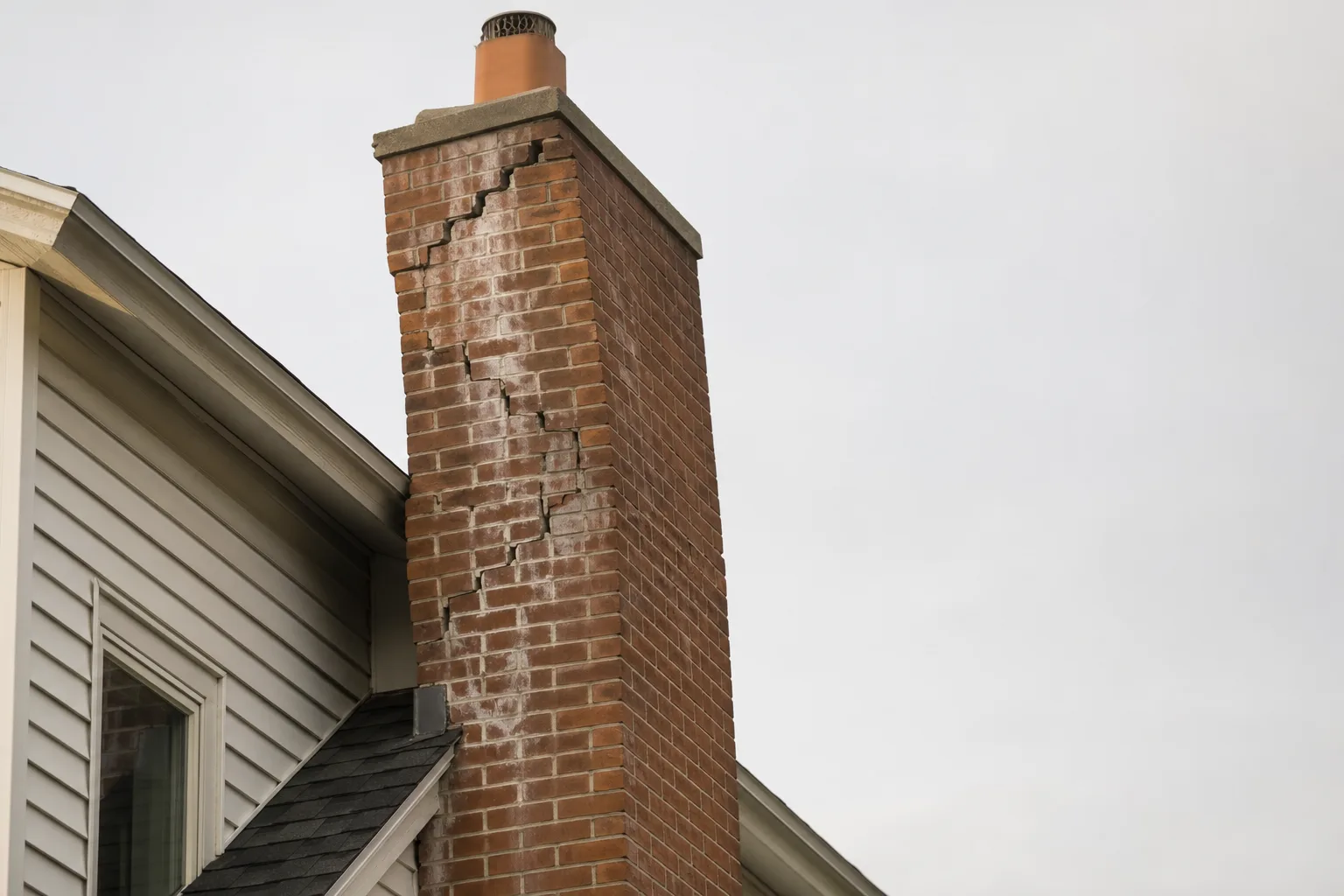
- Structural movement: leaning stacks, stair-step cracking through the masonry, gaps opening where chimney meets house
- A "freshly painted" firebox with no service records — sometimes just staging, sometimes a coat of concealment
The pattern worth internalizing: chimney problems are almost always cheapest at the moment of discovery and most expensive at the moment of surprise. Buying a house with a fireplace is the one time you get to choose which of those moments you'll have, and a scheduled inspection through our request page is how you choose the first one.
Your first month with the new fireplace
Papers signed, keys in hand — a short settling-in routine turns the fireplace from an unknown into a habit:
- Sweep before the first fire if it wasn't done as part of the sale. You want a known-clean flue as your baseline, not the previous owner's burning history.
- File the inspection report where you'll find it. It's your maintenance baseline — every future technician works faster and cheaper with it in hand.
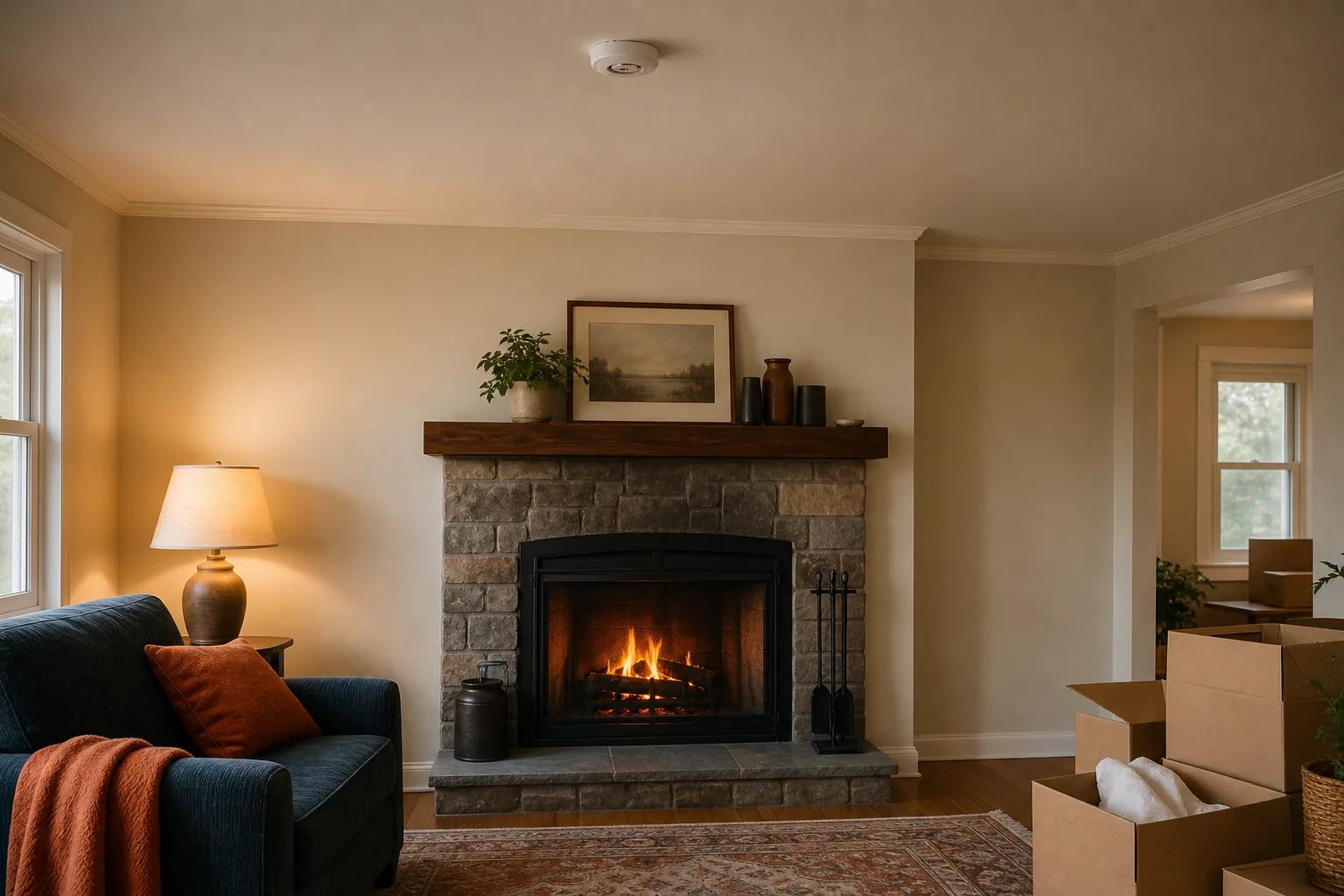
- Install or verify alarms. Smoke and carbon monoxide alarms near the fireplace and on every level, with fresh batteries. Five minutes, non-negotiable.
- Learn your damper and your draft. Every fireplace has a personality — how it likes to be lit, how long the flue takes to warm up. Learn it with small fires before the first big one.
- Start the wood supply right. Seasoned hardwood, stored dry, bought ahead. The burning habits you set in month one decide how much creosote your first-year inspection finds.
- Calendar the annual inspection now. The easiest maintenance schedule is the one you set before life gets busy.
A fireplace that came with a clean Level 2 report and starts its life with you on a schedule is about as low-risk as home systems get. That's the whole arc: inspect before you buy, negotiate from evidence, and begin your ownership already ahead.
Symptom checker
What is your chimney doing?
Tap the closest match for an honest first answer.