



On this pageWhat does a gas fireplace service include?7 sections+6
- What does a gas fireplace service include?
- How often should each type of gas fireplace be serviced?
- What happens at the start of the service visit?
- How are the pilot assembly, thermopile, and logs checked?
- How are the glass gasket, venting, and carbon monoxide safety checked?
- What service findings usually lead to repairs?
- How should homeowners prepare for service and respond to the results?
Quick answer
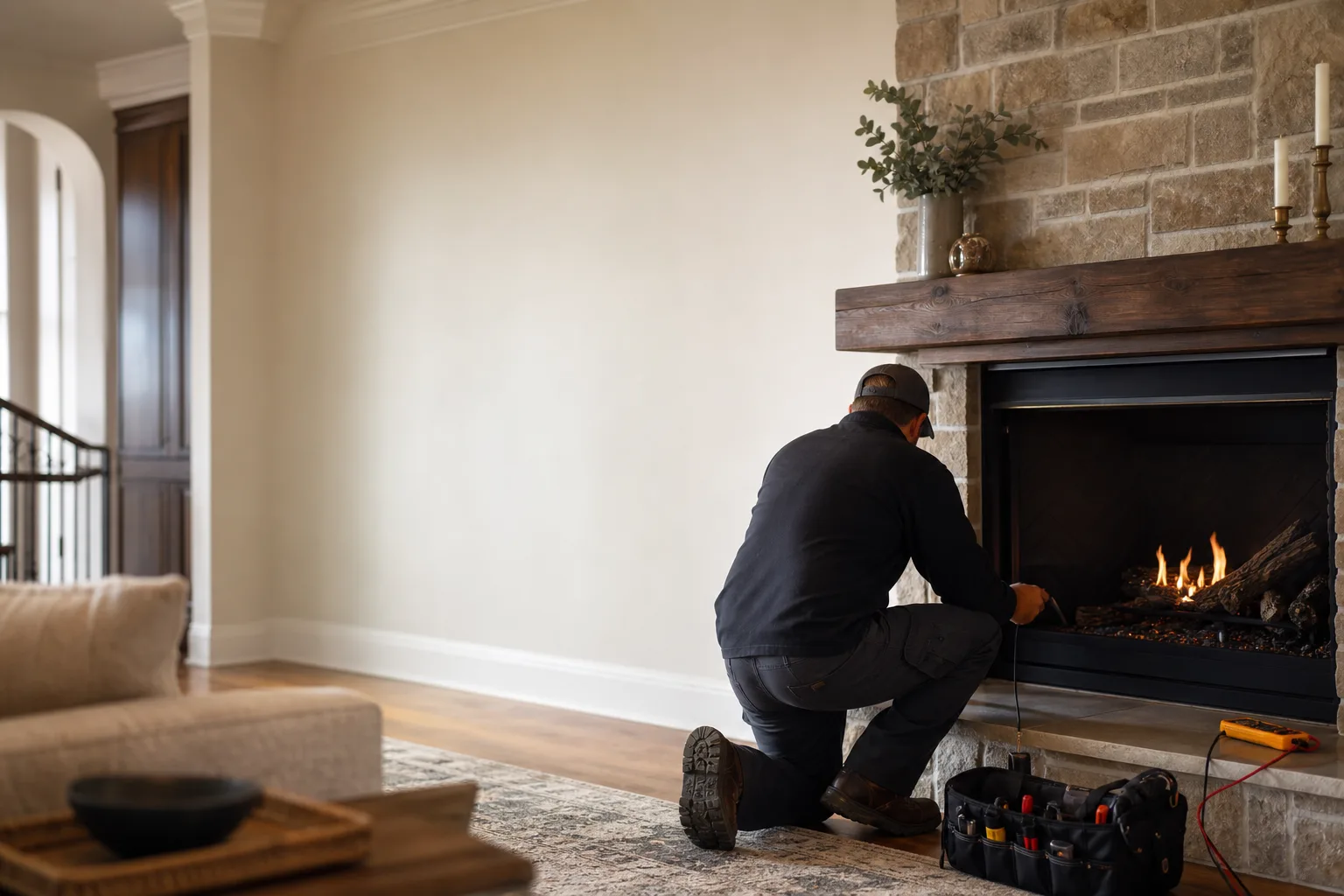
A gas fireplace service includes internal cleaning, ignition and burner testing, pilot assembly or electronic ignition checks, log placement review, and inspection of the glass gasket and controls. The technician also checks accessible venting, flame behavior, and carbon monoxide conditions, then identifies any defects that require repair.
What does a gas fireplace service include?
A professional gas fireplace service includes inspection, internal cleaning, performance testing, and safety checks, not just wiping the glass and vacuuming visible dust. The technician confirms that the appliance ignites correctly, burns with a stable flame, responds to its controls, and shows no obvious signs of damage or unsafe operation.
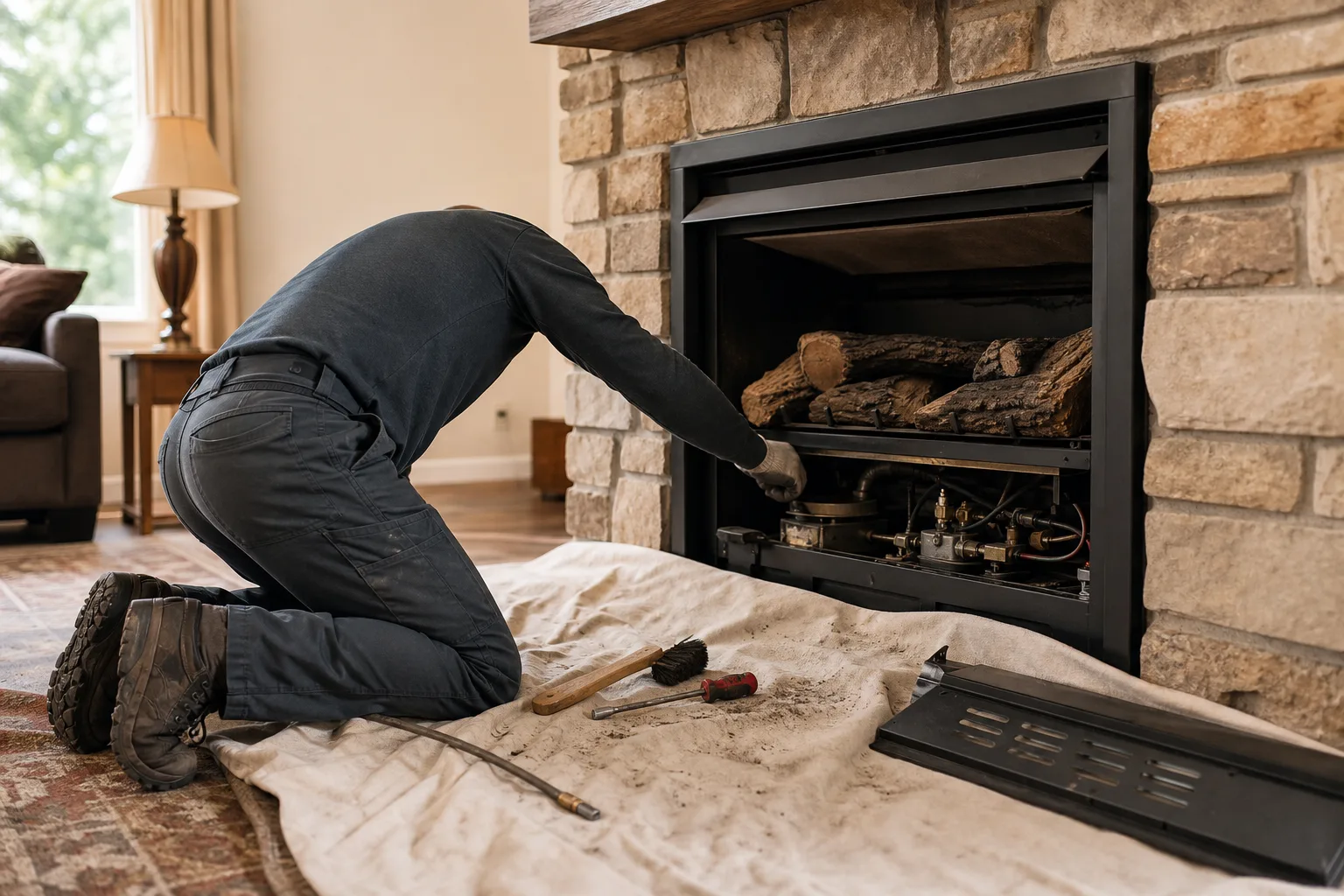
The visit usually begins with the fireplace off and cool. After gaining access to the firebox, the technician examines the burner, pilot or electronic ignition system, wiring, controls, decorative media, and accessible gas connections. Dust, pet hair, loose debris, and deposits are removed without disturbing calibrated parts or forcing material into burner openings.
Once the components are clean, the appliance is operated through a normal startup. The technician watches how quickly the burner lights, whether flame travels smoothly across the burner, and whether the flame pattern matches the appliance design. Unusual soot, lifting flames, delayed ignition, repeated shutdowns, or controls that respond inconsistently receive closer attention.
The surrounding firebox also matters. Discoloration, corrosion, moisture marks, warped panels, damaged refractory material, or evidence of excess heat can point to a problem beyond routine cleaning. On sealed units, the glass panel and gasket are part of the operating system, so they are inspected rather than treated as decorative pieces.
A useful service report identifies what was inspected, what maintenance was completed, and how the fireplace performed after reassembly. It should also separate items that are operating normally from repairs that are recommended or required before further use.
Good to know: A clean-looking fireplace can still have a weak pilot signal, blocked burner port, deteriorated gasket, or venting concern. Surface appearance alone does not confirm safe operation.
Want the fireplace checked before the next cold spell? Request a service visit or call (513) 655-6702 for a straightforward assessment.
How often should each type of gas fireplace be serviced?
Gas fireplace service is commonly scheduled once a year, but the appliance manual and local requirements should set the final interval. Fireplace design, operating hours, household dust, and past ignition trouble can all change the schedule. A unit that struggles to light should be checked rather than left until its usual service date.
Each venting design has different inspection priorities:
| Fireplace type | Main service concerns | Reasons to schedule sooner |
|---|---|---|
| Direct-vent | Sealed glass, gasket condition, outside air intake, exhaust path, and termination | Damaged glass seal, unusual residue, repeated shutdowns, or debris near the termination |
| B-vent | Draft, vent connections, burner condition, and movement of combustion gases outdoors | Soot, stale combustion odors, weak draft, or signs of vent leakage |
| Vent-free | Burner and pilot cleanliness, room ventilation, oxygen depletion control, and flame quality | Carbon monoxide alarm, heavy residue, abnormal flames, headaches, or frequent shutdowns |
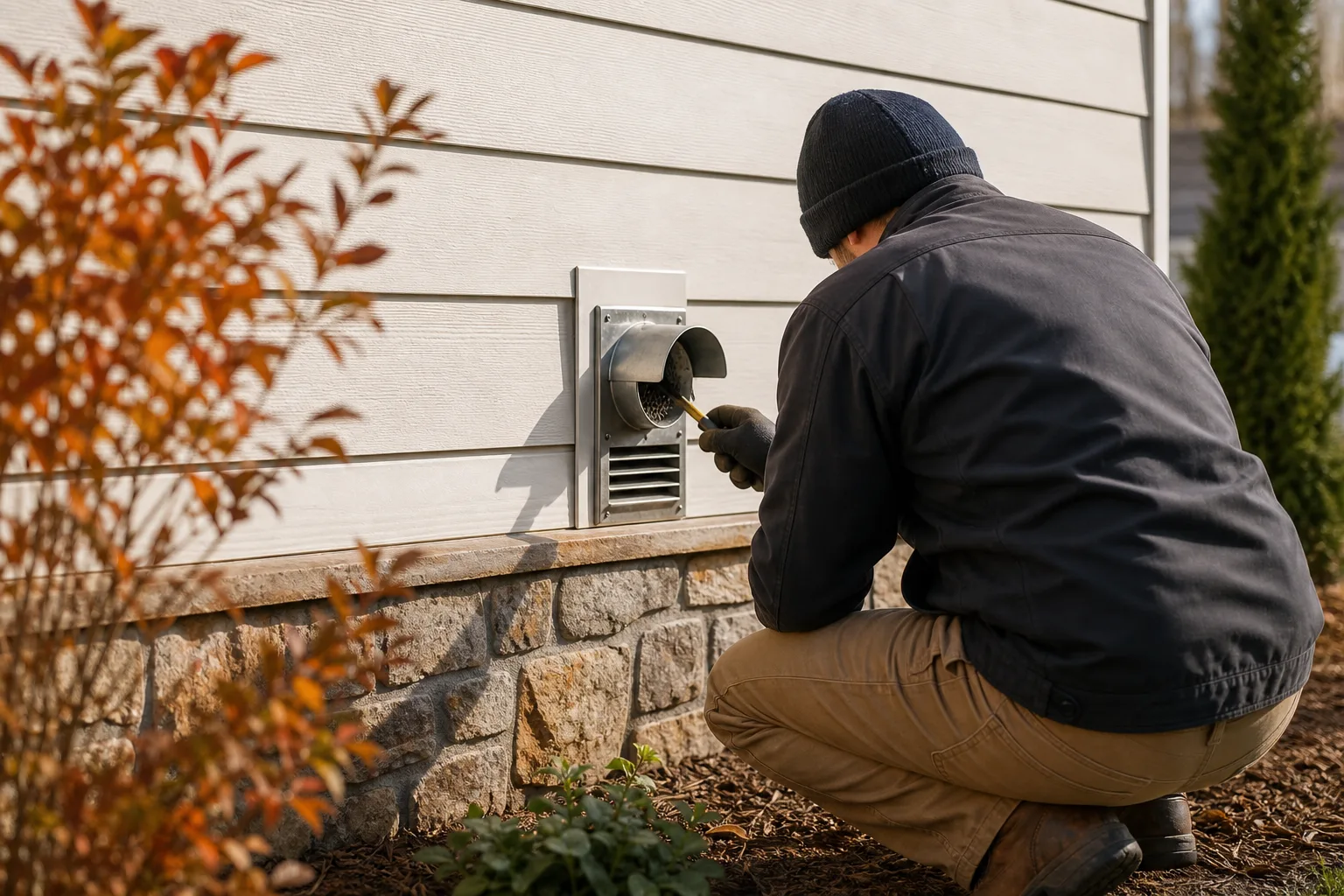
Direct-vent fireplaces draw combustion air from outdoors and send exhaust outside through a sealed vent system. Annual attention commonly focuses on glass seating, gasket compression, intake and exhaust openings, vent joints that can be accessed, and the exterior termination. Leaves, nests, lint, snow, or building changes near that termination can interfere with airflow.
B-vent fireplaces use indoor air for combustion and rely on natural draft to move gases upward, making a qualified chimney inspection important when an existing chimney carries the exhaust. Service includes checking accessible vent connections, draft behavior, and evidence that exhaust is spilling into the room instead of rising through the vent. Soot near the firebox opening, corrosion around joints, or odors during operation deserve prompt evaluation.
Vent-free units release combustion products into the room by design, so burner cleanliness and correct flame behavior carry added weight. The technician also checks the oxygen depletion safety system where fitted and confirms that the installation still meets the manufacturer’s room ventilation and clearance requirements. A carbon monoxide alarm is not a substitute for servicing the appliance.
You may need an earlier visit after heavy seasonal use or a long period of inactivity. Renovation dust, pet hair, moisture, recurring ignition delays, flame changes, and intermittent shutdowns are also reasons to move service forward.
A ground-level check of an exterior direct-vent termination can reveal problems between appointments:
- Stand back and look. Confirm that plants, stored items, snow, or construction materials are not crowding the termination.
- Check the openings. Look for leaves, nesting material, lint, or other visible blockage without inserting tools.
- Inspect the wall. Watch for soot marks, staining, loose trim, corrosion, or moisture around the vent.
- Leave the cap intact. Do not remove screens, covers, or vent parts, since the termination is part of the listed system.
Safety note: If a carbon monoxide alarm sounds, leave the area and follow the alarm manufacturer’s emergency instructions. Keep the fireplace off until the cause has been assessed by a qualified professional.
What happens at the start of the service visit?
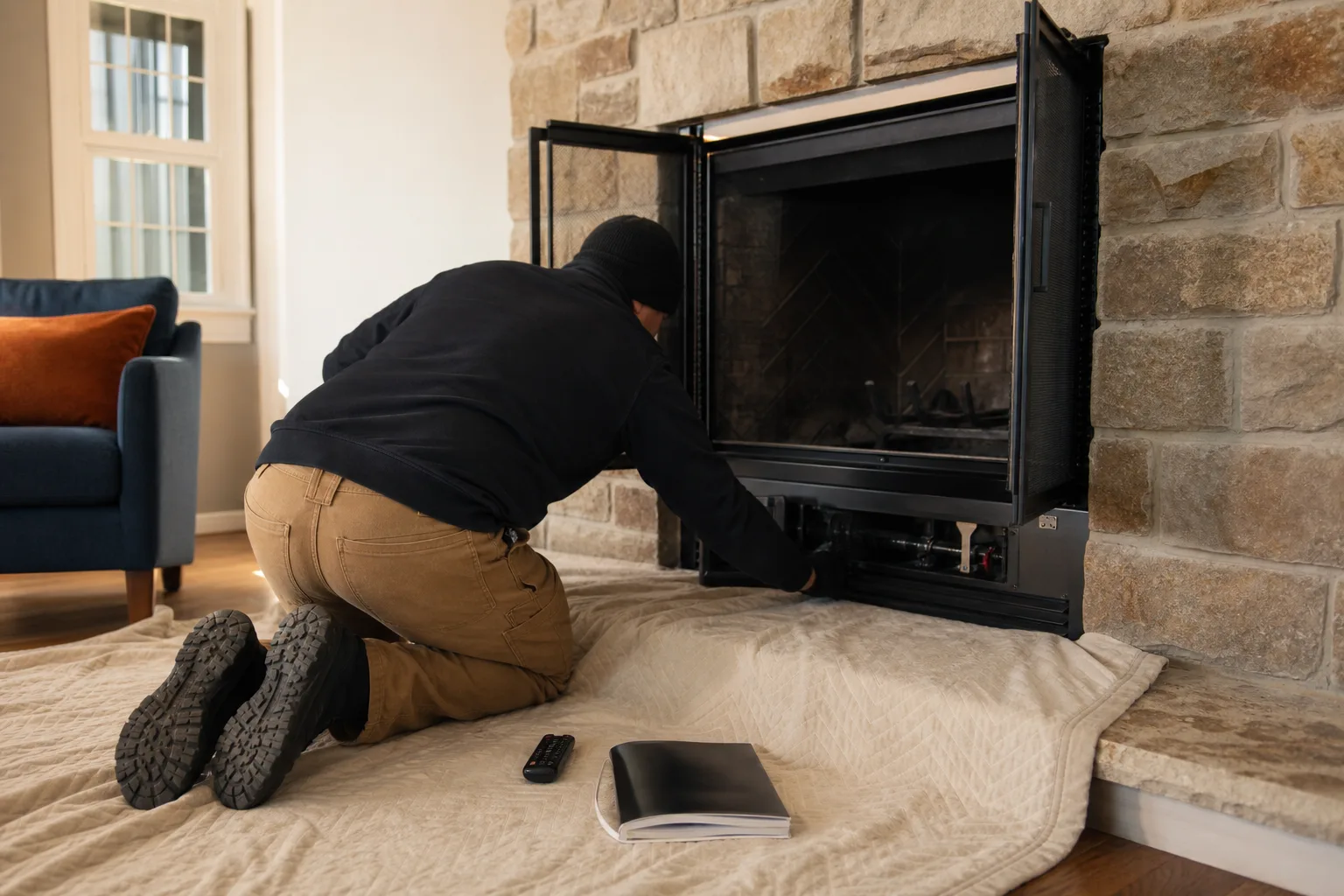
The service visit starts with a short discussion of how the fireplace has been behaving, followed by shutdown, work-area protection, and an initial visual inspection. The technician wants to hear about delayed ignition, unusual smells, noises, soot, shutdowns, remote-control trouble, or recent changes in flame color and height before moving any components.
Small details can shorten the diagnostic process. Mention whether the problem occurs only when the fireplace is cold, after it has run for a while, during windy weather, or when another exhaust appliance is operating. If you have a photo or video of an intermittent symptom, it can help when the unit behaves normally during the appointment.
The fireplace is turned off as needed and allowed to cool before the front, screen, or glass assembly is opened according to the manufacturer’s instructions. A drop cloth or protective covering keeps soot and dust off the hearth and nearby flooring. Before cleaning begins, the technician records log and ember placement and looks for broken parts, moisture, corrosion, scorch marks, or disturbed wiring.
Loose dust, pet hair, lint, and debris are then removed from the firebox and control area with methods suited to the appliance. Burner ports and pilot openings require care because aggressive brushing, compressed air, or misplaced vacuum tools can damage parts or push debris farther into small passages.
The initial component review covers accessible wiring, wall switches, receivers, remote controls, battery compartments, and connectors. The technician also examines the visible gas line and fittings, burner surface, control compartment, and surrounding metal for looseness, contamination, heat damage, or moisture damage. Formal leak and operating tests follow the procedures specified for the appliance.
From the field: Pet hair often collects in the lower control compartment where homeowners cannot see it. That buildup can restrict airflow around controls and return quickly unless the nearby floor and fireplace intake area are kept clean.
Not sure what a strange flame or shutdown means? Arrange a professional inspection or call (513) 655-6702 before operating the fireplace again.
How are the pilot assembly, thermopile, and logs checked?
The technician cleans and inspects the pilot assembly, tests the thermopile or related flame-sensing controls, checks burner ignition, and verifies that every log matches the approved placement diagram. These parts work together, so a dirty pilot or shifted log can cause symptoms that look like a failed control even when the underlying problem is airflow or flame contact.
On appliances with a standing pilot, the pilot hood and nearby openings are checked for dust, lint, corrosion, and deposits. After cleaning, the pilot flame should be stable and should contact the thermocouple, thermopile, or other sensing component in the position specified by the manufacturer. A weak, wandering, or poorly aimed pilot flame can cause hard starts and nuisance shutdowns.
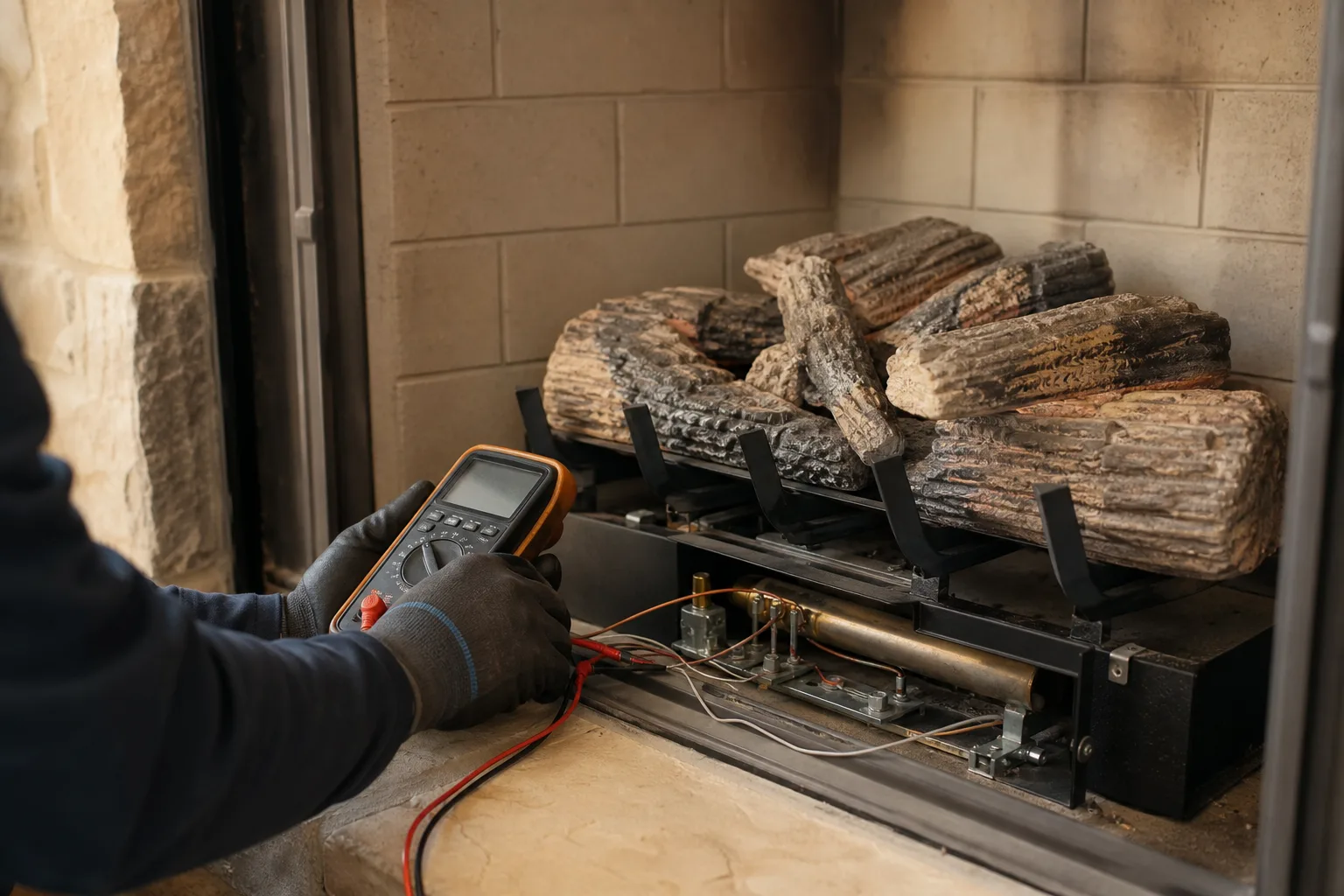
The thermopile converts heat from the pilot flame into the electrical output used by certain gas controls. A technician measures its output under the required operating conditions and checks related switches, wiring, terminals, and safety circuits. Weak output may keep the main burner from opening reliably or cause the fireplace to shut down after it starts.
Not every fireplace uses a standing pilot or thermopile. Units with electronic ignition may use a spark electrode, flame sensor, ignition module, or other controls, which are inspected and tested according to the appliance manual. Replacing a part based on symptoms alone can miss loose wiring, poor grounding, contamination, or an incorrect pilot flame.
The burner is then observed during ignition and operation. Flame should move across the burner smoothly without a hard light-off, prolonged delay, blocked section, lifting, or persistent soot. Clogged ports may be cleaned using approved methods, but damaged burners or recurring abnormal flames need diagnosis rather than repeated surface cleaning.
Ceramic logs are engineered for specific positions, clearances, and flame paths. The technician compares their placement with the manufacturer’s diagram, including pins, notches, supports, and the location of ember material. A log shifted across a burner port can redirect flame, create soot, trap heat, and damage the glass or firebox.
Cracked, flaking, or deteriorated logs should not be glued, rearranged by guesswork, or replaced with a similar-looking set. Logs and ember materials must be handled and replaced according to the fireplace manufacturer’s instructions because their shape and placement affect combustion.
Myth vs. fact: The myth is that gas logs are decorative and can be arranged however they look best. The reality is that approved placement controls flame movement and heat distribution, making the log diagram part of safe operation.
If your pilot will not stay lit, the burner lights with a thump, or the logs are cracked or out of place, book a service visit or call (513) 655-6702 and leave the fireplace off until it has been checked.
How are the glass gasket, venting, and carbon monoxide safety checked?
During a gas fireplace service, the technician inspects the glass and gasket, checks accessible intake and exhaust components, then runs the appliance to confirm that combustion gases move as designed. Carbon monoxide readings and flame behavior help reveal venting, combustion, or sealing problems that may not be visible while the unit is cold.
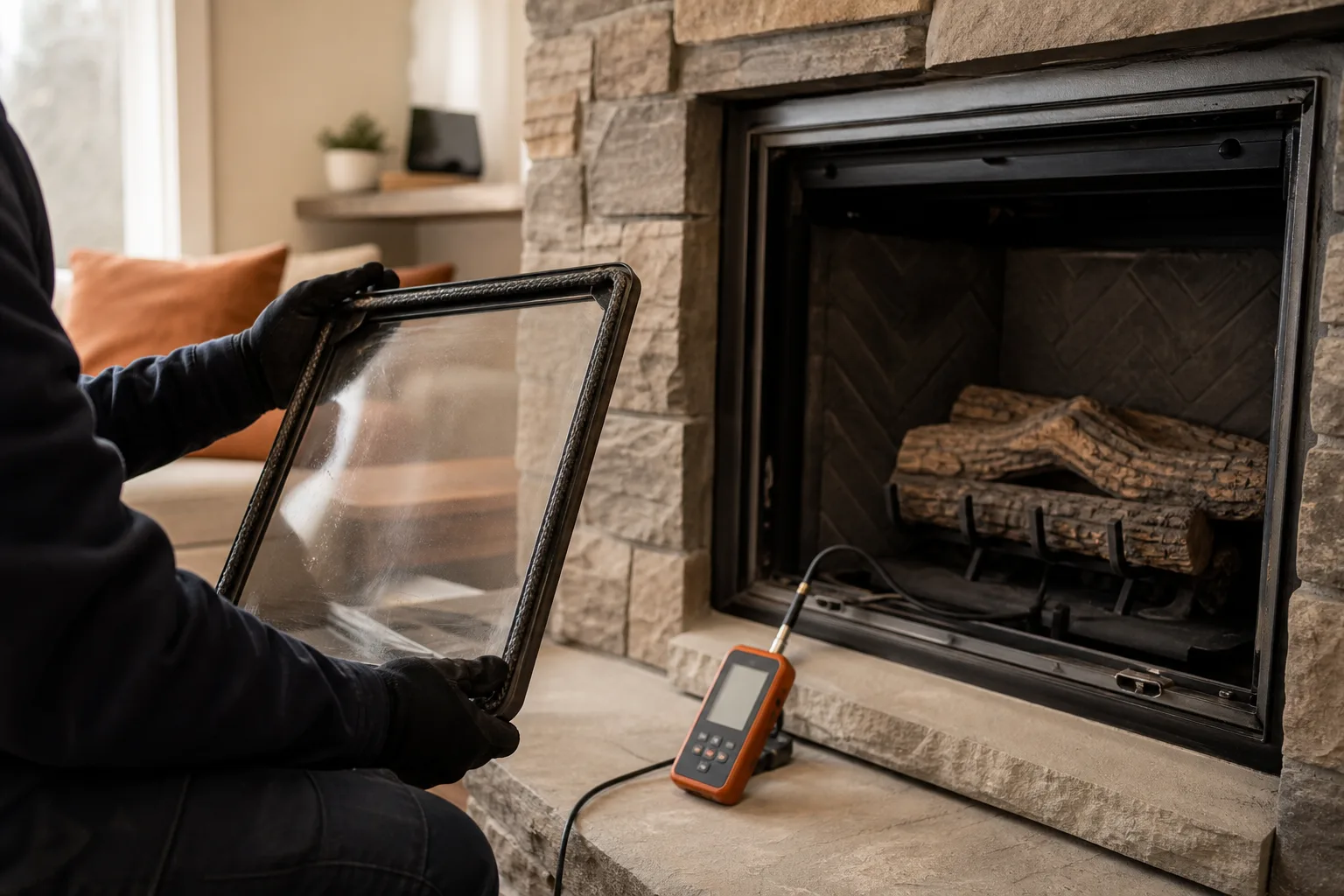
The glass panel is examined for cracks, chips, stubborn residue, and signs that flames or logs have been contacting it. After cleaning, the technician confirms that the panel sits evenly and that its latches or retainers hold it securely without placing uneven pressure on the glass.
On a direct-vent fireplace, the gasket is part of the sealed combustion system. The technician looks for gaps, flattened sections, brittle material, loose corners, and areas that no longer make even contact. A damaged gasket can disturb airflow and should be corrected with the approved part rather than patched with general-purpose sealant.
From the field: A gasket may look acceptable until the glass is removed. Hardened corners, sections stuck to the frame, and compression around the latches often reveal why the panel no longer seals evenly.
Accessible vent connections are checked for separation, corrosion, heat discoloration, moisture marks, and damaged supports. The technician also examines reachable air-intake openings and the outdoor termination for leaves, nests, lint, snow, or other blockage, then assesses draft or pressure conditions appropriate to the fireplace design.
After reassembly, the fireplace is operated through an ignition cycle. The technician watches the flame pattern, checks for spillage or abnormal exhaust behavior, and takes carbon monoxide readings as appropriate for the appliance. A room carbon monoxide alarm remains necessary, but it does not replace testing at the fireplace.
Safety note: Do not operate a fireplace with cracked glass, a loose glass panel, a suspected vent disconnection, or a carbon monoxide alarm. Turn it off, leave the area if an alarm sounds or anyone feels ill, and arrange qualified evaluation.
Vent-free units need a different approach because their combustion products enter the room instead of leaving through a vent. Service includes checking burner cleanliness, flame quality, the oxygen depletion safety control, and the room ventilation requirements stated in the appliance manual.
Need the safety checks handled properly? Request a service visit or call (513) 655-6702 for help scheduling an inspection.
What service findings usually lead to repairs?
Findings during gas fireplace service usually lead to repairs when cleaning and adjustment cannot restore reliable ignition, stable combustion, secure sealing, or safe exhaust flow. Gas leaks, damaged safety controls, cracked glass, persistent soot, and venting defects require correction rather than another attempt to run the appliance.
Ignition problems often trace to a weak thermopile, a worn igniter, damaged wiring, a clogged pilot orifice, or controls that respond intermittently. A technician may confirm the fault through output testing, visual inspection, and repeated operating cycles instead of replacing parts based only on a symptom.
| Finding | What it may indicate | Typical response |
|---|---|---|
| Pilot will not stay lit | Weak thermopile, dirty pilot, or control fault | Clean, test, and replace the failed approved part if needed |
| Delayed burner ignition | Blocked ports, misplaced logs, or ignition trouble | Stop use until the cause is corrected |
| Soot or abnormal flames | Restricted airflow, incorrect log placement, or burner damage | Correct the setup and inspect affected components |
| Gas odor or confirmed leak | Loose, damaged, or failed gas component | Shut down the appliance and repair the leak |
| Cracked glass or failed gasket | Heat damage, impact, wear, or improper seating | Replace with the specified glass or gasket |
Burners with corrosion, cracks, distorted metal, or ports that remain blocked after cleaning may need replacement. Persistent soot, flames lifting from the burner, flames striking the glass, or a noticeable delay before the burner lights can point to airflow, fuel delivery, venting, or log-placement problems.
Ceramic logs and ember materials must match the approved arrangement. Cracked or deteriorated pieces may need replacement when they interfere with the flame path, shed material into burner ports, or no longer meet the manufacturer’s instructions. Heat-damaged switches, wire insulation, control modules, and surrounding firebox parts also warrant repair.
Myth vs. fact: The myth is that black glass only needs cleaning. The reality is that soot often records a combustion problem, such as misplaced logs, blocked burner ports, poor draft, or restricted air intake.
A blocked termination, disconnected vent section, failed joint, drafting problem, or badly corroded vent component can make the fireplace unsafe to use. The technician may leave the appliance shut down until the vent is cleared, reconnected, or repaired and its operation can be tested again.
Some repairs can be completed during the visit when access is straightforward and the correct approved part is available. Glass, specialty controls, vent sections, concealed damage, or repairs requiring added access may call for ordered parts and a separate appointment.
Want a clear repair plan? Schedule an inspection or call (513) 655-6702 to have the findings explained before work moves forward.
How should homeowners prepare for service and respond to the results?
Clear the fireplace area, gather the appliance manual and remote, and write down any ignition delays, odors, noises, shutdowns, soot, or flame changes you have noticed. Good symptom notes help the technician reproduce an intermittent problem instead of relying on how the fireplace behaves during one short visit.
Use this quick preparation checklist before the appointment:
- Clear the hearth. Move screens, decorations, rugs, baskets, and furniture far enough away to create a safe work area.
- Find the controls. Set out the remote, wall-switch information, keys, and any replacement batteries used by the system.
- Locate the manual. Leave the appliance instructions where the technician can confirm the approved log layout, glass removal method, and service requirements.
- Record the symptoms. Note when the problem occurs, what the flame looks like, and whether weather or long periods of inactivity seem to affect it.
- Check the outdoor termination from the ground. Mention visible leaves, nesting material, staining, impact damage, or heavy vegetation, but do not climb or dismantle the vent yourself.
Pro tip: Leave the fireplace in the condition in which the problem occurred, provided there is no immediate hazard. Cleaning soot, rearranging logs, or repeatedly resetting the controls can hide evidence that would help identify the cause.
Keep the fireplace off if you smell gas, a carbon monoxide alarm activates, the glass is damaged, heavy soot appears, or ignition repeatedly fails. Leave the building and contact the gas utility or emergency services when a strong gas odor or alarm indicates an immediate danger.
Before the technician leaves, review what was cleaned, which tests were performed, and whether the appliance completed a normal operating cycle. Ask for documented findings, recommended repairs, any use restrictions, and clear instructions for restarting, operating, and shutting down the unit safely.
Repair recommendations should identify the failed or questionable component and explain why it affects operation or safety. If work must wait for an approved part or better access, confirm whether the fireplace must remain off and what follow-up testing will occur after the repair.
For a professional inspection, cleaning, and operating check, request service or call (513) 655-6702. You will have a chance to describe the symptoms and arrange the right next step without pressure.
Symptom checker
What is your chimney doing?
Tap the closest match for an honest first answer.