


On this pageHow long does chimney cleaning take? About an hour, usually6 sections+5
Quick answer
A typical chimney cleaning takes about an hour from setup to walkthrough, and adding an inspection usually keeps the visit under two. Heavy creosote, animal nests, multiple flues, or tricky roof access are what stretch it — not the size of your house.
How long does chimney cleaning take? About an hour, usually
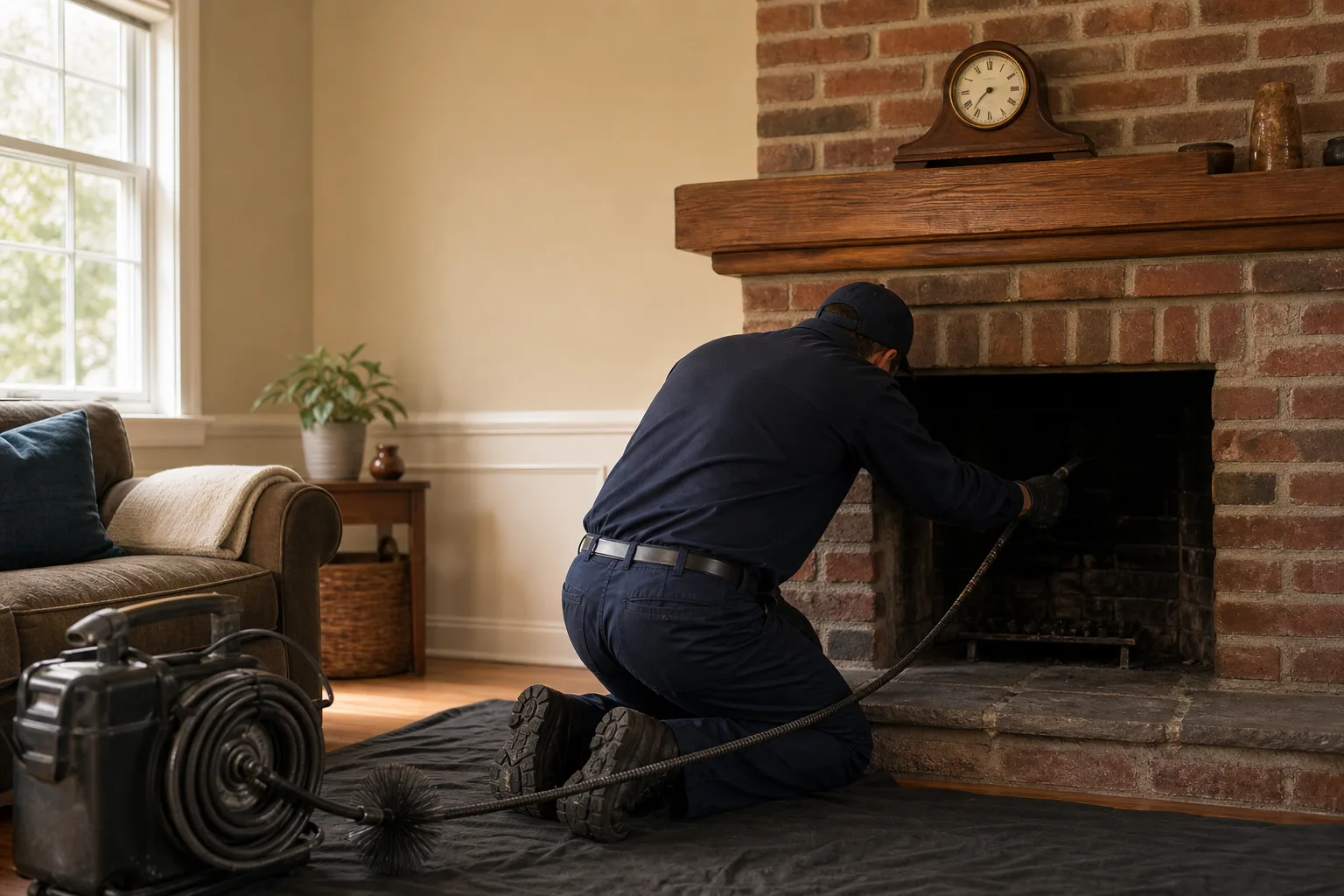
When homeowners call to book, the first question is almost always the same one: how long does chimney cleaning take, and will it swallow the whole day? For a standard wood-burning fireplace with routine buildup, chimney cleaning takes about an hour of on-site time. Add a proper inspection, which we recommend pairing with every sweep, and you're usually still under two.
That number assumes the common case: one flue, reasonable access, stage 1 or light stage 2 creosote, and no surprises waiting on the smoke shelf. The rest of this guide walks through exactly where those minutes go and what makes a visit run longer, so you can plan your day instead of wondering.
One thing worth saying early: speed is not the measure of a good sweep. Thoroughness is. The goal isn't the shortest visit — it's a flue that's genuinely clean, verified, and documented.
Step by step: what happens during the visit
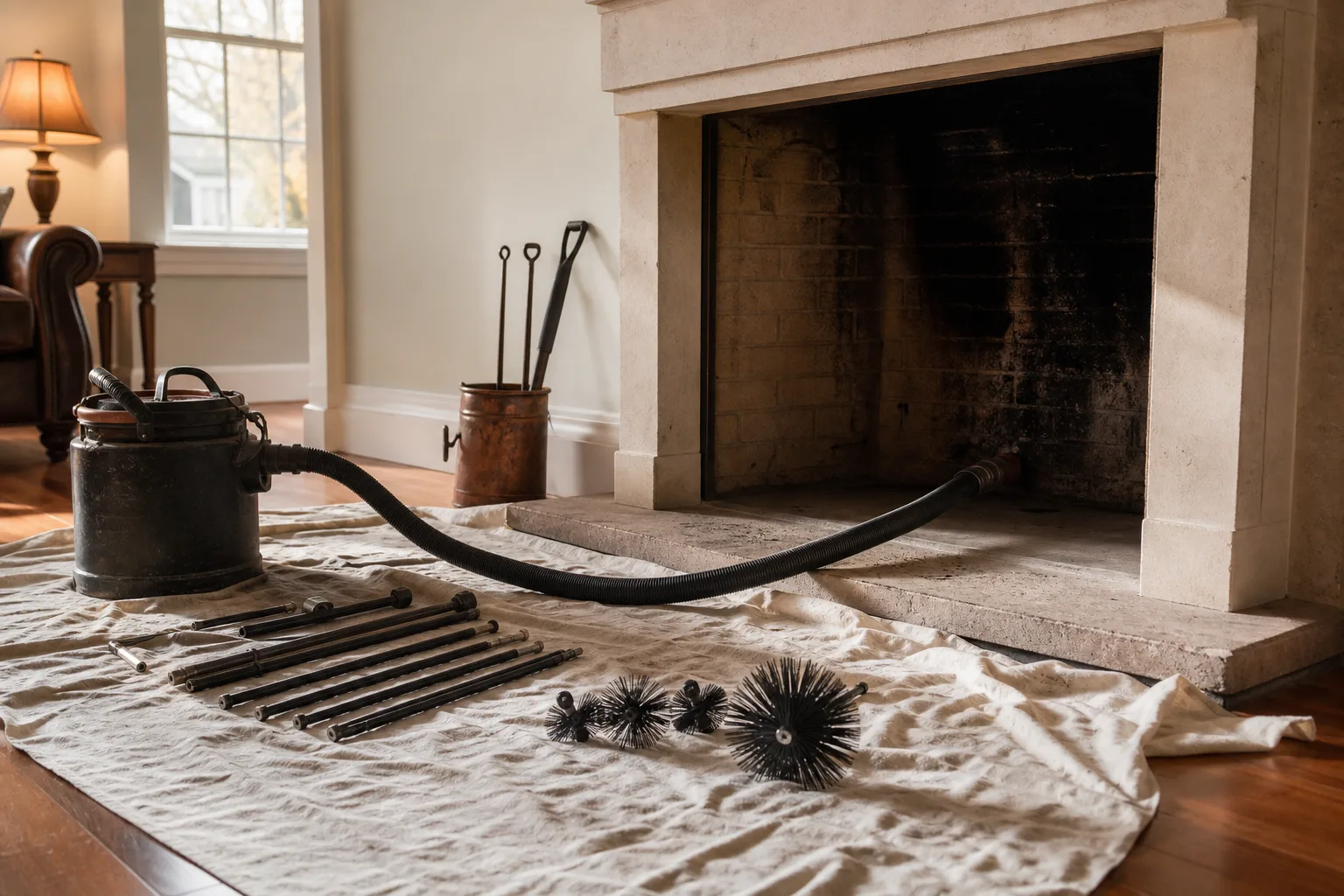
Here's the walkthrough, in the order it actually happens:
- Arrival and walkthrough. The technician confirms what you've noticed — smells, smoke behavior, last service date, and looks over the fireplace. A few minutes that aim the whole visit.
- Room protection. Drop cloths go down, the work area is masked off, and a HEPA vacuum runs for the entire job. Dust containment isn't a courtesy; it's the craft.
- Firebox and damper check. Quick condition check of the visible system before the flue work starts.
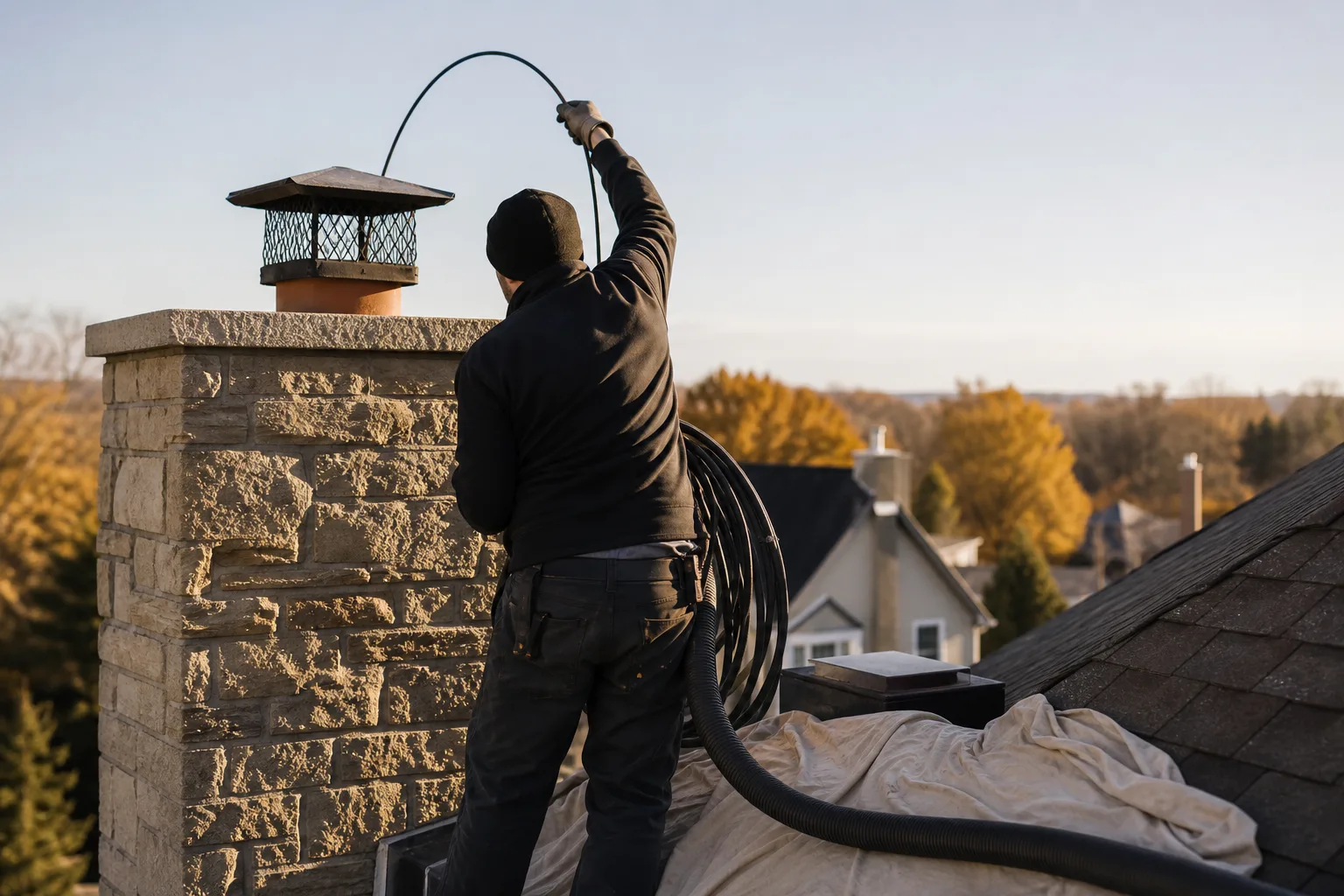
- Sweeping the flue. Rods and correctly sized brushes work the full length of the flue — from the firebox up or the roof down, depending on the system. This is the core of the visit.
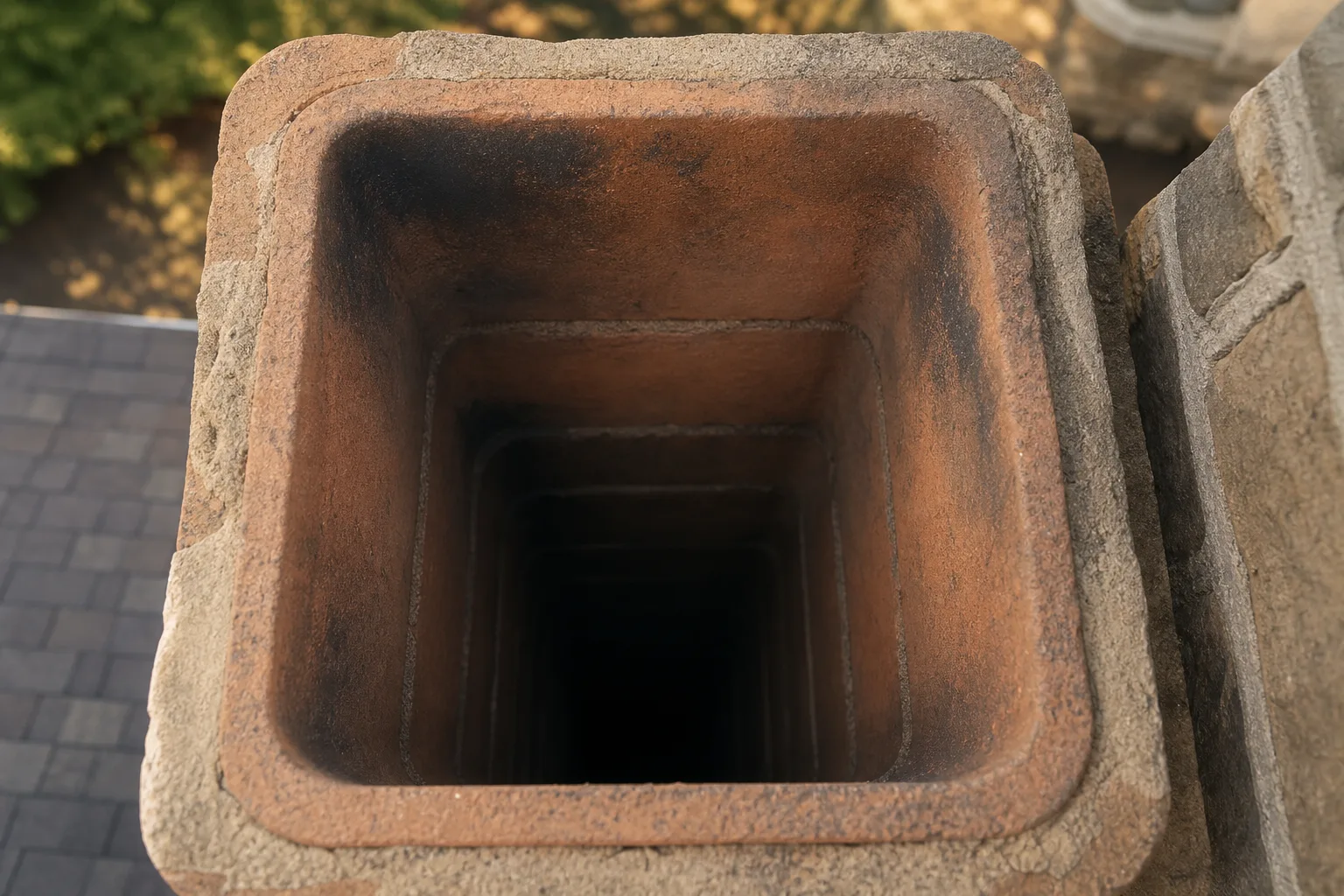
- Smoke shelf and firebox cleanup. Everything the brush dislodged gets vacuumed out, along with whatever the smoke shelf was hoarding.
- Cap and top-end check. If roof access allows, the cap, crown, and flue top get a look — it's where many problems start.
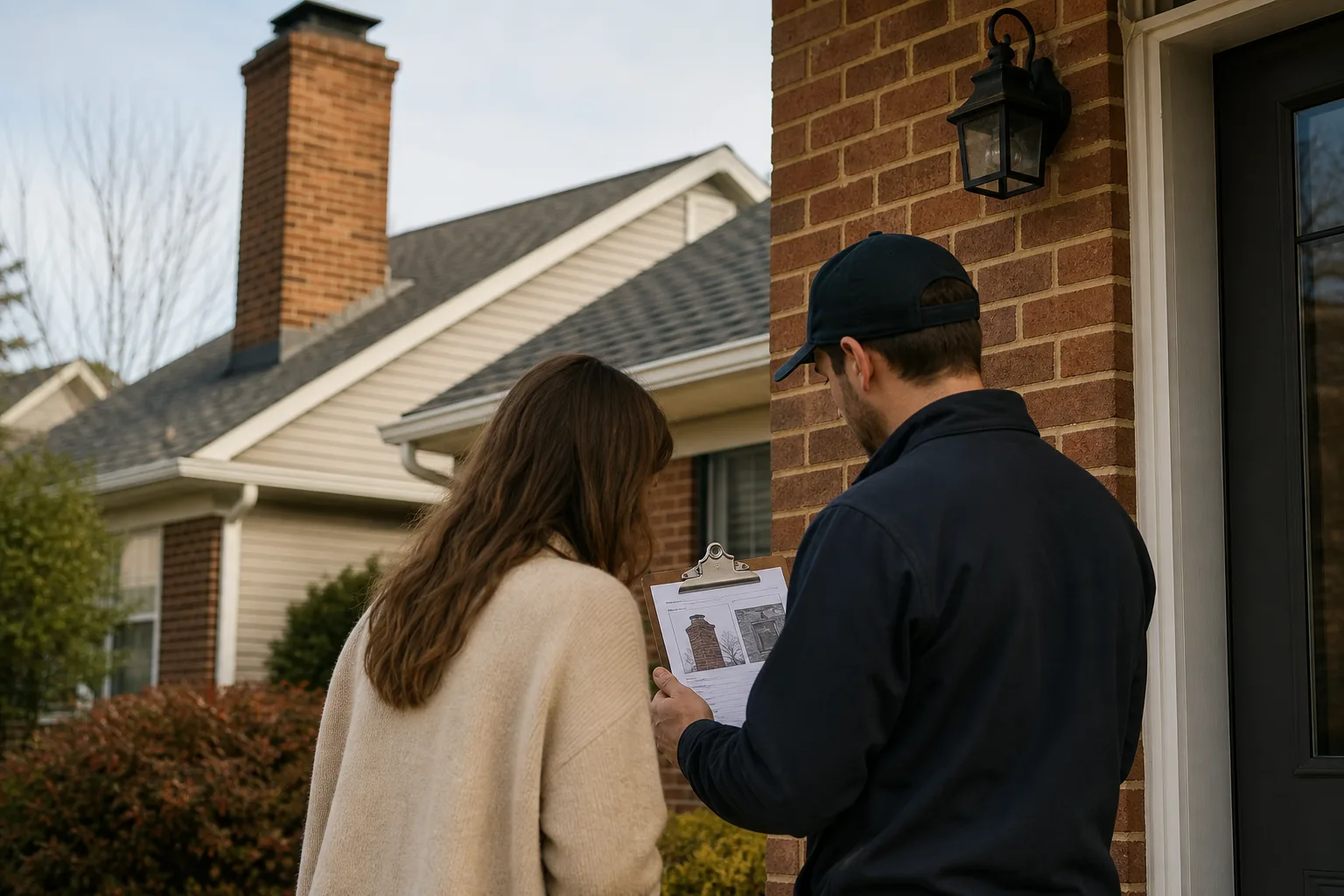
- Walkthrough and findings. You see what came out, hear what condition things are in, and get any recommendations in plain terms — with photos if something needs attention.
No step on that list rewards rushing. The pace comes from repetition, not shortcuts.
What makes a cleaning take longer
If you're asking how long does chimney cleaning take for your specific setup, these are the variables that decide it. When a visit runs past the typical window, it's nearly always one of these:
- Heavier creosote. Stage 2 flake buildup takes firmer, slower brushing than dusty stage 1 soot. Stage 3 glaze is a different service entirely — professional treatment across more than one visit in some cases.
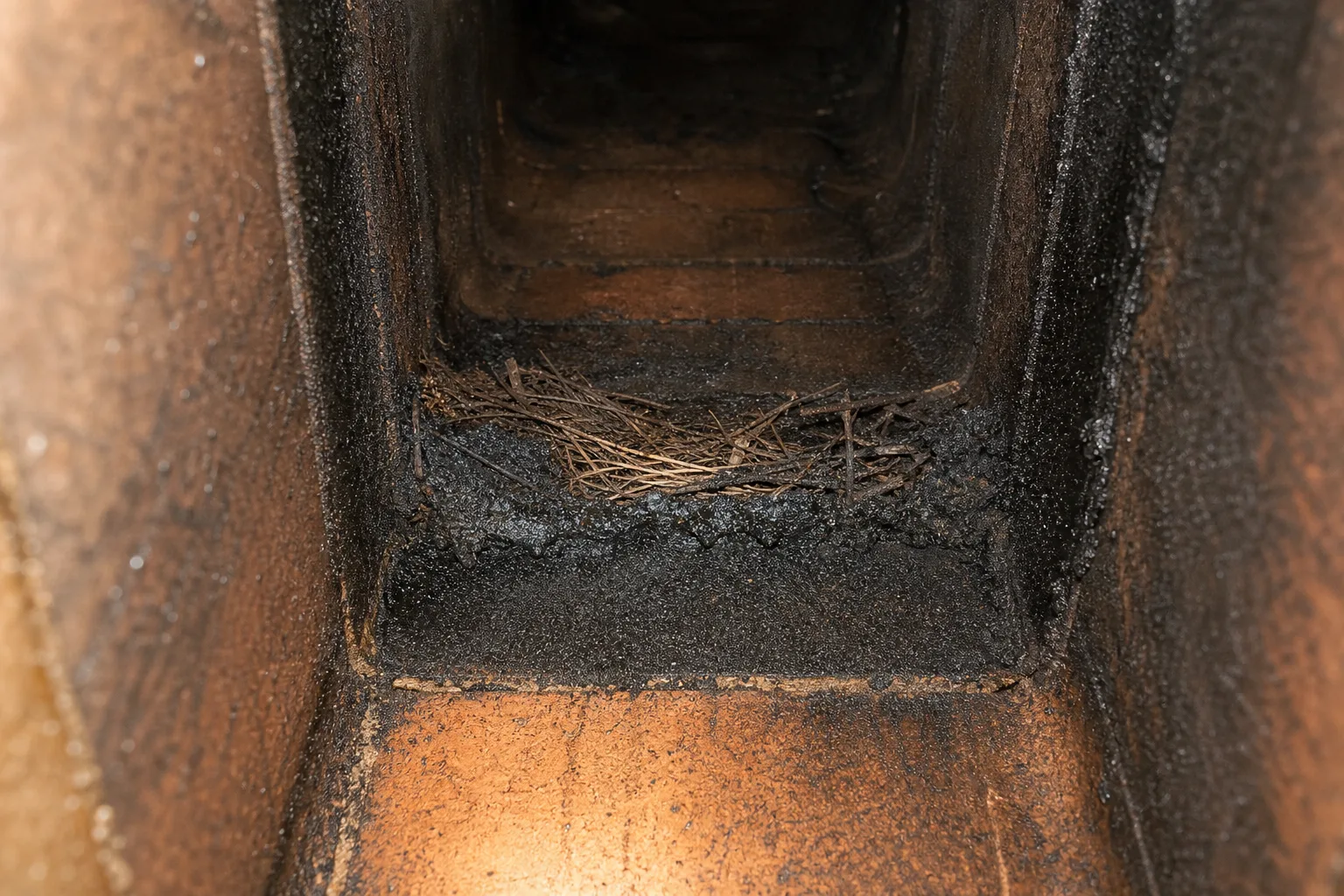
- Animal nests or debris. A blocked flue has to be cleared carefully, and humanely when it's occupied — before any sweeping happens.
- Multiple flues. Fireplace plus furnace flue means two cleanings sharing one setup. It's efficient, but it isn't free time-wise.
- Access. Steep rooflines, very tall chimneys, or interior-only access change the setup calculus.
- Wood stoves and inserts. Connector pipes and baffles add disassembly and reassembly around the sweep itself.
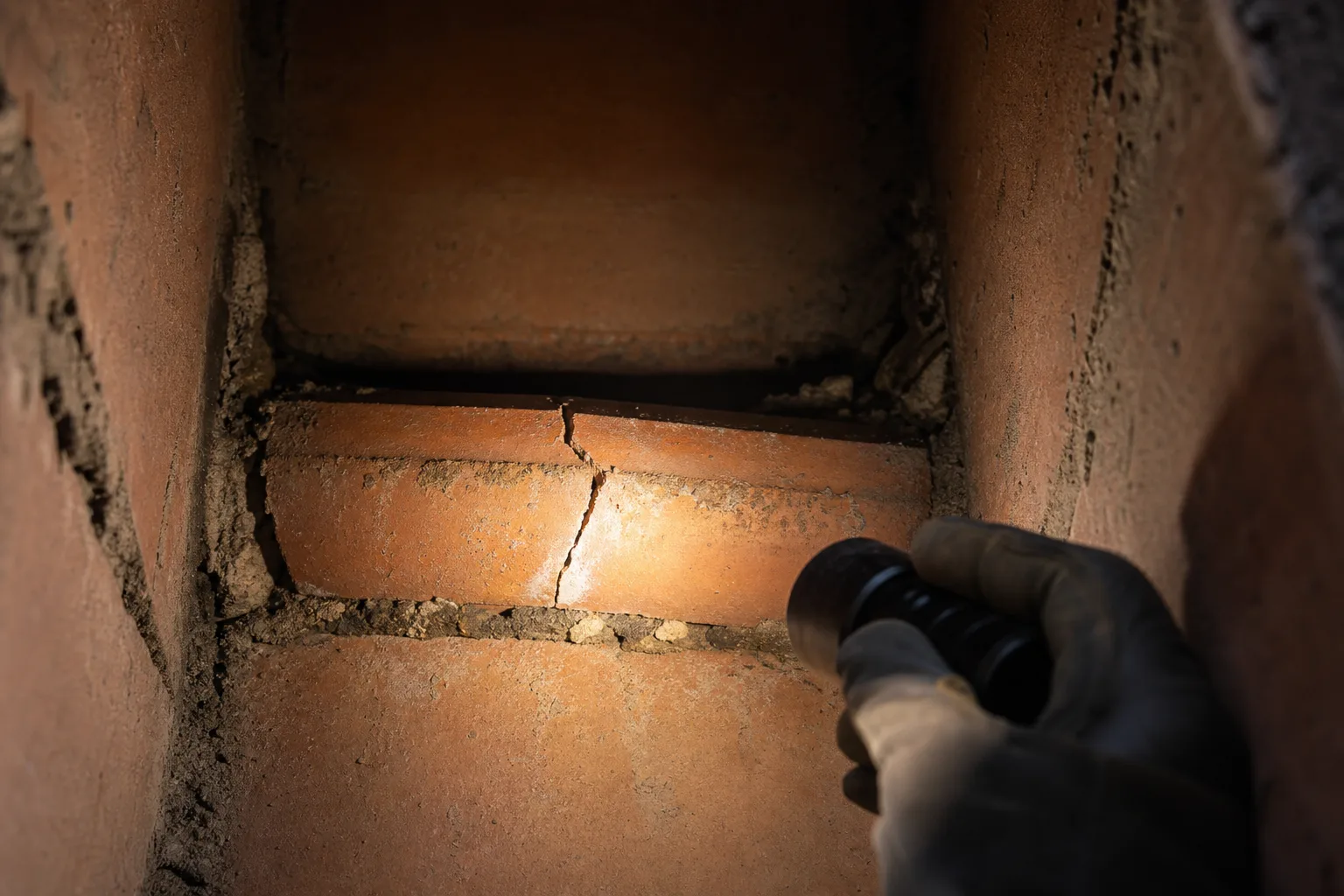
- What the cleaning reveals. Sometimes the brush uncovers a cracked tile or a damaged damper. Explaining a finding properly takes minutes we'll always choose to spend.
Ready to get it on the calendar? Request a visit — free to book, no obligation, and we'll tell you up front if your setup sounds like a longer one.
Cleaning alone vs. cleaning plus inspection
Homeowners often ask whether adding the inspection is worth the extra time. Here's the honest comparison:
| Sweep only | Sweep + inspection | |
|---|---|---|
| On-site time | About an hour | Usually under two |
| What you learn | The flue is clean | The flue is clean and what condition the system is in |
| Catches | Buildup, visible blockages | Cracked tiles, failing mortar joints, damper and cap issues, early water damage |
| Best for | A system inspected recently with no changes | Annual service — the industry-standard rhythm |
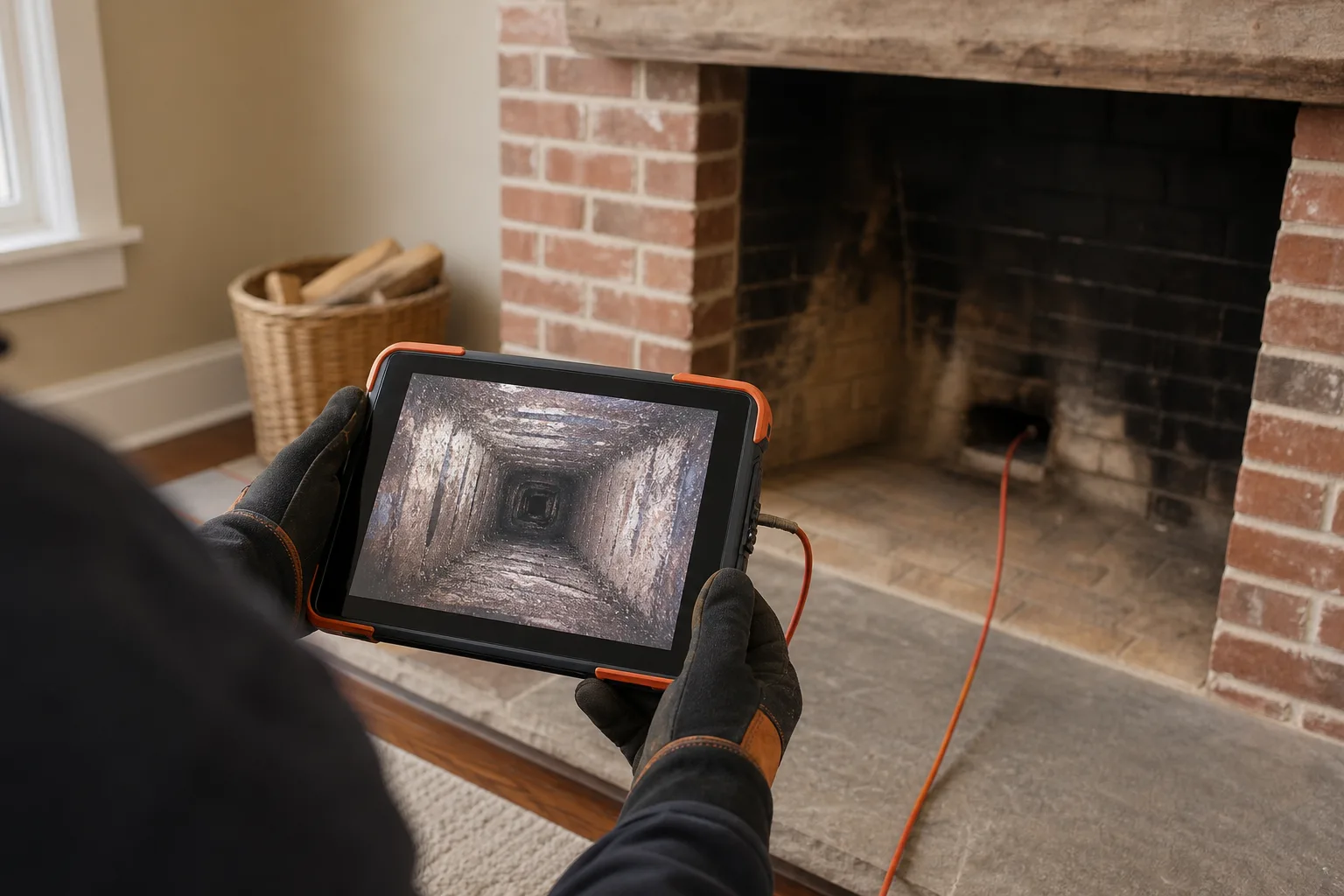
Industry guidance (NFPA 211) centers on the annual inspection — cleaning is what happens when the inspection finds enough buildup to warrant it. Doing both in one visit is the efficient order of operations: the frequency logic works the same way whether you burn nightly or a dozen times a season. And since the sweep exposes clean flue walls, it's also the perfect moment for a camera to actually see them.
When the sweep finds something: how repairs affect the timeline
Sometimes the brush finishes its work and the visit changes character, because a clean flue is also a visible flue, and cleaning is when hidden problems surface. Here's how that plays out without derailing your day:
- Small fixes happen on the spot. A loose cap, a clogged screen, a damper adjustment — quick hardware issues get handled in the same visit whenever parts allow, adding minutes rather than appointments.
- Findings get documented, not improvised. Cracked flue tiles, failing mortar joints, or water damage on the smoke shelf are not same-hour repairs, and you shouldn't want them to be. The right move is photos, a plain-language explanation, and a written scope you can consider without anyone standing in your living room waiting for a yes.
- Water damage changes the conversation. Rust trails, white staining, or a damp smoke shelf mean the flue has a moisture source — usually the cap, crown, or flashing, and fixing that leak becomes the priority, because water is what turns small chimney problems into structural ones.
- The follow-up is scheduled, not sprung. Repair work gets its own time window, so the cleaning appointment stays the short, predictable visit you booked.
The pattern to expect from the pros in our network: the sweep always finishes, findings always come with evidence, and nothing gets sold under time pressure. A cleaning that surfaces a problem didn't go badly — it did exactly what the annual rhythm is designed to do: catch things while they're still minor line items.
How to make your visit quick and smooth
A little prep on your side keeps the visit at the short end of the range:
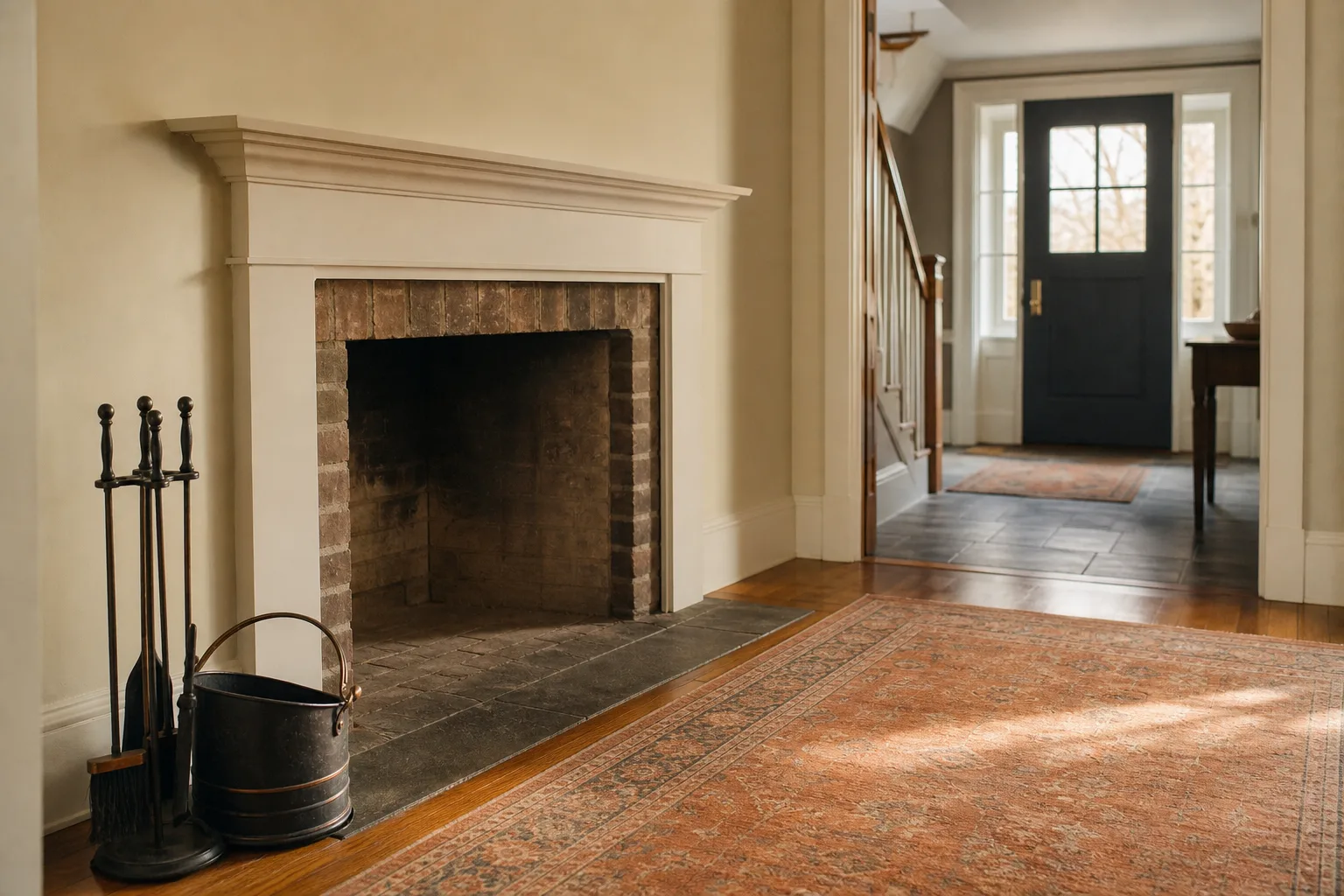
- Cold fireplace. No fires for at least a day before the appointment — a warm flue delays the start.
- Clear the hearth. Move tools, screens, decor, and anything on the mantel you'd rather not dust.
- Make a path. Technicians carry equipment in and out; a clear route to the fireplace saves real minutes.
- Contain the pets. Vacuums and curious animals are a famously bad pairing.
- Note your symptoms. Odors, smoke puffs, strange sounds — thirty seconds of your observations sharpens the whole visit.
- Ask your questions. The walkthrough at the end is your time. Wood choice, burn habits, what that cleaning cost covers — a good technician would rather explain than rush out.
Booked, prepped, and done before lunch — that's the normal shape of chimney cleaning day. The easiest first step is a quick service request; we handle the matching from there.
Symptom checker
What is your chimney doing?
Tap the closest match for an honest first answer.