



On this pageWhat Does chimney cleaning Involve?7 sections+6
Quick answer
Chimney cleaning removes soot, creosote, debris, and blockages from the flue and accessible venting components. Cleaning is needed when an inspection finds buildup or an obstruction, while NFPA 211 calls for chimneys, fireplaces, and vents to be inspected at least annually. Smoke backup, falling soot, strong odors, weak draft, or shiny creosote warrant prompt attention.
What Does chimney cleaning Involve?
A chimney cleaning involves removing soot, creosote, loose debris, and blockages from the flue, along with deposits on accessible fireplace or appliance components. The goal is to restore a clear venting path, reduce combustible buildup, and help the connected heating appliance operate as intended.
Wood smoke leaves soot and creosote on the inner flue surface. Creosote can be flaky, tar-like, or hard and shiny, depending on the fuel, flue temperature, airflow, and burning habits. Because these deposits can ignite, allowing them to accumulate raises the chance of a damaging chimney fire.
Cleaning also addresses material that did not come from normal combustion. Leaves, twigs, nesting material, masonry fragments, and damaged chimney components can narrow or block the venting path. A restricted flue may cause weak draft, smoke spillage, poor appliance performance, or carbon monoxide concerns.
A typical service covers the flue and the accessible areas connected to it. Depending on the system, that may include the smoke chamber, smoke shelf, damper area, firebox, stove connector, appliance breeching, or cleanout. The exact scope should match the chimney design and the type of fuel-burning equipment it serves.
Cleaning and inspection are separate tasks, even when they happen during the same visit. Cleaning removes deposits and obstructions, while an inspection assesses the chimney's accessible structure, lining, connections, clearances, and general condition. A flue can be relatively clean but damaged, or heavily coated while showing no obvious defect from the room.
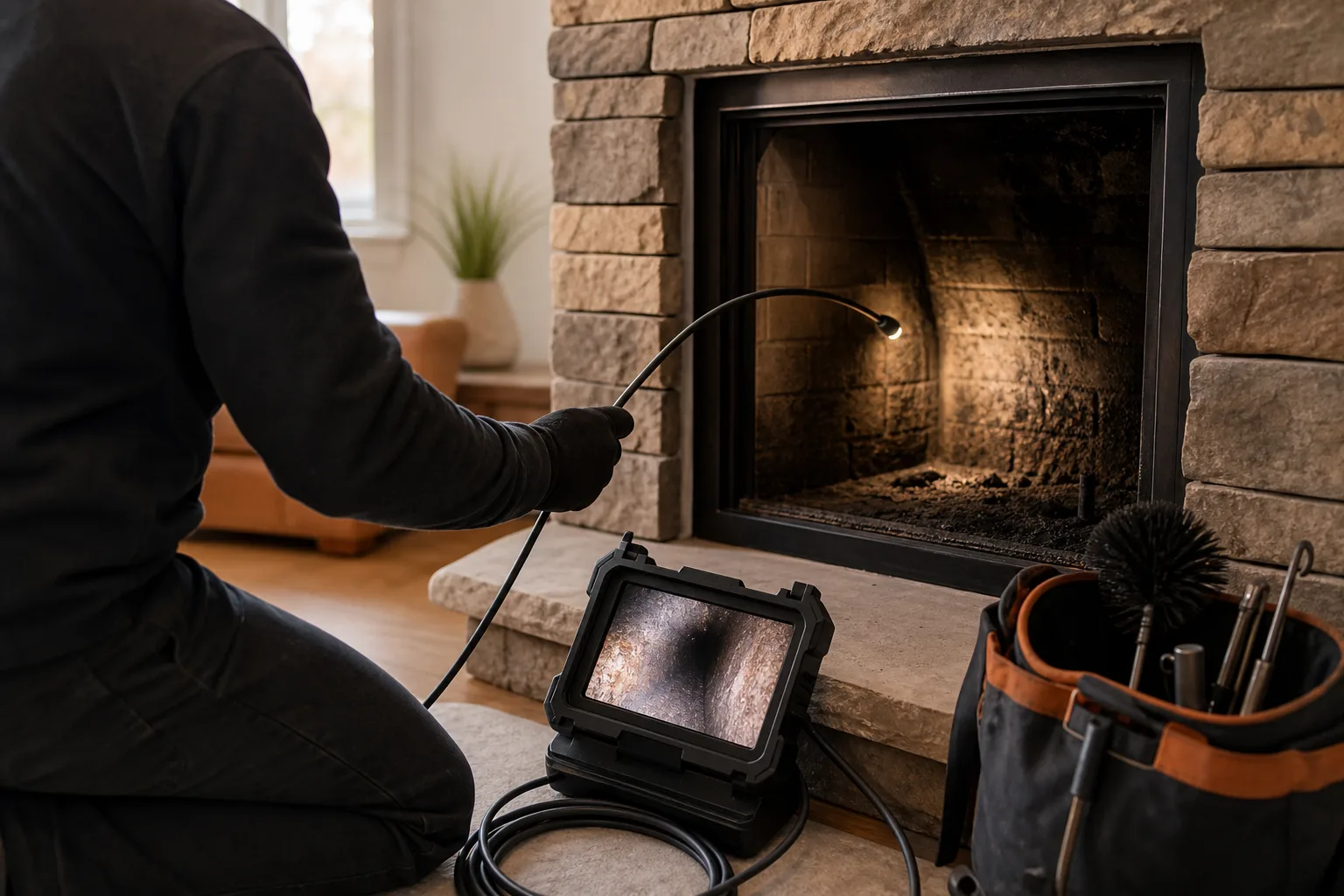
An initial review helps the technician decide whether deposits must be removed before the flue can be properly assessed. Heavy soot can conceal cracks, open joints, corrosion, or missing liner sections. Once the passage is swept, the technician may have a clearer view of surfaces that were previously hidden.
Good to know: Ask whether the appointment includes an inspection, a cleaning, or both. The words are sometimes used casually, but the work and findings are different, and your service record should identify what was actually completed.
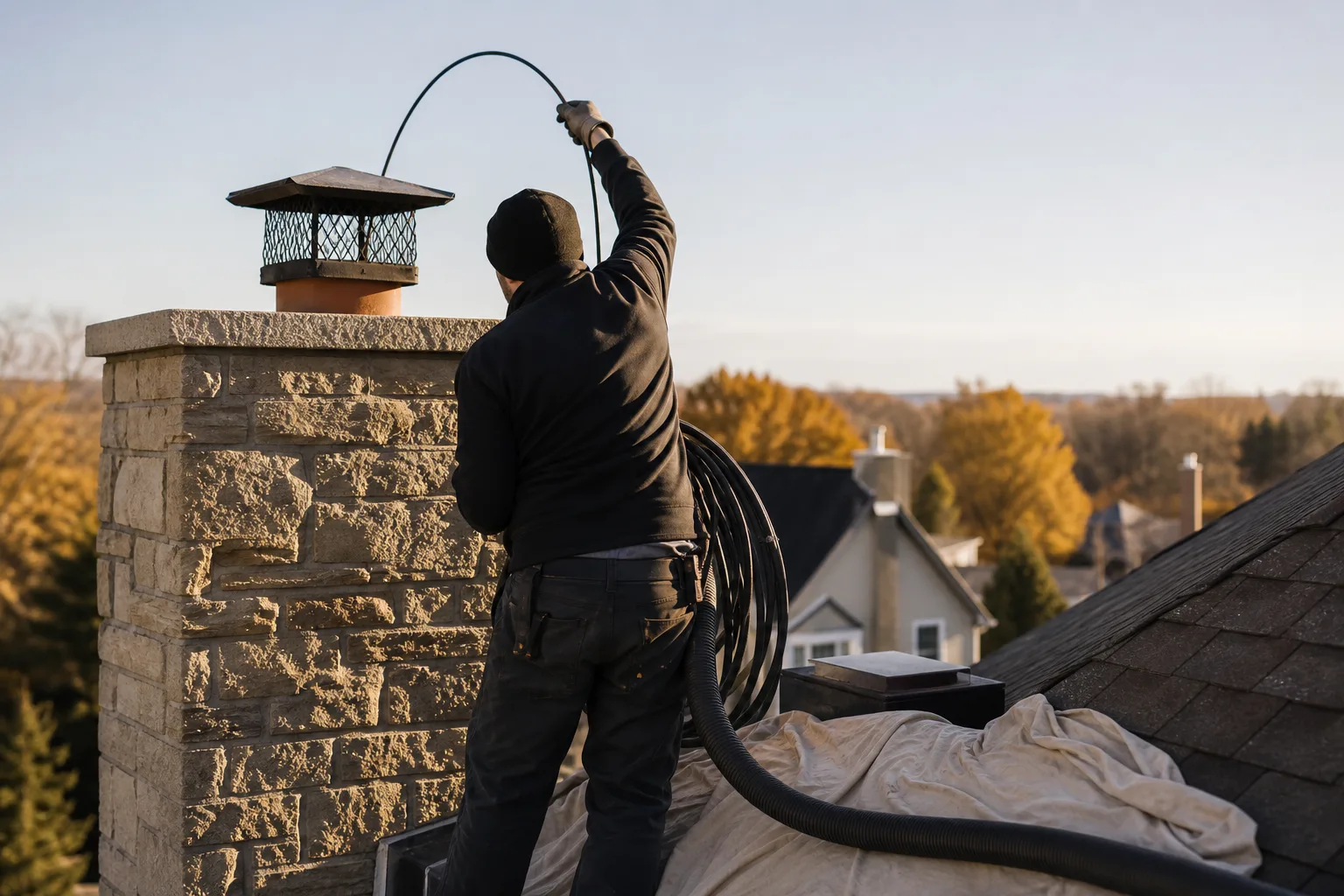
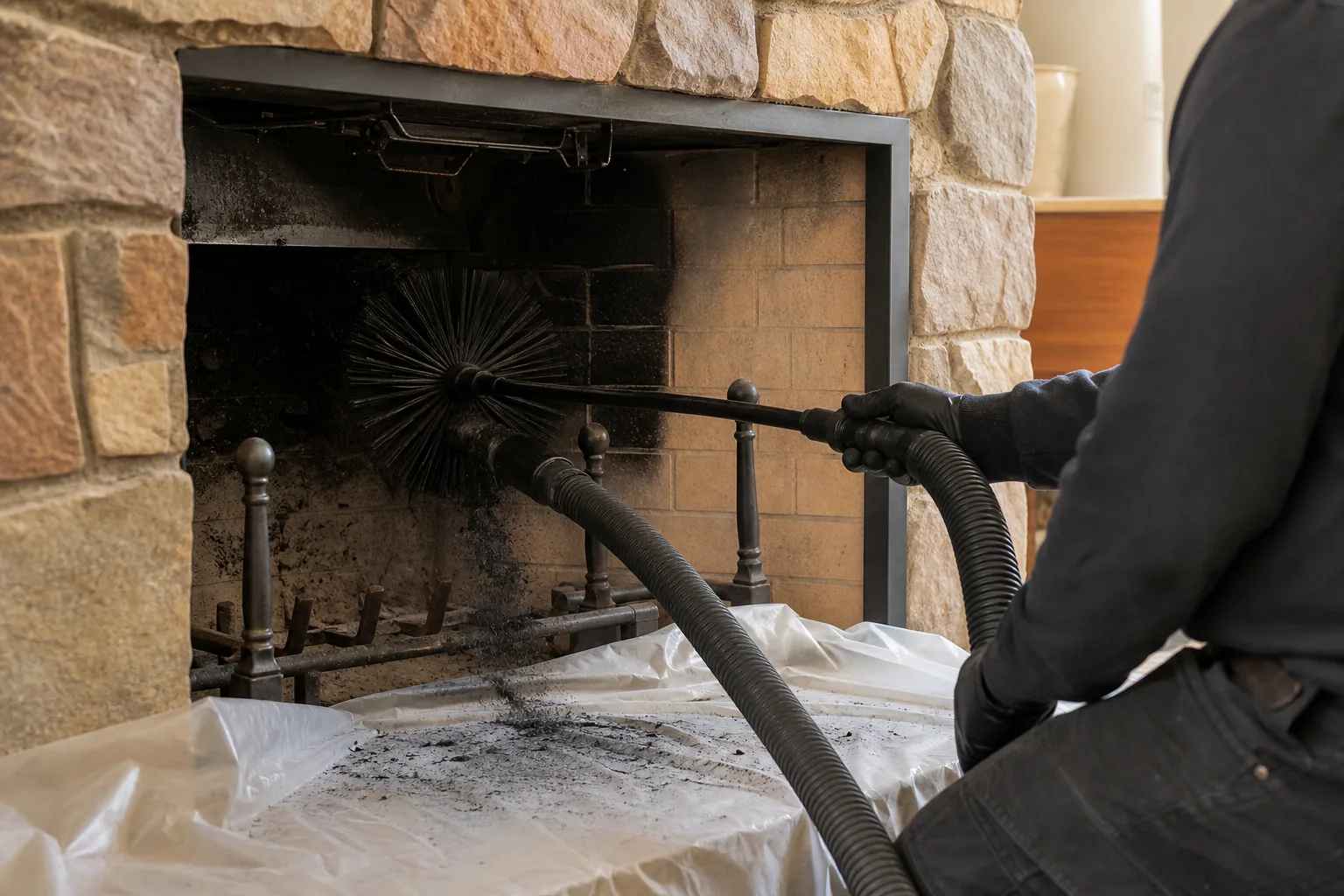
Common sweeping tools include flexible rods, properly sized brushes, rotary cleaning systems, hand brushes, scrapers, and specialized tools for difficult deposits. A technician chooses a brush type and size that suits the flue material and shape, since clay tile, metal liners, and masonry passages do not all respond well to the same method.
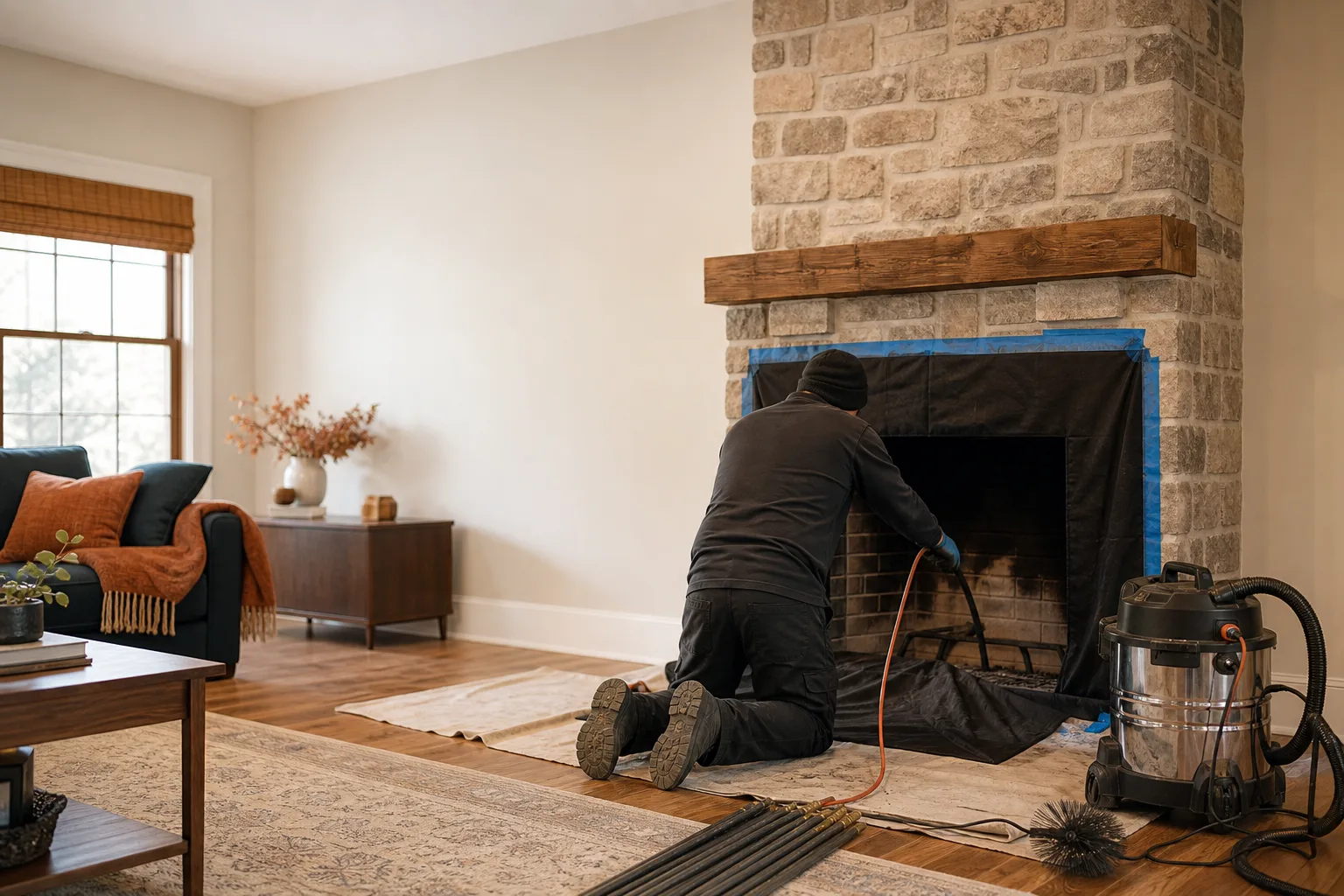
Containment is a major part of indoor chimney work. The technician may seal the fireplace or appliance opening with protective sheeting, place floor coverings around the work area, and use a soot-rated vacuum to control airborne dust. These measures allow loosened material to be collected instead of spreading across floors, furniture, and nearby rooms.
Routine brushing may not remove glazed creosote, which can adhere to the flue like a hard coating. That condition needs professional assessment because aggressive scraping or an unsuitable chemical treatment can damage some liners. The technician may recommend a separate removal process, a closer inspection, or changes to the way the appliance is operated.
How Often Should a Chimney Be Cleaned?
A chimney should receive chimney cleaning when an inspection finds deposits or obstructions that need removal, not simply because a fixed amount of time has passed. Fuel type, appliance use, burning habits, chimney design, and the rate of buildup all affect when service becomes necessary.
NFPA 211 calls for chimneys, fireplaces, and vents to be inspected at least annually, with cleaning, maintenance, and repairs performed when needed. An annual inspection does not automatically mean every chimney needs sweeping at every visit. It provides a regular opportunity to identify buildup, damage, blockages, and changes before the next heating season.
A fireplace used only occasionally may accumulate deposits more slowly than a wood stove used as a regular heat source. Still, light use does not rule out animal nests, moisture damage, corrosion, or fallen masonry. A long period without use can create its own concerns, especially when the chimney cap is missing or damaged.
Frequent fires usually produce deposits more quickly because more combustion gases pass through the flue. Slow, smoldering fires can be especially troublesome because cooler smoke condenses readily on the flue walls. Restricting airflow too far may extend a burn, but it can also create heavier smoke and faster creosote formation.
Unseasoned firewood adds moisture to the combustion process. Energy that should support a clean fire is spent driving water from the wood, which cools the exhaust and encourages condensation in the flue. Large logs placed on a weak coal bed can cause similar smoky, low-temperature conditions.
Pro tip: Do not judge wood dryness by appearance alone. Split a piece and check the freshly exposed center with a suitable moisture meter, since the ends may look dry while the interior still holds enough moisture to cause smoky burns.
Wood stoves can create concentrated deposits when they are operated with restricted air for long periods. Their connector pipes also need attention because horizontal runs, elbows, and cooler sections can collect soot. Cleaning should cover the full venting path rather than stopping at the appliance collar.
Open fireplaces often send a larger volume of warm room air up the chimney, but they can still develop creosote when wood is damp or fires are allowed to smolder. The smoke chamber and shelf above the damper can collect deposits that are difficult to see from the hearth. These areas should be included when the system design allows access.
Gas appliances generally do not create wood creosote, yet their vents are not maintenance-free. Corrosion, displaced vent sections, masonry debris, animal nesting, and moisture can interfere with exhaust flow. Some gas systems also show white residue, rust, or liner deterioration that calls for evaluation rather than ordinary soot brushing.
Oil-fired equipment can leave soot when combustion is incomplete or the appliance is out of adjustment. Cleaning the chimney does not correct a burner or fuel-delivery problem, so recurring soot should prompt evaluation of both the vent and the appliance. The chimney technician and qualified heating technician may need to address different parts of the same issue.
Past service records make cleaning intervals easier to judge. Notes about deposit type, amount, fuel, appliance changes, and operating patterns help show whether buildup is accelerating. If you do not know when the chimney was last checked, you can request an inspection or cleaning before relying on it for regular use.
Signs Your Chimney May Need Cleaning
Strong smoky odors, falling soot, dark deposits, reduced draft, smoke entering the room, and visible debris can all indicate that a chimney needs attention. These signs do not reveal the full cause by themselves, but they justify an inspection before continued use creates a larger venting or fire problem.
A smoky or tar-like odor may become more noticeable during warm, humid weather or when household air pressure pulls chimney air into the room. Creosote often produces the odor, although damp masonry, animal material, and standing debris can contribute. Air fresheners may cover the smell briefly, but they do not remove its source.
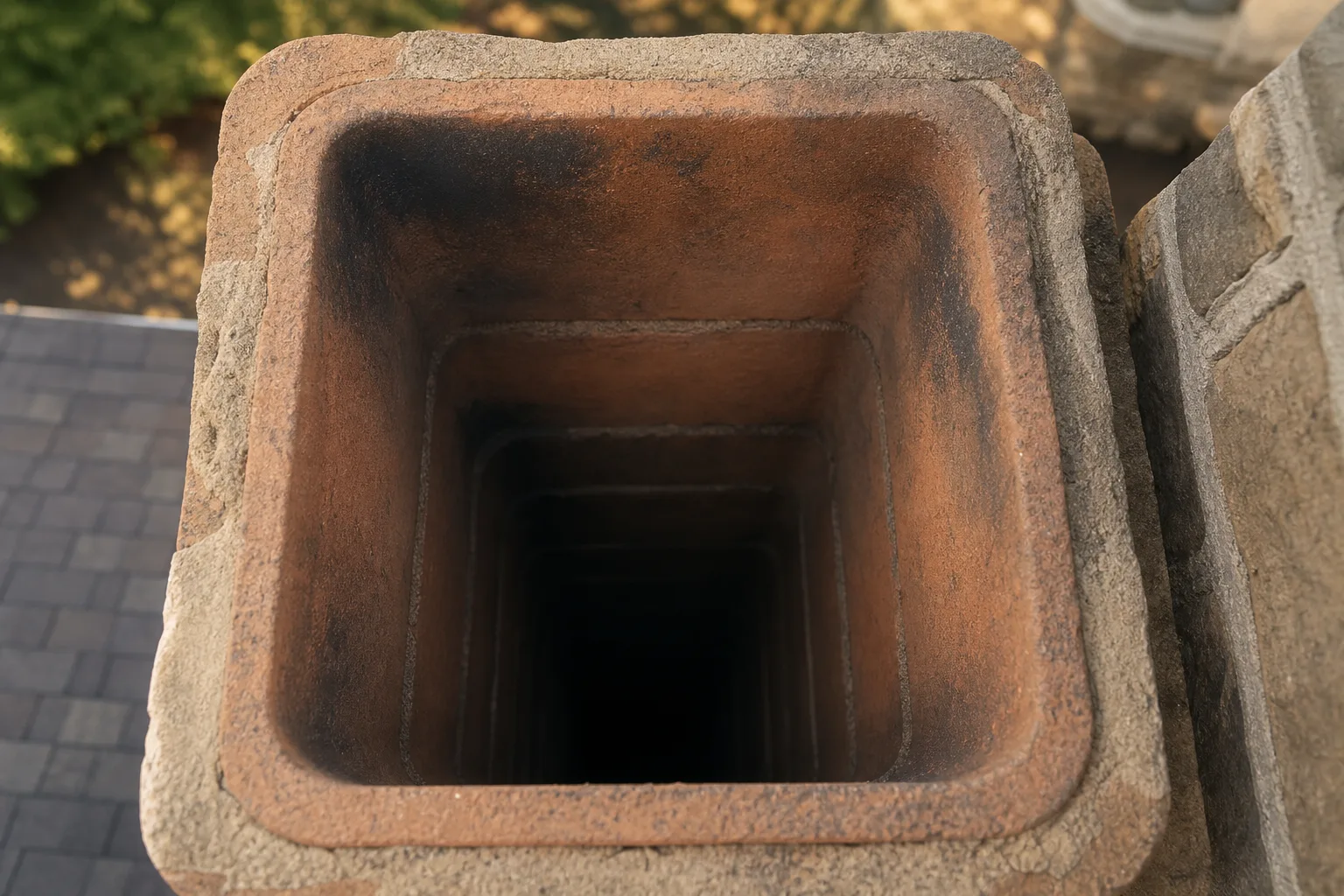
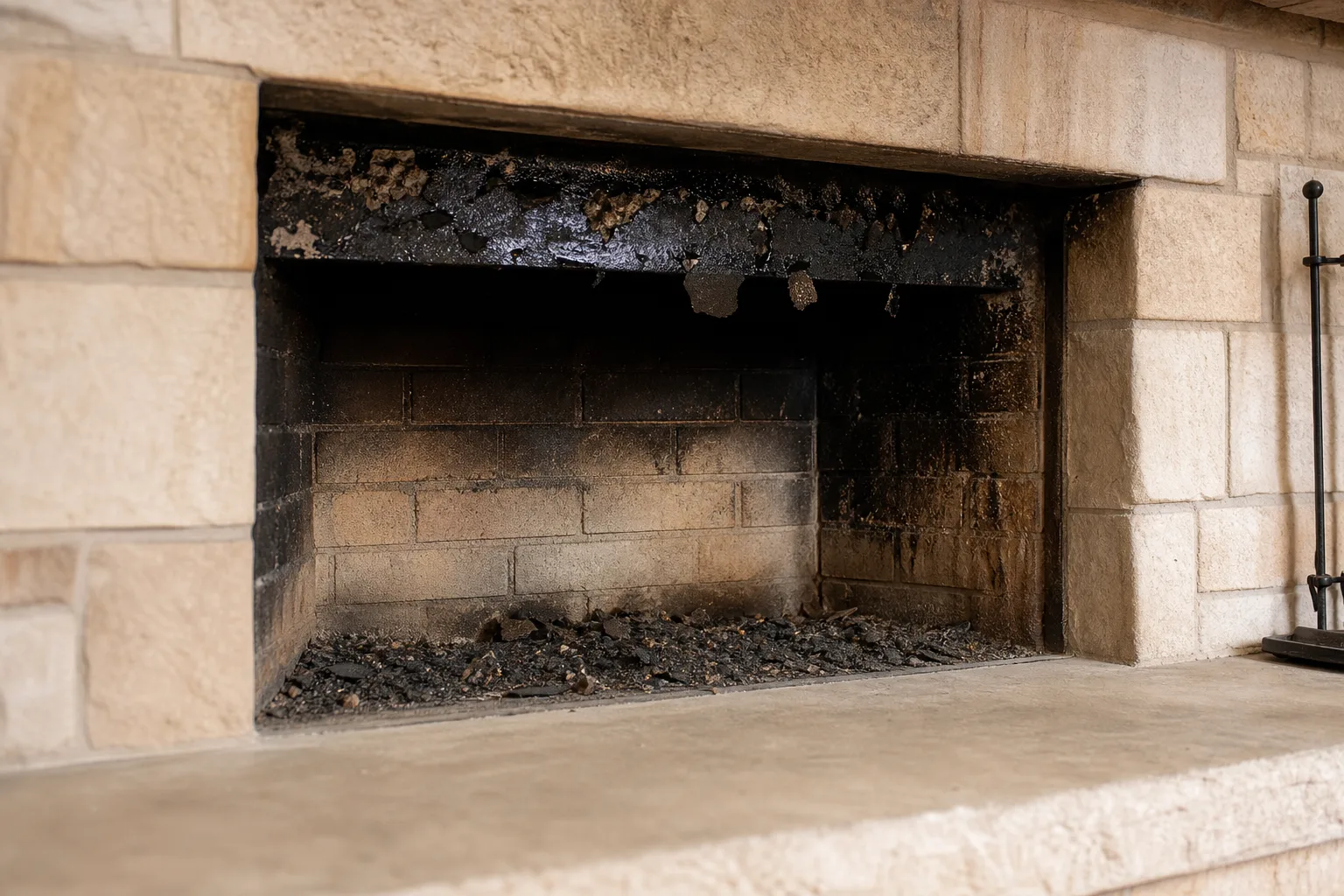
Loose black flakes in the firebox or around a stove may be soot or creosote falling from above. A small amount after sweeping can be residual material, while repeated fallout may suggest continued buildup, flue deterioration, or deposits breaking free. Brown or reddish fragments can point to rust or damaged clay and masonry rather than ordinary soot.
Dark material visible above the damper or inside a connector pipe deserves closer review. Dry, powdery soot is different from sticky tar or thick, crunchy deposits, and each may require a different cleaning approach. A flashlight view from the opening cannot confirm that the full height and width of the flue are clear.
Glazed creosote often looks shiny, smooth, or hardened, almost like black glass or thick varnish. It may form in patches or coat large sections of the liner, and a standard brush may slide over it without removing much. Because glazed deposits are combustible and difficult to remove, they call for professional assessment rather than repeated forceful brushing.
Safety note: Do not test a shiny deposit with a torch or attempt to burn it out with an unusually hot fire. A deliberate flue fire can crack clay liners, damage metal components, ignite nearby construction, and send burning material onto the roof.
Reduced draft may appear as a fire that is difficult to start, sluggish flames, or smoke that lingers near the fireplace opening. A cold flue, tight house, exhaust fan, unsuitable flue size, or poor chimney height can produce similar symptoms. Cleaning helps only when deposits or debris are part of the restriction, so recurring draft trouble needs diagnosis as well as sweeping.
Smoke entering the room is a direct warning that combustion products are not venting as intended. The cause may be a blocked flue, closed or damaged damper, severe buildup, disconnected vent, pressure problem, or unsuitable appliance connection. Open windows are not a substitute for finding and correcting the source.
Animals and outdoor debris can block a chimney even when the flue was recently cleaned. Birds, squirrels, leaves, twigs, and nesting material may enter through a missing or damaged cap, while insects can build material in smaller vent openings. Animal removal may also be restricted during nesting periods, so the situation should be handled safely and lawfully.
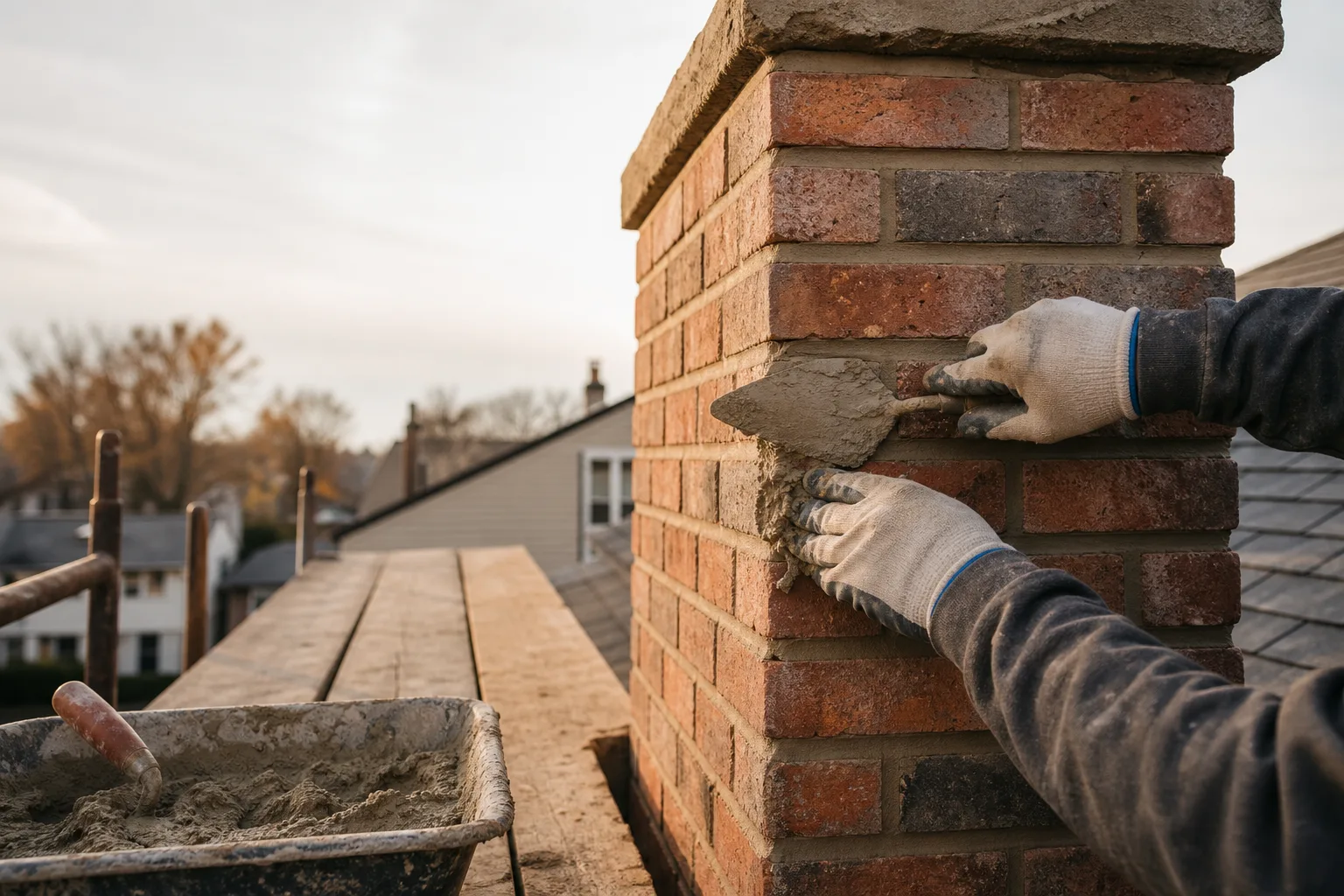
Masonry fragments in the firebox or cleanout can signal deteriorating mortar, damaged flue tile, or loose material near the top of the chimney. A sweep can remove fallen pieces, but cleaning alone does not repair the source. Continued use may allow more debris to fall or expose combustible building materials to heat and exhaust.
Stop using the appliance if you suspect a chimney fire. Warning signs can include a loud roaring sound, intense vibration, unusual heat, dense smoke, sparks or flames from the chimney top, or a strong hot odor. Leave the home, call emergency services from a safe location, and do not resume use until the entire system has been professionally evaluated.
A carbon monoxide alarm also requires immediate action. Move everyone to fresh air, contact emergency services or the appropriate utility response line, and follow the alarm manufacturer's safety directions. Heavy smoke backup is another reason to stop use at once rather than waiting for the fire to burn down on its own.
What Happens During a Professional Cleaning?
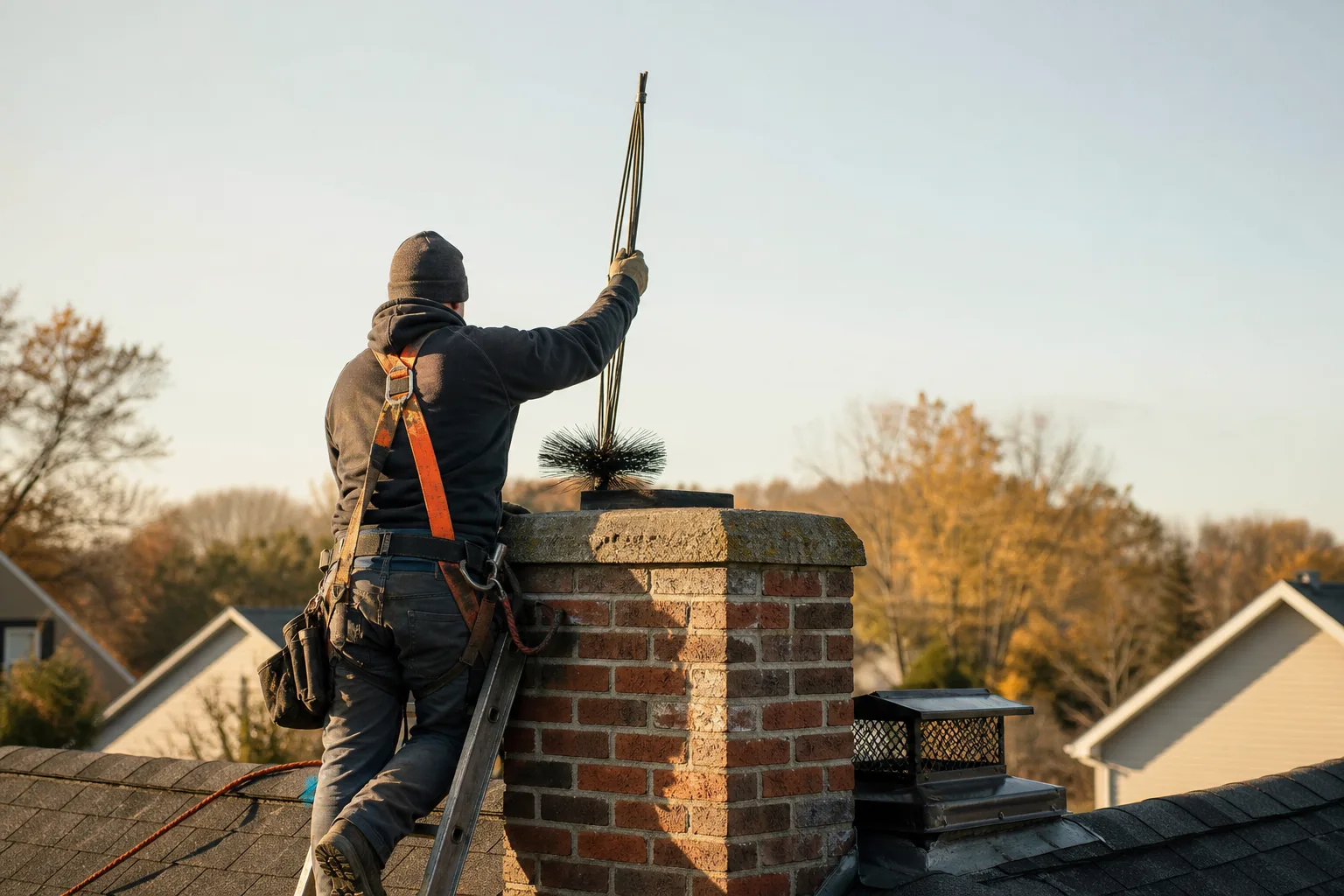
A professional cleaning usually begins with a review of the appliance, fireplace, visible chimney areas, and the concerns reported by the homeowner. The technician then prepares the work area, sweeps the venting system with an appropriate method, removes loosened debris, and explains any conditions found during the visit.
Before setting up equipment, the technician may ask about smoke problems, odors, leaks, appliance changes, fuel use, and possible chimney fires. This history can point toward concealed trouble and helps determine whether ordinary sweeping is suitable. The technician should also identify the flue being serviced when a chimney contains more than one passage.
The initial review commonly includes the firebox or appliance, damper, connector pipe, cleanout, and accessible exterior areas. Roof access may be considered if weather, pitch, surface condition, and chimney location allow it. Unsafe roof conditions can change the cleaning approach without preventing the flue from being serviced from below.
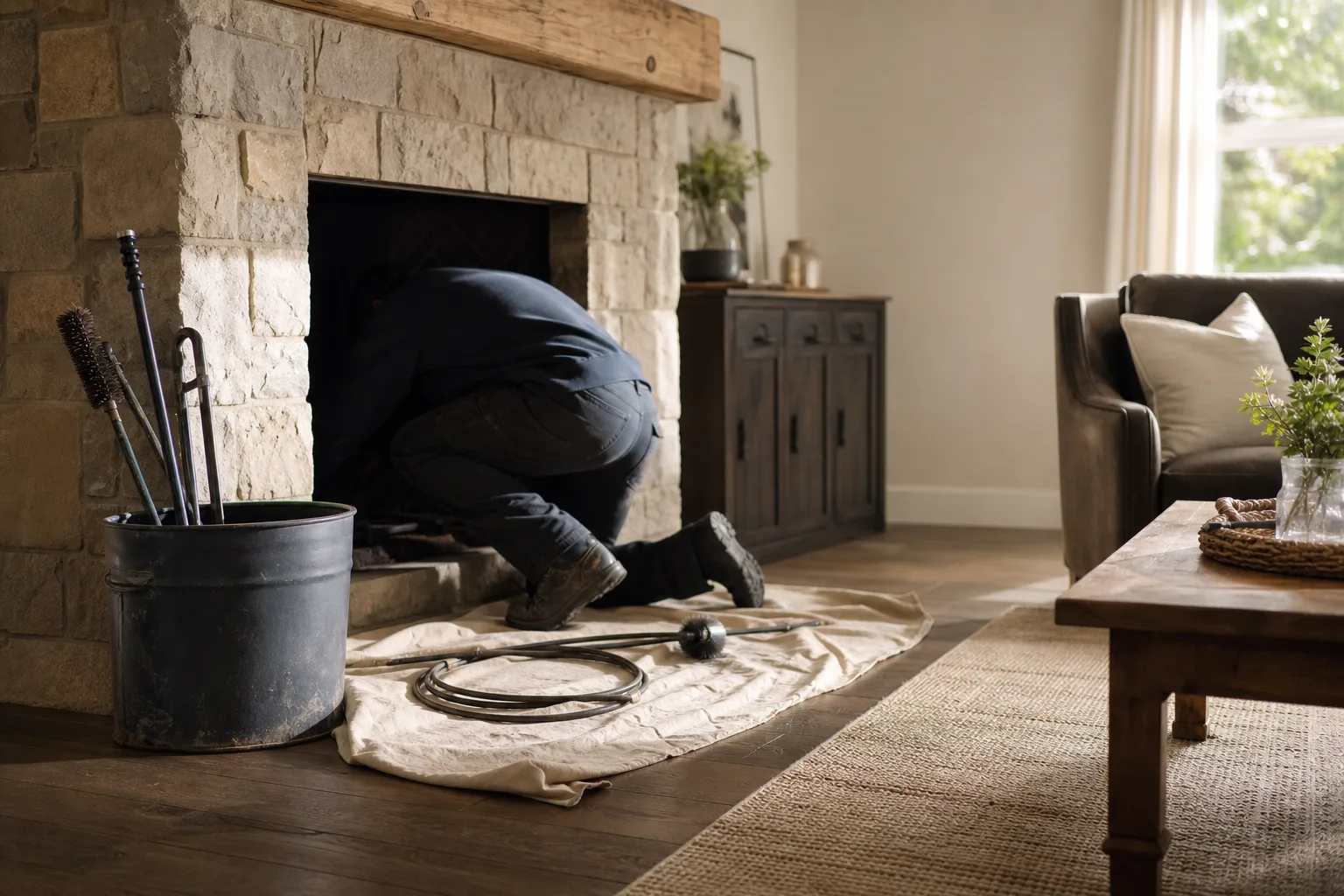
Floors near the fireplace or appliance are covered before soot is disturbed. The opening may be sealed with plastic or a fitted cloth system, with rods or vacuum hoses passing through controlled access points. A soot-rated vacuum maintains containment and captures fine particles as brushes loosen deposits.
Pro tip: Close nearby interior doors and move delicate electronics or light-colored fabrics away from the hearth before the visit. Proper containment should control normal dust, but a clear work zone gives the technician room to keep hoses, rods, and protective coverings secure.
In a top down approach, the technician works from the chimney top and sends rods and brushes downward through the flue. This method can offer direct access to the upper flue and chimney cap, but it depends on safe roof access. Steep pitches, wet surfaces, ice, high winds, fragile roofing, or a difficult chimney location may rule it out.
In a bottom up approach, rods and brushes enter from the fireplace, appliance opening, connector, or cleanout. Rotary tools may allow the brush head to travel through the flue while the indoor opening remains contained. This approach can be effective for many systems, although tight offsets, multiple bends, and unusual flue shapes may require other tools or access points.
Brush selection matters throughout the process. A brush that is too small may leave broad areas untouched, while an oversized or overly aggressive tool can harm a liner or become lodged. The technician should account for flue dimensions, shape, material, offsets, and the condition of the vent before choosing a method.
Loosened soot and debris are collected from the smoke shelf, firebox, connector, cleanout, or appliance area as appropriate. Accessible components may be brushed by hand, and removed parts should be returned to their proper positions. The work area is then checked and cleaned before containment materials are taken away.
Cleaning often reveals conditions that deposits had hidden. A technician may find cracked or shifted flue tiles, open mortar joints, corroded metal, loose masonry, water staining, damaged connectors, or missing components. Evidence of improper clearances or heat exposure around combustible materials may also require further investigation.
Moisture entry can show up as damp debris, rust, staining, mineral residue, or softened mortar. Sweeping removes loose material but does not stop the leak. The chimney crown, flashing, cap, masonry, liner, and nearby roof details may need separate evaluation to identify the entry point.
Some findings call for a higher level inspection under NFPA 211 rather than an immediate repair decision. A video scan or access to concealed areas may be recommended after a chimney fire, a major system change, a property transfer, or signs of hidden damage. The reason for further evaluation should be explained plainly, along with any limits of the initial visit.
A homeowner should receive a clear summary of what was cleaned, what could be seen, and what remains uncertain. Photos can help document deposits, damaged areas, or inaccessible sections, while written recommendations make it easier to separate immediate safety concerns from routine maintenance. If a repair is proposed, ask how the condition affects use and what evidence supports the recommendation.
Cleaning is not proof that a damaged chimney is safe to operate. If the technician finds a compromised liner, improper connection, missing part, severe moisture damage, or signs of a past flue fire, the appliance may need to remain out of service until further evaluation or repair is completed.
If buildup, smoke problems, or overdue service are affecting your system, book a chimney appointment or call to discuss the chimney and appliance before scheduling. A brief description of the fuel type, access, and symptoms can help determine the right visit.
Can You Clean a Chimney Yourself?
You can safely handle limited fireplace upkeep, but full chimney cleaning is usually best left to a trained professional. The job involves more than brushing the opening: it requires safe access, correct equipment, dust control, and a way to confirm that the full venting path is open and sound.
Roof access is one of the largest concerns. Steep pitches, wet shingles, loose roofing, tall chimney stacks, and overhead lines can turn a maintenance task into a serious fall or electrical hazard. Even a chimney that appears easy to reach may have an unstable cap, damaged crown, or loose masonry around the work area.
Soot and creosote also require careful handling. Fine particles can escape into living areas, stain flooring, irritate the lungs, and settle inside nearby furnishings. Professional containment commonly includes sealed coverings, controlled vacuum equipment, protective clothing, and respiratory protection suited to the deposits being removed.
Safety note: A household vacuum should not be used for soot or fireplace ash. Fine particles can pass through ordinary filters, spread through the room, damage the motor, or encounter a hidden ember.
Brush selection is another challenge because flues come in different shapes, dimensions, and materials. A brush that is too small can leave deposits behind, while the wrong type or an oversized brush may damage certain liners or become lodged. Offsets and changes in flue size can also prevent a brush from reaching every surface.
DIY chimney cleaning cannot confirm that concealed sections are clear or undamaged. Brushing visible soot from the firebox or lower flue does not show whether creosote remains near the top, debris is trapped at an offset, or a liner has cracks, gaps, or displaced joints. A blockage may also sit where it cannot be seen from either end.
Homeowners can usually manage a few limited maintenance tasks after the appliance and ashes are fully cold:
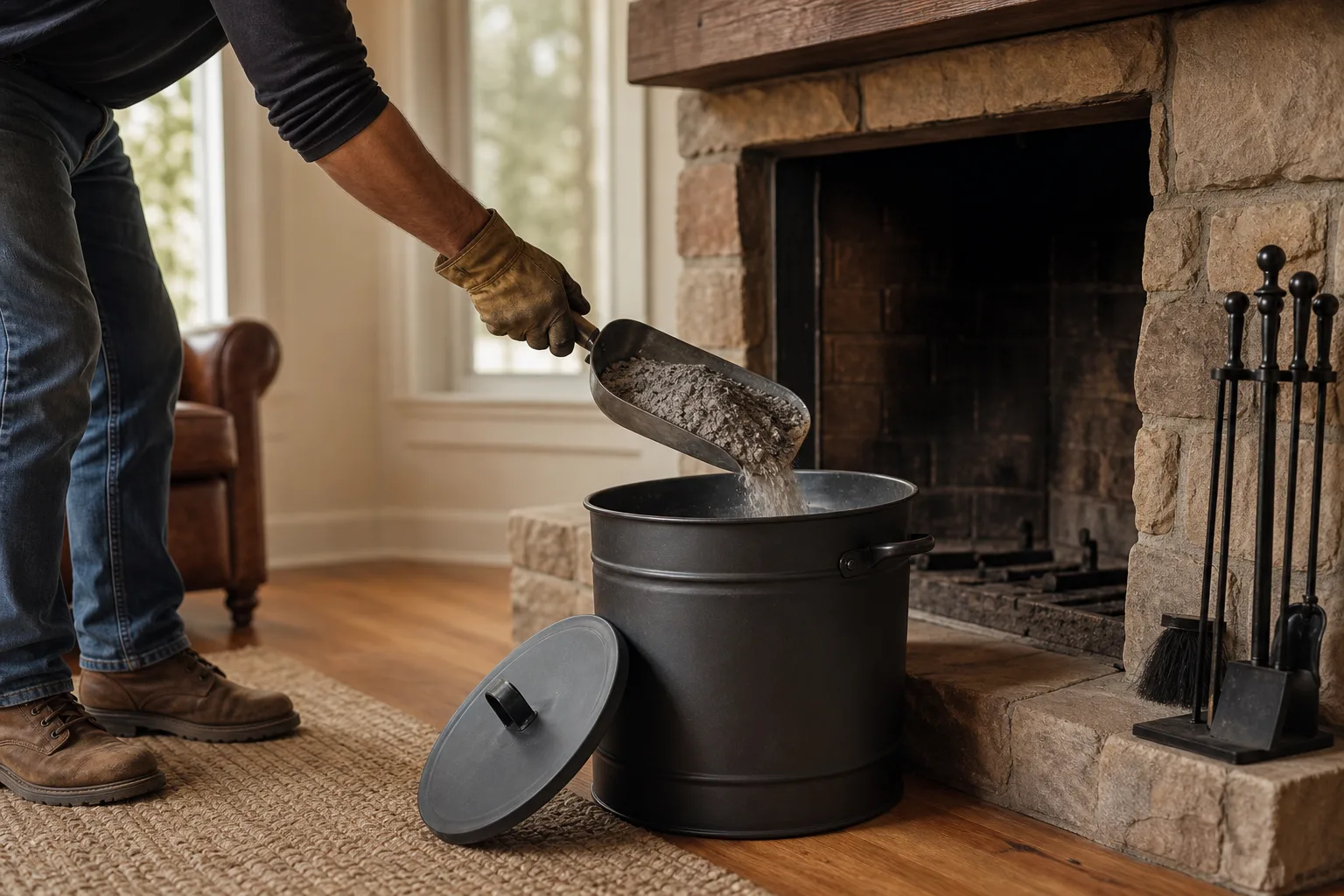
- Remove cool ash with tools and a container intended for fireplace use.
- Keep the hearth and nearby floor free of loose debris.
- Look into accessible areas for fallen soot, masonry pieces, moisture stains, or animal nesting material.
- Check that an accessible damper moves normally without forcing it.
- Watch for changes in smoke movement, odor, or appliance performance.
Ash should be placed in a metal container with a fitted lid and stored on a noncombustible surface away from the house and other combustible materials. Embers can remain hidden beneath ash longer than expected, so the container should not be placed on a wood deck, in a garage, or beside trash.
Glazed creosote, a suspected chimney fire, recurring draft trouble, and repeated smoke entry all call for professional assessment. The same applies to tall chimneys, steep or fragile roofs, hard-to-reach cleanouts, and systems with several offsets. Hard, shiny deposits may not respond to routine brushing and should not be chipped away with improvised tools.
Good to know: If you hear a roaring sound, notice intense heat, or see flames or dense sparks coming from the chimney, leave the building and contact emergency services. Do not resume appliance use until the chimney has been evaluated.
If the flue has not been checked recently or a do-it-yourself attempt left questions, you can request an inspection or cleaning. A technician can determine what service the system actually needs without committing you to unnecessary work.
How to Prepare for a Cleaning Appointment
A little preparation gives the technician clear access and helps keep the work area protected. The service provider may give instructions for your particular appliance, so follow those directions first and allow enough time for the firebox, vent connector, stove, insert, ashes, and surrounding surfaces to cool completely.
Do not light a fire on the day of the appointment unless the company has specifically confirmed that it is safe to do so. Ash can look cold while holding heat below the surface, and metal appliance parts may stay hot after the visible fire is gone. When uncertain, stop using the appliance earlier rather than later.
Clear the area immediately around the fireplace, stove, or heating appliance. Move fireplace tools, wood baskets, decorative screens, candles, plants, and fragile objects, then provide enough open floor space for coverings, equipment, and safe movement. Heavy furniture usually does not need to leave the room unless it blocks access, but smaller pieces should be moved out of the work path.
Pro tip: Remove mantel decorations before the visit, even when they seem far above the opening. Light objects can shift while equipment is moved, and soot on a dropped decoration is harder to manage than an empty mantel.
Keep children and pets in another secured room while work is underway. Open doors, equipment hoses, protective coverings, and trips between indoor and outdoor work areas can create escape routes and tripping hazards. A closed door or gate is more dependable than trying to hold a curious pet back during setup.
Share any changes you have noticed before the technician begins. Useful details include smoky odors, soot falling into the firebox, water stains, unusual sounds, poor draft, smoke entering the room, or an activated carbon monoxide alarm. Mention when the symptoms occur, such as during startup, windy weather, or after the fire begins to die down.
Recent changes to the system also matter. Tell the technician about a replacement appliance, a new vent connector, chimney repairs, a new roof, added insulation, air-sealing work, or a ventilation fan that seems to affect draft. Provide previous inspection or service reports when they are available, particularly if past findings involved the liner, masonry, cap, clearances, or moisture entry.
Any possible chimney fire should be disclosed, even if the event seemed brief or happened years ago. A loud rushing sound, strong vibration, unusually hot chimney surfaces, or flames from the chimney top can indicate a fire in the flue. Cleaning alone cannot establish whether heat damaged the liner or nearby materials, so further inspection may be recommended.
Depending on the system, the technician may need access to several locations:
- The fireplace, insert, stove, furnace, boiler, or other connected appliance
- A basement or utility-room cleanout
- The attic around the chimney
- The roof and chimney top
- Exterior cleanout doors or vent connections
- Mechanical rooms containing connector pipes or draft controls
Unlock gates and clear stored belongings from these access points before the appointment when practical. Vehicles should not block likely ladder locations, and lawn sprinklers should remain off near exterior work areas. The technician should still decide where and whether a ladder can be placed safely.
Weather and roof conditions may limit exterior access even if the indoor cleaning can proceed. Rain, ice, high wind, fragile roofing, or unsafe ladder placement can change the work plan. A reputable technician will explain which portions were completed and whether a return visit or another inspection method is needed.
Good to know: A clear route from the entry door to the appliance helps prevent soot-covered equipment from brushing against walls or furnishings. If the route is narrow, point out delicate flooring, loose rugs, or freshly painted surfaces during setup.
How to Keep the Chimney Cleaner Between Visits
Cleaner burning habits can slow deposit formation, but they cannot eliminate the need for inspection. Fuel quality, appliance operation, chimney design, weather, and household air pressure all affect how quickly soot or creosote forms. A change in buildup rate may also point to a developing venting or moisture problem.
For wood-burning systems, use properly seasoned firewood that has been stored off the ground and protected from rain while still receiving airflow. Wood that is wet or newly cut spends more of the fire's energy driving off moisture, which can produce cooler, smokier exhaust. Split pieces generally dry more evenly than unsplit rounds when they are stored correctly.
Do not judge dryness by appearance alone. Wood can look gray and cracked on the outside while remaining damp inside, particularly in larger pieces. If you use a moisture meter, test a freshly split interior face and follow the meter manufacturer's directions rather than testing the weathered surface.
Adequate combustion air helps a wood fire burn more cleanly. Follow the appliance instructions for startup, loading, and air-control settings, and avoid closing the air control so far that the fire smolders for long periods. A slow, smoky fire often sends more unburned material into the flue.
Hotter, cleaner burns should never mean overfiring the appliance. Excess heat can damage a stove, connector pipe, liner, or nearby building materials. Signs such as glowing metal, warping, or heat beyond the appliance's operating guidance call for stopping use and arranging an evaluation.
Pro tip: Dark, lazy flames and smoke that lingers after the fire is established can indicate damp fuel or restricted combustion air. Correct the cause rather than adding more wood to a fire that is already struggling.
Burn only fuel approved for the appliance. Trash, treated lumber, painted or stained wood, plywood scraps, and large loads of cardboard can release unwanted chemicals, create light embers that travel upward, or leave difficult deposits. Household waste can also burn unpredictably and expose the chimney to sudden high temperatures.
Routine ash removal supports airflow in appliances designed with an ash bed or grate, but removing every trace after each fire is not always necessary. Follow the appliance instructions, keep ash below openings that supply combustion air, and never allow it to obstruct doors or seals. Wait until the contents are cold, then use a lidded metal container stored away from combustible surfaces.
Check an accessible damper for normal movement before lighting a fire. A damper that sticks, will not open fully, or has accumulated debris can restrict exhaust flow. Do not force a damaged control or reach into a flue where deposits may fall into your face.
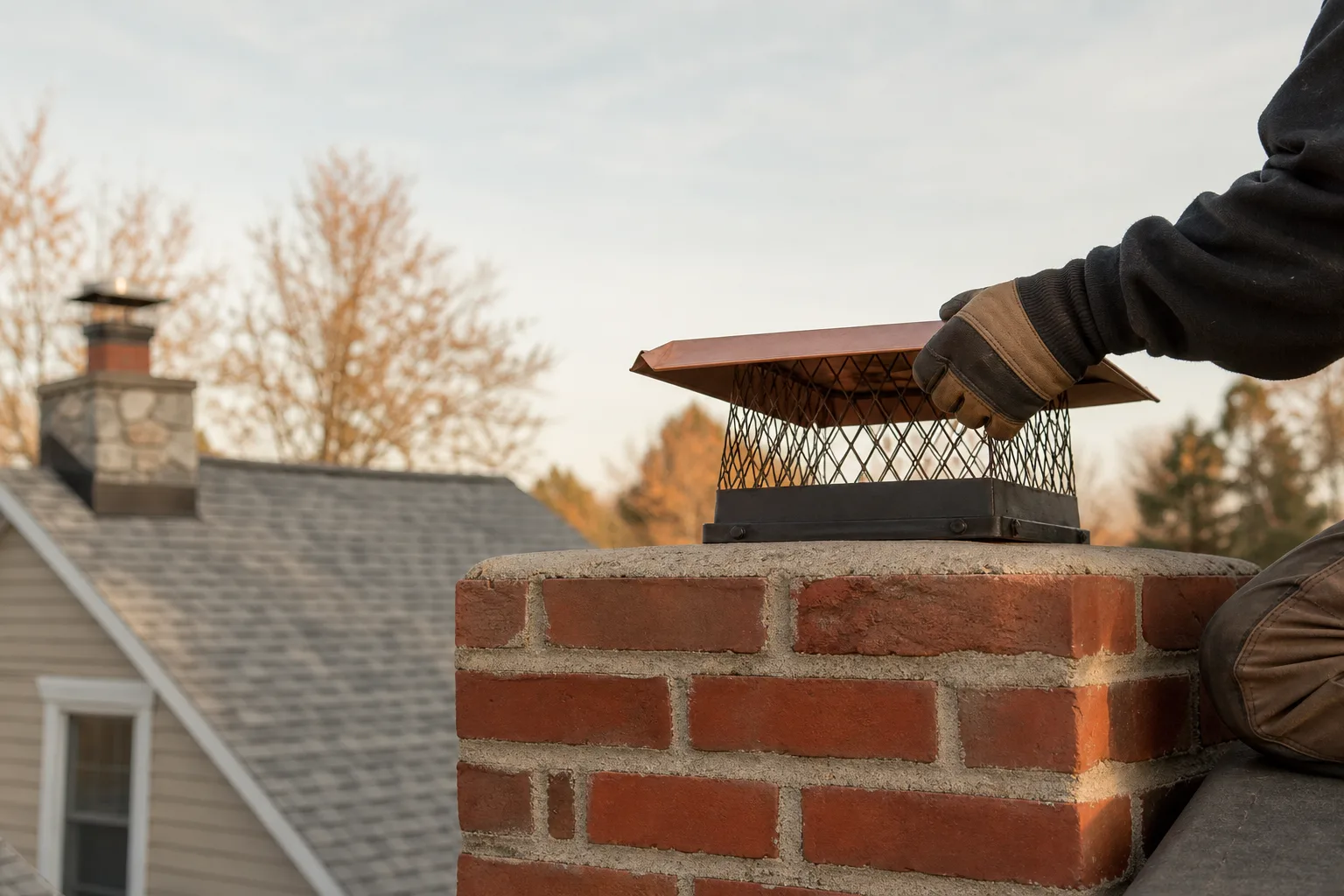
A chimney cap helps limit rain, leaves, and animal entry, but it can become damaged or clogged. From the ground, watch for a cap that is tilted, missing, visibly blocked, or surrounded by nesting activity. Avoid climbing onto the roof for a closer look if safe access and fall protection are not available.
Safety note: Birds or animals inside a chimney should not be driven out by lighting a fire. Nesting material can ignite, and an animal may block the flue or enter the home while trying to escape.
Respond promptly to water stains, damp odors, rust, white masonry deposits, peeling finishes, or pieces of mortar in the firebox. Moisture can damage masonry and metal components while also causing debris to collect in the venting path. Covering a symptom with sealant or paint may hide the source without stopping the leak.
Gas and oil appliances need attention between visits as well, even though they do not produce wood creosote. Watch for corrosion, debris at a cleanout, soot around the appliance, unusual odors, repeated shutdowns, or changes in vent performance. Do not disconnect vent pipes, adjust burners, or attempt to clear a shared flue without qualified help.
Keep inspection, cleaning, and repair records in one place. Notes about fuel, appliance changes, deposit type, liner condition, leaks, and draft complaints make it easier to compare findings from one visit to the next. Photos supplied by the technician can also help document changes that are not visible from the living area.
A clean-looking firebox does not prove that the upper flue is free of deposits or obstructions. Continue scheduling inspections at the interval recommended for the system, and arrange earlier attention when smoke behavior, odors, debris, or appliance performance changes.
If buildup, venting trouble, or overdue maintenance is a concern, book a service visit or call our team to discuss what you have noticed. We can help you choose between an inspection, cleaning, or further evaluation.
Symptom checker
What is your chimney doing?
Tap the closest match for an honest first answer.