



Chimney problem
How serious is a cracked chimney?
Where the crack is matters more than how long it is. A hairline in the crown and a crack in the flue tile are not the same conversation.
Safe to use for now, and it gets more expensive every month you leave it.
A crack in the crown is a repair. A crack in the flue tile means the fireplace goes cold tonight.
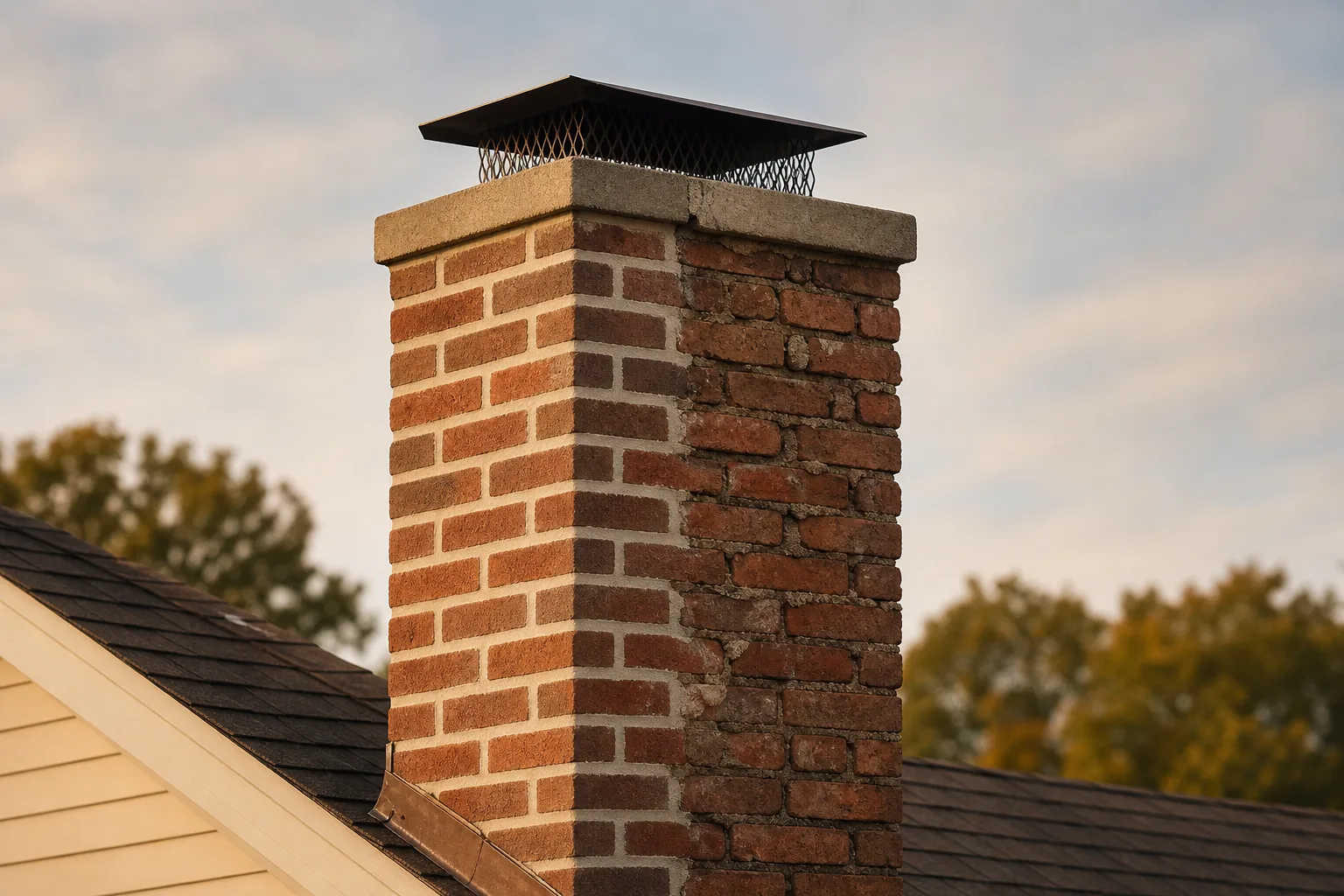
A cracked chimney means very different things depending on which part cracked. The crown — the slab on top — cracks routinely and seals for a few hundred dollars. Mortar joints crack and get repointed. Brick faces spall when water has been getting in. All of those are repairs on a timescale. A cracked flue tile is the exception: the liner is what keeps heat and combustion gases away from the framing around the chimney, so a breach there is a safety fault rather than a maintenance one, and it is invisible from the ground.
Where the crack is
Which part actually cracked
Crown, mortar, brick face and flue tile crack for different reasons and cost wildly different amounts. The last one is the one you cannot see.
What to do right now
None of this fixes it. All of it stops the problem getting more expensive between now and the visit.
Photograph the crack against something for scale — a coin works. Width matters more than length.
If pieces of clay tile are turning up in the firebox, stop using the fireplace now, not at the end of the season.
Look for a matching crack on the opposite face. Cracks on two sides of a stack point at movement rather than weather.
Sight up a corner of the stack against a downpipe or wall edge to check whether it is out of plumb.
Do not fill anything with sealant yet. A crack that has been filled tells nobody anything about why it opened.
What a cracked chimney usually means
Ordered by how often it turns out to be the answer, so you can stop reading once you recognise yours.
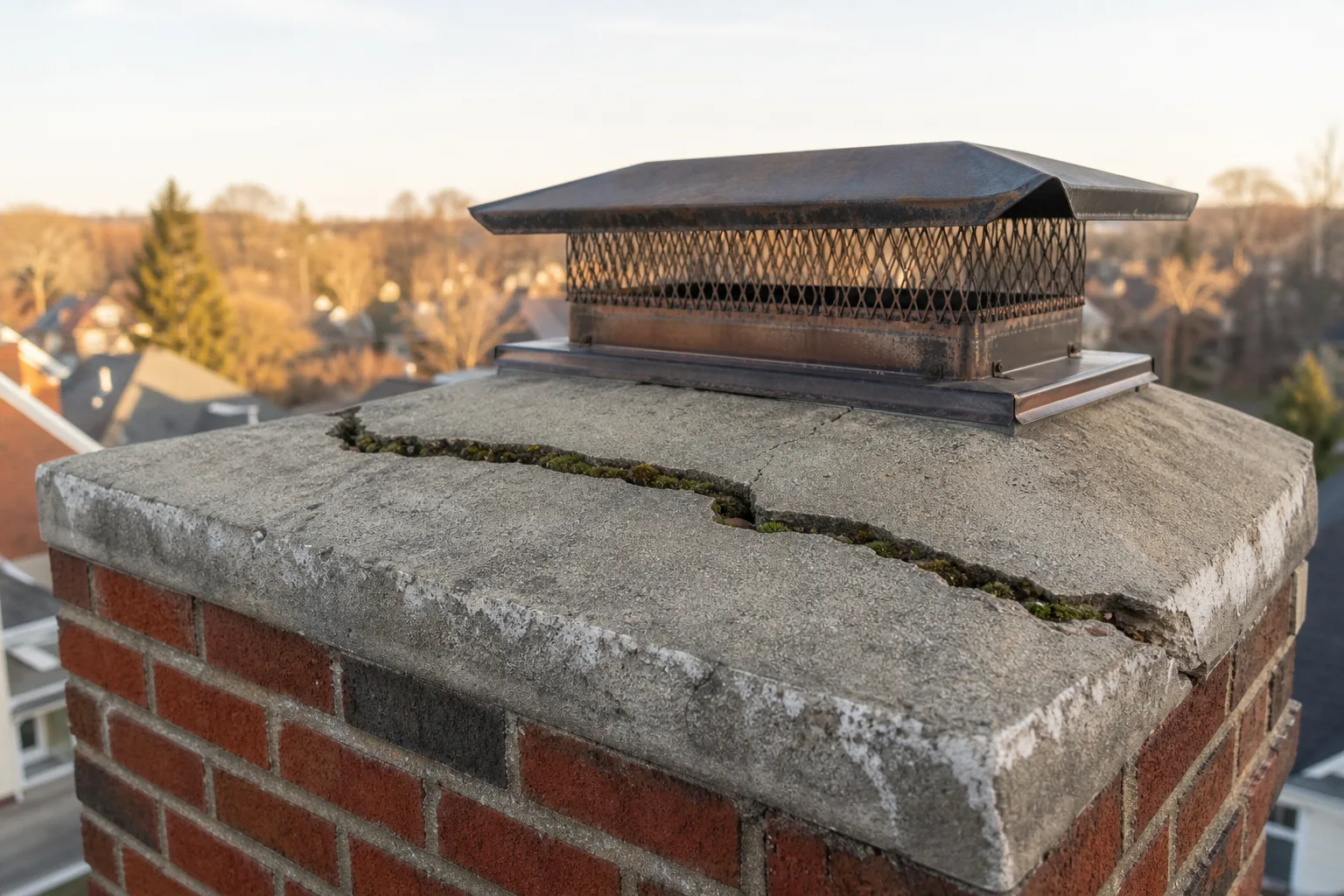
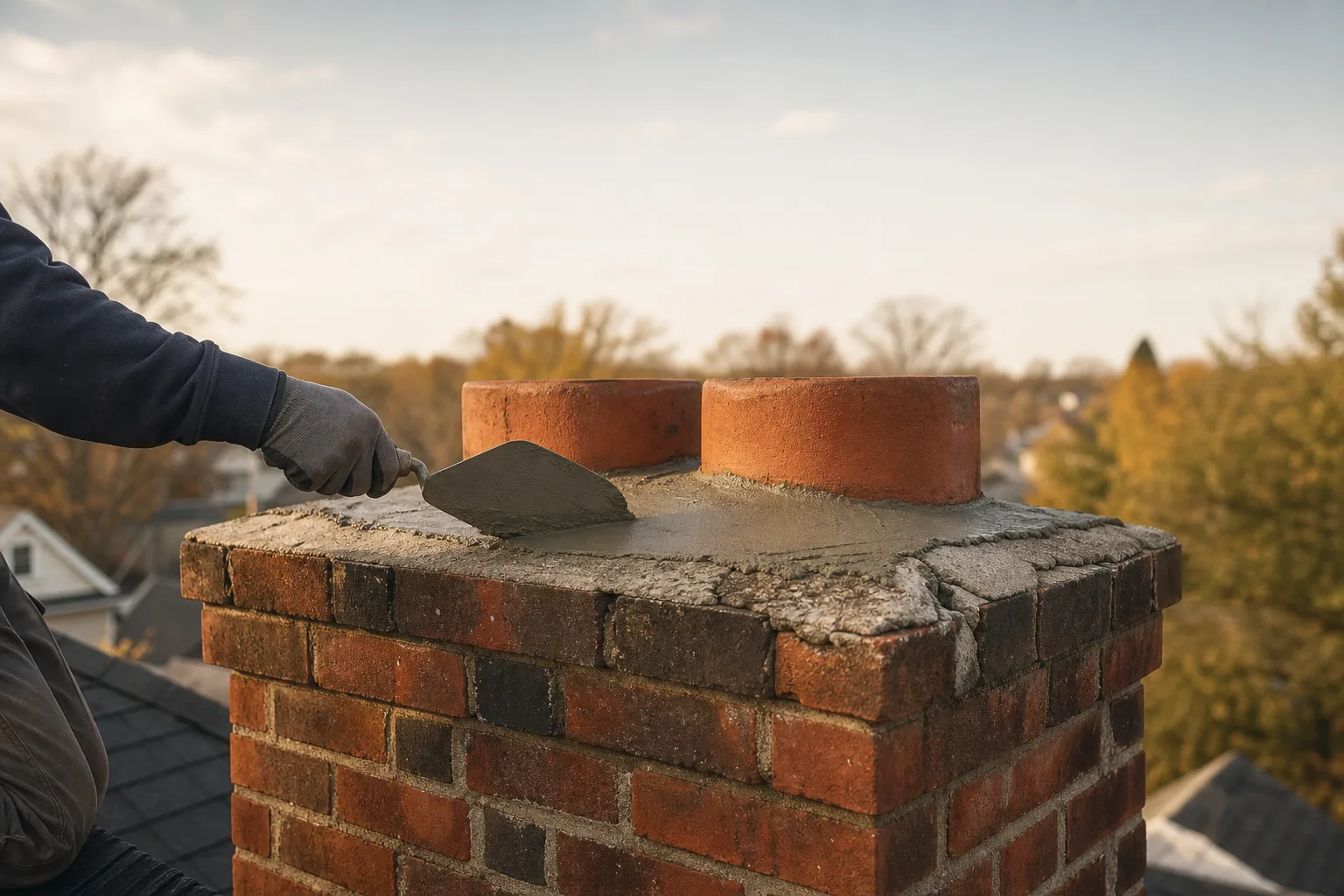
A cracked crown
The slab on top takes the worst weather of anything on the house, and many were built as a thin mortar skim with no overhang. Once it cracks, every rainfall runs into the masonry below.
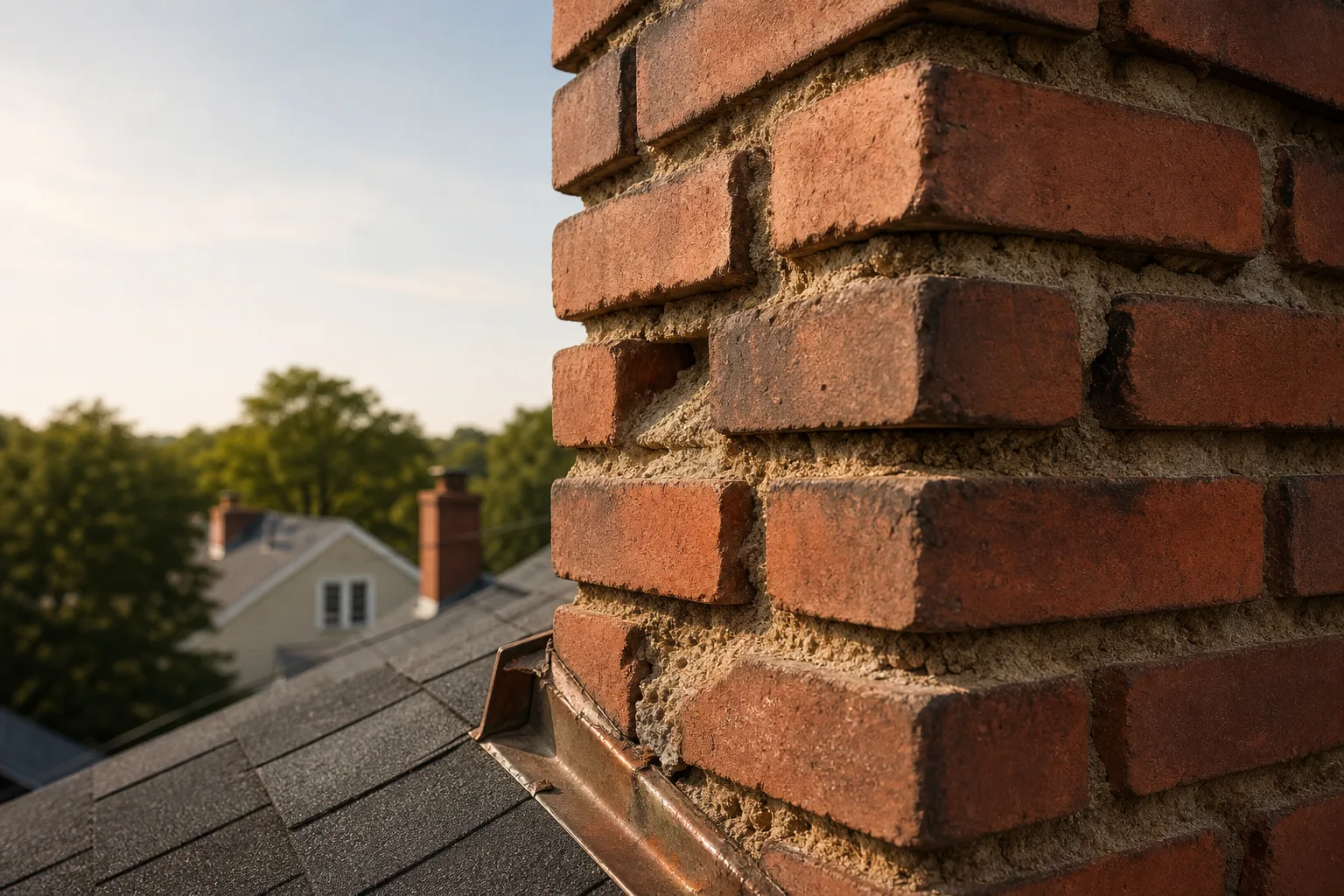
Failed mortar joints
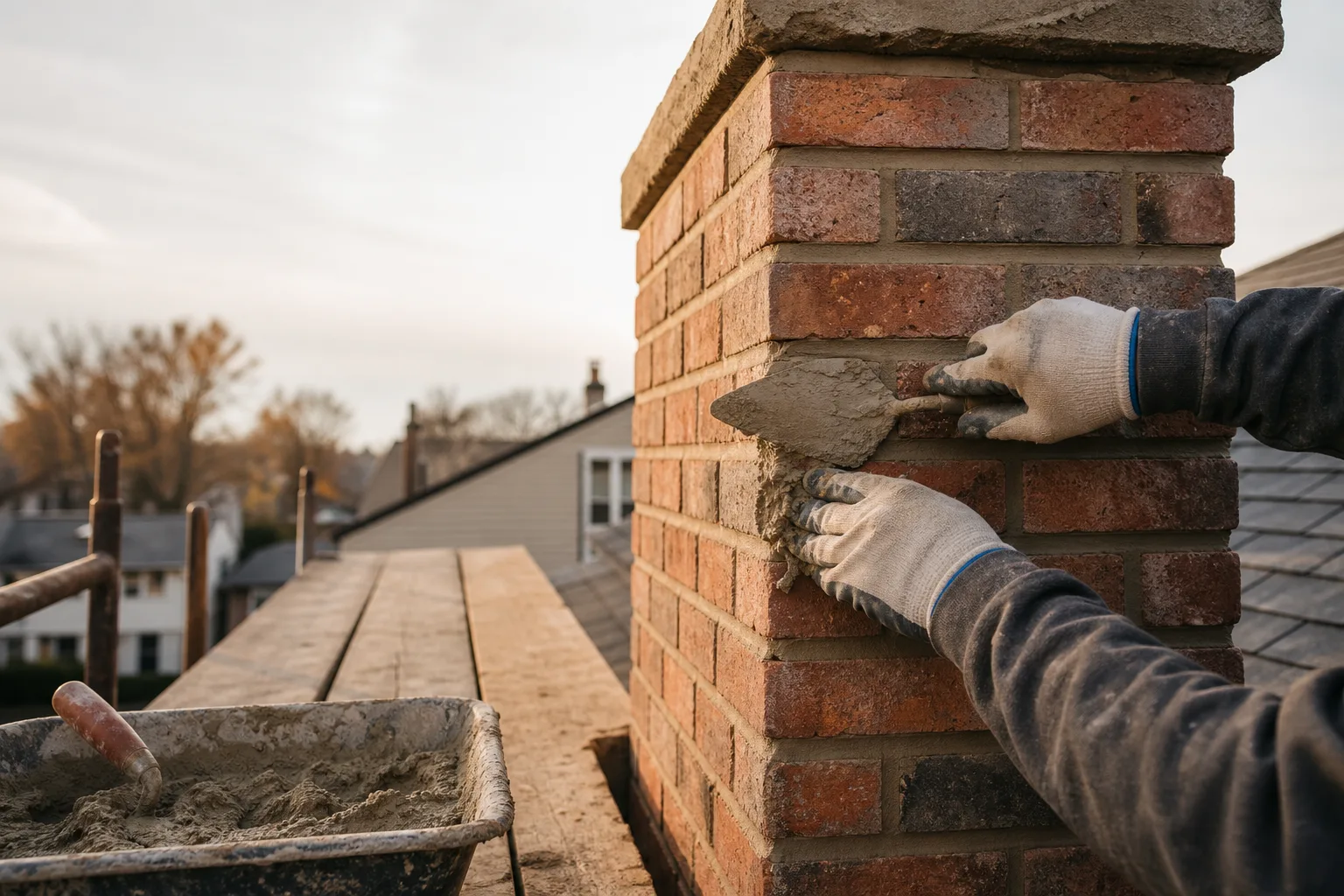
Mortar is designed to be the sacrificial part of a wall. Joints that have cracked and opened are doing what they were meant to — the answer is repointing rather than alarm.
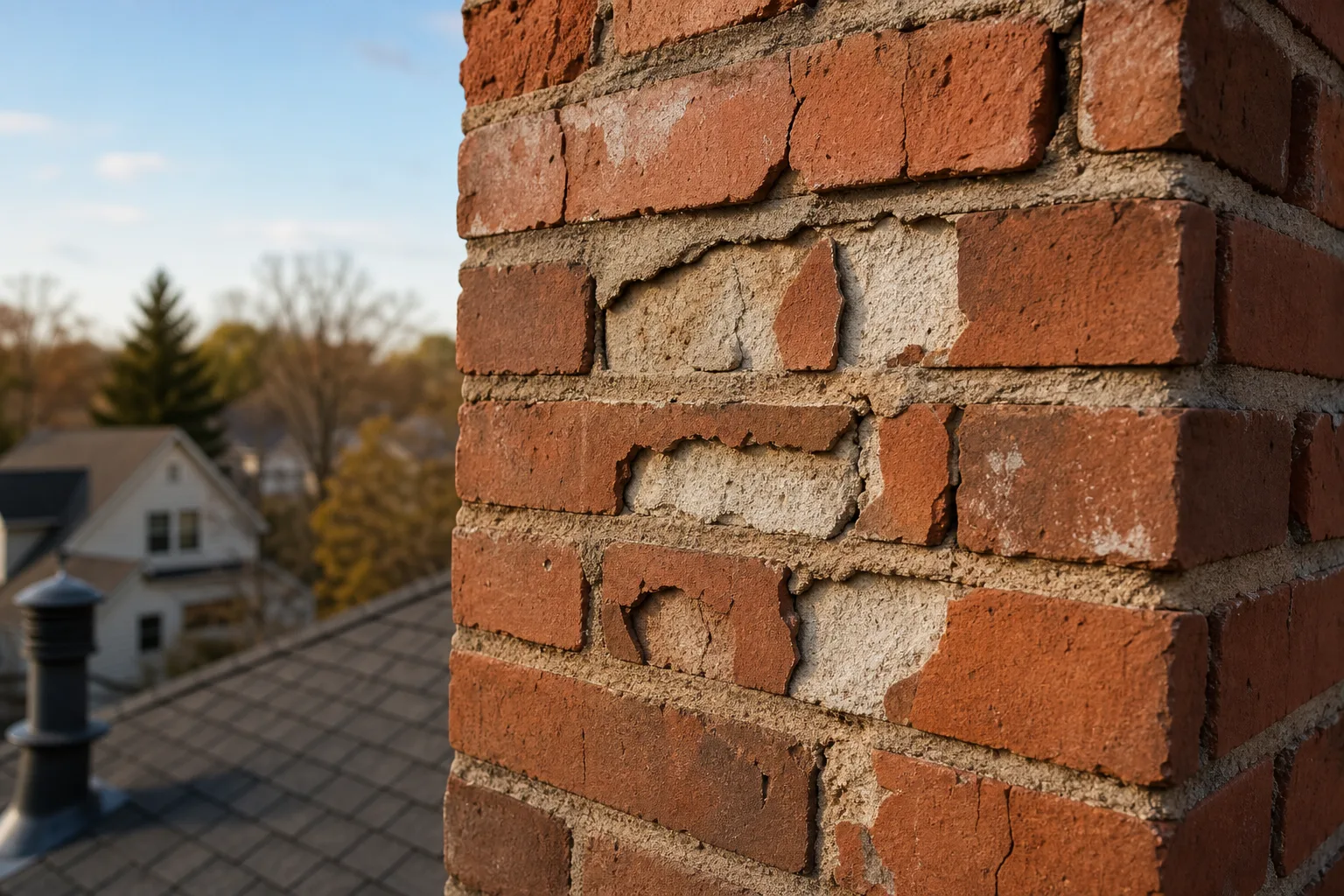
Spalled brick faces
Water got into the brick and froze. The face flakes off and the brick behind it is soft. This is water damage presenting as a crack, and sealing over it makes it worse.
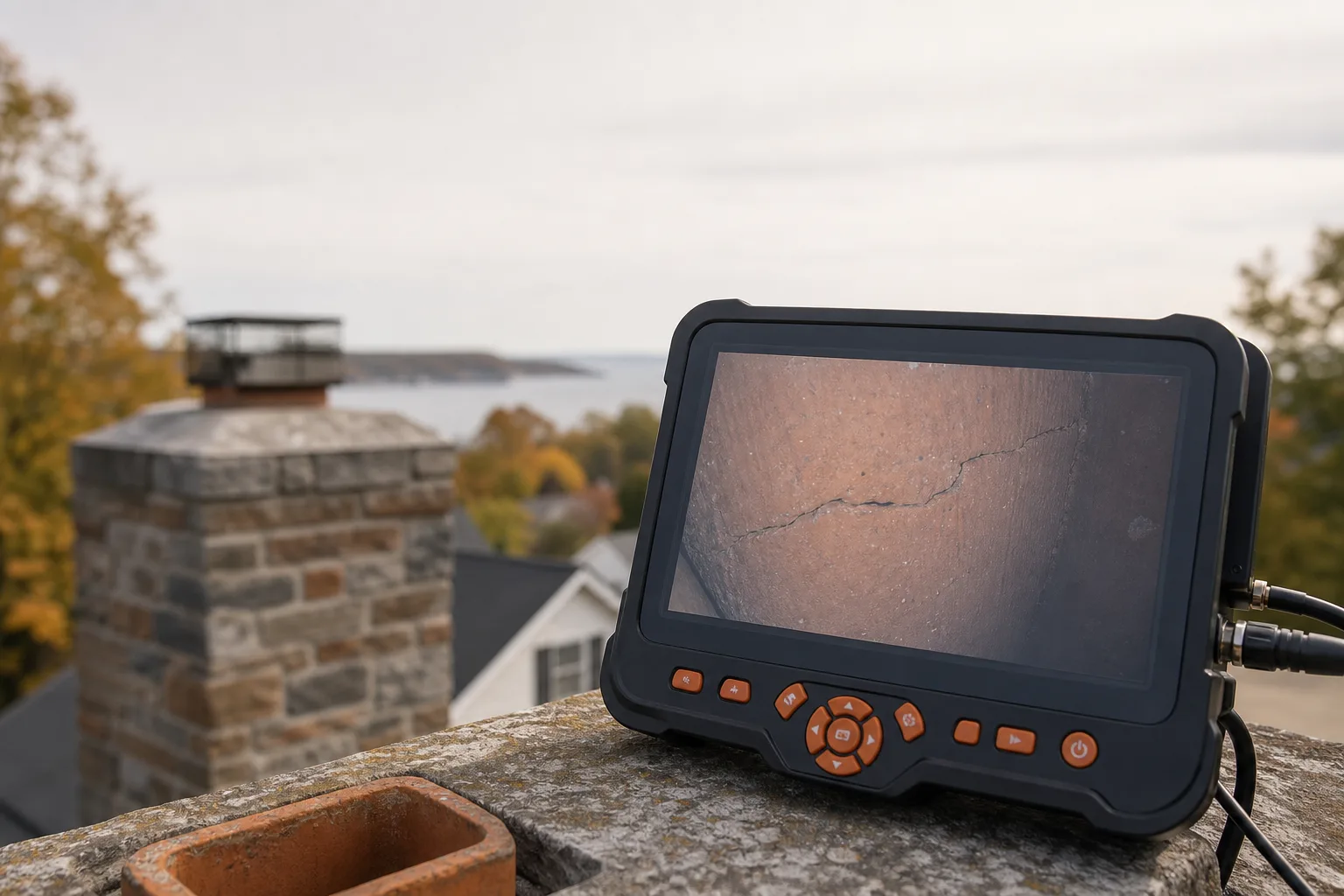
A cracked flue tile
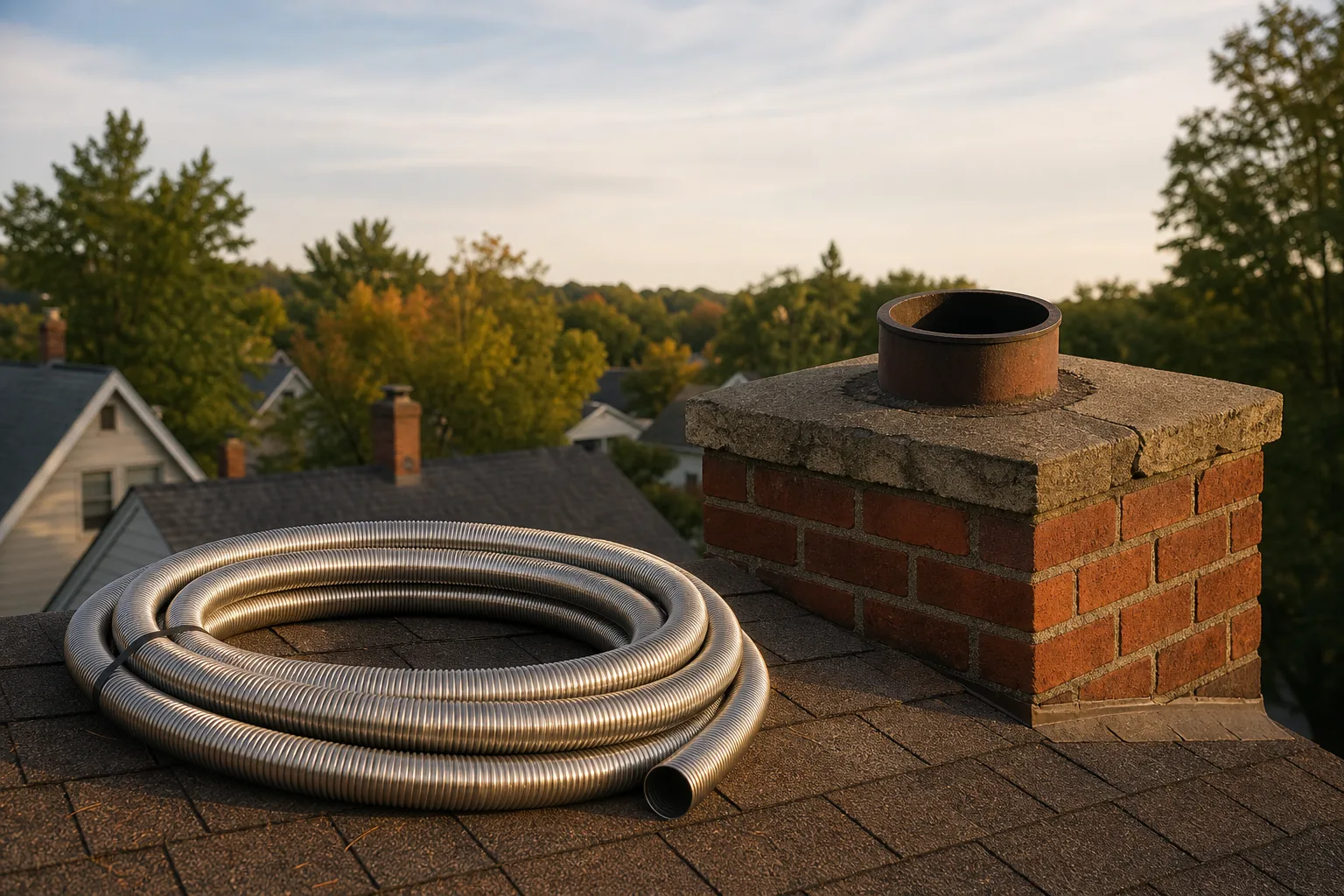
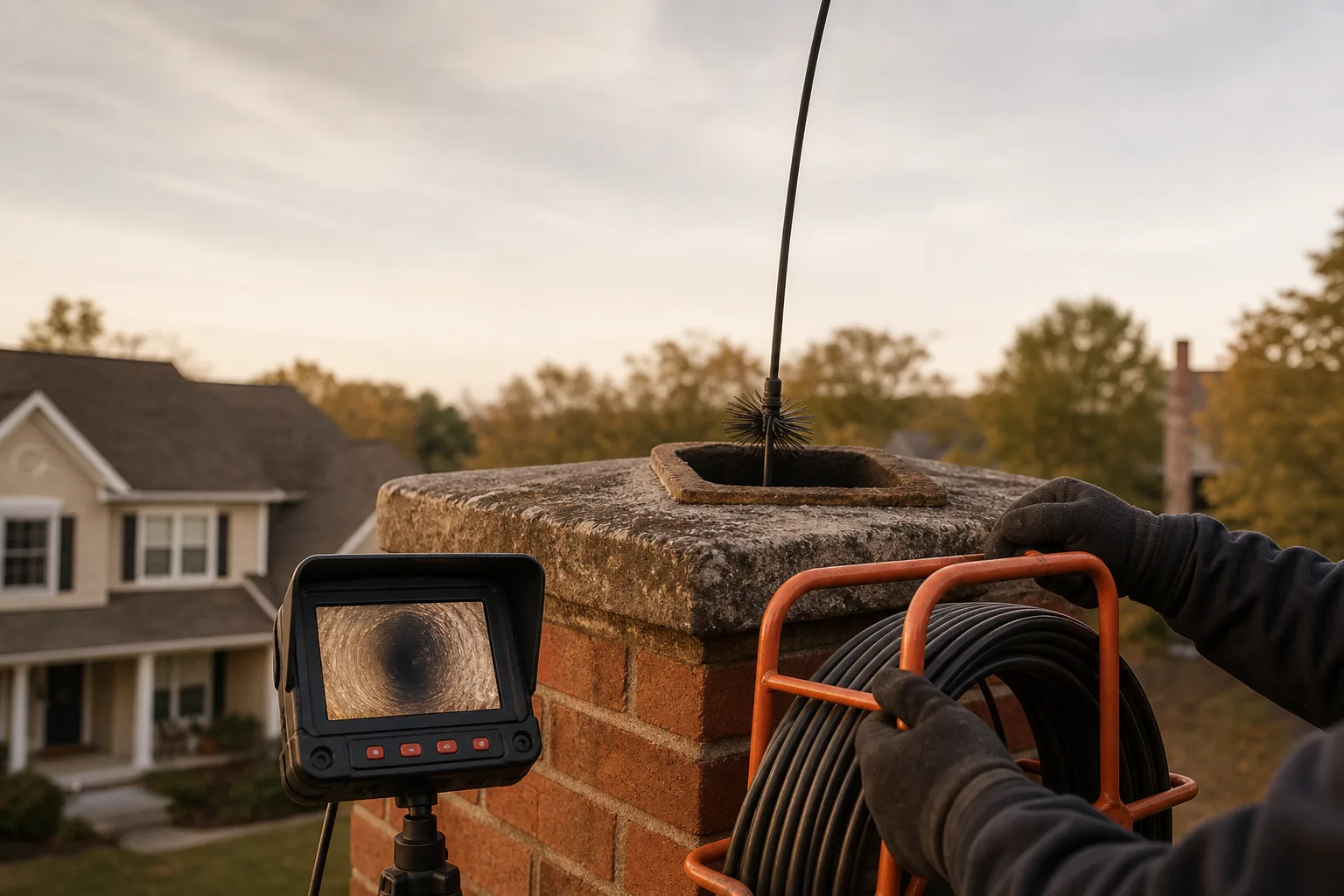
The serious one, and the only one you cannot see from outside. Caused by a flue fire, by freeze-thaw where water has got in, or by decades of heat cycling. Stop using the fireplace until it is scanned.
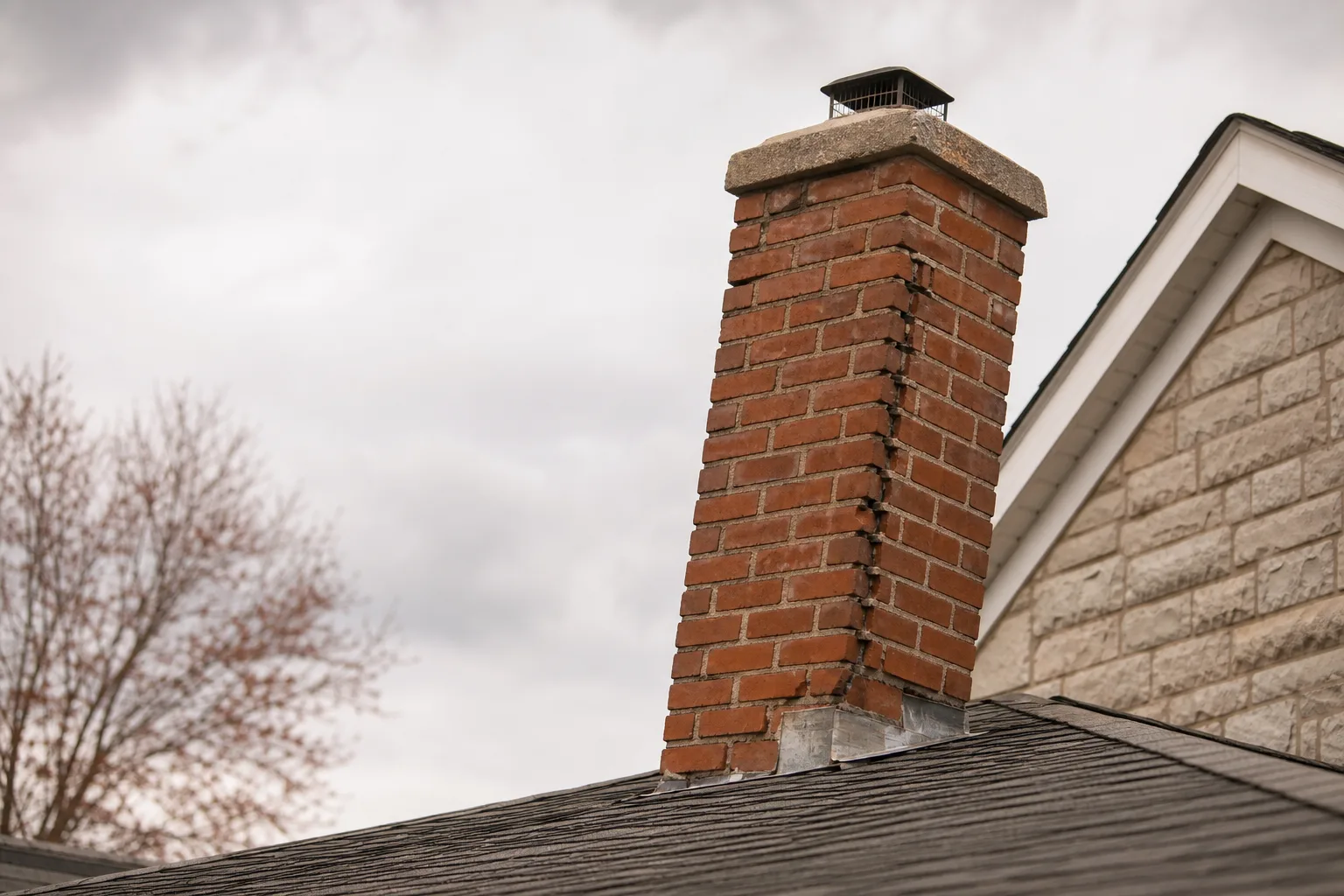
Movement at the base
Cracks that step diagonally through several courses, or match on opposite faces, usually mean the stack has moved rather than weathered. That is structural and it does not correct itself.
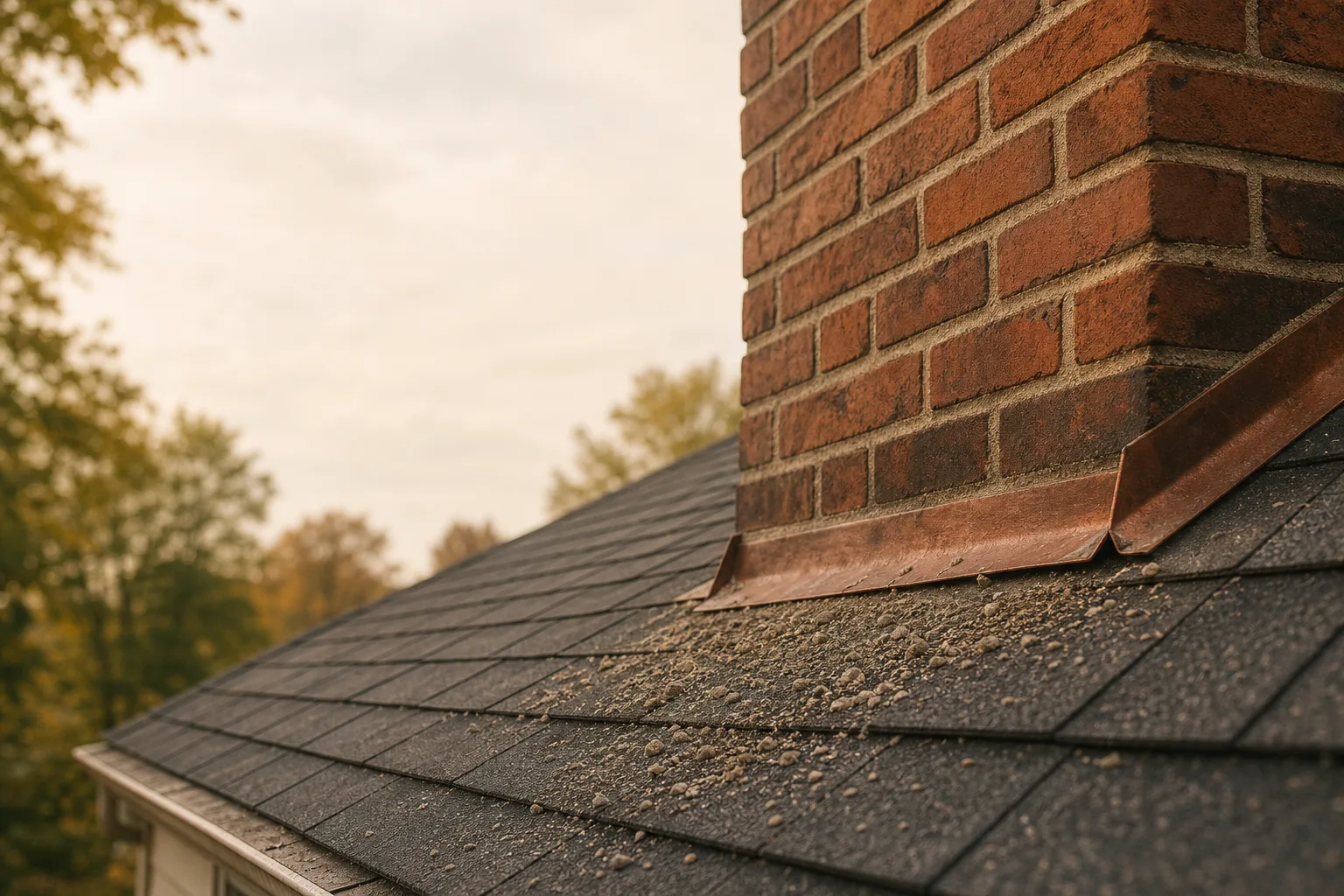
Cracks around the flue in the crown
Crowns poured tight against the flue tile crack radially, because the tile expands with heat and concrete does not. It comes back however often it is patched, unless an expansion joint goes in.
Checks you can make yourself
Can you fit a fingernail into the crack?
Hairline cracks seal. Anything you can get a nail into is a route for water and needs cutting out and filling properly.
Are there matching cracks on opposite faces?
Movement rather than weather. That is structural and needs looking at rather than sealing.
Are there pieces of clay tile in the firebox?
The liner is cracked. Stop using the fireplace and get a camera scan before anything else.
Is the crack stepping diagonally through the courses?
Following the joints in a staircase pattern is a settlement signature, not a weathering one.
Is the stack still plumb against a wall edge or downpipe?
Out of plumb means rebuild territory, and it is also a hazard rather than a repair on a schedule.
The repair each cause needs

Chimney Crown Repair
When the crack is in the slab on top — the most common answer by far.

Chimney Tuckpointing
When the mortar joints have opened and the brick is still sound.

Chimney Liner Replacement
When the scan shows a cracked flue tile. This is the urgent one.

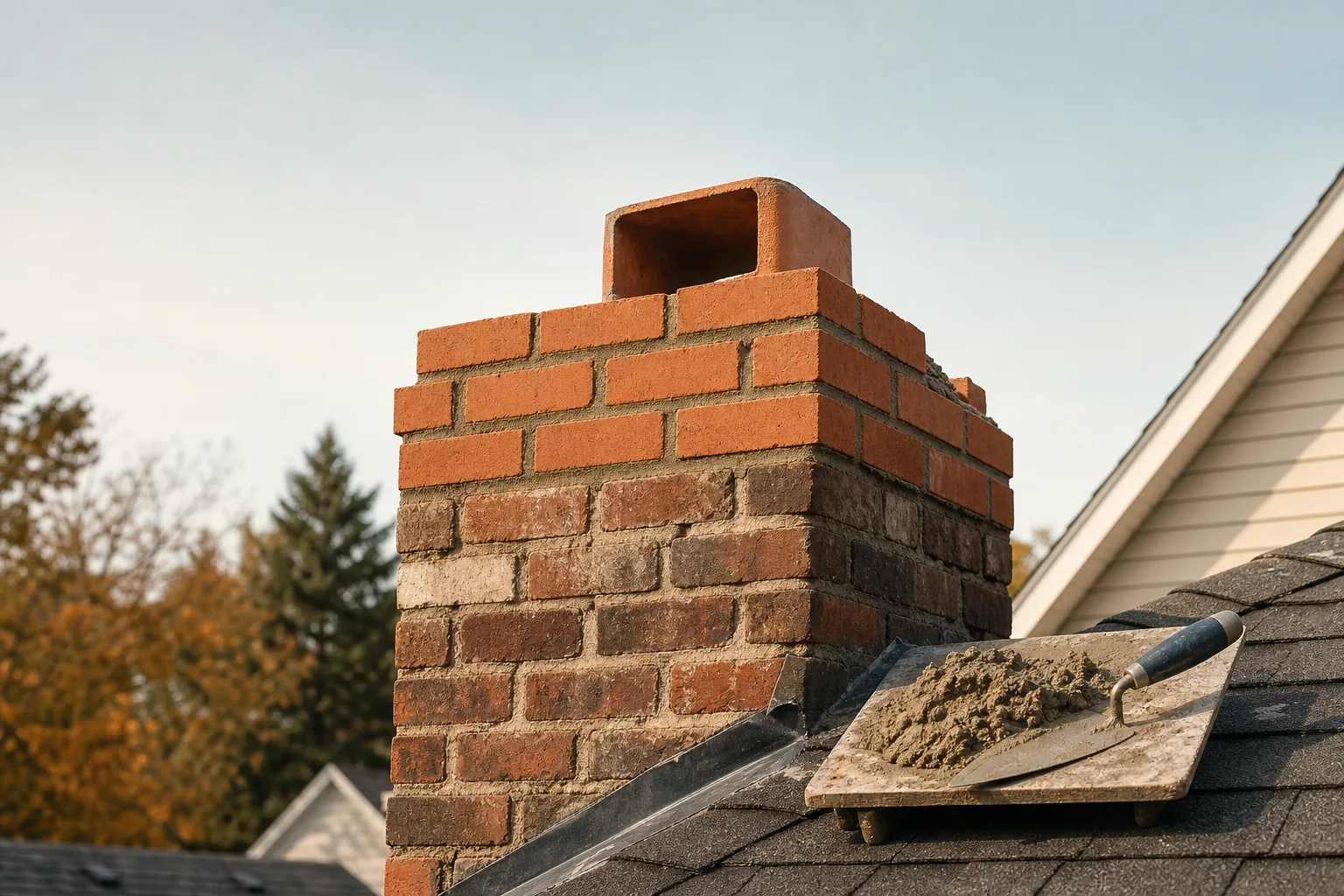
Chimney Rebuilding
When the stack has moved, or the brick itself has gone rather than the joints.

Chimney Inspection
First, if you cannot tell which of the above it is. Most people cannot.

The VIO Standard
- A written estimate first
- License and insurance checked
- Nothing starts without your OK
Common questions
Is a cracked chimney dangerous?
It depends entirely on which part cracked, and the gap between the answers is enormous. A hairline crack in the crown is a few hundred dollars and a season of patience. A cracked flue tile is a path for heat and carbon monoxide to reach the timber framing built around the chimney, and the fireplace should not be used until it has been dealt with. Since the second is invisible from the ground, a crack anywhere is a reasonable prompt to get the flue scanned once.
How much does it cost to fix a cracked chimney?
Sealing a sound crown with a flexible coating is a half day and inexpensive. Repointing a face is about a day. Recasting a crown or relining a flue runs into the thousands, and a rebuild several times that. Nobody can price this from a photograph, because the same visible crack sits above four very different repairs — which is the real reason the inspection comes first.
Can I seal a cracked chimney myself?
A hairline crack in a sound crown, yes, with a flexible elastomeric coating made for the job. What is worth not doing is filling anything with general-purpose sealant or roofing tar. Both shrink, both crack again, and both have to be cut off before a proper repair — so a tarred crack costs more to fix than one nobody touched. And filling a crack removes the evidence of why it opened.
Why does the same crack keep coming back?
Usually because it is at the flue tile in the crown. The tile heats and expands every time you light a fire and the concrete around it does not, so a crown poured tight against it cracks radially, over and over, however often it is patched. The fix is a compressible expansion joint at that boundary — a detail a great many crowns were built without.
Should I repair a cracked chimney or rebuild it?
Repair, as long as the brick is still hard and the stack is plumb. Repointing works because there is sound brick either side of the joint for new mortar to bond to. Once the brick faces have spalled through and gone soft behind, or once courses have shifted, there is nothing left to bond to and you are into rebuild territory. Loose bricks and a visible lean are the two things that settle it.
you don't have to know what's wrong.
Safe to use for now, and it gets more expensive every month you leave it. Describe what you are seeing and a local pro works out the rest. You get the price in writing before anyone starts, and you can say no.

The people behind every visit
Founded by Ryan Carter in 2019. Every page you read here is reviewed by Ethan Miller, our chimney specialist. A written estimate before any work, and the findings in writing whether or not anything needs doing.
More about who we are →