



Chimney problem

Is a leaning chimney dangerous?

Movement out of plumb is structural and it does not correct itself. It is also the only problem here that can fall on somebody.

5.0/5
8 verified reviews
Ethan MillerEthan Miller · Chimney specialist, VIO CHIMNEYLast reviewed July 20264 min read
Stop using it

Do not light another fire until this has been looked at.

The short answer

Masonry does not lean back. Whatever moved it is still moving it.

A leaning chimney has moved, and masonry that has moved does not move back. The cause is almost always below what you can see: a footing that has settled, soil that shifts with the seasons, or a stack that was tied into the house badly and has pulled away as the mortar failed. What makes this different from every other problem on this site is that it is a falling hazard as well as a repair. A stack separating from the wall can come down in a storm, and it will not give much warning when it does.

How to measure it

Sight it against something straight

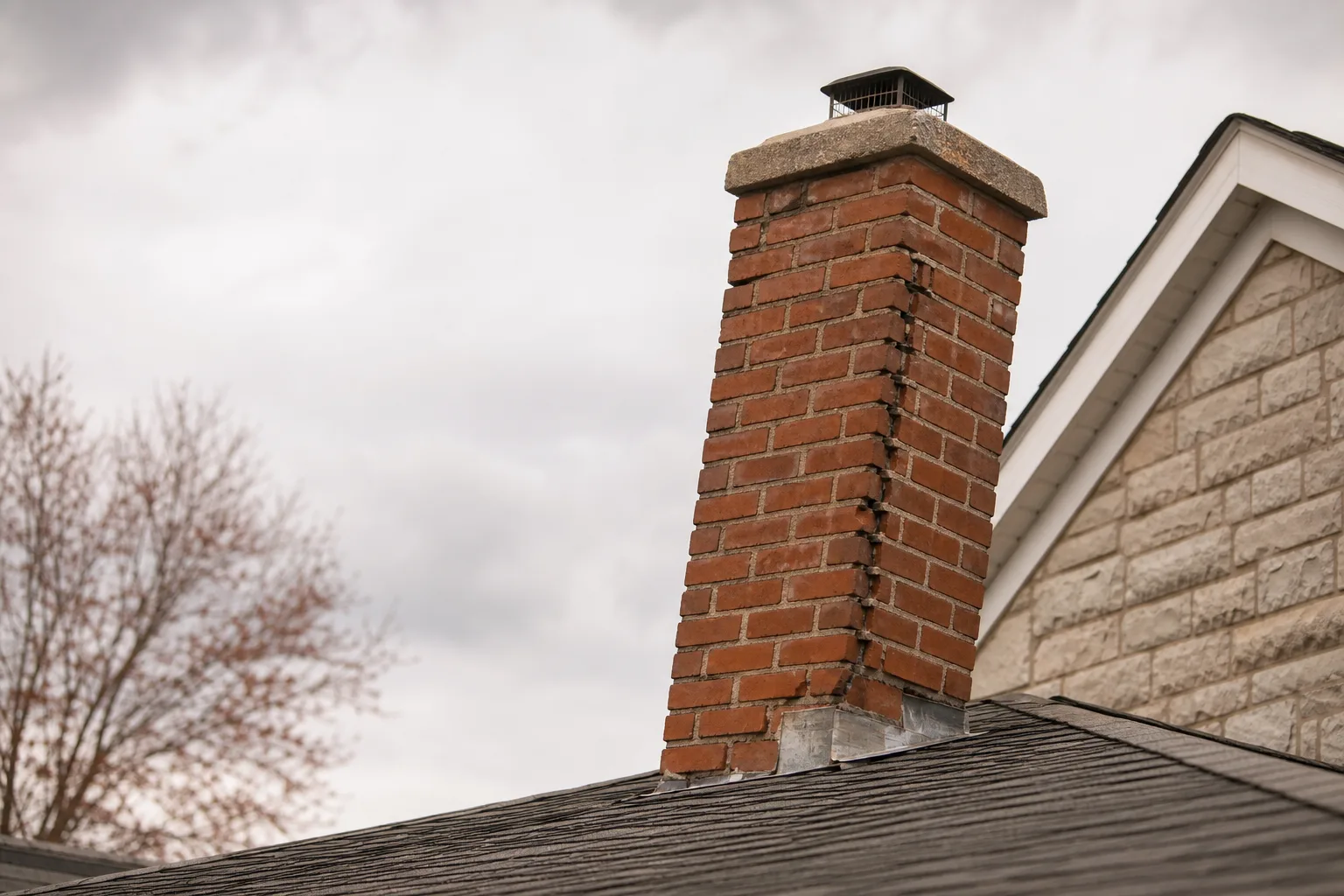
Brick chimney stack leaning off the roofline with open mortar joints under overcast sky

A downpipe, a corner board or a plumb line on a string. A gap that widens up the stack is the measurement that matters.

Before we get there

What to do right now

None of this fixes it. All of it stops the problem getting more expensive between now and the visit.

  1. Keep people and cars out from under it, and off the roof around it, until someone has looked.

  2. Measure the gap between the stack and the wall at the bottom and at the top. The difference is the lean.

  3. Mark the gap with a pencil line and a date. Movement over weeks is a different conversation from movement over decades.

  4. Do not use the fireplace. A stack that has moved has almost certainly broken the liner inside it.

  5. Photograph all four faces. A mason needs to see which way it is going and whether the joints are opening on one side.

Work out which is yours

What makes a leaning chimney lean

Ordered by how often it turns out to be the answer, so you can stop reading once you recognise yours.

Brick chimney stack leaning off the roofline with open mortar joints under overcast sky
Most common

A settled or undersized footing

A chimney is enormously heavy and older ones were often built on a footing that would not pass today. Once it settles unevenly the whole stack tilts, and nothing above ground fixes that.
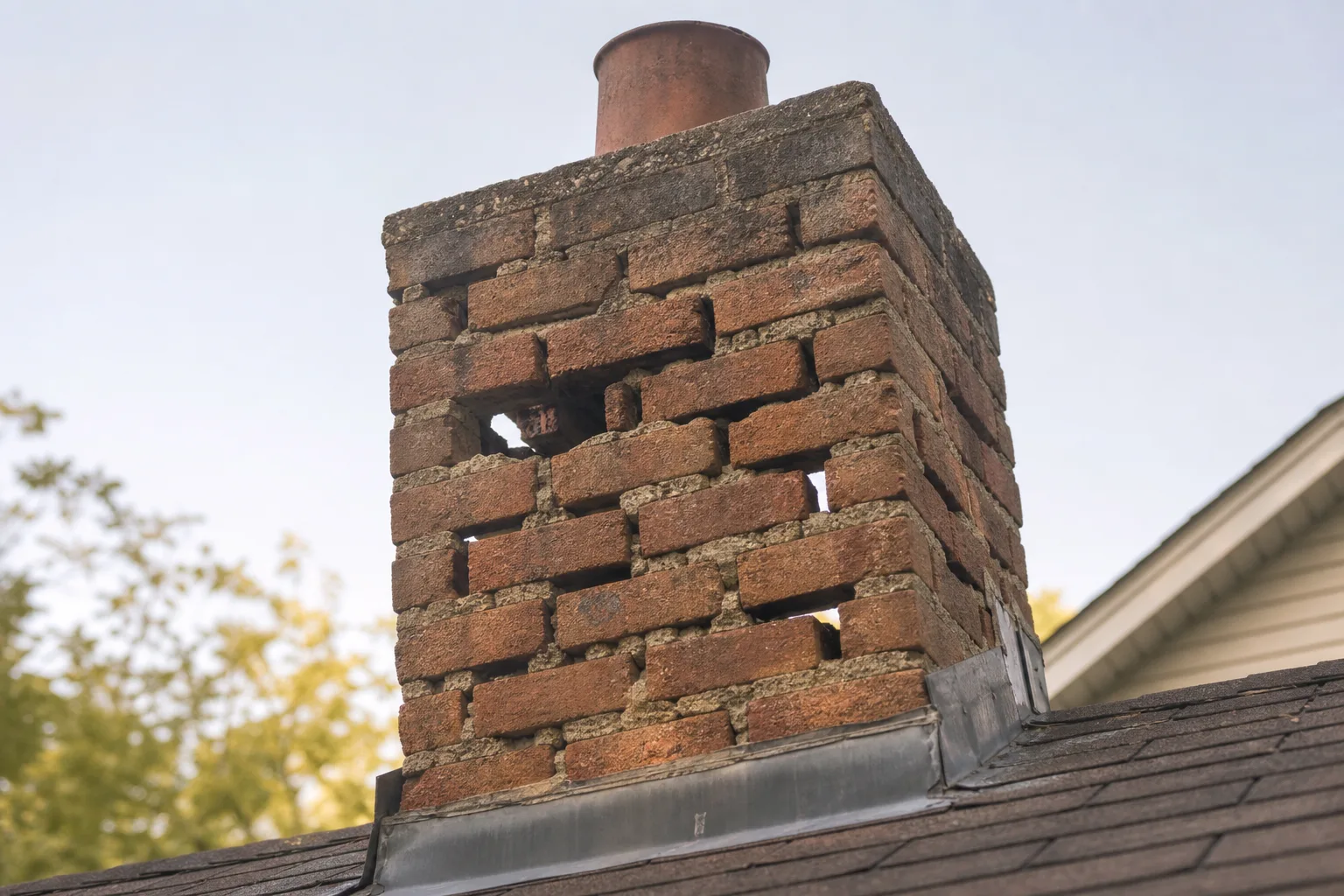
Brick chimney stack with mortar joints washed out, leaving gaps through to daylight
Most common

Soil that moves with the seasons

Clay soils swell when wet and shrink when dry, so a stack can move measurably between seasons. Drainage against the foundation is often part of the answer.
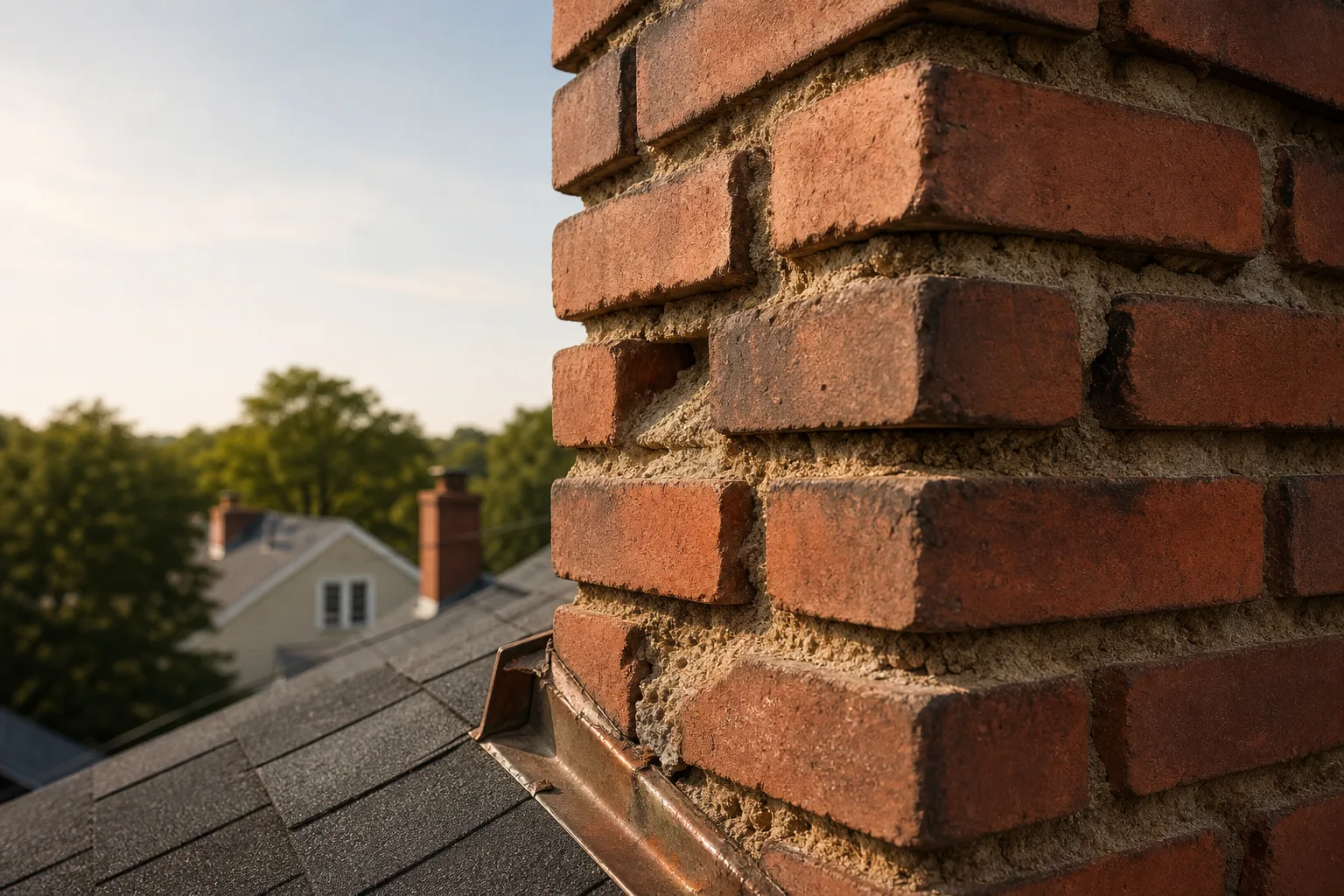
Eroded chimney mortar joints recessed behind the brick faces with loose sand and grit
Common

Failed ties between stack and house

An exterior chimney is tied into the framing. When those connections corrode or the mortar around them fails, the top starts pulling away while the base stays put.
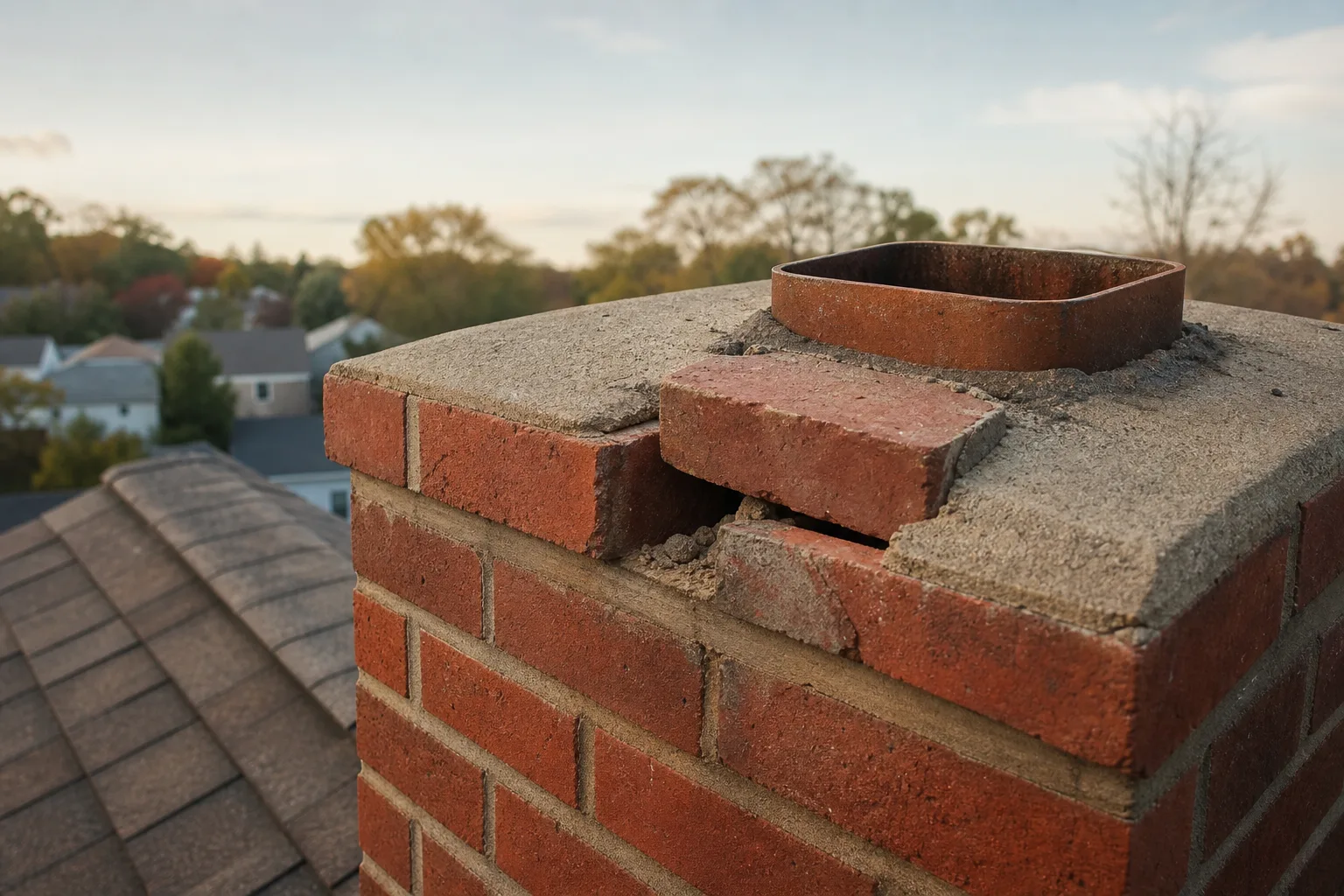
One brick displaced and loose in the top course of a chimney
Common

Mortar failure through the courses

Joints that have washed out let courses shift relative to each other. The lean develops gradually and shows first as a stepped crack up one face.
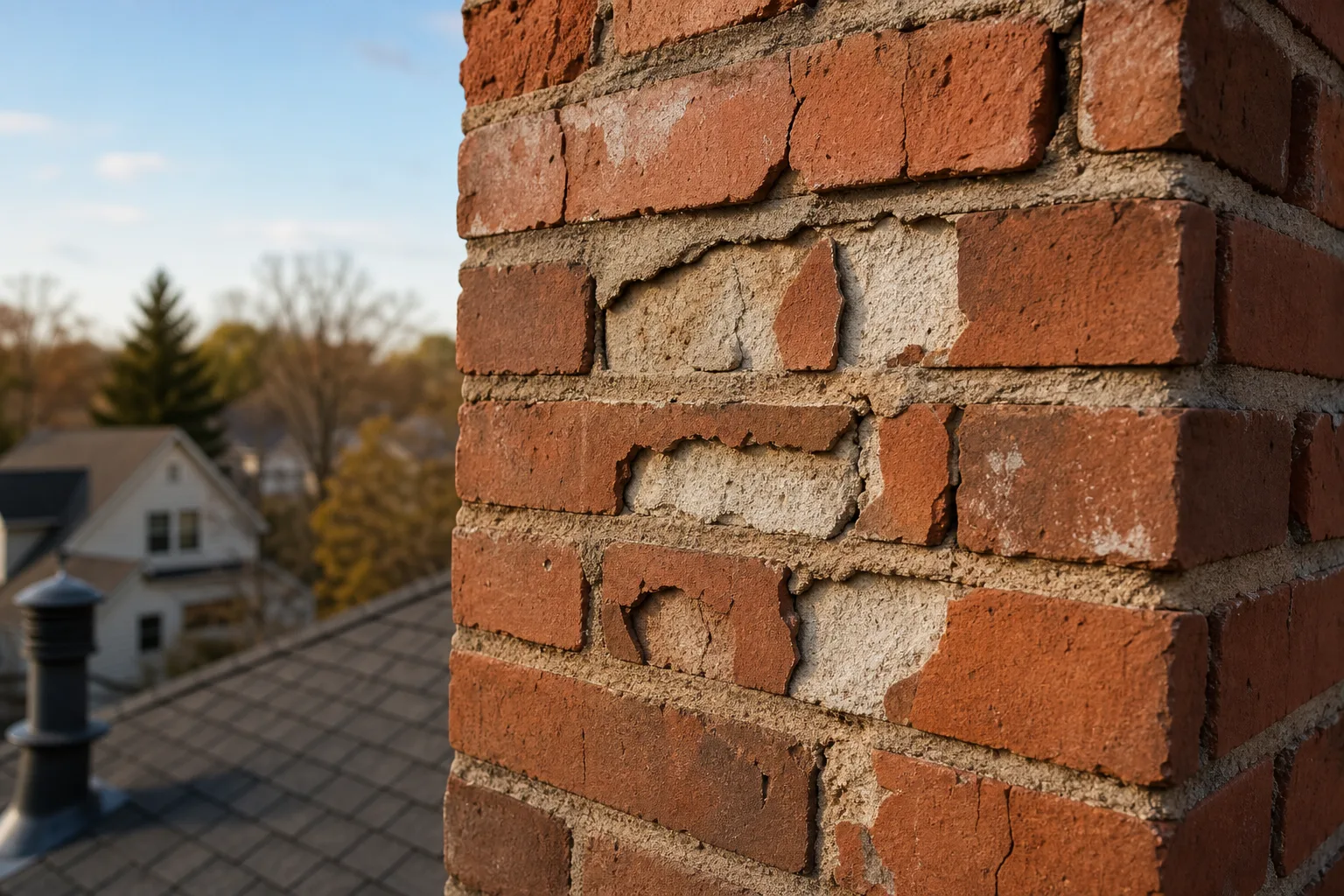
Chimney brick faces flaking and popping off, exposing pale powdery masonry underneath from freeze damage
Less common

Water, freeze-thaw and time

Rarely the whole cause and usually the accelerator. Saturated masonry loses strength every freeze, and a stack already marginal gets there faster.

Five minutes, no ladder

Checks you can make yourself

  • Is there a gap between the stack and the wall that widens going up?

    The classic signature. Measure it at both ends — the difference is the lean.

  • Does a plumb line dropped from the top clear the base?

    Any measurable deviation on a stack that was built vertical means it has moved.

  • Are there stepped cracks running diagonally through the joints?

    A settlement signature. Weather cracks do not follow the courses in a staircase.

  • Has the gap changed since you last looked?

    Active movement is a different urgency from a lean that has been there thirty years.

  • Is there daylight where the stack meets the roof?

    It has pulled away from the structure. Keep off the roof and out from underneath.

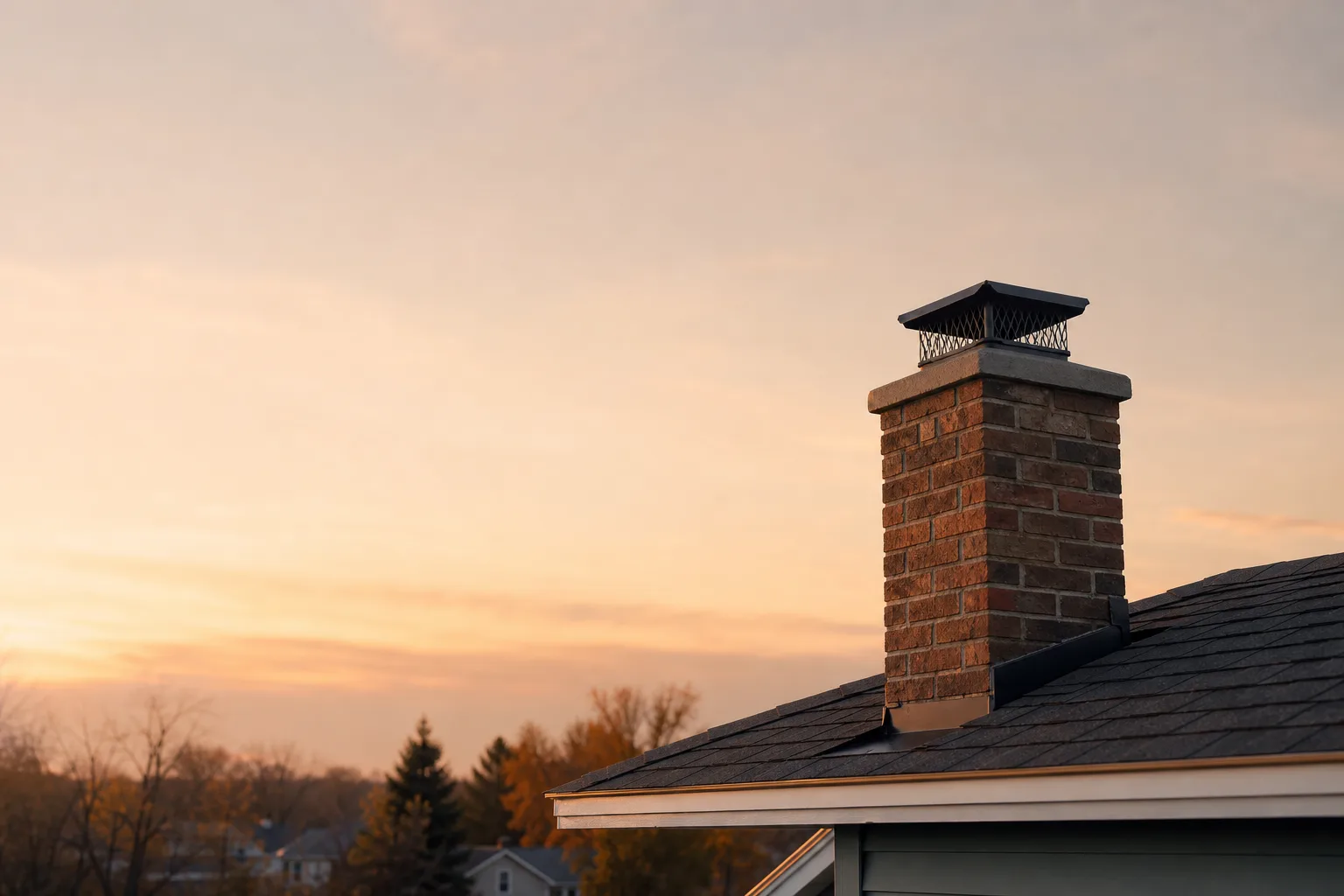
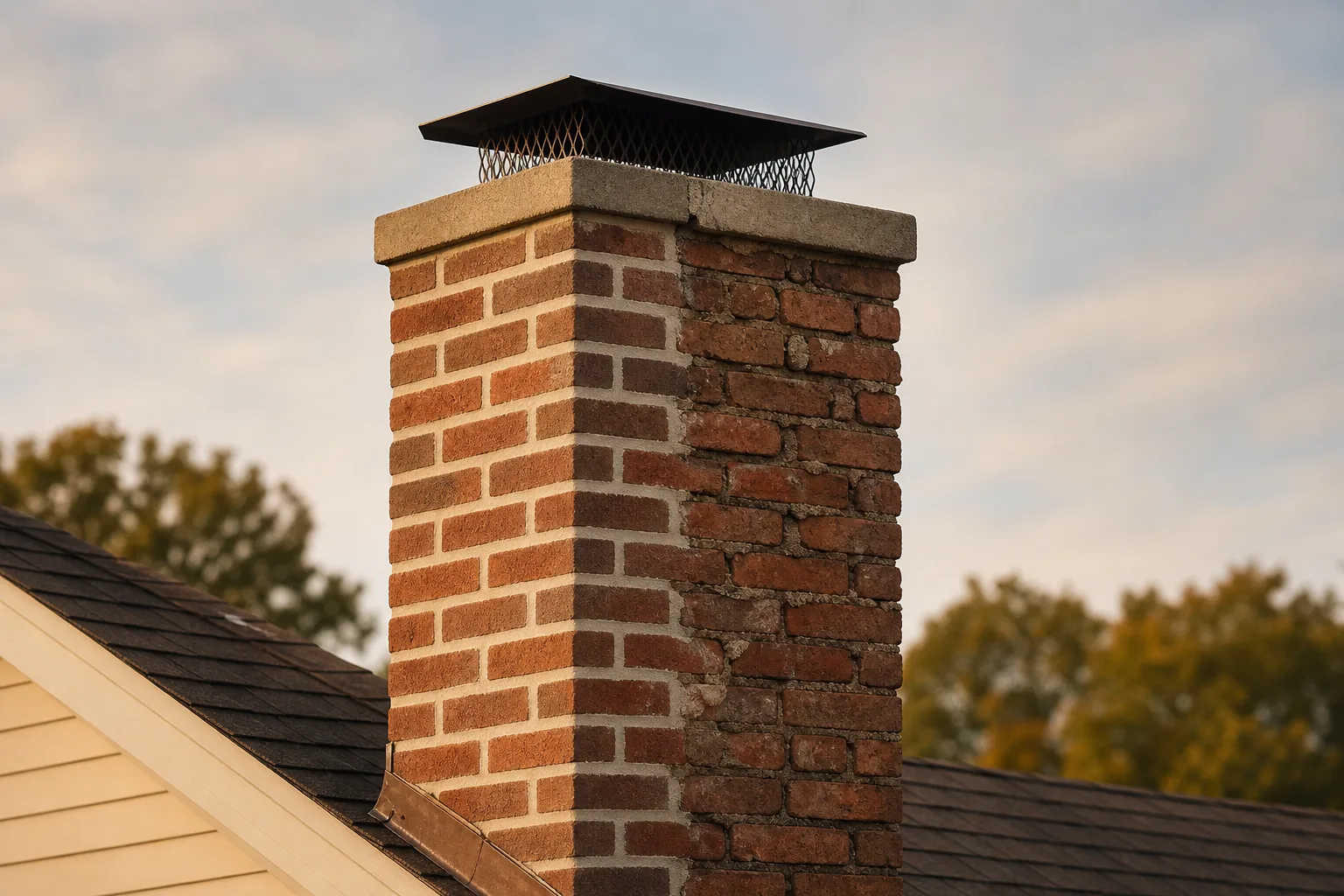
Capped brick chimney silhouetted against a soft dusk sky above a tidy residential rooftop

The VIO Standard

  • A written estimate first
  • License and insurance checked
  • Nothing starts without your OK

Common questions

How much lean is too much?

There is no universal number, and anyone quoting one from a photograph is guessing. What matters more than the angle is whether it is moving. A stack half an inch out of plumb that has been that way since the 1950s is a different problem from one that has moved a quarter inch this year. Mark the gap, date it, and measure again in a month — that single piece of evidence changes the recommendation more than the current measurement does.

Can a leaning chimney be straightened?

Above the roofline, not really — it comes down and goes back up, which is a rebuild. Below the roofline, if the cause is a settled footing, there are underpinning and pier systems that stabilise the foundation, and those are foundation work rather than chimney work. What nobody can do is push a masonry stack back upright. Anyone offering to is offering something that does not exist.

Is it safe to stay in the house with a leaning chimney?

Usually yes, with two conditions: keep out from underneath it and off the roof around it, and stop using the fireplace. The risk from a leaning stack is that masonry comes down, and it comes down outward. The risk from using it is that the movement has broken the liner, which puts combustion gases into the structure. Neither of those makes the house uninhabitable; both make it worth getting looked at this month rather than next year.

How much does it cost to fix a leaning chimney?

A rebuild above the roofline runs into several thousand dollars before scaffolding, and a full rebuild several times that. If the cause is the footing, foundation stabilisation is a separate trade and a separate number, and it has to come first — rebuilding a stack on a footing that is still moving buys you a repeat. Given those sums, a second opinion on this one is proportionate rather than paranoid.

Will insurance cover a leaning chimney?

Generally not, because insurers class gradual settlement as maintenance rather than sudden damage. The exceptions are events: a storm, an impact, an earthquake, or a tree. If something specific happened, document it immediately and report it — dated photographs before any work is what an adjuster works from, and the claim is much harder to make once the repair has been done.

you don't have to know what's wrong.

Do not light another fire until this has been looked at. Describe what you are seeing and a local pro works out the rest. You get the price in writing before anyone starts, and you can say no.

Ethan Miller and Ryan Carter of VIO CHIMNEY beside a branded service truck
Who we are

The people behind every visit

Founded by Ryan Carter in 2019. Every page you read here is reviewed by Ethan Miller, our chimney specialist. A written estimate before any work, and the findings in writing whether or not anything needs doing.

More about who we are →
(513) 655-6702Get my estimate