Chimney safety

Carbon monoxide detector placement, room by room

Carbon monoxide detector placement in one line: one on every floor and outside every sleeping area. Height matters less than coverage, and four spots cause false alarms.

5.0/5
8 verified reviews
Ethan MillerEthan Miller · Chimney specialist, VIO CHIMNEYLast reviewed July 20264 min read
Stop using it

Do not light another fire until this has been looked at.

The short answer

One on every floor and outside every sleeping area. Everything else is detail.

Carbon monoxide detector placement comes down to coverage rather than height. CO mixes with air instead of rising or sinking, so the old advice about ceiling or floor level matters far less than having one on every storey including the basement, and one outside every sleeping area so it wakes you. What genuinely matters after that is what to avoid: within 15 feet of a fuel-burning appliance, in a bathroom, in dead air within a foot of a corner, and anywhere a draft or direct sun hits it. Those four cause the false alarms that get detectors unplugged.

The only warning you get

No smell, no colour

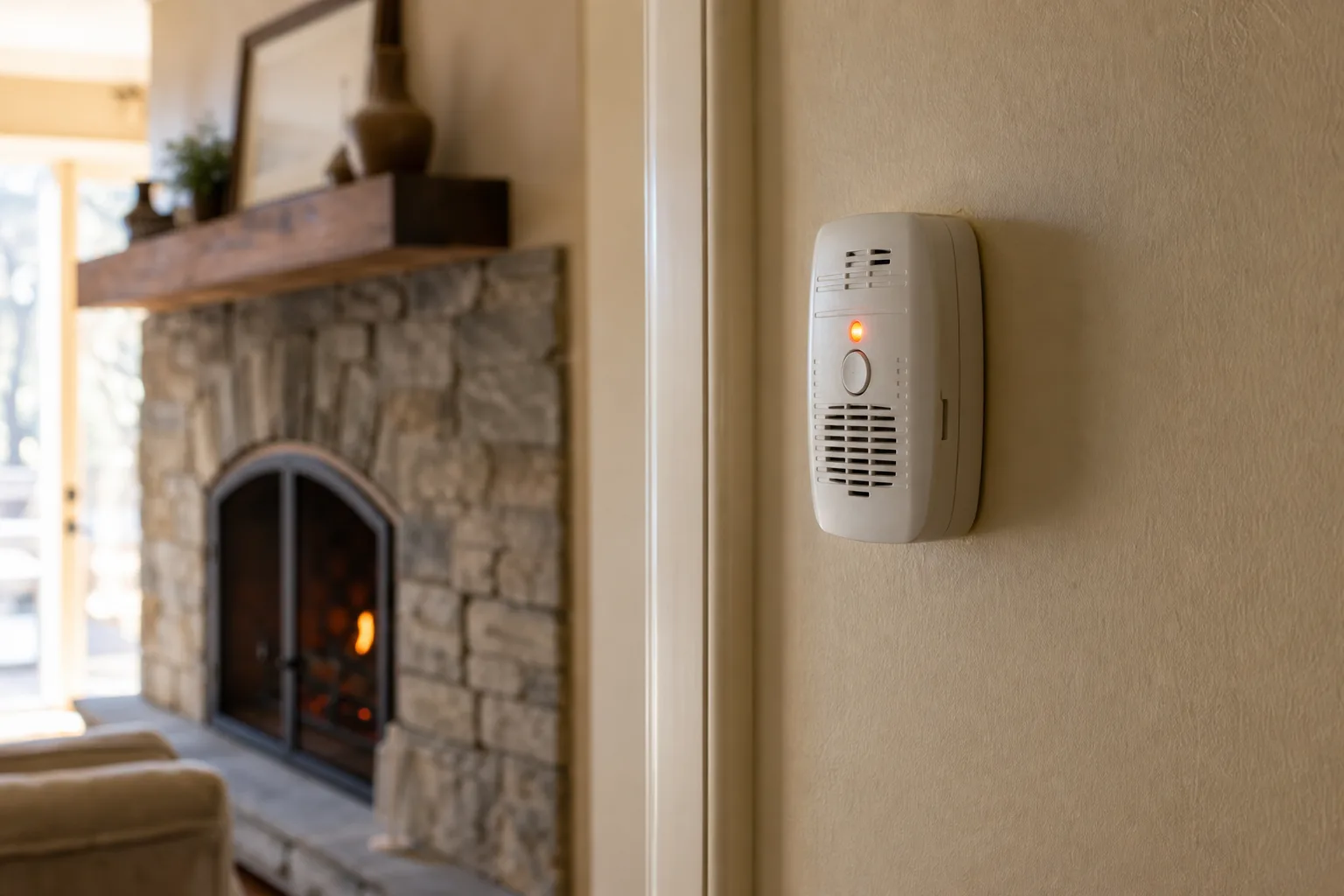
Carbon monoxide detector alarming on a hallway wall with a fireplace blurred behind

There is no early symptom you can rely on. The detector is the entire warning system, which is why placement is not a detail.

Before we get there

What to do right now

None of this fixes it. All of it stops the problem getting more expensive between now and the visit.

  1. If an alarm is sounding now: get everyone outside into fresh air, then call 911. Do not open windows first.

  2. Press test on every detector you have. Test checks the horn, not the sensor, but a dead unit fails this too.

  3. Look at the manufacture date on the back. Sensors expire at seven to ten years whatever the battery says.

  4. Count your floors, including the basement. One detector per floor is the minimum, not the target.

  5. Move any unit within 15 feet of a furnace, boiler or fireplace. That is the most common false-alarm cause.

What actually matters

Carbon monoxide detector placement, room by room

What to do, why it matters, and the part people most often get wrong.

Carbon monoxide detector alarming on a hallway wall with a fireplace blurred behind

One on every floor, basement included

Including levels with no appliance. CO travels through a house, and the floor where it is produced is often not the floor where somebody is asleep.
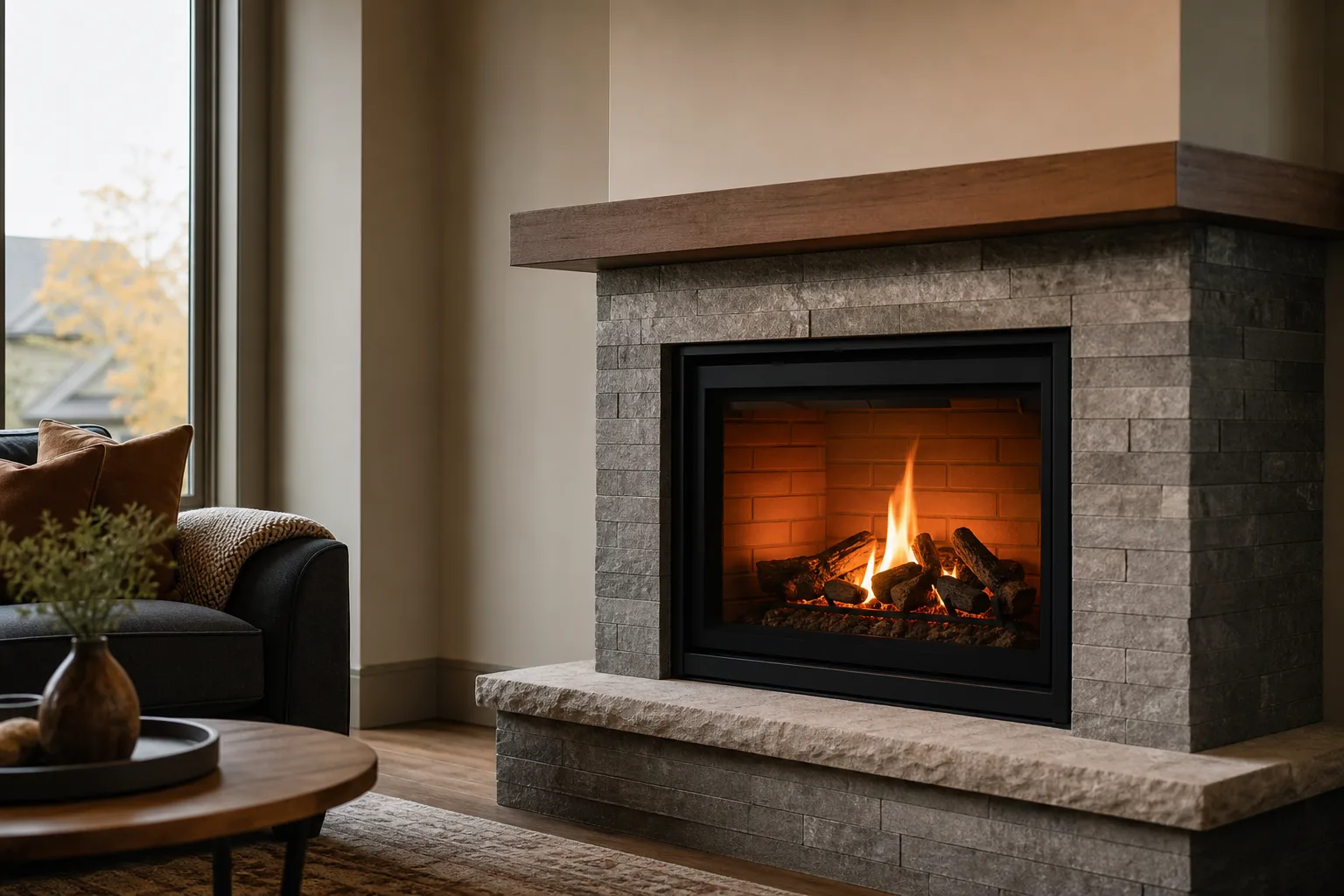
Small evening fire burning low behind a screen in a brick hearth

Outside every sleeping area

The whole point is that it wakes you. A detector two floors below a bedroom is protecting the hallway, not the person in it.
Close-up of lazy yellow gas fireplace flames behind glass instead of blue

At least 15 feet from fuel-burning appliances

Close to a furnace or fireplace, normal start-up produces a brief spike that is not dangerous and will trip the alarm. Repeated false alarms are why detectors end up in a drawer.
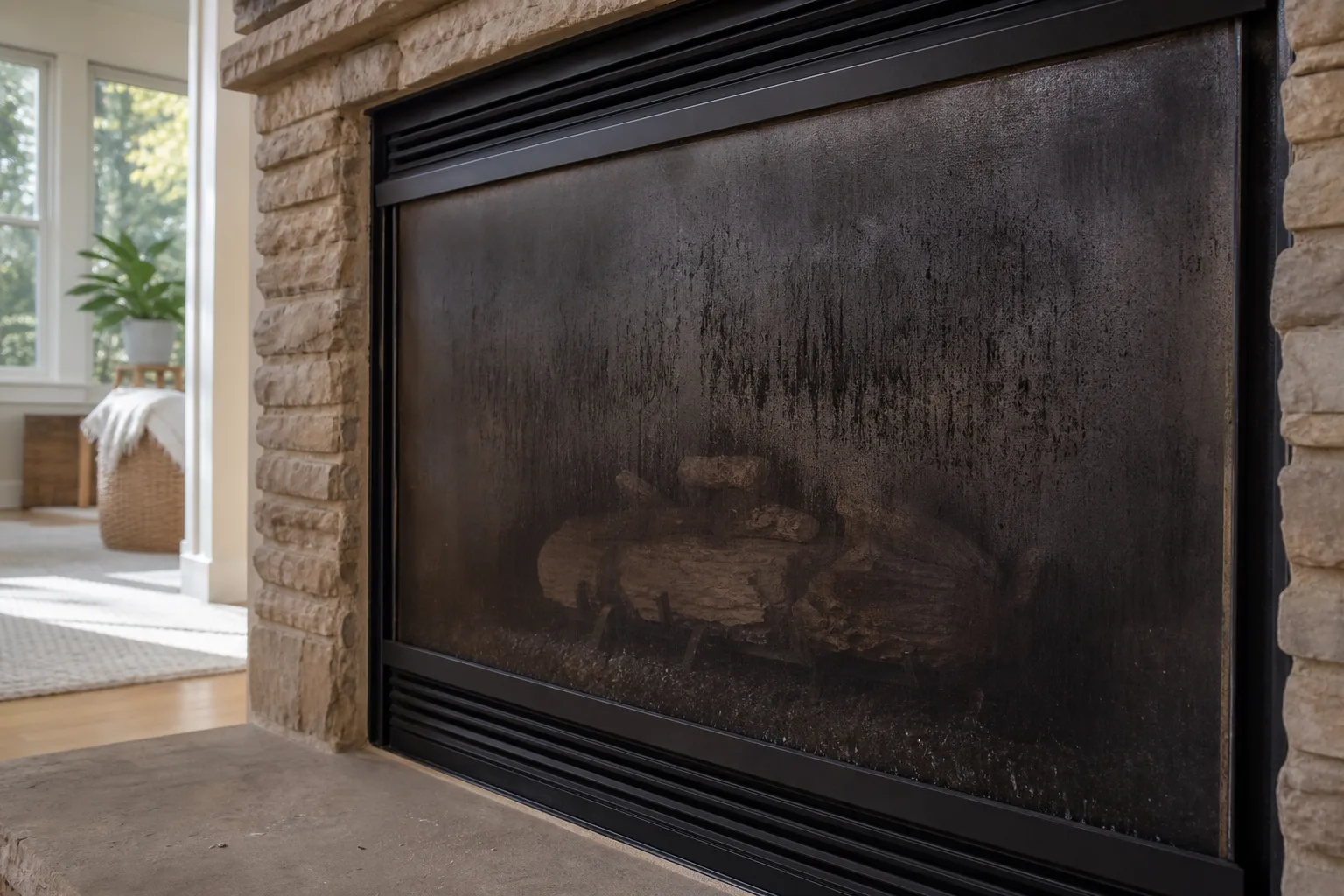
Black soot film clouding the unlit glass front of a gas fireplace

Height is not the point

CO is close to the density of air and mixes with it, so it does not pool at the ceiling like smoke or at the floor like propane. Put it where you will hear it and where it will not be knocked.
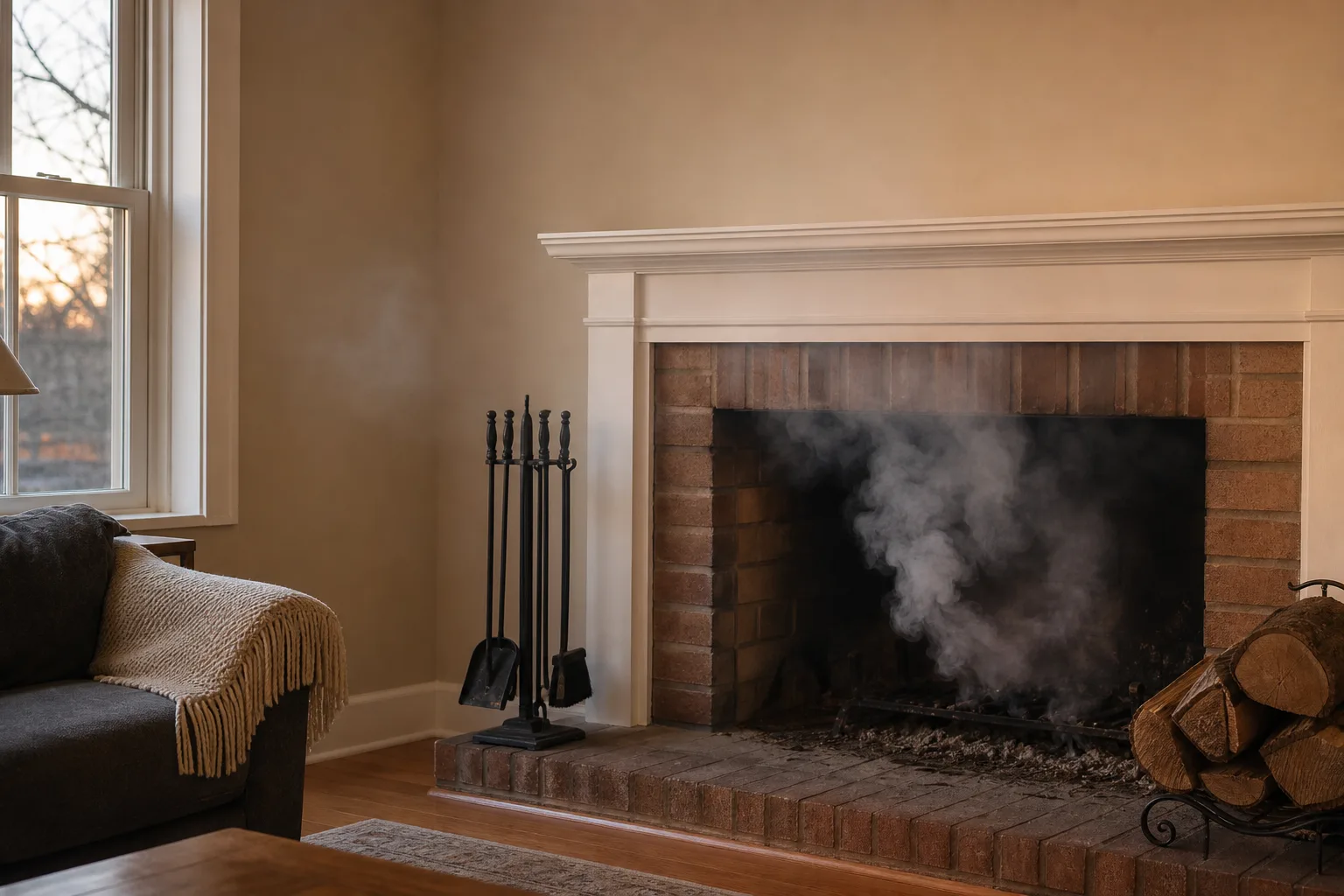
Smoke rolling out of a fireplace opening into a living room at dusk

Not in bathrooms, drafts or direct sun

Humidity, moving air and heat all shorten sensor life and cause spurious readings. Avoid within a foot of a corner too, where air is effectively still.
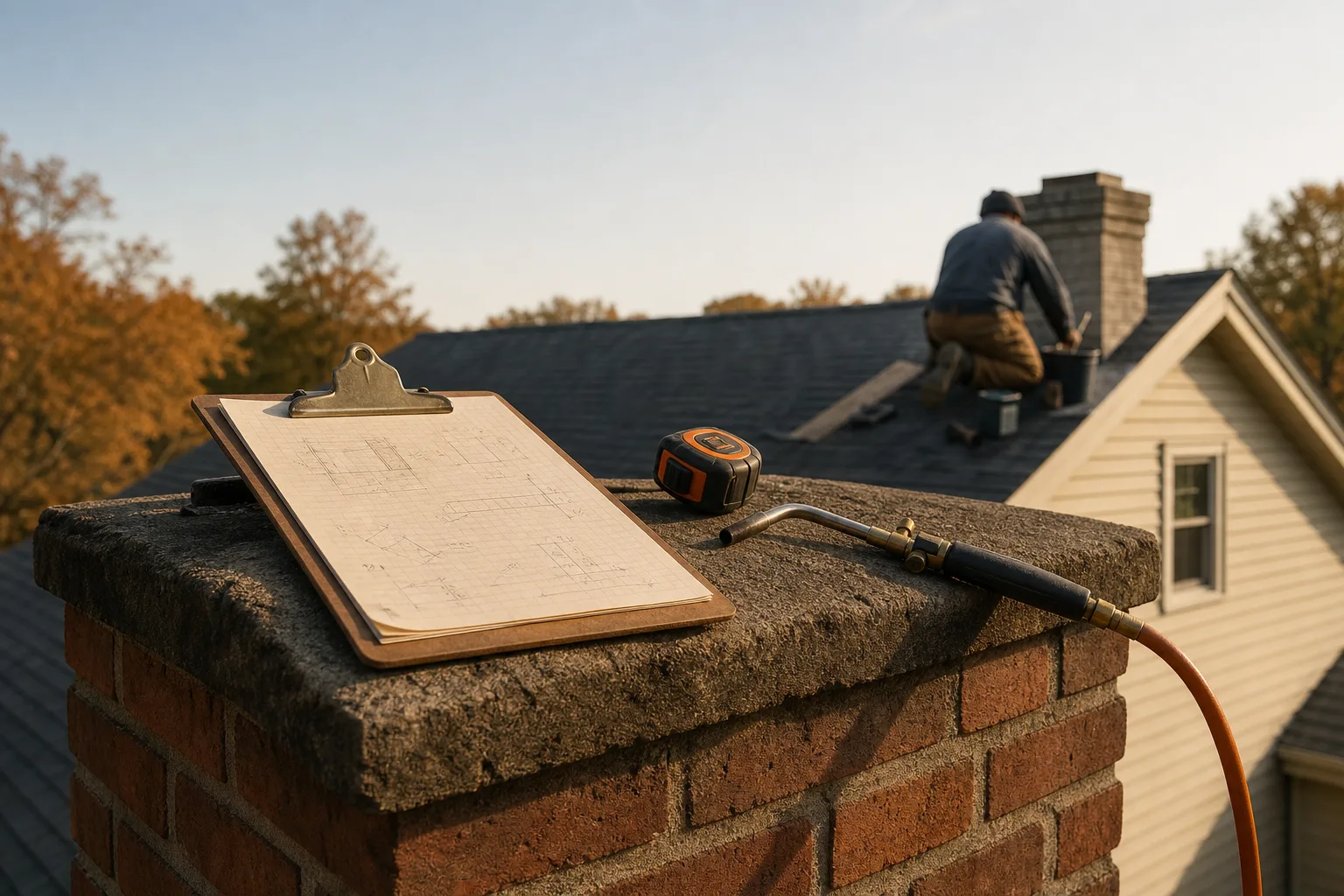
Handwritten estimate on a clipboard resting on a brick hearth beside a tape measure and torch

Replace the unit, not the battery, at 7-10 years

The electrochemical sensor degrades whether or not it has ever been triggered. A detector past its date can read zero in a room that is not.

Check it yourself

Checks you can make right now

  • Do you have one on every floor including the basement?

    If not, that is the first gap to close and it is inexpensive.

  • Is there one outside every bedroom?

    A detector that cannot wake you is not doing its job.

  • Is the nearest one within 15 feet of an appliance?

    Move it. That proximity is the usual cause of nuisance alarms.

  • What is the manufacture date on the back?

    Past seven to ten years, replace the unit. The sensor expires independently of the battery.

  • Does test produce a loud horn?

    Test checks the sounder only. It confirms the unit is powered, not that the sensor still works.

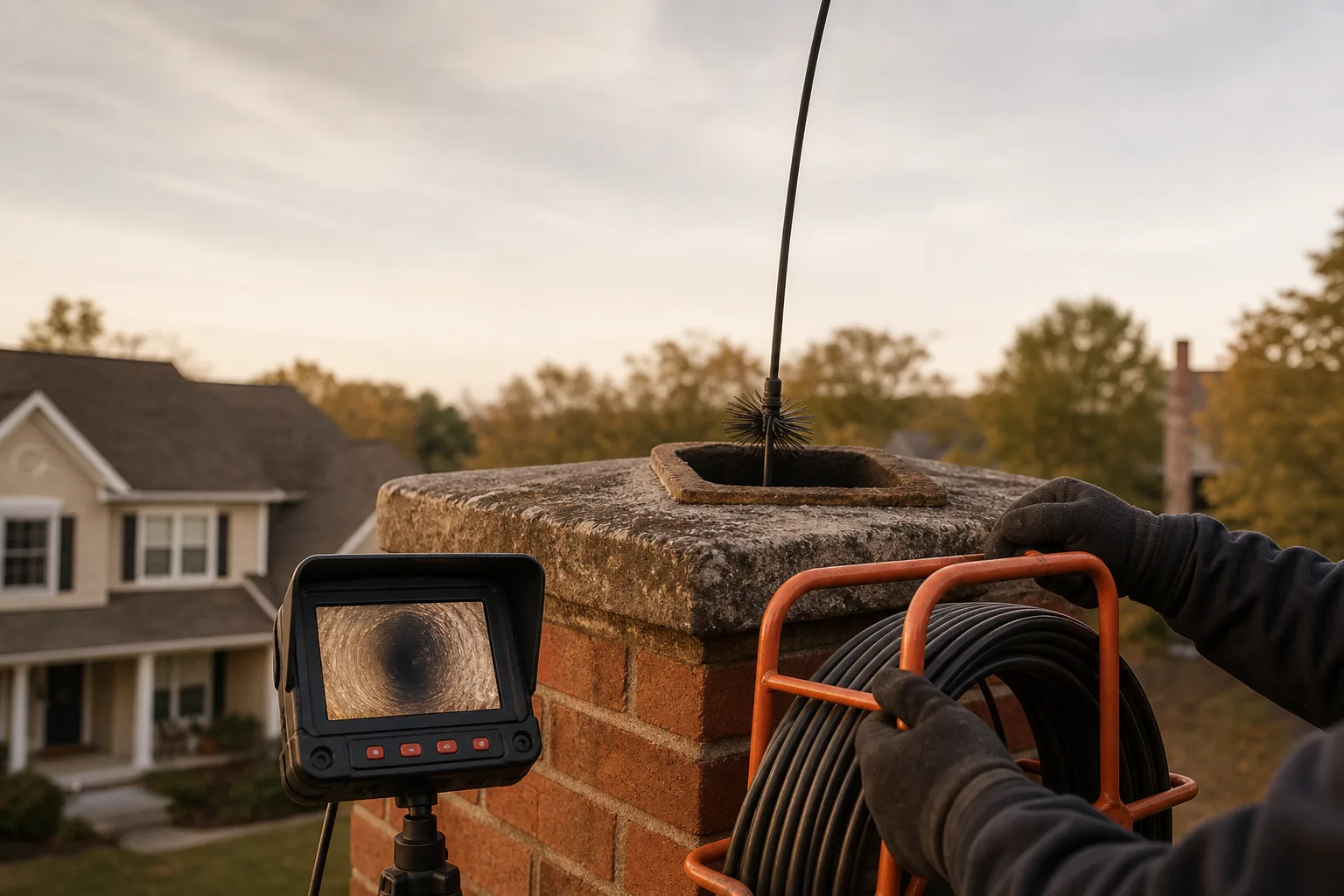
Capped brick chimney silhouetted against a soft dusk sky above a tidy residential rooftop

The VIO Standard

  • A written estimate first
  • License and insurance checked
  • Nothing starts without your OK

Common questions

How many carbon monoxide detectors do I need?

One on every storey including the basement, plus one outside every separate sleeping area. In a two-storey house with bedrooms upstairs that is usually three. Many building codes now require this, and where they do not it is still the right number - the failure mode is a detector on the wrong floor, not too few detectors in total.

Should carbon monoxide detectors be high or low on the wall?

Neither, particularly. CO has almost the same density as air and mixes with it rather than rising like smoke or sinking like propane, so height is far less important than people expect. Put it where you will actually hear it, where it will not get knocked, and away from corners, drafts and direct sun. Manufacturers vary in their advice; follow the one on the box you bought.

Where should you not put a carbon monoxide detector?

Four places. Within 15 feet of a furnace, boiler, water heater or fireplace, because normal start-up trips it. In a bathroom or anywhere humid, which shortens the sensor. In direct sunlight or a draft. And within a foot of a corner, where the air is effectively still and the unit is reading a pocket rather than the room.

Do carbon monoxide detectors expire?

Yes, and it surprises most people. The electrochemical sensor degrades over time whether or not it has ever been triggered, and units are rated for seven to ten years from manufacture - not from installation. There is a date printed on the back. A detector past that date can read zero in a room that is not safe, which is worse than having none because you believe it.

Does a smoke alarm detect carbon monoxide?
No, unless it is a combination unit and says so on the front. They detect completely different things by completely different means, and a smoke alarm will not react to CO at any concentration. Combination units are fine and convenient; what is not fine is assuming the alarm on your ceiling covers both.

Stop using it and get it checked.

Do not light another fire until this has been looked at. Describe what happened and a local pro will tell you whether it can wait. Nothing gets done to the chimney until you have the price in writing.

Ethan Miller and Ryan Carter of VIO CHIMNEY beside a branded service truck
Who we are

The people behind every visit

Founded by Ryan Carter in 2019. Every page you read here is reviewed by Ethan Miller, our chimney specialist. A written estimate before any work, and the findings in writing whether or not anything needs doing.

More about who we are →
(513) 655-6702Get my estimate