



On this pageWhat a dryer vent cleaning service should include6 sections+5
Quick answer
A dryer vent cleaning service should rotary-brush the full duct, remove loosened lint, inspect the transition duct and exterior termination, and reconnect the dryer correctly. The technician should also compare airflow before and after cleaning and document any damage that cleaning cannot fix.
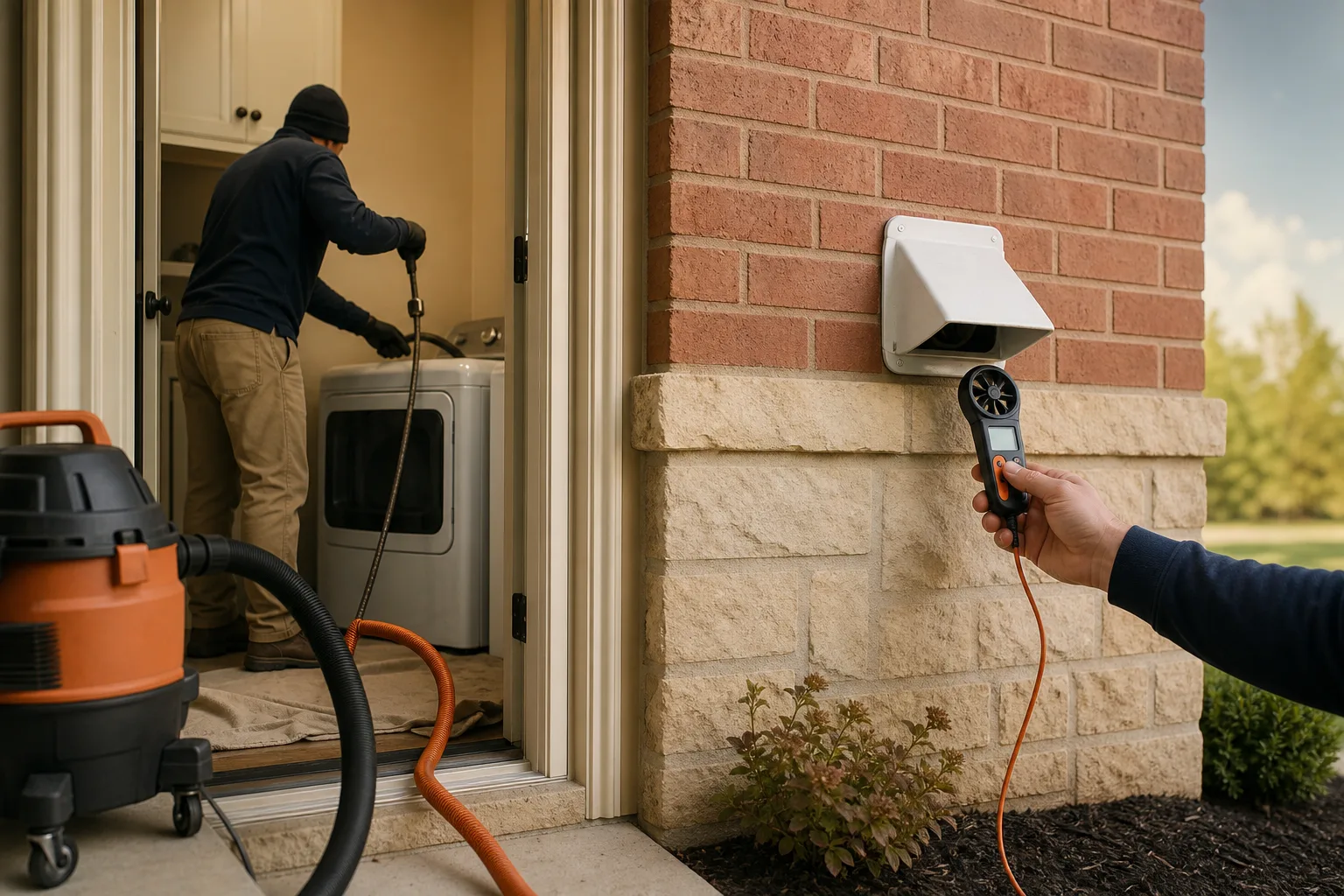
What a dryer vent cleaning service should include
A dryer vent cleaning service should clear the entire duct, inspect the parts that commonly restrict airflow, reconnect the dryer correctly, and verify the result. The visit should produce evidence that air moves better through the complete route, not merely leave you with a pile of lint beside the appliance, and the findings can help determine how often to clean the dryer vent.
The technician should begin by checking the dryer location, transition duct, vent route, and termination point. An initial airflow reading at the exterior hood gives the final reading something meaningful to be compared with, while a brief dryer check can identify obvious problems that vent cleaning will not solve.
After protecting the laundry area, the technician disconnects the dryer and examines the transition duct between the appliance and wall. A crushed, torn, sharply kinked, or unsuitable connector can restrict airflow even when the fixed duct inside the wall is clean.
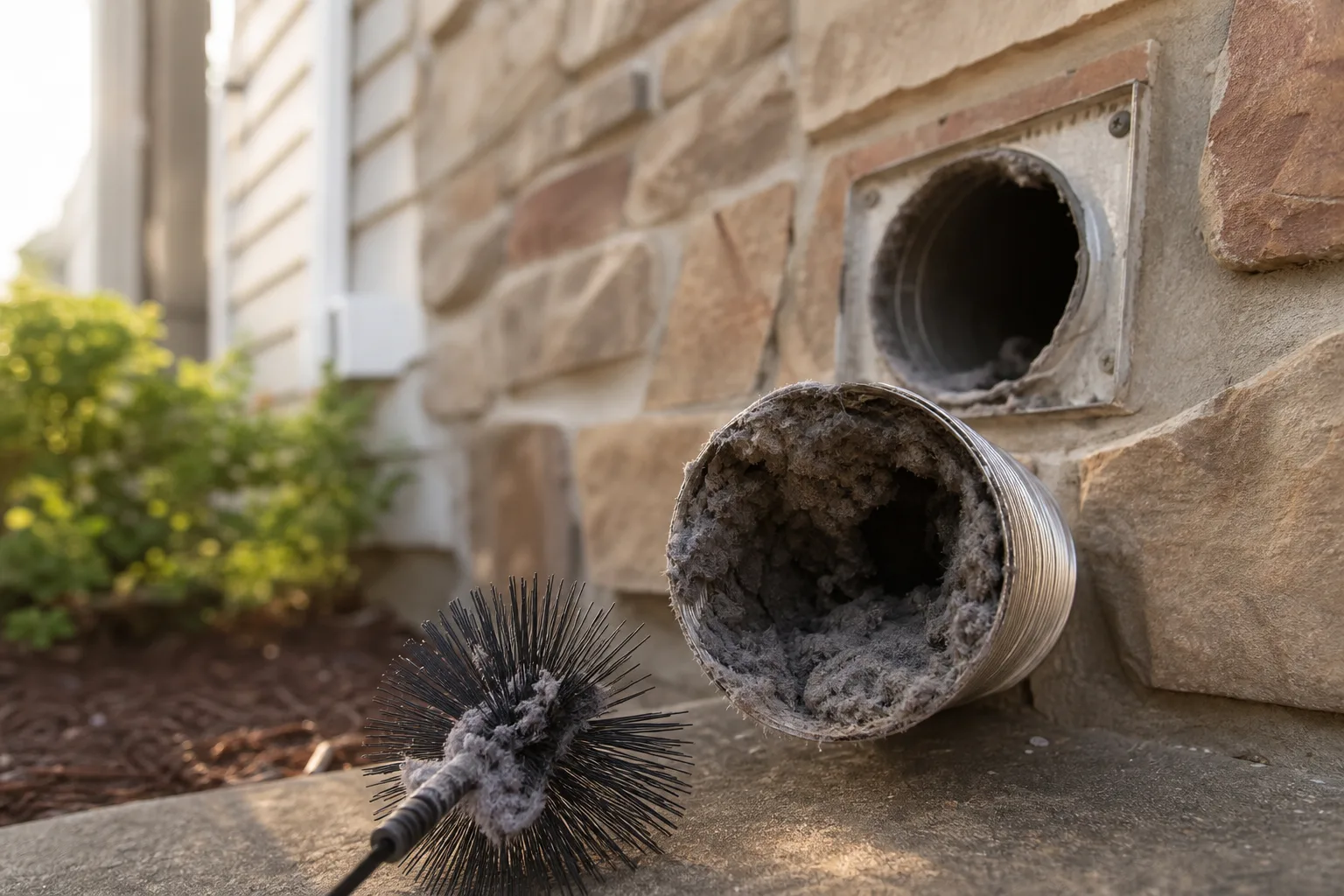
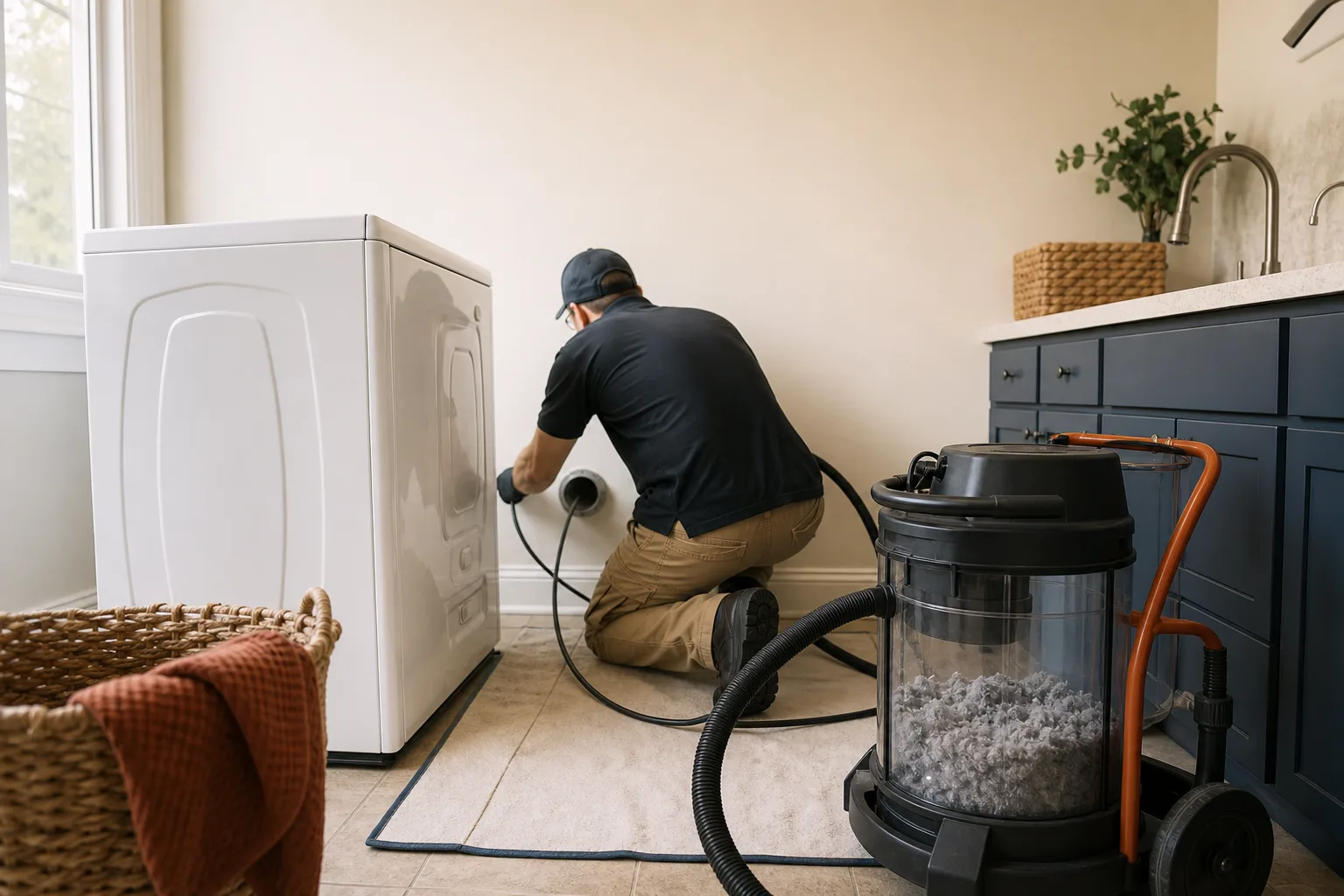
The main vent should be cleaned through its full length with flexible rods and a rotary brush sized for the duct. Active debris removal, such as a vacuum or controlled air collection method, keeps loosened lint moving out of the line instead of allowing it to settle around a bend.
Myth vs. fact: A powerful blower does not automatically clean a vent. Air may open a narrow path through packed lint while leaving material attached to the duct walls, joints, and turns, so mechanical brushing and debris collection provide a more dependable full-line result.
Cleaning from one end can work when the technician knows the vent route and confirms the brush reached the termination. Complicated runs may need access from both ends, especially when tight turns prevent the rods from advancing safely.
The exterior termination hood is part of the system, not an optional extra. You can make a simple ground-level check before the appointment, provided the hood is safely visible and does not require a ladder:
- Find the hood. Look along the exterior wall for a flap connected to the laundry area.
- Watch the flap. Run the dryer briefly and see whether the damper opens freely.
- Look for buildup. Check for lint packed around the opening, pest material, or a screen collecting fibers.
- Keep your footing. Leave roof terminations and high wall vents to properly equipped technicians.
The technician should inspect the hood after cleaning, remove accessible lint or nesting material, and confirm that the flap opens and closes. A fixed screen can repeatedly trap lint and may need correction rather than routine clearing.
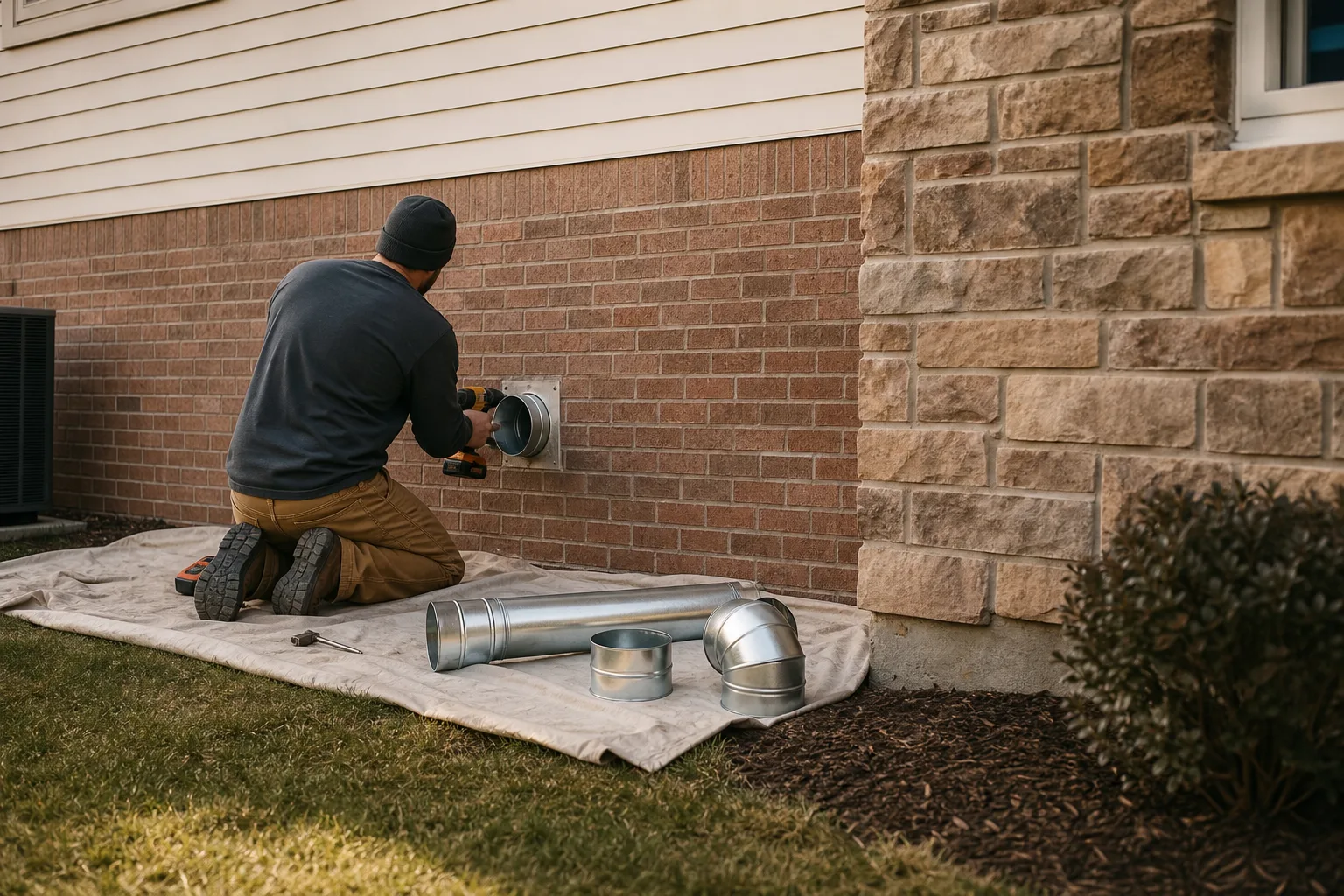
Before reconnecting the appliance, the technician should inspect accessible joints and note damage, separation, excessive sagging, or screws projecting into the airflow path. The final steps include securing the transition duct without crushing it, returning the dryer to position, running it, and measuring airflow again at the termination.
Good evidence may include the initial and final airflow readings, photos of inaccessible or damaged areas, visible debris collected, and written notes describing the vent route. Photos alone do not prove airflow, while an airflow number without context does not show whether damaged ductwork was found.
From the field: A clean-looking hood can hide a dense lint collar just inside the final elbow. Technicians commonly find that the flap moves slightly, but never opens far enough to release the dryer's exhaust properly.
Want the full vent checked, not just the easy end? Request full-line cleaning and an airflow check or call (513) 655-6702.
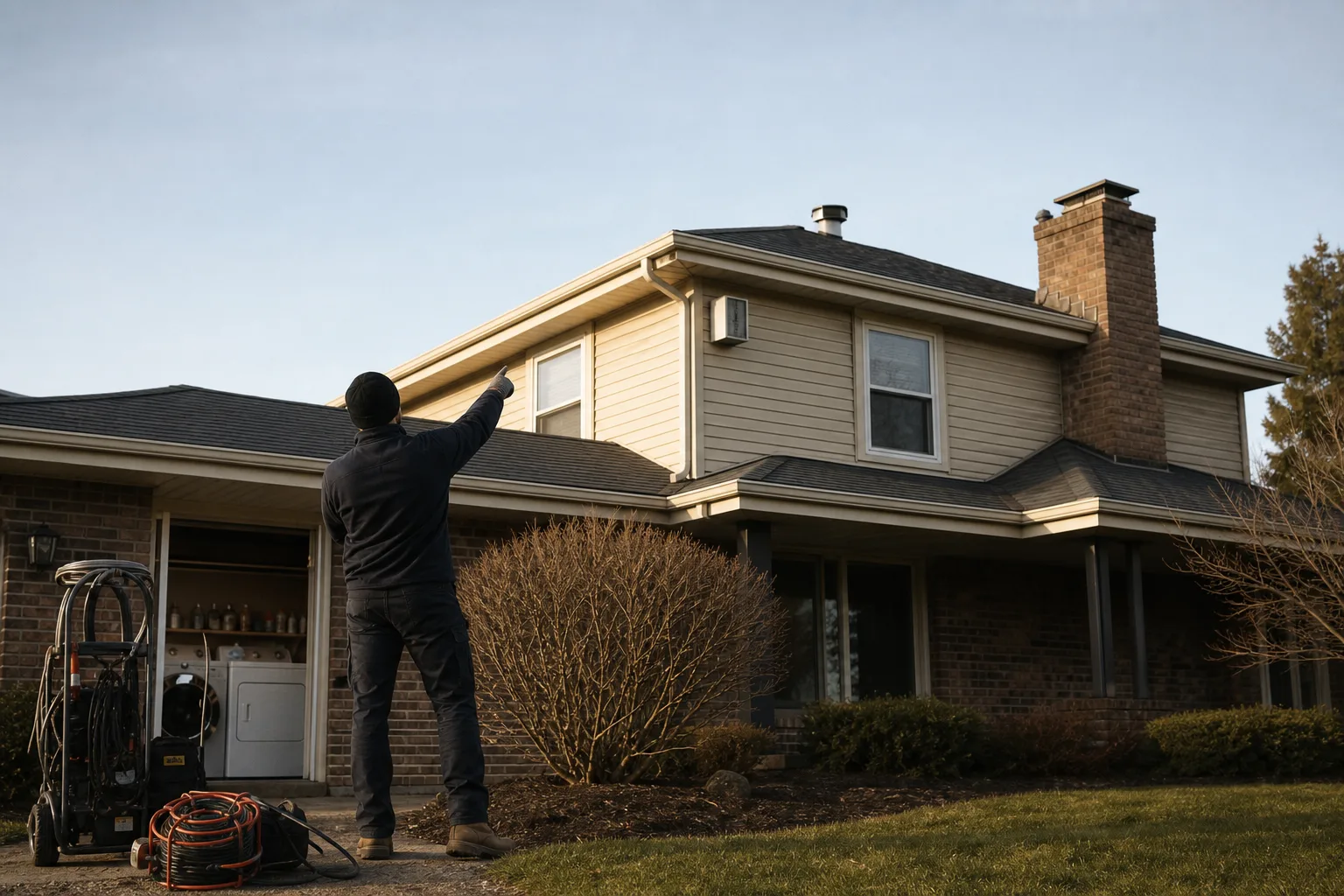
How vent length and termination location change the job
A short, straight wall vent is generally easier to inspect and clean than a long concealed route with several turns. Every elbow adds resistance, creates a place for lint to collect, and makes it harder to know whether rotary rods have reached the far end without careful planning.
The route also determines where the technician can work. A first-floor wall termination may be reachable from both ends, while a laundry room in the center of an upper floor may connect to a duct that rises through ceilings and exits at the roof.
| Vent configuration | How it changes the service |
|---|---|
| Short, straight wall run | Often allows direct access, easier brush travel, and a clear hood inspection |
| Long run with several turns | May require additional rod control, cleaning from both ends, and closer airflow verification |
| Roof termination | Requires roof-access planning, suitable weather, and equipment for safe exterior inspection |
| Concealed run through a ceiling or upper floor | Limits visual inspection and makes route information more important |
| Crawl-space route | May provide joint access, but only if the space is safe and reasonably accessible |
A roof termination is not simply a wall vent placed higher up. Roof pitch, surface condition, weather, landscaping, and the hood design affect whether exterior access is safe on the scheduled day, and the technician may need different brushes or collection methods.
Safety note: Do not climb onto a roof to identify the vent or clear the cap before the appointment. A photo taken from the ground, an attic observation, or the home's plans can help the provider prepare without putting you at risk.
Hidden ducts create a different challenge because the technician cannot watch every joint while brushing. If the line passes above a finished ceiling, through an upper floor, or behind cabinetry, the provider must avoid forcing rods through an unknown obstruction or a joint that may already be loose.
Cleaning direction matters as well. Feeding rods from the dryer side may give the straightest entry, but working from the exterior can be useful when the final elbow holds the main blockage or the dryer is boxed into a tight alcove.
A provider should ask about the dryer floor, its distance from an outside wall, the likely termination location, and any roof, attic, crawl-space, gated, or parking access issues. Pictures of the dryer connection and exterior hood can help define the likely scope, although concealed damage may remain unknown until the visit.
A firm quote offered without basic route questions deserves caution. Vent length, turns, termination location, and working access all affect the tools, time, and safe approach needed for a complete cleaning.
Good to know: The longest-looking vent is not always the hardest one. A shorter route with a crushed connector or tight back-to-back elbows can be more restrictive than a longer, properly supported metal duct.
Not sure where your vent ends? Send a service request with photos of the dryer area or call (513) 655-6702, and describe any roof or gated access you know about.
How to judge a quote before booking
A useful dryer vent cleaning service quote should define the work from dryer access through final airflow verification. It should tell you whether full-length rotary brushing, debris removal, termination inspection, reconnection, cleanup, and service notes are included, rather than hiding routine steps behind a low opening price.
A written quote should also state reasonable limits. Roof access may depend on weather and surface conditions, concealed duct repairs may require separate approval, and moving a stacked or built-in appliance may fall outside the quoted work if special handling is needed.
Use these questions when comparing providers:
- Confirm the method. Will you rotary-brush the entire vent, or use only air from one end?
- Define both access points. Does the quote include disconnecting the dryer and checking the exterior or roof termination?
- Ask for verification. Will you record airflow before and after cleaning, or provide another clear full-line performance check?
- Clarify the connector. Will you inspect the transition duct and explain if it is crushed, torn, or unsuitable?
- Set fee boundaries. Which conditions could change the quote, and will you ask for approval before doing added work?
- Request documentation. Will the service notes identify damage, blockage, and any area that could not be accessed?
Quotes can reasonably vary because homes do not have identical vent systems. A long route with multiple bends, severe blockage, roof access, damaged ductwork, or a dryer wedged beneath cabinetry requires a different plan from a short wall run behind a freestanding appliance.
The problem is not a price adjustment supported by a newly discovered condition. The warning sign is teaser pricing that covers little more than arrival, followed by pressure to buy full-length brushing, hood cleaning, airflow testing, or ordinary dryer reconnection as expensive add-ons.
Pro tip: Ask the provider to name what the advertised price excludes before you book. If the answer is vague, request a written scope that separates standard cleaning from possible repair work.
A trustworthy provider explains why an added step is needed and shows the condition before asking for approval. You should be free to decline repair work without being told that an undocumented hazard requires an immediate decision.
Compare the actual scope rather than the first number you hear. A quote that includes the full duct, both ends where accessible, performance testing, careful reconnection, and cleanup gives you a sound basis for judging the visit.
For a written scope focused on full-line cleaning and documented airflow, request service online or call (513) 655-6702.

Red flags during the service visit
A dryer vent cleaning service should produce a clear change you can see, measure, or verify. If the technician runs a blower for a few minutes, never disconnects the dryer, and declares the line clean without checking the termination or airflow, you have little evidence that the full vent was cleared.
Blower-only cleaning is a common shortcut. Air may move loose lint, but it may not remove packed material clinging to elbows, seams, or the ridges of flexible duct. Full-length rotary brushing, paired with active debris collection or extraction, physically loosens buildup rather than hoping pressure pushes everything outside.
Cleaning from one end is not automatically wrong, but the technician should confirm that the tools reached the entire run. A long line with several turns can stop a brush short, and a hidden disconnection can release lint into a ceiling or crawl space instead of carrying it outdoors.
Myth vs. fact: The myth is that lint blowing from the exterior hood proves the vent is clean. The reality is that some debris can exit while a restriction remains deeper in the run, so airflow and hood operation still need to be checked.
Skipping the exterior termination is another warning sign. The technician should inspect the flap or louvers, remove trapped lint, look for nesting material, and identify any screen that is catching debris. A flap that barely opens after cleaning may signal a remaining blockage, a damaged hood, or poor airflow from another cause.
Be cautious if the technician uses vague contamination claims to create urgency. Photos should show your vent, findings should be explained in plain language, and added charges should correspond to work that was not included in the written scope. Routine steps such as reaching the dryer, cleaning the agreed vent length, or checking airflow should not suddenly become unexplained premium upgrades.
Signs of respectful, complete service include:
- Protecting the floor and nearby walls before moving equipment.
- Disconnecting and reconnecting the dryer without crushing the transition duct.
- Inspecting the transition duct for tears, kinks, or unsafe material.
- Containing loose lint instead of leaving it across the laundry room or yard.
- Showing airflow results, photos, removed debris, or other useful evidence.
- Documenting damage and obtaining approval before performing added work.
From the field: A surprising amount of lint can collect directly behind the dryer when the transition duct is kinked or loosely attached. Cleaning the wall vent while ignoring that short connection leaves the most obvious restriction in place.
A technician should not claim success when the exterior flap remains still or the final airflow is weak. If the provider refuses to document what was cleaned, explain an add-on, or show why further work is needed, pause before authorizing more service.
Want the full line checked, not just blown out? Request a documented service visit or call (513) 655-6702.
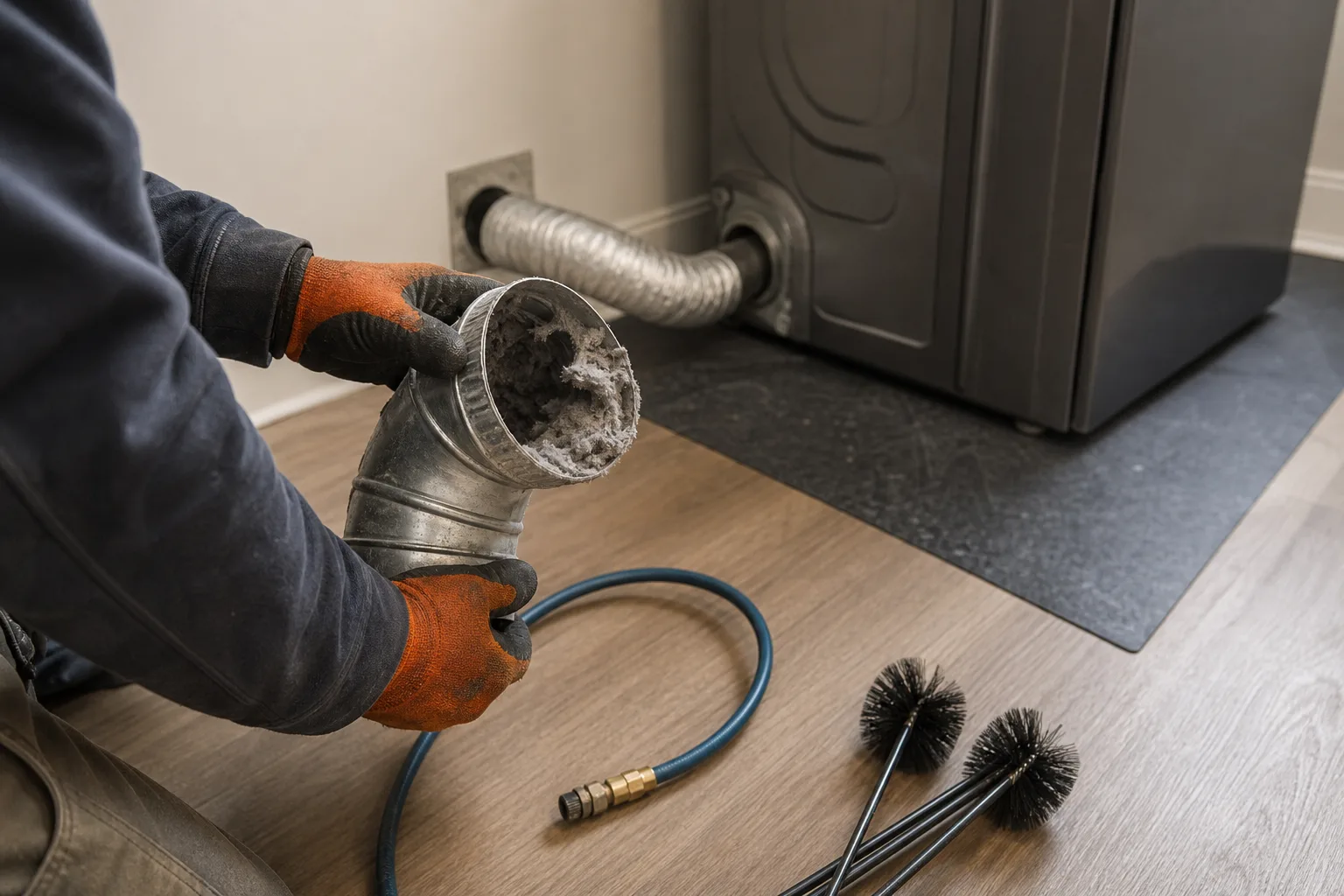
When cleaning alone will not fix the vent
A dryer vent cleaning service will not fix crushed, torn, disconnected, sagging, or poorly joined ductwork. When airflow stays weak after the full line has been brushed and cleared, the next step is diagnosis, not repeated cleaning. The technician should identify the defect, show evidence, and separate necessary repairs from optional improvements.
A crushed duct behind the dryer may be visible as soon as the appliance is moved. Damage inside a ceiling, crawl space, or upper floor can be harder to confirm, but a camera, accessible joint inspection, airflow result, or unexpected debris discharge may help narrow down the location.
| Finding after cleaning | What it may indicate | Sensible next step |
|---|---|---|
| Exterior flap still barely opens | Damaged hood, hidden restriction, or weak dryer output | Inspect the termination and test the vent and dryer separately |
| Lint appears in a ceiling or crawl space | Disconnected or torn duct | Locate and repair the failed section before using the dryer |
| Water or damp lint is present | Rain entry, condensation, or a low sag holding moisture | Correct the source and assess the affected duct |
| Airflow improves only slightly | Excessive bends, crushed duct, installation defect, or dryer problem | Document the route and test likely failure points |
| Hood repeatedly packs with lint | Stuck flap, pest material, or an improper screen | Repair or replace the termination as needed |
Pest nesting can block a hood even after loose lint has been removed. A stuck flap may also trap moisture and debris, while a screen over the termination can clog repeatedly and should be evaluated for correction. Dryer exhaust terminations generally need a damper that opens freely without a lint-catching screen.
Excessive bends and long sagging sections create places where lint settles. Improperly joined sections can catch brush heads and collect debris at exposed fasteners, while thin or unsuitable transition duct can collapse behind the appliance. These are route or material problems, so another cleaning pass will not provide a lasting fix.
Safety note: Do not climb onto a roof to inspect a cap unless you have suitable access and fall protection. A steep roof, wet surface, brittle roofing, or cap near an edge changes a simple inspection into hazardous work.
Poor airflow can also originate inside the dryer. A technician should avoid declaring the appliance defective without evidence, but should explain when a clean, intact vent still performs poorly and appliance service may be appropriate.
A trustworthy provider distinguishes observations from conclusions. You should receive photos where practical, the location of the suspected defect, airflow findings, and a clear explanation of why repair or replacement is being recommended before you approve it.
Need help separating a blockage from damaged ductwork? Send a service request for an inspection and cleaning or call (513) 655-6702.
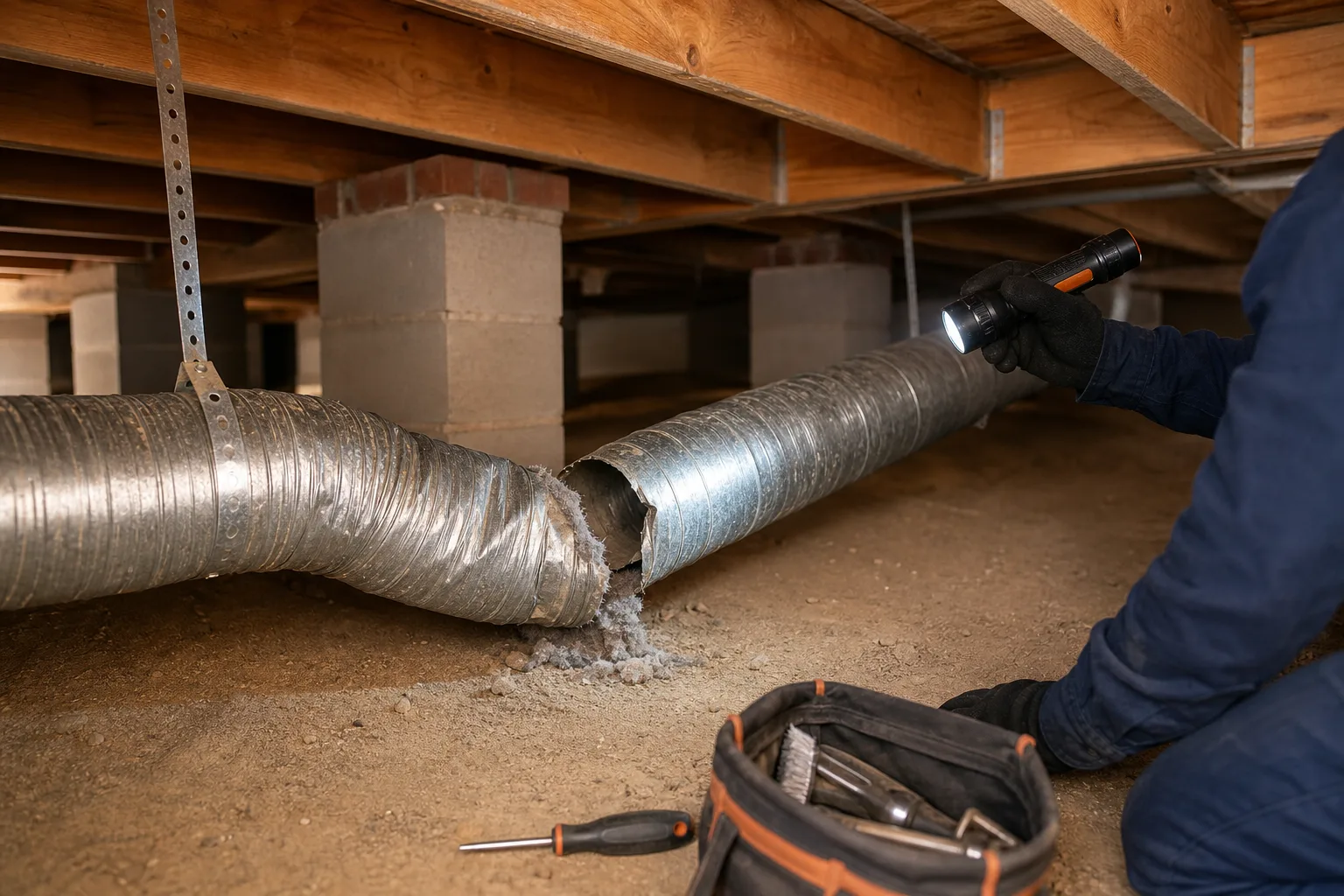
What to expect before, during, and after the appointment
A little preparation gives the technician room to move the dryer safely and keeps hoses, shelves, and stored items out of the work area. You do not need to dismantle anything, and you should not pull out a heavy appliance if doing so could damage the floor, gas connection, power cord, or transition duct.
Use this short walk-through before the crew arrives:
- Clear the laundry area. Move baskets, rugs, detergent containers, and fragile items away from the dryer.
- Check the access path. Make sure equipment can pass through doors, hallways, gates, or shared utility spaces.
- Locate the termination. From ground level, look for the wall hood if you know where it exits, but do not climb onto the roof.
- Mention access limits. Tell the provider about locked gates, attic panels, crawl-space entries, upper-floor laundry rooms, or roof restrictions.
- Share the symptoms. Report long drying times, excess heat, burning smells, lint behind the machine, or a flap that does not open.
Expect some equipment noise as rotary rods, a vacuum, or an air-moving system runs through the line. The dryer may need to be pulled forward, and the technician may work from the appliance connection, exterior termination, or both ends depending on the route.
Lint collection should be controlled, though opening a heavily blocked line can release some loose material. A careful crew protects finished surfaces, positions hoses without scraping corners, and cleans the work area before reconnecting the appliance.
Good to know: A roof termination can look clear from the ground while packed lint sits beneath the cap. The technician may need different rods, ladders, or access planning, and unsafe weather can require the roof portion to be postponed.
If hidden damage appears, the work should pause long enough for a clear explanation. You should be told what was found, how it affects the original scope, what evidence supports the finding, and whether the dryer should remain unused until a repair is made. Added work requires your approval, not a surprise on the final invoice.
The final walkthrough should confirm that the dryer and transition duct are reconnected without sharp bends or crushing. It should also cover the final airflow result, exterior flap movement, debris removed, useful before-and-after photos, and any areas that could not be accessed.
Service notes should distinguish completed cleaning from recommended repairs. If a hood is damaged, a joint is disconnected, or the route appears poorly installed, the provider should identify the location and explain the next step rather than presenting a vague warning.
Before the technician leaves, run the dryer briefly if conditions allow. Listen for rattling at the connection, check that the appliance sits properly, and ask any remaining questions about the airflow reading or termination. The laundry area should be clean, the vent connection secure, and the findings understandable.
For full-line cleaning with a documented airflow check and final walkthrough, request service online or call (513) 655-6702.
Symptom checker
What is your chimney doing?
Tap the closest match for an honest first answer.