



On this pageA practical answer for how often to clean dryer vent lines6 sections+5
Quick answer
Most household dryer vents should be inspected and cleaned about once a year. Clean sooner if the dryer handles frequent loads, the vent is long or sharply routed, or you notice longer drying times, excess heat, weak airflow, or a burning smell.
A practical answer for how often to clean dryer vent lines
For most households asking how often to clean dryer vent, a yearly inspection and cleaning is a sensible starting point. Homes that run frequent loads or have long, winding exhaust routes may need attention sooner. Any sign of restricted airflow should override the calendar.
The clearest answer to how often to clean dryer vent systems is to base the interval on actual use and the vent's condition. A lightly used dryer with a short, straight duct may stay clear longer than a machine serving a busy household through several elbows and a roof termination. One fixed schedule cannot account for both situations.
An annual visit provides a useful baseline because you can see how much lint collected during a typical year. If the duct is already heavily coated or airflow has dropped, shorten the next interval. If the route is open and airflow remains strong, continue checking it each year rather than assuming it can be ignored.
Pro tip: Keep a quick note of how long a familiar load takes to dry when the vent is clean. Towels work well because most households wash a similar amount each time. A gradual increase in drying time can reveal an airflow change before the dryer begins struggling through repeated cycles.
Warning signs take priority over a scheduled date. Longer drying cycles, unusually hot clothes, a warm laundry room, weak airflow outside, or a scorched odor all justify prompt attention. Stop using the appliance if you smell burning or see smoke, then have the dryer and exhaust route assessed before running another load.
You can make a simple ground-level check while the dryer runs on a normal cycle:
- Find the exterior outlet. Identify where the dryer exhaust leaves the wall or roof, but do not climb or lean from a ladder to reach it.
- Watch the damper. Confirm that the exterior flap opens freely instead of barely moving or remaining shut.
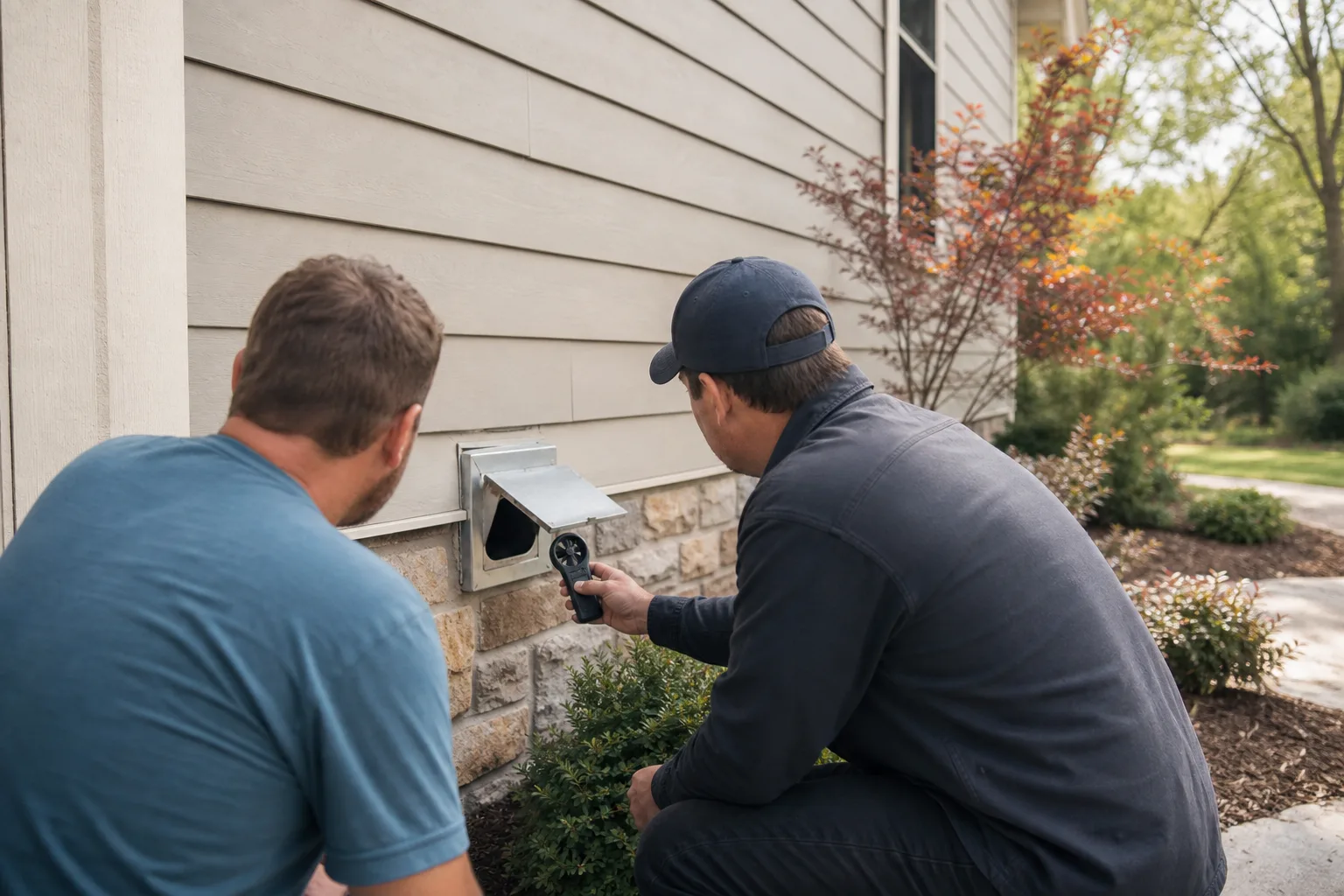
- Feel for airflow. From a safe position, check for a steady stream of warm exhaust without placing your hand inside the outlet.
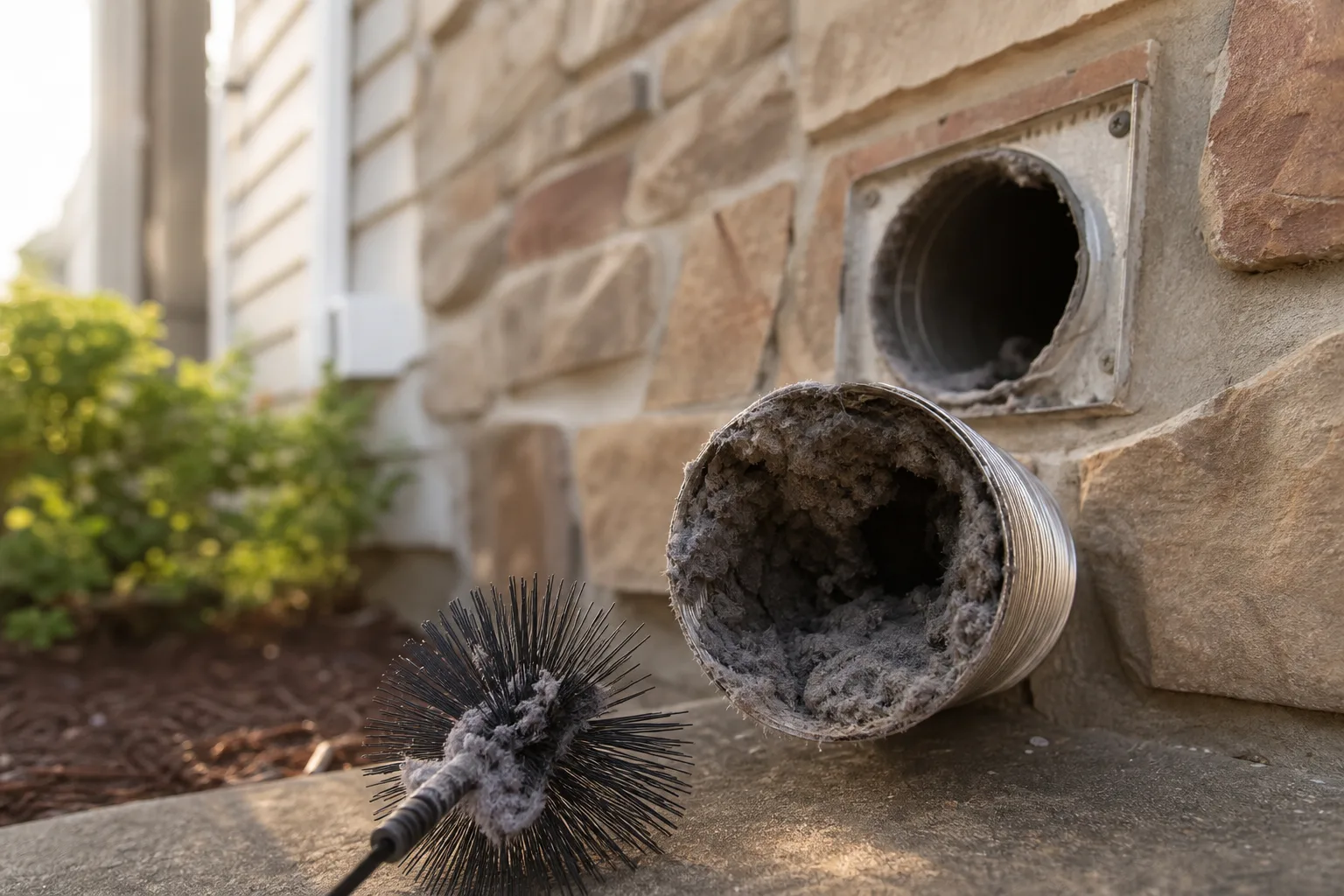
- Look for lint. Notice clumps around the hood, screen, siding, or nearby ground, which may point to buildup near the termination.
- Check the laundry room. Pay attention to excess heat, moisture, or lint collecting behind and around the appliance.
Safety note: Do not remove a roof cap, reach into a running vent, or operate the dryer with the duct disconnected as a test. If the termination is elevated or inaccessible, a technician can check airflow without turning a simple inspection into a fall hazard.
Want help setting the right interval? Request dryer vent service or call (513) 655-6702 for guidance based on your vent route and laundry use.
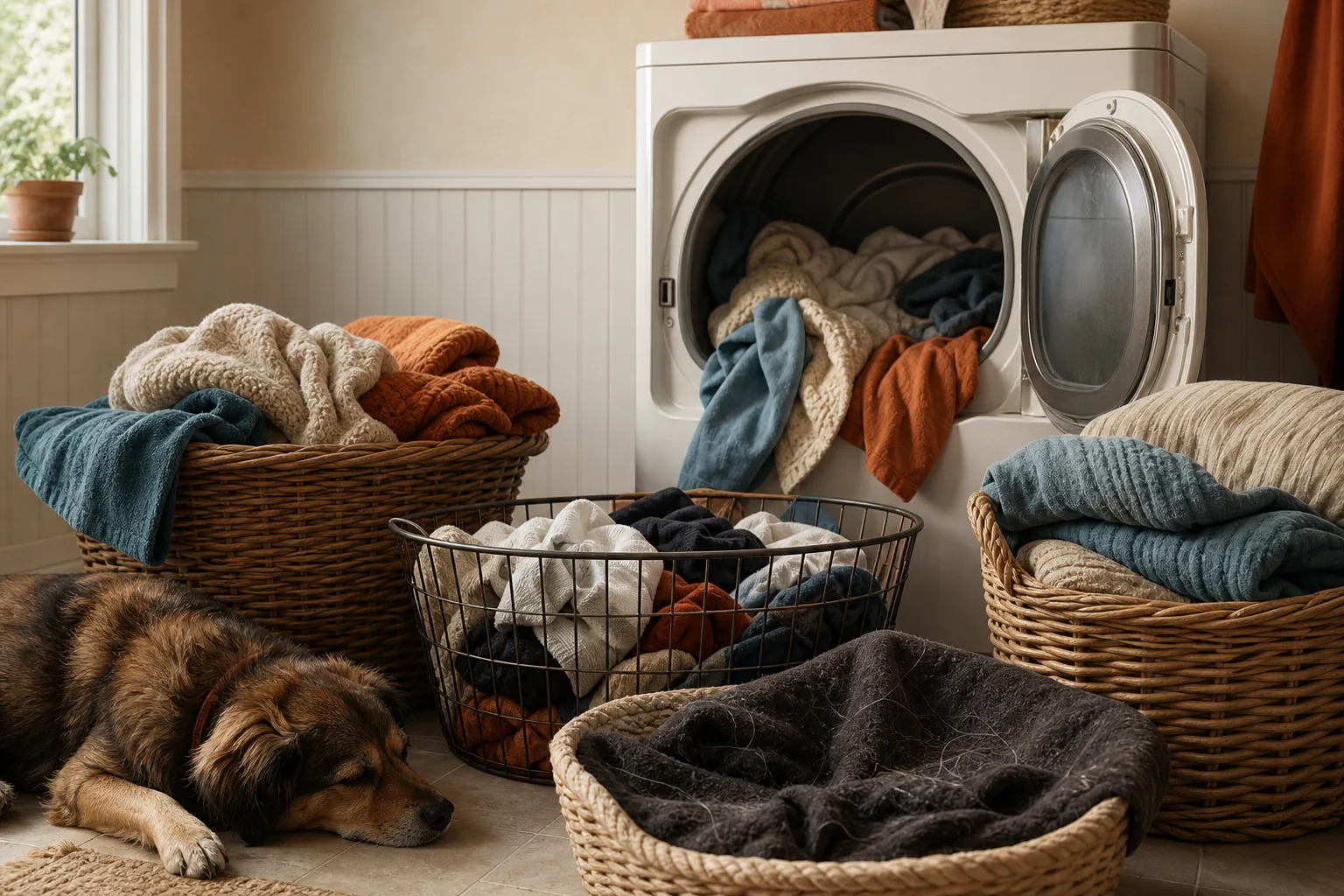
Let laundry volume set the starting interval
Laundry volume is one of the best ways to adjust an annual starting interval. A dryer serving several people usually processes more lint-bearing fabric than one used for occasional loads, so its exhaust path can develop airflow problems sooner. Count weekly loads, not just the number of people under the roof.
Household size still provides useful context. Adding a family member often means more clothing, towels, sheets, and last-minute cycles. If the dryer starts running most days instead of a few times a week, move the next vent check forward rather than waiting for the old date.
The type of laundry matters too. Thick towels, bedding, fleece, pet blankets, and fabrics that shed heavily can send more lint past the screen. Overfilled loads may also dry unevenly, encouraging repeated cycles that move additional warm, moist air through the same duct.
| Laundry pattern | What it means for the vent schedule |
|---|---|
| Occasional, smaller loads | An annual check is a practical starting point, provided airflow and drying performance stay consistent. |
| Frequent family laundry | Inspect sooner if drying time begins to rise or lint returns quickly at the exterior outlet. |
| Regular towels and bedding | Watch performance closely because bulky fabrics can shed heavily and hold substantial moisture. |
| Pet bedding and lint-shedding fabrics | Consider a shorter interval if hair and lint collect rapidly around the screen or vent opening. |
| Several loads in one day | Check for heat buildup and changing cycle times rather than relying only on the yearly date. |
Good to know: Cleaning the lint screen after every load helps airflow through the dryer, but it does not catch everything. Fine fibers pass beyond the screen and can settle along the full duct, especially at seams, bends, and the exterior hood.
Pets can change the cleaning pattern even when the number of weekly loads stays similar. Hair sticks to blankets, towels, and clothing, then mixes with lint and moisture inside the exhaust system. After bringing home a pet, watch the first few months of laundry use and adjust the vent schedule if buildup returns sooner.
Seasonal changes also affect volume. Guest bedding, sports uniforms, school clothes, and winter layers can turn a moderate routine into several back-to-back loads. A temporary increase does not automatically require immediate cleaning, but sustained heavier use should move the inspection date closer.
The goal is not to calculate a perfect interval from household size alone. Start with yearly service, then shorten that period if your normal laundry routine produces noticeable lint, slower drying, or weaker exhaust flow before the year is up.
Account for vent length, routing, and dryer type
Vent layout can matter as much as laundry volume. A short, straight metal duct gives lint fewer places to settle, while a long route with several turns creates more resistance and more collection points. Runs concealed in walls, ceilings, attics, or floor cavities are also harder for a homeowner to inspect from end to end.
Each elbow changes the direction of moving air. Lint commonly gathers along the inside of a bend, at duct joints, and behind exterior dampers that do not open fully. A route that rises to a roof outlet must also move warm, damp exhaust farther than a direct wall termination.
From the field: The lint you can see behind the dryer may be only a small part of the restriction. Technicians often find denser buildup at elbows and terminations, particularly where a long concealed run loses airflow before reaching the outdoors.
Exterior conditions affect the route as well. A stuck damper, crushed section, bird nesting material, or lint-packed cover can reduce airflow even when much of the duct looks clear. Screens at dryer exhaust terminations can trap lint and are generally not suitable because the openings clog as fibers collect.
Gas and electric dryers both require an open, correctly routed exhaust duct. The heat source changes what the appliance produces, but it does not make a blocked vent acceptable for either type.
| Dryer type | Exhaust consideration | Effect on cleaning frequency |
|---|---|---|
| Electric dryer | Exhaust carries heat, moisture, and lint from the load. | Set the interval by usage, route length, turns, and measured airflow. |
| Gas dryer | Exhaust also carries combustion byproducts, making correct venting and duct condition especially significant. | Use the same condition-based approach, and address restrictions or damaged connections promptly. |
Myth vs. fact: Myth: Electric dryers do not need vent cleaning because they do not burn fuel. Fact: Electric dryers still push lint, heat, and moisture through the exhaust route, and a restriction can cause long cycles and excessive heat around the appliance.
Do not lengthen the cleaning schedule simply because a dryer is new. A replacement appliance may connect to the same long or sharply turned duct, and stronger airflow can shift existing lint toward a narrow bend or blocked termination. The complete route determines performance, not the age printed on the dryer.
A short schedule may be appropriate when the vent has multiple elbows, travels upward, or repeatedly develops weak airflow. If the route is long but remains accessible and performs consistently after cleaning, use those observations to set the next check rather than guessing from distance alone.
The safest schedule combines three facts: how often the dryer runs, how difficult the exhaust route is, and how the appliance behaves during normal loads. When the duct is concealed, elevated, or difficult to trace, request an airflow and vent assessment or call (513) 655-6702 to arrange service.
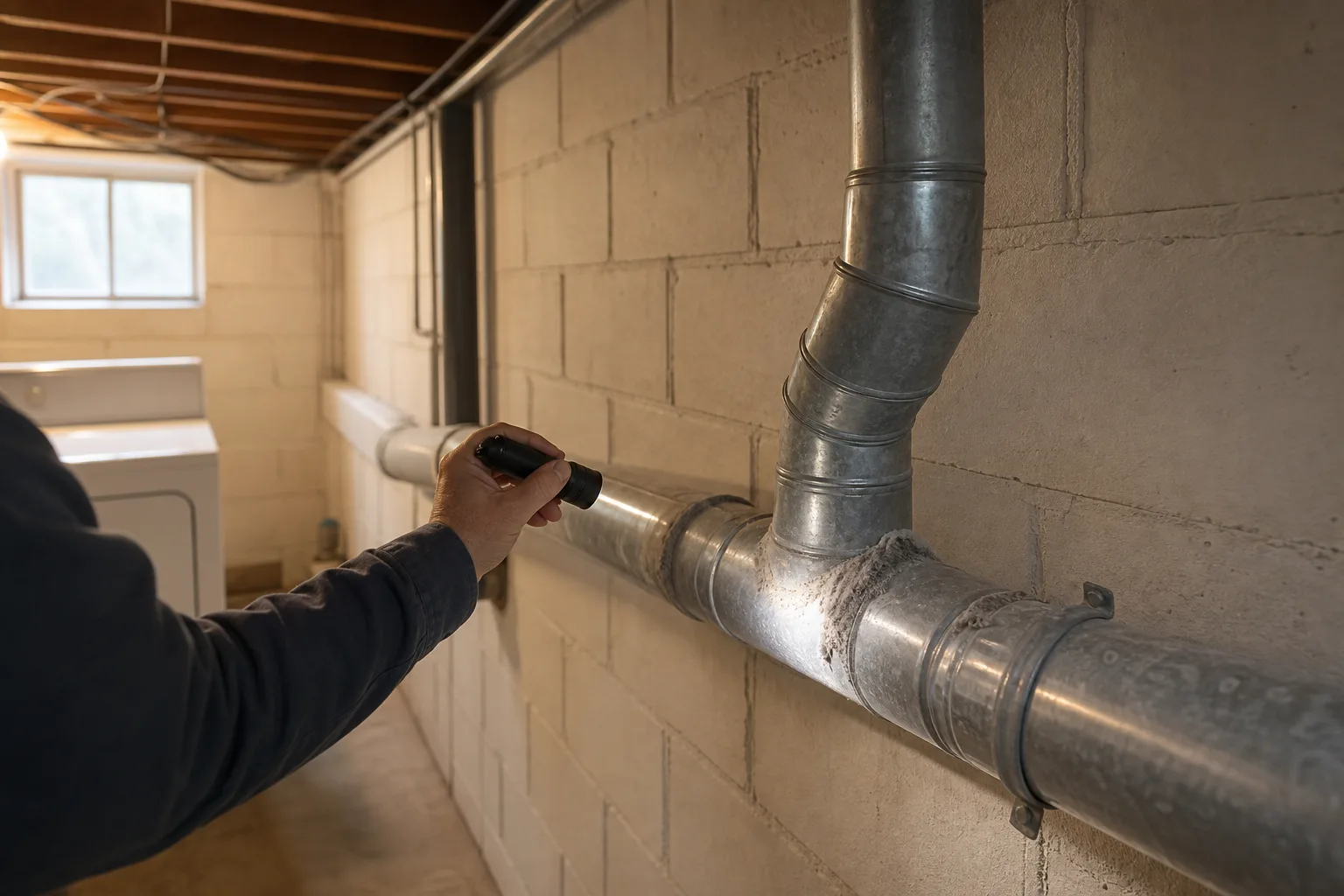
Clean sooner when the dryer shows warning signs
If you are deciding how often to clean dryer vent lines, the dryer's behavior should override the calendar. Longer cycles, hotter loads, weak exhaust airflow, or an unusual smell can mean the duct is already restricted. Waiting for the usual cleaning month allows more lint and heat to collect.
A load that once dried in one cycle but now needs another pass is one of the clearest early warnings. Restricted airflow traps humid air inside the drum, so the dryer keeps heating and tumbling without removing moisture efficiently. Check that the selected cycle and load size have not changed, but do not dismiss a repeated slowdown.
| What you notice | What it may indicate | What to do |
|---|---|---|
| Loads take longer or need repeated cycles | Moist air is not leaving the dryer efficiently | Check the lint screen and arrange vent cleaning if the problem continues |
| Clothes feel unusually hot | Heat may be trapped by restricted airflow | Stop adding cycles and have the vent checked |
| The laundry room becomes warmer than usual | Heated exhaust may be backing up or leaking | Inspect the connection and exterior airflow |
| Airflow at the exterior outlet feels weak | Lint, a stuck damper, crushed duct, or another blockage may be present | Schedule an inspection and cleaning |
| The dryer shuts off during a cycle | An overheat control may be interrupting operation | Stop using the dryer until the cause is assessed |
| You smell burning or scorching | Lint, a dryer component, or wiring may be overheating | Stop the dryer immediately and seek qualified help |
Hot clothes deserve context. Laundry can feel warm at the end of a heated cycle, but items that are uncomfortable to hold, smell scorched, or stay unusually hot after the cycle point to excess heat. An unusually warm laundry room is another clue, particularly when the heat appears only while the dryer is running.
Safety note: A burning or scorched smell is not a reminder to clean the vent next weekend. Stop the cycle, turn off the dryer, and avoid using it until the vent and appliance have been checked. If you see smoke or signs of fire, leave the area and contact emergency services.
The exterior outlet can reveal a restriction before the dryer stops working. While the dryer is running, go outside and observe the damper from ground level. It should open freely, and the exhaust should feel steady without requiring you to reach into the opening or remove a cover while the appliance operates.
Use this quick exterior check when drying performance changes:
- Watch the damper. Confirm that the flap opens while the dryer runs and closes when it stops.
- Check the airflow. Stand safely at the outlet and feel for a steady stream of exhaust without putting your hand inside the duct.
- Look for lint. Notice lint collecting on the cover, siding, roof surface, or ground below the outlet.
- Inspect the cover. Look for a stuck flap, damaged hood, nest material, or debris blocking the opening.
- Notice the route. If the outlet is on a steep roof or above safe reach, leave the inspection to a trained technician.
Lint collecting behind the dryer can come from a loose joint, a torn transition duct, or spillage during lint screen cleaning. It can also signal that the system is pushing against a restriction. A crushed connector behind an appliance that has been pushed too close to the wall can cause the same symptoms as a dirty duct.
From the field: Technicians often find more than one cause behind slow drying. A partially clogged run may be paired with a crushed connector or an exterior flap packed with lint, so cleaning only the easiest section does not always restore airflow.
Want the warning signs checked before the next load? Request dryer vent service or call (513) 655-6702 for a straightforward next step.
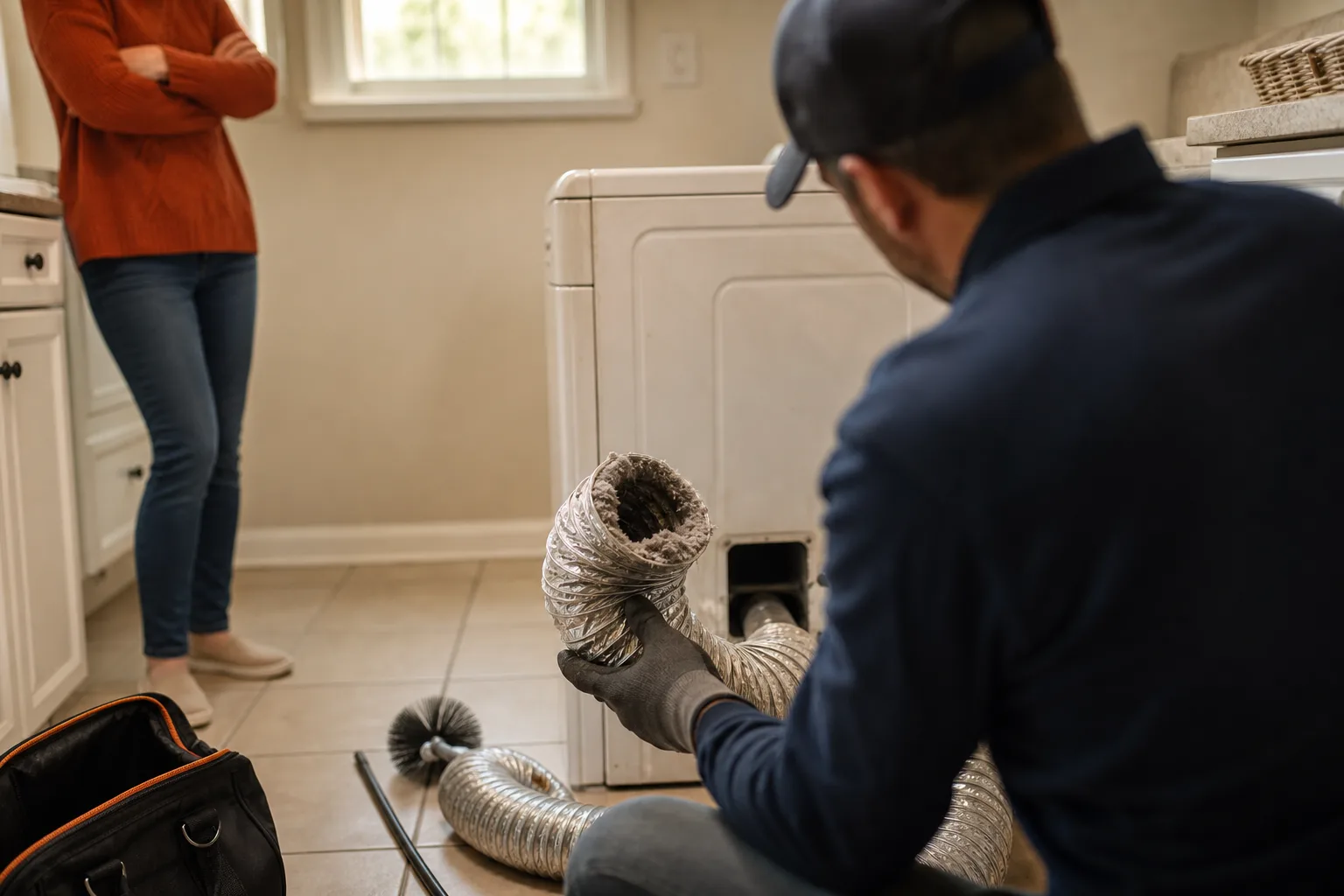
Build a cleaning schedule around real conditions
The best answer to how often to clean dryer vent systems is to begin with an annual check, then adjust the interval based on buildup, airflow, and drying performance. If lint returns sooner or drying time begins creeping upward before the year is out, schedule the next cleaning earlier rather than forcing the home onto a fixed calendar.
Write down how a familiar load performs after the vent has been cleaned. A regular batch of towels works well because you know its usual size and drying cycle. If that same load gradually takes longer under the same settings, the change gives you a practical reason to inspect the system.
Strong airflow at the exterior outlet is another useful reference point. Observe it after cleaning, then compare it if the dryer begins running hotter or slower. Consistent airflow is reassuring, but it does not prove that every concealed section is clear, and it never cancels out a burning smell, heat shutoff, or other warning sign.
Pro tip: Put the cleaning date, typical drying time, and any technician notes in the same place as your appliance records. A short history makes it easier to see whether the vent stays clear for the expected interval or repeatedly develops trouble sooner.
Reassess the schedule whenever the amount of laundry changes. A new family member, more work clothes washed at home, frequent bedding, or pet blankets can add enough lint and run time to shorten the interval. Seasonal bursts also matter, especially when guests, sports, or muddy weather keep the dryer running load after load.
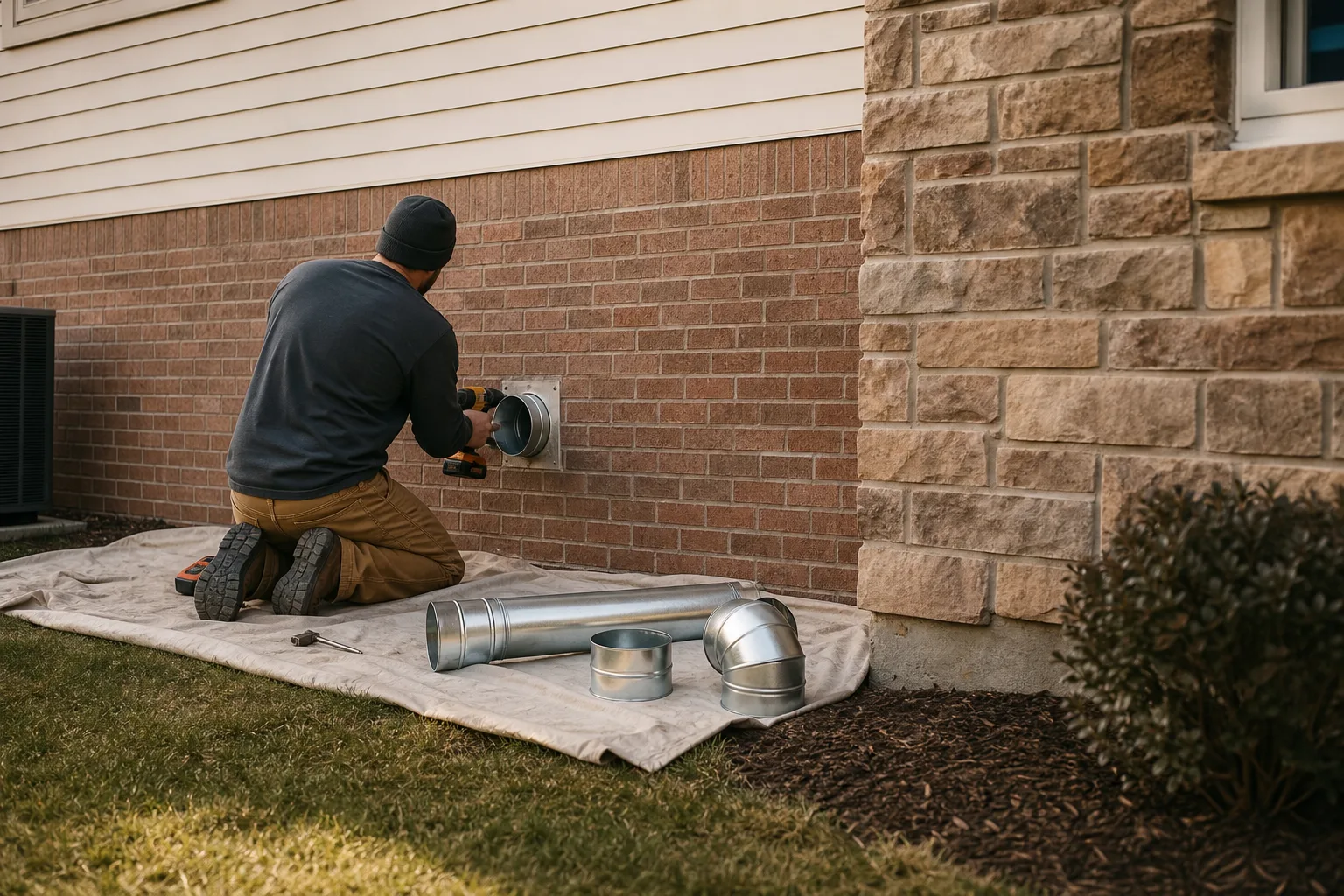
The schedule should also be reviewed after any change to the appliance or vent route. Moving the dryer may add a bend, compress the connector, or require a longer path to the outlet, so review what a proper dryer vent installation quote should include before approving changes. Replacing the appliance can change airflow characteristics, but a more powerful dryer does not make a restricted or poorly routed duct safe.
Use these events as prompts to review the interval:
- Record a move. Note whether the dryer changed position or gained a longer connection.
- Review a replacement. Confirm that the new appliance is connected without crushing or kinking the transition duct.
- Account for rerouting. Shorten the inspection interval if the new route is longer, concealed, elevated, or has more turns.
- Adjust for more laundry. Recheck the schedule after household growth or a lasting increase in weekly loads.
- Include pets. Watch performance more closely when pet hair and lint shedding become part of regular laundry.
Myth vs. fact: Myth: A dryer vent only needs attention on the same date every year. Fact: Annual service is a useful starting point, but actual laundry volume, route design, and warning signs determine whether cleaning should happen sooner.
A schedule is working when drying performance remains predictable and inspection does not find heavy buildup returning early. If the vent repeatedly clogs well before the planned date, do not keep shortening the calendar without investigating the route. A sagging section, excessive turns, a damaged outlet, or a poor connection may be contributing to the pattern.
Need help setting the next interval? Book a dryer vent assessment or call (513) 655-6702 to have the route and current airflow checked.
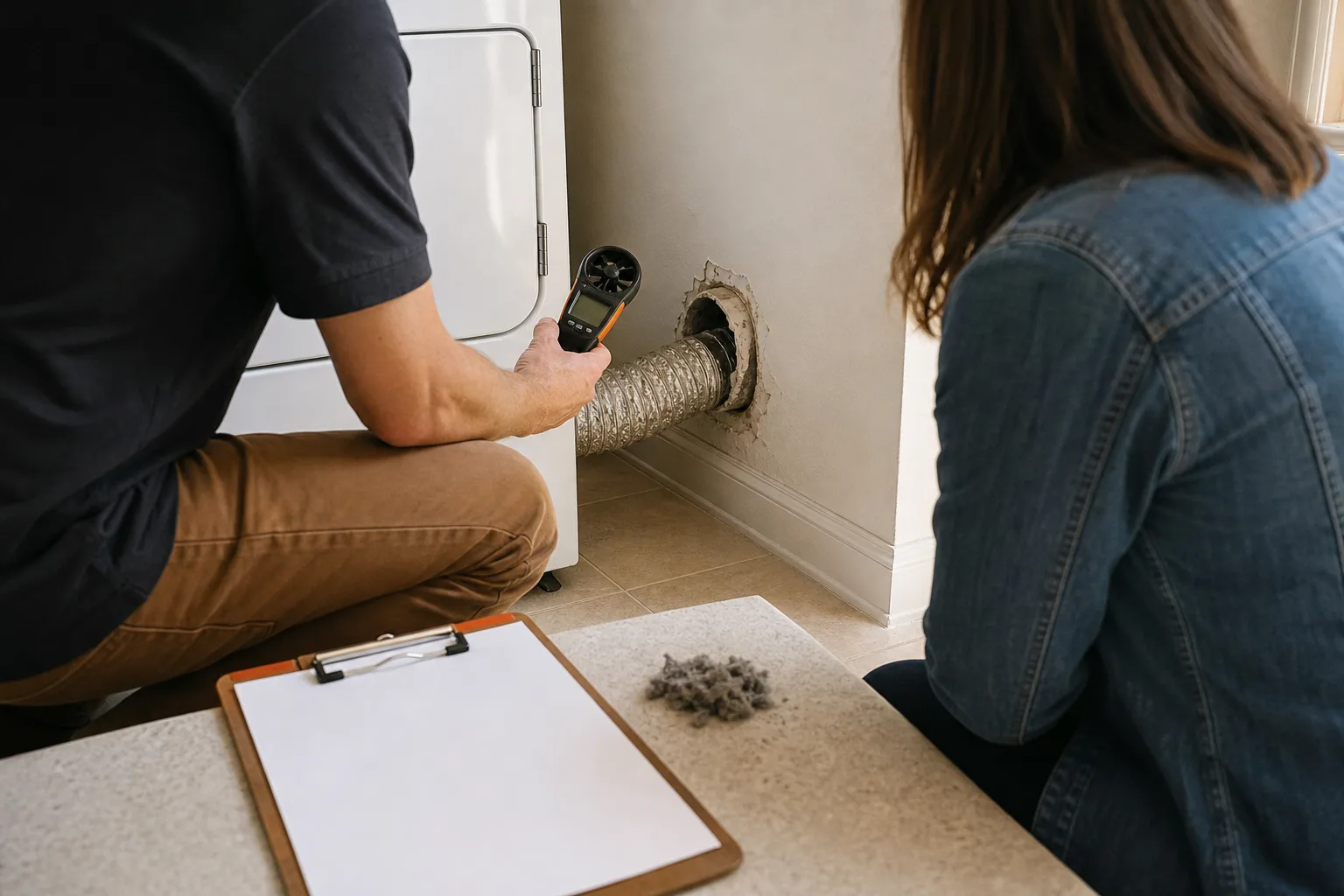
Know when routine cleaning needs professional help
Cleaning the lint screen after every load is good appliance care, but it does not clean the duct running from the dryer to the exterior outlet. Fine lint passes the screen and settles along the connector, duct walls, elbows, and termination. The screen also cannot reveal a crushed section or a blocked outlet farther along the route.
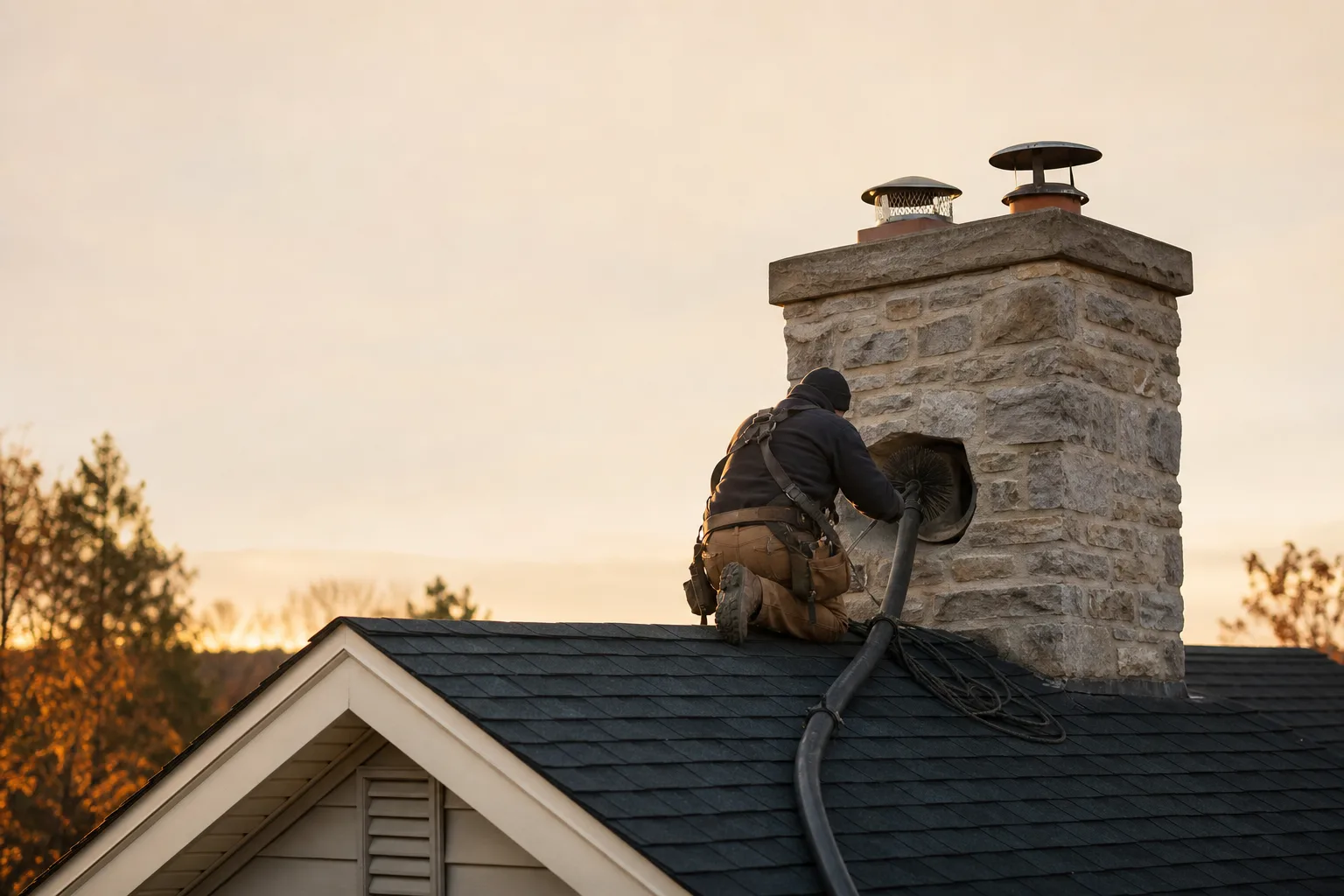
Home access makes a large difference. A short, straight duct with both ends safely reachable is easier to inspect than a run hidden behind finished walls, routed through a ceiling, or terminated high on an exterior wall. Roof outlets add fall risk and can hide buildup beneath a cap that looks clear from the ground.
Professional help is sensible when the vent is:
- Long or concealed. The full route cannot be seen or reached from either end.
- High or roof terminated. Safe access requires proper equipment and experience.
- Bent or damaged. The duct is crushed, disconnected, sagging, or leaking lint.
- Repeatedly clogging. Drying performance declines soon after cleaning.
- Still showing warning signs. Heat, weak airflow, shutoffs, or odors continue after basic lint screen and exterior checks.
A qualified dryer vent cleaning service can assess the complete route rather than cleaning only the section nearest the dryer. The work may include disconnecting the appliance, cleaning through the duct, checking joints and the exterior termination, and confirming that airflow has improved. The main dryer vent cleaning guide explains the process in more detail and can help you understand what should be checked during service.
Good to know: Removing a lint pile from the connector does not confirm that the rest of the vent is clear. Elbows, vertical sections, screens added to exterior outlets, and stuck dampers can remain restricted even when the first few feet look clean.
Stop do it yourself attempts when a tool cannot follow the route smoothly or when there is a risk of separating a hidden joint. Flexible rods and brushes can become lodged in bends, and aggressive cleaning can damage thin or already compromised duct material. Persistent symptoms may also come from the dryer itself, so continued overheating or burning odors need qualified appliance assessment as well as a vent check.
If the route is inaccessible, repeatedly clogs, or still shows warning signs, request service or call (513) 655-6702. A professional inspection can identify whether the vent needs cleaning, repair or rerouting, or further appliance evaluation.
Symptom checker
What is your chimney doing?
Tap the closest match for an honest first answer.