


On this pageHow to choose a chimney inspection near me7 sections+6
- How to choose a chimney inspection near me
- Know which NFPA 211 inspection level you need
- Ask exactly what the inspection appointment includes
- Check credentials, insurance, and local experience
- Require a clear written chimney inspection report
- Watch for warning signs of a scam or weak inspection
- Use a final checklist before booking
Quick answer
Choose a chimney inspector who follows NFPA 211, assigns the correct inspection level, verifies the attending inspector’s CSIA credential, and provides written findings with labeled images. A home sale or property transfer calls for a Level 2 inspection, not a basic fireplace check.
How to choose a chimney inspection near me
Choosing a chimney inspection near me starts with confirming that the provider follows NFPA 211 and offers the inspection level your situation requires. A quick look into the firebox during a sweeping appointment is not necessarily an inspection, especially when the home is being sold, the appliance has changed, or damage is suspected.
The best answer to “How do I choose a chimney inspection near me?” is to compare the scope of work, inspector qualifications, and reporting process. Ask who will perform the inspection, what that person will examine, and how the findings will be documented before considering appointment speed or price.
A dependable provider should be willing to discuss four basic points before you book:
- Confirm the standard. Ask whether the inspection is performed according to NFPA 211 and which inspection level applies.
- Verify the inspector. Look for a current CSIA credential held by the person coming to your home, not merely a reference to the business.
- Define the deliverable. Confirm that you will receive a written report identifying defects, inaccessible areas, and supporting images when applicable.
- Match the experience. Ask whether the inspector regularly works with your chimney construction, fuel type, fireplace, stove, or vented heating appliance.
Clear local contact information also matters. You should know who is scheduling the work, who is entering your home, and whom to contact if the report needs clarification.
Pro tip: Ask the provider to state the inspection level on the appointment confirmation. “Chimney check” can mean anything from a flashlight glance to a documented NFPA 211 inspection.
Price should be considered only after you know what is included. A lower quote may exclude a flue camera, attic access, roof evaluation, photographs, or a written report, while a faster appointment may leave little time for a careful examination.
Need help choosing the right scope? Request a properly defined inspection or call (513) 655-6702 to describe the chimney and why it needs evaluation.
Know which NFPA 211 inspection level you need
NFPA 211 defines three chimney inspection levels, and the right one depends on what has changed and what prompted the inspection. Level 1 generally covers routine annual evaluation of an unchanged system, Level 2 addresses property transfers, system changes, and possible damage, and Level 3 investigates suspected hazards hidden behind construction.
| Inspection level | When it generally applies | What distinguishes it |
|---|---|---|
| Level 1 | Routine annual service when the appliance, fuel, venting system, and use remain unchanged | Examination of readily accessible portions of the chimney, venting system, appliance connection, and basic soundness |
| Level 2 | A home sale or transfer, appliance or fuel change, relining, performance concern, chimney fire, severe weather, or another event that may have caused damage | Evaluation of accessible areas, including attics and crawl spaces where applicable, plus examination of the flue interior, commonly with a video camera |
| Level 3 | Evidence suggests a serious concealed hazard that cannot be confirmed through Level 1 or Level 2 work | Targeted removal or opening of building components needed to reach the suspected problem |
A Level 1 inspection is usually appropriate for an annual check when nothing about the system has changed. The inspector evaluates readily accessible portions and checks whether the chimney, connector, and appliance appear suitable for continued service under the existing conditions.
A Level 2 inspection goes farther. NFPA 211 calls for this level upon a sale or transfer of property and after certain changes, such as installing a different appliance, changing fuel, or altering the flue lining. It also applies after an event that could have damaged the chimney, including a chimney fire, a severe weather event, or a suspected internal failure.
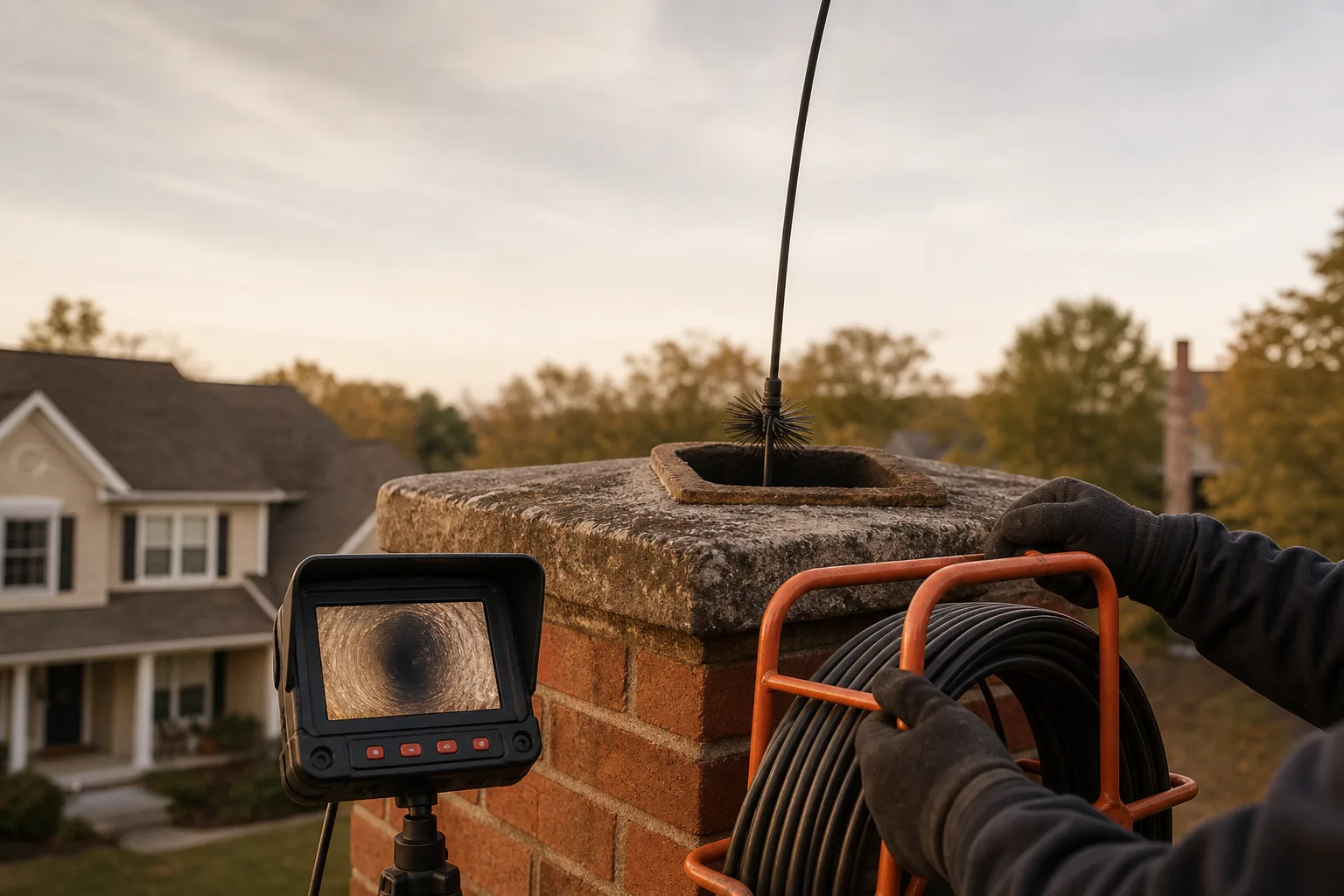
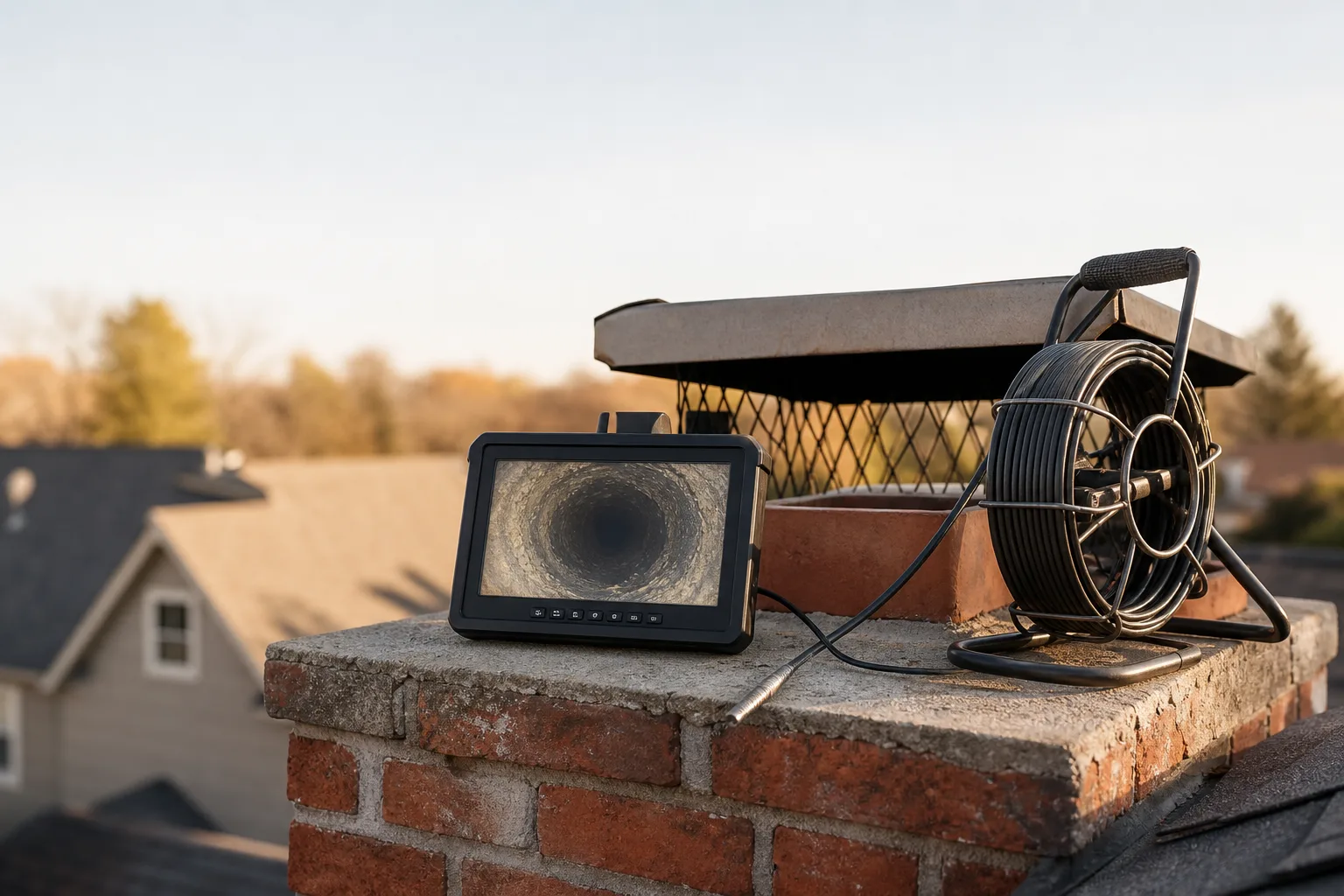
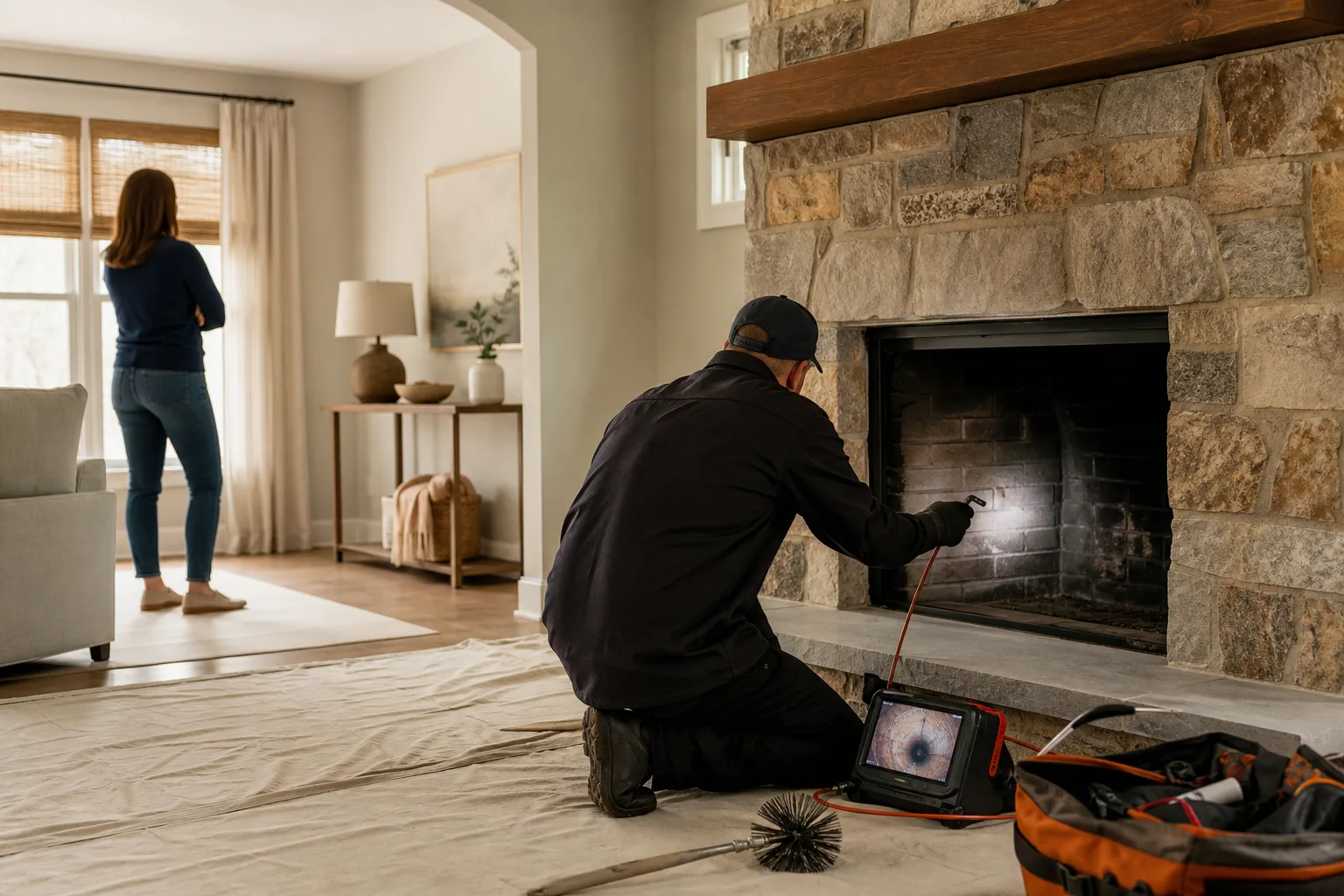
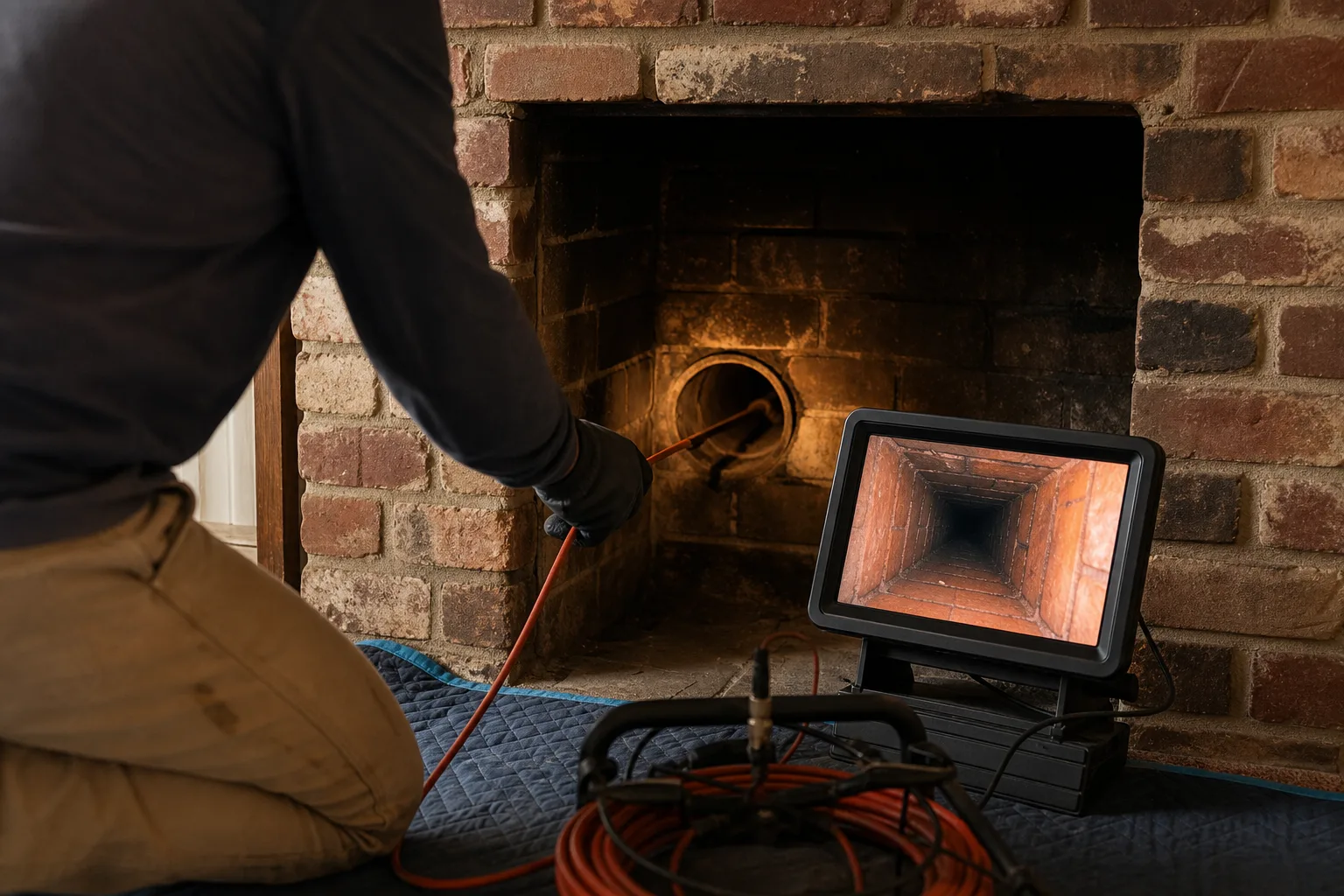
The flue interior during Level 2 work is commonly examined with a video scanning system. Accessible attic, crawl space, basement, and exterior areas may reveal gaps, clearance problems, disconnected components, or staining that cannot be seen from the fireplace opening.
Myth vs. fact: The myth is that a home inspection automatically includes a full chimney inspection. The reality is that a property transfer calls for a Level 2 chimney inspection, which examines areas and internal surfaces beyond a general home inspection.
Level 3 is not the automatic choice for an old chimney or a chimney that looks rough from the street. It is reserved for cases where findings from earlier inspection work indicate a possible hazard behind walls, chase coverings, masonry, or other concealed construction.
Opening concealed areas should be limited to what is needed to confirm the suspected condition. The inspector should explain the evidence, the proposed access, and what may need to be removed before Level 3 work begins.
Ask exactly what the inspection appointment includes
The appointment should include every accessible component required by the selected NFPA 211 level, along with a clear record of anything that could not be examined. Before booking, ask specifically about the firebox, damper, smoke chamber, flue, chimney exterior, appliance connection, clearances, and accessible attic or crawl space areas.
Do not assume sweeping and inspection are the same service. Sweeping removes soot, creosote, and debris, while inspection evaluates the condition and suitability of the system. Heavy deposits may hide cracked liners, open joints, or damaged surfaces, so cleaning may be needed before the inspector can make a reliable assessment.
For a Level 2 appointment, confirm whether the provider captures still images or recorded views from the flue scan. Ask whether the inspector will access the roof when it is safe and necessary, and whether accessible portions passing through an attic, crawl space, basement, or chimney chase are included.
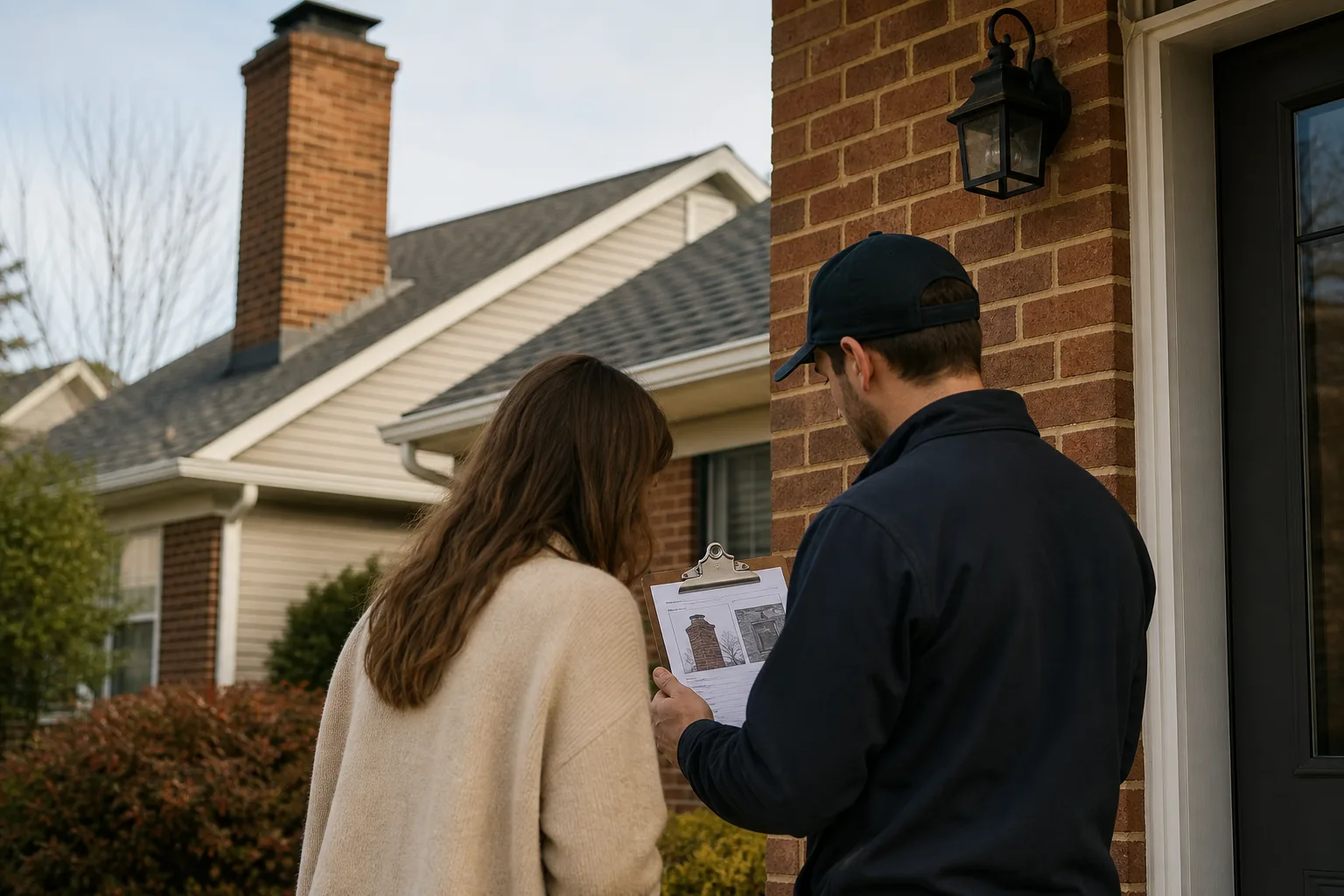
You can make the appointment more productive with a short walk around the property beforehand:
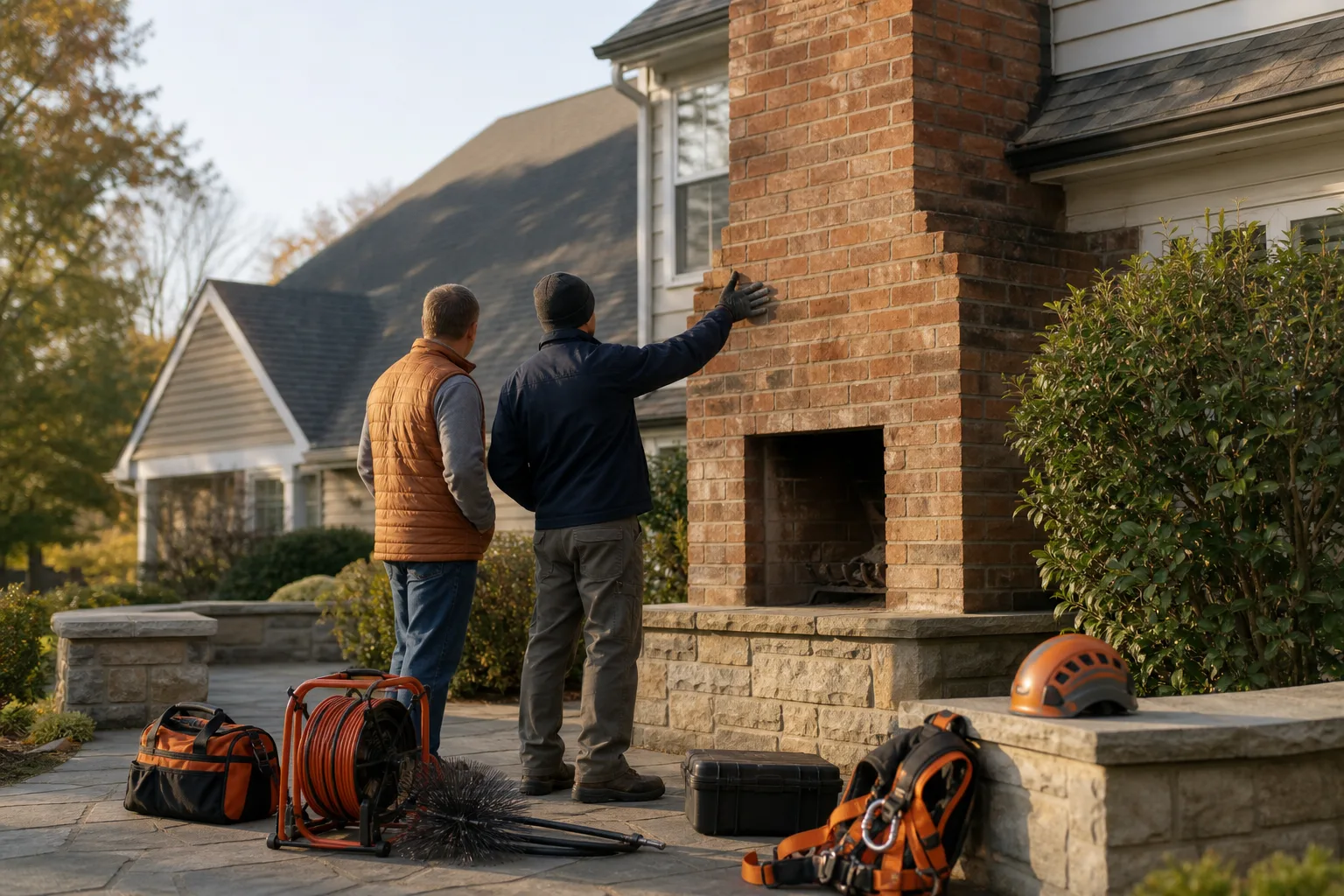
- Check the chimney from the ground. Look for a leaning cap, missing masonry, dark staining, or vegetation blocking the view.
- Check the exterior walls. Note peeling paint, damp spots, or white deposits near the chimney.
- Check the roof access area. Move vehicles, locked gates, or loose items that could restrict safe ladder placement.
- Check the appliance area. Clear stored belongings away from the fireplace, stove, cleanout door, or heating appliance connection.
These observations do not replace professional inspection. They give the inspector useful context and help prevent avoidable access delays.
Safety note: Do not climb onto the roof or enter a tight attic to prepare for the appointment. Wet roofing, steep slopes, brittle materials, heat, and limited footing can turn a simple look into a fall or exposure hazard.
Weather and access can affect what is examined. Ice, rain, high wind, a steep roof, locked rooms, finished walls, or a blocked crawl space may leave parts of the system uninspected, and those limitations should be explained in the report rather than quietly omitted.
Want to know what your appointment will cover? Request an inspection with a defined scope or call (513) 655-6702 before scheduling.
Check credentials, insurance, and local experience
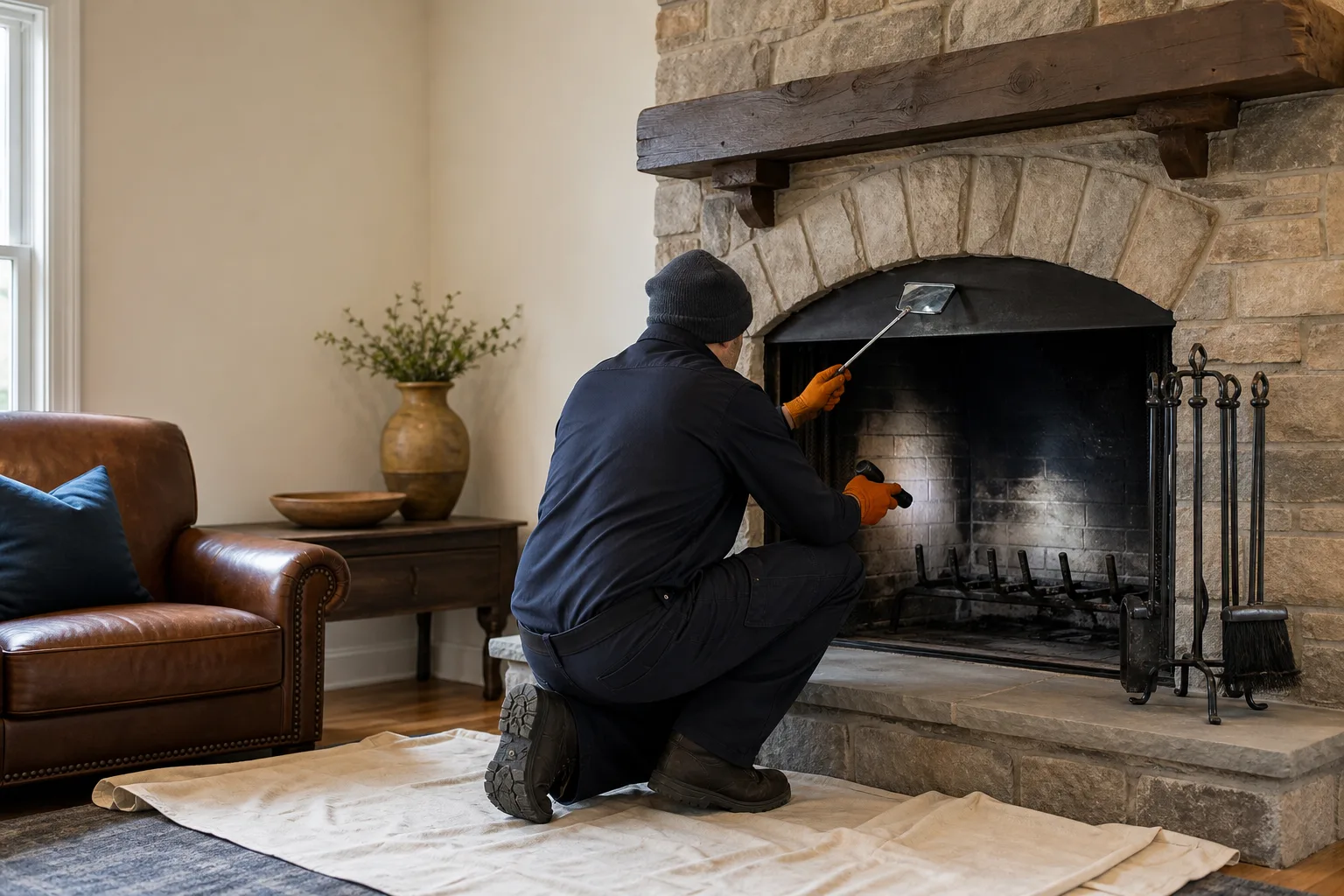
Credentials, insurance, and relevant field experience help establish whether an inspector is prepared to evaluate your particular chimney system. Verify the individual who will perform the work, because a company may advertise qualifications that do not apply to every employee or subcontractor sent to a home.
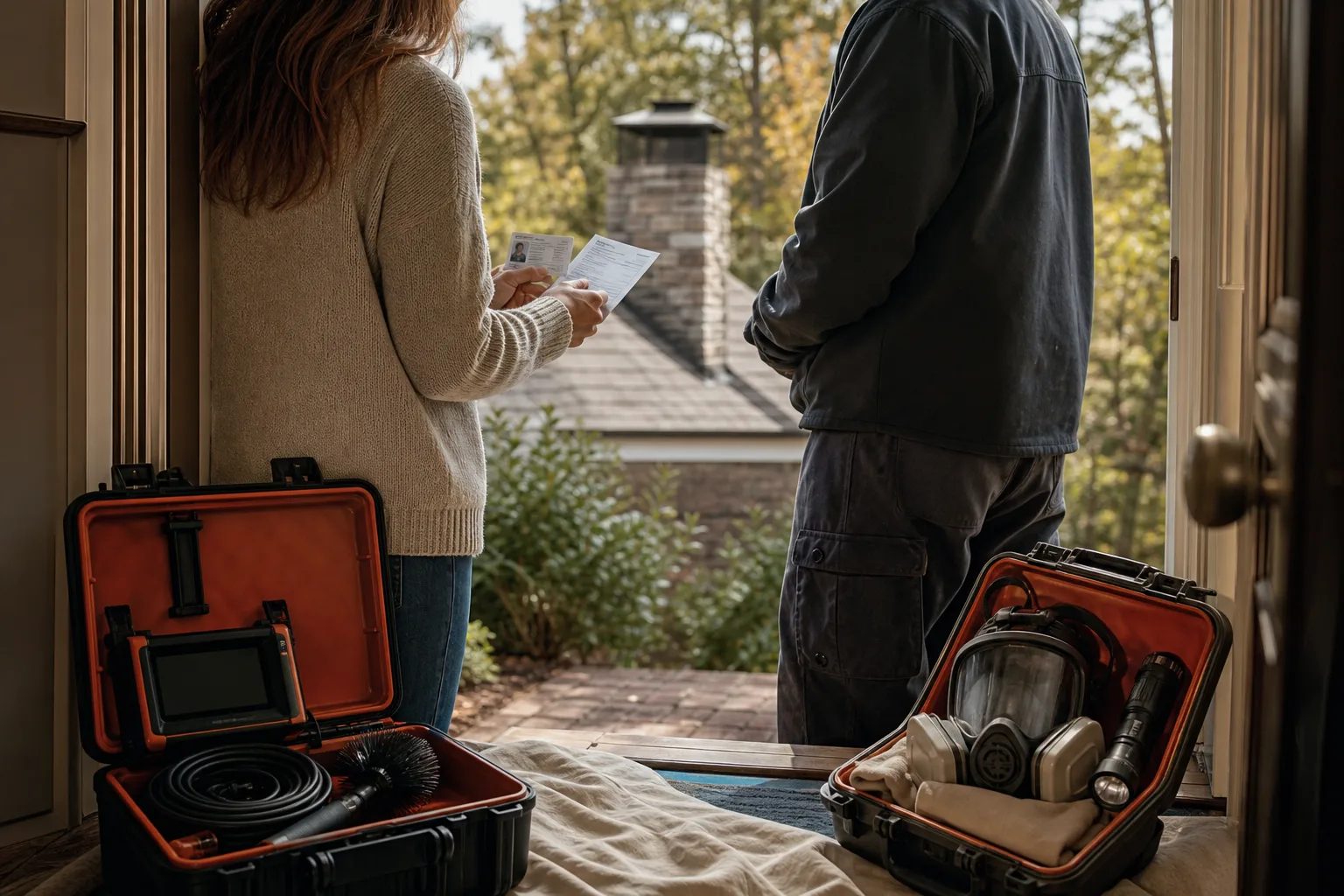
A current CSIA credential indicates that the holder has completed industry education and testing related to chimney and venting systems. Ask for the inspector’s name and verify that person’s current status rather than relying on a logo, directory badge, or broad statement that the company is certified.
Proof of liability insurance should also be available upon request. Confirm who will enter the home, whether that person is an employee or subcontractor, and whether the coverage applies to the inspection work being performed.
Local experience matters because chimneys do not age in identical ways everywhere. An inspector familiar with regional housing styles may recognize recurring issues involving older masonry, factory-built systems, exterior chimneys, freeze and thaw exposure, wind-driven rain, flashing details, and additions that altered required clearances.
From the field: Water damage often shows up away from the obvious entry point. A stain near a firebox may originate at the crown, flashing, chase cover, or an exposed mortar joint higher on the chimney, which is why exterior and accessible interior areas both matter.
Ask whether the inspector regularly evaluates your type of system, including masonry fireplaces, wood stoves, factory-built fireplaces, or flues serving heating appliances. Familiarity with local permitting practices can also help when the report identifies an installation change or repair that may require approval.
Search placement, directory listings, and customer reviews can support your decision, but none defines the inspection scope. Reviews rarely tell you whether the inspector used the appropriate NFPA 211 level, examined accessible concealed spaces, or issued a report detailed enough to guide repairs.
Before booking, request the inspector’s name, current credential information, proof of insurance, and a plain description of the process. To arrange a locally scoped inspection, request service or call (513) 655-6702.
Require a clear written chimney inspection report
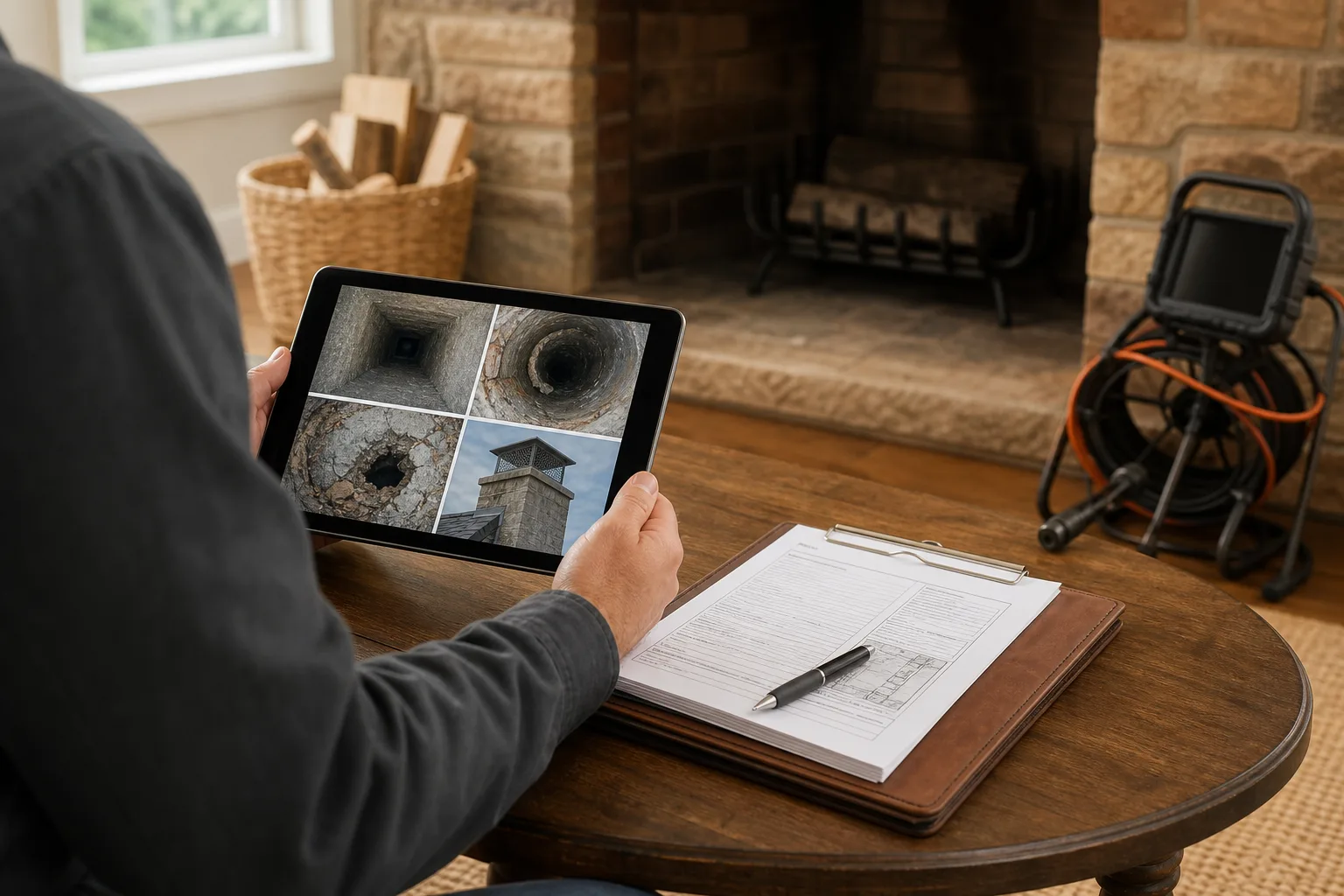
When you search for chimney inspection near me, the written report is what separates a documented inspection from a quick opinion at the fireplace. Ask to see a sample report before booking, with private customer information removed, so you can judge whether the provider identifies defects, locations, access limits, and next steps clearly.
A useful report names the property, inspection date, inspector, NFPA 211 inspection level, chimney, and connected appliance. It should also identify every inaccessible area, such as a snow-covered roof, a blocked cleanout, a finished chase, or an attic section hidden behind permanent construction.
The findings should distinguish observed conditions from recommended work. Each concern needs enough context to explain whether it may affect operation, fire safety, moisture entry, structural stability, or carbon monoxide exposure.
| Report language | What it tells you |
|---|---|
| “Flue damage found” | Too vague to locate or assess the condition |
| “Open mortar joint visible near the upper flue” | Identifies the defect and its location |
| “Repair immediately” | Gives no reason or priority |
| “Do not use until this opening is evaluated and corrected” | Connects the recommendation to a potential hazard |
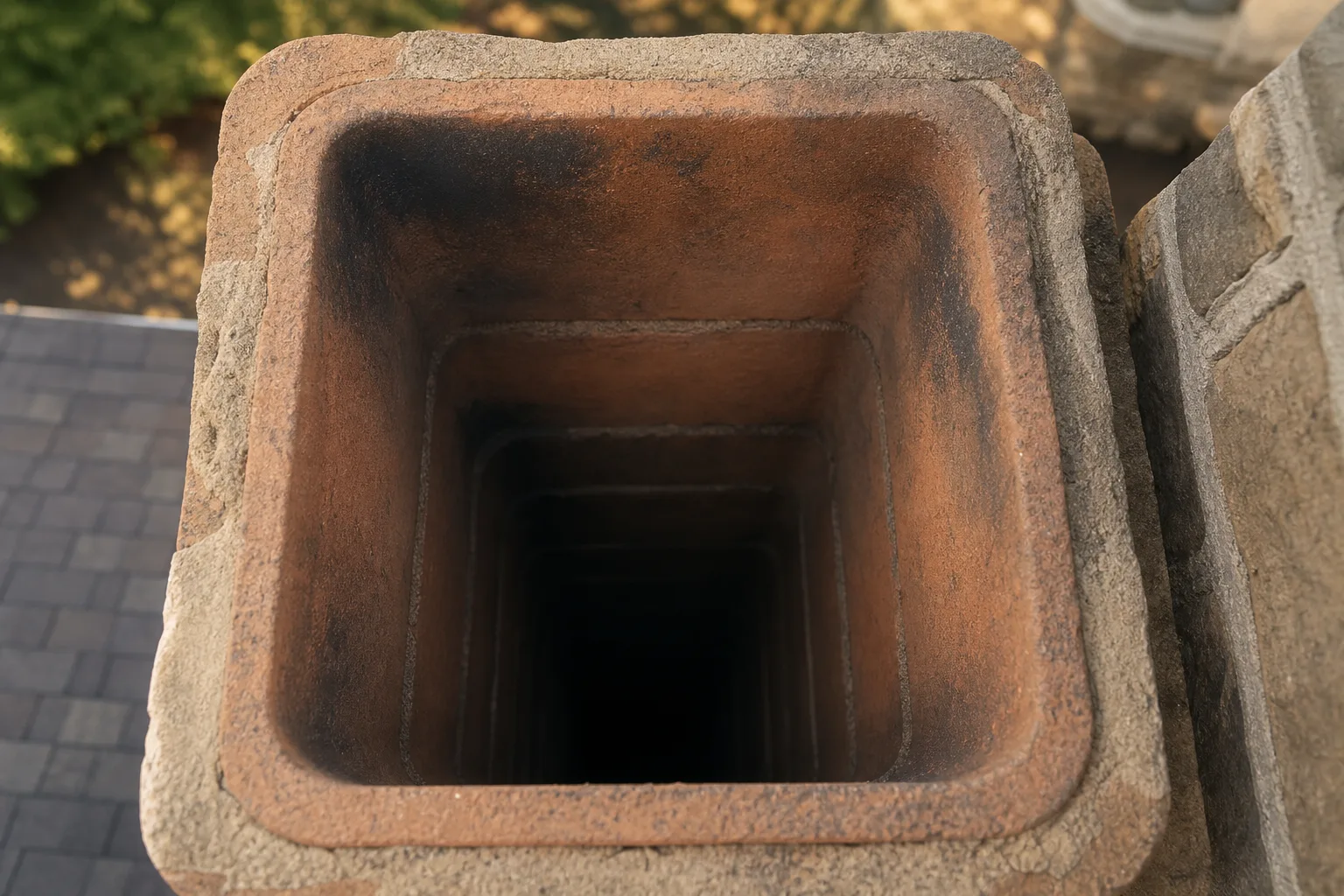
Photos and captured video images should be labeled by location. An image marked “north side crown crack” or “second flue tile above the smoke chamber” is useful; a dark, unidentified close-up is not. If a defect involves the chimney liner, ask the inspector to show where it appears in relation to the appliance and flue opening.
From the field: A clear flue image usually includes enough surrounding masonry or liner material to establish orientation. A picture of loose debris on a drop cloth does not prove where the material came from or what condition caused it.
Repair recommendations should state priority without manufacturing panic. The report can identify a condition that requires stopping appliance use, but it should explain the evidence behind that instruction and allow you to review the findings before authorizing unrelated work.
Ready for documented findings? Request an inspection with a written report or call (513) 655-6702.
Watch for warning signs of a scam or weak inspection
Weak inspections often become obvious when the provider cannot explain the NFPA 211 level being performed. Be cautious if every property is assigned the same level, or if major repairs are proposed before the firebox, flue, exterior, and other accessible portions of the system have been examined.
A provider should be willing to show the evidence behind a recommendation. Unidentified pieces of tile, mortar, or soot are not proof that your chimney has failed, and a verbal claim does not replace labeled images or written findings tied to a specific location.
Myth vs. fact: The myth is that any broken piece found near a fireplace proves the flue must be rebuilt. The reality is that debris must be traced to its source, and the surrounding chimney must be inspected before a repair scope can be justified.
Use this comparison to recognize behavior that deserves another question or a second opinion:
| Warning sign | What a sound inspector should do instead |
|---|---|
| Demands an immediate repair decision | Explains urgency, evidence, and safe next steps |
| Refuses to provide images | Labels and discusses relevant photos or video |
| Offers only a verbal verdict | Supplies a report identifying scope and limitations |
| Cannot explain the inspection level | Connects the level to NFPA 211 and your circumstances |
| Will not identify the inspector | Provides the individual’s credentials and role |
| Avoids insurance questions | Supplies current liability insurance information |
A suspiciously brief visit is another concern, especially for a Level 2 inspection. Examining accessible attics, crawl spaces, appliance connections, exterior masonry, and the flue interior takes more than a glance up the firebox, even when the chimney appears clean.
High-pressure language also deserves caution. Statements such as “sign now or the offer disappears” shift attention away from evidence, while claims of immediate danger should come with a clear explanation of what was observed and why appliance use should stop.
Safety note: If an inspector documents a possible fire or carbon monoxide hazard, stop using the connected appliance until the condition is properly evaluated. Seeking a second opinion does not mean continuing to burn while the concern remains unresolved.
Search placement, directory badges, and reviews can help you build a shortlist, but none proves that the individual arriving at your home holds a current CSIA credential or follows a defined inspection process. Verify the person, not merely the business name.
Want a clear scope before anyone arrives? Request local inspection service or call (513) 655-6702.
Use a final checklist before booking
The safest way to choose among results for chimney inspection near me is to confirm the level, scope, inspector, report, and charges before accepting the appointment. Share anything that could change the required inspection level, then ask how urgent findings will be delivered and explained.
Confirm these booking details in writing:
- Name the inspection level. Ask whether the appointment is Level 1, Level 2, or Level 3 under NFPA 211 and why it fits the property.
- Define the scope. Confirm which interior, exterior, attic, crawl space, roof, flue, and appliance areas will be examined.
- Verify the inspector. Request the name of the person attending, current CSIA credentials where applicable, and proof of liability insurance.
- Review the report format. Confirm that you will receive written findings, labeled images, limitations, and prioritized recommendations.
- Separate the services. Ask whether sweeping is included, recommended only if deposits block the view, or charged as a separate service.
- Read the scheduling terms. Check access requirements, weather policies, cancellation terms, and how long report delivery normally takes.
Tell the provider about a pending home sale or transfer, since that calls for a Level 2 inspection. Also disclose a suspected chimney fire, appliance or fuel change, severe storm, long period of nonuse, water entry, smoke spillage, unusual odor, or known performance problem.
A quick ground-level look can help you describe current conditions without climbing a ladder:
- Check the crown from below. Use binoculars if available and note visible cracking, missing pieces, or vegetation at the top.
- Check the flashing area. Look from the ground for lifted metal, staining, or roof damage around the chimney.
- Check the masonry. Note loose bricks, open joints, white staining, leaning sections, or fragments on the ground.
- Check the fireplace opening. Photograph fallen debris, rust, dampness, soot stains, or damaged firebox material without disturbing it.
Pro tip: Send existing photos and appliance information before the visit. The inspector may still need direct access, but those details can help identify whether roof access, a video scan, sweeping, or additional time should be planned.
Ask how a serious finding will be communicated. A provider should be able to explain why use should stop, point to the supporting image or observation, and discuss the report before moving into optional repair proposals.
For a properly scoped local inspection with written findings, request service or call (513) 655-6702. You can review the evidence before deciding whether to approve any repair work.
Symptom checker
What is your chimney doing?
Tap the closest match for an honest first answer.