


On this pageWhat to Look for When Searching “gas fireplace repair near me”7 sections+6
- What to Look for When Searching “gas fireplace repair near me”
- Check These Symptoms Before You Call
- Choose a Gas Fireplace Specialist, Not a General Handyman
- Questions to Ask Before Booking a Local Technician
- What Should a Gas Fireplace Diagnostic Visit Include?
- How to Review the Diagnosis and Repair Estimate
- Prepare for the Appointment and Request Service
Quick answer
Choose a local technician who regularly services gas hearth appliances and meets local licensing requirements for gas work. Confirm experience with your fireplace type, ignition system, controls, venting, and blower, then ask what the diagnostic visit includes before booking. Leave gas pressure, valves, piping, leak testing, and safety controls to a qualified professional.
What to Look for When Searching “gas fireplace repair near me”
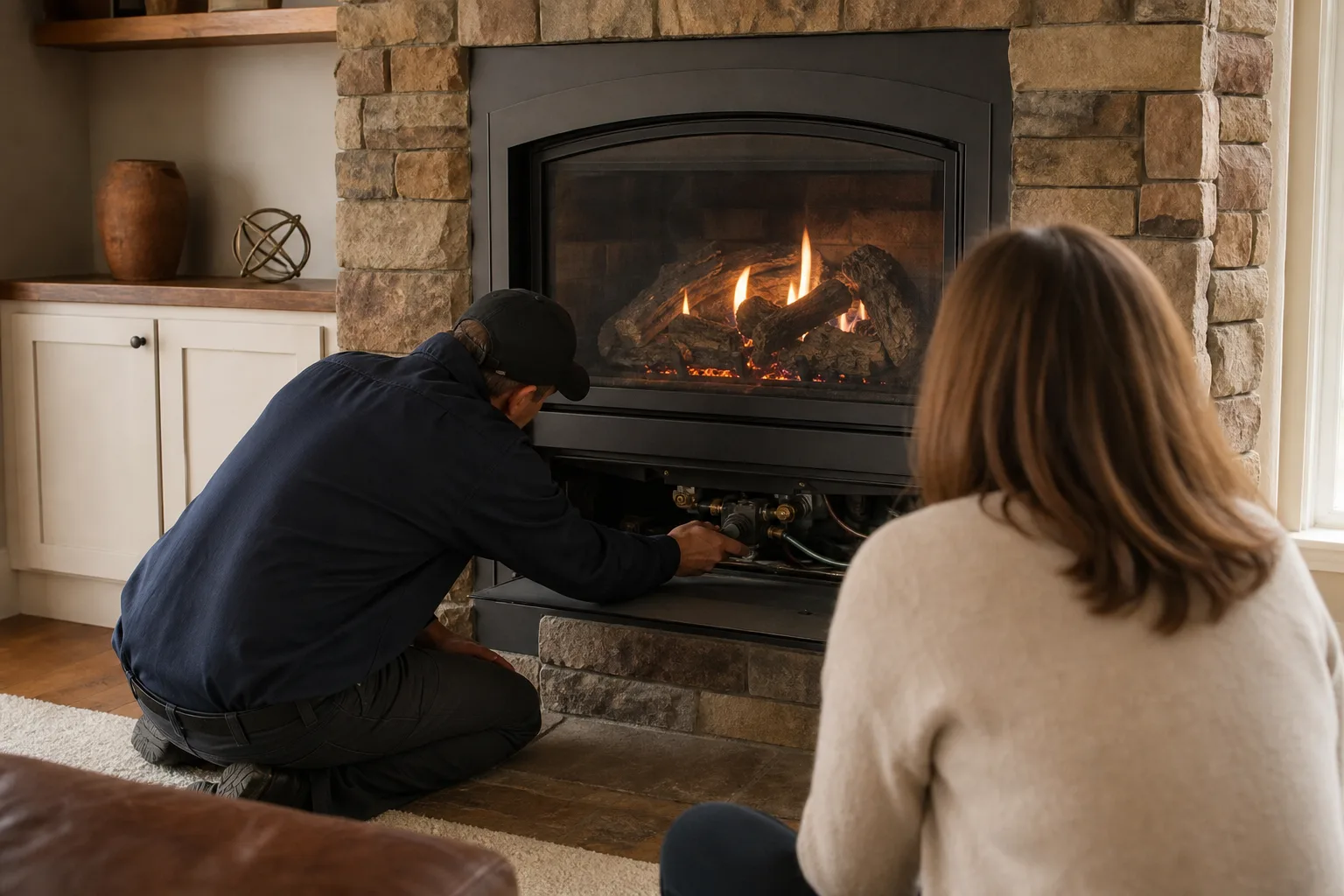
When you search for gas fireplace repair near me, look for a local technician who regularly works on gas hearth appliances. General home-repair experience is not enough. The person at your fireplace should understand pilot assemblies, electronic ignition, burners, venting, safety controls, remotes, wall switches, and blowers.
The best answer to gas fireplace repair near me is a provider that confirms your fireplace type before scheduling. Share whether the unit is direct vent, vent-free, or connected to a chimney, along with the fuel type and any model information you can find. A technician who does not service that configuration should say so before taking the appointment.
Confirm that the provider carries appropriate insurance and meets local licensing requirements for gas appliance work. Licensing rules vary by location, so ask directly whether the person performing the visit is permitted to test, adjust, or replace gas-system components in your area.
Pro tip: Take a clear photo of the rating plate, controls, firebox, and full fireplace before calling. The rating plate may be behind the lower access panel, but do not remove sealed glass or disassemble the unit to find it.
Local availability also matters. Confirm the service area, scheduling window, expected arrival process, and how return visits are handled if a part must be ordered. A company may be nearby on a map but still serve your address only on certain days.
Ask how the diagnostic charge is handled before you book. The provider should explain what the initial visit covers and whether repair work begins only after you approve the findings, parts, and labor. Diagnosis and repair authorization should be separate decisions, not an open-ended approval.
Ready for a clear diagnosis? Request service or call (513) 655-6702 to describe the fireplace, symptoms, and your location.
Check These Symptoms Before You Call
A few safe observations can help the technician arrive prepared, but they should not turn into do-it-yourself gas work. Watch the fireplace through its normal operating cycle without opening the gas line, removing sealed glass, adjusting pressure, or bypassing a safety control.
Use this short checklist while standing in front of the unit:
- Check the pilot. Note whether it lights, stays lit, or goes out when you release the control.
- Listen to the igniter. Record whether you hear clicking and whether the clicking continues without ignition.
- Watch the burner. Note delayed lighting, uneven flames, flame rollout, dark deposits, or sections that never ignite.
- Test the controls. Try the wall switch and remote with fresh batteries, then record which one responds.
- Observe the blower. Allow the fireplace to warm normally and note whether the fan starts, runs noisily, or never turns on.
- Read the display. Photograph error codes before turning the appliance off.
Write down when the problem began and whether anything recently changed, such as a power outage, remote battery replacement, long period of disuse, or nearby renovation. Unusual sounds and odors are also useful clues. These details help separate a control problem from an ignition, burner, venting, or blower issue.
| What you observe | What it may point toward | Safe next step |
|---|---|---|
| Igniter clicks, but no flame appears | Ignition, fuel supply, pilot, or control issue | Stop repeated attempts and report the sequence |
| Pilot lights, then goes out | Pilot assembly, sensor, draft, or control issue | Turn the unit off and schedule diagnosis |
| Burner lights unevenly | Dirty burner ports, misplaced media, or gas-delivery issue | Do not move logs or adjust the burner |
| Wall switch works, but remote does not | Batteries, receiver, pairing, or remote issue | Record which controls respond |
| Blower stays off after warm-up | Power, switch, sensor, motor, or control issue | Confirm normal power only, then report it |
The same symptom can have several causes, which is why testing matters. A clicking igniter does not prove that gas is reaching the burner, and a pilot that stays lit does not prove that the main valve, safety circuit, or burner is operating correctly. Use symptom guides for context, not as instructions to replace gas components.
Safety note: Stop using the fireplace if you smell gas, see heavy soot, hear a delayed or forceful ignition, observe flames outside their normal area, or receive a carbon monoxide alarm. Leave the area if a gas odor is strong, avoid switches and flames, and contact the gas utility or emergency services from a safe location.
Do not loosen fittings, test for leaks with a flame, change fuel type, reposition internal gas parts, or keep pressing the igniter after repeated failed starts. Those steps can release unburned fuel or hide the fault the technician needs to identify.
Choose a Gas Fireplace Specialist, Not a General Handyman
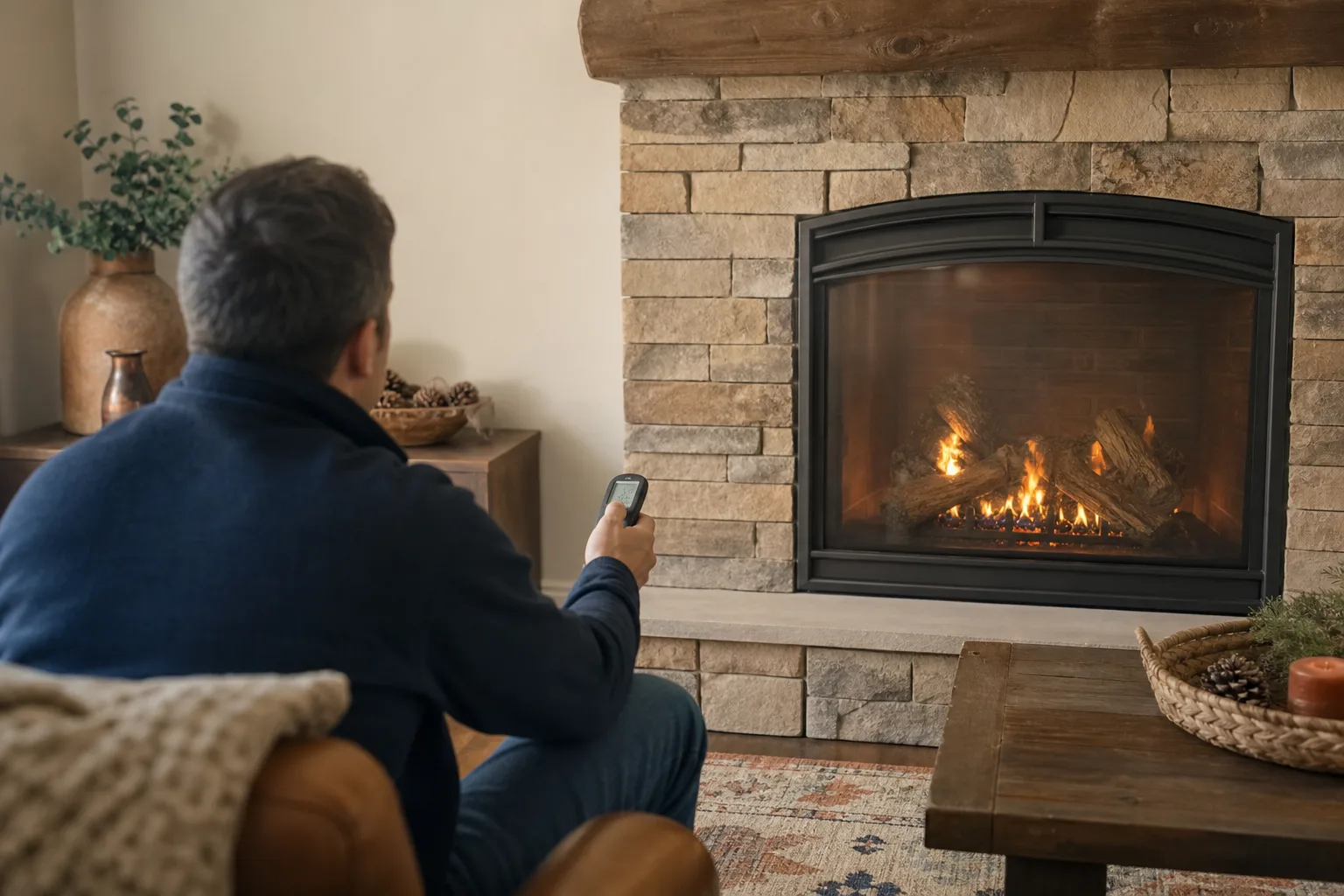
Gas fireplaces combine fuel delivery, flame sensing, electrical controls, venting, and listed safety components in a compact appliance. Hearth-specific training helps a technician diagnose the entire operating sequence instead of replacing the first part that appears suspicious.
A qualified specialist should understand standing pilots, intermittent pilots, electronic ignition, thermocouples or flame sensors, safety switches, burner assemblies, remote receivers, blowers, and approved media placement. The technician should also recognize signs that the problem involves venting, combustion, or the building around the fireplace rather than a failed control.
| Qualification | Gas fireplace specialist | General handyman |
|---|---|---|
| Regular gas hearth experience | Expected and documentable | May be limited or occasional |
| Ignition and safety-control testing | Part of normal diagnostic work | May fall outside training or permitted scope |
| Gas pressure or valve work | Performed only when licensed and equipped | Should be referred out unless properly qualified |
| Appliance instructions and listed configuration | Used to guide service and parts selection | May not be familiar with model-specific requirements |
| Venting and combustion concerns | Recognized and evaluated within scope | Easily missed during a general repair visit |
Ask what hearth training or gas-appliance credentials the assigned technician holds, not just what the company advertises. Applicable trade licensing, documented experience with gas fireplaces, and familiarity with your appliance type provide more useful evidence than a broad list of household jobs.
Myth vs. fact: Myth: Anyone who can replace a wall switch can repair a gas fireplace. Fact: A switch may be one link in a safety circuit, and bypassing or misdiagnosing that circuit can allow unsafe operation.
The technician should follow the appliance manufacturer’s instructions, the unit’s listing, local codes, and applicable standards such as NFPA 211. The exact requirements depend on the appliance and installation, so a professional should be willing to explain which rules govern the proposed work.
Cleaning, visual inspection, battery replacement, and basic electrical checks may be included in routine service. Gas pressure testing, valve replacement, fuel conversion, combustion adjustment, leak repair, and work on regulated piping belong with a qualified professional using suitable instruments.
Need someone who works on gas hearth systems? Request a local service visit or call (513) 655-6702 and share the appliance type before booking.
Questions to Ask Before Booking a Local Technician
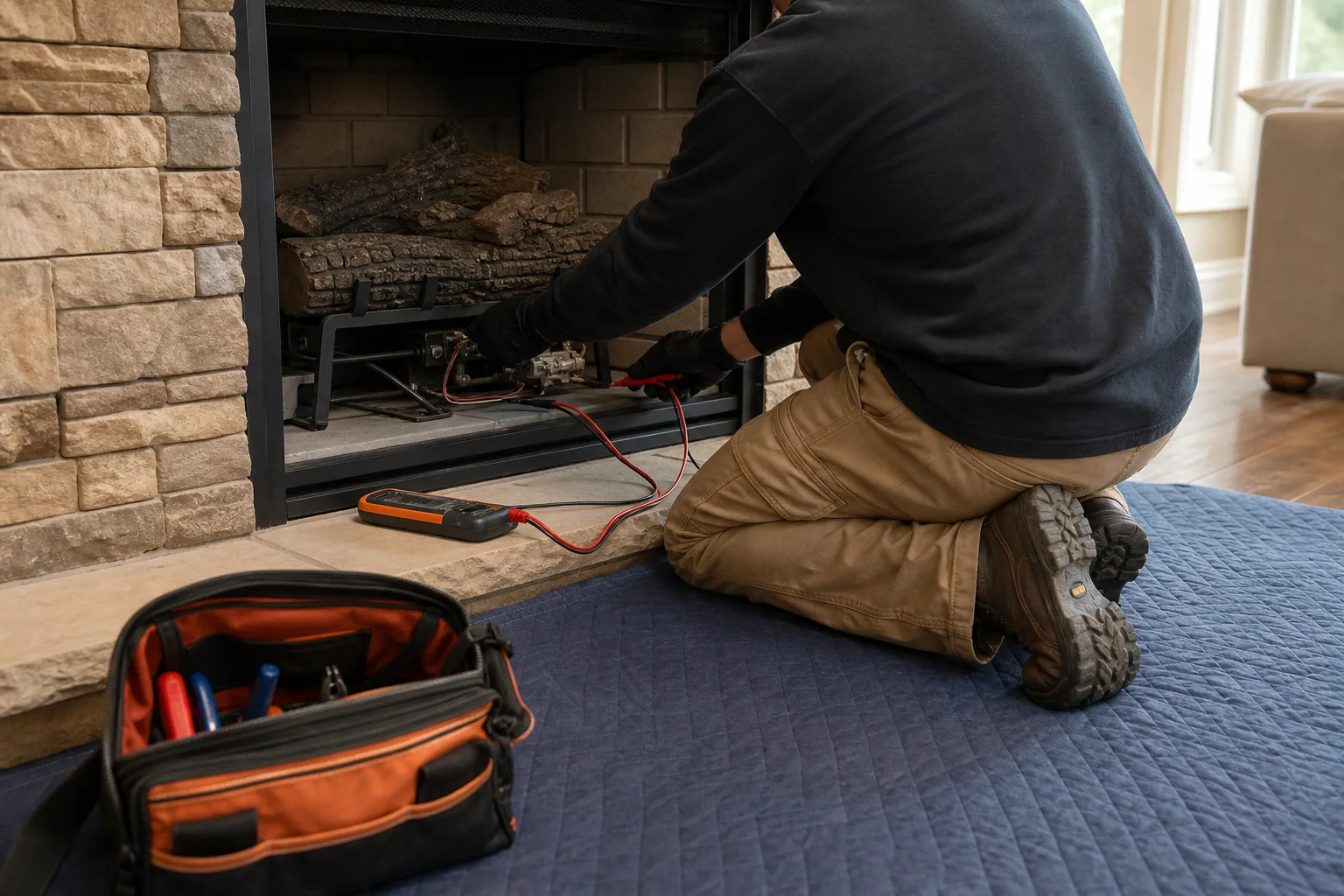
A short scheduling conversation can reveal whether the provider is prepared for the job. Describe the symptoms exactly as you observed them, then ask whether the company services that fireplace type, ignition system, fuel, and venting configuration. If the model is older, ask whether parts can still be sourced and how discontinued components are handled.
Ask these questions before confirming the appointment:
- Confirm the visit scope. What inspection and testing are included in the diagnostic visit?
- Ask about authorization. Will the technician explain the findings and obtain approval before installing parts or performing additional labor?
- Identify the technician. Who will come to the home, and what gas-hearth training or applicable licensing does that person have?
- Discuss parts. Are common components carried on the vehicle, and what happens if a model-specific part must be ordered?
- Check permit needs. Could the proposed work require a licensed gas professional, permit, or inspection under local rules?
- Verify logistics. What is the service area, appointment window, arrival notification process, and policy for a return visit?
The scheduler may ask for the manufacturer, model, serial number, fuel type, venting type, error codes, and photos. Providing those details early can prevent the wrong technician or parts from being sent, but no responsible provider should promise a specific repair without testing the fireplace.
From the field: Technicians often arrive to find that “the fireplace will not turn on” means several different things. The pilot may be out, the receiver may have power but no signal, the burner may light while the blower remains off, or the ignition sequence may stop at a safety control. Precise observations shorten the path to the fault.
Ask how the findings will be presented. You should receive a plain explanation of what was tested, what failed or remains uncertain, what work is recommended, and whether a second visit may be needed for parts. Be wary of anyone who will not separate diagnosis from repair approval or who dismisses gas odors, soot, and delayed ignition over the phone.
Before the appointment, confirm what access the technician needs and whether the fireplace should remain off. Do not take apart the firebox or repeatedly attempt ignition to produce the symptom.
Ready to schedule a qualified local diagnosis? Request service or call (513) 655-6702. Have your model information, symptom notes, and photos nearby when you reach out.
What Should a Gas Fireplace Diagnostic Visit Include?
A proper visit from a provider found through a gas fireplace repair near me search should begin with your reported symptoms, appliance history, and model information, then move through a visual inspection and controlled operating tests. It should end with a clear diagnosis, an explanation of safety concerns, and repair options you can approve or decline.
The technician should ask when the problem began, whether it is intermittent, and what happens during each attempt to start the fireplace. Recent power outages, remodeling, long periods without use, and changes in flame appearance can all help narrow the fault without jumping straight to parts replacement.
A visual inspection should cover the firebox, glass, logs or media, burner, pilot area, wiring, accessible controls, and visible portions of the venting arrangement. The technician should also record the model and serial information because ignition sequences, approved parts, and testing procedures differ among appliances.
From the field: A fireplace that appears completely dead may have more than one possible cause, including a control setting, depleted remote batteries, a failed switch, a loose connection, or an ignition fault. Testing the sequence in order prevents an inexpensive control problem from being mistaken for a failed gas component.
Operational testing should include the following items when they apply to the unit:
- The pilot assembly or electronic ignition starts correctly.
- The main burner lights without a hard start or delayed ignition.
- Flames spread evenly across the burner and remain stable.
- Safety controls respond as designed.
- The wall switch, remote, receiver, and thermostat functions communicate properly.
- The blower starts after the fireplace warms and runs without grinding or rattling.
Gas pressure, leak checks, combustion conditions, venting performance, valves, and internal gas components require suitable instruments and a technician permitted to perform that work. A homeowner should not be asked to open a gas connection, change pressure, bypass a switch, or operate an appliance that produces gas odors, heavy soot, or delayed ignition.
Safety note: If the technician finds a condition that makes operation unsafe, the written findings should identify the condition and state that the fireplace should remain off. A vague warning without an explanation leaves you unable to make an informed repair decision.
Before leaving, the technician should explain what failed, what testing supports that conclusion, and whether any suggested cleaning is maintenance or part of the repair. Required work should be separated from optional improvements, especially when the fireplace can be made safe without replacing unrelated components.
Ready for a clear diagnosis? Request a local service visit or call (513) 655-6702 to describe the symptoms and arrange an appointment.
How to Review the Diagnosis and Repair Estimate
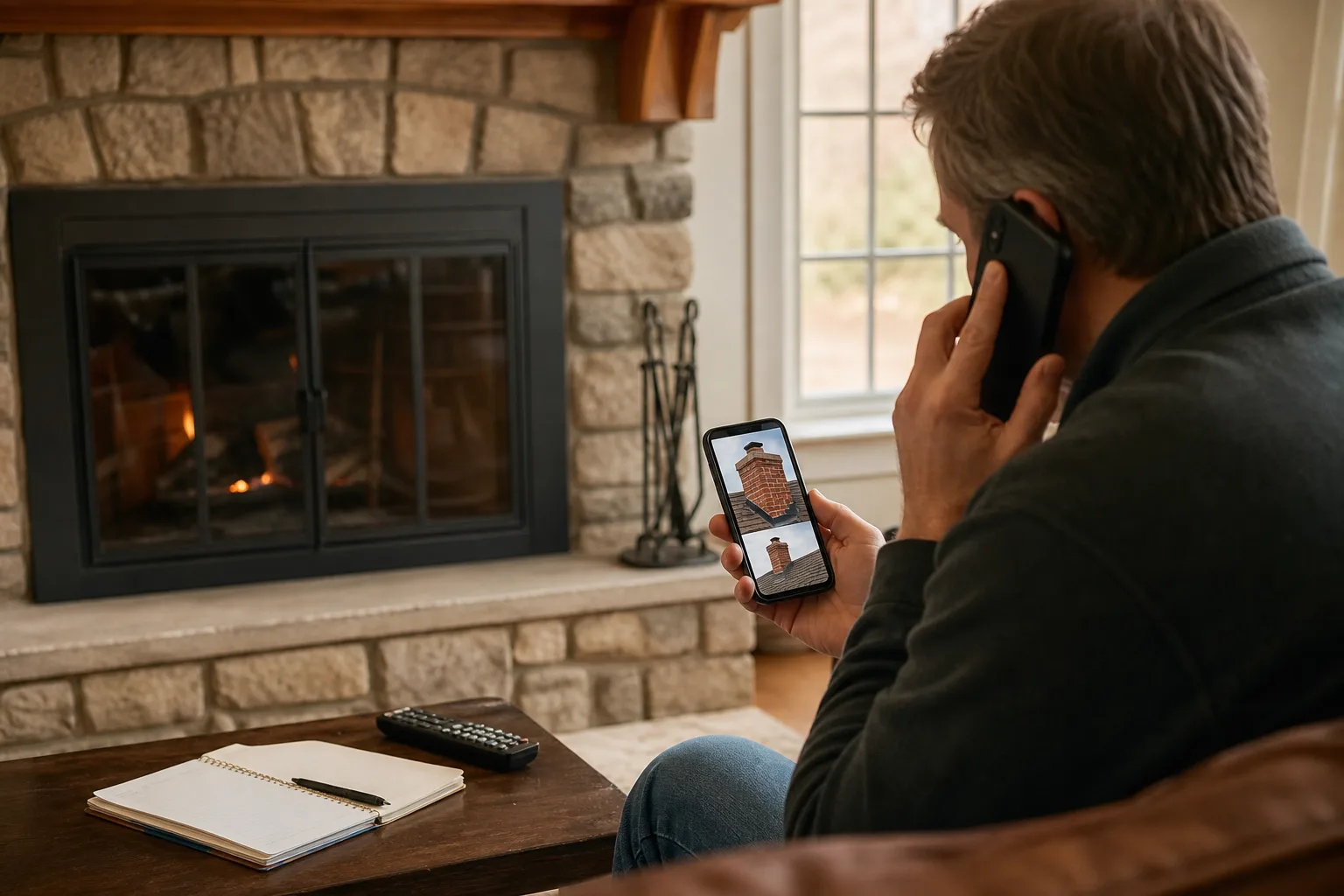
When comparing results for gas fireplace repair near me, look for an estimate that connects the reported symptom to a tested fault and a defined repair. The document should identify the failed or suspect component, proposed labor, parts needs, and any reason the technician may need to return after obtaining an approved part.
A useful estimate gives you enough detail to understand the repair without burying you in technical language. Review each line by asking what was tested, what result was found, and how the proposed work is expected to correct the symptom.
| Estimate item | What a clear diagnosis shows | What to ask if it is unclear |
|---|---|---|
| Failed component | The part or circuit that did not perform as required | What test confirmed the failure? |
| Proposed work | The specific repair, adjustment, or approved cleaning | How will this correct the original symptom? |
| Parts | Availability, compatibility, and whether ordering is required | Is the part approved for this model? |
| Labor | The work included in the current or return visit | Will additional approval be requested before extra work? |
| Final testing | Checks performed after the repair | How will safe ignition and operation be confirmed? |
Parts should not be replaced solely because they are old or commonly fail. Age can affect repair decisions, and discontinued components can make sourcing difficult, but neither point replaces actual testing. If a part cannot be confirmed until another fault is corrected, the technician should explain that sequence before you approve the first step.
Myth vs. fact: The myth is that every weak or uneven flame needs a new gas valve. The reality is that burner contamination, media placement, pilot condition, venting problems, control faults, and gas supply issues can produce overlapping symptoms, so the cause needs to be tested within the technician's licensed scope.
Ask whether approved cleaning alone may restore operation or whether a component has electrically, mechanically, or functionally failed. Cleaning can address dust, debris, or restricted burner ports, but it does not repair a leaking valve, failed safety control, damaged wire, or defective ignition module.
Be cautious if someone proposes several parts without testing, brushes aside soot or gas odors, or cannot explain why the repair should solve the problem. Another warning sign is pressure to approve work before you receive a diagnosis or a statement that safety controls can simply be bypassed.
Any gas system modification, fuel conversion, valve work, or change to gas pressure requires qualified evaluation and code-compliant work. The estimate should also state what post-repair checks will confirm proper ignition, stable burner operation, leak-free connections, and safe venting.
Pro tip: Ask the technician to separate findings into three groups: the fault causing the current problem, work required for safe operation, and optional maintenance. That simple distinction makes estimates easier to compare and helps prevent useful cleaning from being presented as an emergency repair.
Prepare for the Appointment and Request Service
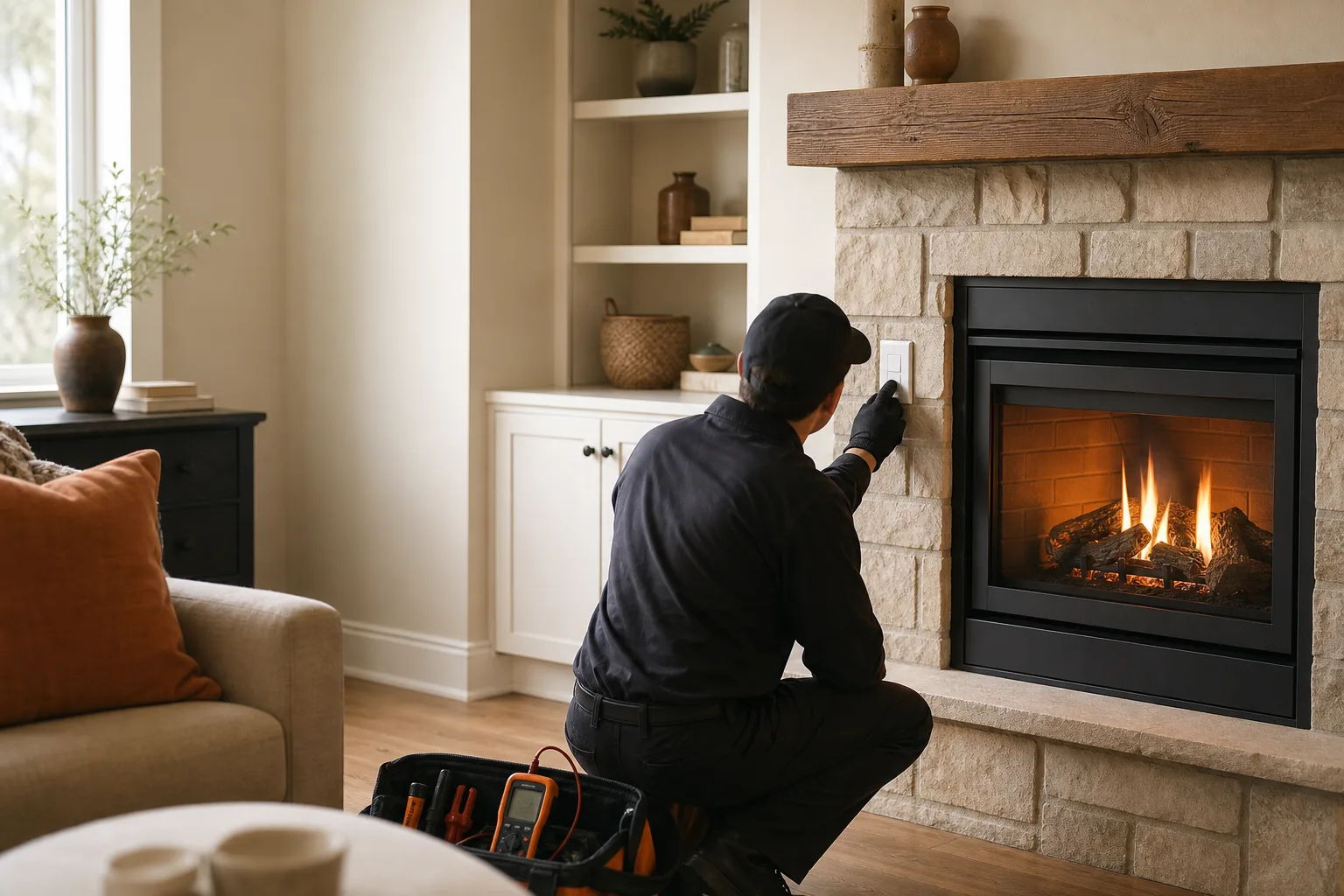
A little preparation helps the technician reproduce the fault and spend more of the visit testing the fireplace. Leave the appliance assembled, make the hearth accessible, and gather the controls and identifying information that belong to the unit.
Use this short checklist before the appointment:
- Clear the hearth. Remove screens, decorations, baskets, furniture, and other items that block safe access to the fireplace.
- Find the controls. Set out the remote, receiver, wall-control instructions, and any spare batteries you have already tried.
- Locate the appliance information. Photograph the model and serial label if it is visible without removing panels or reaching near gas components.
- Write down the sequence. Note what happens when you call for heat, including clicks, pilot behavior, burner delay, error codes, odors, and blower operation.
- Record the timing. Include when the problem began, whether it occurs every time, and whether anything changed beforehand.
- Provide vent access. Tell the scheduler if the vent termination is on a roof, high wall, steep slope, or area blocked by landscaping, snow, or stored items.
Do not take apart the burner, remove sealed glass contrary to the appliance instructions, clean the pilot assembly, or disturb gas fittings before the visit. Repeated ignition attempts can also worsen delayed ignition or allow unburned gas to collect, so leave the fireplace off if it smells of gas, produces soot, starts with a thump, or activates a carbon monoxide alarm.
Good to know: Photos or a short video can help with an intermittent problem, but record them only from a safe distance. Do not keep operating an unsafe fireplace just to capture the symptom for the technician.
Tell the scheduler about access limits, pets, parking restrictions, and the fireplace model if known. Clear information helps the technician bring suitable testing equipment and determine whether likely replacement parts can be sourced, although an on-site diagnosis may still be needed before ordering anything.
Ready to get the fireplace checked? Request service or call (513) 655-6702. Share the model, symptoms, and any safety concerns so the visit can be scheduled with the right technician.
Symptom checker
What is your chimney doing?
Tap the closest match for an honest first answer.