



On this pageWhat Is a zero clearance fireplace?7 sections+6
- What Is a zero clearance fireplace?
- How Is It Different From a Masonry Fireplace?
- How Can You Tell Which Type of Fireplace You Have?
- Why Must Replacement Parts Match the Fireplace Model?
- How Long Does a Factory-Built Fireplace Last?
- What Inspection Findings Decide Between Repair and Replacement?
- What Should You Do Before Using an Older or Damaged Unit?
Quick answer
A zero clearance fireplace is a factory-built metal firebox safety-listed for installation close to combustible framing when all specified clearances and components are used. It differs from masonry construction, and its firebox, chimney, cap, panels, and other parts must match the listed model.
What Is a zero clearance fireplace?
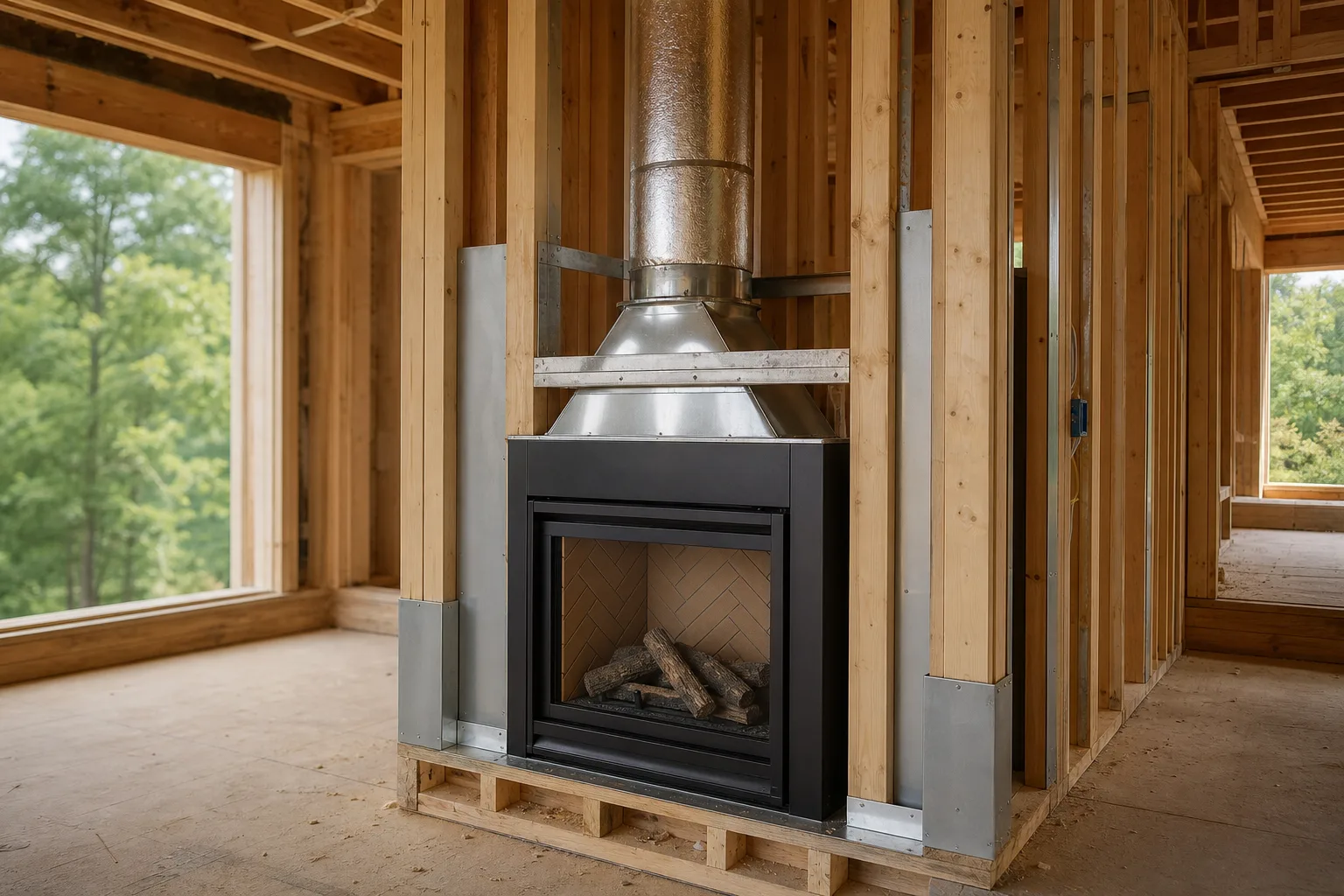
A zero clearance fireplace is a factory-built firebox designed and safety-listed for installation near combustible framing, provided the installer follows the manufacturer’s specified clearances. The term refers to a tested installation method. It does not mean that every metal surface, chimney part, or facing material may touch wood.
The unit usually arrives as an engineered metal firebox with insulating spaces, shields, air passages, and connection points for its approved chimney or venting. Some areas may require only a small air gap, while other surfaces and chimney sections need more room. The installation manual identifies those boundaries.
Myth vs. fact: The myth is that “zero clearance” means zero installation rules. The reality is that the listing depends on exact framing spaces, approved components, and required protective materials.
The firebox cannot be evaluated as an isolated metal box. Its chimney sections, supports, firestops, termination cap, framing clearances, hearth protection, and surrounding finish all work as one listed system. Changing one part can affect heat movement elsewhere, including inside walls and an attic where damage may remain hidden.
A safety listing confirms that a particular configuration was tested under defined conditions. It does not cover field modifications, improvised shields, or a chimney assembled from parts that merely look similar. The manufacturer’s label and installation instructions remain the main references for deciding how the unit may be installed and repaired.
How Is It Different From a Masonry Fireplace?
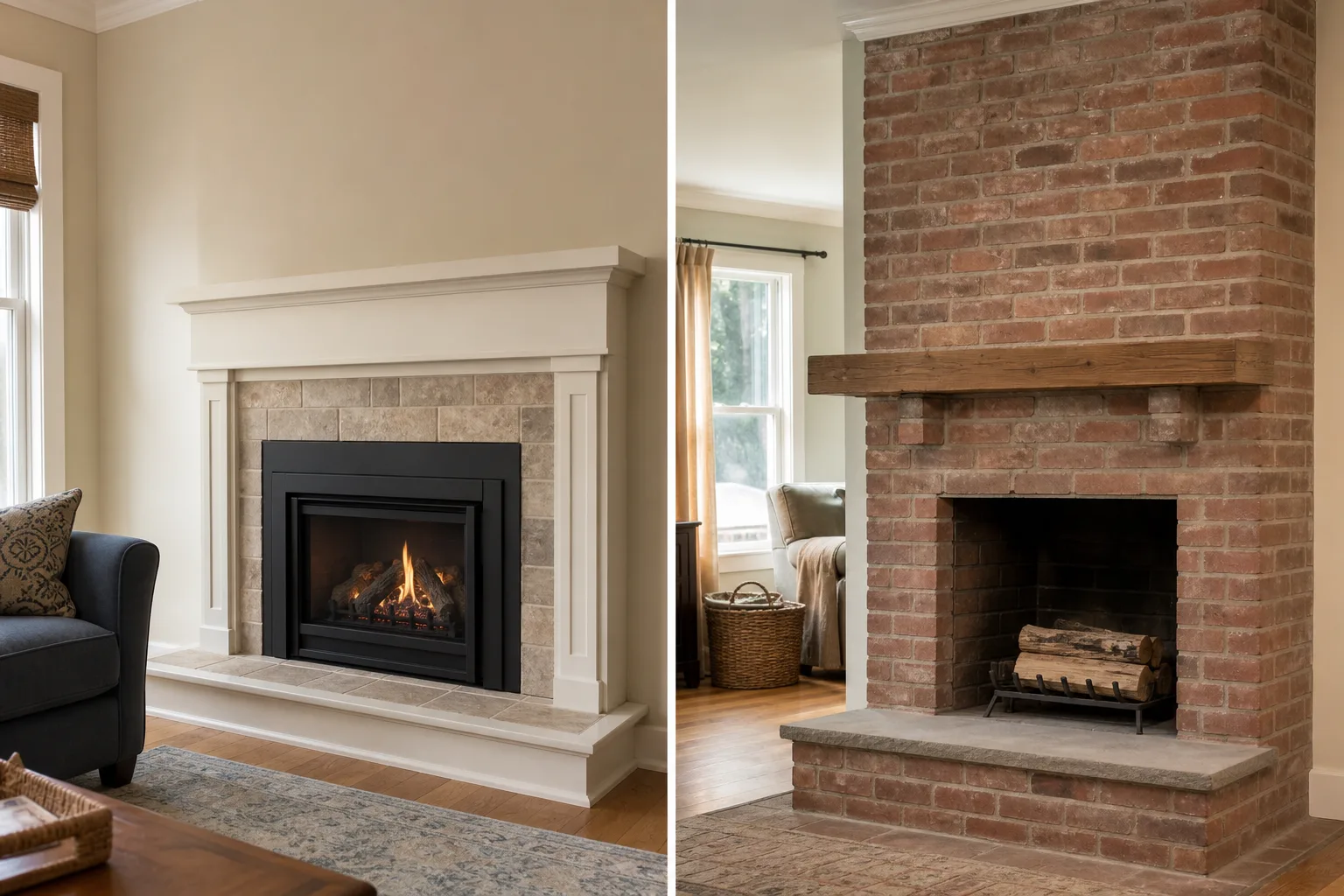
A zero clearance fireplace differs from a masonry fireplace mainly in how it is built and how it manages heat. The factory-built type uses a metal firebox and a listed metal chimney system. A masonry fireplace is constructed on site with masonry units, a firebox, smoke chamber, flue with a chimney liner, and substantial foundation support.
| Feature | Factory-built system | Masonry fireplace |
|---|---|---|
| Firebox | Manufactured metal shell, often with refractory panels | Built on site from firebrick and masonry |
| Chimney | Listed metal sections made for the system | Masonry chimney containing a flue liner |
| Structural load | Usually supported by framed construction as directed | Requires substantial support and often its own foundation |
| Heat control | Air spaces, insulation, shields, and specified clearances | Masonry mass, firebrick, liner, and required clearances |
| Exterior look | May have brick, stone, tile, or a framed chase | Often masonry from the foundation upward |
The visual difference can be deceptive. Brick, stone, or tile around the opening does not prove that the fireplace itself is masonry. Decorative facing often covers the front of a manufactured metal box, while the chimney may run through a wood-framed chase that has been finished to resemble solid masonry.
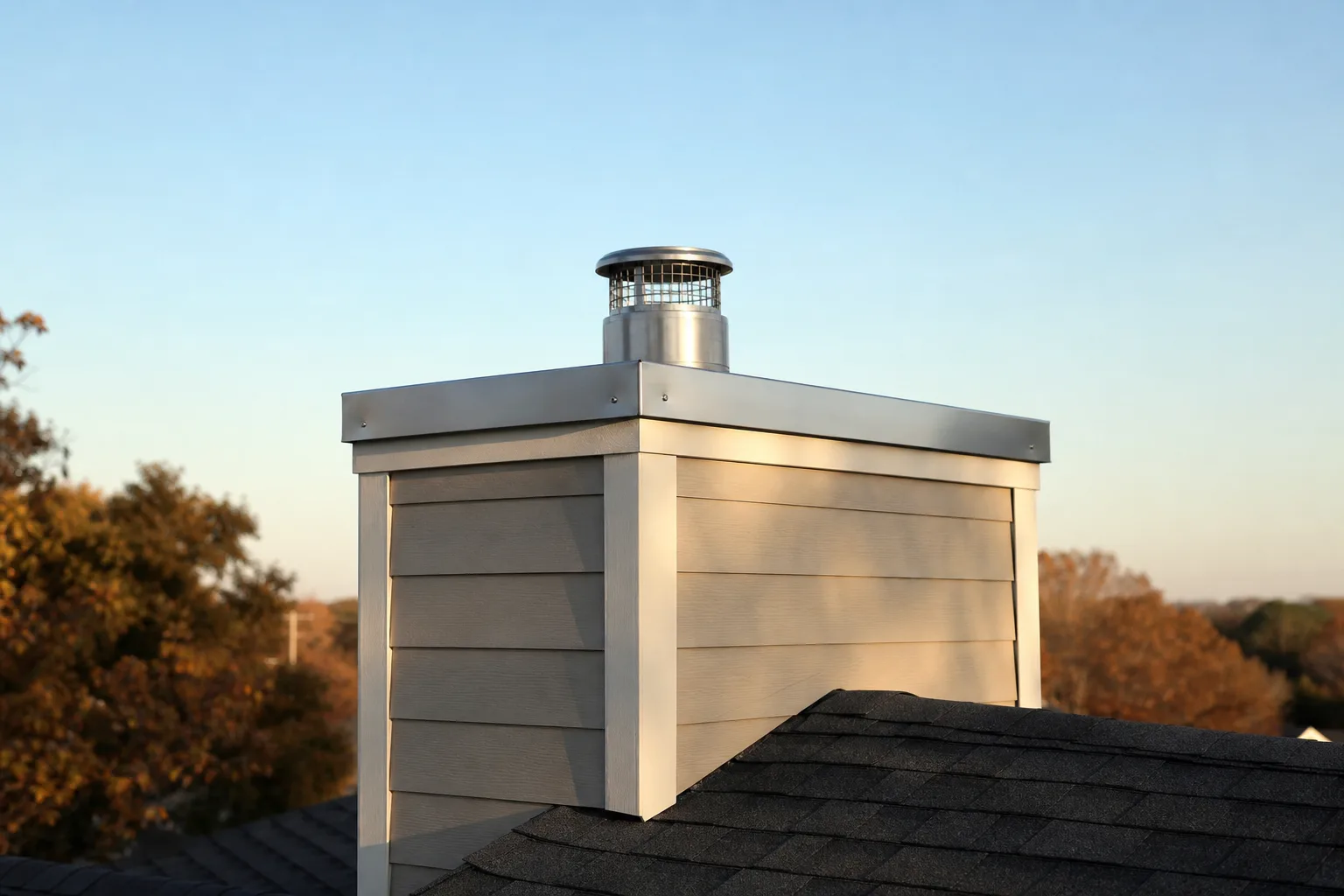
A masonry chimney often feels massive because it is. It may pass through the house as a broad brick structure and continue above the roof. A factory-built chimney is lighter and commonly concealed inside a framed chase, with round metal pipe visible from an attic or at the termination.
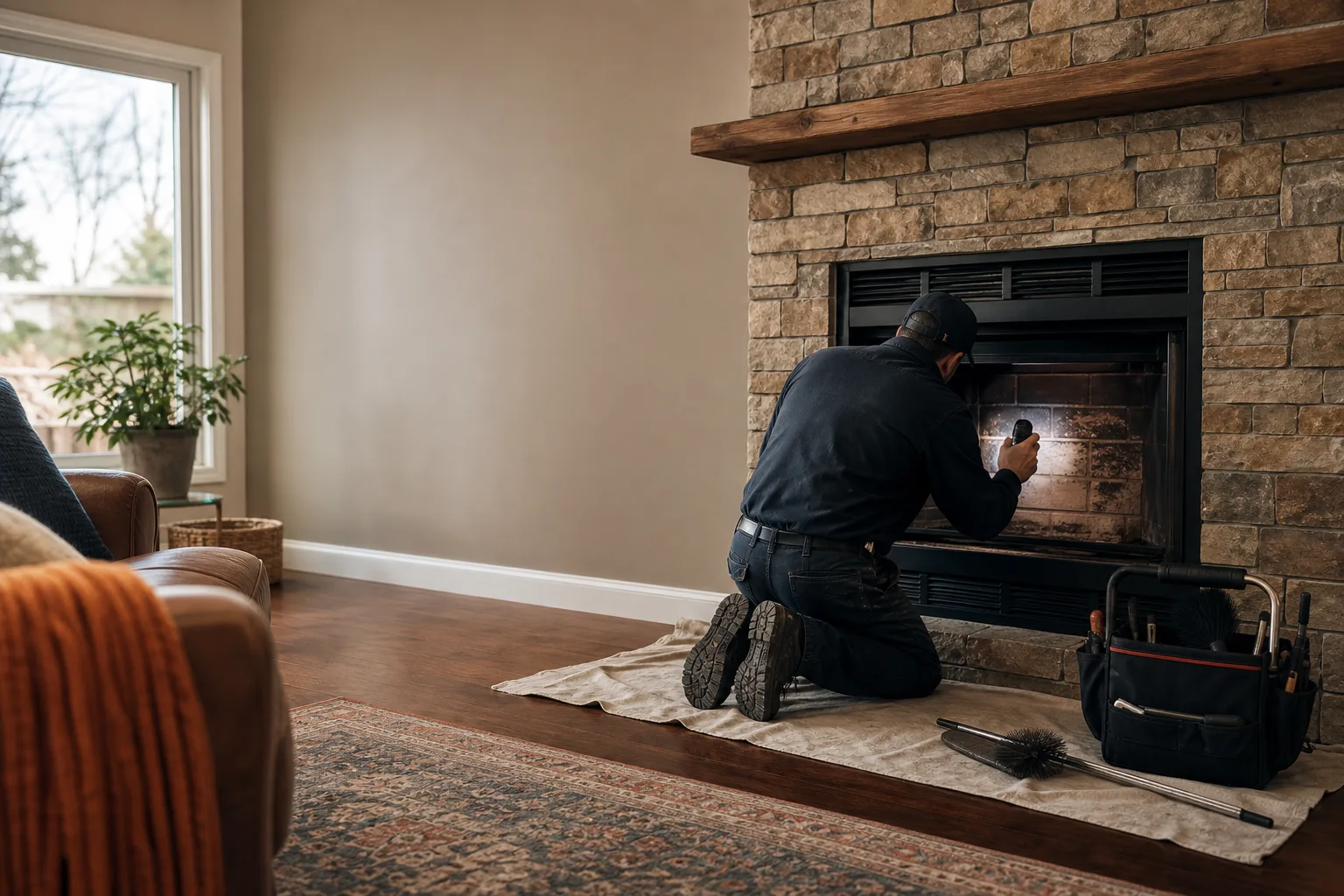
From the field: Technicians often arrive at homes where the owner was told the fireplace was masonry because the living-room wall is covered in stone. A flashlight inside the firebox reveals metal seams, removable refractory panels, and a label behind a screen or louver.
Neither design is automatically safer or longer lasting. Condition, installation, water exposure, use, and maintenance matter more than appearance. Problems also differ, so identifying the construction type comes before choosing a repair or evaluating whether fireplace insert installation is feasible.
Unsure what is behind the surround? Request an identification and safety inspection or call (513) 655-6702 for a clear explanation of what you have.
How Can You Tell Which Type of Fireplace You Have?
You can often identify the fireplace by finding its rating plate and checking for a manufactured metal firebox, removable refractory panels, louvers, access panels, or a round metal chimney. Those clues strongly suggest a factory-built system, but concealed finishes and past alterations can make visual identification uncertain.
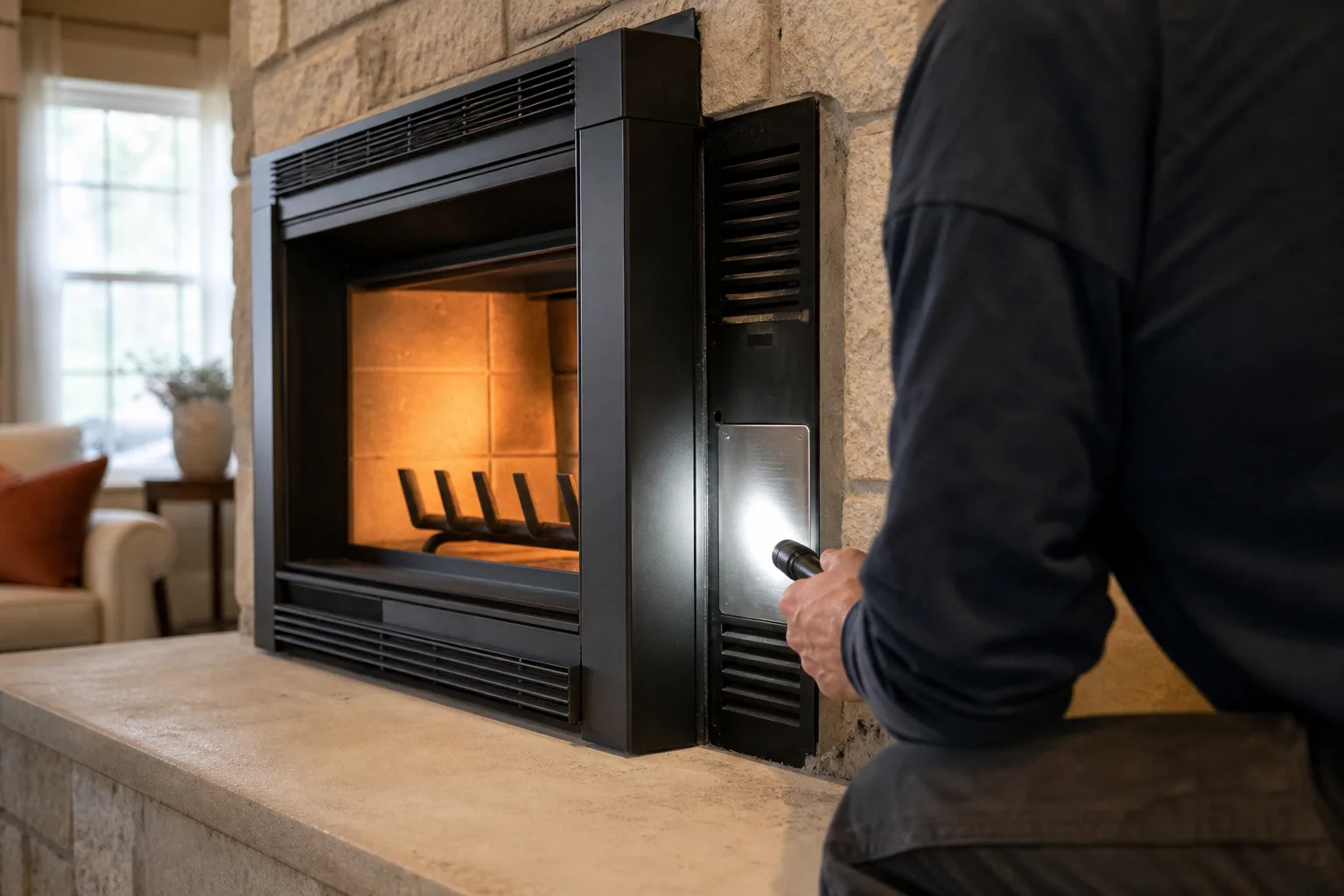
Start at the fireplace opening when the unit is cold and has not been used recently. Look along the side walls, upper firebox area, behind the screen, and near lower or upper louvers for a metal label. It may show the manufacturer, model, serial information, fuel type, safety listing, and required chimney family.
Use this no-disassembly checklist:
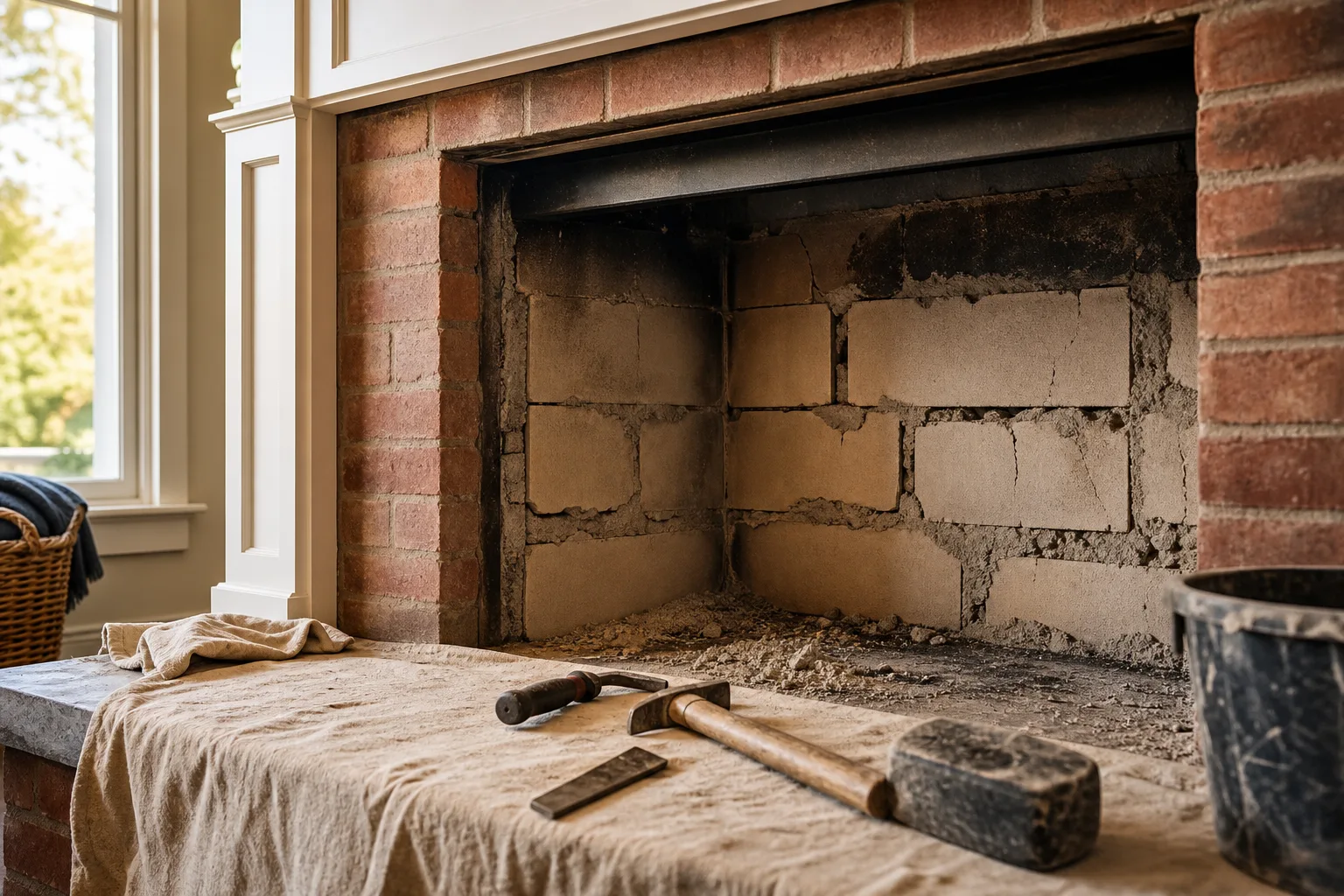
- Check the firebox. Look for metal seams, screws, formed panels, or fitted refractory liners rather than site-laid firebrick.
- Check the fireplace face. Look for louvers, ventilation slots, removable access doors, or a narrow metal edge behind the decorative surround.
- Check the exterior chase. From the ground, look for a framed or siding-covered chimney enclosure rather than exposed masonry.
- Check the roofline safely. From the yard, note whether the termination appears to be a round metal cap, but do not climb onto the roof.
- Check accessible paperwork. Search home records for an installation manual, model number, inspection report, or photographs taken before the wall finish was installed.
If the attic has a safe, floored access route, you may be able to see a round metal chimney passing through a listed firestop or support box. Do not move insulation, remove shields, open chimney joints, or squeeze through an unfinished attic to get a closer view. A photo taken from a safe standing position is more useful than disturbed components.
Safety note: Never remove refractory panels or pry off trim to search for a label. Panels can be fragile, and hidden metal edges are sharp. Disassembly can also change the way shields or cooling-air passages sit around the firebox.
Clear photographs can help a chimney professional narrow down the system, but if you are searching for a chimney inspection near me, verify the inspector’s qualifications before booking. Capture the full opening, firebox walls, label, louvers, chimney termination from the ground, and any accessible view inside the chase or attic. Photograph labels straight on so faded text has the best chance of being read.
Visual clues are not always conclusive. Remodels may cover louvers, replacement panels may hide original markings, and some masonry fireplaces contain metal components that resemble a manufactured firebox. Identification should remain provisional until the label, manual, construction details, or inspection findings support it.
Want help identifying the system without taking it apart? Schedule a fireplace inspection or call (513) 655-6702.
Why Must Replacement Parts Match the Fireplace Model?
Replacement parts must match the fireplace model because the firebox, chimney, cap, doors, refractory panels, and protective components were tested together in a defined configuration. A part with similar dimensions may still change airflow, heat transfer, draft, joint engagement, or clearance requirements, making the original listing inapplicable.
Factory-built components are not a collection of interchangeable metal pieces. Chimney sections use specific locking joints and insulation arrangements. Caps are designed around particular flue dimensions and cooling-air paths, while doors, screens, and refractory panels must fit without blocking openings or exposing unprotected metal.
Generic or modified parts can create problems that are hard to see during a fire. A mismatched chimney section may not lock correctly. An incorrect panel can leave a gap that concentrates heat on the firebox shell, and unapproved doors may restrict combustion air or cause temperatures to rise outside the conditions under which the system was tested.
Pro tip: Keep a clear photo of the rating plate with your home records. Soot, corrosion, cleaning, and years of heat exposure can make a readable label difficult to decipher later.
Before approving a repair, a technician needs the manufacturer, model, listing information, and installation manual when available. Those references show which component numbers were approved, where clearances must be maintained, and whether a superseding part was formally accepted for the model. Physical fit alone is not enough.
When the label is missing or unreadable, identification may require old permits, manuals, photographs, chimney details, and careful measurements. A professional may be able to document the system, but guessing is not an acceptable basis for installing a safety-related component. The same concern applies when different parts have already been mixed during an earlier repair.
If the correct component has been discontinued, routine fabrication does not automatically provide a safe substitute. Some limited repairs may still be possible under the manufacturer’s instructions, but damaged structural metal, incompatible chimney pieces, or unavailable listed parts can make replacement the responsible path. Decorative changes cannot correct a loss of system integrity.
The whole installation should be considered before money is spent on one visible defect. A new refractory panel offers little value if the firebox shell is rusted through or the chimney above it contains damaged joints. Conversely, a sound identified system should not be condemned merely because one approved, replaceable component has failed.
If a part is damaged, missing, or impossible to identify, leave the fireplace unused until the system has been checked. Request a model-specific inspection and repair assessment or call (513) 655-6702 for a direct explanation of the available options.
How Long Does a Factory-Built Fireplace Last?
A zero clearance fireplace does not have a fixed expiration date. Its service life depends on how well it was installed, how often it has been used, whether it has overheated, how much moisture has reached it, and whether approved replacement parts remain available.
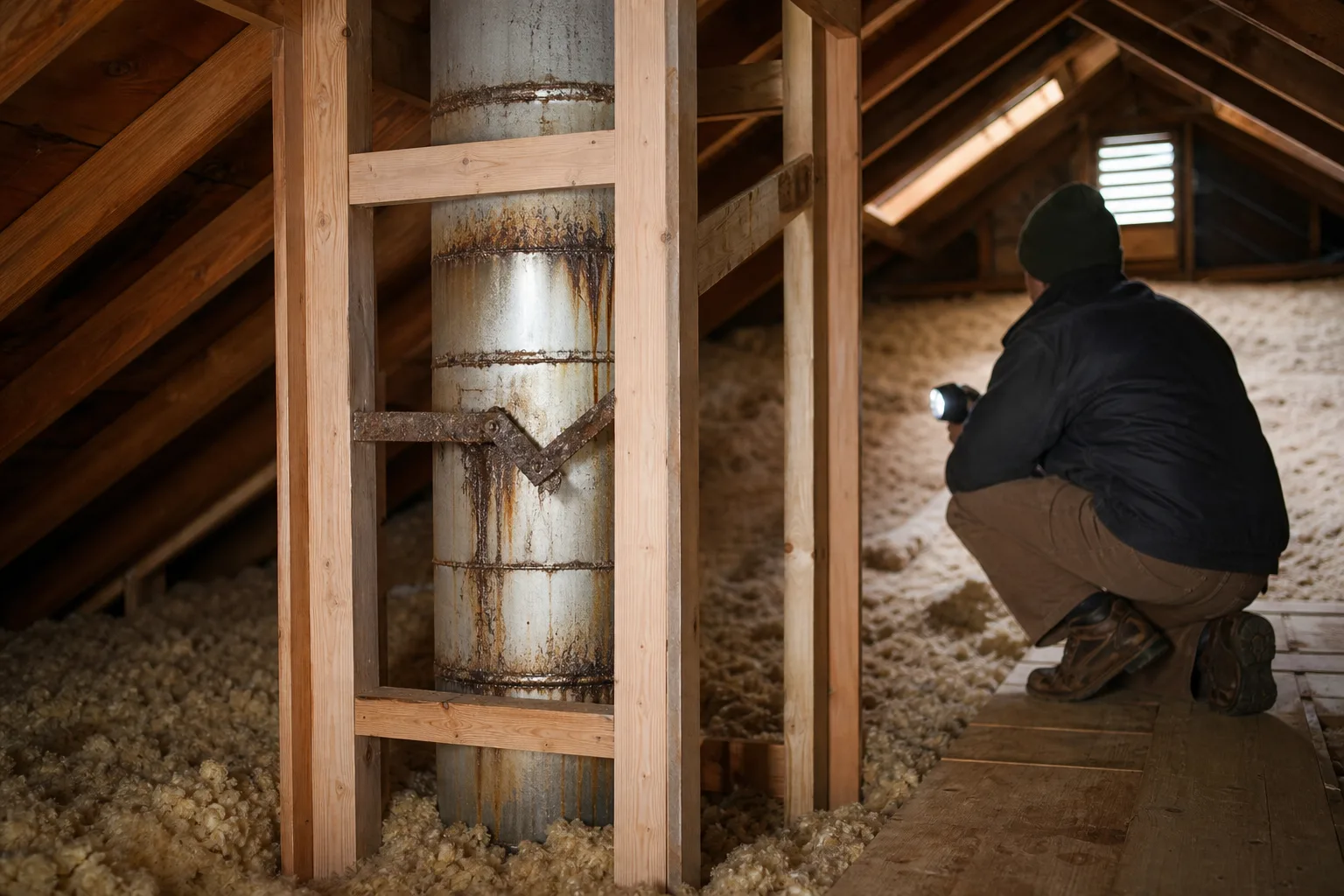
Water often determines how gracefully these systems age. A leaking chase cover or damaged cap can send moisture down the chimney, where it collects around joints and hidden metal surfaces. Rust may begin inside the exterior chase long before stains appear in the living room.
Age-related warning signs include:
- Rust on the firebox, chimney sections, cap, or connector joints
- Warped metal around the firebox opening or upper firebox
- Cracked, loose, or badly eroded refractory panels
- Open seams, shifted chimney sections, or failed locking joints
- Water staining, damp insulation, or corrosion inside the chase
- Repeated evidence of overheating, including buckled panels or discolored metal
From the field: Older units sometimes look clean from the room while the chimney or chase is deteriorating above them. The hidden areas often decide whether continued use is reasonable.
Routine sweeping, dry storage conditions, and prompt leak repairs can preserve a sound system. Maintenance cannot rebuild rusted structural metal, straighten a heat-warped firebox, or make a substitute component compatible with a discontinued model.
An older fireplace is not automatically unsafe, and a newer one is not automatically sound. Condition, installation, and parts availability matter more than age alone, so a careful inspection is more useful than any promised lifespan.
Need a condition check? Request an inspection or call (513) 655-6702 for a clear assessment of the firebox, chimney, and chase.
What Inspection Findings Decide Between Repair and Replacement?
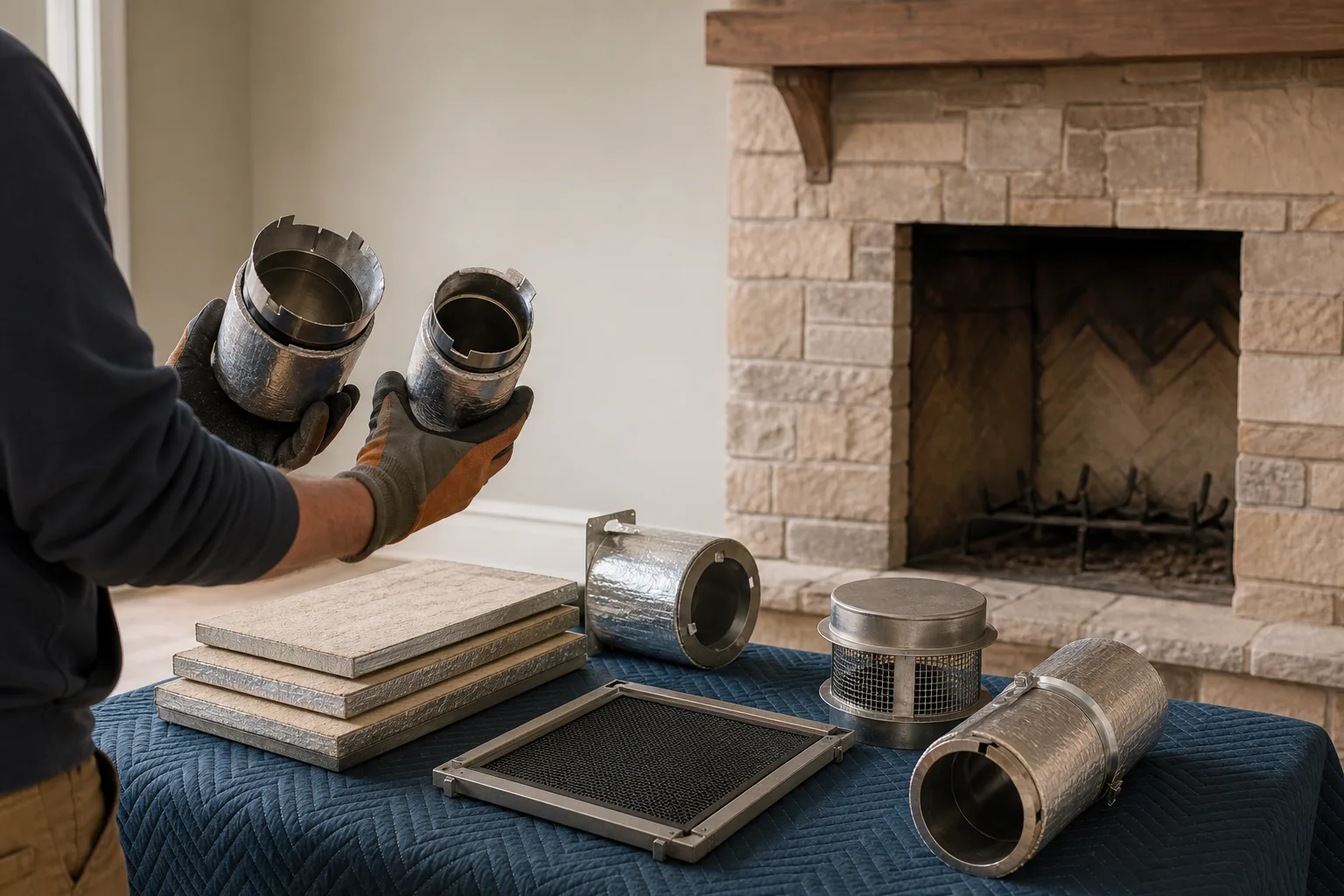
Repair or replacement of a zero clearance fireplace is decided by the condition of the complete listed system, not by appearance alone. An inspector looks for isolated damage that can be corrected with approved parts, as well as structural, heat-related, or installation problems that make replacement the safer path.
The inspection should cover the firebox shell, refractory panels, doors, chimney sections, locking joints, termination cap, chase cover, and accessible framing clearances. Water stains, rust trails, loose components, soot in unexpected areas, and signs of excessive heat help show how the system has been performing.
| Inspection finding | What it may mean |
|---|---|
| One damaged refractory panel, with the correct part available | A model-specific repair may be possible |
| Minor cap or chase cover damage, with dry and sound chimney sections below | Exterior repair may stop further water entry |
| Widespread rust or rust-through | Replacement may be needed because structural metal has been lost |
| Warped, split, or breached firebox metal | Continued use may expose framing or hidden spaces to heat and flame |
| Damaged chimney sections or failed joints | The venting system may require major replacement |
| Unsafe or unverifiable framing clearances | Corrections may require opening finishes or replacing the installation |
| Missing label and no reliable model identification | Approved parts and installation requirements may be impossible to confirm |
Limited damage is more likely to be repairable when the correct listed component is available and the surrounding system remains dry, properly supported, and undamaged. Examples include a replaceable refractory panel, an approved cap, or a serviceable chase cover that has not allowed deeper corrosion.
Replacement becomes more likely when corrosion is widespread, firebox metal is warped or perforated, chimney sections are damaged, or required clearances were never provided. An unreadable listing label, missing installation information, or discontinued model-specific parts can also prevent a defensible repair.
Good to know: A new decorative door, fresh paint, or replacement facing does not correct damage behind the opening. The inspector must be able to connect the proposed repair to the manufacturer’s instructions and the fireplace listing.
NFPA 211 provides a framework for chimney and venting inspections, but the manufacturer’s instructions still control the listed installation. A sound decision accounts for every connected component, including portions concealed inside the chase.
Want the findings explained plainly? Schedule a system inspection or call (513) 655-6702 to discuss repair options and parts availability.
What Should You Do Before Using an Older or Damaged Unit?
Do not use an older or visibly damaged factory-built fireplace until its condition and identity have been checked. Rust-through, loose panels, open gaps, fallen components, water damage, or signs of overheating can indicate problems that extend beyond the part you can see from the room.
Safety note: Do not light a small test fire to see whether the unit still works. Heat and smoke can reach the chase or nearby framing through a failed joint before a problem becomes visible indoors.
You can make a useful preliminary check without removing panels, entering the chase, or climbing onto the roof:
- Check the firebox. Look for holes, warped metal, open seams, loose refractory panels, and pieces resting where they do not belong.
- Check around the opening. Look for soot stains, melted trim, scorched finishes, or gaps that appear to have widened.
- Check the hearth area. Look for water stains, rust flakes, dampness, or debris that has fallen from above.
- Check the exterior chase from the ground. Look for staining, loose siding, a tilted cap, or a chase cover that appears bent or damaged.
- Check the room after rain. A musty smell, dripping, or new staining can point to water entering the chimney enclosure.
Photograph the rating label, firebox interior, doors, louvers, visible damage, and exterior chase. Gather the installation manual, purchase records, previous inspection reports, and any paperwork showing the manufacturer and model, but do not remove fixed panels or modify components to search for identification.
Pro tip: Take one wide photo before taking close-ups. The wider view helps a technician understand where corrosion, gaps, or loose parts sit within the firebox rather than seeing an isolated patch of metal.
Leave the unit unused if the label cannot be read, the system cannot be identified, damage is visible, or its inspection history is unknown. To arrange an assessment, request service or call (513) 655-6702.
Symptom checker
What is your chimney doing?
Tap the closest match for an honest first answer.