



On this pageHow to Start Your Search for Fireplace Inserts Near Me7 sections+6
- How to Start Your Search for Fireplace Inserts Near Me
- Why the Chimney Inspection Comes Before the Showroom
- Let the Existing Fireplace and Flue Guide the Fuel Choice
- How to Evaluate Local Insert Dealers and Installers
- Liner Questions to Ask Before Choosing an Installer
- What a Real Installed Quote Should Itemize
- Make the Final Choice Based on Fit, Scope, and Service
Quick answer
When searching for fireplace inserts near me, schedule a chimney inspection before choosing an appliance. The findings will narrow the fuel options, confirm liner and venting needs, and help you compare local installers using complete installed quotes.
How to Start Your Search for Fireplace Inserts Near Me
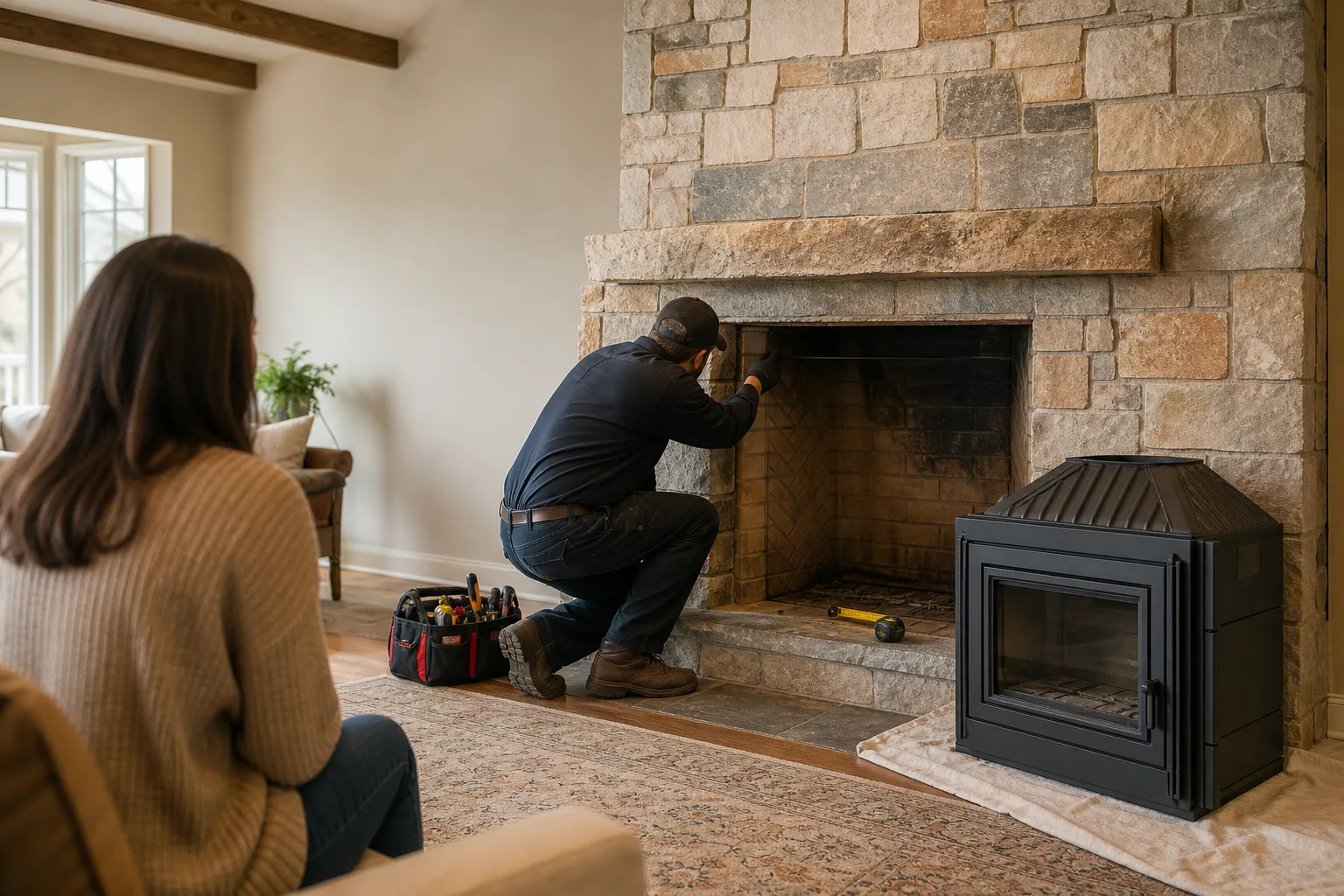
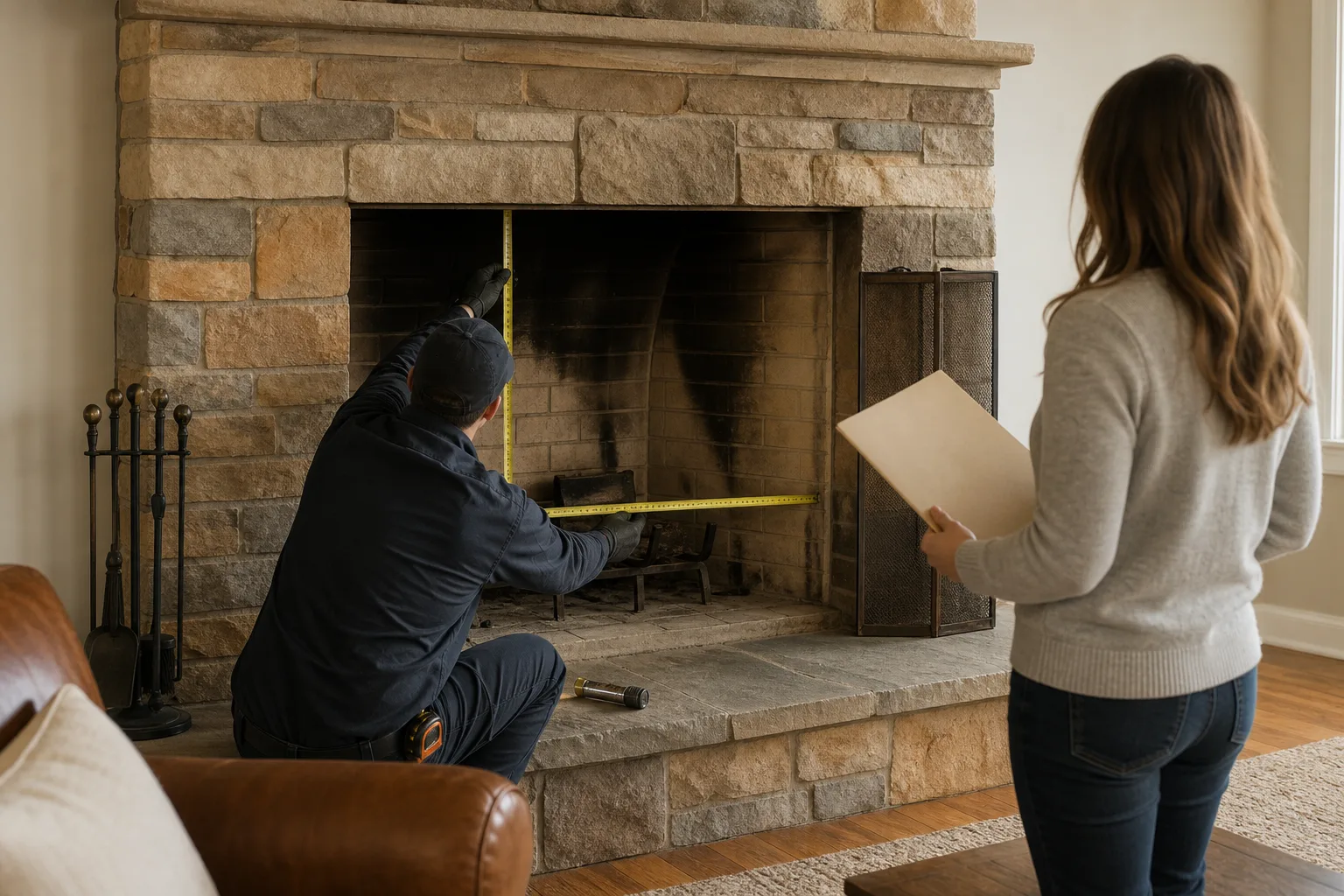
When you search for fireplace inserts near me, start with a chimney inspection rather than a showroom visit. The fireplace opening, flue size, liner condition, chimney height, and nearby clearances determine which appliances can be installed safely, so those facts need to come before style, finish, or fuel preferences.
The right answer to “fireplace inserts near me” is a local provider who can inspect the existing system, explain which options fit, and price the finished installation. An appliance price by itself tells you little if the chimney needs a liner, masonry preparation, electrical work, gas piping, or changes to the hearth.
Use the inspection report to narrow your search. Look for dealers and installers who regularly work with the fuel type, venting arrangement, and liner requirements your chimney can support, rather than a seller trying to make a chosen unit fit after the sale.
A capable provider should be able to connect three parts of the job:
- Assess the chimney. Record the fireplace opening, flue dimensions, liner condition, access, and visible defects.
- Match the appliance. Recommend a listed insert that fits the opening and works with the required venting system.
- Quote the whole installation. Include chimney preparation, liner or vent components, labor, permits, testing, and related trade work.
From the field: Technicians often arrive after a homeowner has picked an insert that is too deep for the firebox, poorly matched to the flue, or dependent on a liner that cannot pass through an offset. Measurements taken before shopping prevent that expensive reset.
You do not need to know every technical term before calling. You do need someone willing to inspect first, show you what was found, and explain why a particular insert is suitable.
Want to know what your chimney can support? Request an on-site assessment or call (513) 655-6702 before choosing an appliance.
Why the Chimney Inspection Comes Before the Showroom
A chimney inspection comes first because an insert becomes part of the existing fireplace and venting system. Under NFPA 211, the appropriate inspection level depends on the situation, and changing an appliance or venting arrangement may call for more than a basic visual review. The goal is to identify limitations before money is committed.
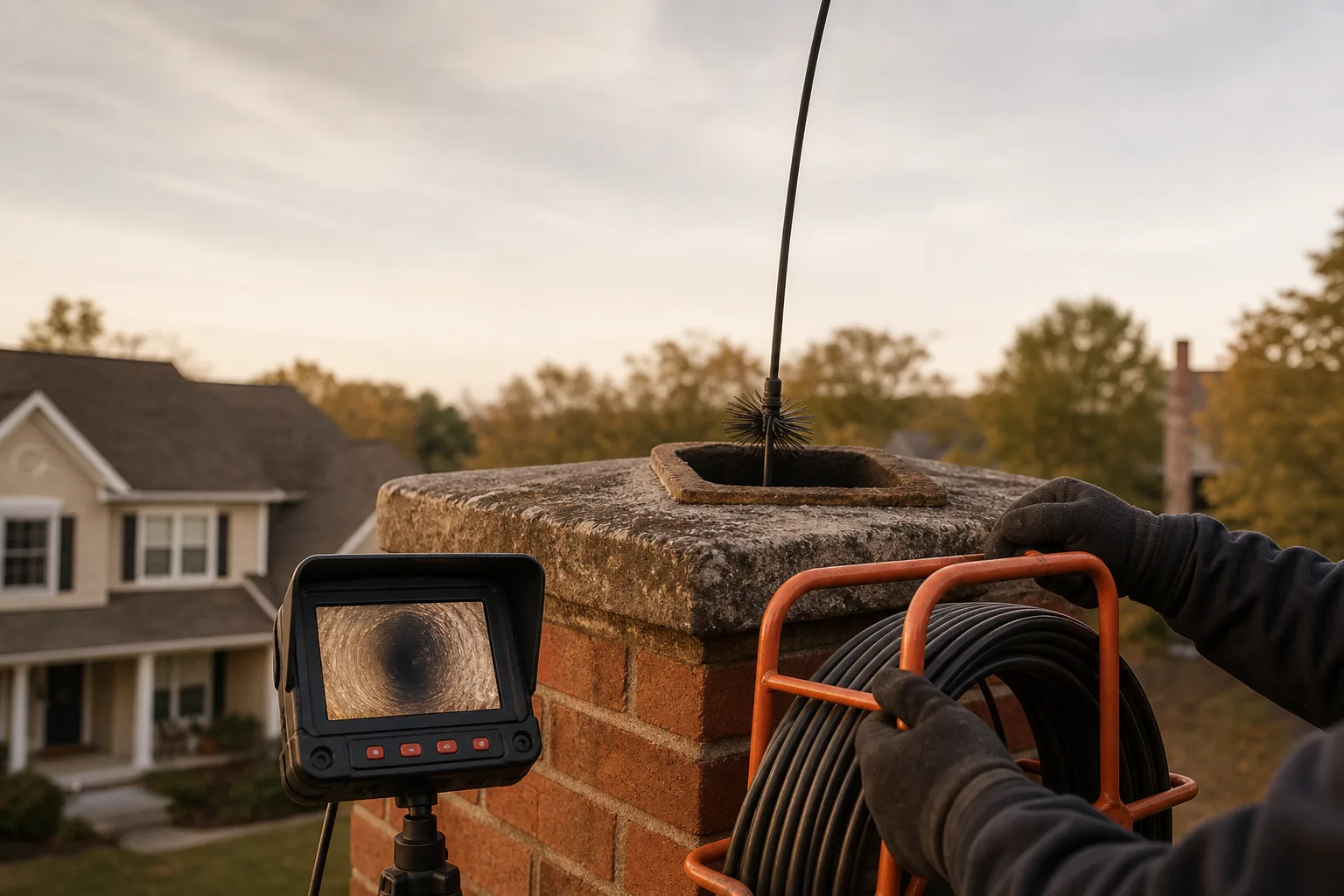
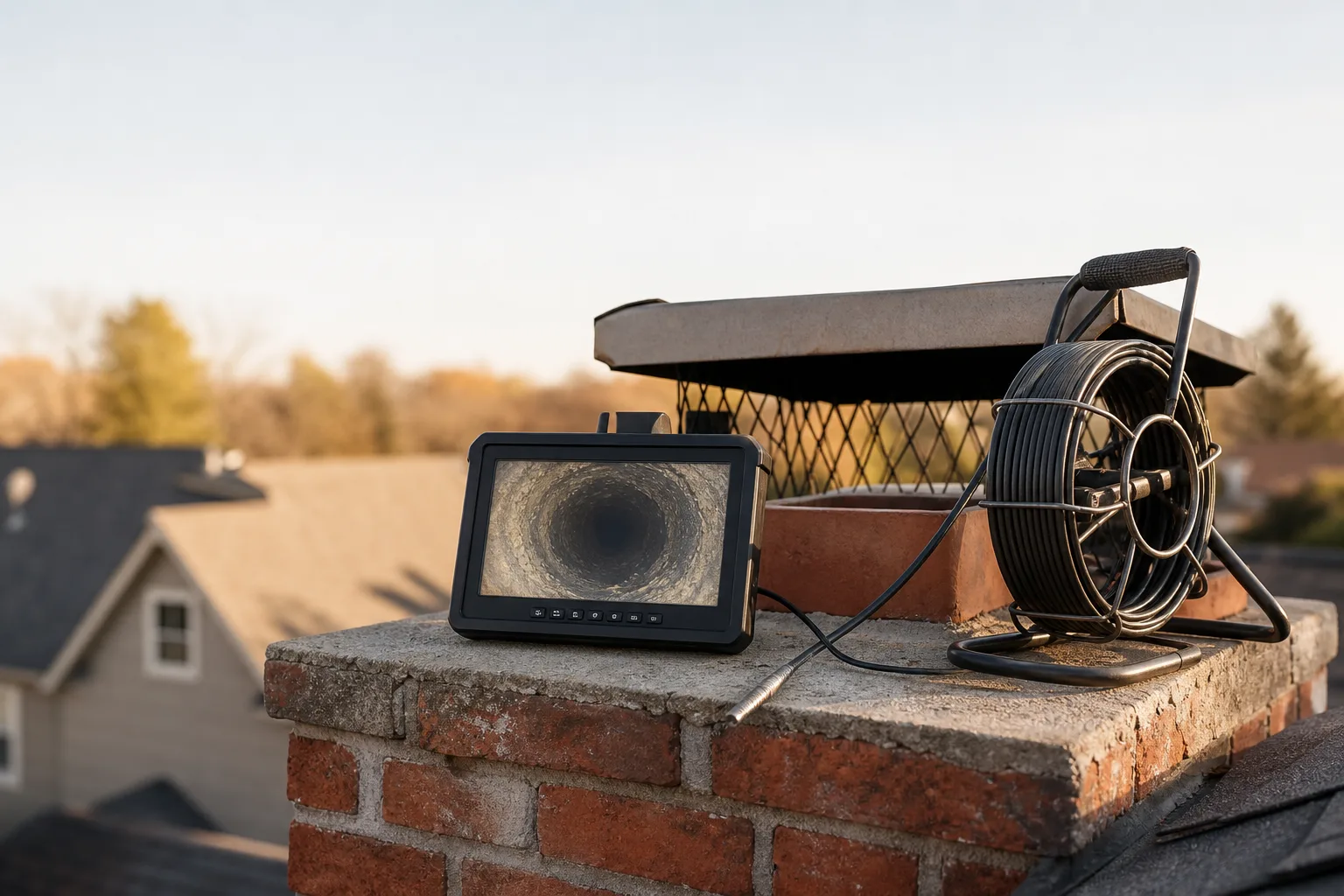
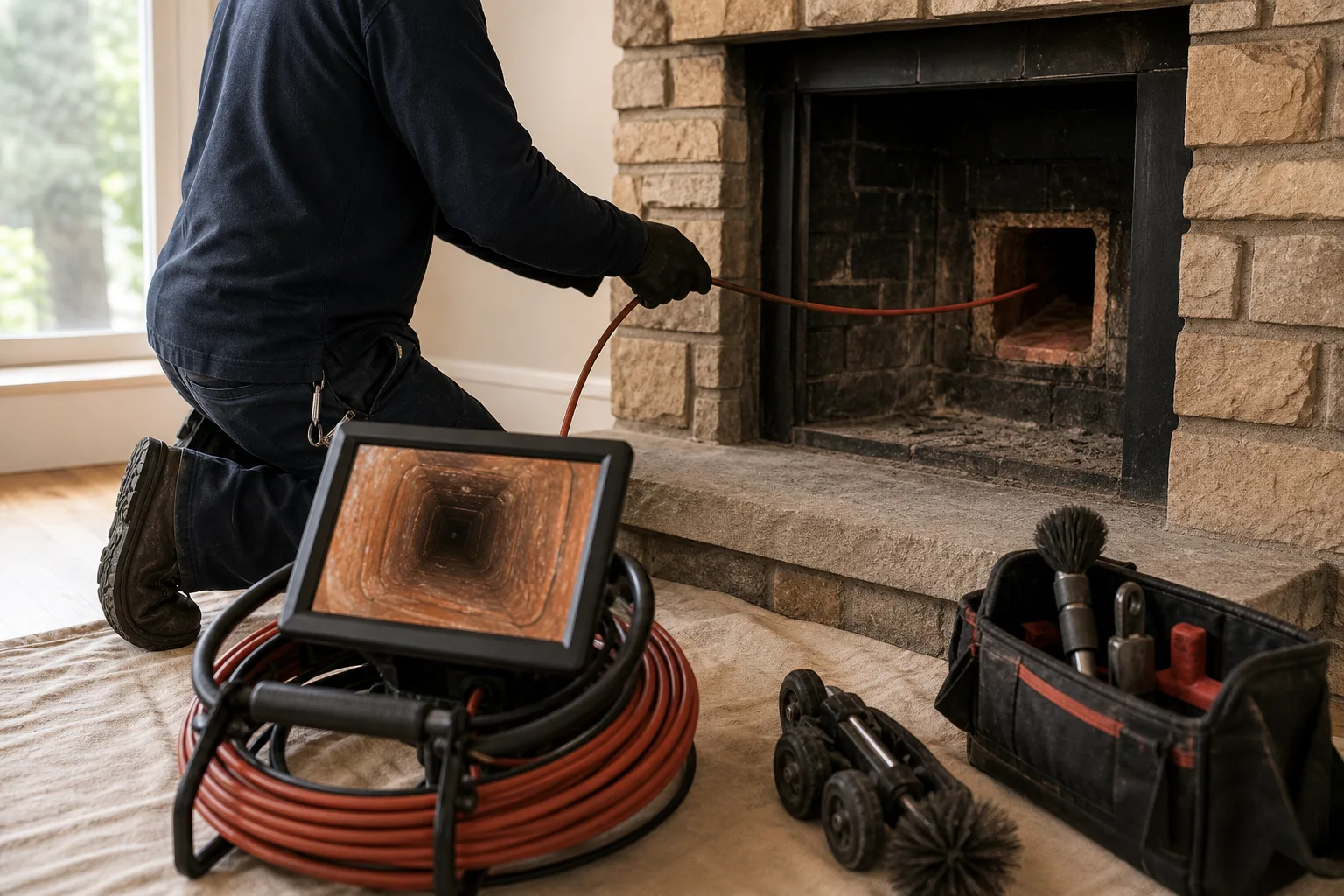
A Level 1 inspection generally covers readily accessible portions of a system that will continue operating without a major change. A Level 2 inspection includes additional accessible areas and video scanning of the flue, making it relevant when an appliance, fuel, or venting configuration is being changed. The inspector should determine which level applies to the planned work.
The written findings should document the fireplace opening, firebox depth, chimney height, flue dimensions, existing liner, smoke chamber, hearth projection, and installation access. Damage, blockages, moisture entry, combustible clearance concerns, and tight flue offsets can each change the list of suitable inserts.
You can make a useful ground-level check before the appointment. Do not climb onto the roof or lean a ladder against damaged masonry.
- Check the crown. Look from the ground for open cracks, missing sections, or vegetation growing near the top.
- Check the cap. Confirm that one appears to be present and is not visibly tilted or crushed.
- Check the masonry. Look for loose bricks, open mortar joints, staining, or pieces on the ground.
- Check the flashing. From a safe vantage point, note lifted metal, sealant patches, or staining below the roofline.
- Check the fireplace. Photograph the opening, hearth, damper area, and any accessible appliance labels.
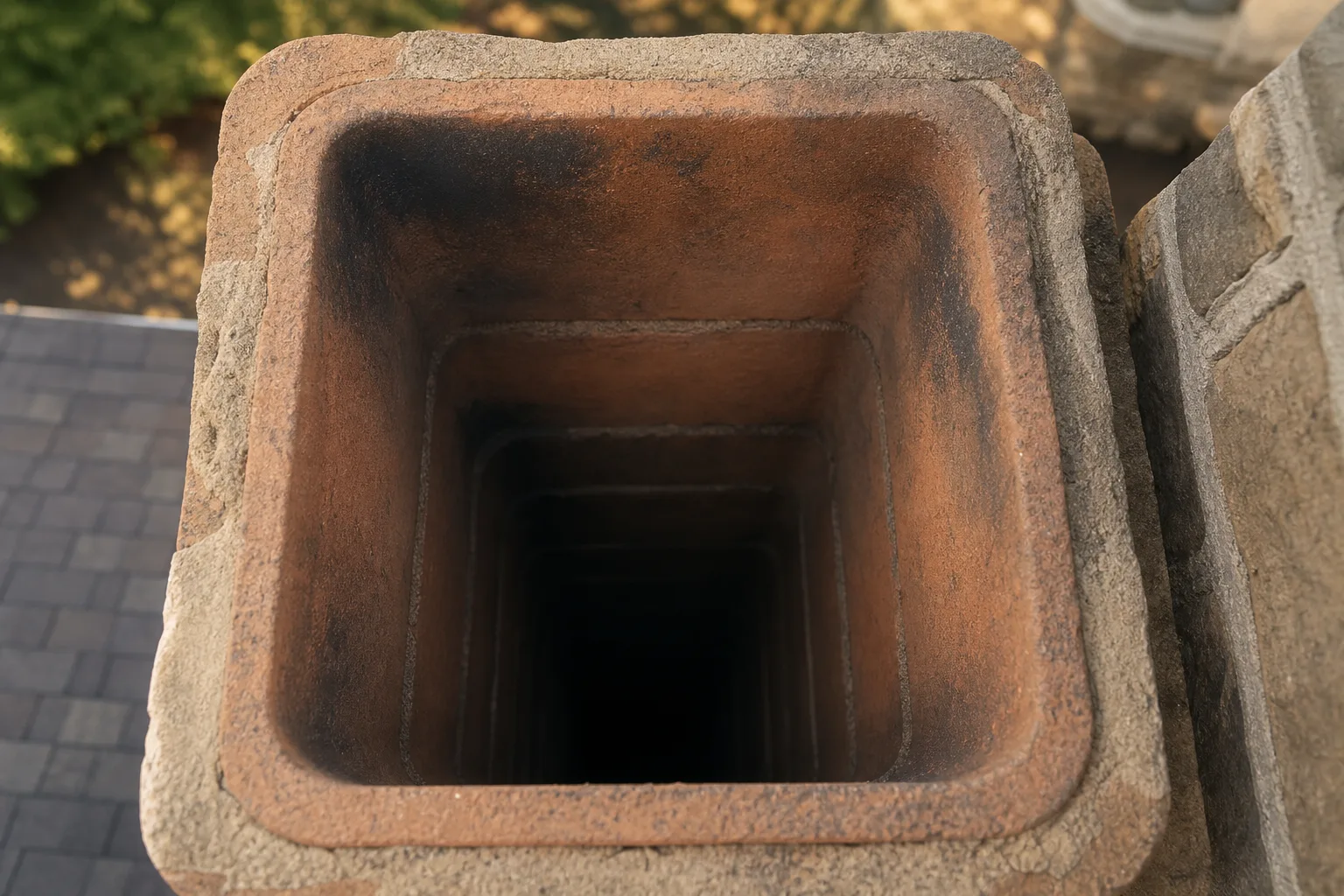
Safety note: A clean-looking firebox does not prove that the flue is sound. Cracked clay tiles, separated liner joints, hidden blockages, and old vent connections may only become clear during an internal camera scan and inspection of accessible chimney spaces.
Choosing an insert first can force a model change when the measurements are taken. It can also expose unplanned liner work, create permit delays, or leave you with an appliance that an inspector will not approve for that chimney.
The inspection is not meant to make shopping harder. It gives the showroom or installer accurate boundaries, allowing the conversation to focus on units that can actually be installed rather than models that merely fit across the front opening.
Let the Existing Fireplace and Flue Guide the Fuel Choice
Choose between wood, gas, and electric only after confirming what the fireplace and flue can support. Appearance and convenience matter, but they cannot overcome an undersized passage, damaged masonry, inadequate clearances, unavailable utilities, or an appliance listing that requires a different venting arrangement.
| Insert type | What the existing system must accommodate | Practical considerations |
|---|---|---|
| Wood | A correctly sized liner, suitable chimney height, required clearances, and room for the appliance connection | Fuel storage, ash removal, chimney sweeping, and possible heat during power outages |
| Gas | The venting system specified for the listed appliance, along with an approved gas supply and any required electrical service | Fuel availability, service access, controls, and local permit requirements |
| Electric | Correct firebox dimensions, clearances, and a suitable electrical circuit | No flue use, simpler operation, and no combustion heat during an outage without backup power |
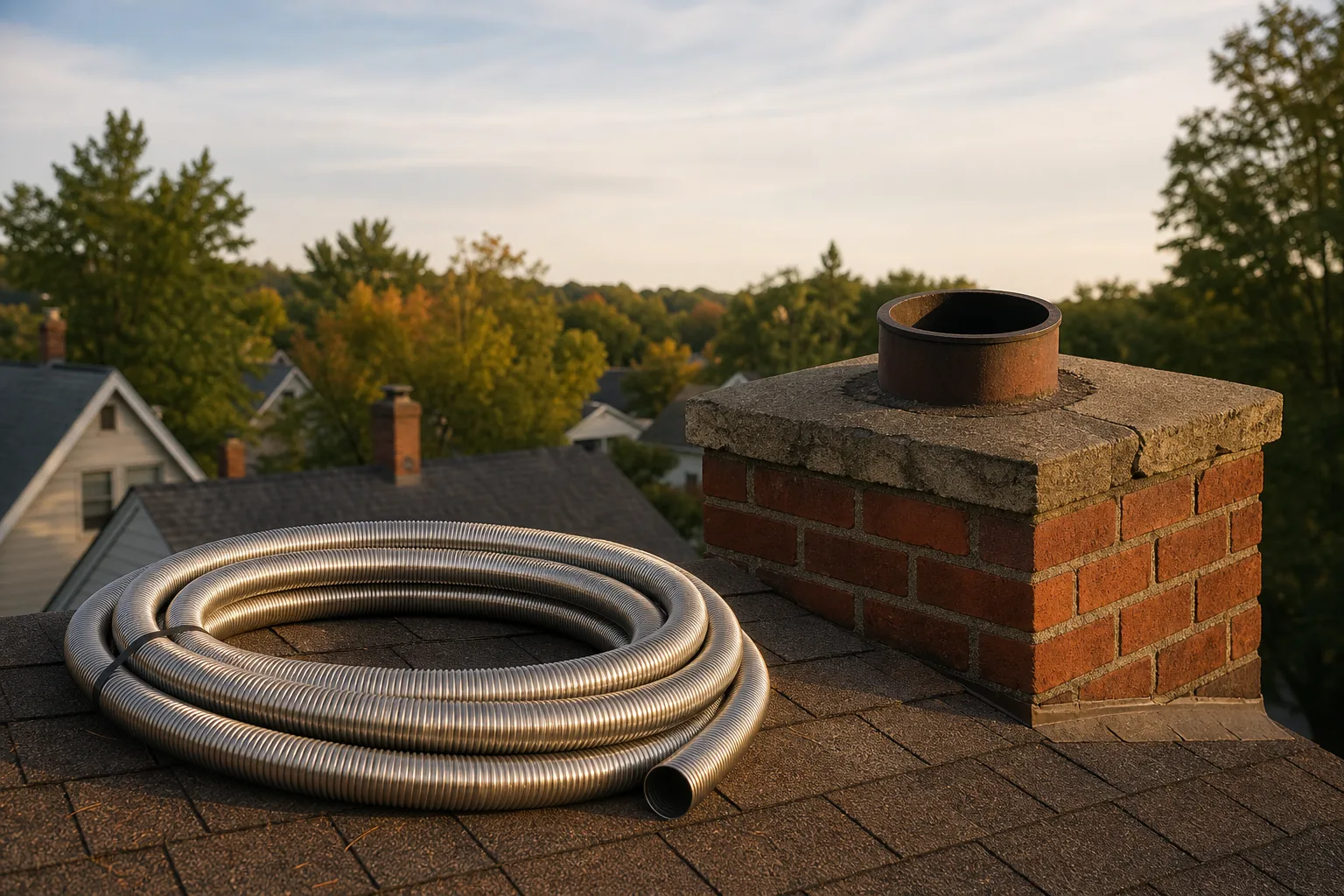
A wood insert generally needs a properly sized stainless steel liner running from the appliance connection to the chimney top. The installer must verify that the liner diameter matches the appliance instructions and that it can pass through the smoke chamber, damper area, offsets, and any narrowed sections of the flue.
Gas inserts require an approved venting arrangement matched to the specific appliance. Depending on the listed design, the system may use dedicated paths for exhaust and combustion air, and the existing chimney may serve as a route rather than the actual exhaust liner. Gas piping, shutoff placement, electrical needs, and termination details also affect feasibility.
Myth vs. fact: A gas insert does not automatically work in every masonry fireplace because it produces less soot than wood. The approved vent configuration, flue route, fireplace dimensions, utility access, and appliance listing still control how and where it may be installed.
An electric insert does not vent through the chimney, but that does not make fit irrelevant. The firebox still needs enough depth and width, the electrical circuit must serve the unit as required, and combustible clearances must follow the appliance instructions. The unused damper and chimney opening also need a planned treatment to limit drafts and moisture without creating a concealed problem.
Once unsuitable options have been removed, compare day-to-day needs. Wood may appeal if you have dependable fuel storage and want heat during an outage, while gas may suit someone seeking controlled combustion heat with less ash handling. Electric can work where venting is impractical, provided the available electrical service and expected heat output fit the room and intended use.
Local permits should be considered before a contract is signed, not after delivery. Maintenance matters too, since wood systems need routine sweeping, gas appliances need qualified service, and an unused chimney above an electric insert still requires attention if water or masonry deterioration is present.
Need help narrowing the fuel options? Schedule a chimney and fireplace assessment or call (513) 655-6702 for findings based on the system already in your home.
How to Evaluate Local Insert Dealers and Installers
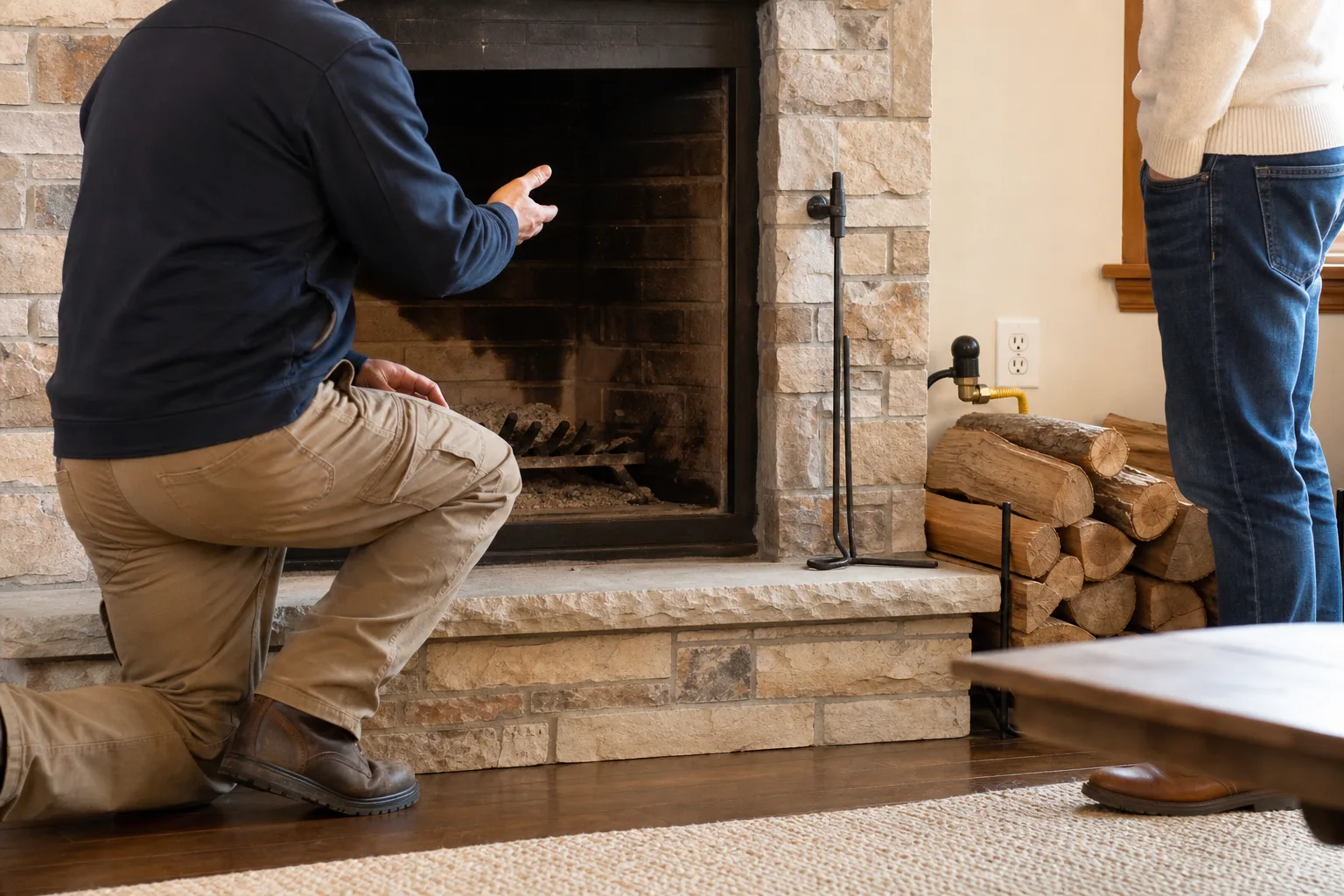
Evaluate local providers by how they handle the existing chimney before discussing finishes and features. A qualified dealer or installer should take measurements, review chimney conditions, and recommend listed appliances that fit the actual firebox and approved venting system. The explanation should connect each recommendation to an inspection finding.
Ask who is responsible for every stage of the project. When the inspection, chimney preparation, liner work, appliance installation, permits, and final testing are divided among several contractors, gaps can appear between scopes. A single point of responsibility is helpful, but only if the written proposal clearly states who performs each task.
Useful questions include:
- Who inspects the chimney? Ask what inspection level is planned and whether you will receive written findings or camera images.
- Who installs the liner or venting? Confirm that the person doing this work follows the appliance listing and approved installation instructions.
- Who handles permits? The proposal should identify the responsible party and account for required inspection access.
- Who completes trade work? Gas piping and electrical changes should be assigned rather than left as an undefined homeowner task.
- Who performs final testing? Ask how draft, appliance operation, safety controls, and vent connections will be checked.
- Who provides future service? Find out who handles warranty visits, cleaning guidance, replacement parts, and routine maintenance.
A provider should be able to explain how the installation follows the appliance listing, manufacturer instructions, applicable building codes, and NFPA 211 where it applies. “This is how we always do it” is not a substitute for showing that the liner size, clearances, hearth protection, and termination match the selected appliance.
A trustworthy installer will also walk you through the same decisions covered in a fireplace insert installation guide: protecting the work area, preparing the firebox, routing the liner or vents, making the appliance connection, fitting the surround, and testing operation. That discussion should be specific to your fireplace rather than a generic description of a typical job.
Good to know: A surround or faceplate can hide the edges of the original opening, but it cannot correct a poor appliance fit, an unsupported hearth, or an improper vent connection. The work behind the panel matters more than how neatly the panel covers the gap.
Watch for warning signs during sales conversations. Be cautious if a provider will sell the appliance before measuring the chimney, cannot identify the required liner or vent system, treats permits as optional without checking local rules, or leaves chimney preparation as an open-ended extra.
Before choosing an insert, request an on-site assessment or call (513) 655-6702. A written set of measurements and chimney findings gives you a sound basis for comparing local providers and the installation scopes they propose.
Liner Questions to Ask Before Choosing an Installer
When comparing fireplace inserts near me, ask how each installer will vent the appliance through the chimney, not simply whether a liner is included. The installer should identify the required liner material and diameter, then explain how those specifications were checked against the selected appliance, the chimney height, and the flue conditions found during inspection.
Ask these questions before accepting a proposal:
- Does this insert require a new liner? Existing clay tile may still be unsuitable because of damage, excessive dimensions, or the appliance listing.
- What material and diameter will be installed? The answer should match the appliance instructions rather than a standard size used on every job.
- Will the liner run continuously to the chimney top? A complete run provides a defined venting path from the appliance connection to the termination.
- Does the liner require insulation? Flue condition, available clearances, appliance requirements, and code provisions can affect the answer.
- How will both ends be finished? Ask how the installer will secure and seal the fireplace connection, top plate, flashing, cap, and termination.
A good installer can show how liner sizing relates to draft and safe operation. The chimney liner guide explains liner materials, sizing, insulation, and installation conditions in more detail, while the fireplace insert installation guide helps you understand how that liner fits into the rest of the project.
Safety note: A smaller liner is not automatically better for draft, and a larger one is not automatically safer. The diameter must follow the appliance listing and installation instructions, with the existing chimney height and route taken into account.
Oversized, damaged, or unlined flues need a defined plan. If the chimney has offsets, a tight smoke chamber, broken tile, or poor access from above, the installer should explain how the liner will be lowered, pulled, connected, and inspected rather than placing a vague allowance for “chimney work” in the quote.
From the field: Technicians often find that the difficult part is not the straight flue above. The tight turn behind the damper, a narrowed smoke chamber, or an old steel component embedded in masonry can prevent the specified liner from reaching the insert without preparation.
The proposal should also say what happens if concealed damage appears after the old damper or appliance components are removed. Written unit rates, defined allowances, or a clear change-order process are more useful than an open-ended promise to settle the cost later.
Want the venting plan confirmed before you buy? Request an on-site assessment or call (513) 655-6702.
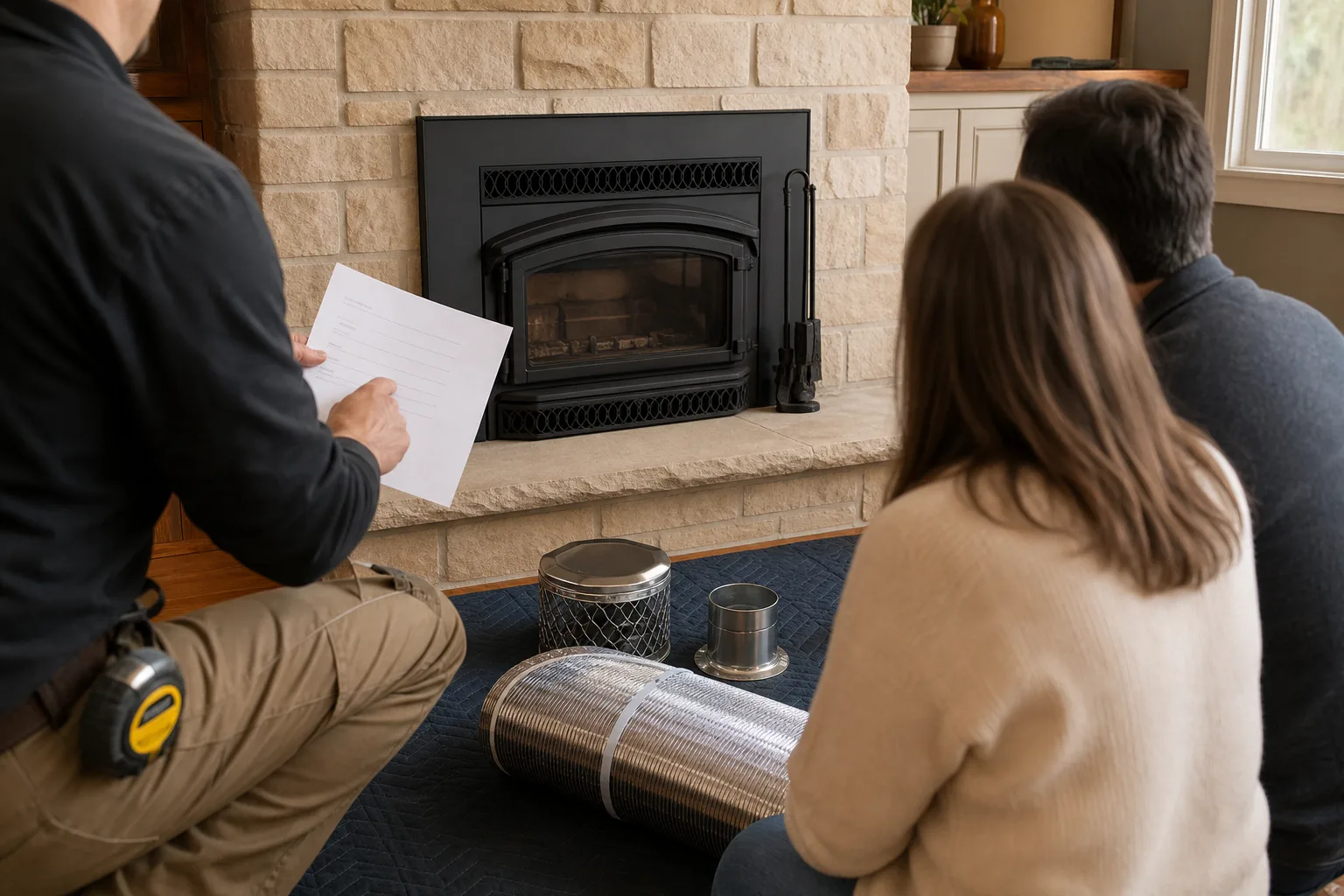
What a Real Installed Quote Should Itemize
A real installed quote separates the appliance from every major component and service needed to put it into operation. This makes it possible to compare contractors by scope, workmanship, and responsibility instead of choosing a low showroom figure that may exclude the liner, preparation, permits, or final testing.
| Quote category | What the written scope should identify |
|---|---|
| Appliance | Exact model, fuel type, heat rating information, and included controls |
| Finish components | Surround, faceplate, trim, backing plate, or custom fitting work |
| Venting | Liner or approved vent components, diameter, insulation, adapters, and top termination |
| Fireplace preparation | Damper removal, smoke chamber access, cleaning, masonry work, and sealing |
| Trade work | Gas piping, electrical supply, shutoffs, outlets, or coordination with another licensed trade |
| Project services | Labor, delivery, permits, disposal, inspection access, startup, and final testing |
The proposal should describe any hearth extension, masonry alteration, leveling, or opening modification needed for the exact appliance. It should also identify repairs that are excluded, pending further inspection, or covered only by an allowance, especially when part of the flue cannot be seen before work begins.
Before the estimator arrives, you can document a few access conditions without climbing onto the roof. This short walk-around helps the installer plan equipment placement and reduces surprises on installation day.
- Check the chimney from the ground. Look for a missing cap, visible leaning, loose masonry, or dark staining, and take photos without using a ladder.
- Check the access route. Note narrow gates, steep steps, landscaping, overhead wires, and soft ground between the driveway and chimney.
- Check the fireplace area. Measure nearby furniture clearance and identify flooring that will need protection during appliance delivery.
- Check utility locations. Find the electrical panel, gas meter if present, and likely routing areas, but do not open, disconnect, or modify anything.
Good to know: A site condition can affect labor without indicating poor workmanship or a bad chimney. Roof pitch, chimney height, limited staging space, and a tight appliance path simply need to be identified and priced before the crew arrives.
Compare proposals line by line. One quote may include chimney cleaning, liner insulation, a new cap, permit handling, and disposal, while another lists only the insert and basic labor under a broad “installation” label.
Final testing should appear as a real task, not an assumption. Depending on the fuel and appliance, the scope may include checking draft, confirming vent connections, testing gas joints, verifying controls, observing startup, and reviewing operating and cleaning instructions with you.
Written change-order terms protect both sides when hidden flue damage or access problems appear. The terms should explain who documents the condition, how additional work is approved, and whether stopping the installation affects scheduling or other quoted work.
Myth vs. fact: Myth, the lowest appliance price identifies the least expensive project. Fact, the final cost depends on the complete installation scope, and omitted liner, masonry, electrical, gas, permit, or access work can change the comparison.
Need a quote based on the whole chimney system? Schedule an inspection and written proposal or call (513) 655-6702.
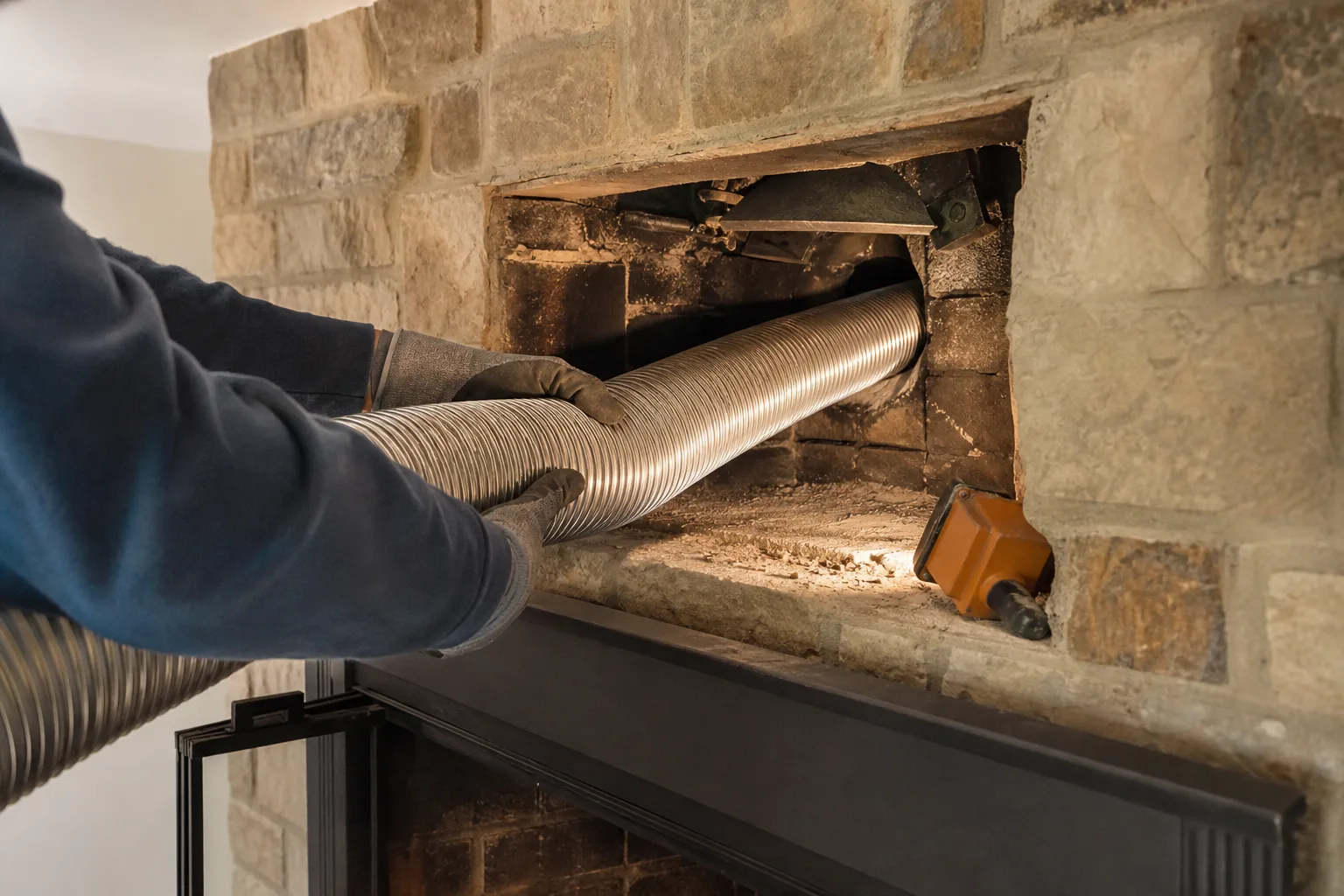
Make the Final Choice Based on Fit, Scope, and Service
The best choice among fireplace inserts near me is the provider whose recommendation matches the inspection findings and whose proposal covers the job from fireplace preparation through final operation checks. A suitable appliance, a specified venting plan, and clearly assigned responsibility matter more than a showroom discount or a quick installation promise.
Confirm who will obtain permits, prepare the site for inspection, and provide access if an inspector needs to see concealed venting or connections. The agreement should also name the party responsible for appliance startup, warranty service, cleaning guidance, and future maintenance.
A strong proposal leaves few handoffs for you to manage. If chimney preparation, liner installation, appliance placement, trade work, and testing involve different people, the lead contractor should state who coordinates them and who corrects a problem if one part does not pass inspection.
Pro tip: Ask for the operating and maintenance handoff to be included in writing. You should finish the project knowing how to use the controls, what normal startup looks like, how often the system needs service, and whom to call if draft, odor, shutdown, or venting concerns appear.
Do not sign while the flue remains unassessed, the liner diameter is undecided, or major work is buried in open-ended extras. The same caution applies when an appliance is being sold before anyone has measured the fireplace opening, checked the chimney route, or confirmed that the specified venting components can be installed.
The final decision should feel specific rather than hopeful. You should be able to point to the inspection findings, exact appliance, liner or venting specifications, preparation work, exclusions, testing steps, and service responsibilities in the written documents.
For a recommendation based on your actual fireplace and chimney, request an on-site assessment or call (513) 655-6702 before selecting an insert.
Symptom checker
What is your chimney doing?
Tap the closest match for an honest first answer.